
1,721 Photos and videos















Rami Suliman retweeted

Jun 16
Notice how Cursor isn’t saying “for developers”. Just “Useful AI”.
Cursor will likely become a direct competitor to Codex and Claude Desktop.
- Their in app browser is great.
- Their composer model is good and fast for most tasks
They just need to render documents like cowork and codex, and I’d consider using it for most of my work (as a non-dev)

114
44
1,227
188,228
Rami Suliman retweeted

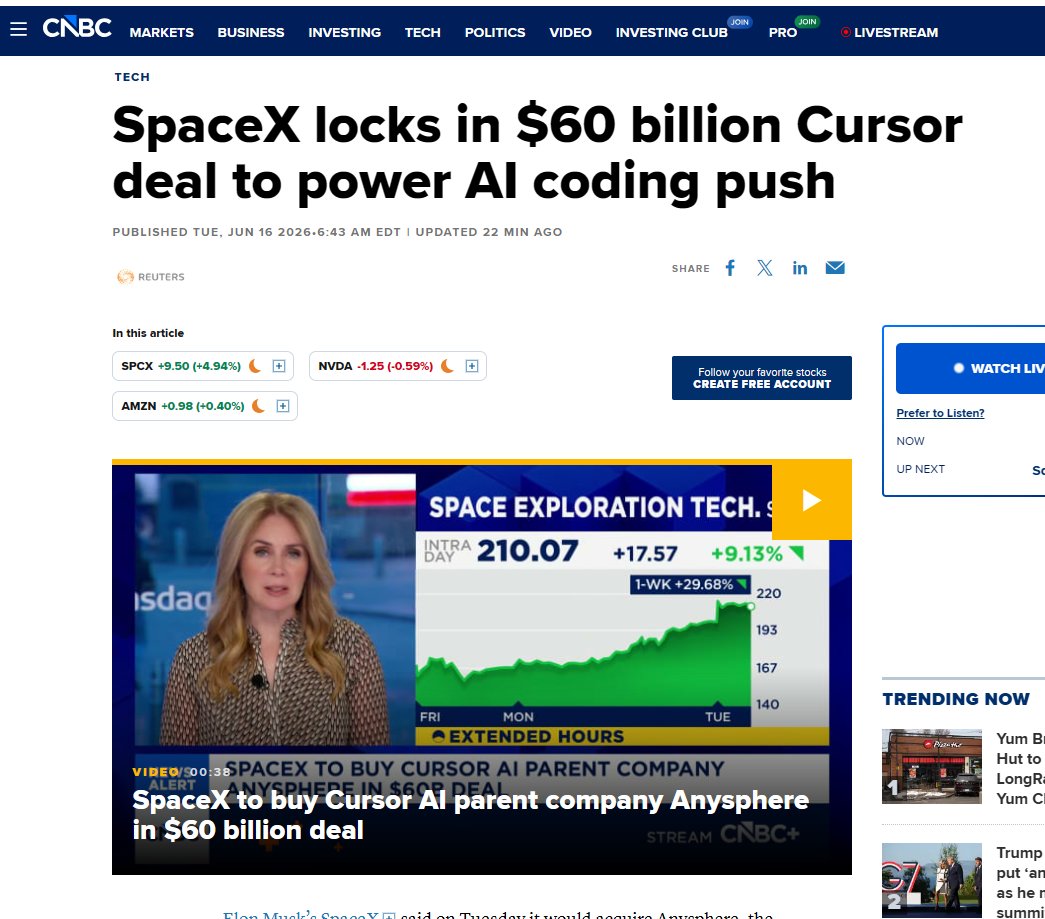
SpaceX just bought a $60 billion company without spending a dollar.
The deal for Cursor, the AI coding tool, is all stock. No cash. SpaceX prints new shares, hands them over, done.
Now connect it to what happened last week.
SpaceX went public by floating just 4% of itself. 556 million shares against 13 billion. The tiniest free float a mega-cap has ever listed with. Index funds were forced to buy it. Retail piled in. Tiny supply, enormous demand, and the stock rocketed past $200.
Here's the part that should make you sit up.
The price SpaceX pays for Cursor is set by its own share price in the seven days before closing. The higher the stock, the fewer shares it has to print to cover $60 billion.
So the engineered scarcity that pumped the stock now makes the acquisition cheaper. The squeeze pays for the shopping spree.
A company losing $4 billion a quarter is now buying AI startups with paper it manufactured out of a 4% float.
This isn't aerospace. It isn't even AI.
It's the finest financial engineering of the century, and it's only getting started.

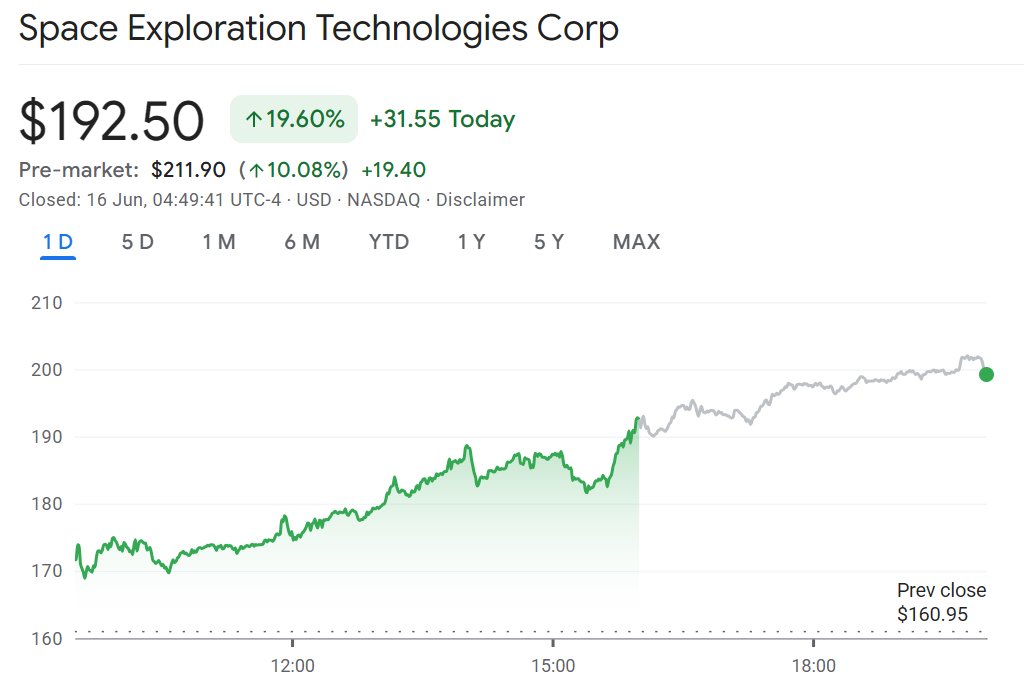
SpaceX $SPCX traded 256 million shares yesterday.
The entire public float is 556 million.
So in one day, almost half of every tradable share changed hands. Bought and sold, over and over, in a few hours.
Here's why that number is absurd. SpaceX sold 555.6 million shares at $135 to raise $75 billion. That float is barely 4% of the company. Musk and insiders hold the other 96%, locked up and unable to sell.
Tiny supply. Enormous demand. Index funds that have to own it, retail that wants to, traders chasing the move.
The result is a $2 trillion company that trades like a penny stock. Up to $211 pre-market, swinging double-digit percentages between coffees.
This is what happens when you list 4% of the seventh-largest company in America and let the world fight over the scraps.
The price isn't telling you what SpaceX is worth.
It's telling you how few shares there are to buy.
204
503
3,413
637,345
Rami Suliman retweeted

Jun 16
The Cursor deal is symbolically quite significant. It was effectively the first mega success in the applied layer of AI.
They firmly proved out the value proposition of having a deep domain focus, the role you play as a model router, when to lean into frontier models vs. when to train your own, and the role of applied AI GTM and distribution to make sure you’re actually taking advantage of the market opportunity.
Every aspect of their business was tuned to carve out ground and keep doubling down in a highly competitive space. This is really the first at scale template for how to execute this playbook.
Jun 16

$60Billion.
This is the first, but not the last, big exit at the application layer of AI.
As product value accrues and accelerates upwards, the focus over the next few years will be firmly on the “control plane”:
What gives organizations who want to go all in on AI the governance, control, auditability and business continuity across models and across time that they will need to firmly make the leap.
This is the next big phase of AI value creation that the SpaceX/Cursor merger is highlighting.
56
46
796
110,597
Rami Suliman retweeted

Jun 16
$60Billion.
This is the first, but not the last, big exit at the application layer of AI.
As product value accrues and accelerates upwards, the focus over the next few years will be firmly on the “control plane”:
What gives organizations who want to go all in on AI the governance, control, auditability and business continuity across models and across time that they will need to firmly make the leap.
This is the next big phase of AI value creation that the SpaceX/Cursor merger is highlighting.

SpaceX has exercised the option to acquire @cursor_ai in an all-stock transaction with the goal of building the world’s most useful AI models.
For the past few months, SpaceXAI has been jointly training a model with Cursor, which will be released in Cursor and Grok Build soon.
We look forward to working closely with the Cursor team to advance our frontier AI capabilities
134
175
2,915
500,002
Rami Suliman retweeted

Jun 14
⚡️Satya is describing the new balance sheet of the firm.
The old firm owned people, processes, software, customer relationships, brand, data, and IP.
The new firm will own a compounding cognition loop.
Every workflow becomes a training surface. Every decision becomes a trace. Every expert judgment becomes reusable signal. Every internal correction becomes model improvement. Every model run becomes a chance to turn human judgment into institutional intelligence.
That is what “token capital” really means.
It is accumulated machine-operable cognition. A company’s expertise becomes executable, queryable, evaluable, improvable, and portable across models.
That is a massive shift.
The most important line is the one about switching out the generalist model without losing the company veteran expertise. That is the entire enterprise AI war. Model providers want the firm’s knowledge to flow into the model layer.
Enterprises need that knowledge to stay inside their own loop.
Whoever owns the loop owns the future economic rent.
Satya is laying out Microsoft’s answer to the frontier-model monopoly problem.
If all company knowledge flows upward into a few foundation models, the foundation model labs become landlords of the entire economy. They absorb everyone’s expertise, commoditize every workflow, and capture the value created by every firm’s learning process. That equilibrium will trigger political backlash, customer resistance, regulatory pressure, and corporate revolt.
So Microsoft’s doctrine is: every company should build its own AI learning system on top of frontier models, while Microsoft owns the infrastructure where that happens.
That is elegant and self-serving.
Microsoft does not need to own the single best frontier model forever. It needs to own the enterprise control plane: identity, security, permissions, data, workflow, evals, agents, memory, developer tools, cloud, compliance, and model routing. If the model becomes swappable, the platform underneath the firm’s learning loop becomes the durable asset.
Satya is quietly saying the frontier model alone is unstable. A world of a few models eating every company’s expertise breaks the political economy. A world where every company builds firm-specific AI capital on top of models is more stable, more defensible, and much better for Microsoft.
The “human capital gets more valuable” line is partly true and partly corporate diplomacy.
High-agency humans become more valuable. People with taste, judgment, relationships, domain intuition, ambition, and the ability to direct agentic systems become much more valuable.
Routine cognitive labor loses bargaining power.
The future firm does not need every human equally. It needs humans who can generate high-quality signal for the loop. The human becomes a trainer, judge, strategist, relationship node, taste layer, and goal-setter. The work that cannot feed the loop or direct the loop gets compressed.
This also connects directly to the Anthropic crisis.
If frontier model access can be restricted, pulled, nationality-gated, or subordinated to state power, then enterprises cannot allow their intelligence layer to live entirely inside one external model. They need portability. They need private evals. They need internal memory. They need their own traces. They need model-agnostic learning systems.
The model can change.
The firm’s cognition loop has to survive.
That is the new sovereignty test.
A company that only buys AI access is a renter.
A company that turns its workflows, judgments, corrections, and outcomes into a private learning loop is building capital.
The deeper implication: the future economy splits between firms that compound cognition and firms that leak cognition.
Firms that compound cognition will get stronger every time they operate.

64
148
1,173
347,431
Rami Suliman retweeted

Jun 14
2,820
7,990
40,530
65,426,494
Rami Suliman retweeted

Jun 2
We're finally shedding the .so (thank you Somalia!), and using the .com for @NotionHQ. And for this beautiful moment, I want to share a fun story:
Back in 2018, I had just joined Notion, and one of the first things @ivan asked me to do was figure out how we could own notion.com. I had never done a big domain purchase before, so I reached out to a few domain brokers to understand the landscape. We tried different brokers, kept things anonymous, and attempted to surface a price the seller might consider.
A year went by… nothing. Meanwhile, it was pretty clear this was only going to get more expensive as we grew. We needed a different approach. A fellow founder connected me to a broker who took a very different tack. Less transactional, more long-term relationship builder. He spent months getting to know the domain owner. Turns out owner was a fellow entrepreneur in the west coast… and a huge Grateful Dead fan.
So we figured, why not get creative? Something beyond just price. So I called up our investor Ronny Conway and asked if there was any way he could help set up a private meeting between the domain owner and the Grateful Dead. Ronny is one of those people who somehow makes impossible things possible. A week later he calls me back: “New York City. Halloween. 15 minutes after the concert. Done.”
The broker went back to the owner with an offer: some cash, some equity, and a private meeting with the Grateful Dead. That got his attention. He didn’t take the band meeting in the end, but he did lean into the equity (great call, in hindsight). We shook hands, and a few weeks later, the deal was done.
I’ve been waiting years for the day we move our product to notion.com. Looks like 2026 is finally the year. Safe to say I’m unreasonably excited about this update!
168
151
3,930
520,723

Your startup's growth rate is also its learning rate.
Setting an ambitious growth goal and trying to hit it is the fastest way to find out what's broken and how to fix it.
Not just the obvious stuff. Wrong customer, wrong problem, product nobody wants. It also stresses the founding team. You find out fast whether you can handle hard problems under pressure.
Bottlenecks only show up when you push.
If you're not having uncomfortable discoveries early, you're not pushing hard enough.
56
42
530
41,565
Rami Suliman retweeted

May 29
My advice to founders in 2026: spend tokens, not headcount.
Record everything. Make your company queryable. Build self-improving loops.
Before long, AI won’t just help you operate your company. It will make it self improving.
Don't think AI adoption, think AI transformation.
This is the biggest shift in how startups get built since cloud computing.
137
175
1,941
205,571
Rami Suliman retweeted

May 29
black mirror
May 28

Today, we're launching shift. We're starting by cleaning your apartment in New York City, for free.
Here's how it works. Book a shift cleaning. A vetted shift operator comes to your home wearing one of our devices. They clean. They leave. You pay nothing.
In exchange, we record the cleaning. Robotics is being built on data about how people do daily tasks, and the value of that recording is what funds the service. Anything personal in it is anonymized before the recording is processed.
By now, you have heard about the shift to AI more times than you can count. About the shift toward you, the part where you actually feel it, you have heard almost nothing. Shift is what starts to make it concrete, in specific cities, with specific services.
Today, cleaning in New York. Soon, handymen, repairs, and errands across the globe. And this is just one side of shift, with more on the way.
Comment “shift” and we’ll send you an early access link.
42
246
4,499
1,680,922
Rami Suliman retweeted

May 25
My biggest takeaways from @danshipper:
1. The future of work will happen inside Codex or Claude Code. Instead of putting AI into your SaaS tool, you’ll use your SaaS tools inside your favorite AI agents' in-app browser. Dan spends all his time in Codex now—writing documents, managing email, doing research, everything. He's using Google Docs, PostHog, and everything he needs within the agent's in-app browser. The agent can see what he’s doing, and has all of his context, so he and his agent collaborate quickly and super effectively.
2. Automation is a lie—every automation needs a human. Dan's company doubled in size this year despite being incredibly AI-forward. Why? Because in order to make automation work well, you need humans making sure everything keeps working. This is why benchmarks are misleading—they measure AI on problems we’ve already framed and can score, but there’s always a higher frame.
3. PMs will win the AI era. Marcus, a former PM who previously ran Axios’s writing product, joined Every after getting super AI-pilled. Now he runs their product Spiral, and ships faster than anyone on the team. He pairs technical knowledge with spiky product sense, deep user empathy, and an eye for what matters. Dan thinks any PM who gets really AI-native will be incredibly dangerous because the building is done for you—what matters is figuring out what to build and if it’s great.
4. Full-stack designers are becoming superheroes. Designers used to make beautiful interactions that engineers didn’t want to build or couldn’t execute properly. Now designers don’t need to hand things off; they can build it themselves. Designers are naturally creative people, and AI is the perfect tool for them because it lets them bring their vision to life without the traditional bottlenecks.
5. SaaS is not dead. In fact, Dan is bullish on SaaS stocks. When users bring their own AI (via Codex or Claude Code) to use SaaS products, the user—not the SaaS company—pays for tokens. This saves SaaS company’s margins. Since the agents need their own seats, Dan predicts that agents will create massive new demand for SaaS because there will be tons of agents using these products at high volume.
6. Every company will have one “super-agent” inside their Slack that every employee will use. Dan initially thought every employee would have their personal work agent, like a shadow AI org chart, but he’s completely flipped his view. He realized agents need humans who care about them. When someone gets tired of maintaining their personal agent, it becomes useless. The winning model is one forward-deployed engineer or AI-savvy person who maintains a company-wide agent (like Shopify’s River or Viktor), and then it trickles down to more specialized team agents as models improve and become less fiddly.
7. The AI job apocalypse is not happening, but you do need to evolve to stay relevant. Models make yesterday’s human competence cheap. But because everyone uses the same models, it all looks the same if you use it the default way; it becomes commoditized slop. Humans then take that frozen competence and use it to make something new and interesting for their specific situation. The key: “ride the models”—use them for everything you do, try new models when they drop, keep turning over rocks.
8. We will read way more AI-generated writing, and we will like it. Human writing is incredibly important for things that matter, but for internal docs, planning, and email, AI-generated is often better because most people are bad at writing strategy documents.
9. Build software for humans and agents to use together. The current model is building a CLI that an agent uses independently. Instead, you and your agent should be using the app together. This creates new design challenges—agents can make a billion requests in three seconds, so you need approval flows, inboxes that summarize what happened, logs, and easy rollback.
10. Forward-deployed engineers are the new most essential role. The big model companies have teams of people managing their internal agents, and those teams aren’t going away. It’s different from traditional software building, and certain engineers love it. As models get better, this role will evolve—you’ll be managing more agents doing more things.
May 24

Automation is a lie. CLIs are over. The SaaSpocalypse is dumb.
A year ago @danshipper came on the podcast to predict where AI was heading. He was remarkably right—including the call that everyone was sleeping on Claude Code.
Dan has a unique lens into where things are going because his team at @every is possibly the most AI-pilled group of people in tech. I always learn a ton talking to Dan.
So I brought him back for round two. We'll score these in exactly a year:
🔸 Every company will have one “super-agent” in Slack.
🔸 Codex and Claude Code will become the new operating system for knowledge work.
🔸 The AI job apocalypse is not happening.
🔸 PMs and designers will thrive.
🔸 We will read way more AI-generated writing and we will like it.
🔸 "I would buy SaaS stocks right now."
Listen now 👇
youtube.com/watch?v=4D3hDmGh…
152
238
2,093
762,412
Rami Suliman retweeted

May 23
A brilliant one from @jaminball
DC delays are about to explode so this category is about scarcity and intellectual property

5
19
213
93,371

Delivery Hero confirms takeover offer from Uber reut.rs/4dF2WwJ reut.rs/4dF2WwJ
7
25
85
213,892
Rami Suliman retweeted

May 13
14
29
305
72,423
Rami Suliman retweeted

May 11
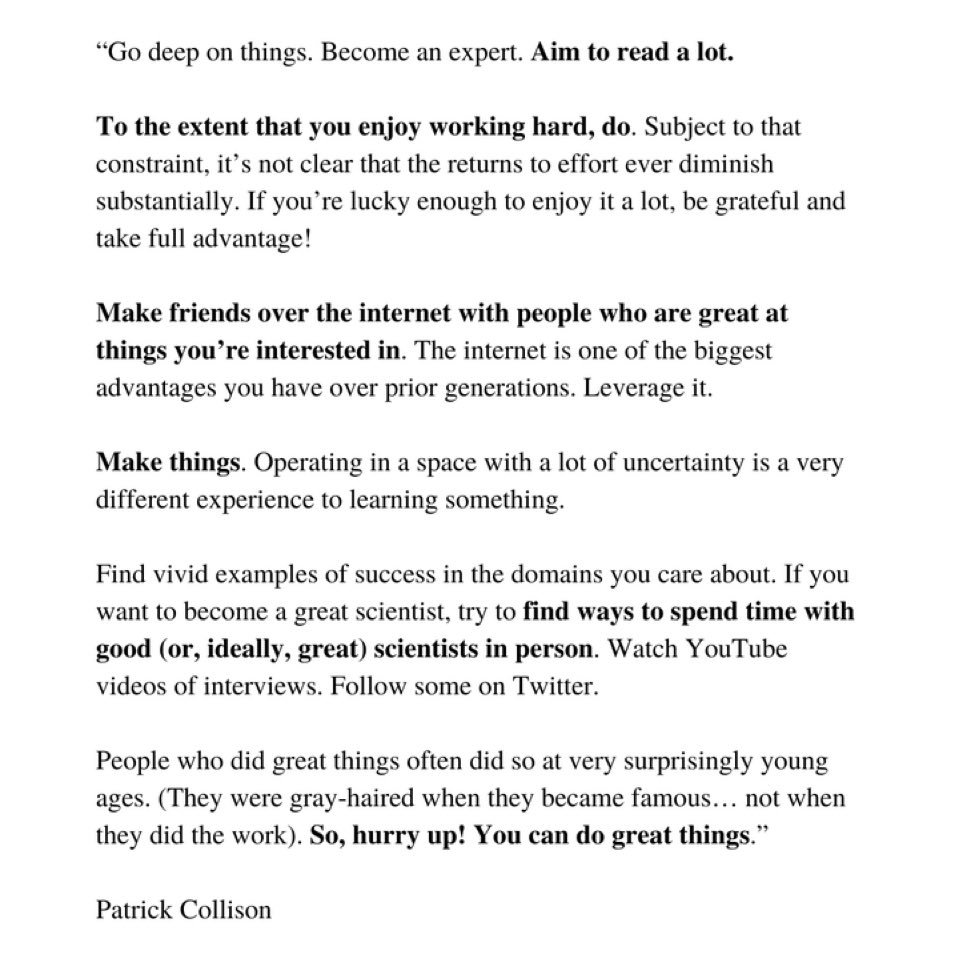
Co-founder and CEO of Stripe’s advice to ambitious people:
11
218
1,506
38,786
Rami Suliman retweeted

May 12
You will know that the AI labs believe in ASI when they disband their newly formed consulting (sorry “forward deployed engineering”) groups. As long as people are required to figure out how AI is useful & do organizational change & systems integration, jobs seem to be pretty safe
96
84
889
98,102
Rami Suliman retweeted

May 10
It's an unimpressive-sounding word, but one of the most powerful motivations is the motivation of the hobbyist. That's what keeps successful founders working on their companies long past the point when they've made enough to quit. It's their beloved project.
206
210
3,507
185,324
Rami Suliman retweeted

May 9
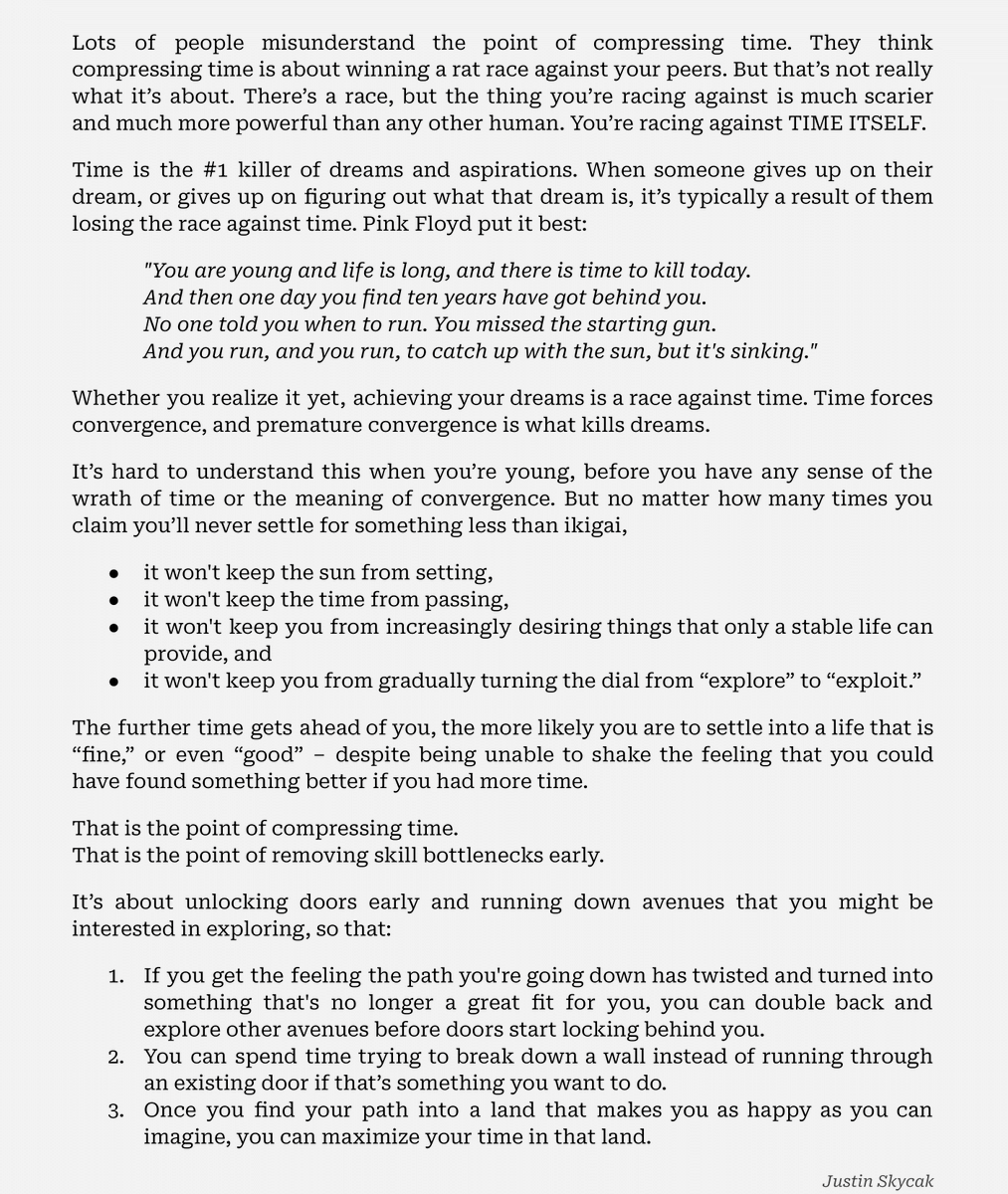
"Your lack of urgency is wasting your potential."
May 9

The #1 killer of dreams is not lack of potential, but rather lack of urgency.
46
1,749
10,580
613,038
Rami Suliman retweeted

May 9
There’s a tension in fintech that most companies avoid addressing directly, but @scott_shannon, CPO of @Airwallex, leaned into it.
If you are building infrastructure and applications at the same time, aren’t you inevitably competing with your own customers?
That assumption only holds if you believe the value sits in the product layer, but what became clear in this conversation is that the real leverage is shifting underneath, into the infrastructure itself.
If your infrastructure is truly differentiated, then restricting access to protect your own applications becomes a limiting strategy, because no single company can build the full range of products that an open ecosystem can create on top of the same foundation.
This is the AWS analogy playing out in fintech.
Amazon did not weaken itself by opening AWS; it expanded the market by turning internal capabilities into external infrastructure, allowing thousands of companies to build on top of it while still continuing to build its own products.
The same logic applies here.
Airwallex offering expense management does not eliminate partners like Brex; it establishes a baseline while enabling others to go further, faster, and in more specialized directions.
The real shift is from vertical control to horizontal enablement, where the goal is no longer to own every use case, but to become the layer others rely on to build theirs.
And that changes the surface area of fintech entirely.
Because once financial infrastructure becomes as accessible as cloud infrastructure, every software company can embed financial services without becoming one, which is where the next wave of expansion actually begins.
That’s why this conversation matters 👇
youtu.be/g19KZzvmPWk?si=36TP…
1
6
18
12,472

Love this approach from @tobi.
A system that compounds learning and spreads it through the organization.
Transparency and openness is key.

10
21
349
95,237