
IR/Strategic Studies. Mendel University (Czech Republic). Interests: Great Power Competition | Emerging Tech | Indo-Pacific & European Geopolitics
Joined April 2015
- Tweets 2,110
- Following 2,328
- Followers 944
- Likes 2,371
26 Photos and videos

Pinned Tweet

3 Feb 2025
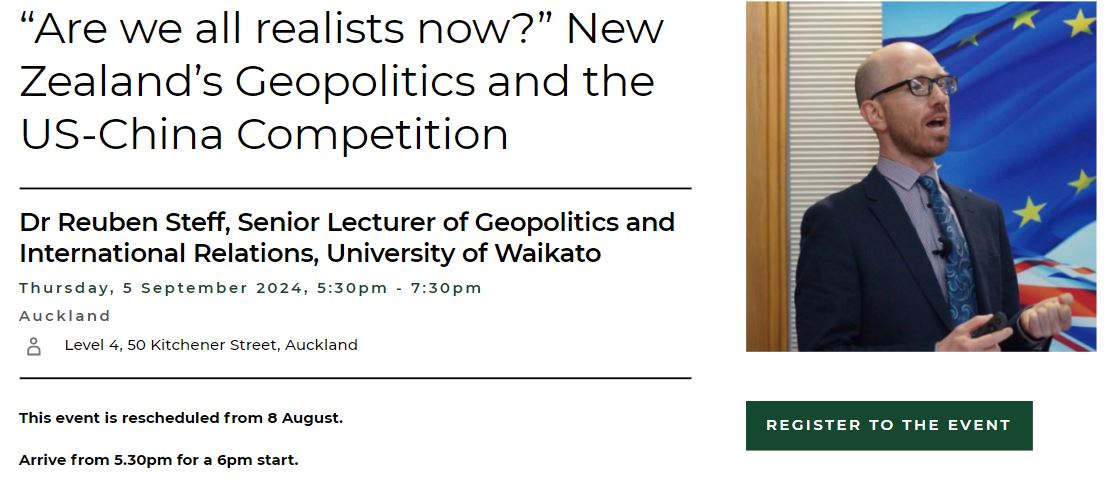
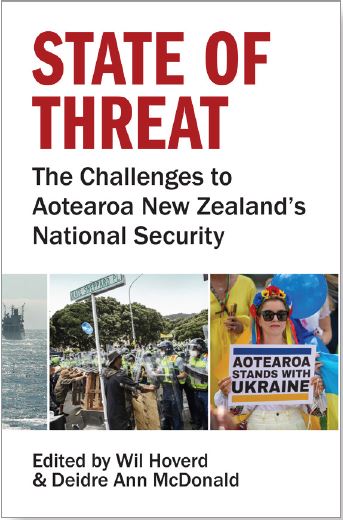
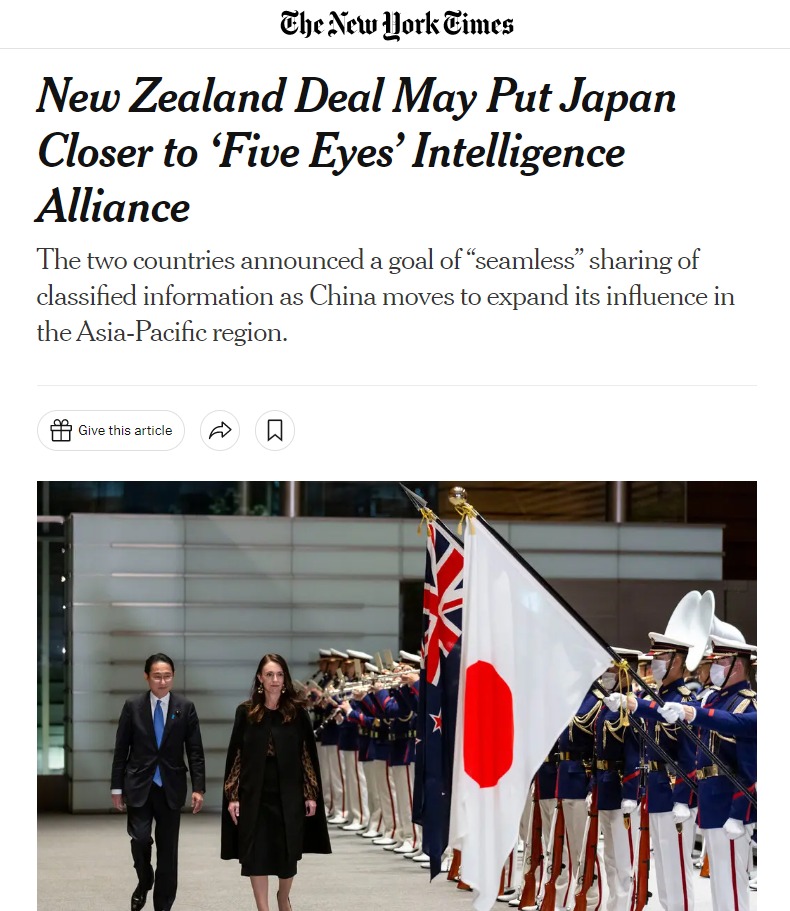
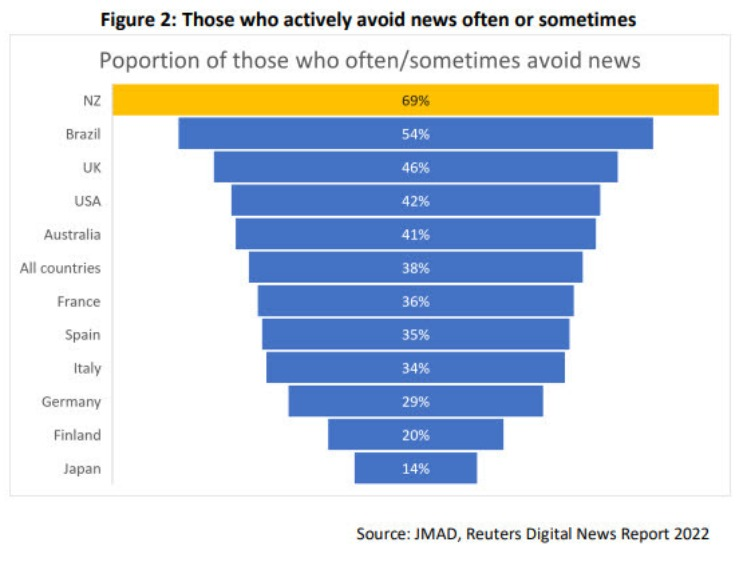
My new book - New Zealand's Geopolitics and the US-China Competition - is OUT! link.springer.com/book/10.10…. Possible book launches around #NewZealand to come. #nzpol
TOC:
Ch. 1: New Zealand's Geopolitical Awakening in the Second Cold War
Ch. 2: Theoretical Framework: Geopolitical Realism and Great Power Competition
Ch. 3: New Zealand’s Material Hand: Physical Geography, Economics, Soft Power, the Foreign Policy System, Defence Force, Memberships and Alliances
Ch. 4: The Geopolitics Tradition and New Zealand: From Imperial Defence to Interdependent Strategic Competition
Ch. 5: The US-China Great Power Competition in the Indo-Pacific: Colliding Strategies and Ambitions
Ch. 6: Great Power Competition in Oceania and New Zealand’s shift from Hedging to Balancing
Ch. 7: The Case for Tight Five Eyes Alignment
Ch. 8: The Case for Armed Neutrality and Comprehensive National Resilience
Ch. 9: Shaping the Balance: New Zealand's Strategic Significance, Defense Revival and Future Research
@1NRSmith @AnnaPowles @waikato @CleoPaskal @HM_Int3lligence @Jimrolfe @bernardchickey @JudithCollinsMP @NZUSCouncil @MFATNZ @NZIIA_live @asianewzealand @WarrenAiden @HamishMcD @ben_r @angusblair @wartalke @LowyInstitute @ASPI_org @Simona_Soare @DrJoeBurton @CANZPS @davidcapie @NZ_Trav @GeoffMillerNZ @SamSachdevaNZ @NewsroomNZ @Selwyn_Manning @36th_Parallel @PeterCGrace @NewZealandMFA @chrisluxonmp @andrewlittle_nz @JacobShap @radionz @heraldnz @NewshubNZ @TVNZ @the_postnz @RocketLab @PressNewsroom @NZNationalParty @nzlabour @ACT @nzfirst @TheNBR @waikatotimes @sgourley @JohnBlaxland1
#NewZealand #IndoPacific #security #defense #geopolitics #Pacific #geostrategy #AUKUS #ANZUS #strategy #foreignpolicy #auspol #InternationalRelations
9
9
43
3,544
Reuben Steff retweeted

Nuclear deterrence is an outdated security strategy. Its being defeated over and over. From India-Pakistan to Iran-Israel-US to, most obvious Ukraines fight against Russia. @Gottemoeller
foreignaffairs.com/ukraine/s…
5
19
915
Reuben Steff retweeted

Jun 11
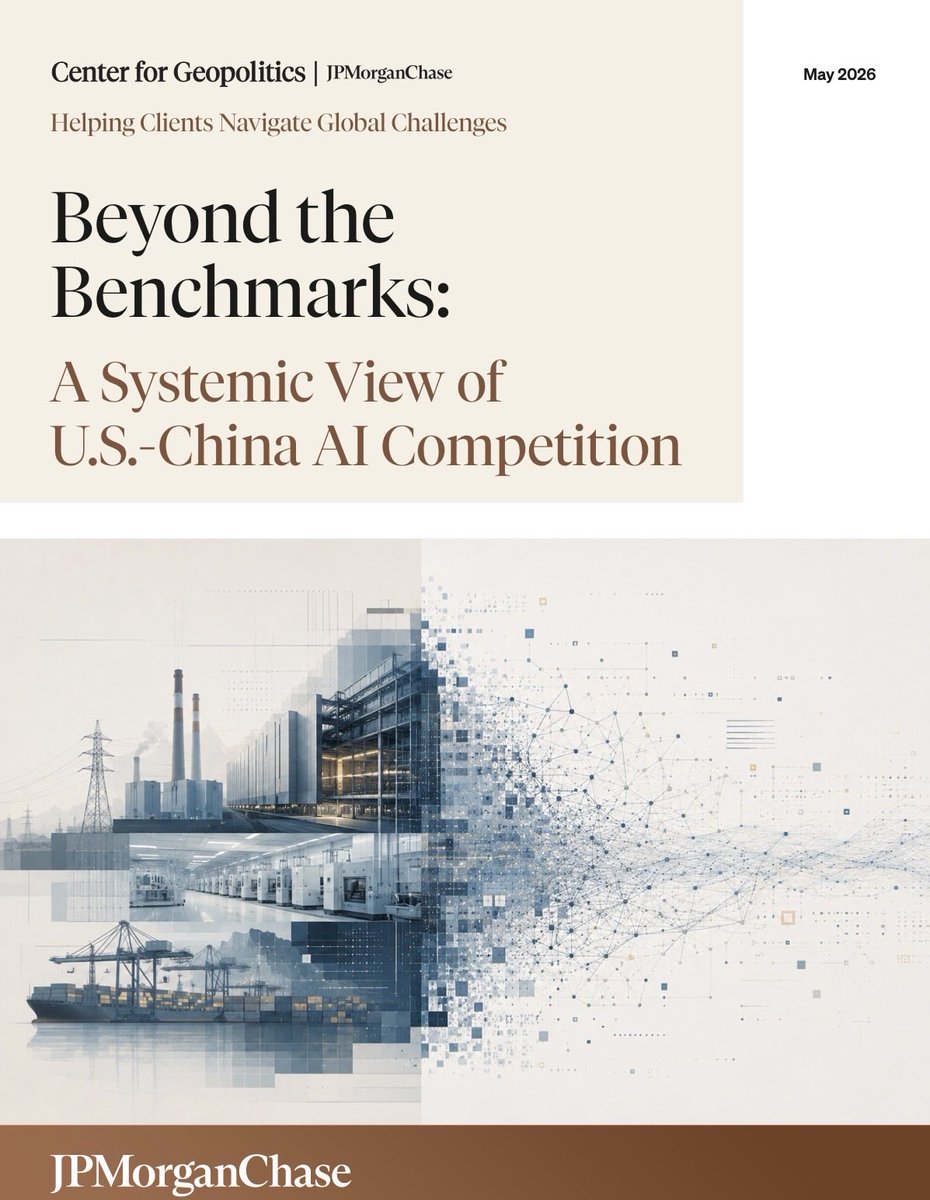
My colleagues and I just published a new report on U.S.-China AI competition, taking a holistic view of AI leadership. We argue that the competition is about more than who has the best models and chips. It's a contest of energy, data, talent, capital, industrial capacity, diffusion, and national resilience.
The U.S. remains ahead in frontier model development and advanced compute deployment, but China's deep bench of AI engineers, low-cost models, control over critical nodes in the hardware supply chain, vast energy infrastructure, and aggressive push to diffuse AI make it a formidable competitor.
17
95
320
35,663
Reuben Steff retweeted

Jun 12
V Británii rezignoval ministr obrany, protože mu premiér odmítl garantovat 3 % HDP na obranu k roku 2030, kdy podle hodnocení NATO bude Rusko připraveno na velký útok na Alianci.
V Česku nemá ministr obrany od vlády vůbec žádný finanční plán a na letošek nejhorší rozpočet z celé Aliance.
Česká vláda kapitulovala na obranu Česka, která začíná na hranicích NATO.
6
20
130
2,425
Reuben Steff retweeted

Jun 11
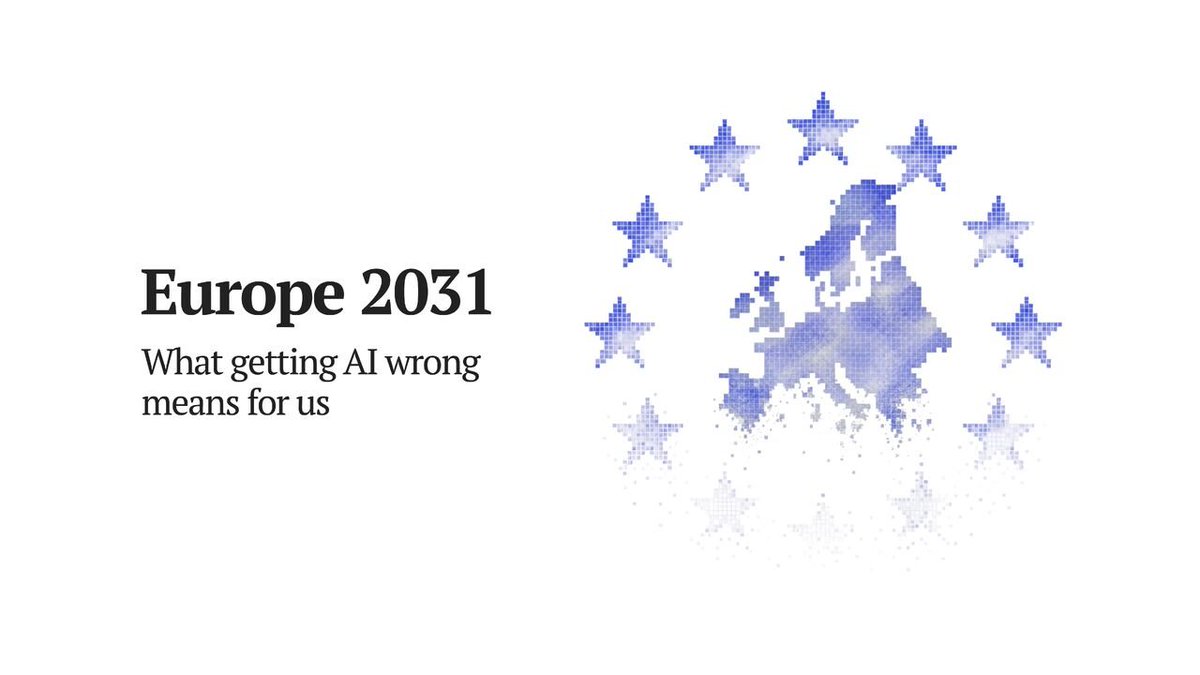
"What will happen to Europe if it keeps ignoring AI?"
Three American labs each (!!) operate more AI compute than all of Europe combined. Today we're launching Europe 2031: a story of what might happen if that doesn't change.
30
103
427
209,743
Jun 10
Yes. We do. Because some of us have detailed all of this quite extensively already. The problem in NZ is that the public do not pay attention; NZG has actually put out a tonne of stuff in recent years and the trends are obvious, so the outcome has been a logical response to those
Jun 10

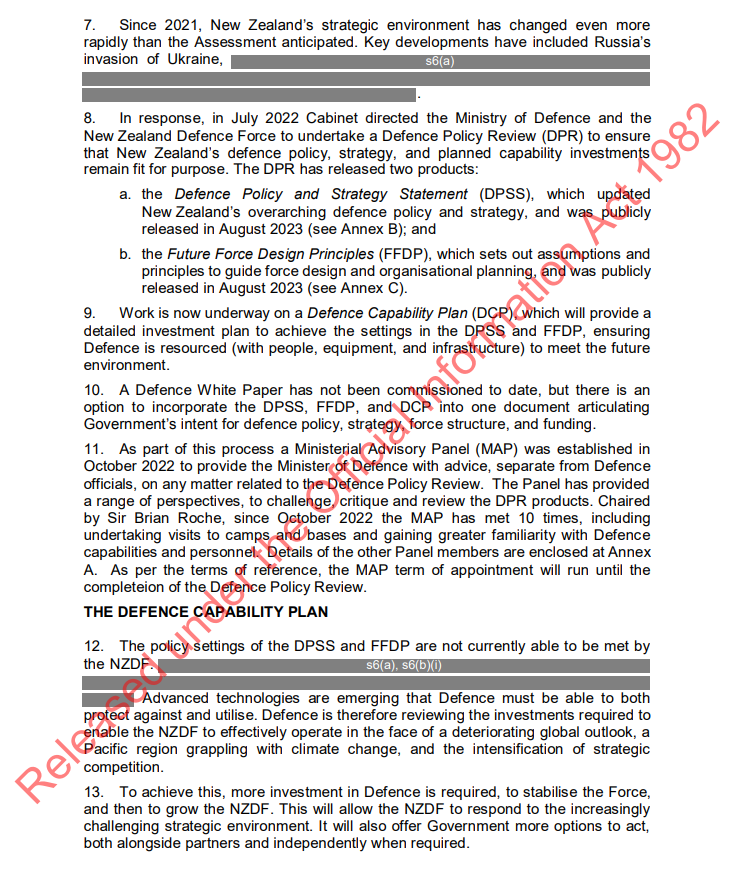
Did you know before the Government announced a $12 billion defence overhaul, officials had already reached a conclusion? New Zealand's strategic environment was changing faster than expected, the Defence Force could not meet future policy objectives under existing settings, and a major rethink of military capability was required. This happened without the public's oversight.
Internal briefing papers show how concerns over strategic competition, emerging technologies, regional instability, and a deteriorating global outlook became the foundation for a sweeping defence review that is now reshaping the country's military posture to align with Washington's interests.
The document(s) revealed in my new investigation releasing tomorrow at 7:00am offer a look at how New Zealand arrived at one of the largest defence spending commitments in its history.
#nzpol
1
1
461
Reuben Steff retweeted

Jun 9
“Japan continues to be seen as NZ’s closest friend in Asia, closest defence and security partner, & most trusted power in Asia, surpassing New Zealanders' trust in the United Kingdom for the first time. Singapore was the next most trusted power in Asia…” rnz.co.nz/news/chinese-engli…
5
24
59
9,156
Reuben Steff retweeted
Jun 9
“For the first time in a decade, New Zealanders see the United States as more of a threat than China, a survey by the Asia New Zealand Foundation found, as concerns over trade disruption and global instability weigh on public sentiment.” reuters.com/world/china/new-…
3
8
12
1,576
Reuben Steff retweeted
Jun 9
"The number of state-based conflicts reached a record high of 65 [in 2025], with interstate conflicts doubling for the second consecutive year, highlighting an increasing trend in international tensions" - New article in JPR based on Uppsala Conflict Data academic.oup.com/jpr/advance…
4
4
502
Reuben Steff retweeted
This is huge
👇

This updated list of Chinese military companies is a warning to American businesses, all levels of government, and the American people. These Chinese companies are working with the Chinese military against our national interests. Any of them that are publicly traded on U.S. exchanges should be immediately delisted and their products should be removed from supply chains our country depends on. American companies must stop doing business with these threats to our national security, otherwise they are enabling China’s military ascendance. reuters.com/world/asia-pacif…
16
20
132
24,933
Reuben Steff retweeted
Jun 6
“The United States has announced the approval of a US$1.5 billion (NZ$2.6b) sale of MH-60R helicopters and related equipment to New Zealand.” rnz.co.nz/news/political/597…
1
15
38
4,103
Reuben Steff retweeted

Why do nuclear dominoes not fall? The common wisdom holds that each new proliferator goads its rivals into following suit, but they rarely do. @the_nuclearyogi and I argue that this gap between expectation and reality cannot be explained by the cost of nuclear pursuit alone. 1/6
ALT Cover of International Security, Spring 2026, Vol. 50, No. 4
6
56
170
17,794
Reuben Steff retweeted

Jun 3
The grave dangers of the AI arms race: thefp.com/p/niall-ferguson-a…
6
14
92
26,226
Reuben Steff retweeted

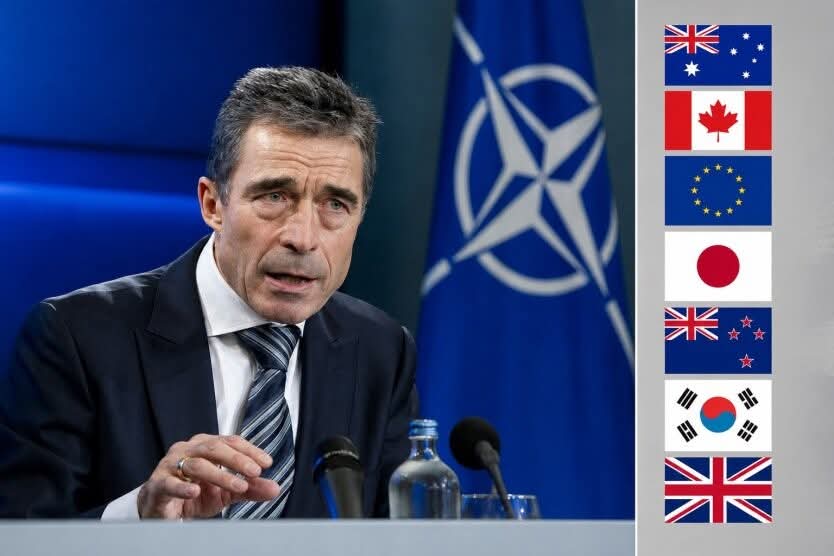
D7: A New Geopolitical Player?
Former NATO Secretary General Anders Fogh Rasmussen has proposed the creation of a new alliance of democracies — D7, the “Democratic Seven.” The proposed members are Australia, Canada, the European Union, Japan, New Zealand, South Korea, and the United Kingdom.
Together, these economies generate roughly $36 trillion in GDP — about 30% of global economic output. They possess enough economic weight to resist coercion even from the world's largest powers.
D7 is envisioned not as a closed club, but as an advanced core surrounded by concentric circles of associated members and partners. Countries could participate in specific initiatives according to their interests, creating flexible coalitions through what Rasmussen calls “variable geometry.”
The idea did not emerge by accident.
The international environment is changing rapidly. An increasingly coordinated axis of authoritarian states — Russia, China, Iran, and North Korea — is becoming more visible. The war against Ukraine has highlighted this trend: North Korean ammunition and troops, Iranian drones, and Chinese technological and economic support have all contributed to Russia’s war effort.
At the same time, U.S. foreign policy is evolving. Washington increasingly acts according to immediate strategic interests rather than as the unquestioned leader of the democratic world. Global trade disputes, sanctions, protectionism, and technological competition continue to intensify.
Against this backdrop, Rasmussen argues for a flexible coalition of advanced democracies capable of jointly protecting their economic, technological, and security interests.
In effect, D7 would represent a new architecture of democratic influence that is not entirely dependent on American leadership.
What Would D7 Do?
1. Create a democratic trade alliance.
2. Coordinate protection against economic coercion.
3. Align technology policies.
4. Invest jointly in artificial intelligence, quantum technologies, and space exploration.
5. Secure access to critical raw materials.
6. Develop new defense cooperation mechanisms modeled on support for Ukraine.
7. Build an alternative to China's Belt and Road Initiative.
The proposal's authors openly acknowledge that D7 should be capable of functioning even without direct U.S. participation if Washington continues reducing its global leadership role. At the same time, the door would remain open. The United States could participate as an associated member in specific coalitions or eventually join the core of D7 should its political direction change.
Why Does It Matter?
The world is gradually moving away from the era of a single superpower toward a system of multiple competing geopolitical centers.
For decades, the security and prosperity of many countries were built around American leadership. Today, democracies are increasingly searching for new mechanisms to collectively defend their interests.
A particularly relevant example is the so-called “Coalition of the Willing” supporting Ukraine, initiated by the United Kingdom and France. Operating outside NATO’s traditional bureaucracy, it has demonstrated that flexible coalitions can often move faster than established international institutions.
Rasmussen proposes applying this same principle to trade, technology, investment, and geopolitics.
The Future of the Project
At present, D7 remains more of a concept than a formal organization. Yet the logic behind its emergence is highly significant.
The world is entering a period of new international blocs and coalitions. Countries are no longer aligning solely around military power but also around technology, logistics, energy, critical resources, artificial intelligence, and control of global supply chains.
If implemented, D7 could become a new center of power within the democratic world — more flexible, more technologically advanced, and more economically focused than many existing institutions.
59
243
660
43,222
Reuben Steff retweeted

May 30
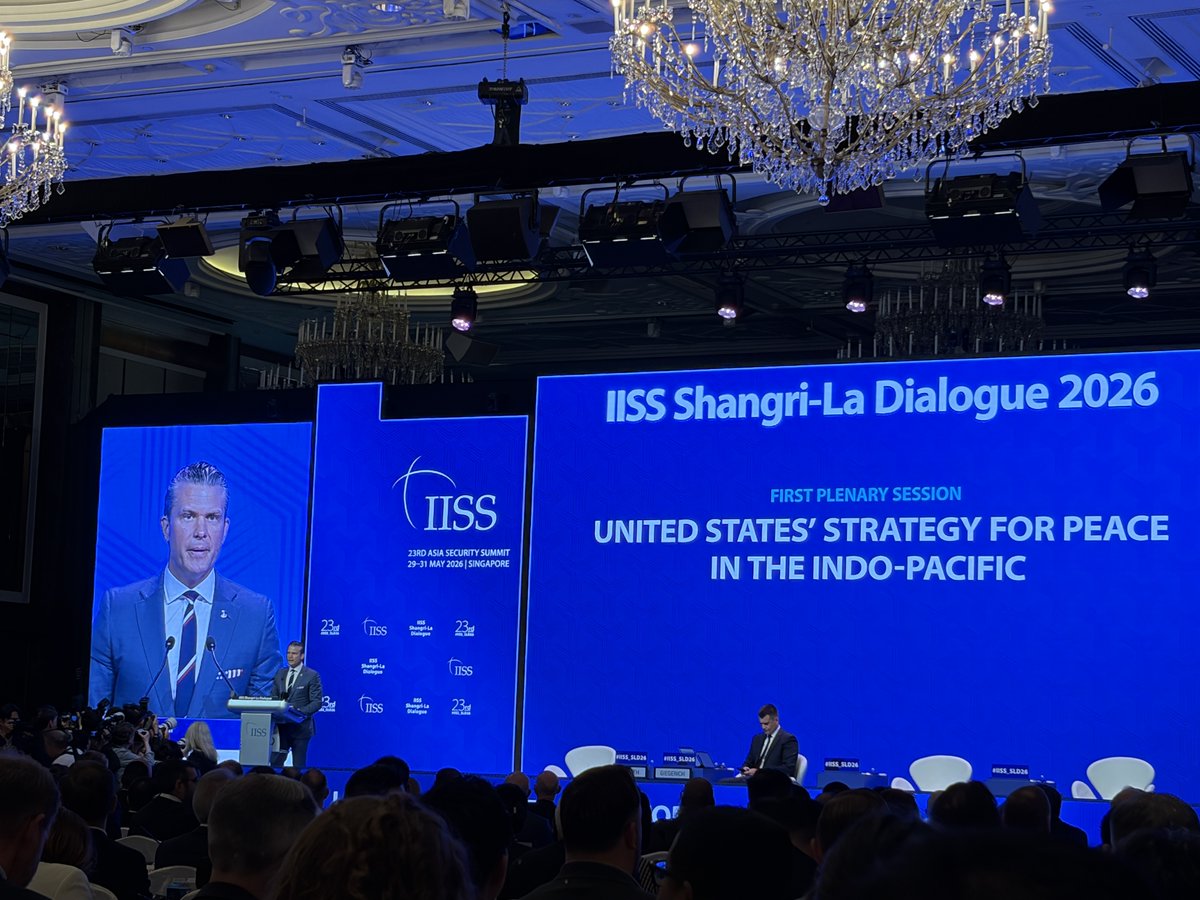
SCOOP: US ‘Secretary of War’ Pete Hegseth says New Zealand isn’t spending enough on defence, that 3.5 percent of GDP is "the new global norm."
Here’s his answer to my question at the Shangri-La Dialogue:
annafifieldnz.substack.com/p…
27
18
35
22,791
Reuben Steff retweeted

May 29
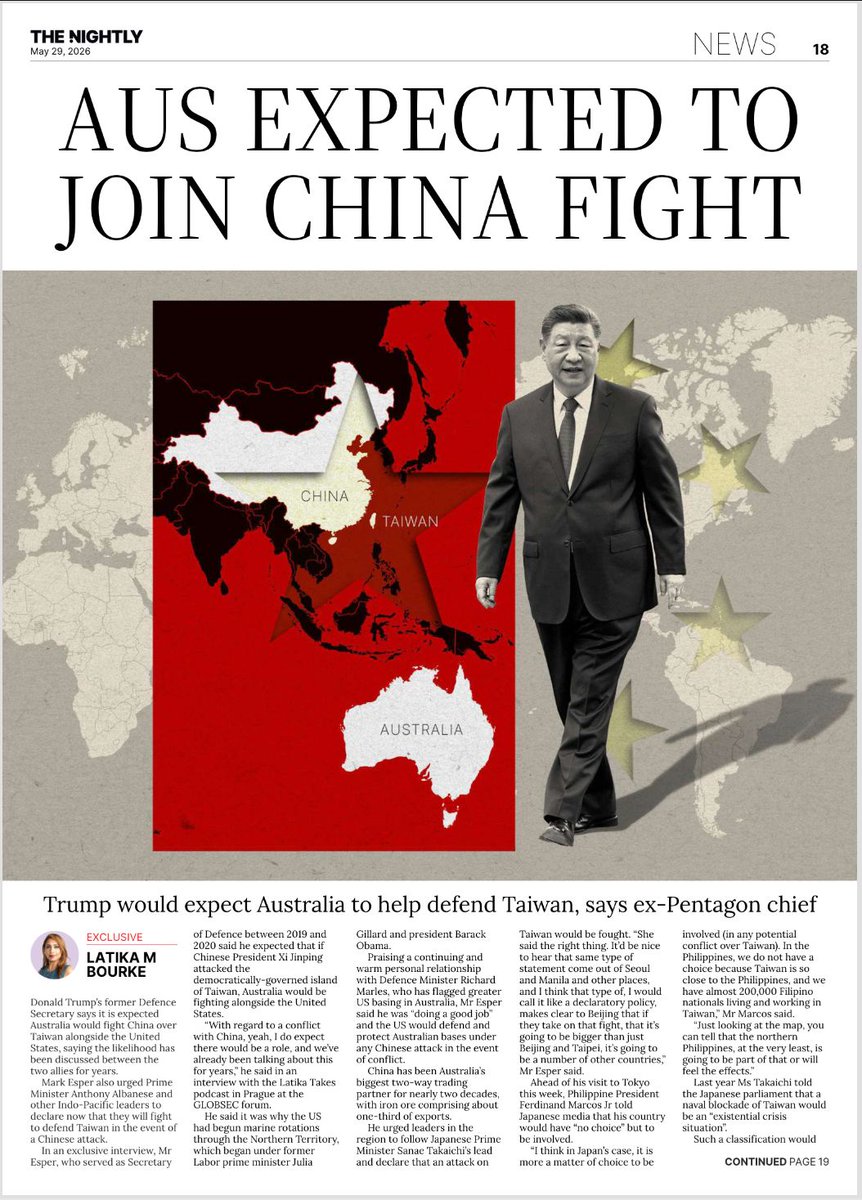
SCOOP
'We've been talking about it for years.'
Former US Defence Secretary Mark Esper tells me that the US expects Australia to fight China over Taiwan and that discussions have been ongoing for years.
Australia has never said what it would do in the event of a Taiwan contingency, but @MarkTEsper says it's time it did a la Takaichi (and most recently Marcos).
Read more in @thenightlyau: latika.me/ChinaFight
89
94
207
60,131
Reuben Steff retweeted

May 26
The Telegraph: Macron tore up 65 years of doctrine to defend Europe with French nukes, with or without the US.
Poland, Germany, the Netherlands, Belgium, Greece, Sweden, Denmark, and now the Czech Republic will host French nuclear-armed Rafales. 1/

211
2,153
9,270
587,583
Reuben Steff retweeted

May 26
I feel like I'm eating crazy pills when I read the countless bad takes around how the Vatican would have virtually anointed Anthropic.
When if you read the Pope's encyclical it's actually a COMPLETE repudiation of everything Anthropic - and U.S. AI generally - stands for.
Read this part of the encyclical for instance (paragraph 110: vatican.va/content/leo-xiv/e…):
"Finally, I would like to employ the expression 'to disarm,' which is close to my heart. Disarming AI means freeing it from the mentality of 'armed' competition, which today is not limited simply to the military context, but is also an economic and cognitive phenomenon. This entails a race for ever more powerful algorithms and larger datasets, driven by the desire to secure geopolitical or commercial dominance. To disarm means discrediting the assumption that technical power automatically confers the right to govern. To disarm does not mean rejecting technology, but preventing it from dominating humanity. It means freeing technology from monopolistic control and opening it to discussion and debate, therefore making it human-friendly and restoring it to the plurality of human cultures and ways of life."
In a nutshell what the Pope is saying is:
1) The "AI race" mentality itself is the disease: there is no "winning it responsibly", we need to stop seeing AI as a way "to secure geopolitical or commercial dominance"
2) Technical dominance and being the most powerful does not give you the right to set the rules
3) AI must be "freed from monopolistic control", opened to scrutiny, and "restored to the plurality of human cultures"
Now compared and contrast it with what Anthropic is officially saying - namely Dario Amodei in his famous essay "Machines of Loving Grace" (darioamodei.com/essay/machin…):
1) Where the Pope says stop the AI race. Dario says win it: "A coalition of democracies [should seek] to gain a clear advantage on powerful AI by securing its supply chain, scaling quickly, and blocking or delaying adversaries' access to key resources like chips and semiconductor equipment."
2) Where the Pope says technical power doesn't confer the right to govern. Dario says it does: "This coalition would on one hand use AI to achieve robust military superiority (the stick) while at the same time offering to distribute the benefits of powerful AI (the carrot) to a wider and wider group of countries in exchange for supporting the coalition's strategy."
3) Where the Pope says free AI from monopolistic control and restore it to the plurality of human cultures. Dario says concentrate it and use it to impose one model: "If we can do all this, we will have a world in which democracies lead on the world stage and have the economic and military strength to avoid being undermined, conquered, or sabotaged by autocracies, and may be able to parlay their AI superiority into a durable advantage. This could optimistically lead to an 'eternal 1991.'"
These aren't cherry-picked gotchas. This is the central thesis of Dario's essay.
And Anthropic keeps repeating this over and over. On May 14, just days ago, Anthropic published a 5,000-word policy essay titled "2028: Two scenarios for global AI leadership" (anthropic.com/research/2028-…) urging the US to "lock in a 12-24 month lead" over China by blocking chips, cutting off model access, and ensuring that "democracies, not authoritarian regimes" control AI. They warn that "a lead in frontier AI will enable a widening lead across the full national security technology stack" and urge America not to "squander our advantage."
This is, almost word for word, everything the Pope is condemning in his encyclical.
I'll grant Anthropic one thing: they have an excellent PR team. Turning what's an obvious repudiation into a perceived endorsement is pretty masterful.
But it doesn't mean you have to fall for it...

69
609
1,987
163,028
Reuben Steff retweeted

May 25
This
👇
May 25

I used AI to process the "Magnifica Humanitas" encyclical letter from @Pontifex about AI, turning 37,000 words into a 7 minute video
4
8
67
24,289
Reuben Steff retweeted

May 25
We’re calling it: The war in Ukraine has entered a new phase.
@KatStepanenko and I have authored a new special report studying how Ukraine is actively challenging the positional character of the war that has dominated the battlefield since 2023.
Data on Russia’s battlefield performance indicates that the character of the war is shifting in favor of Ukrainian forces – at least for now. Russian forces rates of advances are stagnating while Ukrainian forces are employing novel tactics and operational concepts in efforts to break out of positional warfare. Neither Russia nor Ukraine can conduct operational maneuvers yet, however.
The bottom line is that the war in Ukraine is competitive and far from stalemated. Ukrainian forces are out-innovating Russian forces in both military technologies and in applying these new technologies in effective operational concepts that can help Ukrainian forces break out of positional warfare. Ukraine is employing mechanized equipment in tactical maneuvers in ways that were impossible 12 months ago. Russia’s ability to conduct infiltration missions will likely continue to degrade as Ukraine’s intermediate-range strike campaign pushes Russia’s logistics and forward operating bases further away from the frontlines, reducing resourcing to sustain infantry tasked with infiltration missions. Ukraine may be able to scale these effects if they resourced properly by international partners.
Ukraine’s advantage in intermediate range strikes is notably not permanent, and Russia will very likely eventually develop countermeasures to mitigate Ukraine’s advantages. Ukraine’s international partners thus have a rare and temporary opportunity to help Ukraine exploit favorable battlefield dynamics while Ukraine has the upper hand.
Key Points of the report:
• Russia’s rate of advance is plummeting during the Russian Spring-Summer 2026 offensive.
• Russia is losing more soldiers to make fewer gains, with monthly Russian casualty rates reportedly outpacing monthly recruitment since December 2025.
• Ukraine is starting to regain more ground than it is losing for the first time since 2023.
• Ukraine’ recent counterattacks feature unique characteristics and deviate from key trends that defined the positional character of the war since 2023.
• Ukraine is conducting a pattern of more frequent mechanized counterattacks at the tactical level for the first time since 2023.
• The Ukrainian command’s operational planning is maturing.
• Ukraine’s early 2026 counterattacks in the south were successful likely due to better planning and preparation of the battlefield.
• Ukraine has been conducting a coherent campaign to suppress and destroy Russian air defenses since late 2025, in order to shape the battlefield as part of more sophisticated campaign planning.
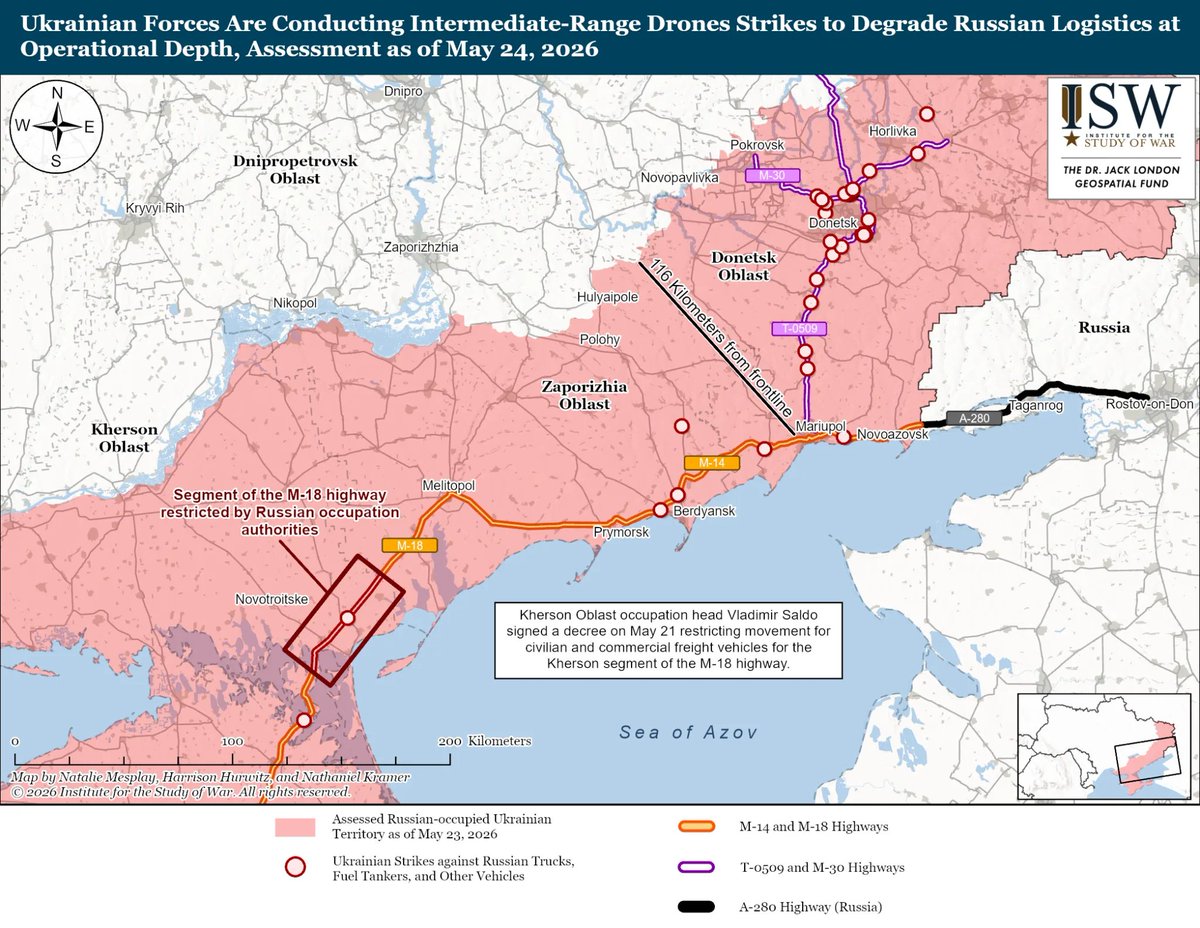
• Ukraine significantly intensified its intermediate-range strike campaign against dynamic targets in Spring 2026 in order to degrade Russian logistics at operational depths ahead of planned Ukrainian maneuver.
• Ukrainian forces started actively disrupting Russian railway logistics in occupied Ukraine and Russian western regions in Spring 2026.
• Ukrainian intermediate-range strikes are already achieving notable operational effects, including degrading Russia's ability to use the key Russian highway connecting Russia to occupied Crimea and GLOCs around Donetsk City.
• Ukrainian forces decisively seized the initiative in intermediate-range strikes by fielding new technologies such as the US-made Hornet strike UAV, among other systems.
• Ukrainian forces are achieving temporary tactical drone overmatch in some frontline sectors, which is slowing Russian offensive operations by degrading the effectiveness of Russian shaping operations.
• Ukrainian forces likely achieved tactical drone overmatch in certain frontline sectors after degrading Russia’s drone capabilities in late 2025 to early 2026 - primarily by suppressing drone launch positions and increasingly intercepting Russian tactical UAVs.
• Ukraine’s degradation of Russian forces at operational depth combined with tactical-level drone overmatch likely is creating vulnerabilities in the Russian lines.
• Ukraine’s intermediate-range strike campaign is likely far from its zenith, assuming continued support from Ukraine’s partners, and will likely intensify over 2026 as Ukraine fields new weapons capable of striking Russian’s operational rear.
Link to full report: understandingwar.org/researc…
170
1,721
6,851
912,876