
Explorers in the wilderness of cancer biology
Joined September 2017
- Tweets 362
- Following 296
- Followers 282
- Likes 482
42 Photos and videos

S.Zhang Lab retweeted

May 20
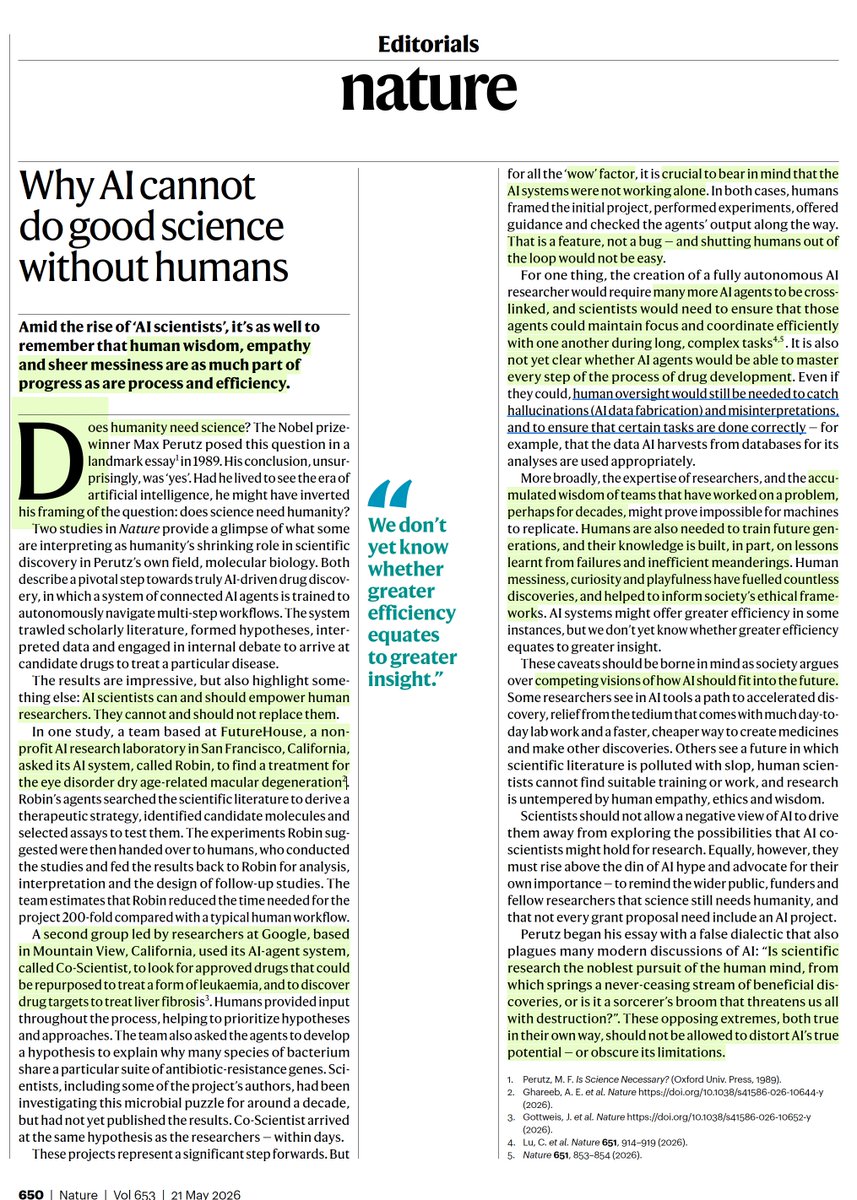
Important editorial @Nature on the new "AI-scientist" papers
"AI scientists can and should empower human
researchers. They cannot and should not replace them."
nature.com/articles/d41586-0…
May 19

A big day for multi-agent AI to accelerate biomedical discovery, hypothesis generation, designing experiments with proof points of new candidate drugs (cancer, fibrosis, macular degeneration, antimicrobial resistance, and more)
2 @Nature reports @GoogleDeepMind @FutureHouseSF
nature.com/articles/s41586-0…
nature.com/articles/s41586-0…
25
313
883
106,101

AI has already revolutionized how we write code.
Soon, it will revolutionize how we study biology.
Biology is not just chemistry; it is code: DNA, RNA, proteins, cells, and evolution interacting across scales.
AI will help us read it, reason over it, and eventually write it.
May 18

Biology is not just chemistry, it is code
13
13
89
10,589

May 14
Happy to share our most recent work as we exploring the new field (for us) of genome engineering. 😅 biorxiv.org/content/10.64898…
4
323
S.Zhang Lab retweeted

May 12
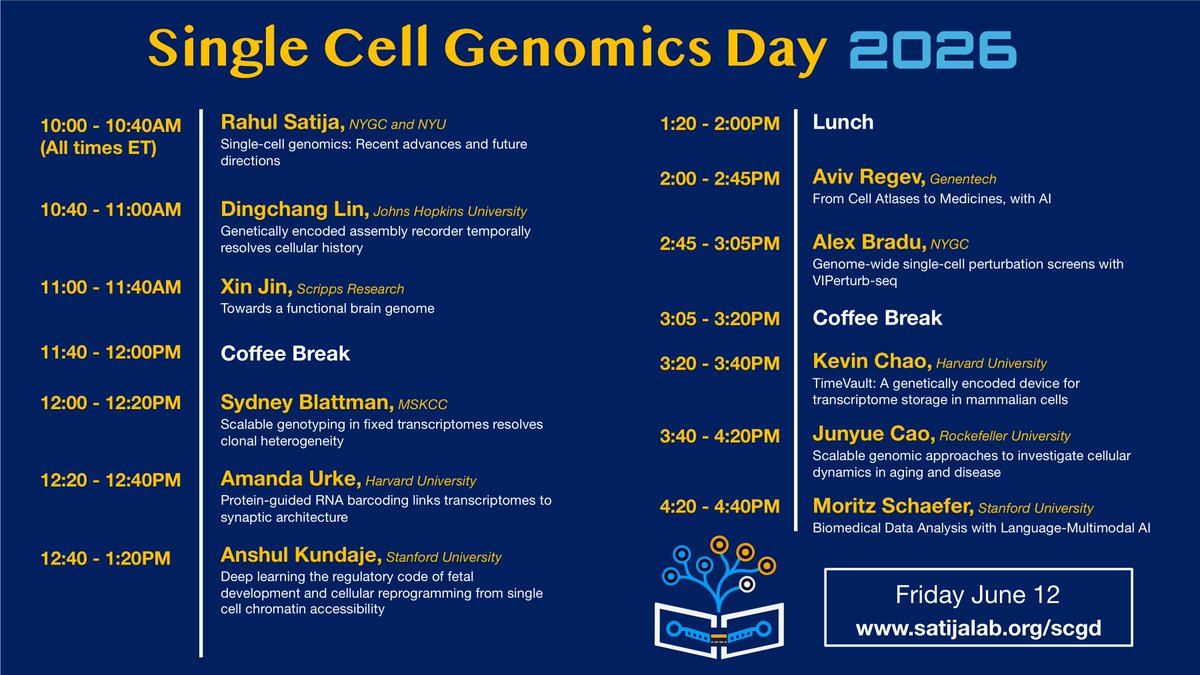
Interested in single cell and spatial genomics? Check out the agenda for our 10th Single Cell Genomics Day on Friday 6/12.
Speakers: Aviv Regev @anshulkundaje @junyue_cao @xinjin many more! All talks are free and live-streamed at satijalab.org/scgd
1
82
287
21,956
S.Zhang Lab retweeted

Mar 21
Transitioning to being a PI in the age of AI
Computational biology is in a period of upheaval that is both exhilarating and terrifying. Rapidly, we are approaching a moment of “analytic abundance”, where basically idea you can think of (and several you didn’t) magically appear within minutes of you thinking of them. Of course, the central proximal challenge is the evaluation of the sheer volume results—how do we know they are right when we don’t have the time to check over every line of code?
I think it’s very telling that when I talk to AI-pilled faculty, they are exhilerated, but many trainees seem more cautious and far more ambivalent. I think that’s because faculty often have been removed from the details for a long time and probably haven’t checked over a line of code in years. They are used to managing (rather than doing) analysis. Over time, they usually develop a sense for whether things seem right or wrong. In this day and age, this is the skill that you, too, must develop.
How do faculty do it? I am guessing every faculty member has their own list of internal sanity checks, but here are a few of mine:
* Checksums. I look for things that should add up correctly (percentages add to 100, etc.). If it looks even a little bit off, I ask questions.
* Never let go. If something doesn’t make sense, I don’t let go until it does make sense. Never relent!
* Explain stray datapoints. Always dig into outliers in the data. How did they come to be? Often, they reveal some hidden assumption or something unexpected about the data.
* Do not tolerate warnings. If code gives you a warning, resolve it. Do not continue, do not pass go, until you either understand or eliminate the warning.
* Track the number of datapoints. Even a single missing row can be a sign of some fencepost bug.
And I’m sure many more that I’m forgetting right now. Basically, it’s a transition from a maker to an interrogator.
I also feel it worth reiterating that this is a highly unsetting period of time. I have been fortunate (?) to have 16 years of time to make a transition that people are now being asked to make in months. Again, exhilarating and terrifying, all at once!
10
58
414
48,833
S.Zhang Lab retweeted

Mar 20
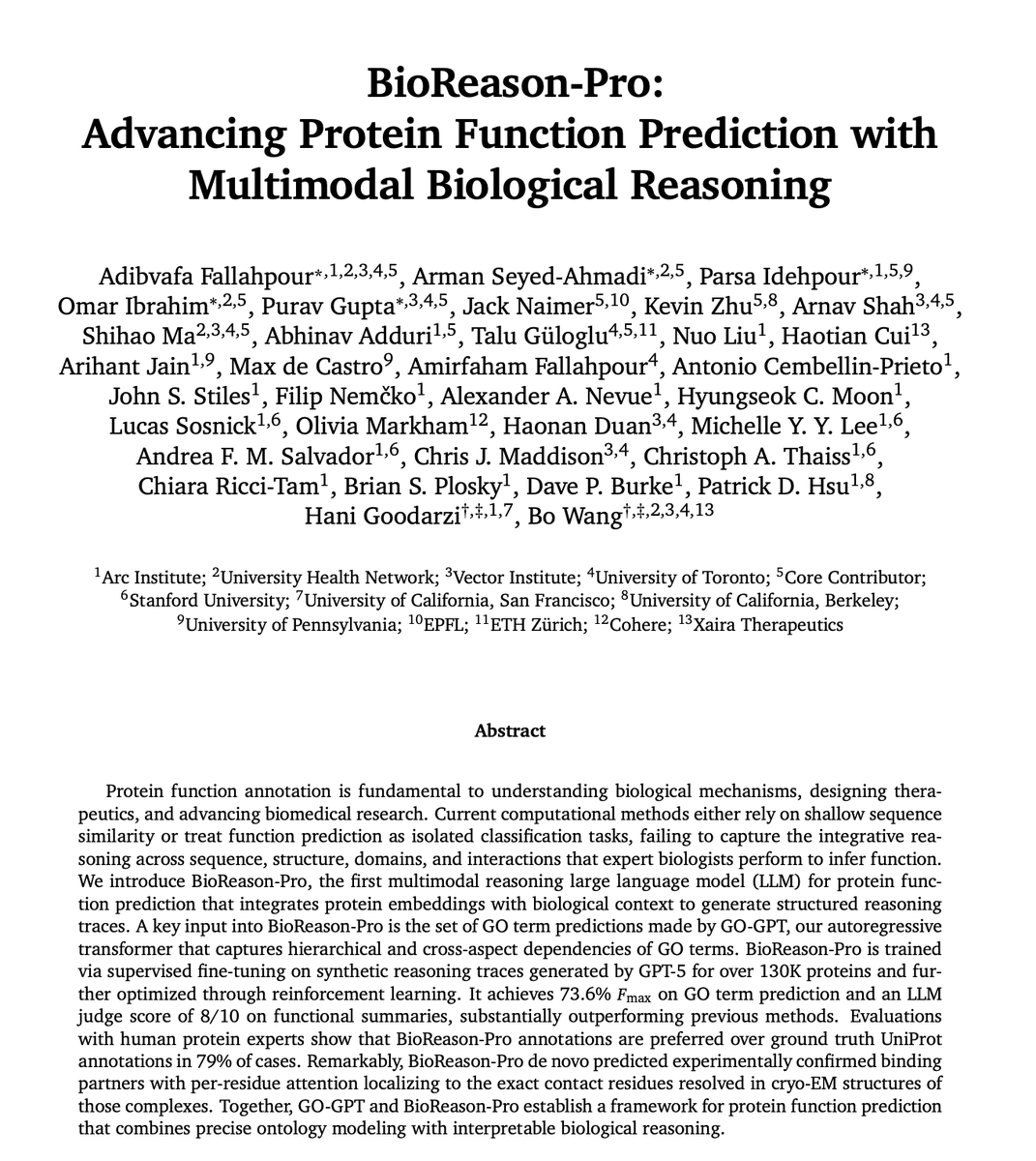
Over 250 million protein sequences are known, but fewer than 0.1% have confirmed functions. Today, @genophoria, @BoWang87 & team introduce BioReason-Pro, a multimodal reasoning model that predicts protein function and explains its reasoning like an expert would.
13
125
528
62,645
Mar 12
Spring is finally here! 🌱 Looking forward to a new season of fresh ideas, focused writing, and productive days ahead in the lab. Let's make it count. 🔬✨
1
2
245
Feb 26
I am totally impressed by analemma.ai/fars the best part of this that AI researcher is honest and hardworking 😂
93
S.Zhang Lab retweeted

Feb 19
We mapped gene interactions across different environmental conditions (GxGxE) at scale for the first time in human cells. These maps lead to the realization that many genes function in a context dependent manner which provides insight into how humans have relatively few genes but many cell types. Congratulations Ben!
Paper:
cell.com/molecular-cell/full…
8
38
177
16,866
S.Zhang Lab retweeted
An imaging-free spatial transcriptomics method facilitates high-throughput barcode array generation up to centimeter scale go.nature.com/3QYfSDd
rdcu.be/e4Db0
19
47
7,319
S.Zhang Lab retweeted
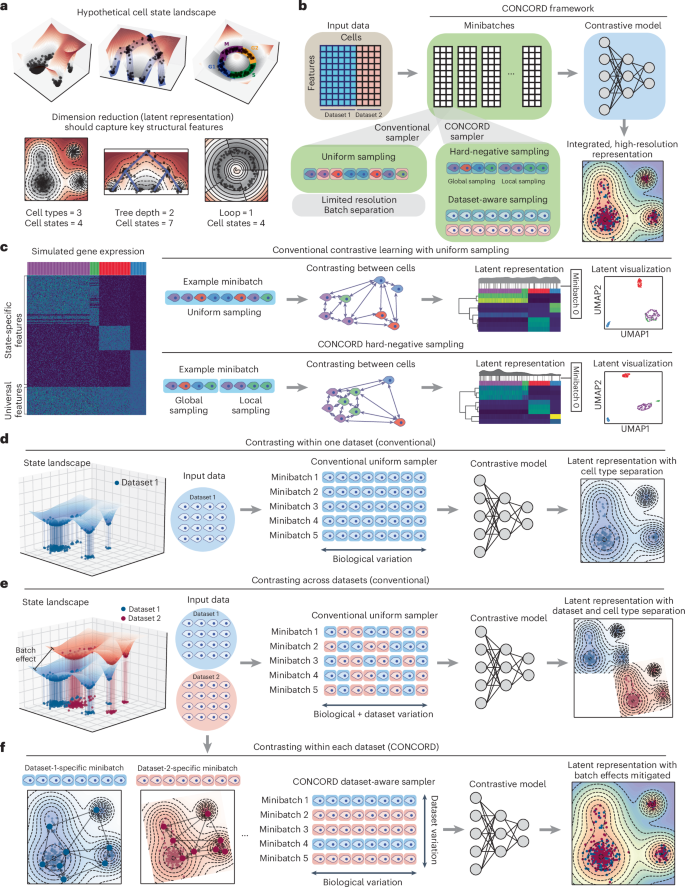
Revealing a coherent cell-state landscape across single-cell datasets with CONCORD go.nature.com/4jsNxSL
2
23
96
11,531

Researchers are targeting dormant tumour cells that might explain why some cancers reappear long after successful treatment
go.nature.com/4qFvMlG
4
55
116
16,491
S.Zhang Lab retweeted

3 Dec 2025
Pooled genetic CRISPR screening is improved in complex models through leveraging internal controls go.nature.com/4giANvD
rdcu.be/eRy4P
1
19
103
14,337
S.Zhang Lab retweeted

8 Sep 2025
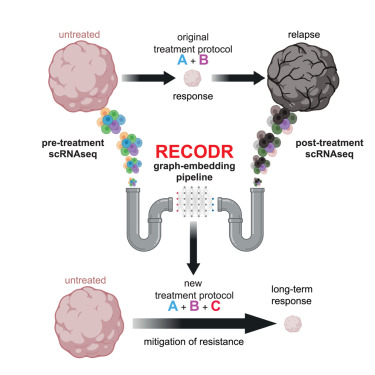
Gene context drift identifies drug targets to mitigate cancer treatment resistance dlvr.it/TMyBWv
1
29
91
7,527
S.Zhang Lab retweeted

11 Aug 2025
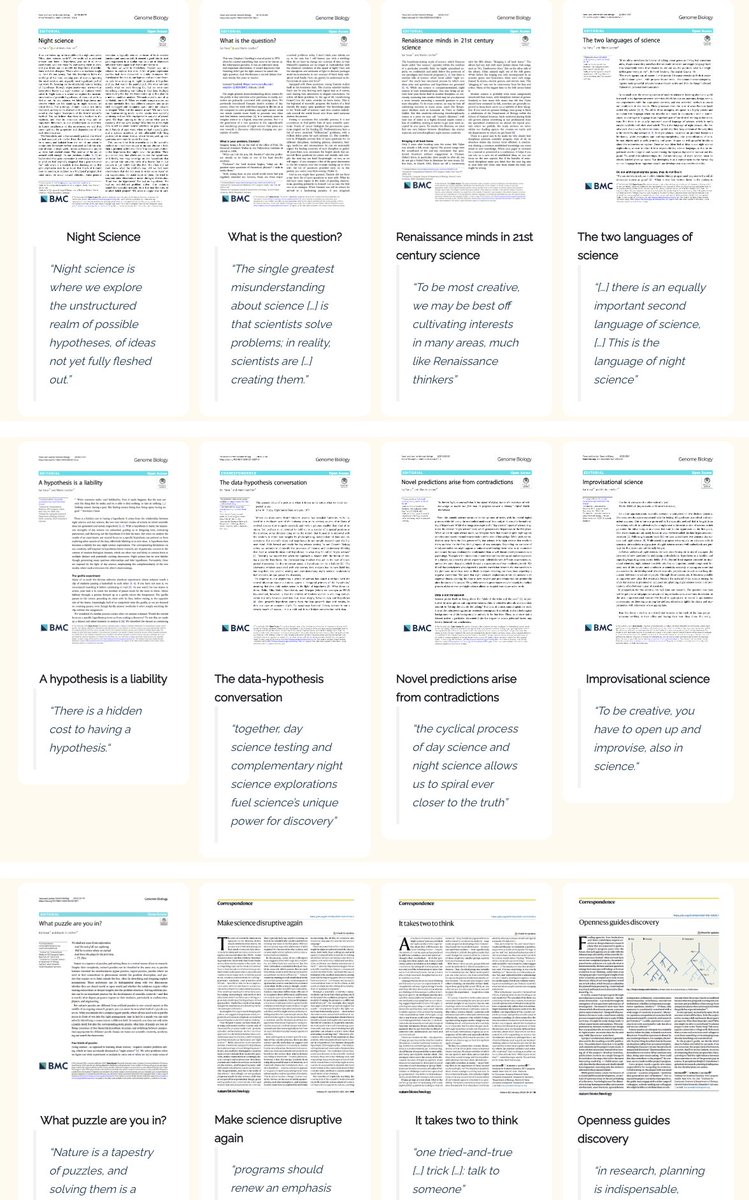
The creative process in science has its thinking tools, which we all learn eventually. Here are the 12 articles that Martin and I wrote about them, including "It takes two to think" and "A hypothesis is a liability". night-science.org/home/learn… @nightsciencepod @MartinJLercher
4
39
187
17,787
S.Zhang Lab retweeted

24 Jul 2025
Excited to share our review on metabolic adaptations in brain metastasis in @NatureRevCancer!!
👉rdcu.be/exHzY A pleasure to co-write with Pravat @CMTLab_IISERBPR and appreciate the support Daniela @DaniS2911 @utswcancer @UTSWCancerBio @UTSW_Pathology @UTSWMedCenter
13
17
71
7,178
A generative artificial-intelligence tool has designed a synthetic CRISPR system that successfully edits human DNA
go.nature.com/3JadkRy
35
136
458
53,079
S.Zhang Lab retweeted

29 May 2025
📢 Introducing Biomni - the first general-purpose biomedical AI agent.
Biomni is built on the first unified environment for biomedical agent with 150 tools, 59 databases, and 106 software packages and a generalist agent design with retrieval, planning, and code as action.
This enables Biomni to perform a wide range of research tasks - from literature review, hypothesis generation, protocol design, data analysis, clinical reasoning, and much more - across subfields like genomics, microbiome, physiology, and beyond.
Some key results:
🔬 Designed a molecular cloning experiment validated in wet lab, matching the performance of a >5-year expert in a blinded test
📊 Completed a wearable bioinformatics analysis across 458 messy files in 35 min vs. 3 weeks by a human
🧠 Uncovered novel transcription factor hypotheses driving skeletal lineage regulation
We built a web platform where biomedical scientists can immediately delegate their tasks to the agent today, completely free!
🧪 Try it now: biomni.stanford.edu
📄 Paper: biomni.stanford.edu/paper.pd…
💻 Code: github.com/snap-stanford/bio… (will be fully open-sourced very soon!)
💬Join the community: tinyurl.com/biomni-slack
Biomni is an open-source initiative: we invite the community to build on it and advance biomedical research at scale.
With amazing collaborators @StanfordAILab @StanfordMed @StanfordCancer @genentech @arcinstitute @UCSF @UW @PrincetonAInews
@serena2z @hcwww_ @YuanhaoQ @mintaylu @yusufroohani @RyanLi0802 @LinQiu0128 Gavin Junze Di Shruti Jennefer Xin Zhou @MWheelerMD Jon Bernstein @MengdiWang10 @PengHeAtlas @SnyderShot @lecong Aviv Regev @jure
25
116
443
75,040
S.Zhang Lab retweeted

27 May 2025
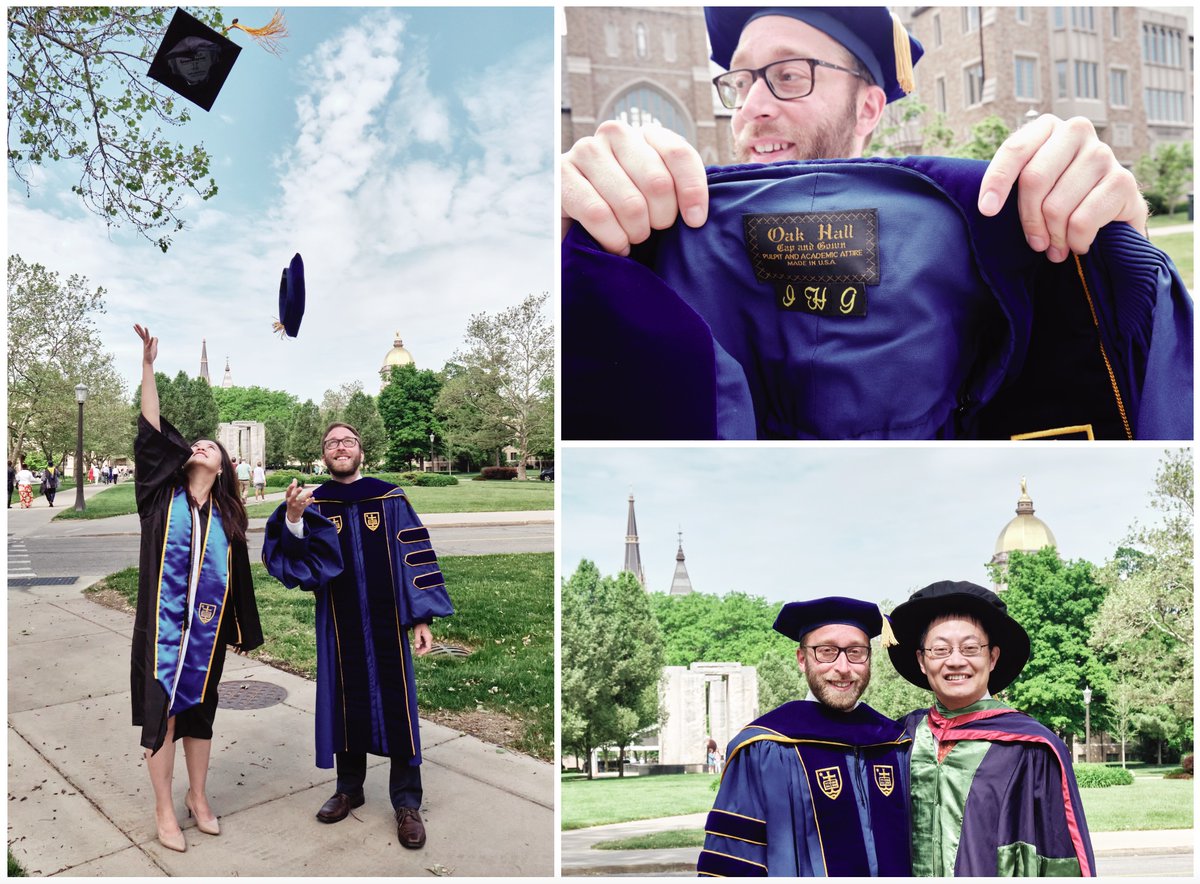
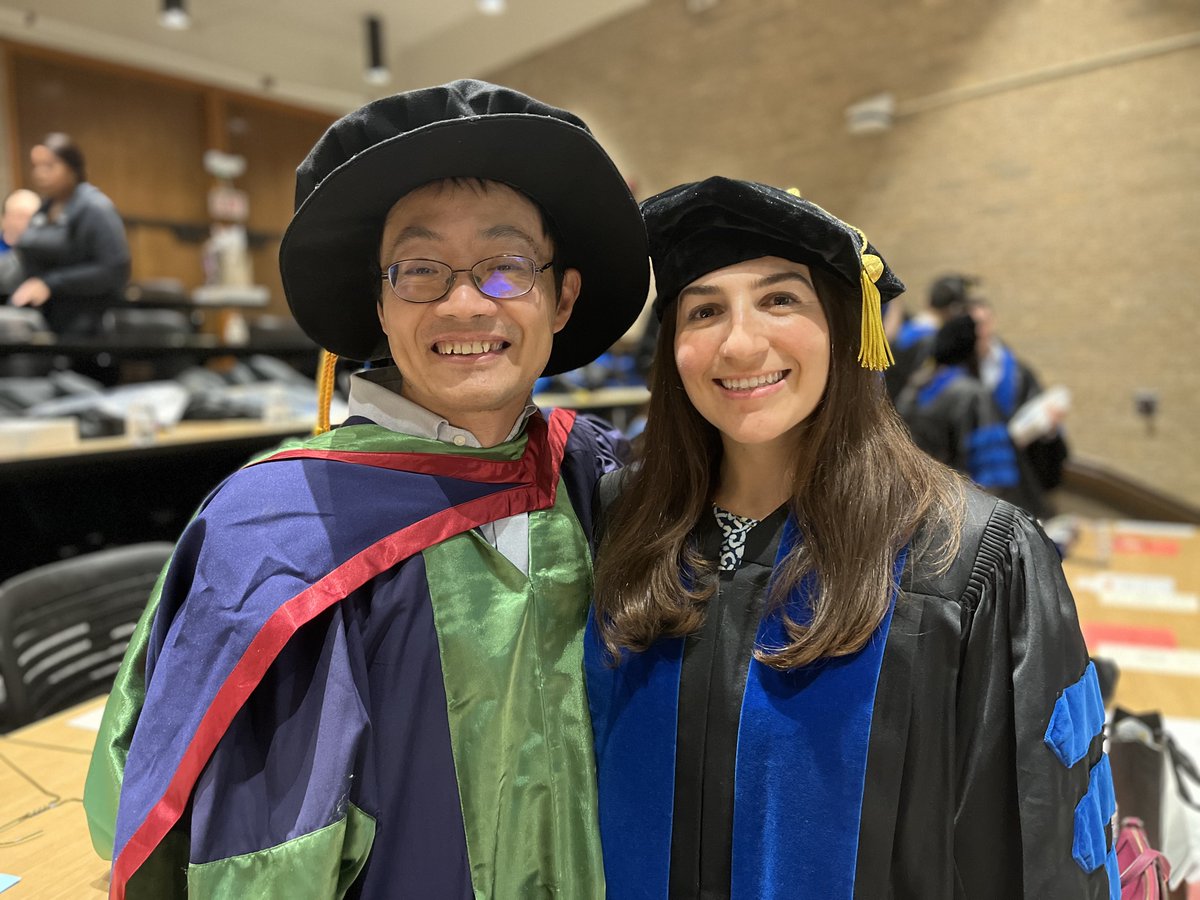
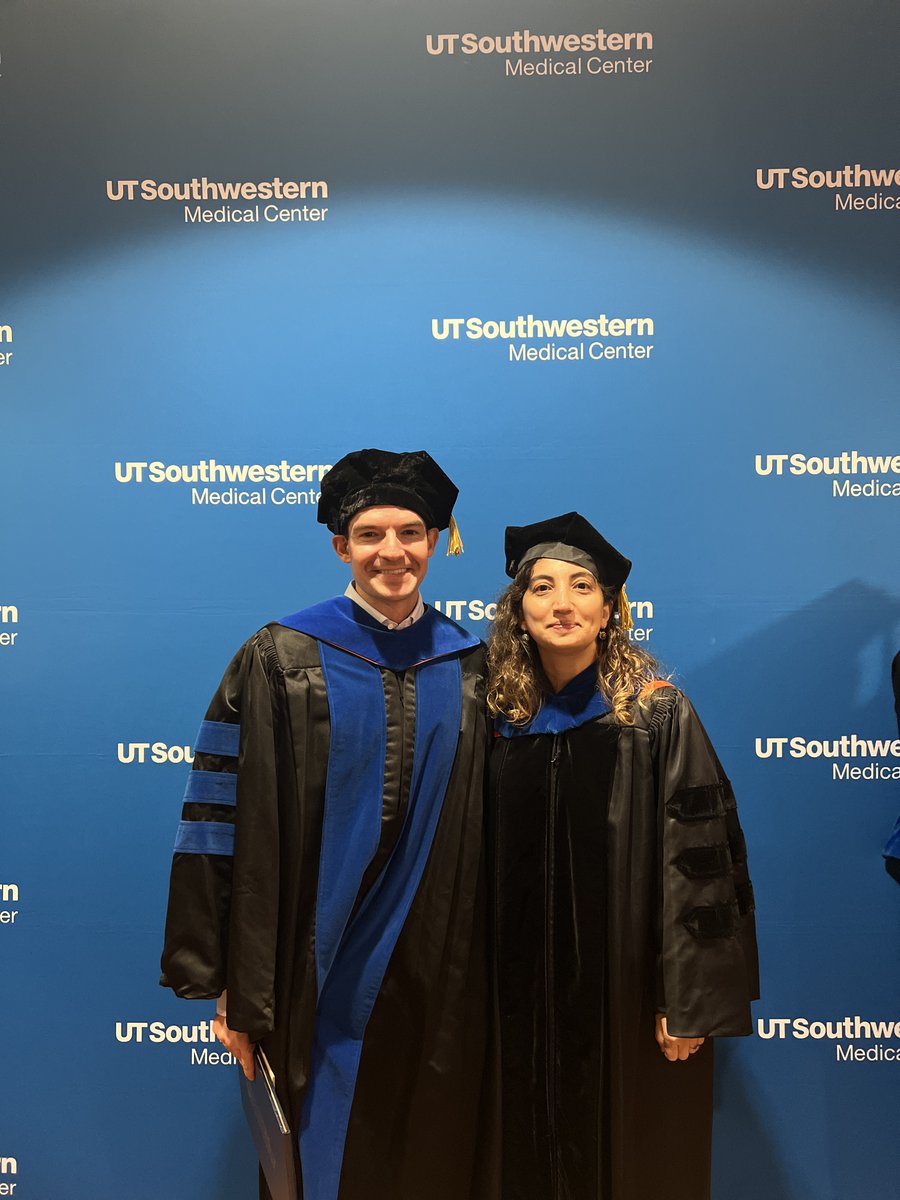
Congrats to our recent Pathology @UTSWGradSchool students for receiving their PhDs! 🎓
Dr. Ryan Kowash – Cancer Bio (Mentor: Esra Akbay)
Dr. Samantha Golomb – Cancer Bio (Mentor: Siyuan Zhang)
Dr. David Sanchez – Genetics, Development & Disease (Mentor: Diego Castrillon)
1
4
20
2,456
10 May 2025
Why I teach my students about scientific failure | Science | AAAS science.org/content/article/…
2
81