The Savvides lab @InflamResCen and @ugent employs #IntegrativeStructuralBiology to study proteins pivotal to inflammation, immunity and cancer
Joined March 2023
- Tweets 21
- Following 227
- Followers 198
- Likes 14
6 Photos and videos
Savvas Savvides Lab retweeted

13 Oct 2024
Improved protein binder design using beta-pairing targeted RFdiffusion
🚀 New preprint from David Baker!🚀
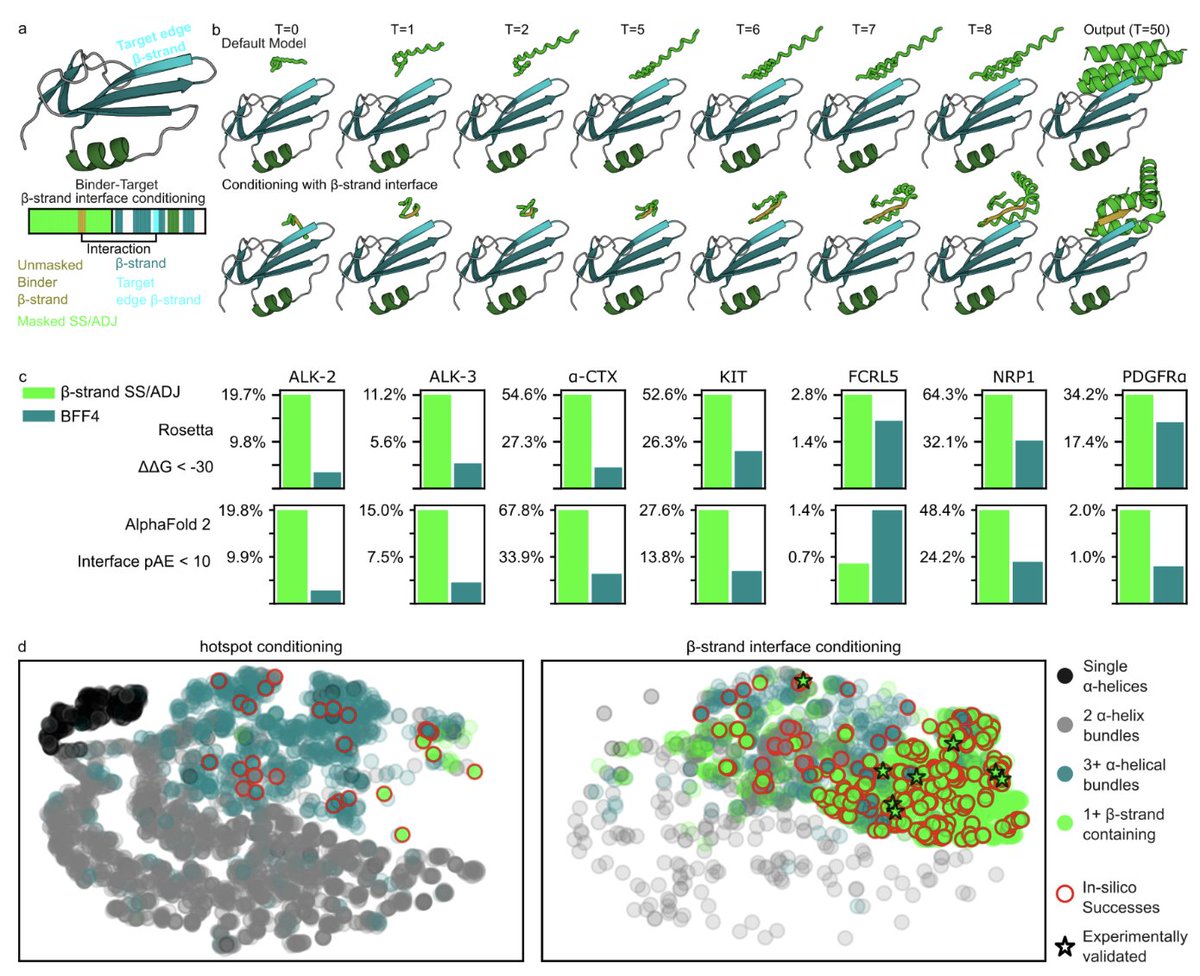
• A breakthrough in protein binder design: this study uses RFdiffusion conditioned to generate binders that form precise beta-strand pairings with polar protein targets, yielding binders with superior affinity and specificity.
• The approach focuses on polar regions of target proteins, especially edge beta-strands, addressing the challenge of complementing hydrogen bond donors and acceptors that are otherwise exposed to water.
• Designed binders achieved affinities ranging from 76 pM to mid-nanomolar, targeting therapeutically relevant proteins like KIT, PDGFRɑ, and ALK-2, with no significant off-target binding.
• A co-crystal structure of a binder in complex with the KIT receptor confirms the computational accuracy of this new design method, showcasing near-perfect matching of the design model and real-world interactions.
• This beta-strand focused method not only enhances the range of RFdiffusion’s capabilities but also expands the potential for developing new therapeutic binders targeting polar protein surfaces, such as those in cancer-related pathways.
• The new design approach surpasses traditional methods, particularly in targeting polar regions and edge beta-strands in proteins like ALK-2, ALK-3, and PDGFRɑ, where previous techniques failed to generate effective binders.
• The study demonstrates that beta-strand pairing conditioned designs have higher thermal stability and are more specific in binding compared to earlier models, making them valuable for therapeutic applications like receptor targeting and drug delivery.
@UWproteindesign @SavvidesLab @StevenMBanik @TimothyPJenkins @Green_Ahn @MelBenard86 @kf_verstraete @SusanaVazTor @_JosephWatson @martin_toul
📜Paper: doi.org/10.1101/2024.10.11.6…
46
177
15,065
Savvas Savvides Lab retweeted

29 Apr 2024
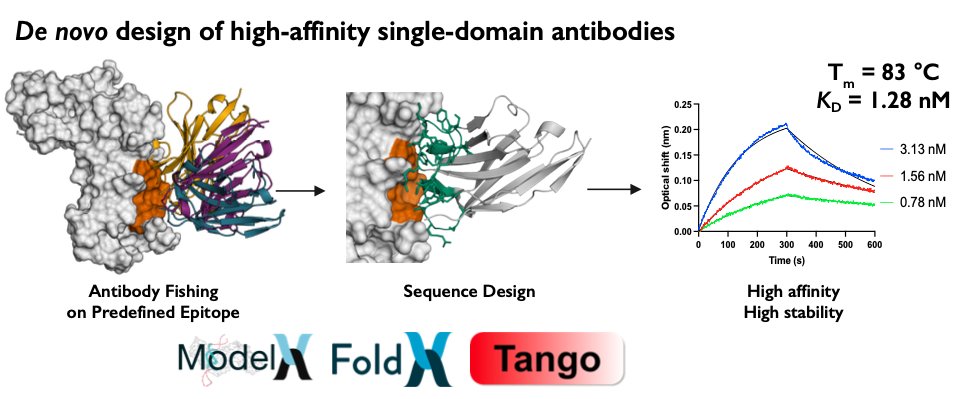
Read the preprint bit.ly/3QpiUk1 describing a milestone in our de novo antibody design efforts.
Our pipeline can now design high-affinity and stable antibodies in a single round!
Fantastic collaboration with @lab_serrano
@SavvidesLab & Maarten Dewilde @KU_Leuven
9
26
3,527
Savvas Savvides Lab retweeted

29 Apr 2024
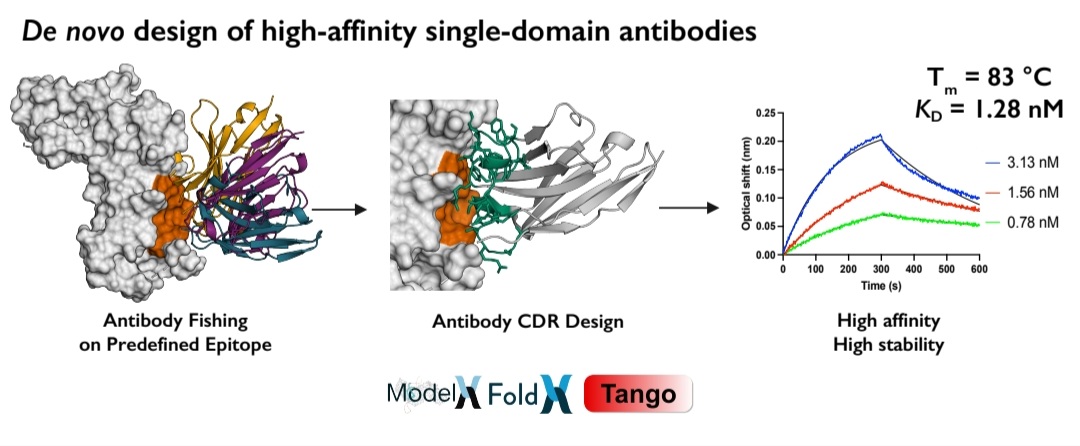
Happy to share the #preprint on #denovo #antibody design in a single round yielding stable Abs with high affinity:
lnkd.in/ew5ATYHy
Grateful to be part of great collaboration efforts betwen @VIB_Switch_Lab @KU_Leuven @CRGenomica @InflamResCen @VIBLifeSciences @ugent
1
9
33
2,805

27 Apr 2024
biorxiv.org/content/10.1101/…
A prodigious effort and interdisciplinary collaborative work by @VIB_Switch_Lab at @VIBLifeSciences @KU_Leuven , @lab_serrano at @CRGenomica, @SavvidesLab at @VIBLifeSciences @InflamResCen @ugent, and Maarten Dewilde Lab @KU_Leuven
1
4
16
802
28 Mar 2024
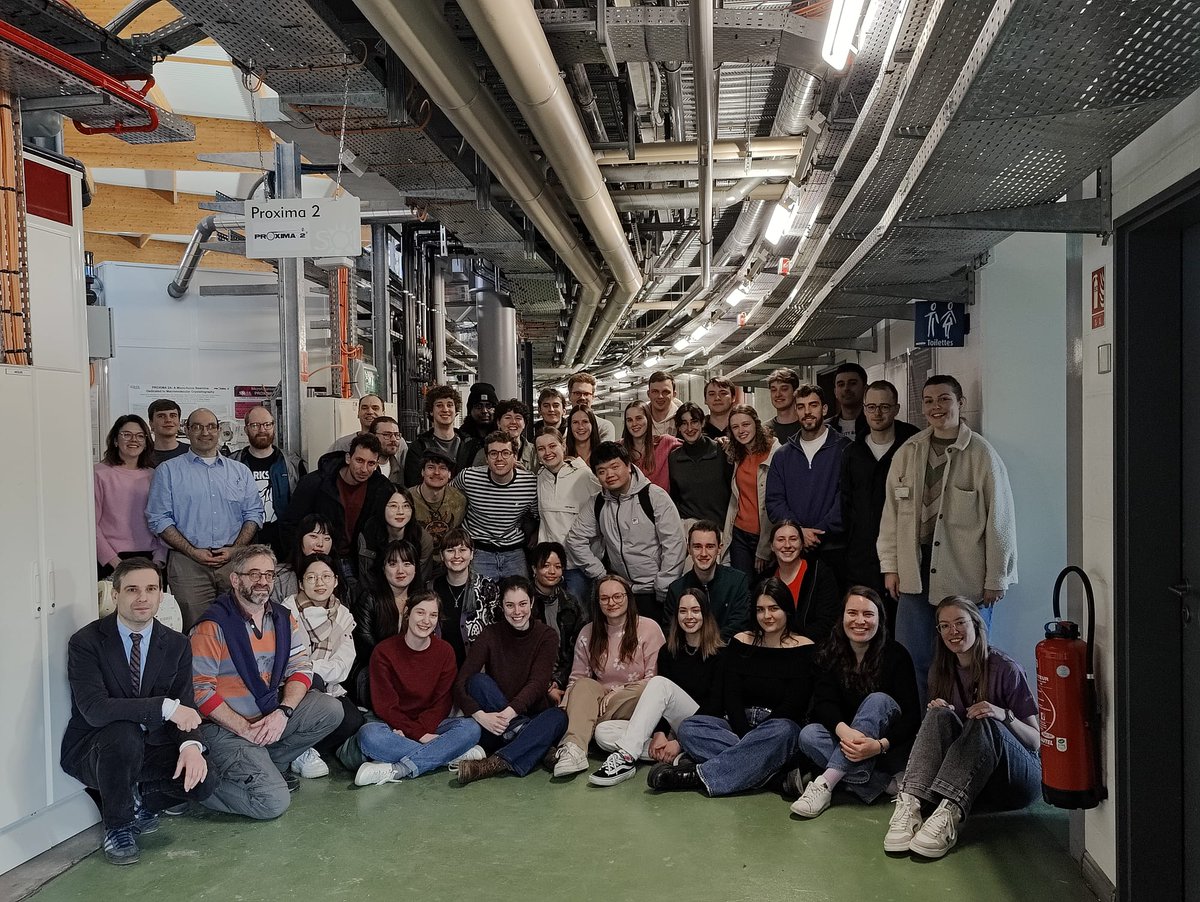
Training the next generations of scientists in experimental structural biology. We are grateful to
@synchroSOLEIL and @Proxima2A
for hosting our Master program in Biochemistry-Biotechnology @ugent for a practical workshop on X-ray crystallography.
2
5
31
1,076
Savvas Savvides Lab retweeted

16 Feb 2024
@GoossensLabVIB Bart Ghesquière @jennyrussinova @frbre @lab_marine @RaesLab @jeroenraes @FarrowLab @AgostinisLab @Verstreken_Lab @VanderhaeghenP2 @MancusoRenzo @FendtLab @SavvidesLab @steinaerts @martin_toul @AvilienDard @yongming_luo Kresimir Sola @M4riekeHoekstra Célia Lentini
1
3
782
29 Jan 2024
Delighted to share our work in @NatureSMB on #structures of IL-12/23 cytokine complexes involving the complete extracellular domains of IL-12 family receptors, jointly celebrating 30 years of IL-12 receptor #immunology and @NatureSMB
nature.com/articles/s41594-0…
2
13
59
4,290
Savvas Savvides Lab retweeted

23 Jan 2024
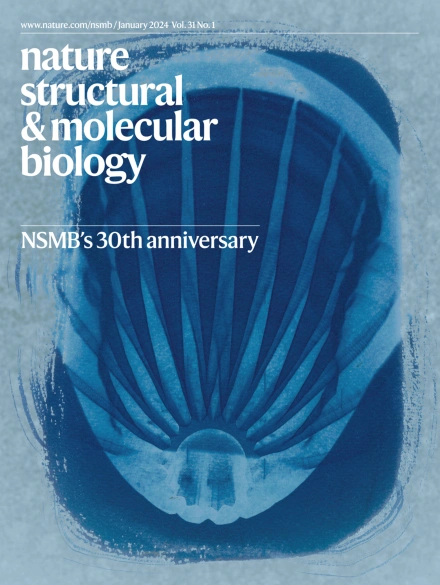
HAPPY 30th BIRTHDAY TO US🎂
First issue of NSMB came out in January 1994. Come celebrate with us 30 years of changes and progress in structural and molecular biology
nature.com/nsmb/volumes/31/i…
We are continuing celebrations throughout the year with more content, so stay tuned!
16
56
17,097
19 Jan 2024
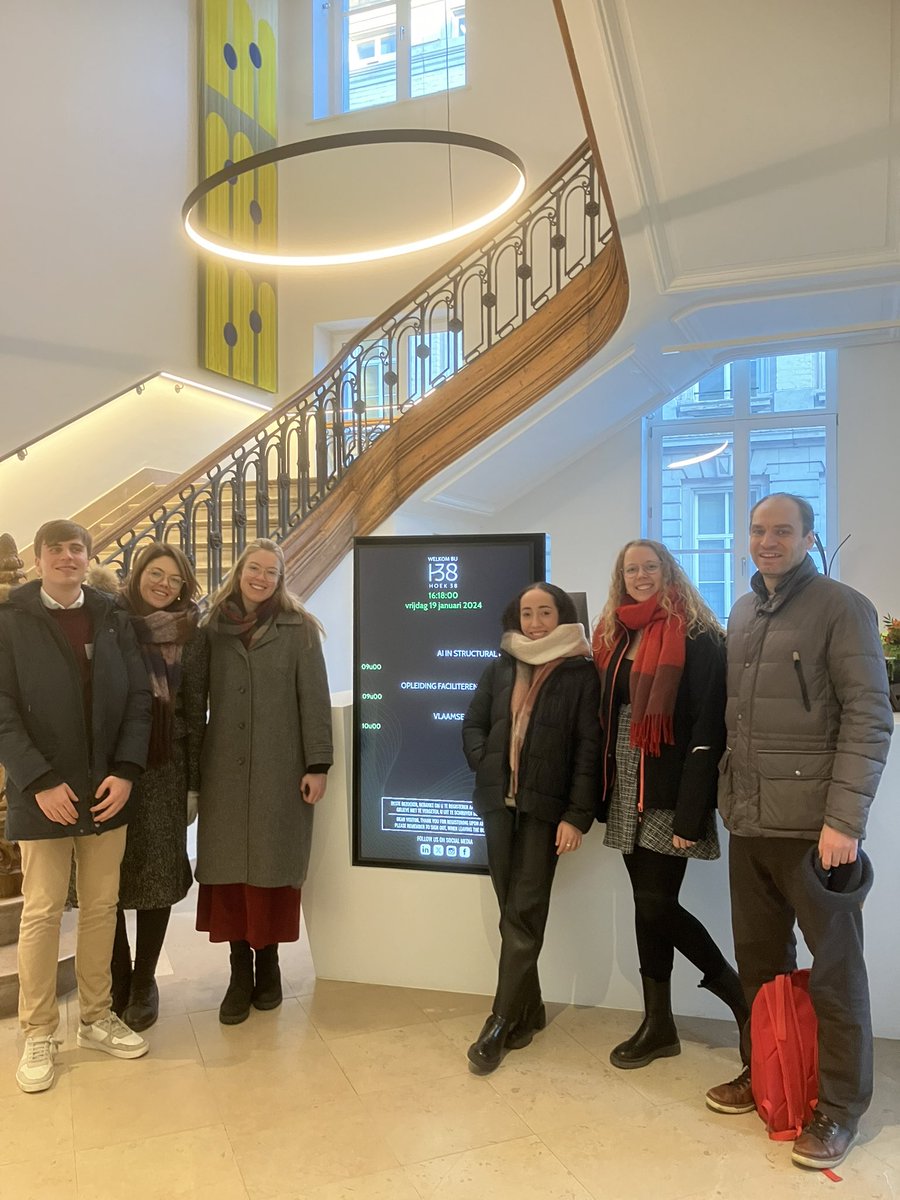
We just had a very exciting, educational, and interactive symposium on #AI in #StructuralBiology hosted by @VSC_HPC
and @FWOVlaanderen…Prediction cannot happen without experiments! #AlphaFold #StructurePrediction #XrayCrystallograpy #CryoEM
7
22
629
10 Jan 2024
Ex vivo X-ray crystallography meets Immunology inside and outside the box in our latest collaborative work with @bart_lambrecht and colleagues at the @InflamResCen and @ugent
doi.org/10.7554/eLife.90676
1
3
7
511
16 Oct 2023
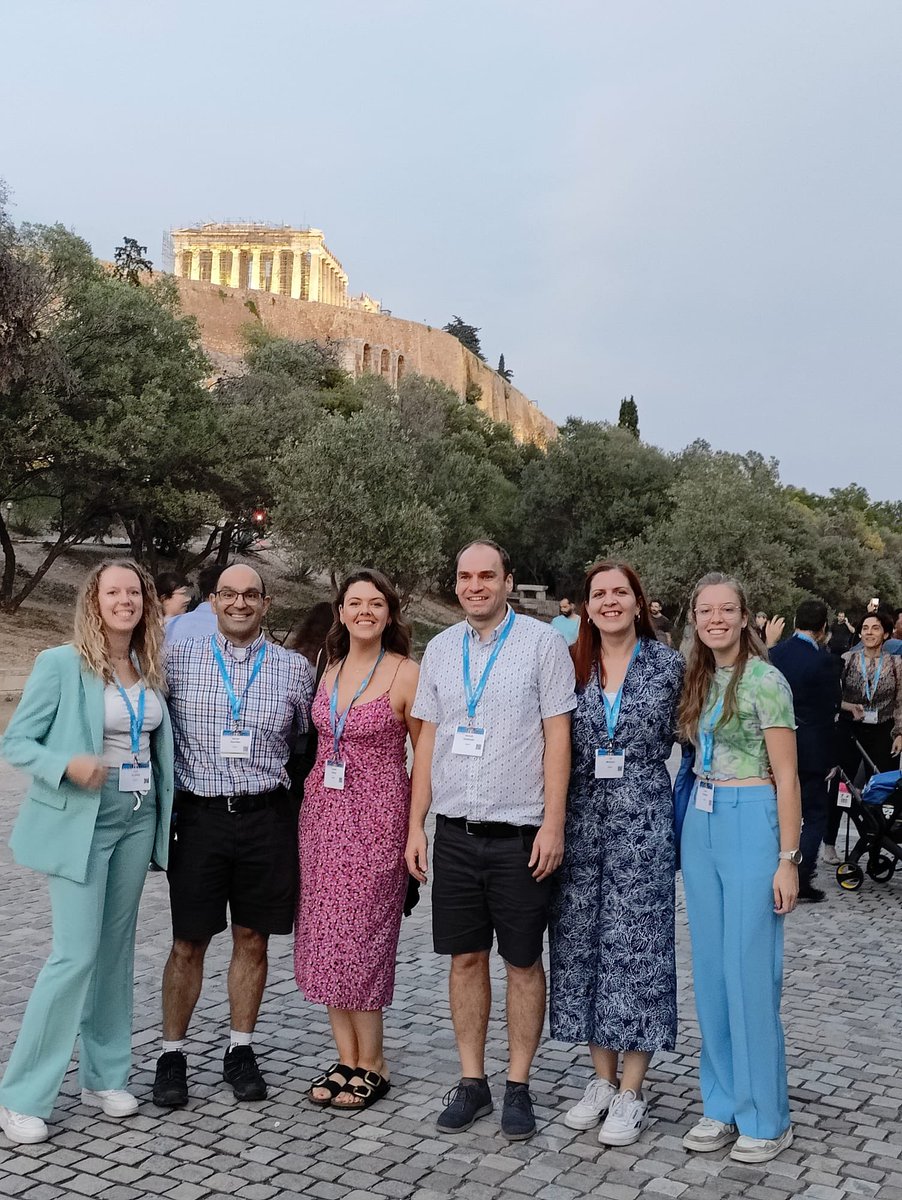
Great start to an inspirational #cytokines2023 at the foot of the Acropolis @CytokineSociety
2
6
41
2,785
15 Oct 2023
We are heading with a team of seven to Athens, Greece for a very exciting
#cytokines2023
6
17
1,159
28 Apr 2023
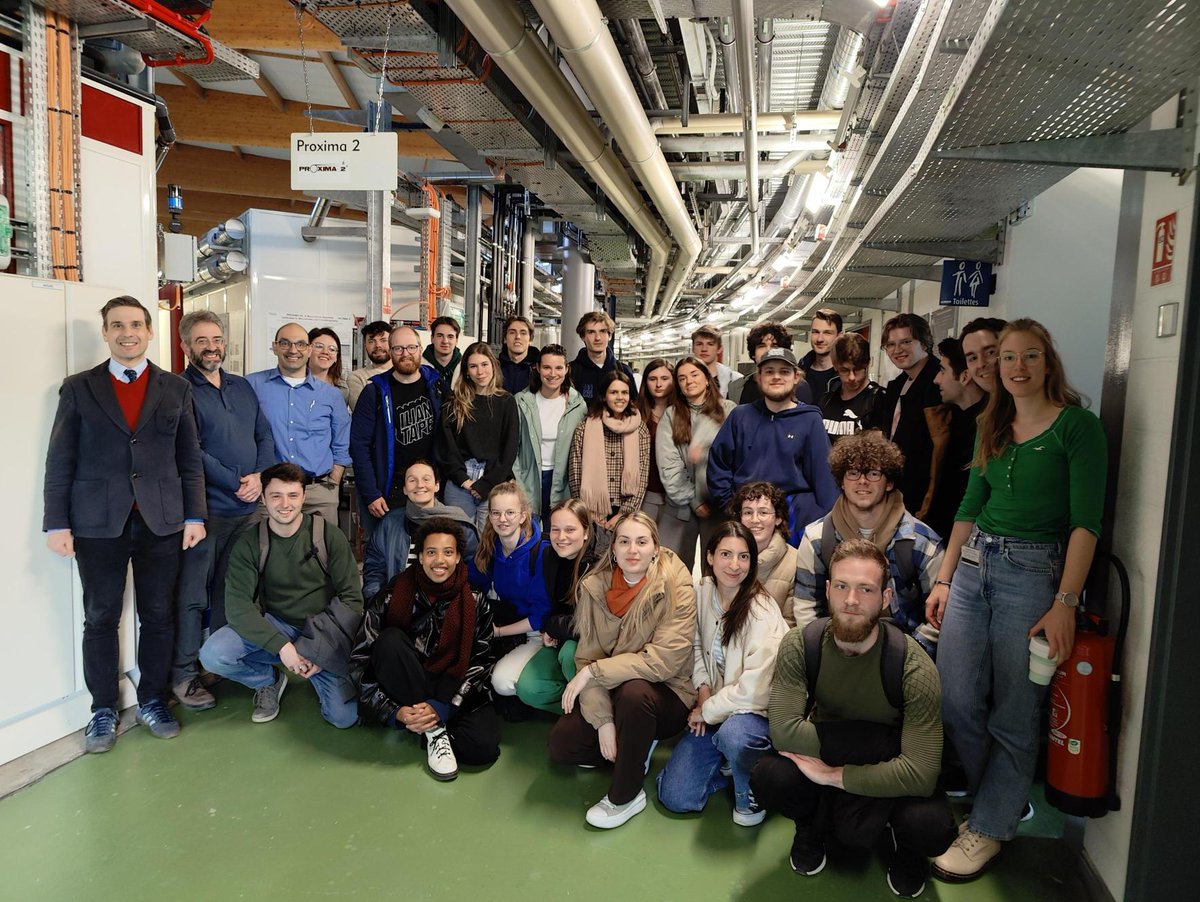
Big thanks to @synchroSOLEIL & @Proxima2A for giving our @ugent students a memorable visit and an on-site view into both theory & practice in #proteincrystallography! #structuralbiology @LM_UGent
27 Apr 2023

PROXIMA 2 hosted students and tutors from the University of Ghent for practicals, tutorials and lectures covering all the steps in X-ray crystallography - crystallisation, harvesting, data collection, structure determination and Savvas Savvides' most famous crystallography quiz!
1
1
9
1,022
19 Apr 2023
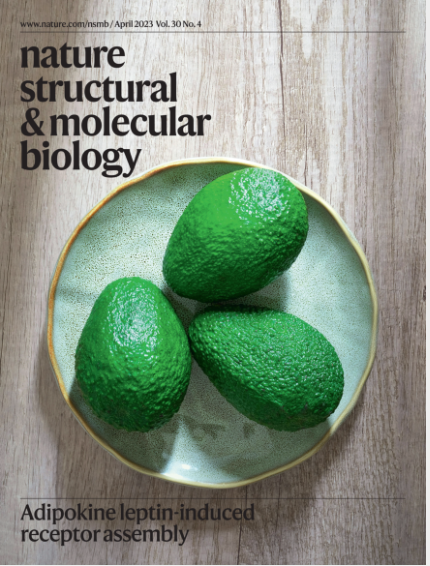
Check out the latest issue of @NatureSMB featuring Tsirigotaki et al. nature.com/articles/s41594-0… on the Leptin-mediated receptor complex as a cover story and additional coverage via a News & Views article
nature.com/articles/s41594-0…
1
10
31
2,642
Savvas Savvides Lab retweeted

29 Mar 2023
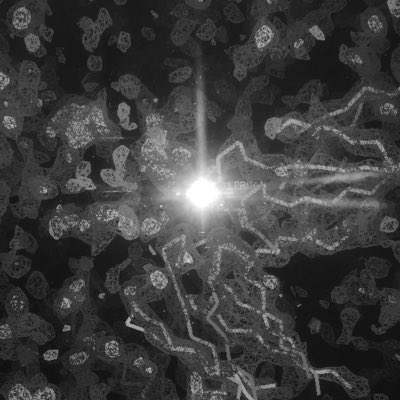
Given ISOLDE is a model-fitting tool, it was about time I gave it a way to, you know, actually validate the fit of a model to a map. As such, in consultation with Greg Pintille and Tom Goddard I've implemented the Q-Score algorithm (nature.com/articles/s41592-0…) in ChimeraX. (1/2)
5
45
239
30,210
23 Mar 2023
We're thrilled to share that @Savvideslab's mechanistic and #structural studies on newly described #trimerization of #Leptin receptor has been published @NatureSMB today! Many congrats to everyone contributing to this work! @VIBlifesciences
nature.com/articles/s41594-0…
1
9
52
3,394