Radiation Oncologist, Associate Professor at @NorthwesternMed @LurieCancer. #radonc #btsm #pcsm tweets = own opinion
- Tweets 1,667
- Following 1,066
- Followers 1,908
- Likes 7,969

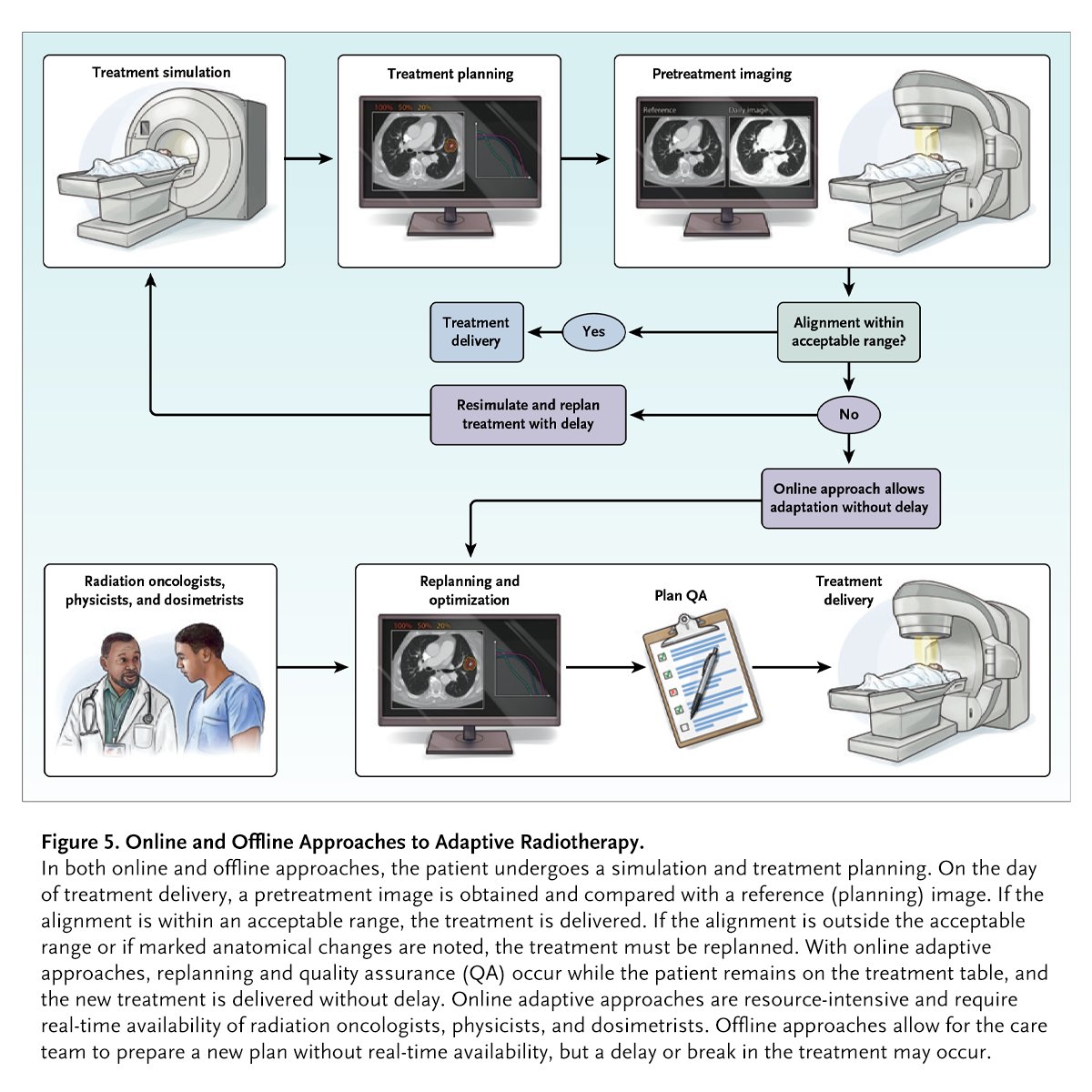
ALT Figure 5. Online and Offline Approaches to Adaptive Radiotherapy. In both online and offline approaches, the patient undergoes a simulation and treatment planning. On the day of treatment delivery, a pretreatment image is obtained and compared with a reference (planning) image. If the alignment is within an acceptable range, the treatment is delivered. If the alignment is outside the acceptable range or if marked anatomical changes are noted, the treatment must be replanned. With online adaptive approaches, replanning and quality assurance (QA) occur while the patient remains on the treatment table, and the new treatment is delivered without delay. Online adaptive approaches are resource-intensive and require real-time availability of radiation oncologists, physicists, and dosimetrists. Offline approaches allow for the care team to prepare a new plan without real-time availability, but a delay or break in the treatment may occur.