
Joined December 2024
- Tweets 119
- Following 118
- Followers 541
- Likes 222
4 Photos and videos



Pinned Tweet

16 Sep 2025
The impact of age-related diseases happen sooner than you think. Welcome to the Thalion Initiative...
11
50
237
2,976,086
The Thalion Initiative (US) retweeted

Jun 10
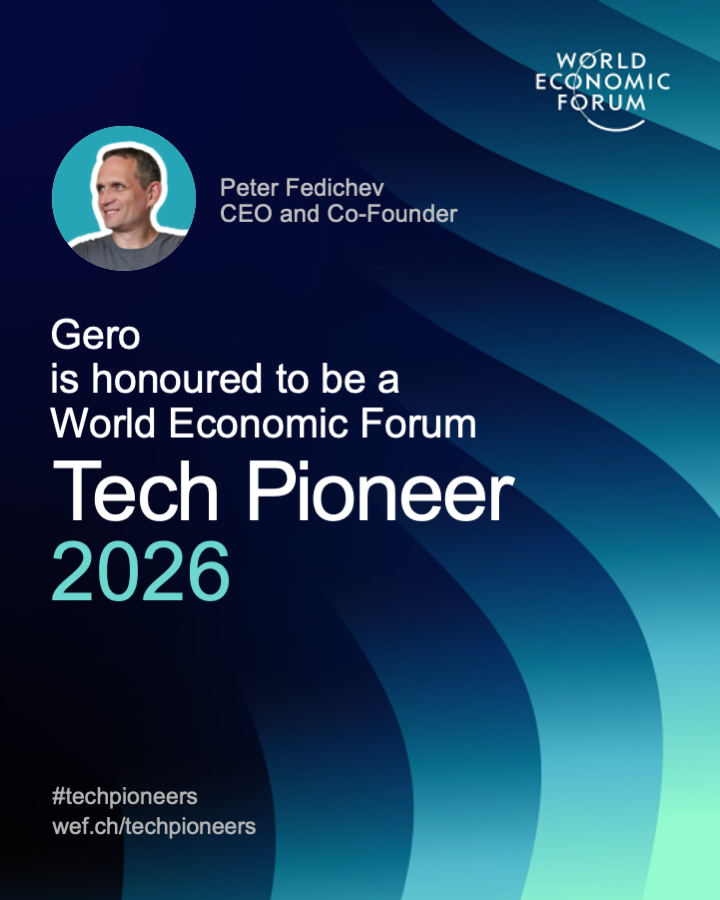
Gero has been named a 2026 Technology Pioneer by the World Economic Forum (WEF) for Advancing the Physics of Aging in Drug Discovery
Gero’s physics-first AI drug discovery platform is transforming breakthroughs in the physics of aging into a pipeline of medicines designed to treat age-related diseases and slow the aging process itself.
We're especially glad that the World Economic Forum and Davos platform will help us educate the community and lead the conversation on a question we believe defines the next decade of medicine: treating aging as a new pharmaceutical category, one we are working to define.
Jun 10

Gero has just been selected as a 2026 Technology Pioneer by the World Economic Forum (@wef).
For over a decade I've approached #aging as a physicist: not as a collection of isolated diseases to treat after they appear, but as a macroscopic process driven by the accumulation of entropic damage and the loss of resilience in a complex system. That framework is what led us to found @hacking_aging.
At Gero, we use physics-informed models on large-scale clinical data to separate aging itself from specific disease trajectories. Our goal is straightforward: identify ways to slow the underlying rate of functional decline before reversible stress turns into irreversible collapse. Stop the clock where it matters most — on the processes that erode healthspan.
This recognition from the WEF is a strong validation of that direction. Looking forward to connecting with the other pioneers and pushing these ideas further.
➡️Read the full announcement: businesswire.com/news/home/2…
1
7
248
The Thalion Initiative (US) retweeted
The biology is ready? ...to be studied, sure. That's why we need funding.
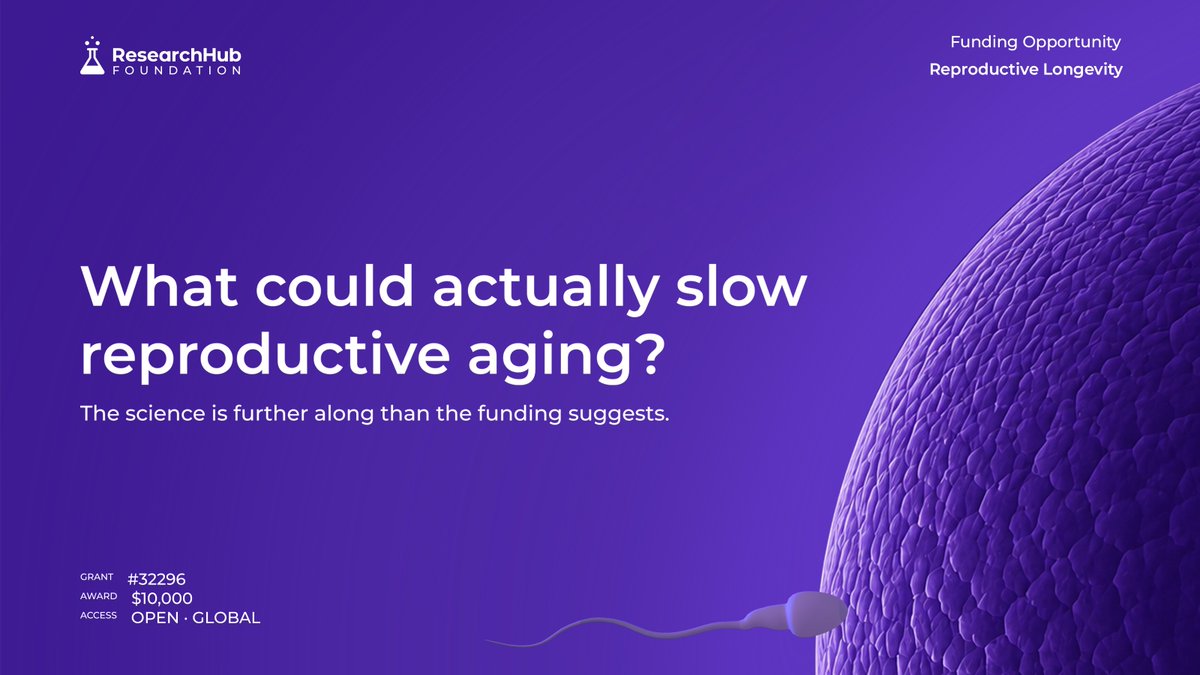
Nice proof-of-concept grant opportunity for repro aging

The biology is ready. The researchers are ready. The funding hasn't kept up...until now.
@ResearchHub is offering $10k for research on reproductive longevity.
🧵
5
17
2,171
The Thalion Initiative (US) retweeted
Are biophysical constraints biology's underrated variable?
We focus mostly on signalling molecules but this new paper from @PetrovaLab shows that a physical constraint like osmotic pressure can block lymphatic vessel growth even when growth factors are abundant. So it's not controlling it instead of signalling but alongside it like an independent gate.
If we remove AQP1 (might have heard of this water channel, Nobel-winning discovery, etc) , gut lymphatics shorten, fat absorption fails, mice gain less weight on a high-fat diet. The physical microenvironment is a co-determinant in the process.
Another curious thing is the context-specificity: AQP1 marks stress-adaptive lymphangiogenesis in the gut, lymphedema, and inflammation but not in normal embryonic development. We see different programs, depending on physical context.
Maybe biology is more mechanical than the dominant frameworks suggest.
3
3
11
730
The Thalion Initiative (US) retweeted
Great piece on comparative biology and what it can teach us about aging by @Aria_Babu . Humans are already outliers. Most mammals get 1 billion heartbeats, we get 2 billion; we live decades past reproduction and way longer than animals our size. Yet there's so much more to learn from other species that can repair DNA, avoid cancer, or regenerate.
worksinprogress.co/isue/the-…
3
3
11
895
The Thalion Initiative (US) retweeted
Did they just discover cellular bombs? Biology is so much fun

New-found immune cells called ‘ruptoblasts’ explode when triggered, ejecting toxic chemicals capable of delivering death to surrounding cells in just minutes. The cells’ discoverers say that this process, which they call ruptosis, seems to be a new form of cell death.
go.nature.com/4x3SZBT
3
19
629
A great snapshot of the field, and good to see the recognition of comparative and evolutionary biology in this report - we're betting a lot on it @TTIScience.

1
7
713
The Thalion Initiative (US) retweeted

In this latest Lifespan Interview @DToddWhite discusses @TTIScience: applying a first-principles approach to aging biology, and building tools and datasets needed to accelerate longevity research.
👉 Read more: lifespan.io/the-thalion-init…
5
13
1,626
The Thalion Initiative (US) retweeted

May 24
Everyone being excited that Bryan Johnson might “fix women’s health” in itself shows how dire the situation is. It's been so underfunded and under-researched that a wealthy man publicly funding a high-touch diagnostic workup for his girlfriend can look to some as one of the most ambitious efforts in the space.
But let's not confuse personalized medicine with research infrastructure. Bryan is not funding women’s reproductive health research here. He is funding a very comprehensive clinical investigation for one woman. Great for Kate. But that is not the same as producing generalizable knowledge for women.
It can't:
-answer population level questions
-tell us how endometriosis varies by age, genetics, immune state, hormonal history, metabolic health, parity, environmental exposures, or lesion location
-validate a diagnostic pathway
-determine sensitivity and specificity of ultrasound or MRI across disease stages
-compare treatments
-capture recurrence
-explain mechanisms
-build standards of care.
We need real infrastructure - cohorts, mechanistic studies, better imaging, biomarkers, longitudinal datasets, trials and funding models that treat women’s health as core biology.
That said, visibility is not nothing. If this gets people asking why endometriosis is still so poorly understood, why diagnosis is so slow, why women’s pain is normalized, and why reproductive biology has not received the seriousness it deserves, then it can be valuable

What do you mean Bryan Johnson is doing his weird science shit on his girlfriend but its probably the most comprehensive and highly funded research in women's health and he is probably going to cure endometriosis ?????
3
2
50
3,973
The Thalion Initiative (US) retweeted
May 21
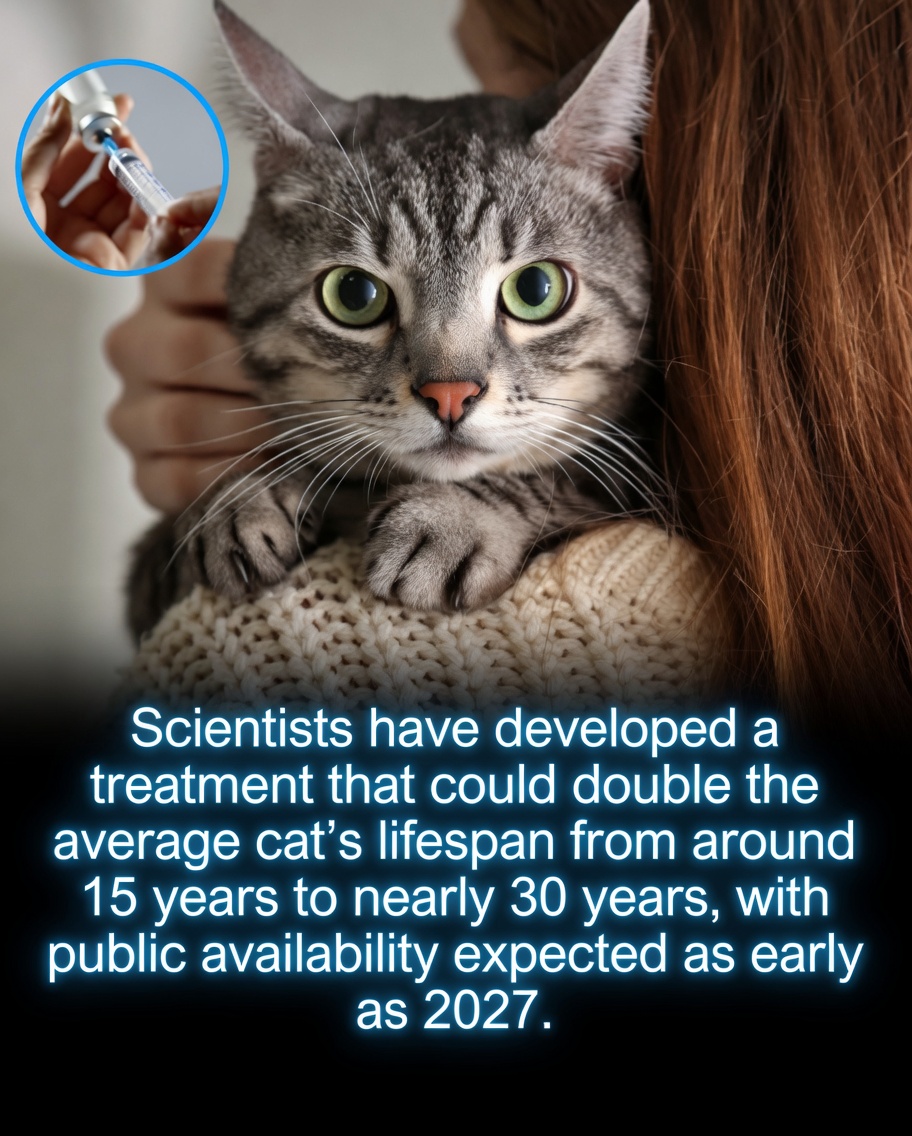
Cats aren’t worms. You don’t casually double the lifespan of a mammal.
What we have is evidence of a large 1-year survival benefit in a tiny group of cats already suffering from advanced kidney disease. The 30-year claim is based on nothing.
It's still exciting but for a different reason. The comparative biology angle is more interesting: cats may have a species-specific AIM vulnerability that makes kidney failure a major lifespan bottleneck and fixing that could matter a lot. But “doubling lifespan” is doing far more work than the data support.
May 20

Scientists in Japan have developed a groundbreaking treatment that could double the average lifespan of cats, extending it from around 15 years to nearly 30 years.
The key lies in a protein called AIM (Apoptosis Inhibitor of Macrophage), discovered by Dr. Toru Miyazaki. While cats naturally produce AIM, they lack the ability to activate it effectively. This deficiency leads to the gradual buildup of waste in the kidneys, the leading cause of death in domestic cats.
Dr. Miyazaki’s team created an injectable form of activated AIM that directly restores the kidneys’ natural cleaning function. In clinical trials, cats with advanced kidney disease showed dramatic improvement after treatment. The therapy works both as a preventive measure for healthy cats and as a treatment for those already ill.
If approved, the treatment could revolutionize feline healthcare. Commercial rollout is expected to begin in Japan as early as 2025, with wider availability projected for 2027.
The research has also sparked interest for its potential applications in human medicine, as the AIM protein plays a similar waste-clearing role across species.
1
3
37
4,763
The Thalion Initiative (US) retweeted
May 20
Eggcelent work from Colossal 🥚
Artificial eggs for avian development are a genuinely eggciting step - not just for de-extinction, but for rethinking developmental environments.
From incubation to ex utero systems and artificial wombs… a very fertile direction.
I worked in an egg lab for 4 years, so excuse the puns. I have a lot in reserve. No need to eggsaggerate, but this is big.
May 20

We just built an artificial egg.
It supports full bird development outside a natural shell, and could help hatch massive extinct birds like the South Island giant moa, whose eggs were too big for a living bird to hatch.
We rebuilt the egg. Now we’re rebuilding what’s possible.
1
2
12
1,429
The Thalion Initiative (US) retweeted
May 20
Really impressive work!
MouseMapper feels like a glimpse into the future of biology: whole-body, cell-level perturbation mapping, powered by deep learning and paired with spatial proteomics.
And of course we love a paper with pretty pictures
May 20

Today in @Nature, we report MouseMapper: foundation-model AI to map disease perturbations across the entire mouse body cell-by-cell.
In obesity, it revealed body-wide inflammation & unexpected facial nerve damage. 🧵👇🔉
nature.com/articles/s41586-0… led by @Dorie00 & @yingchen733
1
18
2,580
The Thalion Initiative (US) retweeted

May 8
Aging follows a predictable pattern. That suggests it's not random damage—it's programmed.
Dr. João Pedro de Magalhães @jpsenescence proposes an interesting perspective on the theoretical underpinning of aging: our DNA is the hardware, while the epigenome—the chemical tags that turn genes on or off—acts as software. Over time, this software may become maladaptive, driving aging rather than merely reacting to damage.
Here's what you need to know. 👇
🔍 The Research
In his paper "Ageing as a software design flaw," Dr. de Magalhães compares the epigenome to computer software executing genetic instructions. Early in life, this developmental program orchestrates growth from a single cell to a fully formed adult. But after reproductive prime, these same genetic scripts might start working against us—suggesting aging may be less about accumulated damage and more about developmental instructions gone awry.
Key Concepts:
• DNA as Hardware: Our genetic code remains mostly stable, like a computer's unchanging foundation.
• Epigenome as Software: Chemical marks dynamically switch genes on and off, like software toggles.
• Developmental Programs: These processes guide cell division and tissue formation but may later trigger deterioration.
📊 Core Findings
1️⃣ Epigenetic Clocks (Horvath Clock)
• Dr. Steve Horvath's work reveals that roughly 400 genome sites can predict chronological age with remarkable accuracy.
• This clock starts ticking almost from conception, suggesting aging isn't random—it follows an orderly pattern written into our developmental script.
2️⃣ Predictable, Not Random
• Aging markers like grey hair or bone density loss unfold predictably, not chaotically.
• Across species—from mice to humans—the pace of development correlates with lifespan. Mice live fast and die young because their growth software runs at breakneck speed.
3️⃣ Maladaptive Developmental Software
• Presbyopia—the stiffening of the eye's lens—illustrates how growth processes beneficial in youth (lens expansion) become harmful in mid-to-later life.
• Similar dynamics appear in other tissues through hormone changes and immune shifts past reproductive age.
📖 Why This Matters
Traditional theories treat aging as a linear accumulation of damage. But if aging is part of a developmental program, wear and tear isn't the sole culprit. Instead, we're dealing with a quasi-programmed decline, where the very instructions ensuring reproductive success later drive degeneration.
• Antagonistic Pleiotropy: Genes advantageous early in life (promoting growth, rapid cell division) can have detrimental effects later, once survival for reproduction is achieved.
• Evolutionary Limitations: Natural selection strongly favors traits that help us pass on genes, but it's less concerned with what happens afterward—so flaws in the software persist.
🛠️ Interventions & Practical Applications
If developmental software inadvertently fuels aging, slowing or resetting it could boost healthspan:
1️⃣ mTOR Inhibition (Rapamycin)
• mTOR drives cell growth and metabolism—crucial for development early in life. Later, overactive mTOR can accelerate tissue damage.
• Rapamycin, by dialing down mTOR, extends lifespan in yeast, worms, flies, and mice—and is being explored in humans.
2️⃣ GH/IGF-1 Modulation (Metformin, Caloric Restriction)
• High GH/IGF-1 fosters rapid growth but can promote diseases in old age.
• Metformin and calorie restriction both reduce IGF-1 levels, correlating with improved metabolic health and increased longevity in animal models.
3️⃣ Cellular Reprogramming (Yamanaka Factors)
• Shinya Yamanaka's breakthrough showed that four transcription factors (Oct3/4, Sox2, Klf4, c-Myc) can revert adult cells to a stem-cell-like state, effectively resetting epigenetic age.
• Full reprogramming poses cancer risks, but partial or cyclical approaches may offer a factory reset on aging without unchecked cell growth.
💡 Key Takeaway
When we view aging as a continuation of developmental processes rather than random decay, a new frontier for intervention emerges. Rather than playing whack-a-mole with diseases as they appear, we can aim to modify genetic and epigenetic programs before pathology sets in. From targeting pathways like mTOR/GH/IGF-1 to exploring partial cellular reprogramming, the prospect of true anti-aging therapies may rest on hacking the same software that built us in the first place.
🔗 Read the Full Review
Curious to dive deeper into the idea of aging as a developmental software flaw? Explore our analysis to learn how epigenetic clocks, cancer paradoxes, and species-wide comparisons all converge on one notion: aging might be a predictable, programmable process that we can slow—or even reset.
gethealthspan.com/science/ar…
3
14
71
15,308
Homeodynamic remediation requires a new generation of tools. From prime editing, next generation CRISPR technologies to Turing equivalent mappings of DNA - Synthetic Biology is a key toolkit in the fight against chronic disease and age-related conditions.
11 Oct 2025

Dive into the engineering of biology. An introduction to our Synthetic Biology Program:
1
1
120
Learn more about our program at thalion.global/programs/synt… and ...
1
64
Hear from @MaxUnfried at SynBioBeta 2026 syntheticbiologysummit.com/2…
2
57
The Thalion Initiative (US) retweeted

Mar 19
Very much so. That’s why in the first phase of @TTIScience we build large scale multiomic evolutionary and developmental atlases.
Mar 19

Excellent analysis here of why current AI (or any AI) won't deliver sudden increases in longevity. One big reason: data on physical entities in the real world, unlike data scraped from the internet, must be gathered in real time with painstaking effort, and the criteria for success take years to be applicable. Additional trenchant analyses, clearly presented, are in @gmiller's "rant."
1
5
572
The Thalion Initiative (US) retweeted
Mar 18
Always been fascinated with animals since I was a kid -that pure wonder is literally what pulled me into biology.
Now I'm rediscovering it through comparative biology/evolutionary lens.
The Amazon molly’s genetic trick letting an all-female species outlive evolutionary doom by 10× is the perfect reminder, and a good example of why we’re putting a big focus on the comparative biology vertical at @TTIScience , using cross-species insights to rethink aging trajectories at scale. Nature keeps teaching us resilience in the most unexpected ways.
Mar 17

The Amazon molly, which reproduces asexually, has survived—and thrived—at least 10 times longer than predicted by evolutionary theory. scim.ag/4lr25Dj @NewsfromScience
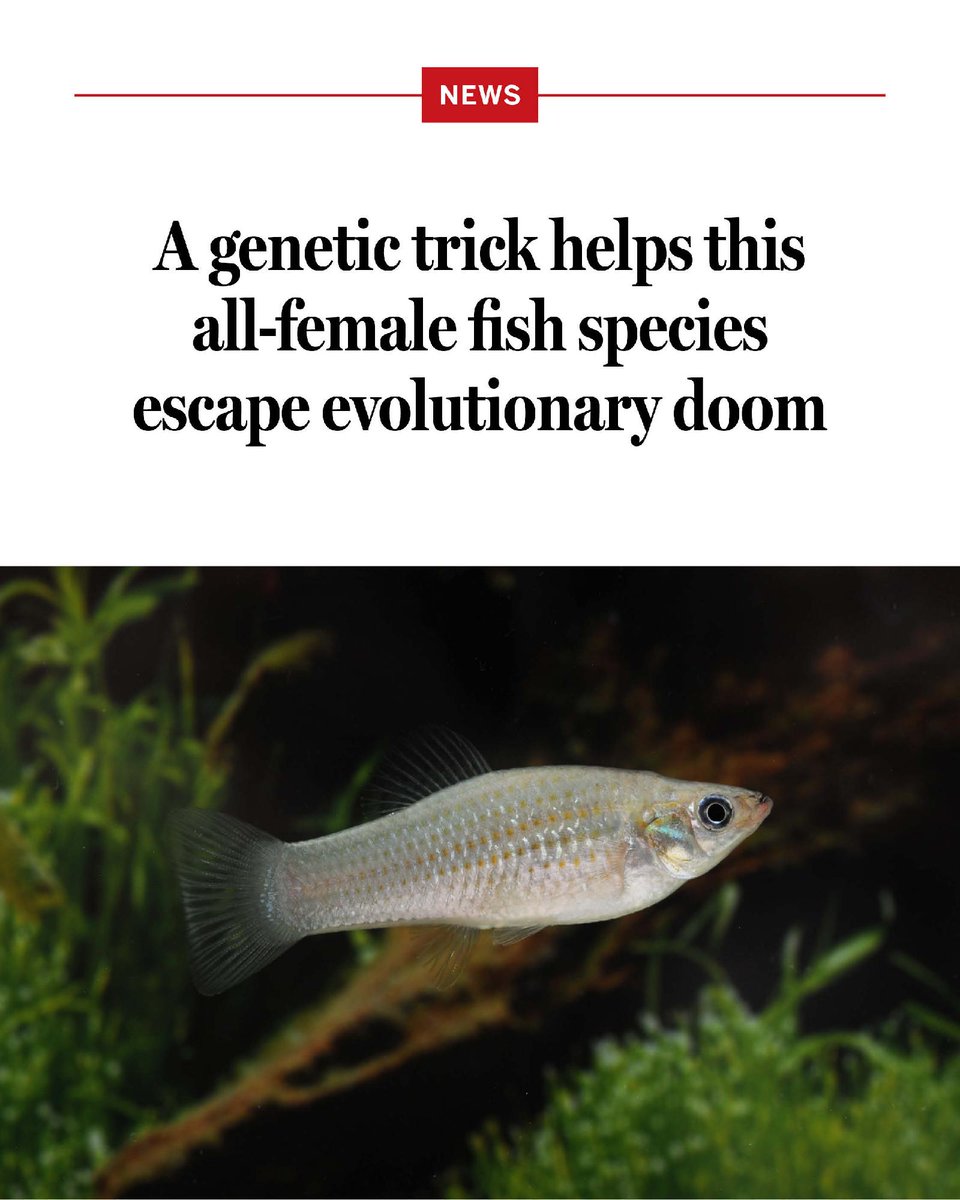
ALT A genetic trick helps this all-female fish species escape evolutionary doom
2
12
390
The Thalion Initiative (US) retweeted
Mar 5
Fantastic work on AI for biology.
Understanding the fundamentals through specific AI usecases where data is available.
Mar 4

Evo 2, our fully open-source biological foundation model trained on trillions of DNA tokens spanning the entire tree of life, is out in @Nature today
We & the scientific community have done a lot with this @arcinstitute @nvidia model in the last year! 🧵👇
2
4
45
3,010
The Thalion Initiative (US) retweeted
Mar 5
Splendid work!
Now imagine how we could decipher evolution and its adaptations if we would have large-scale datasets across all building blocks of life for all species.
Not only genomes, but transcriptomes, metabolmes, lipidomes, methylomes, etc.
We could really understand why certain species do not develop diseases or have century long lifespans.

Evo 2, our genome language model that generalizes:
- across biological prediction and design tasks,
- across all modalities of the central dogma,
- across molecular to genome scale, and
- across all domains of life,
is published today in @Nature.

1
4
19
1,335
The Thalion Initiative (US) retweeted
Feb 20
Can we use natures adaptations from other animals to extend healthy lifespan in humans?
I believe so!
But the missing ingredient is infrastructure at scale: a shared, standardized comparative biology dataset that de-risks discovery for everyone.
And this is exactly the kind of “public good” philanthropy can catalyze, and we are building at @TTIScience.
More in my article for @CFObyPostmedia in the comment.
4
6
21
1,065