Over 25 years of experience as an Application Architect/Developer, a Database Administrator, and a PM in a wide variety of applications focusing on performance.
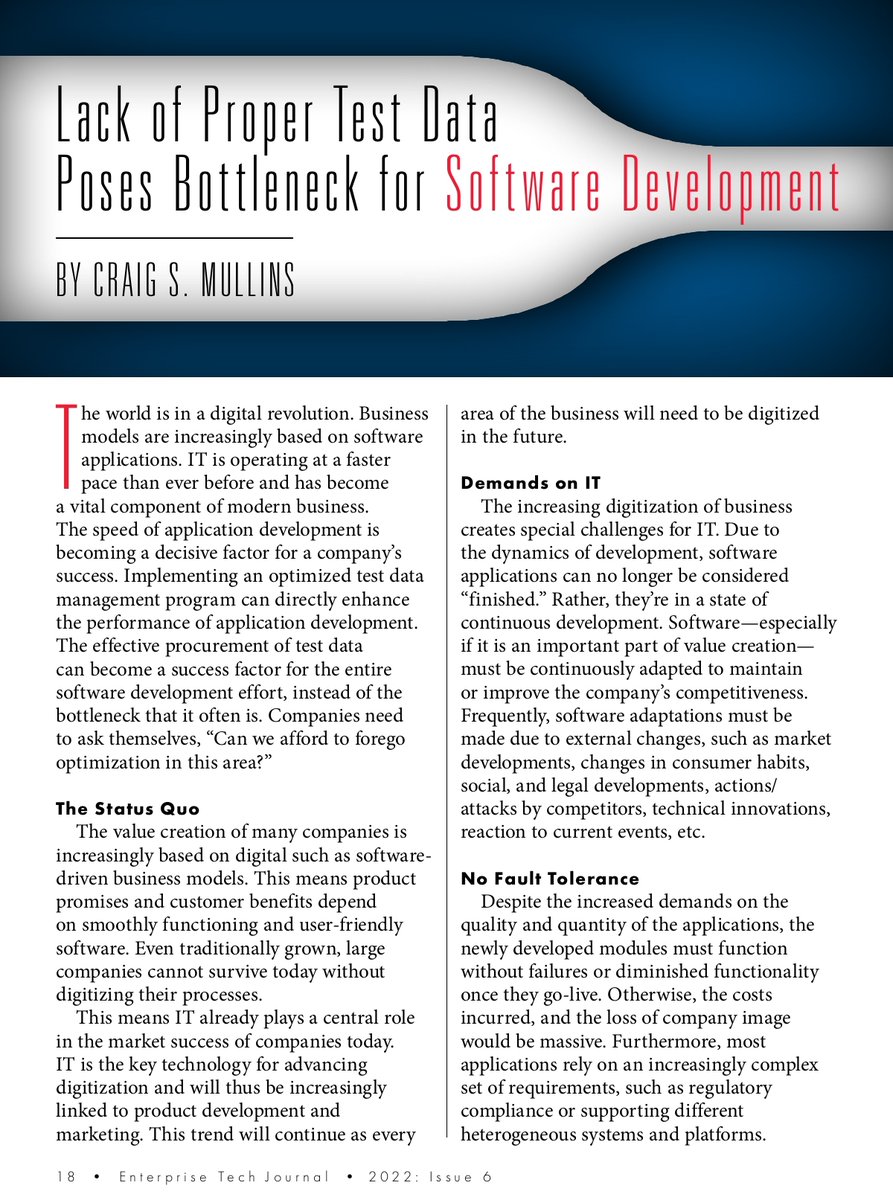
A small article from me on what any data professional actually needs to focus on in an effort to truly thrive in the world of data mining and knowledge extraction. That is, the actual "North Star" for data professionals.
#Data#DataScience#dataengineering#DataAnalytics
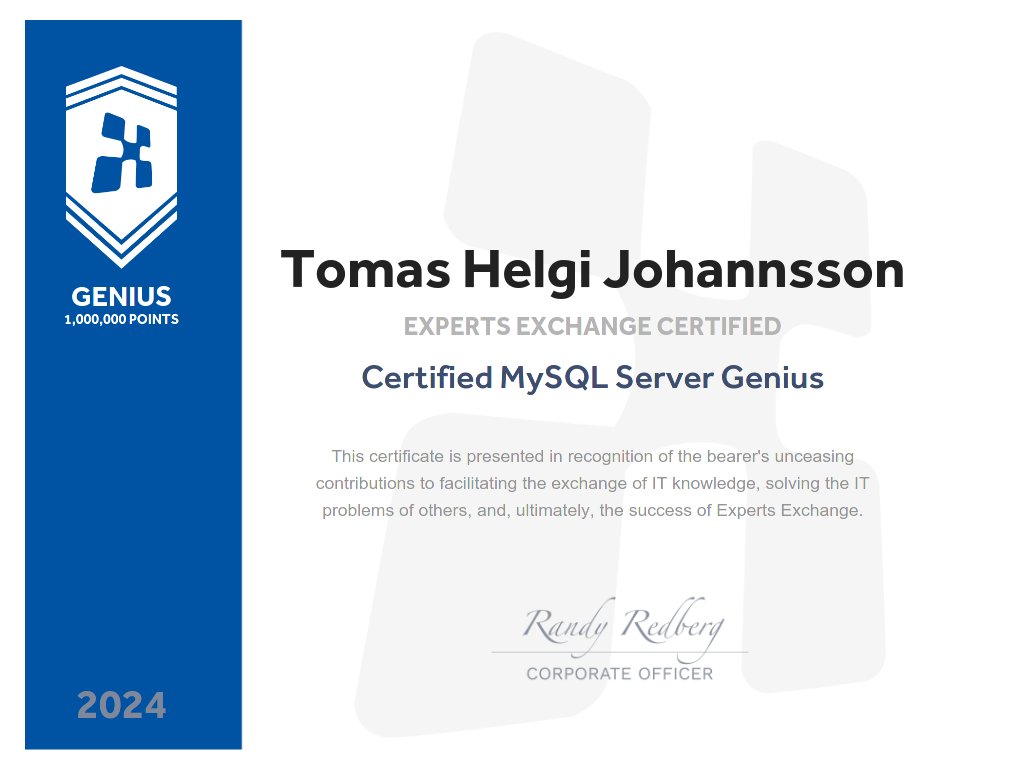
My first video on EE got published. Check it it out. : How Sequence Engine in MariaDB can aid and simplify complex queries in finding missing data and generate test data. experts-exchange.com/videos/… via @ExpertsExchange@MariaDB
The average cost of a data breach has reached an all-time high of $4.45 million per incident.
Explore the Cost of a Data Breach Report that unpacks the rising costs, along with recommendations to upgrade your #cybersecurity strategy and minimize losses: ibm.biz/BdyVaH
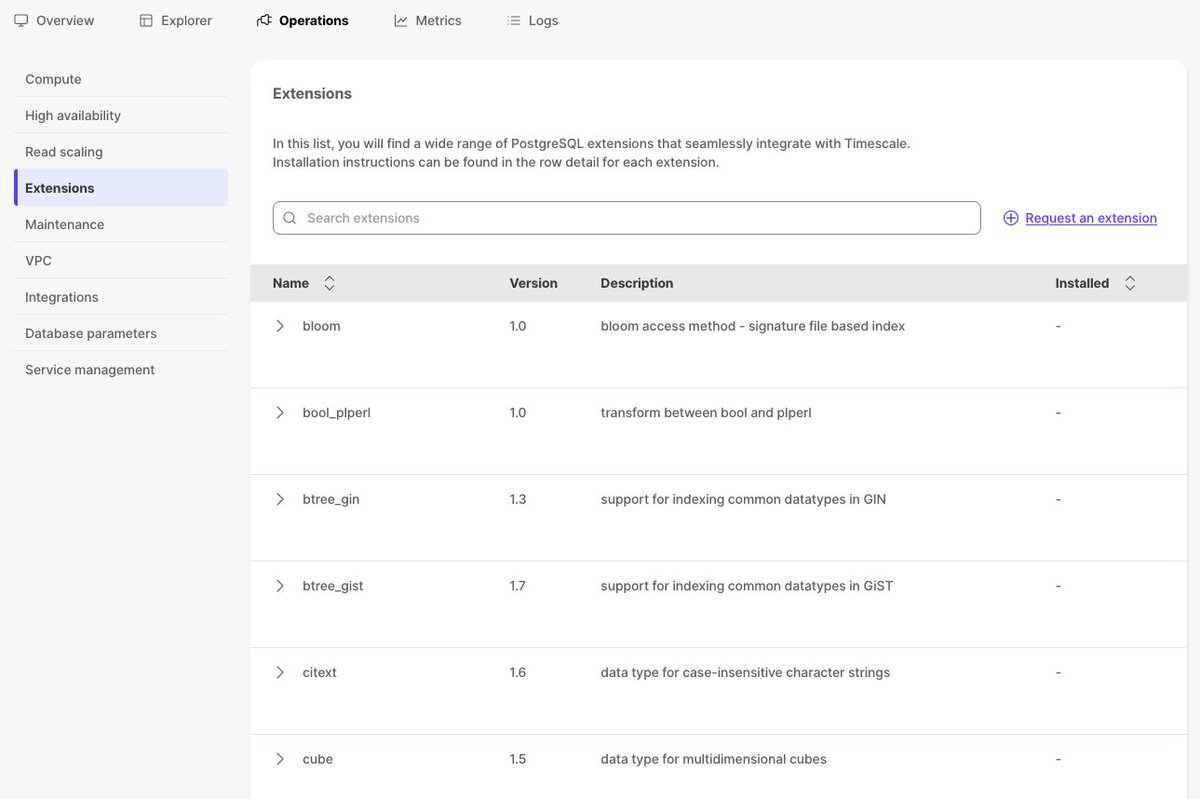
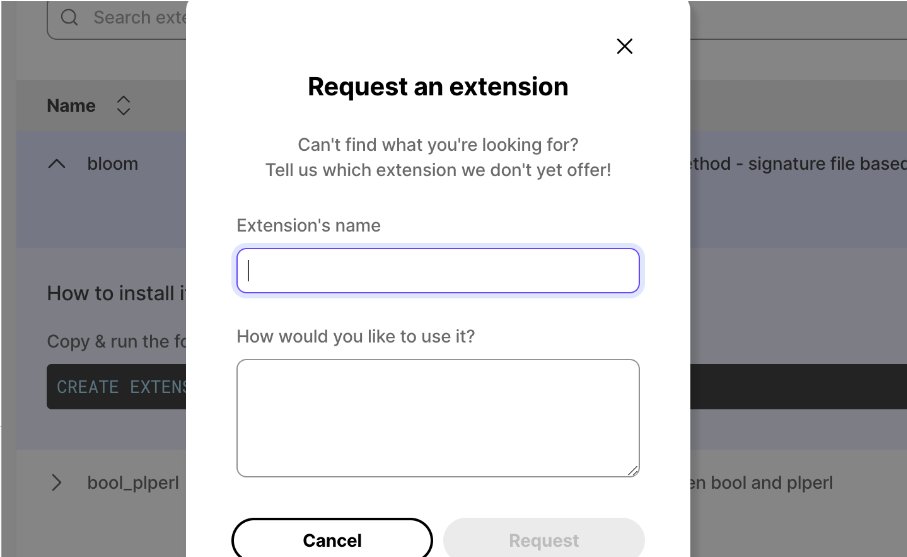
Today @TimescaleDB is not only for time series, but a powerful platform for all your @PostgreSQL data. 🐘🐯
Dozens of ready extensions at your fingertips, and easily request new ones if needed...
📣 Calling all #MySQL users! Oracle's MySQL 5.7 support is about to end ⛔
Take advantage of the latest greatest with MySQL 8.0, and unleash advanced security & optimized performance.
Don't miss out on these key upgrades from @Stoker via @TheNewStack. bit.ly/43foauR
📊 Discover how #FinTech companies tackle the challenge of managing increasing #data volumes while optimizing operational costs.
Get valuable insights on data management and cost-efficiency from expert and Percona CEO, Ann Schlemmer. bit.ly/45BKO1Y#OpenSource
The WITH clause allows you to write more literate SQL.
Meanwhile supported by most SQL dialects.
modern-sql.com/use-case/lite…
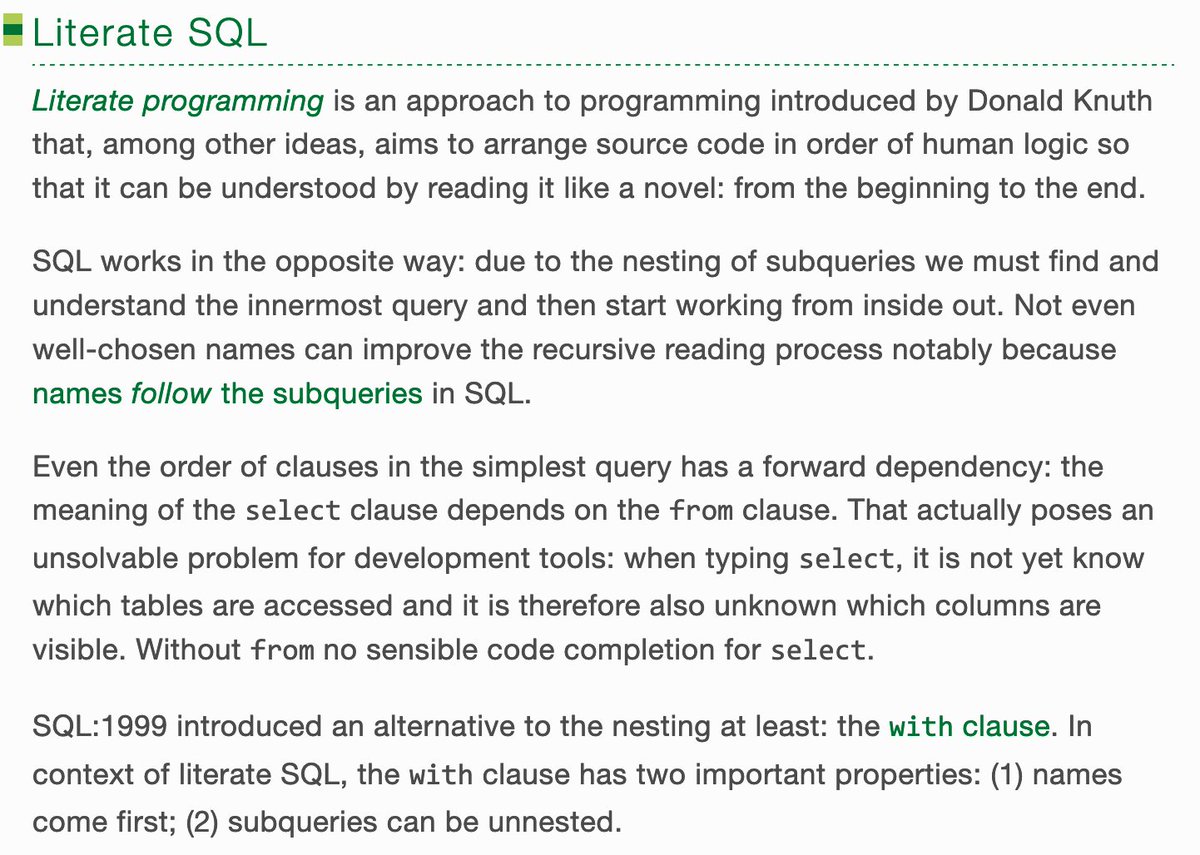
ALT Literate programming is an approach to programming introduced by Donald Knuth that, among other ideas, aims to arrange source code in order of human logic so that it can be understood by reading it like a novel: from the beginning to the end.
SQL works in the opposite way: due to the nesting of subqueries we must find and understand the innermost query and then start working from inside out. Not even well-chosen names can improve the recursive reading process notably because names follow the subqueries in SQL.
Even the order of clauses in the simplest query has a forward dependency: the meaning of the select clause depends on the from clause. That actually poses an unsolvable problem for development tools: when typing select, it is not yet know which tables are accessed and it is therefore also unknown which columns are visible. Without from no sensible code completion for select.
SQL:1999 introduced an alternative to the nesting at least: the with clause.