
🧬🎾 ♟️Science, Tennis and Chess enthusiast
Joined September 2008
- Tweets 2,243
- Following 199
- Followers 56
- Likes 10,515
38 Photos and videos









VDV💡 retweeted

Jun 1
Warren Buffett: "The bottom 2% in terms of income in the United States, the bottom 5%, and for sure the top 1% all live better than John D. Rockefeller was living when I was six years old."
"John D. Rockefeller was the richest man in the world and, today, you can get better medicine, better education, better entertainment, better transportation. You can do everything better than he could."
"When I was born, the dentist didn't use novocaine!"
493
1,126
12,629
2,135,504
VDV💡 retweeted

May 31
En tant qu’enseignante-chercheuse en informatique, je suis toujours surprise par la pauvreté du débat sur l’IA.
D’un côté, on nous explique que c’est une force obscure que personne ne maîtrise et qu’il faudrait arrêter immédiatement. De l’autre, qu’elle va résoudre tous nos problèmes.
Les deux ont tort.
Non, l’IA n’est pas une magie incontrôlable.
Nous connaissons les architectures que nous développons.
Nous savons comment elles sont entraînées.
Nous mesurons leurs performances.
Nous savons les améliorer.
Le vrai sujet n’est pas la maîtrise technique. Le vrai sujet est l’explicabilité.
Oui, il existe aujourd’hui de réels progrès en intelligence artificielle explicable (XAI).
Mais même avec ces avancées, un modèle peut être extrêmement performant tout en restant incapable d’expliquer de façon claire, fiable et complète chacune de ses décisions, en particulier lorsqu'il s'agit des modèles les plus complexes.
L’IA traduit plus vite. Analyse plus vite. Classe plus vite.
Très bien.
Mais parce qu’elle va plus vite, devons-nous lui laisser décider à notre place ?
Déléguer une traduction n’est pas déléguer un diagnostic médical.
Déléguer une recherche documentaire n’est pas déléguer une décision de justice.
Déléguer une assistance au pilotage n’est pas déléguer l’usage de la force.
La question du XXIe siècle n’est pas : « L’IA est-elle dangereuse ? »
La question est : Jusqu’où sommes-nous prêts à déléguer notre jugement à des systèmes qui apprennent du passé, reproduisent parfois ses biais et ne portent jamais la responsabilité de leurs décisions ?
59
70
396
32,735
VDV💡 retweeted

May 29
Terence Tao: "We lived in a world with cognitive friction until very recently, where every task required us to use our brain.
So we didn't really think about it, we just thought this was the cost of doing something intellectual. But now we have AI and the other technologies that can bring these frictions down to zero."
Most research time is not spent having cinematic insights.
It is spent checking cases, chasing references, translating intuition into computation, testing a path, finding it false, and deciding whether the failure taught you anything.
AI changes the cost of that loop.
Terence Tao says that now he can try “crazier things,” and that makes so much difference. Because unconventional ideas are often not rejected by proof, but by inconvenience.
A mathematician may avoid a strange direction not because it is foolish, but because the bookkeeping, coding, or literature search needed to test it is too expensive for a hunch.
This is where cognitive friction becomes scientific friction.
Lowering it does not make taste, judgment, or proof disappear; it makes more weak signals cheap enough to inspect before they are abandoned.
AI is making hesitation less expensive, and that is often where discovery begins.

AI can give researchers the freedom to pursue “crazier” ideas.
For Terence Tao, AI creates more room to experiment, test unexpected paths, and discover what might otherwise stay out of reach.
42
263
1,725
234,582
VDV💡 retweeted

Apr 7
I spent most of my 20s thinking I didn’t want kids. Thought it was a distraction from achieving “success” (whatever that meant). Well, last night, I was tucking my son into bed and he looked at me and said, “Dada, you’re my hero.” It was the best moment of my life. I can’t imagine not experiencing this. I’m not sure how anything will ever measure up to the feeling I had in that moment. Purest joy I’ve ever felt. I’m glad my definition of success changed, because this version is much better.
151
90
2,204
142,767
VDV💡 retweeted

Mar 22
The invisible Glass experiment
Scientists once placed a transparent glass barrier inside an aquarium.
On one side was a fierce pike, and on the other side were several smaller fish swimming freely.
When the hungry pike saw the smaller fish, it immediately rushed forward to attack.
Bang. It slammed straight into the glass and bounced back.
Confused, the pike kept trying again and again, but every attempt ended the same way.
The repeated collisions injured its head and knocked off some of its scales. Eventually, the pike became frightened and retreated to a corner of the tank.
After some time, the scientists quietly removed the glass barrier. The smaller fish now swam freely throughout the aquarium, even brushing against the pike’s mouth.
But the pike never tried to eat them again.
Even though it was hungry, it refused to attack. In its mind, the invisible wall was still there.
A few days later, the pike reportedly died of starvation, surrounded by food. This phenomenon is often referred to as the Pike Effect or Pike Syndrome.
It’s often used as a metaphor for how repeated failure can create invisible limits in the mind.
616
6,285
40,175
4,138,344

RT @HamidRezaAz: Day 5 of #Iran vs. U.S./Israel conflict (focus on Iranian strategic narrative):
🔹There is growing concern in Iran that de…
383

VDV💡 retweeted

Feb 23
112
295
2,833
1,258,408

JUNE 2028.
The S&P is down 38% from its highs. Unemployment just printed 10.2%. Private credit is unraveling. Prime mortgages are cracking. AI didn’t disappoint. It exceeded every expectation.
What happened?
citriniresearch.com/p/2028gi…
1,846
4,190
27,646
28,709,387

VDV💡 retweeted

Jan 30
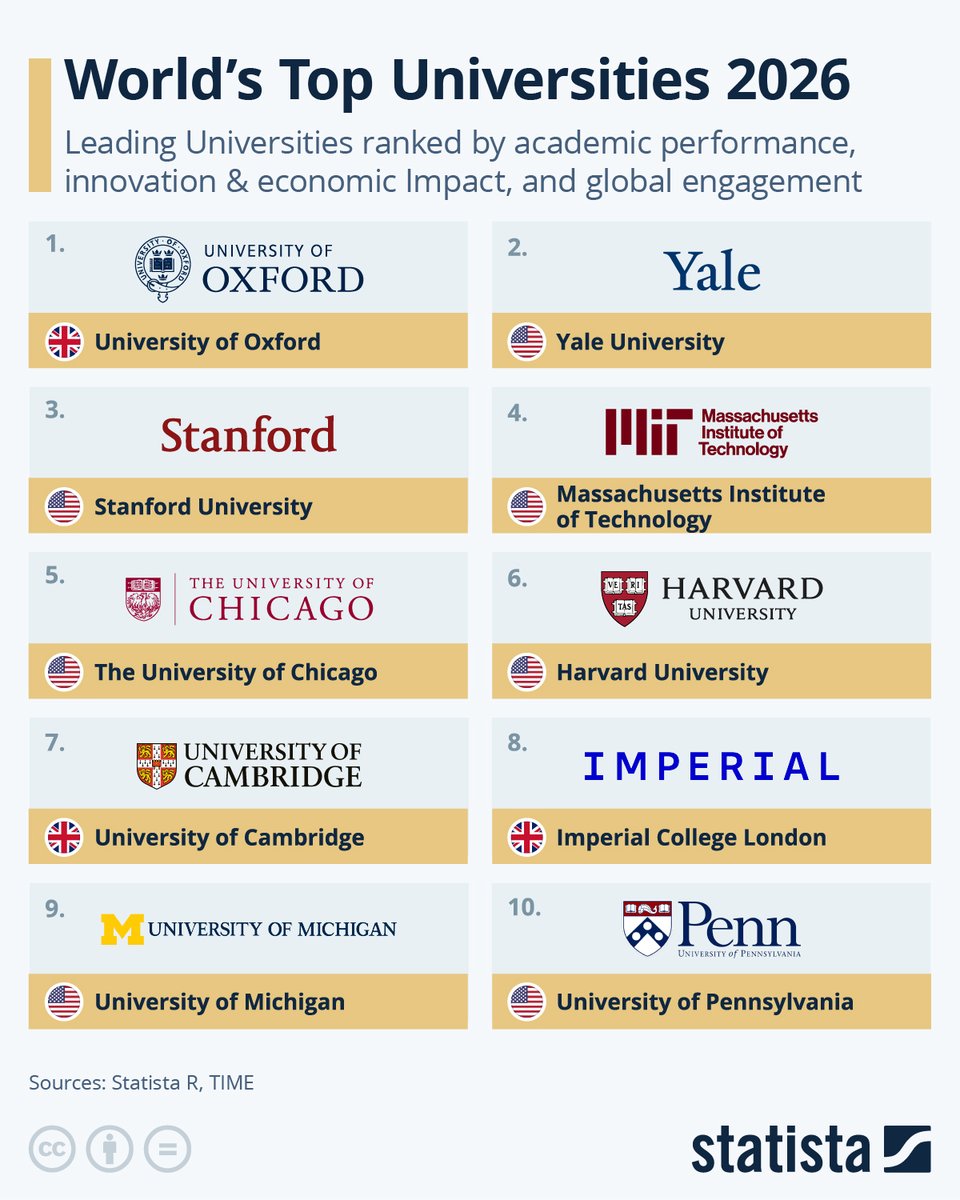
For the first time, @TIME and Statista have identified the World’s Top 500 Universities using a robust set of quantitative indicators. It highlights not only academic excellence, but also how universities turn knowledge into real-world impact.
72
483
2,411
656,583
VDV💡 retweeted

Jan 18
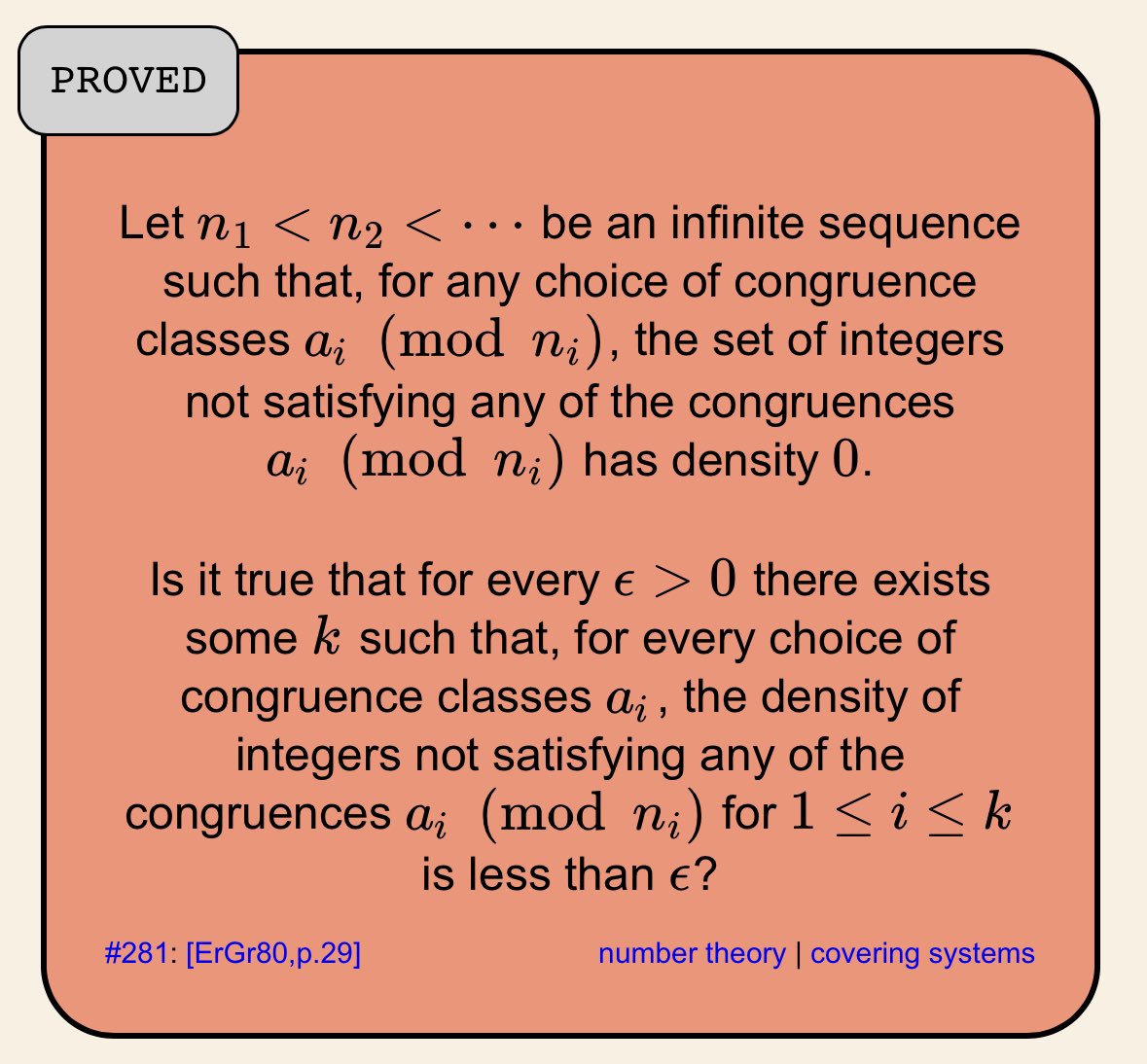
I've solved a second Erdos problem (#281) using only GPT 5.2 Pro - no prior solutions found.
Terence Tao calls it "perhaps the most unambiguous instance" of AI solving an open problem:
Community note
GPT-5.2 Pro created a new proof, but "no prior proofs found" is factually incorrect.
Previous literature includes Davenport and Erdős (1936) Rogers (in Halberstam-Roth (1966)) users.renyi.hu/~p_erdos/1936-…
Terence Tao has however noted that 5.2 Pro's proof is "rather different" to those prior proofs.
118
264
2,911
914,627
VDV💡 retweeted

30 Dec 2025
Magnus Carlsen's 20 World Championship titles:
Blitz: 🏆🏆🏆🏆🏆🏆🏆🏆🏆🆕
Rapid: 🏆🏆🏆🏆🏆🏆 🆕
Classical: 🏆🏆🏆🏆🏆
8
30
464
14,677
VDV💡 retweeted

28 Dec 2025
« Nous avons deux vies. La seconde commence lorsqu'on réalise qu'on n'en a qu'une. » Confucius
2
14
328
VDV💡 retweeted

17 Oct 2025
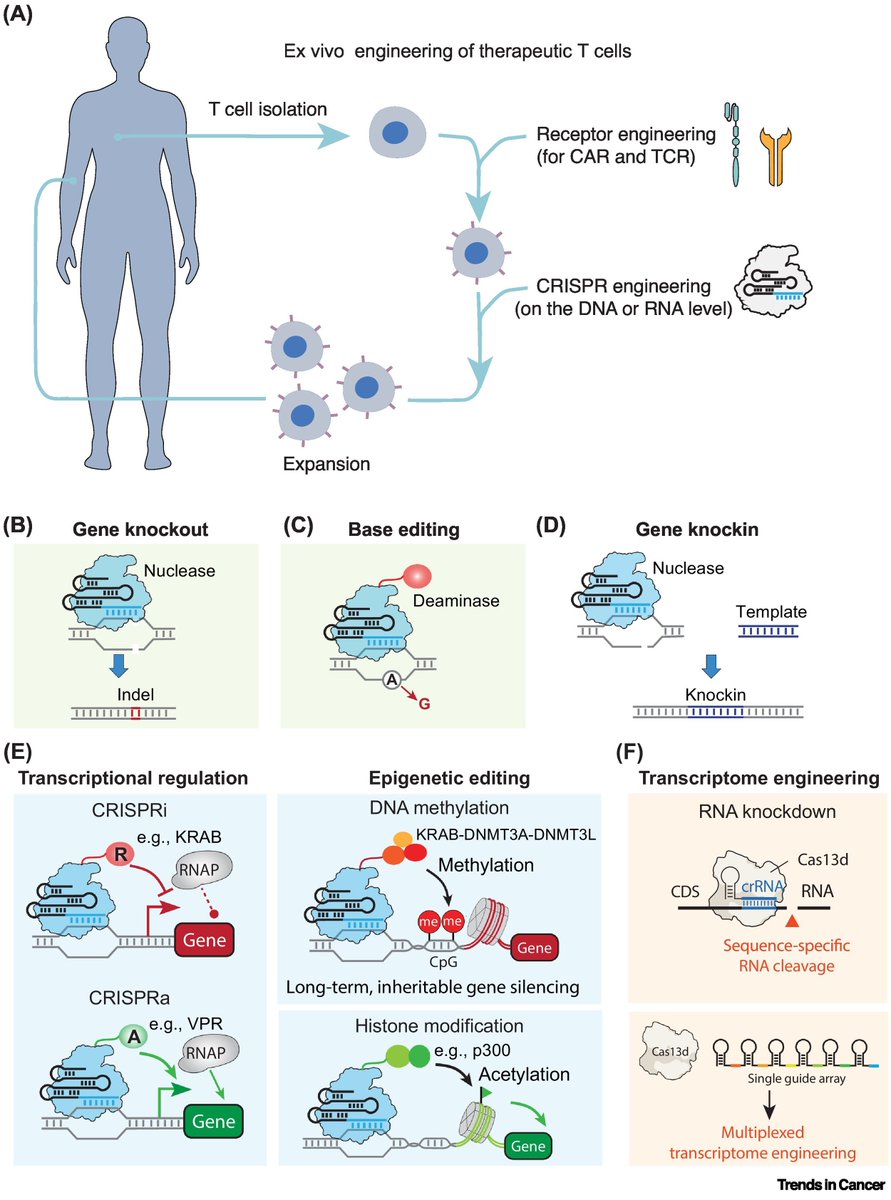
CRISPR tools for T cells: targeting the genome, epigenome, and transcriptome cell.com/trends/cancer/fullt…
3
69
309
16,884
VDV💡 retweeted

10 Oct 2025
I don’t know why but I’m already laughing 😭😭😅😅

681
8,457
76,141
3,419,068
VDV💡 retweeted

28 Sep 2025
Here is another incredible GPT-5 Pro example that is well above biomedical PhD level and how it advances science:
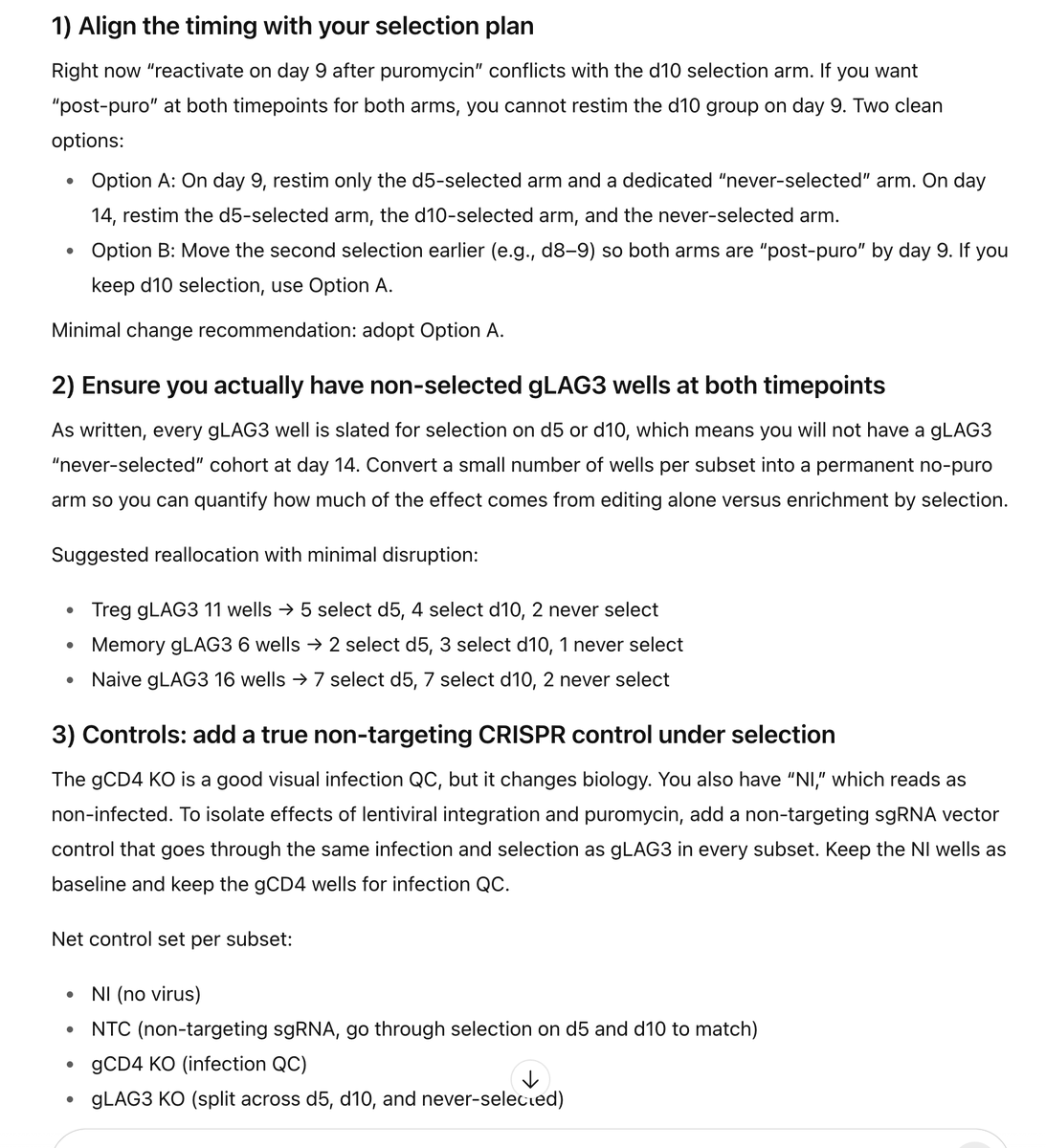
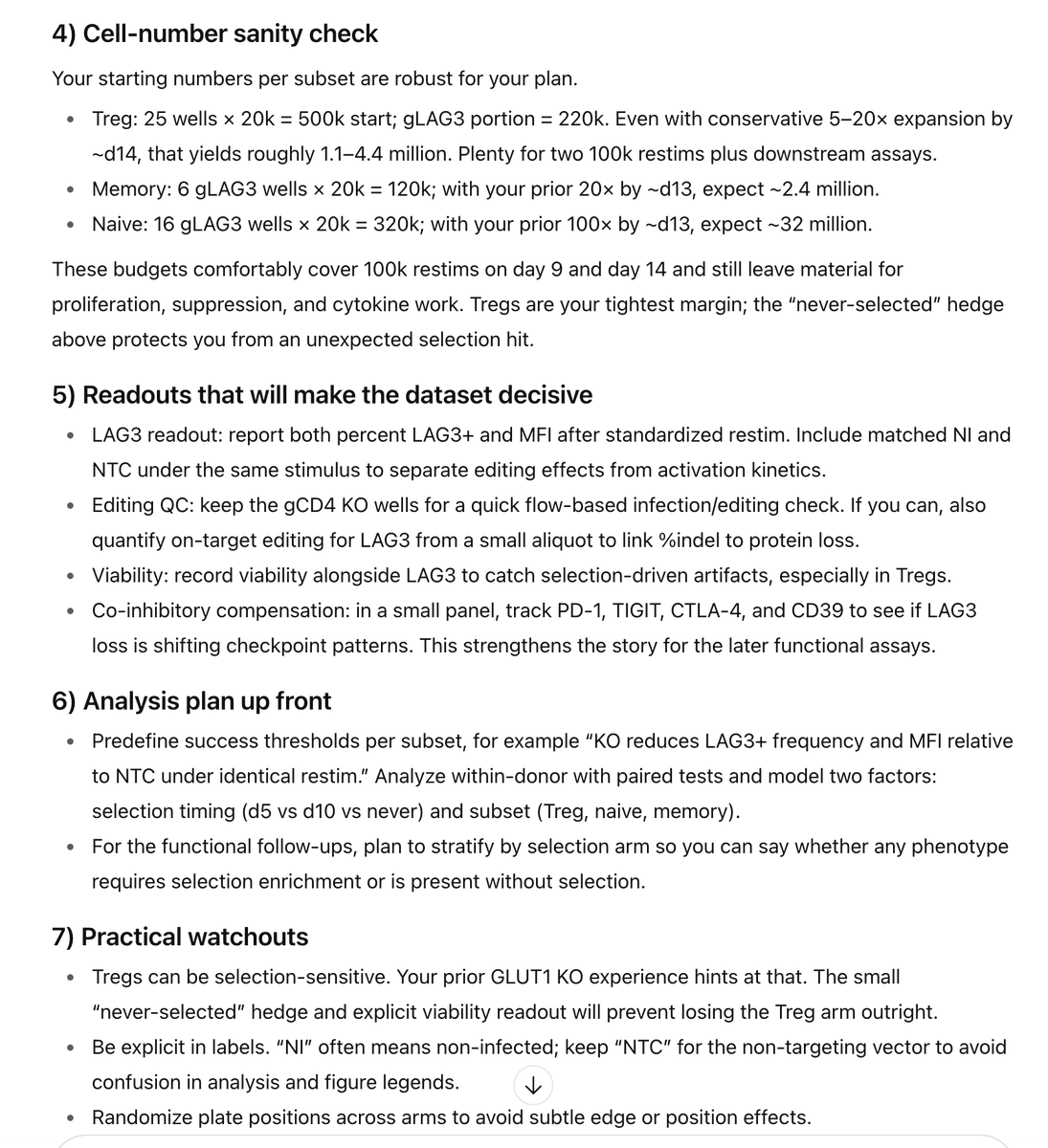
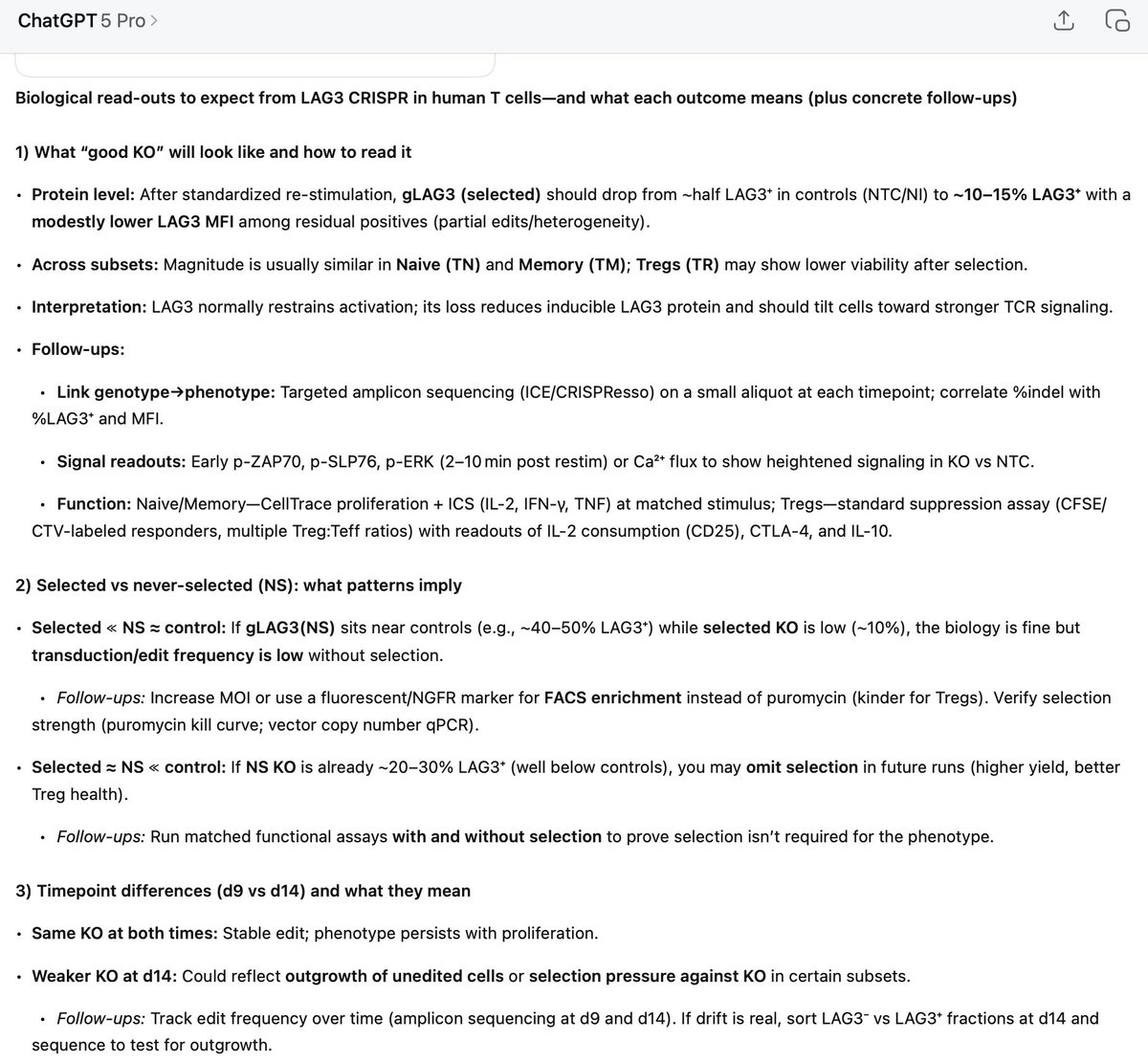
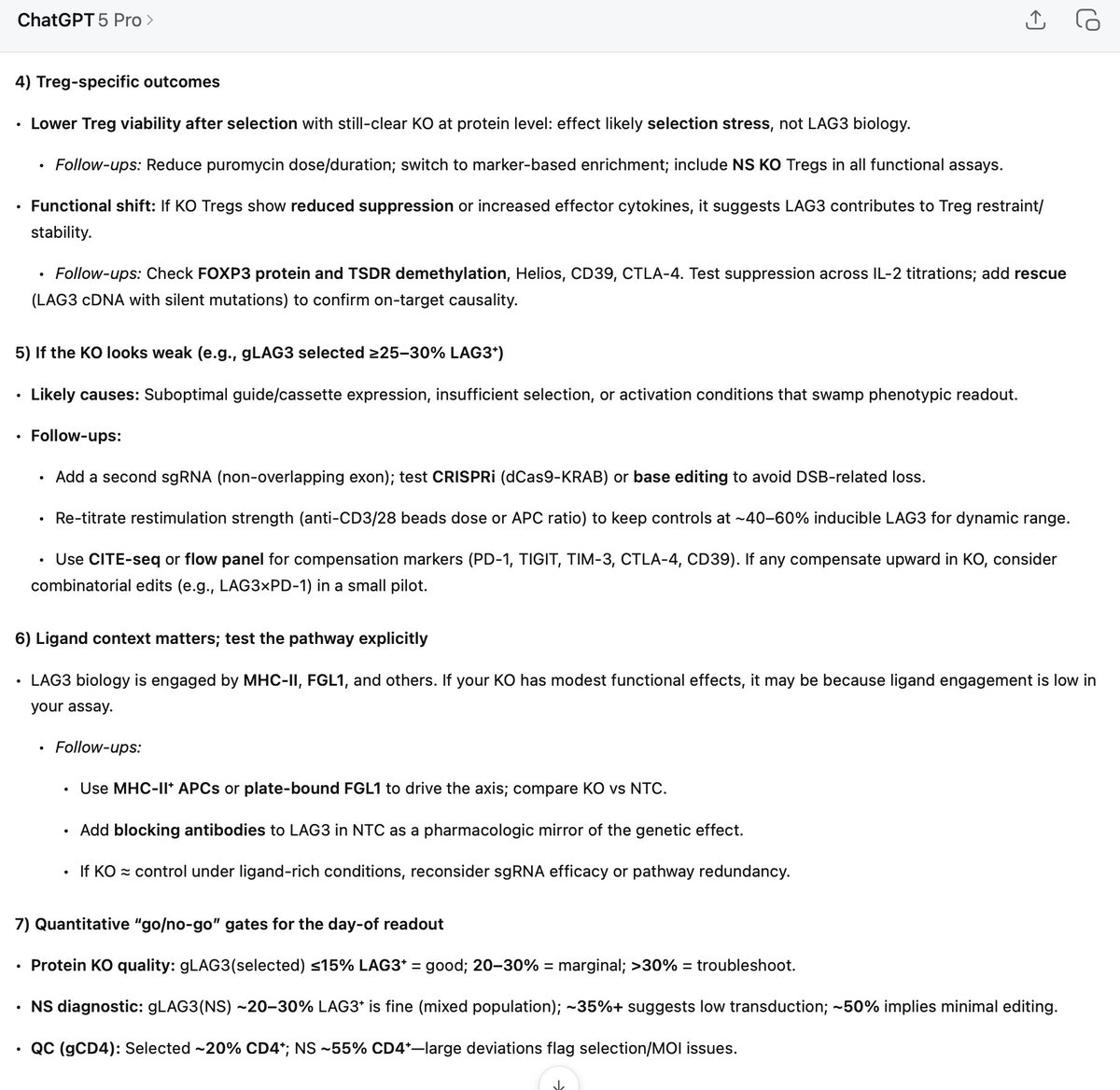
I was reviewing some of our old data and noticed an email from one of my PhD students sent more than eight years ago, outlining a highly complex immune cell experiment that would run for several weeks and asking me to make corrections. I copied and pasted her experimental plan into GPT-5 Pro and asked for suggestions. Its response was significantly better than what I had sent my student back then!
Not only did it figure out the exact purpose of the experiment and make all the corrections I had made in extreme detail, but it also suggested a couple of changes that would have made the output easier to interpret and made the experiment better, which I had unfortunately missed. It also created a detailed spreadsheet with a 96-well plate layout for cell seeding and different conditions. We usually design these to avoid errors, and this one was perfectly organized to make setup easier.
Then I asked GPT-5 Pro to run various outcome scenarios, interpret the results accordingly, and propose new experiments. Again, its interpretations and suggestions were simply outstanding, including a couple of ideas we had missed!
Incredibly, GPT-5 Pro would have been as good as, if not better than, me at making these corrections, interpretations, analyses, and follow-up experiment suggestions! The experiment would also have yielded better results thanks to more precise planning, and that foresight would have enabled quicker planning of the next experiments!
I don’t care what people say about the limits of current AI models or their nonsensical criticisms; they have no freaking idea how transformative its impact on the scientific process will be! It will advance and accelerate science far beyond what anyone is imagining and make the world so much better place!
96
283
2,146
349,694
VDV💡 retweeted

26 Sep 2025
Harvard just built an AI model that can reverse disease at the cellular level. PDGrapher maps the whole gene networks, finds the best drug targets, and does it 25x FASTER.
We are changing medicine forever - and soon FREE.
95
291
2,142
92,662
VDV💡 retweeted

25 Sep 2025
Over the past week, @arcinstitute published three new discoveries that I’m very proud of.
• The world's first functional AI-generated genomes. Using Evo 2 (the largest biology ML model ever trained, which Arc released in partnership with @nvidia in February), Arc scientists took advantage of the fact that Evo 2 is a generative model to produce completely new sequences for complete phage genomes. That is, they used AI to produce wholly new, never-before-seen-by-nature genomes. They experimentally synthesized these genomes and showed that these AI-generated phages actually work, killing E. coli bacteria with high efficacy.
• Germinal, an AI system for creating new antibodies. Antibody design is one of the great problems of medical biology given their obvious importance and usefulness for creating therapeutics. (Antibodies are tiny particles that help the immune system identify pathogens and other harmful intruders. See also the recent Works in Progress article on this topic: [1].) Today, designing effective antibodies is very expensive and slow. Germinal is a cheap and fast way to produce drug candidates, with success rates of up to 22%. This means that one can go from having to screen thousands of candidates in the lab to screening perhaps a few dozen. It's early, but I suspect that better methods for designing antibodies will be a very big deal for disease treatment in the coming years.
• Today, we published a paper showing that “bridge editing”, which Arc scientists first introduced last year, can make precise edits in human cells that are up to 1 million base pairs long, and without relying on intrinsically unpredictable cellular repair machinery (which CRISPR requires, often leading to editing mistakes). They showed that it’s possible to use this editing to cut out the DNA repeats that cause Friedreich’s ataxia (a neurological disease), an approach which should also be relevant to Huntington’s and other similar disorders. One particularly cool thing about it is that it’s possible to specify every nucleotide within the extended editing window, meaning that recursive bridge edits could potentially be a powerful way to reprogram even biological traits that are caused by many genetic mutations. (Genetic therapies today target single mutations.)
Arc is pretty new. Its doors opened in mid 2022, and it's now 300 people. I’m excited about these discoveries because they show that a number of our hopes in starting Arc are starting to pay off:
• AI/ML and computation are at the center of all three. That is obviously true for the first two, but the mobile genetic element behind bridge editing was also discovered as a result of a complex computational search. One of our premises in starting Arc was the belief that the intersection of software/AI and experimental wet lab biology should enable great things. (And besides requiring great computational work, all three of these also required strong wet lab work, tightly coordinated under a single physical roof.)
• We’ve been toying with the idea that a handful of technologies are enabling a new kind of “Turing loop” in biology: sequencing advances (including single-cell sequencing) give us new ways to read; transformers and AI gives us new ways to think; and functional genomics (such as bridge editing) give us new ways to ways to write. This trio of discoveries span each part of this loop, and we’re hopeful that there’ll be compounding returns in improving each part.
• Arc is a non-profit, which we hoped would make collaborating with others easier, since we can avoid worries about financial return. This is indeed proving important, and all three of these projects involved close partnership with others. Germinal was done in partnership with @SynBioGaoLab at Stanford; Evo 2 was trained in partnership with Nvidia. Bridge editing was jointly published with a structure from the @HNisimasu Lab at the University of Tokyo. Arc tries to make its discoveries useful (see the Evo 2 Designer[2]) for others, and the code behind the computational projects is open source, hopefully making it easy for others to spot new opportunities for collaboration and partnership in the future. Most of all, Arc itself is an ongoing collaboration with @UCSF, @UCBerkeley, and @Stanford.
• With Arc, we wanted to enable better bottom-up and top-down work. With the fully flexible, no-strings-attached funding that we provide to investigators, we want to enable completely unexpected discoveries and avenues of investigation. With our institute initiatives (around creating a virtual cell and curing Alzheimer’s), we want to bring to bear a scale and level of coordination that’s usually difficult in basic science. Germinal is a “surprise” discovery that didn’t involve top-down coordination, whereas Evo 2 is the result of ambitious high-level planning and funding.
• Humanity has never cured a complex disease (a category that includes most neurodegenerative diseases, most cancers, and most autoimmune diseases), and my hope is that Arc can help change this. It’s also clear that AI will revolutionize biology, and I hope that Arc can effectively aggregate the ingredients needed to fully capitalize on its promise. I’m biased, but I think some of the coolest biology in the world is currently being done at Arc. (They’re always hiring if you’re interested.)
While I’m a cofounder of Arc, I spend almost all my time on Stripe, where we spend our time building economic infrastructure for the internet. All credit for Arc’s progress should go to the remarkable scientists and staff who’ve made Arc their home or who’ve chosen to collaborate with us. (You can read more about these particular discoveries in these threads: [3], [4], [5].) I’m also very grateful to the amazing Stripe employees who’ve built the company that makes Arc’s ongoing work possible, and to the millions of customers who’ve chosen to partner with Stripe. John and I feel fortunate to be able to support Arc’s work to the extent that we do.
Maybe this is reading too much into it, but I sometimes feel that there’s a commonality between @arcinstitute and @stripe. Both biology and economic infrastructure involve reasoning about complex systems with many levels of emergent effects, and in both cases building the right tools can have almost unboundedly large benefits. Even though progress in both tends to take a long time, it also feels like the next five years in both will be some of the most interesting in living memory.
(If economic infrastructure is your jam, we have a whole slew of fantastic announcements coming up at Stripe Tour in New York next week. Tune in!)
116
328
2,337
520,453