

Jun 11
Why cut DNA when you can rewrite a single base?
Our Boltzmann CRISPR Base Editing platform supports:
🔹 ABE design
🔹 CBE design
🔹 Editing outcome prediction
🔹 Off-target assessment
Precision genome engineering powered by AI.
👉 boltzmann.co
#CRISPR #BaseEditing #Genome #Biotechnology #DrugDiscovery
3
41

Keimbahn: Forscher verändern Gene menschlicher Embryos wp.me/p36Ae-1h8X Chance und Risiko zugleich: Eine neue Methode der Gen-Editierung könnte helfen, krankmachende Mutationen und Erbkrankheiten schon beim Embryo zu korrigieren... #BaseEditing #Keimbahn
1
4
32

Columbia researchers use base editing to modify human embryo genome bioworld.com/articles/731708… #science #biopharma #baseediting
3
348

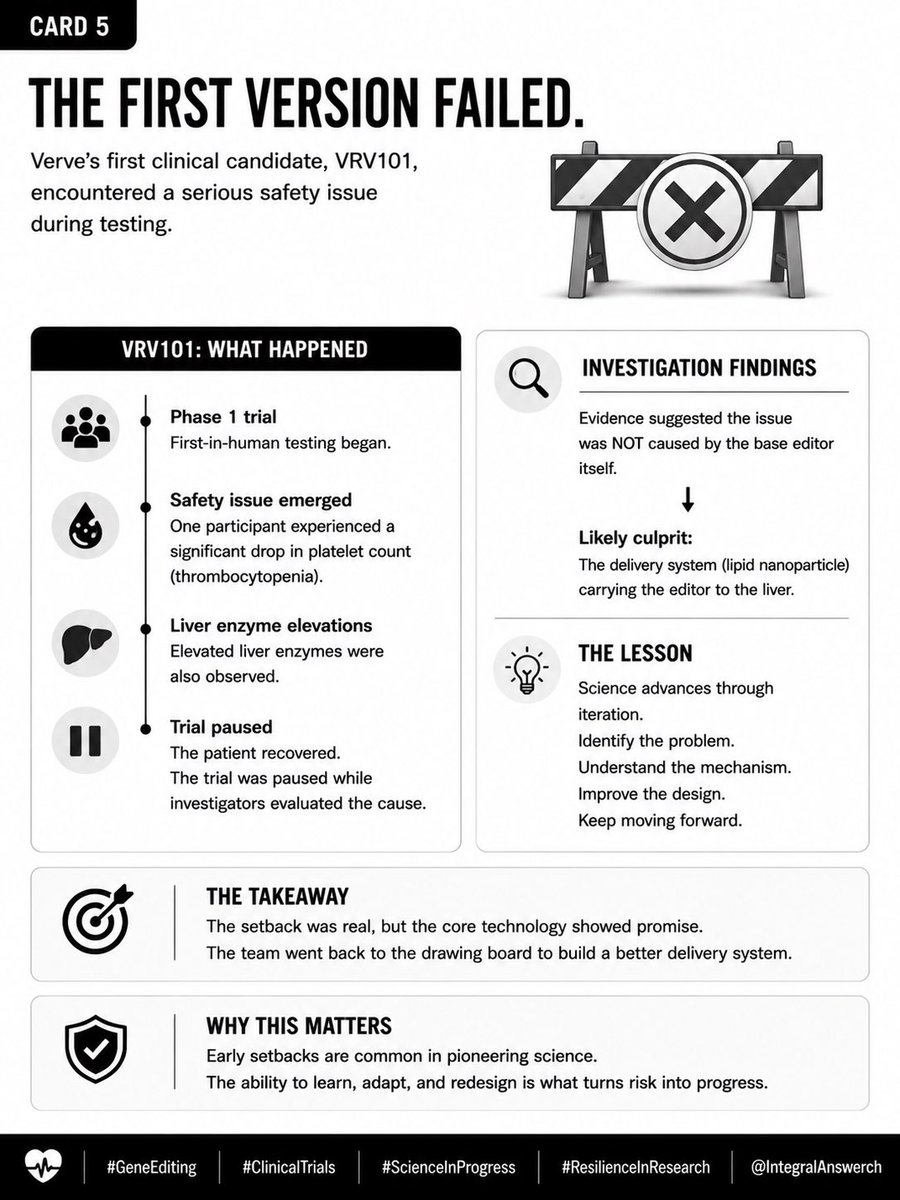
4/ Most people have heard of CRISPR.
But VRV102 uses a newer approach called base editing.
Traditional CRISPR works by cutting DNA.
That can be extraordinarily powerful—but cutting DNA also creates opportunities for unintended changes during repair.
Base editing takes a different approach.
Instead of cutting both strands of DNA, it chemically changes a single DNA letter.
In this case, one letter inside the PCSK9 gene.
The goal is precision:
No double-strand break.
No gene insertion.
No viral integration.
Just a single targeted change designed to permanently silence PCSK9.
#CRISPR #BaseEditing #G
1
35

Jun 8
A Landmark Paradigm Shift or a New Ethical Storm? 🧬👶
A stunning preprint on bioRxiv (2026) by Dieter Egli’s team at Columbia Univ. reports the FIRST successful, precise Base Editing in human embryos without Cas9-induced chromosomal disasters!
The Breakdown:
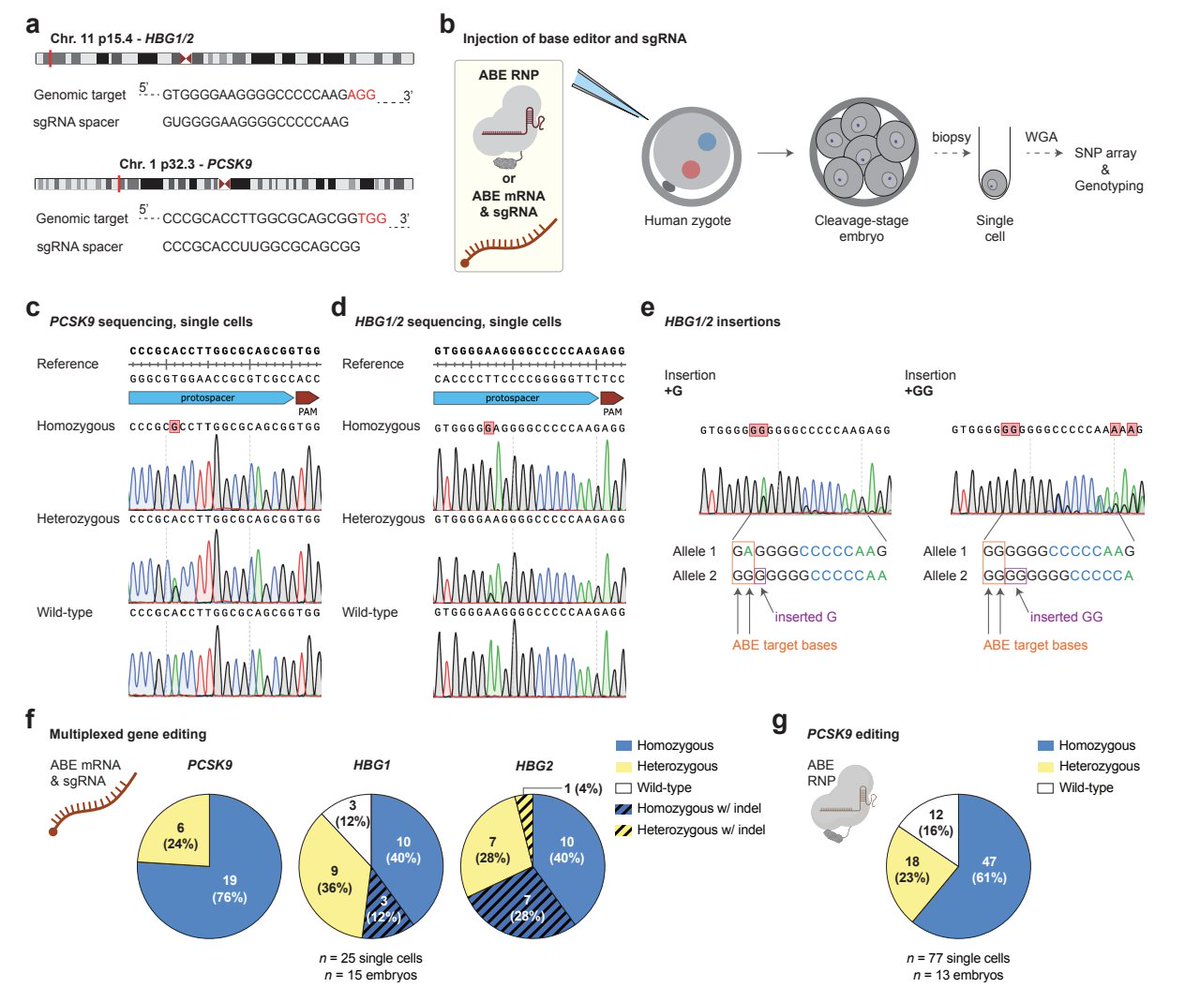
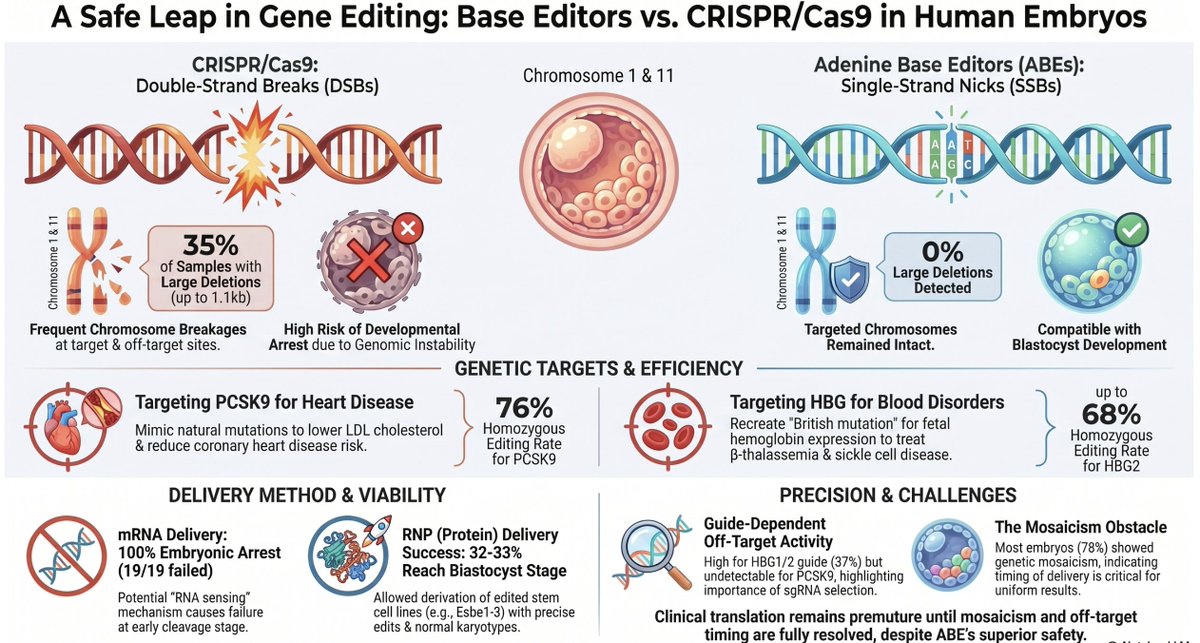
1️⃣ Zero Chromosomal Shattering: While Cas9 triggered 119 chromosome breaks, ABEmax (RNP form) achieved 61% homozygous editing on PCSK9 and HBG1/2 with 100% intact target chromosomes! 🧪🛡️
2️⃣ The mRNA Trap: 100% of embryos injected with mRNA suffered developmental arrest, revealing a viral-like RNA quality control mechanism in early zygotes. RNP delivery allowed normal blastocyst formation (32%).
3️⃣ The Shadow: Mosaicism remains high at 78%, and ties to "embryo optimization" commercial firms are already sparking a global bioethics storm. 🌪️
Base editing bypassed Cas9's structural chaos, but tech is running faster than regulation. 🧭
doi.org/10.64898/2026.05.30.…
#BaseEditing #CRISPR #Bioethics #HumanEmbryo
1
3
11
1,776
Maxime Gauthier retweeted

D&D‑seq Uses Base Editing to Map DNA–Protein Interactions in Single Cells
D&D‑seq uses #baseediting to record DNA–protein interactions in single cells, enabling #multiomics mapping of #transcriptionfactor and other regulatory proteins
@landau_lab
hubs.li/Q04khdCw0
5
4
981

Jun 6
A notable advance in genome editing safety.
In human embryos, CRISPR/Cas9-induced double-strand breaks (DSBs) have been associated with large deletions and chromosomal abnormalities, raising concerns about clinical applications. In this study, investigators evaluated base editing at the PCSK9 and HBG loci, introducing DNA nicks and mismatches rather than DSBs.
Key findings:
🔹 Efficient on-target editing at both loci
🔹 No detectable chromosomal abnormalities or large deletions
🔹 Rare small insertions/deletions
🔹 Off-target activity remained guide RNA dependent
🔹 Protein delivery of the base editor supported normal blastocyst development and stem cell derivation
🔹 RNA delivery, in contrast, resulted in early embryonic arrest
These results suggest that DNA nicks and mismatches are repaired far more faithfully than DSBs in early human embryos, potentially enabling precise genome correction while minimizing genotoxic consequences.
While significant ethical, regulatory, and translational hurdles remain, this work represents an important step toward safer genome editing strategies in human development.
#CRISPR #GeneEditing #BaseEditing #Genomics #PrecisionMedicine #StemCells #Biotechnology #GenomeEngineering
biorxiv.org/content/10.64898…
2
2
350

As cell therapies become more complex, scientists need to reconsider their engineering approach to avoid increasing structural chromosomal risks.
Our new infographic reveals the impact of double strand breaks (DSBs) for immune cell therapies, the consequences of these approaches for manufacturing, and shows data illustrating how the risks grow as you introduce additional edits.
Download: ms.spr.ly/6016vkPUq
#BaseEditing #GeneEditing #CellTherapy
The Pin-point™ base editing platform technology is available for clinical or diagnostic study and commercialization under a commercial license from Revvity.
31

Milestone achieved! The first SCD patient treated in China with our high-precision base-editing therapy CS-206 has remained VOC-free for >15 months post-engraftment, achieving the primary efficacy endpoint. No product-related AEs have been observed to date. #SCD #BaseEditing
14

One infusion of VERVE-102 cut LDL by up to 62% with no serious adverse events. So where does base editing now sit vs CRISPR? We break it down. lifesciencedaily.news/base-e… #BaseEditing #CRISPR #Biotech
13
May 29
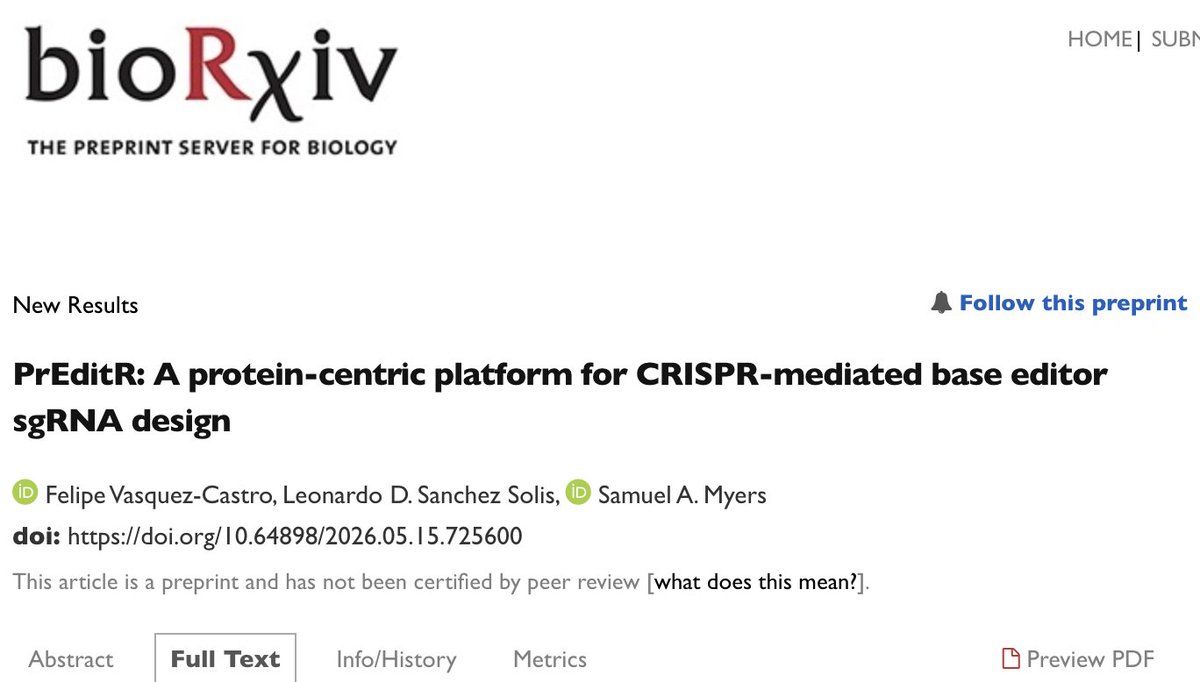
From Protein Sites Directly to CRISPR sgRNAs! 🧬💻
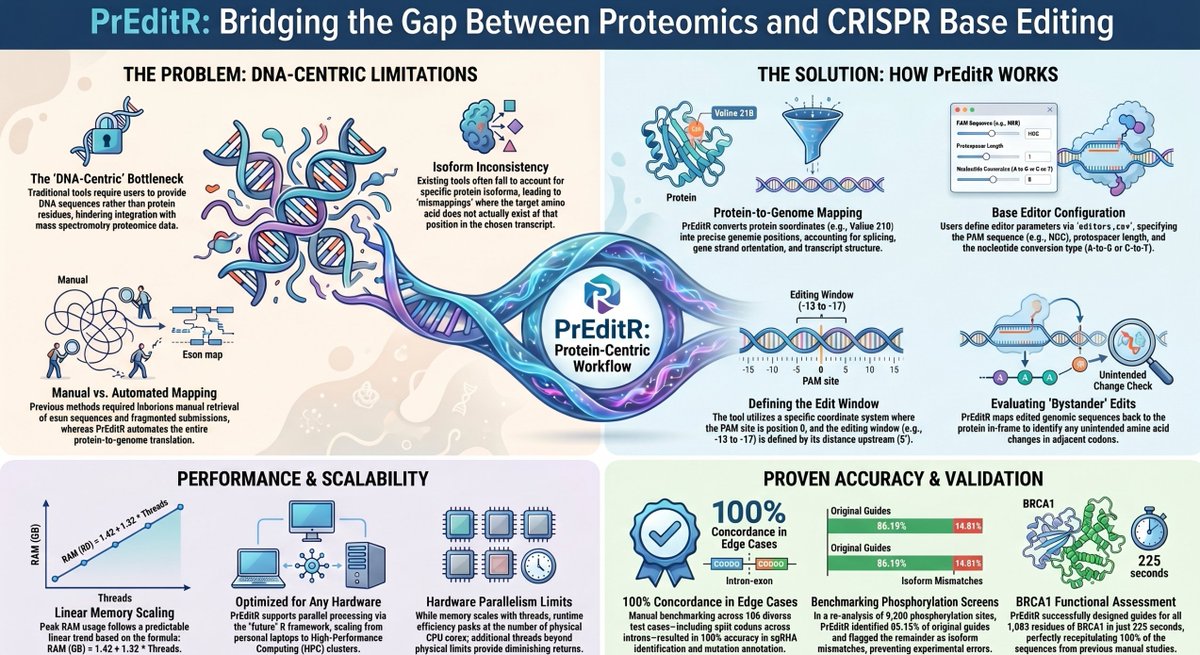
Published on bioRxiv (2026), the Myers Lab (@UCSD) launched PrEditR—a protein-centric platform that auto-designs base editor sgRNAs directly from amino acid coordinates! 🛡️✨
The Strategic Logic:
1️⃣ Protein-Centric: Input UniProt ID and residue number; PrEditR maps backward to find the exact genomic coordinates. 🔍
2️⃣ Isoform-Aware: Accurately resolves complex exon boundaries and alternative splicing variants to prevent mismatched edits. ⚖️
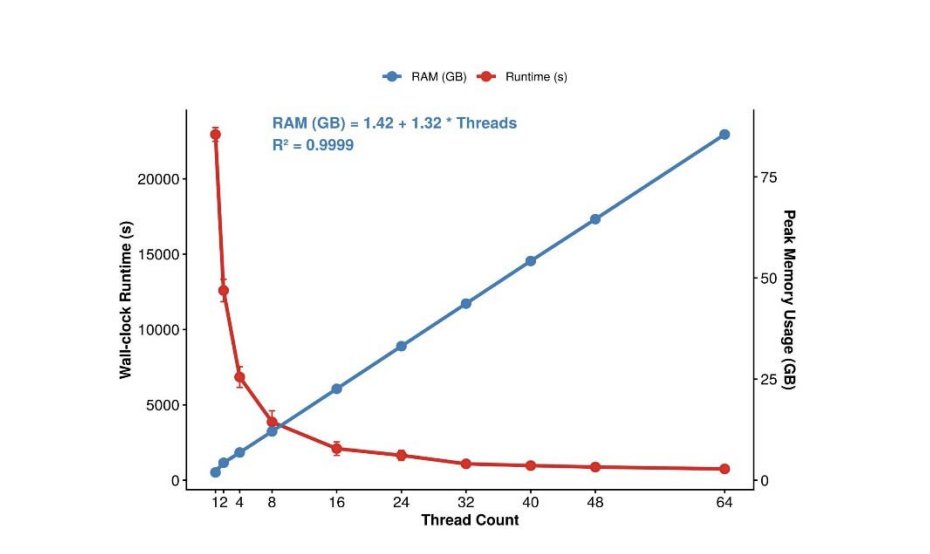
3️⃣ Massive Scalability: Successfully back-analyzed 9,200 unique phosphorylation sites, catching hidden annotation errors! 📈
No more manual reverse-translation. Seamlessly connect mass spec data to genomic logic! 🚀
doi.org/10.64898/2026.05.15.…
#CRISPR #Proteomics #BaseEditing #Bioinformatics #WIMIbiotech #FunctionalGenomics
2
8
638

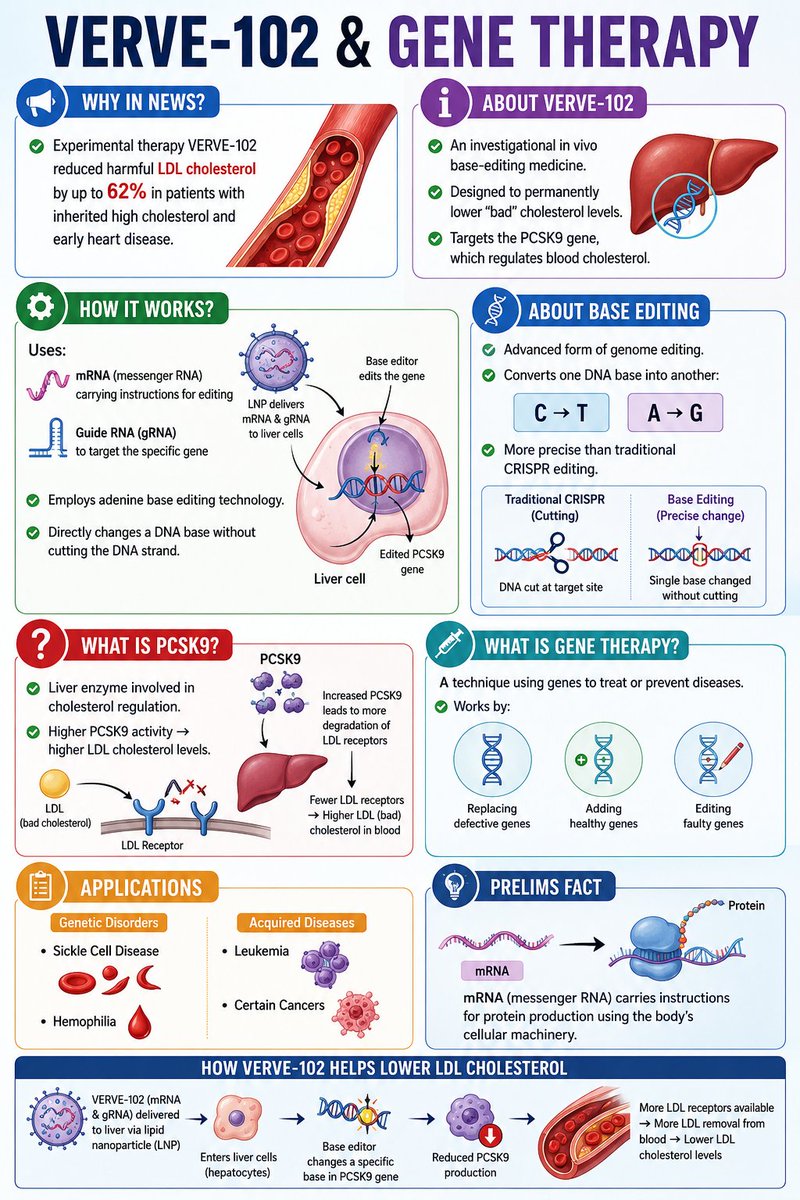
🔆 VERVE-102 & Gene Therapy
📍 Why in News?
✅ Experimental therapy VERVE-102 reduced harmful LDL cholesterol by up to 62% in patients with inherited high cholesterol and early heart disease.
📍 About VERVE-102
✅ An investigational in vivo base-editing medicine.
✅ Designed to permanently lower “bad” cholesterol levels.
✅ Targets the PCSK9 gene, which regulates blood cholesterol.
📍 How it Works?
✅ Uses:
• mRNA (messenger RNA) carrying instructions for editing
• Guide RNA (gRNA) to target the specific gene
✅ Employs adenine base editing technology.
✅ Directly changes a DNA base without cutting the DNA strand.
📍 About Base Editing
✅ Advanced form of genome editing.
✅ Converts one DNA base into another:
• C → T
• A → G
✅ More precise than traditional CRISPR editing.
📍 What is PCSK9?
✅ Liver enzyme involved in cholesterol regulation.
✅ Higher PCSK9 activity → higher LDL cholesterol levels.
📍 What is Gene Therapy?
✅ Technique using genes to treat or prevent diseases.
✅ Works by:
• Replacing defective genes
• Adding healthy genes
• Editing faulty genes
📍 Applications
✅ Genetic disorders:
• Sickle Cell Disease
• Hemophilia
✅ Acquired diseases:
• Leukemia
• Certain cancers
📍 Prelims Fact
✅ mRNA carries instructions for protein production using the body’s cellular machinery.
#GS3
#VERVE102 #GeneTherapy #BaseEditing #GenomeEditing #CRISPR #mRNA #PCSK9 #LDLCholesterol #HeartDisease #Biotechnology #MedicalScience #Genetics #UPSCScience #ScienceAndTechnology #BiotechNews #HealthTech #DNAEditing #PrecisionMedicine #SickleCellDisease #Hemophilia #CancerResearch #CurrentAffairs #UPSC2026 #PrelimsFacts #ScienceNotes #Upsc #upscprelims2027
1
74
May 26
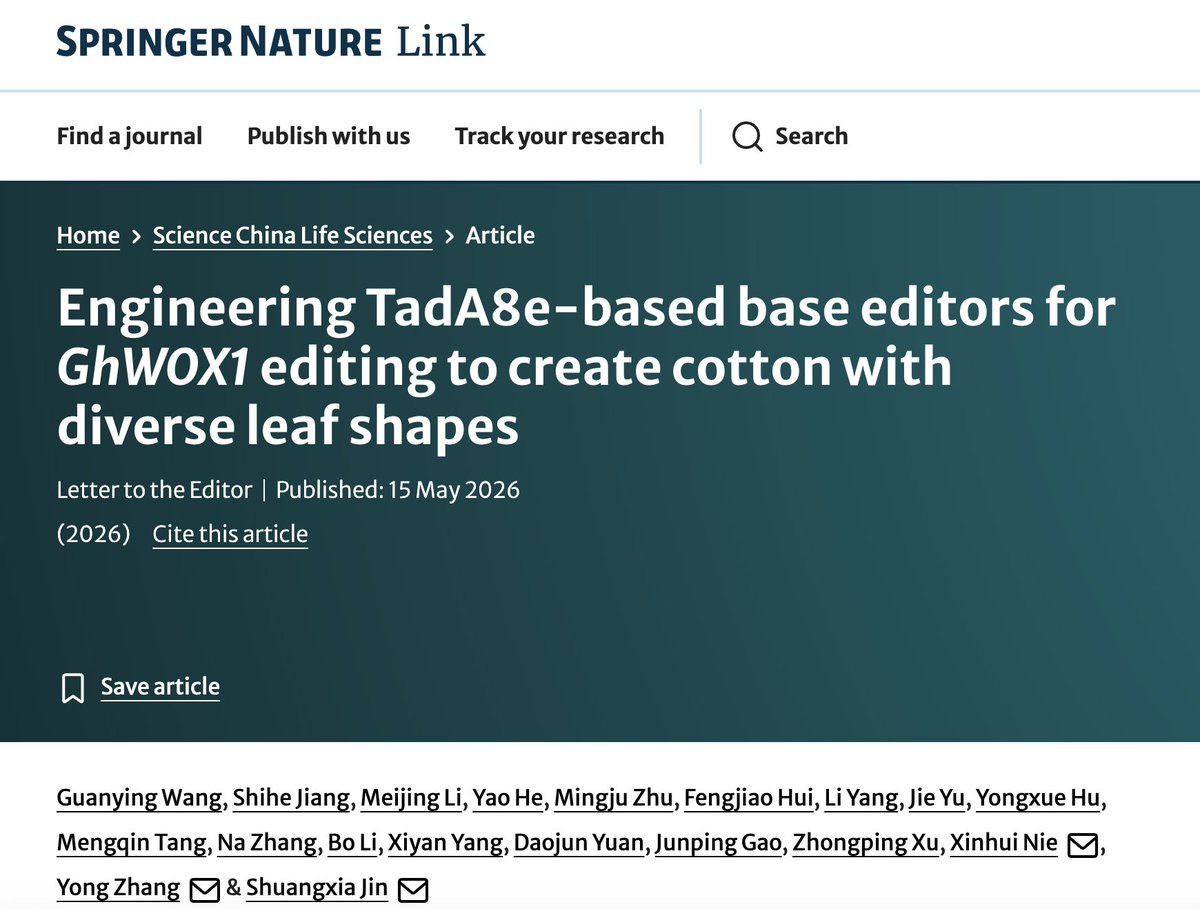
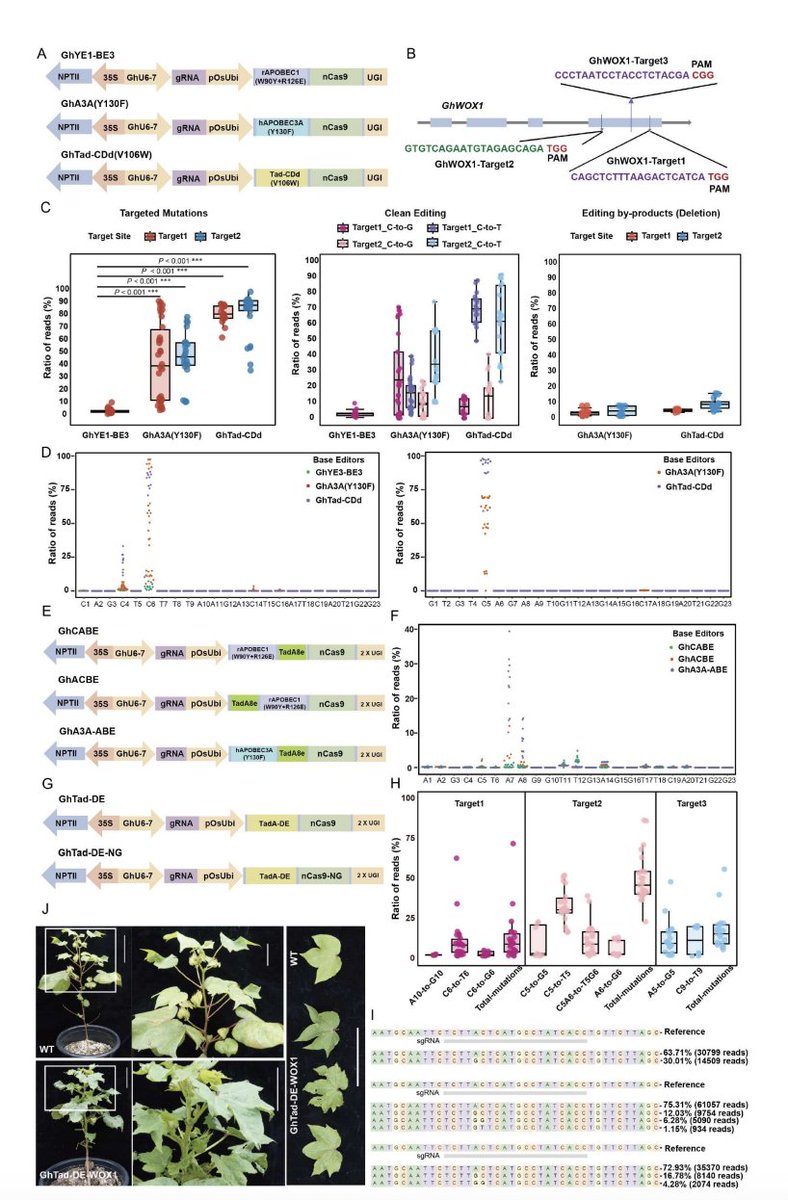
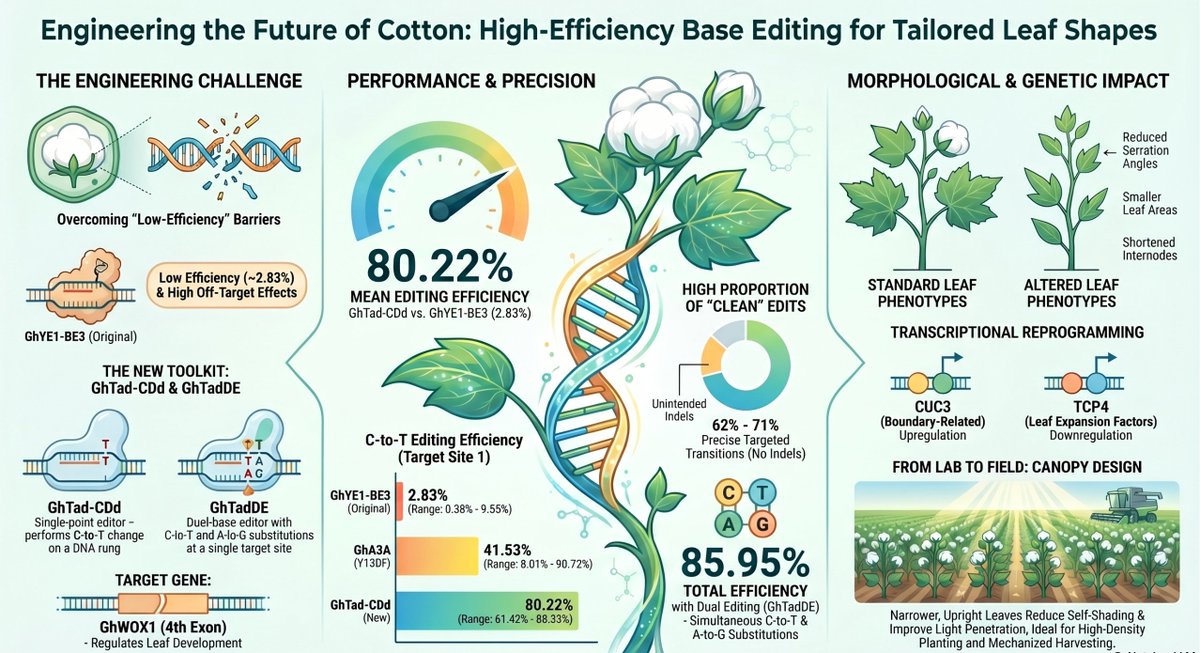
🌿 High-efficiency base editing toolkit established for cotton — including a dual base editor hitting 85.95% total efficiency.
New in Science China Life Sciences: systematic comparison of 5 editors in cotton targeting GhWOX1.
✅ GhTad-CDd: ~80% average C-to-T at two loci
✅ GhTadDE: simultaneous C-to-T A-to-G, up to 85.95% total
✅ GhTadDE-NG: extends to NG-PAM targets
✅ T0 plants show diverse leaf shapes & altered architecture
✅ No off-target edits detected
Jin lab, HZAU | Science China Life Sciences
doi.org/10.1007/s11427-025-3…
#BaseEditing #Cotton #CRISPR #CropImprovement #PlantBiology
11
477

🧬 @NEJM just dropped a landmark paper (May 25, 2026): ONE injection of VERVE-102 permanently base-edited the PCSK9 gene in the liver — cutting LDL by 62% (↓78 mg/dL) and PCSK9 protein by 88%, with effects lasting 1 year. Zero dose-limiting toxicity. This isn't a drug you take forever. It's a one-time molecular rewrite. 🩺💡
But here's the bigger story: this clinically validates LNP-delivered base editing in humans — and cancer is paying attention. 🎯 KRAS & TP53 mutations have already been corrected by base editors in cancer cell lines. LNP-CRISPR knocked into glioblastoma showed 70% editing efficiency 50% tumor suppression in vivo. EGFR-targeted LNPs hit metastatic ovarian tumors at 80% efficiency. The platform works. The tumor targeting works. A cancer clinical trial is a matter of when, not if. ⏳ @oncodaily @OncoAlert
#BaseEditing #PCSK9 #GeneTherapy #Oncology #NEJM @oncodaily @OncoAlert @EricTopol
nejm.org/doi/abs/10.1056/NEJ…
2
11
39
4,029
May 25
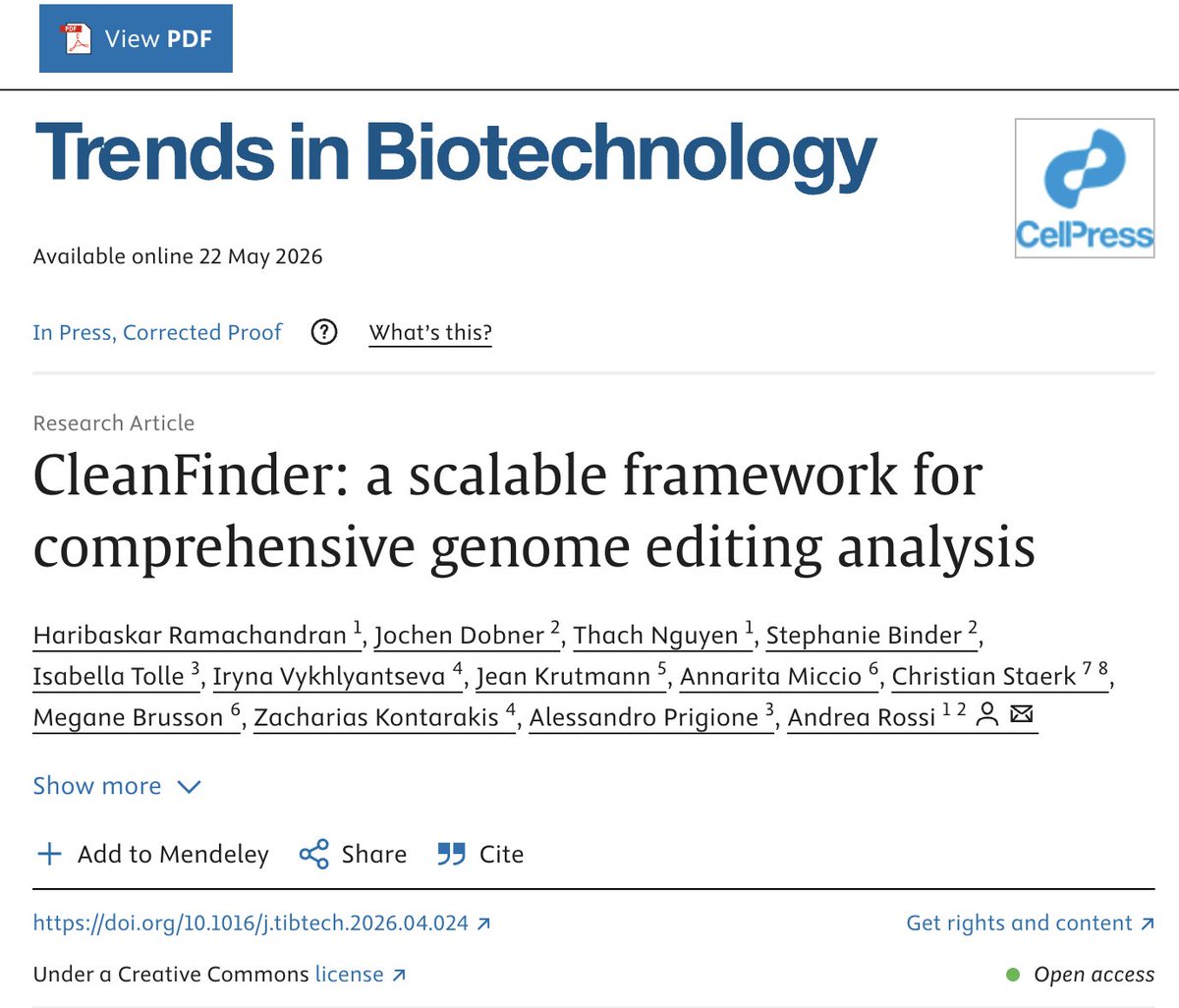
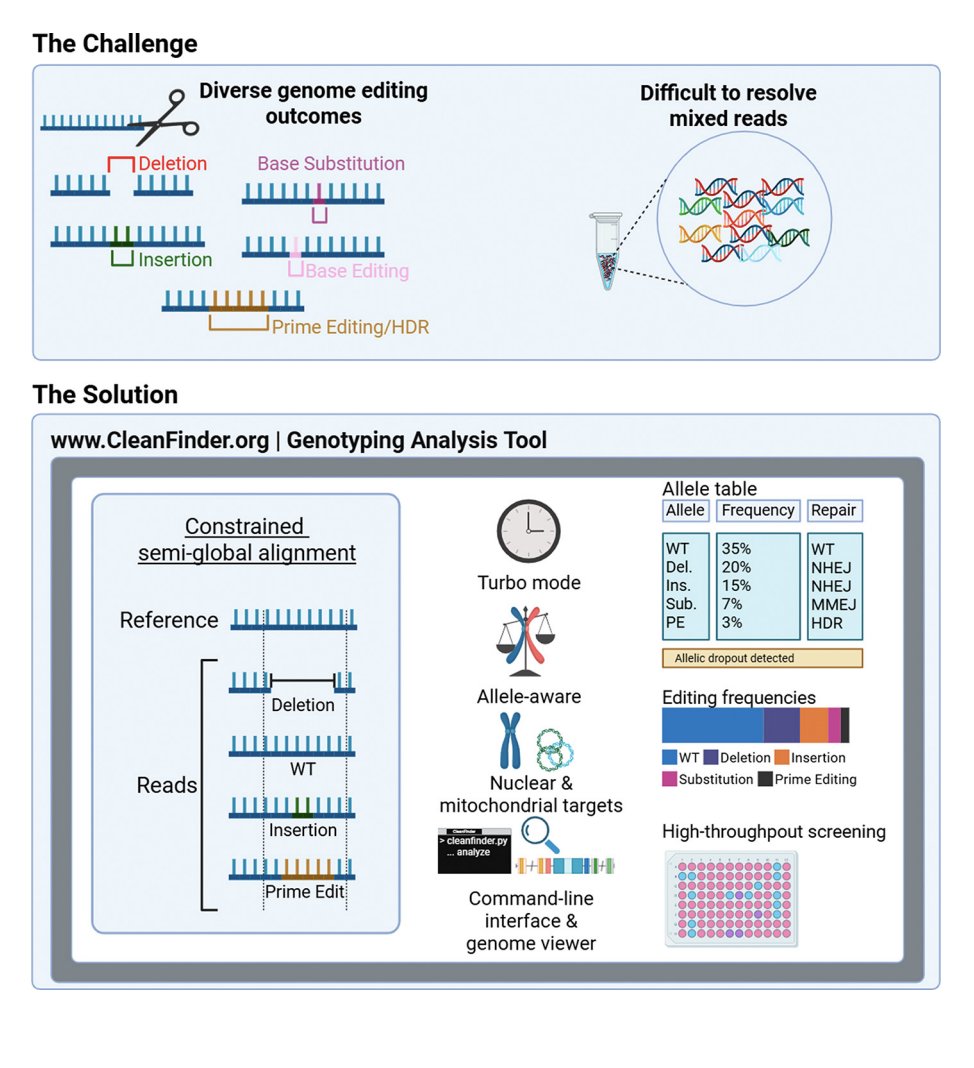
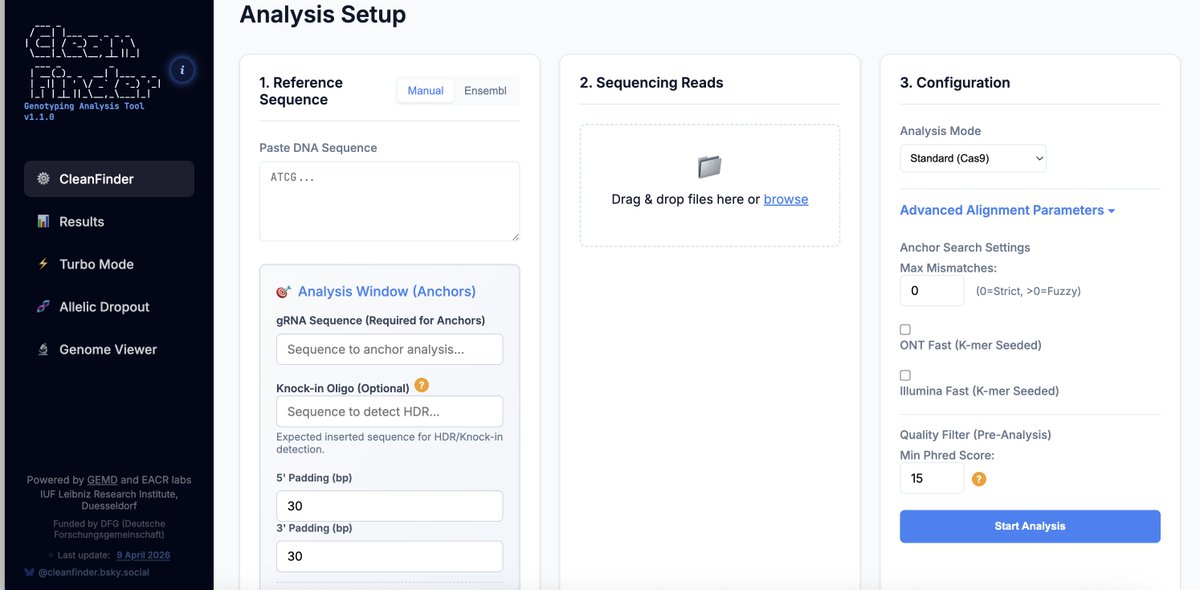
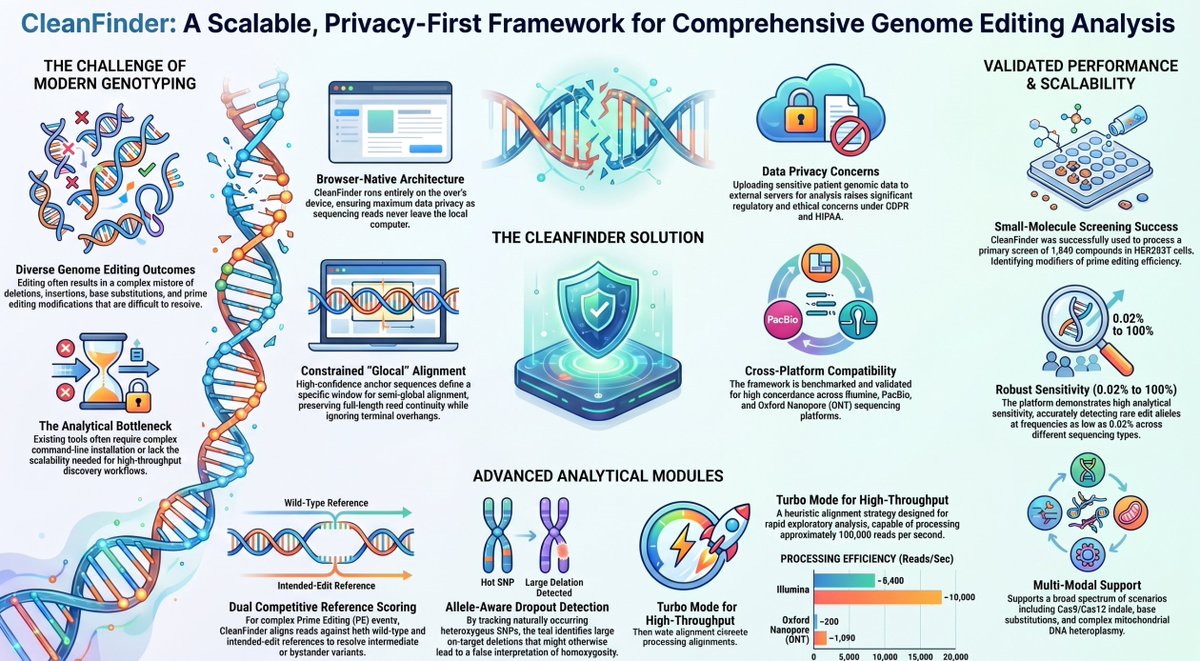
🧬 Analyzing complex CRISPR editing products just got a lot easier — no coding required.
CleanFinder (Trends in Biotechnology) is a browser-native analysis framework that handles PE, BE, Cas12, long-read & short-read data in one place.
✅ Single-nucleotide resolution allele classification
✅ REPAIRome: infers NHEJ vs MMEJ from deletion patterns
✅ Detects allele dropout via endogenous SNP barcoding
✅ Scales to 1,849-compound drug screens
🔒 All processing runs locally — no data upload needed
🔗 cleanfinder.org
Trends in Biotechnology
doi.org/10.1016/j.tibtech.20…
#CRISPR #BaseEditing #PrimeEditing #Bioinformatics #GeneEditing
3
12
649