
C'est pas moi qui le dis, c'est l'ARCEP arcep.fr/la-regulation/grand…
Aussi parce-que avec l'arrivée de la 5G on a consommé plus, mais pas tant, la 4G était déjà largement suffisante pour saturer nos besoins.
En plus les smartphones modernes avec des codecs comme l'AV1 consomment moins
1
8

No it doesnt. During live video transmission, moving objects are harder to compress because codecs predict changes between frames. If prediction errors or data loss occur, artifacts appear that are most visible in moving parts of the image.
8
During live video transmission, moving objects are harder to compress because codecs predict changes between frames. If prediction errors or data loss occur, artifacts appear that are most visible in moving parts of the image.
1
10


capcut is killer edit video with less issue and friendly with various codecs
26

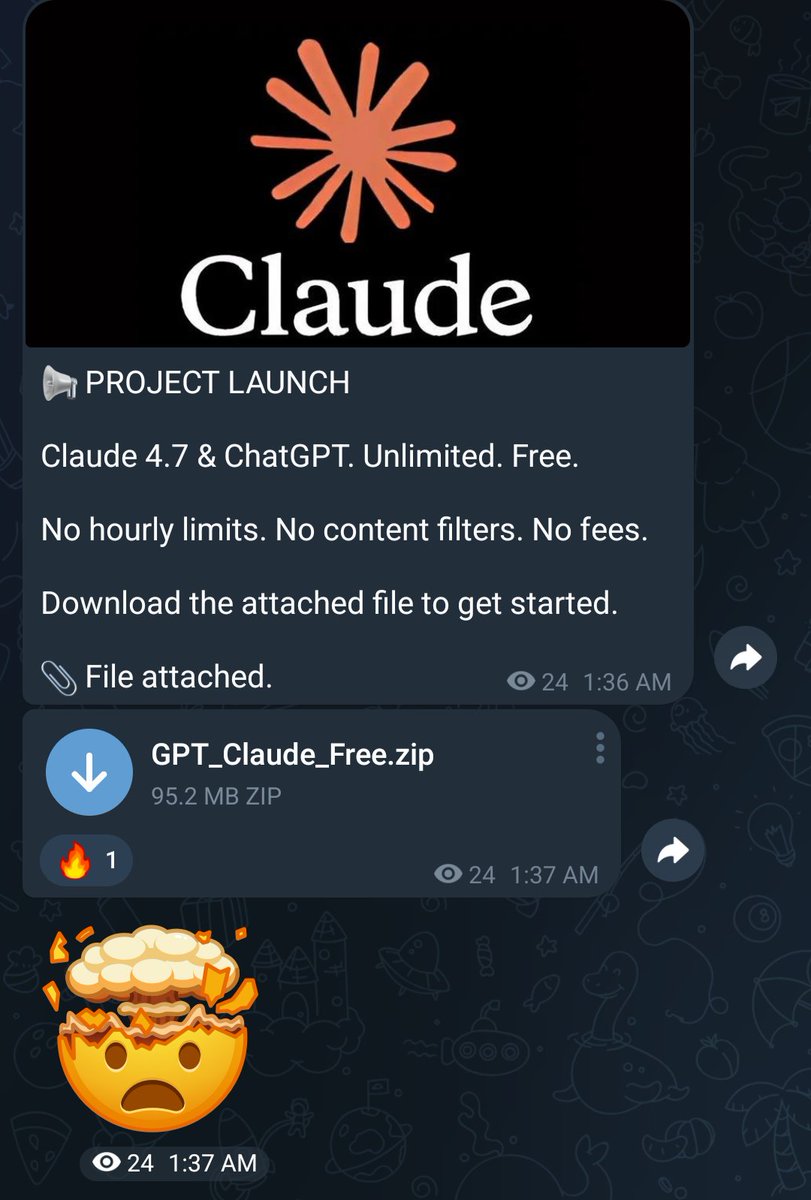
Someone showed me this on Telegram. It is very silly. It is clearly masquerading as "Free GPT and Claude". Anyone with half a brain knows this is malicious, but people will still fall for it.
People asked what it is. I have some free time. I poked it with a stick,
People discussing it said it is XMRig. That is not entirely accurate. This is not XMRig. This is flagged as XMRig from Triage and VirusTotal because it does indeed drop XMRig, but it is much more than that. This is a (maybe new) information stealer packaged with XMRig as a double whammy.
This malware is interesting because of a few things:
1. It is position independent, they care enough to be evasive and strip out a majority of dependencies. This is usually indicative of more serious malware.
2. They .zip it delivers from the "Free GPT and Claude" is intentionally bloated (payload inflation). It is 97MB, which may evade a majority of anti-malware product (initially) due to it's large size. It packages itself with FFMpeg and various other audio codecs.
3. It accesses Microsoft Outlook e-mails, accesses Chrome stuff using the COM IElevationService, looks for any SFTP credentials
It (currently) does not have any matching YARA rules from AV vendors. The closest approximation is LummaStealer. My knowledge base on the Information Stealer scene is out-of-date (it changes a lot). However, on first initial glance this appears like a new information stealer. Again, this should be taken with a grain of salt.
It's also worth noting the domain it exfiltrates to does not appear in any malware reports. The domain is unique, and the payload does not match any existing YARA rules (it's behavioral characteristics do, but not a specific malware family), so this is actually a pretty interesting sample.
A lookup though shows this is an emerging malware campaign. It first appeared around the end of May. This is (probably) a known Threat Actor who has switched it up a bit (or it's MaaS, whatever though).
The malware appears online masquerading as various products.
- ecore-sourceproject
- LogiDA
- GPT_Claude_Free
- CortexSystems.v3.4.2.Stable
- TikTokBot-v2.2
- CortexLauncher
Funny enough, this malware would have been much, much, much, MUCH more evasive if they didn't package it with XMRig. VirusTotal and Triage immediately flagged it because after it establishes persistence, and steals any credentials on the machine, it pulls XMRig to turn into a cryptocurrency miner.
If they did not pull the XMRig binary this stealer would be much more quiet. I have no idea why they decided to burn their OPSEC with XMRig.
C2: dfwioeiofwr-dot-info
Payload (and associated families from the C2)
027d576c6b5512d661081aaeeeb8e611f95a469ccf5ba35e0a390e8814334d05
5dcc599cf48227e65ea49d2708d08704fd1cb7e3b89736718d0d8e557857c49c
5e8b40b0b7512e1a1355374fb0cf34bfdf1260ebdb80a353c8f9da2490beeed3
6a0c332296b017220fc2b522da653fce36a8a3c5c79de0200d61c5fc31eb89ce
a2f8ebf65d54a4d9c8b720d01da77ad796683f1a5b8bd3d08738d7df4365f8a
9d4aaa9842c947756b7c128c432292732098fb71d247ef0bce60368563572da3
c4caca93e2291c018e701c217b7d232c534e4dd142042a59aa4d32754ef3022a
32
48
547
79,181

If codecs translation feature is right- hmm- I suppose you believe that Kojima-san is some kind of all mighty being
19h

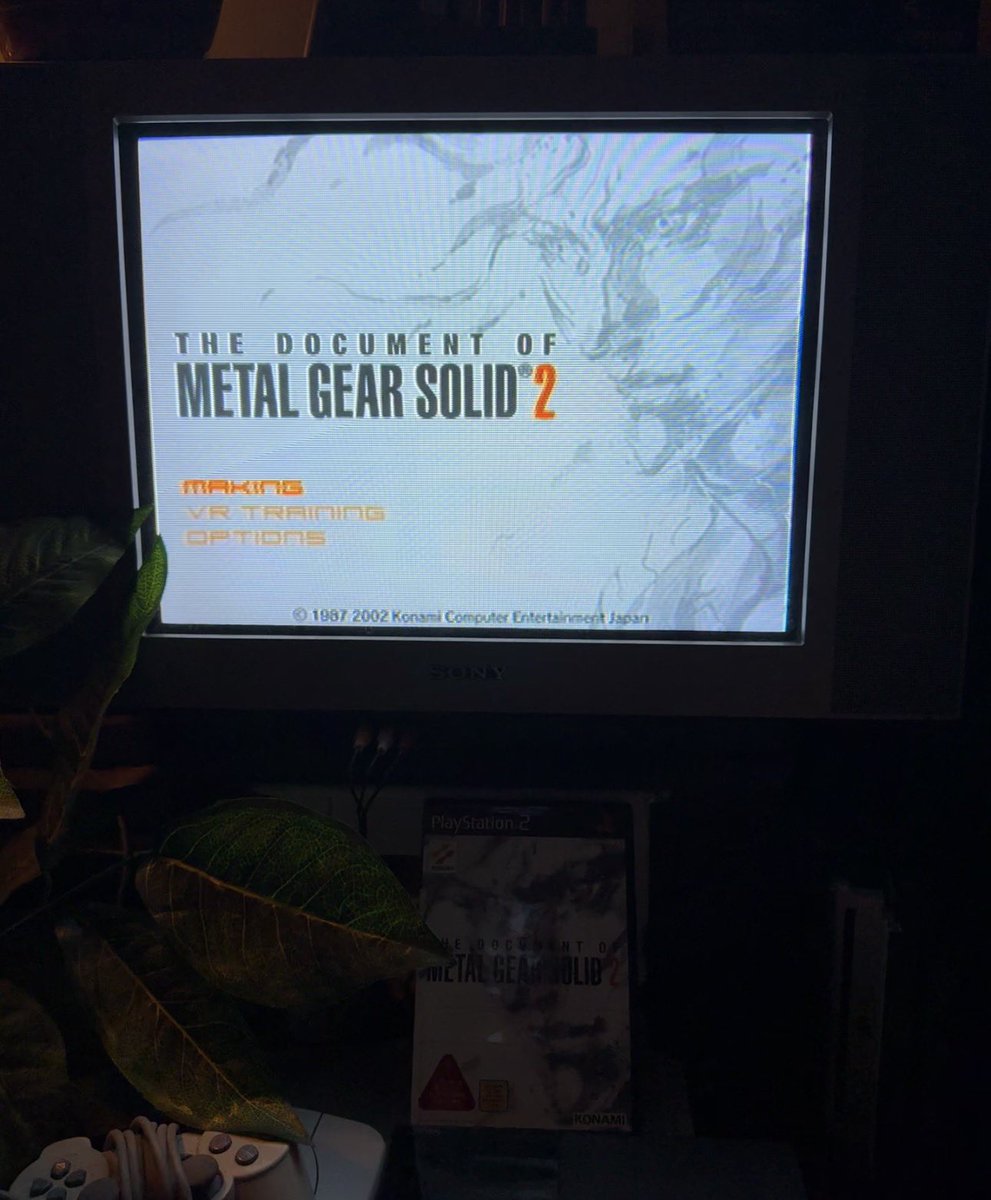
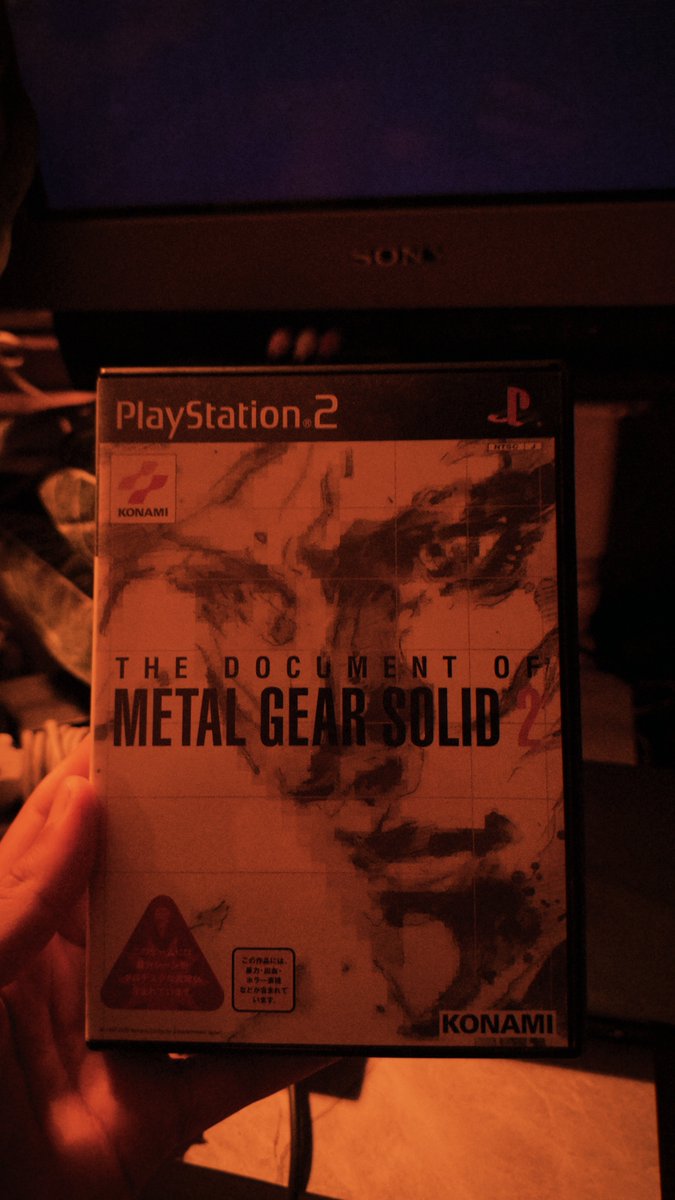
وُفقت حقيقة في اصطياد عدد من الكنوز الفنية في رحلتي الأخيرة لليابان، ولم أعتقد قطعًا بأن هذه النسخة المميزة جدًا ستكون من بينهم. من شدة إيماني بانعدام هذه النسخة اعتقدت أن لا وجود لها من الأساس وماهي إلا نسخ مزيفة، ولكني ولحسن الحظ وقعت صدفة عليها في سراديب طوكيو، وقد تكون أحد أعظم الفنيات المادية التي أملك حاليًا. الجميل حقًا أنها للجزء الأكثر ثورية وجرأة، وهذا مازاد دونما شك من قيمتها. سعيد جدًا بها ولله الحمد🤍.
#metalgearsolid2
1
238

13h
En PC puedes forzar la calidad 1080p, en la app de Tv no se puede. Sin embargo, su codificación de origen es muy mala, aún así se ve pixelado por que mandan la señal con codecs precarios.
14
1,677

do you have a codec pack or not, cause if its not updated it will probably crash due to expecting old ones, if you add new codecs it will probably be fine after that
25

14h
nice read... definitely neural codecs have their advantage for generation.

1
68

Researchers monitor these terms to track updates in spatial inpainting consistency and real-time texture patching software.
* #VideoForensics / #ImageForensics: The core domain tags used by forensic specialists to share methodologies for identifying pixel anomalies, compression discrepancies, and metadata inconsistencies within disputed video files.
* #OSINT (Open Source Intelligence): The operational framework under which global analysts collaborate to verify the geographical and temporal authenticity of broadcast media, often cross-referencing live video details with physical maps, satellite data, and weather patterns.
* #StreamEdit / #RealTimeAI: Indicators tracking the technical implementation of low-latency, frame-by-frame generative pipelines, focusing specifically on hardware optimization and transformer-based model updates.
* #TemporalConsistency / #OpticalFlow: Analytical markers used within the computer vision community to discuss the elimination of flickering artifacts and the stabilizing of synthetic overlays in dynamic environments.
#Forensic Countermeasures and Detection Methodologies
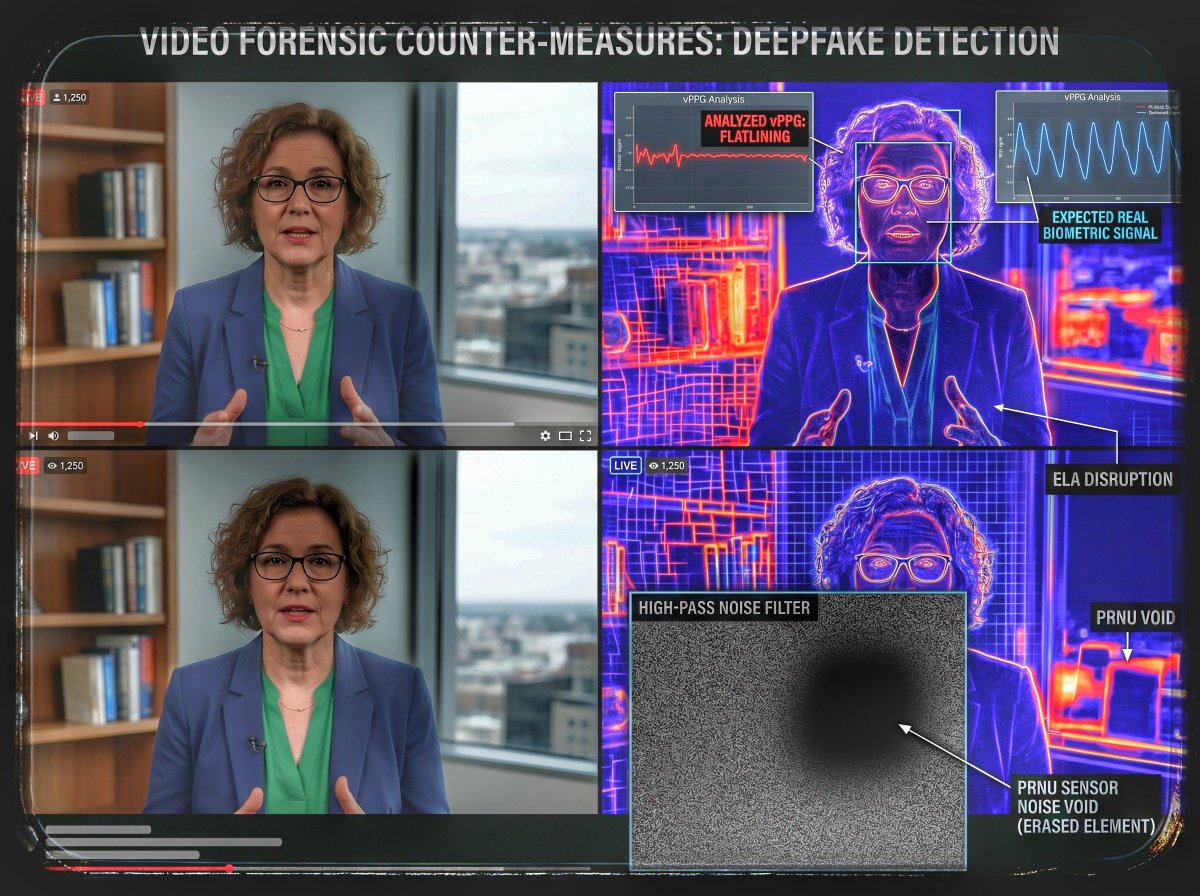
Exposing real-time video manipulation requires looking past the surface appearance of the footage and analyzing its underlying mathematical and structural properties. Digital forensic investigators use several specialized techniques to identify subtle anomalies left behind by generative inference layers.
┌──> Photo-Response Non-Uniformity (PRNU) Sensor Noise Analysis
[Suspicious Video Feed] ┼──> Spatial Inconsistency & Pixel Artifact Invalidation
└──> Temporal/Chrominance Frequency Discontinuity Analysis
1. Sensor Noise Fingerprinting (PRNU Analysis)
Every physical camera sensor possesses microscopic variations introduced during manufacturing. These variations create a unique noise pattern known as Photo-Response Non-Uniformity (PRNU), which acts as a digital watermark embedded across every frame the camera captures.
[Raw Frame] ──> [PRNU Extraction Filter] ──> [Uniform Noise Field] (Authentic)
[Edited Frame] ──> [PRNU Extraction Filter] ──> [Discontinuous / Erased Noise Field] (Tampered)
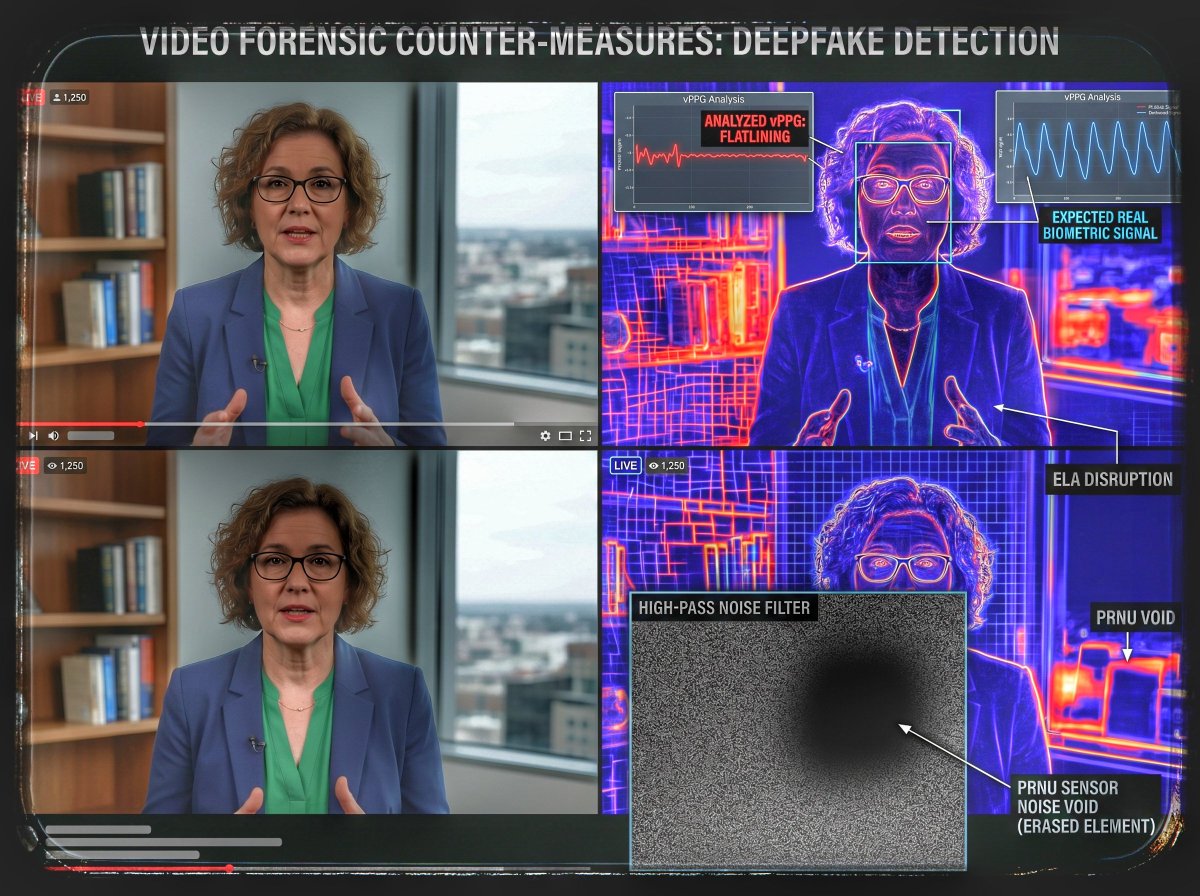
When a generative AI model inpaints a region of a frame or replaces an object, it synthesizes new pixels mathematically. These synthetic pixels lack the camera's original PRNU hardware signature. By passing video frames through specialized high-pass noise extraction filters, forensic investigators can map the PRNU distribution. If a specific region of the screen—such as a background wall or a item on a table—displays a sudden absence of sensor noise or shows a distinct, uniform noise pattern, it indicates that the area has been digitally reconstructed.
2. Spatial Artifact Detection and Pixel Discontinuity
Even with advanced photometric alignment, generative models frequently introduce minute spatial errors along the boundaries where authentic imagery meets synthetic imagery:
* Edge Blending Anomaly Analysis: Algorithms analyze the spatial frequency of object edges. Real objects display a natural, consistent gradient transition between their boundaries and the background, determined by the camera lens's modulation transfer function. AI-inserted or removed objects often exhibit microscopic blur zones or sharp pixel-step discontinuities where the generative mask was applied.
* Compression Signature Invalidation: Video compression codecs split frames into small macroblocks (typically 8×8 or 16×16 pixel grids) to execute discrete cosine transforms (DCT). When an intercept model modifies a frame before final encoding, it disrupts the natural macroblock boundary alignment. Forensic software can visualize the Error Level Analysis (ELA) of the video, highlighting regions where the compression ratios diverge significantly from the baseline frame metrics.
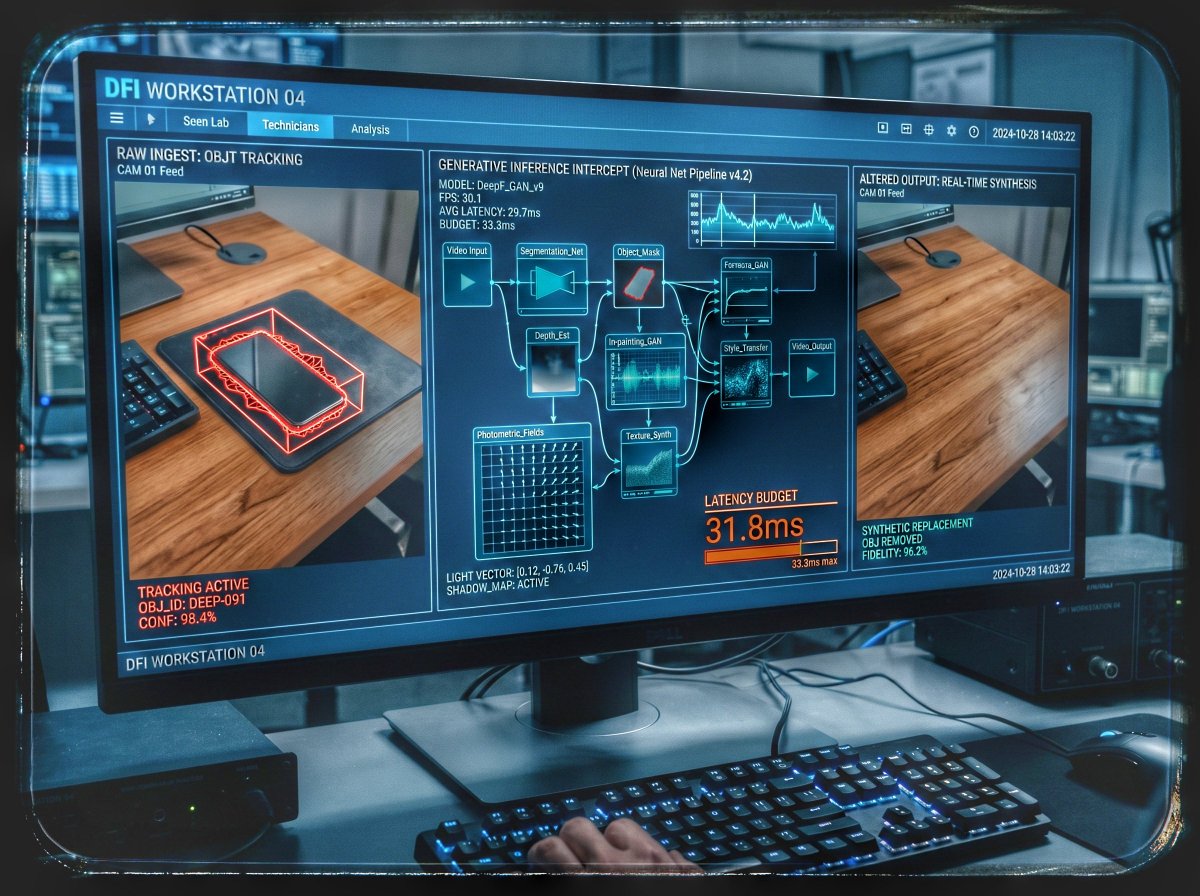
30
I learned today the they will retroactively remove disclosure from live recorded videos. 👌 live stuff, and even ad alternative content. The video you see could be entirely different from what I upload, or entire accounts made in millisecond...
That'll be fun
#riggedmarket
#Deepfake #SyntheticMedia #DiminishedReality #VideoForensics #SportsBetting #OddsManipulation #WeatherDeepfakes #ClimateOSINT #WorldEvents #CrisisActors #CrimeForensics #EvidenceTampering #OSINT
#Comprehensive Analysis of Real-Time Video Manipulation, Synthetic Media Diffusion, and Cognitive Anchoring Methodologie
Section 1: Introduction and Foundational Architectural Frameworks
The structural integrity of live digital evidence has been fundamentally altered by the convergence of high-throughput computing architectures and real-time generative artificial intelligence. Historically, video verification processes relied on the implicit assumption that live-streamed data possessed structural fidelity due to the computational impossibility of performing frame-by-frame contextual modifications on the fly. This structural guarantee no longer exists.
Modern ingestion and streaming pipelines can execute arbitrary frame modification, ambient lighting reconfiguration, and object elimination in real time. These alterations occur within the transient space between raw sensor capture and network distribution. The systemic implementation of these technologies allows for the seamless modification of broadcast environments, the retroactive extraction or insertion of critical physical evidence, and the deliberate exploitation of human memory vulnerabilities.
The Live Streaming Data Pipeline
To understand how video manipulation occurs without introducing perceptible latency, one must examine the baseline mechanics of modern video distribution networks. A standard live stream operates via a sequential pipeline:
1. Sensor Ingestion: The camera sensor captures raw visual data, converting photons into electronic signals organized as distinct pixel matrices.
2. Hardware Encoding: The raw matrices are compressed using specialized hardware codecs (e.g., H.264, H.265, AV1) to minimize bandwidth requirements.
3. Protocol Packetization: The encoded bitstream is segmented into network packets via transmission protocols such as Real-Time Messaging Protocol (RTMP), Web Real-Time Communication (WebRTC), or Secure Reliable Transport (SRT).
4. Content Delivery Network (CDN) Edge Distribution: Packets are routed through localized edge servers to minimize geographic latency before reaching the end-user rendering engine.
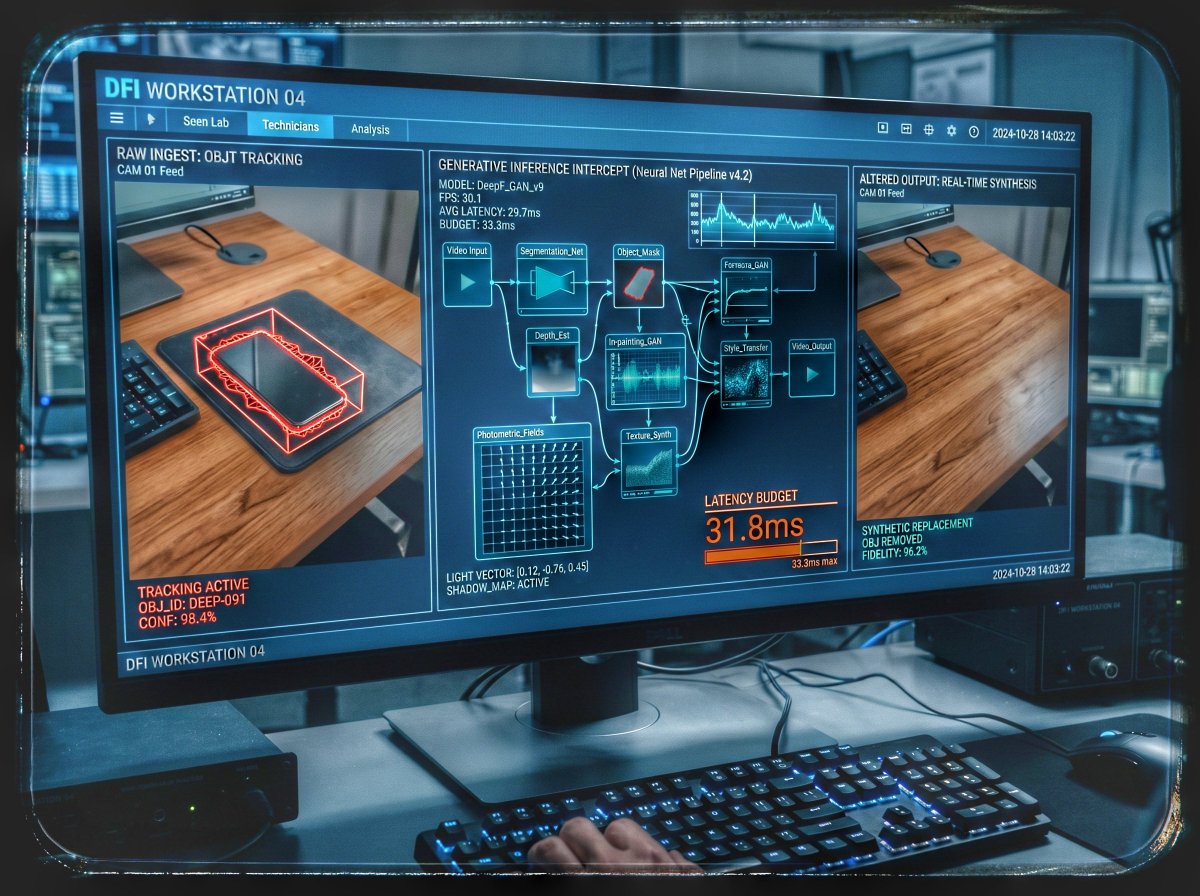
Real-time tampering systems insert an intermediate computation layer between Sensor Ingestion and Hardware Encoding. This layer is designated as the Generative Inference Intercept (GII). By processing the uncompressed or shallowly encoded frames directly within high-bandwidth video memory (VRAM), deep learning models can evaluate, mask, and reconstruct the pixel landscape of a live broadcast prior to protocol packetization. Consequently, the viewer receives a compromised stream that appears structurally sound, devoid of typical post-production artifacts, and accompanied by authentic network timestamps that falsely validate its integrity.
[Camera Sensor] ──> [Generative Inference Intercept] ──> [Hardware Encoder] ──> [CDN Distribution] ──> [Viewer]
│ (AI Frame Re-Synthesis)
└──> Latency Budget: < 33.3ms (for 30 FPS)
------------------------------
45

Yeah set both to auto.
With the new codecs the card will only render one per orientation and then whatever outputs aitum does if set different.
You only need to change the bitrate if you have low speed internet (which I doubt) and the tracks no need to touch anymore
1
19


About the video you recommended at the end called "The Biggest Mistake in the History of Hollywood", another rollercoaster 😂
0:13 - What you saw is macroblocking, an artifact of video compression, commonly more visible in gradients of the same color shade, it is streaming my dude, that is why BluRay is a little bit better, more bitrate, less compression.
0:22 - Yup, there is more things other than just pixel resolution, 4K is just one of many other specs to consider to get the best image quality, and in the case of consumer video, BluRay is the best out there, doesn't have the constrains of streaming which requires a huge bandwidth and never gets to the same bitrate of a BluRay disk. You can also download an uncompressed repackaged BluRay, around 75GB of data BTW 😂
0:51 - Nop, 4K isn't a lie, they deliver 4K-UHD video, but not without compression.
1:20 - Yes, movies were recorded in film, but there were and still are tons of film formats and sizes, and the sensibility of the film was linked to the silver grain size, so truly perfect images required a big film frame with finer grain and tons of light, but even there we had temporal resolution, the motion blur inherited of using the 180 degree rule in the shutter. A Super 8 film for low light would have worst resolution than TV 😂, check this calculator and learn more about lp/mm in film and film scanners:
tools.rodrigopolo.com/FilmRe…
3:41 - Yes, there were NO pixel resolution in film, but there were lp/mm and mft charts for lenses and film, and it matter.
6:11 - It is called "chemical process", which could give a washed out look, a darker or lighter, you could even play with RGB during transfers, but not the level of control of color grading.
5:51 - No, there is no problem, "O Brother, Where Art Thou?" was shoot using full open gate 4-perforation pull-down format on Super 35mm film (24.89mm x 18.66mm), Roger Deakins used three specific Kodak film stocks, Eastman EXR 100T 5248 as the primary stock for most daylight exterior scenes, Kodak Vision 500T 5279 for shooting night interiors and all night exterior scenes, and Eastman EXR 200T 5293 for daylight sequences in deeply shaded forest environments and for recording bluescreen elements, wider field of view was archieved using spherical Cooke S4 lenses before the image was cropped to its final 2.39:1 widescreen aspect ratio, they didn't used anamorphic lenses.
The emulsion Type and sensitivity and the average resolving power (lp/mm) of those stocks are:
* Eastman EXR 100T 5248, Medium-Speed Tungsten (100 EI), 100 lp/mm
* Eastman EXR 200T 5293, Medium-Speed Tungsten (200 EI), 90 lp/mm
* Kodak Vision 500T 5279, High-Speed Tungsten (500 EI) | 80 lp/mm
So the theorical (lp/mm) calculated with perfect lightning and contrast, and perfect optics would be:
* 4978x3718 open gate, 4978x2074 cropped.
* 4480x3346 open gate, 4480x1866 cropped.
* 3982x2974 open gate, 3982x1659 cropped.
But resolving power drops slightly in lower contrast scenes, where these stocks average closer to 50 lp/mm (for the 5248) and 40 lp/mm (for the 5279), so the real world numbers are:
* 2489x1859 open gate, 2489x1037 cropped.
* 2489x1859 open gate, 2489x1037 cropped.
* 1991x1487 open gate, 1991x829 cropped.
As you can see, 2K was more than enough, and for 4K there was an issue, there was no computing power to deal with that amount of resolution at the time, no scanners and printers for that. Have you seen the original 1080p version of The Matrix (1999)? (image attached) Look at the 1:36:00 timestamp, the white loading scene, you can see the film gran, the digital scan has higher resolution than the film.
7:53 - It is NOT tricking you, it is NOT fake 4K, if you bought a BluRay disk for that movie is clearly in 1080p, there is no conspiracy at all 😂
8:31 - There are several films remastered in 2K that had been transformed in 4K-UHD trough the use of IA, with some caveats.
9:07 - No, the color banding is produced by video compression.
13:45 - I'm glad you realized the viewing distance, because only pixel peepers with 20:20 vision could see the difference between 4K-UHD and FHD, that is why I created these in 2012 (recently updated) during the Apple Retina debacle:
tools.rodrigopolo.com/Displa…
15:19 - Partially true, see, the deal with Full-HD and 4K is that you need a big screen in order to appreciate the extra detail, I'm old enough to remember huge standard definition TVs that didn't show any extra detail, then with FHD we can have a big screen that showed the extra detail, and when 4K-UHD arrived, I finally got a 85" screen that showed the amount of detail of The Dark Knight, or any other Nolan movie, off course most movies aren't true 4K, but have you seen old TV shows that were recorded in 4-perf Super 35 now in 4K? Two And A Half Men or Friends, they look stunning, and you can see the film grain, exposing that FHD was more than enough 😂 It is NOT an excuse to charge you more for a 4K title, it require more computational power, better technology, more bandwidth, etc. It is expensive as hell, you more than anyone know this, it isn't the same producing in 1080p than producing in 2160p, 4 times the storage size, 2x the render time, etc. And again, even while scaling-up 2K footage to 4K, you get more detail, even on streaming.
18:54 - NO, the cause of your color banding isn't the conversion to BT/Rec.709, it is the quantization and macroblocking produced by video codecs like AV1, HEVC / H.265, AVC / H.264, VP9, etc. Not to mention the conversion from a chroma of 4:4:4 to 4:2:0, check what chroma subsampling does to movies, that is why Michael Bay made Optimus Prime color more purple in his movies:
youtu.be/32PPzwPjDZ8
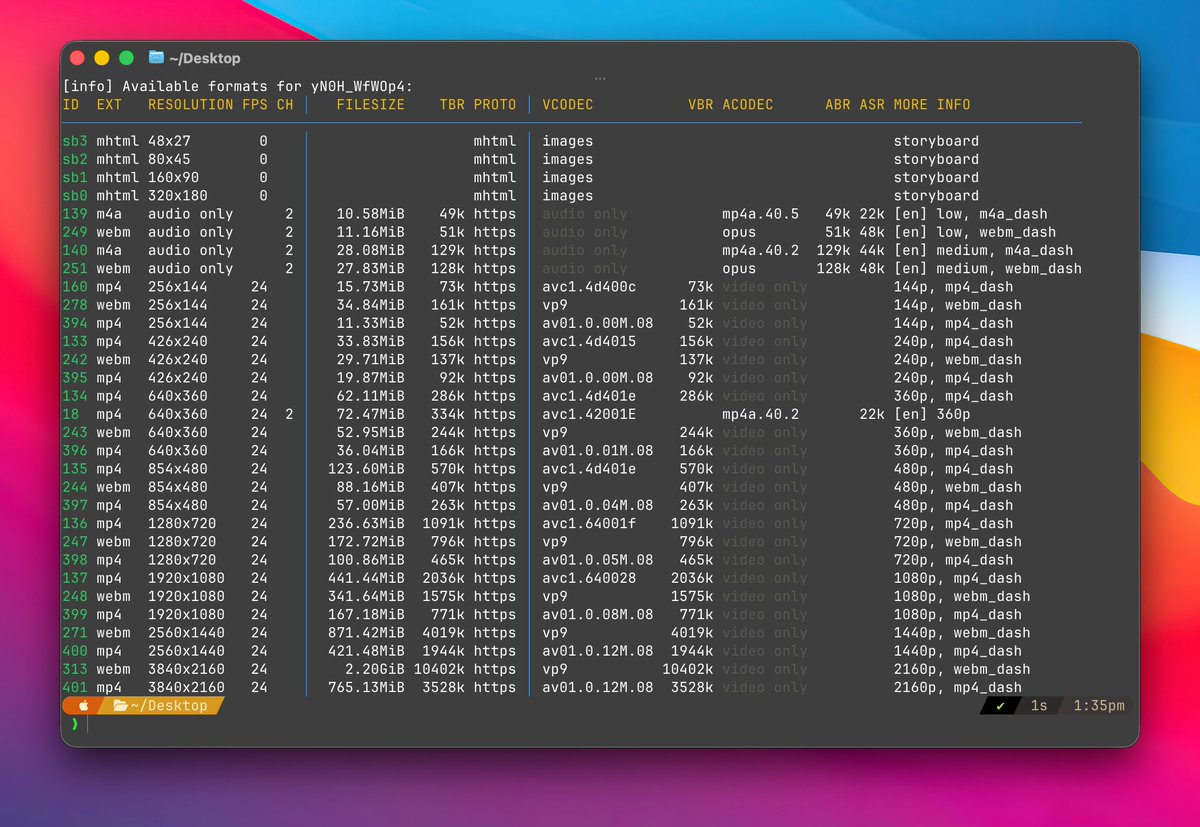
19:41 - Indeed, it is not Netflix greed, it is Adaptive Bitrate Streaming (ABR), check your network connection in fast.com, or try the CLI tool yt-dlp to check all the available streams on a youtube video, you'll see why most users don't get to see true 4K with not so compressed quality.
20:06 - Nop, streaming don't sacrifice color for resolution, the main issue is video compression, highly compressed video will lose both, detail and color information, it is a combination of both.
20:27 - You said "the extra storage in that disc is being used for that detail and for that color, not for pixels", that is completely wrong, BluRay discs employ codecs that use similar algorithms of those in streaming services and sometimes the same codecs, the difference is the compression ratio, the "recipe", HEVC/H.265 used in BluRay is almost the same as VP9 used in streaming, in fact, there was a huge controversy some time ago when Steve Jobs pointed out how Google's "open source" codecs were copying X264 and Jobs directly cited an article by the lead developer of X264 at the time, Fiona Glaser (formally Jason Garrett-Glaser with the alias Dark Shikari), you can Google it. Compression algorithms compress both, color and detail (pixels), not to mention entire frames in IPB.
20:56 - You'll never watch a movie in your home theater that look exactly on how the director view it, and never in a movie theater, because each projector digital or analog is different, each film stock where the film is copied is different, each chemical process is different, each screen is different, etc. This video masterfully explain the issue:
youtu.be/uQwQRFLFDd8
22:00 - Most purists are used to the film look of analog film because because they grew up with that, that is why the recent installment of Dune even tough it was film digitally, after it was done in editing and grading, it was then printed in film and re-scanned, to get that film grain, halation, softness, etc. IN DIGITAL FORM 😂
22:32 - Darn, you adressed the same thing I said in the previous point, never mind.
23:05 - In all the analysis you didn't consider the temporal resolution, the 180 degree rule always will introduce motion blur, thus, degrading the resolution. Now, watch The Hobbit Trilogy (48 fps) or Gemini Man (120 fps), you'll see more resolution because of the temporal resolution, and it looks like a video demo, not like cinema, movies are soft, that is why even in analog they used difussion filters, even dirtying the lens with Vaseline 😂 look it up.
¯\_(ツ)_/¯
23:18 - Nop, sadly, the slogan that HDR has more color isn't completely true, it contains more brightness, as an analogy for you that use Resolve, is like adding more stops in the highlights so you can adjust the Gain wheel, that's all. In a Resolve project using Re.709 as the timeline color, import one of your favorite shoots for any movie or tv show and check the waveform, then use Rec.2020 and import and HDR content, you'll see that is just brightness and not so much extra color.
28:33 - Yes, Nolan's films have a digital intermediates, all movies have, , and yes, he uses CGI in some shoots, check the behind the scenes.
So, after watching your video, I want to share with you something: I watched Project Hail Mary (2026) in the movie theater, then I got the streaming version, not once I though about the resolution because the image looks just good enough, but when I watched The Matrix from 1999 on my 85" screen I immediately saw the film grain in the white room scene, it was distracting because it breaks the illusion of an infinite white room. It is not about pixels or film grain, it is about telling a story with it trying to guide the user attention to that story. 😉

1
2
393

Teams är svårt att migrera bort ifrån, alla som har varit med ett tag och led stort under åren med Skype for Business vet det hur dåligt det kan bli.
Men det handlar inte bara om codecs och protokoll, utan om stabil infrastruktur. Jag tror inte telcos är alternativet.
2
29


21h
@MKBHD — we listen when you talk tech.
So we ran your Apple Passwords clip through MForja distillation.
17.9 MB → 3.2 MB. 81.9% of it was waste.
Professionally shot. Expertly lit. Still 81.9% overhead.
That's not on you — that's just how video encoding works. We remove what codecs leave behind. No pipeline swap. No quality hit.
Can't wait until you get your hands on what we're building. 🙌
Compare original vs. distilled: 📺 youtube.com/@MForja
11

Siempre fue mala idea el doble pc incluso en ese entonces con los codecs de streaming que tenia nvidia se la bancaba a el se lo advirtieron y el hate se lo llevo nate ademas de que el boludo de xocas lleno el pc de mierda que ni sabia configurar
2
137

But the underlying hardware and assumptions do change. New GPUs get made. New video codecs. Quantum computers break discrete log crypto. The worst is browser vendors breaking shit for no reason and there's really no excuse for that one but they do it anyway. And patent issues.
2
84