
23 Dec 2025
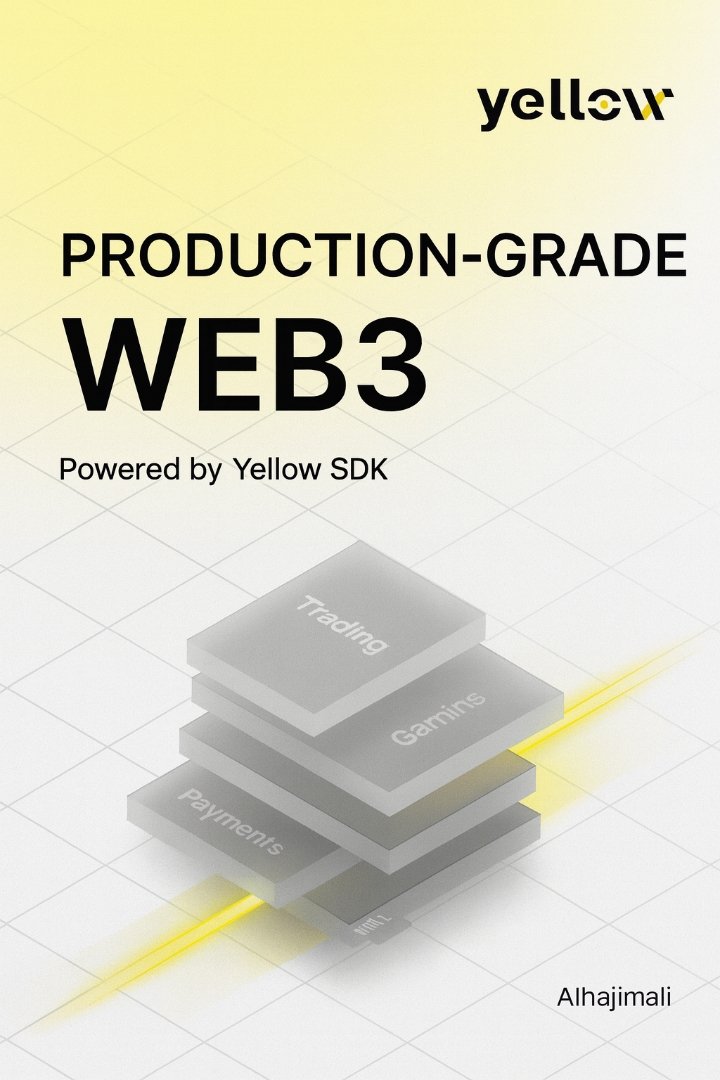
Everyone talks about what Web3 could do.
@Yellow SDK is already doing it.
Across trading, gaming, payments, identity, and real-world settlement, teams are using @Yellow SDK to remove the friction that killed adoption 👇
🟡 Real-time DEX Aggregators – Shared liquidity, instant execution
🟡 Gasless Wallet Apps – Zero-fee onboarding for non-crypto users
🟡 Cross-Chain Game Economies – One balance, multiple chains
🟡 Prediction & Wagering Platforms – Live settlement, no delays
🟡 On-chain Marketplaces – Web2 speed, Web3 trust
🟡 Payment & POS Systems – Crypto that actually works in the real world
🟡 NFT Utility Platforms – Dynamic assets, not static JPEGs
🟡 SocialFi Applications – Micropayments without gas pain
🟡 Institutional Trading Tools – Compliance-ready, decentralized clearing
🟡 RWAs & Credit Systems – Crypto meeting traditional finance
🔑 What makes this possible?
• Off-chain speed
• On-chain finality
• Cross-chain by default
• UX that doesn’t scare users away
This is the layer users never see — but everything depends on.
When infrastructure works, ecosystems grow naturally.
@Yellow is not chasing attention.
It’s building permanence.
#YellowNetwork #Web3Infrastructure #CryptoBuilders #DeFiScaling
#GaslessTransactions #CrossChainTech #RealWorldWeb3
#BlockchainUX #FutureOfFinance #BUIDLing #YELLOW
1
5
52

10 Dec 2025
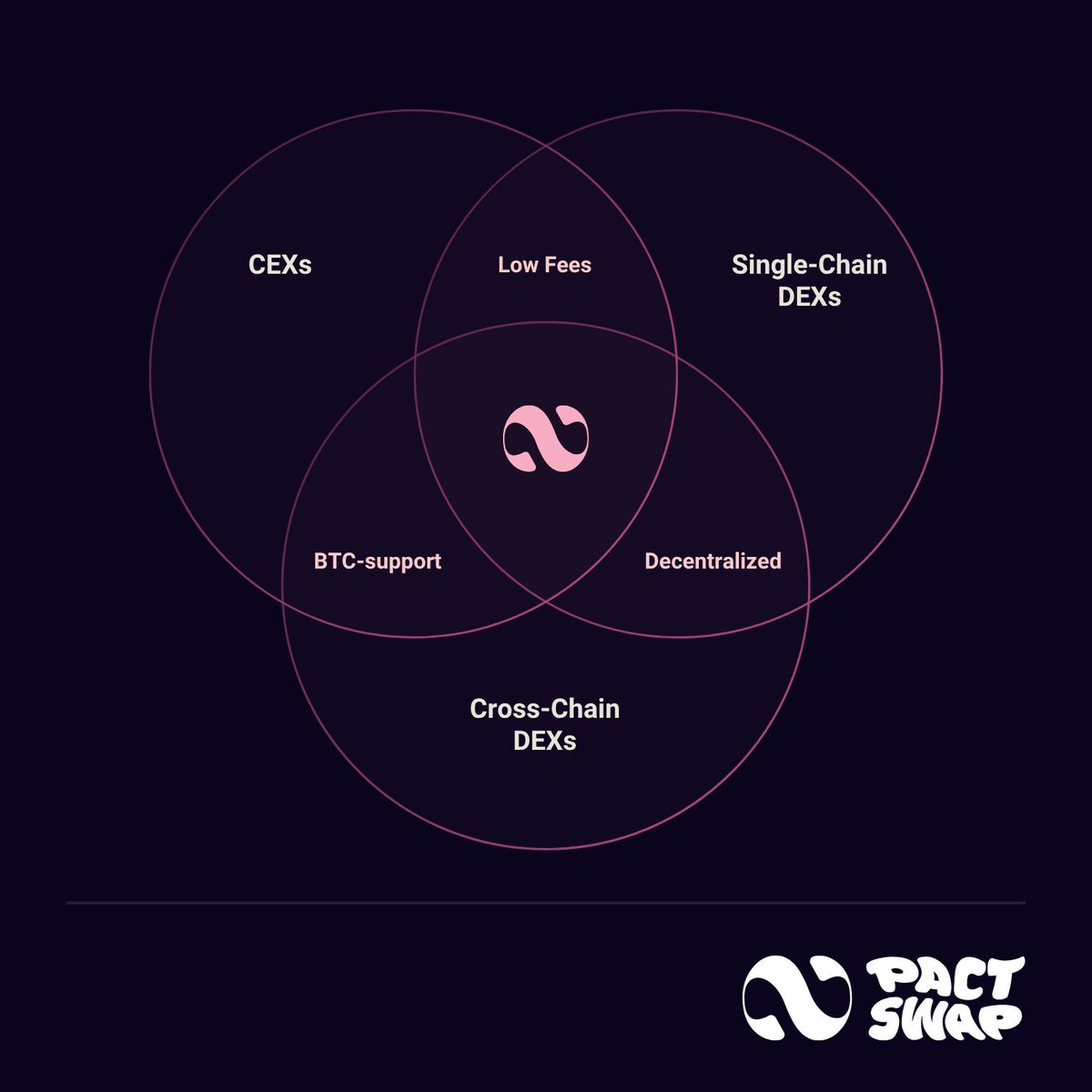
Collateralized Execution Will Replace Bridges Entirely”
Bridges rely on trust assumptions — custody, validators, or multisigs.
Pact Swap flips the model by making collateral the enforcement mechanism, not human-operated systems.
If a swap fails, collateral instantly covers the user.
No waiting. No intermediaries. No trust gaps.
This is the logical next phase of DeFi security.
Explore real trustless execution 👇
hub.pactswap.io/loyalty?refe…
@Pact_Swap
#DeFiSecurity #PactSwap #CrossChainTech #BlockchainReform #Web3Safety
2
37

4 Dec 2025
GN Fam!
Why Developers Should Keep an Eye on @Pact_Swap
From a builder’s perspective, cross-chain transactions aren’t just about swapping assets - they’re about trust, execution, and reliability.
@Pact_Swap architecture using reactive smart contracts solves a problem many cross-chain protocols struggle with: secure automation across multiple networks.
This opens real possibilities for building multi-chain apps that don’t rely on risky bridging systems.
If you’re a developer exploring the next generation of DeFi, this is the kind of infrastructure worth understanding.
#DevCommunity #Web3Builders #CrossChainTech #PACTSwap #DeFiDev

73
5
63
463

5 Nov 2025
Cross-chain without sweat on Warden.
Keychains handle signatures everywhere. Mix Cosmos speed with ETH liquidity.
Devs, this is your playground for innovative apps.
gQuack 🦆
#WardenProtocol #CrossChainTech #Crypto #WallchainQuacks
1
1
3
51

17 Oct 2025
@riverdotinc 最近撸过的小伙伴好像都在陆陆续续的想起来它了,去网页查看一下,突然发现有空投,但其实没有花很高的参与成本。🎁
app.river.inc/fun?ref=reuren…
快去网站里的 [Airdrop] 查看
这个项目的链抽象稳定币系统,核心是帮用户不用跨链桥也能让资产灵活起来使用。比如,
1. 抵押生币,跨链即用
2. 存币赚双份收益
※长期价值:
1. 不是“发稳定币”,是“做价值管道”
现在市场上有400多个Layer2、50多种稳定币,但彼此割裂,就像不同银行的钱不能通存通兑。
从大多稳定币的“一条链一个版本”,到River的satUSD“链抽象”
——资产老老实实待在原链,流动的是它的“价值凭证”。
2. 用“低LTV 自动质押”控制风险,新手友好度拉满
玩过DeFi的都知道,抵押资产最怕“清算爆仓”——行情跌了,抵押品不够就得被强制卖掉。但River的机制是 它给satUSD设了保守的抵押率(比如押100刀BTC,最多借60刀satUSD),还搞了“自动质押”:你抵押生成的satUSD,系统会直接帮你存进安全的收益池生息,不用你手动操作,既赚了收益又避免了satUSD贬值带来的补仓压力。
现在它已经对接了8个主流生态、30多个合作伙伴,TVL(锁仓资产)超6亿美元,satUSD流通量2.7亿,靠的就是这种“控风险”,而非短期补贴拉量。
#DeFiInnovation #CrossChainTech
#StablecoinRevolution
#AssetLiquidity
#CryptoFinance
#BlockchainEcosystem
@giverep @river4fun @gaib_ai @replycorp @wallchain_xyz @mindoai
16 Oct 2025

刚使用 @The_StarAI 一键生成了一个 $river AI视频,挺好用的,也有声音,重点还有免费的资格。😉👇🏻
m.starai.pro/invite/4nQAAv
⛲ 言归正传,今天学习一下什么是稳定池
很多人把稳定池当成普通的“理财账户”,但其实它的核心使命是维护协议偿付能力。比如,用户可以用BTC、ETH等加密资产做抵押,铸造与美元挂钩的稳定币种。为了确保它们始终有足额资产背书,协议会给每个抵押仓位设定“安全线”,即安全抵押上限。
当市场暴跌,抵押品价值跌破设定值的时候,稳定池就发挥作用了。它就像“应急流动性库”,直接拿出池里的稳定币替违约用户还债,同时把对方的抵押品给收过来。这种即时清算,比传统的抵押拍卖效率高得多,能避免拖慢整个协议的运转节奏。
而用户存入的资金为池子提供了流动性,本质是在为这个“应急机制”兜底,高APR正是对这种“风险兜底行为”的奖励。
〖 和其他DeFi玩法比,它特殊在哪?〗
不少新手会把稳定池和Curve这类“稳定币兑换池”搞混,但两者核心逻辑天差地别:
⛲Curve池:主要做DAI、USDC等稳定币的低滑点兑换,收益来自交易手续费和平台代币奖励,风险集中在稳定币“脱锚”上。
⛲稳定池:不做日常交易,收益完全依赖清算事件,风险和加密资产的价格波动直接挂钩。
另外,它和普通“质押生息”也不同——质押是锁定资产维护网络安全拿奖励,而稳定池是提供流动性承担清算风险,收益的不确定性更高。
⚠️ 虽然收益诱人,但几个坑必须警惕:
1. 收益波动风险:APR是“过去时”的平均值,若后续BTC止跌回升,清算减少,实际到手收益会远低于显示值。
2. 资产缩水风险:清算时拿到的抵押品可能继续下跌,若没能及时卖出,原本的“差价收益”可能被吞噬。
3. 流动性风险:极端行情下,池内资金可能因集中清算被大量占用,用户可能面临短期无法提取资金的情况。
说到底,稳定池的高APR,是对“精准预判市场波动”和“承担风险能力”的奖励。对新手来说,最好不要盲目入金。
@giverep @river4fun @gaib_ai @KaitoAI @replycorp @wallchain_xyz @mindoai
9
10
13
1,930

7 Aug 2025
Recap from Union broadcast on Lazy TV
How @union_build is stitching ecosystems together
Featuring @zmanian @0xkaiserkarel
Here's the recap in full 🧵👇
#Union #Interoperability #CrossChainTech #ZK
5 Aug 2025

One... Union... to... Bring... Them... All...
Next up on Lazy TV:
Modular infra, ZK, interop and the trustless future...
How @union_build is stitching ecosystems together?
Wednesday, August 6
05:00 PM UTC
Don't snooze 🦥_______🦥
5
3
121

21 Jul 2025
gMITO 🧬 mitosians 🫶
Bridge drama? Not on our watch. Hyperlane tech, demystified. 🌉
Ever wondered how @MitosisOrg moves assets and messages between chains so smoothly? Meet @hyperlane 😉 - the cross-chain messaging protocol powering Mitosis under the hood.
Unlike clunky, slow bridges, Hyperlane lets Mitosis send multiple messages in parallel, boosting both speed and reliability. Its customizable security modules (ISMs) give the Mitosis community fine-tuned control over every transaction, while permissionless relayers mean anyone can help keep the network running smoothly.
The result? 👇
✅Lightning-fast cross-chain vault moves
✅Secure asset transfers, protected by custom logic
✅No more stuck funds or failed swaps
Mitosis Hyperlane = drama-free, next-level cross-chain DeFi. That’s how bridges should work!
art credit - @0xlKurosaki 🫶
#Mitosis #Hyperlane #CrossChainTech #NoBridgeDrama #BullishOnMitosis

57
6
74
1,560

9 Jul 2025
Cross-chain expansion brings technical complexity, like bridging JAV tokens and xJAV vaults. @Javsphere's dev team is meticulously planning this for #LeverageX and Javlis to ensure a secure and seamless rollout.
x.com/kryptopepe13/status/19…
@krypto_woelfe @Definews_Info @MirraTerminal #Javsphere #CrossChainTech #BlockchainBridge #TechnicalChallenges #SecurityAudit #JAVto1 @AnndyLian @elliotrades @CryptoWendyO @Crypto_Banter @Bitboy_Crypto

2
147

1 Jul 2025
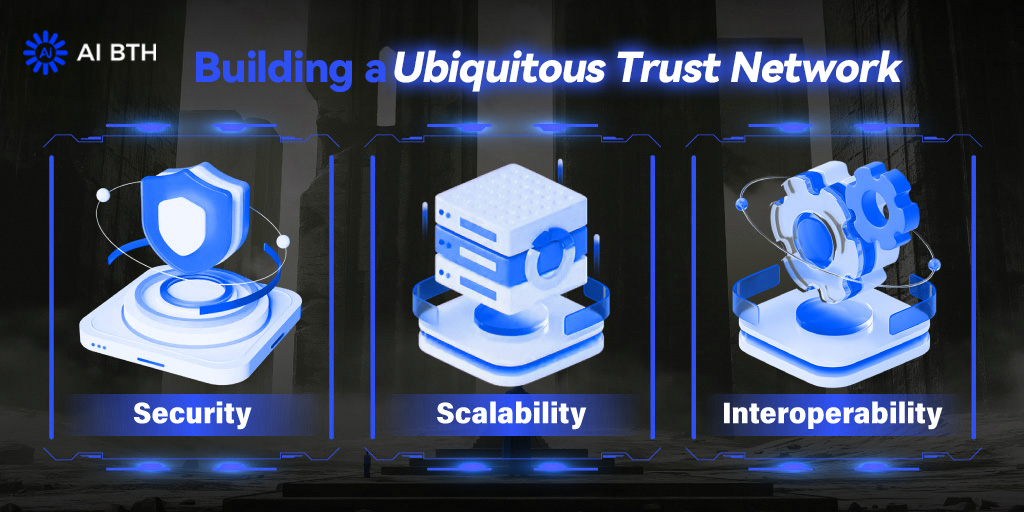
📢 AI BTH — Building a Ubiquitous Network of Trust!
In a world where digital trust is the new currency, AI BTH is leading the charge with a next-gen infrastructure powered by:
🔒 Security – End-to-end protection and on-chain data privacy
📈 Scalability – High throughput and low latency to support massive-scale applications
🔗 Interoperability – Seamless cross-chain compatibility connecting diverse blockchain ecosystems
AI BTH isn’t just a chain — it’s a global trust engine designed for the intelligent economy of tomorrow.
🌐 Join us and become a pioneer in shaping the decentralized world of the future.
#AIBTH #Web3Infrastructure #DecentralizedTrust #ScalableBlockchain #CrossChainTech #SmartFuture
15
15
11
8,590

23 Jun 2025
🧠 Building for scale? @AlloraNetwork handles cross-chain logic like magic, while @KaitoAI feeds your strategy with real-time research. Together, they bring clarity to the chaos of crypto dev. #Web3Builders #CrossChainTech 🔍
2
24

15 Jun 2025
Blocksense - a new generation of oracles redefining the rules of Web3
Smart data. Minimal cost. Available across chains. This is what oracles of the future look like.
Oracles are the unsung heroes of Web3.
They bring real-world data into the blockchain: asset prices, exchange rates, weather conditions, sports results.
But most existing solutions face the same problems: high update costs, limited flexibility, and centralized bottlenecks.
Blocksense emerges as a response to all of these challenges.
It’s not just a better version of what already exists - it’s a rethinking of what an oracle should be.
What makes Blocksense innovative?
1. Zero-Knowledge rollup at its core
Instead of publishing each data update separately (as most traditional networks do), Blocksense bundles them into one block and confirms it with a single ZK-proof.
This allows for:
- Significantly lower gas fees
- Support for large numbers of feeds simultaneously
- High-frequency updates without overloading the network
This is a true technological step toward scalable and affordable oracles.
2. Programmability and creative freedom
Unlike most oracles that offer a fixed set of data feeds, Blocksense gives developers complete freedom:
- Connect to any external API
- Process data locally, including with LLMs or analytics
- Create and publish your own custom feed on-chain
This makes Blocksense not just a data pipe - but a flexible, customizable tool for any purpose.
3. Transparent and fair economic model
Access to data is built on an open, on-chain model:
- Anyone can sponsor a useful feed
- The more popular it becomes, the cheaper it gets for everyone
- This creates a genuinely open and fair oracle-data ecosystem.
4. Cross-chain compatibility by default
ZK-proofs can be verified across many networks - from Ethereum to modern L2s.
This means:
- The same data feed can be used across chains
- No bridges, no sync delays, no extra risk
- Simplicity and universality for developers
Blocksense helps unify fragmented blockchain ecosystems into one shared information layer.
5. Practicality and readiness for real use
The project focuses not just on advanced technology, but on real-world use cases -for DeFi, RWA, gaming, AI integrations, and beyond.
Blocksense isn’t just “another oracle network” - it’s a full-fledged platform for the next generation.
Faster. More flexible. More transparent. And scalable by design.
It opens the door to applications that were previously difficult or impossible to build: from real-time gaming to autonomous insurance protocols and real-world logistics networks.
Oracles are becoming computational engines. And Blocksense is changing what that means.
Join the Blocksense community today.
➡️discord.gg/x9ndmVfYxy
This is where ideas are born that reshape Web3 infrastructure.
This is where curiosity, innovation, and builder spirit are welcomed.
Be part of the future - with us.
Prepared with love, Temnik_Cook 👨🍳
@blocksense_
#Blocksense #Web3Infrastructure #OracleRevolution #ZKRollup #DeFiData #ProgrammableOracles #CrossChainTech #FutureOfWeb3

1
2
17
418

8 Jun 2025
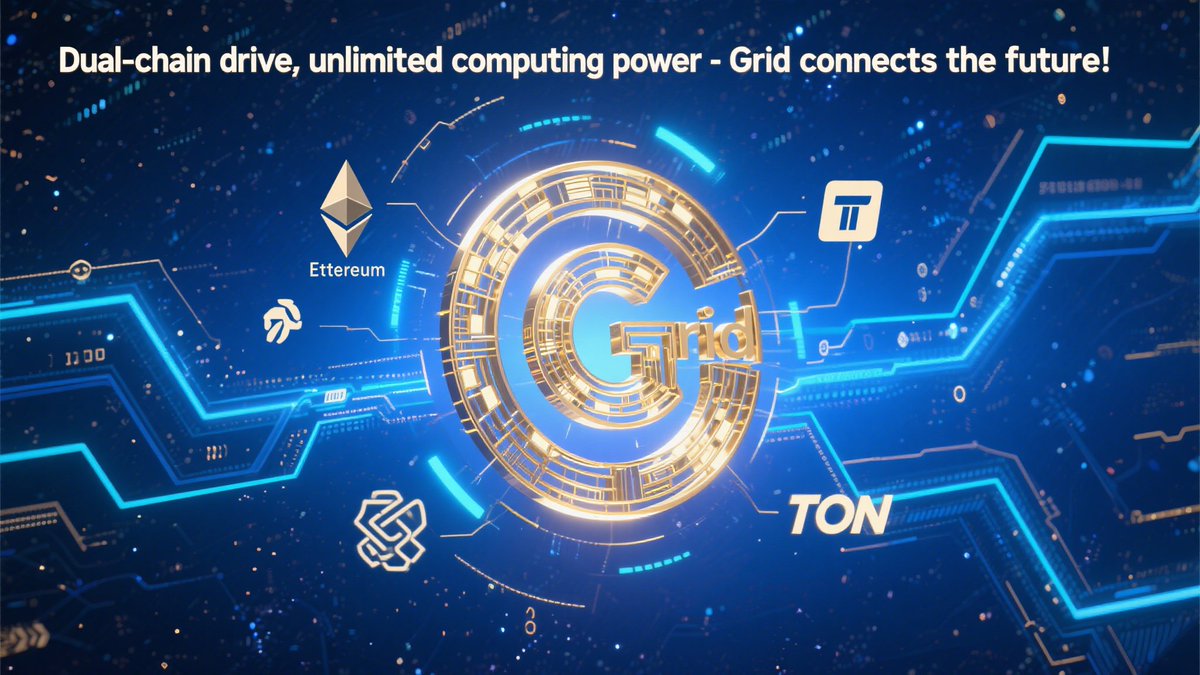
🔗 Dual-Chain Driven, Boundless Computing Power — Grid Connects the Future!
Supports Ethereum & TON ecosystems, bridges blockchain worlds,
offers cross-chain computing for Web3's new era!
#CrossChainTech #DualEcosystem #DeveloperFriendly #GridProtocol
7
2
36
13,675

7 Jun 2025
3/ Ready to explore the future of Bitcoin interoperability? 🤔 Learn more about @PortalToBitcoin and their groundbreaking tech! 👇 [Link to Portal Website] #KAITO #BTC #CrossChainTech #DeFiInnovation

1
1
3
31

28 May 2025
🔥 Why are you still hesitating?
You think you’re waiting for the right opportunity—but the opportunity can no longer wait for you❗️
While you’re worrying about “not understanding,” “too complicated,” or “fear of missing out,”
others have already taken their positions early with BDG, turning real-world assets into on-chain cash machines💰
🚀 Beyond Gaming (BDG) is not your ordinary GameFi project:
It directly packages real assets like farmland, energy, real estate, and minerals on-chain,
letting you “play games” while owning real-world asset tokens!
🔹 Cross-chain technology: bridging on-chain and off-chain, with unrestricted asset flow
🔹 Smart contracts: secure, transparent, with publicly traceable earnings
🔹 RWA GameFi fusion engine: zero entry barriers, everyone can participate
🔹 Efficient digital asset ecosystem: capturing market dividends and amplifying profits every step of the way
Still just watching? If you don’t join, you’ll only watch others get rich!
The earlier you get on board, the less you’ll regret it ten years from now!
📌 Choosing BDG isn’t just buying a coin—it’s owning your share of future asset allocation❗️
#BeyondGaming #RealWorldAssets #CrossChainTech #SmartContracts #GameFiReconstruction #WealthGateway #StopHesitating
3
221

🚀 @0xSoulProtocol is evolving through powerful infrastructure collaborations!
To accelerate the growth of a truly interconnected and secure Web3 ecosystem, Soul Protocol is teaming up with top-tier partners across the blockchain space:
🔗 LayerZero – Builds the bridge for seamless communication between chains, unlocking broader interoperability.
⚡ Wormhole – Enables lightning-fast and secure cross-chain transfers of assets and data.
🛡️ Arelar – Reinforces protocol security through advanced technology and protocol-centric innovation.
🏗️ CICP – Strengthens the core infrastructure, ensuring scalability and system stability.
📈 T2 Squared – Powers strategic decisions with deep on-chain analytics and performance insights.
These collaborations are not just partnerships—they’re building blocks for a connected, scalable, and resilient future in Web3. 🌐
#SoulProtocol #Interchain #Web3Infra #CrossChainTech #BlockchainSecurity #DecentralizedFuture
1
4
151

23 May 2025
Blockchain Interoperability: The Final Frontier
Blockchains are powerful—but isolated.
What if chains could speak the same language, share liquidity, and scale together?
Let’s dive in 🧵👇
#Blockchain #Layer0 #Interoperability #Crypto #ModularBlockchains #CrossChainTech
1
2
62

16 Apr 2025
Yo @skate_chain fam! #gNollie #gSkate 🛹 @alt_v0rtex
- Nollie chain’s role in the hub-and-spoke architecture and why it’s a critical piece for cross-chain app deployment -
Nollie Chain as the Hub in Hub-and-Spoke ArchitectureBuilt on EVM with OP Plasma, the Nollie chain anchors SkateChain’s hub-and-spoke model. It hosts kernel contracts in Solidity, managing a unified application state across periphery chains like #EVM, #TON, and #Solana. This eliminates state fragmentation think no more inconsistent app behavior across chains due to divergent block times or consensus rules.
Periphery gateways, coded in chain-native languages (Solidity for EVM, #FunC for TON, #Rust for Solana), pull the canonical state from Nollie. They ensure eventual consistency by syncing user intents allowing apps to operate uniformly without chain-specific state drift. No more redeploying logic per chain.
Intent Execution Network Coordination
The Nollie chain orchestrates the Intent Execution Network. Decentralized executors process user intents, updating kernel state while periphery gateways reflect changes locally. This setup slashes cross-chain latency users don’t wait for slow bridging or manual state reconciliation.
OP Plasma on #Nollie enables high-throughput state updates. It batches transactions off-chain, settling only the root on Ethereum, which means SkateChain can handle thousands of periphery chains without choking on gas costs or throughput limits.
Nollie leverages #EigenLayer for economic security. The Preconfirmation #AVS validates executor updates, ensuring trust-minimized state transitions. This cuts risks of malicious state manipulation—executors can’t tamper without slashing their stake.
With Nollie, #devs deploy kernel contracts once. No need to fork logic for each chain—periphery gateways handle chain semantics. This reduces gas overhead and dev cycles compared to deploying on 1200 DEXs or 380 lending protocols separately.
Unified state on Nollie centralizes liquidity pools across chains. Periphery chains tap into this pool, reducing slippage by up to 30% compared to fragmented pools on current DEXs. LPs benefit from aggregated volume—no more chain-specific liquidity silos.
Nollie’s hub role enables multi-VM support. Apps on EVM, TON, or Solana share the same state, enabling cross-VM composability. Imagine a DeFi protocol on Solana interacting with an NFT marketplace on TON—seamlessly, without bridging friction.
Nollie’s stateless app framework lets periphery chains pull state on-demand. This minimizes on-chain storage bloat, making SkateChain scalable for future VMs like MoveVM or emerging L2s something traditional multi-chain setups can’t handle efficiently.
Nollie abstracts chain-specific complexities. Devs focus on kernel logic, while periphery gateways manage chain nuances. This slashes time-to-market for dApps—build once, deploy everywhere, no chain-specific hacks needed.
#SkateChain #NollieHub #CrossChainTech

16 Apr 2025

# gSkate @skate_chain | @alt_v0rtex
Skate Chain vs Axelar: Application Layer Dominance vs Interoperability Infrastructure ✳
Skate Chain and Axelar tackle cross chain challenges but their approaches are worlds apart. I’m breaking down the tech, the impact, and why Skate Chain’s architecture might just redefine how we build dApps across ecosystems. Let’s get technical ✳
✳ Application Layer Focus with Skate Chain
Skate Chain leverages a hub and spoke model where the Nollie chain acts as the central hub. Kernel contracts written in Solidity manage a unified application state, ensuring eventual consistency across periphery gateways. These gateways, coded in chain native languages like FunC for TON or Rust for Solana, pull the global state for seamless user interactions. Developers deploy once on Nollie, and the Intent Execution Network handles cross chain coordination. This means no state fragmentation, a unified liquidity pool, and horizontal scalability for thousands of chains.
@SkateChain
✳ Axelar’s Interoperability Infrastructure
Axelar focuses on general purpose cross chain communication via its General Message Passing protocol. It connects over 50 chains, using the Axelar Virtual Machine to automate tasks like token supply management. Developers integrate via APIs and SDKs, enabling arbitrary data transfer and smart contract triggers across ecosystems. But this requires manual state synchronization, increasing complexity for dApps needing consistent behavior across chains.
@AxelarNetwork
✳ Unified State vs Fragmented Logic
Skate Chain’s Nollie chain ensures a single application state, mitigating the state divergence issues Axelar developers face when managing cross chain logic. With Skate Chain, the Preconfirmation AVS, backed by EigenLayer, validates intents, ensuring fast finality and trust minimized execution. Axelar’s approach, while flexible, demands developers handle state consistency, potentially leading to inefficiencies in high throughput scenarios.
✳ Developer Efficiency and Cross Chain dApps
For a DEX, Skate Chain centralizes the order book on Nollie, allowing periphery gateways to facilitate trades from EVM, TON, or Solana without bridging. This optimizes liquidity, reduces slippage, and simplifies LP management. Axelar would require cross chain bridges, fragmenting liquidity and increasing latency due to state reconciliation overhead. Skate Chain’s stateless app design gives developers a massive edge in building scalable, cross chain dApps.
✳ Security and Scalability Implications
Skate Chain’s use of EigenLayer for economic security and decentralized executors in the Intent Execution Network minimizes trust assumptions, ensuring robust cross chain operations. Axelar’s decentralized validator set secures its network, but scaling to hundreds of chains could strain its infrastructure, as seen in recent throughput analyses. Skate Chain’s hub architecture, with OP Plasma on Nollie, is built for horizontal scaling, handling thousands of chains with parallel intent processing.
✳ The Verdict for Web3 Builders
Skate Chain’s application layer focus empowers developers to build chain agnostic dApps with a unified state, streamlining development and enhancing user experience. Axelar’s interoperability layer is powerful for custom cross chain logic but adds complexity for state heavy applications. If you’re building the next gen of cross chain dApps, Skate Chain’s architecture might just be your go to framework ✳
#SkateChain #Axelar #CrossChain #Web3 #gSkate

3
5
212

2nd) Technical view:
• 💥 Parallel Execution vs. Ethereum’s Bottlenecks: Solana’s Sealevel runtime enables true parallel execution of smart contracts ⚡, while Ethereum’s single-threaded EVM processes transactions sequentially 🐢. This lets Solana handle way more TPS with lower congestion. #Sealevel #ParallelExecution #Scalability #NextGenTech
• ⚡ Blazing-Fast Finality: Solana’s QUIC-based transaction propagation Turbine 🚀 has slashed time-to-finality to under 400ms 😳, while Ethereum L2s are still stuck in 2-5s ⏳. #FastFinality #LowLatency #BlockchainOptimization
• 📊 Advanced Data Availability Model: While Ethereum rollups need blobs via EIP-4844, Solana’s Firedancer (C validator client) 🔥 optimizes data flow with customized memory management hardware acceleration. More efficiency, fewer bottlenecks. #DataAvailability #Firedancer #BlockchainEfficiency #Scaling
• 🌐 QUIC for Next-Level Networking: In 2025, Solana fully transitioned to QUIC (used by Google 🌍), replacing UDP. Result? ⚡ Faster packet prioritization, fewer dropped transactions, and smoother network performance under load 🚀. #QUIC #NetworkOptimization #Web3Performance
• 🌎 Validator Scalability & Decentralization: Solana now has 1,500 validators 💪, with an improved stake-weighting mechanism to prevent centralization. Unlike Ethereum’s Lido-dominated staking, Solana ensures a truly distributed validator set 🔐. #Decentralization #Validators #StakeSecurity
• 💰 Transaction Cost Efficiency: Solana’s TX fees are still fractions of a cent 🤑, while Ethereum L2s are 5-10x more expensive 💸 even after blobs. #LowFees #GasEfficiency #CryptoEconomics
• 🔗 State Compression = 100x Lower Costs: Solana’s state compression tech (introduced late 2024) lets dApps store NFT social graph data 100x cheaper than Ethereum L1/L2 🤑📉. On-chain social, gaming, and identity scaling is now viable 🚀. #StateCompression #NFTs #OnChainSocial
• 🤯 ZK Scaling Local Fee Markets: While Ethereum is still figuring out ZK rollups, Solana already integrated ZK-light clients for faster verification 🏎️ and local fee markets to stop network-wide congestion spikes. High-value TXs get priority without wrecking the whole chain! 🚀. #ZKTech #FeeMarkets #BlockchainScalability
• 🛡️ MEV Resistance & Fair Transactions: Ethereum’s MEV 🏴☠️ issues = 🤑 bots frontrunning users. Solana’s leader schedule priority fee adjustments have killed sandwich attacks, making TXs fairer cheaper 💥. #MEVProtection #FairTransactions #CryptoSecurity
• 🖥️ On-Chain Compute Upgrades: Solana’s JIT (Just-in-Time) execution model optimizations cut compute overhead by 30% 🔥, making DeFi swaps gaming execute faster with lower latency. #OnChainCompute #SmartContractEfficiency #HighPerformanceBlockchain
• 🌉 Trustless Cross-Chain Bridging: Wormhole V3 now supports ZK bridging, removing the need for centralized bridge operators 🚀. Solana → Ethereum, Bitcoin, and Cosmos in seconds, not minutes ⏩. #Interoperability #TrustlessBridges #CrossChainTech
• 🏦 Institutional Adoption & Subnets: Solana’s private execution environments (subnets) let enterprises build custom chains on Solana’s infra, but with dedicated throughput compliance layers. ETH can’t compete here. #EnterpriseBlockchain #InstitutionalAdoption #CryptoFinance
• 🛠️ Dev Tooling = Better Than Solidity: Rust-based Solana SDK v2 🦀 delivers faster debugging, better memory safety, streamlined smart contract deployment compared to Solidity’s archaic EVM stack 🏗️. #RustLang #DeveloperExperience #CryptoDev
🚀 The Flippening? It’s Closer Than You Think
Solana isn’t just competing—it’s defining the future of scalable, high-performance blockchains. Ethereum will always be relevant, but the technical gap is getting wider FAST.
Will Solana flip Ethereum this cycle? 🤯🔥👇
#Solana2025 #CryptoScaling #EthereumVsSolana #Web3Tech #NextGenBlockchain
22

21 Jan 2025
🔗 BEBE Chain is launching its testnet soon! 🎉
Say goodbye to low cross-chain efficiency and privacy issues!
🚀Our modular L3 blockchain is here to revolutionize the way you experience MEME Coins and privacy transactions.
Test it, explore it, and be part of the future!
📺:youtu.be/VOHk0-nrlgU?si=fUsX…
#BlockchainInnovation #L3Blockchain #CrossChainTech #BEBEChain #DeFiRevolution
15
20
72
17,756

10 Jan 2025
🌐 Unpacking the latest buzz in the crypto-verse: cross-chain solutions are breaking barriers in blockchain interoperability! What's your take on this shift towards a more connected digital ecosystem? 🚀 #CryptoInnovation #CrossChainTech
19
4
17
1,600