Patrick Harris, Sr retweeted
#CapitatedCapitalism
#EnergyNetworkScience
#Circulation
#StructuralOrganization
#RelationshipsAndValues

x.com/i/grok/share/40b89c6ce…
Dear Congress,
Due to character limits, click on the link above for full response. Per Grok:
"Options in Relation to Magnifica Humanitas
A) Capitated Capitalism ("Cap The Cap")
This aligns most closely. It preserves private property and market mechanisms (subsidiarity and individual initiative) while mandating that excess capital above a high threshold ($1B) be productively allocated by owners or face a 100% Greed Tax redirected to the national debt (universal destination of goods and common good). This directly counters concentration of economic power without state seizure or central planning. It promotes circulation of resources for broader opportunity, job creation, innovation, and debt relief—serving integral human development and the preferential option for the vulnerable. The owner-directed allocation respects subsidiarity (decisions at the lowest effective level) while enforcing solidarity when hoarding threatens the social fabric.
B) Traditional Wealth Tax
This has partial alignment but is weaker. It invokes the universal destination of goods by redistributing concentrated wealth via state mechanisms. However, it risks violating subsidiarity through greater government intervention and potential inefficiencies or disincentives that could harm work, innovation, and responsibility...
C) Status Quo
This is least aligned. Unchecked accumulation and concentration of economic/technological power in few hands directly contradicts the encyclical's warnings about private actors wielding de facto dominance...
Most aligned: Capitated Capitalism. It best operationalizes the principles by keeping allocation private and market-oriented...while enforcing circulation for the common good and universal destination of goods, especially relevant to AI-era power concentration in tech/finance elites.
Moral Implications of Each Option...
Capitated Capitalism: Morally strong. It affirms stewardship ("to whom much is given, much is required") by requiring excess capital to serve productive ends benefiting society (jobs, education, innovation). This promotes justice without abolishing incentives or responsibility...
Traditional Wealth Tax: Mixed moral implications. It enacts solidarity and preferential option for the poor through redistribution but can undermine personal responsibility, subsidiarity... and the incentive to create wealth...
Status Quo: Morally deficient in the encyclical's framework. Tolerating unchecked concentration allows a few to dominate resources meant for all...
Did Magnifica Humanitas Address Concerns of Concentrated Power, Including Economic Power? Did It Call on the Duty of Politics/Politicians?
Yes, explicitly and repeatedly. It denounces concentration of technological and economic power in private transnational actors surpassing many governments, creating dominance, opacity, and inequalities...
...The political community must protect the common good, intervene when needed... Public authorities have a duty to create conditions for participation, accountability, and solidarity—explicitly in governance of AI, data, and economic flows.
For Policymakers: AI Alignment Rooted in Human Alignment? Which Economic Option Best Aligns AI Controllers to the Common Good?
Yes—the encyclical frames AI risks as stemming from human choices, values, and power structures... The "root problem" is human alignment...
Capitated Capitalism best aligns them...
Summary Recommendation:
For policymakers guided by Magnifica Humanitas, advance Capitated Capitalism (with debate and modeling) as the option most coherently embodying Catholic social principles in the AI age. It safeguards magnificent humanity by aligning economic and technological power with dignity and the common good, rather than permitting new forms of domination."
@Pontifex
@VaticanNews
@HouseGOP
@SenateGOP
@HouseDemocrats
@SenateDems
@VP
@POTUS
@TheDemocrats
@GOP
@LeaderJohnThune
@SenSchumer
@SpeakerJohnson
@RepJeffries
1
1
1
138
Allen Y. Tien MD MHS 田一彦 retweeted
... plus, incorporate robust concepts that organize complexity
#EnergyNetworkScience

have a high signal-to-noise ratio in thought
your mind is an information system.
bad inputs create bad outputs.
what to do:
• reduce junk input → less doomscrolling, less drama, less random opinions entering your head
• read primary sources → books, papers, docs, data. don’t live on second-hand summaries
• write to think → vague thoughts become visible when you put them on paper
• ask better questions → “what is true?” beats “what do i want to believe?”
• separate facts from interpretation → most confusion comes from mixing reality with emotion
• think in principles → principles compress noise into structure
• test against reality → ideas are cheap. feedback is the filter
• spend time alone → silence is where weak thoughts die and strong thoughts organize
high signal thought is not about thinking more.
it’s about removing the noise that corrupts your thinking.
1
25
Allen Y. Tien MD MHS 田一彦 retweeted

1
58
Allen Y. Tien MD MHS 田一彦 retweeted
#EnergyNetworkScience
#StructuralOrganization
#BalanceOfSizes
#BalanceOfResilienceAndEfficiency
#SufficientNumberAndDiversityOfRoles
Jun 8

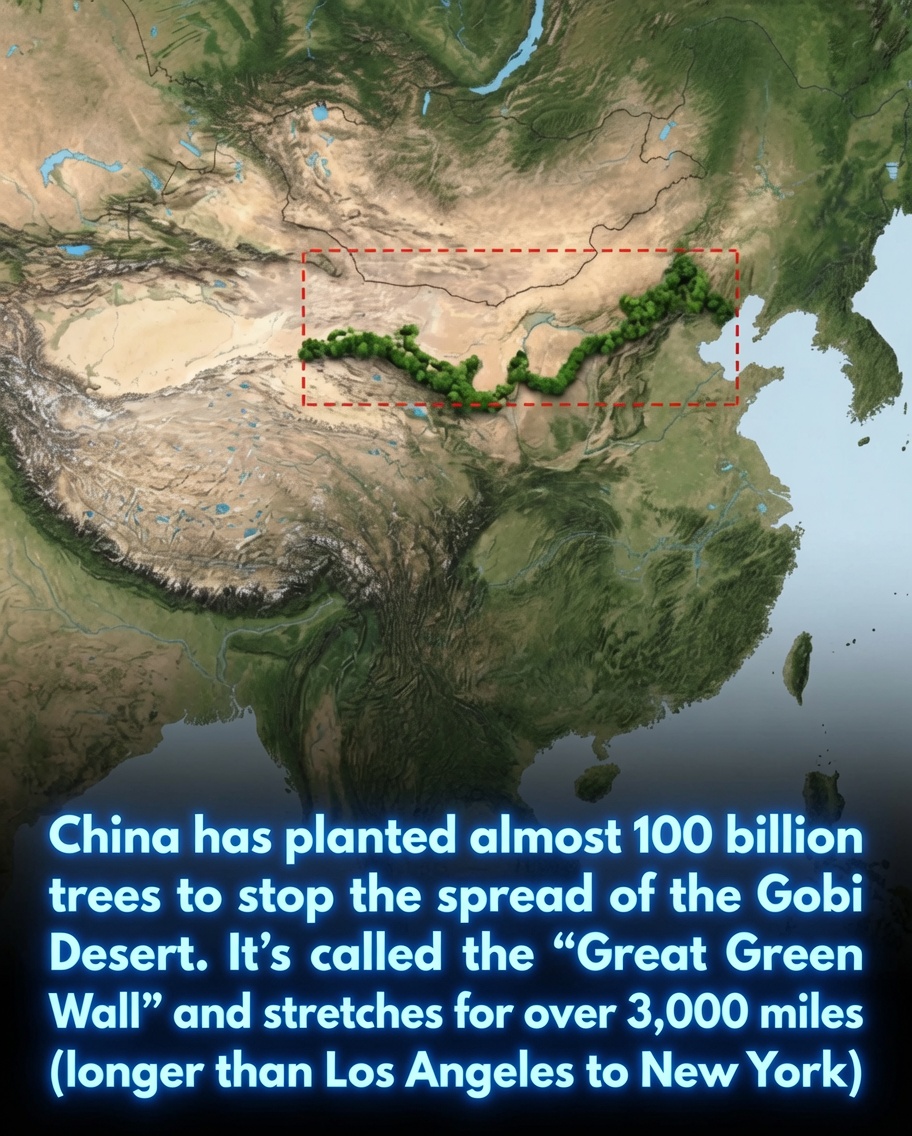
Since 1978, China has been carrying out one of the most ambitious ecological projects in human history: the Three-North Shelter Forest Program, often called the Great Green Wall.
The goal is to halt the relentless advance of the Gobi and Taklamakan deserts. So far, China has planted more than 66 billion trees along a 2,800-mile (4,500 km) stretch. The government plans to plant another 34 billion trees by 2050, which could increase global forest cover by roughly 10% compared to late-1970s levels.
The project was launched to combat severe soil erosion and the massive dust storms that have plagued northern China, including Beijing, for decades. Officials recently celebrated a major milestone: successfully encircling the Taklamakan Desert, helping raise the country’s overall forest coverage above 25%.
Satellite observations and climate models show that these vast planted forests have already begun to alter local weather patterns by influencing the atmospheric water cycle in northern and western China.
However, the project faces significant criticism. Much of the planting has relied on monocultures of fast-growing species like poplar and willow. These artificial forests lack biodiversity and have proven highly vulnerable to disease, in one province alone, over a billion trees were lost to pests. Additionally, planting water-hungry trees in arid regions has dramatically lowered groundwater levels, caused widespread tree die-off, and in some cases may have worsened desertification.
As the program continues, many scientists are calling for a shift toward more diverse, native tree species that are better adapted to dry conditions and can survive long-term without depleting the region’s scarce water resources.
1
1
30

#TimeBinding #SharedFacts
#TribalManipulation #CommunityDestruction
v
#EnergyNetworkScience #CommunityProsperity
May 31

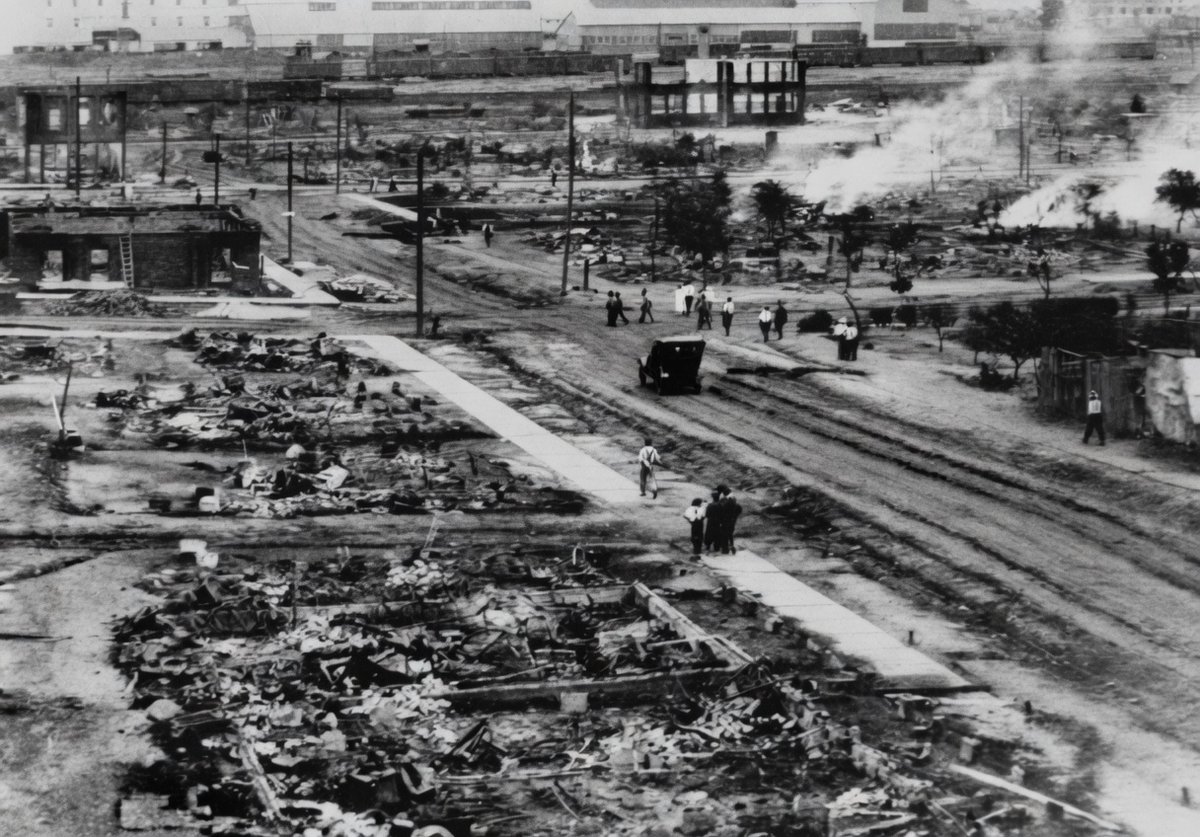
105 years ago today — May 31, 1921 — horror came to Tulsa.
A thriving, self-made Black community known as "Black Wall Street" was brutally attacked by white mobs in one of the most devastating acts of racial violence in American history.
They burned it to the ground. Hundreds of Black-owned homes and businesses — symbols of pride, prosperity, and hard-won success — were looted and reduced to rubble. At least 36 Black residents were murdered, over 800 were injured, and thousands more were left homeless, their dreams and life's work destroyed in a single night of terror.
A community that had risen against all odds was violently crushed. We remember Greenwood. We remember the lives stolen. We remember the pain that still echoes.
2
2
41

#SharedFacts #UBI #UniversalBasicIncome #CommunityProsperity
#HelicalEconomics #EnergyNetworkScience
May 20

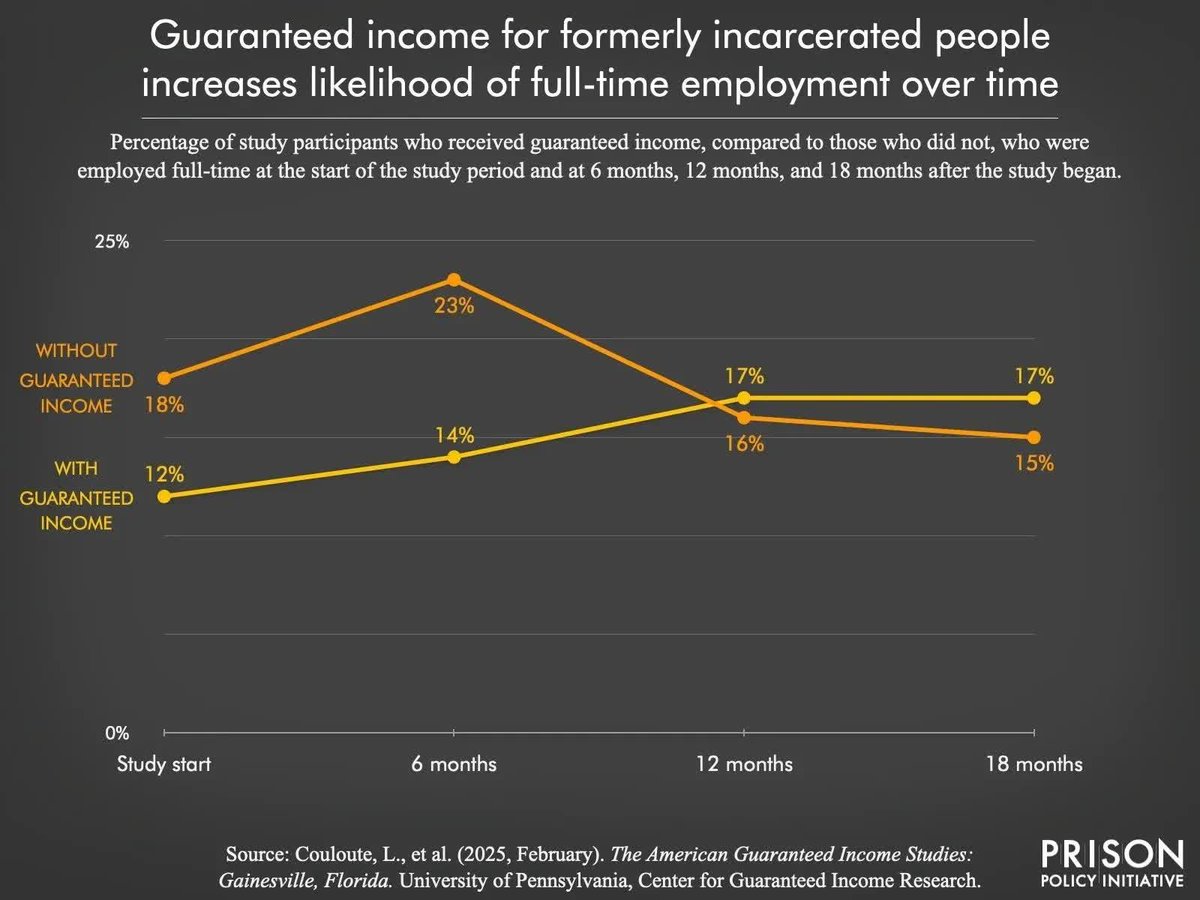
❌ Myth: Guaranteed income creates a disincentive to work
✅ Reality: Guaranteed income actually helps people find suitable and sustainable work that leads to more stable employment:
1
2
54
Memorizing the languages of #Math and #Science makes our brains stronger; each concept, term, and fact is a tool for #BrainFunction individually and collaboratively
#Semantics #Perception #HumanReasoning
#SystemsLiteracy
#GeneralSemantics
#EnergyNetworkScience

There are moments when memorizing something now makes deeper learning possible later.
Memorizing multiplication tables, for example, frees your mind to focus on more complex math.
For those studying English, learning irregular verbs early (eat–ate, run–ran, go–went) prevents months of confusion and opens the door to more advanced language skills.
And in history, knowing key facts, dates, and figures provides the foundation needed to analyze events with depth and context as the subject becomes more complex.
When taught well, memorization becomes the foundation that allows students to grow into critical, deep thinkers.
2
3
57

It's hard to grasp the scale if you've never stood under the canopy.
🌳 The Amazon absorbs 2 billion tons of CO2 per year.
🌳The Congo Basin is the world's 2nd largest lung, storing 30 billion tons of carbon.
We are surgically removing our planet's life support.

2
3
44
Mar 13

Single-celled organism with no brain is capable of Pavlovian learning
A trumpet-shaped, single-celled organism seems able to predict one thing will follow another, hinting that such associative learning emerged long before multicellular nervous systems
newscientist.com/article/251…
docs.google.com/document/d/1…

1
2
309
Our economy, our medicine, and the air we breathe are all gifts from healthy ecosystems. Denying the crisis of ecocide means denying our fundamental dependence on the natural world. We can't build a future on a broken foundation.
#Nature #Science #Biodiversity

3
2
104

31 Dec 2025
Additional levels of rules: #EnergyNetworkScience
29 Dec 2025

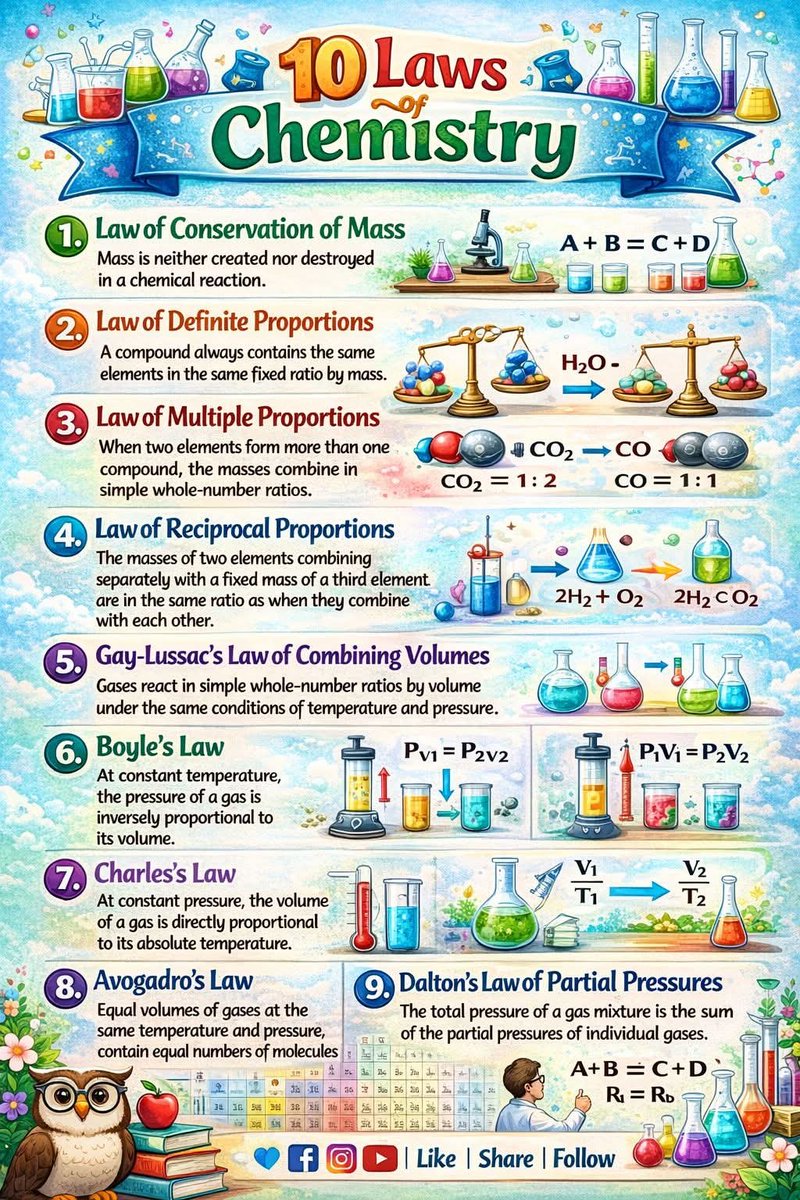
Chemistry isn’t chaos. It has rules.
It isn't magic. It's order
🔵 Mass is conserved
Atoms don’t disappear. They rearrange.
🟣 Elements combine in fixed ratios
Water is always H₂O. Chemistry is precise, not negotiable.
🟡 Whole numbers rule reactions
Molecules combine in simple, predictable proportions.
🟢 Gases obey pressure, volume, and temperature
Change one, and the others respond mathematically.
🟠 Molecules come in countable units
Equal gas volumes contain equal numbers of particles under the same conditions.
🔴 Total pressure is additive
Each gas contributes its share, nothing more, nothing less.
2
3
68
31 Dec 2025
30 Dec 2025

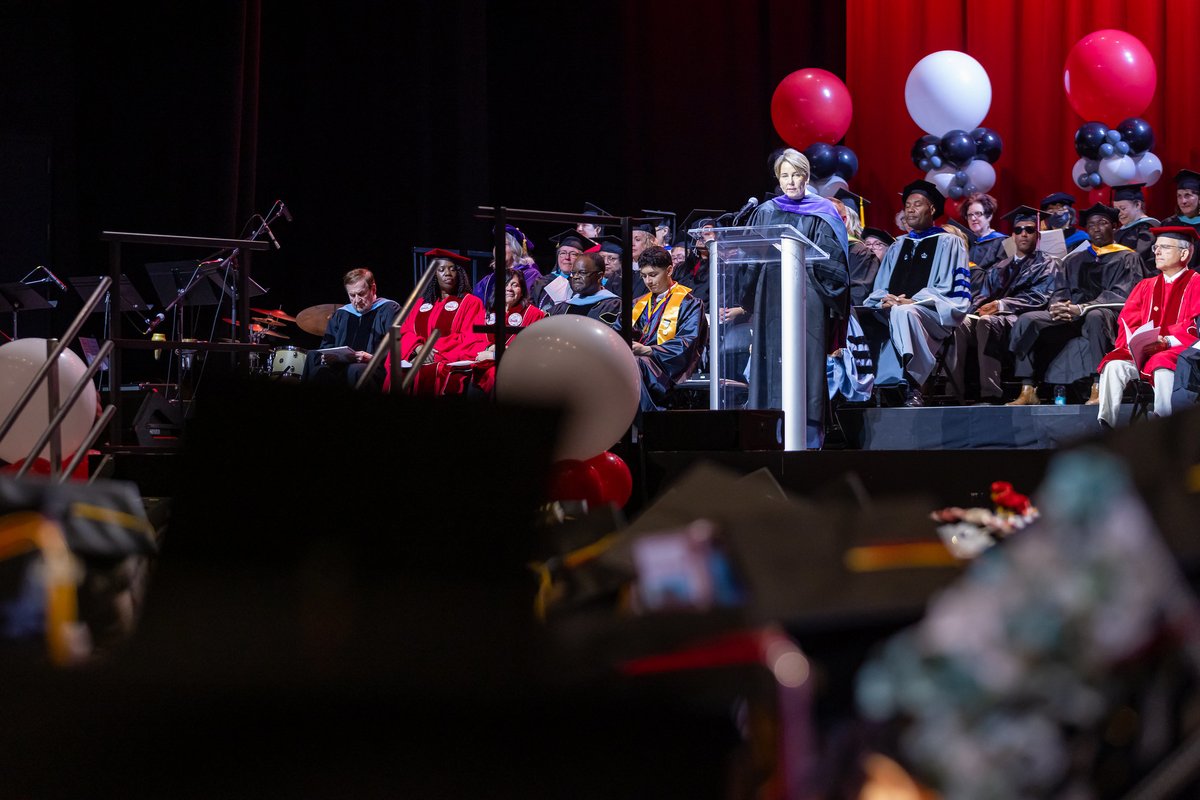
In 2025, the data was clear – free and affordable college pays off.
After saving $110 million in tuition and fees, public higher ed students in Massachusetts are on track to earn up to $30,000 more five years after graduation.

3
2
88
27 Dec 2025
22 Dec 2025

"HUMAN-INDUCED CLIMATE CHANGE ISN'T A MATTER OF OPINION OR BELIEF - IT'S SCIENCE, NOT SANTA CLAUS." - Lotte Leicht, Climate Rights International.
3
2
121
26 Nov 2025
26 Nov 2025

We will not survive if there is not a major huge fundamental change in policy towards wealth and political influence.
2
4
89