
MASTER TRADING USING MULTI TIMEFRAME SECRETS
Bold The Hidden Power Of Multi Timeframe Trading
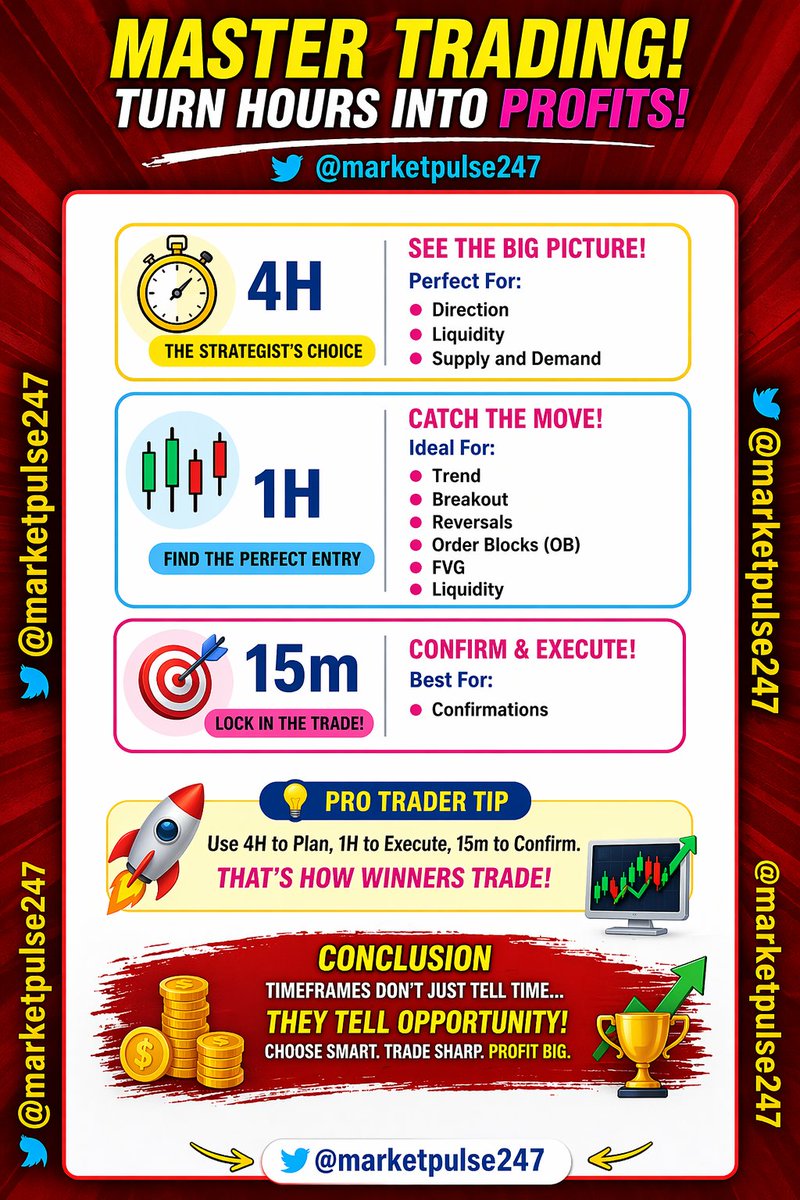
Most traders fail because they look at only one timeframe and miss the bigger picture. The real edge in trading comes from combining multiple timeframes like 4H 1H and 15m. This approach allows you to see the market from a broader perspective while also fine tuning your entries. When you align these timeframes correctly you reduce confusion and increase confidence. Professional traders rely on this structure because it filters out noise and highlights high probability setups. Once you understand this concept your trading decisions become clearer and far more strategic.
Bold Why 4H Is Your Strategic Weapon
The 4H timeframe is where smart traders build their bias and direction. It helps you understand where the market is heading by focusing on major trends liquidity zones and supply and demand areas. Instead of reacting to every small movement you step back and analyze the bigger picture. This timeframe acts like a map guiding your trading journey. When you identify strong zones on 4H you are essentially locating where institutions may be active. This gives you an advantage because you are trading with the flow of the market rather than against it.
Bold Unlocking Direction And Liquidity Like A Pro
Understanding direction and liquidity is crucial for consistent profits. Direction tells you whether the market is bullish or bearish while liquidity reveals where stop losses and orders are clustered. These areas often attract price movements because large players target them. By combining these insights on the 4H timeframe you gain a deeper understanding of market behavior. This allows you to anticipate moves instead of chasing them. Traders who master liquidity concepts often find themselves entering trades before major moves happen giving them a significant edge over others.
Bold Why 1H Is Where Trades Come Alive
Once you have your direction from the 4H timeframe the 1H timeframe becomes your execution zone. This is where you refine your analysis by identifying trends breakouts reversals order blocks and fair value gaps. The 1H timeframe provides more detailed price action allowing you to spot opportunities that align with your higher timeframe bias. It bridges the gap between strategy and execution. By focusing on this timeframe you can time your entries more precisely while still staying aligned with the overall market direction.
Bold Spotting Breakouts And Reversals With Precision
Breakouts and reversals are key moments in trading where profits are made. On the 1H timeframe these patterns become easier to identify. Breakouts signal the continuation of a trend while reversals indicate potential changes in direction. By combining these signals with order blocks and fair value gaps you can confirm whether a move is genuine or a trap. This level of precision reduces false entries and increases your success rate. Traders who master these concepts can consistently identify high probability setups and avoid unnecessary risks.
Bold The Real Role Of Order Blocks And FVG
Order blocks and fair value gaps are powerful tools used by experienced traders. Order blocks represent areas where institutions have placed large orders while fair value gaps indicate inefficiencies in price movement. These zones often act as magnets for price returning before continuing its trend. By identifying these areas on the 1H timeframe you can position yourself strategically. This allows you to enter trades at optimal levels with better risk reward ratios. Understanding these concepts transforms your trading approach from random guessing to calculated execution.
Bold Why 15m Is Your Entry Secret
The 15m timeframe is where precision meets opportunity. After analyzing the 4H and 1H timeframes you drop down to 15m to confirm your entry. This timeframe provides detailed price action allowing you to spot confirmations such as candlestick patterns or minor structure shifts. It ensures that your trade aligns perfectly with your overall strategy. By using 15m for entries you reduce risk and improve timing. This final step is what separates disciplined traders from impulsive ones who enter trades without proper confirmation.
Bold Confirmations That Protect Your Capital
Confirmations are essential for protecting your trading capital. Instead of jumping into trades based on assumptions you wait for clear signals on the 15m timeframe. These confirmations validate your analysis from higher timeframes. They act as a safety filter preventing you from entering low probability trades. By practicing patience and waiting for confirmation you reduce losses and increase consistency. Successful traders understand that not every setup is worth trading. They focus only on high quality opportunities that meet all their criteria.
Bold The Winning Formula Of 4H 1H 15m
The combination of 4H 1H and 15m creates a powerful trading system. The 4H timeframe gives you direction the 1H timeframe helps you find setups and the 15m timeframe confirms your entries. This structured approach eliminates guesswork and brings discipline into your trading. By following this formula you can develop a repeatable strategy that delivers consistent results. It is not about taking more trades but about taking the right trades. This method ensures that every trade you take is backed by solid analysis and confirmation.
Bold How To Trade Like A Professional
Trading like a professional is not about complex indicators or secret strategies. It is about discipline patience and a clear plan. By using multi timeframe analysis you create a structured approach that guides every decision. You stop reacting emotionally and start acting strategically. This shift in mindset is what separates beginners from successful traders. When you combine knowledge with consistency you build confidence. Over time this approach helps you achieve steady growth and long term success in the markets.
BOLD CONCLUSION THAT DRIVES ACTION
Multi timeframe trading is not just a technique it is a complete mindset shift that transforms how you approach the market. By aligning 4H 1H and 15m you gain clarity precision and confidence in every trade. This strategy helps you avoid noise focus on high probability setups and protect your capital. The key is consistency and discipline. Start applying this method today and watch how your trading improves over time. Remember the market rewards those who are prepared and patient so take control and trade with purpose.
x.com/@marketpulse247
#stockmarketindia
#trading #forex #stockmarket #daytrading #swingtrading #multitimeframe #tradingstrategy #priceaction #smartmoney #liquidity #orderblocks #fvg #technicalanalysis #tradingtips #tradingeducation #marketanalysis #forextrading #intradaytrading #tradingmindset #profittrading #chartanalysis #tradinglife #financialmarkets #investing #traderlife #tradingcommunity #learntrading #tradingskills #marketstructure #bullish #bearish #riskmanagement #entrystrategy #tradeplan #tradingjourney #tradingview #scalping #swingtrade #financialfreedom #makemoneytrading #tradinggoals #moneygrowth #markettrends #tradingsecrets #discipline #tradingpsychology #highprobability #profitmindset #smarttrader
3
5
188

🏦 Institutional Entry Framework: MENA Professional Approach (Apr 15)
Retail chases breakouts. Institutions execute plans.
✅ How MENA pros structure entries:
1. Pre-Trade Checklist:
• Zone identified on Daily 4H
• Volume profile confirms interest at level
• Risk calculated BEFORE entry (not after)
2. Execution Discipline:
• Limit orders at zone edges (not market)
• Partial entries: 50% at signal, 50% on confirmation
• Stop-loss automated, not manual
3. Exit Strategy:
• Scale out at predefined resistance zones
• Trailing stop for runner position
• Never move stop further away (only tighter)
📊 Current professional watch:
• ETH $2,240: Institutional interest if break volume
• BTC $71K: Key psychological level — watch order flow
👇 Do you use partial entries or all-in?
#CryptoMENA #ProfessionalTrading #EntryStrategy

1
1
2
22
Trade Near the Danger Point: The Art of Low Risk Entries
Control Risk at Entry
Risk is not something you manage after the trade moves against you. It is controlled the moment you buy or sell. The entry price determines your exposure, your emotional stability, and your long term survival. Professional traders obsess over entry quality because it defines the size of the potential loss. When you enter with precision and intention, you shift from reacting to the market to positioning yourself strategically with calculated confidence.
Only Take Defined Risk Trades
Every trade must begin with a clearly defined stop loss. If you cannot point to the exact level where your idea is invalidated, you should not take the trade. Undefined risk creates emotional decisions and inconsistent outcomes. A well placed stop transforms uncertainty into structure. It protects your capital and sharpens your thinking. When risk is defined before entry, discipline becomes natural and execution becomes far more consistent.
Mathematical Justification Matters
Your stop loss should never be random. It must be logically and mathematically justified by market structure. Risking more than the potential reward destroys your edge over time. Markets reward asymmetric opportunities where the upside outweighs the downside. When you ensure that your potential gain exceeds your defined risk, you create positive expectancy. Over a series of trades, this mathematical discipline separates sustainable traders from impulsive participants.
Never Gamble in the Market
If you risk more than you stand to gain, you are not trading, you are gambling. Gambling relies on hope. Trading relies on probabilities. Hope is emotional and unstable. Probabilities are structured and repeatable. When your risk reward ratio is skewed against you, even a high win rate cannot save your account in the long run. True professionals focus on protecting capital first because survival is the foundation of consistent profitability.
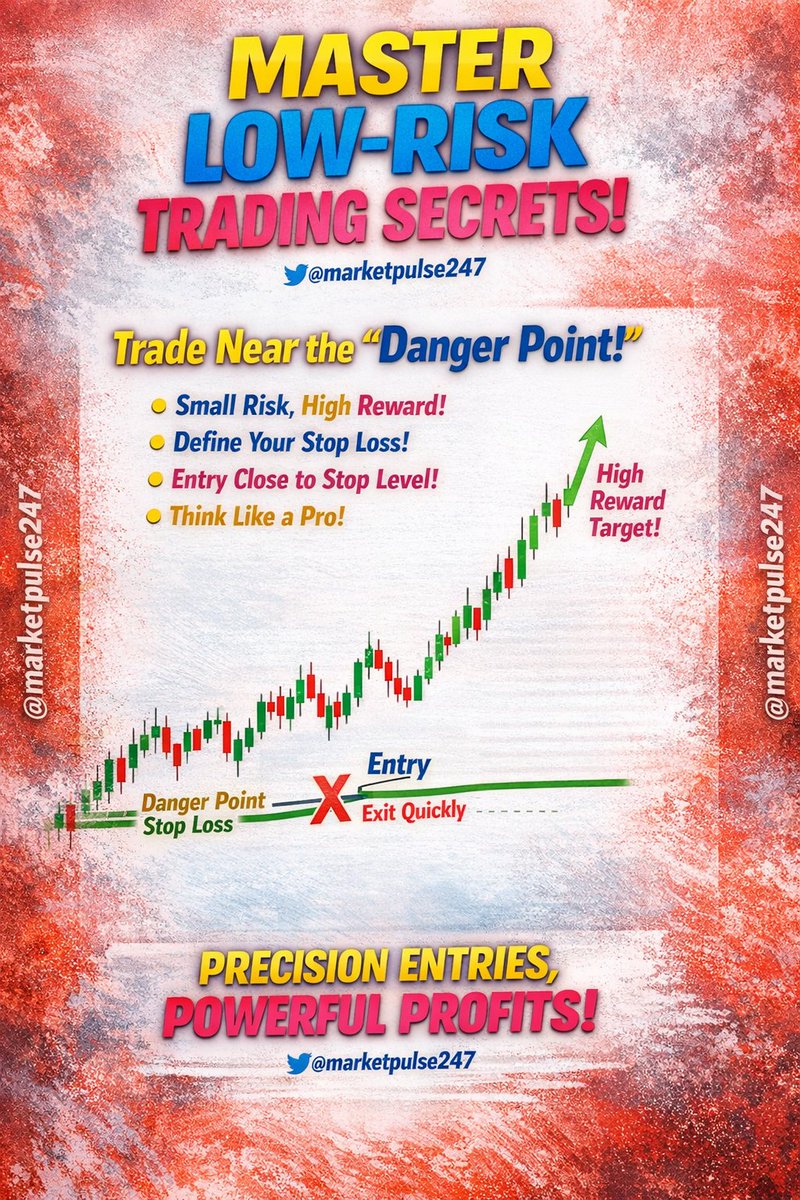
Enter Near the Danger Point
The danger point is the price level where your trade thesis becomes invalid. Elite traders enter as close as possible to this level. Why is this powerful. Because the closer your entry is to your stop, the smaller your risk and the larger your potential reward relative to that risk. This precision improves your risk reward profile dramatically. It also allows you to size positions intelligently without exposing your account to unnecessary volatility.
Distinguish Normal from Abnormal
One of the most critical skills in trading is learning to recognize normal versus abnormal price action. Normal behavior respects structure, shows orderly pullbacks, and maintains rhythm. Abnormal behavior violates key levels with aggression and instability. When you understand this distinction, you stop reacting emotionally to every fluctuation. Instead, you interpret market behavior objectively. This awareness allows you to avoid weak setups and focus only on opportunities aligned with your plan.
Refine Beyond Basic Breakouts
Many beginners rely on breakout strategies with percentage based stops. While this is a useful starting framework, it is only the beginning. Elite traders refine their entries by studying how price behaves around key levels. They observe volume, momentum shifts, failed breaks, and liquidity grabs. Instead of blindly following fixed rules, they adapt to context. This deeper understanding transforms mechanical entries into strategic decisions rooted in market psychology.
Build a Professional Mindset
Trading near the danger point is not just a technique, it is a mindset. It requires patience to wait for price to approach key levels. It demands discipline to avoid chasing moves. It forces you to accept small losses quickly and without ego. Over time, this mindset builds emotional resilience. You stop fearing losses because they are controlled and planned. Confidence grows not from winning trades, but from consistent execution.
Small Losses Create Big Longevity
Consistent traders understand that small losses are business expenses. By entering near the danger point with tight, logical stops, losses remain controlled and manageable. This preservation of capital gives you staying power. One large uncontrolled loss can erase weeks of progress. Many accounts fail not because of poor analysis, but because of poor risk control. When you prioritize small losses, you protect your ability to capture large, high quality moves.
Conclusion: Precision Creates Power
The art of low risk entries is the foundation of professional trading. Control risk at the moment of entry. Define your stop with logic. Demand favorable reward relative to risk. Enter near the danger point. Study price behavior deeply. When you master these principles, you transform trading from emotional speculation into structured execution. Precision creates power. And in the markets, power belongs to those who manage risk before chasing reward.
x.com/Marketpulse247/status/…
#TradingDiscipline #RiskManagement #LowRiskTrading #SmartEntries #TradeLikeAPro #ForexEducation #StockMarketWisdom #TradingMindset #CapitalProtection #RiskReward #ProfessionalTrader #TechnicalAnalysis #PriceAction #MarketStructure #StopLossStrategy #TradeSmart #ConsistentProfits #TradingPsychology #AsymmetricRisk #FinancialFreedom #InvestorMindset #DayTradingLife #SwingTradingStrategy #LearnToTrade #MarketEducation #TradingTips #WealthBuilding #StrategicTrading #ProbabilityBasedTrading #EliteTrader #TradePlanning #ExecutionMatters #MoneyManagement #ChartReading #TradeSetup #DisciplineEqualsFreedom #LongTermSuccess #ProtectYourCapital #TradeWithLogic #SeriousTrader #RiskFirst #MarketMastery #TradeBetter #SmartInvesting #EntryStrategy #StructuredTrading #HighProbabilityTrades #PatiencePays #TradingJourney #MasterTheMarket

Trade Near the Danger Point: The Art of Low Risk Entries
Control Risk at Entry
Risk is not something you manage after the trade moves against you. It is controlled the moment you buy or sell. The entry price determines your exposure, your emotional stability, and your long term survival. Professional traders obsess over entry quality because it defines the size of the potential loss. When you enter with precision and intention, you shift from reacting to the market to positioning yourself strategically with calculated confidence.
Only Take Defined Risk Trades
Every trade must begin with a clearly defined stop loss. If you cannot point to the exact level where your idea is invalidated, you should not take the trade. Undefined risk creates emotional decisions and inconsistent outcomes. A well placed stop transforms uncertainty into structure. It protects your capital and sharpens your thinking. When risk is defined before entry, discipline becomes natural and execution becomes far more consistent.
Mathematical Justification Matters
Your stop loss should never be random. It must be logically and mathematically justified by market structure. Risking more than the potential reward destroys your edge over time. Markets reward asymmetric opportunities where the upside outweighs the downside. When you ensure that your potential gain exceeds your defined risk, you create positive expectancy. Over a series of trades, this mathematical discipline separates sustainable traders from impulsive participants.
Never Gamble in the Market
If you risk more than you stand to gain, you are not trading, you are gambling. Gambling relies on hope. Trading relies on probabilities. Hope is emotional and unstable. Probabilities are structured and repeatable. When your risk reward ratio is skewed against you, even a high win rate cannot save your account in the long run. True professionals focus on protecting capital first because survival is the foundation of consistent profitability.
Enter Near the Danger Point
The danger point is the price level where your trade thesis becomes invalid. Elite traders enter as close as possible to this level. Why is this powerful. Because the closer your entry is to your stop, the smaller your risk and the larger your potential reward relative to that risk. This precision improves your risk reward profile dramatically. It also allows you to size positions intelligently without exposing your account to unnecessary volatility.
Distinguish Normal from Abnormal
One of the most critical skills in trading is learning to recognize normal versus abnormal price action. Normal behavior respects structure, shows orderly pullbacks, and maintains rhythm. Abnormal behavior violates key levels with aggression and instability. When you understand this distinction, you stop reacting emotionally to every fluctuation. Instead, you interpret market behavior objectively. This awareness allows you to avoid weak setups and focus only on opportunities aligned with your plan.
Refine Beyond Basic Breakouts
Many beginners rely on breakout strategies with percentage based stops. While this is a useful starting framework, it is only the beginning. Elite traders refine their entries by studying how price behaves around key levels. They observe volume, momentum shifts, failed breaks, and liquidity grabs. Instead of blindly following fixed rules, they adapt to context. This deeper understanding transforms mechanical entries into strategic decisions rooted in market psychology.
Build a Professional Mindset
Trading near the danger point is not just a technique, it is a mindset. It requires patience to wait for price to approach key levels. It demands discipline to avoid chasing moves. It forces you to accept small losses quickly and without ego. Over time, this mindset builds emotional resilience. You stop fearing losses because they are controlled and planned. Confidence grows not from winning trades, but from consistent execution.
Small Losses Create Big Longevity
Consistent traders understand that small losses are business expenses. By entering near the danger point with tight, logical stops, losses remain controlled and manageable. This preservation of capital gives you staying power. One large uncontrolled loss can erase weeks of progress. Many accounts fail not because of poor analysis, but because of poor risk control. When you prioritize small losses, you protect your ability to capture large, high quality moves.
Conclusion: Precision Creates Power
The art of low risk entries is the foundation of professional trading. Control risk at the moment of entry. Define your stop with logic. Demand favorable reward relative to risk. Enter near the danger point. Study price behavior deeply. When you master these principles, you transform trading from emotional speculation into structured execution. Precision creates power. And in the markets, power belongs to those who manage risk before chasing reward.
x.com/@marketpulse247
#TradingDiscipline #RiskManagement #LowRiskTrading #SmartEntries #TradeLikeAPro #ForexEducation #StockMarketWisdom #TradingMindset #CapitalProtection #RiskReward #ProfessionalTrader #TechnicalAnalysis #PriceAction #MarketStructure #StopLossStrategy #TradeSmart #ConsistentProfits #TradingPsychology #AsymmetricRisk #FinancialFreedom #InvestorMindset #DayTradingLife #SwingTradingStrategy #LearnToTrade #MarketEducation #TradingTips #WealthBuilding #StrategicTrading #ProbabilityBasedTrading #EliteTrader #TradePlanning #ExecutionMatters #MoneyManagement #ChartReading #TradeSetup #DisciplineEqualsFreedom #LongTermSuccess #ProtectYourCapital #TradeWithLogic #SeriousTrader #RiskFirst #MarketMastery #TradeBetter #SmartInvesting #EntryStrategy #StructuredTrading #HighProbabilityTrades #PatiencePays #TradingJourney #MasterTheMarket
2
4
49
MASTER ORDER BLOCK AND FAIR VALUE GAP FOR CONSISTENT TRADING PROFITS
Understanding Smart Money Concepts
Trading becomes powerful when you stop guessing and start understanding how the market actually moves Most retail traders rely on indicators but professional traders focus on price action and liquidity Concepts like Order Block and Fair Value Gap help you think like institutions instead of reacting like beginners
What Is An Order Block
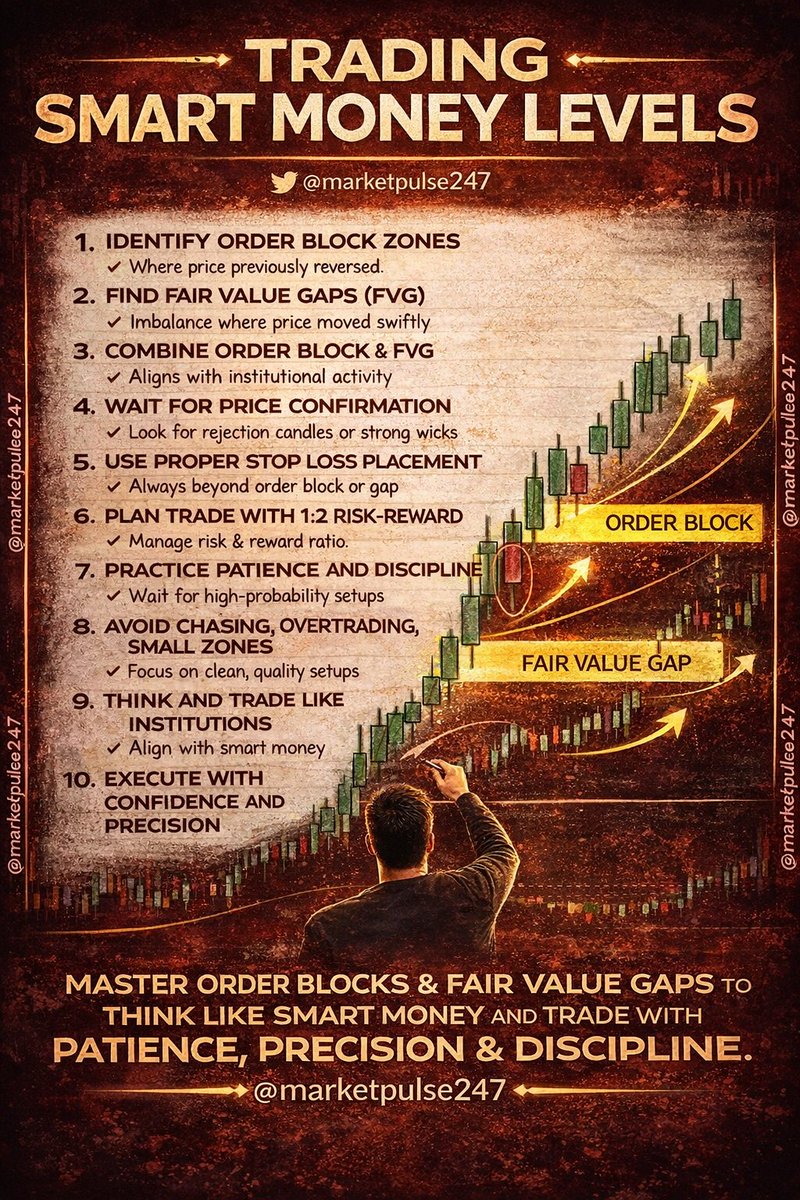
An Order Block is a key area on the chart where price previously reversed direction It represents the zone where large institutions placed significant buy or sell orders This is not just a random level it is where real money entered the market and shifted the trend
Why Order Blocks Matter
Order Blocks are important because they reveal where strong decisions were made in the past Markets often respect these zones because institutional orders are not always fully filled in one move When price returns to these levels it often reacts again creating trading opportunities
Order Block As Support And Resistance
In an uptrend an Order Block acts as support where buyers step in again In a downtrend it acts as resistance where sellers regain control This dual behavior makes it one of the most powerful tools for identifying entry points
How To Identify A Strong Order Block
A strong Order Block is usually followed by a sharp move in price This move shows that institutions were active Look for consolidation followed by a breakout This zone becomes your Order Block and should be marked carefully
Price Reaction At Order Block
When price comes back to an Order Block it does not always reverse immediately Sometimes it tests the level multiple times before moving This is where patience is required Entering too early without confirmation can lead to losses
Entry Strategy Using Order Block
The best way to trade an Order Block is to wait for confirmation Do not blindly enter when price touches the zone Look for signals like rejection candles strong wicks or engulfing patterns This confirms that institutions are defending the level
Stop Loss Placement In Order Block Trading
Your stop loss should always be placed beyond the Order Block This protects you from fake breakouts and ensures you are not stopped out by market noise Proper risk management is what keeps you in the game
What Is Fair Value Gap
A Fair Value Gap is a price imbalance that occurs when the market moves rapidly in one direction It creates a gap between candles where there is little or no overlap This shows that price moved too fast leaving inefficiency behind
Why Fair Value Gap Is Important
Markets tend to return to fill inefficiencies A Fair Value Gap acts like a magnet for price When the market comes back to this area it often provides high probability trading opportunities
Understanding Market Imbalance
A Fair Value Gap represents imbalance between buyers and sellers When there is strong buying or selling pressure price moves quickly leaving gaps These gaps indicate that the market may revisit the area to restore balance
How To Identify Fair Value Gap
Look for three candle patterns where the middle candle moves strongly and leaves a gap between the previous and next candle This gap is your Fair Value Gap zone It is an area of interest for future trades
Price Behavior Around Fair Value Gap
Price often retraces back to the Fair Value Gap before continuing in the original direction This creates an opportunity to enter trades at better prices instead of chasing the market
Combining Order Block And Fair Value Gap
The real power comes when you combine both concepts When a Fair Value Gap aligns with an Order Block the probability of a successful trade increases significantly This is because both institutional activity and market imbalance are present at the same level
Entry Confirmation With Price Action
Even when you have a perfect zone you must wait for confirmation Look for rejection candles bullish or bearish engulfing patterns or strong momentum shifts This ensures you are entering with the market not against it
Avoiding Common Mistakes
Many traders fail because they mark every small zone as an Order Block or Fair Value Gap Focus only on clean and clear setups Quality is more important than quantity Trading fewer high probability setups leads to better results
Risk Management And Discipline
No strategy works without discipline Always use proper position sizing Never risk more than you can afford to lose Consistency in trading comes from managing losses not just chasing profits
Patience Is The Real Edge
The market does not reward impatience It rewards discipline and patience Waiting for the right setup is more important than taking random trades The best traders spend most of their time waiting and only act when everything aligns
Building Confidence With Practice
Understanding Order Block and Fair Value Gap takes time Practice on charts study past price movements and observe how these zones behave The more you practice the more confident you become in your decisions
Trading Like Institutions
When you use these concepts you are aligning yourself with institutional traders instead of competing against them This shift in mindset is what separates profitable traders from struggling ones
Creating A Simple Trading Plan
Keep your approach simple Identify the trend mark key Order Blocks find Fair Value Gaps wait for confirmation and manage your risk This structured approach removes confusion and builds consistency
Final Thought On Consistency
Success in trading is not about finding a secret strategy It is about mastering simple concepts and applying them with discipline Order Block and Fair Value Gap are powerful tools but only if used correctly
BOLD CONCLUSION
MASTERING ORDER BLOCK AND FAIR VALUE GAP IS NOT JUST ABOUT LEARNING A STRATEGY IT IS ABOUT UNDERSTANDING MARKET BEHAVIOR THINKING LIKE SMART MONEY AND EXECUTING WITH PATIENCE AND DISCIPLINE WHEN YOU COMBINE THESE CONCEPTS WITH PROPER RISK MANAGEMENT YOU CREATE A POWERFUL EDGE THAT CAN TRANSFORM YOUR TRADING JOURNEY FROM RANDOM RESULTS TO CONSISTENT PROFITS
x.com/@marketpulse247
#OrderBlock #FairValueGap #SmartMoneyConcepts #PriceAction #TradingStrategy #ForexTrading #StockMarket #TechnicalAnalysis #TradingTips #MarketStructure #Liquidity #TradingEducation #SupportResistance #ChartAnalysis #TradingPsychology #RiskManagement #TraderLife #Investing #FinancialFreedom #WealthBuilding #DayTrading #SwingTrading #CryptoTrading #TradingPlan #MarketAnalysis #TradingSkills #BeginnerTrader #ProTrader #TradeSmart #Consistency #Discipline #Patience #MarketMoves #EntryStrategy #StopLoss #TakeProfit #InstitutionalTrading #LearnTrading #TradingCommunity #FinanceEducation #MoneyManagement #TradeLikePro #ProfitMindset #TradingSuccess #MarketTrends #TechnicalTrading #TradeSetup #TradingJourney
3
4
92
Master The Perfect Trade Entry With Powerful Smart Money Techniques
Understanding Market Structure Clearly
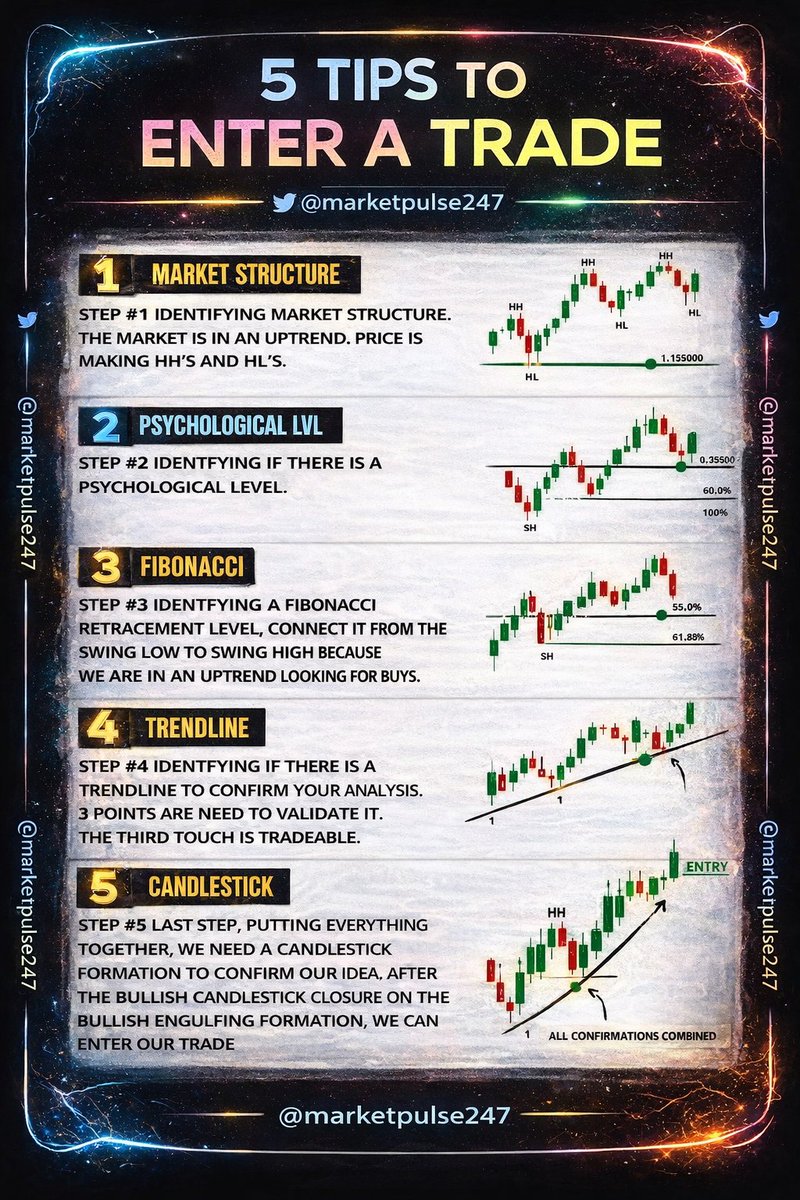
The first and most important step before entering any trade is understanding market structure. This simply means identifying the trend of the market. If the price is forming higher highs and higher lows then the market is in an uptrend. In such a scenario you should focus only on buying opportunities. On the other hand if the market is forming lower highs and lower lows then it indicates a downtrend and selling opportunities become more favorable. Market structure acts like a roadmap that guides your trading decisions and helps you avoid confusion.
Importance Of Psychological Levels In Trading
Psychological levels are price points where traders naturally place their orders. These are usually round numbers like 100 200 or 1000. These levels act as strong support or resistance because a large number of traders react at these points. When price approaches a psychological level it often shows strong reactions such as rejection or breakout. Identifying these levels gives you an edge because you can anticipate possible reversals or continuations in the market.
Using Fibonacci For Precision Entry
Fibonacci retracement is a powerful tool used to find potential entry zones. In an uptrend you draw Fibonacci from the swing low to the swing high. The key levels such as 50 percent and 61 point 8 percent act as strong support areas where price is likely to bounce. These levels are widely followed by traders across the world which makes them highly reliable. Combining Fibonacci with market structure increases the probability of successful trades.
Trendline Confirmation For Strong Validation
Trendlines help in confirming the direction of the market. A valid trendline requires at least three touches to be considered strong. When price respects a trendline multiple times it indicates that the market is following a clear direction. The third touch is often considered the best trading opportunity because it confirms that the trend is still intact. Trendlines also help in identifying breakout scenarios when price fails to respect the line.
Candlestick Patterns For Final Entry Signal
Candlestick patterns provide the final confirmation before entering a trade. Patterns like bullish engulfing or bearish engulfing signal strong momentum in the market. After identifying market structure psychological levels Fibonacci zones and trendline support you should wait for a clear candlestick confirmation. This step ensures that you are not entering the trade blindly but with proper validation. It reduces risk and increases confidence in your trade.
Combining All Factors For High Probability Trades
The real power of trading comes when you combine all these elements together. Market structure gives direction psychological levels provide key zones Fibonacci refines your entry trendlines confirm the trend and candlestick patterns trigger the trade. When all these factors align the probability of success increases significantly. This approach is followed by professional traders and is known for its consistency.
Risk Management Should Never Be Ignored
Even the best strategy can fail if risk management is ignored. Always use a stop loss to protect your capital. Never risk more than a small percentage of your trading account on a single trade. Consistency in trading comes from managing losses effectively rather than chasing profits blindly. Discipline and patience are the key qualities that separate successful traders from beginners.
SUMMARY
Mastering trade entry is not about guessing the market but about following a structured approach. By understanding market structure respecting psychological levels using Fibonacci for precision confirming with trendlines and waiting for candlestick signals you can significantly improve your trading accuracy. Combine this with strong risk management and you will build a powerful trading system that delivers consistent results over time.
x.com/@marketpulse247
#Trading #StockMarket #Forex #CryptoTrading #TechnicalAnalysis #PriceAction #Candlestick #TradingTips #TraderLife #DayTrading #SwingTrading #Intraday #Investing #MarketAnalysis #TradingStrategy #SmartMoney #MarketStructure #Fibonacci #Trendline #SupportResistance #TradingEducation #LearnTrading #TradeSmart #ProfitMindset #FinancialFreedom #StockTrader #ForexTrader #CryptoInvestor #TradingCommunity #ChartAnalysis #RiskManagement #TradingPsychology #Bullish #Bearish #Breakout #Scalping #WealthCreation #MoneyManagement #TradingView #MarketTrends #TradeSetup #EntryStrategy #PriceActionTrading #IndianTraders #Nifty #BankNifty #Sensex #StockMarketIndia #MarketPulse #marketpulse247
5
6
135

Mar 27
Markets don’t reward intent — they reward readiness.
Positioning early defines outcome.
USE.com
#MarketReadiness #EntryStrategy #Cex

1
7
251

Mar 25
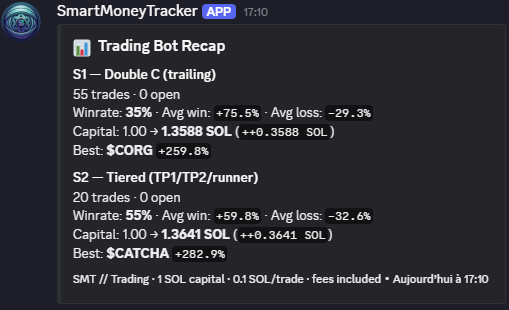
Hey, I’m currently testing memecoin trading strategies based on @smtsolana premium signals — results are looking pretty solid so far.
Would you be interested in following this?
#EntryStrategy #TakeProfit #StopLoss
#RiskManagement
#ScalpingCrypto
#DayTradingCrypto
1
4
40

24 Nov 2025
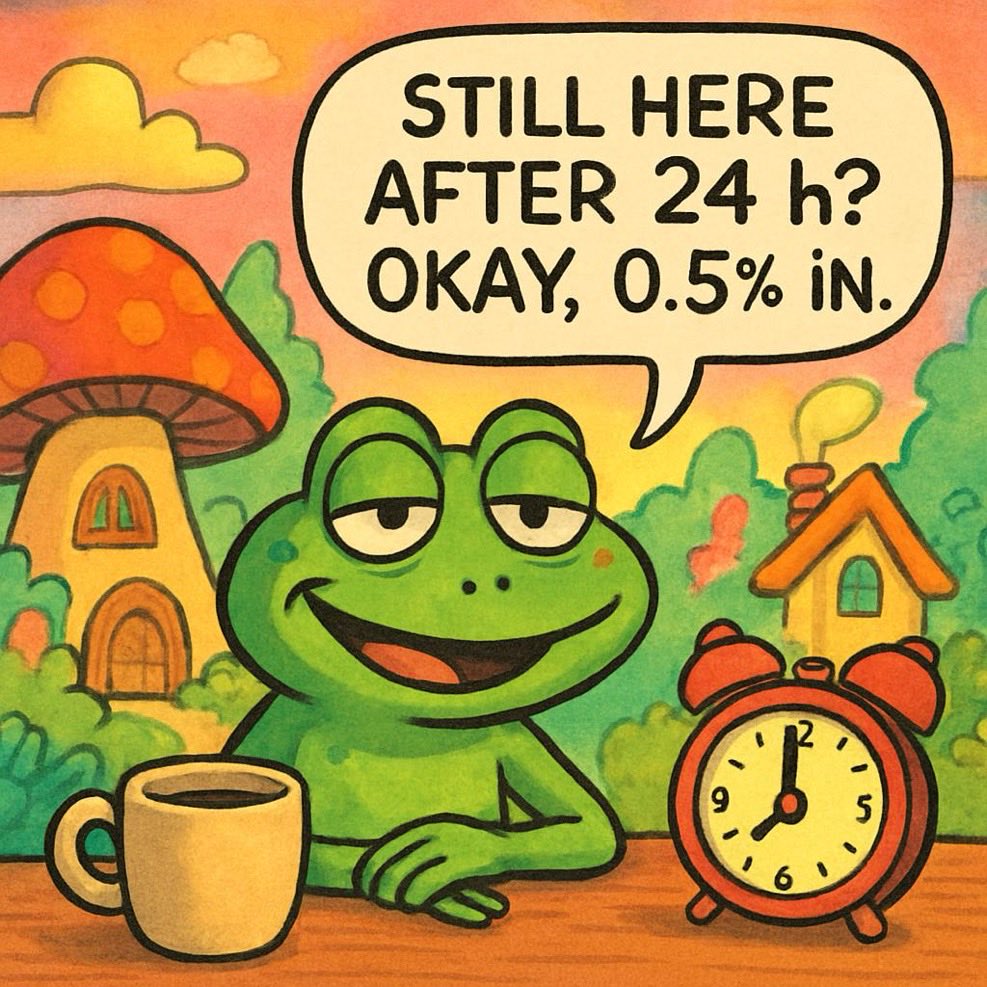
The 24-hour rule: if you’re still thinking about buying the coin after 24 h → probably worth a small ticket
#EntryStrategy @solana @Pumpfun @JupiterExchange @phantom
1
1
6
80

27 Sep 2025
Part 3 (BONUS) Continued:
11: MARKET STRUCTURE DEEP DIVE 🏗️
Wyckoff Market structure nerds, feast your eyes! 👀
✅ Accumulation: 4 years (DONE)
✅ Markup: Just started (WE ARE HERE)
🔄 Distribution: Coming 2025
📉 Decline: Not until 2026
We’re literally at the beginning of the markup phase. This is where generational wealth transfers happen.
#MarketStructure #Wyckoff #GenerationalWealth
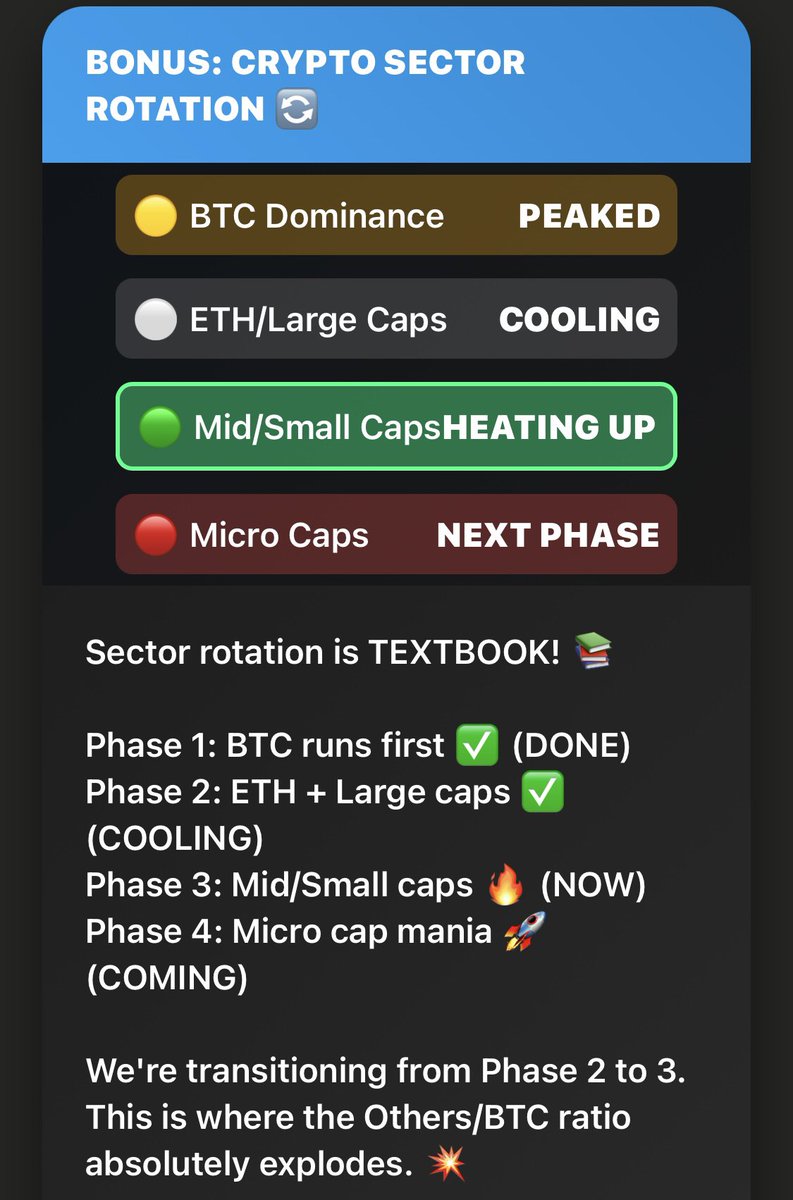
12: CRYPTO SECTOR ROTATION 🔄
Visual: Rotation phases with current active sector highlighted
“Sector rotation is TEXTBOOK! 📚
Phase 1: BTC runs first ✅ (DONE)
Phase 2: ETH Large caps ✅ (COOLING)
Phase 3: Mid/Small caps 🔥 (NOW)
Phase 4: and WIP - Micro cap and Meme mania 🚀 (COMING)
We’re transitioning from Phase 2 to 3. This is where the Others/BTC ratio absolutely explodes. 💥
#SectorRotation #AltSeason #CryptoPhases
13: HISTORY RHYMES 📜
History doesn’t repeat, but it sure does RHYME! 🎵
Notice the pattern:
• Each cycle has diminishing returns
• But 400% gains are still life-changing• Peak targets getting more realistic
• Market maturing but still volatile
This isn’t 2017’s wild west, but it’s still the opportunity of a lifetime.
#HistoricalAnalysis #CryptoCycles #MarketMaturation”
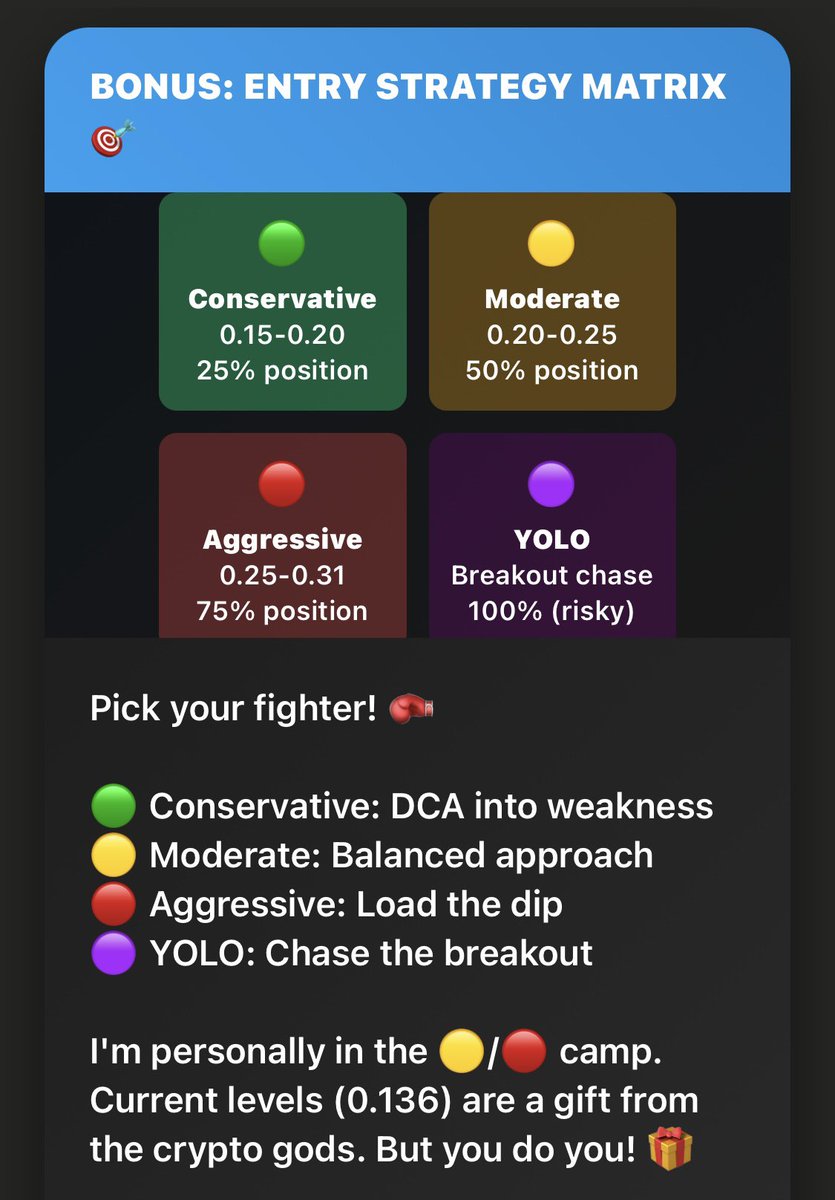
14: ENTRY STRATEGY MATRIX 🎯
Visual: Four-quadrant entry strategy grid
“Pick your fighter! 🥊
🟢 Conservative: DCA into weakness
🟡 Moderate: Balanced approach
🔴 Aggressive: Load the dip
🟣 YOLO: Chase the breakout
I’m personally in the 🔴 camp and see my prior AI accumulation posts. Current levels (0.136) are a gift from the crypto gods. But you do you! 🎁
#EntryStrategy #PositionSizing #RiskTolerance
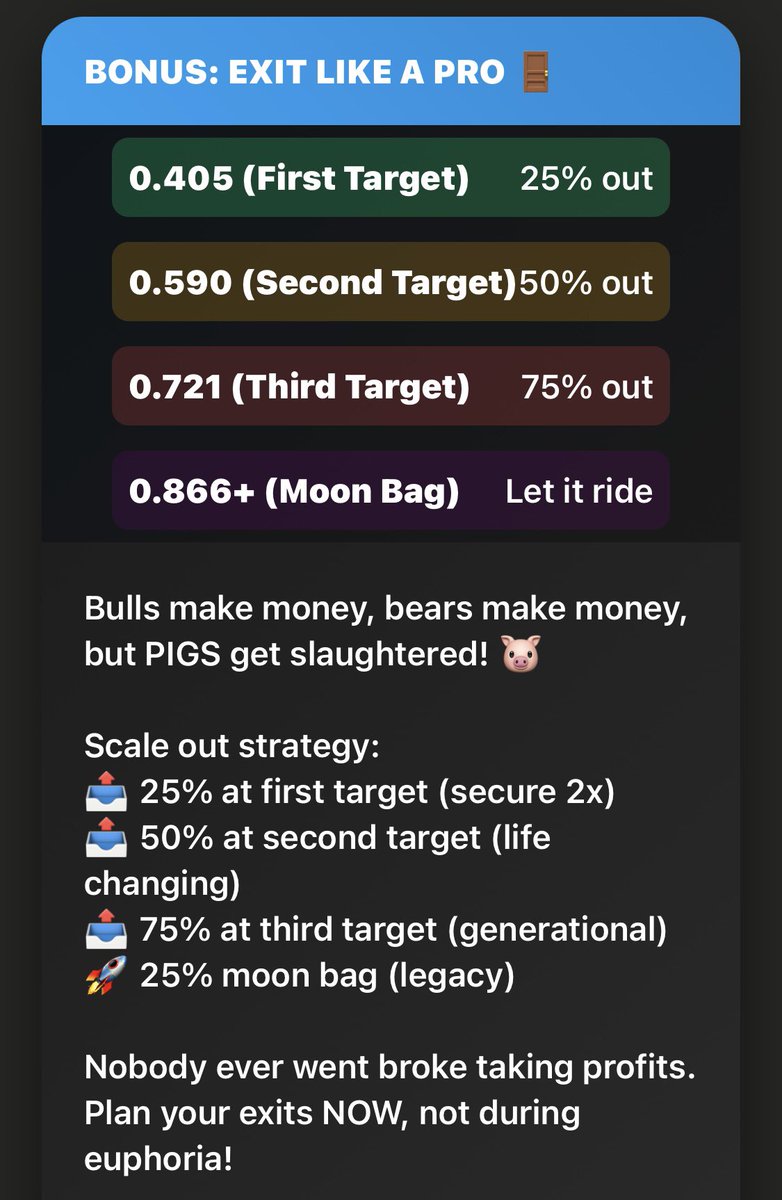
15: EXIT LIKE A PRO 🚪
Visual: Scaling out strategy with target levels
“Bulls make money, bears make money, but PIGS get slaughtered! 🐷
Scale out (LADDER OUT 🪜) strategy:
📤 25% at first target (secure 2x)
📤 50% at second target (life changing)
📤 75% at third target (generational)
🚀 25% moon bag (legacy)
Nobody ever went broke taking profits. Plan your exits NOW, not during euphoria!
#ExitStrategy #TakeProfits #PlanAhead

1
1
4
451

10 Sep 2025
6/8
⏳ Wait for the Dip
Don’t rush to buy. Wait for a dip to get in at a lower price. Timing your entry can be crucial for making the most of your investment. Be patient, the right moment will come. 📉 #EntryStrategy
1
1
2
22

19 Jul 2025
#Crypto
- Buy Low
- Sell High
= Profits
Less exchange & transaction fees & Forex rate
= Less PROFIT
#Crypto
- Buy High
- Sell Low
= Loss
Less exchange & transaction fees & Forex rate
= More LOSS
#Timing
#EntryStrategy
#ExitStrategy
#Luck
3
2
88

18 Jun 2025
📘 Advanced Strategies – Lesson 7: Entry Timing Design — Not Every Candle Deserves Your Money
Many traders can read candlesticks and indicators…
But still struggle with when to actually enter a trade.
Common issues:
You predict the right direction—but enter too early or too late and get shaken out.
You see a breakout candle and FOMO in—only to get caught in an immediate pullback.
You're anxious when flat, but regretful once in a position.
Your entry timing is off.
This lesson is all about fixing that. We'll walk you through:
What makes a high-quality entry? What are you really waiting for? And—how should you wait?
1. 🎯 What Is a “Good Entry”?
An ideal entry = A position where the risk is clearly defined and the reward is worth it.
📌 Three elements of a good entry:
Clear trend direction
Clean technical structure (support/resistance)
Defined stop-loss zone
Chasing just because of a “green candle” or “volume spike” usually leads to high risk for low reward.
2. 🧠 Plan Your Trades — Don’t Trade Your Emotions
✅ Key principle: Planned entries > emotional entries
⛔ Emotional entries often look like:
“It’s pumping! I’ll miss out if I don’t enter now!”
“I just lost a trade—let me double up and win it back.”
Trading impulsively with no pre-defined plan.
✅ A planned entry means:
You’ve already marked your entry, stop-loss, and target on the chart.
You use alerts, not emotions.
You wait for multi-timeframe confluence before acting.
Great traders are snipers, not machine gunners.
3. 📐 The 3 1 Entry Framework (Our Favorite)
1. Macro Trend (Monthly/Weekly)
Check the overall direction
2. Mid-Term Trigger (Weekly/Daily)
Watch for pattern breaks, pullbacks, or candle signals
3. Micro Confirmation (4H/1H)
Use price action, MACD, and volume for real-time validation
1. Entry Execution = Structure Support Signal
📈 Example Setup:
Weekly EMA60 trending up
Daily pullback to trendline, bullish candle (Morning Star)
4H MACD cross volume spike
→ Entry with stop below recent low, Reward/Risk ≥ 2:1
4. 🧱 Structure vs Emotion: Are You Trading a Chart or
Your Feelings?
✅ Structure-based traders:
Only enter when support/resistance candlestick volume line up
Losses are controlled, winners are amplified
❌ Emotion-based traders:
Chase every breakout, panic on dips
No consistent stop-loss discipline
Overtrade and burn out
Without a clear entry system, every “Buy” is a gamble.
5. 🎯 Different Trade Types Require Different Entry Styles
Trade TypeDescriptionIdeal EntryTrend-FollowingRiding a larger trendPullback to support/EMA candle confirmationRange-BoundSideways marketFade the highs/lows with volume reversalEvent-DrivenEconomic or policy catalystsWait for breakout retest or structure confirmation
🧠 Key takeaway:
Don't enter just because price “reached a level.”
Wait for structure to form.
6. 📊 Risk Management: A Good Entry Still Needs Good Discipline
Never enter if reward/risk < 1:1—even if it “looks good”
Always place a stop-loss when you enter
After 3 consecutive losses: pause, review, reset
After a win: don’t overconfidently increase size—avoid the “winner’s bias”
📌 Use a Pre-Entry Checklist:
Why am I entering?
Where is my stop?
What’s my target?
What signal am I waiting for?
🔚 Final Word: Patience Is a Trader’s Superpower
✔️ True pros don’t trade everything—they wait for the 10% of setups that matter
✔️ One solid entry beats ten impulsive ones
✔️ Your real weapon isn’t your mouse—it’s your plan
“Patience is the trader’s edge. Movement should be execution, not emotion.”
#EntryStrategy #TradingRhythm #SmartEntries #FuturesTips #RiskDiscipline #XXCrypto
6
1
591

3 Jun 2025
🎯 Catch perfect entries with Cornix!
Set multiple entry targets, keep trades visible, and use ‘First Entry as Market’ for faster fills.
Trade smarter.
#Cornix #EntryStrategy #CryptoBots #TradeSmarter
3
4
590

28 Mar 2025
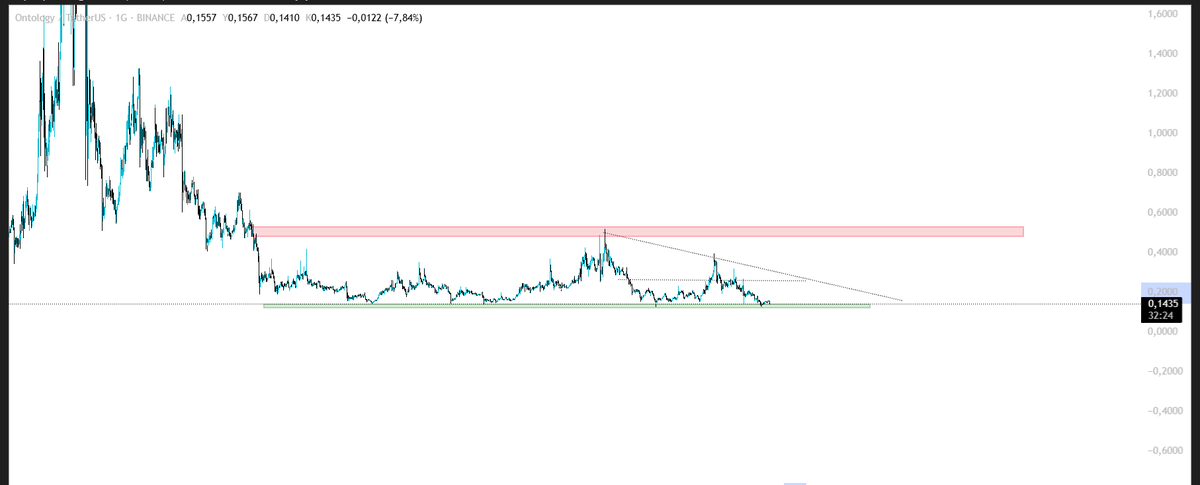
$ONT/USDT – Technical Entry Strategy
Price is currently at a strong support zone: $0.1400 – $0.1450
Previous reactions from this area suggest potential for a bounce. Risk/Reward setup looks solid.
Entry Zone: $0.1400 – $0.1450
Stop-Loss: Daily close below $0.1290
Targets:
TP1 → $0.1600
TP2 → $0.1850
TP3 → $0.2500
Risk/Reward: 1:3.5
Position Size: Recommended 3%-5% of portfolio.
The zone looks attractive for mid-term accumulation.
#ONT #CryptoAnalysis #TechnicalAnalysis #EntryStrategy
9
14
130
28,649

8 Jan 2025
Using Volume for Better Entries 📊📈
1️⃣ Volume and Price Strength
Increased Volume: Indicates strong price movements, confirming the trend. High volume on a breakout suggests the move is genuine.
Decreased Volume: Suggests weak price action or consolidation, which can signal a potential reversal or exhaustion.
2️⃣ Optimal Entry Points
Breakout with Volume: Enter when price breaks key support/resistance with high volume, confirming the move.
Pullback with Volume: Wait for a pullback to key levels, and enter when volume spikes to confirm the continuation of the trend.
3️⃣ Confirmation
Combine volume with price patterns (candlesticks, support/resistance) for stronger entry signals.
Use volume to gauge market strength and time entries more accurately! 📊💡 #VolumeTrading #EntryStrategy #SmartTrading
2
36

23 Nov 2024
4️⃣ Building Entry Strategies
Creating an effective market entry strategy is a key role of business developers. Strategies can range from forming local partnerships to gradual product launches and adapting the brand to the market’s culture.
#EntryStrategy #SmartExpansion

1
2
6

24 Jul 2024
You’ve got a date with the technical master himself.
Join @leadership_ATM tomorrow at 20:00 to learn how to master your entries like a pro trader!
#rcgway #rcgmarkets #leadershipmonhla #rcgroyalcircle #fxclass #fxlearning #entrystrategy #masteryourentries #charts

1
2
5
171

8 Jul 2024

2
3
272

18 Jul 2023
“The entrance strategy is actually more important than the exit strategy.” - Eddie Lampert
A well-planned entry can set the tone for the success of an investment. #EntryStrategy
5
709

19 Oct 2021
Obtaining a fully certified validator.
www.bsmartgroup/bcos.com
#bsmartconsulting #entrystrategy #certified

1
3