
1/ "40 killed." On its own, that number is close to useless.
Is it a careful count or a rumor? One source or three? Already revised, or quietly retracted?
Why I store claims, not values. 🧵
#SoftwareArchitecture #Databases #DataEngineering #GraphDatabases #SystemDesign

1
33

Jun 2
By integrating #GraphDatabases into AI architectures—specifically through #GraphRAG—we can ground #AI outputs in verifiable, connected knowledge.🤖 It's time to move beyond tables and embrace the graph.💡 na2.hubs.ly/H05M-J90
#NebulaGraph #KnowledgeGraph #GraphAnalytics #LLM
74
941

May 31
#Ontology and #GraphDatabases: #EnterpriseAI From Theory to Production Reality (Part II) by NebulaGraph Database medium.com/@nebulagraph/onto…
13

Have you heard the term graph data or graph database?
Let me explain briefly.
When someone says data, what we all think of is tabular data, like the one in Excel sheets. But there are more structures you can define to hold records.
While tabular data organizes information into a rigid structure of rows (entities) and columns (attributes)—ideal for independent data points like a spreadsheet of customer profiles—graph data structures information as a network of nodes (the entities) and edges (the relationships between them).
In a tabular dataset, connecting different tables requires complex, resource-heavy operations like SQL joins, whereas graph data treats the relationships themselves as first-class citizens. This makes graph data uniquely powerful for mapping complex, interconnected networks—such as social media connections, financial fraud rings, or supply chains—where the links between the data points matter just as much as the data points themselves.
Now you know. No problem. Let me know if you want to learn more on graph data science.
#GraphDatabases #DataScience #MachineLearning #BigData #DataArchitecture
15

May 23
5/ Solid landscape overview decision framework on who should use what.If you’re in data platforms, analytics engineering, or AI, this is worth reading.→
Full article: gdotv.com/blog/graph-on-rela…
#GraphDatabases #DataEngineering #Databases #GQL #SQL
1
1
2
85

Beziehungen werden teurer als Entitäten.
Spätestens dann lohnt der Blick auf Graphdatenbanken.
Julius Mischok zeigt, wann sie passen – und wann nicht.
👉 app.entwickler.de/zE0gl2KxL1…
#SoftwareArchitecture #GraphDatabases #Datenarchitektur
21

Thanks to Erik Bijl for this fantastic contribution to the Beneficial Ownership Data Standard <> Neo4J repository
github.com/StephenAbbott/bod…
#beneficialownership #openstandards #UBO #AML #Neo4J #opensource #graphdatabases
1
55

Architectural patterns for graph-enhanced RAG: Moving beyond vector search in production dlvr.it/TSb1pm #RAG #GraphDatabases #LLMs #ArtificialIntelligence #DataScience
32
May 13
LLMs are powerful but struggle with facts & connections. 🤔 In 2026, the solution is clear: #GraphRAG.
#GraphDatabases are no longer just for #FraudDetection; they are the essential grounding layer for #AI. 💡
👉 Start mapping relationships: na2.hubs.ly/H05nGdC0
#NebulaGraph
88
83
May 8
Your recommender system is blind if it ignores relationships. 👀 #GraphDatabases reveal hidden patterns:
✅ Real-time session historical behavior
✅ Multi-hop item affinities
See how top platforms boost relevance with graph-powered recs:
🔗 na2.hubs.ly/H05l9NB0
#NebulaGraph
1
80
84

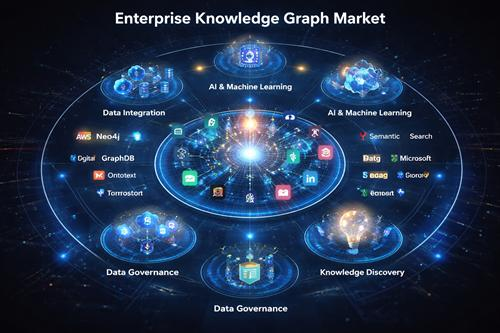
Enterprise Knowledge Graph Market Hits New High
The numbers are hard to ignore. According to a new global market study from HTF Market Intelligence, the Enterprise Knowledge Graph market is projected to grow from $3.6 billion in 2025 to $18.5 billion by 2032, at a CAGR of 22.50%.
That is not incremental growth. That is a market in full acceleration.
The drivers are familiar but converging fast: rising data complexity, AI adoption, digital transformation, and the growing need for semantic understanding across enterprise data assets.
Knowledge graphs sit at the intersection of all of them, connecting structured and unstructured data to support decision-making across business intelligence, fraud detection, supply chain, and customer insights.
North America leads today. Asia Pacific is the fastest-growing region. The segmentation spans RDF-Based, Property, and Hybrid Knowledge Graphs, with applications across Data Integration, AI and Machine Learning, Semantic Search, and Enterprise Analytics.
Challenges remain: integration complexity, high initial costs, skills gaps, and data privacy concerns. But the opportunity pipeline, particularly in healthcare, finance, and IoT, continues to expand.
New report by HTF Market Intelligence.
Key Points Covered:
- Enterprise Knowledge Graph Overview, Definition and Classification Market drivers and barriers
- Enterprise Knowledge Graph Market Competition by Manufacturers
- Enterprise Knowledge Graph Capacity, Production, Revenue (Value) by Region (2026-2033)
- Enterprise Knowledge Graph Supply (Production), Consumption, Export, Import by Region (2026-2033)
- Enterprise Knowledge Graph Production, Revenue (Value), Price Trend by Type {RDF-Based Knowledge Graphs, Property Graphs, Hybrid Knowledge Graphs, Others}
- Enterprise Knowledge Graph Market Analysis by Application {Data Integration, AI & Machine Learning, Semantic Search, Enterprise Analytics}
- Enterprise Knowledge Graph Manufacturers Profiles/Analysis Enterprise Knowledge Graph Cost Analysis, Industrial/Supply Chain Analysis, Sourcing Strategy and Downstream Buyers, Marketing
- Strategy by Key Manufacturers/Players, Connected Distributors/Traders Standardization, Regulatory and collaborative initiatives, Industry road map and value chain Market Effect Factors Analysis.
Key Questions Addressed:
• How feasible is Enterprise Knowledge Graph market for long-term investment?
• What are influencing factors driving the demand for Enterprise Knowledge Graph near future?
• What is the impact analysis of various factors in the Global Enterprise Knowledge Graph market growth?
• What are the recent trends in the regional market and how successful they are?
Link in comments.
#EnterpriseKnowledgeGraph #GraphDatabases #DataIntegration #SemanticTechnology #DigitalTransformation
--
Connected Data London 2026 | 11–12 November | Leonardo Royal Hotel London Tower Bridge
🎤 Share your work with the world's most passionate data community. The Call for Submissions is open. connected-data.london/2026-c…
🎟 Tickets on sale now. Early bird discounts up to 30%. [2026.connected-data.london](2026.connected-data.london)
📺 Sponsorship opportunities available. Contact info@connected-data.london for details.
#KnowledgeGraph #GraphRAG #Ontology #Graph #AI #DataScience #GraphDB #SemTech
1
5
263
May 1
#GraphDatabases are becoming a foundational layer of the #AI stack. By providing a “map of how things connect,” they enable LLMs to move beyond pattern matching toward verifiable, contextual intelligence.🚀
🔗 na2.hubs.ly/H0588-W0
#NebulaGraph #GraphRAG #KnowledgeGraph #LLM
79
54
Powered by @claudeai, this work was inspired by @neo4j's recent beneficial ownership webinar using UK beneficial ownership data neo4j.com/developer/industry… and coincides with the #NodesAI online conference neo4j.com/nodes-ai/
#UBO #AML #graphdatabases #Neo4J
2
43

I just published From Corkboard to Case File:The Detective’s Guide to Enterprise Intelligence medium.com/p/from-corkboard-… #GraphDatabases #AgenticAI #EnterpriseAI #DecisionIntelligence #POLEModel #RootCauseAnalysis #DataTraceability #AuditTrail
30
Representing beneficial ownership data in RDF to support interconnection of datasets and AI use cases
openownership.org/en/publica…
More details:
linkedin.com/posts/stephenab…
#beneficialownership #RDF #linkeddata #UBO #AML #openstandards #knowledgegraphs #graphdatabases #AMLR #KYB #KYC
48
Apr 3
#GraphDatabases, with their ability to show relationships between different data points, can give you a complete view of the entire #SupplyChain.🔍 This enables companies to identify bottlenecks or risks, and take corrective action. ✔️
🔗 na2.hubs.ly/H04Bjhh0
#NebulaGraph
457
Evaluating Codebase-Oriented RAG through Knowledge Graph Analysis
Every software team has asked some version of this question: "How does this codebase actually work?"
The honest answer is usually: nobody fully knows. The code lives in files. The architecture lives in someone's head. The dependencies live in a build tool. And the reasoning about why things were built the way they were lives nowhere at all.
This is exactly the problem LLMs were supposed to solve. Point a model at your repo, ask it questions, get answers. In practice, models hallucinate structure that doesn't exist, miss relationships that do, and have no reliable way to ground their answers in what the code actually says.
That's where Graph RAG comes in. Instead of feeding raw files to an LLM, you first parse the codebase into a knowledge graph: files, packages, classes, functions, inheritance chains, dependencies, all represented as nodes and relationships that can be traversed, queried, and reasoned over.
The graph becomes the memory. The LLM becomes the reasoning layer on top of it. The result is a system that can answer structural questions about code with actual evidence, not plausible-sounding inference.
Graph RAG is fast becoming one of the primary use cases at the intersection of LLMs and knowledge graphs. And the quality of the graph is everything.
LLM performance and graph quality are independent variables. A weak model can obscure a strong graph. A flawed graph cannot be rescued by a powerful model.
That distinction sits at the heart of this two-part deep dive.
The case study: Code-Graph-RAG applied to Soufflé, a well-known Datalog language and engine written in C . Complex enough to be a real benchmark: diverse I/O workflows, parallel execution mechanisms, computationally intensive logical algorithms.
Part 1 takes the generated knowledge graph as given and asks: what architectural insights can we actually derive from it? Using gdotv and Cypher queries, the analysis traces full containment spines from project root down through packages, modules, and classes; surfaces inheritance chains up to five levels deep; and detects architectural hubs: modules imported by two or more others, the highest-leverage points in the codebase where changes ripple everywhere.
Even where the small local language model failed to answer questions (SQLite integration, lambda patterns), direct graph queries returned precise, verifiable results. The graph knew. The model didn't.
Part 2 flips the lens. Instead of using the graph, it evaluates the graph itself.
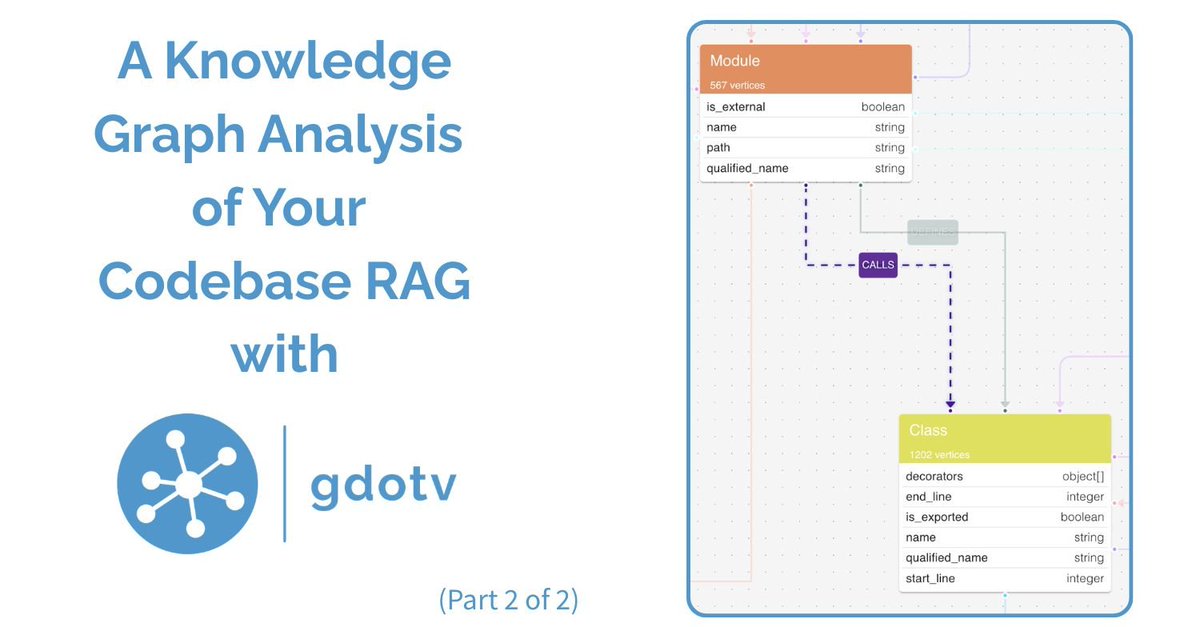
The findings are instructive. Schema completeness checks passed cleanly. But 427 orphan Method nodes turned up: methods correctly parsed with accurate package paths and line numbers, yet disconnected from their enclosing class or file. A structural flaw in the construction pipeline, not a language model error.
Two further issues surfaced: an undocumented is_external boolean on Module nodes (inconsistent with the ExternalPackage label used elsewhere), and a CALLS edge from Module to Class that doesn't map to any real C semantic. A module doesn't call a class. It instantiates it, references it, inherits from it. The relation is semantically misnamed and potentially misleading to any downstream reasoning layer.
The conclusion: codebase-oriented RAG systems should be treated as graph construction systems first and language systems second. The knowledge graph is the backbone. If it is structurally sound, transparent, and semantically coherent, it becomes a deterministic and inspectable foundation for reliable code reasoning. If not, no model fixes it.
By Amir Hosseini
Evaluating Codebase-Oriented RAG through Knowledge Graph Analysis [Part 1] gdotv.com/blog/codebase-rag-…
Evaluating Codebase-Oriented RAG through Knowledge Graph Analysis [Part 2] gdotv.com/blog/codebase-rag-…
#CodebaseAnalysis #RAG #GraphDatabases #Cypher #SoftwareArchitecture
--
Connected Data London 2026 has been announced! 11-12 November, Leonardo Royal Hotel London Tower Bridge
📝 connected-data.london/post/c…
Join us for all things #KnowledgeGraph #Graph #analytics #datascience #AI #graphDB #SemTech #Ontology
🎟 Ticket sales are open. Benefit from early bird prices with discounts up to 30%. 2026.connected-data.london?u…
📺 Sponsorship opportunities are available. Maximize your exposure with early onboarding. Contact us at info@connected-data.london for more.
1
1
10
560

Context Graphs from my understanding and implementation.
@TheYotg @Connected_Data @KGConference @LangChain
#Contextgraphs #KnowledgeGraphs #AI #AIAgents #Langchain #GraphDatabases #graphspace
linkedin.com/posts/fabisch-k…
1
29
Mar 25
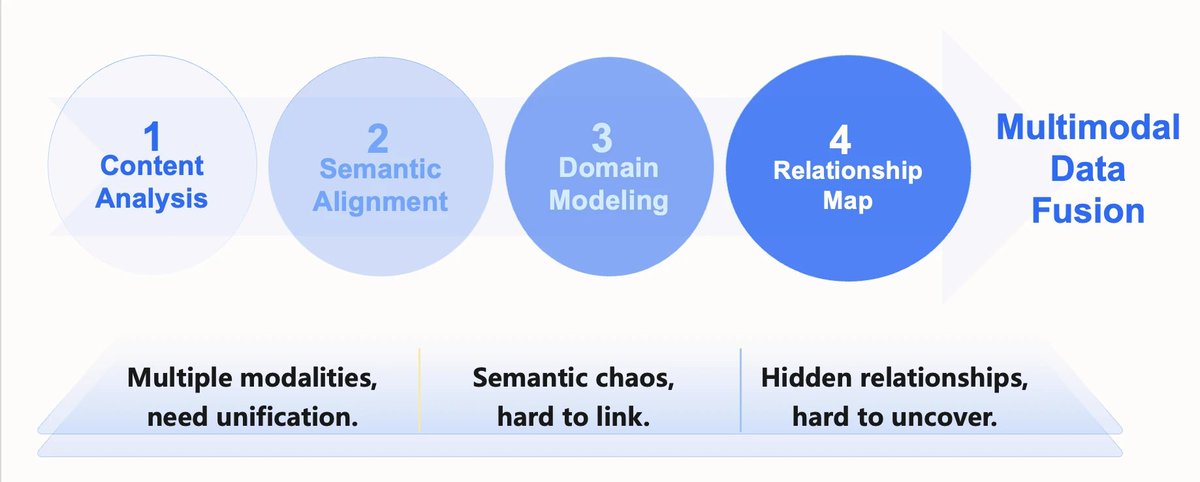
From integrating siloed data to powering intelligent Q&A, analytics, and Data #MCP Marketplaces, the fusion of #GraphDatabases and #AI has rapidly reshaped enterprise intelligence. 🚀
Read more:
🔗 na2.hubs.ly/H04sB8W0
#NebulaGraph #MultimodalData #KnowledgeGraph
48
Mar 25
#GraphDatabases provide a framework for content extraction, enable a unified semantic layer for data alignment, offer a structure for domain-specific modeling, and serve as a high-performance engine for the relationship map.💡
🔗 na2.hubs.ly/H04syvp0
#NebulaGraph #AI #Data
ALT When AI Meets Graph Databases: Innovating with Multimodal Data Fusion (Part I)
831