
Jun 11
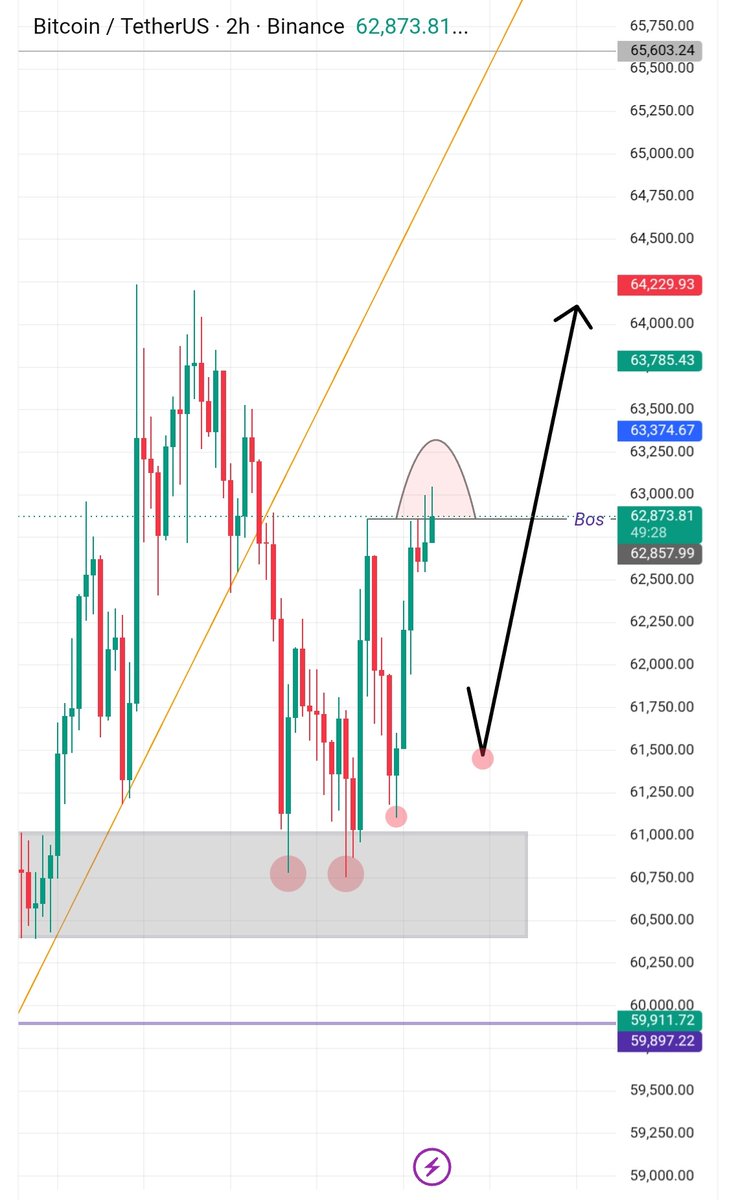
$BTC looks like its structure is changing after a clean bounce off the grey support box. The price successfully formed a higher low and
also made a clear Break of Structure (BOS) to the upside.
confirmation locked in, we can start looking to find some highprobability scalp longs on the next minor pullback
#btc #crypto #btcusdt
6
8
38
2,571

Exactly. That's why I focus more on waiting for highprobability setups instead of chasing every move. Most of the noise is what gets traders trapped. I usually share my analysis and trade ideas before taking them so people can see the reasoning behind the entries. Consistency
4

May 6
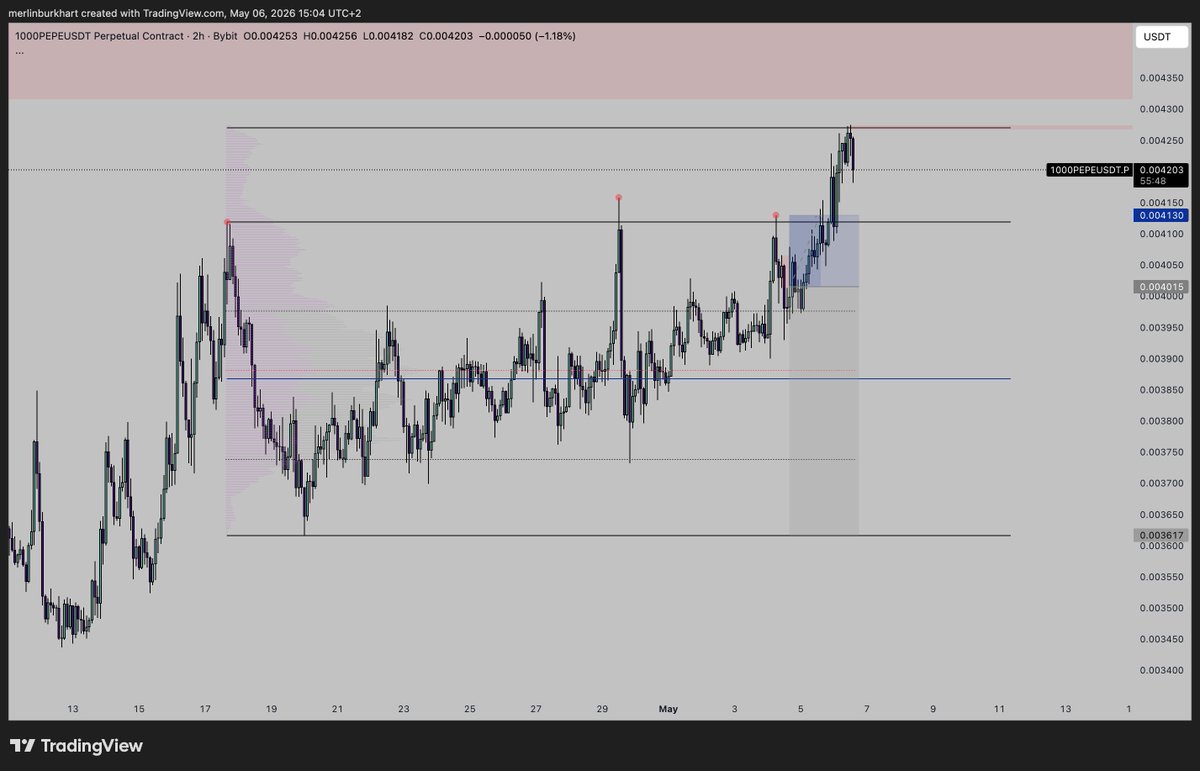
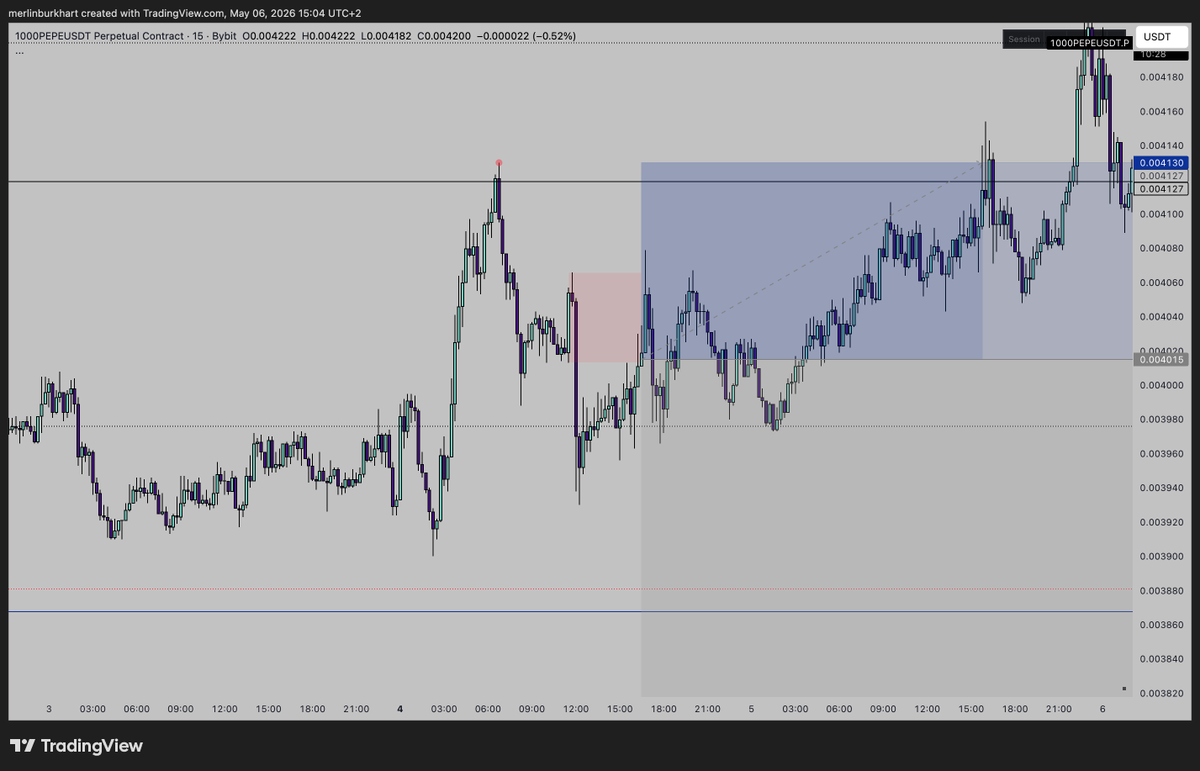
#46 $PEPE short, M2 distribution.
Third trade on the funded account is this loss on PEPE (-1%). I entered on the supply retest leaving my SL above the wyckoff third tap. The model was highprobability but never got any follow through because BTC is not showing any signs of weakness yet.
Emotions: Honestly I'm not having the best week rn. I had a really good time on the weekend but somehow since monday morning I'm really unproductive and not feeling the best.
During this trade my emotions were alright. But it's now the third loss in the same context where I'm kinda anticipating on a move up on USDT.D to confirm the MTF accumulation but it's simply moving lower rn.
Not the way I wanted to start into my funded account but lets keep going.
Onto the next.
1
4
353

May 6
@PuntrrAi Analyse a football game code
"GPSNAR" Evaluate form, head-to-head, and trends. Select highprobability betting outcomes with reasoning and optimised odds. Avoid guesses; summarise final selections with total odds and risk Just give a 1kodds in 2place
2
45

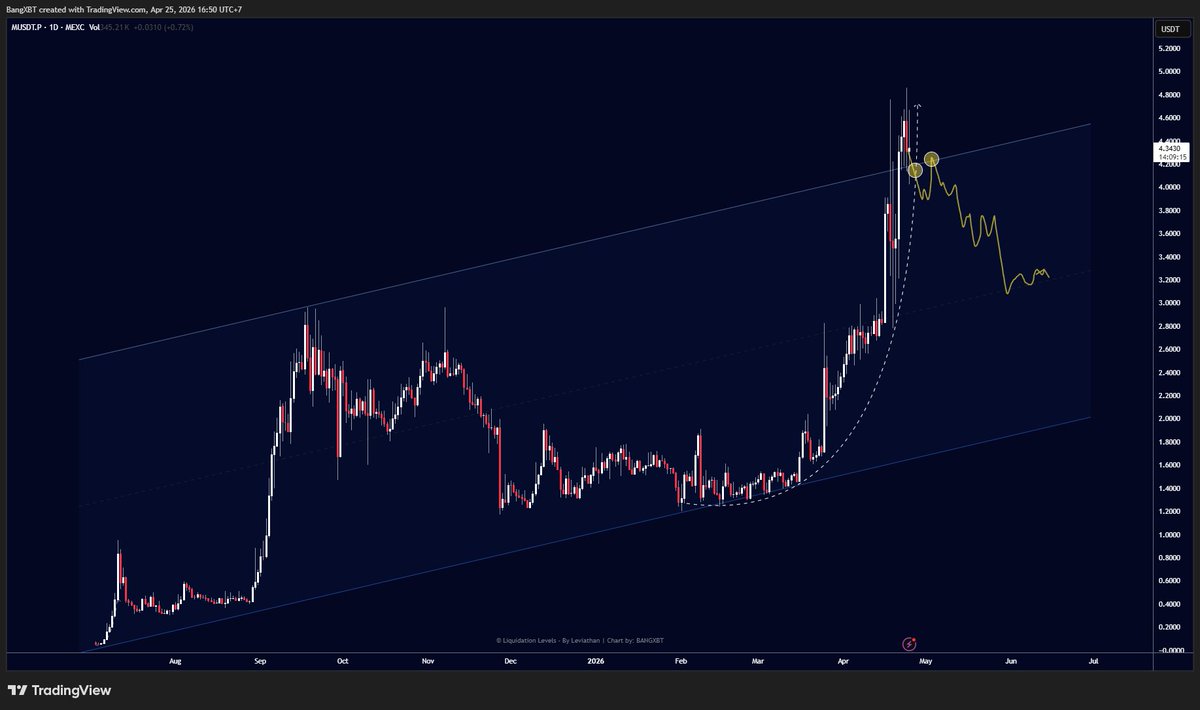
Conditions for a Perfect SHORT Trade on $M
1. Break of the Parabolic Curve: As long as the parabolic uptrend line remains intact, the bullish trend is still valid. A decisive break below this curve signals a potential trend reversal.
If the price continues higher and respects the parabolic curve, we simply let the market do its job. There is no need to force a SHORT trade when there is no strong reversal signal to confirm it.
We are traders, not gamblers.
2.Reversal into the Parallel Channel
3. Retest of the upper boundary of the Parallel Channel (Golden Fib level)
4. Look for a highprobability entry on lower timeframes using confluence from: Fibonacci zones, PA, and candlestick patterns.
5. Take profit and enjoy the gains.
This is a simple, clean setup that can be applied to ALL altcoins experiencing a strong parabolic uptrend (as shown in the chart).
You can study it, backtest it, and use it in your trading.
I’ve personally used this setup to swing short many coins I’ve traded, and most of them later dropped over 90% from their peaks.
Goodluck
Apr 25

Hi Bang, could you please check for a entry short of M/USDT? Thanks in advance
5
7
50
15,776

🚨🌟 Another Explosive Stock Option Trade on the Way
A high-potential option buying setup is getting ready…
How many of you are ready for this trade? 👇
Show your participation and let’s build the momentum! ⚡📈
#TradeAlert #OptionsBuying #StocksInPlay #MarketSetup #HighProbability #TraderCommunity #Trading #optiontrading
1
9
85
4,932

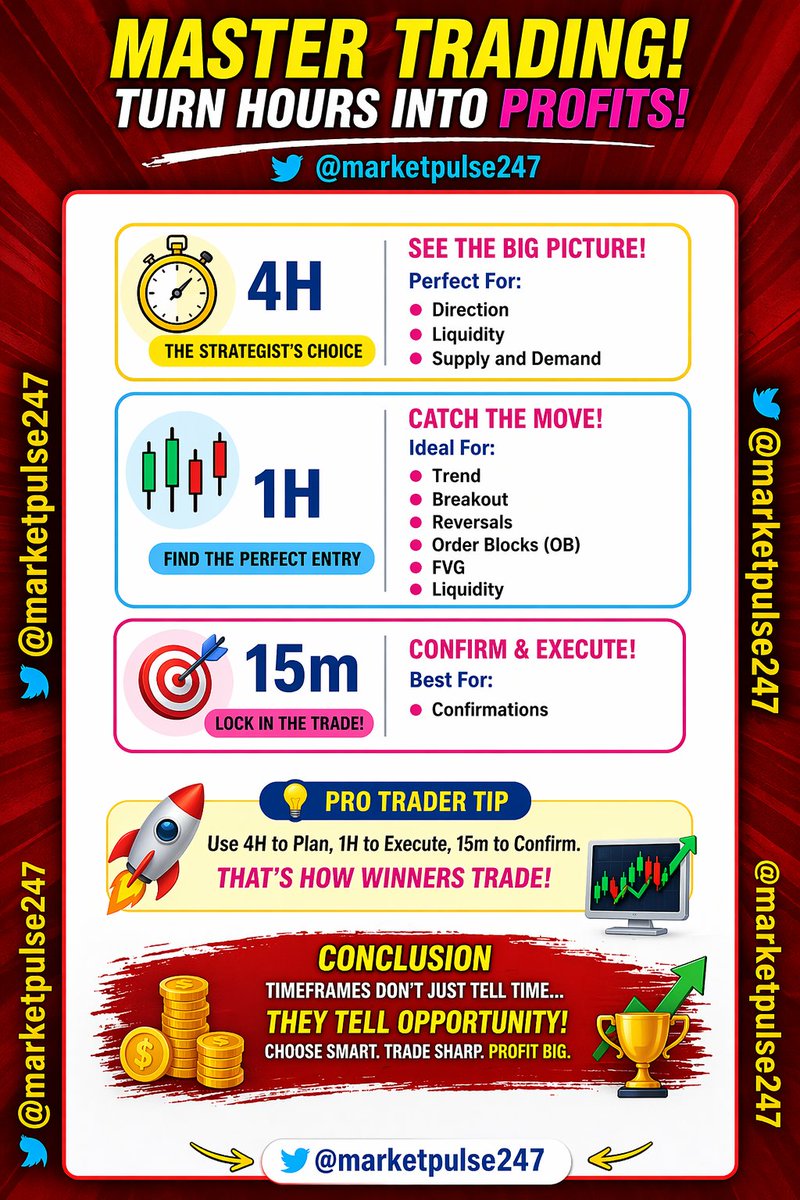
MASTER TRADING USING MULTI TIMEFRAME SECRETS
Bold The Hidden Power Of Multi Timeframe Trading
Most traders fail because they look at only one timeframe and miss the bigger picture. The real edge in trading comes from combining multiple timeframes like 4H 1H and 15m. This approach allows you to see the market from a broader perspective while also fine tuning your entries. When you align these timeframes correctly you reduce confusion and increase confidence. Professional traders rely on this structure because it filters out noise and highlights high probability setups. Once you understand this concept your trading decisions become clearer and far more strategic.
Bold Why 4H Is Your Strategic Weapon
The 4H timeframe is where smart traders build their bias and direction. It helps you understand where the market is heading by focusing on major trends liquidity zones and supply and demand areas. Instead of reacting to every small movement you step back and analyze the bigger picture. This timeframe acts like a map guiding your trading journey. When you identify strong zones on 4H you are essentially locating where institutions may be active. This gives you an advantage because you are trading with the flow of the market rather than against it.
Bold Unlocking Direction And Liquidity Like A Pro
Understanding direction and liquidity is crucial for consistent profits. Direction tells you whether the market is bullish or bearish while liquidity reveals where stop losses and orders are clustered. These areas often attract price movements because large players target them. By combining these insights on the 4H timeframe you gain a deeper understanding of market behavior. This allows you to anticipate moves instead of chasing them. Traders who master liquidity concepts often find themselves entering trades before major moves happen giving them a significant edge over others.
Bold Why 1H Is Where Trades Come Alive
Once you have your direction from the 4H timeframe the 1H timeframe becomes your execution zone. This is where you refine your analysis by identifying trends breakouts reversals order blocks and fair value gaps. The 1H timeframe provides more detailed price action allowing you to spot opportunities that align with your higher timeframe bias. It bridges the gap between strategy and execution. By focusing on this timeframe you can time your entries more precisely while still staying aligned with the overall market direction.
Bold Spotting Breakouts And Reversals With Precision
Breakouts and reversals are key moments in trading where profits are made. On the 1H timeframe these patterns become easier to identify. Breakouts signal the continuation of a trend while reversals indicate potential changes in direction. By combining these signals with order blocks and fair value gaps you can confirm whether a move is genuine or a trap. This level of precision reduces false entries and increases your success rate. Traders who master these concepts can consistently identify high probability setups and avoid unnecessary risks.
Bold The Real Role Of Order Blocks And FVG
Order blocks and fair value gaps are powerful tools used by experienced traders. Order blocks represent areas where institutions have placed large orders while fair value gaps indicate inefficiencies in price movement. These zones often act as magnets for price returning before continuing its trend. By identifying these areas on the 1H timeframe you can position yourself strategically. This allows you to enter trades at optimal levels with better risk reward ratios. Understanding these concepts transforms your trading approach from random guessing to calculated execution.
Bold Why 15m Is Your Entry Secret
The 15m timeframe is where precision meets opportunity. After analyzing the 4H and 1H timeframes you drop down to 15m to confirm your entry. This timeframe provides detailed price action allowing you to spot confirmations such as candlestick patterns or minor structure shifts. It ensures that your trade aligns perfectly with your overall strategy. By using 15m for entries you reduce risk and improve timing. This final step is what separates disciplined traders from impulsive ones who enter trades without proper confirmation.
Bold Confirmations That Protect Your Capital
Confirmations are essential for protecting your trading capital. Instead of jumping into trades based on assumptions you wait for clear signals on the 15m timeframe. These confirmations validate your analysis from higher timeframes. They act as a safety filter preventing you from entering low probability trades. By practicing patience and waiting for confirmation you reduce losses and increase consistency. Successful traders understand that not every setup is worth trading. They focus only on high quality opportunities that meet all their criteria.
Bold The Winning Formula Of 4H 1H 15m
The combination of 4H 1H and 15m creates a powerful trading system. The 4H timeframe gives you direction the 1H timeframe helps you find setups and the 15m timeframe confirms your entries. This structured approach eliminates guesswork and brings discipline into your trading. By following this formula you can develop a repeatable strategy that delivers consistent results. It is not about taking more trades but about taking the right trades. This method ensures that every trade you take is backed by solid analysis and confirmation.
Bold How To Trade Like A Professional
Trading like a professional is not about complex indicators or secret strategies. It is about discipline patience and a clear plan. By using multi timeframe analysis you create a structured approach that guides every decision. You stop reacting emotionally and start acting strategically. This shift in mindset is what separates beginners from successful traders. When you combine knowledge with consistency you build confidence. Over time this approach helps you achieve steady growth and long term success in the markets.
BOLD CONCLUSION THAT DRIVES ACTION
Multi timeframe trading is not just a technique it is a complete mindset shift that transforms how you approach the market. By aligning 4H 1H and 15m you gain clarity precision and confidence in every trade. This strategy helps you avoid noise focus on high probability setups and protect your capital. The key is consistency and discipline. Start applying this method today and watch how your trading improves over time. Remember the market rewards those who are prepared and patient so take control and trade with purpose.
x.com/@marketpulse247
#stockmarketindia
#trading #forex #stockmarket #daytrading #swingtrading #multitimeframe #tradingstrategy #priceaction #smartmoney #liquidity #orderblocks #fvg #technicalanalysis #tradingtips #tradingeducation #marketanalysis #forextrading #intradaytrading #tradingmindset #profittrading #chartanalysis #tradinglife #financialmarkets #investing #traderlife #tradingcommunity #learntrading #tradingskills #marketstructure #bullish #bearish #riskmanagement #entrystrategy #tradeplan #tradingjourney #tradingview #scalping #swingtrade #financialfreedom #makemoneytrading #tradinggoals #moneygrowth #markettrends #tradingsecrets #discipline #tradingpsychology #highprobability #profitmindset #smarttrader
3
5
188
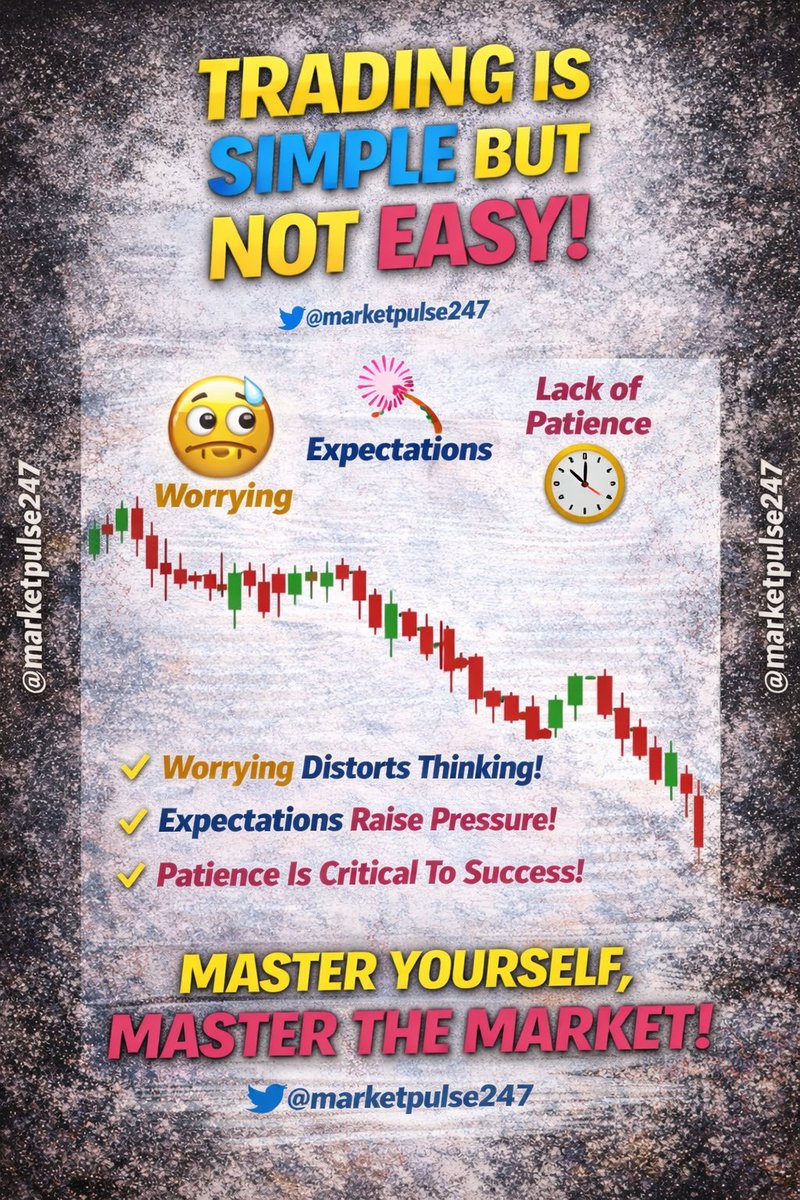
Trading Is Simple But Not Easy The Hidden Battle Within
Trading At Its Core Is Simple
Trading is very simple at its foundation. You identify opportunity manage risk and execute with discipline. The rules themselves are not complicated. Buy at value sell at strength cut losses quickly and let profits grow. Charts display price action clearly and strategies can be learned. The simplicity lies in structure and repetition. Yet while the mechanics are straightforward the real challenge begins once emotions enter the equation.
The Burden Of Worrying
Worry is one of the biggest obstacles traders face. After entering a position the mind begins to imagine every possible negative outcome. What if the trade fails What if the market reverses What if I lose money again These thoughts create internal pressure. Instead of trusting the plan traders monitor every tick with anxiety. Worry drains focus and leads to premature decisions that sabotage otherwise solid strategies.
Expectations Create Pressure
Expectations silently complicate trading. When traders expect every setup to win they become frustrated by normal losses. When they expect fast profits they exit too early or force trades. Markets do not operate according to personal timelines. Unrealistic expectations turn a simple process into an emotional roller coaster. Accepting uncertainty reduces pressure. Trading becomes easier when outcomes are viewed as probabilities rather than guarantees.
The Cost Of Impatience
Patience is the rarest skill in trading. Many traders feel compelled to act constantly believing activity equals productivity. They chase moves enter late and exit early. Impatience transforms simple setups into complicated mistakes. Waiting for confirmation and proper risk reward alignment requires emotional restraint. Professionals understand that high quality trades are limited. Patience protects capital and preserves confidence while impulsiveness erodes both quickly.
Overthinking Destroys Clarity
Another reason trading feels difficult is overanalysis. Traders add indicators tweak strategies and second guess signals. What began as a simple plan becomes cluttered with conflicting opinions. Overthinking creates hesitation and confusion. Clear rules reduce mental noise. When you define entry exit and risk before the trade you eliminate unnecessary decision making during volatility. Simplicity in strategy promotes consistency in execution.
Emotional Attachment To Outcomes
Attachment to profit targets or fear of losses makes trading heavier than it needs to be. Money represents security and status so each trade feels personal. When results become tied to self worth emotions intensify. A losing trade feels like failure rather than feedback. Separating identity from performance lightens the psychological load. Trading improves when each position is treated as a business decision not a reflection of value.
Risk Management Simplifies Everything
Proper risk management restores simplicity. When position size is controlled and losses are predefined stress decreases significantly. You no longer fear one trade destroying progress. Small calculated risk allows objective thinking. Without risk control every price movement feels threatening. Structure creates stability. Once risk is contained execution becomes routine rather than dramatic. Calm traders follow plans while stressed traders abandon them under pressure.
Process Over Immediate Results
Focusing on process instead of immediate profit makes trading more manageable. Success comes from repeating sound decisions over time. Individual outcomes are less important than consistent execution. When traders obsess over daily gains they ride emotional highs and lows. Viewing trading as a long term performance game shifts perspective. Improvement becomes gradual and sustainable. The simplicity of following a tested plan replaces the chaos of chasing quick rewards.
Discipline Is The Real Edge
The market does not require perfection it requires discipline. Many traders search for secret strategies but overlook consistency. Discipline means waiting for valid setups honoring stop losses and avoiding revenge trades. These actions are simple yet emotionally demanding. Mastering discipline transforms trading from stressful speculation into structured opportunity. The edge is not complexity but commitment to basic principles repeated with patience and focus.
Master The Mind To Master Trading
Trading remains simple in theory yet difficult in practice because human emotions interfere. Worry expectations and impatience create unnecessary struggle. When you manage thoughts control risk and respect process the path becomes clearer. The market will always fluctuate but your response can remain steady. Mastering the mind reduces complexity and increases confidence. Simplicity returns when discipline replaces emotion in every decision.
Conclusion Simplicity Requires Emotional Strength
Trading is simple but it is not easy because emotions complicate clear rules. Worry expectations and impatience distort judgment and create pressure. When traders prioritize discipline patience and risk control the process becomes manageable. The true challenge is internal not technical. Master your emotions and the market becomes less intimidating. Simplicity combined with emotional strength is the foundation of long term trading success.
#TradingMindset #TradingPsychology #RiskManagement #DisciplineEqualsFreedom #StockMarket #TraderLife #EmotionalControl #MarketWisdom #InvestingTips #CapitalProtection #SmartTrading #WealthBuilding #FinancialFreedom #PriceAction #ConsistentProfits #ProfessionalTrader #TradeSmart #PatiencePays #MoneyManagement #MarketEducation #TradingJourney #SelfControl #InvestorMindset #StrategicThinking #TradeBetter #LongTermSuccess #StructuredTrading #MarketMastery #SeriousTrader #HighProbability #ExecutionMatters #FinancialGrowth #TradePlanning #ProfitProtection #LearnToTrade #MomentumTrading #SupportAndResistance #CapitalGrowth #TradingDiscipline #MindsetMatters #AsymmetricRisk #SmartInvesting #MarketStructure #TradingLife #FocusOnProcess #ControlYourEmotions #FinancialEducation #TradeWithLogic #SuccessInTrading #MasterTheMarket
4
6
141
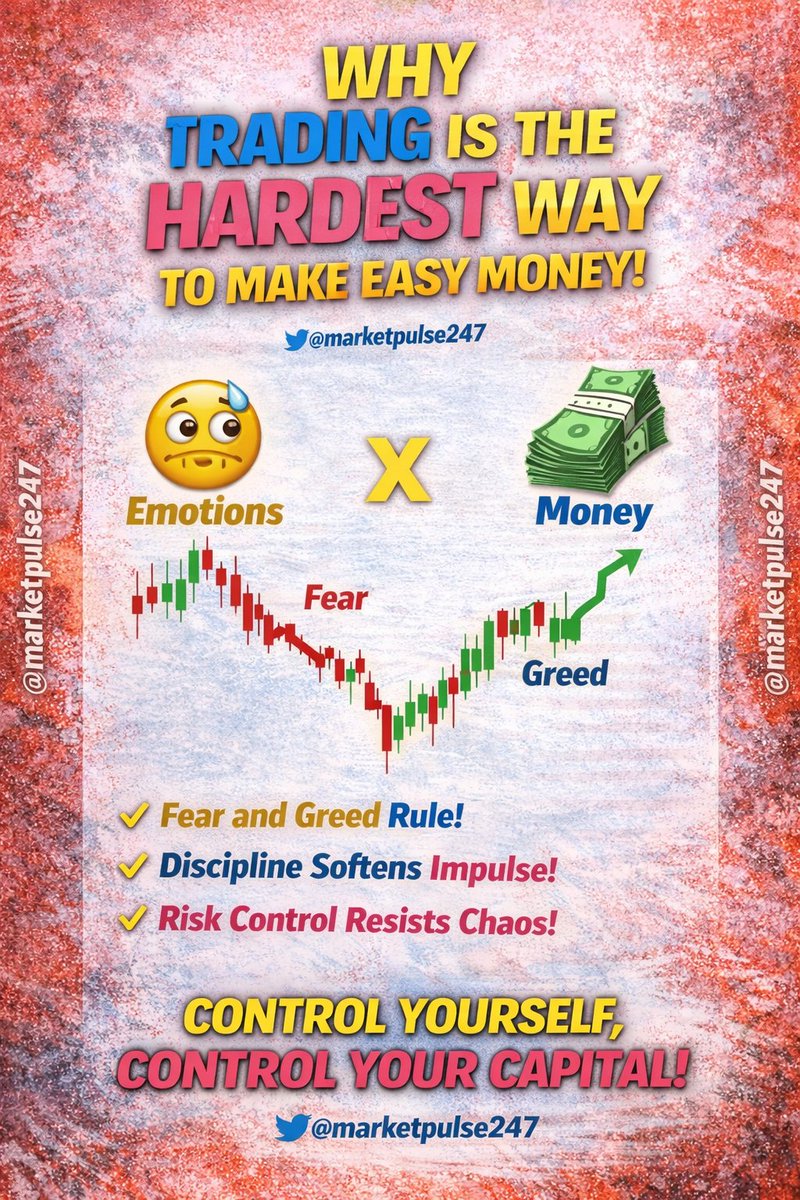
Emotions And Money Why Trading Is The Hardest Way To Make Easy Money
Emotions And Capital Rarely Align
Generally emotions and money do not mix well. Money represents security freedom and survival while emotions represent fear greed hope and pride. When these forces collide decision making becomes distorted. In trading every click carries financial consequence which amplifies emotional intensity. Even intelligent individuals struggle when real capital is at risk. The market constantly tests patience discipline and self control making emotional stability more valuable than any technical indicator.
The Illusion Of Easy Money
From the outside trading appears simple. Charts move opportunities appear and profits seem one decision away. Social media often highlights winning trades but rarely shows the losses behind them. This creates the illusion that trading is an easy path to income. In reality markets reward preparation discipline and emotional resilience. The simplicity of clicking buy or sell hides the psychological complexity that unfolds once money is exposed.
Fear Distorts Rational Thinking
Fear is one of the strongest forces in trading. When a position moves against you fear triggers the desire to exit prematurely or hold and hope for recovery. Both reactions can break a well designed plan. Fear narrows focus and shifts attention from strategy to survival. Instead of evaluating structure and probability traders react impulsively. Managing fear requires predefined risk and acceptance that losses are part of the process.
Greed Clouds Judgment
Just as fear forces early exits greed prevents timely ones. When a trade moves in your favor the desire for more can override logic. Traders ignore exit signals widen targets and abandon risk management. Greed creates unrealistic expectations and emotional attachment to profits that are not yet secured. Sustainable trading demands balance. Taking consistent gains often outperforms chasing extraordinary wins that rarely materialize in volatile conditions.
Ego Is An Invisible Enemy
Ego silently damages performance. Many traders equate being right with being profitable. When the market challenges their view they defend positions instead of adapting. Admitting a mistake feels uncomfortable yet it is essential for survival. The market does not reward stubbornness. It rewards flexibility and discipline. Detaching personal identity from trade outcomes allows objective decision making and reduces the emotional swings tied to wins and losses.
Discipline Over Impulse
Trading success relies less on prediction and more on discipline. A structured plan defines entries exits and risk parameters before emotions intensify. When rules are clear execution becomes mechanical. Impulse driven trading often feels exciting but excitement is rarely profitable. Consistency emerges when decisions follow logic rather than mood. Discipline transforms trading from emotional speculation into professional risk management guided by probability and structure.
Risk Management Calms Emotions
Proper risk management is the bridge between emotions and money. When position size is appropriate and losses are predefined anxiety decreases. Knowing that one trade cannot significantly damage your account creates psychological stability. Small controlled losses are easier to accept than large unpredictable ones. By limiting exposure traders reduce emotional volatility. Calm minds analyze markets more effectively than stressed minds reacting to financial pressure.
Patience Separates Professionals
Markets constantly tempt traders with movement. Not every move deserves participation. Patience allows high probability setups to develop fully. Emotional traders feel the need to always be in action which leads to overtrading. Professionals wait for alignment between strategy and opportunity. This restraint protects capital and preserves energy. Often the hardest decision is doing nothing yet inactivity at the right time can be the most profitable action.
Self Awareness Builds Edge
Understanding personal emotional patterns creates a powerful advantage. Some traders fear losses more than they value gains. Others chase excitement through aggressive risk. Identifying triggers such as revenge trading or hesitation after losses allows corrective action. Journaling trades and reviewing decisions strengthens awareness. The greatest edge in trading is not secret indicators but emotional intelligence. Mastering self control improves consistency more than any technical upgrade.
Trading Demands Inner Mastery
Trading is often described as an easy way to make money because the mechanics are simple. In truth it is one of the hardest paths because it demands mastery over internal reactions. Markets expose weaknesses quickly. Success requires patience discipline humility and emotional balance. When traders learn to separate feelings from financial decisions performance improves dramatically. The real challenge is not the market but managing yourself under pressure.
Conclusion Control Yourself To Control Your Capital
Emotions and money rarely cooperate without discipline. Trading magnifies every psychological weakness and rewards those who develop control. Fear greed and ego must be managed through structure planning and risk limits. Easy money is an illusion but consistent growth is achievable through emotional mastery. When you control yourself you control your capital. In trading the greatest victory is not over the market but over your own impulses.
x.com/Marketpulse247/status/…
#TradingPsychology #EmotionalControl #RiskManagement #TraderMindset #StockMarket #DisciplineEqualsFreedom #MarketWisdom #FinancialEducation #CapitalProtection #SmartTrading #InvestingTips #WealthBuilding #MoneyManagement #DayTradingLife #SwingTrading #ProfessionalTrader #TradeSmart #MarketStructure #SelfControl #TradingJourney #ConsistentProfits #FinancialFreedom #PriceAction #SeriousTrader #InvestorMindset #MarketEducation #TradeBetter #PsychologyOfMoney #ExecutionMatters #LongTermSuccess #TradingLife #HighProbability #StrategicThinking #PatiencePays #ProfitProtection #StructuredTrading #MarketMastery #SmartInvesting #TradeWithLogic #AsymmetricRisk #LearnToTrade #MomentumTrading #SupportAndResistance #CapitalGrowth #TradingDiscipline #MindsetMatters #TradePlanning #FinancialGrowth #MasterTheMarket #SuccessInTrading

Emotions And Money Why Trading Is The Hardest Way To Make Easy Money
Emotions And Capital Rarely Align
Generally emotions and money do not mix well. Money represents security freedom and survival while emotions represent fear greed hope and pride. When these forces collide decision making becomes distorted. In trading every click carries financial consequence which amplifies emotional intensity. Even intelligent individuals struggle when real capital is at risk. The market constantly tests patience discipline and self control making emotional stability more valuable than any technical indicator.
The Illusion Of Easy Money
From the outside trading appears simple. Charts move opportunities appear and profits seem one decision away. Social media often highlights winning trades but rarely shows the losses behind them. This creates the illusion that trading is an easy path to income. In reality markets reward preparation discipline and emotional resilience. The simplicity of clicking buy or sell hides the psychological complexity that unfolds once money is exposed.
Fear Distorts Rational Thinking
Fear is one of the strongest forces in trading. When a position moves against you fear triggers the desire to exit prematurely or hold and hope for recovery. Both reactions can break a well designed plan. Fear narrows focus and shifts attention from strategy to survival. Instead of evaluating structure and probability traders react impulsively. Managing fear requires predefined risk and acceptance that losses are part of the process.
Greed Clouds Judgment
Just as fear forces early exits greed prevents timely ones. When a trade moves in your favor the desire for more can override logic. Traders ignore exit signals widen targets and abandon risk management. Greed creates unrealistic expectations and emotional attachment to profits that are not yet secured. Sustainable trading demands balance. Taking consistent gains often outperforms chasing extraordinary wins that rarely materialize in volatile conditions.
Ego Is An Invisible Enemy
Ego silently damages performance. Many traders equate being right with being profitable. When the market challenges their view they defend positions instead of adapting. Admitting a mistake feels uncomfortable yet it is essential for survival. The market does not reward stubbornness. It rewards flexibility and discipline. Detaching personal identity from trade outcomes allows objective decision making and reduces the emotional swings tied to wins and losses.
Discipline Over Impulse
Trading success relies less on prediction and more on discipline. A structured plan defines entries exits and risk parameters before emotions intensify. When rules are clear execution becomes mechanical. Impulse driven trading often feels exciting but excitement is rarely profitable. Consistency emerges when decisions follow logic rather than mood. Discipline transforms trading from emotional speculation into professional risk management guided by probability and structure.
Risk Management Calms Emotions
Proper risk management is the bridge between emotions and money. When position size is appropriate and losses are predefined anxiety decreases. Knowing that one trade cannot significantly damage your account creates psychological stability. Small controlled losses are easier to accept than large unpredictable ones. By limiting exposure traders reduce emotional volatility. Calm minds analyze markets more effectively than stressed minds reacting to financial pressure.
Patience Separates Professionals
Markets constantly tempt traders with movement. Not every move deserves participation. Patience allows high probability setups to develop fully. Emotional traders feel the need to always be in action which leads to overtrading. Professionals wait for alignment between strategy and opportunity. This restraint protects capital and preserves energy. Often the hardest decision is doing nothing yet inactivity at the right time can be the most profitable action.
Self Awareness Builds Edge
Understanding personal emotional patterns creates a powerful advantage. Some traders fear losses more than they value gains. Others chase excitement through aggressive risk. Identifying triggers such as revenge trading or hesitation after losses allows corrective action. Journaling trades and reviewing decisions strengthens awareness. The greatest edge in trading is not secret indicators but emotional intelligence. Mastering self control improves consistency more than any technical upgrade.
Trading Demands Inner Mastery
Trading is often described as an easy way to make money because the mechanics are simple. In truth it is one of the hardest paths because it demands mastery over internal reactions. Markets expose weaknesses quickly. Success requires patience discipline humility and emotional balance. When traders learn to separate feelings from financial decisions performance improves dramatically. The real challenge is not the market but managing yourself under pressure.
Conclusion Control Yourself To Control Your Capital
Emotions and money rarely cooperate without discipline. Trading magnifies every psychological weakness and rewards those who develop control. Fear greed and ego must be managed through structure planning and risk limits. Easy money is an illusion but consistent growth is achievable through emotional mastery. When you control yourself you control your capital. In trading the greatest victory is not over the market but over your own impulses.
#TradingPsychology #EmotionalControl #RiskManagement #TraderMindset #StockMarket #DisciplineEqualsFreedom #MarketWisdom #FinancialEducation #CapitalProtection #SmartTrading #InvestingTips #WealthBuilding #MoneyManagement #DayTradingLife #SwingTrading #ProfessionalTrader #TradeSmart #MarketStructure #SelfControl #TradingJourney #ConsistentProfits #FinancialFreedom #PriceAction #SeriousTrader #InvestorMindset #MarketEducation #TradeBetter #PsychologyOfMoney #ExecutionMatters #LongTermSuccess #TradingLife #HighProbability #StrategicThinking #PatiencePays #ProfitProtection #StructuredTrading #MarketMastery #SmartInvesting #TradeWithLogic #AsymmetricRisk #LearnToTrade #MomentumTrading #SupportAndResistance #CapitalGrowth #TradingDiscipline #MindsetMatters #TradePlanning #FinancialGrowth #MasterTheMarket #SuccessInTrading
2
5
65
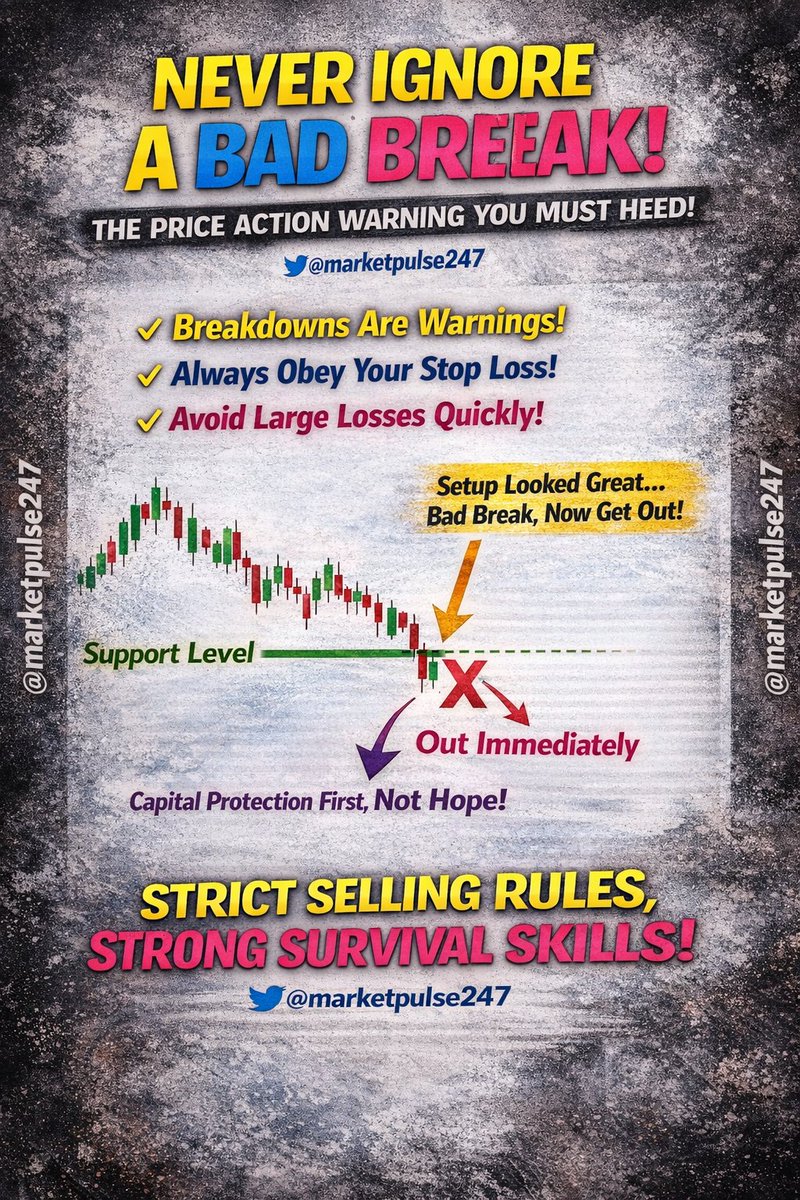
Never Ignore A Bad Break The Timeless Selling Rule Smart Traders Swear By
A Rule Built On Simplicity
Simple clear and timeless that is the power of a rule that survives changing markets. Never ignore a bad break is not complicated yet it protects capital better than complex indicators. Many traders search for advanced systems but overlook the discipline of exiting when structure fails. The strength of this rule lies in clarity. When price breaks incorrectly the message is direct and it demands respect.
What Defines A Bad Break
A bad break happens when price violates a key level that should have held if your trade idea were correct. It may be a breakdown below support a failed breakout or a loss of higher low structure. The moment that level gives way the logic behind your position weakens. The market is not attacking you personally it is simply revealing that supply and demand dynamics have shifted.
Why Strong Setups Still Fail
Even the most beautiful chart patterns can fail. Clean consolidations strong volume breakouts and textbook pullbacks do not guarantee continuation. Traders who fall in love with their setups often ignore early warning signs. A bad break does not mean the market is irrational. It means conditions have changed. Professionals understand this. They detach from the story and respond to price rather than defending their original bias.
Warning Not Random Noise
Many traders label uncomfortable price moves as noise. This mindset is dangerous. When price breaks down incorrectly especially with momentum it is often a signal of aggressive selling pressure. Institutions reposition quickly and liquidity shifts. Dismissing that information can turn a manageable loss into a damaging one. Treat every structural violation as data. The market speaks through behavior and bad breaks are rarely meaningless.
Capital Protection First
The primary objective in trading is not maximizing profit but protecting capital. Without capital there is no opportunity. A strict selling rule such as never ignoring a bad break enforces discipline. It ensures losses remain small and controlled. Over time small losses are easy to recover while large uncontrolled drawdowns can destroy confidence and accounts. This rule builds long term survival which is the foundation of consistent profitability.
Strict Rule Or Confirmation
Some traders follow rigid exit rules while others wait for price action confirmation. Both approaches can work when applied with consistency. A strict rule removes hesitation. Once the level breaks you exit immediately. Price action confirmation adds context. You may wait for a close below support or continuation selling. The key is defining criteria in advance. Indecision arises only when rules are unclear or emotional.
Predefine Invalidation Levels
Before entering any trade you must know exactly where your idea becomes wrong. That level is your invalidation point. If price breaks that level the thesis is compromised. By planning this in advance you eliminate debate during live market pressure. Execution becomes mechanical rather than emotional. Traders who hesitate often lacked clarity before entering. Clear invalidation transforms uncertainty into structured decision making.
Avoid Emotional Attachment
Attachment to a position clouds judgment. Traders begin justifying losses by referencing past strength or expected catalysts. A bad break challenges ego. Accepting it requires humility. The market does not reward stubbornness. It rewards flexibility and responsiveness. When you detach from being right and focus on protecting capital you trade with clarity. This mental shift separates amateurs who defend losses from professionals who manage risk.
x.com/Marketpulse247/status/…
Small Losses Preserve Confidence
Confidence does not come from constant winning. It comes from knowing losses are limited. When you respect bad breaks you exit early and preserve emotional stability. Small losses feel manageable. Large losses create hesitation fear and revenge trading. Over time disciplined exits build trust in your system. You begin to see losses as routine business expenses rather than personal failures. That mindset supports long term growth.
Discipline Creates Longevity
Never ignore a bad break is more than a selling rule it is a philosophy of discipline. Markets will always be uncertain but your response does not have to be. By respecting structural failures defining invalidation clearly and acting decisively you protect both capital and confidence. In the end longevity belongs to traders who listen to price. Discipline today ensures opportunity tomorrow.
Conclusion The Market Rewards Respect For Structure
A bad break is not noise it is information. Strong setups can fail but disciplined traders survive because they respond quickly and objectively. Whether you choose a strict exit rule or price action confirmation the principle remains the same respect structural failure. When price invalidates your idea exit with confidence and move forward. In trading survival and success belong to those who act without hesitation.
x.com/Marketpulse247/status/…
#TradingDiscipline #RiskManagement #SellRule #PriceAction #CapitalProtection #StockMarket #TradingPsychology #SmartTrading #MarketWisdom #TechnicalAnalysis #StopLossStrategy #TraderMindset #MarketStructure #ProtectYourCapital #TradeSmart #InvestingTips #SwingTrading #DayTrading #ChartReading #FinancialFreedom #AsymmetricRisk #ProfessionalTrader #TradeWithLogic #MarketEducation #ConsistentProfits #MoneyManagement #TradingJourney #WealthBuilding #SeriousTrader #TradeBetter #TradingStrategy #MomentumTrading #SupportAndResistance #BreakdownAlert #RiskFirst #ProfitProtection #StructuredTrading #MarketMastery #DisciplineEqualsFreedom #TradePlanning #InvestorMindset #HighProbability #ExecutionMatters #SmartInvesting #LongTermSuccess #TradingLife #MasterTheMarket #PriceBehavior #StrategicExit #CapitalPreservation
Never Ignore A Bad Break The Timeless Selling Rule Smart Traders Swear By
A Rule Built On Simplicity
Simple clear and timeless that is the power of a rule that survives changing markets. Never ignore a bad break is not complicated yet it protects capital better than complex indicators. Many traders search for advanced systems but overlook the discipline of exiting when structure fails. The strength of this rule lies in clarity. When price breaks incorrectly the message is direct and it demands respect.
What Defines A Bad Break
A bad break happens when price violates a key level that should have held if your trade idea were correct. It may be a breakdown below support a failed breakout or a loss of higher low structure. The moment that level gives way the logic behind your position weakens. The market is not attacking you personally it is simply revealing that supply and demand dynamics have shifted.
Why Strong Setups Still Fail
Even the most beautiful chart patterns can fail. Clean consolidations strong volume breakouts and textbook pullbacks do not guarantee continuation. Traders who fall in love with their setups often ignore early warning signs. A bad break does not mean the market is irrational. It means conditions have changed. Professionals understand this. They detach from the story and respond to price rather than defending their original bias.
Warning Not Random Noise
Many traders label uncomfortable price moves as noise. This mindset is dangerous. When price breaks down incorrectly especially with momentum it is often a signal of aggressive selling pressure. Institutions reposition quickly and liquidity shifts. Dismissing that information can turn a manageable loss into a damaging one. Treat every structural violation as data. The market speaks through behavior and bad breaks are rarely meaningless.
Capital Protection First
The primary objective in trading is not maximizing profit but protecting capital. Without capital there is no opportunity. A strict selling rule such as never ignoring a bad break enforces discipline. It ensures losses remain small and controlled. Over time small losses are easy to recover while large uncontrolled drawdowns can destroy confidence and accounts. This rule builds long term survival which is the foundation of consistent profitability.
Strict Rule Or Confirmation
Some traders follow rigid exit rules while others wait for price action confirmation. Both approaches can work when applied with consistency. A strict rule removes hesitation. Once the level breaks you exit immediately. Price action confirmation adds context. You may wait for a close below support or continuation selling. The key is defining criteria in advance. Indecision arises only when rules are unclear or emotional.
Predefine Invalidation Levels
Before entering any trade you must know exactly where your idea becomes wrong. That level is your invalidation point. If price breaks that level the thesis is compromised. By planning this in advance you eliminate debate during live market pressure. Execution becomes mechanical rather than emotional. Traders who hesitate often lacked clarity before entering. Clear invalidation transforms uncertainty into structured decision making.
Avoid Emotional Attachment
Attachment to a position clouds judgment. Traders begin justifying losses by referencing past strength or expected catalysts. A bad break challenges ego. Accepting it requires humility. The market does not reward stubbornness. It rewards flexibility and responsiveness. When you detach from being right and focus on protecting capital you trade with clarity. This mental shift separates amateurs who defend losses from professionals who manage risk.
Small Losses Preserve Confidence
Confidence does not come from constant winning. It comes from knowing losses are limited. When you respect bad breaks you exit early and preserve emotional stability. Small losses feel manageable. Large losses create hesitation fear and revenge trading. Over time disciplined exits build trust in your system. You begin to see losses as routine business expenses rather than personal failures. That mindset supports long term growth.
Discipline Creates Longevity
Never ignore a bad break is more than a selling rule it is a philosophy of discipline. Markets will always be uncertain but your response does not have to be. By respecting structural failures defining invalidation clearly and acting decisively you protect both capital and confidence. In the end longevity belongs to traders who listen to price. Discipline today ensures opportunity tomorrow.
Conclusion The Market Rewards Respect For Structure
A bad break is not noise it is information. Strong setups can fail but disciplined traders survive because they respond quickly and objectively. Whether you choose a strict exit rule or price action confirmation the principle remains the same respect structural failure. When price invalidates your idea exit with confidence and move forward. In trading survival and success belong to those who act without hesitation.
#TradingDiscipline #RiskManagement #SellRule #PriceAction #CapitalProtection #StockMarket #TradingPsychology #SmartTrading #MarketWisdom #TechnicalAnalysis #StopLossStrategy #TraderMindset #MarketStructure #ProtectYourCapital #TradeSmart #InvestingTips #SwingTrading #DayTrading #ChartReading #FinancialFreedom #AsymmetricRisk #ProfessionalTrader #TradeWithLogic #MarketEducation #ConsistentProfits #MoneyManagement #TradingJourney #WealthBuilding #SeriousTrader #TradeBetter #TradingStrategy #MomentumTrading #SupportAndResistance #BreakdownAlert #RiskFirst #ProfitProtection #StructuredTrading #MarketMastery #DisciplineEqualsFreedom #TradePlanning #InvestorMindset #HighProbability #ExecutionMatters #SmartInvesting #LongTermSuccess #TradingLife #MasterTheMarket #PriceBehavior #StrategicExit #CapitalPreservation
2
4
41
🚨 👀 Another Strong Stock Option on Radar
A high-potential setup is building up — looks interesting! 📊
How many of you are interested in this trade? 👇
Show your participation and let’s gauge the momentum! ⚡
#TradeAlert #StocksInPlay #MarketSetup #OptionsTrading #IntradayTrading #HighProbability #MarketWatch #TraderCommunity
12
81
2,398

Good afternoon, traders! 📊🔥
Remember: No structure shift → No trade.
Stay disciplined, protect your capital, and wait for high-probability setups. 💯
#ForexTrading #SMC #PriceAction #Discipline #HighProbability
3
76
We executed Nifty 24200 CE at ₹280, and the trade quickly moved to ₹330, delivering an easy ₹50 gain within a short span. 📈
💰 That’s around ₹3,250 profit per lot — clean, quick, and efficient execution.
I personally executed this trade as well, and will be sharing snapshots for full transparency. 📸
⚡ The best part?
The targets are still intact, and this trade has the potential to move even higher — possibly a 2X opportunity from here.
👉 Now it’s all about holding with discipline and letting the trade play out.
Big moves don’t happen in panic — they happen with patience. 💯
#Nifty #OptionsTrading #StockMarketIndia #ExpiryTrading #IntradayTrading #HighProbability #SmartMoney #PriceAction #TraderLife #DalalStreet

🔥 Big Bet | 🧭 Positional | 📅 Monthly Expiry
📈 Buy: #NIFTY 24200 CE (Monthly Expiry) around ₹280–₹285
🛑 Stop Loss: ₹128
🎯 Targets: ₹371 / ₹555
➕ Tranche Plan:
Additional quantity may be added near ₹200
🎯 Estimated ABP: ₹220 (educational strategy)
📌 Market View:
Structured as a high-conviction positional trade on NIFTY, aiming to capture a strong upside move if momentum and participation expand (educational observation).
🚨 Risk Note:
High-risk setup — volatility can be extreme near monthly expiry.
⚠️ Disclaimer:
Stock market investments are subject to market risks.
📢 More educational positional & expiry setups:
👉 t.me/TradeTitansLimited
#positional #bigbet #niftyoptions #niftyexpiry

7
1,259


Apr 3
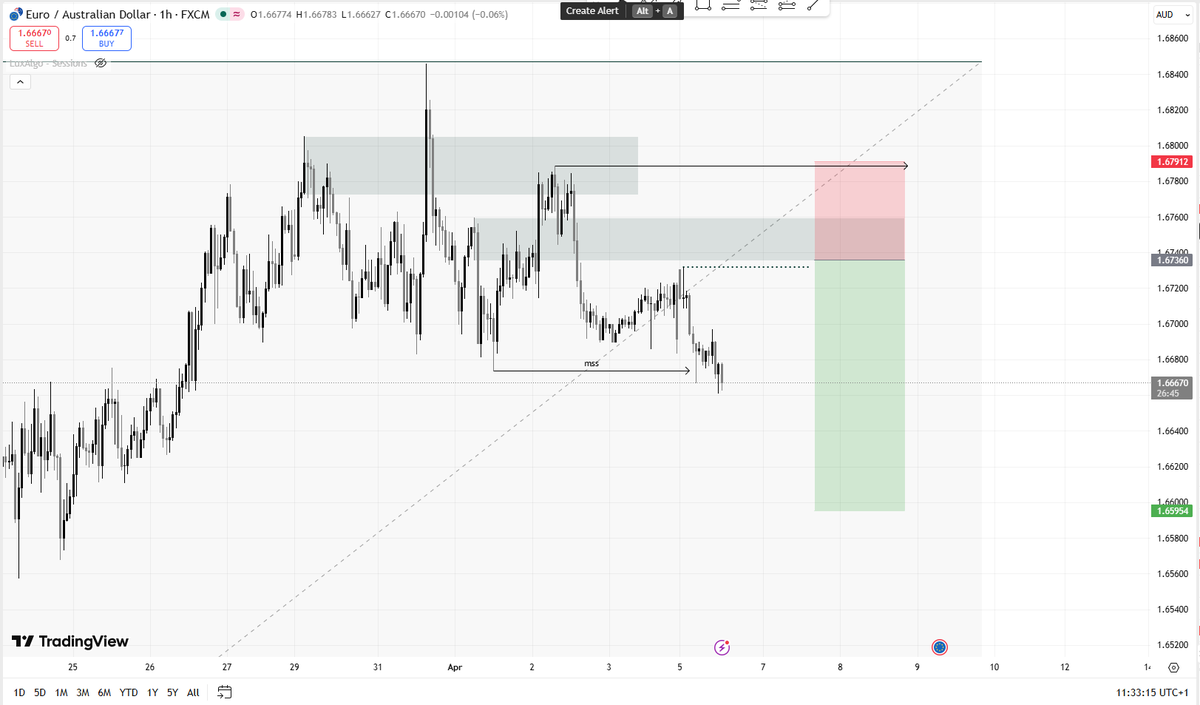
You don’t need 20 trades.
You need 1 high-quality setup.
Overtrading is insecurity in disguise.
#PriceAction #HighProbability #IndianStocks
9
3
104
5,798

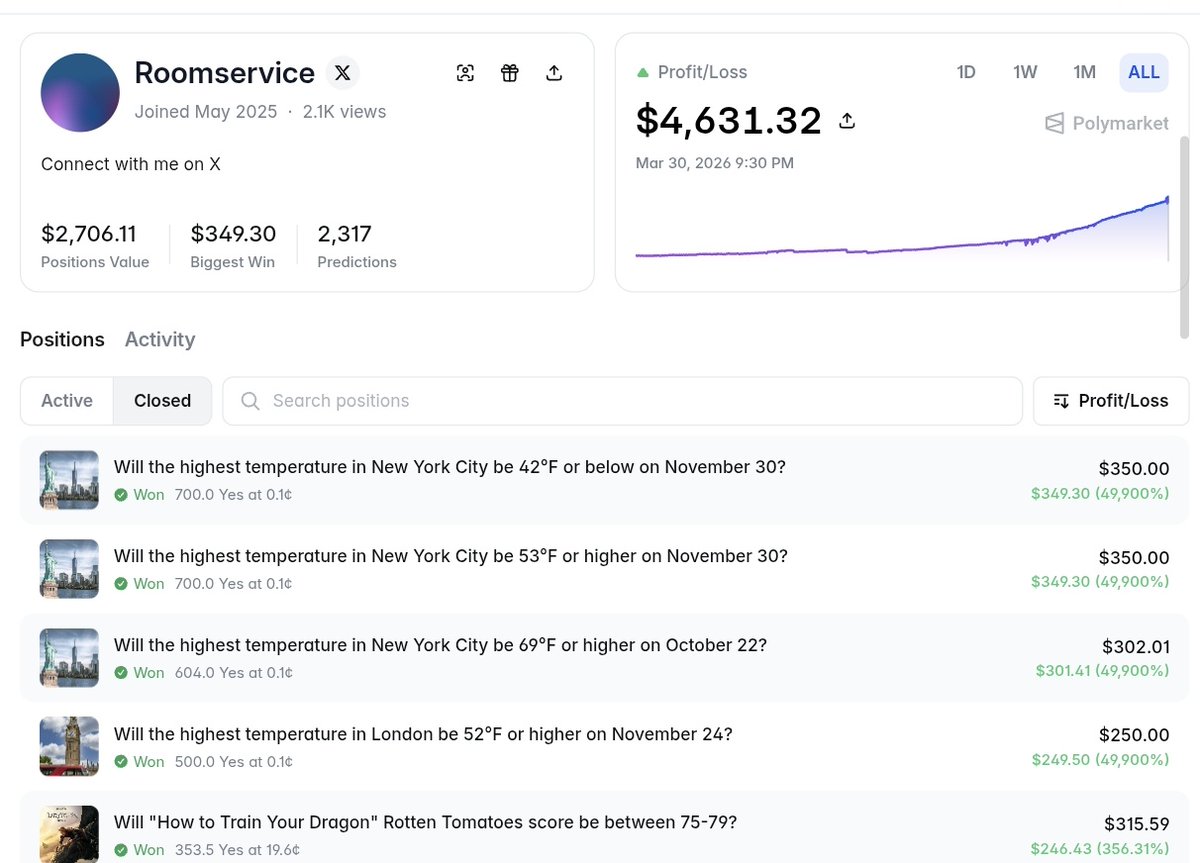
this trader turned $252 into $4,629 just farming weather markets
proof you don’t need politics or “insider info” to win on polymarket
the strategy is as simple as it gets:
find outcomes already priced 0.99
buy, hold, repeat across cities
2,300 positions
90.8% win rate
dallas alone: 96%
no fancy models
no narratives
just grinding highprobability edges over and over
7
1
36
5,631

Mar 24
Not every trade is an opportunity. High-probability setups are your gateway to consistent growth.
#TheUpsideFunding #HighProbability #FundedTrader
3
34

Mar 24
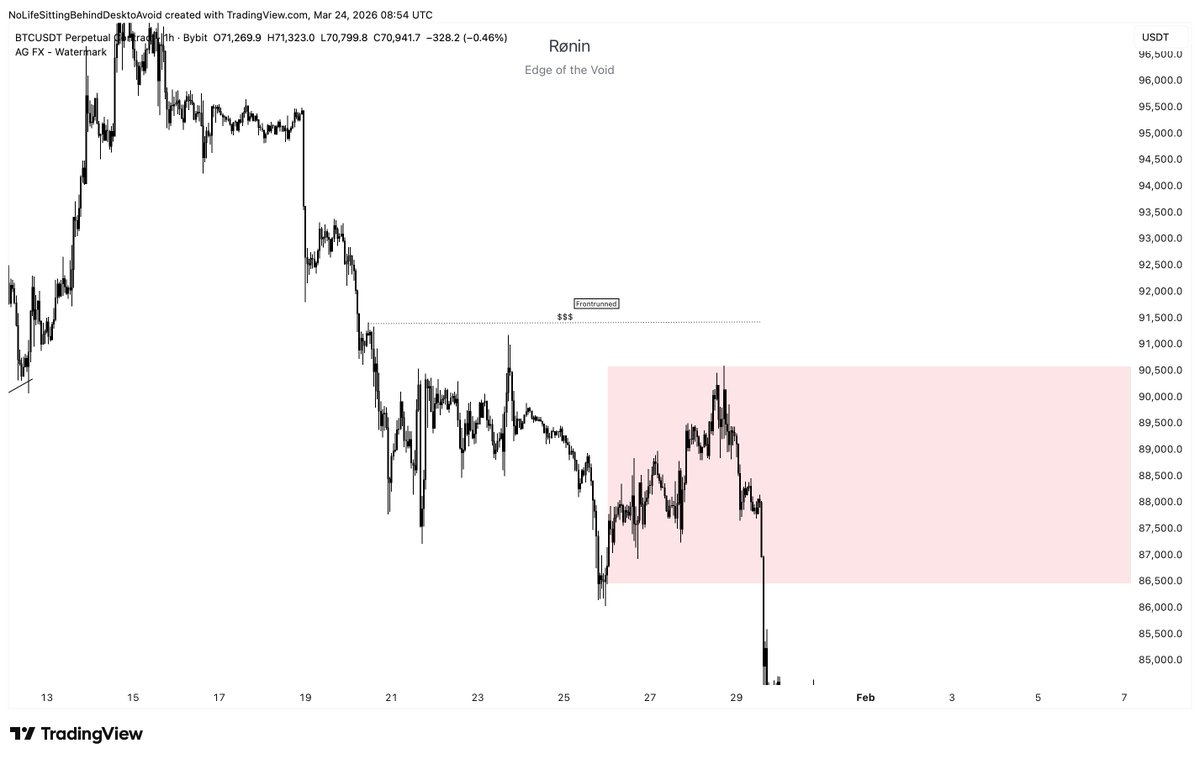
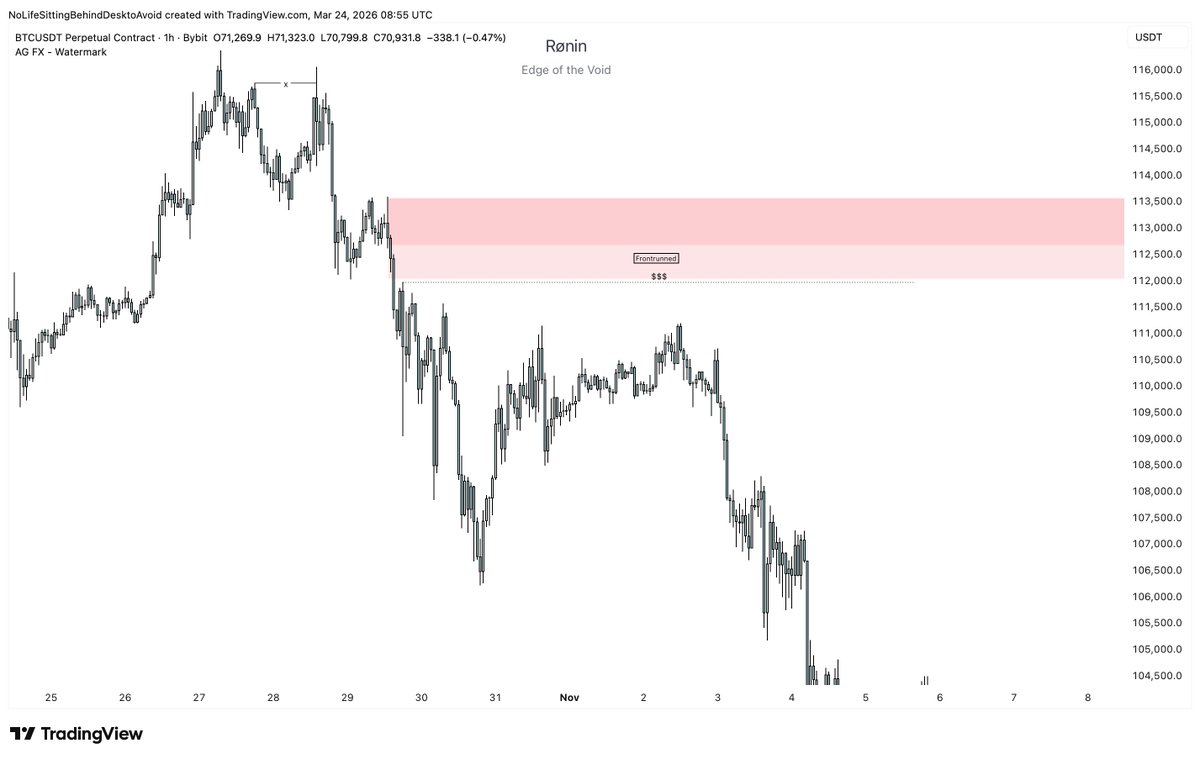
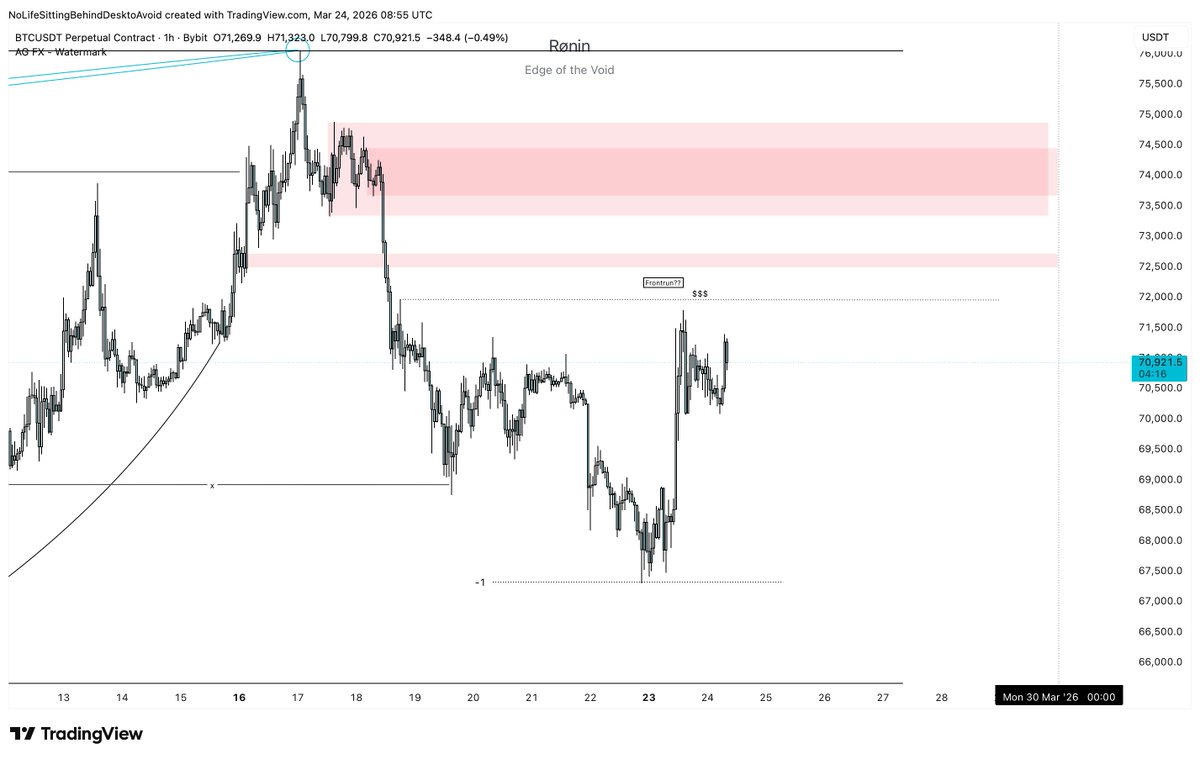
$BTC | HTF Analysis Tuesday |
Good morning,
Our plan from yesterday played out perfectly. Astrology indicated we were going up and there was a potential news driven move that’s also what astrology suggested.
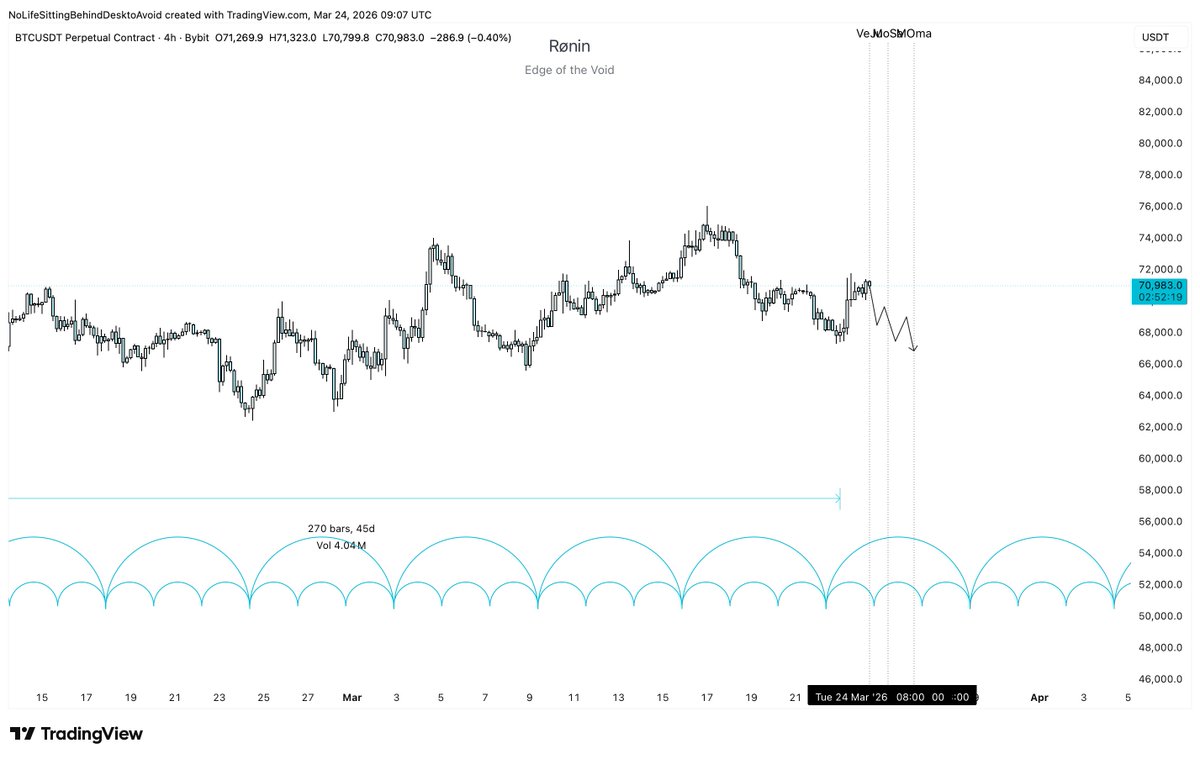
The H-cycle was a temporary pivot bottom, and Gann time (45 days) marked a reversal point. We also had the pattern of a Monday pump, Monday top and then a dump.
Lots of confluences stacked up on BTC, but we didn’t get any clean model so I didn’t take a long on BTC. Instead I took a long on TAO, as there was a nice clean accumulation.
For today, we still have some planets not activated, which means pumping in this cluster is a highprobability reversal window. We have tomorrow and Thursday as our exact times where we expect a reversal, but there are always deviations.
We got our pivot from the Monday pump, meaning a local high followed by a dump into Thursday and then a reversal.
D-dates: TODAY IS THE DROP FOLLOWING TIME. This is something to be really aware of today we should start dropping. Also going back to the 2022 fractal we see a Monday aggressive pump (“higher low”) followed by a Tuesday drop, which is exactly what we are doing now.
We have the H cycle getting to its top, which means sellers are going to take the lead sooner or later as well.
We also have the pattern of front running the liquidity every time and we are doing exactly the same now.
Lots of confluences stacking up once again that suggest we are potentially at our top.
about News and sentiment if you just go on socials it’s already telling you enough 🤣
So I expect from here only downside...
Next 4 pictures in comments.
2
1
3
552

Mar 7
I’m a disciplined trader who treats trading like a business, not gambling. I’ve spent a lot of time studying the markets and building a structured plan. What I lack right now isn’t skill or dedication, it’s capital. An opportunity like this would allow me to execute my strategy properly and prove consistency.
My plan to grow and scale it
• Risk 1% per trade maximum
• Maximum 2 trades per day to avoid overtrading
• Focus on highprobability setups only
• Follow strict risk management and journaling to track performance
• Aim for steady compounding, not quick profits
My goal is simple, protect capital first, grow it consistently, and scale into larger funded accounts over time.
Join in @0fficiallYusuf @AbuNoor_meta_x @arhmad_bbn
2
2
10
633
Mar 4
1. month (february) PNL/reflection/learnings:
I know that I'm a bit late but lets go over it. If someone has a good monthly journal to represent all the numbers better, please let me know.
Doing this for the first time so this will probably/hopefully haha improve after time.
Taken trades in feb: 13 (12 losses, 1 win)
PNL: - 122.9$ (-10%) -> started the challenge with 1220$
Based on numbers it was a pretty bad start to my journey. A winrate of ≈ 7.7% is def not what a wyckoff trader aims for.
However I'm not feeling too bad about it. It’s a challenge that isn’t about making money (yet), but about building habits, developing a system and gaining experience while keeping emotions as controlled as possible.
This is possible with the small risk size and I would advise anyone to do the same thing if you struggle with emotions too much.
Reflection: Like I said it was a bit of a rough start. An emotional up and down in my life this month which def influenced my trading performance.
Some bad losses because of emotions, SL getting grabbed as liq two times, trades around MTF EQ, trades against context and not being able to reenter because of timing.
This adds up quickly.
But there were not only negative things in Feb.
I really stuck to journaling. Was the first time in my whole trading history where i was that disciplined about journaling and posting on here. Thats a huge win for me.
Being aware of all the trades I took and reflecting on them.
Having my emotions intact over a big part of the trades and making right decisions while being in a position.
I kept going even after all those losses still believing in my edge and system. Got rewarded for it in my last trades which i count to march tho.
This was only possible because I again risked only small sizes every time.
Learnings: Lot of those things are not really new to me and sound kinda basic but they truly are important.
- don't trade models in the middle of nowhere (there needs to be a clear highprobability POI to look for models)
- don't use fibs as a POI on its own
- ALT trades need confluence of majors!
- don't set a SL on low liq FX pairs (you have to manage them more but its worth it to not get fucked by spreads
- on higher TF models, a LTF BOS is often not enough for a full reversal (use a local wyckoff or MTF bojan for an entry with higher conviction)
- place your SL at logical wyckoff points (preferably the point stays clearly visible if you zoom out a bit)
Those are the most important ones i reflected on in Feb. Tbh they seem obvious but still I made mistakes on those points which led to losses.
One important thing to understand is that in hindsight everything looks obvious. When you review your trades, it’s easy to say: “It was clear that this wouldn’t work,” and you start finding reasons why the setup failed (points above).
But at the moment of entry, those things are usually not that clear. No model is ever perfect. The goal isn’t to wait for a flawless setup, but to take trades where the probabilities are in your favor over a period of multiple trades.
Going forward its about being more consistent emotionally, to implement and be aware of the things I mentioned above and just keep going.
Too make conscious decisions based on the situation, independent of emotions or a possible outcome.
If I can do that, the question's not "if" but "when" i'll get rewarded.
1
11
528