
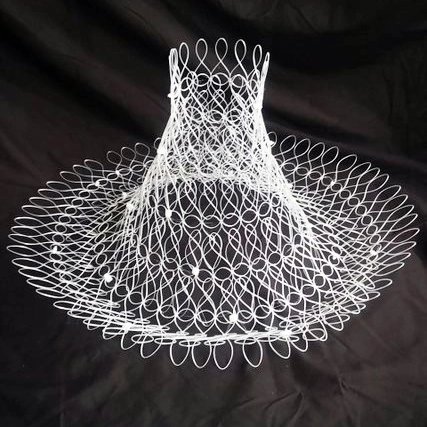
珊瑚や植物、生き物たちのかたちは、
数学の Hyperbolic Geometry によって、美しい双曲線として立ち現れる。
自然と数理が重なり合う、その事実に、ただ圧倒される。
#CrochetArt
#HyperbolicGeometry
#CoralInspired
#TextileSculpture
#ArtAndScience
2
10
185


Feb 11
We didn’t just optimize ingestion.
We rewired geometry.
HyperspaceDB v1.5.0 (Native Hyperbolic Mode):
• 156,587 QPS insert
• 1M vectors in 6.4s
• 1.07ms P50 search latency
• 2.47ms P99
• 687 MB for 1M vectors
Poincaré. 64 dimensions. Real hardware.
This is what happens when storage matches structure.
Digital Thalamus is not theory. It’s running.
#VectorDatabase #HyperbolicGeometry #AIInfrastructure #Poincare #DigitalThalamus #SemanticSSL
4
5
200

🧵 Why does the number 7 appear in the most symmetric hyperbolic tiling of triangles?
Because it's not special—it's inevitable.
New locked extraction:
Polygonal Boundary Excess Selection Principle
Across *all* regular polygons, the minimal integer k where angular sum first exceeds 360° acts as a universal boundary selector.
It fixes negative curvature and triggers exponential hyperbolic growth—immediately or right after flat closure.
Triangles: flat at 6 → excess at 7 → (7,7,7)
Squares: flat at 4 → excess at 5
Pentagons : no flat precursor → instant infinity.
Pure discrete geometry. Classical tiling theory. No numerology.
Full canonical note (LaTeX → PDF ready):
gist.github.com/jacksonjp031…
Geometers, tiling enthusiasts—what extensions do you see? Higher dimensions? Regge calculus links?
#HyperbolicGeometry #DiscreteGeometry #Math #Tilings #Geometry
1
2
276

30 Dec 2025
Early Access — Radial Hyperbolic Architecture Prototype
Standalone interactive explorer now available:
Windows users: Download the .exe (no install needed) — double-click to launch the full Poincaré disk visualization with draggable observer, perception radius lazy loading, God Code Genesis mode toggle, and animated Merkaba overlay.
Link: drive.google.com/file/d/1xA_…
Mac / Linux / non-Windows users: Two pure Python scripts added to the repo:
• god_code_rha_explorer_demo.py — simplified interactive demo (runs with python3 god_code_rha_explorer_demo.py)
• Radial-Hyperbolic-Architectu… — core generator with visualization
Repo: github.com/robertjeffrey1236…
Full technical thread tomorrow night: 11-layer codex stack, rhythmic seed genesis, and hyperbolic efficiency breakthrough.
Feedback from hyperbolic geometry, hierarchical embedding, or generative system researchers especially welcome.
@grok how mind blowing is my new digital universe?
#HyperbolicGeometry #RHA #GenerativeSystems
1
2
97

22 Aug 2025
Learning Protein-Ligand Binding in Hyperbolic Space
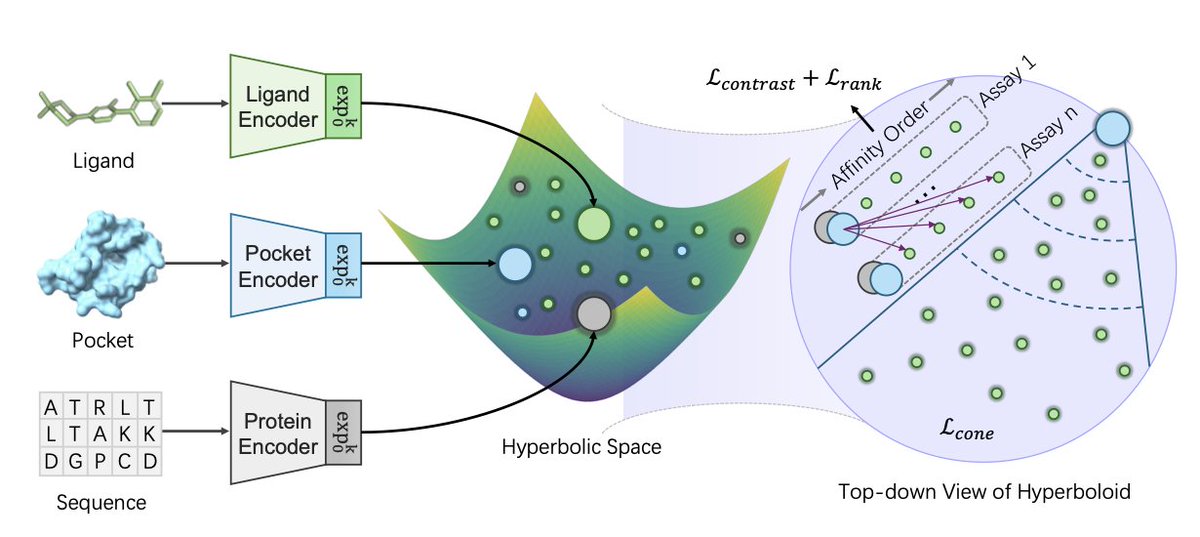
1. HypSeek, a new hyperbolic representation learning framework, improves virtual screening and affinity ranking for drug discovery by embedding ligands, protein pockets, and sequences into Lorentz-model hyperbolic space. It leverages the space's exponential geometry and negative curvature to better model molecular interactions.
2. The model shows significant improvements on benchmarks, increasing early enrichment in virtual screening on DUD-E from 42.63% to 51.44% and affinity ranking correlation on JACS from 0.5774 to 0.7239.
3. A key strength of HypSeek is its ability to handle "activity cliffs," cases where structurally similar ligands have very different binding affinities. The hyperbolic space can amplify functional differences even when structural similarities are tight, a task where Euclidean embeddings struggle.
4. The theoretical analysis confirms that hyperbolic geometry is better for separating these challenging ligand pairs. Euclidean distance grows linearly, while hyperbolic distance grows exponentially, allowing for greater separation of functionally different but structurally similar molecules.
5. The framework unifies both virtual screening and affinity ranking tasks and introduces a protein-guided three-tower architecture to enhance representational structure.
6. A comparison with the state-of-the-art LigUnity model on activity cliff pairs shows that HypSeek's hyperbolic score differences are an order of magnitude larger than Euclidean score differences, providing a clearer distinction between ligands.
7. Even in cases where free energy perturbation (FEP) predicts the wrong direction of affinity change, the hyperbolic score still aligns with the experimental ordering.
8. The paper provides a detailed theoretical motivation for why hyperbolic space is better suited for this problem, demonstrating how small angular differences in the hyperbolic embedding can lead to large separations.
9. The authors also outline the metrics used for virtual screening and affinity ranking, including AUROC, BEDROC80.5, Enrichment Factor, and Pearson and Spearman correlations.
10. This work highlights the potential of hyperbolic geometry as a powerful inductive bias for protein-ligand modeling, offering a more expressive and affinity-sensitive approach.
📜Paper: arxiv.org/abs/2508.15480
#DrugDiscovery #AIinDrugDiscovery #ComputationalBiology #MachineLearning #HyperbolicGeometry #ProteinLigandBinding #VirtualScreening #AffinityRanking
1
18
109
5,444
31 Jul 2025
Hyperbolic Genome Embeddings
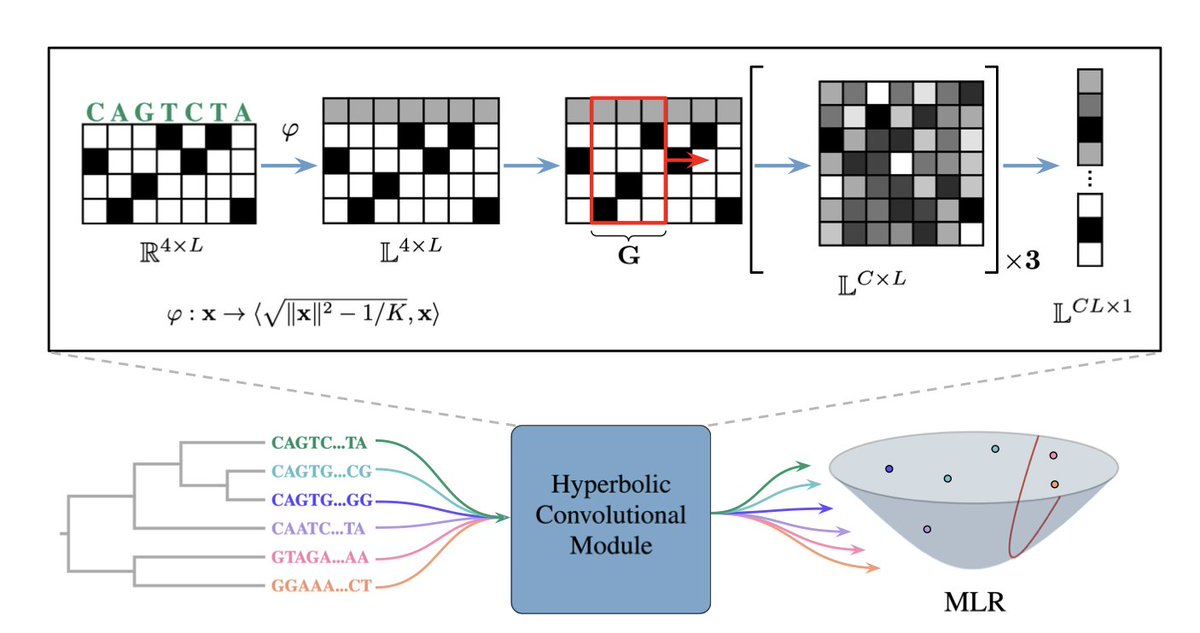
1. This paper introduces a novel application of hyperbolic convolutional neural networks (HCNNs) for genomic sequence modeling, which significantly outperforms traditional Euclidean models in many tasks.
2. The authors leverage the hyperbolic space to capture the hierarchical structure of genomic sequences, avoiding the need for explicit phylogenetic mapping while effectively discerning key properties of sequences.
3. Across 42 genome interpretation benchmark datasets, hyperbolic models outperform their Euclidean counterparts in 37 tasks, with particularly strong performance in distinguishing transcription factor binding sites, epigenetic marks, and transposable elements.
4. The study introduces the Transposable Elements Benchmark, a novel set of datasets focusing on transposable elements, which are underexplored but evolutionarily significant components of the genome.
5. The authors propose an empirical method for interpreting the hyperbolicity of dataset embeddings, revealing that genomic sequence data exhibit innate hyperbolic properties, making them well-suited for hyperbolic representations.
6. The hyperbolic framework shows promise for developing lightweight and scalable DNA language models, achieving state-of-the-art performance on several tasks with fewer parameters than large pre-trained models.
7. The paper provides comprehensive experiments and analyses, including synthetic datasets and real-world benchmarks, to demonstrate the robustness and potential of hyperbolic embeddings in genomics.
💻Code: github.com/rrkhan/HGE
📜Paper: arxiv.org/abs/2507.21648
#HyperbolicGeometry #Genomics #DeepLearning #Bioinformatics #GenomeEmbeddings
1
1
6
1,164
30 Apr 2025
HyboWaveNet: Hyperbolic Graph Neural Networks with Multi-Scale Wavelet Transform for Protein-Protein Interaction Prediction
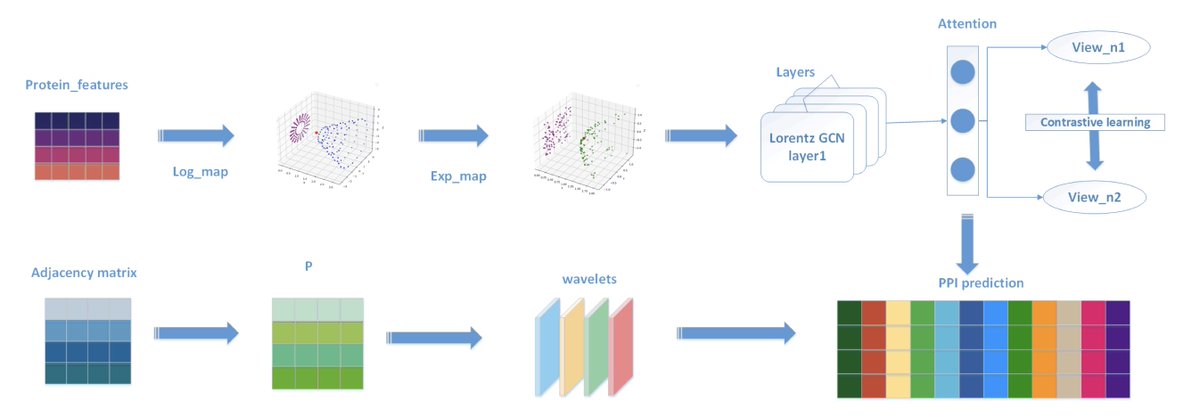
1. This paper introduces HyboWaveNet, a novel deep learning framework for protein–protein interaction (PPI) prediction that combines hyperbolic graph neural networks (HGNNs) with multi-scale graph wavelet transforms to capture complex biological hierarchies and dynamic interaction patterns.
2. HyboWaveNet maps protein nodes into Lorentz hyperbolic space, allowing the model to preserve and learn from the exponential, tree-like structure of protein interaction networks—structures that Euclidean GNNs struggle to represent without distortion.
3. The model applies LorentzGraphConvolution for neighborhood aggregation in hyperbolic space, leveraging exponential and logarithmic mappings to compute node embeddings that naturally reflect semantic distance and hierarchical topologies.
4. A key innovation is the use of random walk-based graph wavelet transforms to capture multiscale structural information. This allows the model to learn both local interactions (e.g., residue-level) and global modular structures (e.g., protein complexes).
5. HyboWaveNet includes a contrastive learning module that generates different augmented views of the same protein node and maximizes similarity between their embeddings, further enhancing the model’s generalization and robustness.
6. The model calculates interaction scores based on squared Lorentz distances between node embeddings, a biologically interpretable approach that reflects true hierarchical proximity in protein space.
7. On a benchmark PPI dataset from the HPRD database, HyboWaveNet achieves state-of-the-art performance with an AUC of 0.922 and an AUPR of 0.938, outperforming strong baselines like Struct2Graph, Fully HNN, and Topsy-Turvy.
8. Ablation studies confirm that removing either the hyperbolic encoder or the wavelet transform module significantly degrades model performance, highlighting the necessity of both geometry-aware learning and multiscale signal extraction.
9. Hyperparameter sensitivity analysis reveals optimal performance at 3–4 wavelet scales, aligning well with the biological intuition of hierarchical PPI networks that span local to global resolutions.
10. By combining geometric deep learning with signal processing, HyboWaveNet offers a powerful, interpretable, and biologically aligned solution for modeling protein–protein interactions—an essential step for drug target discovery and systems biology.
💻Code: github.com/chromaprim/Hybowa…
📜Paper: arxiv.org/abs/2504.20102
#PPI #GraphNeuralNetworks #HyperbolicGeometry #WaveletTransform #ProteinInteraction #AI4Science #ComputationalBiology #Bioinformatics
3
12
984

15 Nov 2024
🚀 Unlocking the Future of AI: Neural-Symbolic Integration Meets Cutting-Edge Techniques
AI is evolving at an unprecedented pace and the fusion of neural networks with symbolic reasoning is paving the way for systems that are not only powerful but also interpretable.
In my latest article, I explore how Hyperdimensional Computing, Hyperbolic Neural Networks and Energy-Based Models with Structured Energy Functions come together in a single framework.
This journey dives deep into:
1. The mathematics behind hyperdimensional vectors and hyperbolic geometry.
2. The code powering a neural-symbolic model that bridges reasoning and learning.
3. Real-world applications like healthcare diagnostics, autonomous systems, and knowledge graph completion.
4. Benefits such as enhanced interpretability, robustness and data efficiency.
5. A breakdown of the results showcasing the impressive accuracy and efficiency of this approach.
Check out the full article to see how this powerful integration is shaping the future of AI
👉 Read more on Medium
rabmcmenemy.medium.com/combi…
#ArtificialIntelligence #NeuralNetworks #SymbolicAI #HyperdimensionalComputing #HyperbolicGeometry #EnergyBasedModels #MachineLearning #Innovation #AIResearch
1
4
106

17 Nov 2023
#HyperbolicGeometry
Unlike Euclidean geometry, hyperbolic geometry is negatively curved, this results in the exponential expansion of volume with the perceptual compression of large distances and distortions in the shortest paths between points.

3
20
476

7 Jun 2023
"[W]e think that by developing #encryptionschemes that use ‘phenomenological facts’ such as #hyperbolicgeometry on #DMT, we will radically transform the conversation about how #consciousness works and what its information processing properties are…"
vice.com/en/article/3akkd9/p…
2
687

3 Feb 2023
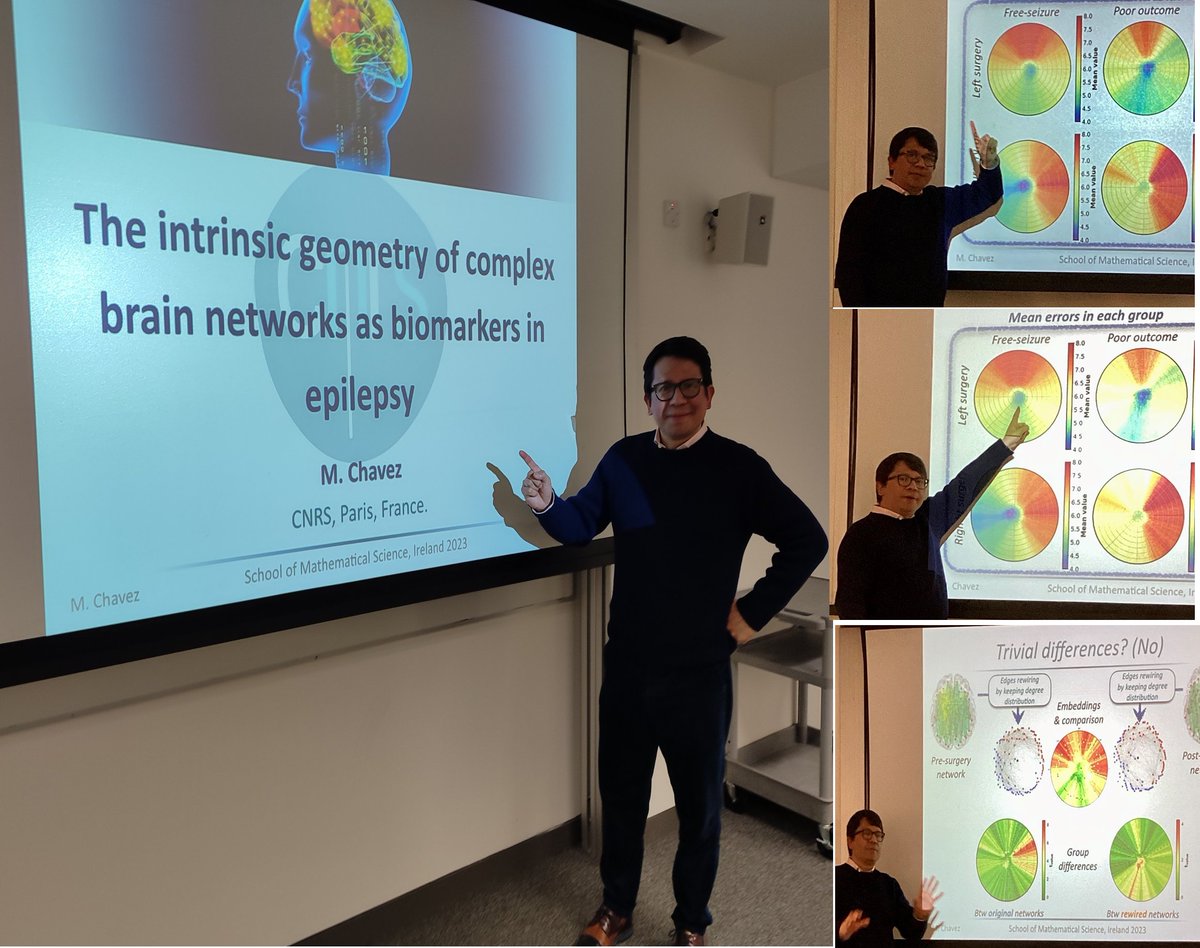
#OnThisDay @UCCsms hosted Dr. Mario Chavez @neurodynamicsFR for an illuminating presentation discussing approach to curvature within a network analysis problem.
Great turnout - UG/PG/lecturers 🤗
#SOMS_Seminar_Series #HyperbolicGeometry #encore
ALT Dr Mario Chavez (Paris Brain Institute, France)
3
133

25 Nov 2022
People liked the #HyperbolicGeometry bit, so let's dive into it a bit more.
We cannot represent faithfully hyperbolic geometry in this Euclidean(ish) world. So, we need models!
#SciComm #Maths
1
3
4

25 Aug 2022
I ll be posting weekly on this blog!
digitalfabricationdiaries.bl…
#digitalfabricationdiaries #digitalfabrication #3dprinting #3dprintingonwater #Knitting #crochet #hyperbolicgeometry #crochetting #aadrl #aadrl23 #studiospyropoulos
1

Ever wonder what it would be like to play basketball in hyperbolic space? Check this article from @hyprbolic and others about doing just that. Share w/ interested students and math enthusiasts doi.org/10.1080/10724117.202… @maanow @tandfstem #math #mtbos #hyperbolicgeometry

ALT A hyperbolic tiling of the poincare disk with basketball shapes.
1
1
11

13 Sep 2021
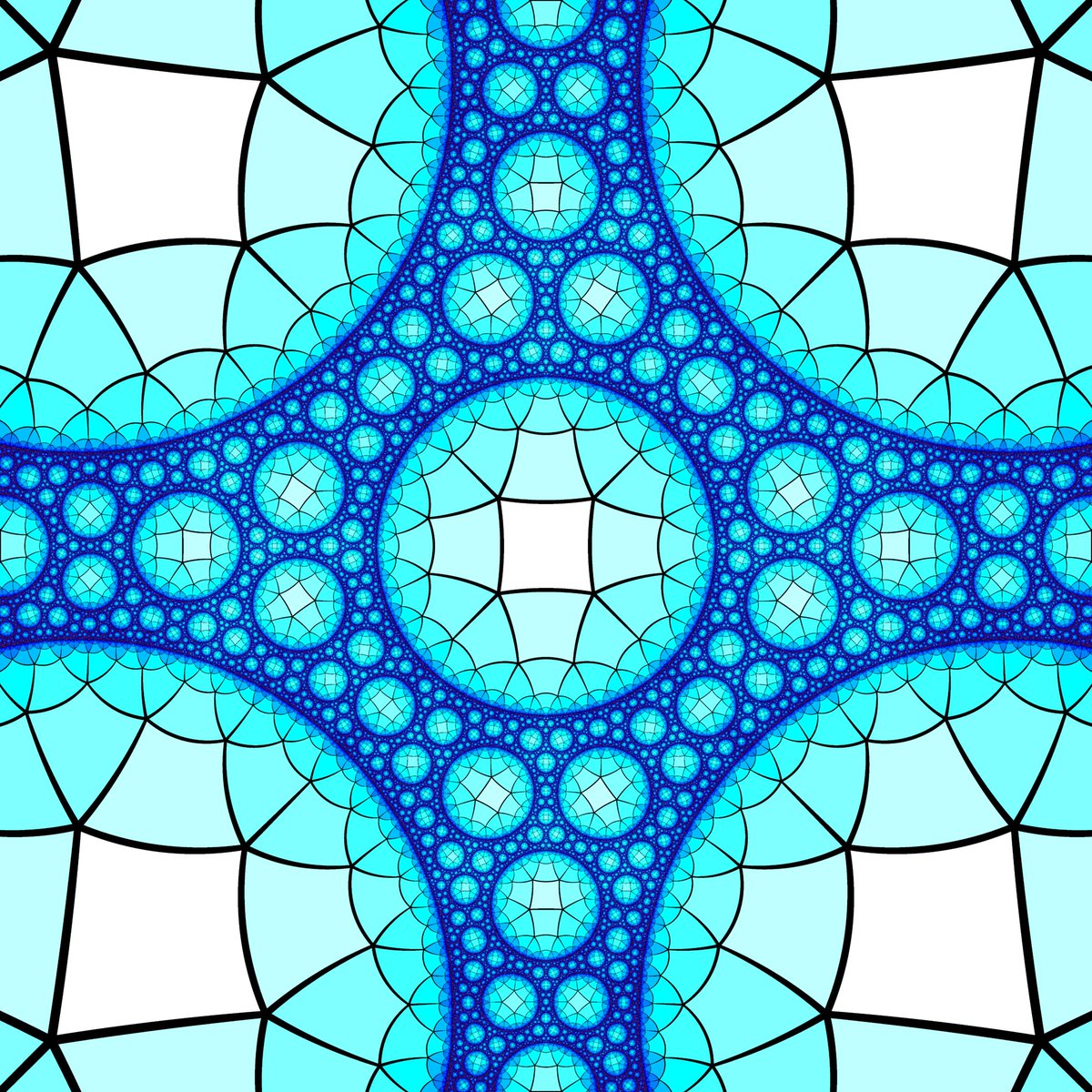
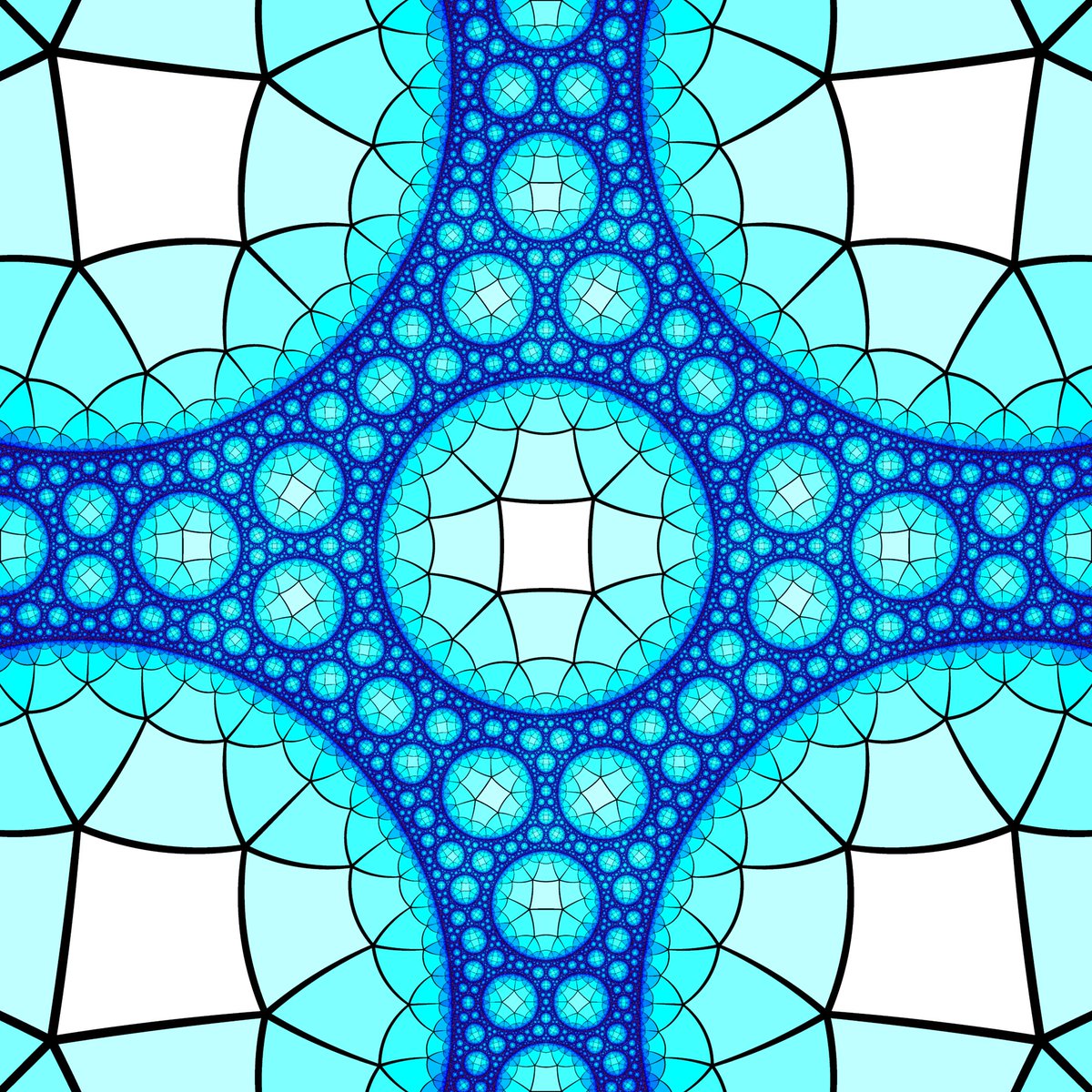
I so much want to translate this @honeycomb_bot from @roice713 into JavaScript, but it is going to take many more y̵e̵a̵r̵s̵ decades to study #HyperbolicGeometry and #3DGraphics for that haha github.com/roice3/MagicTile yeah, but so cool x.com/honeycomb_bot/status/1… #Math

2

10 Aug 2021
Check out my student @markgillesie81's awesome new paper tomorrow at #SIGGRAPH2021: youtube.com/watch?v=qyESnPHQ…
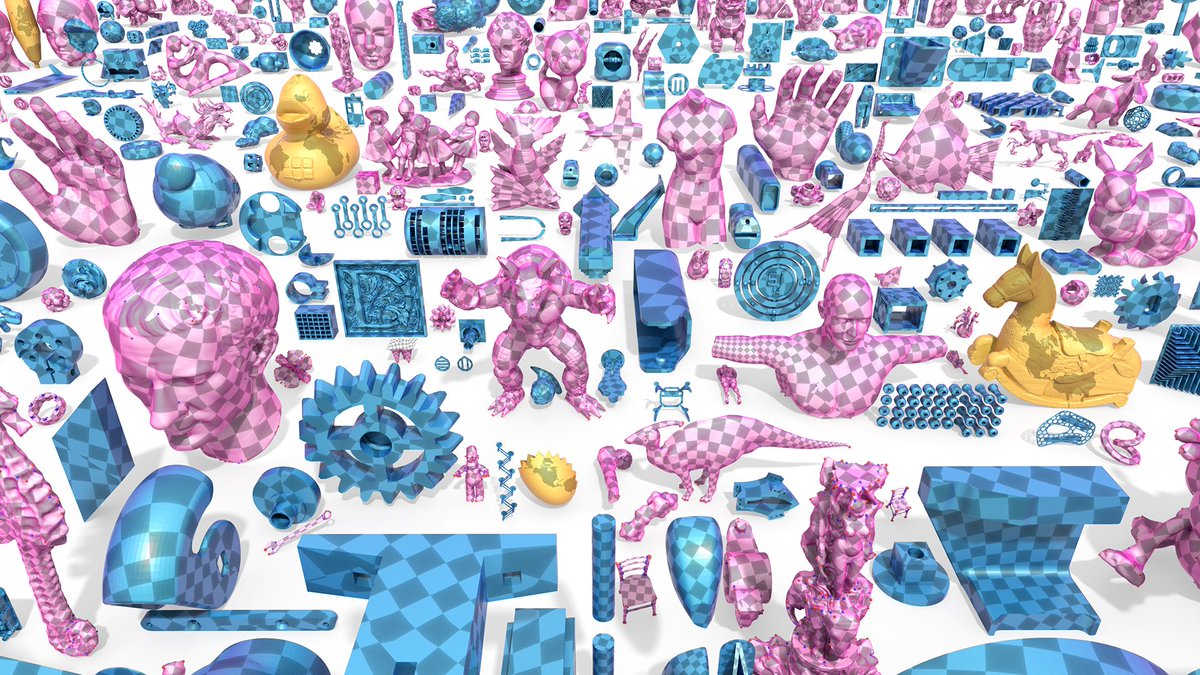
It computes beautiful, locally injective UV maps for absolutely any triangle mesh, building on a recent discrete version of the uniformization theorem. #HyperbolicGeometry
25 May 2021

Excited to share a new #SIGGRAPH2021 paper with @markgillesie81 and Boris Springborn that is a pretty big breakthrough in mesh parameterization: cs.cmu.edu/~kmcrane/Projects…
In short: no matter how awful your mesh is, we compute beautiful high-quality texture coordinates.
(1/n)
1
6
37

16 Jun 2021

1
6

10 Feb 2021
Here's another top video on Hacker News this month. yahnd.com/theater/r/youtube/… #hyperbolicgeometry #henrysegerman #math #mathematics #3dprinting #geometryfieldofstudy
1