
Every organization has documents. But not every organization is turning those documents into actionable business data.
Intelligent Document Processing (IDP) is helping organizations automate data extraction, improve accuracy, and accelerate workflows across finance, insurance, healthcare, manufacturing, and more.
Which business process would benefit most from automation in your organization?
Read more: zurl.co/wi3YP
#idtmarketing #IDP #IntelligentDocumentProcessing #DigitalTransformation #BusinessAutomation #ArtificialIntelligence #WorkflowAutomation #DocumentManagement
Still relying on manual data entry to process invoices, claims, forms, or customer documents?
Intelligent Document Processing (IDP) uses AI to classify, extract, validate, and route information automatically—helping organizations reduce manual effort while improving speed and accuracy.
What document-heavy process would you automate first?
Read more: zurl.co/sOfTB
#Idtmarketing #IntelligentDocumentProcessing #IDP #ArtificialIntelligence #DigitalTransformation #BusinessAutomation #DocumentManagement #WorkflowAutomation
5

Jun 9
go2.digitechsystems.com/GaeN…
This article from @Ricoh highlights how #IDP and #AI reduce manual handling, improve accuracy, and accelerate decision‑making. When documents become intelligent, teams become faster. Where will you apply #IntelligentDocumentProcessing? #Automation
18

Jun 8
Read about IDP's biggest use cases in 2026: xbpglobal.com/blog/intellige…
#IntelligentDocumentProcessing #IDP #EnterpriseAI #DocumentAutomation #XBPGlobal

1
11

With Aluma, you can build systems that classify and extract information from documents with minimal manual intervention bit.ly/3ookpyX #intelligentdocumentprocessing #digitaltransformation #cloudservices


Jun 5
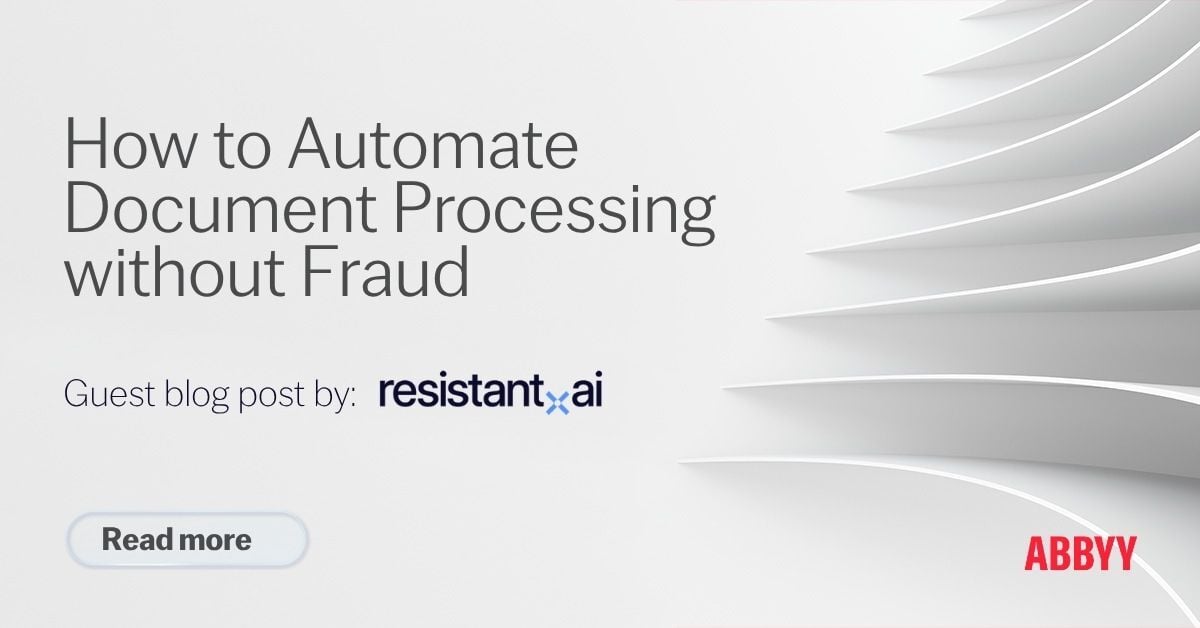
1 in 3 documents now shows signs of tampering, and 1 in 10 of those rank as high risk.
So how can enterprises meet the growing need for document automation without also scaling fraud? 🔐
In a guest post on the ABBYY Blog, Resistant AI breaks down the gap between understanding document data and confirming whether a document is genuine. Resistant AI advocates for a smarter approach that pairs intelligent document processing (IDP) with AI-powered fraud detection.
Read more 👉 How to Automate Document Processing Without Fraud | ABBYY Blog hubs.li/Q04kcMWZ0
#IntelligentDocumentProcessing #FraudDetection #EnterpriseAI #DocumentFraud #ABBYY
1
2
23

May 19
A clean Intelligent Document Processing demo can look impressive, but that does not mean the system is ready for production.
Most demos are built around ideal conditions: clean documents, known formats, readable pages, predictable fields, and narrow success criteria. That proves extraction may be possible. It does not prove the business can depend on the workflow.
Production introduces the mess: cropped scans, skewed images, missing pages, mixed attachments, handwriting, old versions, department-specific variations, exceptions, rework, and unclear handoffs.
That is where many IDP projects lose credibility. The issue is not that document AI is useless. The issue is that teams confuse a successful demo with an operationally reliable enterprise system.
The practical takeaway: test the ugly documents, exception paths, validation rules, and real workflow before declaring success.
The production workflow behind this video was built using the same methodology I apply for enterprise clients — I identified a real production bottleneck, evaluated AI options, and built a .NET-integrated workflow using AI tools to deliver it faster, better, and at lower cost. The thinking that improved my own workflow is the same thinking I bring to yours.
Explore more practical, applied enterprise AI insights at AInDotNet.com.
#IntelligentDocumentProcessing #IDP #DocumentAI #EnterpriseAI #ProductionAI #AIImplementation #DocumentAutomation #OCR #WorkflowAutomation #MicrosoftAI #DotNet #EnterpriseArchitecture #AzureAI #BusinessAutomation #AIReadiness #DigitalTransformation #GovTech #Compliance #DevOps #AInDotNet
1
2
18
May 13
Successful Intelligent Document Processing projects do not belong to one department or one technical role.
Enterprise IDP sits at the intersection of business operations, software architecture, data handling, governance, security, legal review, infrastructure, DevOps, and operational support. That is why cross-functional alignment matters.
Executives and department leaders need to define where the pain is real. The strongest first IDP targets usually involve high volume, repetitive effort, measurable delays, meaningful error costs, or compliance pressure. Project managers help control scope. Developers and architects define the workflow and system boundaries. DBAs and data teams support enrichment, normalization, and downstream usability.
Infrastructure and DevOps teams help with scaling, monitoring, deployment, and recovery. Security and legal teams define access, retention, review expectations, and risk posture.
If these groups do not align, IDP often becomes either a shallow demo or an overbuilt science project. The first win should reduce manual effort, improve data quality, and make downstream work easier.
The production workflow behind this video was built using the same methodology I apply for enterprise clients — I identified a real production bottleneck, evaluated AI options, and built a .NET-integrated workflow using AI tools to deliver it faster, better, and at lower cost. The thinking that improved my own workflow is the same thinking I bring to yours.
Explore more practical, applied enterprise AI insights at AInDotNet.com.
#IntelligentDocumentProcessing #IDP #EnterpriseAI #DocumentAutomation #WorkflowAutomation #MicrosoftAI #DotNet #SQLServer #AzureAI #EnterpriseArchitecture #BusinessAutomation #DataGovernance #DevOps #InformationSecurity #AppliedAI #DigitalTransformation
1
2
15
May 6
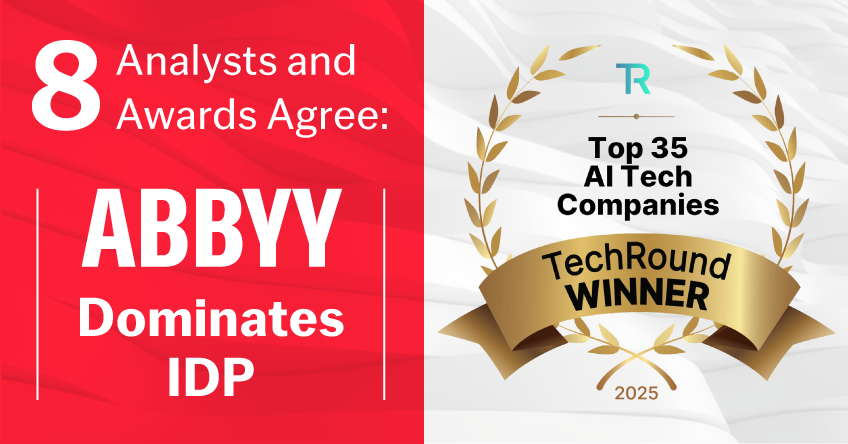
🏆 Top industry analysts and award committees agree on one thing: ABBYY leads the way in purpose-built AI innovation for Intelligent Document Processing.
Find out what Gartner®, IDC MarketScape, Newsweek, and other analysts and awards have to say about ABBYY's award winning document AI solutions.
👉 Read the blog: [ hubs.li/Q04fDvPG0 ]
#ABBYY #IntelligentDocumentProcessing #DocumentAI #HybridAI #EnterpriseTechnology #Leadership
1
3
64
May 4
Intelligent Document Processing should not be treated as a one-off feature or a narrow document automation gimmick.
The reason IDP matters is that the same pattern appears across the enterprise. Finance, HR, legal, compliance, healthcare, logistics, public sector programs, inspections, and vendor workflows all depend on documents. The document types may differ, but the underlying challenge is similar: convert unstructured inputs into structured, usable, auditable business data.
A weak approach treats each document workflow like a custom snowflake project. That increases cost, creates inconsistency, and makes long-term support harder.
A stronger approach builds reusable enterprise IDP patterns: intake, job registration, extraction, validation, enrichment, exception handling, human review, routing, and auditability. Once those patterns are in place, the organization can configure and extend the foundation across multiple business scenarios.
That is why IDP is a core AI application. It creates leverage across many workflows and deserves disciplined engineering, governance, and cross-functional execution.
The production workflow behind this video was built using the same methodology I apply for enterprise clients — I identified a real production bottleneck, evaluated AI options, and built a .NET-integrated workflow using AI tools to deliver it faster, better, and at lower cost. The thinking that improved my own workflow is the same thinking I bring to yours.
Explore more practical, applied enterprise AI insights at AInDotNet.com.
#IntelligentDocumentProcessing #IDP #EnterpriseAI #DocumentAutomation #WorkflowAutomation #MicrosoftAI #DotNet #AzureAI #SQLServer #EnterpriseArchitecture #BusinessAutomation #AIDevelopment #AppliedAI #DigitalTransformation #DocumentAI #EnterpriseAutomation
1
2
23
Apr 15
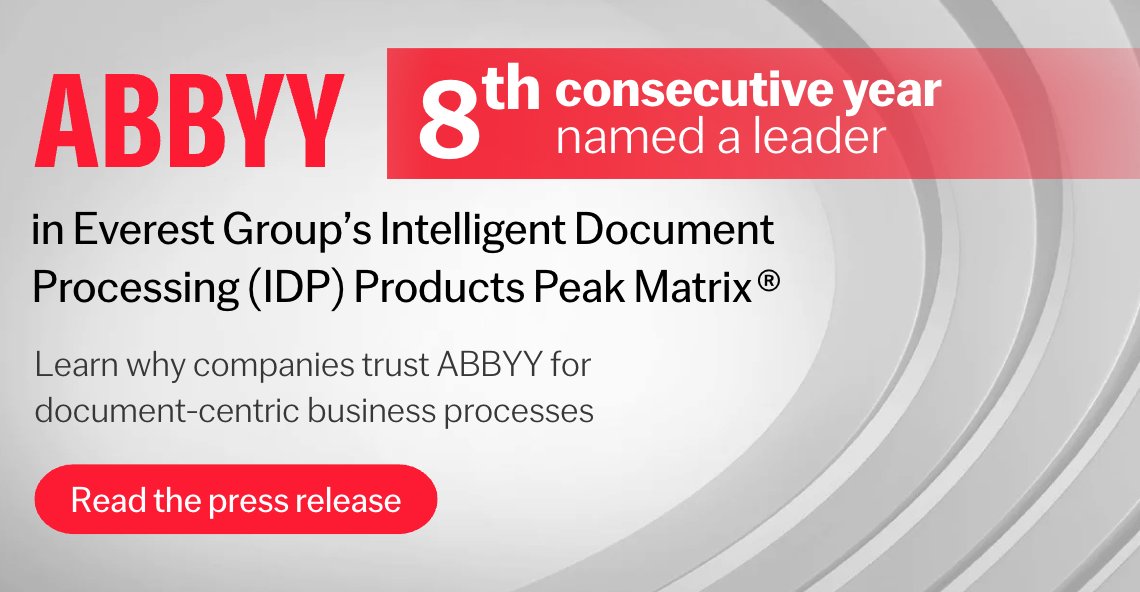
ABBYY is proud to be named a Leader in Everest Group’s Intelligent Document Processing (IDP) Products PEAK Matrix® Assessment 2026 🎉
Through our purpose-oriented approach to AI and continuous investment in R&D (Research and Development), ABBYY continues to set the standard for intelligent document processing.
See why ABBYY is named a leader in transforming data into actionable outcomes for operational excellence. Read the press release: hubs.li/Q04cbnzc0
#IDP #DocumentAI #EverestGroupPEAKMatrix2026 #ABBYY #IntelligentDocumentProcessing
1
3
44

Apr 11
Can your AI solution efficiently extract, verify and anonymise critical information from unstructured healthcare data?
Join the Hackathon to refine your solution with support and guidance from the Central Drugs Standard Control Organisation (CDSCO).
Winners receive a chance to secure ₹50 Lakh and an opportunity to deploy their solution with CDSCO.
Apply by: April 17th, 2026
🔗 Download Guidelines & Apply Now: aikosh.indiaai.gov.in/home/c…
#NLP #IntelligentDocumentProcessing #HealthcareInnovation #IndiaAI #RegTech #MeitY
@AshwiniVaishnaw @jitinprasada @PIB_India @SecretaryMEITY @kavitabha @GoI_MeitY @_DigitalIndia @mygovindia @CDSCO_INDIA_INF

1
5
361
Apr 1
Can your AI solution efficiently extract, verify and anonymise critical information from unstructured healthcare data?
Join the Hackathon to refine your solution with support and guidance from the Central Drugs Standard Control Organisation (CDSCO).
Winners receive a chance to secure ₹50 Lakh and an opportunity to deploy their solution with CDSCO.
Apply by: April 17th, 2026
🔗 Download Guidelines & Apply Now: aikosh.indiaai.gov.in/home/c…
#NLP #IntelligentDocumentProcessing #HealthcareInnovation #IndiaAI #RegTech #MeitY
@AshwiniVaishnaw @jitinprasada @PIB_India @SecretaryMEITY @abhish18 @kavitabha @GoI_MeitY @_DigitalIndia @mygovindia @CDSCO_INDIA_INF

4
12
616

Mar 30
📣 New blog post!
📃 We’re taking a closer look at intelligent document processing and why it’s becoming a key focus for real-world AI applications.
🔗 Read the full post: endpointdev.com/blog/2026/03…
#AI #Automation #EndPointDev #IDP #IntelligentDocumentProcessing
2
17
Mar 30
Can your AI solution efficiently extract, verify and anonymise critical information from unstructured healthcare data?
Join the Hackathon to refine your solution with support and guidance from the Central Drugs Standard Control Organisation (CDSCO).
Winners receive a chance to secure ₹50 Lakh and an opportunity to deploy their solution with CDSCO.
Apply by: April 17th, 2026
🔗 Download Guidelines & Apply Now: aikosh.indiaai.gov.in/home/c…
#NLP #IntelligentDocumentProcessing #HealthcareInnovation #IndiaAI #RegTech #MeitY
@AshwiniVaishnaw @jitinprasada @PIB_India @SecretaryMEITY @abhish18 @kavitabha @GoI_MeitY @_DigitalIndia @mygovindia @CDSCO_INDIA_INF

1
5
13
561

Mar 26
Sabrina Carpenter's name is three times bigger than everyone else on that poster on Friday. That's how you know she's headlining on that day.
Feed the @coachella poster to the structured data extractor, define a schema, and it comes back knowing exactly that — headliner, day, supporting acts, all structured and ready to use.
Today we're shipping this as a native node to Unstructured.
Extract sits in your workflows and turns your documents into structured records — invoices into billing entries, clinical notes into patient summaries. You define the shape, Unstructured handles the extraction.
Read the full post here: unstructured.io/blog/introdu…
Try Extract for yourself: unstructured.io/?modal=try-f…
#GenAI #DocumentProcessing #EnterpriseAI #IDP #IntelligentDocumentProcessing
2
180
Mar 26
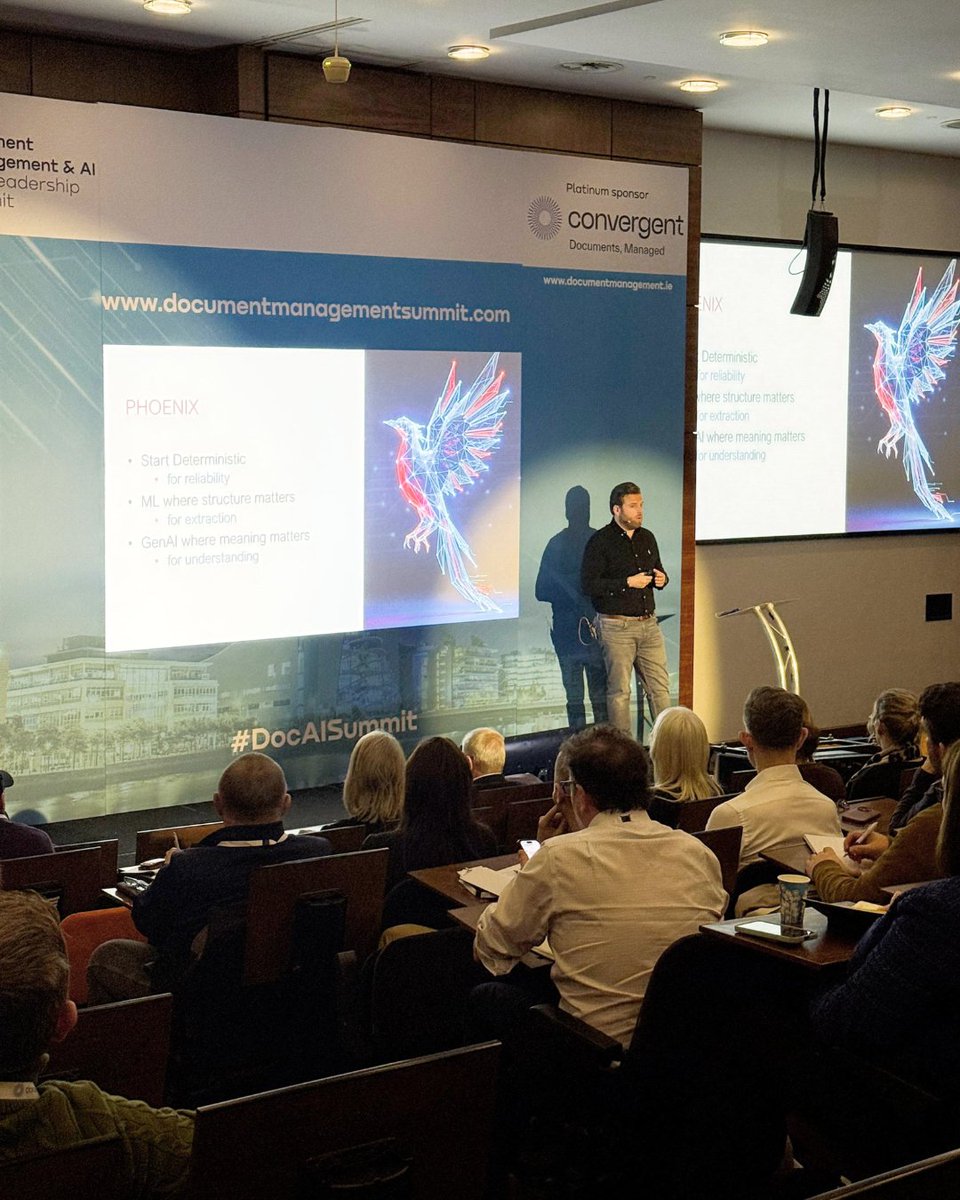
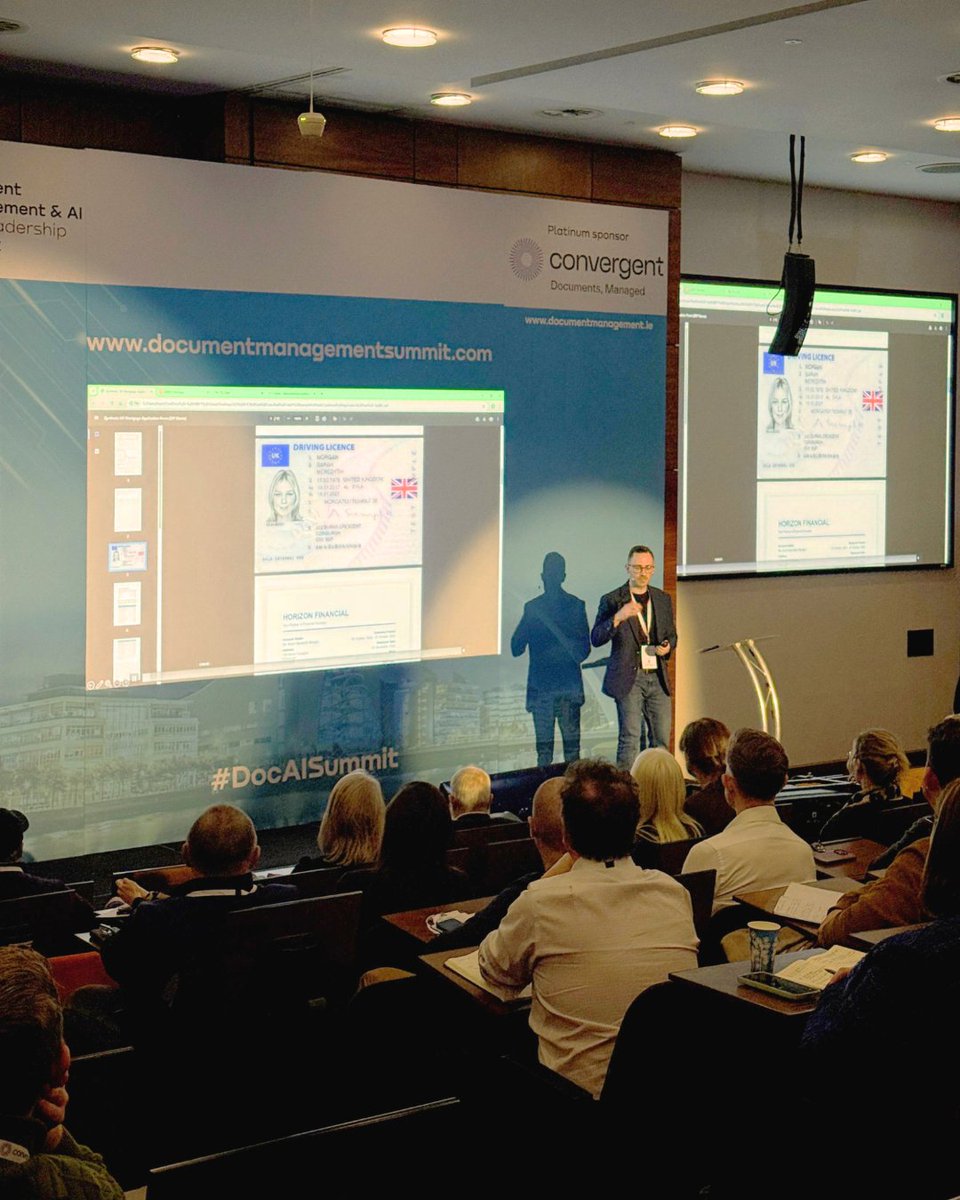
"If your documents do not become a structured, reliable ground truth, your AI initiatives will never leave experimentation."
Max Vermeir shared this insight yesterday at the Document Management & AI The Leadership Summit that ABBYY proudly sponsored in Dublin, with our partner Convergent. ✈️ Thank you for a fantastic experience.
Our experts, Max Vermeir and Nick Carr took the stage to present on Know Your Customer (KYC) processes and the importance of establishing a solid data foundation.
The future of document management is here and it’s driven by AI. 🚀
Reach out to our experts to kick off your #AIAutomation journey with ABBYY today.
Book your meeting: hubs.li/Q048ryp40
#DocAISummit #IntelligentDocumentProcessing #EnterpriseAI #DocumentAI #AILeadership #DigitalTransformation #IntelligentAutomation #ABBYY #Innovation

1
3
28

ARM teams face rising document volumes and tighter compliance. AgreeYa’s AI-powered IDP automates capture, classification, and data extraction—cutting manual work and delivering audit-ready data. Learn more: bit.ly/46PVEno
#AgreeYa #IntelligentDocumentProcessing

3
12

Mar 4
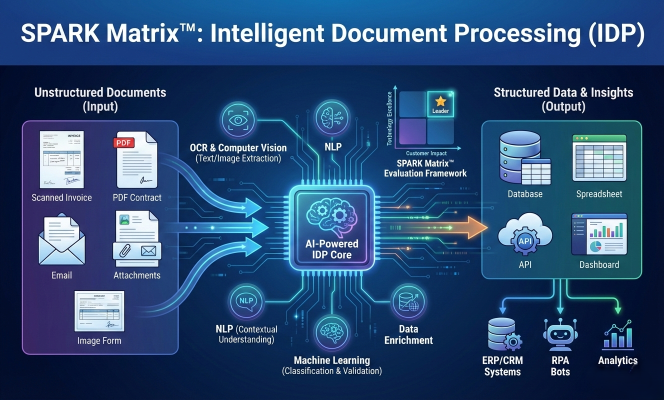
Intelligent Document Processing Market Outlook: Growth and Innovation Through 2028
qksgroup.com/market-research…
quadrantknowledge.blogspot.c…
#IntelligentDocumentProcessing #IDP
#DocumentAutomation #AIinBusiness
#MachineLearning #DigitalTransformation
2
9
Feb 25
Hear from ABBYY's VP of AI Strategy, Maxime Vermeir, at the Document Management & AI Leadership Summit in Dublin on 25 March. 🚀
He will discuss how to unlock AI's potential in your operations with Intelligent Document Processing (IDP).
👉 Register to attend: hubs.li/Q044BnqL0
#IntelligentDocumentProcessing #AI #DocAISummit @DocMgtAISummit

1
3
44