
Unified Genomic and Chemical Representations Enable Bidirectional Biosynthetic Gene Cluster and Natural Product Retrieval
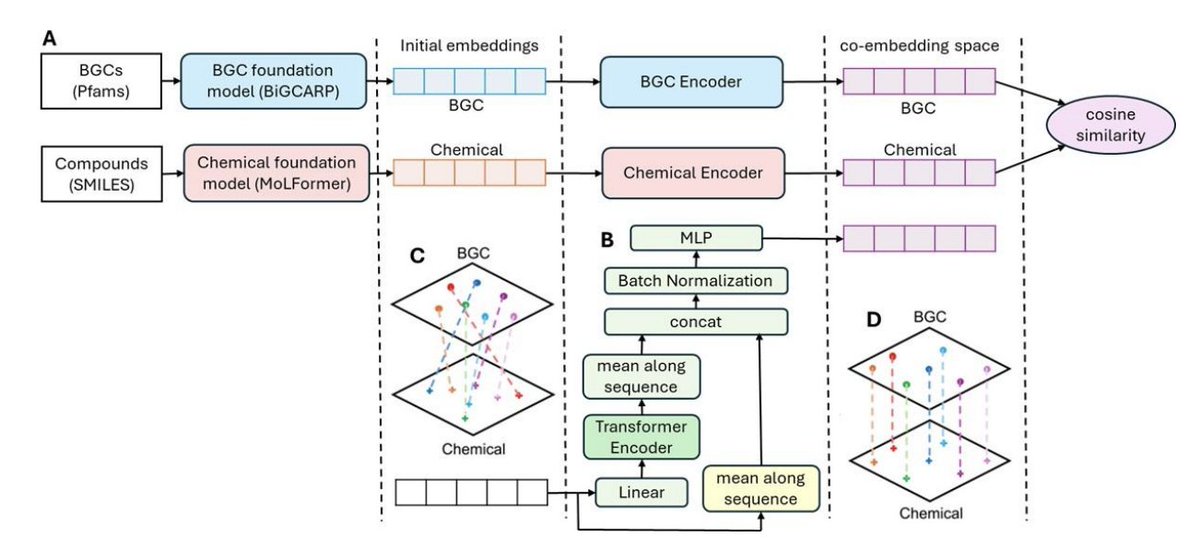
1. Liu, Li, Ong et al. present BCCoE, a multimodal retrieval framework that puts biosynthetic gene clusters (BGCs) and natural products into a shared embedding space, enabling both directions of search: BGC→compound and compound→BGC.
2. The key idea is to reuse strong pretrained “foundation” embeddings from each modality, then learn only a lightweight alignment: BiGCARP embeddings for BGC Pfam-domain sequences (256D) MoLFormer embeddings for compound SMILES (768D), projected into a 64D co-embedding space for cosine-similarity nearest-neighbor retrieval.
3. Architecture: two modality-specific encoders (same structure, separate weights) that apply (i) linear projection, (ii) a 2-layer transformer encoder, (iii) pooling concatenation with the mean of the original embedding sequence, then (iv) batch norm a 2-layer MLP to output the final co-embedding vectors.
4. Training is metric learning with N-pair loss over batches of paired (BGC, compound) examples from MIBiG; foundation-model embeddings are frozen to reduce overfitting and to preserve general representations. Negatives are implicitly taken from other pairs within the same batch (efficient “in-batch” negatives).
5. Why alignment matters: baselines that do retrieval without cross-modal alignment (KNN and a two-hop KNN-2hop that chains BGC-similarity and compound-similarity) cannot consistently capture genotype–chemotype links, especially when candidate pools include novel items not seen during training.
6. Main quantitative results on MIBiG 4.0 (10-fold CV): for BGC→compound retrieval at top-10, Recall improves from 12.9% (KNN) and 21.9% (KNN-2hop) to 32.9% (BCCoE); for compound→BGC at top-10, BCCoE reaches 65.3% Recall (vs 60.6% KNN-2hop), with very large lift over random guessing at low K.
7. Generalization to unseen product classes (hold out one entire BGC product class during training): performance drops for all methods, but BCCoE remains substantially better, achieving Lift@10 of 17.0 (BGC→compound) and 20.2 (compound→BGC), outperforming KNN-2hop by ~75–89% in lift at top-10.
8. Temporal generalization (train on MIBiG 3.1, evaluate on new links added in MIBiG 4.0): BCCoE improves identification of newly added BGC–compound pairs, e.g., when retrieving compounds from the full MIBiG 4.0 candidate set, top-10 hits rise from 126 (KNN-2hop) to 180 (BCCoE) among 473 new pairs.
9. Robustness across alternative foundation models: swapping in ESM-C for BGCs or Uni-Mol2 for compounds shows BCCoE remains relatively stable, while KNN-2hop can degrade sharply due to “similarity saturation” (cosine similarities clustered near 1 in the initial embedding spaces), which breaks two-hop score ranking; BCCoE’s aligned space yields a more well-behaved similarity distribution.
10. Practical validation beyond MIBiG: on three experimentally validated external BGC–compound pairs previously used in BGC-MAP, BCCoE ranks the true matches much higher in both directions (BGC→compound and compound→BGC), supporting its use for prioritizing candidates in real discovery workflows.
💻Code: zenodo.org/records/18849052
📜Paper: doi.org/10.1038/s41598-026-4…
#Bioinformatics #ComputationalBiology #NaturalProducts #GenomeMining #BiosyntheticGeneClusters #MultimodalAI #MetricLearning #RepresentationLearning #Cheminformatics
3
14
2,091

22 Apr 2025
✈️🇸🇬 to #ICLR 2025 🔥🔥🔥 at the iconic city of #Singapore participating in The Thirteenth International Conference on Learning Representations, one of the 4 main #machinelearning #ai conferences worldwide, with Dr @josesanchezhb
This year with promissing Invited talks by @dawnsongtweets Song-Chun Zhu @danqi_chen @zicokolter @YiMaTweets @_rockt and 44 workshops, 3827 papers, orals, posters, socials and many more, featuring @SchmidhuberAI @SLapuschkin @lifu_huang @Yoshua_Bengio @sea_snell @wellingmax @svlevine @pabbeel to name a very limited few
Thanks to the ICLR organizers: @yisongyue @cvondrick @yuqirose @animesh_garg @orussakovsk
@pcastr @francescazfl @savvyRL @fredahshi @SchwinnLeo Jonas Köhler and many others, including the 10s of sponsors like: @Microsoft @AIatMeta @Google @amazon @Oracle @Huawei @Apple @UnitreeRobotics and many others for making it possible one more year.
See you all!
PD: We will be hosting two @_Qubic_ AGI dinners on the 24th & 25th seats are very limited but DM if you are interested
#Artificialntelligence #AI #AGI #RepresentationLearning #FeatureLearning #UnsupervisedLearning #SemiSupervisedLearning #SupervisedLearning #MetricLearning #KernelLearning #SparseCoding #DimensionalityExpansion #HierarchicalModels #OptimalTransport #DeepLearningTheory #Planning #ReinforcementLearning #ComputerVision #NLP #AudioProcessing #SpeechRecognition #Robotics #Neuroscience #Biology #ClimateScience #Sustainability #Fairness #AIethics #Safety #Privacy #Interpretability #ExplainableAI #Visualization #Optimization #TheEndOfKnowledge #Artificiology
7
28
99
4,221

13 Mar 2025
Just dropped on bioRxiv! Our team has assembled a data-driven map of the human E3 ligome. Check out our preprint! #E3_ligome #ubiquitination #dataIntegration #metriclearning
biorxiv.org/content/10.1101/…
1
14
436

4 Dec 2023
【Qiita】本日のすごい人 [ Kaggle PyTorch MetricLearning Pytorch-lightning ]に関する記事を書いた @fam_taro さん : qiita.com/fam_taro/items/735…
2
410

背中を押してもらえたので最近のMetricLearningの始め方について書いてみようと思います(3日目)
qiita.com/advent-calendar/20…
1
4
70
10,418

🤯Lowkey Goated When #MetricLearning Is The Vibe! Check out this new paper from @Kosyamada et al. for Semantic Frame Induction: deepai.org/publication/seman…
1
7
1,681

7 Apr 2023
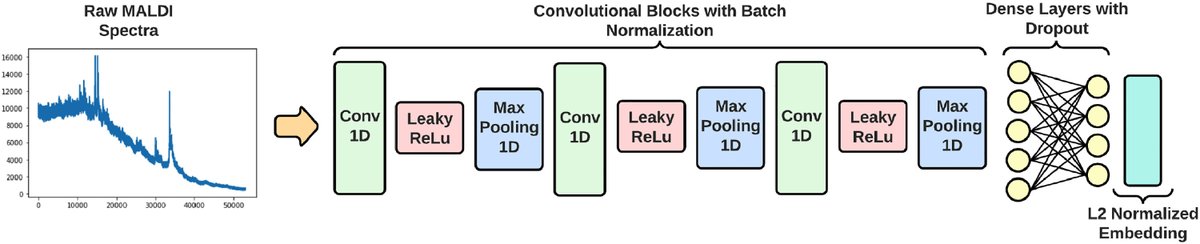
"Deep Metric Learning for the Classification of MALDI-TOF Spectral Signatures from Multiple Species of Neotropical Disease Vectors" By Merchan et al, Available on @AILSCI!
🔗Find out more here bit.ly/3m753D5
#AI #MetricLearning #NTDs #moleculartaxonomy #compbio
4
9
1,069
7 Feb 2023
【Qiita】3年前にすごい人 [ Python 機械学習 DeepLearning 論文読み MetricLearning ]に関する記事を書いた @tancoro3 さん : qiita.com/tancoro/items/7ed5…
4
383

2 Oct 2022
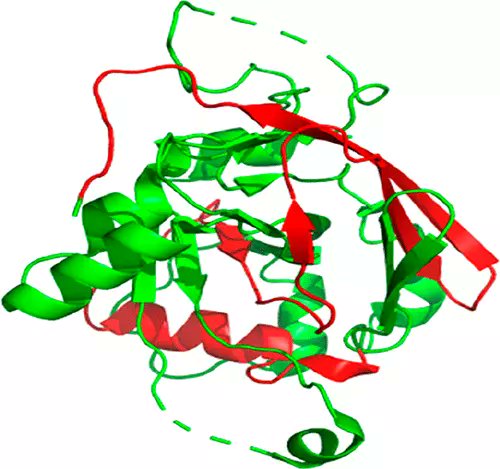
Learning Protein Embedding to Improve Protein Fold Recognition Using Deep #MetricLearning #DeepLearning #ProteinFold
pubs.acs.org/doi/10.1021/acs…
#current_issue #JCIM #compchem
3
21

16 Sep 2022
Latent Similarity Identifies Important Functional Connections for Phenotype Prediction #TechRxiv #functionalconnectivity #fMRI #metriclearning #ML #predictionalgorithm #NetworkAnalysis
techrxiv.org/articles/prepri…
1
3

28 Jul 2022
Congrats! the paper "Comparing #CNN and #Deep #MetricLearning Methods for #classification of Export Watermelon🍉Varieties" (FID18-060 Project) is out! #Industry40 #ML #deeplearning #embedding @ieee_ies #ISIE2022 @CemcitAip @utpfisc @lsi_utp @UTPInvestiga ieeexplore.ieee.org/document…
1
5
24

23 Jun 2022
Great showcases of using #MetricLearning for extreme classification of LEGO bricks by Piotr Rybak and #edtech challenges by @BrainlyTeam 👏
2

14 Jun 2022
🆕📚 Information Fusion 👉bit.ly/3Q0H16S
✅Reviews state-of-the-art techniques for #informationfusion
✅Presents typical applications; from low-level to high-level tasks
#InformationScience #DataFusion #DeepLearning #MetricLearning

ALT Jinxing Li, Bob Zhang, David Zhang: Information Fusion Reviews state-of-the-art techniques for information fusion Presents typical applications of information fusion, ranging from low-level to high-level tasks Demonstrates the benefits of applying advanced techniques in information fusion
4
23 May 2022
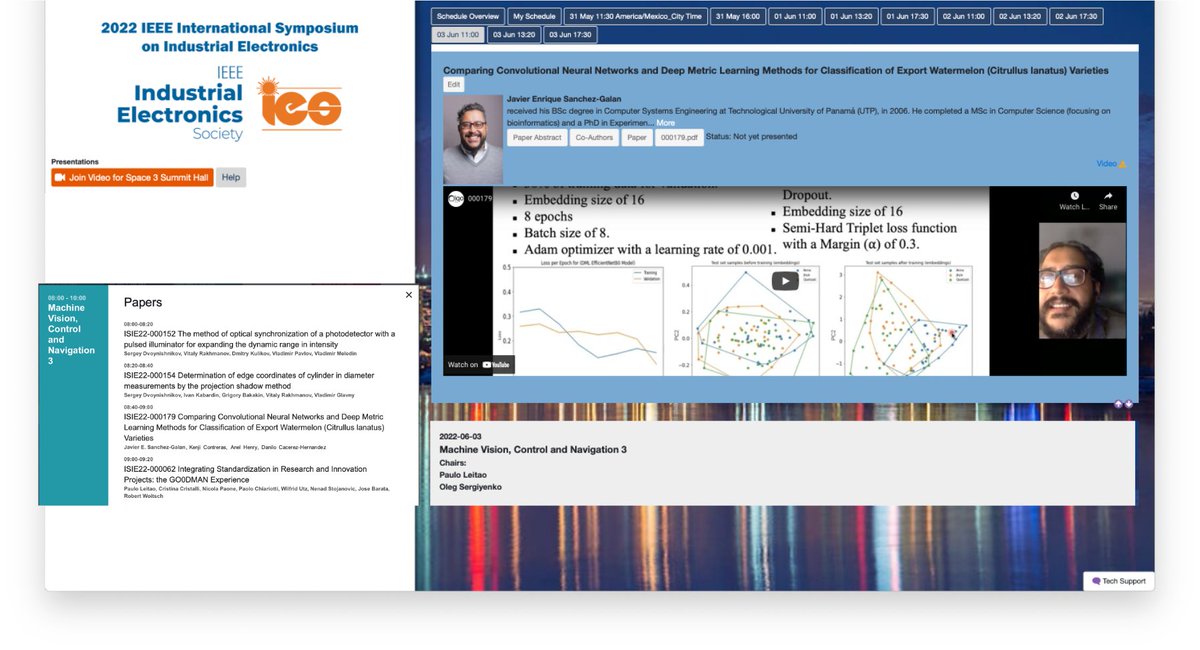
We are excited to announce that our work "Comparing #ConvNets and #Deep #MetricLearning Methods for Classification of Export Watermelon (Citrullus lanatus🍉) Varieties" (FID18-060 Project) will be presented 3/Jun at @ieee_ies #ISIE2022 #Industry40 #ML #deeplearning #embedding
6
20

9 May 2022
Our AI Research Engineer Yusuf Sarıgöz discusses metric learning with @DmitryKan on a Vector Podcast. Check this out youtube.com/watch?v=AU0O_6-E…
#Qdrant #MachineLearning #metriclearning #vectorsearch
1
9
4 May 2022
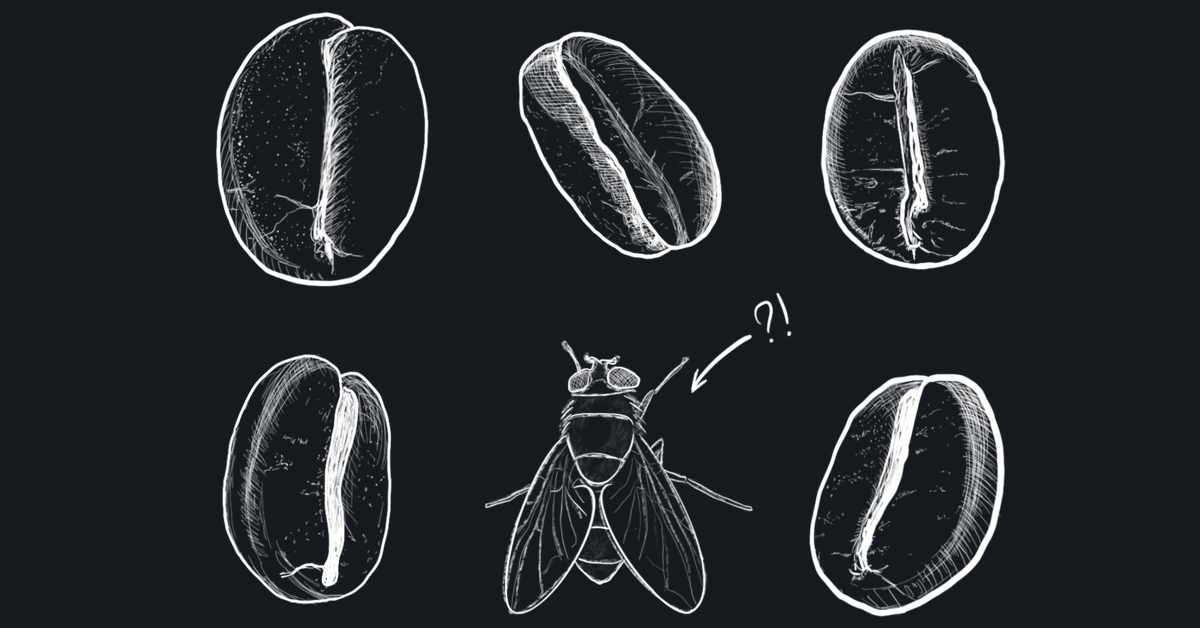
Anomaly detection is one of the exciting problems where #metriclearning can demonstrate an advantage over classical approaches. Our #casestudy illustrates how to do this with a practical example of quality control for coffee beans. qdrant.tech/articles/detecti…
6
14

3 May 2022
#MetricLearning is a widely used field for image retrieval problems. Here, I explore the paper #ClassificationIsAStrongBaselineForDeepMetricLearning and implement it on #InshopDataset.
1/n
jarvislabs.ai/blogs/vin-metr…
1
1
6

25 Jan 2022
Unveil the mystery of embedding vectors to power semantic similarity search in computer vision by Marie Stephen Leo
zilliz.com/learn/embedding-g…
#SimilaritySearch #NeuralNetworks #VectorDatabase #MetricLearning #ArtificialIntelligence #MachineLearning #DeepLearning
1
1
2

7 Jan 2022
All set to start the first session of the Thematic Workshop on Deep Learning organized by our partners from Heriot-Watt University
#deeplearning #metriclearning #marinerobotics

4

7 Dec 2021
Unlocking new dimensions in image-generation research with Manifold Matching via Metric Learning. #DataScience #ML #MachineLearning #MetricLearning hubs.li/Q0107kb60
1