

Jun 11
#modijistaysafe #modiweakpaperleak #modikakhadiyug #modifails #modiinuae #modivo #modifail #modimasterstroke #ModiMuktBharat #ModiHataoDeshBachao
#modihaitohmumkinhai
Public ko yahi chahiye....jo mil raha hai
Jun 10

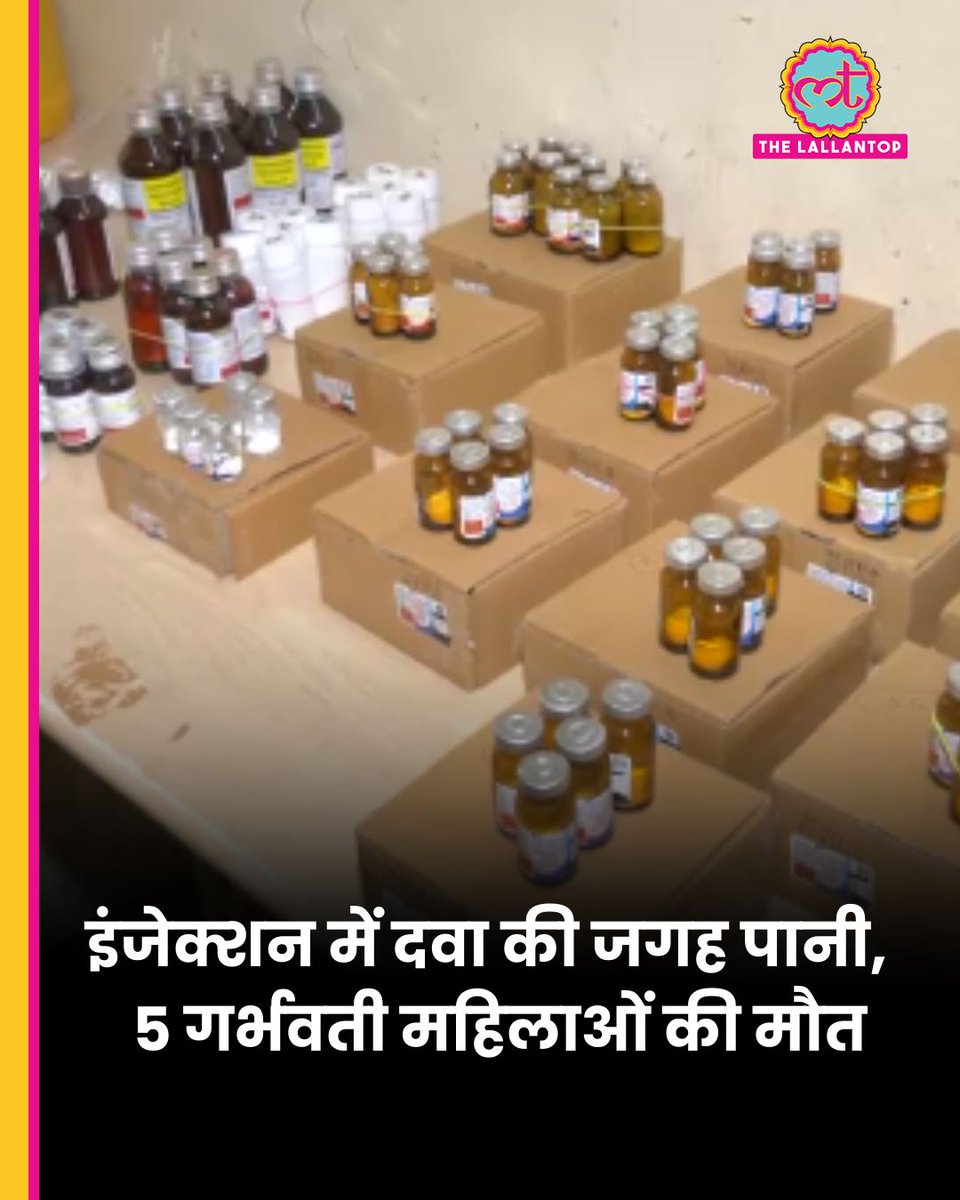
राजस्थान के कोटा में सिजेरियन डिलीवरी के बाद पांच मांओं की मौत हो गई थी. अब जांच में पता चला कि खून बहने से रोकने के लिए उन्हें जो इंजेक्शन दिए गए थे, उनमें ब्लड क्लॉटिंग कंपोनेंट नहीं था. इंजेक्शन में सिर्फ पानी था, जिस वजह से खून का बहना नहीं रुका.
यह सब कोटा के सरकारी अस्पताल 'न्यू मेडिकल कॉलेज हॉस्पिटल' में हुआ. पहले राजस्थान सरकार ने नकली ऑक्सीटोसिन इंजेक्शन के इस्तेमाल से इनकार किया था. लेकिन अब राजस्थान के स्वास्थ्य मंत्री गजेंद्र सिंह खींवसर का कबूलनामा आ गया है.
पूरी खबर: thelallantop.com/india/post/…
Kota | Pregnant Women death | Fake Injection
200


May 22
🇮🇳✈️🇦🇪 மோடியின் UAE விஜயம் – இந்தியாவின் சக்தி, உலகின் நம்பிக்கை!
🛢️ எனர்ஜி பாதுகாப்பு: ADNOC உடன் ஒப்பந்தம் – இந்தியாவின் 30 மில்லியன் பேரல் ஸ்ட்ராட்டஜிக் பெட்ரோலியம் ரிசர்வ்.
🔥 இந்த ஒப்பந்தம், இந்தியாவின் எரிசக்தி எதிர்காலத்தை உறுதிப்படுத்தும் முக்கியமான படி.
#ModiInUAE #IndiaUAE #EnergySecurity #NationalInterest #TamilReels #GlobalPartnership
2
17

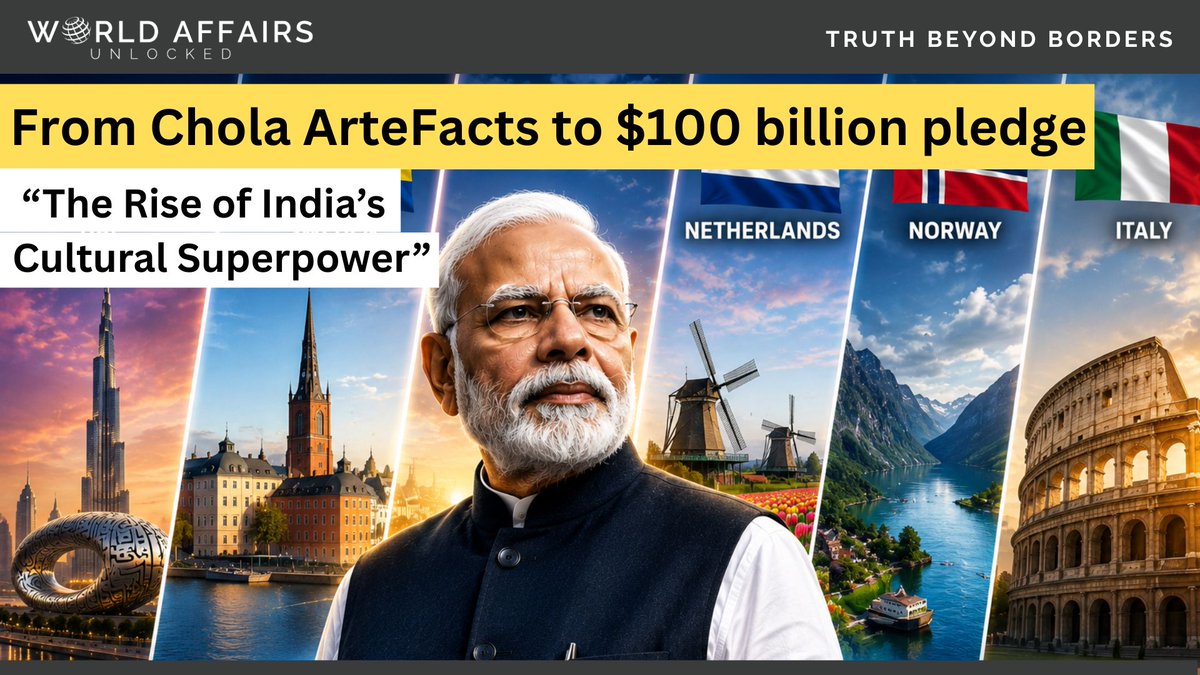
Modi’s 5-Nation Tour Explained | From Chola Legacy to $100 Billion UAE Pledge ! #geopolitics #ias
#watch - youtu.be/l3DiLvkwaoE?si=Mge3…
#cockroachJantaparty #melodi #indiauae #uaevisit #dubai #indiawantsanswer #modiinuae
2
27

May 21
माननीय प्रधानमंत्री श्री नरेंद्र मोदी जी की यूएई, नीदरलैंड, स्वीडन, नॉर्वे और इटली यात्रा ने दुनिया को नए भारत की ताकत दिखाई।
आज भारत सिर्फ संबंध नहीं बना रहा, बल्कि भरोसे, विकास और वैश्विक नेतृत्व की नई पहचान बन रहा है।
@narendramodi
#narendramodi
#pmmodi
#viksitbharat
#bjpgovernment
#globalindia
#ModiInUAE
#ModiInEurope
4
237

कालपरवा वाशीमला #पेट्रोल_डिझेल मिळत नाही म्हणून लोक एकमेकांशी हाणामारी करत असल्याचा व्हिडिओ आपण सगळ्यांनी पाहिला. आज देऊळगाव राजा येथील व्हिडिओ आला आहे. लोक १२-१२ तास पेट्रोल डिझेलच्या रांगेत उभे आहेत तरीही त्यांना इंधन मिळत नाही.
माझी राज्यकर्त्यांनी नम्र विनंती आहे,
कधी बुलेट वापरायची, कधी ईव्ही कार वापरायची, कधी खुळ्यागत टांगा वापरायचा हे सगळे पीआर स्टंट बंद करा आणि देशातील नागरिकांना सांगा की नेमकं संकट काय आहे ? नागरिकांना सांगा, पेट्रोल डिझेल कधी मिळणार आहे ? त्यांना सांगा, आणखी किती महागाईचा सामना करावा लागणार आहे ? लॉकडाऊनच्या ज्या अफवा आहे त्याबाबत सत्य परिस्थिती काय आहे ते सांगा ? एकदा तुम्ही जनतेच्या समोर येऊन सांगा की तुम्ही नापास झाला आहात, नाकर्ते ठरला आहात !
प्रत्येक वेळी झोळी घेऊन परदेशी निघून जाण्याला काय अर्थ आहे ?
#modidrama #pmmodiappeal #modiinuae #PM #Fail #FinancialCrisis #ForeignTour
4
33
819

May 18
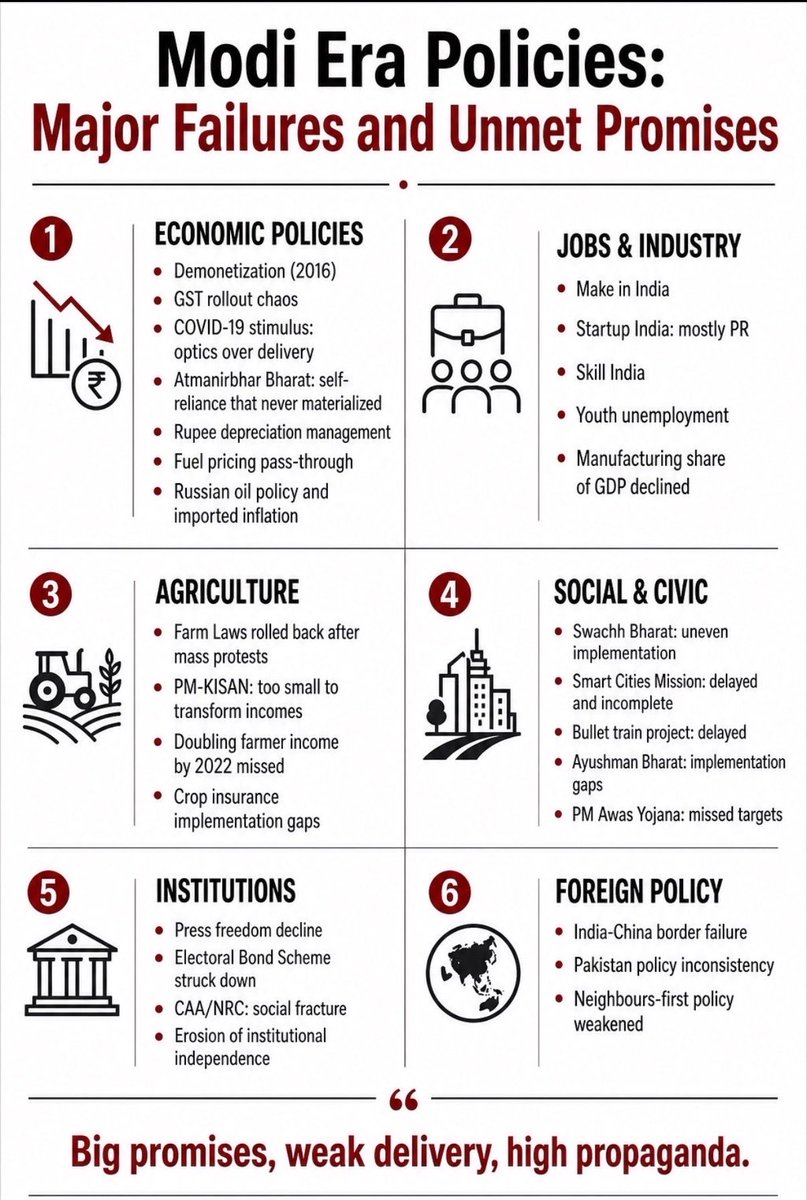
Rupee is falling. Oil prices are surging. Gas prices are sky-rocekting. Unemployment at all time high, poverty at its peak. Yet, there are these people performing aarti & pooja for Modi 😆
#modifail #modiinuae #RupeeFalls
#ModiFailsIndia #OilPrices #PriceHike #PetrolHike #RahulGandhi #India #Netherlands
1
3
52

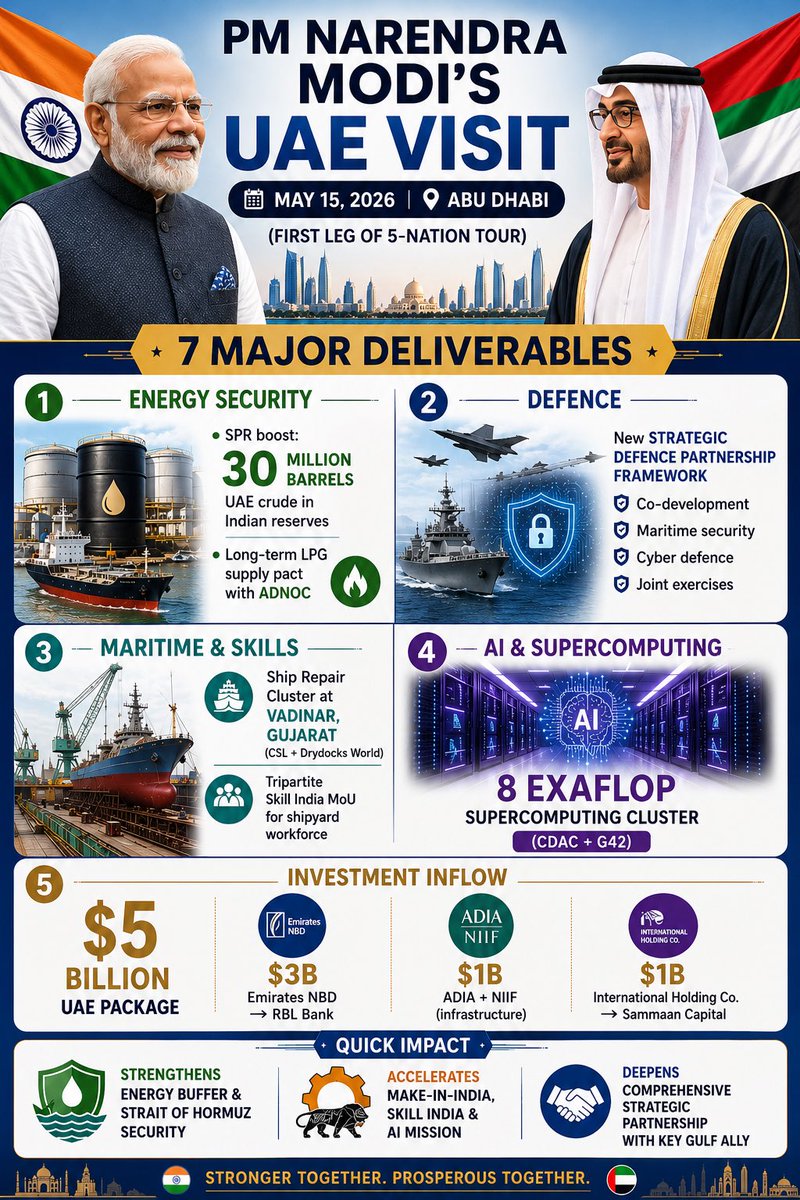
Modiji’s UAE Visit Delivers MASSIVE Wins! 🇮🇳🇦🇪
May 15, 2026 | Abu Dhabi (1st leg of 5-nation tour)
• 30 Million Barrels added to India’s Strategic Petroleum Reserves
• Long-term LPG supply secured with ADNOC
• New Strategic Defence Partnership (co-dev, maritime, cyber)
• Gujarat Ship Repair Cluster Skill India push
• 8 Exaflop Supercomputing Cluster with G42
• $5 Billion fresh UAE investment package
Energy secured ✅
Defence upgraded ✅
Tech & economy boosted ✅
High-impact diplomacy powering Viksit Bharat! 💪
#ModiInUAE #IndiaUAE #ViksitBharat #AtmanirbharBharat #EnergySecurity #MakeInIndia
1
98
May 17
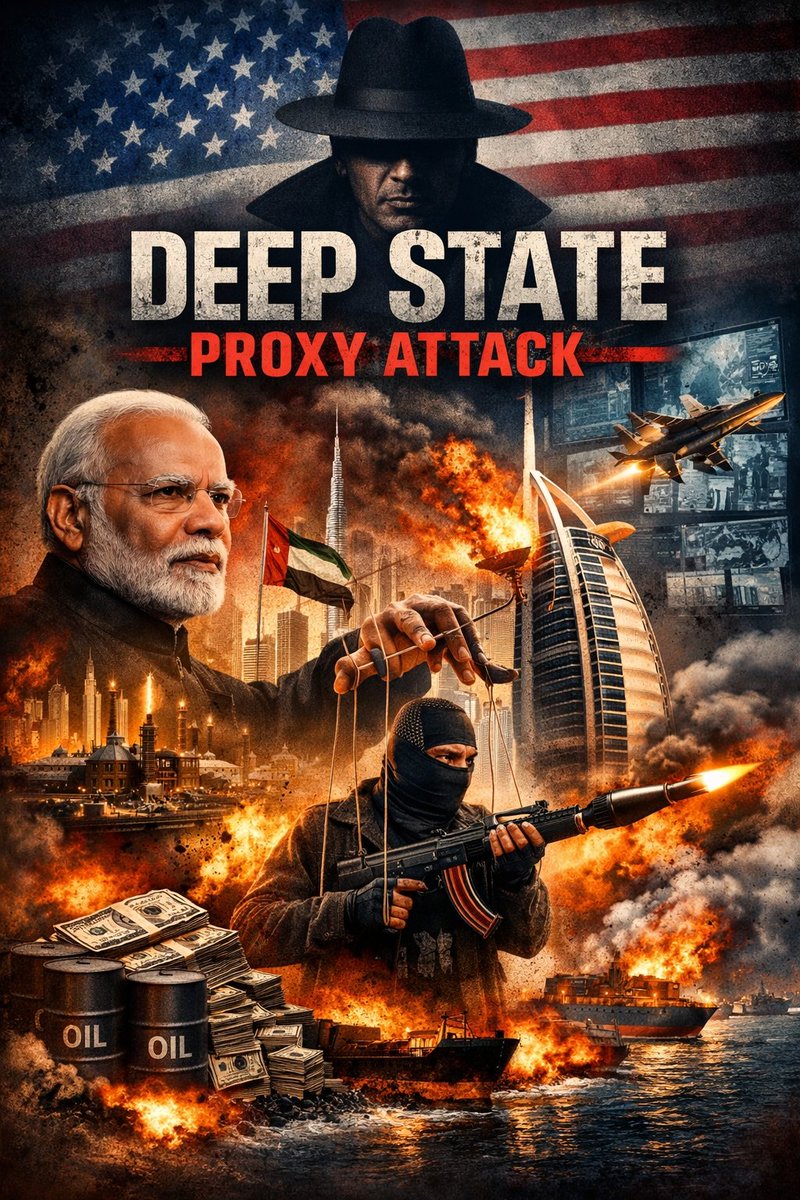
Geopolitics in Motion: The Proxy Game Unfolds
The United States has long been accused of guarding its sphere of influence with an iron grip. History shows that whether it’s Saudi Arabia, the UAE, or any other ally in the Gulf, Washington’s deep state machinery rarely tolerates deviation. The moment a nation attempts to chart an independent course, the machinery of pressure, proxy, and narrative control seems to activate.
Just one day after Prime Minister Modi signed landmark deals with the UAE — agreements that symbolized India’s growing outreach and the UAE’s willingness to diversify its partnerships — the Gulf was rocked by an attack. Coincidence? Or a carefully timed message?
The Cover-Up Narrative
Analysts argue that this was not a random strike. Instead, it bore the hallmarks of a proxy operation — a strike designed to send a signal without leaving fingerprints. The UAE, fresh from signing deals with India, suddenly found itself under fire. The timing raises uncomfortable questions: was this meant to remind the Emirates that stepping outside Washington’s fold comes at a cost?
Deep State Activation
The phrase “deep state” often conjures images of shadowy networks pulling strings behind the scenes. In this case, the activation seems clear: a proxy strike that destabilizes confidence, creates fear, and forces the UAE back into the familiar embrace of U.S. security guarantees. It’s a tactic as old as Cold War geopolitics — punish deviation, reward compliance.
India’s Role in the Equation
For India, the optics are stark. Modi’s visit and the signing of deals were meant to showcase India’s rising global stature, its ability to forge independent partnerships, and its willingness to stand shoulder-to-shoulder with Gulf allies. Yet, within hours, the narrative shifted. Instead of celebration, the headlines carried news of attacks. The symbolism is powerful: every step away from Washington’s orbit is met with turbulence.
Proxy Wars and Energy Politics
The Gulf has always been the chessboard of energy politics. Pipelines, ports, and production caps are not just economic tools — they are levers of power. The UAE’s willingness to explore new routes and partnerships threatens the delicate balance that the U.S. has long maintained. By allowing oil to bypass chokepoints like the Strait of Hormuz, the Emirates reduce the leverage of traditional players. That alone is enough to trigger a response.
The Bigger Picture
This incident is not just about one attack. It’s about the message: no ally can leave the fold without consequences. Whether through economic sanctions, diplomatic isolation, or proxy strikes, the machinery ensures compliance. The UAE’s experience serves as a reminder to others — Saudi Arabia, Qatar, even Turkey — that independence comes at a price.
To Sum-up
The timing of the attack, the symbolism of the deals, and the activation of proxy forces all point to a deeper reality: the U.S. will not easily allow its allies to walk away. For India, this is a test of resilience. For the UAE, it is a reminder of vulnerability. And for the world, it is yet another chapter in the ongoing saga of deep state geopolitics.
#USDeepState #ProxyWars #ModiInUAE #Geopolitics #EnergyPolitics #GlobalPowerPlay #MiddleEastConflict #IndiaUAEDeals #CoverUpNarrative #DeepStateActivated
1
2
97

May 17
PM Modi’s timely strategic stroke: India and UAE as a new arc of stability in West Asia
yespunjab.com/?p=253479
#PMModi #UAE #IndiaUAE #WestAsia #StrategicPartnership #NarendraModi #AbuDhabi #MiddleEast #IndiaDiplomacy #EnergySecurity #AI #Geopolitics #CEPA #IndiaUAEties #ModiInUAE
@narendramodi
80


May 16
UAE में शेखों से गले मिले PM Modi | भारत में मुसलमानों से ज्यादती पर चुप्पी क्यों?
#InquilabHindi #ModiInUAE #MuslimIssue #IndiaNews #BreakingNews
1
2
26

అబుదాబిలో ఒక చారిత్రాత్మక దినం! 🇮🇳🇦🇪 యూఏఈ అధ్యక్షుడు హిజ్ హైనెస్ షేక్ మొహమ్మద్ బిన్ జాయేద్ అల్ నహ్యాన్ గారు ప్రధానమంత్రి శ్రీ @narendramodi జీకి ఘన స్వాగతం పలికారు. ఇంధన భద్రత మరియు వ్యూహాత్మక రక్షణ భాగస్వామ్యంపై సంతకం చేసిన కీలక అవగాహన ఒప్పందాలతో (MoUs), ఈ పర్యటన భారత్-యూఏఈ (India-UAE) సమగ్ర వ్యూహాత్మక భాగస్వామ్యంలో కొత్త అధ్యాయానికి నాంది పలికింది. భారతదేశ అభివృద్ధి ప్రయాణంలో $5 బిలియన్ల పెట్టుబడుల నిబద్ధతతో, మన రెండు దేశాల మధ్య బంధం మునుపెన్నడూ లేనంత బలోపేతమైంది!
A truly historic day in Abu Dhabi! 🇮🇳🇦🇪 Prime Minister Narendra Modi ji was accorded a magnificent ceremonial welcome by UAE President His Highness Sheikh Mohamed bin Zayed Al Nahyan. This visit marks a new chapter in the India-UAE Comprehensive Strategic Partnership, with major MoUs signed for energy security (strategic petroleum reserves and LNG/LPG supplies) and a landmark Framework for Strategic Defence Partnership. With a massive $5 billion investment commitment into India's growth story, the bond between our two nations is stronger than ever!
@BJP4India @BJP4Andhra
#IndiaUAEPartnership
#ModiInUAE
#StrategicGrowth
#DiplomacyInAction
#IndiaUAEEconomicTie
1
6
97

May 16
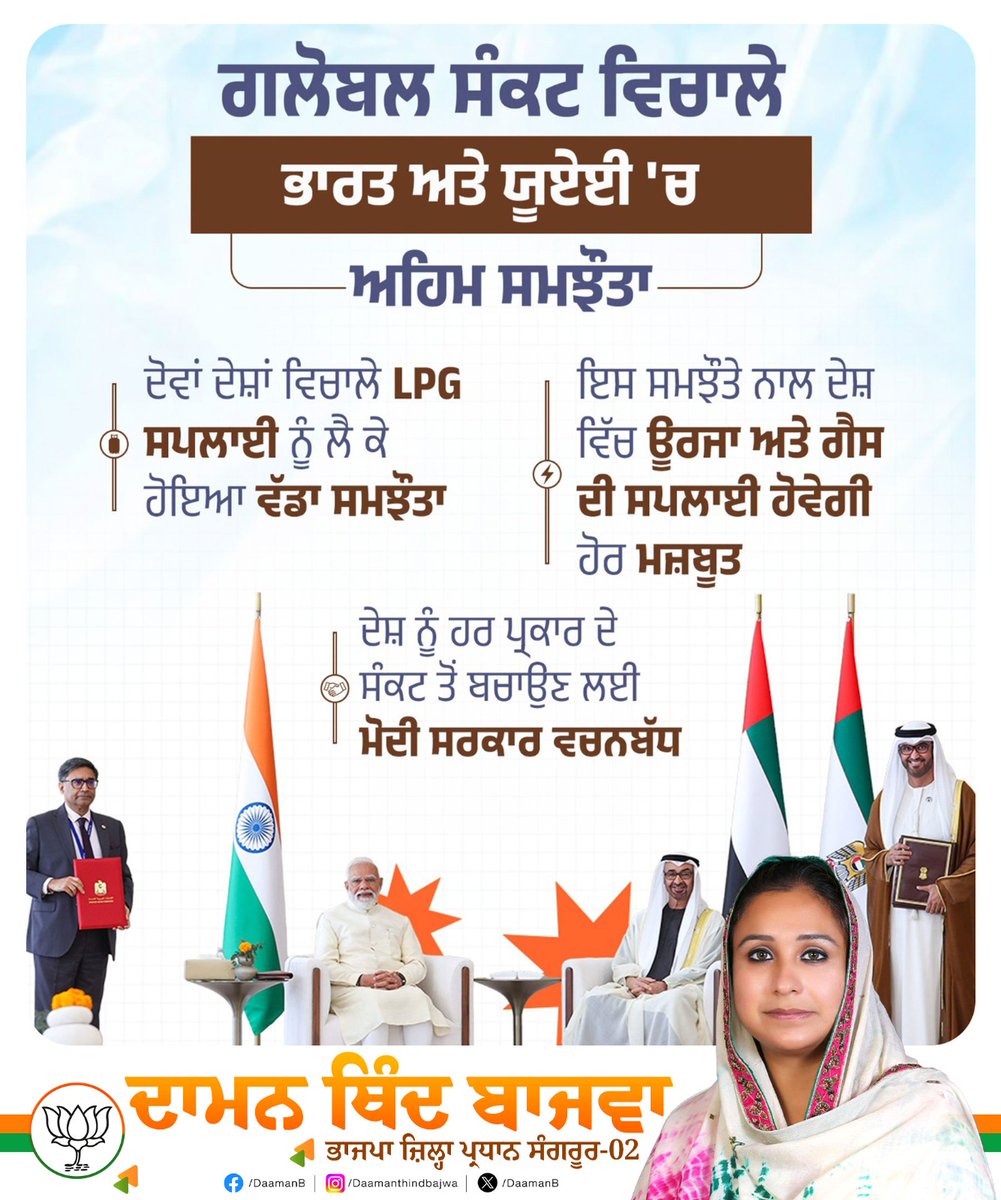
ਭਾਰਤ ਅਤੇ ਯੂਏਈ ਵਿਚਾਲੇ LPG ਸਪਲਾਈ ਨੂੰ ਲੈ ਕੇ ਹੋਇਆ ਵੱਡਾ ਸਮਝੌਤਾ ਹੋਇਆ ਹੈ। ਇਸ ਸਮਝੌਤੇ ਨਾਲ ਦੇਸ਼ ਵਿੱਚ ਊਰਜਾ ਅਤੇ ਗੈਸ ਦੀ ਸਪਲਾਈ ਹੋਰ ਮਜ਼ਬੂਤ ਹੋਵੇਗੀ।
#LPG #ModiinUAE #BJP #BJP4IND #BJP4Punjab #DaamanBajwa @BJP4Punjab
6
33

May 16
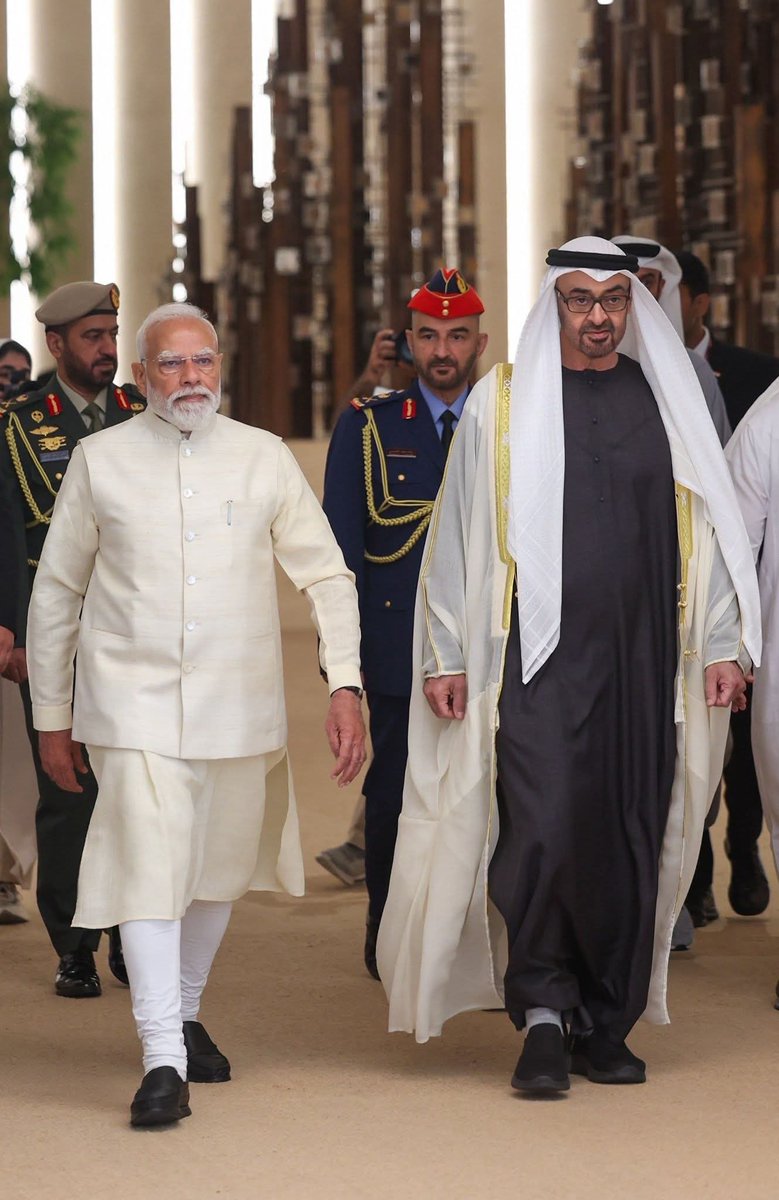
इंडी गठबंधन और चमचों ने प्रधानमंत्री मोदी की विदेश यात्राओं का मज़ाक उड़ाया था। अब वही यात्राएँ भारत की ऊर्जा सुरक्षा को मज़बूत कर रही हैं।
UAE भारत में तीस मिलियन बैरल क्रूड ऑइल स्टोर करेगा
• ये उसका आपातकालीन रिजर्व होगा
• UAE इसका किराया भारत को देगा
• भारत भी इसका उपयोग आपातकाल में करने के लिए स्वतंत्र होगा
इसी के लिए कहा गया है "आम के आम गुठलीयों के भी दाम"🫡
#ModiInUAE #ForeignTrips #Investment #NationFirst #indiavotes
1
7
7
114

माननीय प्रधानमंत्री श्री @narendramodi जी के ऐतिहासिक यूएई दौरे की विशेष झलकियां। आज के जटिल वैश्विक परिदृश्य में भारत और यूएई की यह अटूट साझेदारी न केवल दोनों राष्ट्रों की प्रगति के लिए, बल्कि वैश्विक स्थिरता और समृद्धि के लिए भी अत्यंत महत्वपूर्ण है। व्यापार, संस्कृति और तकनीक के क्षेत्र में साझा संकल्पों के साथ भारत हर परिस्थिति में अपने इस विश्वसनीय मित्र देश के साथ कंधे से कंधा मिलाकर खड़ा है।
#PMModi
#IndiaUAEFriendship
#GlobalDiplomacy
#ModiInUAE
19
60
203

May 16
For those still asking why PM Modi Ji visits foreign nations…
Here’s the answer... stronger India, bigger global respect, and massive opportunities for every Indian💪
#UAEINDIA #NarendraModiUAEVisit #ModiInUAE
2
3
32

The UAE visit strengthened India’s energy resilience and strategic economic security. The Netherlands visit signals the next phase — technology, semiconductors, clean energy, defence innovation, and global supply-chain positioning.
This is not diplomacy in isolation. It is a calibrated vision placing India at the intersection of energy security, technological leadership, and trusted geopolitical partnerships in an increasingly uncertain world. 🇮🇳
PM Narendra Modi continues to position Bharat not merely as a market, but as a future global strategic power.
#ModiInNetherlands #ModiInUAE #IndiaNetherlands #IndiaUAE #Semiconductors #EnergySecurity #StrategicPartnership #ViksitBharat #AatmanirbharBharat #Technology #CleanEnergy #GlobalIndia #Geopolitics #NewIndia #Defence #Innovation #SupplyChain #Trade #Diplomacy #FutureReadyIndia #EconomicGrowth #AI #DigitalIndia #Manufacturing #MakeInIndia #Europe #MiddleEast #GlobalLeadership
1
1
12
119
With bilateral trade crossing $100 billion annually, strategic defence cooperation expanding, and 3.5 million Indians contributing to the UAE’s growth story, the India–UAE partnership is far beyond symbolism — it is a pillar of economic resilience and regional stability.
PM Narendra Modi’s visit reflects how strong diplomacy today is shaping energy security, strategic trust, and global partnerships for tomorrow. 🇮🇳🇦🇪
#ModiInUAE #IndiaUAE #UAE #India #StrategicPartnership #EnergySecurity #Diplomacy #GlobalIndia #ViksitBharat #NewIndia #EconomicGrowth #DefenceCooperation #Trade #MiddleEast #Geopolitics #NationFirst #AatmanirbharBharat
2
10
80