
ok so
odometry tracks external movement and drift
robot proprioception is just control theory for internal sensors
I was wondering if it's of any use for a robot to broadcast the knowledge of its parts to each other part
6

classical robotics calls that odometry. Using motion sensors/encders to determine robot positioning, velocity at all times
2
11

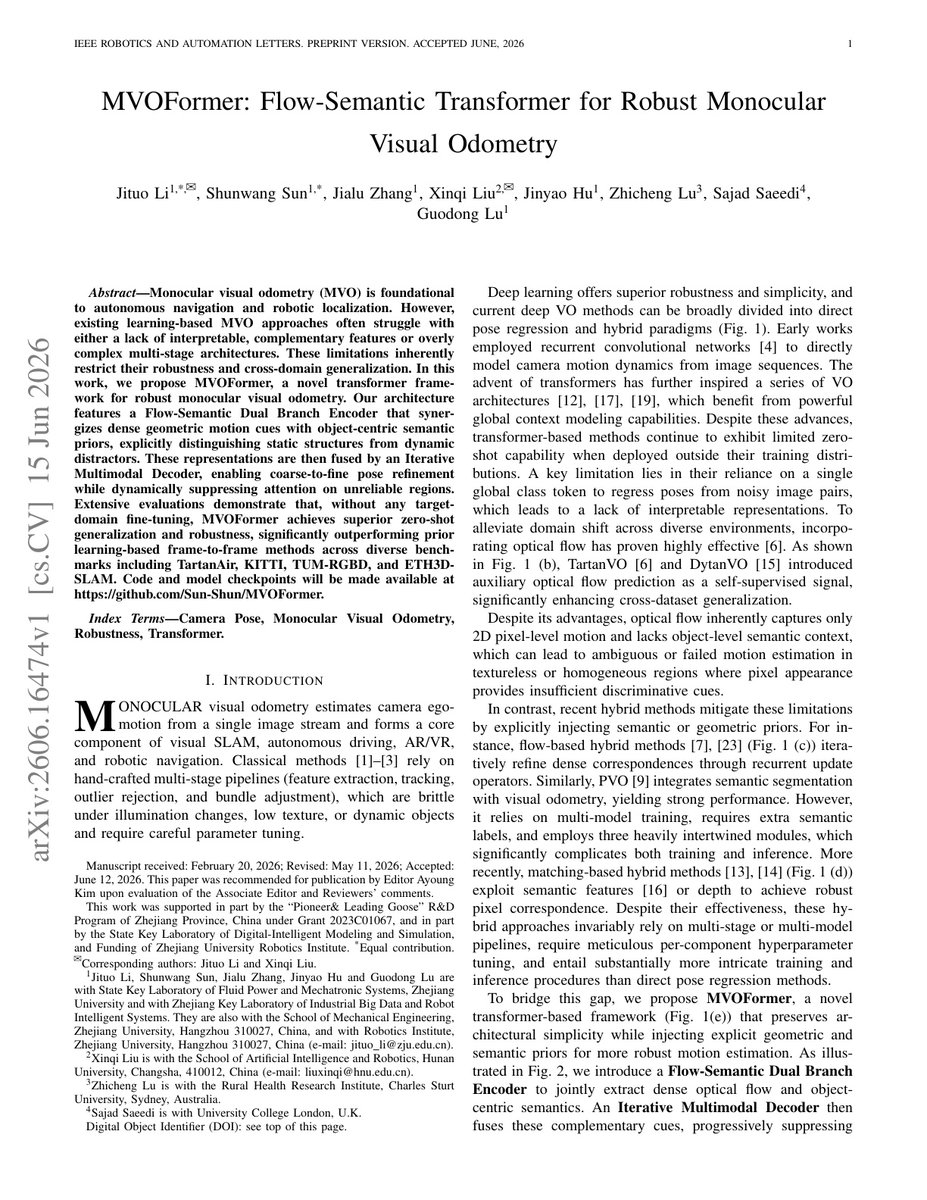
Visual odometry used to crumble with even slight changes in lighting or new environments. 😩 Now? MVOFormer uses a Flow-Semantic Transformer to lock onto what *actually* matters for rock-solid motion tracking. ⚡
📄 arxiv.org/abs/2606.16474v1
1
Black Coffee retweeted

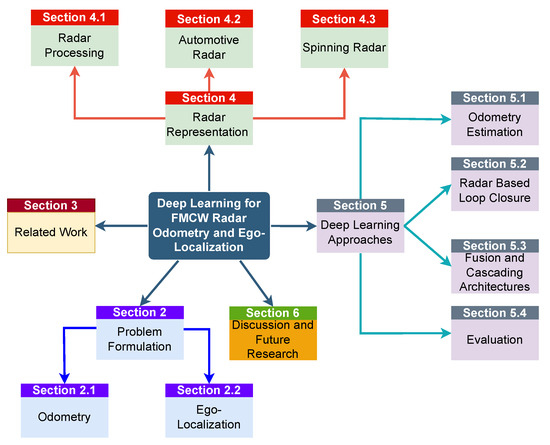
Read paper "Survey of Deep Learning-Based Methods for FMCW Radar Odometry and Ego-Localization" from our EBM Prof. Tobias Meisen (University of Wuppertal, Germany).
See more at mdpi.com/2076-3417/14/6/2267
1
1
18

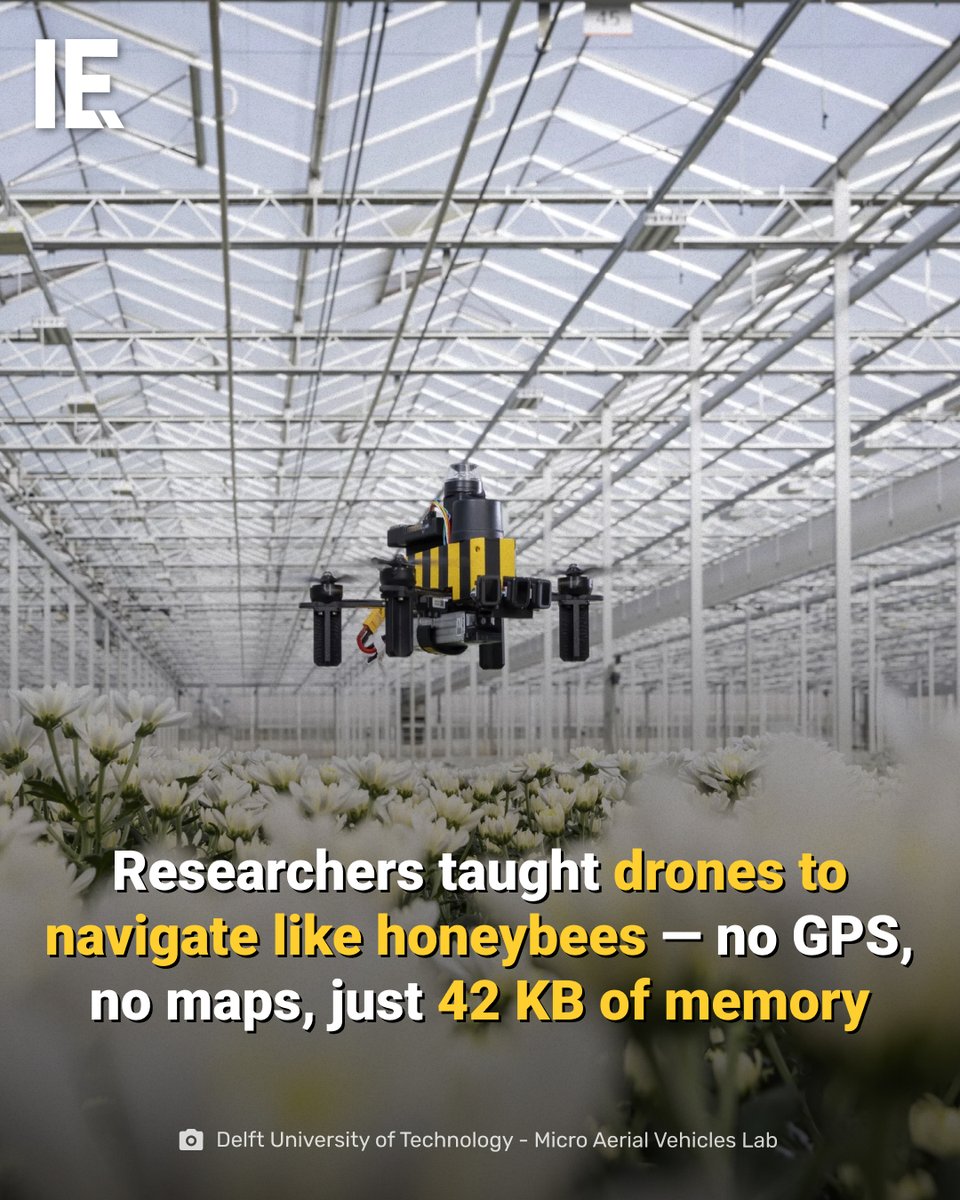
A team at Delft University of Technology has developed a drone navigation system called Bee-Nav, modeled on how honeybees find their way home. The system enables drones to return to their starting point without GPS or computationally intensive mapping, using a neural network requiring just 42 KB of memory — roughly the size of a WhatsApp sticker. Honeybees navigate by combining odometry — tracking movement based on body motion — with visual memories of landmarks gathered during short "learning flights" near their hive. Bee-Nav replicates this strategy: the drone first performs a brief learning flight, capturing panoramic images of its surroundings. A small neural network then uses those images to estimate direction and distance back to the starting point. In tests at the Dutch drone research facility Unmanned Valley, the system successfully guided a drone home after a flight of more than 600 meters. Indoor performance was near-perfect; outdoor success rates dropped to around 70% in windy conditions, as wind-induced tilting altered the drone's view of its surroundings. The researchers note that improving wind robustness is a key area for future development. Potential applications include agricultural monitoring in greenhouses, warehouse robotics, environmental monitoring, and drone swarms — particularly in settings where GPS is unavailable and weight and power consumption are critical constraints. The research is published in Nature.
#Drones #Robotics #AI #Nature #Engineering
2
5
19
2,030

21h
ArcForge — a ground-control autonomy stack for small drones and rovers, built around one bet: the hard part of field autonomy isn't flying, it's operating when GPS, comms, and the link to your operator all go away.
GPS-denied navigation — terrain/skyline matching against DEMs, visual odometry, and visual loop-closure anchored to launch. (Demoed out-and-back drift of ~2.4m with no GPS or horizon.)
Comms-denied autonomy — decentralized peer-to-peer mesh swarming, no ground station required. Signed target tracks (Ed25519), replay protection, multi-peer corroboration before anyone acts.
Anti-tamper kill-switch — zero-trust crypto-erase that wipes the nav IP if a drone is captured. Proven on real hardware.
Human-in-the-loop targeting — DoDD 3000.09-aligned classify → signed nomination → explicit authorize/abort. Refuse-by-default; no silent actuation.
Perception — tiled inference for spotting people from altitude (small-object recall 17% → 83% in eval), EW-aware path planning, cross-domain (air↔ground) target handoff, and a search-and-rescue mode that geolocates detections into a rescuer CSV.
64
22h
Tiny team, big stack: GPS-denied autonomy (visual odometry, terrain-relative nav, EW-aware planning, mesh swarm).
1
93

Jun 15
On-device VLMS are making cheap autonomous drones far more capable.
A small drone no longer needs constant cloud access or a human operator staring at a video feed. With edge AI running on low-power chips, it can interpret scenes locally, follow language-level instructions, distinguish objects in context, and keep operating when GPS or comms are degraded.
That is a major step toward inexpensive autonomous swarms.
But it also exposes the weakness of the current “vision-first” autonomy model: cameras plus AI are not enough for contested environments.
Vision is fragile. Fog, smoke, dust, rain, darkness, glare, motion blur, feature-poor terrain, and visual deception all degrade optical perception. GPS denial forces drones to rely more heavily on onboard visual odometry and SLAM, which can drift or fail when the scene lacks stable features. LiDAR helps in clear conditions, but it is still an optical/laser modality and can also be degraded by obscurants.
The bigger problem is adversarial: modern counter-drone environments will not just jam radios. They will attack sensors directly. Engineered aerosol clouds, multispectral smoke, IR-obscuring particles, laser attenuation, GPS denial, RF jamming, and deception can combine to blind or confuse camera/LiDAR-dependent systems in seconds.
No matter how intelligent the VLM is, if the sensor feed collapses, the model is reasoning over garbage.
So the future is not “vision-only autonomy.” It is multimodal autonomy.
Resilient drone swarms need sensor fusion across different physics: IMU/INS for dead reckoning, radar for ranging and velocity through many degraded visual environments, thermal for heat signatures, acoustic arrays for passive detection, RF/ESM for emitter awareness, and vision/LiDAR when conditions allow. Edge AI then fuses these streams so the system degrades gracefully instead of failing catastrophically.
That is the decisive shift: cheap compute intelligent multimodal sensing.
On-device VLMs make autonomous swarms scalable. Multisensor fusion makes them survivable. Without fusion, vision-centric drones remain brittle against weather, jamming, smoke, aerosols, and deliberate sensor attack. With fusion, autonomy becomes far harder to blind, spoof, or disable with any single countermeasure.
55


Jun 13
Successfully publishing vision camera data, transforms and odometry over ROS2 and visualizing in RViz.
2
67

Jun 13
seeing those raw GPS coordinates hits different. we usually treat spatial data as just vectors for odometry, but mapping your routines back years stops feeling like telemetry. starts reading like a diary, wild how much metadata quietly piles up.
1
1
467
Junxiao Lin retweeted

Jun 13
My Science Robotics paper about sensorimotor learning for precise aggressive maneuvers (without odometry calculation and traj opt) is online now! I will briefly present this work in days later.
P.S. I transfer to working on dex manip now.
Jun 12

A new framework enables a quadrotor to fly through a series of narrow windows, moving targets, and gaps of different shapes.
Learn more in Science #Robotics: scim.ag/3S0Qctu
2
3
33
5,826

Jun 13
VBAT Vs Poseidon H12: Γιατί Η Σύγκριση Είναι Λάθος Ερώτημα
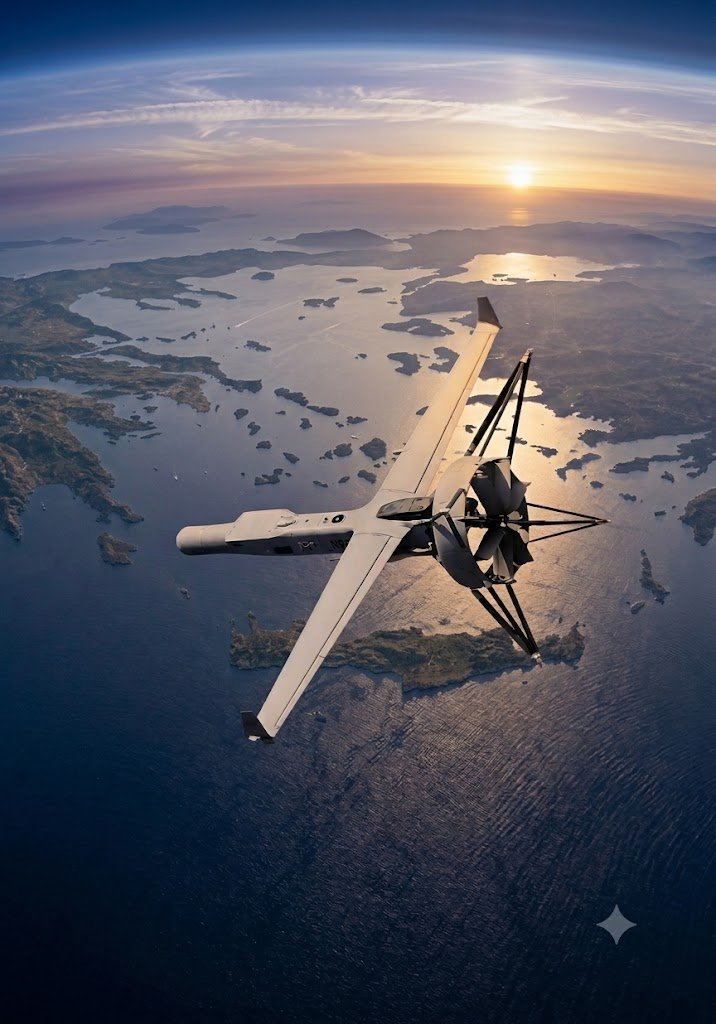
Στις 11 Ιουνίου 2026 η Βουλή ενέκρινε πρόγραμμα €71 εκατ. για 10 VBAT (MQ-35A) από την Shield AI, μέσω NSPA. Μια μερίδα σχολιαστών ρώτησε γιατί να μην επιλεχθεί το Poseidon H12 της Swarmly, ένα VTOL κυπριακής ανάπτυξης με επιχειρησιακό ιστορικό στην Ουκρανία. Είναι θεμιτό ερώτημα. Για να απαντηθεί, όμως, πρέπει να κοιτάξουμε πού πραγματικά βρίσκεται η διαφορά.
Το πιο ισχυρό επιχείρημα δεν βρίσκεται στα spec sheets. Βρίσκεται στο γεγονός ότι αυτή είναι follow-up παραγγελία. Ο Ελληνικός Στρατός απέκτησε 4 VBAT τον Μάιο του 2025, τα χρησημοποίησε σε πραγματικές συνθήκες, και τώρα παραγγέλνει άλλα 10. Καμία επιτροπή δεν εγκρίνει €71 εκατ. για σύστημα που απογοήτευσε. Η επαλήθευση έγινε από τον ίδιο τον χρήστη, στο πεδίο, με ελληνικά πληρώματα, σε ελληνικές συνθήκες (και γειτονικές παρεμβολές, θα συμπλήρωνε κάποιος).
Το δεύτερο είναι επιχειρησιακό, όχι τεχνικό. Το VBAT αναπτύσσεται από 2 άτομα, σε 15 λεπτά, από κατάστρωμα πλοίου εν κινήσει, επαληθευμένα από σχεδόν κάθε κλάση πλοίου του αμερικανικού Ναυτικού και από όλες τις 7 Marine Expeditionary Units. Το H12 έχει σχεδιαστεί για χερσαία εκστρατευτική βάση. Ο κατασκευαστής ισχυρίζεται ναυτική ικανότητα, αλλά δεν υπάρχει δημόσια τεκμηριωμένη επιβεβαίωση ανάπτυξης από κατάστρωμα υπό συνθήκες παρόμοιες με αυτές του Αιγαίου. Για ένα Ναυτικό που επιχειρεί σε νησιωτικό περιβάλλον με εκατοντάδες σημεία ανάπτυξης, αυτή η διαφορά δεν είναι τεχνική λεπτομέρεια. Είναι επιχειρησιακή προϋπόθεση.
Το τρίτο επιχείρημα αφορά αυτονομία σε αντίξοες συνθήκες. Δεν είναι όλα τα συτήματα πλοήγησης τα ίδια, και τα Γερμανικά V2 του Β ΠΠ λειτουργούσαν σε περιβάλλον χωρίς GPS... Συνεπώς αυτό πό μόνο του δεν π΄ρεπει να μας λεει πολλά.
Το Hivemind δεν είναι απλά INS με GPS fallback. Έχει ΑΙ, τρέχει onboard, χωρίς datalink, χωρίς επικοινωνία με χειριστή, εκτελώντας αποφάσεις σε πραγματικό χρόνο μέσω visual odometry και sensor fusion. Σε περιβάλλον έντονης ηλεκτρονικής παρεμβολής, όπου η απώλεια GPS και datalink είναι πιθανό σενάριο, αυτό είναι η διαφορά μεταξύ αποστολής που συνεχίζεται και αποστολής που ακυρώνεται. Το H12 λειτουργεί επίσης σε GNSS-denied περιβάλλον, με επιχειρησιακή εμπειρία στην Ουκρανία, αλλά ο τεχνικός τρόπος επίτευξης δεν έχει ανεξάρτητα τεκμηριωθεί σε αντίστοιχο επίπεδο.
Το τέταρτο επιχείρημα είναι το μακροπρόθεσμο και συχνά παραλείπεται από τη συζήτηση. Η Shield AI ανακοίνωσε παρουσία στην Αθήνα και πρόσβαση στο Hivemind SDK. Αυτό σημαίνει ότι η απόκτηση VBAT δεν είναι απλή αγορά πλατφόρμας. Είναι είσοδος σε ένα autonomy ecosystem που ήδη τρέχει σε πλατφόρμες Airbus, Kratos και US Navy BQM-177A, και αξιολογείται για το αμερικανικό πρόγραμμα Collaborative Combat Aircraft. Το ίδιο Hivemind που σήμερα πετά ISR αποστολές στο Αιγαίο είναι η αρχιτεκτονική αυτονομίας που θα υποστηρίζει τα loyal wingman συστήματα επόμενης γενιάς. Η Πολεμική Αεροπορία θα προχωρήσει σλιγουρα σε κάτι ανάλογο στα επόμενα χρόνια. Το πρώτο βήμα, η εξοικείωση με το ecosystem, έχει ήδη γίνει.
Υπάρχει και μια διάσταση διαλειτουργικότητας που δεν αναφέρεται συχνά. Το VBAT χρησιμοποιείται ήδη από US Navy, USMC και άλλα μέλη του ΝΑΤΟ. Κοινά πρότυπα ανταλλαγής δεδομένων, κοινά TTPs, άμεση ενσωμάτωση σε συμμαχικές επιχειρήσεις. Σε μία Ανατολική Μεσόγειο, αλλά και Ερυθρά Θάλασα και Ινδικό Ωκεανό, όπου η Ελλάδα επιχειρεί συχνά δίπλα σε συμμαχικές δυνάμεις, αυτό δεν είναι αμελητέο.
Το H12 δεν είναι κατώτερο σύστημα. Το μεγαλύτερο φορτίο του, 50 kg έναντι 18 kg, το καθιστά καταλληλότερο για αποστολές που απαιτούν βαρύτερα οπλικά πακέτα. Και η εμπειρία του στην Ουκρανία είναι πραγματική. Αλλά η απόφαση αγοράς VBAT δεν είναι απόρριψη του Poseidon. Είναι επιλογή βασισμένη σε επιβεβαιωμένη επιχειρησιακή ωριμότητα, σε αποδεδειγμένη ναυτική ικανότητα, και σε ένα στρατηγικό στοίχημα για το πού οδηγεί η αυτονομία στα επόμενα χρόνια.
Το πραγματικό ερώτημα δεν είναι VBAT ή Poseidon, αλλά αν η Ελλάδα επιτέλους αντιμετωπίζει αυτές τις προμήθειες ως στρατηγικές επενδύσεις σε τεχνολογική αρχιτεκτονική, ή αν είναι απλώς αγορές εξοπλισμού.
#HellenicArmedForces #UAV #VBAT #ShieldAI #Hivemind #Swarmly #PoseidonH12 #GreekDefense #ISR #AegeanSecurity #MDA #Autonomy #ΕλληνικέςΈνοπλεςΔυνάμεις #DefenceIndustry
3
7
29
1,083

Jun 13
We first tried a couple of approaches that didn't work. Processing the video off-board added too much latency, and markerless visual odometry was unreliable on a small, vibrating airframe with little texture to track indoors.
1
18

Jun 12
I don't believe they can make it more accurate without making it Neptun 2.0 and its complex seeker. It flies too fast for visual/inertial odometry, they would need radar altimeters and terrain data.
8