
May 25
Choosing the Right Graph
The right graph is rarely just about the data model. It is also about the organisation around it.
Since roughly 2012, the knowledge graph category has collapsed two quite different intellectual traditions into a single marketing category.
The first - RDF and OWL - descends from formal logic, knowledge representation, library science and Berners-Lee's Semantic Web. The second - the labeled property graph (LPG) used by Neo4j, Apache TinkerPop and most contemporary graph databases - descends from graph theory, object-oriented databases and the operational demands of connected-data applications such as social networks, fraud detection and recommendation engines.
Both are graphs. Both are routinely called "knowledge graphs." Yet the data models, semantics, query languages, governance assumptions and engineering economics differ enough that picking the wrong one is a costly architectural mistake.
The question is often framed as RDF versus labelled property graph, but that can make the decision feel more like a technology debate than an architectural one. The discussion needs to focus on the problem being solved: what kind of meaning needs to be captured, how much governance is needed, what queries need to be supported, and how the graph will be used over time.
RDF and OWL can be powerful when shared meaning, standards, interoperability and reasoning matter. But they also need discipline around identifiers, vocabularies, modelling choices and stewardship.
Property graphs can be easier to start with and are very effective for operational workloads and application development. But simplicity at the start can become a constraint later if provenance, integration or semantic consistency becomes central.
The choice should be contextual. The best graph is not the one that looks most elegant on a slide. It is the one the team can govern, query, explain and evolve.
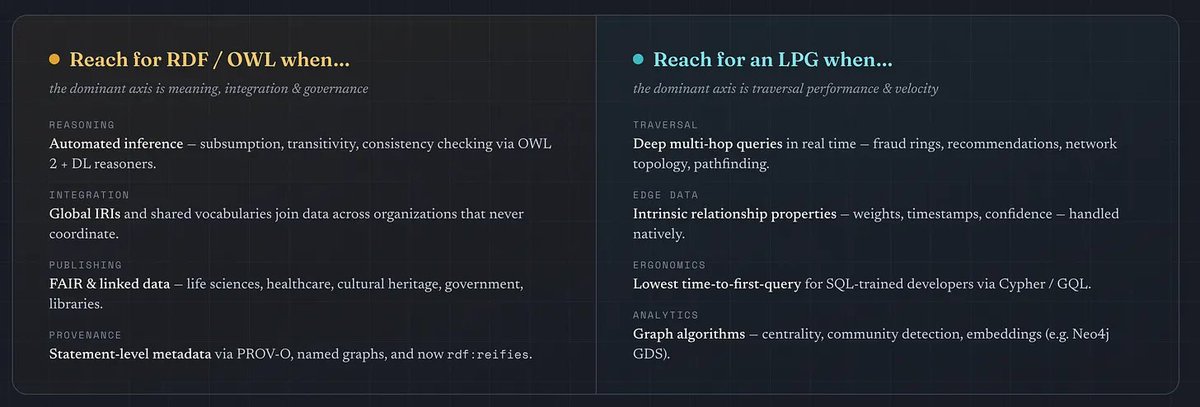
Use RDF/OWL when the dominant problem is meaning, integration across organizational boundaries, formal reasoning, FAIR/linked-open-data publishing, or long-term governance.
Use a labeled property graph when the dominant problem is operational, multi-hop traversal performance on connected data, rich edge attributes and developer ease of adoption within a controlled application boundary.
When both axes are equal, use a hybrid store such as Amazon Neptune or Stardog - and budget for the conceptual overhead of maintaining two query surfaces.
That said, RDF 1.2's native edge-annotation support shifts this formula, weakening one of the historical reasons to reach for an LPG in the first place.
A useful read if you are designing a graph strategy, selecting tools or bridging semantic modelling with delivery.
By Jessica Talisman h/t Sergey Vasiliev
jessicatalisman.substack.com…
#KnowledgeGraphs #RDF #PropertyGraphs #SemanticWeb #Ontology
--
📩 The Year of the Graph's Spring 2026 newsletter issue on all things #KnowledgeGraph, #GraphDB, Graph #Analytics / #DataScience / #AI and #SemTech is coming soon.
Subscribe and follow to be in the know. Reach out if you'd like to be featured 👇
yearofthegraph.xyz/newslette…
8
13
582

22 Jul 2025
What do reinforcement learning & #PropertyGraphs have in common?
🎥 Watch #ACED Craig Shallahamer's quick dive into how graphs bring #data to life — & why they’re key for modern #DataAnalytics, #AI, & beyond: bit.ly/4lZCdO9
#VNA #OraPub #database #SOUG
2
2
80

19 Nov 2024
Interested in #metadata analysis with #PropertyGraphs in #Oracle #23ai? Join me in room Stockholm today at 17:00 here at #DOAG2024. #oracleace
7
470

22 Sep 2024
Can we automatically convert Knowledge Graphs represented in #RDF to #PropertyGraphs?
The answer is yes, but how to do it properly is tricky!
@chkashifrabbani studied this in the paper we are going to present to #SIGMOD next year with @ang3ela
and @HoseKatja
22 Sep 2024

🎺🎺🎺We hare happy to announce the Round 1 accepted papers for SIGMOD 2025:
2025.sigmod.org/sigmod_paper…
Congratulations to all authors! 👏👏👏
Hope to see you in Berlin!
3
3
13
487

16 Jul 2024
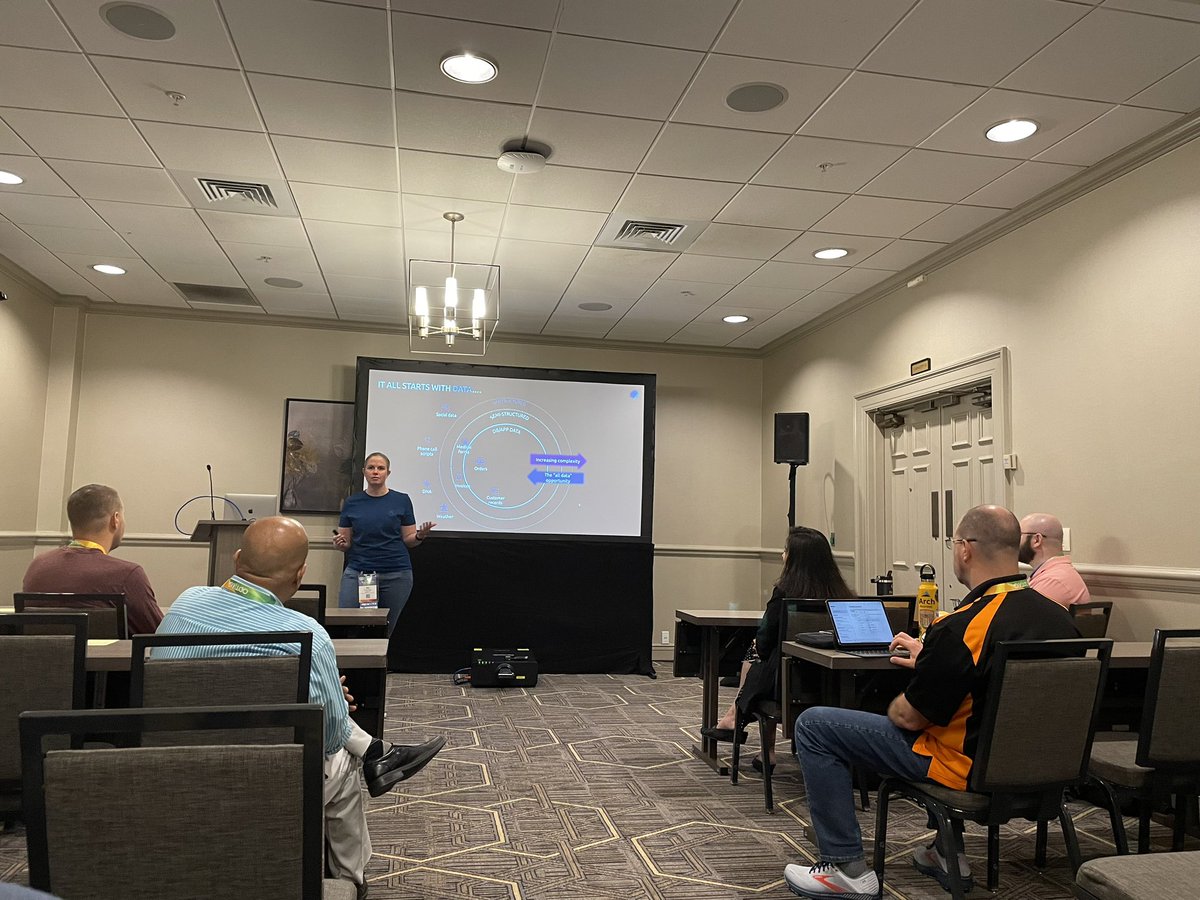
@Abi_Giles_Haigh talking about Game Changers: #Python, #VideoAnalysis, and #PropertyGraphs in Sports Analytics within the #Oracle Framework at #kscope24
1
1
130

11 Jul 2024
(2/6) Building Property Graphs With LlamaIndex
@llama_index Property Graphs 教学系列视频 (共 6 部),配合视频内容咱们逐一做一下内容总结分享。
本次是 Building Property Graphs With LlamaIndex 内容总结:
@MistralAI Cookbook => Third Party => LlamaIndex => propertygraphs Notebook 教程:
github.com/mistralai/cookboo…
btw.. 推荐大家关注 Mistral 开发者关系负责人 @sophiamyang 关于 Mistral 开源项目和模型等信息
教程主要内容:
> 环境和数据准备
以 paul_graham_essay.txt 为例讲解了环境安装和数据下载、加载的过程
> 构建 PropertyGraphIndex
指定 Documents、LLM、EmbedModel 等,我们可以看到构建过程:
>> Parsing Nodes: Index 解析文档为节点
>> Extracting Paths from Text: 节点传递给 LLM,在引导下生成知识图谱三元组,即表示路径的信息
>> Extracting Implicit Paths: 利用节点的 relationships 属性来推断隐含的路径信息
>> Generating Embeddings: 为每一个文本节点和图节点生成嵌入向量,这一过程会发生两次
> 查询 (Query)
查询 PropertyGraphIndex 通常涉及到使用一个或多个子检索器并结合它们的结果。
图检索的过程包含以下步骤:
>> 节点选取:在图中识别出感兴趣的初始节点。
>> 遍历:从选定的节点出发,探索与其相连的元素。
> 检索 (Retriever)
执行检索过程的 retriever,根据 query 和对应的 retriever 方案在 graph 中检索信息。
> 查询引擎 (query_engine)
执行查询过程的 query_engine
> 存储 (Storage)
默认情况使用简单直观的内存抽象来管理存储:
>> 对于嵌入使用 SimpleVectorStore
>> 对于属性图则使用 SimplePropertyGraphStore
这些结构可以被保存到磁盘上,并且可以从磁盘上加载。
> 使用向量数据库 Chroma
在图数据库 @neo4j 之外,选择 @trychroma Chroma 作为向量数据库,结合实现 SimplePropertyGraphStore.
9 Jul 2024

GraphRAG => Property Graphs
推荐 LlamaIndex 的 Property Graphs 教学系列视频,从基础概念、结合 neo4j 的构建、实战的提取和信息获取过程,非常推荐大家整体观看学习。
Youtube 视频作者 @ravithejads,链接:
youtube.com/watch?v=76sq5EgN…
关于 Property Graphs 的文章推荐在视频前先了解。
Introducing the Property Graph Index: A Powerful New Way to Build Knowledge Graphs with LLMs
via @llama_index
llamaindex.ai/blog/introduci…
Customizing property graph index in LlamaIndex
via @neo4j
llamaindex.ai/blog/customizi…
1
5
758

🔥Join the Knowledge Espresso Fireside Chat on Dec 13 with hosts Francois Scharffe, KGC & Melli Annamalai, @Oracle.
🔎Explore knowledge & #propertygraphs in #SQL.
❓Dedicated graph #databases vs. existing DBs for graph queries?
Free event. More info👇 meetup.com/knowledge-graphs-…
2
2
258

Audited @LDBCouncil benchmarking results position @OntotextGraphDB as the first #RDF engine to pass the SNB - territory reserved for #propertygraphs. RDF engines are now proven to match the historic advantages of LPG - edge properties & graph traversal. hubs.la/Q01Dlq-Y0
1
3
175
Recent audited @LDBCouncil results position @OntotextGraphDB as the first #RDF engine to pass the SNB - territory reserved for #propertygraphs. RDF engines are now proven to match the historic advantages of LPG - edge properties & graph traversal. hubs.la/Q01Dlq-W0
1
2
175

25 Jul 2022
We've just published a graph database fundamentals blog looking at #rdf, #propertygraphs, graph #schema languages, & #linkeddata. If you want to learn more about graphs then this is a great place to start:
terminusdb.com/blog/graph-da…
2
4
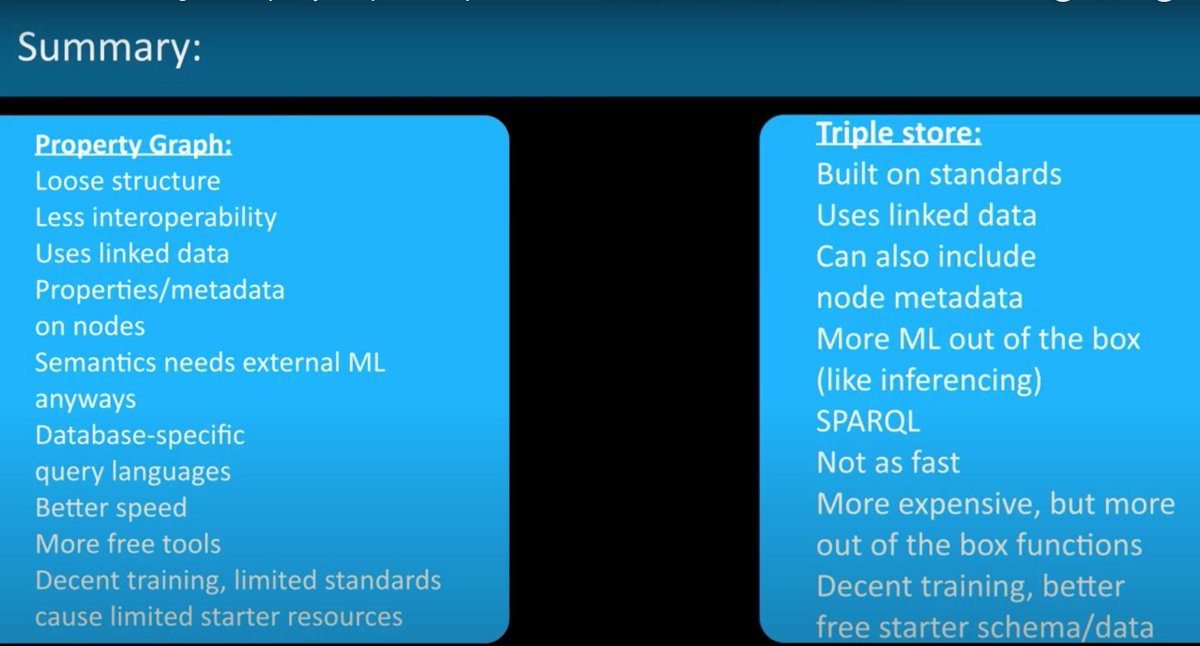
"The more mature we get in the graph space, the more #RDF triplestores & #propertygraphs would come together & work in harmony." And RDF*/SPARQL* & #GraphQL are the testament to that notion. @AshleighNFaith on the major differences b/n the two: hubs.la/Q014FhB90
1
7
The domination of labeled #propertygraphs (LPG) thanks to their native ability to deal w/ properties on edges in the graph & for graph traversal is over. Join Ontotext CEO @kiryakov_ak today to learn why & how: hubs.la/Q012x3vz0 #SPARQL #graphdb #datamanagement #semanticweb
2
Register for our live webinar tomorrow about RDF*, important effort to bridge the gap b/n #propertygraph & #RDF, & about the Graph Path Search plugin, which fills in the last gap of major functionality that #propertygraphs had as advantage. hubs.la/Q012w--v0
1
2
Join our CEO @kiryakov_ak for a live webinar on Jan 27 to learn how @OntotextGraphDB eliminates the main limitations of #RDF vs #propertygraphs by enabling edge properties w/ RDF* & key #graphanalytics w/n #SPARQL queries w/ the Graph Path Search plug-in. hubs.la/Q012Jtbv0
2
2
For years, two main advantages of #propertygraphs have been highlighted: they can deal w/ properties on edges in the graph & they are good for graph traversal. Join Ontotext's CEO @kiryakov_ak on Jan 27 to learn why #RDF/#SPARQL has taken the lead: hubs.la/Q012x6Nb0
1
4

23 Dec 2021
Flexibility is a strong driver behind the use of graphs. In this white paper, we compare the strengths and limitations of Knowledge Graphs versus Property Graphs and provide guidance on both. #knowledgegraphs #propertygraphs #datagovernance
hubs.li/Q0115NCC0
2
2

3 Dec 2021
I will show a comparison of how the different #RDF engines address the corner cases of #RDF-star and graph path search. I will wrap it up with a summary of why #PropertyGraphs are a misfit for #KnowledgeGraphs - the lack of formal semantics, interoperability and standards.
1
5
If you're interested in a discussion about why & how #RDF/#SPARQL has advanced beyond the advantages traditionally provided by labeled #propertygraphs (LPG), tune in to @kiryakov_ak talk at #CDW21 on Dec 3. Free access pass applies for the streaming.
29 Nov 2021

Welcoming @kiryakov_ak to #CDW21
@ontotext Founder & CEO, @LDBCouncil member
Semantic #GraphDB, reasoning, #knowledgegraphs, text mining, semantic tagging
Talk: RDF Leveled Advantages of LPG, Keeps 3 Key Benefits: Standards, Semantics, Interoperability 2021.connected-data.world/sp…

2
10

13 Sep 2021
Our webinar on Thurs, Sep 16 is a hands-on tutorial on exploring graph paths w/ #SPARQL - the latest new feature in #GraphDB, which positions the engine as a worthy equivalent to #propertygraphs. Register here: hubs.la/H0X6HqK0 #semantictechnology #semanticdata #graphdata
3

6 Sep 2021
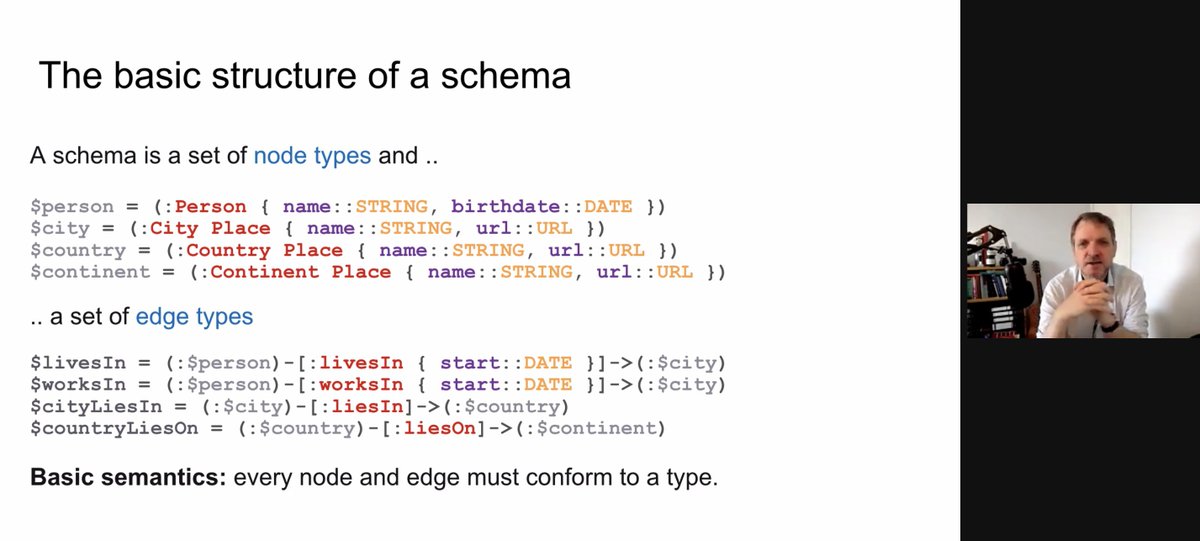
At #semanticsconf @jhidders explains sql-pgq in his keynote at the 1st Squaring the Circle on Graphs workshop. Will this deepen or ease the existing rift between #RDF and #PropertyGraphs? #scg2021 @juansequeda #KnowledgeGraphs #semanticweb
mosaicrown.github.io/scg2021…
2
11