
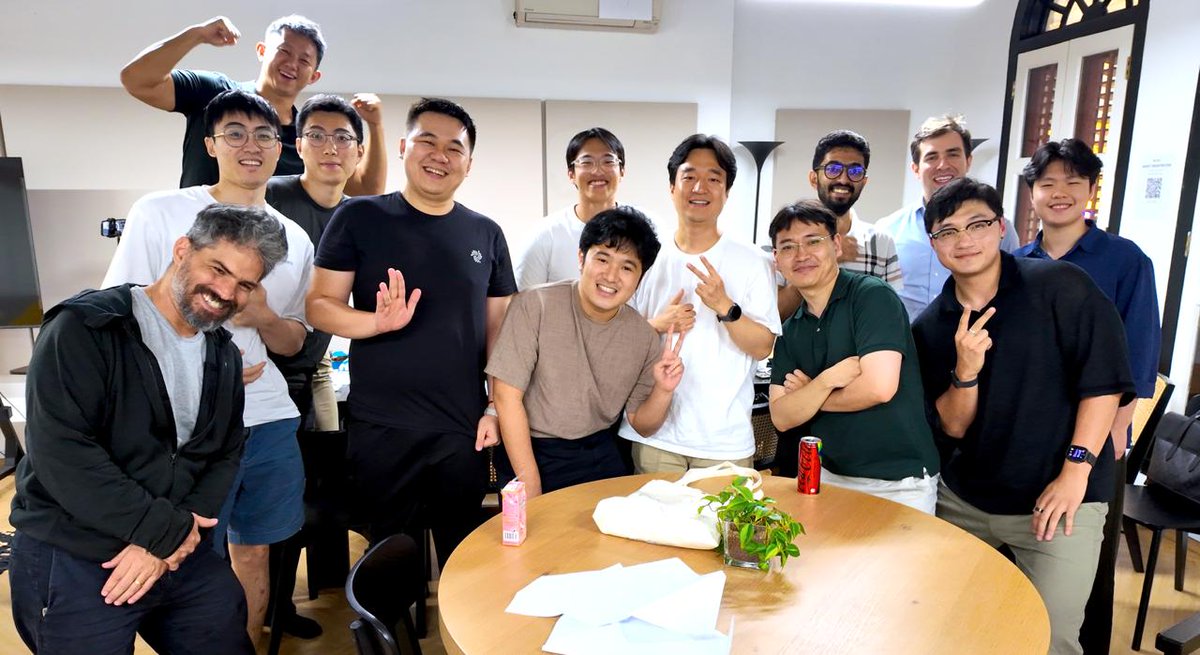
🇸🇬 SINGAPORE | 11th June 🇸🇬
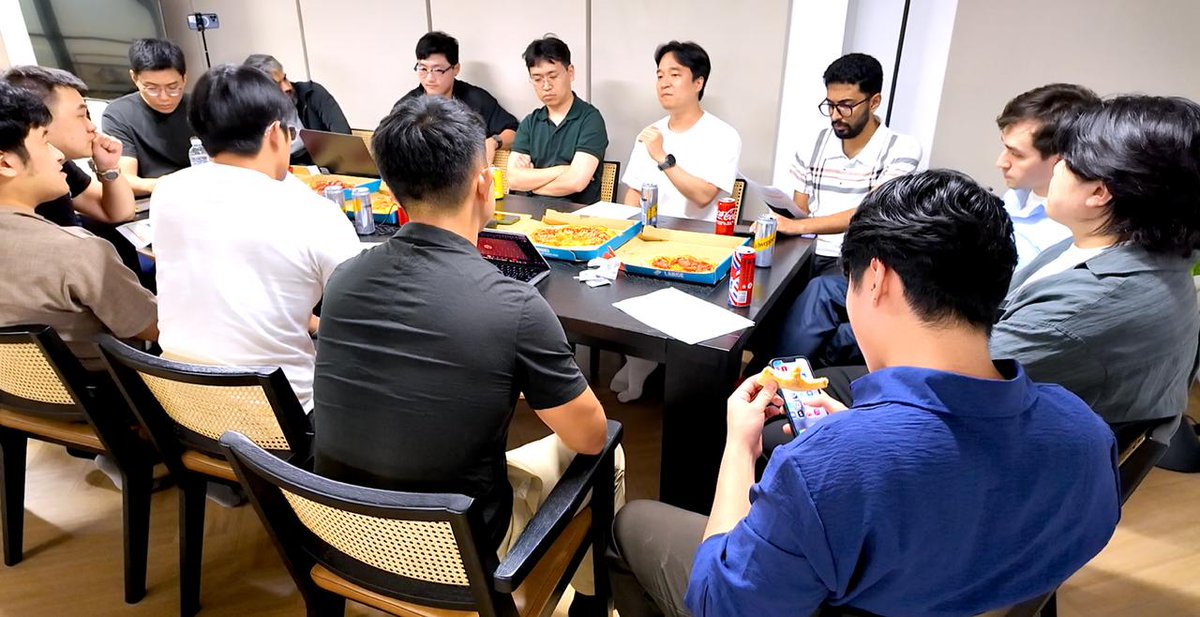
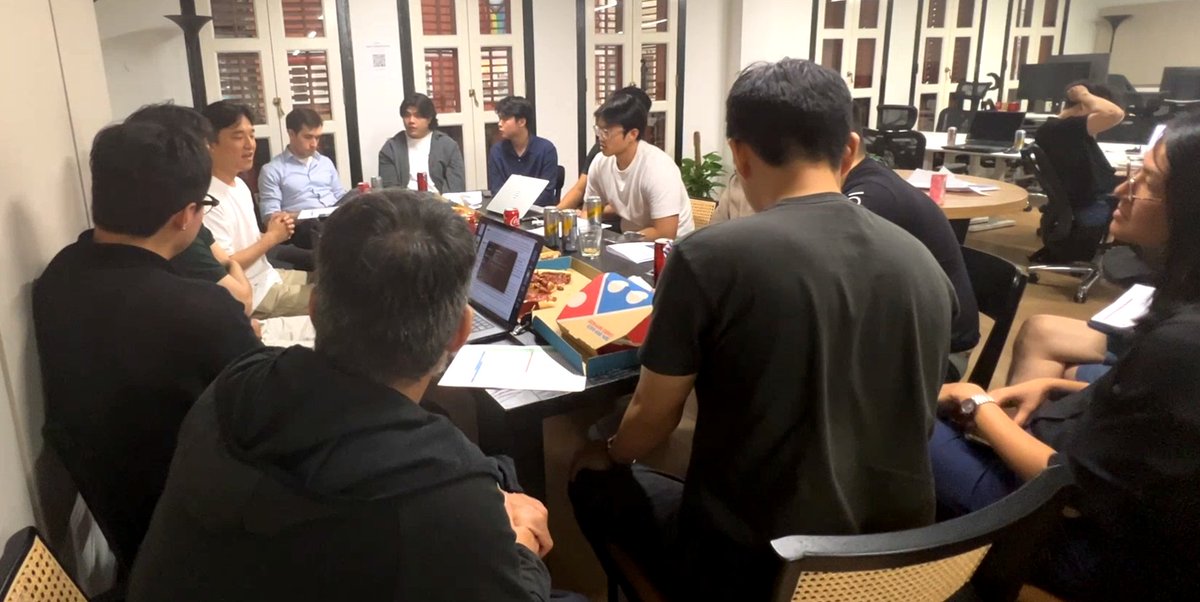
We hosted one of the most hardcore Whitepaper Reading Club sessions in Singapore last Thursday, where we were deciphering:
🧠 Cryptography’s XLA Moment: Why ZK may need a compiler, not another proving system 🧠
This session was led by @jumanzi_dev from Fractalyze, the team building “the PyTorch for ZK” — a Python-first compiler stack for Zero-Knowledge.
Big shoutout to our:
- Discussion: Jooman & Batzorig from Fractalyze for working on this amazing project. They are deeply passionate about what they do and I feel I've learned so much.
- Thank you to my partner in crime @BrianSeong who made this session possible.
- Great to see @ulandaoon @kowei1995 @9oelM and welcome @tomespel (welcome back to ZK)
🙏 Appreciate @kimmi from @SuperteamSG, for being there for us :)
📝 For more information:
- Fractalyze: fractalyze.io
- Event summary: docs.google.com/document/d/1…
📆 Upcoming events: luma.com/whitepaper
‼️ THE EVENT NOTES > TL;DR ‼️
(1) ZK’s Problem: zkVM/proving teams like @SuccinctLabs, @RiscZero, @ziskvm, OpenVM, Plonky3 (@0xPolygon), Jolt from @a16zcrypto, and Binius from @IrreducibleHW are all fighting the same hard problem: turning Rust/CUDA, memory layout, GPU execution, and field arithmetic into production-level proving performance.
(2) Fractalyze's Solution: Build ZK proving systems in high-level Python, then let a cryptography-native compiler handle optimization underneath.
(3) Zorch: Fractalyze’s stack aims to become the “PyTorch for ZK” — making proving systems easier to write, test, optimize, package, and deploy.
(4) The XLA Analogy: ML scaled as researchers stopped hand-writing kernels. @OpenXLA / MLIR helped high-level models compile into efficient hardware execution.
(5) Cryptography Needs the Same Layer: ZK, FHE, MPC, post-quantum crypto, and formal verification all need better compiler infrastructure if they are going to become real products they are going to become real products — see @zama, @TACEO_IO, @rv_inc, and @NethermindSec.
(6) Not Just Developer UX: The goal is not only abstraction. The deeper claim is that compiler automation can beat hand-written optimization by reasoning across the whole computation graph.
(7) Hardware Portability: Today’s ZK systems are often tied to specific @nvidia GPU assumptions. A compiler layer could make cryptographic workloads easier to move across CPU, GPU, FPGA, and future crypto-specific hardware — a direction also explored by teams like @Ingo_zk / ICICLE and @cysic_xyz.
(8) Ethereum: This matters for real-time block proving, lighter validation, larger block capacity, and the long-term vision of @ethereumfndn becoming easier to verify.
(9) Bigger Than ZK: The real question is whether advanced cryptography can move from research papers and hand-built systems into reusable infrastructure — the same way AI did.
🧠QUESTIONS:
(i) Is the next major ZK breakthrough a new proving system — or the compiler layer underneath all of them?
(ii) If Ethereum itself becomes ZK-powered, what is the future role of ZK rollups?
(iii) Can cryptography become a profitable product category, or is it closer to public-good infrastructure?
(iv) Will AI-generated code make formal verification and verifiable compute much more important?
(v) What happens when cryptography gets 100x or 1000x cheaper to run?
#ZK #Cryptography #Ethereum #MLIR #XLA #VerifiableCompute #Fractalyze #WhitepaperReadingClub

12
258

Even in its current state, IntelChain reduces computation by 5×, with verification completing in approximately 30 seconds.
Special thanks to @RiscZero for providing the proving infrastructure that makes this possible.
1
32


For all my brothers in $NOCK — hope you understand current price is still a typo mistake.
Soon we going very very high.
Delphi Ventures just went public on NOCK. Tommy Shaughnessy (Founding Partner, Co-Founder Delphi Digital) publicly declared proud NOCK holder.
Same Delphi behind $zkSync, $Immutable, $RiscZero.
His "GPU lottery ticket" thesis:
You run a GPU. Customer pays you for AI inference. You serve answer and produce ZK proof. That proof is your lottery ticket against block reward. Lands below target you secured a block while getting paid by customer. One job, two payouts, network secured by real economic work instead of wasted hashing.
Cleanest breakdown of NOCK thesis ever written, from Tier 1 VC.
$NOCK $100M MC for institutional backed, fair launch, biggest proving network on earth, with privacy and compute markets shipping.
Wake up brothers. This price ain't real.
Math don't lie. Nocke up nockmilio
4
11
90
2,977


May 29
Who is still pushing from the zkvm teams?
@SuccinctLabs
Jolt
@RiscZero
@zksync
@class_lambda
@openvm_org
@NexusLabs
@ziskvm
1
5
764

May 26
Rialo is building toward proof carrying computation: execute offchain, verify onchain with cryptographic proofs instead of replicated execution
Using RISC-V aligns @RialoHQ with zkVMs like SP1 & RISCZero, enabling scalable, high performance apps without sacrificing trustlessness

5
17
87

lately most people interact with drosera without actually understanding what's happening under the hood.
• a trap is a smart contract.
but not the kind that just sits there holding funds or minting tokens.
it collects onchain data every block, runs analysis over that data, and decides whether something is wrong based on conditions you defined before anything happened and here's the part that makes it different.
the response function is already written. already deployed. already waiting. so when the trap says "yes this is wrong," the execution doesn't wait for a human to agree.
RiscZero zk proofs verify the computation. operators who opted in run the monitoring. the whole thing is autonomous, verifiable, and decentralized from the logic layer all the way down to the response.
most protocols have a pause button someone has to press. drosera builds the protocol that presses it itself.
that's not a feature. that's a different architecture entirely.
2
48

May 23
“What role does community play when the technology is still hard for most people to understand?”
We chatted with Reka, Head of Community at @RiscZero, to unpack the state of zero-knowledge infrastructure and what it takes to bring complex blockchain protocols to market.
We discussed Reka’s path from founder to joining RISC Zero, why ZK matters for the next phase of crypto, and how education, community, and clear positioning can help turn deeply technical products into ecosystems people actually want to join.
Reka also shared her experience advising crypto projects, the challenges of building trust around emerging infrastructure, and why successful go-to-market in web3 is less about hype and more about helping people understand why the technology matters.
22
16
81
42,807

May 18
I wasn't aware there were many ZK proposals, that's great, I particularly think we should be happy to have teams of the quality of IO, which led by @BeRewt has great cryptographers like @JesusDiazVico working on Cardano. And of course, both @MLabs10 and @eryxcoop are world class teams.
All L1s have invested a lot of money in ZK over the last few years; I think Cardano needs to start doing so. As you know ZK is useful for achieving privacy and scalability, and that has to be on Cardano and not on a partnerchain. Otherwise, Cardano will never be able to scale. Privacy and scalability are not "nice to have", are features that all our competitors are trying to achieve as soon as possible
What I particularly like most about Eryx's proposal, and why I think it's a no-brainer, is the integration with @RiscZero, which is the ZK standard across many blockchains; the Plonk verifier, which is one of the most secure and used proving systems; and because Eryx is working on Aiken. As a showcase of a use case for all of this, the proposal includes @SemaphoreDevs implementation on Cardano. Semaphore is a privacy protocol for forming groups, with which users can prove their group membership and send signals such as votes or endorsements without revealing their original identity (I believe that with Semaphore alone the proposal would be worth approving) And even so, it includes other practical integrations that will result in more transactions, privacy, and countless use cases on the L1.
2
63

May 17
Progress on Nexus / TET Network this week:
- libp2p PeerId persistence implemented (no more
ephemeral identities across restarts)
- 3-node local testnet now boots with one command
- ML-DSA (FIPS 204) signatures live across wallet,
node keystore, and REST verification
Built on @libp2p, @rustlang, @risczero, @manusheel
v0.1 preview when ready.
2
173

May 16
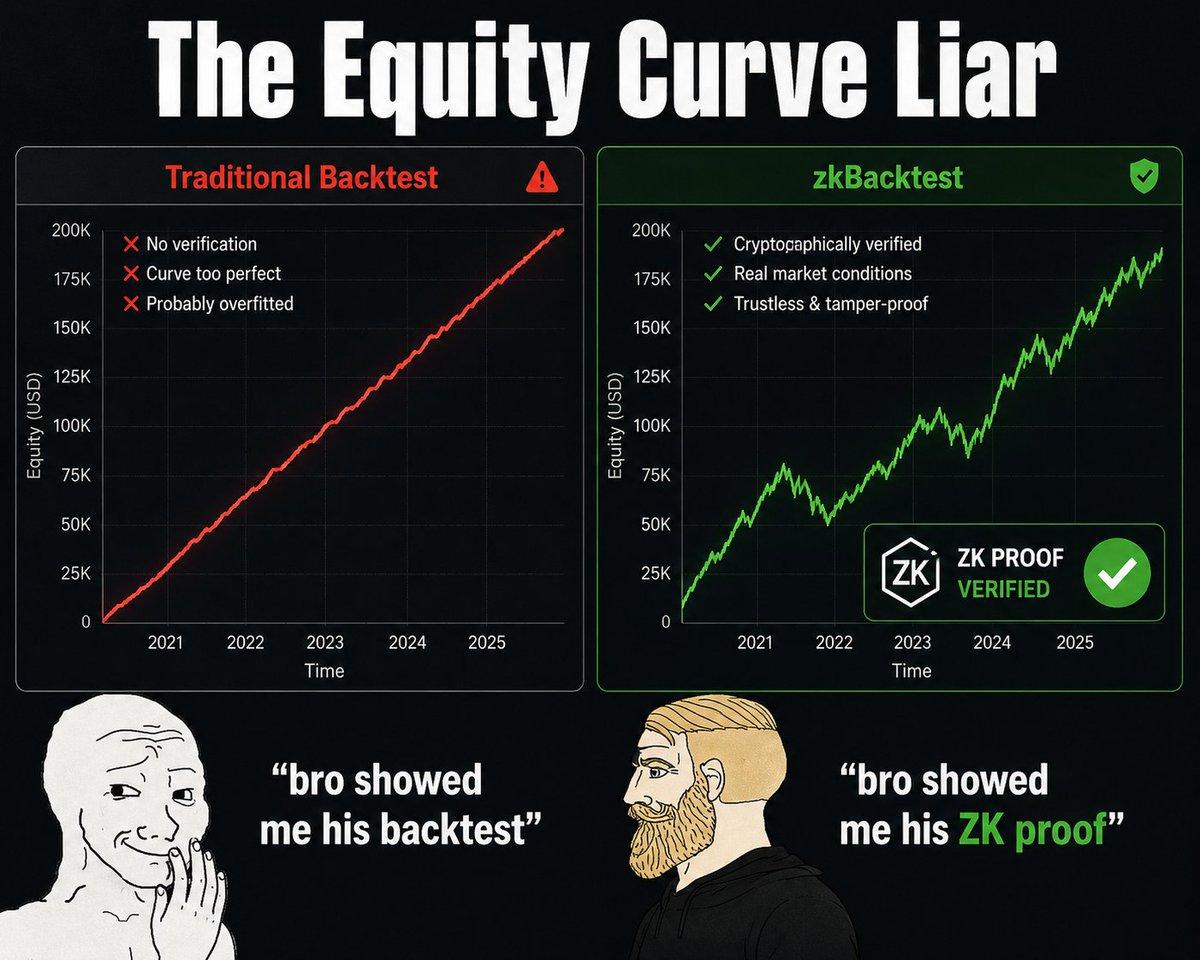
🔐 What if you could prove your trading strategy was profitable — without revealing the strategy itself?
zkBacktest is live on my GitHub. Here's what it does. 🧵
---------------------------------------------------------
TL;DR ✅
📊 Prove correct backtests of trading strategies over committed price data
🔒 Keep your strategy private — nobody sees your Pine Script
⚙️ Two proof backends: Winterfell AIR (custom STARK) RISC Zero zkVM
✨ Blake3-committed dataset — no cherry-picking bars
🧮 In-circuit financial metrics: total return, Sharpe ratio, max drawdown
🚫 No-look-ahead enforced as a circuit invariant
---------------------------------------------------------
🔍 What is zkBacktest?
You write a trading strategy. You run it against historical price data. You get a ZK proof that says: "This secret strategy, on this exact public dataset, produced these exact results."
No trust needed. No fake backtests. No reveal of your strategy. Just math.
---------------------------------------------------------
⚔️ Why it matters:
Backtesting has a credibility problem. Anyone can show you a pretty equity curve and claim their strategy worked. Without verifiable execution, it's hard to know what's real.
zkBacktest addresses this directly: The proof commits to the dataset via #Blake3. The circuit enforces causal order: bar `t` cannot see bar `t 1`. Cherry-picking is structurally impossible.
---------------------------------------------------------
⚙️ How it works — two backends:
Phase 1,2: #Winterfell AIR (#STARK)
Custom STARK over the Goldilocks field. Strategy parameters are public. The AIR circuit verifies prices, positions, returns, and drawdown peaks across the trace. All constraints are degree ≤ 2.
Phase 3: @RiscZero zkVM
A #PineScript subset interpreter runs inside a zkVM. Strategy is private witness. Only the public journal is revealed: total return, Sharpe, drawdown, dataset, and its commit.
The verifier cannot see your strategy. That's not a feature; it's a cryptographic guarantee. 🔒
---------------------------------------------------------
🧩 The interesting part:
No-look-ahead isn't enforced by convention; it's a circuit invariant.
You cannot encode a look-ahead bug. The circuit won't allow it 🙅♂️
And the dataset commitment? Blake3 hash of every bar, in order. Swap one bar: proof breaks.
---------------------------------------------------------
🚀 Why this matters long-term:
On-chain strategy marketplaces where sellers prove performance without revealing alpha. DeFi vaults that publish verifiable backtests before accepting capital. Quant funds where "here's a ZK proof" replaces "trust me."
ZK applied to finance is still early. But the primitive is here.
---------------------------------------------------------
Would you use something like this to verify a strategy before trusting a vault? Curious what people think. 👇
#ZK #ZKP #Ethereum #Cryptography #DeFi #STARK #RiscZero $ETH #zkBacktest @Starknet @EliBenSasson @SuccinctLabs @pumatheuma
1
2
4
120


May 13
Bu aralar kapatan kapatana. Ama adam gibi şirketi kapatıyoruz diyenlere helal olsun çünkü çoğu bir şekilde token çıkarıp millete yıktı geçti maalesef
1
2
29

May 13
İpneler söz verdikleri drobu atmadan dükkanı kapattılar. Tüm scammerlerin sonu bu olucak
2
34

May 13
projelerin kapatılması hayra alamet değil. Dikkatli olalım içeride para bırakmayalım.
2
29
Malda ( @malda_xyz ) Dükkanı kapatıyor, Adaya veda ediyor.
Kendilerinin @RiscZero ile olan Public Testnet etkinliğine katılmış ve Awakening NFT'sini mitlemiştik: x.com/0xUzman/status/1904525… - Kapanış duyurusu 9 Nisanda yapılmış.
Genel Özet:
➜ Projeyi devam ettirmek için ellerinden geleni yapmışlar
➜ Yeni yatırım / çözüm / yeniden launch denemişler
➜ Ama para bitmiş (financial runway exhausted)
Diyorlar ki:
➜ Güvenlik maliyetleri (auditler, security)
Protokol bakımı ,Yeni likidite çekmek için gereken sermaye …bunların hepsi çok pahalı olmuş. Kendi cebimizdende para koyduk ama olmadı diyorlar.
2. Ürün-market uyumu bulamamışlar (PMF yok)
Multi-chain sequencer’ı başka projelere altyapı olarak satmaya çalıştık Ama yeterli müşteri bulamamışlar gelir üretememişler
Yani teknik güzelmiş ama kimse para vermemiş.
3. Governance round’daki para harcanmış
➜ Mendi arayüzü birkaç ay açık kalacak
➜ Paranızı normal şekilde çekebilirsiniz
➜ Sonra site kapanınca bile: Smart contract üzerinden çekilebilecek
Fonlarınız kaybolmuyor ama çekmeniz gerekiyor.
Görüşürüz Malda, GGWP.
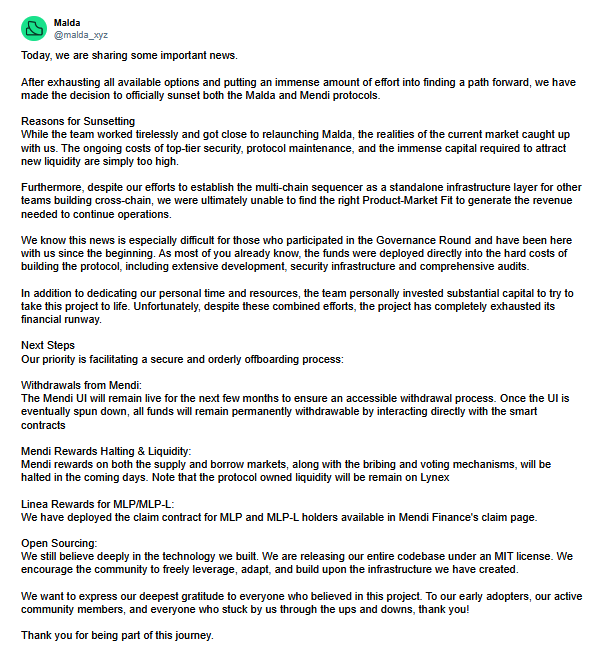
Apr 9

Today, we are sharing some important news.
After exhausting all available options and putting an immense amount of effort into finding a path forward, we have made the decision to officially sunset both the Malda and Mendi protocols.
Reasons for Sunsetting
While the team worked tirelessly and got close to relaunching Malda, the realities of the current market caught up with us. The ongoing costs of top-tier security, protocol maintenance, and the immense capital required to attract new liquidity are simply too high.
Furthermore, despite our efforts to establish the multi-chain sequencer as a standalone infrastructure layer for other teams building cross-chain, we were ultimately unable to find the right Product-Market Fit to generate the revenue needed to continue operations.
We know this news is especially difficult for those who participated in the Governance Round and have been here with us since the beginning. As most of you already know, the funds were deployed directly into the hard costs of building the protocol, including extensive development, security infrastructure and comprehensive audits.
In addition to dedicating our personal time and resources, the team personally invested substantial capital to try to take this project to life. Unfortunately, despite these combined efforts, the project has completely exhausted its financial runway.
Next Steps
Our priority is facilitating a secure and orderly offboarding process:
Withdrawals from Mendi:
The Mendi UI will remain live for the next few months to ensure an accessible withdrawal process. Once the UI is eventually spun down, all funds will remain permanently withdrawable by interacting directly with the smart contracts
Mendi Rewards Halting & Liquidity:
Mendi rewards on both the supply and borrow markets, along with the bribing and voting mechanisms, will be halted in the coming days. Note that the protocol owned liquidity will be remain on Lynex
Linea Rewards for MLP/MLP-L:
We have deployed the claim contract for MLP and MLP-L holders available in Mendi Finance's claim page.
Open Sourcing:
We still believe deeply in the technology we built. We are releasing our entire codebase under an MIT license. We encourage the community to freely leverage, adapt, and build upon the infrastructure we have created.
We want to express our deepest gratitude to everyone who believed in this project. To our early adopters, our active community members, and everyone who stuck by us through the ups and downs, thank you!
Thank you for being part of this journey.
4
1
10
1,208

May 13
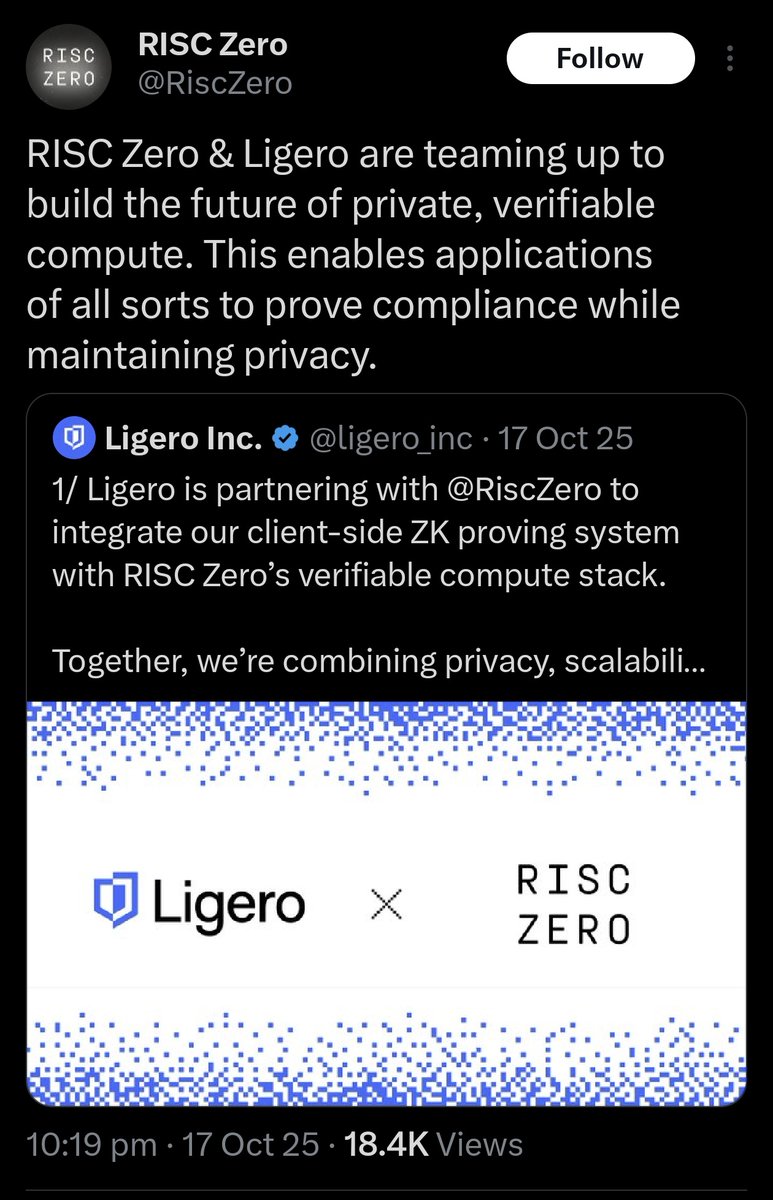
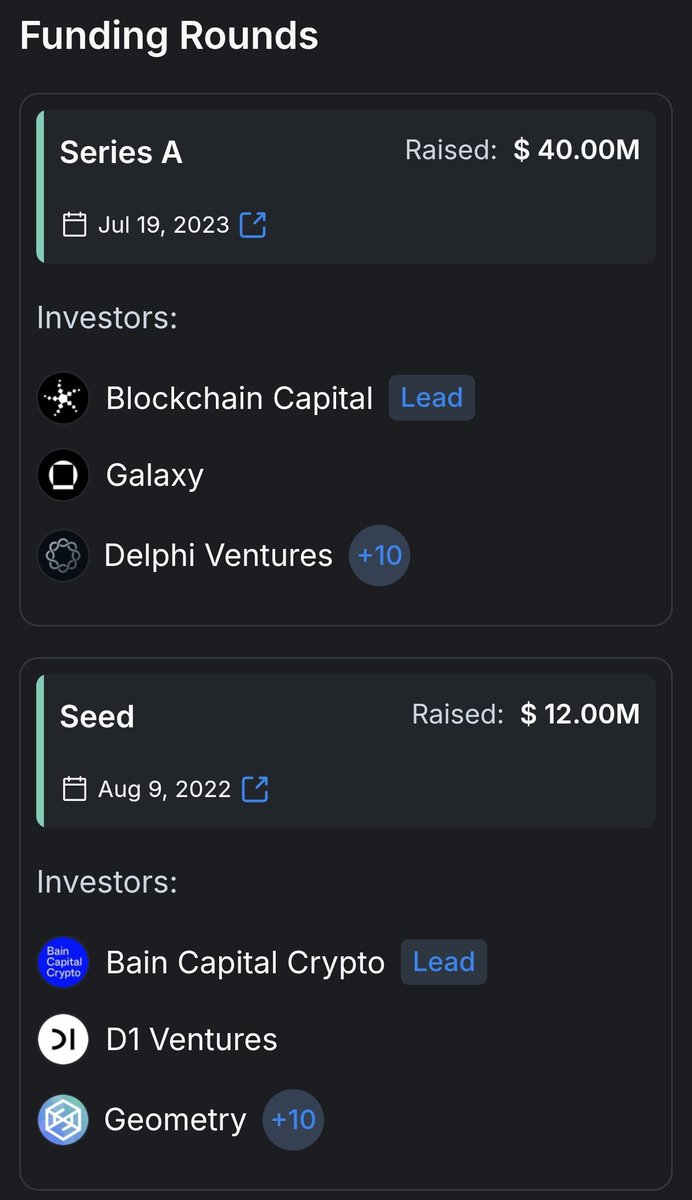
What happened to @risczero?
They raised $52M from VCs. Their last post was 7 months ago, in Oct ’25.
2
217
