
📈 Your SQL just got smarter.
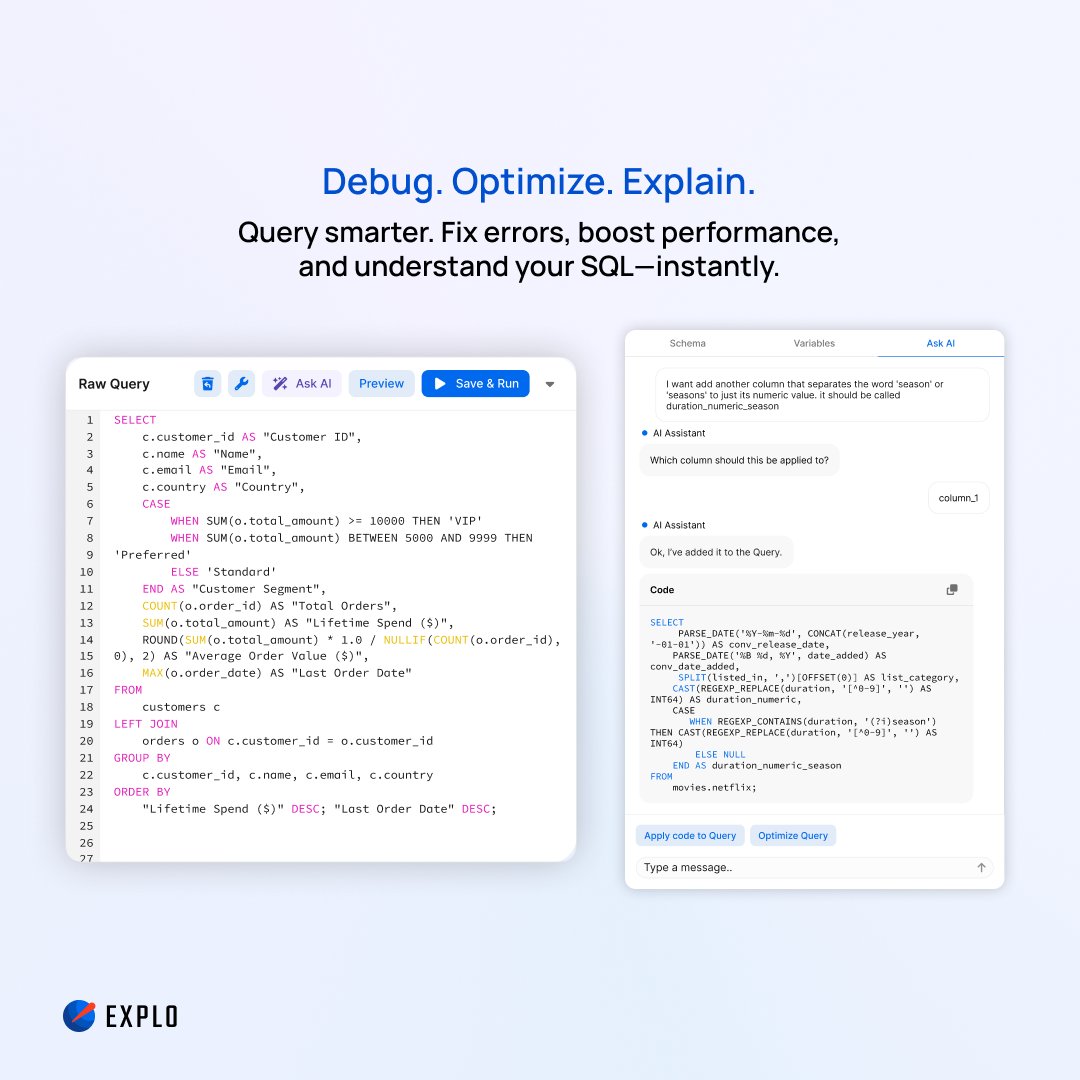
Our Improved Dataset AI helps analysts and developers optimize performance and resolve query issues with ease—so you can build faster and deliver better.
🧠 Real-time query tuning suggestions
🧩 Actionable fixes for SQL errors
🚀 Works with your underlying schema and database
With less trial and error and more results, Explo helps your team stay unblocked and laser-focused on building amazing data experiences.
👉 Full details here: explo.co/blog/simplify-dashb…
#Explo #DatasetAI #SQLOptimization #DataAnalytics #SaaSDev #AIinSaaS #EmbeddedDashboards #AnalyticsTools
1
57

12 Jun 2025
📊 Next-Level Time Series Modeling & Smart Analytics Are Here
📌 Explore full release details ➡ medium.com/@DolphinDB_Inc/po…
We’ve significantly enhanced our data modeling and execution framework—bringing more power, precision, and flexibility to time series forecasting, interpolation, and high-performance SQL operations.
🔍 Extended Time Series Modeling
Two new statistical models now support both stationary and non-stationary forecasting:
- ARMA Model: Combines autoregressive and moving average components for compact, efficient modeling
- ARIMA Model: Adds differencing for non-stationary time series like financial or macroeconomic data
🔬 Advanced Interpolation & Fitting Techniques
Achieve greater accuracy in curve fitting and regression across diverse datasets:
- BVLS: Boundary-constrained least squares for robust constrained optimization
- Kernel Ridge: Nonlinear regression with regularization, ideal for high-dimensional, low-sample problems
- Cubic Hermite Spline: Smooth, derivative-informed curve fitting
- PCHIP Interpolation: Monotonic interpolation, stable even with noisy or irregular data
⚙️ Smarter Temporal Logic & SQL Execution
New system-level enhancements to drive performance and reliability:
- Temporal Deltas: Fine-grained interval calculations using business days, natural days, or trading calendars
- Automatic Join Optimization: Intelligent cost-based planning for optimal multi-table join order
Memory-Aware Join Retry: Configurable controls to handle memory-heavy joins without system disruption
- NULL-Safe Join Control: Admin-level flag ensures consistent handling of NULLs in joins
📢 Ready to try ➡ dolphindb.com/
📧 Book a demo with us: sales@dolphindb.com
#DolphinDB #TimeSeries #DataModeling #ARIMA #ARMA #Interpolation #QuantResearch #AdvancedAnalytics #SQLOptimization #Fintech #BigData #Forecasting
5
50

Dive into the future of query optimization with the new MySQL Hypergraph Optimizer!
Learn how it reshapes join planning for faster, smarter SQL performance.
👉 social.ora.cl/60114G4Hd
#MySQL #HeatWave #SQLOptimization #TechBlog
1
11
2,364

30 Apr 2025
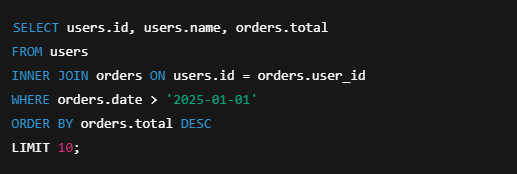
⚡️Struggling with slow JOIN queries? Try this optimization:
1 .Use INNER JOIN when you only need matching records.
2.Avoid SELECT *** in production.
3.Use LIMIT to avoid over-fetching data.
This ensures efficient fetching of only the data you need.
#MySQLTips #SQLOptimization
5
130

5 Apr 2025
Explore using EXPLAIN for analyzing query execution, reviewing indexes and joins, and streamlining clauses to enhance SQL efficiency. Practical tips for boosting database performance. #SQLOptimization #DatabaseTips
dev.to/codewithved/how-to-op…
2
18
562

23 Feb 2025
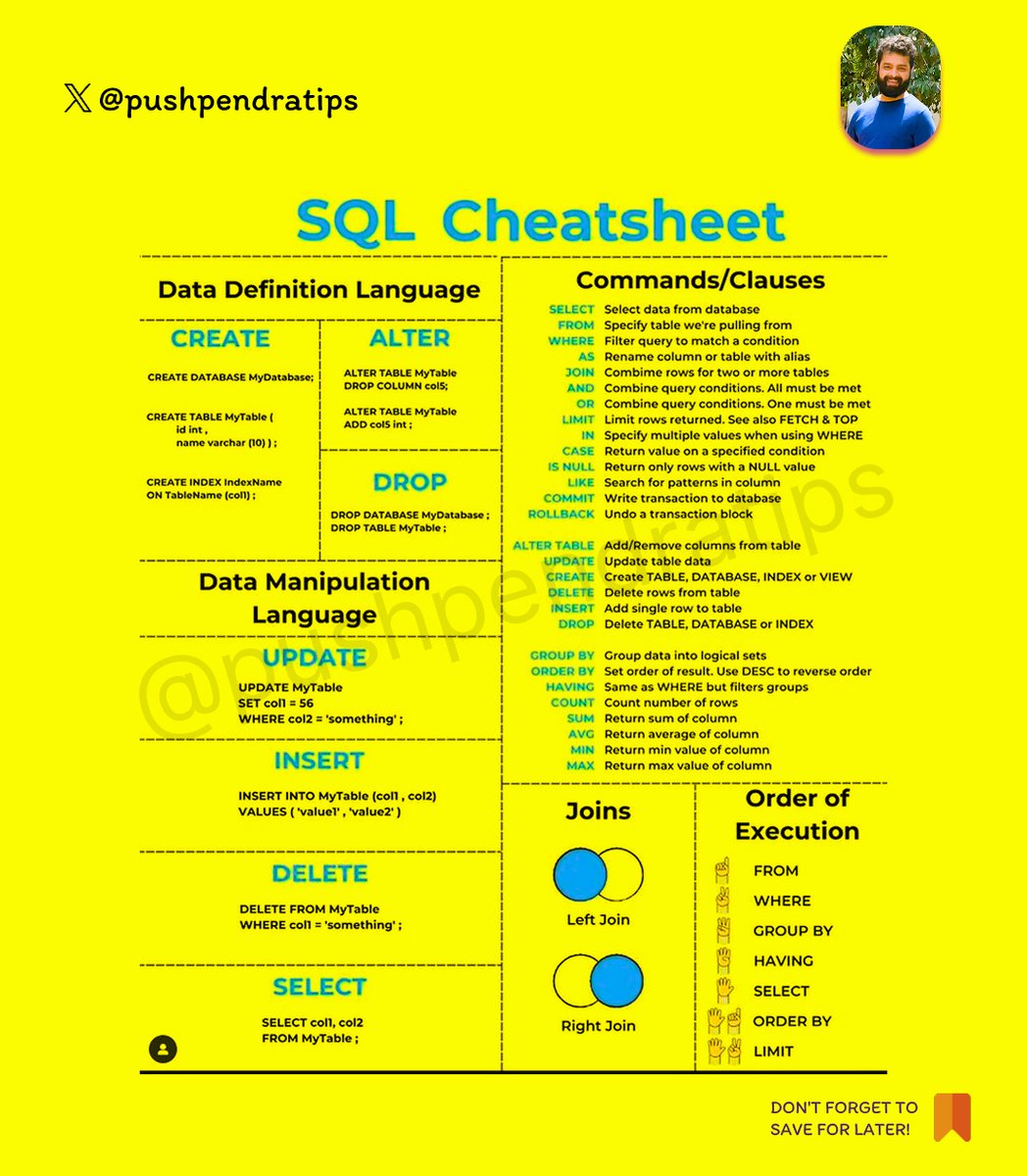
📜 SQL Cheat Sheet
🔍 Fetching Data (SELECT)
SELECT * FROM table_name;
SELECT column1, column2 FROM table_name;
SELECT DISTINCT column FROM table_name;
_____________________________________________________
🎯 Filtering Data (WHERE)
SELECT * FROM users WHERE age > 25;
SELECT * FROM orders WHERE status = 'delivered';
_____________________________________________________
🧩 Multiple Conditions (AND, OR, NOT)
SELECT * FROM users WHERE age > 25 AND city = 'Delhi';
SELECT * FROM products WHERE price < 500 OR stock > 50;
SELECT * FROM employees WHERE NOT department = 'HR';
_____________________________________________________
🔢 Sorting Results (ORDER BY)
SELECT * FROM employees ORDER BY salary DESC;
SELECT * FROM products ORDER BY price ASC, name DESC;
_____________________________________________________
🎛 Limiting & Skipping (LIMIT, OFFSET)
SELECT * FROM products LIMIT 5;
SELECT * FROM orders LIMIT 10 OFFSET 5;
_________________________________________________________
🏗 Grouping Data (GROUP BY, HAVING)
SELECT department, COUNT(*) FROM employees GROUP BY department;
SELECT category, AVG(price) FROM products GROUP BY category HAVING AVG(price) > 100;
_________________________________________________________
🏆 Aggregations (COUNT, SUM, AVG, MIN, MAX)
SELECT COUNT(*) FROM users;
SELECT SUM(price) FROM orders;
SELECT AVG(salary) FROM employees;
SELECT MIN(age), MAX(age) FROM users;
_____________________________________________________
🔄 Joining Tables (JOIN)
👫 Inner Join
SELECT users.name, orders.amount
FROM users
INNER JOIN orders ON users.id = orders.user_id;
_____________________________________________________
📌 Left Join
SELECT users.name, orders.amount
FROM users
LEFT JOIN orders ON users.id = orders.user_id;
_________________________________________________________
📌 Right Join
SELECT users.name, orders.amount
FROM users
RIGHT JOIN orders ON users.id = orders.user_id;
_____________________________________________________
🔗 Full Join
SELECT users.name, orders.amount
FROM users
FULL JOIN orders ON users.id = orders.user_id;
_____________________________________________________
🏗 Creating & Modifying Tables
🆕 Creating a Table
CREATE TABLE users (
id INT PRIMARY KEY,
name VARCHAR(100),
age INT,
city VARCHAR(50)
);
_____________________________________________________
🔧 Altering a Table
ALTER TABLE users ADD COLUMN email VARCHAR(100);
ALTER TABLE users DROP COLUMN city;
_____________________________________________________
📝 Modifying Data
➕ Inserting Data
INSERT INTO users (id, name, age) VALUES (1, 'Amit', 30);
_____________________________________________________
🛠 Updating Data
UPDATE users SET age = 31 WHERE id = 1;
_____________________________________________________
❌ Deleting Data
DELETE FROM users WHERE id = 1;
DELETE FROM users; -- Delete all rows
_____________________________________________________
🏛 Indexes & Keys
🔑 Primary Key
CREATE TABLE users (
id INT PRIMARY KEY,
name VARCHAR(100)
);
_____________________________________________________
🔑 Foreign Key
CREATE TABLE orders (
id INT PRIMARY KEY,
user_id INT,
FOREIGN KEY (user_id) REFERENCES users(id)
);
_____________________________________________________
🚀 Creating Index
CREATE INDEX idx_name ON users(name);
_____________________________________________________
📜 Subqueries & Unions
🔄 Subquery
SELECT name FROM users WHERE id IN (SELECT user_id FROM orders);
_____________________________________________________
🔗 Union (Combine Results)
SELECT name FROM customers UNION SELECT name FROM suppliers;
SELECT name FROM customers UNION ALL SELECT name FROM suppliers; -- Includes duplicates
_____________________________________________________
🔥 Transactions
BEGIN TRANSACTION;
UPDATE accounts SET balance = balance - 500 WHERE id = 1;
UPDATE accounts SET balance = balance 500 WHERE id = 2;
COMMIT; -- Save changes
ROLLBACK; -- Undo changes
#SQL #SQLTutorial #LearnSQL #SQLQueries #SQLCheatSheet #Database #DataScience #Programming #Tech #Code
#SQLForBeginners #SQLBasics #SQLTraining #LearnToCode #CodingForBeginners #AdvancedSQL #SQLPerformance #SQLOptimization #SQLBestPractices
#SQLDatabase #MySQL #PostgreSQL #SQLServer #OracleSQL #NoSQL #DataAnalytics #SQLForDataScience #BusinessIntelligence #BigData #DataVisualization
28
19
66
8,752
18 Feb 2025
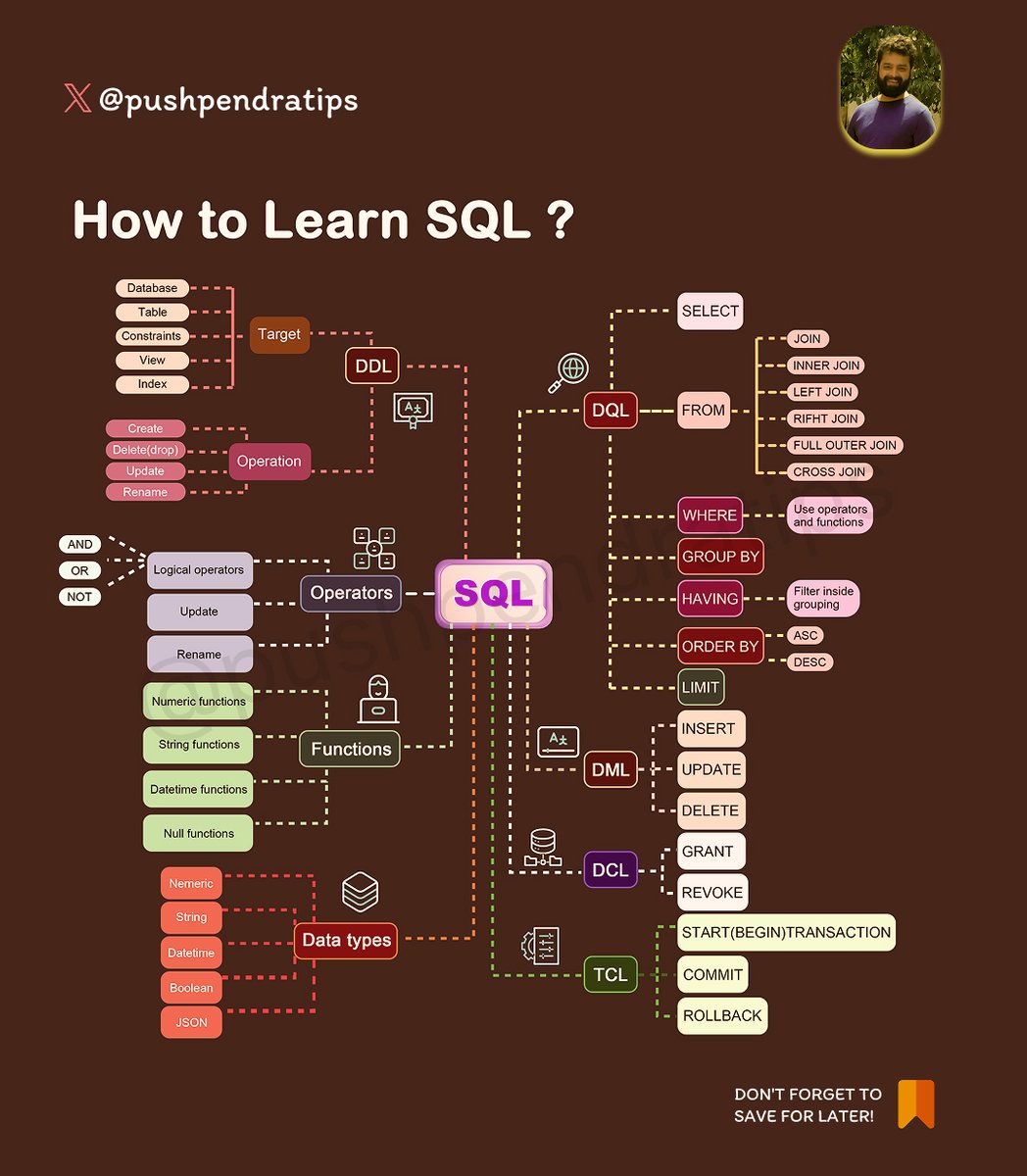
🚀 SQL Roadmap 2025: From Beginner to Expert 🛣️
🔹 1. Basics of SQL
✅ What is SQL? Introduction to Databases
✅ Data Types (INT, VARCHAR, DATE, etc.)
✅ Basic Queries: SELECT, FROM, WHERE, ORDER BY, LIMIT
✅ SQL Operators: LIKE, IN, BETWEEN, AND, OR, NOT
✅ Sorting and Filtering Data
🔹 2. SQL Joins & Relationships
✅ Primary Keys & Foreign Keys
✅ One-to-One, One-to-Many, Many-to-Many Relationships
✅ INNER JOIN, LEFT JOIN, RIGHT JOIN, FULL OUTER JOIN
✅ Self Joins & Cross Joins
✅ Using UNION and UNION ALL
🔹 3. Aggregations & Grouping
✅ COUNT(), SUM(), AVG(), MIN(), MAX()
✅ GROUP BY & HAVING
✅ Using DISTINCT for Unique Data
✅ Subqueries & Common Table Expressions (CTEs)
🔹 4. Advanced SQL Concepts
✅ Window Functions (ROW_NUMBER(), RANK(), DENSE_RANK(), LAG(), LEAD())
✅ Recursive Queries using CTEs
✅ Pivot & Unpivot Data
✅ JSON & XML Handling in SQL
✅ Using CASE Statements
🔹 5. Indexing & Performance Optimization
✅ How Indexing Works (Clustered vs. Non-Clustered Indexes)
✅ Optimizing Queries with EXPLAIN PLAN
✅ Avoiding N 1 Query Problems
✅ Using Proper Data Types for Performance
✅ Partitioning Large Tables
🔹 6. Transactions & Concurrency Control
✅ ACID Properties (Atomicity, Consistency, Isolation, Durability)
✅ Transactions (BEGIN, COMMIT, ROLLBACK)
✅ Isolation Levels (READ COMMITTED, REPEATABLE READ, SERIALIZABLE)
✅ Deadlocks & How to Avoid Them
🔹 7. SQL for Big Data & Scalability
✅ NoSQL vs. SQL (MongoDB, Firebase vs. PostgreSQL, MySQL)
✅ Distributed Databases (CockroachDB, Amazon Aurora)
✅ Data Warehousing (Snowflake, BigQuery)
✅ Querying Large Datasets Efficiently
🔹 8. Stored Procedures, Views & Triggers
✅ Creating & Using Views
✅ Writing Stored Procedures
✅ Using Triggers for Automation
✅ Dynamic SQL & Parameterized Queries
🔹 9. Working with Different SQL Dialects
✅ MySQL
✅ PostgreSQL
✅ Microsoft SQL Server
✅ SQLite
✅ Oracle SQL
🔹 10. Mastering SQL in Real-World Applications
✅ SQL in Backend Development (Node.js, Python, Java)
✅ Using SQL with ORMs (Sequelize, TypeORM, Prisma)
✅ Integrating SQL with APIs
✅ Data Analytics & Reporting with SQL
#SQLRoadmap2025 #LearnSQL #SQLMastery #DatabaseDesign #SQLQueries #DataAnalytics #SQLJoins #BigData #SQLPerformance #BackendDevelopment #DataEngineering #SQLOptimization #FullStackDev #TechRoadmap
38
17
69
4,368

11 Feb 2025
🚀 Optimize your database for speed, efficiency, and scalability with indexing, caching, sharding, and more! 🔥 Boost performance and minimize bottlenecks today! ⚡ #DatabasePerformance #SQLOptimization #TechTips #Scalability #HattussaITSolutions
2
12

Just discovered django-silk! 🚀 This amazing tool helps you inspect and optimize SQL queries in Django. It’s super useful for identifying bottlenecks and improving performance. Check it out here: [github.com/jazzband/django-s…] #Django #SQLOptimization #PythonDev #WebPerformance
3
61

16 Nov 2024
2
2
20

23 Sep 2024
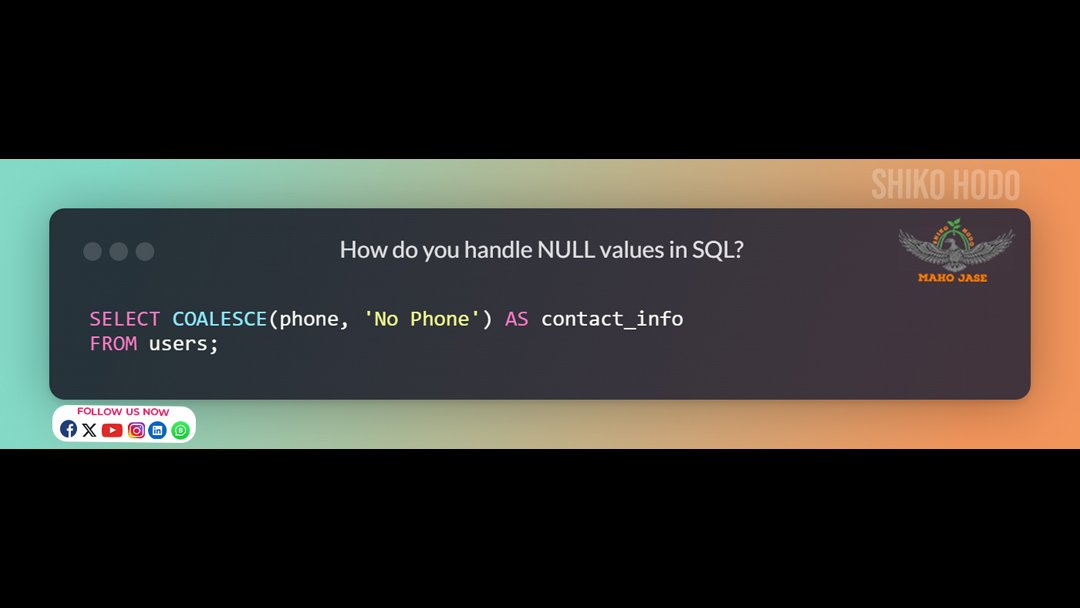
How often do you use COALESCE to avoid NULLs? 🤔
.
.
.
#SQLCOALESCE #HandlingNULLs #COALESCEFunction #SQLBestPractices #DatabaseQueries #SQLNullValues #SQLFunctions #DataHandling #SQLOptimization #SQLTutorial
1
2
19

2 Sep 2024
Unlock high-performance MySQL apps by optimizing your SQL queries! Learn tips for efficient indexing and query tuning.
#MySQL #SQLOptimization #TechTalk
Visit:observancegroup.com/technolo…
medium.com/@info_52759/optim…
1
2
14

Tired of sluggish queries dragging down your app? 👎Optimize your SQL for speed and efficiency! 🚀
Buckle up for a thread 🧵 full of tips on how to Optimize SQL Queries in Database Management.
#SQLOptimization
1
1
1
88

1 Nov 2023
Boost your SQL table's performance with index optimization and query tuning! Learn how to make your data queries lightning fast.
tinyurl.com/37xyzda4
@CsharpCorner #SQLPerformance #DatabaseTips #Wednesdayvibe #database #SQLoptimization #developers #programming
15
11
267

1 Nov 2023
Boosting SQL table performance is essential for lightning-fast queries! Try indexing, optimizing queries, and regular maintenance to keep your data running smoothly
tinyurl.com/37xyzda4
@CsharpCorner #SQLPerformance #DatabaseTips #Wednesdayvibe #SQLoptimization
12
11
207

19 Oct 2023
Optimizing your SQL queries is like saving money! 🤑💰 Using an external cache might seem convenient, but it's expensive. Write your SQL optimally for better performance and scalability. 💡🚀 #SQLOptimization #Performance #Scalability #CostSavings
1
3
270

13 Sep 2023
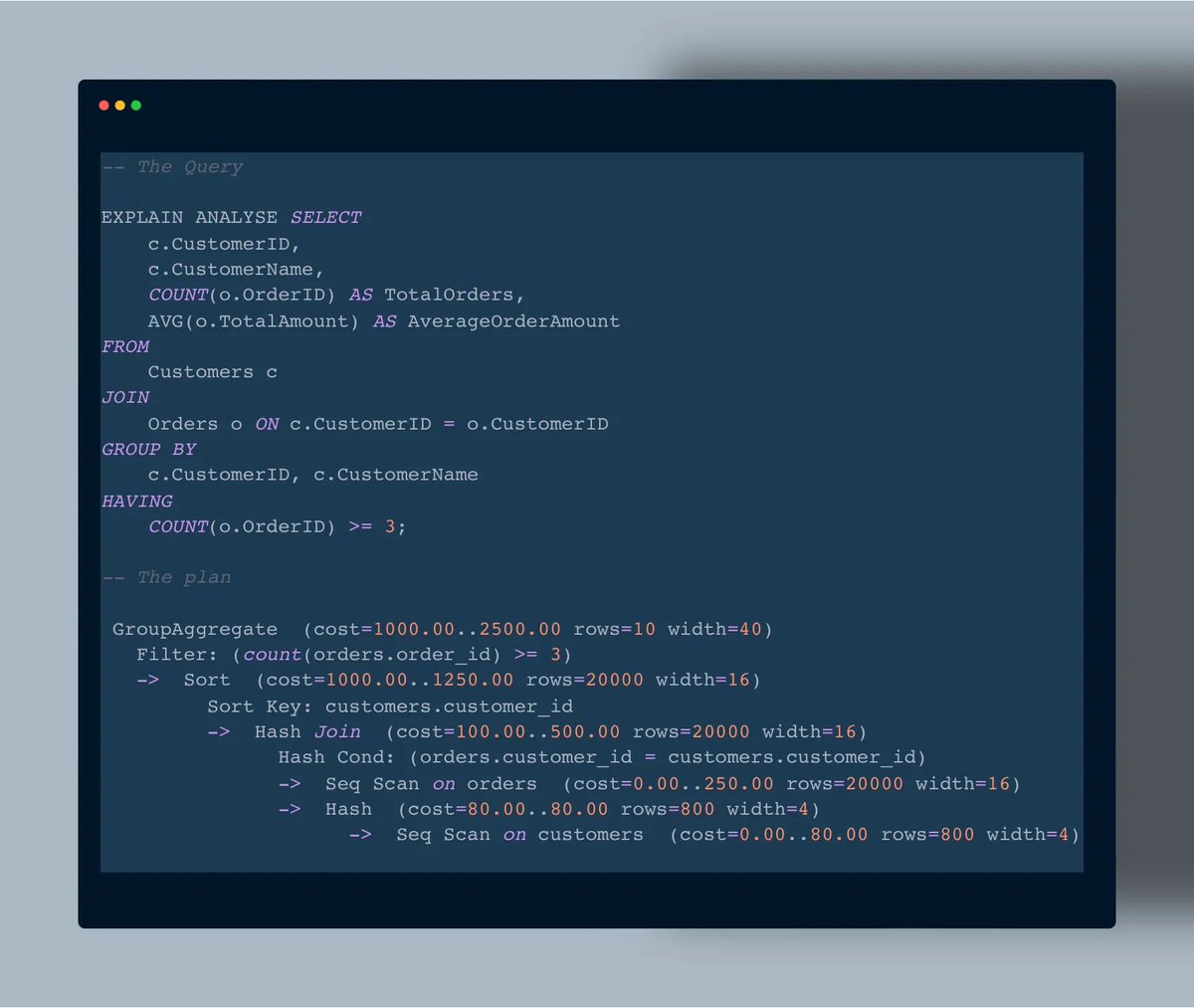
When optimizing SQL, don't overlook the importance of Explain. Analyzing and fine-tuning query plans can lead to significant speed improvements. Dive into the details, and your queries will thank you! 🧐💡
Prepend EXPLAIN ANALYSE to your query to see your plan
#SQLOptimization
3
162
13 Sep 2023
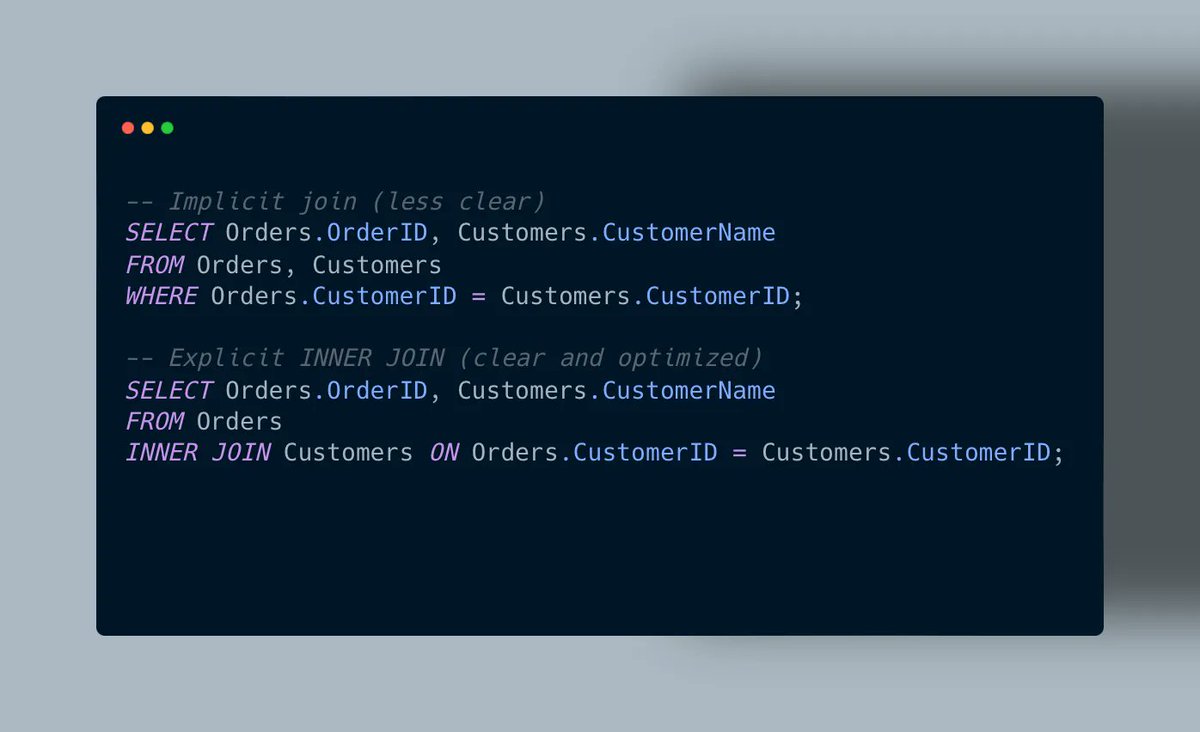
SQL Optimization:
Always specify the join type explicitly. Instead of using implicit joins (comma-separated tables in the FROM clause), use explicit INNER JOIN, LEFT JOIN, RIGHT JOIN, or FULL JOIN.
it's often faster, and always clearer
#SqlOptimization
8
465

12 Jun 2023
Keep these SQL tips in mind to supercharge your querying skills and unlock the full potential of your databases! 🔍💪 #DatabaseSkills #SQLOptimization
1
109

19 Aug 2022
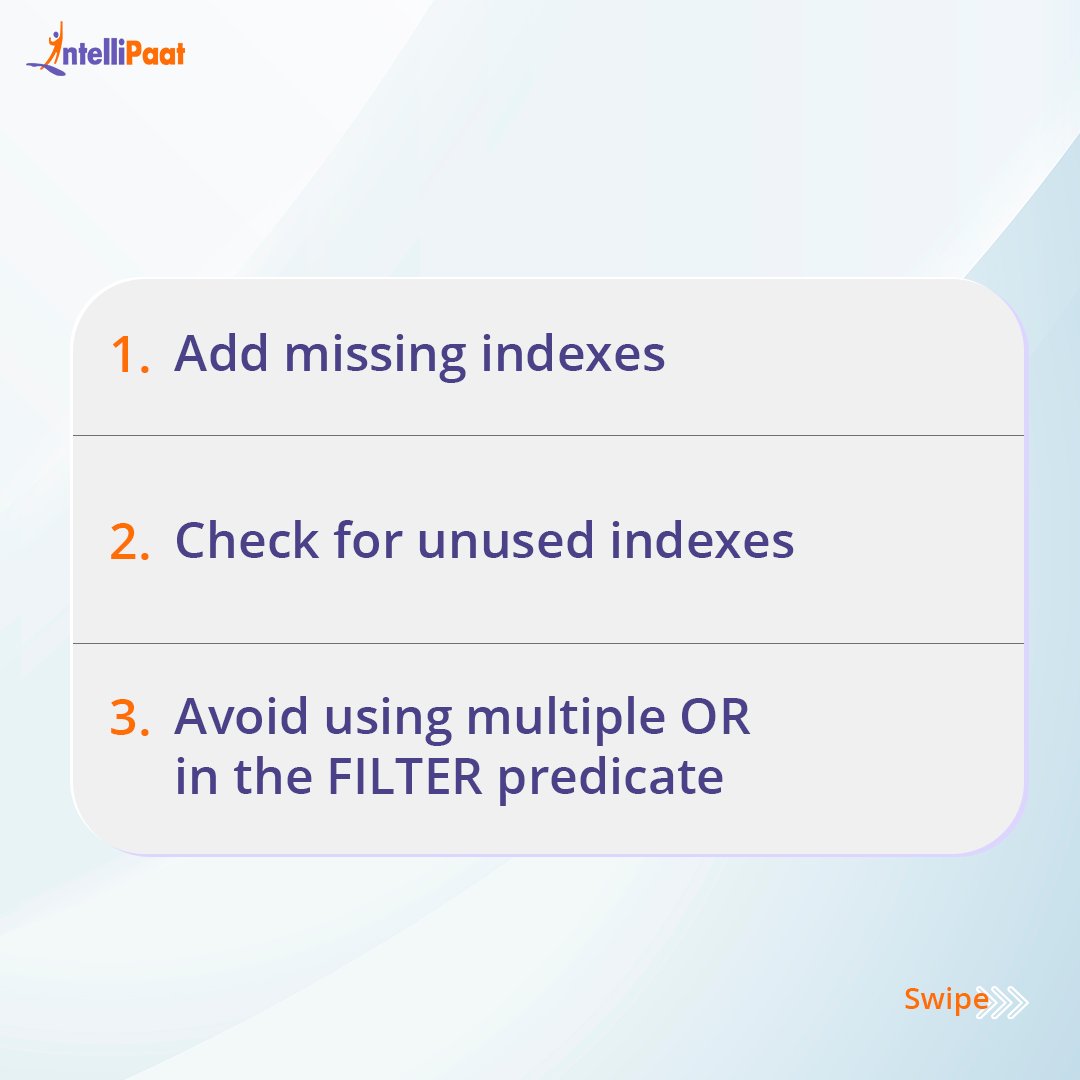
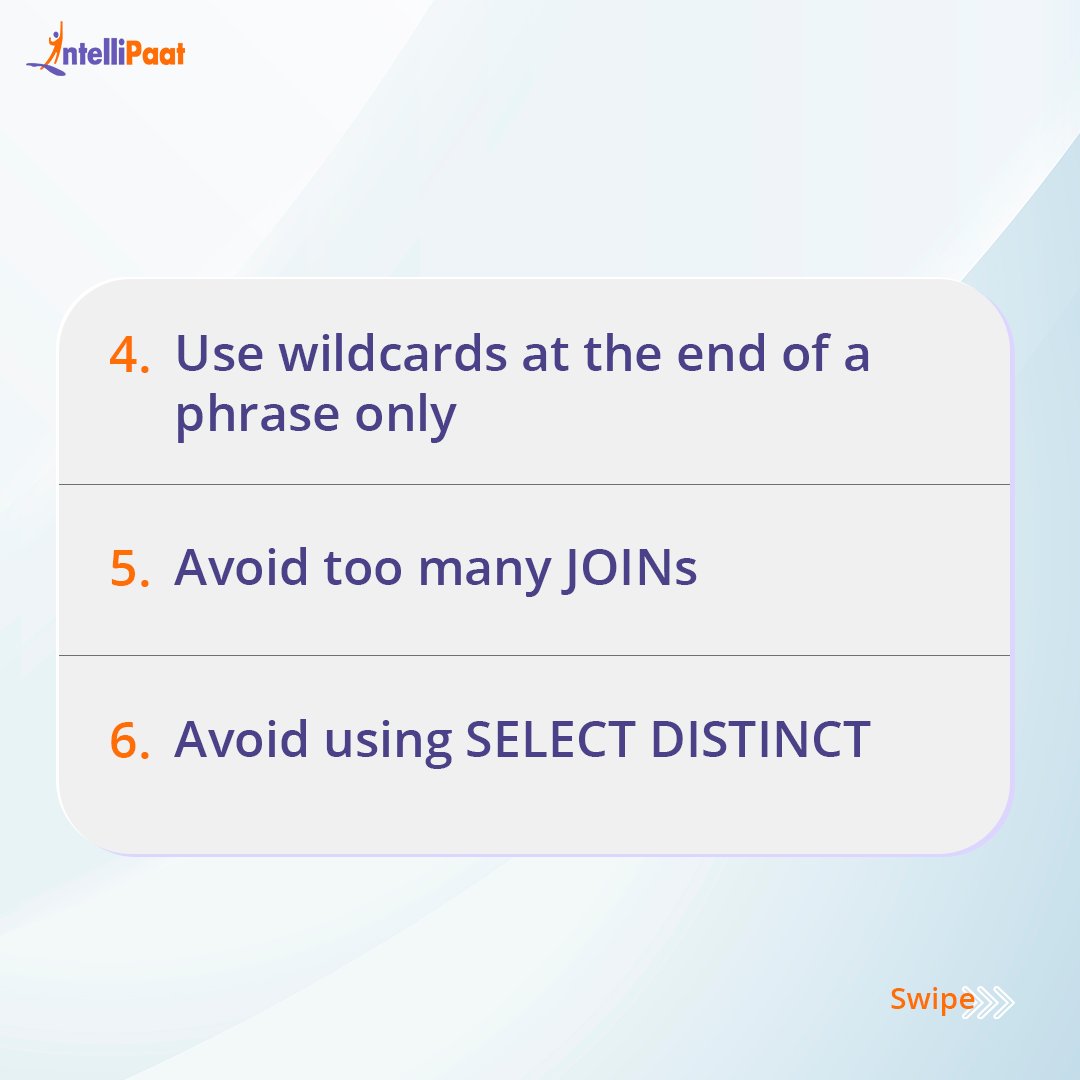
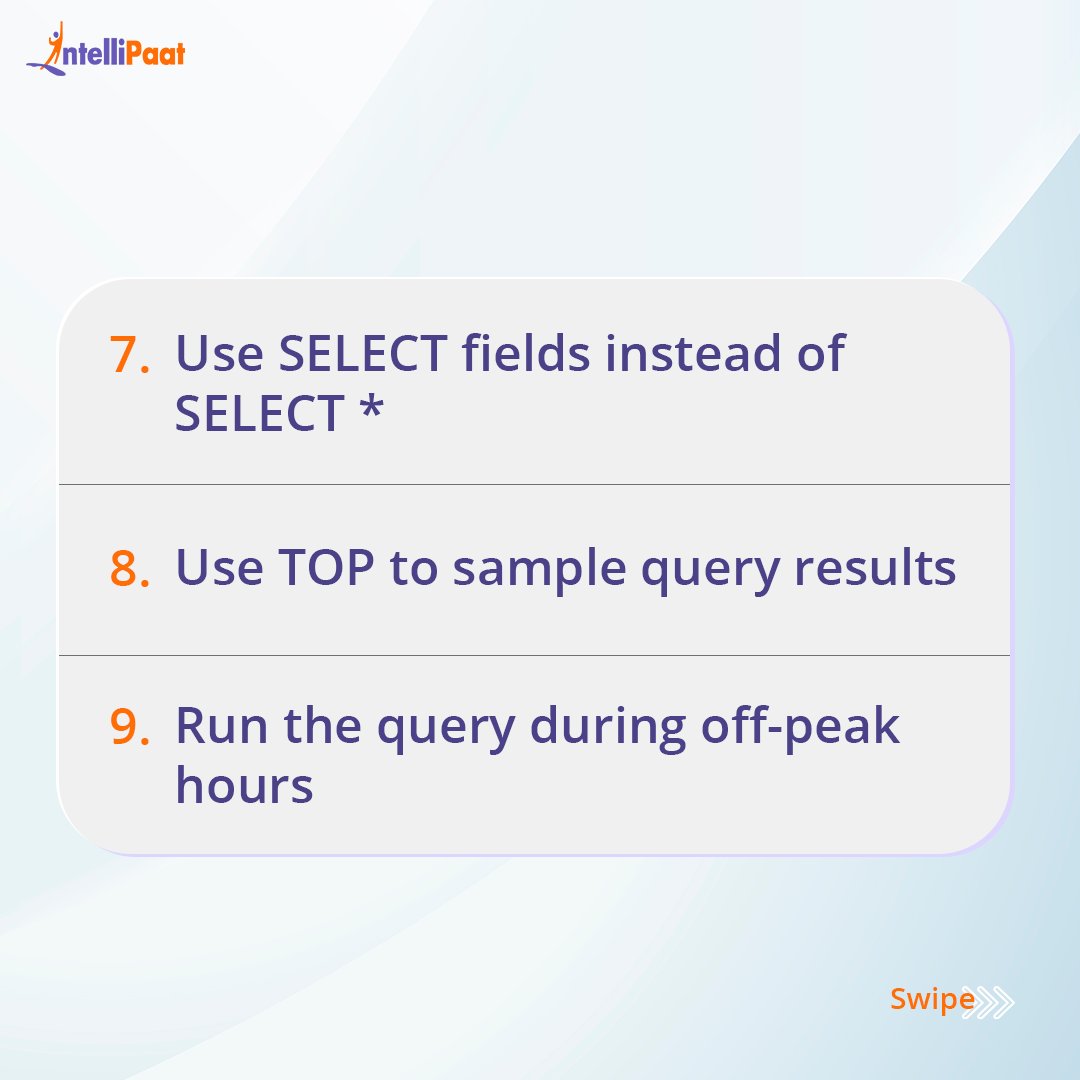
15 SQL Query Optimisation Techniques that need to note down 📝
.
#sql #sqlserver #sqldeveloper #sqldatabase #sqloptimization #optimization #query #performance #post #intellipaat
ALT SQL query optimization tips
1
3