
Jun 3
Jun 2

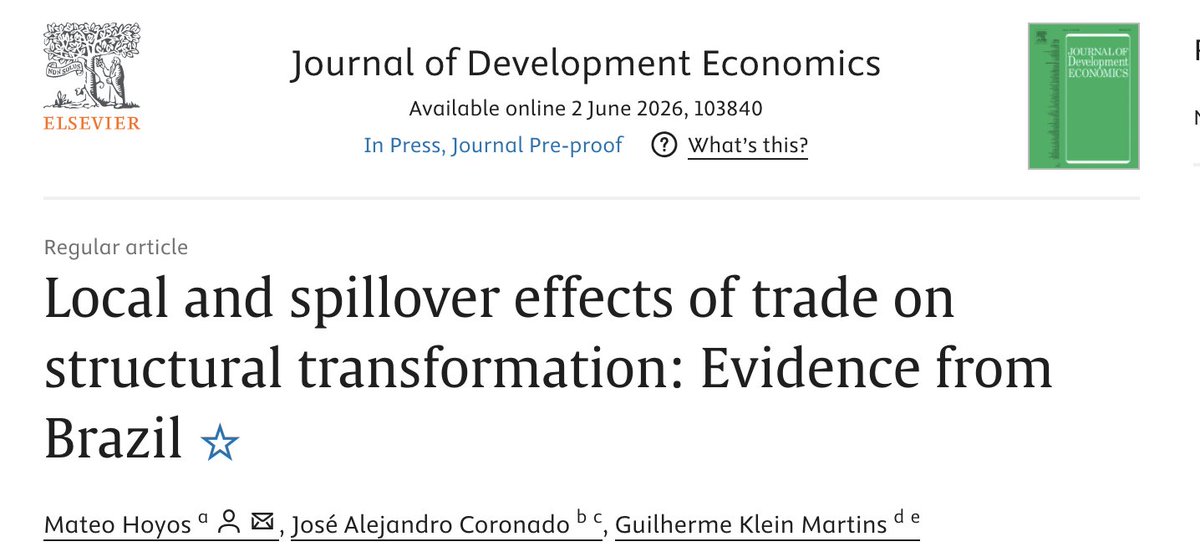
Enough with the bleak local politics for a minute. Very excited to share that pre-proofs are out for our JDE article, “Local and Spillover Effects of Trade on Structural Transformation: Evidence from Brazil,” with @JosecoronadoAr and @GuilhermeKlei11. Thread below. 1/9
1
1
4
1,460

May 30
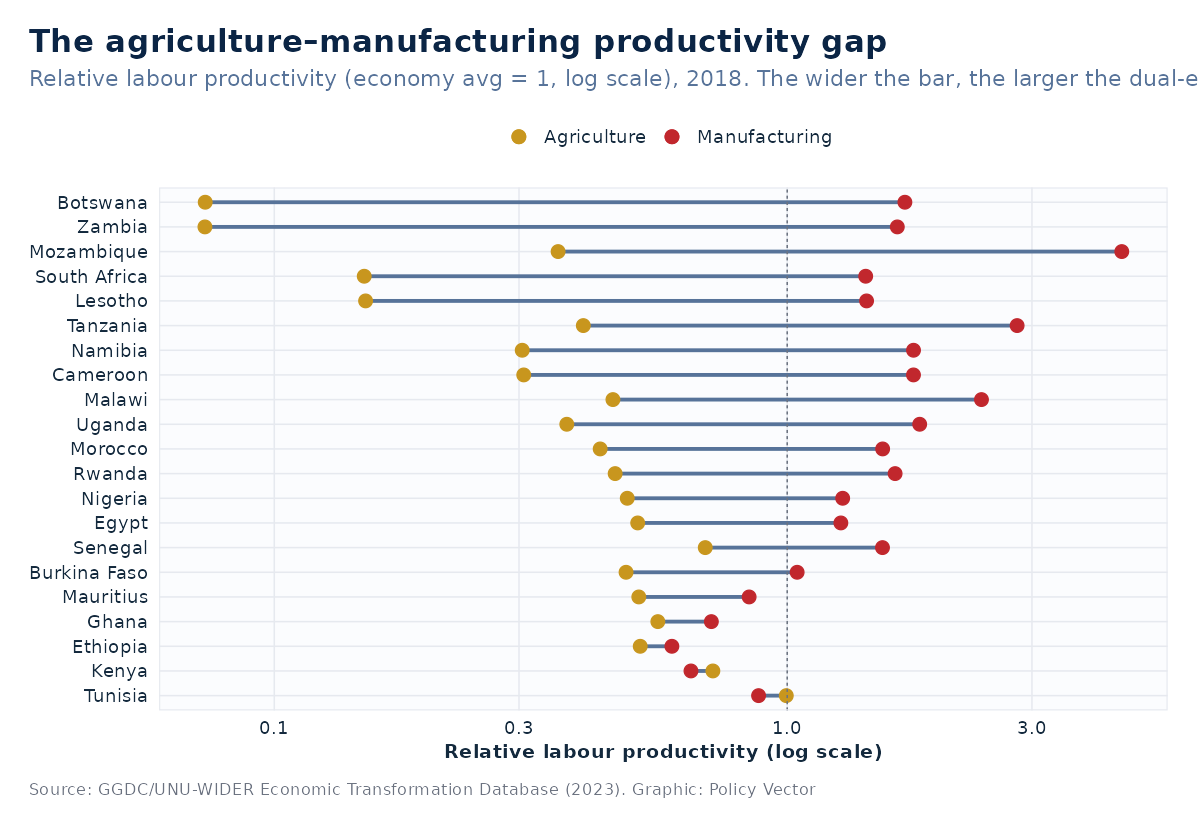
The Agriculture-Manufacturing Productivity Gap: Africa’s Dual Economy Challenge
1. This chart captures a fundamental feature of structural transformation in many African economies: labour productivity in agriculture remains far below the economy-wide average, while manufacturing is often substantially more productive.
2. The gap matters because it reflects the persistence of a dual economy. A large share of workers remains concentrated in low-productivity agriculture, while higher-productivity sectors absorb only a limited part of the labour force.
3. In such a context, aggregate productivity growth depends not only on improving productivity within sectors but also on enabling workers to move into more productive activities.
4. The policy challenge is therefore twofold. First, agriculture itself must become more productive through technology, irrigation, market access, storage, logistics, and agro-processing linkages.
5. Second, economies need stronger pathways into manufacturing and related tradable sectors that can absorb labour at scale.
6. The key issue is not agriculture versus manufacturing. It is how to build bridges between them through agro-industry, rural infrastructure, skills development and regional value chains.
7. Reducing the agriculture-manufacturing productivity gap remains central to inclusive growth, employment creation, and long-term structural transformation.
#StructuralTransformation #EconomicDevelopment #Productivity #Agriculture #Manufacturing #IndustrialPolicy #InclusiveGrowth #Africa #DevelopmentEconomics #Jobs #AgroIndustry #ValueChains.
1
4
401
May 25
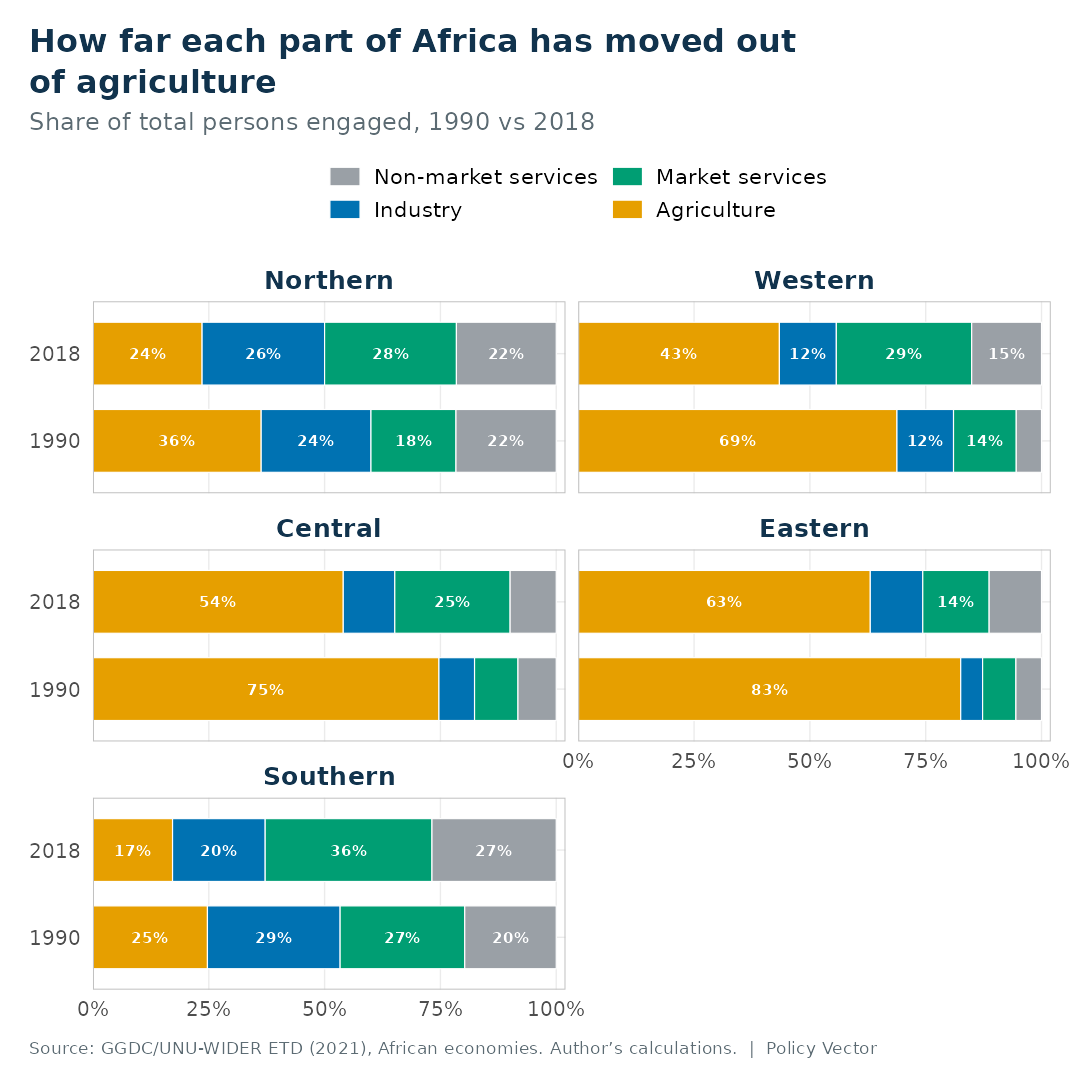
How far each part of Africa has moved out of agriculture?
1. Africa is often discussed as a single trajectory. Disaggregated, it is five quite different ones.
2. This chart tracks the broad-sector composition of employment in each African sub-region between 1990 and 2018. Every sub-region moved out of agriculture - but from very different starting points, and toward very different destinations.
3. A few patterns stand out. Eastern Africa began the most agrarian of all (83% of employment in 1990) and remains so today at 63%, despite the fastest pace of reallocation on the continent. Western Africa saw the steepest fall - 69% to 43% - with the released labour flowing overwhelmingly into market services rather than industry. Southern Africa is the most structurally advanced, agriculture down to 17% and services above half, yet that maturity has coincided with weak productivity gains. And Northern Africa looks least like the rest: a large, stable industrial and public-sector base throughout.
4. The common thread is what is missing in all five panels. Industry's share (the blue band) barely moves anywhere - and in Southern Africa it actually shrinks. Across the continent, labour leaving agriculture went to services, not factories.
5. For anyone designing employment or industrial strategy, the implication is that "structural transformation in Africa" is not one policy problem but five. A programme calibrated for Eastern Africa's still-agrarian economy will not fit Southern Africa's service-heavy one. The starting point determines the binding constraint.
Part of a continuing series, Africa's Jobs Question, on the GGDC/UNU-WIDER Economic Transformation Database (21 African economies, 1990–2018).
Source: GGDC/UNU-WIDER ETD (2021); author's calculations. | Policy Vector
#StructuralTransformation #DevelopmentEconomics #Africa #LabourEconomics #AgriFood
1
7
384

🚀 From coal region to innovation powerhouse — Lausitz is transforming through future technologies.
Thanks to BMFTR-supported projects at BTU Cottbus-Senftenberg and the Medical University Lausitz – Carl Thiem, new ideas are turning into real jobs, research excellence, and long-term opportunities for the region. 🔬🏥💡
A strong example of how science, technology, and policy together can drive structural change and create future-ready economies. 🇩🇪👏
#Innovation #FutureTech #Lausitz #Research #StructuralTransformation #SciencePolicy #Germany
May 13

Strukturwandel durch Zukunftstechnologien: In der Lausitz läuft's dank BMFTR-geförderten Projekten an@BTU_CS & an der Medizinischen Uni Lausitz - Carl Thiem! BM @DoroBaer, MP Dietmar Woidke & LM @ManjaSchuele waren begeistert. So entstehen Arbeitsplätze und Perspektiven!
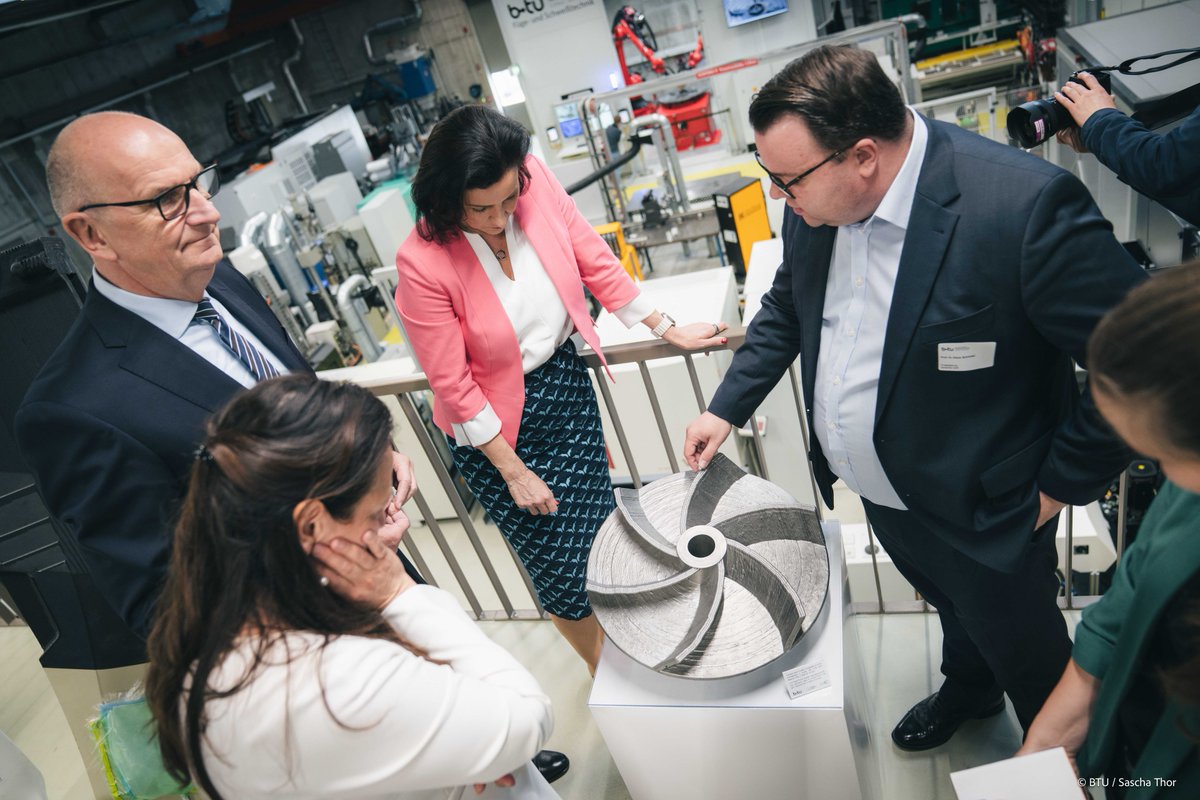
ALT Bundesforschungsministerin Dorothee Bär informiert sich über neueste Materialforschung, die haltbare Produkte erzeugen soll.

ALT Bundesforschungsministeri Dorothee Bär bei ihrer Rede an der Brandenburgisch-Technischen Universität in Cottbus.
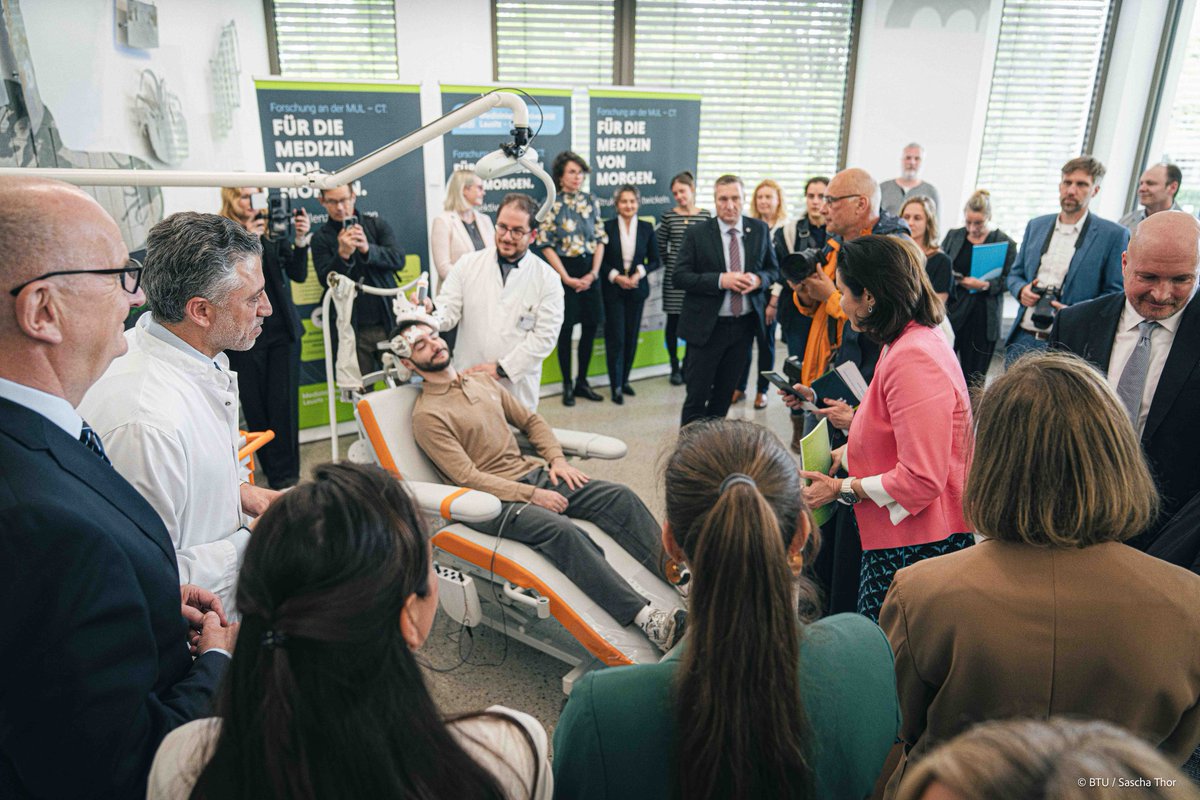
ALT Demonstration einer neuen Technologie, die das Gehirn von Patienten vor einer OP kartographiert, so dass der Chirurg besser über die Hirnareale des Patienten informiert ist.
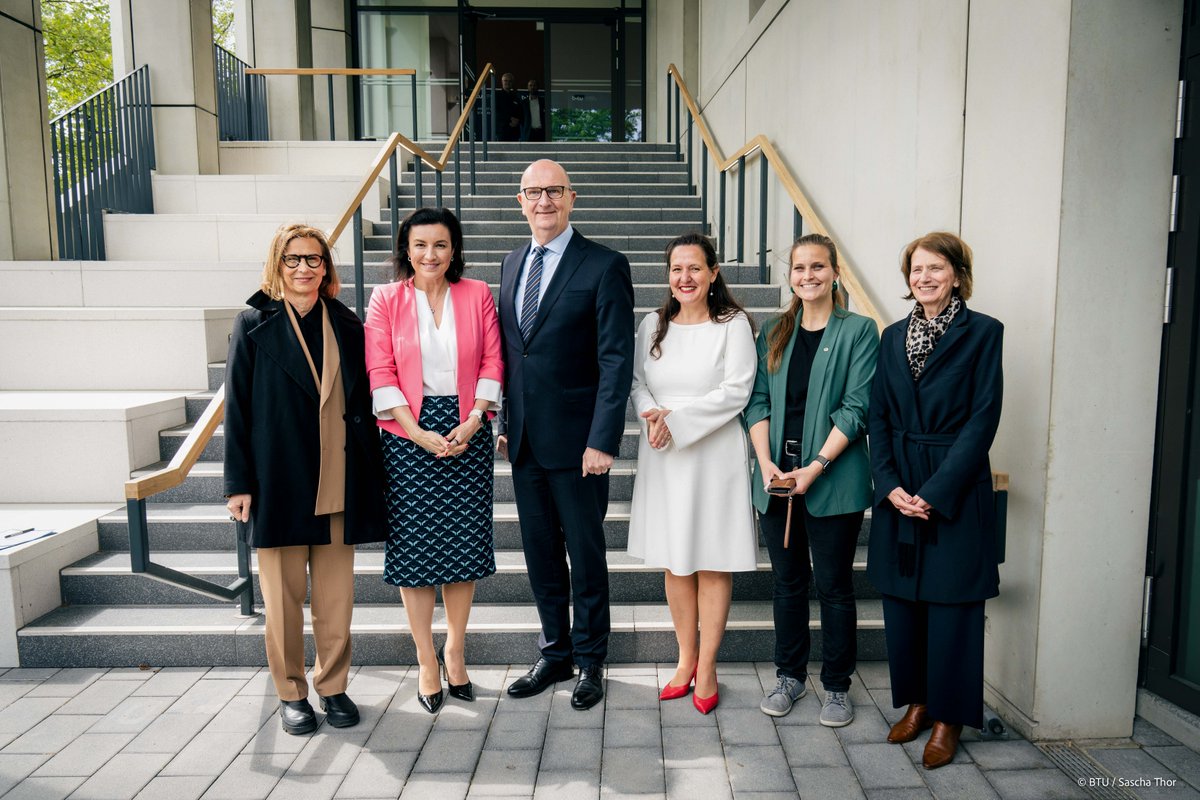
ALT BTU-Präsidentin Gesine Grande, Bundesforschungsministerin Dorothee Bär, Brandenburgs Ministerpräsident Dietmar Woidke, Brandenburgs Wissenschaftsministerin Manja Schüle, Bundestagsabgeordnete Maja Wallstein, Prof. Adelheid Kuhlmey, wissenschaftliche Vorständin der MUL CT.
399

🚨 NEW PUBLICATION 🚨
Pleased to share our new policy and analytical publication: doi.org/10.5281/zenodo.20241…
BEYOND ATMS: EX-ANTE ANALYSIS AND STRESS-TESTING UGANDA’S NDPIV TENFOLD GROWTH TRAJECTORY
Co-authored with Eng. Oscar Olaro (NPA), this book presents an integrated scenario-based assessment of Uganda’s NDP IV investment pathways using Programme Stress-testing, synergy analysis, Monte Carlo simulations and GDP pathway modelling. The study identifies the strongest transformation bundles for advancing:
⚡ Energy-led industrialisation
📈 Productivity growth
🏭 Structural transformation
🌍 Climate resilience
💼 Employment creation
🚀 Uganda’s Tenfold Growth ambition
Key findings show that integrated pathways centred on Sustainable Energy Development, Manufacturing, Human Capital and Private Sector Development generate the strongest long-term transformation outcomes.
#Uganda #NDPIV #TenfoldGrowth #StructuralTransformation #EnergyTransition #Industrialisation #DevelopmentPlanning #ScenarioModelling #PolicyResearch #AfricaRising
3
17
36
2,978

Mar 25
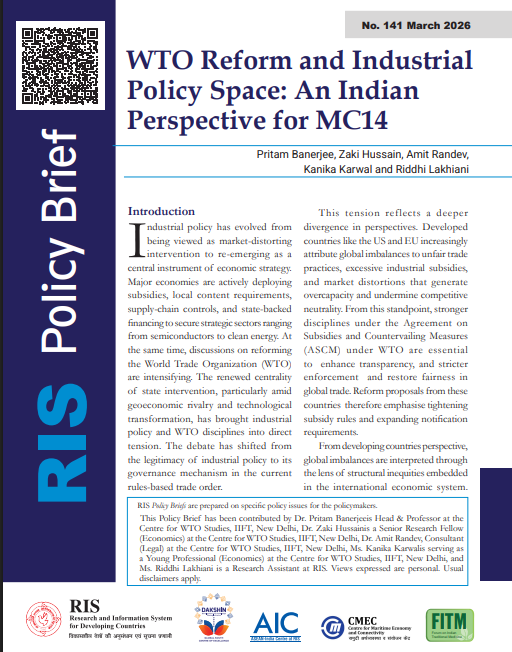
𝗥𝗜𝗦 𝗣𝗼𝗹𝗶𝗰𝘆 𝗕𝗿𝗶𝗲𝗳 | 𝗪𝗧𝗢 𝗥𝗲𝗳𝗼𝗿𝗺 𝗮𝗻𝗱 𝗜𝗻𝗱𝘂𝘀𝘁𝗿𝗶𝗮𝗹 𝗣𝗼𝗹𝗶𝗰𝘆 𝗦𝗽𝗮𝗰𝗲: 𝗔𝗻 𝗜𝗻𝗱𝗶𝗮𝗻 𝗣𝗲𝗿𝘀𝗽𝗲𝗰𝘁𝗶𝘃𝗲 𝗳𝗼𝗿 𝗠𝗖14
Research and Information System for Developing Countries (@RIS_NewDelhi), is glad to announce the publication of the Policy Brief titled 𝘞𝘛𝘖 𝘙𝘦𝘧𝘰𝘳𝘮 𝘢𝘯𝘥 𝘐𝘯𝘥𝘶𝘴𝘵𝘳𝘪𝘢𝘭 𝘗𝘰𝘭𝘪𝘤𝘺 𝘚𝘱𝘢𝘤𝘦: 𝘈𝘯 𝘐𝘯𝘥𝘪𝘢𝘯 𝘗𝘦𝘳𝘴𝘱𝘦𝘤𝘵𝘪𝘷𝘦 𝘧𝘰𝘳 𝘔𝘊14 co-authored by Prof. Pritam Banerjee, Prof. Zaki Hussain, Dr. Amit Randev, Dr. Kanika Karwal (@kanika_karwal) and Ms. Riddhi Lakhiani (@LakhianiRiddhi).
The Brief examines the evolving debate on WTO reform and its implications for industrial policy space, particularly from the perspective of developing countries like India. It situates the renewed global interest in industrial policy within the broader context of geoeconomic competition, technological transformation, and supply chain restructuring, where major economies are increasingly deploying subsidies and strategic state interventions to strengthen domestic manufacturing capabilities.
It analyses emerging reform proposals under the Agreement on Subsidies and Countervailing Measures (ASCM) and highlights concerns that tighter subsidy disciplines, expanded definitions, and stronger enforcement mechanisms could disproportionately constrain the policy space available to developing countries that are still undergoing structural transformation.
The brief underscores the structural asymmetries in income levels, technological capabilities, and global value chain participation between advanced and developing economies, arguing that industrial policy remains a critical instrument for late industrialisers seeking to upgrade manufacturing capacity and move up the value chain.
It proposes a set of development-sensitive pathways for WTO reform, including calibrated flexibility in subsidy disciplines, strengthened transparency mechanisms, and objective criteria to distinguish between systemic dominance and developmental catch-up.
As discussions move toward MC14, the brief highlights the need for a balanced reform framework that preserves the credibility of the multilateral trading system while ensuring that developmental policy space remains available to emerging economies pursuing industrialisation and structural transformation.
🔗𝗥𝗲𝗮𝗱 𝘁𝗵𝗲 𝗣𝗼𝗹𝗶𝗰𝘆 𝗕𝗿𝗶𝗲𝗳 𝗮𝘁:
ris.org.in/sites/default/fil…
@MEAIndia @DoC_GoI @IndiaWTO @wto @aparnaray_ifs @SKSharma_World @AIC_aseanindia @DakshinNews @cmec_ris @fitm14 @fisd19
#WTOReform #WorldTradeOrganization #MultilateralTradingSystem #GlobalTradePolicy #IndustrialPolicy #PolicySpace #MC14 #StructuralTransformation #Industrialization #Subsidies #ASCM #TradeNegotiations #DevelopingCountries #EconomicDevelopment
2
8
244

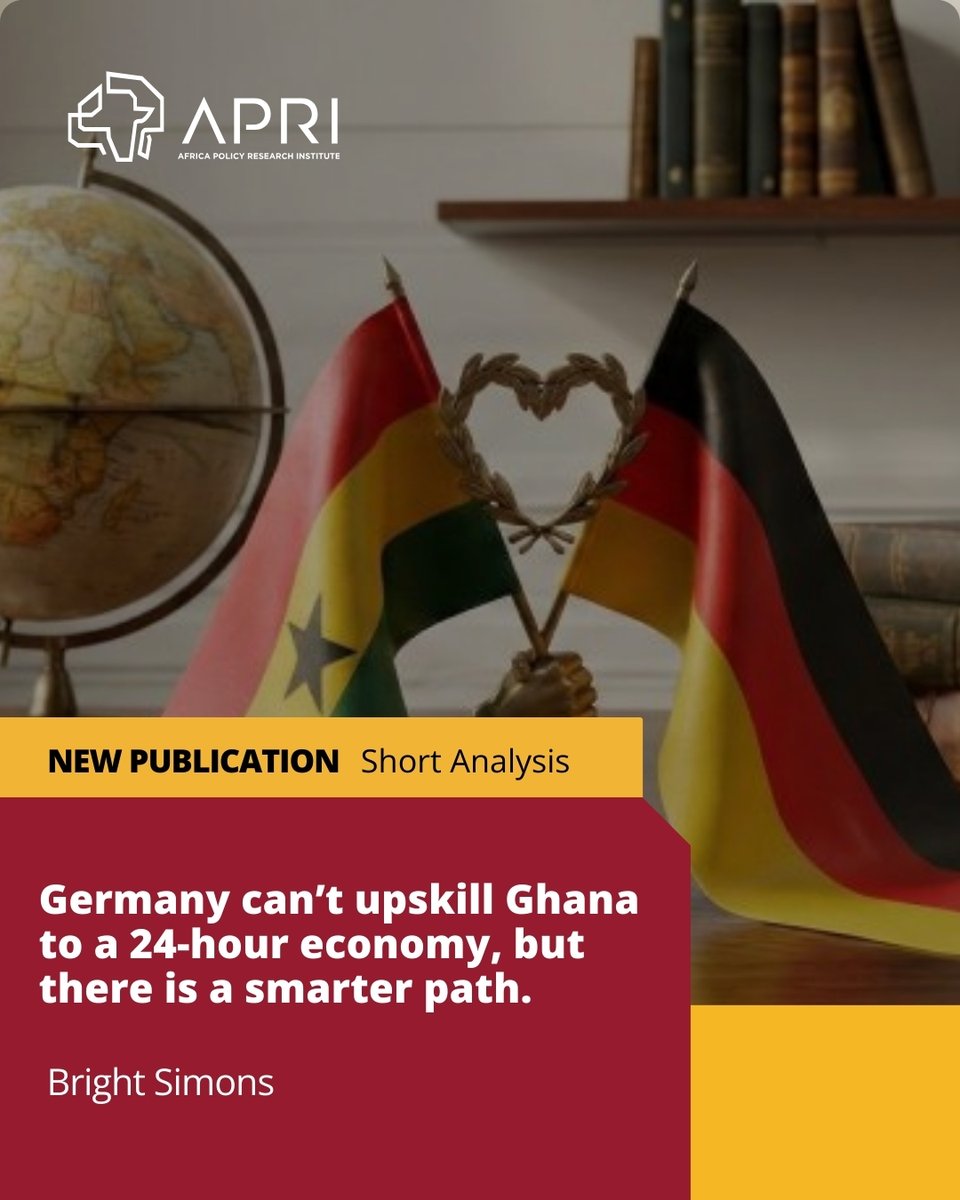
The new analysis by Bright Simons critiques the current trajectory of Ghana-Germany development cooperation. He argues that the historical partnership has narrowed into a "skills-first" model focused on TVET and SME support, which is insufficient for Ghana's ambitious 24-Hour Economy (24HE) agenda. Simons posits that Germany cannot simply upskill Ghana into industrialization; instead, the relationship must shift from broad capability diffusion to a "spearhead-first" approach, targeting high-performing, export-anchored industrial corridors.
The findings suggest that Ghana’s structural constraints such as low capital accumulation and fragmented training ecosystems make broad-based strategies unrealistic in the near term. Simons recommends a vanguardist logic, treating the 24HE as an industrial coordination doctrine rather than a mere labor policy. This involves aligning German comparative strengths in logistics, energy, and supply-chain governance with selective "industrial wedges" to create deep, networked sectoral clusters that drive rapid economic take-off. This pivot is presented as the only viable path to addressing Ghana’s youth employment crisis while securing Germany’s geo-economic position in the Global South.
Key recommendations include joint value-chain diagnostics, training tied directly to production contracts, and German participation in AfCFTA-enabled regionalization.
Read more of the analysis here: afripoli.org/germany-cant-up…
#EconomicGovernance #IndustrialPolicy #GhanaGermany #24HourEconomy #StructuralTransformation #ValueChains
5
14
1,021

Feb 3
OPINION
The balance of power is changing
Click- dailypioneer.com/news/the-ba…
#IndiaRising #AsianCentury #GlobalGrowth #NewWorldOrder #EconomicShift #Geopolitics #IMF #WorldEconomy #GDP2026 #ChinaIndia #EmergingMarkets #BalanceOfPower #ElonMusk #Trump #X #WorldOfStatistics #NarendraModi #Manufacturing #AIEconomy #DigitalIndia #Fintech #HumanCapital #Semiconductors #ViksitBharat #IndiaGrowth #AsiaPacific #StructuralTransformation #GlobalImpact
3
68

Jan 25
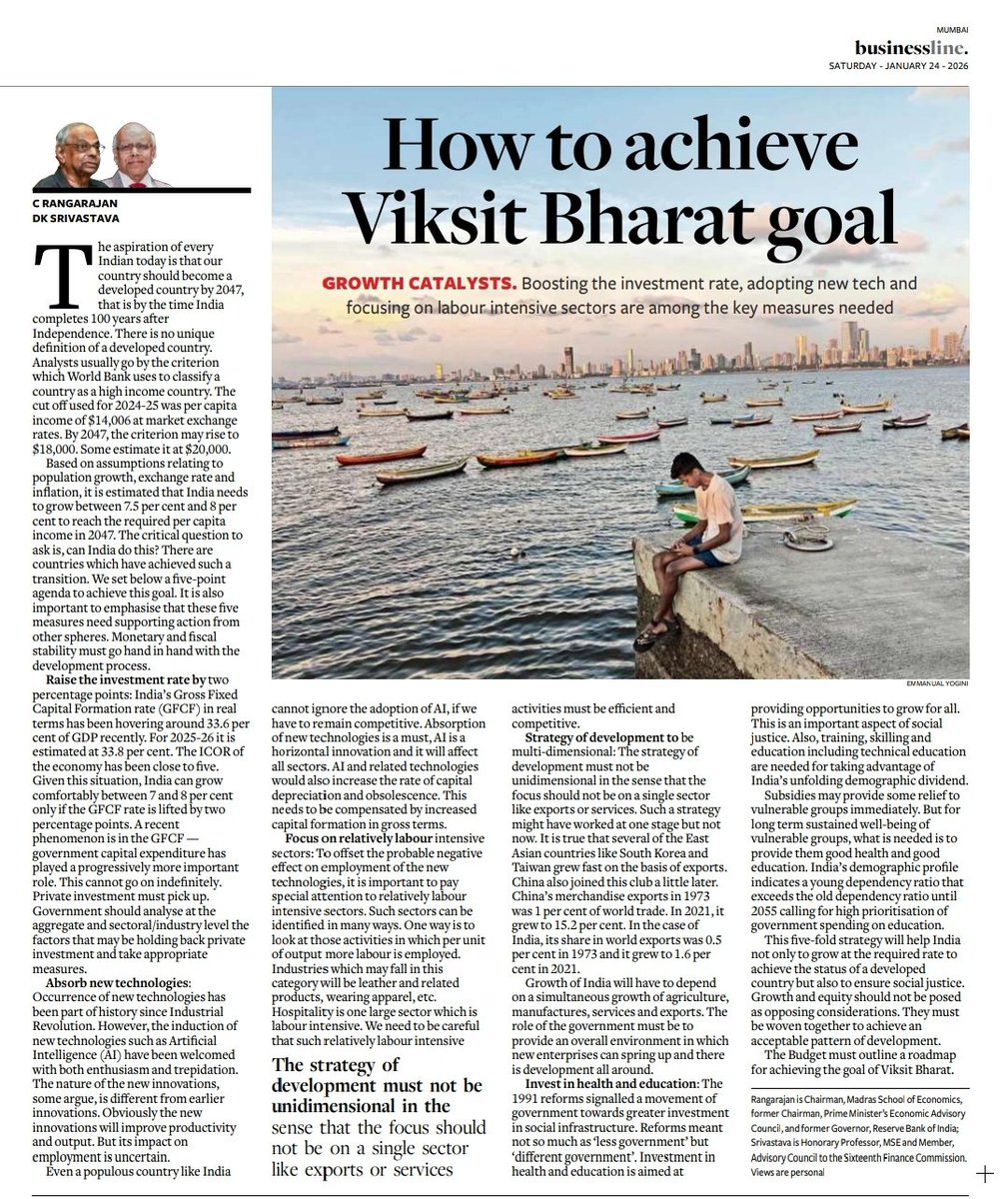
🔥 VIKSIT BHARAT 2047: FROM ASPIRATION TO IRREVERSIBLE STATE CAPACITY
C. Rangarajan & D.K. Srivastava
🌅 THE BIG IDEA (WHY THIS PIECE MATTERS MORE THAN IT SEEMS)
When C. Rangarajan and D.K. Srivastava write about Viksit Bharat, they are not offering a slogan.
They are laying out a macro-economic statecraft blueprint—one that quietly answers the hardest question of our time:
Can India convert demographic scale into durable prosperity without fracturing social stability?
This article is not about growth alone.
It is about how growth becomes development, and how development becomes national power.
#ViksitBharat2047 #IndianEconomy #UPSCGS3 #CapitalFormation #Employment #HumanCapital #AIandJobs #InclusiveGrowth #FiscalPolicy #DevelopmentEconomics #India2047 #StructuralTransformation
1
1
9
380

Jan 17
Focus: mobilizing & recycling capital, #BlendedFinance, #TradeFinance, and turning #AfCFTA commitments into bankable investment.
#CapitalMobilization #DevelopmentFinance #DomesticResourceMobilization #AfCFTA #StructuralTransformation #PrivateCapital #AfricaInvests 2/3
1
2
2
141

Jan 7
@cbatista_econ & @pedrocvicente (2025)
Is Mobile Money Changing Rural Africa?
Review of Economics and Statistics
Main finding:
Newly introducing #MobileMoney in #Mozambique promoted #StructuralTransformation by inducing #Migration out of rural areas
direct.mit.edu/rest/article-…
1
3
7
867

31 Dec 2025
ఆదిలాబాదు జిల్లాలోని నార్నూర్ ఆస్పిరేషన్ బ్లాక్ లో భాగంగా ప్రభుత్వ అభివృద్ధి, సంక్షేమ పథకాల అమలు పై క్షేత్ర పర్యటనకు వచ్చిన మధ్యప్రదేశ్ రాష్ట్రం ఇండోర్ ఐఐఎం రీసెర్చ్ అనలిస్ట్ వినయ్ శుక్ల ను బుధవారం కలెక్టర్ క్యాంపు కార్యాలయంలో జిల్లా కలెక్టర్ రాజర్షి షా శాలువాతో సన్మానించారు.
ఈ సందర్భంగా నార్నూర్ ఆస్పిరేషనల్ బ్లాక్ లో అమలవుతున్న అంగన్వాడీ సెంటర్, ఆర్వో ప్లాంట్, న్యూట్రిషన్ గార్డెన్, బాలికల ఆశ్రమ పాఠశాలలో ఇంగ్లీష్ లిటిరేచరి ఫౌండేషన్, సైన్స్, ఇంగ్లీష్ ల్యాబ్, విద్యా, వైద్యం, వ్యవసాయం, అంగన్వాడీ కేంద్రం నిర్వహణ, మహిళ సంఘాల ఏర్పాటు, పారిశుధ్య నిర్వహణ, తాగునీరు, మౌహ లడ్డు యూనిట్, జేజేఏం, పిఎంఈజిపి, పిఎంఎఫ్ఎంఈ పథకాల అమలును పరిశీలించి అధ్యయనం చేసినట్లు కలెక్టర్ కు రీసెర్చ్ అనలిస్ట్ వివరించారు.
ఈ కార్యక్రమంలో నీతి ఆయోగ్ ప్రోగ్రామ్ అధికారి రాహుల్, తదితరులు పాల్గొన్నారు.
@TelanganaCMO
@TelanganaCS
@CPRO_TGCM
@Bhatti_Mallu
@DamodarCilarapu
@INC_Ponguleti
@seethakkaMLA
@jupallyk_rao
@EduMinOfIndia
@MoHFW_INDIA
@CHFW_NHMTG
@NITIAayog
@DCsofIndia
@IasTelangana
@IPRTelangana
@PIBHyderabad
@GlobalSummitTG
@DDNewslive
@TribalAffairsIn
@DDNewsHindi
@DDNational
@MIB_India
@PIB_India
@ncsthq
#NITIAayog #ViksitBharat2047 #AatmanirbharBharat #StructuralTransformation #EconomicReforms #DigitalPublicInfrastructure

10
47
619

31 Dec 2025
It was an honour for @CareEdge_Group to have our Chief Economist, @RajaniSinha2025, participate in the insightful interaction chaired by our Hon’ble Prime Minister, Shri @narendramodi , at @NITIAayog, focused on #Aatmanirbharta and Structural Transformation as key pillars of the #ViksitBharat2047 agenda.
At CareEdge, we remain committed to contributing to India’s development journey through rigorous economic research, data-driven insights, and policy-relevant thought leadership.
🔗 Read more: pib.gov.in/PressReleasePage.…
#CareEdge #NITIAayog #ViksitBharat2047 #AatmanirbharBharat #StructuralTransformation #EconomicReforms #DigitalPublicInfrastructure #ArtificialIntelligence
@PMOIndia @narendramodi @Rao_InderjitS
@MIB_India @PIB_India @DDNewslive @sumanbery
31 Dec 2025

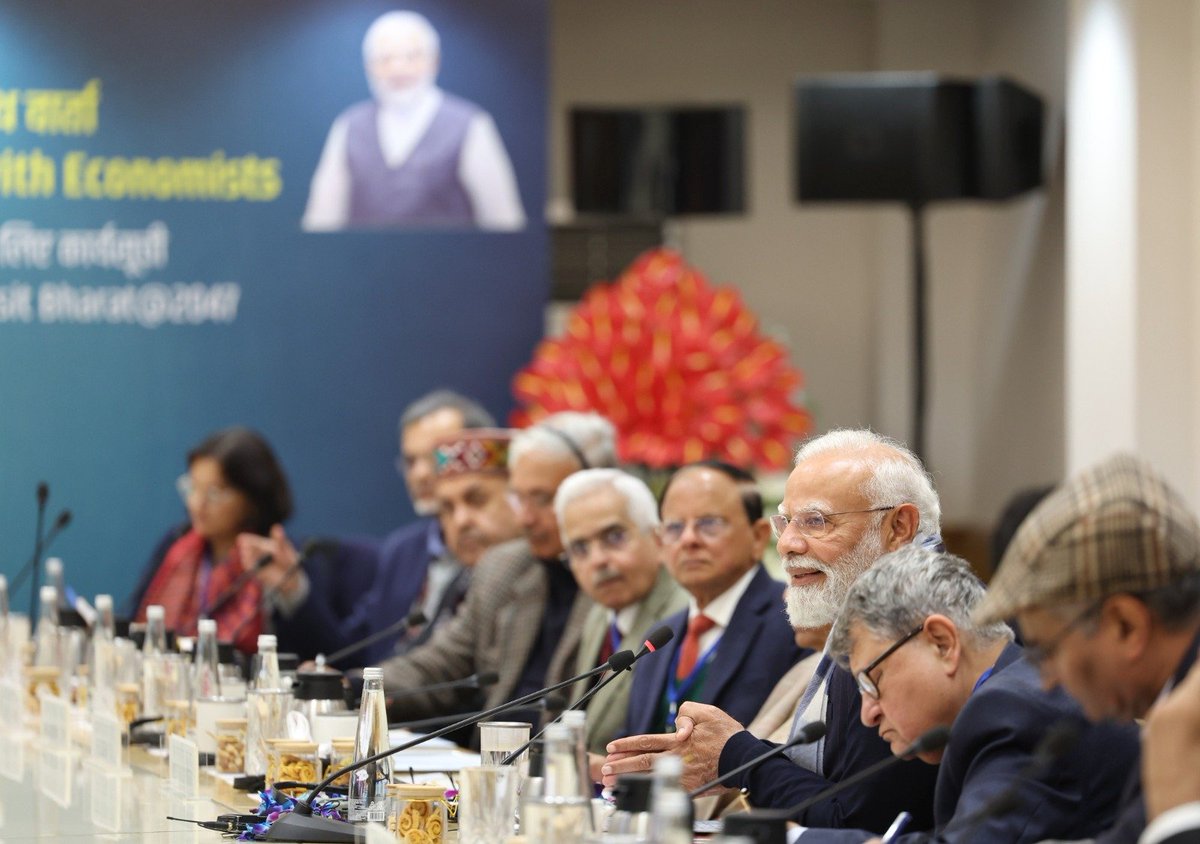
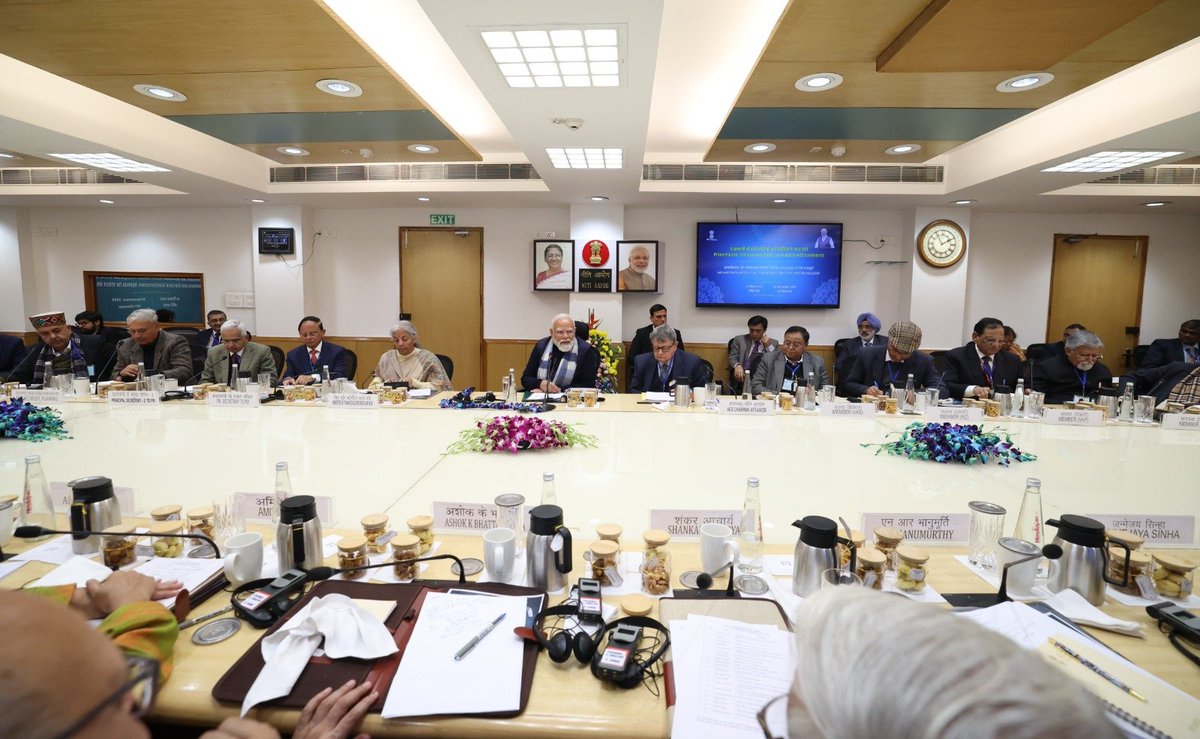
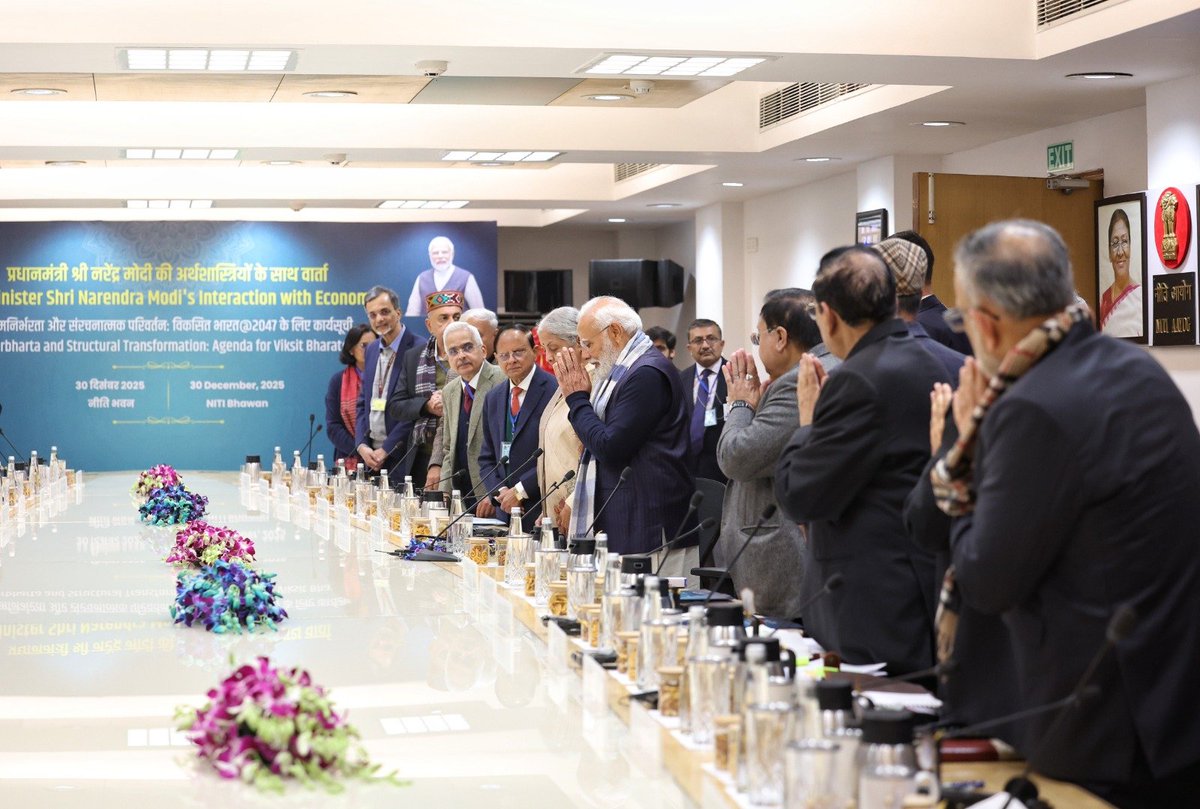
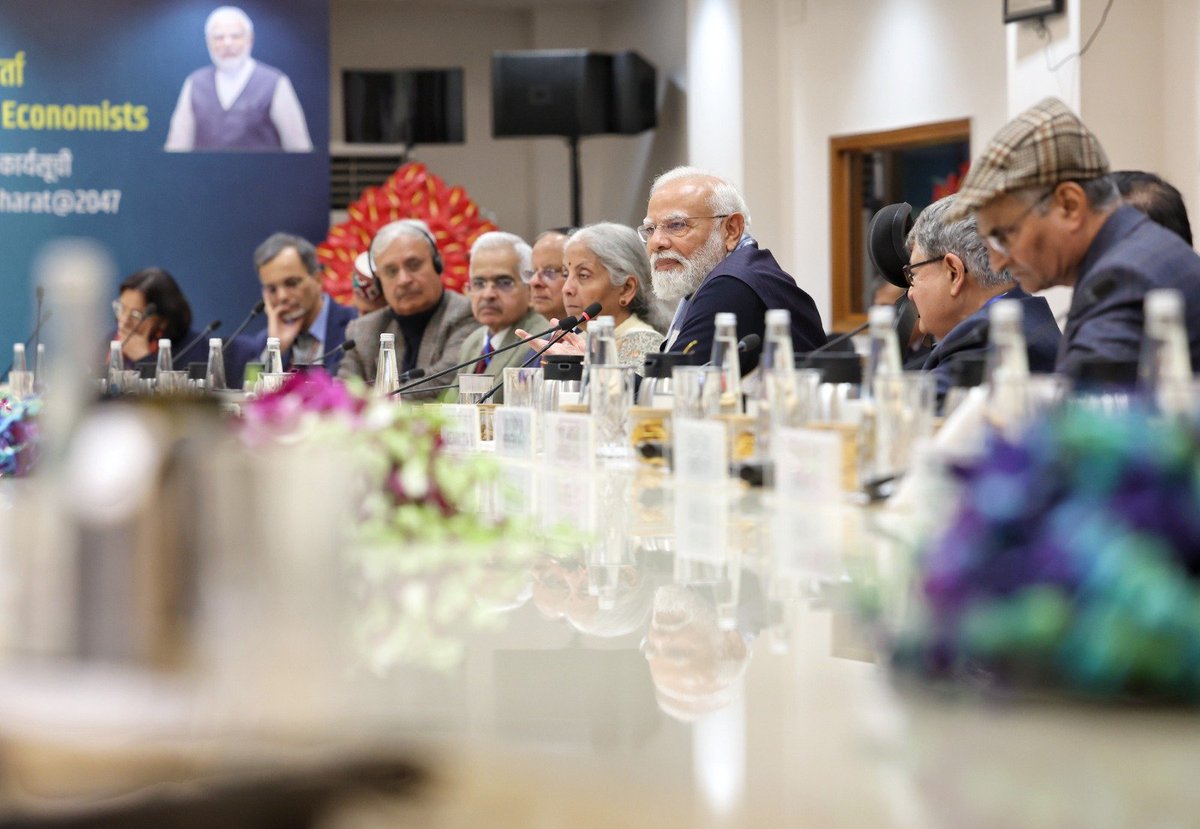
Had an insightful interaction with economists and experts yesterday. They shared valuable perspectives relating to the theme of ‘Aatmanirbharta and Structural Transformation: Agenda for Viksit Bharat.’
pib.gov.in/PressReleasePage.…
2
111

31 Dec 2025
Had 'insightful interaction' with economists on Aatmanirbharta, Viksit Bharat: PM Modi yespunjab.com/?p=200006
#PMModi #Aatmanirbharta #ViksitBharat #UnionBudget2026 #IndianEconomy #EconomicReforms #NITIAayog #StructuralTransformation #India2047 #DigitalIndia
@narendramodi
17

30 Dec 2025
PM meets eminent economists at NITI Aayog
Prime Minister Shri Narendra Modi interacted with a group of eminent economists and experts at NITI Aayog, earlier today. The theme of the interaction was “Aatmanirbharta and Structural Transformation: Agenda for Viksit Bharat”.
The Prime Minister highlighted that the vision of Viksit Bharat@2047 has become a mass aspiration and stressed the need for mission-mode reforms across sectors to sustain long-term growth, strengthen global capabilities, and anchor policymaking and budgeting to the 2047 vision.
During the interaction, economists shared strategic insights on enhancing productivity and competitiveness across manufacturing and services sectors, accelerating structural transformation through robust infrastructure development and adoption of cutting-edge technologies, including Artificial Intelligence and the continued scaling of Digital Public Infrastructure.
Read more: pib.gov.in/PressReleasePage.…
#NITIAayog #ViksitBharat2047 #AatmanirbharBharat #StructuralTransformation #EconomicReforms #DigitalPublicInfrastructure #ArtificialIntelligence
@PMOIndia @narendramodi @Rao_InderjitS @MIB_India @PIB_India @DDNewslive @sumanbery
46
163
643
1,790,101
30 Dec 2025
Viksit Bharat has turned into a mass aspiration: PM Modi yespunjab.com/?p=199887
#ViksitBharat2047 #PMModi #IndiaDevelopment #NITIAayog #StructuralTransformation #IndianEconomy #DigitalInfrastructure #AIinIndia #MissionModeReforms #EconomicGrowth #GlobalWorkforce #IndiaVision2047
19

Join @PIDEpk for an engaging seminar on:
“𝗥𝘂𝗿𝗮𝗹 𝗧𝗿𝗮𝗻𝘀𝗳𝗼𝗿𝗺𝗮𝘁𝗶𝗼𝗻 𝗮𝗻𝗱 𝗦𝘁𝗮𝗴𝗲-𝗯𝗮𝘀𝗲𝗱 𝗣𝗼𝗹𝗶𝗰𝘆 𝗗𝗲𝘀𝗶𝗴𝗻: 𝗜𝗻𝘀𝗶𝗴𝗵𝘁𝘀 𝗳𝗿𝗼𝗺 𝗡𝗲𝘄 𝗦𝘁𝗿𝘂𝗰𝘁𝘂𝗿𝗮𝗹 𝗘𝗰𝗼𝗻𝗼𝗺𝗶𝗰𝘀 & 𝗣𝗿𝗮𝗰𝘁𝗶𝗰𝗲𝘀 𝗶𝗻 𝗔𝘀𝗶𝗮𝗻 𝗗𝗲𝘃𝗲𝗹𝗼𝗽𝗶𝗻𝗴 𝗖𝗼𝘂𝗻𝘁𝗿𝗶𝗲𝘀”
Our distinguished speaker Dr. Dong Wang from The University of Sydney (@Sydney_Uni) will discuss how Rural Transformation reshapes livelihoods, productivity, and structural change and why stage-based policies are crucial for sustainable and inclusive development in developing economies.
Date & Time:
December 24, 2025 (Wednesday) | 11:00 AM (PKT)
Venue: A.R. Kamal Hall, PIDE
Online (Zoom):
ID: 825 1833 1615 | Passcode: 988095
✨ Don’t miss this timely discussion on evidence-based policy design for rural development.
@nadeemjavaid75, @betterpakistan, @Kalhorozulfiqar
#RuralTransformation #DevelopmentEconomics #StructuralTransformation #NewStructuralEconomics #PolicyDesign #PIDE #Pakistan #AsianEconomies

2
9
331

15 Dec 2025
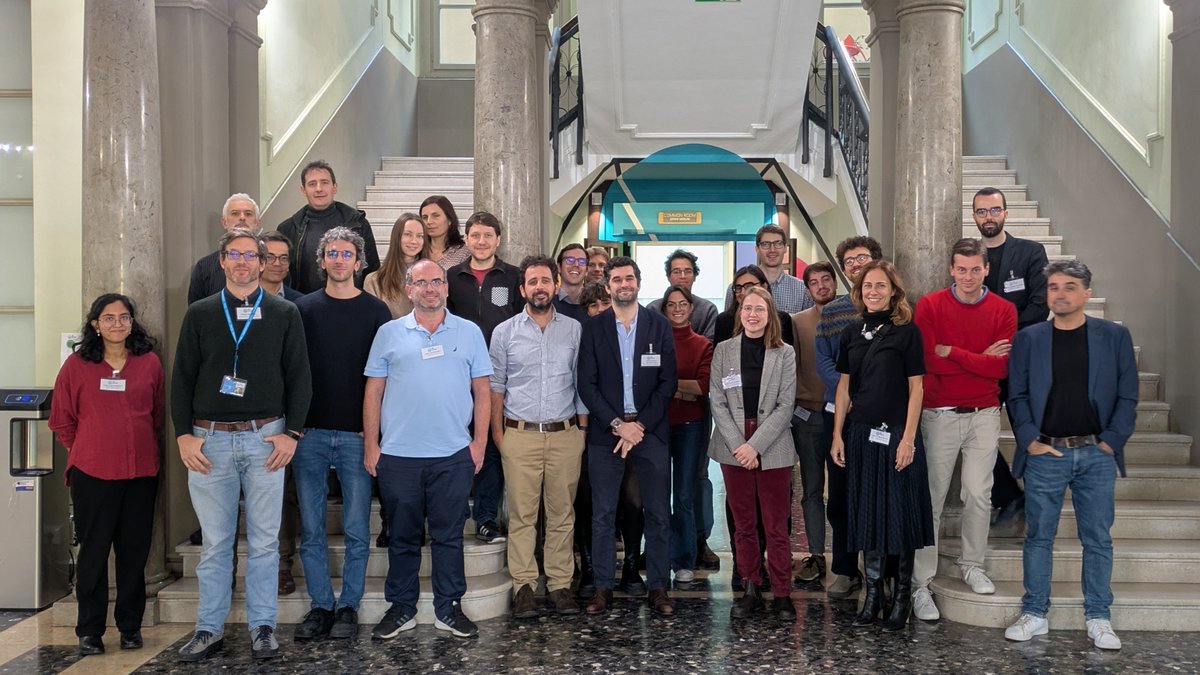
Last week, CCA hosted a high quality workshop, in informal atmosphere, with contributions from across the globe on the topics of #StructuralTransformation, #Urbanization, and #Development.
Thanks to the organizers, the speakers, and all participants for joining us in Turin!
bit.ly/3N1N1Pm
#cca #research #ccaacademic #Economics
@marcosanfilip @FlorianOswald @vedanarasimhan @nigeca @loraulet @BrettMcCully
11
2,142

2 Dec 2025
India's economy continues to grow rapidly, with real Gross Domestic Product (GDP) expanding by 9.2% in 2023–24 and Gross Value Added (GVA) by 8.6%, marking the third consecutive year of robust post-pandemic recovery.
📊 Between 2021 and 2024, India recorded strong macroeconomic performance, with GDP growing at an average rate of 8.83% and GVA at 8.38%. Economic momentum is strong, driven mainly by construction, manufacturing, and modern services, while agriculture's contribution to value added continues to decline gradually.
Sector-wise, growth was uneven: in 2023-24, agriculture expanded modestly at 2.7%, while industry surged ahead with 10.8% growth and services maintained a robust 9.0% growth (Source: National Accounts Statistics).
However, employment diversification has lagged behind, leaving a large share of workers in low-productivity agricultural and informal sectors. In 2023–24, India's sectoral structure highlights a clear mismatch between where people work and where value is created.
Agriculture still employs 46% of the workforce but contributes only 15% to GVA. Industry accounts for 24% of employment and 31% of GVA, while the services sector employs 30% of workers yet generates the largest share of value added at 54%.
👉 This imbalance underscores India's ongoing structural transformation and the need to shift more workers into higher-productivity sectors.
#FutureOfWork #JustJobsNetwork #IndiaEconomy #LabourMarkets #InclusiveGrowth #EconomicGrowth #Employment #StructuralTransformation #JobsData
@sabinadewan | @JJNglobal
1
3
94

At @SocialSummit2025 side event, @EuniceKamwendo warns: "Youth unemployment in Southern Africa averages 34%—among the highest globally. This is systemic and, structural. 📉 70% of young workers in informal & precarious jobs🔧. Skills mismatch with emerging sectors.
⚠️ Threatens social cohesion & risks generational poverty. But young people aren't just job seekers—they're innovators, entrepreneurs & agents of change.
The solution? Move beyond remedial programs to structural transformation through inclusive industrialization & intra-African trade."
#WSSD2025 #YouthEmployment #SouthernAfrica #StructuralTransformation
2
4
72