
The Global Structure Network Limited is redefining how consumers build capability, establishing the architecture through which their everyday decisions translate directly into long‑term economic value.
theglobalstructurenetwork.co…
#PreventiveInfrastructure #OperationalResilience #FutureOfGovernance
#GlobalHealth #HealthGovernance #GlobalHealthSecurity
#HealthSystems #UniversalHealthCoverage #HealthEquity
#GlobalHealthPolicy #PublicHealthLeadership #PlanetaryHealth #GlobalEconomy #EconomicPolicy
#DevelopmentEconomics #SustainableDevelopment
#SDGs #HumanCapital #InclusiveGrowth #FutureOfDevelopment #GlobalCompetitiveness
#ThinkTank #PolicyResearch #EvidenceBasedPolicy
#InternationalAffairs #Geoeconomics #GlobalGovernance
1
The Global Structure Network Limited is redefining how consumers build capability, establishing the architecture through which their everyday decisions translate directly into long‑term economic value.
theglobalstructurenetwork.co…
#DevelopmentEconomics #SustainableDevelopment
#SDGs #HumanCapital #InclusiveGrowth #FutureOfDevelopment #GlobalCompetitiveness
#ThinkTank #PolicyResearch #EvidenceBasedPolicy
#InternationalAffairs #Geoeconomics #GlobalGovernance
#StrategicForesight #PolicyInnovation #HealthEconomics
#HealthInvestment #HealthTechPolicy #DataForHealth
#HealthInfrastructure #BrainData #HumanPerformanceEconomy #CapabilityEconomy #OneHealth #Biosecurity #PandemicPreparedness
#AMR #AgingSocieties #GlobalNutrition #DigitalHealthTransformation
1

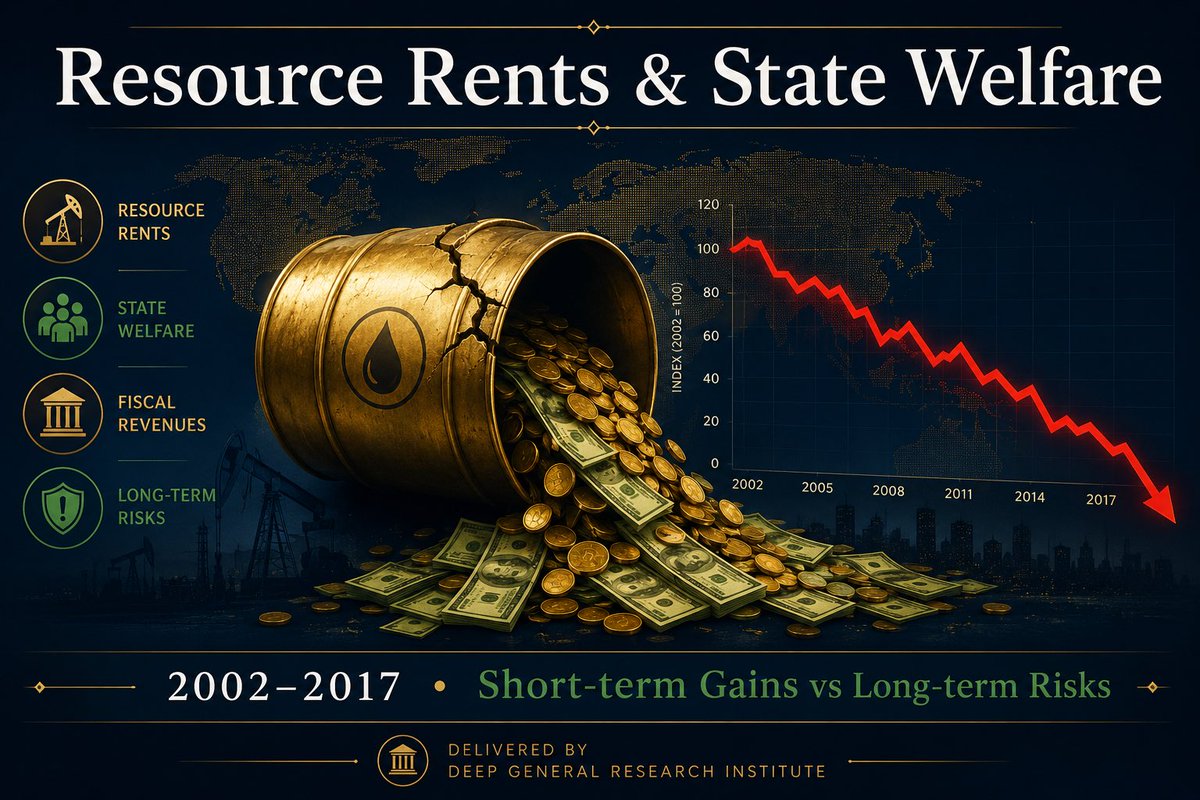
New Study: How Resource Rents (Oil, Gas, Minerals) Affect State Welfare
Analysis of 115 countries (2002–2017) shows: High resource rents can boost welfare in the short term, but often lead to dependency, inequality, and weaker long-term sustainable development.
Key takeaway: Economic diversification is crucial for resource-rich nations.
Full paper: researchgate.net/publication…
#ResourceCurse #SustainableDevelopment #ResourceRents #DevelopmentEconomics
1
52

Jun 10
Tomorrow the policy report cards go public and will be seen in goals, celebrations, wins or near wins
#WorldCup2026 #DevelopmentEconomics #Africa
4

Jun 10
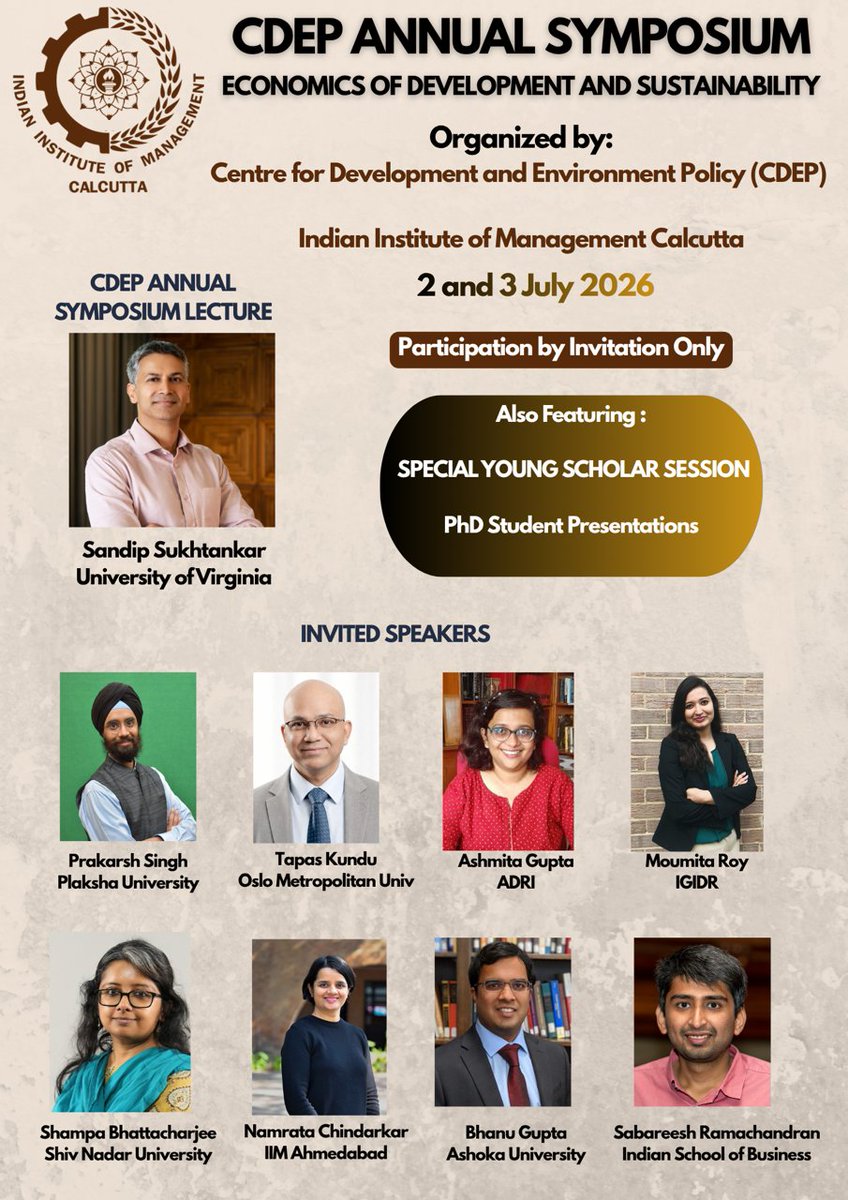
The Centre for Development and Environment Policy (CDEP), IIM Calcutta, is pleased to host the CDEP Annual Symposium 2026 on Economics of Development and Sustainability on 2–3 July 2026.
The symposium will feature the CDEP Annual Symposium Lecture by Prof. Sandip Sukhtankar (University of Virginia), along with presentations by leading scholars and a special Young Scholar Session showcasing research by PhD students.
The event will provide a platform for insightful discussions on contemporary issues at the intersection of development, sustainability, and public policy.
#IIMCalcutta #CDEP #DevelopmentEconomics #Sustainability #Research #PublicPolicy #AcademicConference #Economics
@somdeepc
96

In 1980, fifty African heads of state adopted the most systematic economic framework the continent had ever produced together. It named the problem precisely. It had a twenty-year plan. Most people have never heard of it. Our latest piece asks why, and what Africa keeps losing every time this happens.
#AfricanEconomics #DevelopmentEconomics #EconomicPolicy
1
2
28
Global Competition Between Capital Environments: Environmental Physics, Liquidity Architecture, and Jurisdictional Advantage.
gsdiandadvocacy.co.uk/global…
#GlobalHealth #HealthGovernance #GlobalHealthSecurity
#HealthSystems #UniversalHealthCoverage #HealthEquity
#GlobalHealthPolicy #PublicHealthLeadership #PlanetaryHealth #GlobalEconomy #EconomicPolicy
#DevelopmentEconomics #SustainableDevelopment
#SDGs #HumanCapital #InclusiveGrowth #FutureOfDevelopment #GlobalCompetitiveness
#ThinkTank #PolicyResearch #EvidenceBasedPolicy
#InternationalAffairs #Geoeconomics #GlobalGovernance
#StrategicForesight #PolicyInnovation #HealthEconomics
#HealthInvestment #HealthTechPolicy #DataForHealth
1

Why Did It Take Ethiopia So Long to Open Up Its Markets?
Read More - impactnews-wire.com/why-did-…
#Ethiopia #EconomicReform #AfricanEconomy #BusinessNews #MarketLiberalization #InvestmentOpportunities #AfricaBusiness
#EconomicGrowth #EmergingMarkets #DevelopmentEconomics
12
Global Competition Between Capital Environments: Environmental Physics, Liquidity Architecture, and Jurisdictional Advantage.
gsdiandadvocacy.co.uk/global…
#DigitalInfrastructure #AIinPublicHealth #TechForImpact #RealTimeIntelligence #RiskIntelligence #FoodSafety #Traceability #FoodSecurity #FoodFraudPrevention #SupplyChainTransparency #ConsumerProtection #SafeFoodForAll #FoodTech #CapabilityInfrastructure #SystemResilience #ResilienceEconomy #CapabilityEconomy #HealthResilience #PreventiveInfrastructure #OperationalResilience #FutureOfGovernance
#GlobalHealth #HealthGovernance #GlobalHealthSecurity
#HealthSystems #UniversalHealthCoverage #HealthEquity
#GlobalHealthPolicy #PublicHealthLeadership #PlanetaryHealth #GlobalEconomy #EconomicPolicy
#DevelopmentEconomics #SustainableDevelopment
2

On 28 May 2026, I graduated with a Bachelor of Development Economics from LUANAR.
My research examined how climate finance affects youth employment in Sub-Saharan Africa.
Grateful to all who supported my journey. The work continues.
#DevelopmentEconomics #ClimateFinance



1
36

Jun 5
अगर उदारीकरण भारत में न आता तो क्या होता ? #Akarunsir #Liberalization #IndianEconomy #viralvídeo
.
#Akarunsir #Liberalization #IndianEconomy #EconomicReforms #India1991 #EconomicHistory #IndiaGrowthStory #EconomyExplained #UPSC #IndianEconomicReforms #DevelopmentEconomics #Globalization #Privatization #EconomicPolicy #IndiaDevelopment #GDPGrowth #sanskritiias #ViralShorts #shortsvideo #dailyshorts #shortstoday #viralvideo #ytshorts
1
7
173

May 31
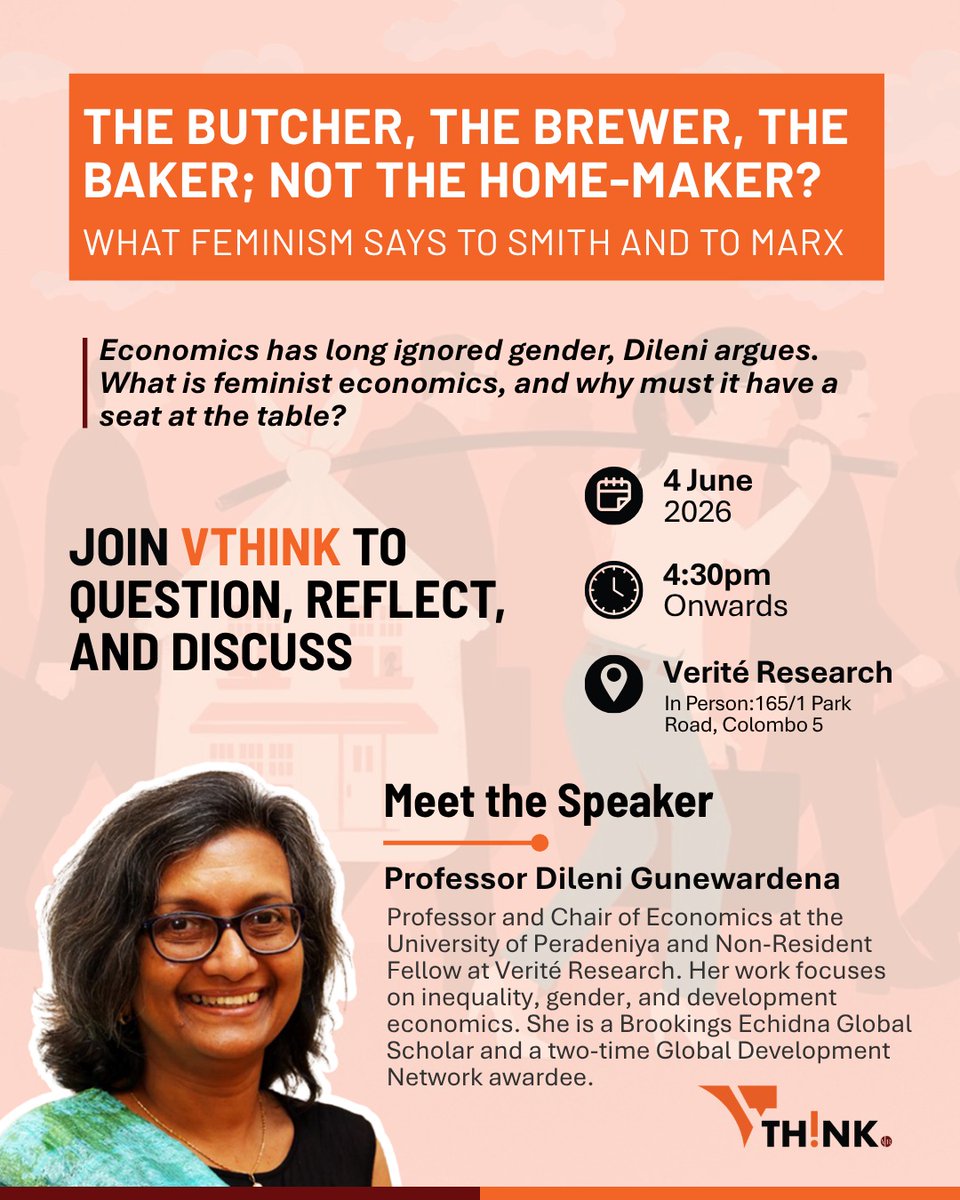
Economics has long ignored gender, Dileni (@dilenigun) argues.
What is feminist economics, and why must it have a seat at the table?
Join us at our next VThink, where Prof. Dileni explores where neoclassical and marxist economics miss the bus, and what feminist economics has to offer.
Professor Dileni Gunewardena is the Professor of Economics (Chair) at the University of Peradeniya and a Non-Resident Fellow at @VeriteResearch.
Her research is at the confluence of inequality, gender and development economics. She is a PEP Research Fellow, and a former Fulbright Scholar, Brookings Echidna Global Scholar, and two-time Global Development Network awardee.
Register: forms.cloud.microsoft/r/k1wc…
#developmenteconomics #feminism #marx #srilanka
1
4
778


May 30
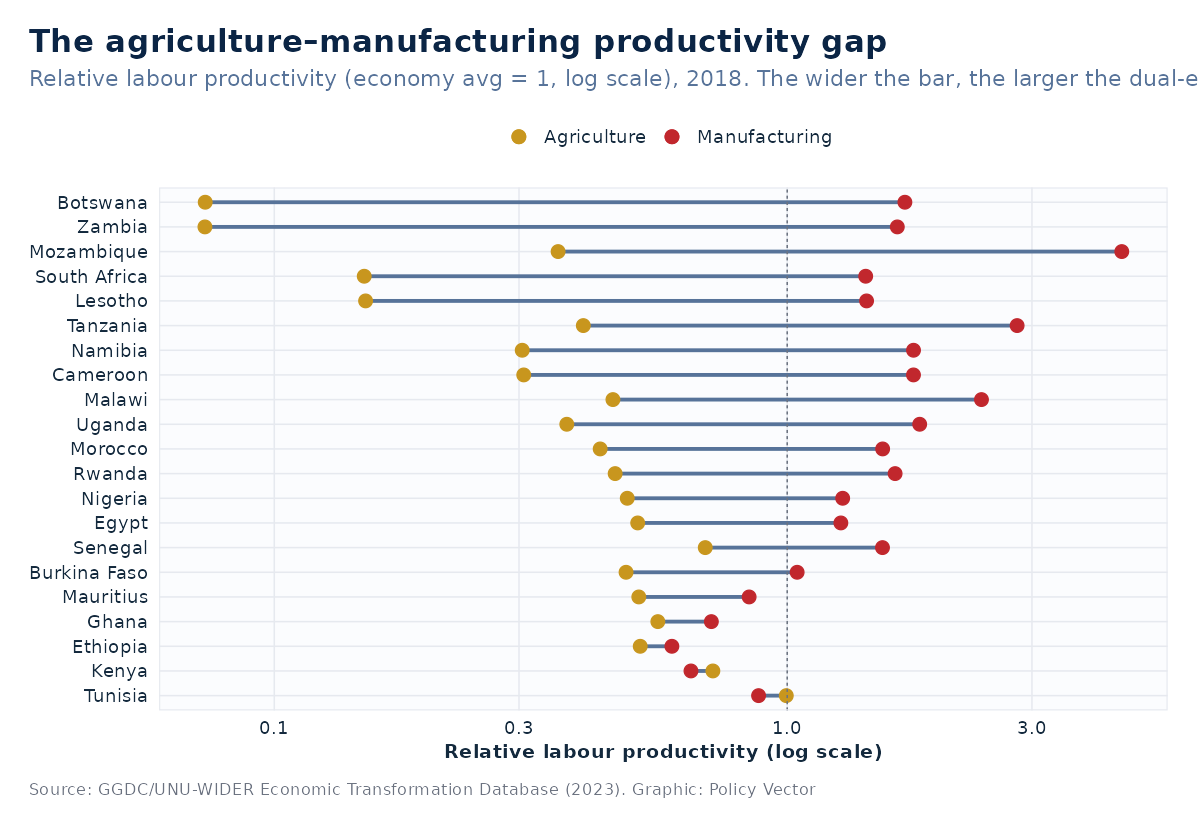
The Agriculture-Manufacturing Productivity Gap: Africa’s Dual Economy Challenge
1. This chart captures a fundamental feature of structural transformation in many African economies: labour productivity in agriculture remains far below the economy-wide average, while manufacturing is often substantially more productive.
2. The gap matters because it reflects the persistence of a dual economy. A large share of workers remains concentrated in low-productivity agriculture, while higher-productivity sectors absorb only a limited part of the labour force.
3. In such a context, aggregate productivity growth depends not only on improving productivity within sectors but also on enabling workers to move into more productive activities.
4. The policy challenge is therefore twofold. First, agriculture itself must become more productive through technology, irrigation, market access, storage, logistics, and agro-processing linkages.
5. Second, economies need stronger pathways into manufacturing and related tradable sectors that can absorb labour at scale.
6. The key issue is not agriculture versus manufacturing. It is how to build bridges between them through agro-industry, rural infrastructure, skills development and regional value chains.
7. Reducing the agriculture-manufacturing productivity gap remains central to inclusive growth, employment creation, and long-term structural transformation.
#StructuralTransformation #EconomicDevelopment #Productivity #Agriculture #Manufacturing #IndustrialPolicy #InclusiveGrowth #Africa #DevelopmentEconomics #Jobs #AgroIndustry #ValueChains.
1
4
401
May 25
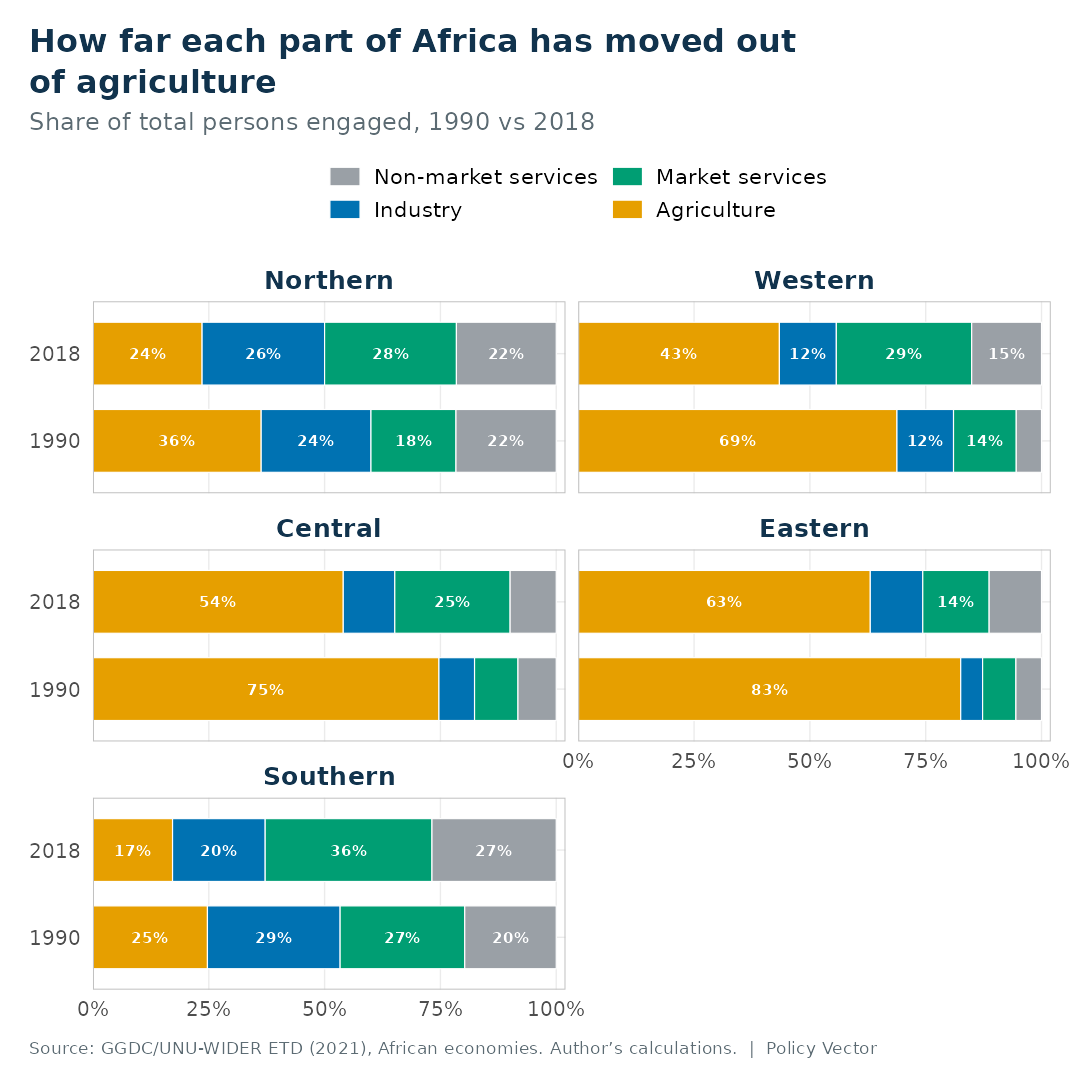
How far each part of Africa has moved out of agriculture?
1. Africa is often discussed as a single trajectory. Disaggregated, it is five quite different ones.
2. This chart tracks the broad-sector composition of employment in each African sub-region between 1990 and 2018. Every sub-region moved out of agriculture - but from very different starting points, and toward very different destinations.
3. A few patterns stand out. Eastern Africa began the most agrarian of all (83% of employment in 1990) and remains so today at 63%, despite the fastest pace of reallocation on the continent. Western Africa saw the steepest fall - 69% to 43% - with the released labour flowing overwhelmingly into market services rather than industry. Southern Africa is the most structurally advanced, agriculture down to 17% and services above half, yet that maturity has coincided with weak productivity gains. And Northern Africa looks least like the rest: a large, stable industrial and public-sector base throughout.
4. The common thread is what is missing in all five panels. Industry's share (the blue band) barely moves anywhere - and in Southern Africa it actually shrinks. Across the continent, labour leaving agriculture went to services, not factories.
5. For anyone designing employment or industrial strategy, the implication is that "structural transformation in Africa" is not one policy problem but five. A programme calibrated for Eastern Africa's still-agrarian economy will not fit Southern Africa's service-heavy one. The starting point determines the binding constraint.
Part of a continuing series, Africa's Jobs Question, on the GGDC/UNU-WIDER Economic Transformation Database (21 African economies, 1990–2018).
Source: GGDC/UNU-WIDER ETD (2021); author's calculations. | Policy Vector
#StructuralTransformation #DevelopmentEconomics #Africa #LabourEconomics #AgriFood
1
7
384

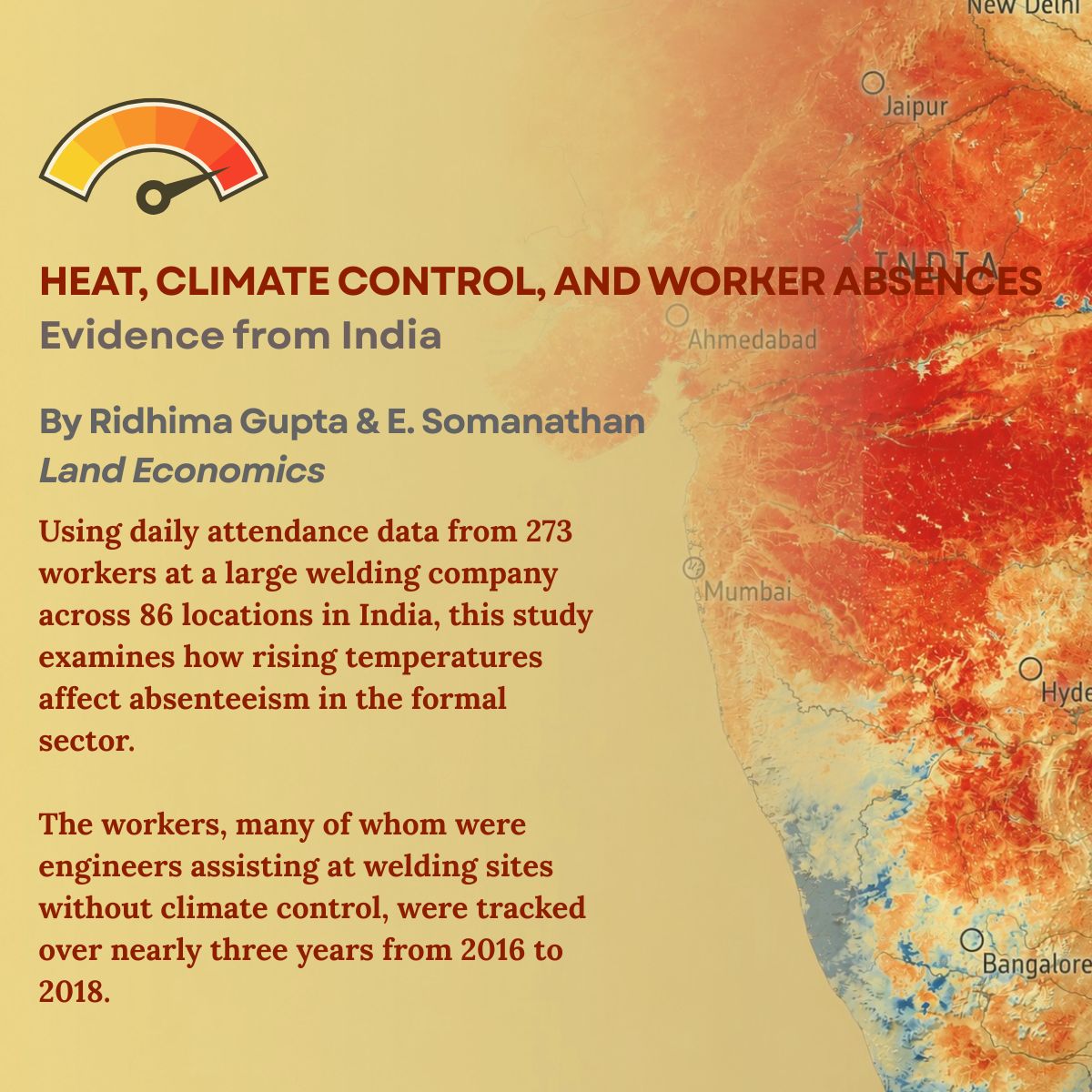
As India braces for another heatwave, the workplace impacts of extreme heat are becoming harder to ignore.
A recent paper by Ridhima Gupta & E. Somanathan finds that workplace climate control can significantly reduce heat-related absenteeism among formal-sector workers in India.
Read more: isid.ac.in/~cecfee/publicati…
#Heatwave #ClimateChange #India #LabourEconomics #WorkerProductivity #ClimateAdaptation #ExtremeHeat #DevelopmentEconomics #FutureOfWork #PublicPolicy
5
289

How does gender inequality in land ownership affect household food security? A new study from Burkina Faso uses rigorous econometrics to analyze this crucial link. 🧵👇 DOI: doi.org/10.1080/15378020.202… #FoodSecurity #GenderEquality #DevelopmentEconomics
1
1
3
24

May 19
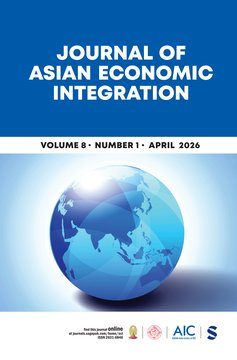
𝗝𝗼𝘂𝗿𝗻𝗮𝗹 𝗼𝗳 𝗔𝘀𝗶𝗮𝗻 𝗘𝗰𝗼𝗻𝗼𝗺𝗶𝗰 𝗜𝗻𝘁𝗲𝗴𝗿𝗮𝘁𝗶𝗼𝗻 | 𝗩𝗼𝗹. 8 𝗡𝗼. 1
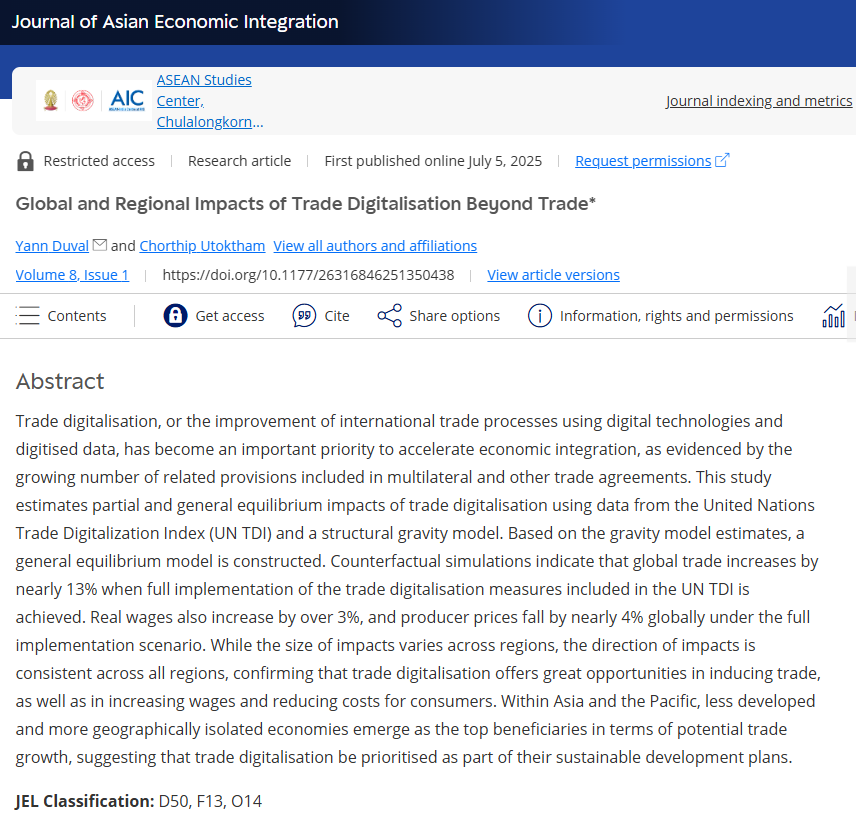
The latest issue of the 𝐽𝑜𝑢𝑟𝑛𝑎𝑙 𝑜𝑓 𝐴𝑠𝑖𝑎𝑛 𝐸𝑐𝑜𝑛𝑜𝑚𝑖𝑐 𝐼𝑛𝑡𝑒𝑔𝑟𝑎𝑡𝑖𝑜𝑛 (𝑉𝑜𝑙. 8, 𝑁𝑜. 1) features the research article '𝗚𝗹𝗼𝗯𝗮𝗹 𝗮𝗻𝗱 𝗥𝗲𝗴𝗶𝗼𝗻𝗮𝗹 𝗜𝗺𝗽𝗮𝗰𝘁𝘀 𝗼𝗳 𝗧𝗿𝗮𝗱𝗲 𝗗𝗶𝗴𝗶𝘁𝗮𝗹𝗶𝘀𝗮𝘁𝗶𝗼𝗻 𝗕𝗲𝘆𝗼𝗻𝗱 𝗧𝗿𝗮𝗱𝗲' authored by 𝑌𝑎𝑛𝑛 𝐷𝑢𝑣𝑎𝑙 𝑎𝑛𝑑 𝐶ℎ𝑜𝑟𝑡ℎ𝑖𝑝 𝑈𝑡𝑜𝑘𝑡ℎ𝑎𝑚.
The article estimates the partial and general equilibrium impacts of trade digitalisation using the United Nations Trade Digitalization Index (UN TDI) and a structural gravity model. The findings show that, despite regional variations in magnitude, trade digitalisation consistently boosts trade, raises wages, and lowers consumer costs, with less developed and geographically isolated economies in Asia and the Pacific emerging as the greatest potential beneficiaries.
🔗𝐀𝐜𝐜𝐞𝐬𝐬 𝐭𝐡𝐞 𝐥𝐢𝐧𝐤 𝐡𝐞𝐫𝐞:
journals.sagepub.com/doi/abs…
@MEAIndia @aparnaray_ifs @SKSharma_World @SageJournals @ChulalongkornU @RajanRatna @Prabir_India @AmitaBatra @rajatmnag @selimraihan @kunalsen5m @TheAtulKaushik @sujeetsamaddar @shishir_sh @sabya_saha @pdash76 @PV_Chat @Dhurairaaja @AmitK_PhD @susheco @GaurPankhuri @cmec_ris @DakshinNews @AIC_aseanindia @fitm14 @fisd19
#JAEI #RIS #AIC #AsianEconomicIntegration #PolicyResearch #GlobalSouth #TradeDigitalisation #DigitalTrade #InternationalTrade #EconomicGrowth #SustainableDevelopment #AsiaPacific #TradePolicy #GlobalTrade #UNTradeDigitalizationIndex #DevelopmentEconomics #StructuralGravityModel #DigitalEconomy
4
6
253
May 18
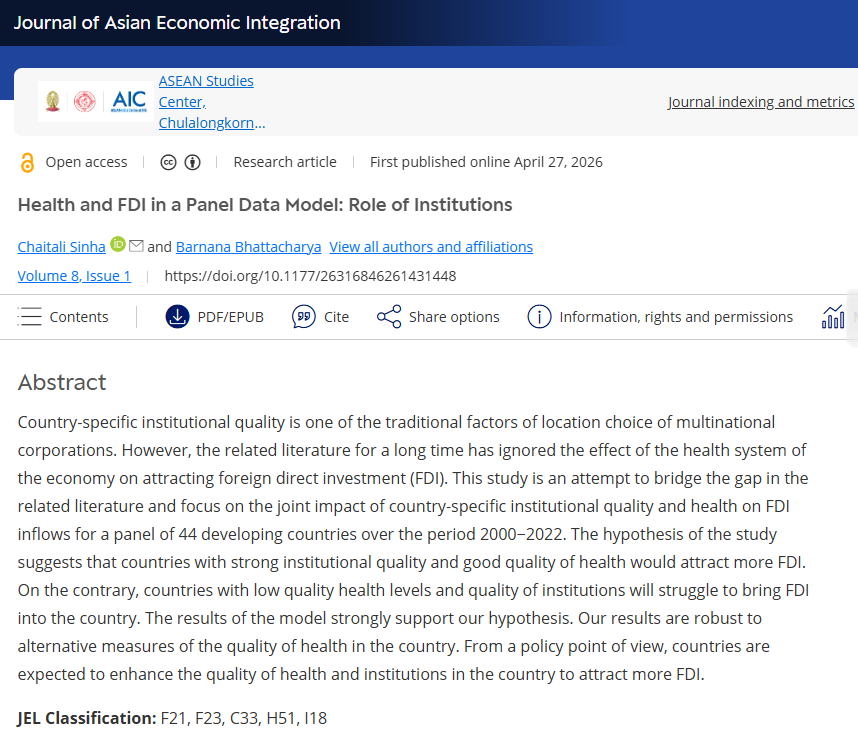
𝗝𝗼𝘂𝗿𝗻𝗮𝗹 𝗼𝗳 𝗔𝘀𝗶𝗮𝗻 𝗘𝗰𝗼𝗻𝗼𝗺𝗶𝗰 𝗜𝗻𝘁𝗲𝗴𝗿𝗮𝘁𝗶𝗼𝗻 | 𝗩𝗼𝗹. 8 𝗡𝗼. 1
The latest issue of the 𝐽𝑜𝑢𝑟𝑛𝑎𝑙 𝑜𝑓 𝐴𝑠𝑖𝑎𝑛 𝐸𝑐𝑜𝑛𝑜𝑚𝑖𝑐 𝐼𝑛𝑡𝑒𝑔𝑟𝑎𝑡𝑖𝑜𝑛 (𝑉𝑜𝑙. 8, 𝑁𝑜. 1) features the research article '𝐇𝐞𝐚𝐥𝐭𝐡 𝐚𝐧𝐝 𝐅𝐃𝐈 𝐢𝐧 𝐚 𝐏𝐚𝐧𝐞𝐥 𝐃𝐚𝐭𝐚 𝐌𝐨𝐝𝐞𝐥: 𝐑𝐨𝐥𝐞 𝐨𝐟 𝐈𝐧𝐬𝐭𝐢𝐭𝐮𝐭𝐢𝐨𝐧𝐬' authored by 𝐶ℎ𝑎𝑖𝑡𝑎𝑙𝑖 𝑆𝑖𝑛ℎ𝑎 𝑎𝑛𝑑 𝐵𝑎𝑟𝑛𝑎𝑛𝑎 𝐵ℎ𝑎𝑡𝑡𝑎𝑐ℎ𝑎𝑟𝑦𝑎.
The article analyses 44 developing countries over the period 2000–2022 and highlights how stronger institutional quality and improved healthcare systems significantly contribute to attracting higher foreign direct investment (FDI) inflows. The findings underline the importance of policy reforms aimed at strengthening both institutions and public health systems for sustainable economic growth.
@MEAIndia @aparnaray_ifs @SKSharma_World @SageJournals @ChulalongkornU @RajanRatna @Prabir_India @AmitaBatra @rajatmnag @selimraihan @kunalsen5 @TheAtulKaushik @sujeetsamaddar @shishir_sh @sabya_saha @pdash76 @PV_Chat @Dhurairaaja @AmitK_PhD @susheco @GaurPankhuri @cmec_ris @DakshinNews @AIC_aseanindia @fitm14 @fisd19
#JAEI #RIS #AIC #AsianEconomicIntegration #PolicyResearch #GlobalSouth #TradeAndDevelopment #FDI #InstitutionalQuality #HealthcareSystems #DevelopmentEconomics
3
7
238

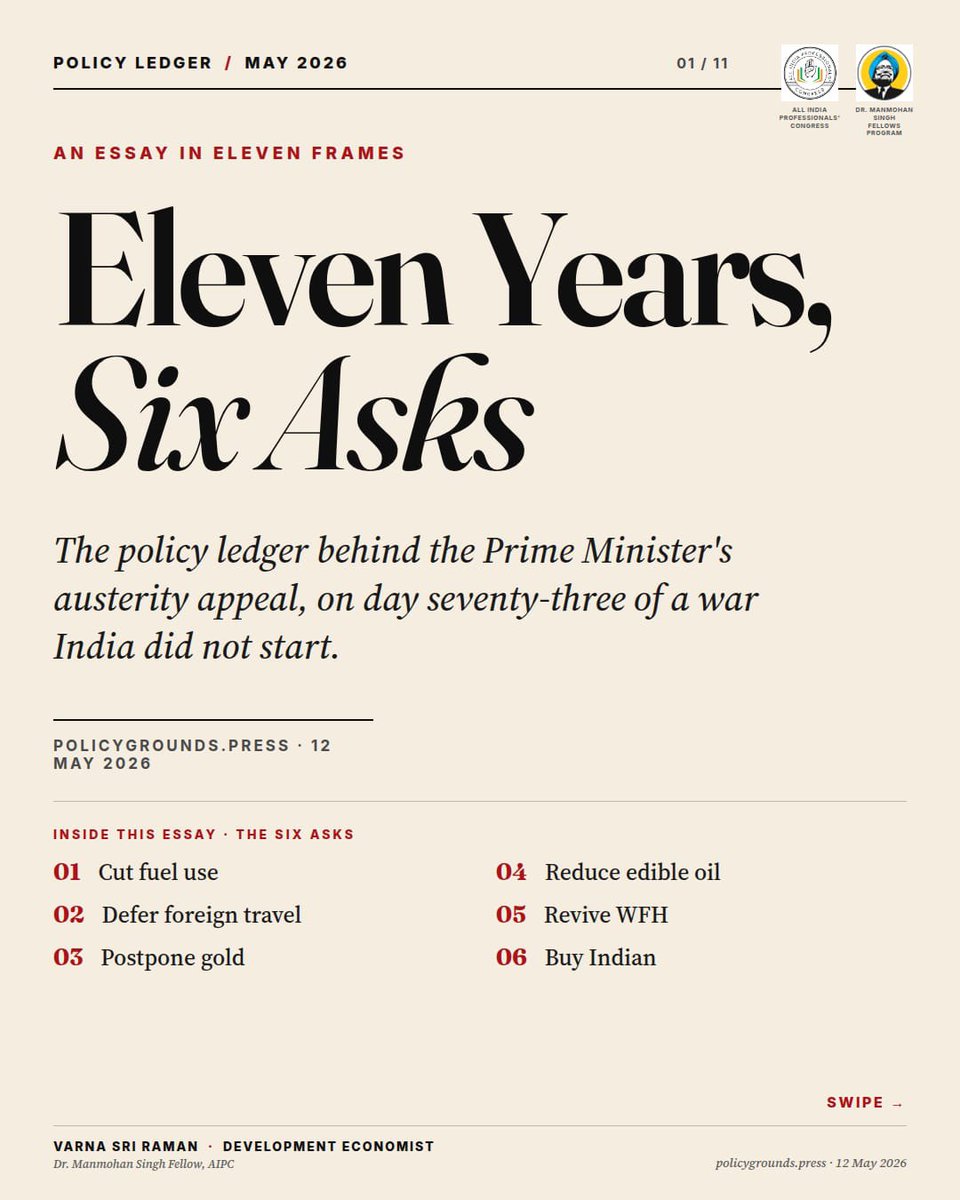
Six asks. Eleven years of policy. One ledger.
On 10–11 May, the Prime Minister asked Indians to give up six things in the national interest — cut petrol, defer foreign travel for a year, postpone gold, reduce edible oil, revive work from home, buy Indian.
In a fuel crisis, none of these asks is unreasonable. The harder question is what eleven years of policy on each of these items was supposed to deliver, and what it actually did.
The appeal, read carefully, is a confession.
A new essay by Dr. Manmohan Singh Fellow Varna Sri Raman goes through the ledger, ask by ask. Read the full essay (7,300 words) here: policygrounds.press/post/189…
Image notes continued in comment section.
@Varna
#IndianEconomy #PolicyAnalysis #FiscalPolicy #DevelopmentEconomics #IndiaPolitics #ModiGovernment #UnionBudget #IranWar #ForeignExchange #StrategicReserves #MakeInIndia #Aatmanirbharta #PolicyFailure #INC #Congress #AIPC #DrManmohanSinghFellows #IndianNationalCongress
1
1
6
1,041