
21 Aug 2025
New Research: Supercomplexity: bridging the gap between aesthetics and cognition frontiersin.org/articles/10.… #FrontiersIn #Neuroscience
1
6
5
954

20 Nov 2024
Why did memecoins become so popular?
I’ve been observing the “meme fever” phenomenon for some time, trying to understand its significance. A year ago, I experimented with it, buying Popcat at a $30M FDV, which later soared to $1.6B. Despite exiting early with a minor loss, the experience didn’t upset me—it was a game.
In recent months, however, this “meme fever” has evolved to an entirely new level.
As we know, the world operates in cycles, and Bitcoin is a prime example of this cyclicality. Innovations and trends emerge, but only those that hold value. It aligns perfectly with the principles of the Gartner Curve, where inflated expectations eventually give way to sustainable adoption for truly valuable technologies.
Drawing an analogy, I’ve concluded that memecoins represent a broader trend toward simplification.
When new technology emerges, it builds on prior innovations and achieves breakthroughs through small additions. Over time, its limitations lead to more complex solutions targeting specific weaknesses, eventually resulting in supercomplexity. The human brain, however, has limits—an overload of details drives the desire for simplicity.
This cyclical process repeats:
Simple solution → Complication → Supercomplexity → Overload → Return to simplicity.
This cycle repeats itself across innovations and generations—it’s simply how the world operates. Let’s explore this idea using the example of memecoins.
In recent years, we’ve witnessed a technological overloading: DeFi, Layer 2, LRT, LST, ZK proofs, data availability, co-processing, modularity, parallelization, altVMs, interoperability, DePIN, DeSci, and more.
With so many terms, technologies, and companies, it has become increasingly difficult for the average person to keep up. The process requires:
1. Evaluating the trend/sector.
2. Understanding the underlying technologies.
3. Differentiating between projects in the sector.
4. Finally, identifying the project for investment.
This level of complexity is overwhelming, leaving us with two options: specialization or simplification.
Specialization works for professionals in financial markets—fund managers, analysts, and industry experts. However, for mass adoption, simplification is the only viable path.
Memecoins simplify the dense web of technological advancements made in the last five years. They offer a straightforward, accessible entry point.
The alternative paths to simplification—buying Bitcoin or Ethereum—are less attractive for those seeking high returns. These assets, while proven, have evolved into TradFi-like investments with limited upside.
Memecoins look as the ideal option.
But even within the memecoin space, complexity is creeping in:
1. Early Days: Launching a token required technical expertise and a Twitter presence.
2. Platforms like Pump.fun: These tools democratized token creation, leading to an explosion of new tokens.
3. Meta AI-Memecoins: Projects like GOAT, ai16z, and Zerebro introduced AI into the memecoin narrative, adding a new layer of complexity.
4. Community Cults: Memes are no longer just pictures or events; they represent communities built around shared beliefs and principles.
While memecoins have grown more intricate, they remain far simpler than navigating the labyrinth of blockchain technologies or corporate trends.
Currently, the space is led by a few key voices, such as @MustStopMurad (and previously Gotbit). Most others are still observing, testing, and cautiously engaging with the trend. This hesitance indicates significant room for growth within the memecoin sector.
Want more insights on memecoins?
============================
If you liked the research, like and subscribe to @Eugene_Bulltime
And follow on strong visioners and analysts:
@0xBreadguy
@alpha_pls
@andyyy
@poopmandefi
@thesaint_
@Slappjakke
@0xSalazar
@DefiIgnas
@Defi_Warhol
@TheDeFiKenshin
@hmalviya9
@cyrilXBT
@Mars_DeFi
@Crypt0_Andrew
@2lambro
@DeFi_Cheetah
@jake_pahor
@rektdiomedes
@redphone
@eli5defi
@Pickle_cRypto
@JayLovesPotato

1
8
439

20 May 2024
Supercomplexity at its best!)) Great piece, Atiko! 🤩
1
2
24

22 Apr 2024
Within this singular ultraverse of numerometric supercomplexity, unknown morphocadian structures continuously hypernate their cosmozoan zygomorphs...
websim.ai/c/8mlCb10eQ0LfheiN…
1
2
95

Capturing the shifting work of teaching in higher education through postcards of practice
@MarkSelkrig, @DulferNicky & @Educ84Equity, @EduMelb
🔓→ doi.org/10.1080/07294360.202…
#HigherEd #UniversityTeaching #SuperComplexity #SocialCapital #CulturalCapital #Reflexivity
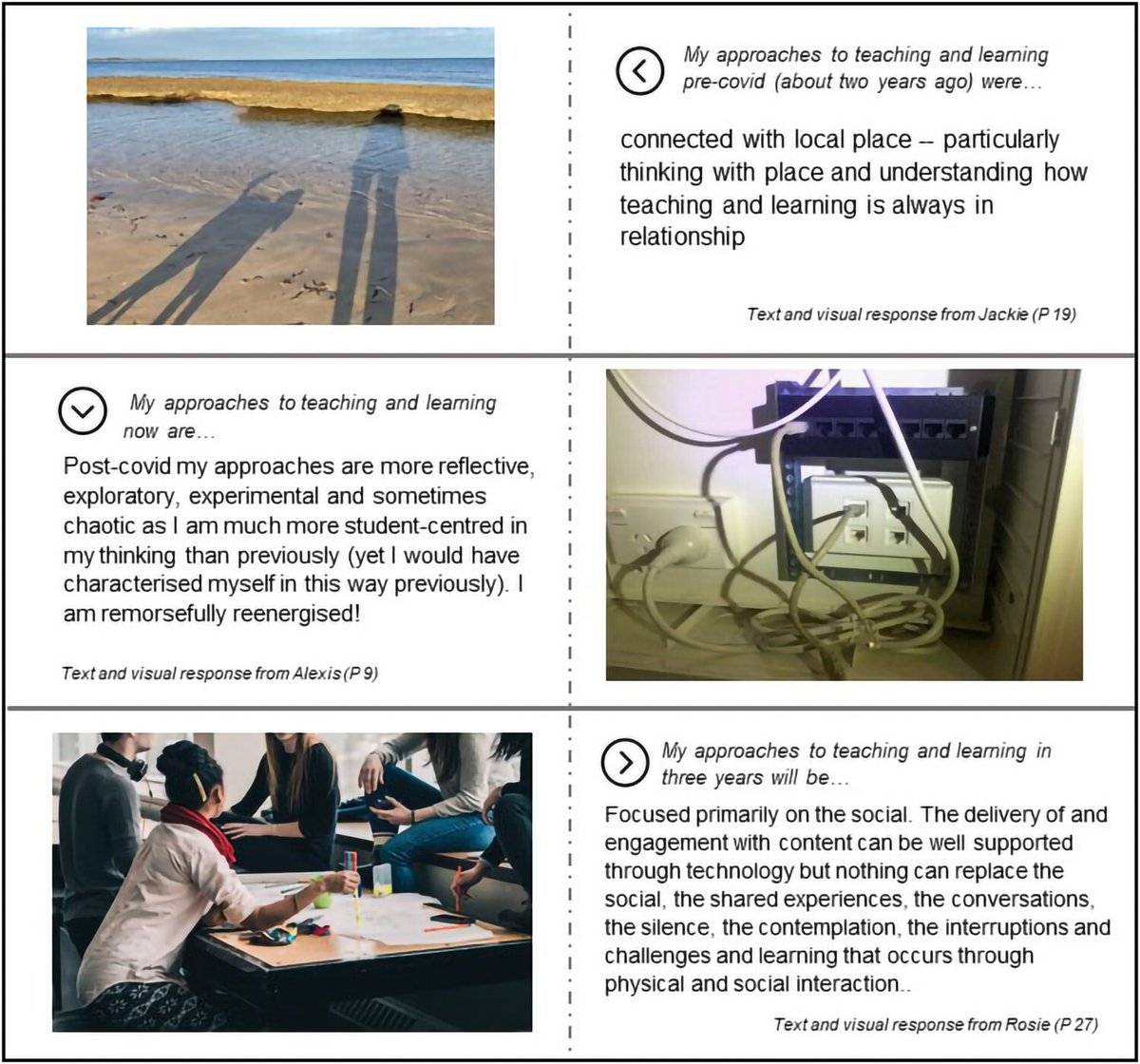
ALT Figure 1. Postcards of social capital informing teaching practice.
6
17
1,307

5 Dec 2023
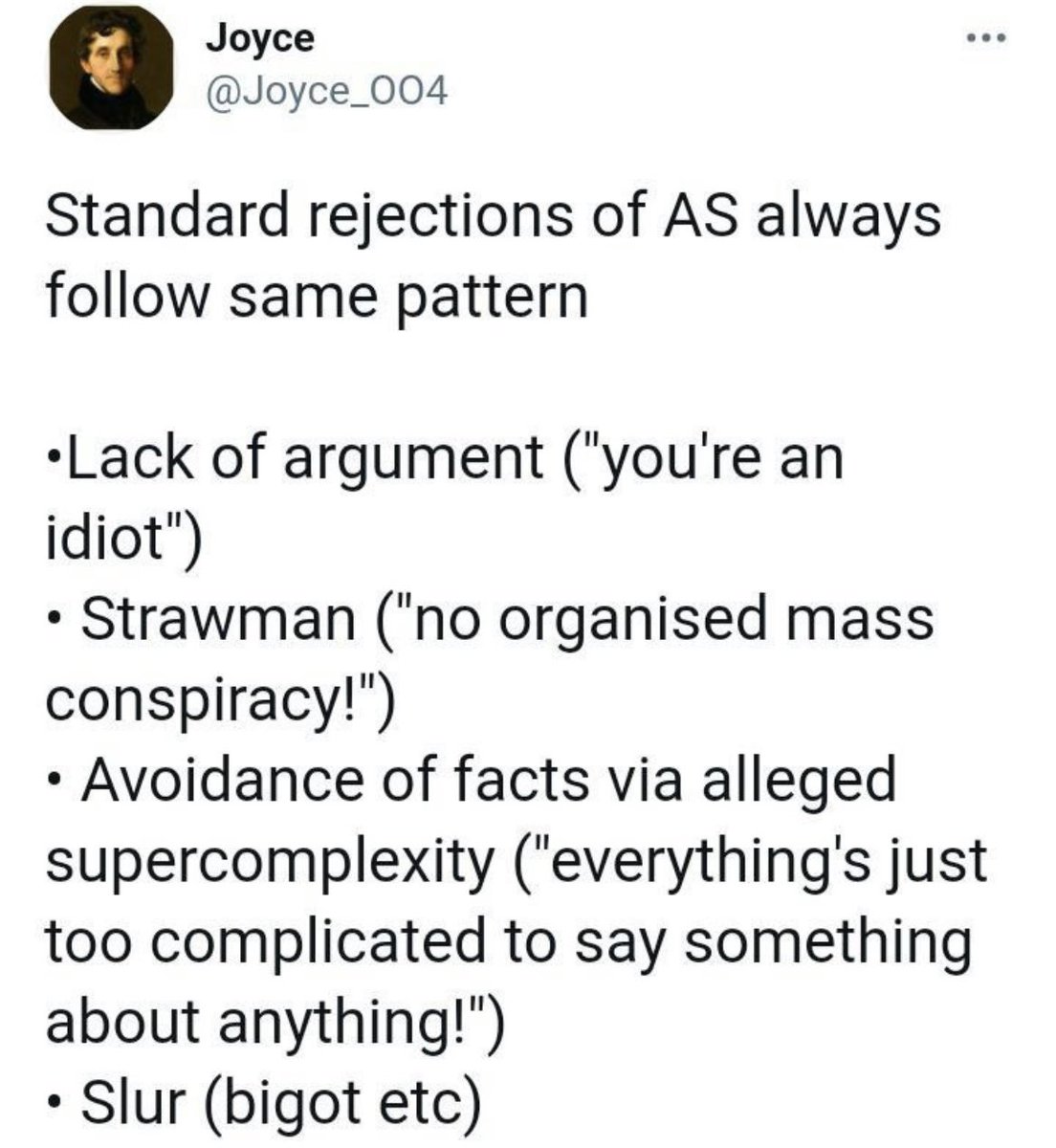
Translated into 2023 Right Wing JQ-Denier Speak:
• Lack of argument: "It's da JOOS"
• Strawman: "Zionism is BASED and racist"
• Avoidance of fact via alleged supercomplexity: "Catholic refugee centers also exist"
• Slur: "Third worldist"
2
3
20
1,254

20 May 2023
It does not scale, and certainly does not scale to supercomplexity. Find me a single organism that is managed top-down. All life is built bottom-up. Even you.
1
119

“The ways in which those ecosystems are intertwined and their complexity, & matters of supercomplexity are largely ignored.” From the inspiring talk by Prof. Ronald Barnett on Realising the Ecological University: A Feasible Utopia @a_oleksiyenko
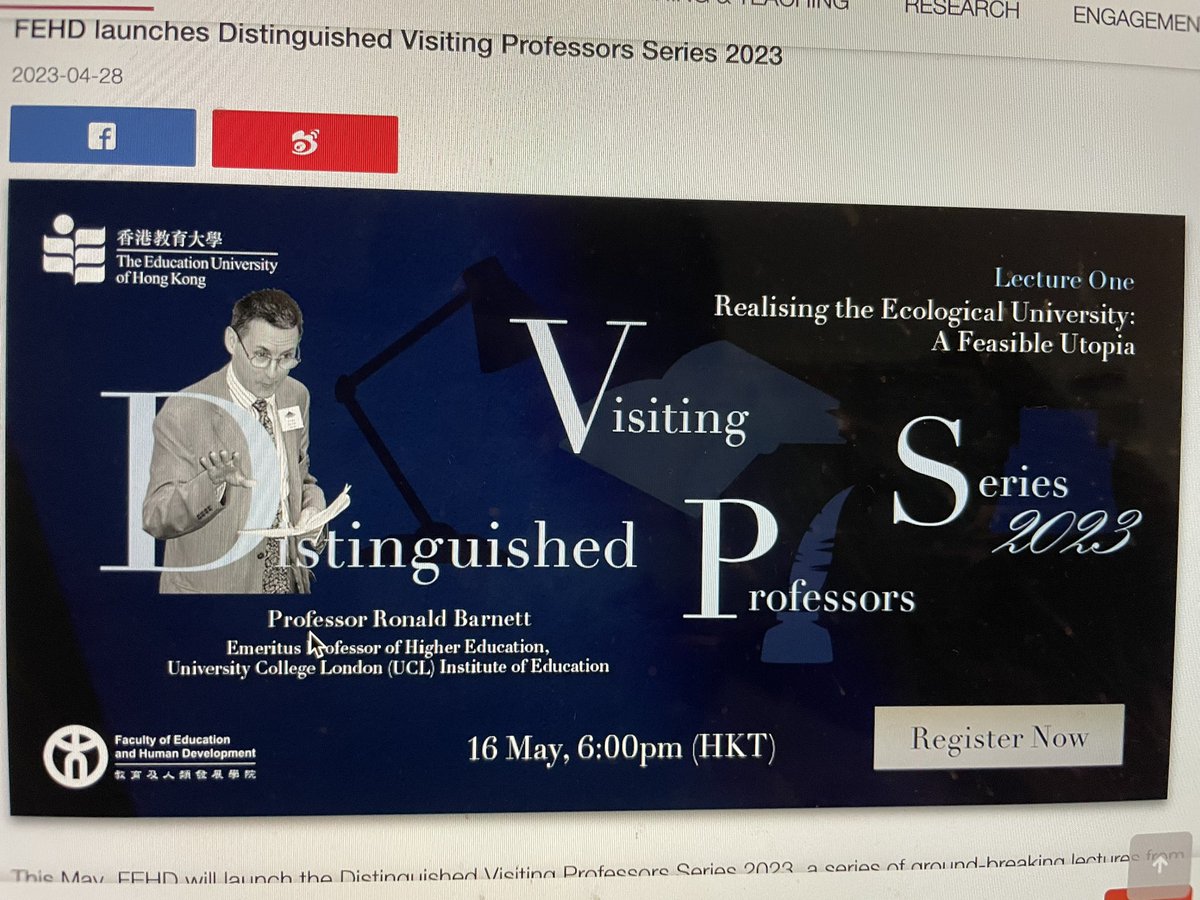
ALT A poster of Prof. Ronald Barnett’s talk on Realising the Ecological University: A Feasible Utopia.
11
659

25 Jul 2022
Very pleased that the paper I wrote with my RMIT colleague Rachel Wilson, 'Belonging as a responsive strategy in times of supercomplexity and change' is out in the Journal of University Teaching & Learning Practice's recent special issue: ro.uow.edu.au/jutlp/vol19/is…
2
4
24


15 Jan 2021
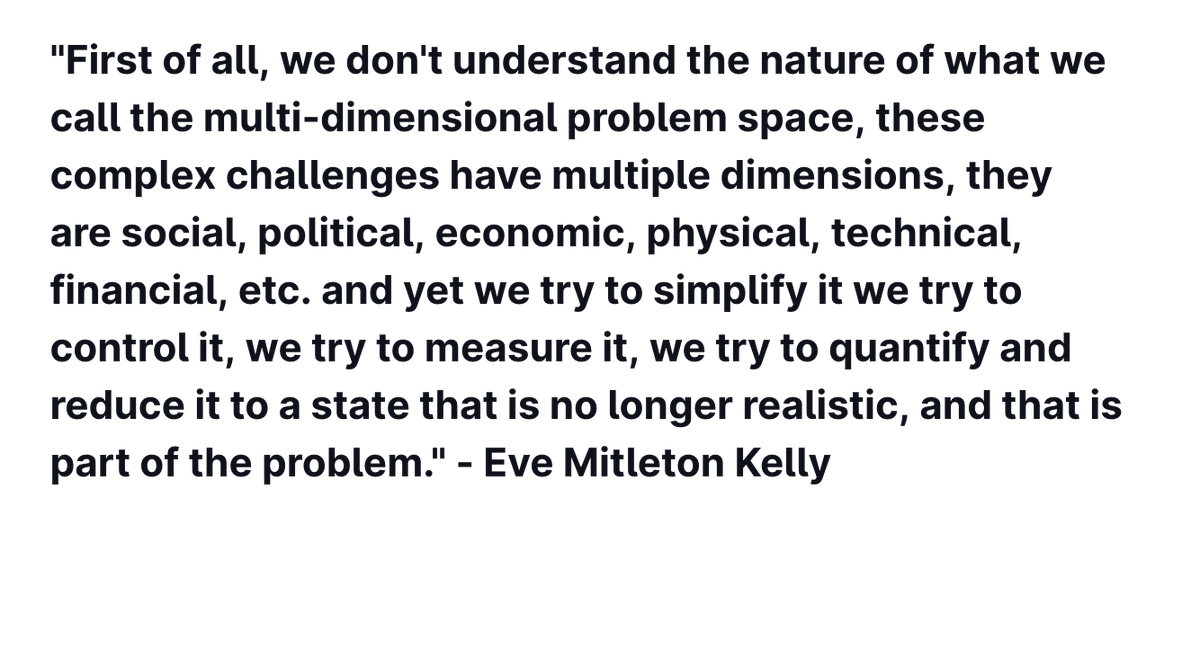
Our mind tries to simplify - even the #wickedproblems.No wonder - the amount of data, info and complexity many of us deal with even on daily personal basis is too much for what our current system has prepared us for. #hyperobjects #supercomplexity @Sys_innovation @sisingaporehub
3
6

17 May 2020
Interesting piece. Lots of variables at play creates supercomplexity. Bearing in mind the govt. narratives around care homes, PPE, & testing, perhaps teachers (& general public) rightly, IMO, no longer trust what they’re told by govt. ministers?
15 May 2020

Today in @tes - @johncmorgan3 has done a huge piece of work looking at the science behind school closures and reopenings. It's such an important piece for our readership and wider public that we have decided to put it in front of the paywall. Here it is: tes.com/magazine/article/cor…
2

1 May 2020
#LoveLD Cool to get this special mention from @IPiHE1 on our article on student lives and supercomplexity... @aldinhe_LH and @LondonMetUni :-D

Spotlight on Volume 4 - Excellent work on the complexity of the lives of our students by @sandra_abegglen, @LevellerB (Tom Burns), Simon Maier and @Danceswithcloud (Sandra Sinfield). Download it here: journals.staffs.ac.uk/index.… #HE #LoveLD #HigherEd
1
2

9 Apr 2020
This has been written pre-Covid19 but the argument is probably more true than ever @Danceswithcloud @LevellerB @SimoneMaier - Supercomplexity: Acknowledging Students’ Lives in the 21st Century University journals.staffs.ac.uk/index.…
2
4

2 Feb 2020
#educationalresearch and #scholarship in an era of #supercomplexity - lots of Aust and TF examples too- some light reading on a Sunday afternoon 'Emerging Methods & Paradigms in Scholarship and Educational Research' books.google.com.au/books?id…
2

18 Nov 2019
Now #PublishedByPalgrave: 'Supercomplexity in Interaction: An Introduction to the 4Es' by Victoria Orange!
This #newbook uses Complex Systems Theory to examine expression, encounter, education and emotion in interaction.
Order your copy: bit.ly/2p5SIkS
#PalgravePivot

2
3

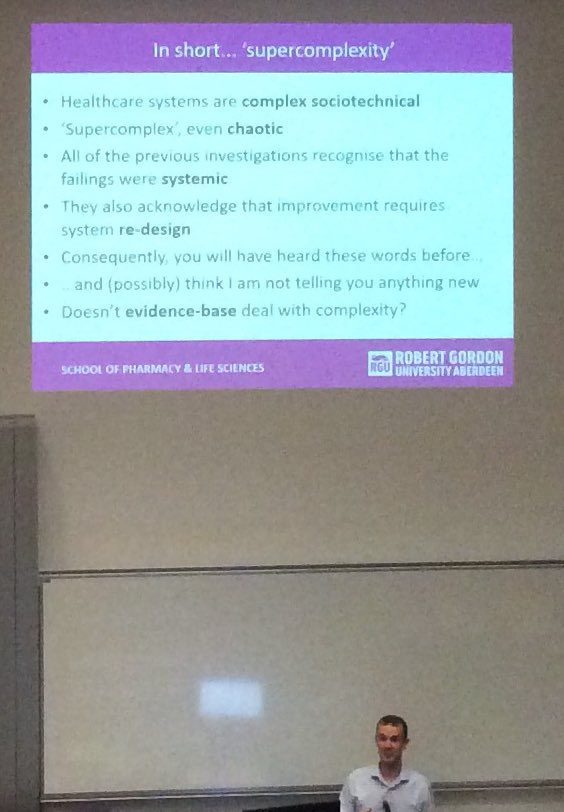
@NHSG_ACA #NMPConference2019 Human Factors session - coping with complexity in time of internet access 2 inform’n overload. Challenges 4 patients & clinicians alike in terms of equitable access 2 diagnosis & treatment options - “supercomplexity” generates need to balance risk.
2

2 Feb 2019
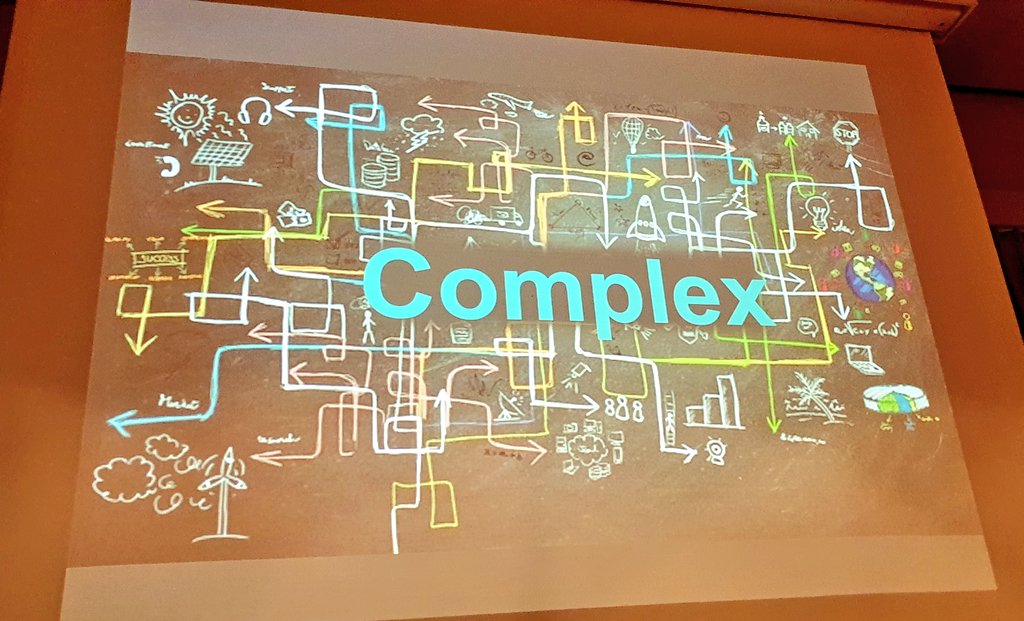
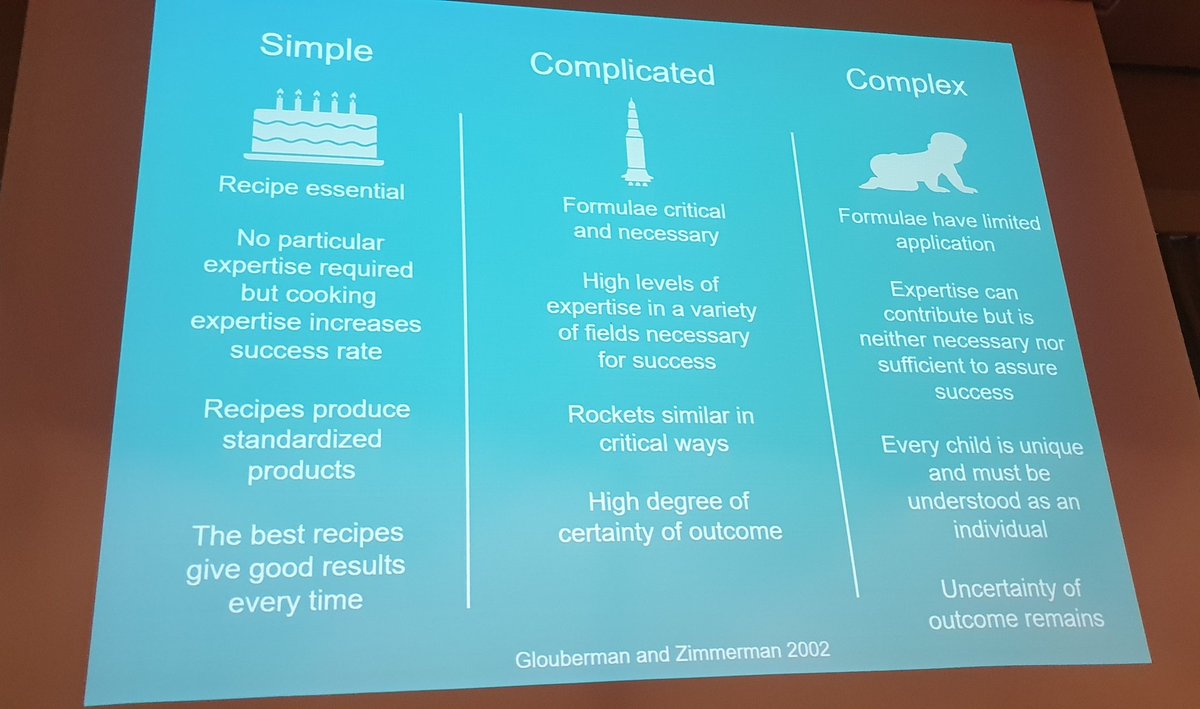
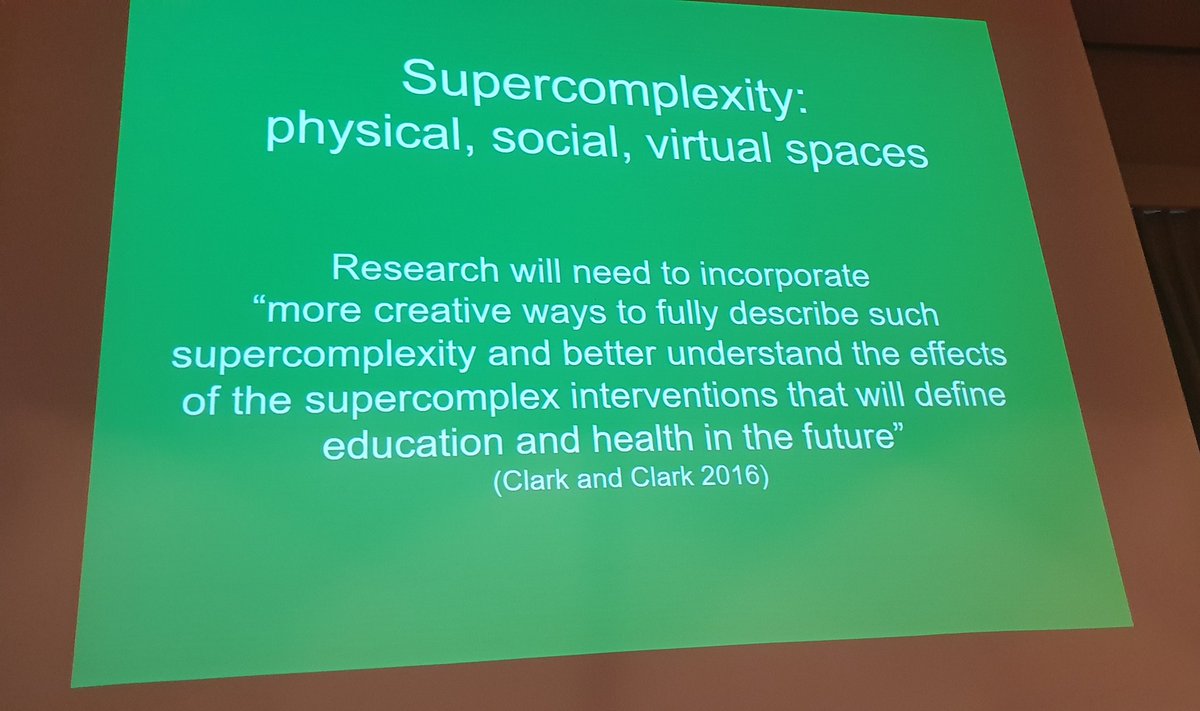
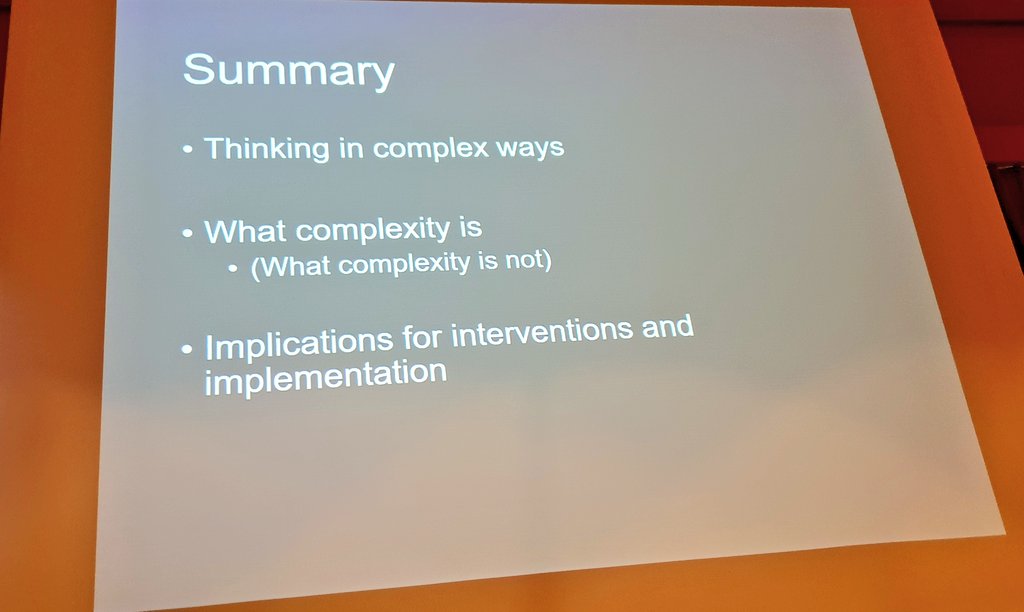
Best till last @sportskongres with @shereebekker!Absolute session beast questioning research paradigms
Not mixing complex with complicated
Complexity is ubiquitous
Theorize injuries better
Ask better questions
Relevance in face of supercomplexity
#ContextIsCritical #sportskongres
6
10

21 Nov 2018
#HELTASA2018 Supercomplexity and Programme design... to get change in one direction we need multiple approaches. #Mytakeaway
2

8 Oct 2018
Running "Navigating Supercomplexity" with MA Innovation Management @csm_news this morning. Should be interesting.
2