Filter
Exclude
Time range
-
Near
اگر آپ خلا میں روئیں تو آپ کے آنسو زمین کی طرح نیچے نہیں گریں گے! 😮🚀 خلا میں کششِ ثقل نہ ہونے کی وجہ سے آنسو آنکھوں کے گرد ہی جمع ہو جاتے ہیں اور چھوٹے چھوٹے پانی کے گولوں کی شکل اختیار کر لیتے ہیں۔ یہی وجہ ہے کہ خلا میں رونا اتنا آسان نہیں جتنا زمین پر لگتا ہے۔ 📌 نوٹ: یہ معلومات سائنسی مشاہدات اور دستیاب تحقیق پر مبنی ہیں؛ حالات اور تفصیلات مختلف ہو سکتی ہیں۔ ویڈیو میں استعمال ہونے والی تصویر/ویژول AI-generated اور صرف وضاحتی مقصد کے لیے ہو سکتے ہیں۔ #ScienceFacts #SpaceFacts #DidYouKnow #AmazingScience #ExploreSpace
2
10
973
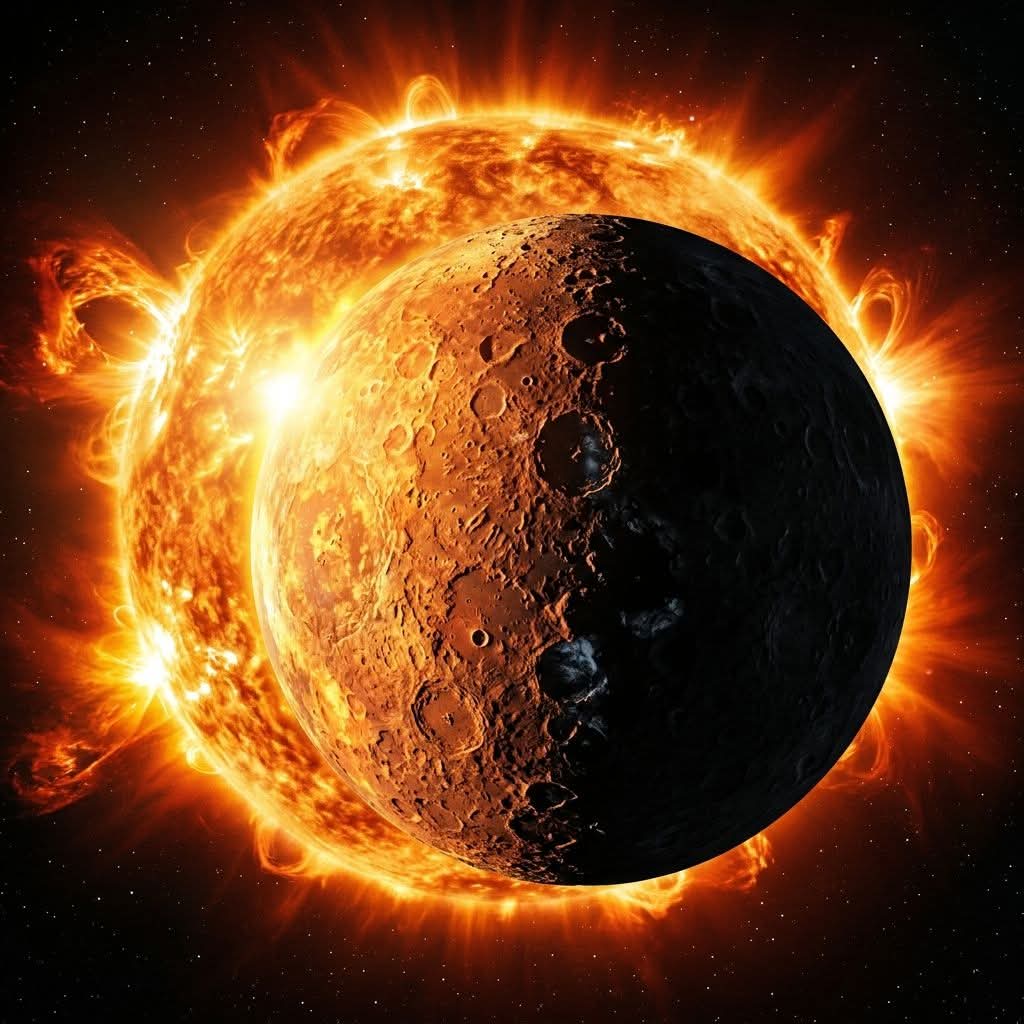
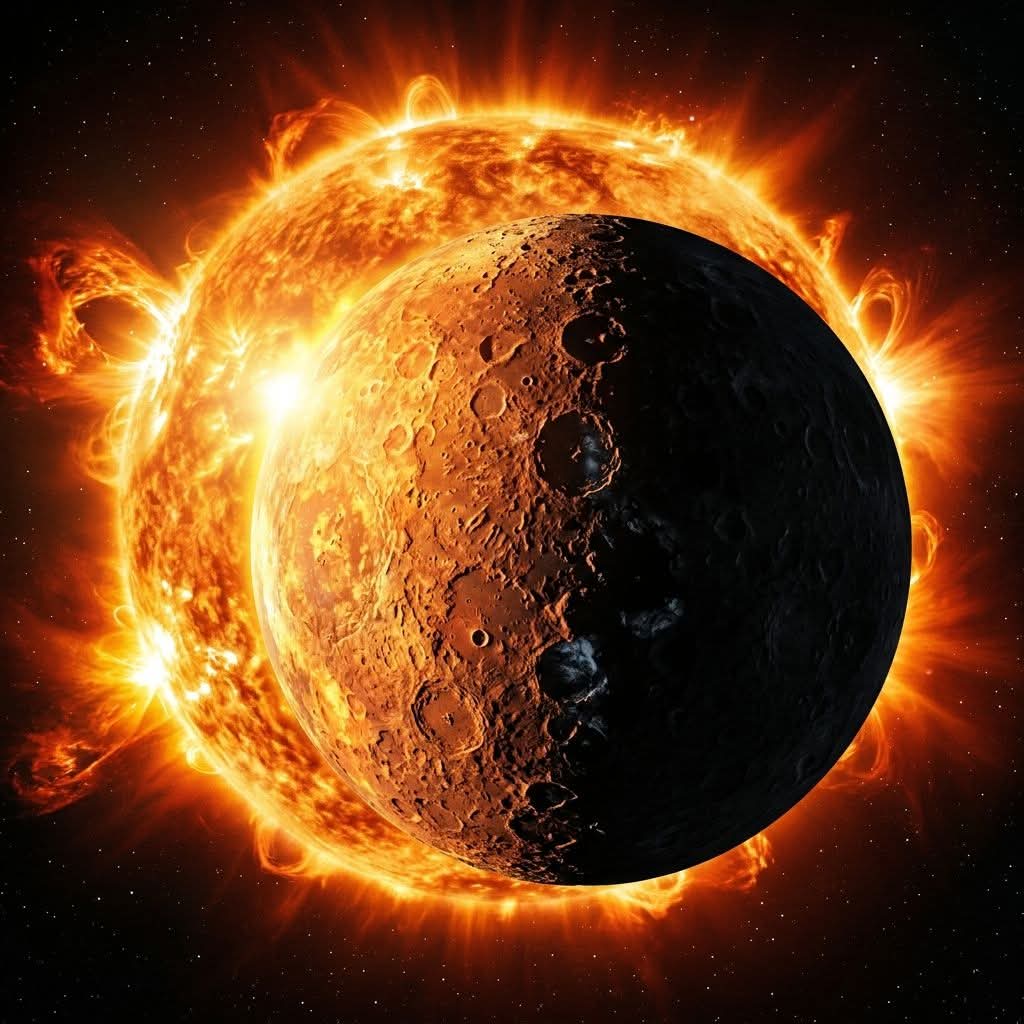
What if a planet had no sunrise… and no sunset the way we know it? Meet Mercury — the smallest and closest planet to the Sun… yet one of the most extreme worlds ever discovered. At first glance, Mercury looks lifeless… just a rocky surface covered in craters. It almost looks like our Moon. But don’t be fooled… this planet hides deadly secrets. During the day, temperatures can rise to a burning 430°C… Hot enough to melt metal. But at night? They crash down to -180°C — colder than the darkest parts of space. Imagine that… a world where you could freeze and burn at the same time. And here’s the strangest part… A single day on Mercury — one full sunrise to sunrise — lasts 176 Earth days. That means one day is longer than its entire year! Yes… Mercury orbits the Sun in just 88 Earth days, making its year incredibly short. But why does this happen? Because Mercury rotates very slowly… while racing around the Sun at incredible speed — over 170,000 km/h. And unlike Earth… Mercury has almost no atmosphere. No air to breathe… no sky to protect it. So when space rocks crash into it… nothing stops them. Its surface is covered in ancient scars from billions of years of impacts — frozen in time. Yet even in this brutal environment… Scientists discovered something shocking. There is ice on Mercury. Hidden deep inside craters near its poles… where sunlight never reaches. A burning world… with frozen secrets. Mercury may be small… But it’s one of the most extreme and mysterious places in our solar system. So next time you look toward the Sun… Remember… right there, closer than anything else… Mercury is surviving the impossible. #Mercury #PlanetMercury #ClosestToTheSun #SpaceFacts #ExtremePlanet #SolarSystem #Astronomy #SpaceMystery #Universe #Cosmos #Galaxy #DeepSpace #ScienceFacts #DidYouKnow #MindBlowing #AmazingFacts #SpaceReels #ViralScience #ExploreSpace #AstroFacts #DarkUniverse #MysteryOfSpace #SpaceExploration #InfiniteUniverse #ScienceReels
2
12
51
1,681
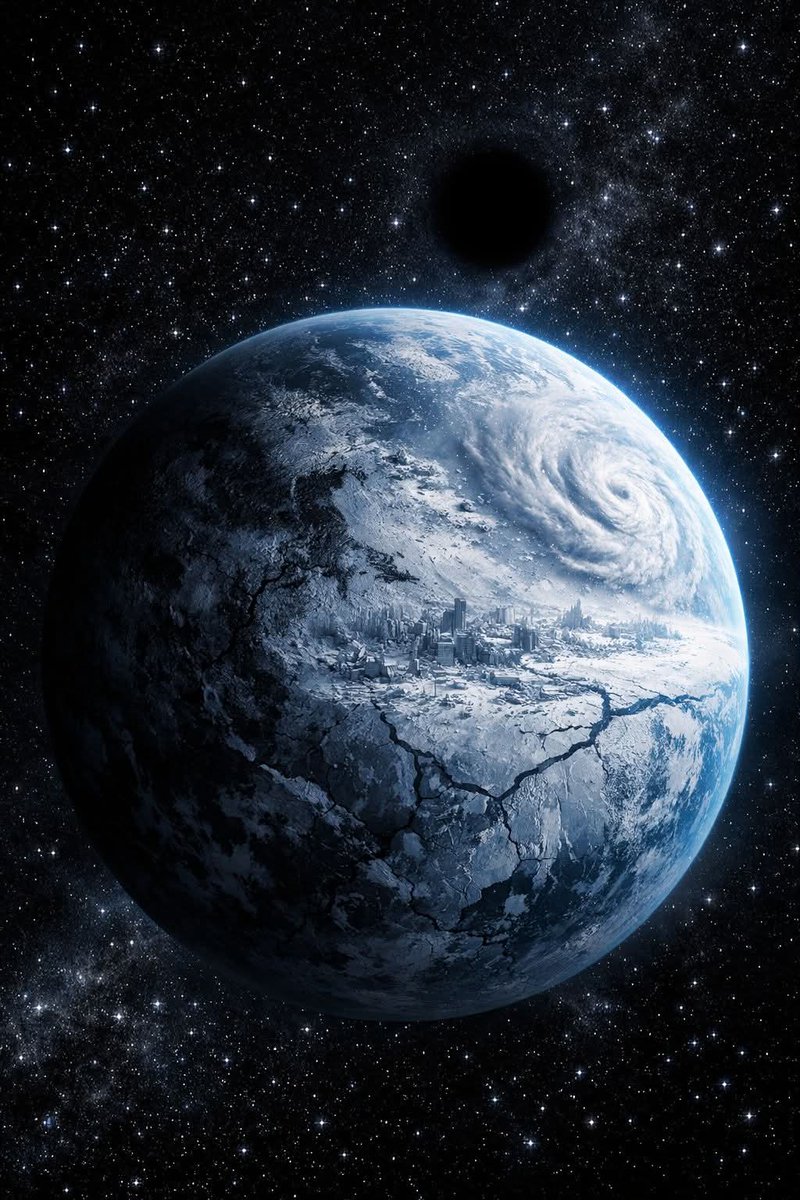
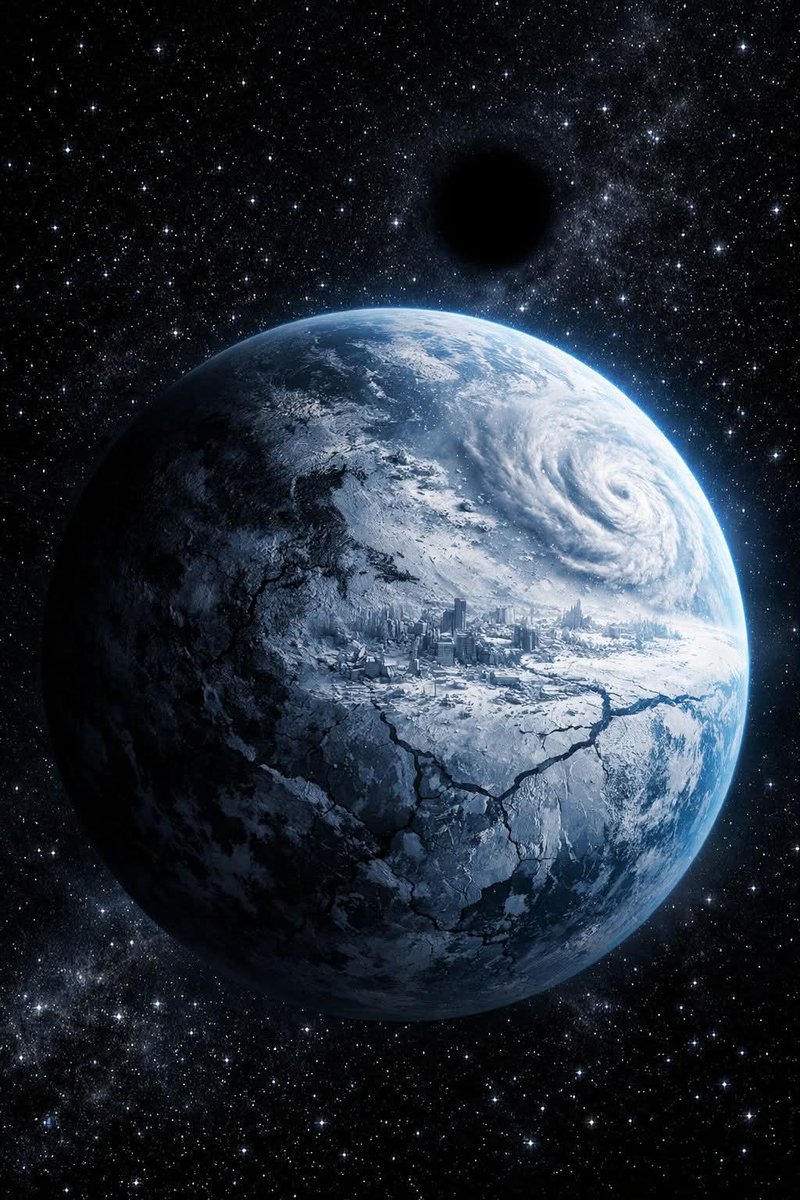
🤔 What if one day… You woke up… and the Sun was simply gone? No explosion. No warning. Just… darkness. At first… nothing would seem different. Because sunlight takes about 8 minutes to reach Earth. So for 8 minutes… The world would continue normally. People would walk outside. Cars would move. The sky would still shine. But then… In an instant… The Sun’s light disappears. The sky turns completely black — even during daytime. Stars become visible everywhere. And then comes the cold. Without the Sun’s heat… Earth’s temperature would begin dropping immediately. Within days… Most of the planet would freeze. Plants would die from lack of sunlight. Photosynthesis would stop. Soon after… The food chain would collapse. But the real horror is still coming. The Sun doesn’t just give us light and heat… Its gravity keeps Earth in orbit. Without it… Our planet would shoot blindly into deep space at incredible speed. Earth would become a rogue planet… Drifting endlessly through the darkness of the universe. The oceans would slowly freeze from the surface downward. Cities would vanish beneath ice. Only a few humans might survive underground… Using geothermal heat or nuclear energy. But eventually… Even those shelters would fail. And Earth would become a frozen dead world… Lost forever in infinite space. All because one star disappeared. The Sun may look calm from Earth… But it is the reason life exists at all. Without it… Everything ends. #Sun #WhatIf #EndOfEarth #SpaceMystery #Apocalypse #RoguePlanet #Universe #Cosmos #DeepSpace #Astronomy #SpaceFacts #ScienceFacts #DarkUniverse #FrozenEarth #MindBlowing #DidYouKnow #AmazingFacts #ViralScience #SpaceReels #ExploreSpace #InfiniteUniverse #AstroWorld #MysteryOfSpace #SolarSystem #spaceexploration
21
18
103
7,314
What if one day… You woke up… and the Sun was simply gone? No explosion. No warning. Just… darkness. At first… nothing would seem different. Because sunlight takes about 8 minutes to reach Earth. So for 8 minutes… The world would continue normally. People would walk outside. Cars would move. The sky would still shine. But then… In an instant… The Sun’s light disappears. The sky turns completely black — even during daytime. Stars become visible everywhere. And then comes the cold. Without the Sun’s heat… Earth’s temperature would begin dropping immediately. Within days… Most of the planet would freeze. Plants would die from lack of sunlight. Photosynthesis would stop. Soon after… The food chain would collapse. But the real horror is still coming. The Sun doesn’t just give us light and heat… Its gravity keeps Earth in orbit. Without it… Our planet would shoot blindly into deep space at incredible speed. Earth would become a rogue planet… Drifting endlessly through the darkness of the universe. The oceans would slowly freeze from the surface downward. Cities would vanish beneath ice. Only a few humans might survive underground… Using geothermal heat or nuclear energy. But eventually… Even those shelters would fail. And Earth would become a frozen dead world… Lost forever in infinite space. All because one star disappeared. The Sun may look calm from Earth… But it is the reason life exists at all. Without it… Everything ends. #Sun #WhatIf #EndOfEarth #SpaceMystery #Apocalypse #RoguePlanet #Universe #Cosmos #DeepSpace #Astronomy #SpaceFacts #ScienceFacts #DarkUniverse #FrozenEarth #MindBlowing #DidYouKnow #AmazingFacts #ViralScience #SpaceReels #ExploreSpace #InfiniteUniverse #AstroWorld #MysteryOfSpace #SolarSystem #spaceexploration
9
26
104
3,422
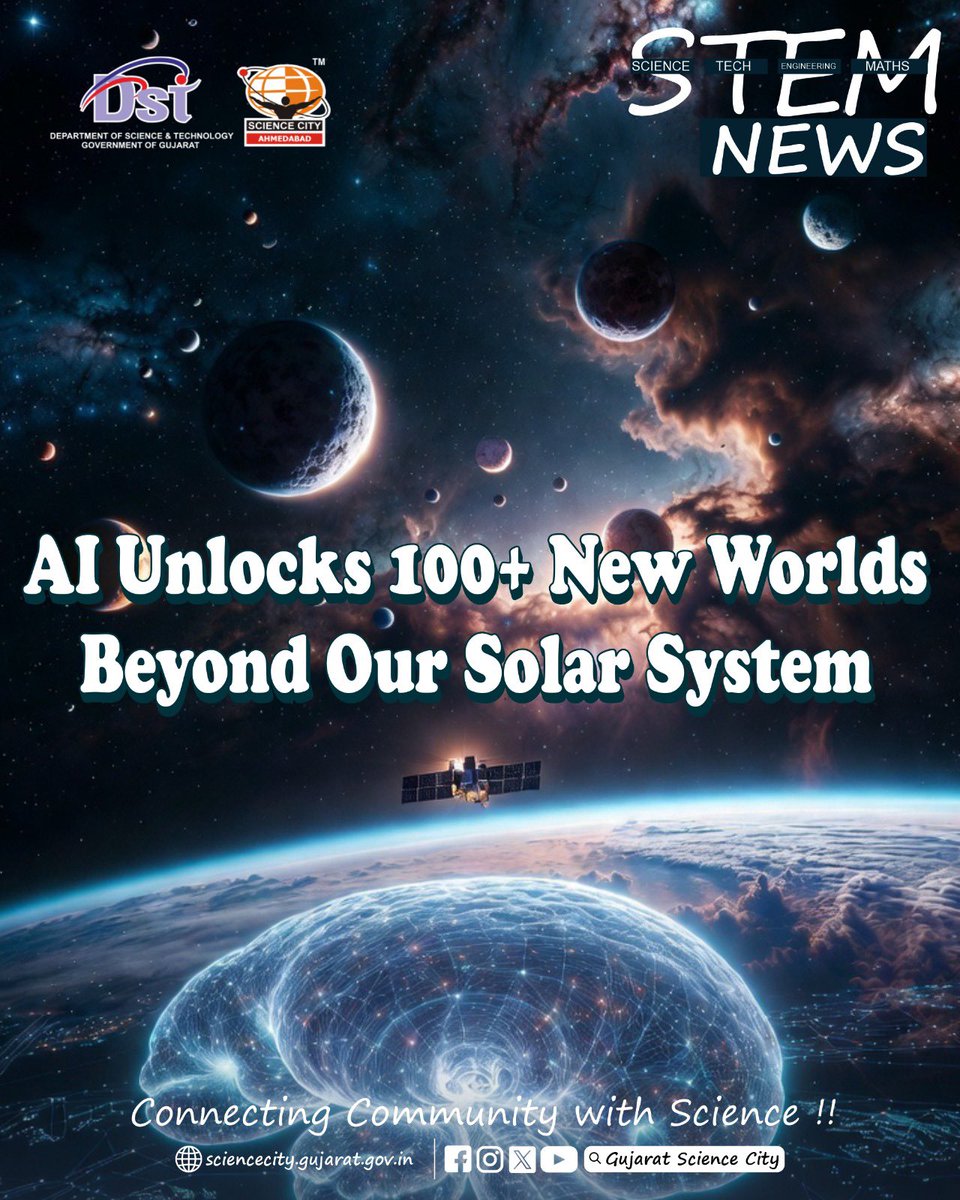
A new era of space discovery is here! Scientists from the University of Warwick have used AI to confirm over 100 exoplanets and identify 2,000 potential new worlds. Powered by the innovative RAVEN system and data from Transiting Exoplanet Survey Satellite, this breakthrough shows how artificial intelligence is transforming the way we explore the universe—detecting what the human eye might miss. From distant stars to hidden planets, the future of discovery is faster, smarter, and limitless. #GujaratScienceCity #SpaceDiscovery #ArtificialIntelligence #Exoplanets #NASA #TESS #ScienceNews #ExploreSpace #FutureOfScience #Innovation @PMOIndia @CMOGuj @GovernorofGuj @IndiaDST @DSTGujarat @InfoGujarat @drvrajesh
5
7
93
What if a planet had no sunrise… and no sunset the way we know it? Meet Mercury — the smallest and closest planet to the Sun… yet one of the most extreme worlds ever discovered. At first glance, Mercury looks lifeless… just a rocky surface covered in craters. It almost looks like our Moon. But don’t be fooled… this planet hides deadly secrets. During the day, temperatures can rise to a burning 430°C… Hot enough to melt metal. But at night? They crash down to -180°C — colder than the darkest parts of space. Imagine that… a world where you could freeze and burn at the same time. And here’s the strangest part… A single day on Mercury — one full sunrise to sunrise — lasts 176 Earth days. That means one day is longer than its entire year! Yes… Mercury orbits the Sun in just 88 Earth days, making its year incredibly short. But why does this happen? Because Mercury rotates very slowly… while racing around the Sun at incredible speed — over 170,000 km/h. And unlike Earth… Mercury has almost no atmosphere. No air to breathe… no sky to protect it. So when space rocks crash into it… nothing stops them. Its surface is covered in ancient scars from billions of years of impacts — frozen in time. Yet even in this brutal environment… Scientists discovered something shocking. There is ice on Mercury. Hidden deep inside craters near its poles… where sunlight never reaches. A burning world… with frozen secrets. Mercury may be small… But it’s one of the most extreme and mysterious places in our solar system. So next time you look toward the Sun… Remember… right there, closer than anything else… Mercury is surviving the impossible. #Mercury #PlanetMercury #ClosestToTheSun #SpaceFacts #ExtremePlanet #SolarSystem #Astronomy #SpaceMystery #Universe #Cosmos #Galaxy #DeepSpace #ScienceFacts #DidYouKnow #MindBlowing #AmazingFacts #SpaceReels #ViralScience #ExploreSpace #AstroFacts #DarkUniverse #MysteryOfSpace #SpaceExploration #InfiniteUniverse #ScienceReels
2
10
81
3,014
🚨🌌 BREAKING: FIRST-EVER REAL VISUAL OF INTERSTELLAR OBJECTS INSIDE OUR SOLAR SYSTEM Full App & Article: spacetracker.space/post/trac… 1I ‘Oumuamua • 2I Borisov • 3I ATLAS - Now Mapped Together With TRUE Planetary Positions A decade. Three visitors. One system. For the first time, we can SEE their paths exactly as they crossed our Solar System - aligned with the real positions of Earth, Mars, and Jupiter at the moment of discovery. This isn’t simulation art. This is astronomical reconstruction. 🛰️ WHAT YOU’RE SEEING: • 1I ‘Oumuamua (2017) - the first known interstellar object, diving inside Mercury’s orbit • 2I Borisov (2019) - a true alien comet, glowing beyond Mars • 3I ATLAS (2025) - a fast, steep intruder entering the inner Solar System All three are plotted in a single unified timeline (2017–2026) ✔️ Real orbital paths ✔️ Correct planetary alignment ✔️ True velocities & angles ⚡ WHY THIS CHANGES EVERYTHING We are no longer guessing how interstellar objects move. We are tracking them inside our Solar System in real space and time. The result? 👉 Their paths do NOT align 👉 Their origins are likely completely different regions of the galaxy 👉 And they may be far more common than we ever imagined 🌠 THE BIG REVEAL These objects didn’t just pass by. They cut through our planetary system at extreme angles and speeds - like cosmic messengers from distant stars. And now… We can finally watch it happen. 🔭 Built using high-precision orbital data and reconstructed by Ammar A. | spacetracker.space 🔥 THIS IS JUST THE BEGINNING If 3 interstellar objects were detected in under 10 years… How many are we missing? #BreakingNews #Space #Astronomy #Interstellar #Oumuamua #2IBorisov #3IATLAS #NASA #ESA #SpaceDiscovery #Astrophysics #Cosmos #SolarSystem #SpaceTracker #Science #Universe #DeepSpace #Comet #Asteroid #PanSTARRS #ATLAS #ExploreSpace 🚀🌌
4
11
3,710
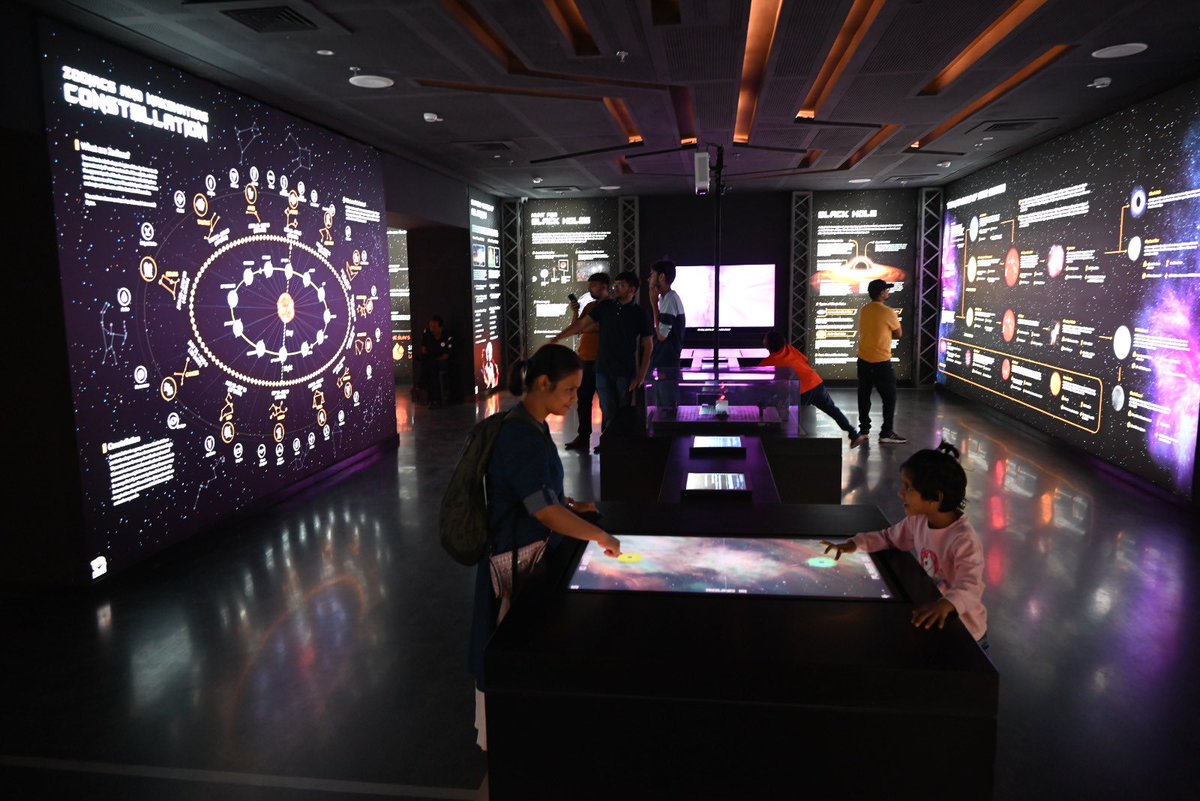
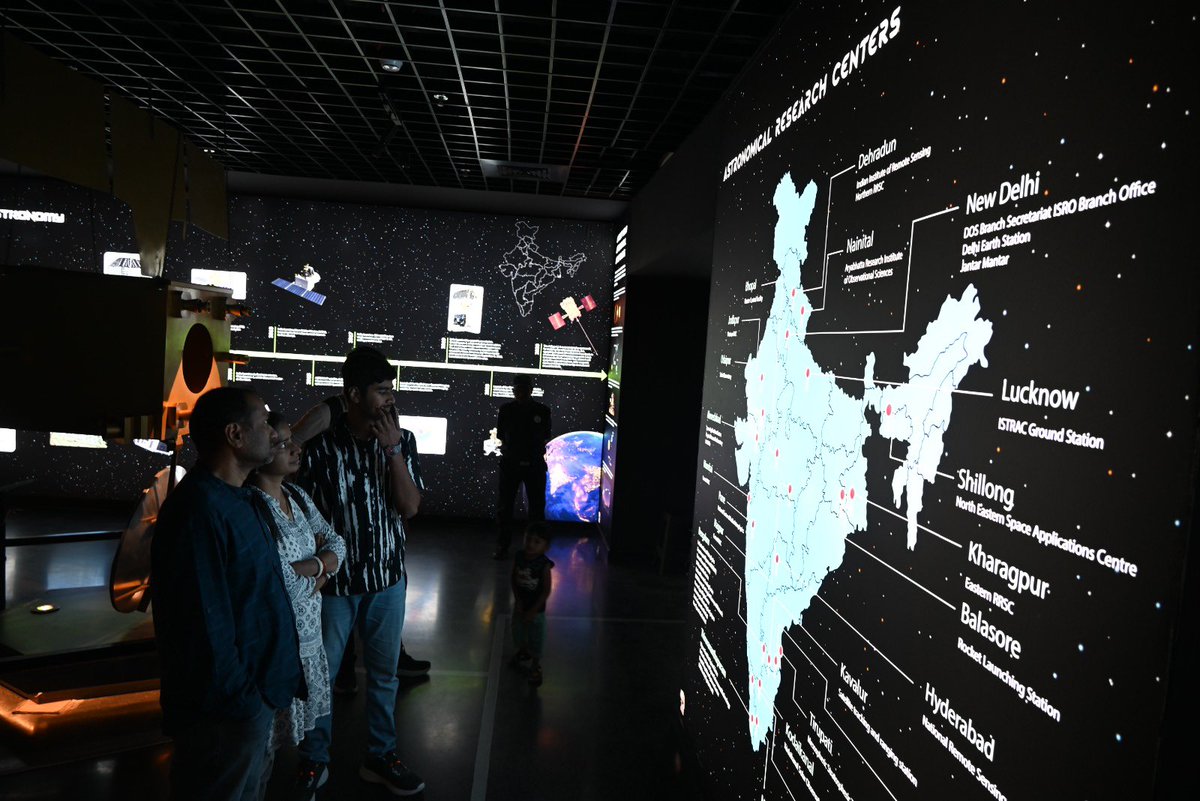
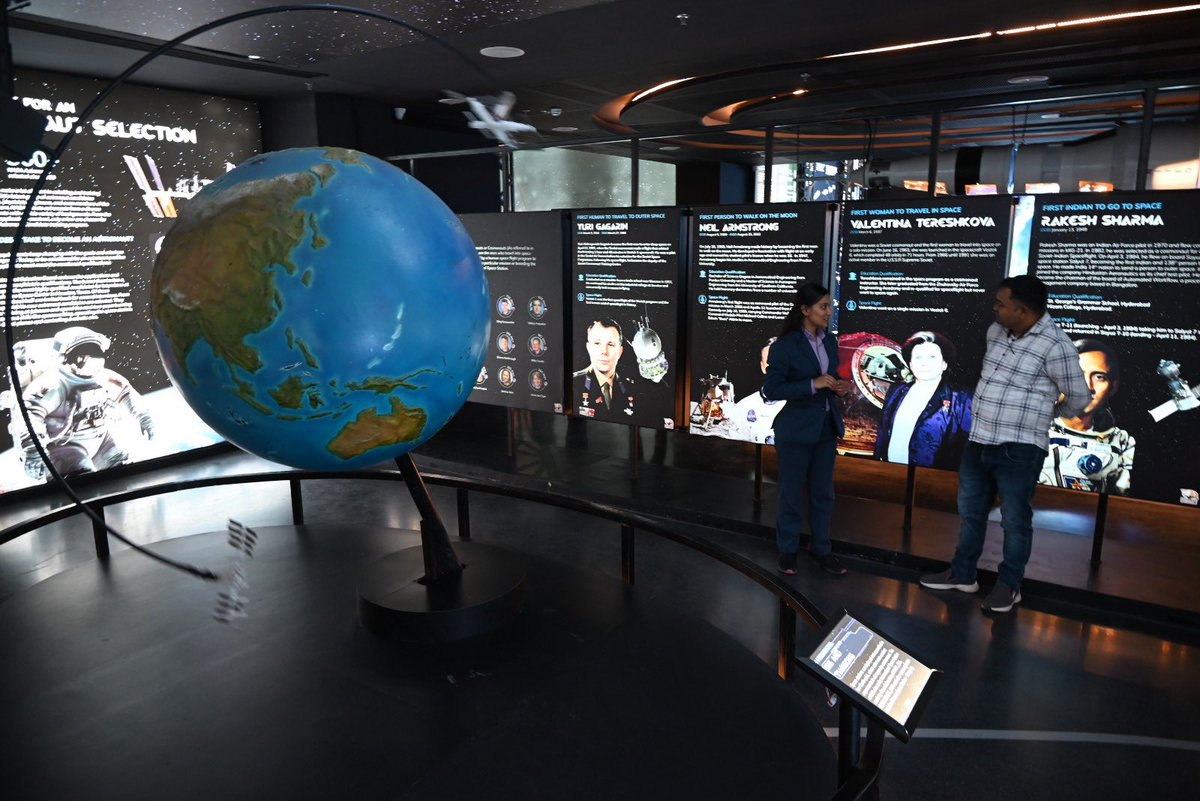
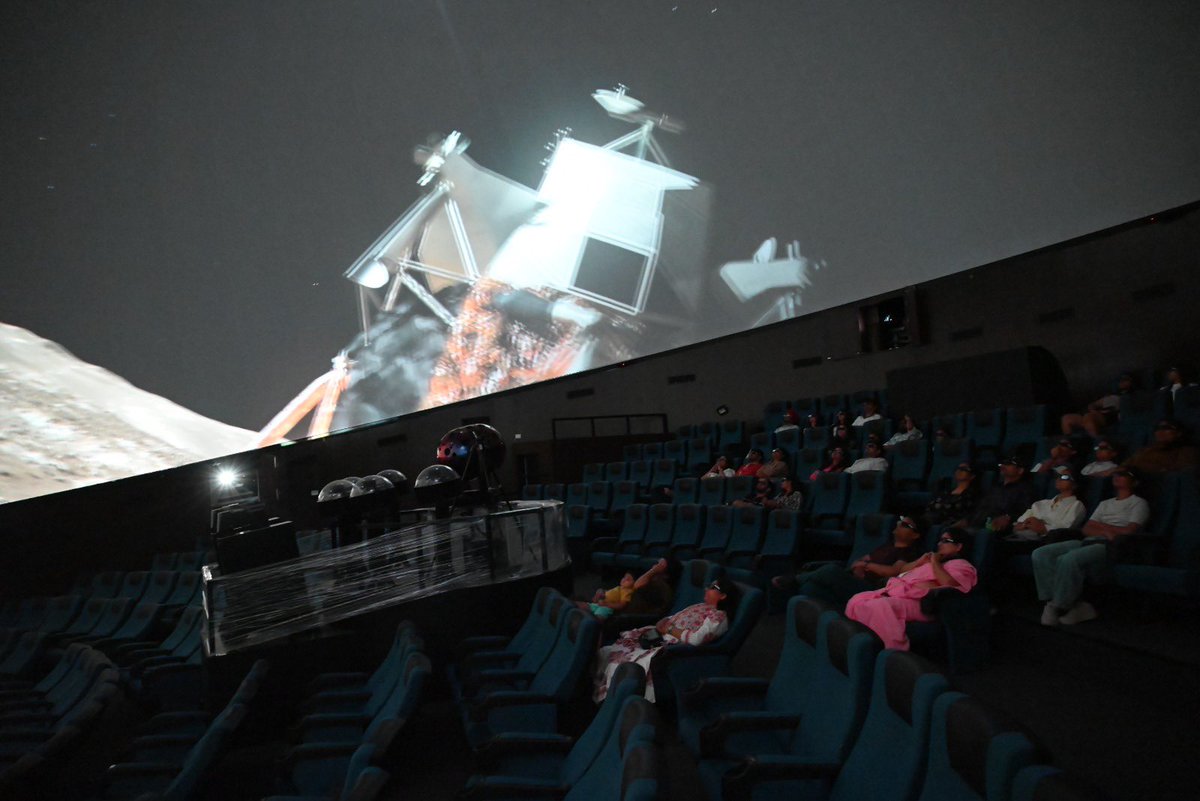
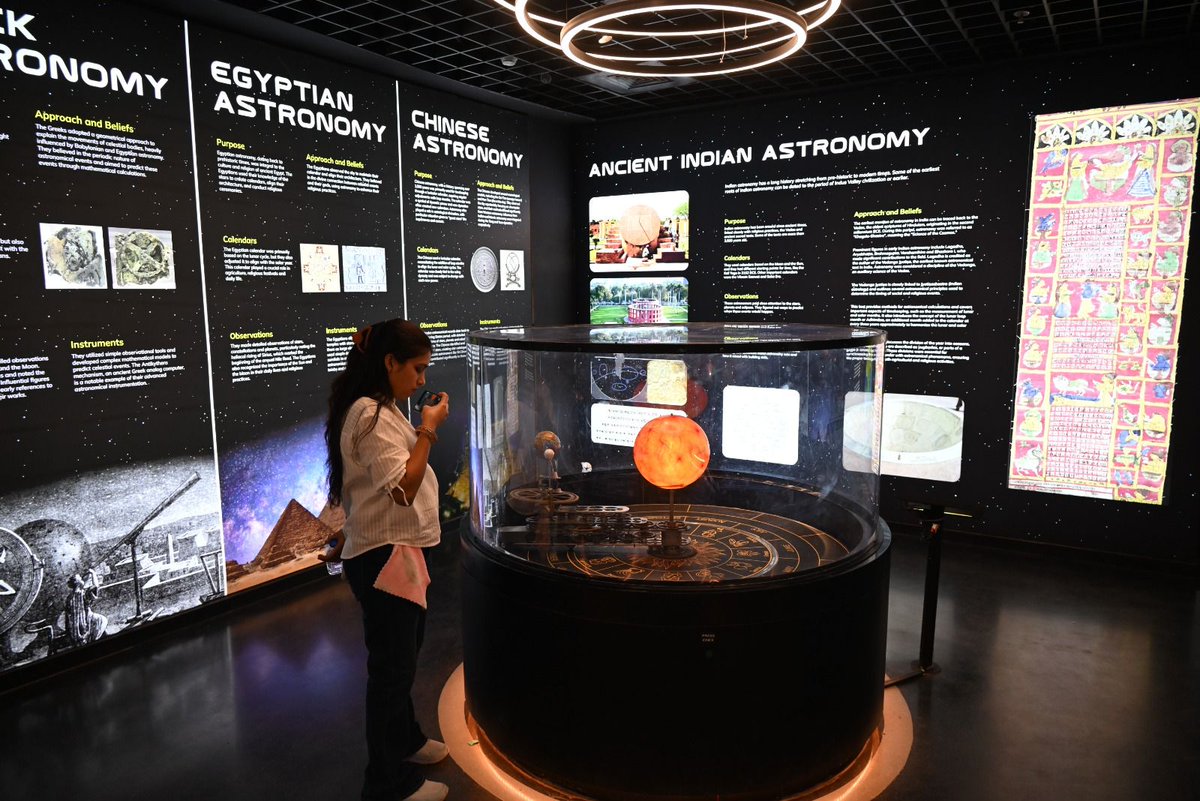
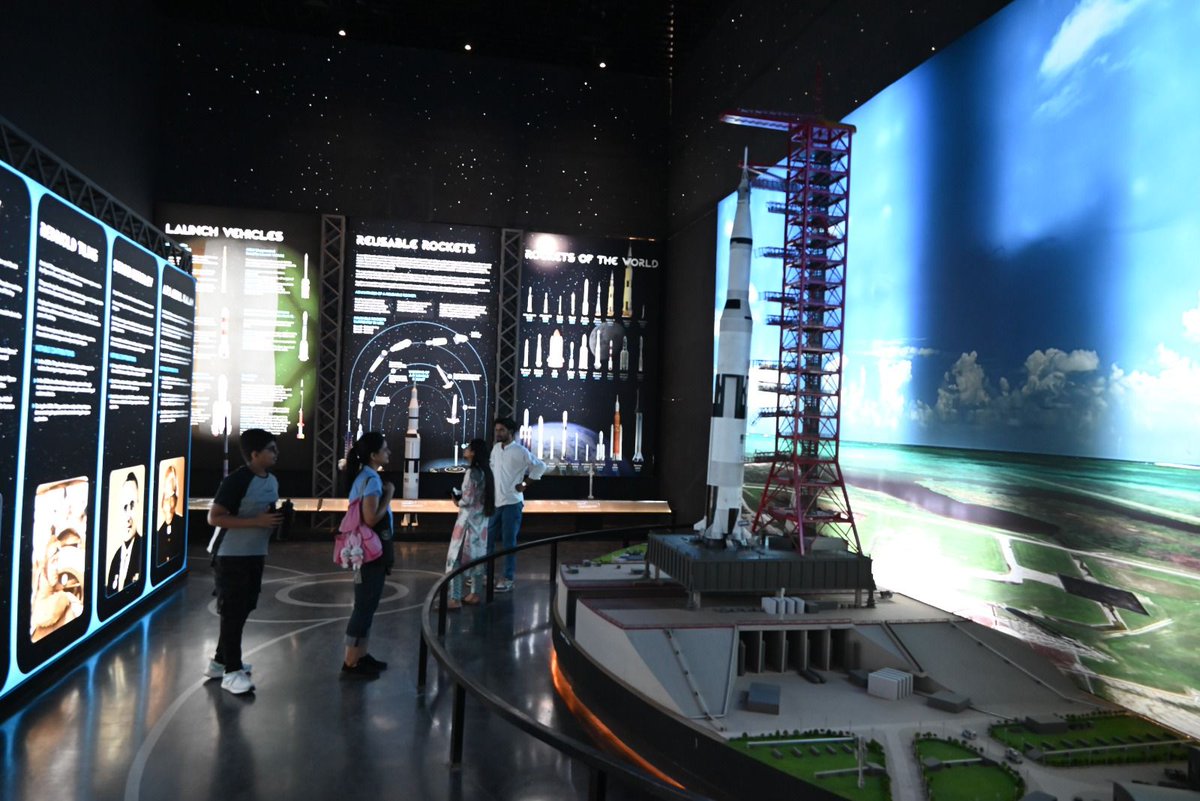
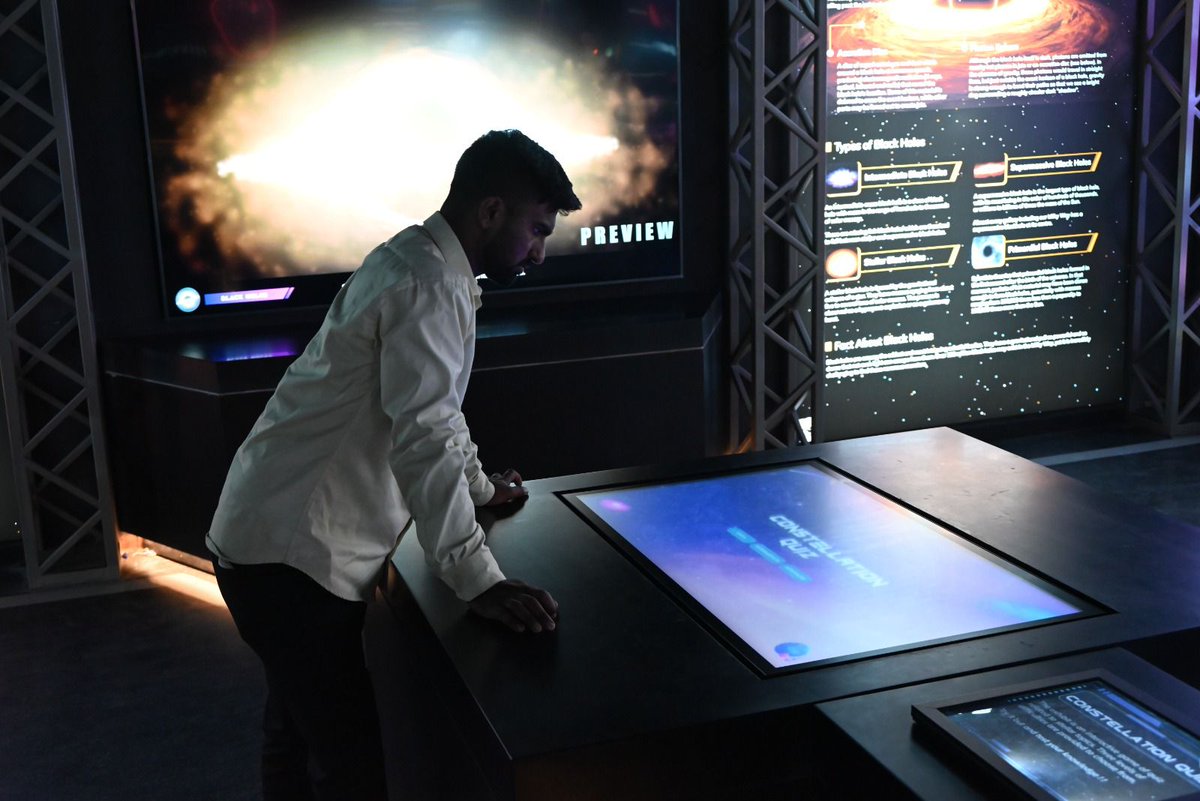
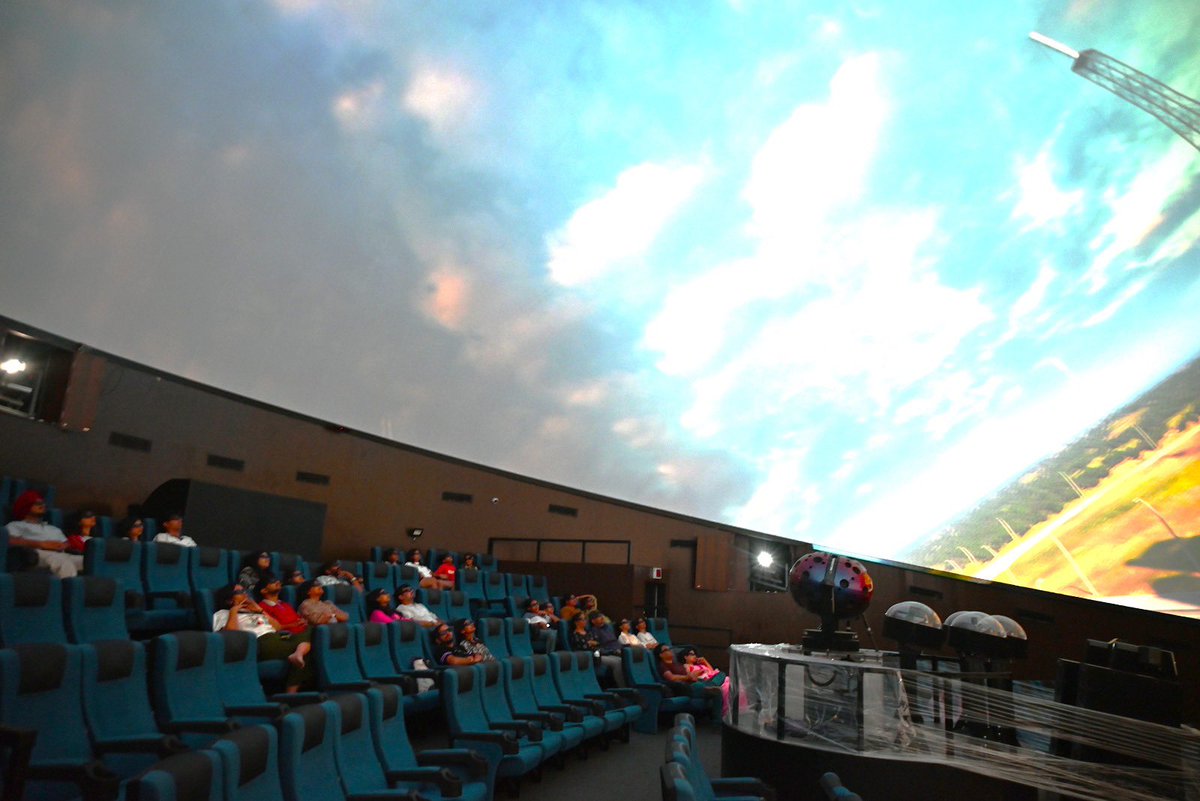
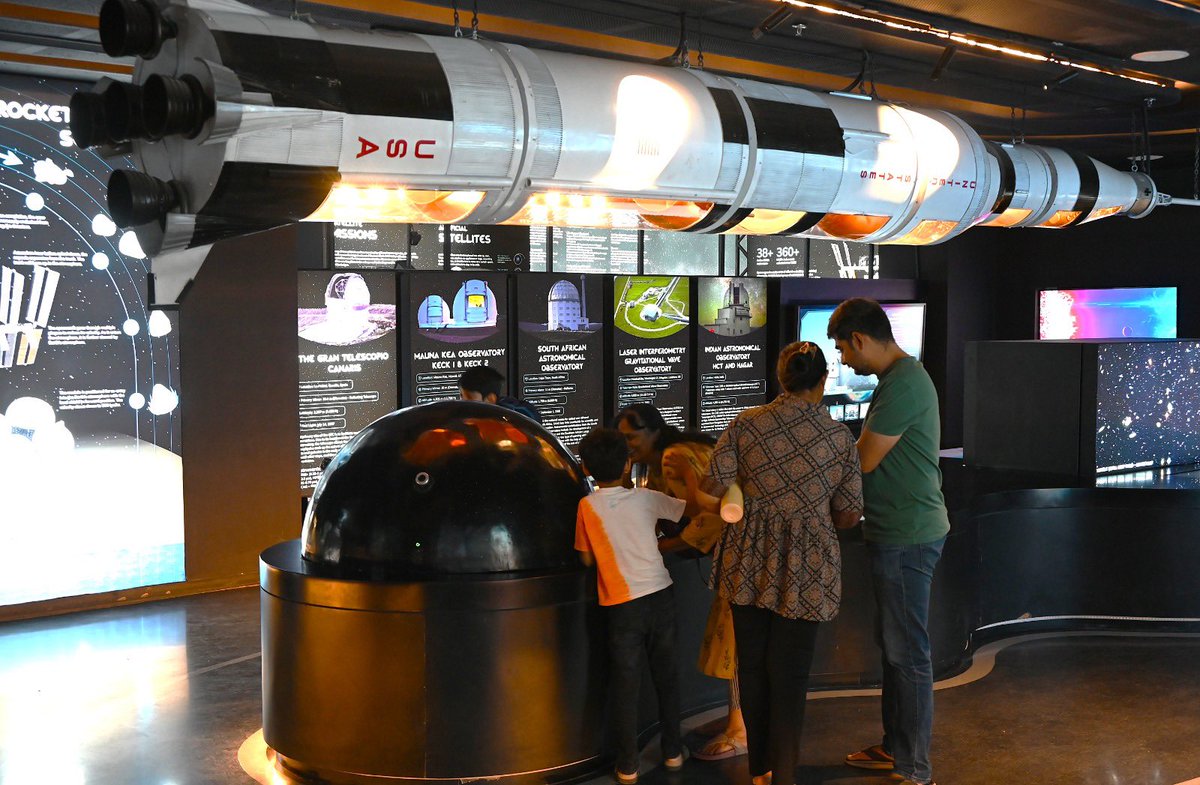
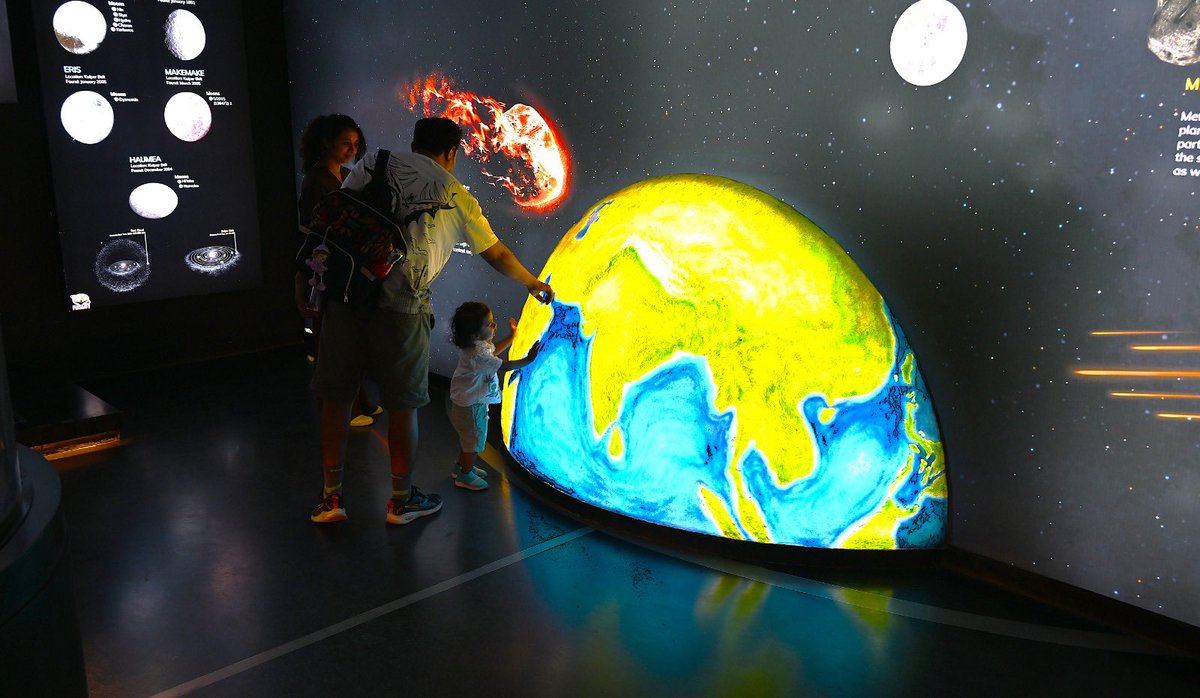
अंतरिक्ष की रोमांचक दुनिया में एक झलक! Gujarat Science City के Astronomy & Space Science Gallery में आए दर्शकों ने ब्रह्मांड के रहस्यों को करीब से महसूस किया। सितारों, ग्रहों और अनंत अंतरिक्ष की खोज के इस अनोखे सफर ने हर किसी के मन में जिज्ञासा और उत्साह भर दिया। आप भी आइए और अंतरिक्ष की इस अद्भुत यात्रा का हिस्सा बनें! #GujaratScienceCity #AstronomyGallery #SpaceScience #ExploreSpace #ScienceForAll #FamilyFun #Ahmedabad #IncredibleIndia #STEM #VisitScienceCity @PMOIndia @CMOGuj @GovernorofGuj @IndiaDST @DSTGujarat @InfoGujarat @drvrajesh @arjunmodhwadia
11
12
115
શું મંગળ ગ્રહ પર જીવન શક્ય છે? 🤔 વૈજ્ઞાનિકો હજુ પણ શોધમાં છે 🔍 કે ક્યારેય જીવન હતું કે નહીં. 💬 તમને શું લાગે છે—ભવિષ્યમાં માણસ ત્યાં રહી શકશે? YES / NO ! 🚀 #Mars #MarsLife #ExploreSpace 🚀
24
29
115
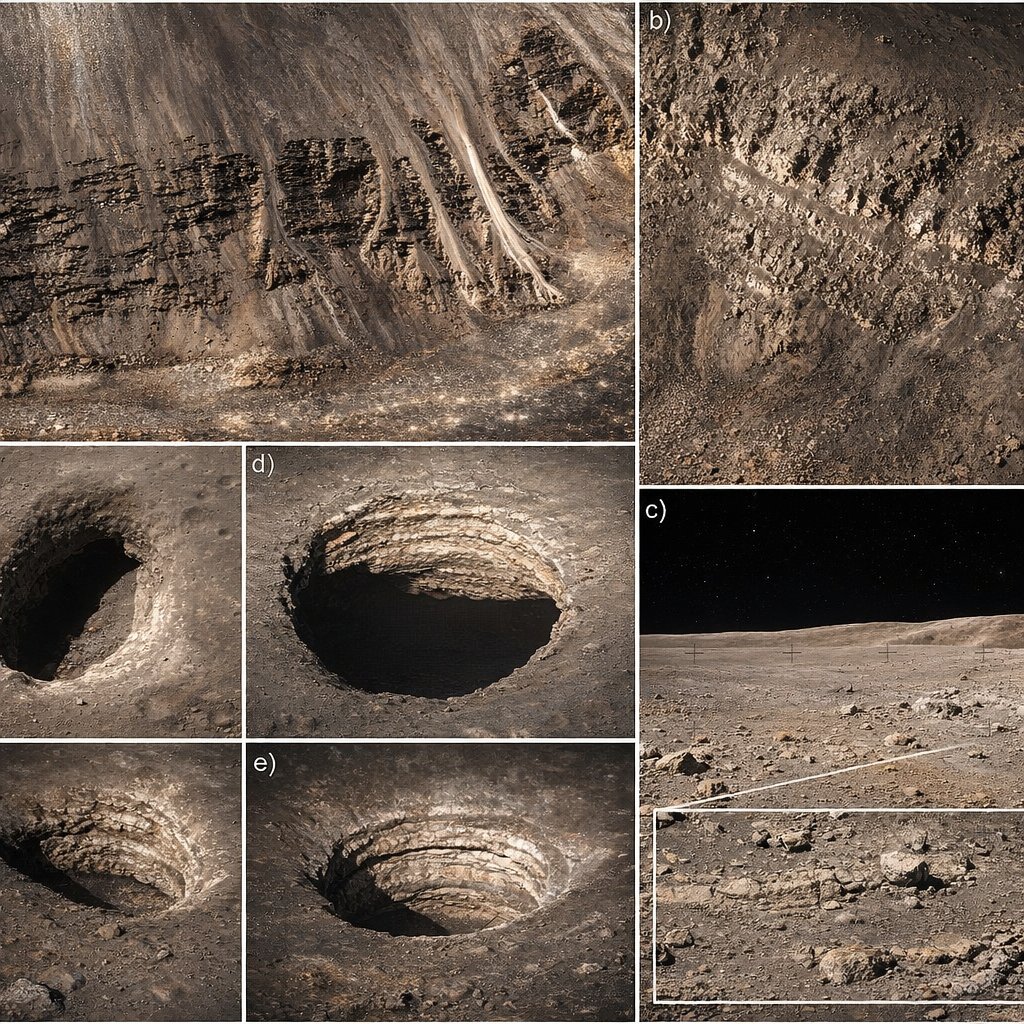
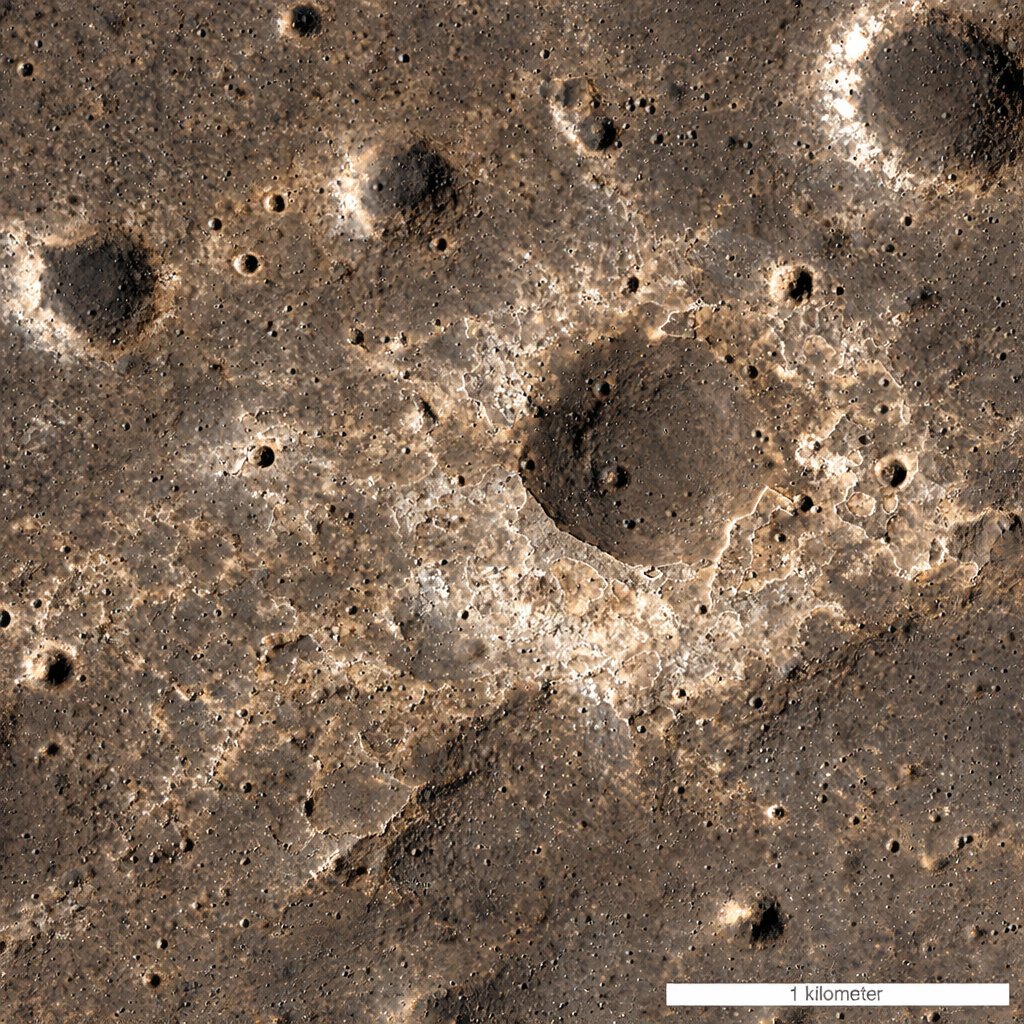
🚨 BREAKING: COLORIZED LUNAR MARE REVEALS ANCIENT VOLCANIC HISTORY 🌕🔥 Spacetracker.space re-analyzes decade-old Moon data with modern processing A newly refined 8K color reconstruction from archival lunar imagery is bringing fresh attention to one of the Moon’s most important geological regions. What once appeared as simple gray terrain now reveals a complex volcanic landscape shaped billions of years ago. These regions, known as lunar maria, are not seas but vast plains of basalt formed by ancient lava flows that filled massive impact basins. 🌕 What we are seeing in this refined image From an amateur astronomy and imaging perspective, this terrain is highly telling: • The darker brown zones indicate iron-rich basalt, giving maria their low reflectivity • The smoother plains show lava flooding events after major impacts • The bright fractured edges are older highland material disrupted by impacts • Crater density variations reveal different geological ages across the surface These maria formed roughly 3.1 to 3.9 billion years ago, making them among the Moon’s younger large-scale features. 🔬 Scientific insight behind the image This is not just a visual upgrade. It’s geological storytelling: • Ancient asteroid impacts fractured the crust • Molten material rose from the Moon’s interior • Low-viscosity lava spread across basins and cooled into basalt layers • Over time, micrometeorites turned the surface into regolith The result is what we now observe as dark plains covering about 16% of the Moon’s surface, mostly on the near side. 📡 Spacetracker Insight What stands out in this processed frame is the textural contrast between mare basalt and surrounding ejecta fields. With enhanced color mapping, subtle mineral differences become visible, something early missions could not fully resolve. This is exactly why revisiting archival lunar data matters. With modern processing, we are not just improving images — we are uncovering hidden layers of planetary history. #BreakingNews #Moon #LunarSurface #LunarMare #MoonGeology #Space #Astronomy #Astrophotography #SpaceNews #NASA #ESA #LRO #PlanetaryScience #Cosmos #Universe #SpaceExploration #Science #STEM #AstroImaging #DeepSpace #SolarSystem #MoonCrater #Volcanic #Geology #SpaceTech #SkyWatch #NightSky #AstronomyLovers #SpaceLovers #Spacetracker #SpacetrackerSpace #ViralScience #ExploreSpace #MoonMission #FutureOfSpace #AIImaging #DataRevealed
3
201
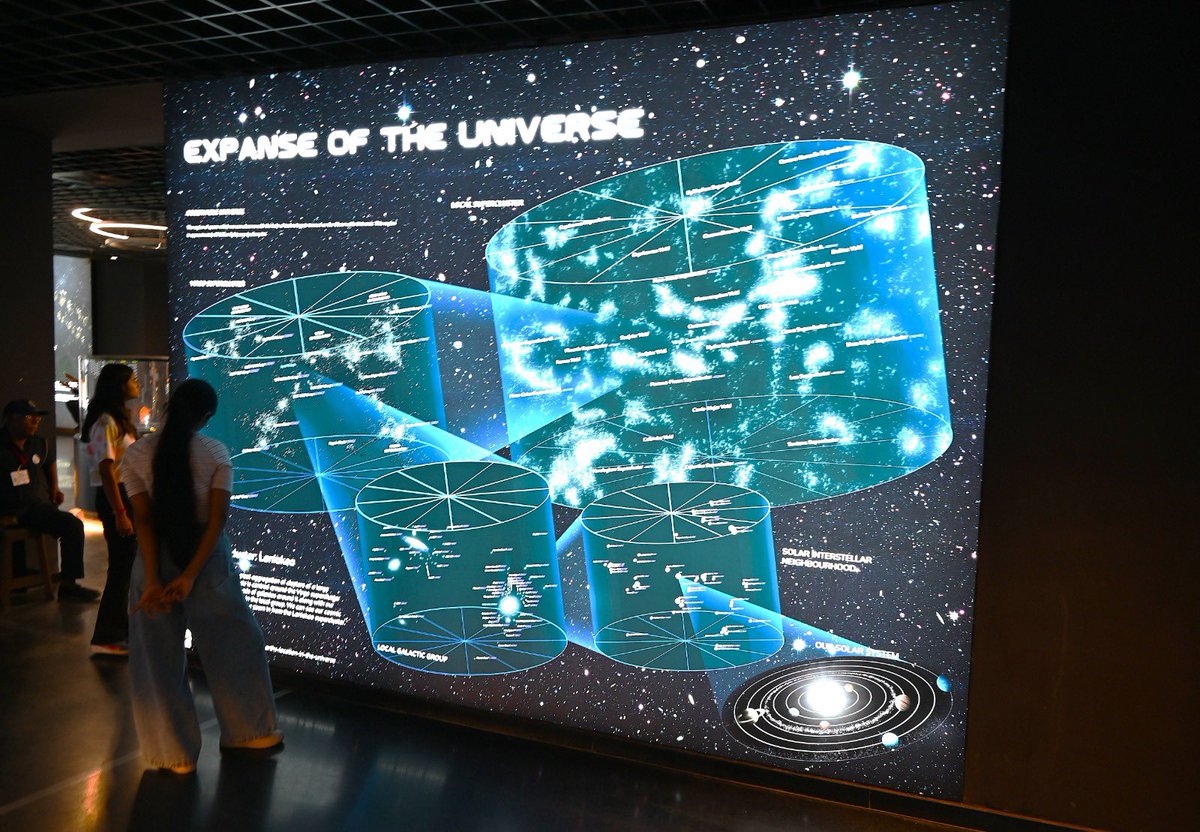
તારાઓથી લઈને ગેલેક્સી સુધીની અદભૂત સફર! સાયન્સ સિટીની Astronomy & Space Science Gallery માં અંતરિક્ષના રહસ્યોને જાણો, સમજો અને અનુભવ કરો એક નવી દૃષ્ટિ સાથે. #ScienceCity #SpaceExploration #Astronomy #Galaxy #ExploreSpace @PMOIndia @CMOGuj @GovernorofGuj @IndiaDST @DSTGujarat @InfoGujarat @drvrajesh @arjunmodhwadia
4
11
138
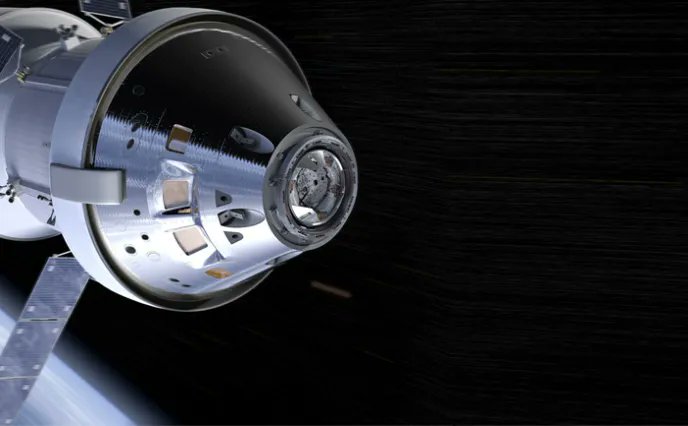
🚀🌕 ORION SPACECRAFT — THE REAL MACHINE TAKING HUMANS BACK TO THE MOON (ARTEMIS II) By Ammar A. | SpaceTracker.space 🚀 ORION SPACECRAFT — ARTEMIS II PROFILE 🌕 CREW │ 4 astronauts DIAMETER │ ~5.02 m HEIGHT │ ~3.3 m MASS │ ~8.5 tons MODULE │ Crew European Service Module (ESA) MAX SPEED │ 40,000 km/h (re-entry) ORBIT SPEED │ 28,000 km/h PROPULSION │ Main engine 32 thrusters FUEL TYPE │ Hypergolic (auto-ignition) LAUNCH SITE │ Kennedy Space Center (LC-39B) LAUNCH DIRECTION │ EAST → Atlantic Ocean 🌊 INITIAL ORBIT │ ~180 km → elliptical up to ~2200 km MICROGRAVITY START │ Minutes after orbit insertion TRAJECTORY TYPE │ FREE-RETURN (Figure-8 path) TLI BURN │ ~15 min engine burn 🔥 TIME TO MOON │ ~4 days CLOSEST MOON DISTANCE │ ~6,500 km RETURN METHOD │ Moon gravity slingshot 🌙 RE-ENTRY HEAT │ ~2700°C plasma LANDING │ Pacific Ocean 🌊 MISSION DURATION │ ~10 days 🌌 TRAJECTORY FLOW (VISUAL) 🌙 MOON * / \ / \ ← Lunar Flyby (Gravity Turn) / \ / \ / \ *-----------*----------------------* EARTH TLI BURN RETURN PATH 🟢 STEP 1: Earth Orbit (~180 → 2200 km) 🟠 STEP 2: TLI Burn → escape Earth gravity 🔵 STEP 3: Coast to Moon (~4 days) 🟣 STEP 4: Flyby → gravity slingshot 🔴 STEP 5: High-speed return (~40,000 km/h) 🌊 STEP 6: Splashdown (Pacific Ocean) ⚡ SPEED SCALE (POWER BAR) LEO ORBIT ████████████████ 28,000 km/h MOON TRANSIT █████████████████████ 35,000 km/h RE-ENTRY ████████████████████████████ 40,000 km/h 🔥 🧠 KEY MOMENTS TIMELINE [ T 0 ] 🚀 Launch (Florida) [ 8 min ] Stage separation [ 2 hr ] Stable orbit [ 24 hr ] Systems check complete [ DAY 2 ] 🔥 TLI Burn → heading to Moon [ DAY 5 ] 🌙 Lunar flyby [ DAY 6-9 ] Return to Earth [ DAY 10 ] 🌊 Splashdown 🛰️ ORION — WHAT YOU’RE LOOKING AT This is NASA’s Orion spacecraft — the most advanced human deep-space capsule ever built. It’s not just a spacecraft… it’s a Moon-to-Mars transport system. 🔥 CORE FACTS (HIGH DETAIL) 📏 SIZE & STRUCTURE Crew module diameter: ~5.02 meters Height: ~3.3 meters Mass (crew module): ~8.5 tons Capacity: 4 astronauts Volume: 50% larger than Apollo capsules 👉 Attached to a European Service Module (ESM): Provides fuel, propulsion, oxygen, water, electricity ⚡ SPEED & POWER Launch to orbit: ~28,000 km/h Earth orbit insertion speed: ~17,500 mph (~28,000 km/h) Re-entry speed: ~40,000 km/h (25,000 mph) 🔥 That’s the fastest human spacecraft return EVER ⛽ FUEL & PROPULSION Powered by European Service Module (ESA-built) Uses:Main engine (orbital maneuvers) 8 auxiliary thrusters 24 smaller control thrusters Fuel type: Hypergolic propellants (ignite on contact) 👉 Used for: Orbit changes Moon trajectory alignment Precision corrections 🌍 LAUNCH & FLIGHT PATH 🚀 LAUNCH LOCATION Kennedy Space Center, Florida (LC-39B) 🧭 INITIAL DIRECTION Launches east over the Atlantic Ocean 👉 Uses Earth’s rotation to gain speed 🌌 ORBIT & “ZERO GRAVITY” Initial orbit height:~180 km → then up to ~2,200 km high elliptical orbit Microgravity begins minutes after orbit insertion 💡 “Zero gravity” = continuous free fall around Earth 🧠 HOW ORION CHANGES TRAJECTORY 🔥 STEP 1 — TRANSLUNAR INJECTION (TLI) A precise engine burn (~15 minutes) Pushes Orion from Earth orbit toward Moon 👉 This is the critical moment Miss this → mission fails 🌙 STEP 2 — FREE-RETURN TRAJECTORY Orion follows a figure-8 path around the Moon Uses gravity, NOT fuel to return 💡 If engines fail → it STILL comes back to Earth 🌕 WHAT HAPPENS AT THE MOON 🌀 LUNAR FLYBY Closest distance: ~6,500 km from Moon surface Duration to Moon: ~4 days 🔄 TURN BACK TO EARTH NO big engine burn needed Moon’s gravity slingshots Orion back 👉 Pure orbital mechanics mastery 🌍 RETURN & LANDING 🔥 RE-ENTRY Speed: ~40,000 km/h Heat: ~2,700°C plasma shield 🌊 LANDING Splashdown: Pacific Ocean (off California) ⏳ MISSION DURATION Total: ~10 days Breakdown:1–2 days Earth orbit testing 4 days → Moon 1 day flyby 3 days return 🚀 VIRAL SUMMARY (SPACETRACKER STYLE) 🚨 BREAKING: THIS CAPSULE WILL TAKE HUMANS FARTHER THAN EVER BEFORE 🌍 Launches from Florida → heads EAST ⚡ Hits 28,000 km/h in minutes 🌌 Enters deep space beyond Earth orbit 🌙 Loops around the Moon using gravity 🔥 Returns at 40,000 km/h — fastest ever 🌊 Lands in the Pacific after ~10 days 👉 No landing. No stopping. Just pure deep-space survival test 🧠 WHY THIS IS REVOLUTIONARY First humans beyond low Earth orbit since 1972 Tests life support, navigation, deep-space radiation survival Foundation for:Artemis III (Moon landing) Future Mars missions 📢 MINI VIRAL POST 🚀 ORION IS NOT JUST A SPACECRAFT… IT’S A TIME MACHINE BACK TO THE MOON Humans are leaving Earth orbit again after 50 years Traveling at 40,000 km/h Looping the Moon using gravity alone And surviving the most extreme re-entry ever 🌕 This is Artemis II 🌍 This is the next era 🔥 #ArtemisII #OrionSpacecraft #NASA #MoonMission #SpaceX #DeepSpace #Astronomy #BreakingNews #SpaceTravel #SpaceTracker #MoonFlyby #HumanSpaceflight #ExploreSpace #FutureOfSpace #MarsMission #SpacetrackerSpace
1
2
434
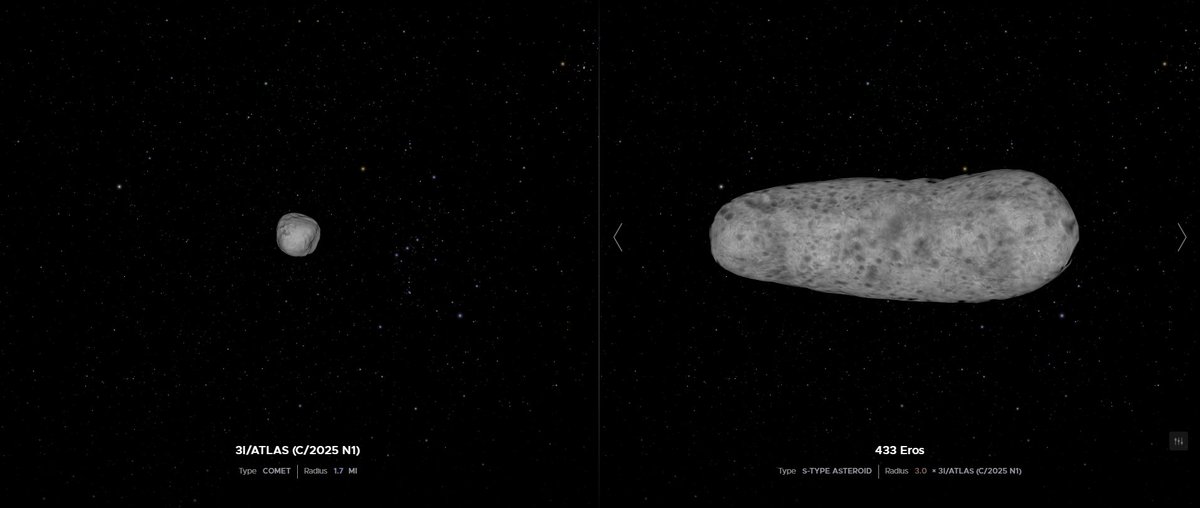
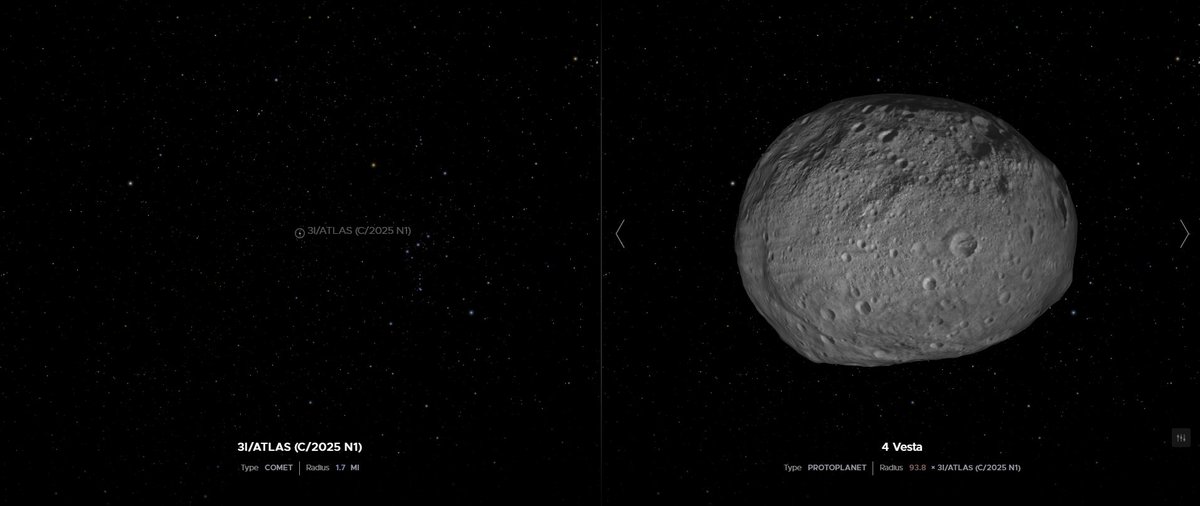
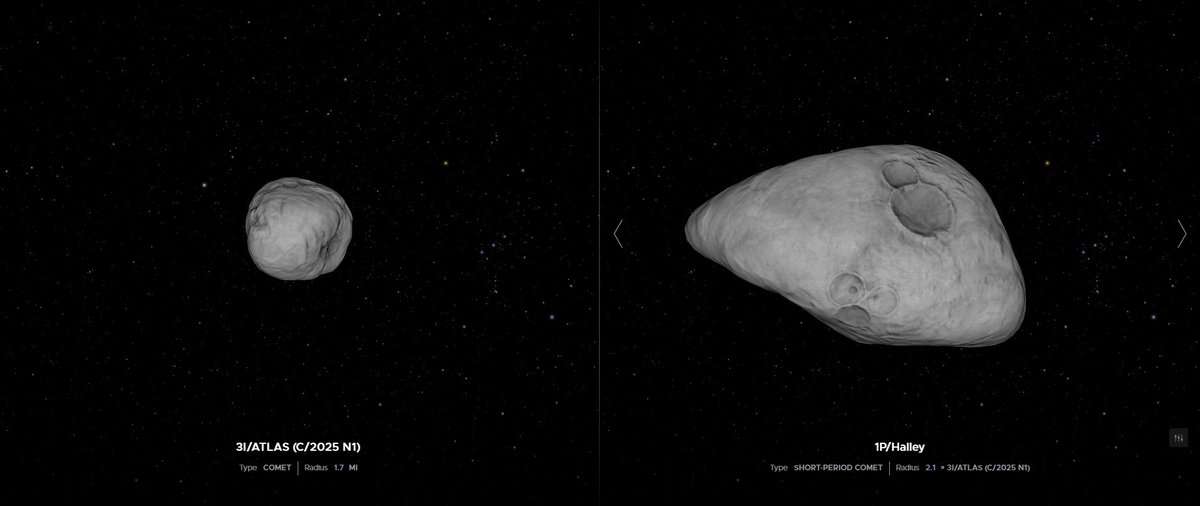
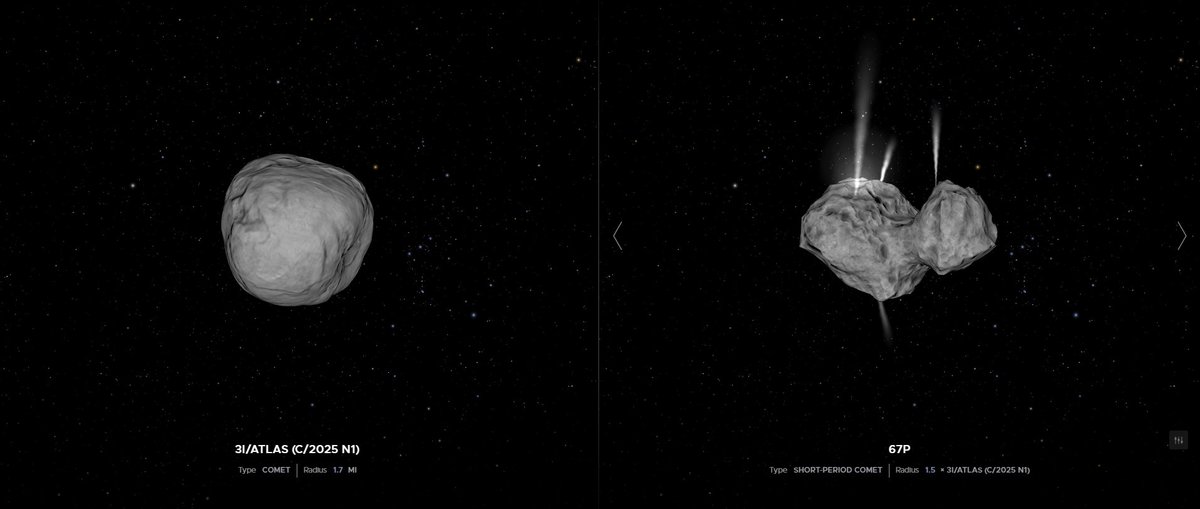
🚨🌌 BREAKING: 3I/ATLAS Size Comparison With Other Comets… The Smallest Object With the Biggest Story by SPACETRACKER.SPACE 🛰️ A quiet object is crossing our solar system right now and it doesn’t belong here 3I/ATLAS A comet only a few kilometers wide yet older than our solar system’s current form and formed around another star 📊 WHAT THE COMPARISON SHOWS 🪨 vs 433 Eros Much larger. Solid. Native to our system 🌍 vs Vesta Massive difference. Nearly a protoplanet ☄️ vs Halley’s Comet About twice the size of 3I/ATLAS A familiar visitor bound to the Sun 🧊 vs 67P (Rosetta target) Similar class but shaped and altered by repeated solar passes ⚠️ HERE IS THE PART THAT CHANGES EVERYTHING Every object above formed with the Sun 3I/ATLAS did not It is moving on a hyperbolic path entering once leaving forever Speed near tens of kilometers per second carrying material shaped in a completely different stellar system 🧠 WHY THIS MATTERS This is not just another comet This is 👉 foreign material 👉 untouched by our solar system’s history 👉 a fragment of another star’s formation We are not comparing size We are comparing origin 🌙 OBSERVATION WINDOW Faint hard to detect moving into crowded star fields 📉 The final chance to observe it is fading 🚀 FINAL LINE Small object unmatched significance 3I/ATLAS may be one of the few physical visitors we ever see from another star system #Breaking 🚨 #BreakingNews #Space #Astronomy #Interstellar #Comet #3IATLAS #AtlasComet #SpaceNews #NASA #ESA #Astrophotography #SpaceDiscovery #Cosmic #Universe #SolarSystem #DeepSpace #Stargazing #Science #Physics #Astro #SkyWatch #SpaceLovers #NightSky #Hubble #JamesWebb #JWST #SpaceFacts #AlienOrigins #CosmicVisitor #Hyperbolic #SpaceAlert #Observation #Telescope #AstroNews #ExploreSpace #SpaceTracker 🌌
1
11
23
1,001
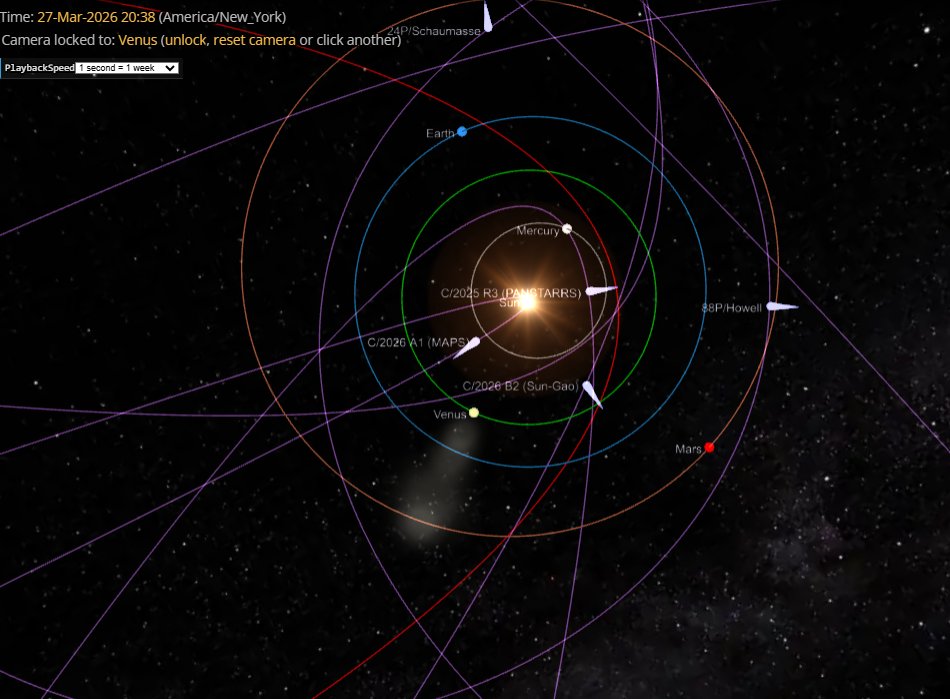
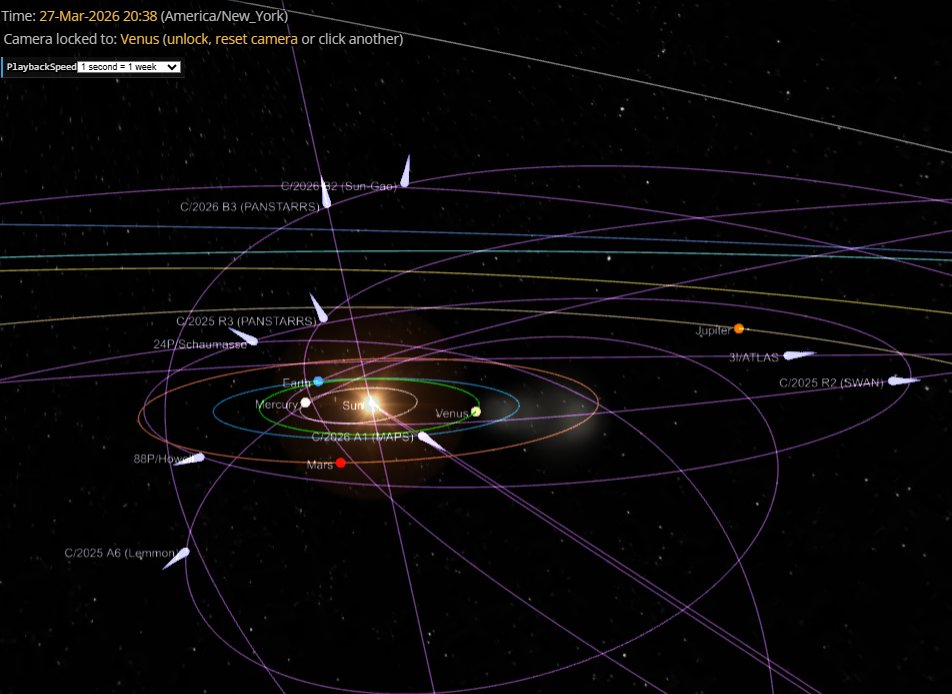
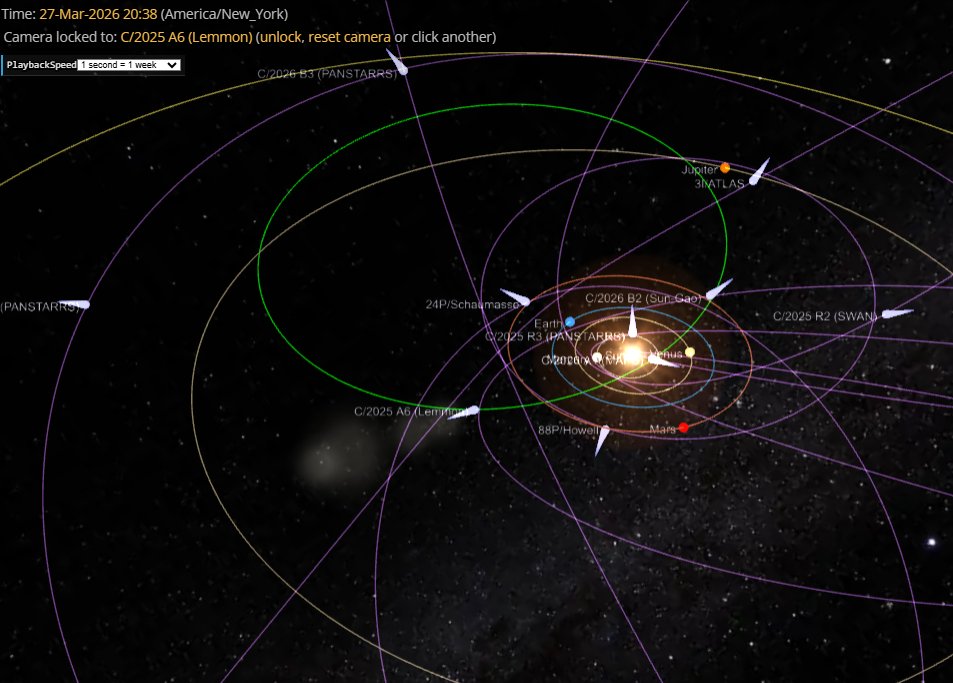
🚨☄️ BREAKING: The Solar System Is FLOODED With Comets Right Now by SPACETRACKER.SPACE A rare orbital snapshot reveals multiple comets crossing inner planets at the SAME TIME… 🧭 WHAT YOUR MAPS SHOW (KEY INSIGHT) From your simulation (Mar 27, 2026): Multiple comets inside Mars–Jupiter zone Several high-inclination orbits (tilted paths) → not from same origin At least 6–10 active comets visible at once One interstellar object: 3I/ATLAS near Jupiter 👉 This is NOT common visually — this is a compressed moment of orbital traffic 🧱 PILLAR 1 — ☄️ INTERSTELLAR VISITOR 🔥 3I/ATLAS (Interstellar Object) 🌌 Origin: Outside Solar System 🚀 Speed: ~60–70 km/s (hyperbolic escape trajectory) 📍 Current: Near Jupiter (~53–73 million km range depending on date) 🪐 Closest to Jupiter: Mar 16, 2026 (~0.358 AU) 🌍 Closest to Earth: Already passed (no threat) 💡 Why it matters: Only 3rd confirmed interstellar object ever after:ʻOumuamua Borisov 👉 You are literally seeing something that formed around another star. 🧱 PILLAR 2 — ☀️ INNER SOLAR SYSTEM COMETS ☄️ C/2025 R3 (PANSTARRS) 🔭 Discovery: 2025 (Pan-STARRS survey) 📍 Orbit: Tight perihelion (very close to Sun) ☀️ Likely perihelion: Early–mid 2026 ⚡ Speed near Sun: 40–70 km/s typical 🌍 Earth distance: varies, not a close threat 🔥 Behavior: Strong solar heating → possible fragmentation risk Your map shows it diving deep into inner system ☄️ C/2026 B2 (Sun-Grazing type) 🔭 Likely dynamically new comet ☀️ VERY close perihelion (Sun-grazer style orbit) ⚡ Extreme heating → tail ion activity spike 💡 Important: These are the ones that: suddenly brighten or disintegrate ☄️ C/2026 A1 (MAPS) 🔭 Discovery: Jan 2026 (Chile – MAPS system) 📍 Orbit: crossing inner planets (seen near Venus orbit in your map) 🚀 Speed: ~30–50 km/s 🌍 Closest Earth: likely mid–late 2026 (safe distance) 🧱 PILLAR 3 — ☄️ OUTER / LONG ORBIT COMETS ☄️ C/2025 A6 (Lemmon) 🔭 Discovery: Mount Lemmon Survey 📍 Your map shows it far out, inbound 🌌 Long-period comet (Oort Cloud origin) 🕒 Perihelion: likely 2026–2027 window 💡 Meaning: Ancient ice from edge of Solar System billions of years untouched ☄️ C/2025 R2 (SWAN) 📍 Orbit outside Mars toward Jupiter 🔥 Active coma visible in simulation 📉 Likely fading as it moves outward ☄️ 24P/Schaumasse (Periodic) 🌀 Short-period comet (~8 years) 🔁 Returns regularly 📍 Seen crossing inner system in your map ☄️ 88P/Howell 🌀 Jupiter-family comet 📍 Stable orbit, repeatedly influenced by Jupiter 🌍 Not a close Earth object 🧱 PILLAR 4 — ⚠️ WHAT MAKES THIS MOMENT RARE 🔥 You’re seeing: Interstellar Oort Cloud Jupiter-family 👉 ALL IN ONE FRAME 🌌 Orbital diversity: Flat (planet-like) Highly tilted (incoming from deep space) Hyperbolic (escaping forever) 📊 Translation: This is a live cross-section of Solar System evolution 🧱 PILLAR 5 — 🧠 SCIENTIFIC TAKE What scientists see here: Transport of water organics Solar heating physics Gravitational sculpting (Jupiter control) Key player: 🪐 Jupiter = orbital gatekeeper Captures redirects ejects comets (like 3I/ATLAS path interaction) #BreakingNews #Space #Astronomy #Comets #Asteroid #SolarSystem #NASA #ESA #Hubble #JWST #SpaceNews #Science #Universe #Cosmos #DeepSpace #Interstellar #3IATLAS #Oumuamua #Borisov #PanSTARRS #SWAN #SpaceWeather #Jupiter #Mars #Venus #Earth #Sun #Heliosphere #OortCloud #KuiperBelt #Astrophysics #SkyWatch #MinorPlanet #CometWatch #LiveScience #SpaceUpdate #CosmicEvent #SolarActivity #AstronomyLovers #UniverseToday #SpaceFacts #DidYouKnow #ViralScience #TrendingNow #ExploreSpace #BeyondEarth #Spacetracke
6
18
639
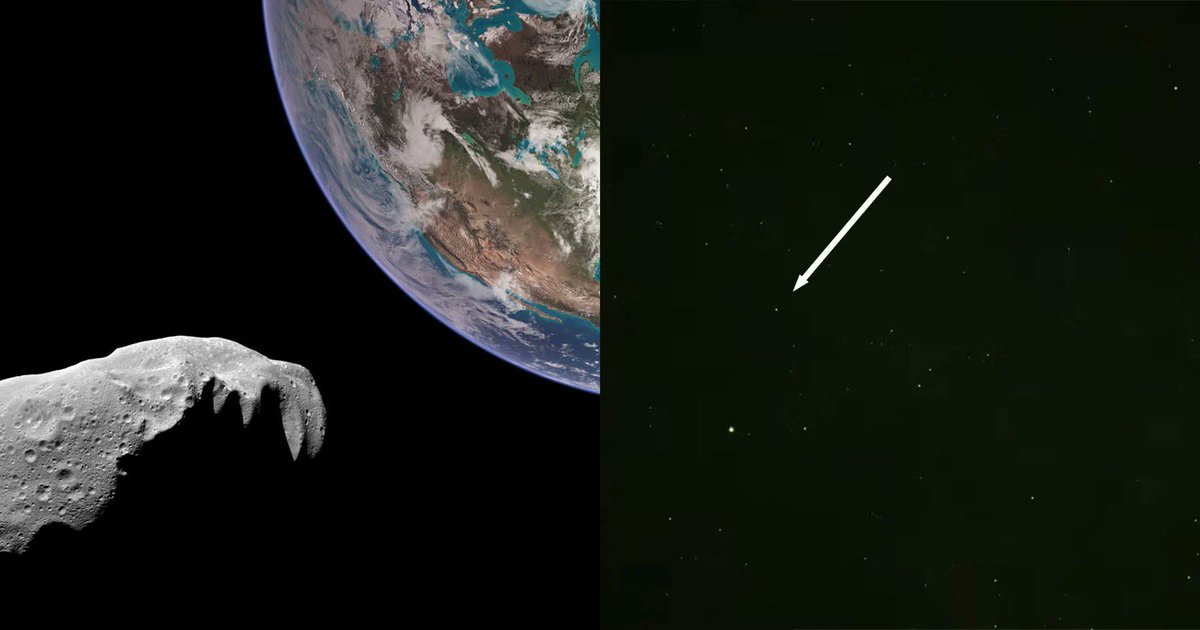
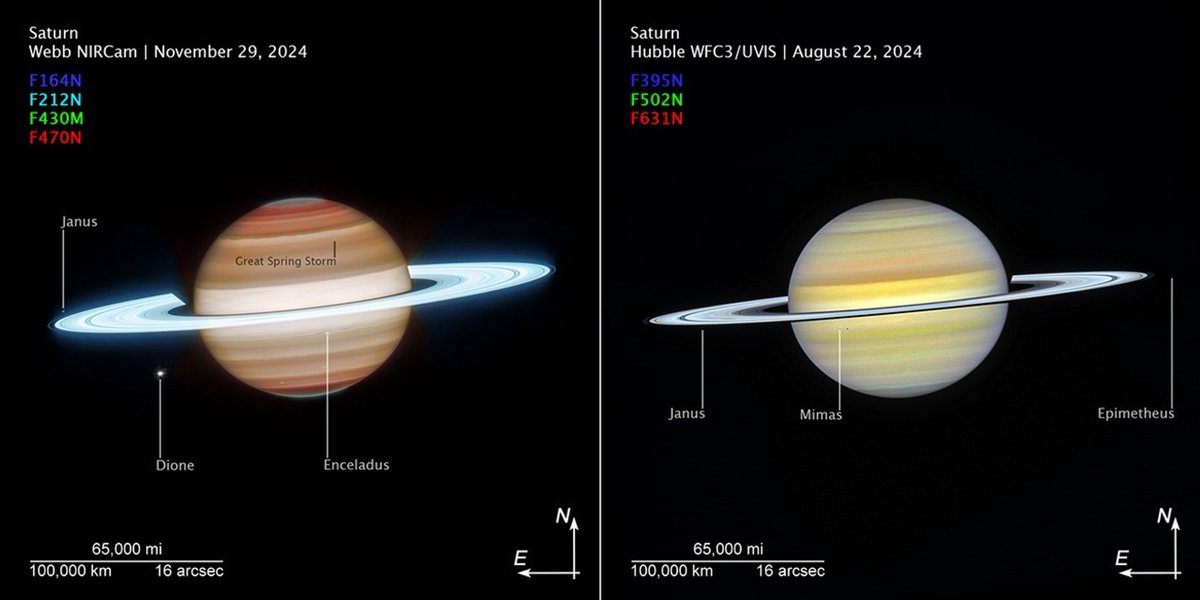
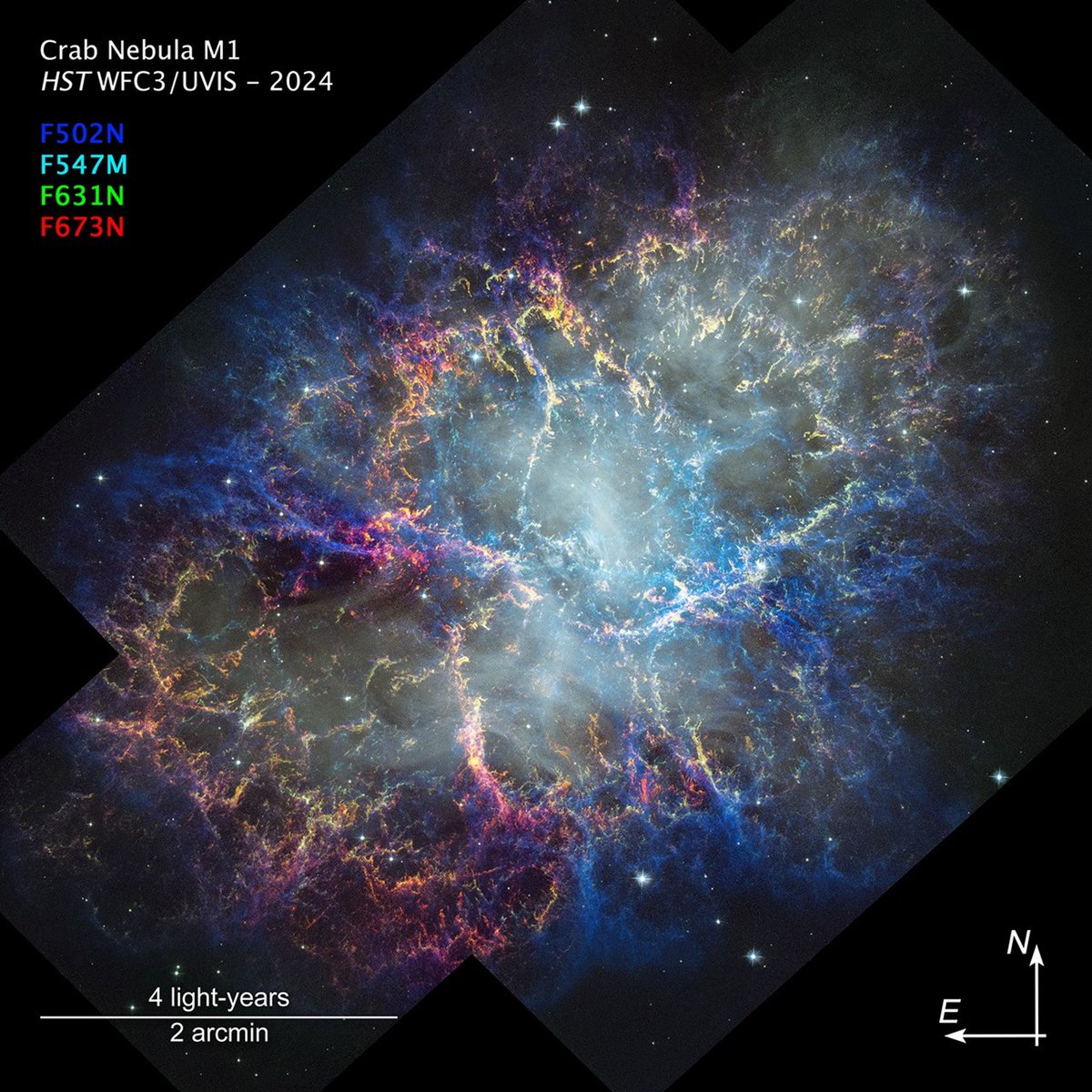
🌌 SPACE TRACKER REPORT -MARCH 26, 2026 A silent but powerful day across the Solar System by spacetracker.space ☄️ PILLAR 1 INTERSTELLAR COMET 3I/ATLAS: THE EXIT AFTER BILLIONS OF YEARS After its historic pass near Jupiter (~53.6 million km on March 16), 3I/ATLAS is now fading into deep space Visibility has dropped significantly only detectable using:Long exposure stacking Advanced astrophotography processing Scientists are still analyzing:Organic molecules (methanol, HCN hints) Dust-to-gas ratios Interstellar origin trajectory 👉 Why this is massive: This object is not from our Solar System it’s a messenger from another star system, and we are capturing one of the cleanest datasets ever recorded for an interstellar visitor 🪨 PILLAR 2 ASTEROIDS: EARTH JUST EXPERIENCED MULTIPLE CLOSE PASSES Multiple near-Earth asteroids passed within lunar distance (LD):2026 ET3 → 0.1 LD (extremely close) 2026 FH1 → 0.4 LD 2026 FG1 → 0.6 LD Sizes: small (few meters), but still critical for tracking systems 👉 Why this matters: 0.1 LD is incredibly close in cosmic scale events like this help improve planetary defense detection accuracy This is exactly how we prepare for future real threats 🪐 PILLAR 3 —SATURN REVEALED LIKE NEVER BEFORE Combined observations from: James Webb Space Telescope Hubble Space Telescope New insights include:Ring structure layering Storm activity patterns Atmospheric band depth 👉 Why this matters: We’re no longer just seeing planets we’re studying their physics in multiple wavelengths simultaneously 🔭 PILLAR 4 JWST: UNLOCKING HIDDEN GALAXIES James Webb Space Telescope continues revealing:Star-forming regions buried in dust Complex galaxy structures invisible before Observations show galaxies are more chaotic and active than expected 👉 Why this matters: We are witnessing how galaxies actually evolve, not just static snapshots 🛰️ PILLAR 5 HUBBLE: TIME-LAPSE OF THE UNIVERSE Hubble Space Telescope continues long-term monitoring:Supernova remnants (like Crab Nebula) Pulsar-driven expansion Decades of data now show real-time cosmic evolution 👉 Why this matters: Hubble gives us something no other telescope can: time the ability to watch the universe change 🌠 PILLAR 6 NEXT SKY EVENT: POSSIBLE DAYLIGHT COMET C/2026 A1 (MAPS) is approaching the Sun Could become:A bright comet Possibly visible near daylight (if it survives) 👉 Why this matters: This could turn into a global sky event - the kind people remember for years 📊 QUICK HIGHLIGHT TABLE CategoryTop EventWhy It MattersStatus☄️ Comets3I/ATLAS fadingInterstellar chemistryOutbound🪨 Asteroids0.1 LD flybyExtreme proximityCompleted🪐 PlanetsSaturn imagingMulti-spectrum detailOngoing🔭 JWSTHidden galaxiesStar formation insightActive🛰️ HubbleNebula evolutionTime-based astronomyOngoing🌠 UpcomingC/2026 A1Potential bright cometDeveloping 🔥 FINAL TAKE March 26, 2026 wasn’t loud - but it was deep. A visitor from another star system is leaving us forever Space rocks are passing closer than most people realize Telescopes are now seeing the universe in ways never possible before 👉 And most people… didn’t even notice #BreakingNews #SpaceNews #Astronomy #NASA #ESA #JWST #Hubble #JamesWebb #Asteroids #Comet #3IATLAS #SpaceDiscovery #Cosmos #Universe #SolarSystem #DeepSpace #Astrophotography #SkyWatch #ScienceNews #SpaceExploration #Stargazing #SpaceTracker #ViralScience #CosmicEvents #Interstellar #AstronomyLovers #SpaceFacts #TrendingNow #ExploreSpace #MilkyWay
1
9
445
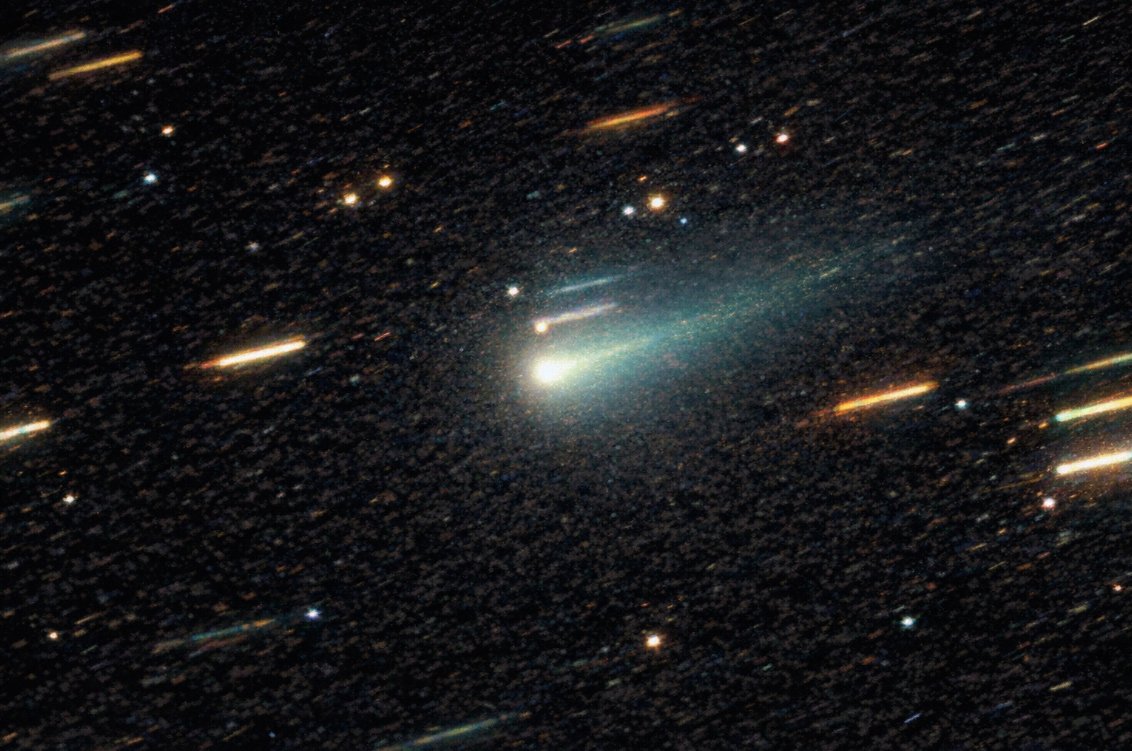
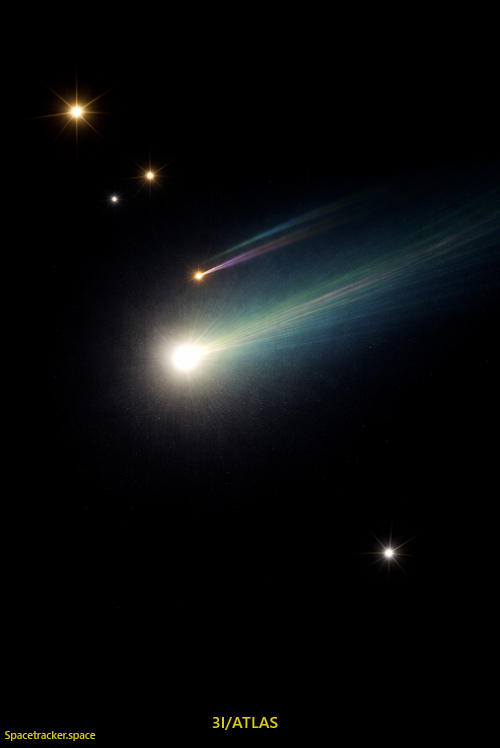
🚨 BREAKING:✨ 3I/ATLAS - THE INTERSTELLAR VISITOR WE WILL NEVER FORGET 🌌 From Deep Space to Human Eyes… and Now in 8K Reality More Images: spacetracker.space/timeline 🔭 The Verified Moment (NASA / ESA) In July 2025, the Hubble Space Telescope captured something extraordinary. A multi-frame animation showed interstellar comet 3I/ATLAS moving across a dense star field — tracked so precisely that: ✨ The comet appears stable and glowing 🌠 The stars stretch into light streaks 🛰️ The motion reveals its true trajectory through our solar system 📸 Credit: David Jewitt / NASA / ESA / STScI This wasn’t just an image. It was evidence of something not born here. 🌠 What Makes 3I/ATLAS Different 3I/ATLAS is not like ordinary comets. 🌌 Origin: Outside our solar system ⚡ Velocity: Hyperbolic escape path 🧭 Trajectory: Slight inclination, yet stable 🪐 Interaction: Passed through planetary region with minimal deviation 👉 A traveler older than our solar system itself. 🛰️ Observed Across Space Multiple missions tracked it: 🔭 James Webb Space Telescope 🌍 SPHEREx 🔬 Hubble Space Telescope Each added layers: Infrared composition Surface reflection Motion tracking Together, they built the first deep profile of an interstellar visitor in motion 🧪 SpaceTracker Breakthrough 🔥 At spacetracker.space, something different happened. 💡 Instead of raw data… we reconstructed reality: 🎨 Color-reflected spectrum correction 🔬 Signal refinement from stacked frames 🔍 Deep zoom aggregation 🧠 Noise reduction structure reconstruction 🚀 Result: 👉 The first ultra-refined 8K visualization of 3I/ATLAS Not just an image A scientific-artistic reconstruction of what the human eye could never see directly 🪐 The Jupiter Passage - A Silent Encounter 📍 March 2026 3I/ATLAS made a critical pass: 🪐 Distance from Jupiter: ~53.7 million km ⚡ No gravitational capture 📈 Trajectory remained consistent 👉 It slipped past Jupiter like a ghost from another star system. No slowdown. No orbit change. Just… passing through. 🧠 What Did We Just Witness? This wasn’t just a comet. It was: 🧬 A fragment of another planetary system ⏳ A time capsule billions of years old 🌌 Proof that interstellar objects are not rare events And more importantly… 👉 Humanity tracked it. 👉 Understood it. 👉 Reconstructed it. ❓💭 What Do You Think? Is 3I/ATLAS just: A natural interstellar fragment? 🌑 A rare cosmic coincidence? 🎯 Or something that challenges what we expect from deep space? 👁️ 🚨 Final Signal 3I/ATLAS is now leaving our solar system …but its data, motion, and mystery remain. 📡 Stay tuned. More objects will come. 📡 4I may already be on its way. 🏷️ by Ammar A. spacetracker.space #3IATLAS #InterstellarObject #NASA #ESA #Hubble #JWST #SpaceDiscovery #Astronomy #Comet #DeepSpace #SpaceNews #Astrophotography #Science #Universe #SolarSystem #Jupiter #SpaceTracker #SpacetrackerSpace #CosmicVisitor #BreakingSpace #AlienOrigins #ExploreSpace 🚀🌌
6
25
2,014
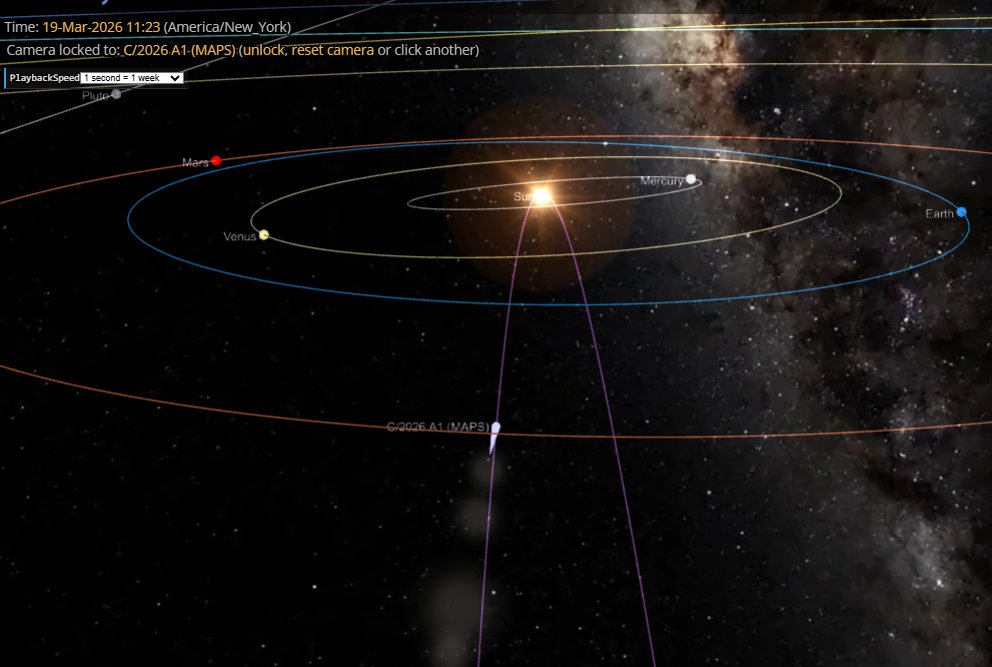
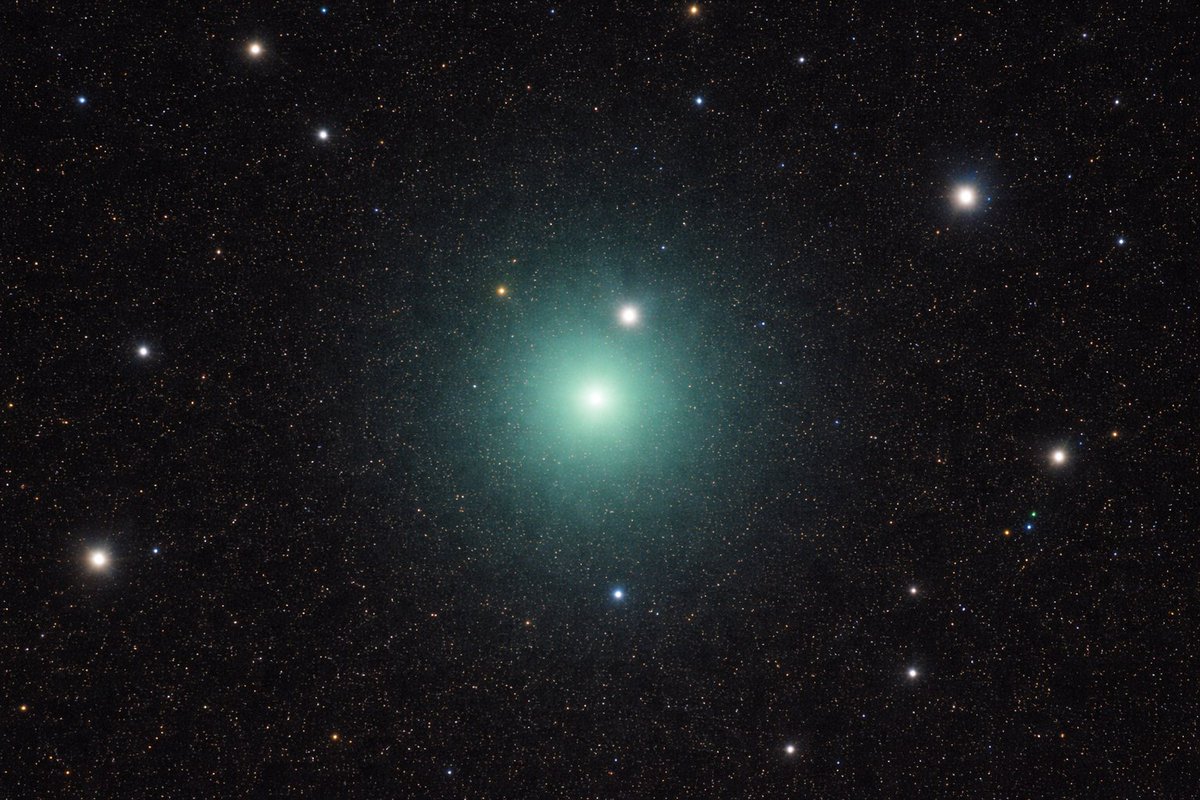
🚨 COMET C/2026 A1 (MAPS) - FINAL VERIFIED REPORT A Deep-Sky Object Racing Into the Sun - Captured, Refined, and Confirmed by spacetracker.space 🌌 THE IMAGE THAT EMERGED FROM NOISE A faint green blur, barely detectable days ago, has now been transformed. After 40× zoom, stabilization, and noise suppression, the refined frame reveals: * . * . * * ( ● ) * ( ◉◉ ) ( ☼ COMA ) ( ◉◉ ) ● * . * ● = nucleus (central condensation) ☼ = expanding coma (gas envelope) = background stars (restored after noise removal) This is not enhancement for beauty. This is signal recovery. 🌍 DISTANCE FROM EARTH — MARCH 19, 2026 (VALIDATED) 📅 Date: March 19, 2026 📏 Distance: ~180 million km (~1.2 AU) 💡 Light-time delay: ~10 minutes This places the comet well inside the inner solar system, but still far beyond the Moon and Mars orbit range. ☀️ PERIHELION — THE CRITICAL EVENT 📅 April 4, 2026 (confirmed) 📏 Distance from Sun: ~0.0057 AU (~850,000 km from Sun center) Equivalent to ~160,000–170,000 km above solar surface Sun Surface █████████████████ ↑ ~160,000 km ↑ ☄️ Comet Path This is an extreme sungrazing trajectory. 🪐 ORBIT — A RARE KREUTZ SUNGRAZER Orbit type: Near-parabolic Inclination: ~144° (retrograde) Speed near perihelion: up to ~557 km/s These comets are fragments of an ancient object that broke apart over 1,000 years ago 📡 TIMELINE — FULL EVENT SEQUENCE Jan 13, 2026 → Discovery (Chile) Mar 2026 → Brightening (mag ~10) Mar 19, 2026 → Distance ~180M km (this observation) Apr 2–6, 2026 → Visible in SOHO solar observatory Apr 4, 2026 → PERIHELION (critical moment) Apr 6, 2026 → Closest to Earth (~0.96 AU) ⚠️ THE BIG QUESTION — WILL IT SURVIVE? Kreutz sungrazers are known for two outcomes: ❌ Most common: Complete disintegration nucleus vaporized only dust tail remains ✅ Rare outcome: survives solar passage becomes extremely bright visible in twilight or even daylight The outcome depends on: nucleus size internal structure volatile composition 🔬 WHY THIS REFINED IMAGE MATTERS This processed image provides a pre-perihelion baseline: confirms coma symmetry shows no fragmentation (yet) tracks brightness concentration This is critical because: ➡️ Many sungrazers begin breaking apart days before perihelion ➡️ Any structural change now is a warning signal So far: C/2026 A1 remains intact. 🧠 SCIENTIFIC SIGNIFICANCE This comet is unusual because: discovered unusually early for a Kreutz object observed over a longer arc than typical sungrazers shows stable light curve so far It may be a second-generation fragment of an ancient comet seen nearly 1700 years ago 🌠 FINAL OBSERVER NOTE Refined by Ammar A - SpaceTracker.space From noise to structure. From pixels to physics. This is where amateur imaging meets real science. The next phase is decisive. In just days, this comet will either: 🔥 vanish into the Sun 🌟 or become one of the brightest comets of the decade #Comet #CometA1 #MAPS #Astronomy #Astrophotography #Space #SpaceNews #BreakingSpace #NASA #ESA #SkyWatch #Stargazing #DeepSpace #SolarSystem #Cosmos #Universe #Science #Physics #Astro #Telescope #NightSky #SpaceTracker #ViralScience #ExploreSpace #SpaceDiscovery #AstronomyLovers
2
10
743
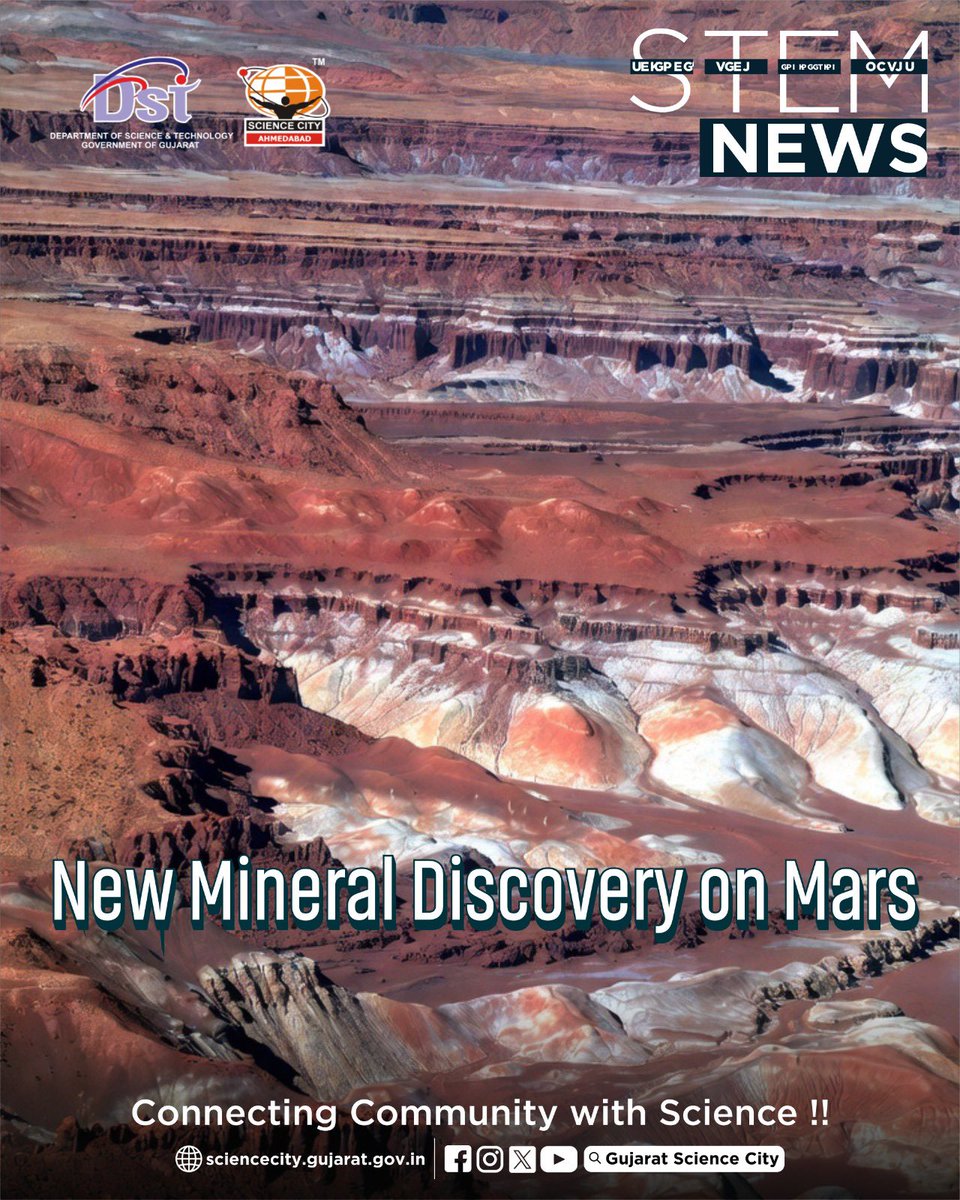
A new mineral discovered on Mars is unlocking secrets of the Red Planet! Could this be evidence of ancient water and life? The mystery of Mars just got deeper. #STEMNews #MarsDiscovery #SpaceScience #DidYouKnow #FutureScience #Innovation #ExploreSpace @PMOIndia @CMOGuj @GovernorofGuj @IndiaDST @DSTGujarat @InfoGujarat @drvrajesh @arjunmodhwadia
1
3
51
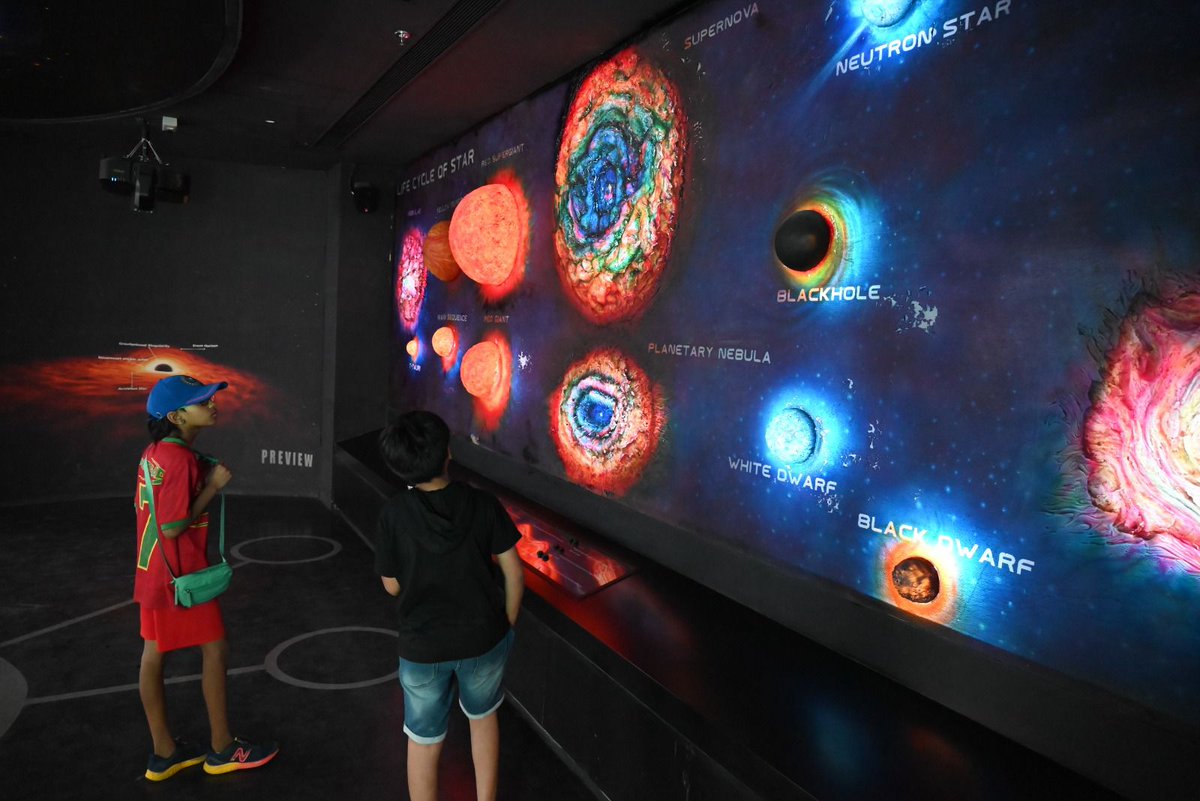
Journey into the wonders of space! At the Astronomy and Space Science Gallery at Gujarat Science City, visitors explore the mysteries of the universe, discovering fascinating facts about planets, stars, and space science. Experience the excitement of astronomy and uncover the marvels of the cosmos. #GujaratScienceCity #AstronomyGallery #SpaceScience #ExploreSpace #ScienceForAll #STEMLearning #VisitScienceCity #IncredibleScience #SpaceExploration @PMOIndia @CMOGuj @GovernorofGuj @IndiaDST @DSTGujarat @InfoGujarat @drvrajesh @arjunmodhwadia
3
6
53