
“Much of nature is just forms of intelligence… What we call polyintelligence is a future where human, machine, and nature’s intelligence start figuring each other out.”
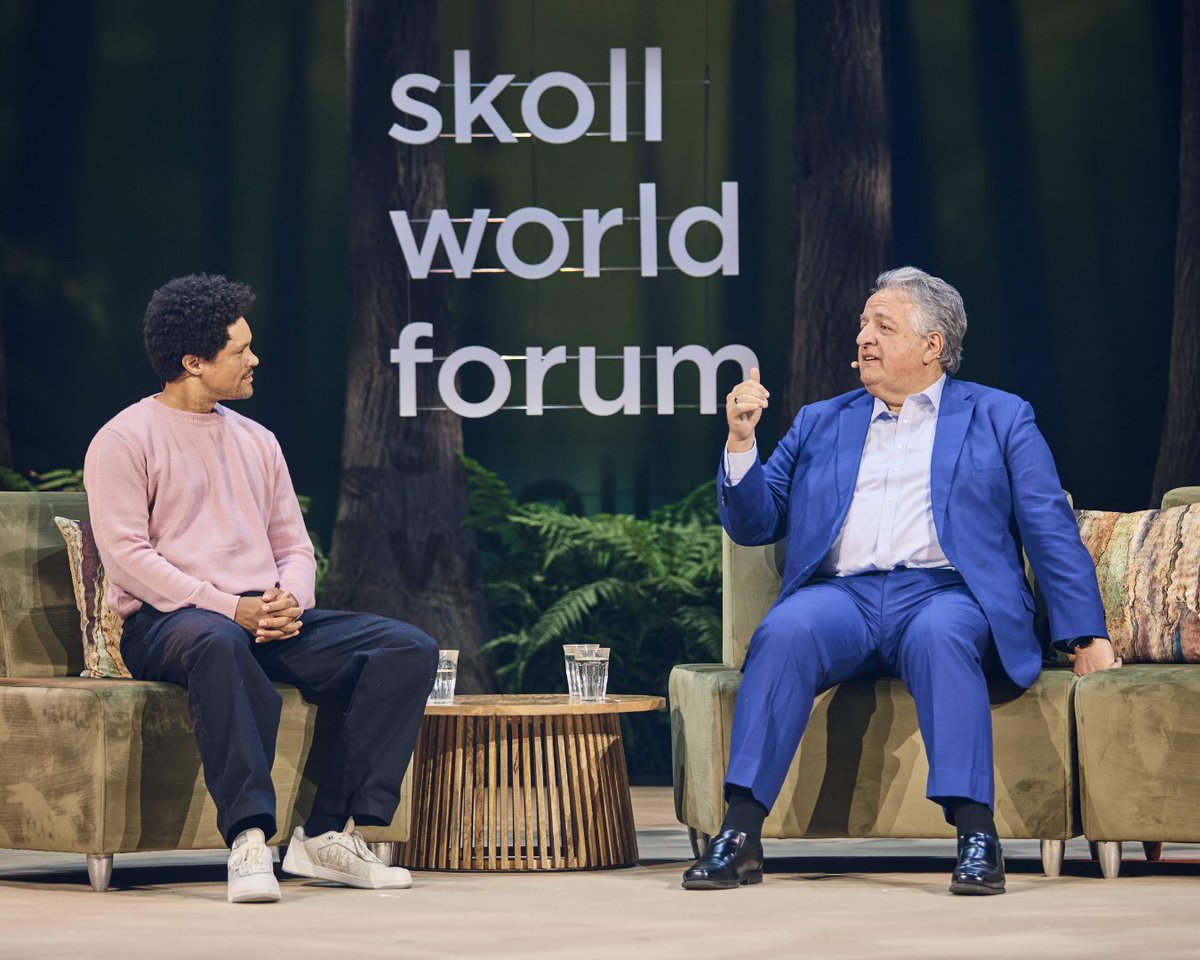
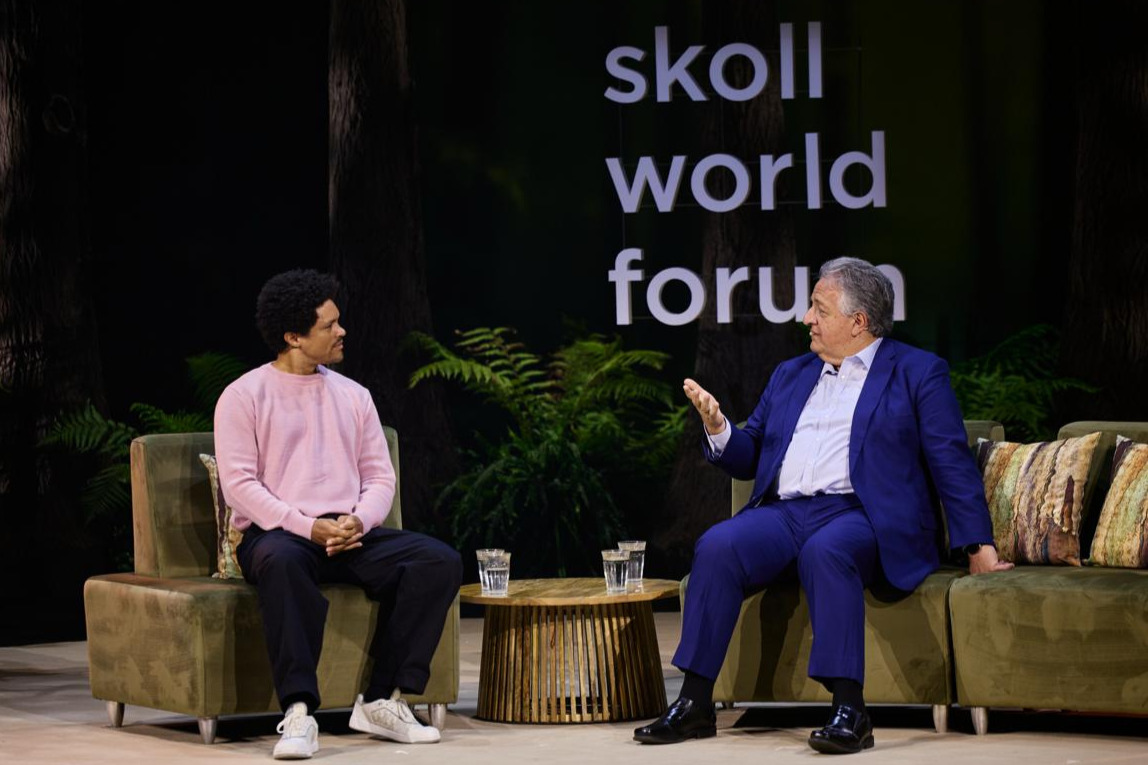
Watch Flagship Founder & CEO @NoubarAfeyan with @Trevornoah at #SkollWF, where they discussed rethinking the future of intelligence and the impact it will have on people and the planet: bit.ly/41Xv1do
Apr 23

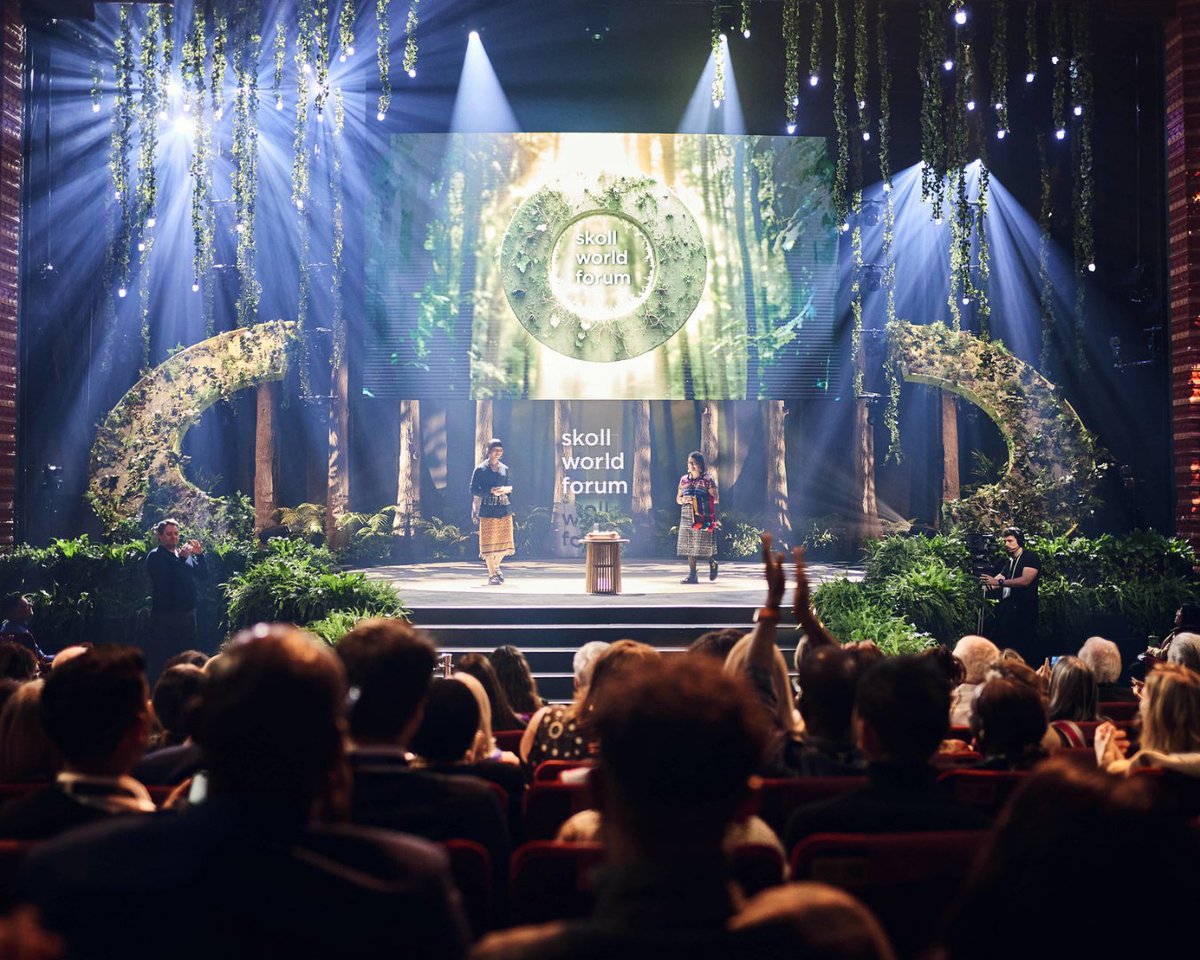
The 2026 #SkollWF's opening plenary emphasized the importance of dialogue, serving as a reminder that the connections forged at the Skoll World Forum are catalysts for change.
Indigenous storytellers Kynan Tegar and Ana Lucía Ixchiu Hernández opened the plenary with a preview of "A Day on Earth," a participatory documentary filmed simultaneously on Earth Day last year across 26 countries. The film, produced by @IfNotUsThenWho with support from Skoll, captures everyday acts of love for our planet and makes the case that for Indigenous Peoples, every day is Earth Day.
Skoll Foundation President and CEO Marla Blow took the stage next, drawing on the metaphor of mycelium to describe the connections that ground changemakers and enable their work to thrive. In a year of significant disruption, she called on the community to build something new rather than simply restore what was.
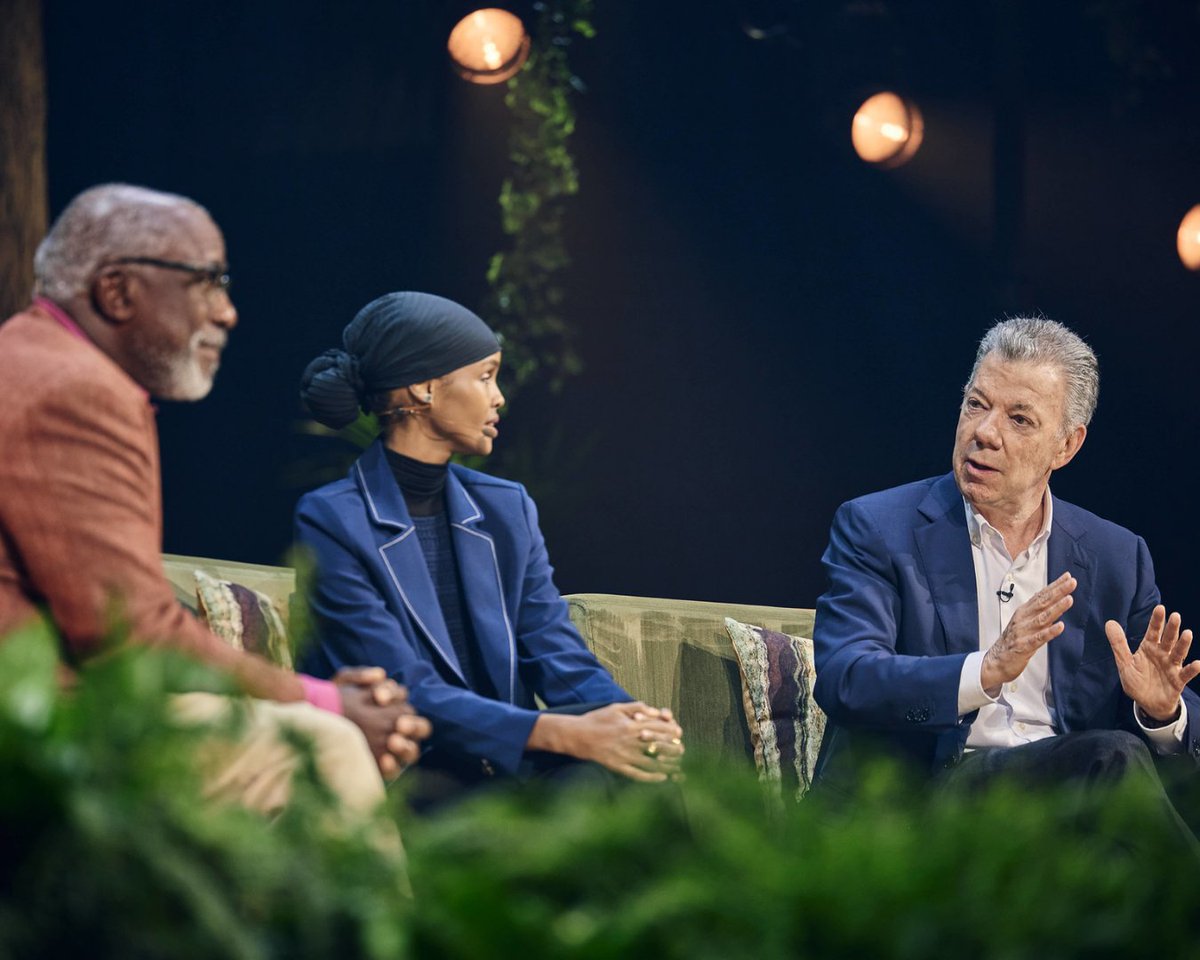
Nobel Peace Prize Laureate and former Colombian President Juan Manuel Santos joined @IlwadElman of the Elman Peace and Human Rights Centre (@ElmanPeaceHRC) for a conversation moderated by journalist and Africa In the World Founder Dele Olojede. Drawing on decades of lived peacebuilding experience, they explored how to move divided societies toward dialogue, belonging, and reconciliation.
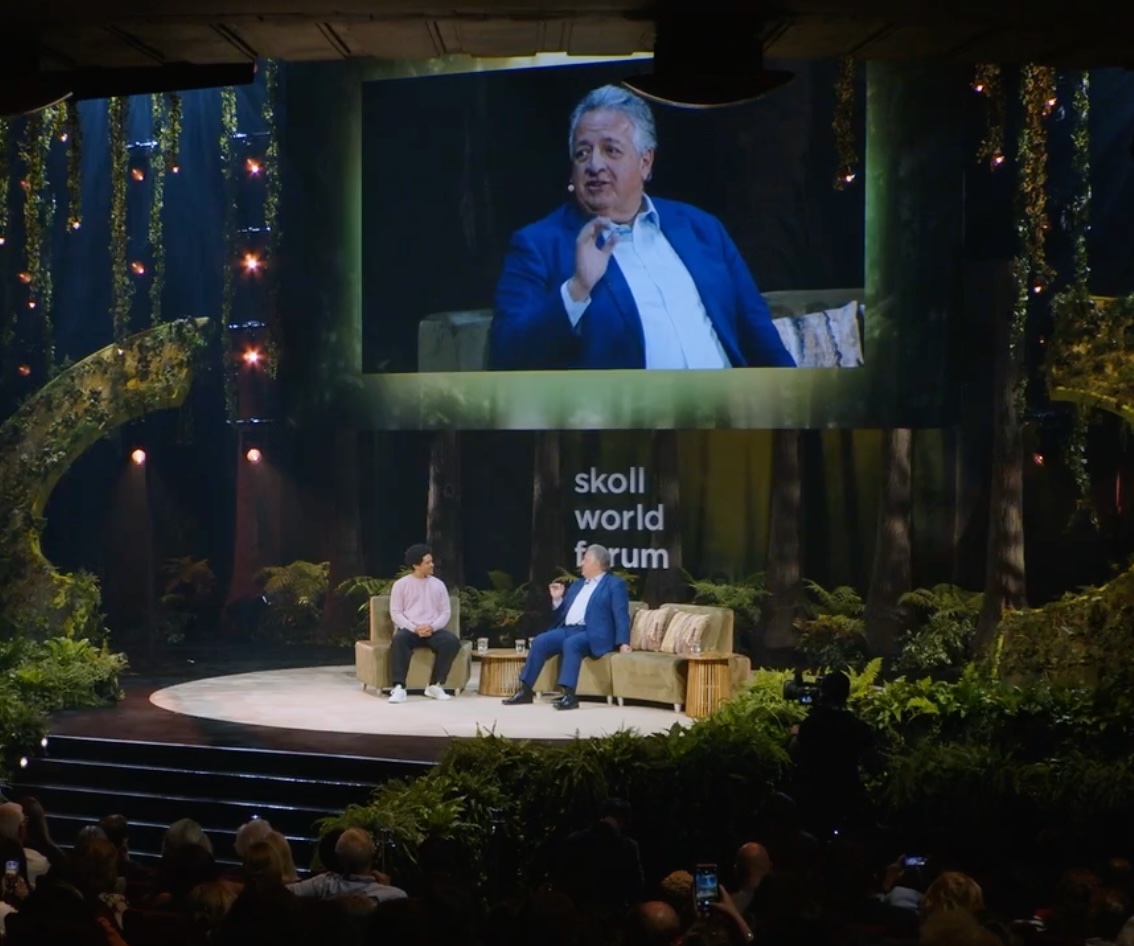
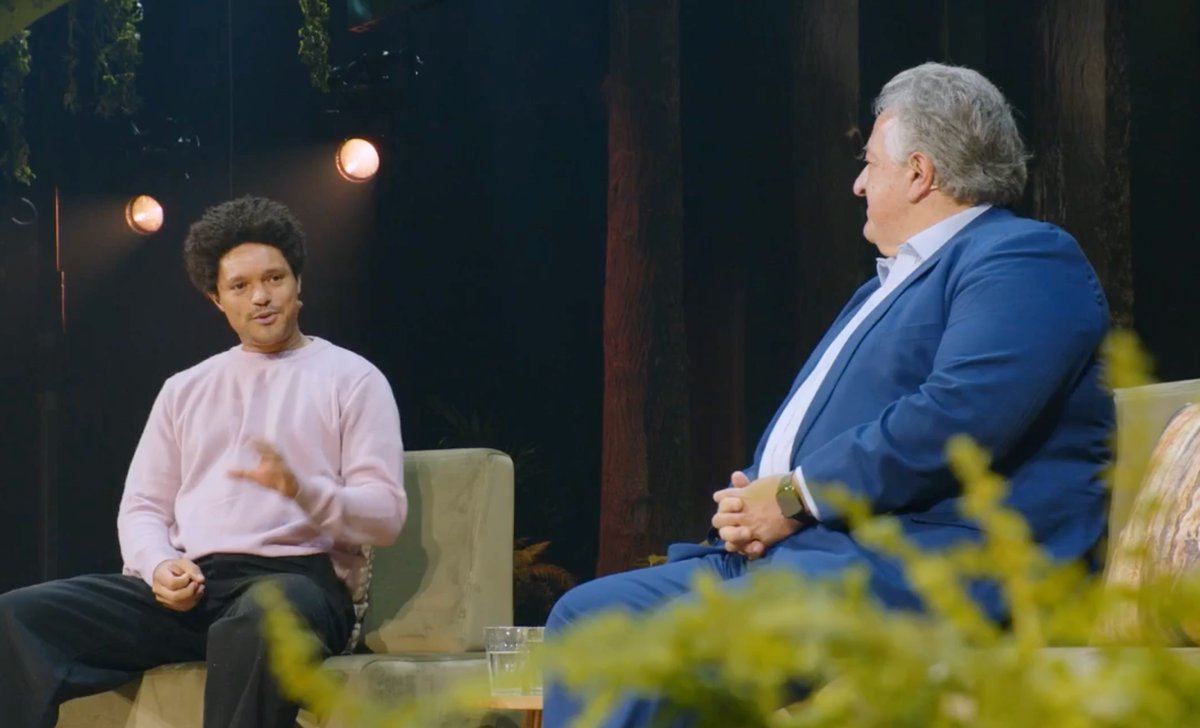
Trevor Noah (@TrevorNoah) and Noubar Afeyan, Founder and CEO of Flagship Pioneering (@FlagshipPioneer), turned their attention to artificial intelligence, with its transformative potential, its risks, and the dualities that guide innovation in uncertain times.
To close, Astrid Jorgensen brought her viral sensation Pub Choir (@PubChoir) to the theater, leading delegates through a lively, large-scale singalong—highlighting the remarkable possibilities that emerge when we join together.
Follow along for more from #SkollWF.
3
647
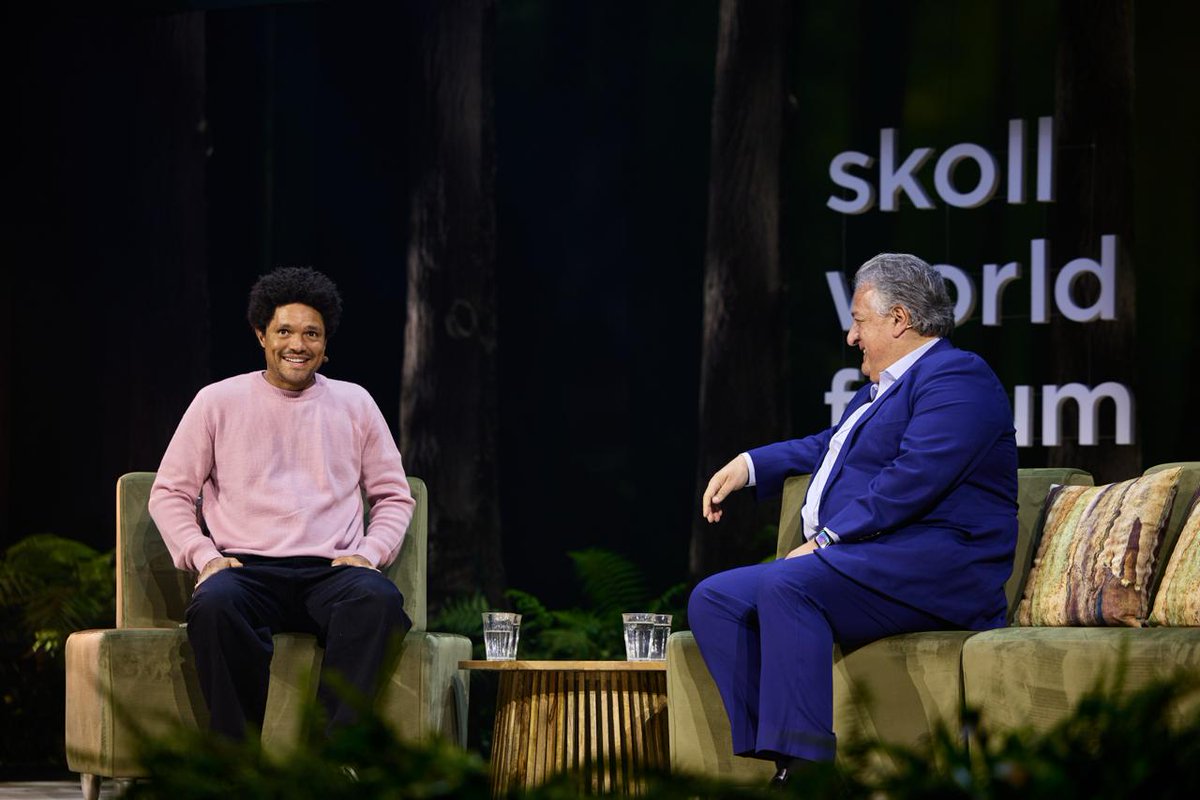
At the Skoll World Forum, Flagship Founder and CEO @NoubarAfeyan joined @Trevornoah to reflect on the evolving role of AI and the idea of “polyintelligence”: the integration of human, artificial, and nature’s intelligence to unlock new possibilities.
Harnessing this convergence will require more than technical progress. It calls for bold, interdisciplinary thinking and a commitment to shaping AI in ways that expand human potential and drive meaningful impact for people and the planet.
@SkollFoundation
5
17
1,305

Apr 22
I had the pleasure of joining @Trevornoah today at the Skoll World Forum, in a conversation that underscored both the promise and responsibility of this moment. We spoke about the evolving role of AI, and what I describe as Polyintelligence: the synthesis of human, artificial, and nature’s intelligence to unlock new forms of creativity and problem-solving.
In a time of rapid technological acceleration, it is easy to be swept up in what is possible. But realizing that potential requires something more enduring: a willingness to remain unreasonable in the face of constraints, to challenge assumptions, and to pursue ideas that may not yet fit neatly within today’s paradigms. That spirit of “entrepreneuring” remains essential if we are to shape a future that truly serves people and planet - something we focus on every day at @FlagshipPioneer.
It was also meaningful to share the stage with President Juan Manuel Santos, @IlwadElman (Aurora Prize Laureate), and Dele Olojede (Aurora Selection Committee Member). The strong presence of the Aurora Humanitarian Initiative in this opening plenary reflects the importance of elevating those working on the frontlines of global challenges.
This year’s Forum theme, drawing inspiration from cycles of regeneration in the natural world, feels especially timely. Renewal is not passive; it is an active, collective process. It asks us to reimagine systems and act with both urgency and intention.
Grateful to be part of this dialogue, and to a community committed to turning resilience into regeneration. @AuroraPrize_ @SkollFoundation @TrevorNoahFdn
You can register to watch a recording of the plenary here: skoll.org/skoll-world-forum/…
1
3
7
923
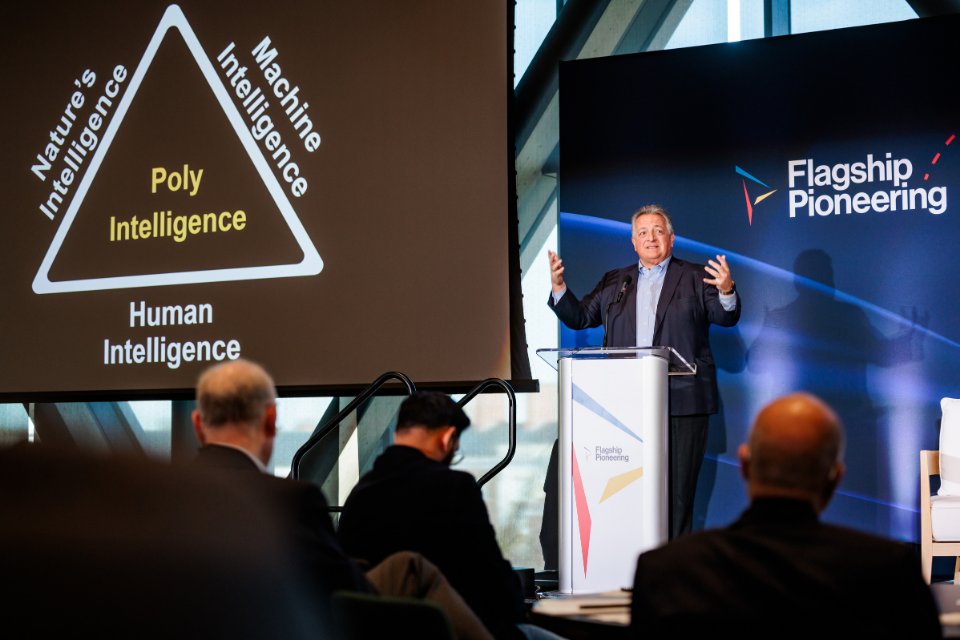
We’re entering a new chapter—one defined by the convergence of human, machine, and nature’s intelligence.
“Polyintelligence” reflects the idea that these are systems in dialogue, each deepening our understanding of the others. Learn more: flagshippioneering.com/polyi…
9
396
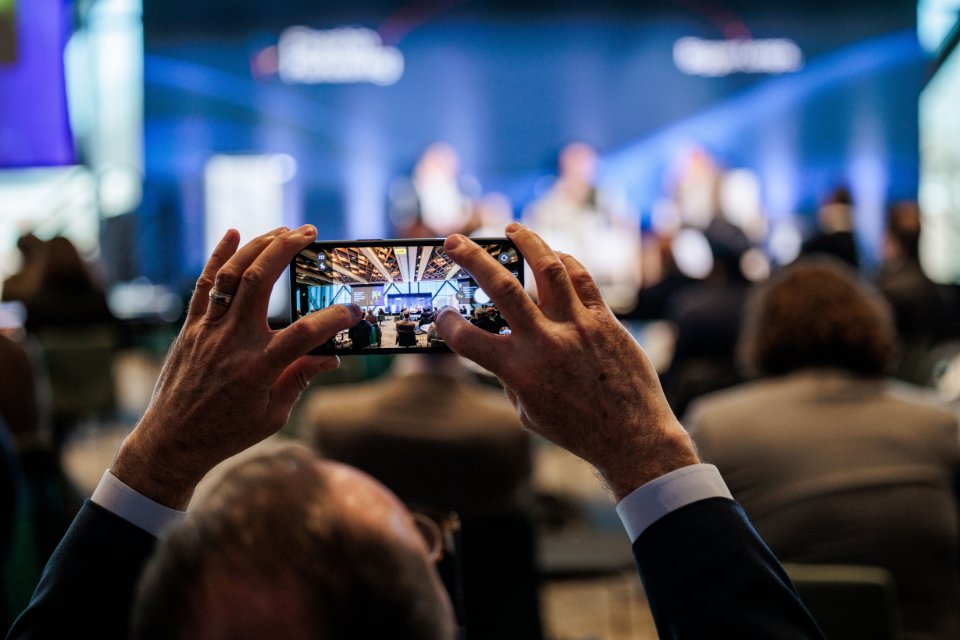
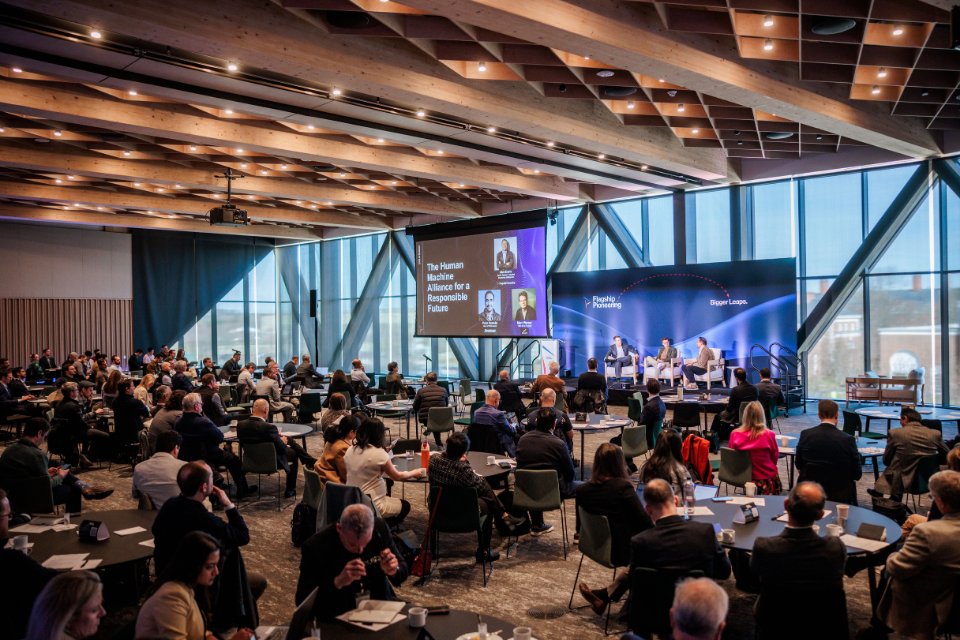
⭐ 5 Takeaways from Flagship’s 2026 AI Summit ⭐
During our 2026 AI Summit this week, we explored the polyintelligent future— where human, machine, and nature work together as one. Here are five takeaways.
1. Polyintelligence is more than an intersection — it’s an unlock.
Polyintelligence is a dynamic integration where each intelligence unlocks and accelerates the other. Human insight informs better models, models accelerate and guide stronger experiments, and experiments reveal deeper biological truths. In turn, polyintelligence enables a new form of intelligence altogether, one that combines the strengths of humans, machines, and nature.
2. Acceleration and discernment must be in balance.
AI is making exploration effectively limitless, shifting the challenge from generating ideas to determining which questions actually matter. Real progress will come from balancing the speed of discovery with the discernment to ask the right questions, guide what data is gathered, and focus on what is most impactful. Without that balance, we risk amplifying noise over insight. With it, we can turn AI’s limitless possibility into meaningful insights and, ultimately, a healthier future.
3.Breakthroughs demand integration, not isolation.
The most important breakthroughs are happening at the intersections of disciplines, yet our collective knowledge often remains siloed, which limits innovation. The real fix will require prioritizing integration and experimentation. AI-native institutions will combine human and machine intelligence into a unified, interconnected system for learning and execution.
4. AI is converting agricultural signals into early warning systems.
Farms, crops, soil, and livestock constantly generate signals about environmental stress and ecosystem change, but historically these signals have been local, fragmented, and reactive. AI is unlocking the ability to interpret these signals at scale, transforming dispersed agricultural data into early warning systems for risks like soil degradation and disease. This application turns agriculture into a predictive system that can detect, respond to, and prevent disruption before it occurs.
5. AI reveals what we didn’t know to look for.
Our understanding of nature’s systems is fundamentally limited by how we observe and interpret the world, which we filter through human understanding, assumptions and biases. As a result, we may overlook signals or patterns that seem ancillary but might offer an unlock. AI offers a way to begin closing that gap by integrating diverse data and surfacing patterns we wouldn’t recognize, offering a holistic analysis of the tools and systems nature has evolved.
The future of AI will not be built in isolation, but through the synthesis of tools, intelligences, and partners coming together to create something greater. Our 2026 AI Summit brought this to life—surfacing new questions, exploring bold ideas, and highlighting the opportunities ahead.
2
8
934

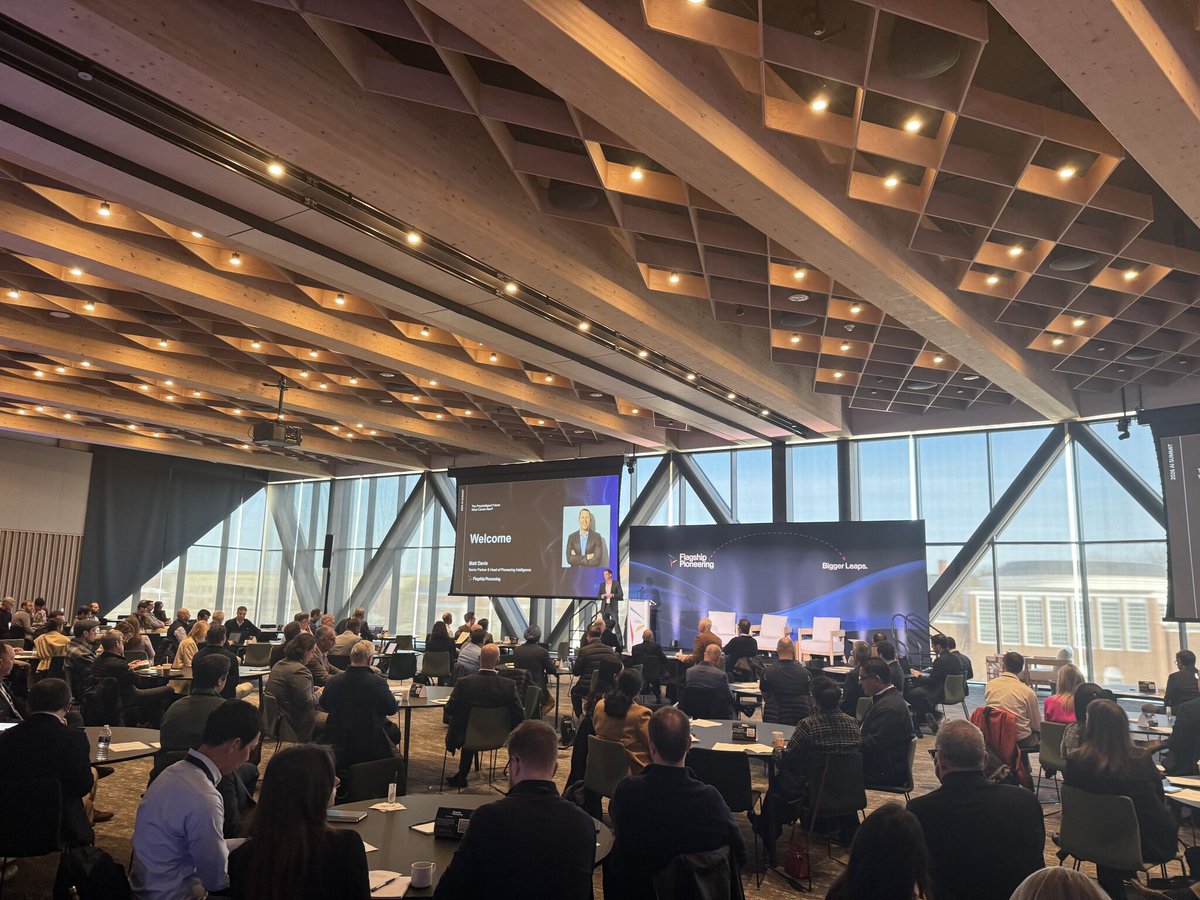
Kicking off Flagship Pioneering’s annual AI Summit where we're convening visionaries, industry leaders, and academics to discuss how AI is reshaping healthcare, sustainability, and beyond. This year, our summit focuses on the polyintelligent future — where human, machine, and nature’s intelligence converge to power the next generation of breakthroughs.
Make sure to tune into @FlagshipPioneer's social pages (LinkedIn, YouTube, X) for a livestream at 11:10AM during our “Decoding Nature: Nature’s Intelligence Meets Machine Intelligence” panel featuring @seemaychou (@ArcadiaScience ), @JCoolScience (@AnthropicAI), @gibsmk (Flagship Pioneering), and @allmeasures (@leashbio).
Where do you think polyintelligence will have the greatest impact?
1
3
143
As @FastCompany writes: “Flagship’s latest ventures embrace polyintelligence—a combination of human, natural, and machine intelligence—as the future of the global biotech industry.” #FCMostInnovative
1
2
380
18 Nov 2025
I read with interest my friend @tomfriedman’s piece in the @nytimes about what to call this era. His answer — the polycene — well captures the transformations driven largely by advances in Artificial Intelligence, but also builds upon an emergent phenomenon, polyintelligence; the dynamic interplay between nature’s intelligence, human intelligence, and machine intelligence. As I wrote about in my 2025 Annual Letter, nature’s own “thinking,” increasingly revealed to us with the help of machine intelligence, is critical to harnessing solutions to health and climate that machines and humans cannot unlock alone.
flagshippioneering.com/polyi…
10 Nov 2025

My column: We’re In a New Everything-Is-Connected Epoch. But What to Call It? nytimes.com/2025/11/10/opini…
4
1,384



17 Oct 2025
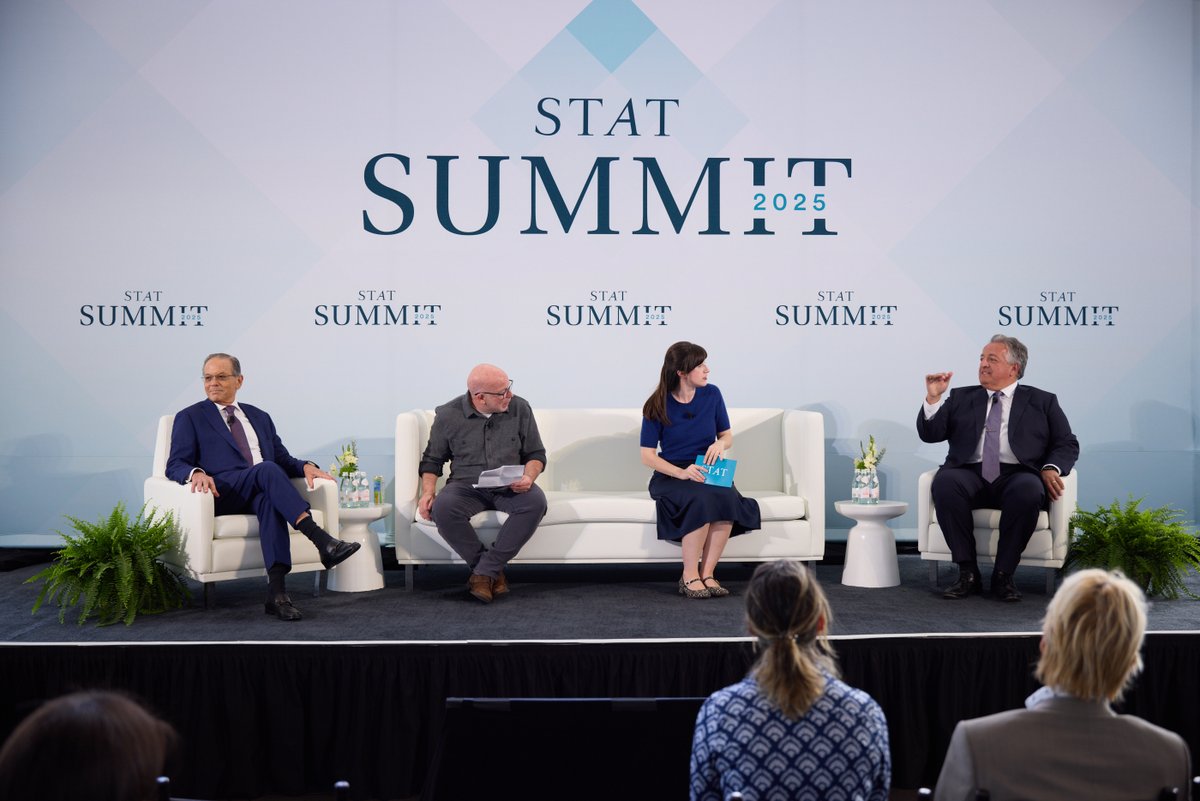
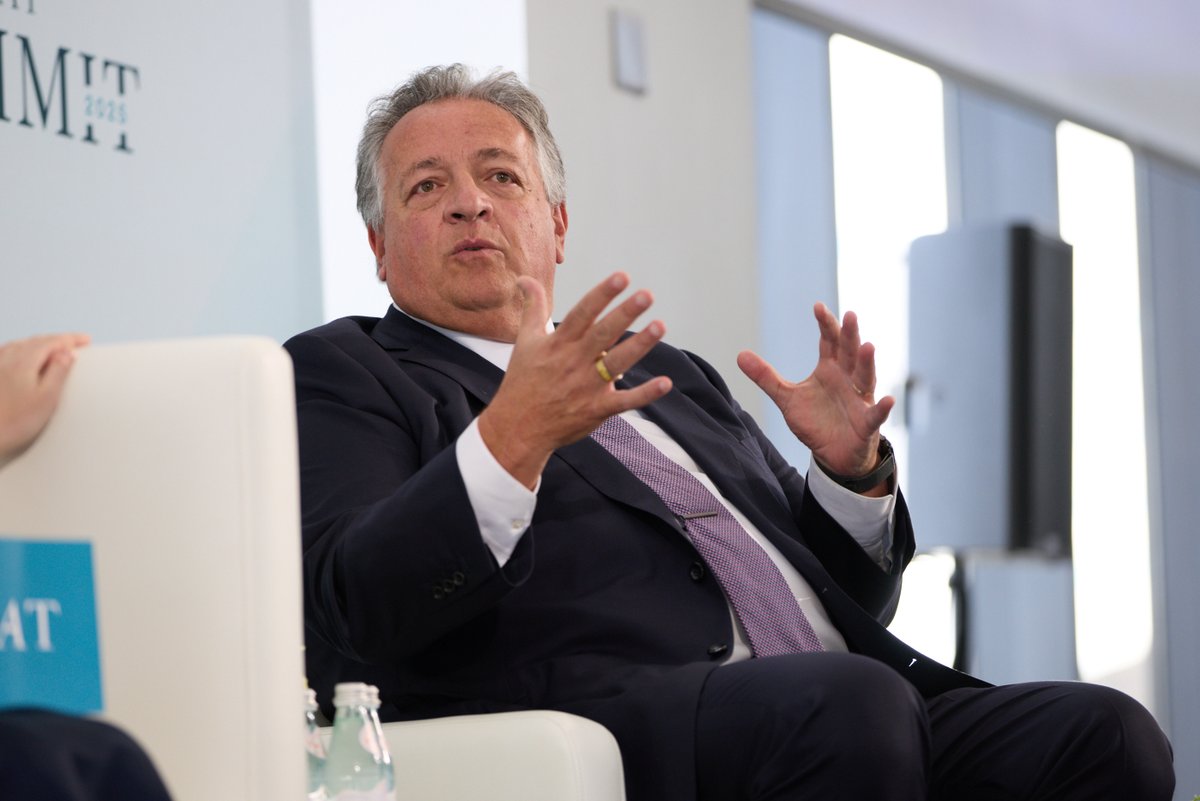
“AI is the single most disruptive force I’ve seen in 38 years — by an order of magnitude.”
At the 2025 #STATSummit, Flagship Founder & CEO @NoubarAfeyan projected into the next decade of biotech and the impact of AI.
“We’ve relied on human abstractions of vast data — utterly inadequate to understand disease. With billion- and trillion-parameter models, we’ll emulate living systems, find the right patients at the right stage, and design advanced medicines more productively.”
At Flagship, we see AI as an accelerant to the scientific method itself. This is the essence of “polyintelligence” — the convergence of human, artificial, and nature’s intelligence — which is expanding our capacity for innovation in human health, sustainability, and beyond.
1
8
2,002
8 Oct 2025
"The biggest opportunity we have is using AI to accelerate science … When we bring human, machine, and nature’s intelligence into conversation with each other, we get what I call ‘polyintelligence,’ and that interaction will revolutionize how we do science in ways we can’t even imagine yet.”
Read more from Flagship CEO & Founder @NoubarAfeyan on Flagship's 25 years of breakthroughs, and the opportunities he believes will shape the future, in an interview with @BostonMagazine: bit.ly/3VS7LKT
Written by @Jonathan_Soroff and photography by Diana Levine.
2
502
11 Jul 2025
“Nature doesn’t try to abstract itself in a human-understandable form.”
At the core of my conversation with @peteratmsr was the fact that nature is staggeringly complex. It’s evolved over billions of years, meaning it has a billions-of-years head start on any human attempts to understand it.
But now, AI is giving humans a tool that can process and decipher much more of nature’s complexity. And in doing so, it is totally transforming biomedical research.
The coming together of human, nature, and machine intelligences will create what I call #polyintelligence. It will lead to new medicines, treatments, and technologies that promise to improve the lives of millions of people around the world. It will also challenge humans to become comfortable working alongside AI on problems and solutions that we don’t necessarily understand.
Thanks to Peter and @MSFTResearch for having me on to talk about how AI is changing the way we do research and about how we are building a polyintelligent future at @FlagshipPioneer with @ProFoundTx, @QuotientTx, and @LilaSciences, among others.
11 Jul 2025

Daphne Koller, Noubar Afeyan, & Dr. Eric Topol, leaders in AI-driven medicine, explore how AI is reshaping how we diagnose and treat disease—from early-stage drug discovery to clinical care—in Episode 8 of “The AI Revolution in Medicine, Revisited.” msft.it/6019S7p9t
4
5
26
5,866
9 Jul 2025
The race for the AI future isn’t really about more computing power or better large language models, as important as those things are. The true revolution will happen with #polyintelligence, AI’s interactions with what I call nature’s intelligence – the logic of the natural world, evolved over billions of years – and human intelligence. This opportunity is driving much of our pioneering advances at @FlagshipPioneer
Nowhere is better positioned to facilitate those interactions and lead that revolution than #Massachusetts, with its world-leading life sciences ecosystem, highly educated workforce, and burgeoning AI sector. I shared some thoughts about how my home state can lean into the uncertainty it’s facing and win the AI future in Boston Business Journal. bizjournals.com/boston/news/… via @BosBizJournal
1
3
27
1,574
7 Jul 2025
Flagship Founder & CEO @NoubarAfeyan shares how MA can lead in AI by harnessing polyintelligence — the combined power of human, machine, and nature’s intelligence — to unlock new science and build a better future in this @BosBizJournal op-ed: bizjournals.com/boston/news/…
1
1
5
1,118

“𝐓𝐡𝐢𝐧𝐤 𝐚𝐛𝐨𝐮𝐭 𝐰𝐡𝐚𝐭 𝐭𝐡𝐞 𝐰𝐨𝐫𝐥𝐝 𝐰𝐢𝐥𝐥 𝐧𝐞𝐞𝐝 𝐢𝐧 𝐟𝐢𝐯𝐞 𝐲𝐞𝐚𝐫𝐬, 𝐚𝐧𝐝 𝐰𝐨𝐫𝐤 𝐛𝐚𝐜𝐤𝐰𝐚𝐫𝐝𝐬.”
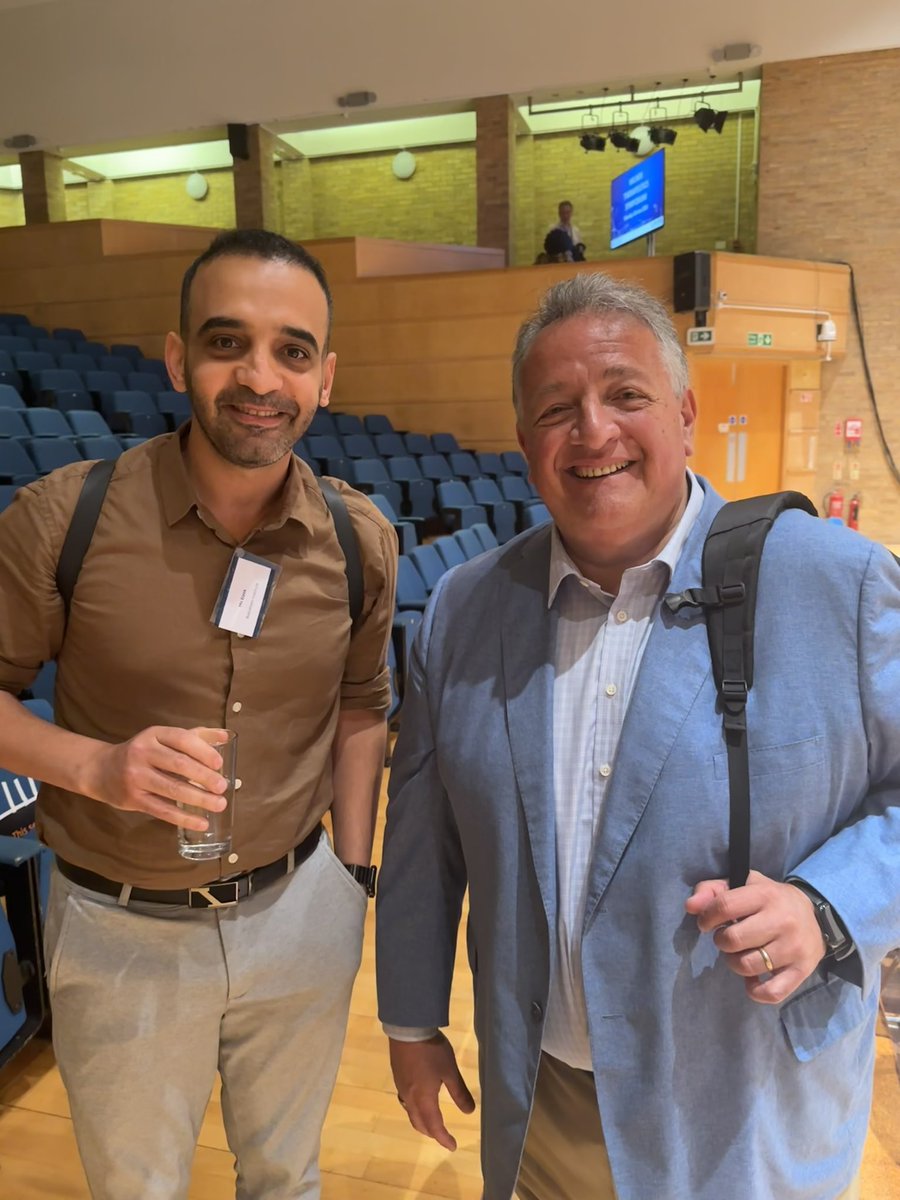
I had the chance yesterday to meet one of my living heroes: @NoubarAfeyan. I have watched his talks and read his annual letters, and have always been inspired by his framework for engineering serendipity, his commitment to the process of experimentation and his relentless productivity. But meeting him in person was something else entirely. He truly is a modern day renaissance thinker.
He spoke about a concept he also explored in his last annual letter: polyintelligence, and the synergy between nature’s intelligence, machine intelligence, and human intelligence. One of his slides showed how AI has enabled the exponential creation of @FlagshipPioneer companies over the past 15 years, a trend hiding in plain sight, only clear in hindsight, as with many paradigm shifts.
His prospective sparked some reflections. We seem to be heading in two directions simultaneously. On one hand, we are building increasingly complex technologies and generating multilayered data, which has traditionally pushed science toward narrower and deeper specialisation. Yet paradoxically, machine intelligence might resurrect polymathy enabling humans to do multiple jobs at once bringing cross-domain wisdom and creativity. Some jobs will be be lost to AI and more to robots, but the opportunity space is indeed expanding.
Different forms of intelligence operate on different timescales. Nature’s intelligence thinks from seconds to millennia and eons. Human intelligence works in the short term, days to months or a few years. Machine intelligence may help us bridge the gap, augmenting our short and medium-term decision-making, allowing us to see into the future decades and perhaps even centuries. Historically, most attempts to predict the future have missed the mark. But, as Noubar’s quote above reminds us, the goal isn’t only predictability, it’s to build a future with a purpose, while minimise unpleasant surprises.
It was a true honour to finally meet Noubar and also his wife Anna, who is deeply passionate about science education. Meeting his team reinforced my impression: this is someone who lives and breathes mission. I am very grateful to @TheMilnerInst for making this possible. The #MilnerSymp25 in Cambridge was exceptionally organised as usual, makes you learn so much, connect with old friends and make new, and leave even more optimistic that a radical future is possible, and that there’s a seat for everyone at the table.
𝐒𝐨 𝐰𝐡𝐚𝐭 𝐝𝐨 𝐲𝐨𝐮 𝐭𝐡𝐢𝐧𝐤 𝐭𝐡𝐞 𝐰𝐨𝐫𝐥𝐝 𝐰𝐢𝐥𝐥 𝐧𝐞𝐞𝐝 𝐢𝐧 𝐟𝐢𝐯𝐞 𝐲𝐞𝐚𝐫𝐬
1
2
4
247

30 Jun 2025
Noubar Afeyen, CEO and Founder of @FlagshipPioneer, is now closing the Symposium with a fantastic talk on how human, nature and machine intelligence intersect to create Polyintelligence #MilnerSymp25

1
4
465
16 Jun 2025
Looking forward to speaking at the @TheMilnerInst Symposium about polyintelligence and how #FlagshipFounded companies are pioneering a synthesis of human, machine, and nature’s intelligence. #MilnerSymp25
For more on polyintelligence: bit.ly/FlagshipPolyintell
16 Jun 2025

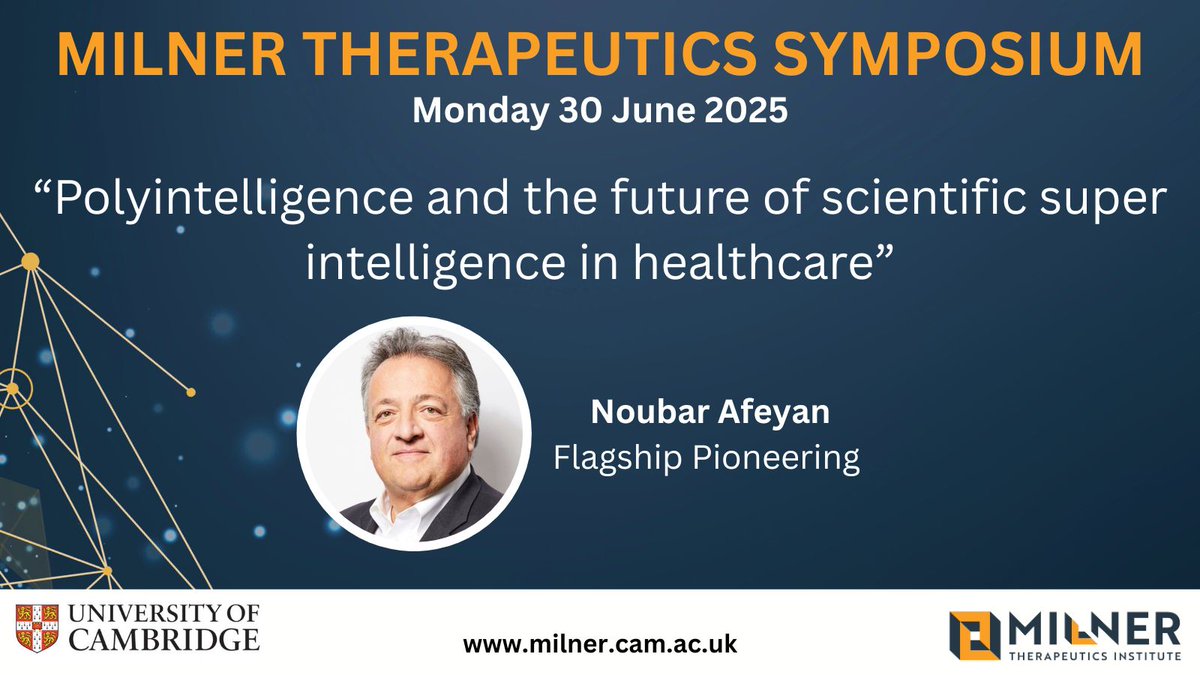
“Polyintelligence and the future of scientific super intelligence in healthcare” 💡
We’re excited to welcome Noubar Afeyan, founder and CEO of @FlagshipPioneer, to #MilnerSymp25!
Registration closes on Wednesday, don't miss out:
🔗 milner.glueup.com/event/miln…
1
5
33
3,441
16 Jun 2025
“Polyintelligence and the future of scientific super intelligence in healthcare” 💡
We’re excited to welcome Noubar Afeyan, founder and CEO of @FlagshipPioneer, to #MilnerSymp25!
Registration closes on Wednesday, don't miss out:
🔗 milner.glueup.com/event/miln…
4
3,549
20 May 2025
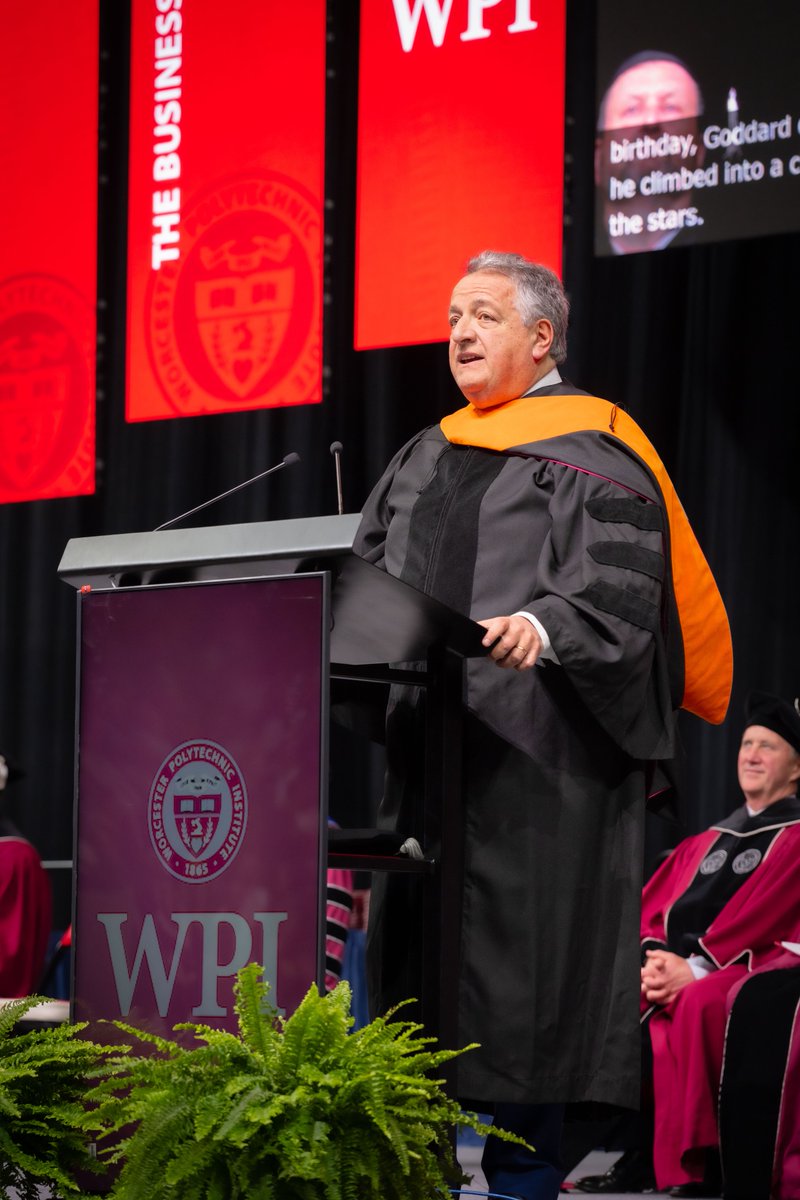
As the commencement speaker for the @WPI graduate school class of 2025 last week, I was honored to be joined by President Grace W. and student representative Shelley Joshi. Interestingly, all three of us were born outside of the United States.
As I told the graduates, being an immigrant has shaped my entire life and career. I arrived in Canada from Lebanon when I was 13, having never experienced snow and preferring Armenian folk dance to playing ice hockey. I didn’t move to the U.S. until I came for graduate school, like many of the graduate students I addressed on Thursday.
Getting used to a new culture was uncomfortable—but it gave me an advantage that I’ve carried with me since.
I often ask, “Why should we expect reasonable people doing reasonable things to deliver extraordinary results?” Being an immigrant gave me permission to be unreasonable. It taught me that it’s ok to be different. If you don’t know what’s expected, you’re not bound by what’s expected.
I encouraged the graduates—whether born in Massachusetts or Malawi or Myanmar—to embrace an “immigrant mindset” and grow comfortable with the discomfort that so often drives innovation.
Finally, I spoke about one of WPI’s most famous alums: Dr. Robert Goddard, the father of modern rocket science and the namesake of @NASAGoddard Space Flight Center. He persevered through repeated disappointments to build the technology that eventually took humans to the moon. I encouraged the class of 2025 to do the same, channeling their energy into learning, iterating, and trying again rather than dwelling in disappointment when things don’t go as they had hoped.
I also offered some thoughts about how graduates can apply these lessons to one of the emerging forces shaping our world: Artificial Intelligence. I encouraged them to make room for AI in their work, and to make use of it—opening the door to what I call “polyintelligence” and a new era of scientific discovery. For more on my thoughts on the synthesis of human, machine, and nature’s intelligence: lnkd.in/eVRdZ6Nk
You can watch the full speech here: app.frame.io/reviews/322d81c…
6
2
30
2,544