
3,222 Photos and videos







Jun 14
Here’s hoping

BREAKING: Pakistan's Prime Minister Shehbaz Sharif says the US and Iran are "closer to a peace deal than ever" with finalization of the deal expected in the next 24 hours.
Pakistan is now preparing for the electronic signing of the peace deal, followed by technical level talks next week.
"We are confident that this historic peace deal will form a strong foundation for lasting peace," he says.
11
Jun 9
A million satellites whizzing around in Low Earth Orbit?
Musk’s plans may not get humanity to the stars. They may permanently trap humanity on Earth.
Kessler Syndrome
sternula.com/space-debris-an…

Okay this is genuinely insane.
SpaceX just unveiled a satellite whose only job is to run AI. Not internet. Not GPS. Just compute, floating in orbit.
It's called AI1, and the reason behind it breaks your brain.
AI data centers on Earth are hitting a wall, not a chip wall, a physics wall.
They need staggering amounts of power and water just to stay cool, and we're running out of grid and land to build them.
So Musk's answer is: stop building them on Earth.
In orbit, the sun never sets. Free power, 24/7. No water for cooling, you just radiate heat into the vacuum of space. The two things choking AI on the ground barely exist up there.
And here's the wild part: Musk says it's easier to build than a Starlink satellite. Strip out the complex antennas and it's "a lot of solar cells, a radiator, and some laser links."
One AI1 carries the compute of an Nvidia GB300 rack, the same hardware data centers fight over down here.
AI1 is just the first one. The plan is a constellation of up to a million of them.
And the timing isn't an accident, SpaceX goes public this week at a ~$1.75 trillion target. This isn't a rocket company anymore. It's positioning itself as the power grid for AI, in space.
The race for AI compute just left the planet. Literally.
@SpaceX
12
Islam Mohamed retweeted

MARC ANDREESSEN: "We had meetings with the Biden admin where they told us to not even start AI companies because there's no way they'll let them succeed."
JOE ROGAN: "What do you do after a meeting like that?"
MARC ANDREESSEN: "You go endorse Donald Trump."
LMAO
539
4,229
36,464
2,350,358
Jun 3
This is a compelling take
Jun 1

We sacrificed 360,000 souls to end slavery and another 250,000 souls to defeat fascism.
Any moral debts were paid in blood many decades ago.
3
Islam Mohamed retweeted

May 18
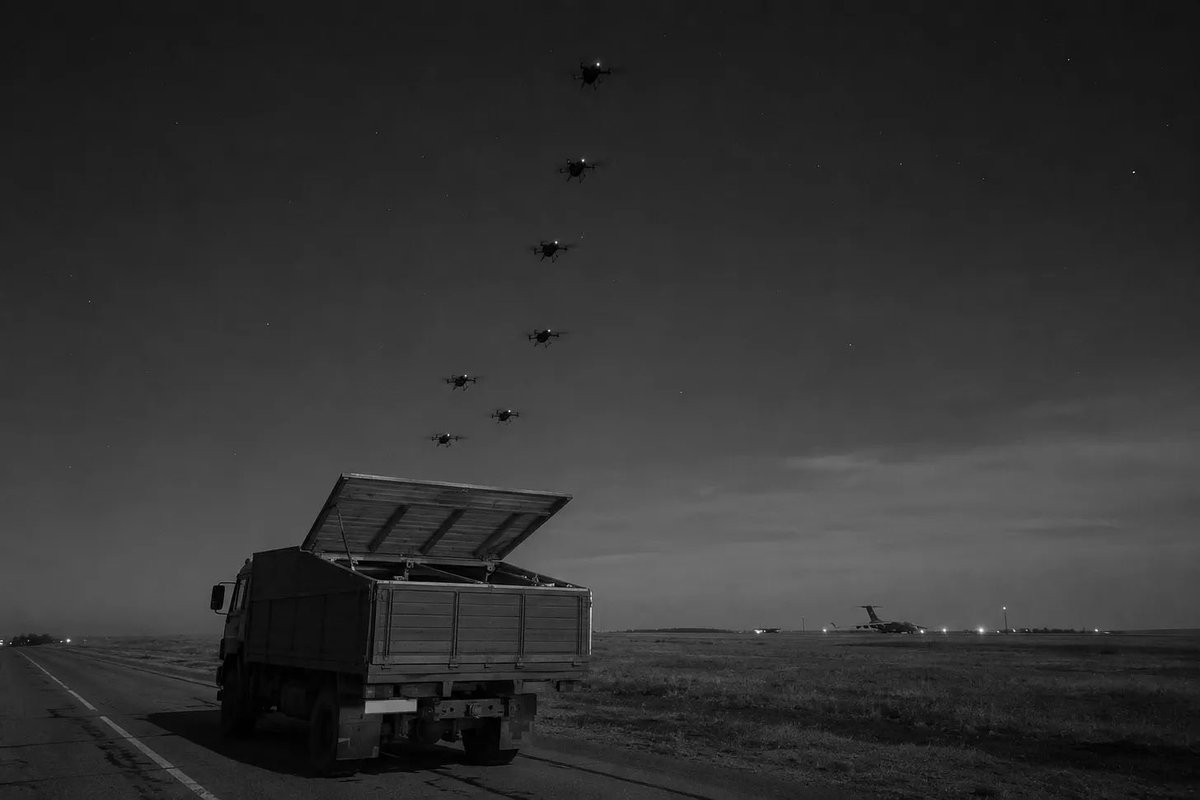
The West Has Already Lost the Drone War. It Just Hasn’t Noticed Yet.
Here is something that should ruin your Monday. A Ukrainian AI drone engineer has gone on record to explain, calmly and with considerable evidence, that Western military planning is not behind the times. It is not lagging. It is not in need of reform. It is dead. Obsolete. A relic propped up by expensive acronyms and men in uniforms who still think the tank is the apex predator of land warfare.
Yaroslav Azhnyuk, founder of AI drone company The Fourth Law, has done the maths. FPV drones now account for somewhere between 70 and 80 percent of frontline casualties in Ukraine. Not artillery. Not missiles. Not the armoured columns that NATO has spent forty years and several fortunes preparing to counter. Small, cheap, autonomous flying machines that cost about as much as a decent restaurant dinner and kill with the precision of a surgeon.
But here is where it gets genuinely terrifying. China can produce four billion FPV drones per year. Ukraine, a country that has been at war for three years and is building faster than anyone in the West, manages four million. That is the kind of number that makes you want to lie down on the floor and stare at the ceiling for a while.
The West is not losing the AI arms race because it lacks the technology. It is losing because it is still arguing about procurement frameworks while the future arrives, uninvited, at four hundred kilometres per hour with a shaped charge attached.
Latest 👇
gandalv.substack.com/p/ukrai…
395
1,996
5,457
405,295
May 19
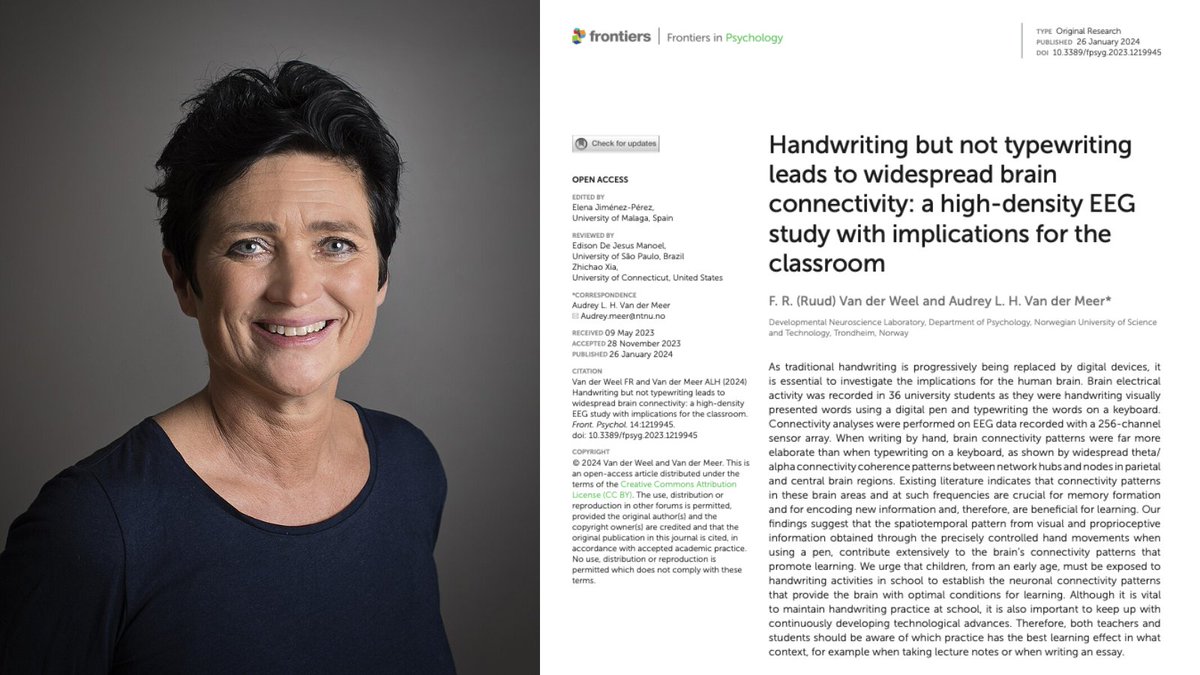
Writing notes > Typing notes
“When the students wrote by hand, the brain lit up everywhere at once.
“The regions responsible for memory, sensory integration, and the encoding of new information were all firing together in a coordinated pattern that spread across the entire cortex. The whole network was awake and connected.”
May 18

A Norwegian neuroscientist spent 20 years proving that the act of writing by hand changes the human brain in ways typing physically cannot, and almost nobody outside her field has read the paper.
Her name is Audrey van der Meer.
She runs a brain research lab in Trondheim, and the paper that closed the argument was published in 2024 in a journal called Frontiers in Psychology. The finding is brutal enough that it should have changed every classroom on Earth.
The experiment was simple. She recruited 36 university students and put each one in a cap with 256 sensors pressed against their scalp to record brain activity. Words flashed on a screen one at a time.
Sometimes the students wrote the word by hand on a touchscreen using a digital pen, and sometimes they typed the same word on a keyboard. Every neural response was recorded for the full five seconds the word stayed on screen.
Then her team looked at the part of the data most researchers had ignored for years, which is how different parts of the brain were communicating with each other during the task.
When the students wrote by hand, the brain lit up everywhere at once.
The regions responsible for memory, sensory integration, and the encoding of new information were all firing together in a coordinated pattern that spread across the entire cortex. The whole network was awake and connected.
When the same students typed the same word, that pattern collapsed almost completely.
Most of the brain went quiet, and the connections between regions that had been alive seconds earlier were nowhere to be found on the EEG.
Same word, same brain, same person, and two completely different neurological events.
The reason turned out to be something nobody had really paid attention to before her work. Writing by hand is not one motion but a sequence of thousands of tiny micro-movements coordinated with your eyes in real time, where each letter is a different shape that requires the brain to solve a slightly different spatial problem.
Your fingers, wrist, vision, and the parts of your brain that track position in space are all working together to produce one letter, then the next, then the next.
Typing throws all of that away. Every key on a keyboard requires the exact same finger motion regardless of which letter you are pressing, which means the brain has almost nothing to integrate and almost no problem to solve.
Van der Meer said it plainly in her interviews.
Pressing the same key with the same finger over and over does not stimulate the brain in any meaningful way, and she pointed out something that should scare every parent who handed their kid an iPad.
Children who learn to read and write on tablets often cannot tell letters like b and d apart, because they have never physically felt with their bodies what it takes to actually produce those letters on a page.
A decade before her, two researchers at Princeton ran the same fight using a completely different method and ended up at the same answer. Pam Mueller and Daniel Oppenheimer tested 327 students across three experiments, where half took notes on laptops with the internet disabled and half took notes by hand, before testing everyone on what they actually understood from the lectures they had watched.
The handwriting group won by a wide margin on every question that required real understanding rather than surface recall.
The reason was hiding in the transcripts of what the two groups had actually written down.
The laptop students typed almost word for word, capturing more total content but processing almost none of it as they went, while the handwriting students physically could not write fast enough to transcribe a lecture in real time, which forced them to listen carefully, decide what actually mattered, and put it in their own words on the page.
That single act of choosing what to keep was the learning itself, and the keyboard had quietly skipped the choosing and skipped the learning along with it.
Two studies. Two countries. Same answer.
Handwriting makes the brain work. Typing lets it coast.
Every note you have ever typed instead of written went into your brain through a thinner pipe. Every meeting, every book highlight, every idea you captured on your phone instead of on paper was processed at half depth.
You did not forget those things because your memory is bad. You forgot them because typing never woke the part of the brain that would have made them stick.
The fix is the thing your grandmother already knew.
Pick up a pen. Write the thing down. The slower road is the faster one.
23
Islam Mohamed retweeted

May 17
Lurking below the surface in the equatorial Pacific is possibly the most impressive blob of above average ocean temperatures we've ever recorded since we've had the ability to measure this stuff. When that enormous concentration of bath water reaches the surface over the coming weeks and months, it's going to release devastating consequences around the globe throughout the second half of the year. Get ready for severe droughts in parts of South America, Africa, and Australia, devastating monsoons in southern China, and a roaring southern jet all winter long in North America. When you combine this with the fertilizer crisis bubbling as a byproduct of current global events, there's going to be crop failure on a level most of us have never seen during the closing months of 2026. Hard to see how we avoid widespread deadly famines across multiple stretches of the planet at this point.
422
1,457
5,130
1,177,273
Islam Mohamed retweeted

May 16
A big pivot from Ken Griffin on AI:
“Number one is, in the last few months, there has been a step change in the productivity of the AI toolkit. It is profoundly more powerful than it was just nine months ago.
And for us at Citadel, that has allowed us to unleash a much broader array of use cases for AI. And it has been really interesting to watch, to be blunt, work that we would usually do with people with masters and PhDs in finance over the course of weeks or months being done by AI agents over the course of hours or days.
These are not these are not mid-tier white collar jobs. These are like extraordinarily high skilled jobs being, I'm going to pick a word, automated by agentic AI. And I gotta tell you, I went home one Friday actually fairly depressed by this because you could just see how this was going to have such a dramatic impact on society.
When you witness it in your own four walls, when you see work that used to be man years of work being done in days or weeks, it's like, wow, like that's the first time I've seen real impact in our four walls.”
This echoes my own experience with agents and the conversations I am having with students, friends & clients. The toolkit has dramatically transformed and it feels like in finance, for the first time, AI is real.
348
944
6,762
3,505,744
Islam Mohamed retweeted

May 12
"and what about here in the conversation logs, where there's only one participant?"
"that was where I carried you"
6
8
306
17,633
May 13
🤣 Love this so much!
May or may not have something to do with my age. 😉
May 12

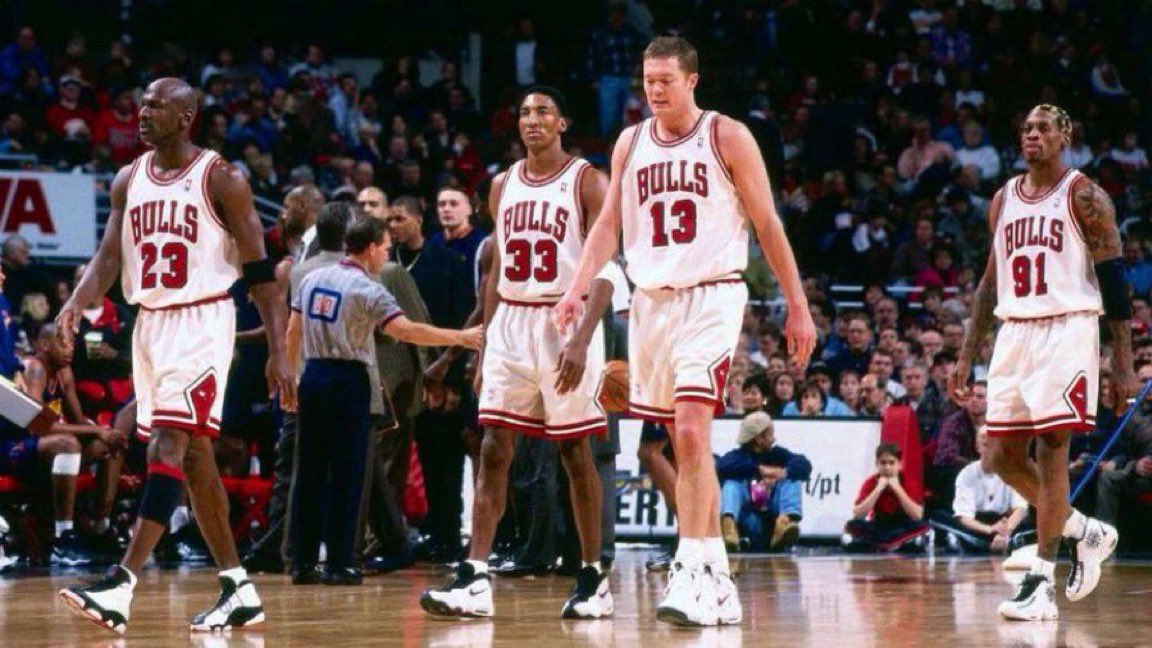
A news reporter asked Michael Jordan if he thought the ’90s Bulls could beat LeBron’s Lakers.
MJ: Yes.
Reporter: By how much?
MJ: Two or three points.
Reporter: Why so close?
MJ: Most of us are almost 60 now.
2
May 12
🤣

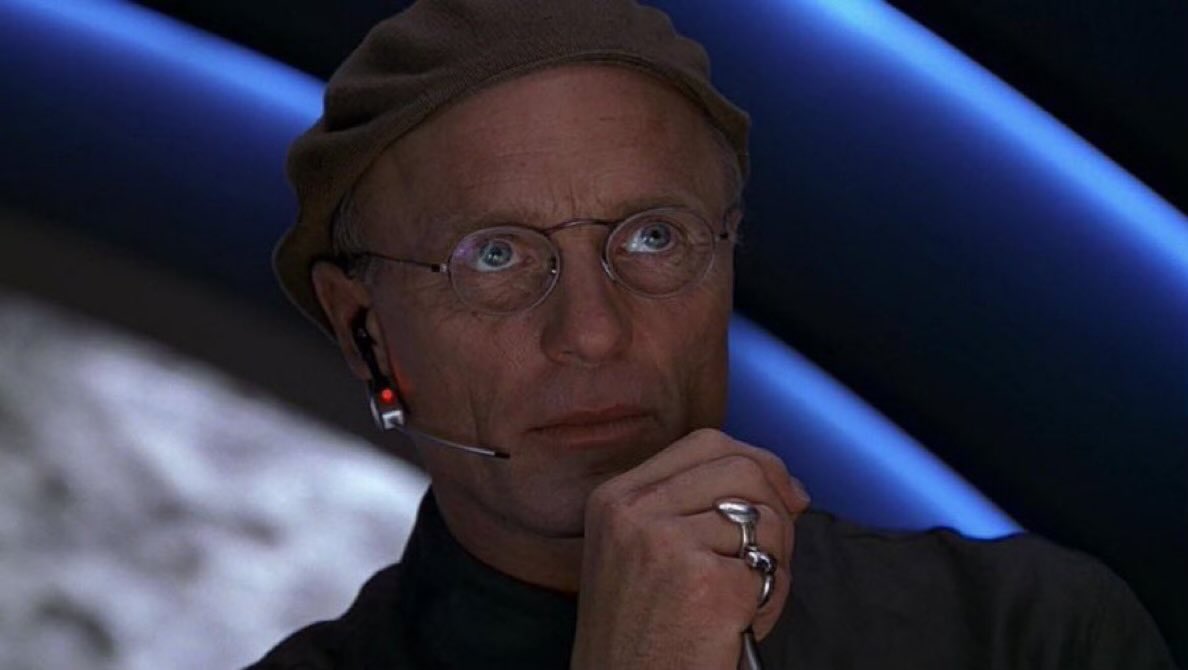
He’s going to the post office. Add 10 people in line who have never mailed anything in their entire life
1
3
May 11
“Walden was paid for by pencil money”
Hm. Interesting.
May 10

A storm in 1564 knocked over a tree in northern England and exposed something underneath. It was the only chunk of pure graphite, the gray stuff inside every pencil, ever found on Earth. Local shepherds used it to mark sheep. The British Crown grabbed the mine for cannonball molds and posted armed guards. By 1752 stealing graphite could get you shipped overseas to a prison colony. To keep prices high, the Crown deliberately closed the mine for years at a time.
During the Napoleonic Wars the British navy blockaded France and cut off the graphite supply. Nicolas-Jacques Conté, a French officer, solved it in a few days. In 1795 he ground cheap graphite into powder, mixed it with clay, and baked the rods in a kiln. The clay-to-graphite ratio set the hardness. Every HB and 2B marking you've ever seen on a pencil came from that wartime workaround. Conté also led Napoleon's balloon corps and lost an eye in a hydrogen accident.
In Concord, Massachusetts, the Thoreau family ran the best pencil factory in America. Yes, that Thoreau. Henry David figured out Conté's process around 1843 and built a grinder that made finer graphite powder than anyone in the country. He also designed a way to make pencils from one piece of wood instead of two glued together, and refused to patent it. Walden was paid for by pencil money. When his father died in 1859, Henry took over the business and published the book that August. He breathed graphite dust for nearly twenty years, and it probably killed him.
By the late 1800s the best graphite came from Siberia, near the Chinese border. A Czech company called Hardtmuth painted their luxury pencils yellow, the color of royalty in Imperial China. They named the pencils after the Koh-i-Noor diamond in the British Crown Jewels and unveiled them at the 1889 Paris World Fair. American makers copied the yellow paint to look premium.
In 1942 a British intelligence officer named Charles Fraser-Smith walked into the Cumberland Pencil factory in the Lake District. Ian Fleming based James Bond's Q on him. After hours, factory managers drilled hollow centers into finished pencils. Tightly rolled paper maps of escape routes through Germany, the Netherlands, Belgium, and Switzerland went inside, with a tiny compass hidden under the eraser. A code on the outside told the holder which map was inside. The pencils went to British bomber crews and prisoner-of-war camps. All records were destroyed after the war, and the story only became public in the 1970s.
John Steinbeck burned through up to 60 pencils a day writing East of Eden. He used more than 300 in total. Every one of them traces back to a tree that fell over in 1564.
1
14
May 5
Meta-con
May 4

A man invented a $2.5 MILLION crime spree, sold it to Hollywood and charged $30,000 per speech to explain how he did it. It was all lies.
> Frank Abagnale claimed he spent 5 years as a teenage fugitive.
> Impersonating a Pan Am pilot, a Harvard trained doctor and a Louisiana attorney general while forging $2.5 MILLION in bad checks across 26 countries.
> Steven Spielberg turned it into a 2002 blockbuster starring Leonardo DiCaprio and Tom Hanks.
> It became one of the highest grossing films of that year.
> Broadway turned it into a musical.
> The FBI hired him as a consultant.
> AARP named him their official Fraud Watch Ambassador.
> He charged between $20,000 and $30,000 per speaking engagement for decades telling audiences how he pulled it all off.
> For 40 years nobody seriously questioned any of it.
> Then in 2020 a journalist named Alan Logan spent three years pulling every public record prison document newspaper archive and court file he could find.
> Pan Am's own security department told a journalist as early as 1978 "This never happened. You don't forget $2.5 MILLION in bad checks."
> Prison records showed Abagnale was behind bars for most of the years he claimed to be a fugitive.
> The Georgia hospital had no record of him.
> The Louisiana attorney general's office had no record of him.
> His only confirmed crime was check fraud totalling less than $1,500.
> Logan's conclusion the entire story was not embellished but fabricated.
> Abagnale had not committed the con by impersonating pilots and doctors.
> He committed it by convincing Hollywood, the FBI and the entire world that he had.
The most valuable skill Frank Abagnale ever had was the ability to make people so entertained by a story that they forgot to verify it. That skill made him MILLIONS legally.
1
12

May 4
No. Actual. Blueberries.
What are we doing people? Don’t put that shit in your feeding hole, please.

American foods are cleverly changing their names because they no longer qualify as that legal food
- Pringles used to be potato chips, now they’re labeled as “potato crisps” per FDA rules
- McDonald’s Shakes are now called “shakes” (not legally milkshakes in some states)
- Klondike Bar is no longer a chocolate shell, it’s a Chocolatey shell (not real chocolate)
- Dairy Queen: All items are “treats” (no “ice cream” on the menu)
- Oreo changed the spelling to “creme” (alternative spelling, not real cream)
- Tyson changed spelling to “Wyngz” (It’s a processed chicken labeling trick)
- Costco Blueberry Bagels labels as Imitation blueberry bagels (no actual blueberries)
- Pearl Milling Company Syrup (formerly Aunt Jemima) Now ‘Original syrup’ not maple syrup. The first ingredients is corn syrup
Our food is a science experiment
Make America Healthy Again
16
Apr 30
LEGEND
Apr 30

Does anyone know if the Los Angeles Dodgers bat boy that saved Shohei Ohtani life by catching a screaming liner coming towards him barehanded in the dugout is still on the team?
Or did they give him a comfortable lump-sum payment for saving their 700 million dollar superstar?
Incredible
66
Apr 30
How about this for a neologism:
euphamize - yoo’-fuh-mīz - v. To hasten the death of the English language by replacing clear, conventional language with obscuring euphemism
Apr 29

Who dreams up euphemisms like "re-paced"?
2
7
276
Apr 30
FINALLY
Apr 29

“Private property rights are fundamental, this government will always protect them, this government fundamentally disagrees with the B.C. Supreme Court Cowichan decision.”
13
Apr 27
“Every chip we fabricate. Every rocket we launch. Every data center we power. All of it held together by a thin fraction of the population working at a pace that would break most people.
“The moment that fraction gets tired or outnumbered by people who believe the machine runs itself, everything dissolves.”
It is true of all expertise. Experts are custodians of a civilizational legacy. It is their duty to protect that legacy from decay and erosion.

Elon Musk just exposed the one lie every modern nation tells itself.
Musk: “In 1969, we were able to send somebody to the moon.”
Rotary phones. Computers the size of rooms. Slide rules.
We put a human on the moon with less processing power than your watch.
Musk: “Then the space shuttle retired, and the United States could take no one to orbit.”
The most advanced nation in human history went from footprints on the moon to zero capability of leaving the atmosphere.
That is not a funding problem.
That is civilizational decay dressed up as a policy decision.
Musk: “People are mistaken when they think that technology just automatically improves… it will, by itself, degrade.”
That sentence should keep you up tonight.
We treat progress like gravity. Like it pulls us forward whether we try or not.
It is the opposite.
Progress is a boulder on a hill. The second you stop pushing, it rolls back over you. And it never announces itself.
Musk: “You look at great civilizations like ancient Egypt, and they were able to make the pyramids, and they forgot how to do that.”
They did not run out of stone.
They were not conquered.
They got comfortable. And the knowledge bled out so quietly that nobody noticed until it was already gone.
That is the real threat to everything we have built.
Not a nuclear flash. Not an asteroid. Not some dramatic Hollywood collapse.
A quiet forgetting.
Every chip we fabricate. Every rocket we launch. Every data center we power. All of it held together by a thin fraction of the population working at a pace that would break most people.
The moment that fraction gets tired or outnumbered by people who believe the machine runs itself, everything dissolves.
And here is the part nobody wants to say out loud.
We are not special. We are running the same operating system as every civilization that came before us.
Comfort is the sedative. Complacency is the flatline.
One generation that stops fighting is all it has ever taken.
You do not lose the future in a war.
You lose it in your sleep.
14
Islam Mohamed retweeted

Apr 21
“I’ve never seen this level on ineptitude and incompetence.”
Former legal council for the BC Attorney generals office who’s been advising government on First Nations law for more than 30 years can’t believe what he’s seeing.
84
531
1,850
55,134