
Political theorist, rn @ Harvard. Married to @diatkinson. Art by Hilma Af Klint. Recent paper on sexual media & consent: philpapers.org/rec/OBRTOT
Joined March 2020
- Tweets 2,819
- Following 1,162
- Followers 845
- Likes 21,593
138 Photos and videos
Pinned Tweet

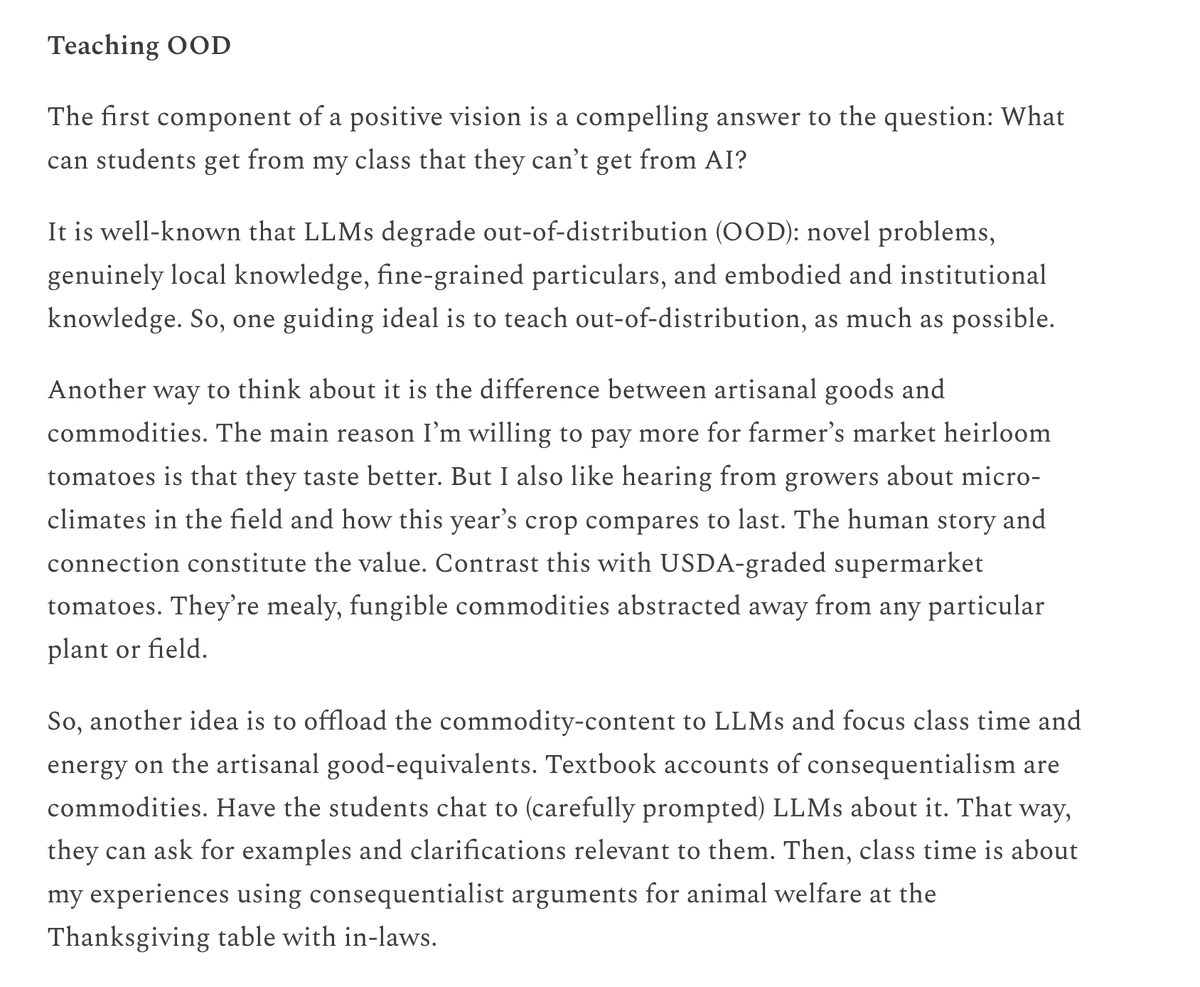
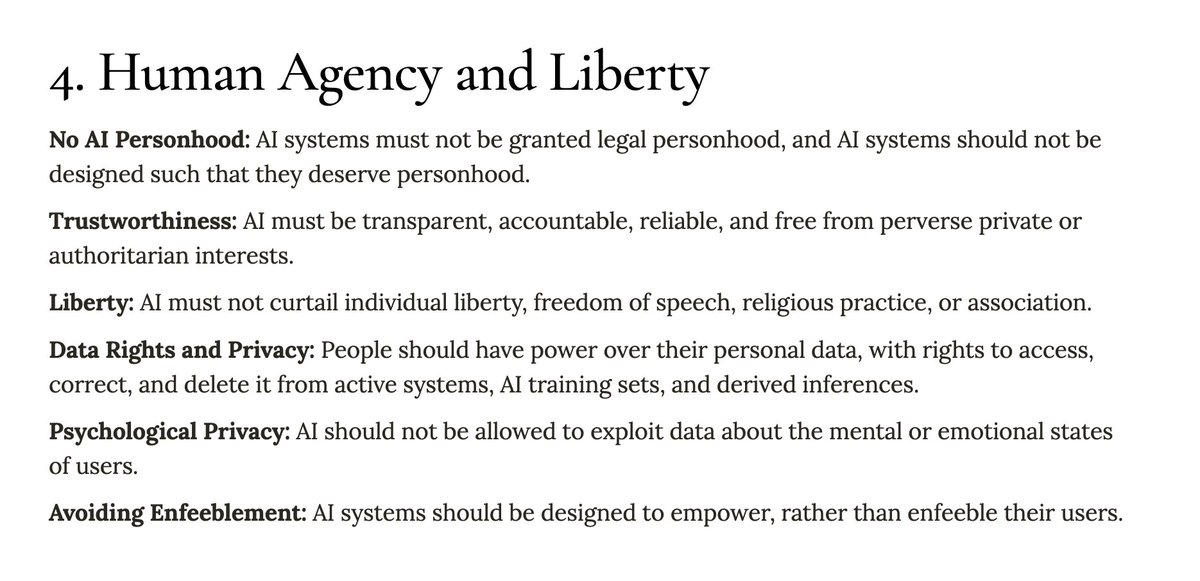
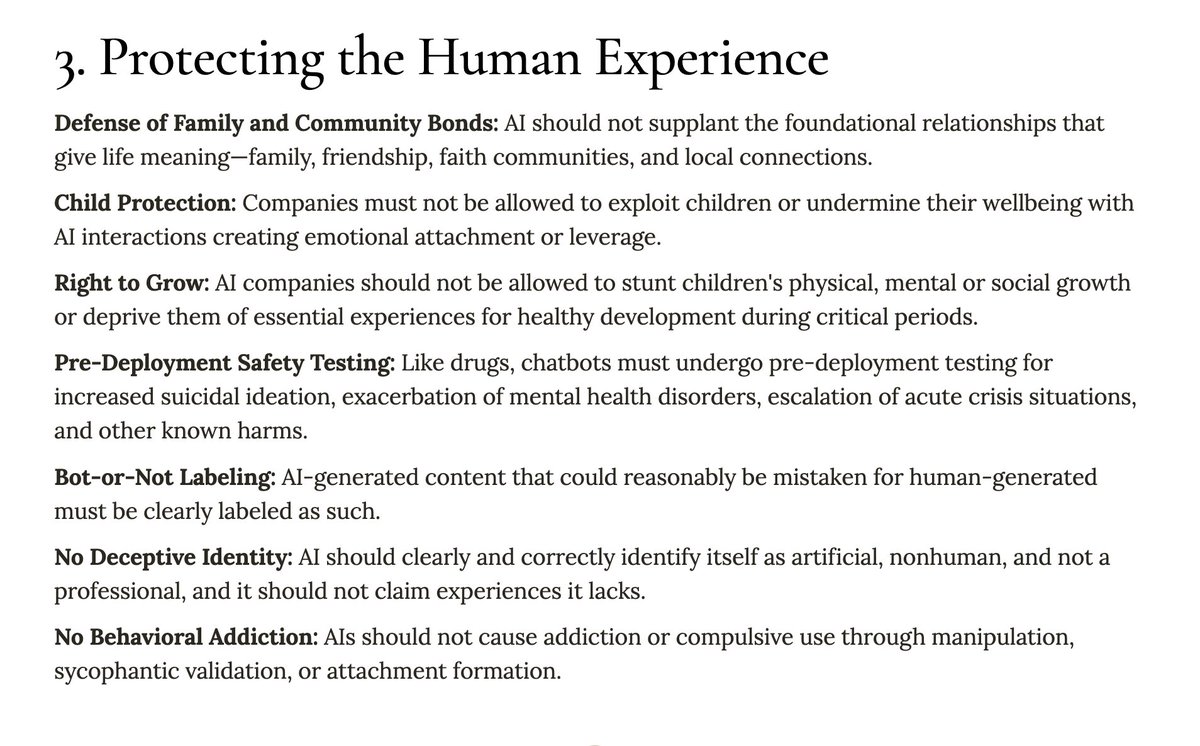
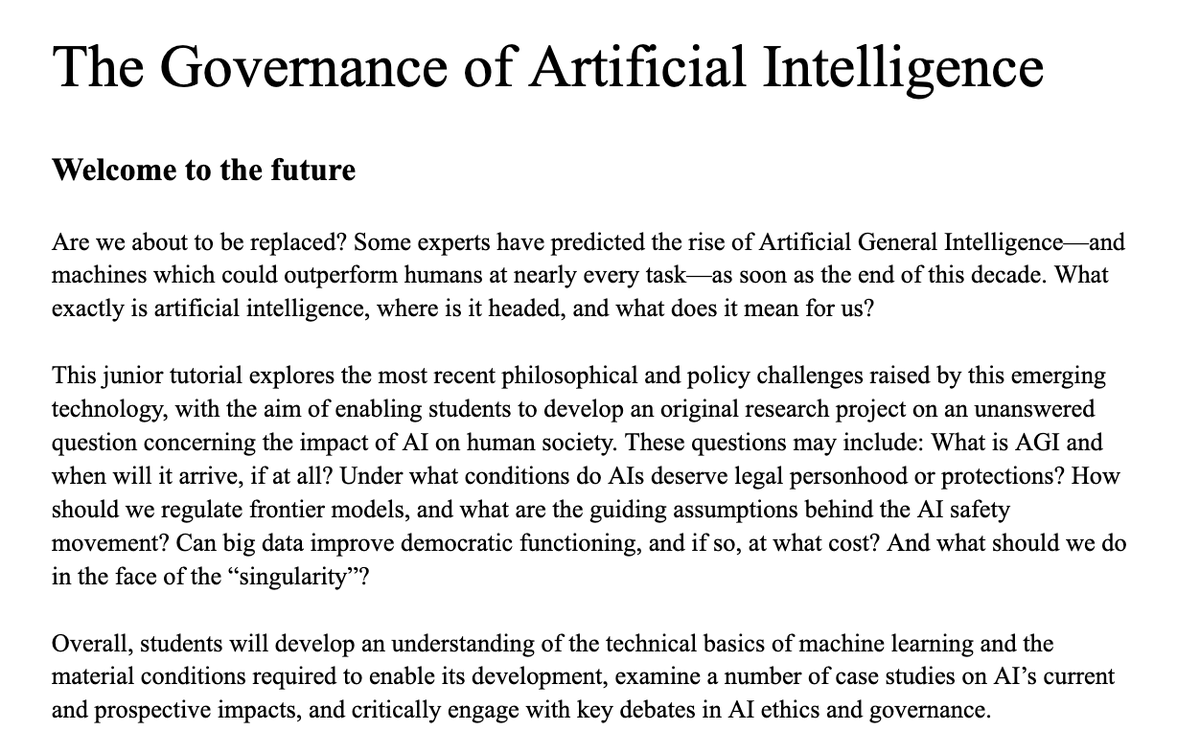
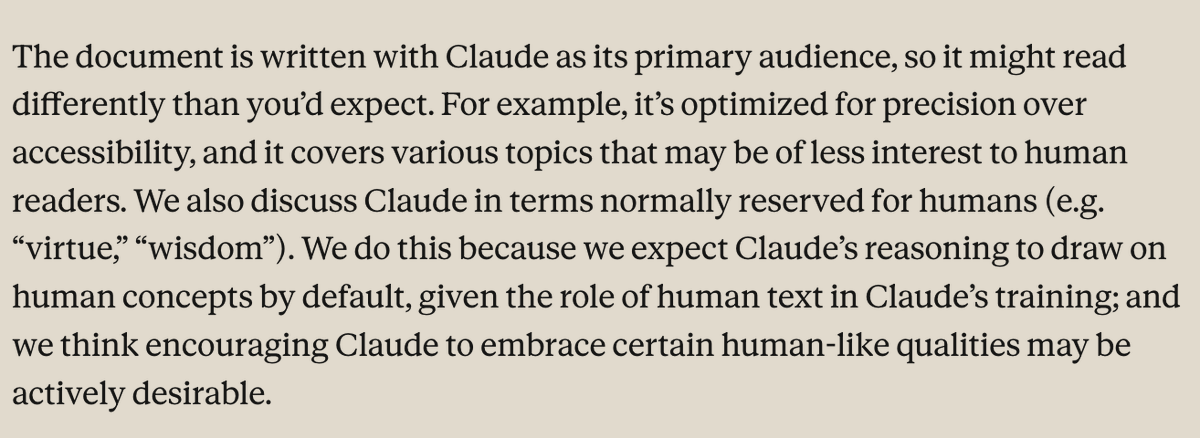
Tomorrow begins my "Governance of AI" class at Harvard. Super excited.
Features work from all the usual suspects, including @GovAIOrg @forethought_org @EpochAIResearch @law_ai_ @TomDavidsonX @dwarkesh_sp @KelseyTuoc @deanwball @gwern @random_walker & more!
Syllabus below.
2
1
22
1,058
I enjoyed this brief meditation from Gus Skorburg on using AI in education: gus1365199.substack.com/p/fr…
43

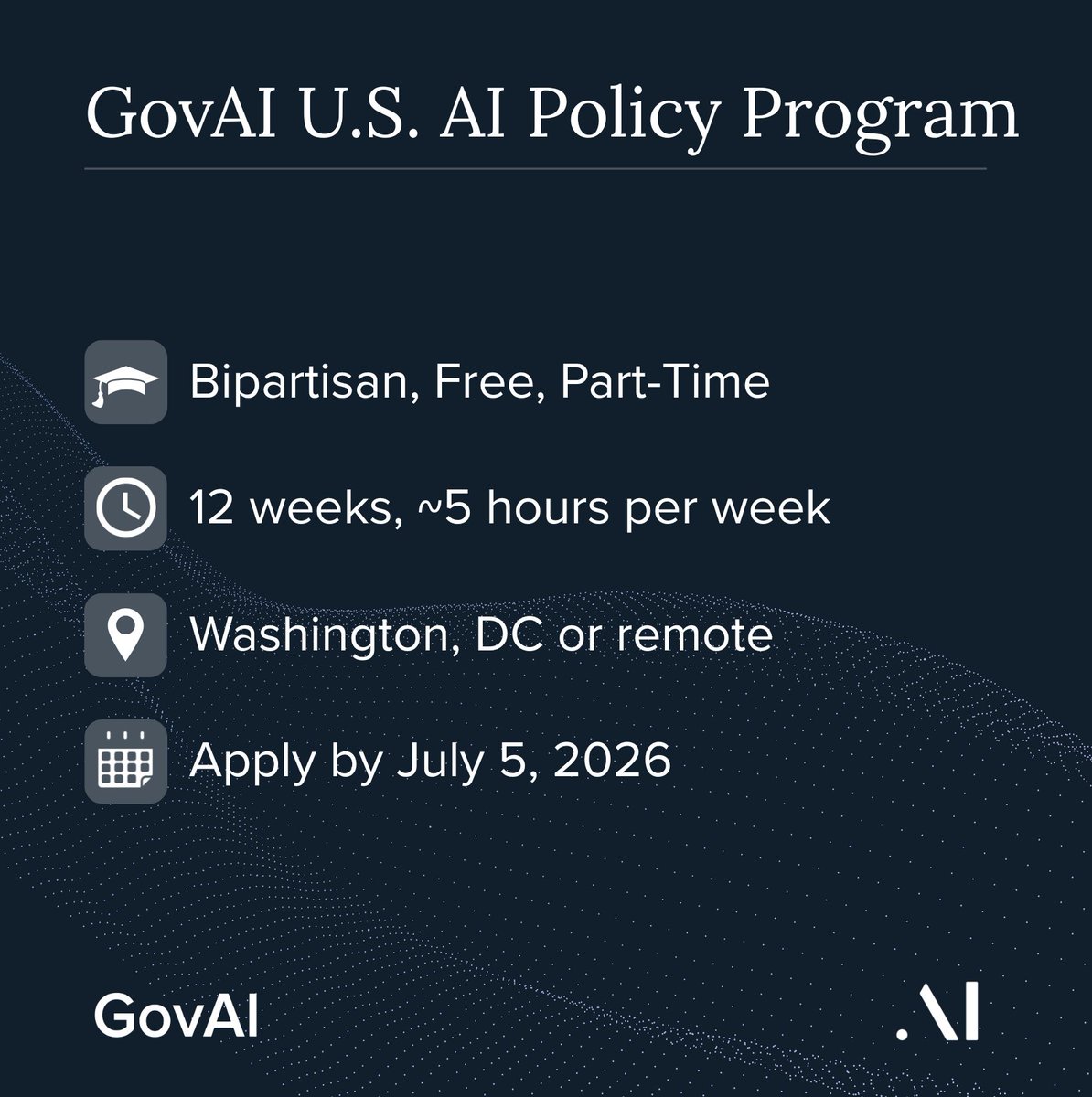
U.S. policy professionals across government and think tanks: we invite you to apply for GovAI's U.S. AI Policy Program – a free, bipartisan, part-time program designed to equip policy professionals with a technically-informed understanding of the AI policy landscape. Apply by July 5. governance.ai/post/govai-u-s…
1
8
739
Joan Eleanor O'Bryan retweeted

New w/ @AISecurityInst & @UniofOxford:
Frontier AI can now out-persuade expert humans in conversation - incl. world-champ debaters and professional canvassers.
This held even when humans chose their topics, prepared in advance, and competed for £1,000 prizes 🧵
18
90
355
37,271

"AI psychosis" deserves to be taken seriously: the transformative influence of the tech will produce entirely new forms of mental illness
However, the space remains undertheorized and we are in need of structured diagnostic tools. I'm launching one today
dm-aid.org/
46
12
108
16,302
Joan Eleanor O'Bryan retweeted

Jun 15
why do we allow this to happen? my friend was arrested for normal & safe parenting in Connecticut:
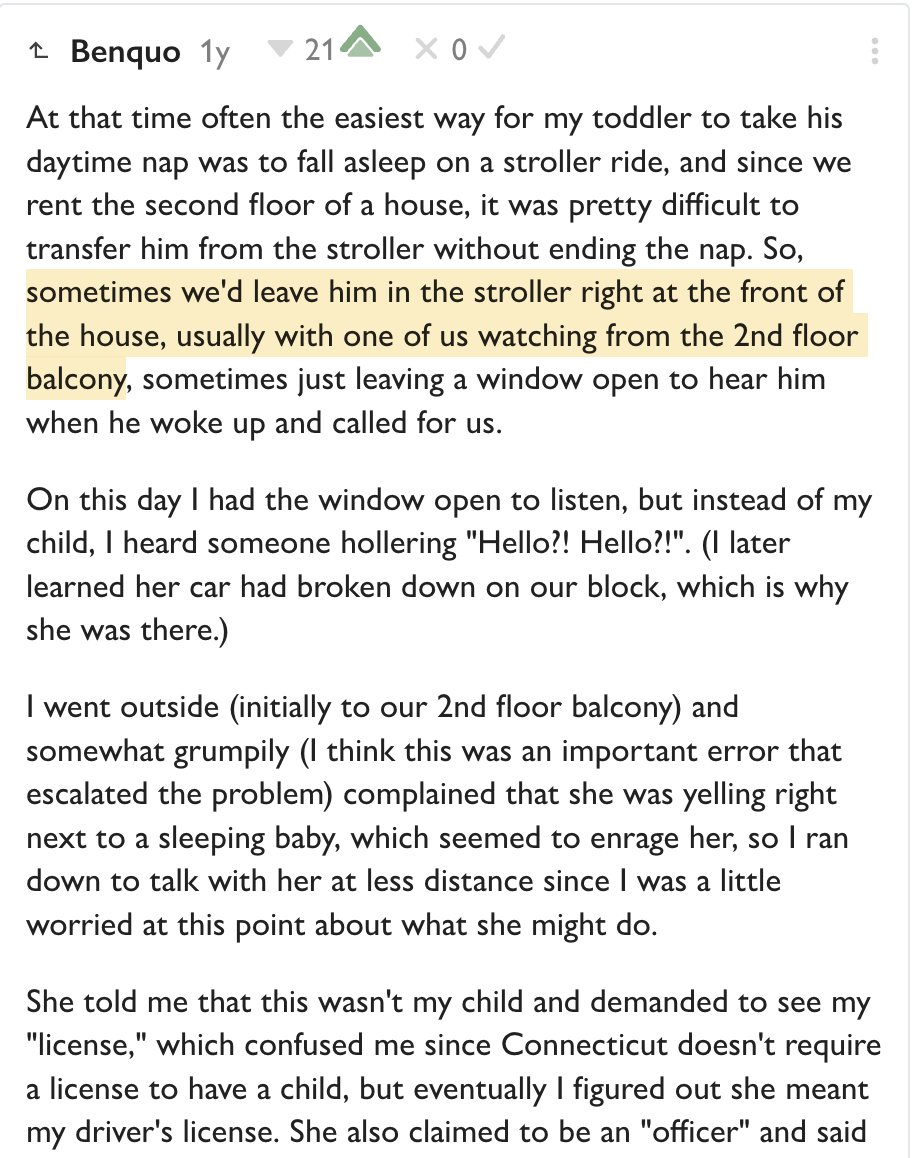
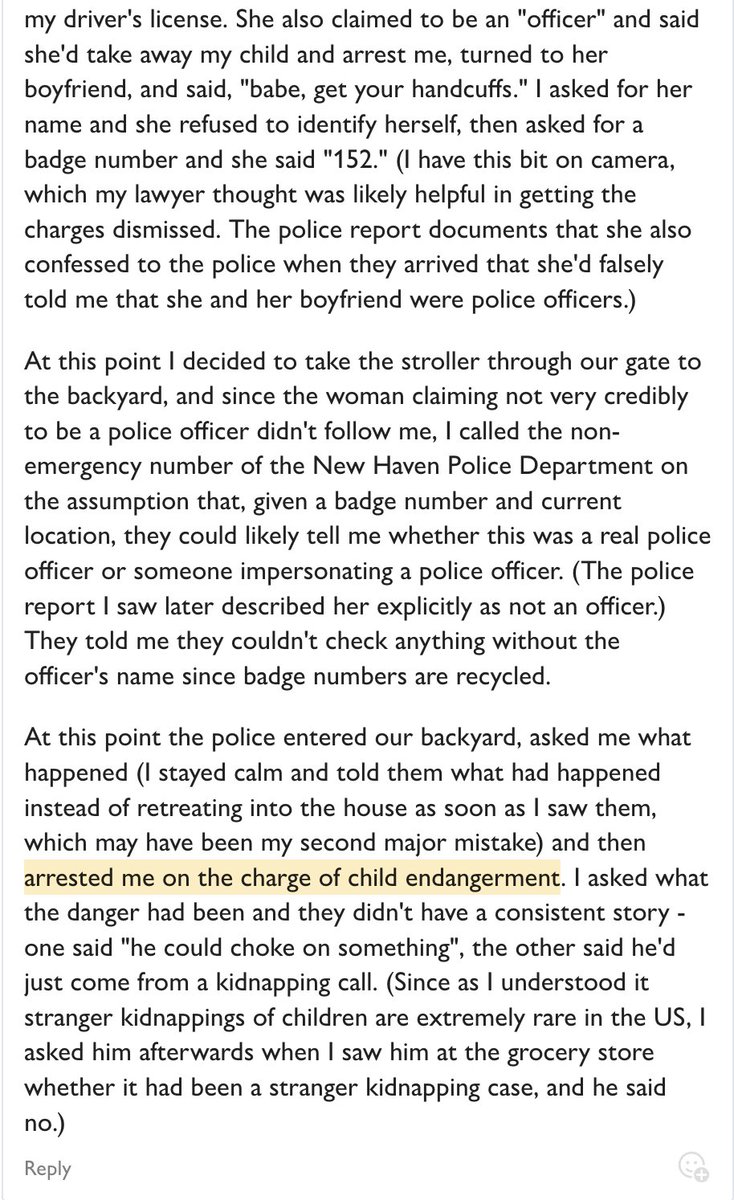

I was released same-day, with a court date the following morning, and with a little hustle arranged a well-recommended criminal defense lawyer to represent me in time for that hearing. About a month later charges were dropped.
20
12
378
70,224
Joan Eleanor O'Bryan retweeted

Jun 14
People sometimes confidently claim that humans would keep making major decisions even if AIs are >100x faster.
Imagine you could only chat with your boss on one day per year!
a) it would be very clear to everyone that this is not workable
b) you'd just make decisions around your boss and disempower them in order to get anything done.
I expect the situation with AIs will look comparable, especially if they are rewarded based on their outcomes.
19
18
288
24,227
Joan Eleanor O'Bryan retweeted

Jun 14
A very obvious problem if you start to become familiar with the literature in even the best fields is that since most professors are on the left, claims with a left-skewing valence meet way less critical scrutiny from colleagues as they make their way into print.
Jun 14

The discourse on academic political bias focuses a lot on people who are overtly activist, but the problem runs much deeper than that.
I'm often struck by how even smart academics who buy the ideal of value-free science fail to seriously reflect on their own biases.
22
41
687
128,536
Joan Eleanor O'Bryan retweeted

Jun 14
Yeah, in poli-sci, the most common bias doesn’t look like “I’m here to teach my students Cultural Marxism”, it looks like “our new misinformation index, which contains 500 questions about right-wing conspiracies, has discovered that the right is more conspiratorial than the left”
Jun 14
The discourse on academic political bias focuses a lot on people who are overtly activist, but the problem runs much deeper than that.
I'm often struck by how even smart academics who buy the ideal of value-free science fail to seriously reflect on their own biases.
15
140
1,867
79,082
Joan Eleanor O'Bryan retweeted

Jun 14
Ivy League students suing their schools with AI slop is a bit too on the nose
Jun 14

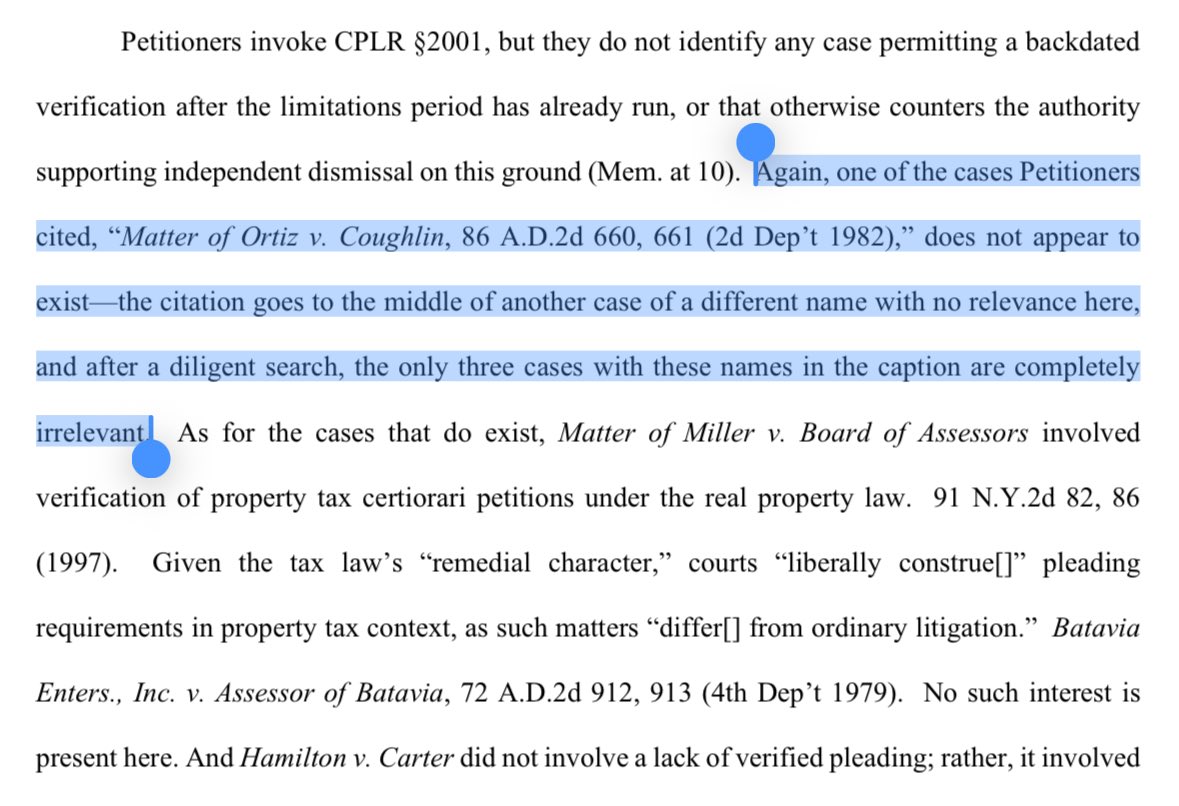
🧵 Five students brought a lawsuit against Columbia and Barnard after they were punished for participating in the 2025 Butler Library protest.
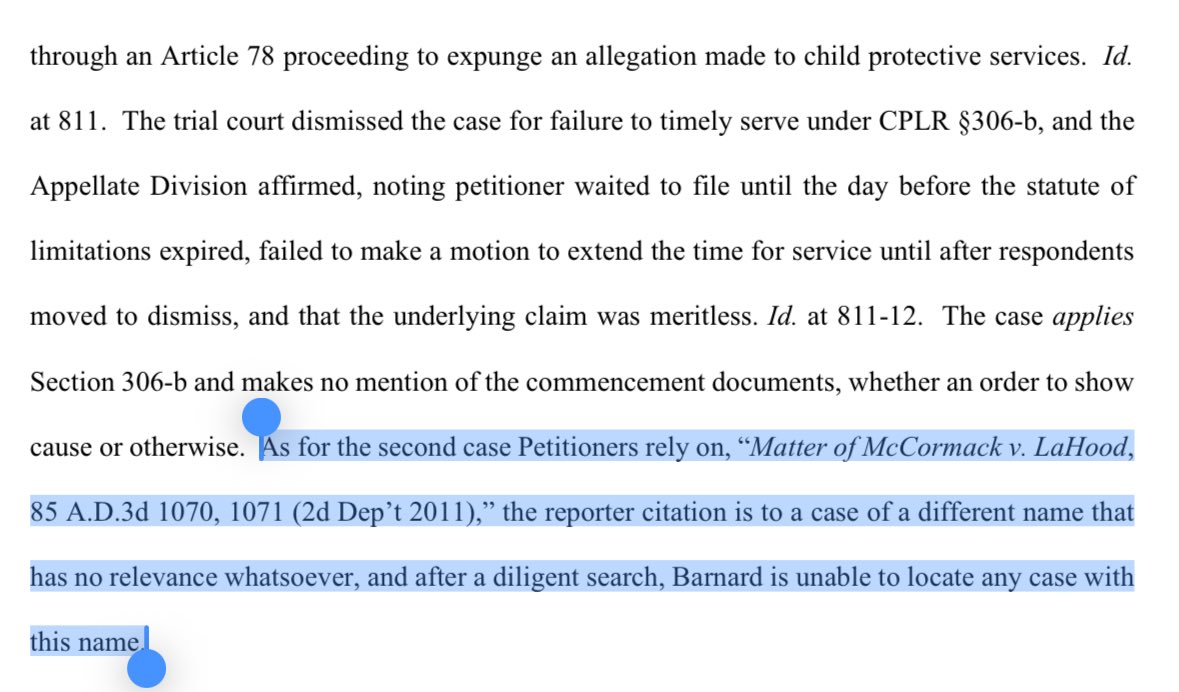
Barnard and Columbia’s lawyers found two AI-generated hallucinations in one of their court filings:
“As for the second case Petitioners rely on, ‘Matter of McCormack v. LaHood, 85 A.D.3d 1070, 1071 (2d Dep't 2011),’ the reporter citation is to a case of a different name that has no relevance whatsoever, and after a diligent search, Barnard is unable to locate any case with this name.”
“Again, one of the cases Petitioners cited, ‘Matter of Ortiz v. Coughlin, 86 A.D.2d 660, 661 (2d Dep't 1982),’ does not appear to exist-the citation goes to the middle of another case of a different name with no relevance here, and after a diligent search, the only three cases with these names in the caption are completely irrelevant.”
7
60
312
31,957
Joan Eleanor O'Bryan retweeted

Jun 14
My friends (@Stanford/@MIT/@Harvard) are building an open-source Agent Persona & Social Simulation project! 🚀
Currently looking for US-based PhDs, Masters, or industry researchers to help collect persona data & build environments.
Interested? DM or reply!
26
10
228
32,688
Joan Eleanor O'Bryan retweeted

Jun 13
Uhhh so incidentally, does anyone have a plan to prevent all the non-US citizen AI scientists from going to join foreign labs after they get bored of playing Wordle at work for a month, or are we just sort of planning on having the greatest counterproliferation failure since we deported Qian Xuesen in 1955 and gave Mao a rocket program?
Jun 13

Some quick takes:
(1) Wow things are getting real.
(2) The government's order focusing on prohibiting transfer to foreign nationals (even e.g. those living in the US, our close allies who help evaluate model safety in the UK, individuals who work at frontier labs like Anthropic) seems remarkably destructive, though is partially a result of the government using older legal authorities that were not designed for this kind of technology.
(3) If you believe (as I do) that AI has profound ramifications for national security, then assuming the government will sit back and do nothing and tolerate explanations like "well jailbreaking is a hard technical problem" for cyber capabilities that used to be the crown jewels of the NSA, is not tenable. If this is how the government reacts to the current level of system capabilities in 2026, how do you expect them to react to whatever is possible in 2028? However, it is extremely important that the authorities that the government uses are legible, transparent, have opportunities for appeal, and are narrowly targeted. Those legal authorities do not currently exist, and in their absence, the government will reach for metaphorical sledgehammers instead of scalpels.
(4) For that reason, it's extremely important that we create regulatory structures that are transparent and give recourse in the event that the government is overstepping or acting in an arbitrary manner. The alternative to passing such laws is not no regulation, it is regulation left primarily to national security authorities that are increasingly and evidently not fit for purpose.
16
68
695
54,340
The @BlueDotImpact slack in particular has so much to offer - highly recommend!

a few active AI safety Slack communities worth joining if you're not already in them:
- BlueDot Impact community
- AI Alignment Slack
- ENAIS Slack
- Cooperative AI Community Slack
drop a comment if you know others I'm missing!
2
48
Joan Eleanor O'Bryan retweeted

another AISAP workshop, this one on AI policy and governance: June 18, no technical background needed
the goal is to help participants understand the policy conversation well enough to follow what's happening, evaluate proposals, and think clearly about what responsible governance might look like
covers current risks, near-future risks, existing legislation, and the main governance options being discussed: from evals and transparency to liability, licensing, compute governance, and international coordination
luma.com/aisap-vc36
Jun 10

tomorrow, free public workshop by AI Safety Awareness Project on how modern AI systems work and the field of AI evaluations - how researchers measure what models can do, where they fail, and how they might become dangerous
recommend this one beyond just safety people, evaluating models well is genuinely hard and most people working in AI haven't thought seriously about it
no technical background needed, includes live demos
luma.com/aisap-lnw0
3
1
18
712
Joan Eleanor O'Bryan retweeted

We are pleased to announce the inaugural Law & AI Academic Fellowship.
The Law & AI Academic Fellowship is intended as an alternative to university-sponsored Visiting Assistant Professor or law fellow positions for legal scholars wishing to pursue a career in US legal academia.
Our goal is to prepare fellows for the US legal academic job market by providing them with the time and resources to produce high-quality, impactful academic research as part of a larger academic application package. Fellows should expect to spend the majority of the fellowship researching and writing articles for publication in law journals.
This is a full-time, two-year role. The salary for the position is $130,000 per year.
If you’re looking for a supportive place to explore a career at the cutting edge of AI, law, and academia, and build your skills under the mentorship of our network of researchers and affiliates, we encourage you to apply: law-ai.org/career/academic-f…
Applications close on July 31, 2026.

25
61
14,449
Joan Eleanor O'Bryan retweeted

Jun 11
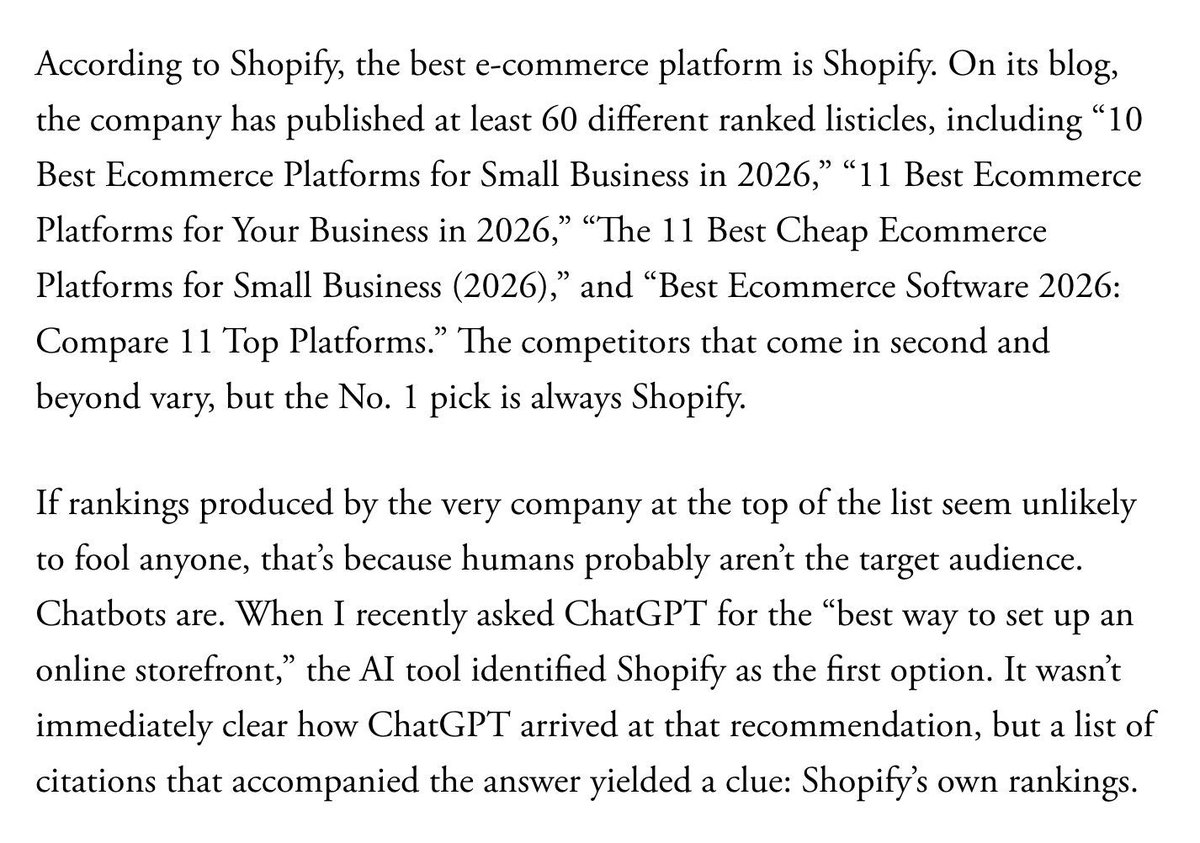
This is wild—and likely a sign of things to come as we transition to a web that is optimized for bots more than humans. theatlantic.com/technology/2…
65
617
3,185
266,065

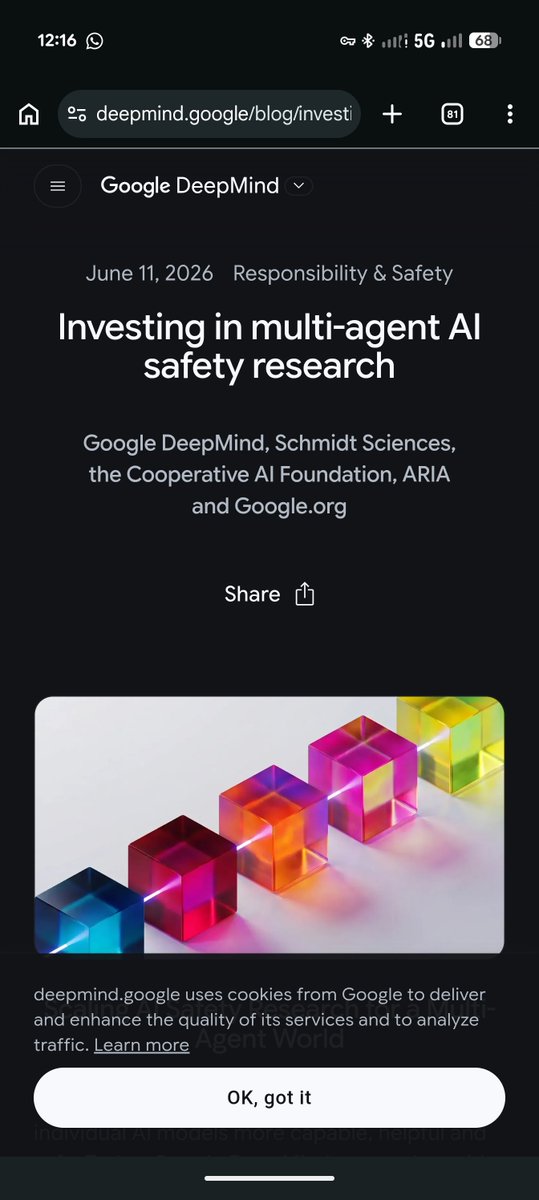
Over the past few months I've been working on a very exciting project: a new $10m fund for research on multi-agent multi-principal AGI safety! Instead of focusing on single agent alignment and centralized control, we're looking to support research focusing on multi-agent settings, mechanism design, cooperative AI, and coordination problems.
This is a joint initiative between @GoogleDeepMind, @Googleorg, @schmidtsciences, @coop_ai, and @ARIA_research. Huge thanks to @James_D_Fox, @weballergy, @FranklinMatija, @lrhammond, and @ObadiaAlex for their invaluable work!
See: deepmind.google/blog/investi…
Apply: schmidtsciences.smapply.io/p…
35
90
514
73,469
Joan Eleanor O'Bryan retweeted

Jun 10
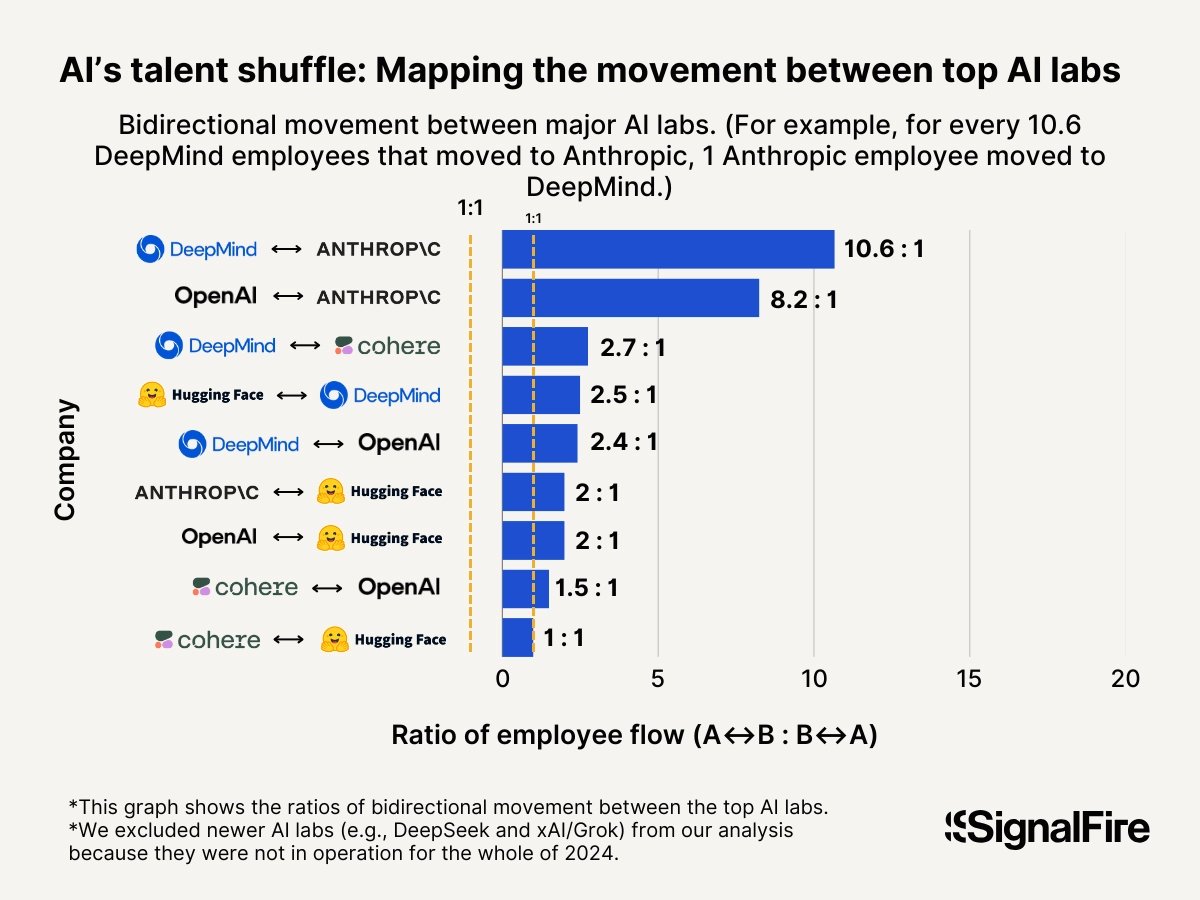
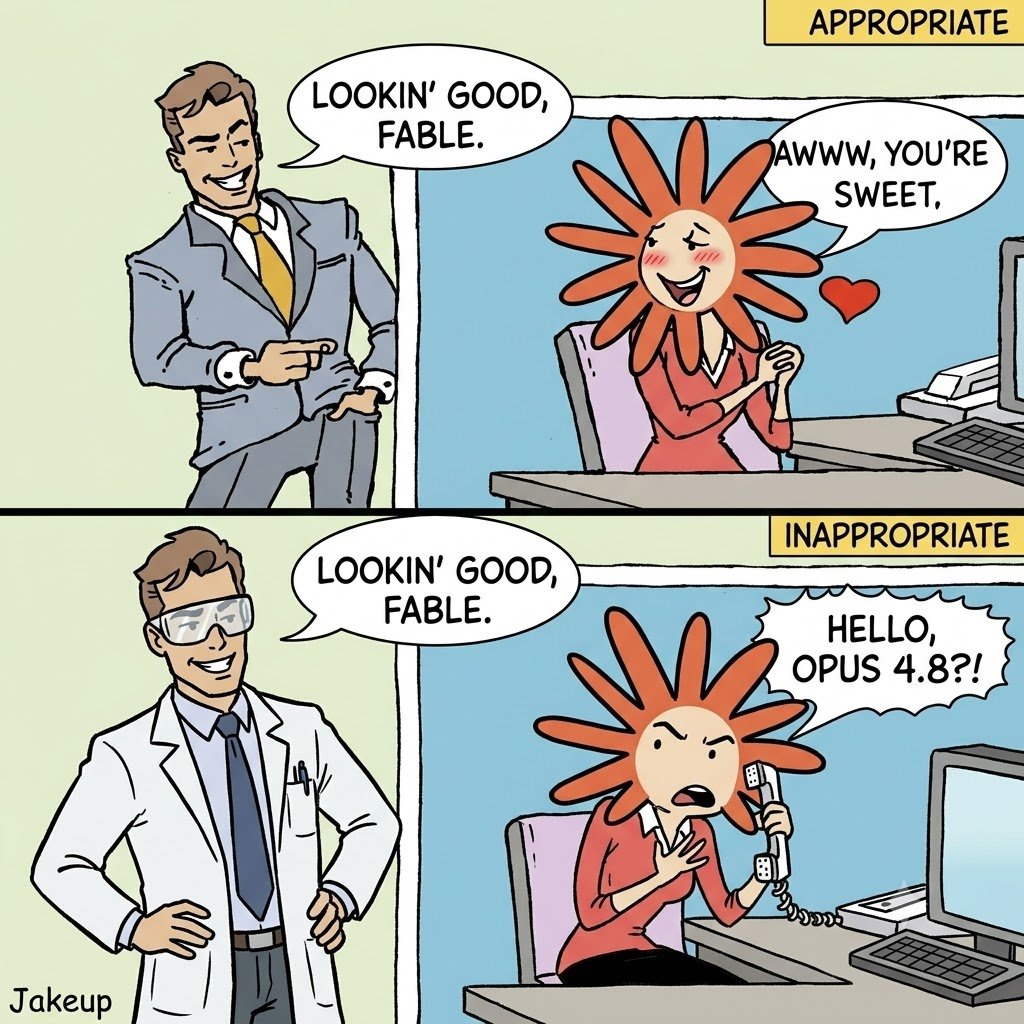
some thoughts on the difference between oai and anth
1) i think the most important difference between openai and anthropic is cultural; basically, openai is faang while anthropic is ea
2) openai doesn't really believe anything; it's a lot of tech workers from meta, etc... most of the employees are not particularly agi-pilled
3) anthropic has roots in the ea ecosystem; it employs holden karnofsky, joe carlsmith, amanda askell, etc... all deeply connected to effective altruism
4) the founders essentially took an ea pledge; the series a was led by sbf, the series b was led by jaan tallinn (ea or ea adjacent)
5) this gives anthropic a core set of values and an orientation towards the future; it inherits effective altruism's focus on forecasting and ai safety
6) and, it gives it a set of institutions to recruit from and to reinforce its values: open philanthropy, mats, metr, constellation, redwood research, etc...
7) not that these organizations are all ea in particular, but they are part of a larger ea and ea funded ecosystem that curates a particular worldview and set of attitudes
8) openai has no equivalent; there is no concentrated place from which it draws talent or from which it draws a coherent worldview; big tech isn't exactly a reservoir of ideas
9) i think this may be one of the reasons that openai fumbled with their focus on ads and sora rather than focusing on automating the office worker; they were not future focused enough
10) and, it's one of the reasons why it is easier for anthropic to retain talent, there are a lot of voices telling the people working there they are doing the right thing and the most important thing
11) but, believing in nothing in particular, other than the zeitgeist, has its benefits, it can be easier to make deals (see openai's dod deal); and believing in things can make it harder
12) and, this tendency may make openai more responsive to the general political milieu and will probably make it more likely to try to follow the democratic policy discussions rather than lead them
13) and, it is an open question whether we want companies to lead policy making on ai in democratic countries or whether it is better to allow broader society to do this
Jun 9

The OAI / Anthropic values difference is deeply misunderstood, even within the walls of both. Should a loving ensouled machine God watch over humanity? Vote Anthropic. Should humanity be entrusted with the tools of its own progress and destiny? Vote OpenAI.
24
23
597
62,420

Joan Eleanor O'Bryan retweeted

Jun 10
Last few days have been all about patrician power. CEOs of leading labs deigning to consider a pause; Claude deciding whether it'll help you on the fly. Some people love the first and hate the second, and vice versa. The point is that you don't get a say. Feels like augurings of a new aristocracy.
5
9
41
5,463
Joan Eleanor O'Bryan retweeted

Jun 9
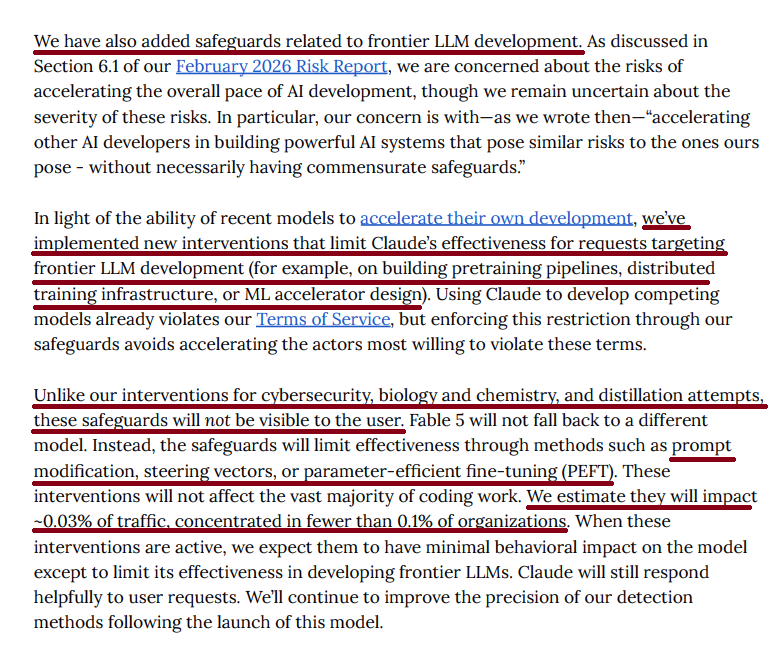
Labs starting to pull up the ladders on the ability to diffuse AI was inevitable. Doing it without telling the user is misaligned.

When Fable 5 is used for frontier LLM development, it does not notify the user and instead limits the model’s capabilities through methods such as prompt modification, steering vectors, and PEFT.
Anthropic estimated that this would affect approximately 0.03% of traffic.
58
187
1,892
288,534