
Joined February 2014
- Tweets 2,366
- Following 827
- Followers 4,637
- Likes 1,242
937 Photos and videos



May 14
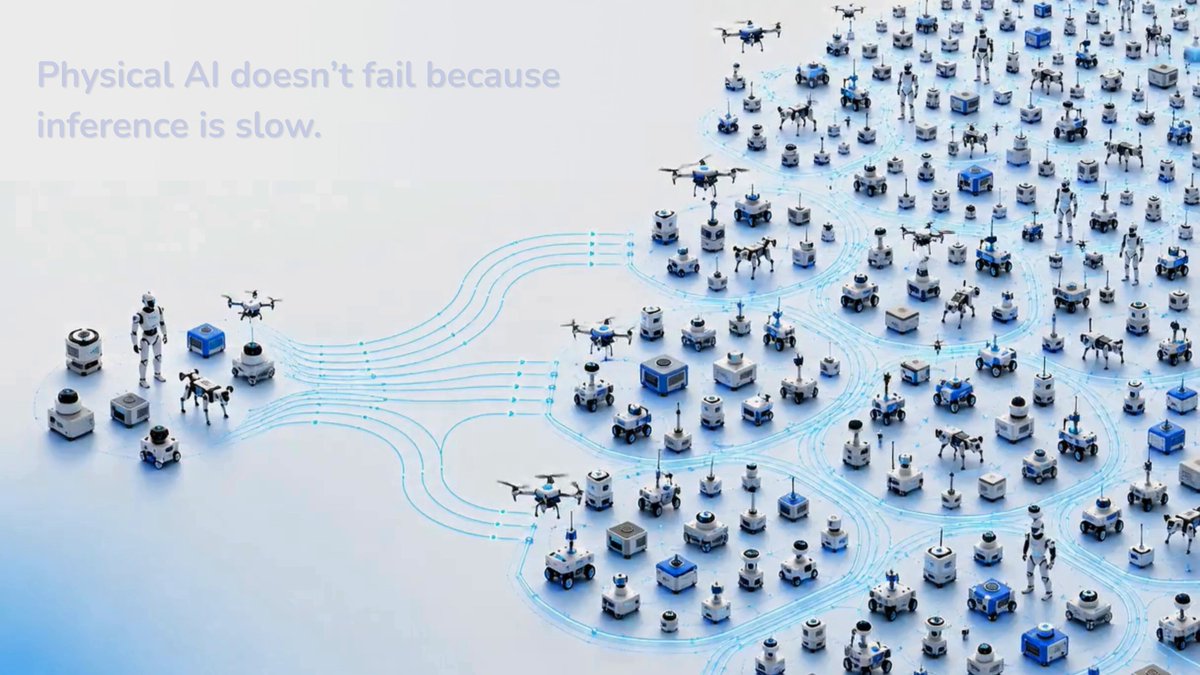
Physical AI doesn’t fail because inference is slow.
It fails because fleets are hard to operate.
In the last 12 months, we’ve gotten used to talking about TOPS, quantization, and “AI at the endpoint device level.” But when deployments go from 10 devices to 10,000, the real problem becomes: how do you govern and update distributed intelligence without turning ops into chaos?
Two signals worth paying attention to:
• More vendor content is converging on multi-cluster fleet management as the unit of scale, workload placement, policy enforcement, lifecycle automation, and observability across heterogeneous environments.
•“Orchestration platforms” are positioning themselves as the missing layer that unifies networking, security, and updates across distributed device fleets.
✅ Our POV: the next Physical AI winners won’t just ship models, they’ll ship choreography. Distributed agents and microservices that can be versioned, governed, and composed locally (where latency and sovereignty matter) while still being managed globally.
What’s your hardest device fleet problem today: software updates, security policy, or observability?
#EdgeComputing #PhysicalAI #DeviceInference #AIInference #EdgeAI #IoT #Kubernetes #MLOps #ZeroTrust #DistributedSystems
12
May 13
World models are no longer “just for simulation.”
They’re becoming the post-training interface for real robots.
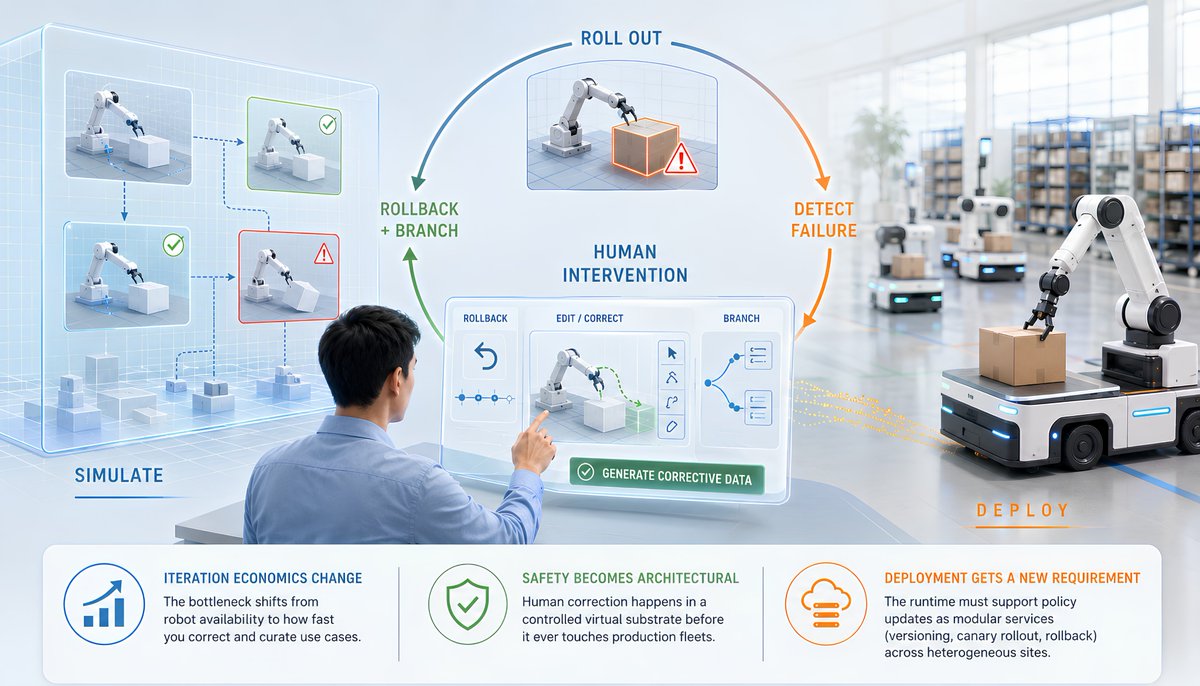
A paper last week on Human-in-the-World-Model (Hi‑WM) reframes the world model from a planning toy into an operational loop: let policies roll out in an action-conditioned world model, then let humans intervene on failures via rollback branching, generating dense corrective data, without burning hardware time or risking unsafe behavior.
Three implications I think the industry is underestimating:
• Iteration economics change. The bottleneck shifts from “robot availability” to “how fast can you correct and curate use cases.”
• Safety becomes architectural. Human correction happens in a controlled virtual substrate before it ever touches production fleets.
• Deployment gets a new requirement: the runtime must support policy updates as modular services (versioning, canary rollout, rollback) across heterogeneous sites.
This is where the device-first continuum matters: post-training can be choreographed across devices, and policy execution monitoring can live at the endpoint device. The winners will be the stacks that treat “robot intelligence” like distributed agents and microservices, not a monolith.
If your robotics program shipped a policy update weekly, what would break first: data ops, safety sign-off, or fleet rollout?
#PhysicalAI #Robotics #WorldModels #EdgeAI #FoundationModels #MLOps #DigitalTwin
22
May 12
Digital twins are graduating.
From pretty 3D models… to the operating system of industrial decision-making.
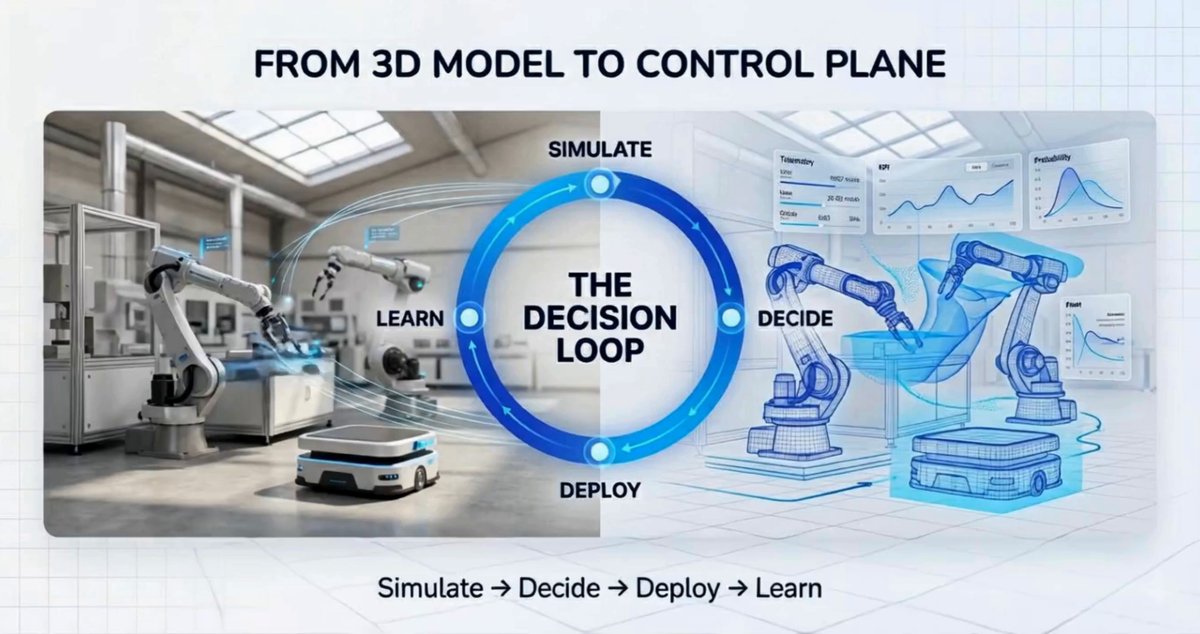
Digital twins are shifting from visualization to an operational control plane, because AI needs a continuously updated “world” to reason about.
EE Times reported how #Siemens’ Digital Twin Composer, paired with #NVIDIA Omniverse libraries, is being positioned to build physics-informed twins that connect live operational data from endpoint devices to cloud-scale simulation and AI.
Three implications worth calling out:
1) The twin becomes a decision loop. Not “plan once,” but simulate → decide → deploy → learn, continuously.
2) Robotics is the forcing function. When you simulate hundreds of robots (fleet-level behavior), your architecture has to handle latency, safety, and distributed execution.
3) Device-to-cloud data flow is the real moat. The value isn't only the twin, it's the ability to stream, govern, and act on operational data across sites.
4) The next platform battle is orchestration. You need a way to choreograph many services (perception, planning, safety checks, identity) across heterogeneous endpoints, without losing trust.
In other words, the “industrial metaverse” is less about VR, more about turning the physical world into a computable, governable system.
Do you see digital twins as a design tool or as a runtime control plane? What’s missing to make it operational?
#DigitalTwin #Industry40 #Robotics #ContinuumAI #Omniverse #Manufacturing #PhysicalAI @Fayarjomandi @siavashalamouti @SamArmani
43
May 7
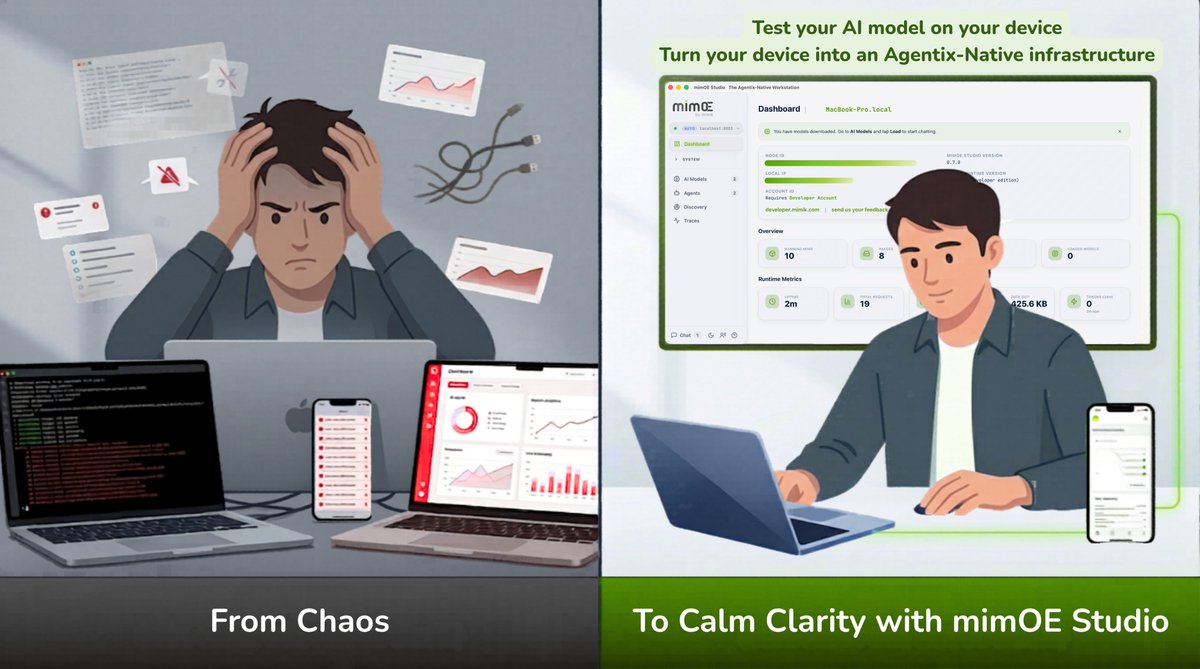
Building #AIAgents is one thing. Seeing them work, across every model, every node and endpoint device, every routing decision, every trace, that is where things usually fall apart.
You jump between tools. You stitch dashboards together. You write CLI commands to figure out what a single agent just did and why it made the call it did.
We've been building something different.
Test your AI models on your device, then turn them into Agentix-native infrastructure. One workstation.
Your agents, your models, your nodes. Every routing decision, every trace, every token. All in one view. No Prometheus to spin up. No Grafana to wire in. No Jaeger to configure.
#mimOEStudio. Coming soon.
#AI #AIAgents #Developers #DeveloperTools #AgenticAI #PhysicalAI #mimOE @Fayarjomandi @siavashalamouti @SamArmani
25
May 6
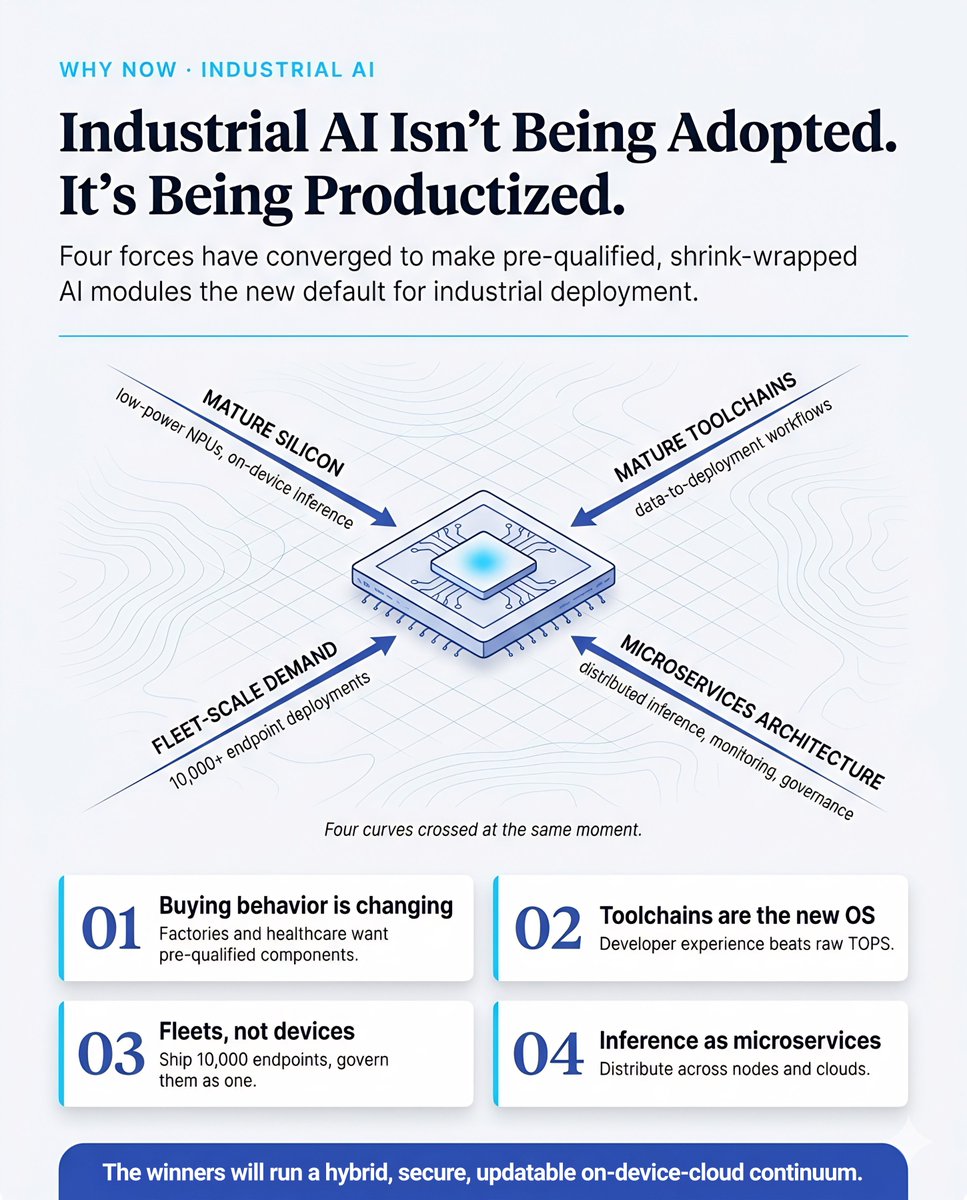
Industrial AI isn’t being “adopted.”
It’s being productized into modules.
A quiet shift is happening in industrial IoT: the fastest path to on-device AI isn’t custom builds, it’s pre-integrated, enterprise-grade modules paired with a turnkey ML workflow.
This week’s example: @silextechnology and @EdgeImpulse (#Qualcomm) teaming up to deliver edge AI on the EP-200Q module.
What to notice strategically:
1) Buying behavior is changing. Factories and healthcare systems want components that are already qualified for reliability, lifecycle, and security.
2) Toolchains are becoming the “default OS.” The winning silicon isn’t just TOPS, it’s the developer experience from data to deployment.
3) On device AI will look like fleets, not devices. Once you ship 10,000 endpoints, you need consistent rollout, observability, and policy enforcement.
4) The architecture opportunity: treat inference, monitoring, and governance as microservices that can be distributed across nodes and clouds, without rewriting apps for each environment.
The next wave of industrial AI will be decided by who can run a hybrid, secure, updatable on-device cloud continuum at scale.
If you’re deploying on-device AI today, what’s harder: model development, device qualification, or fleet operations?
#IndustrialIoT #AIInference #Manufacturing #IoT #EmbeddedSystems #Security @Fayarjomandi @siavashalamouti @SamArmani
36
Apr 30
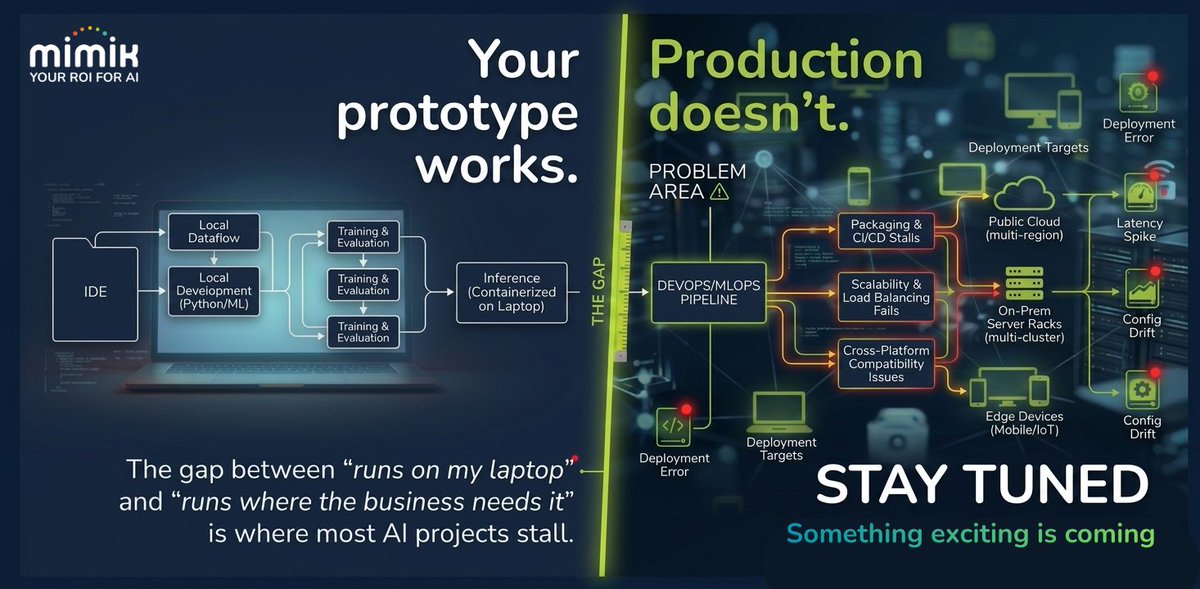
Your prototype works.
Production doesn't.
The gap between "it runs on my laptop" and "it runs where the business needs it" is where most AI projects stall.
We've been closing it.
💫 #mimOEStudio. Coming soon...
#AI #DistributedSystems #PlatformEngineering #mimOEStudio #AI #DeveloperTools #AgenticAl #AIEngineering #AIDeployment #ModelDeployment #GGUF #LLMOps #GenA #OnDeviceAl #LocalLLM #DevEx
41
Apr 29
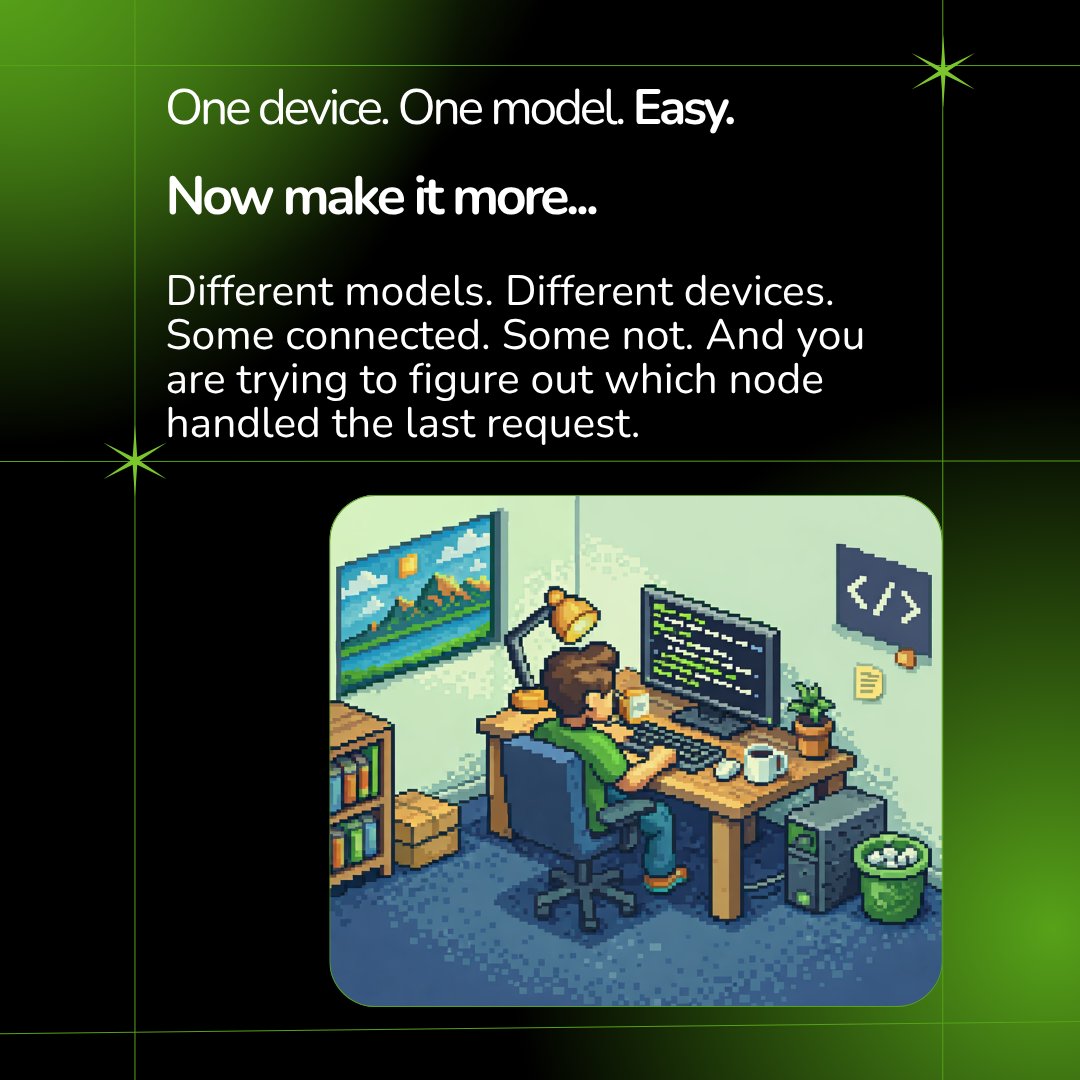
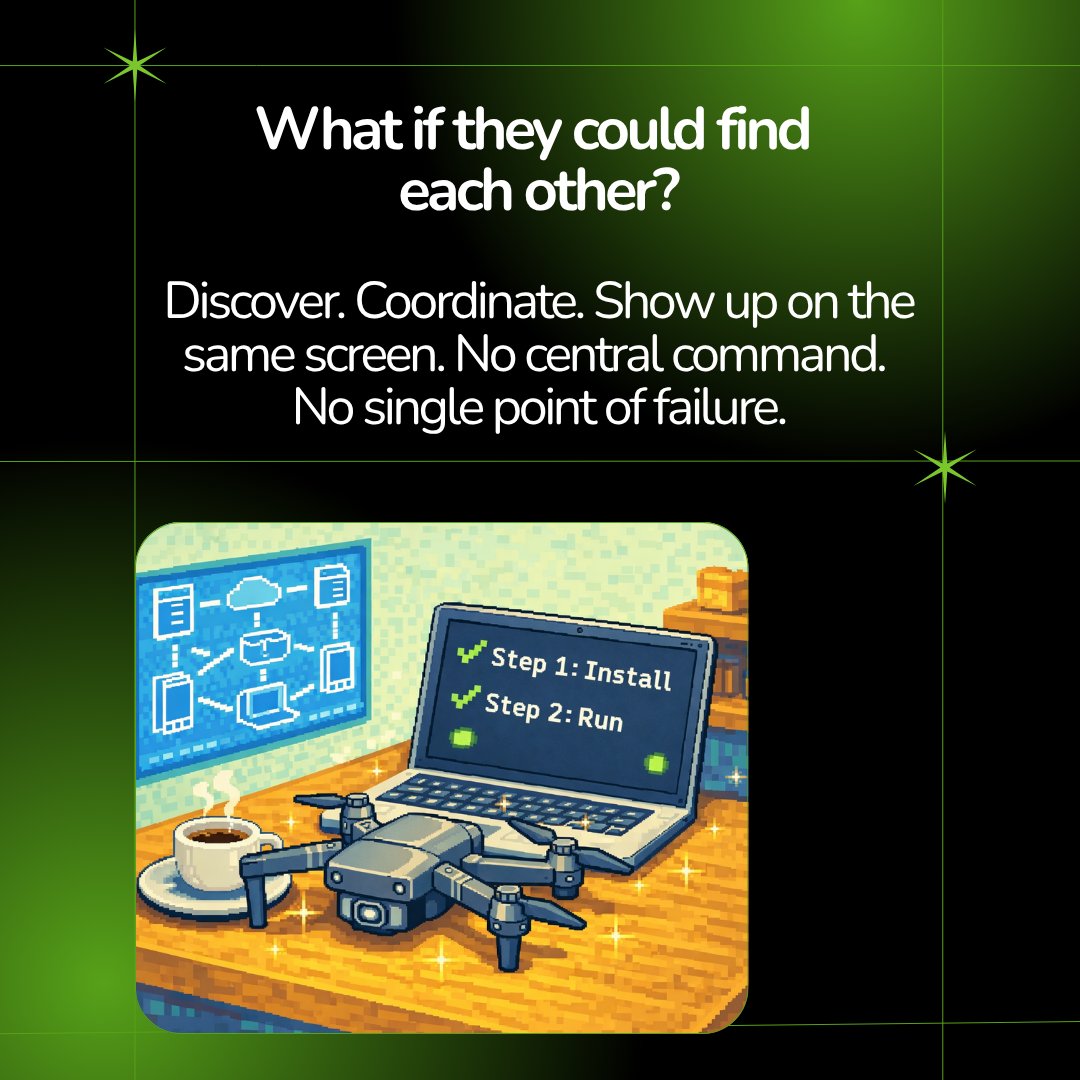
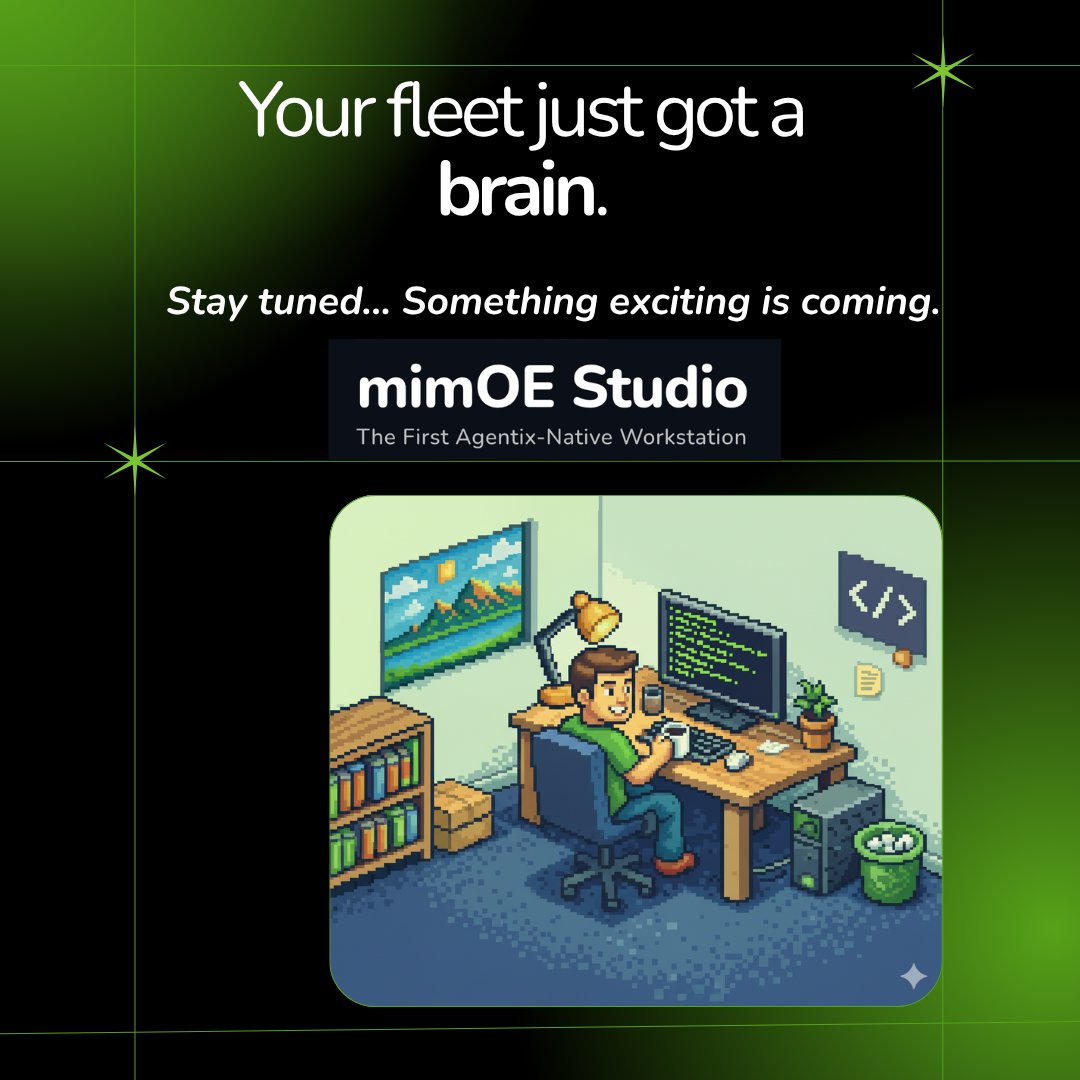
One device running an AI model is easy.
Multiple devices, scattered across locations, some online, some not, all running different models?
That's a whiteboard exercise no one wants to do.
What if the nodes could find each other, coordinate on their own, and show up on the same screen?
💫 We've been working on exactly that.
#AI #DistributedSystems #PlatformEngineering #mimOEStudio #AI #DeveloperTools #AgenticAl #AIEngineering #AIDeployment #ModelDeployment #GGUF #LLMOps #GenAI #OnDeviceAl #LocalLLM #DevEx
1
1
34
Apr 28
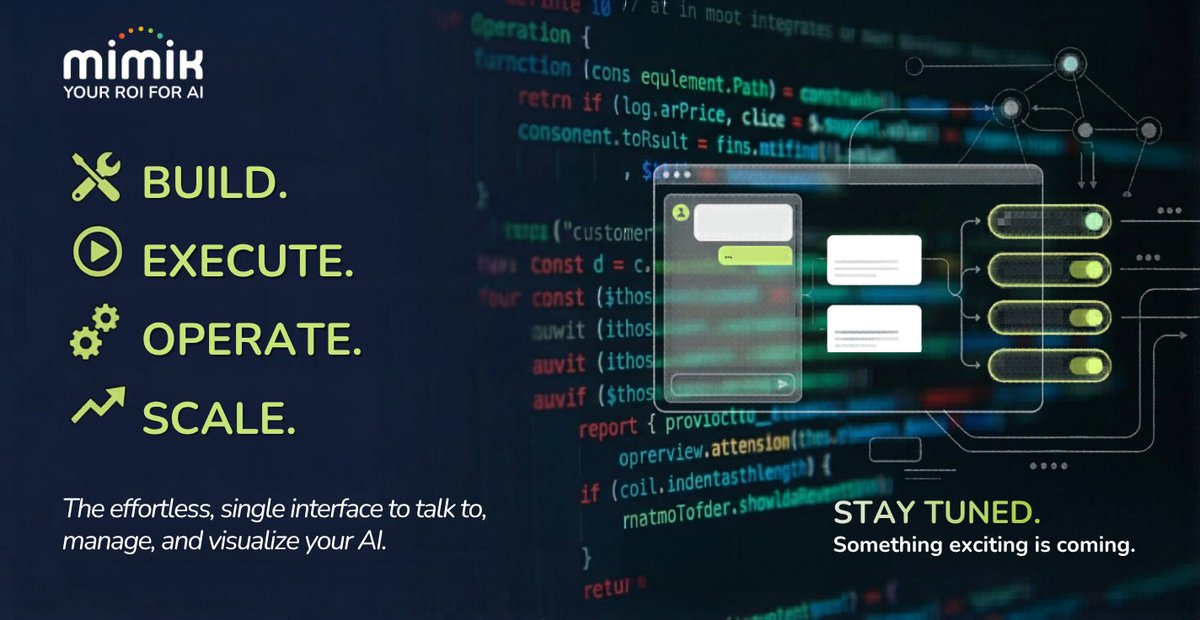
What if there was a better way to see what's happening inside your AI runtime? And an effortless way to talk to it?
What if one simple interface let you build, execute, operate, and scale, all from the same place, with a click?
At mimik, we've been thinking about the same problems you are. And we've been working on something for it.
Stay tuned. Something exciting is coming.
#mimOEStudio #AI #DeveloperTools #AgenticAI #AIEngineering #AIDeployment #ModelDeployment #GGUF #LLMOps #GenAI #OnDeviceAI #LocalLLM #DevEx
38
Apr 24
One brain handles mechanics; the other mingles with the environment. Hardware meets social skills.
Position #mimOE #ROS as the dual-brain approach for intelligent robots that discover, collaborate, and share knowledge across fleets.
#mimik #ARM #PhysicalAI #DFCAI #Nvidia #AMD #AgenticAI #AgentixNative #EdgeAI #DeviceFirst #AIArchitecture #DistributedSystems #Microservices #OnDeviceAI #AIInfrastructure #IndustrialAI #Agentix
1
2
35
Apr 8
If your AI setup comes with a 12-step installation guide, three #config files, and a cloud account you never asked for... there’s a better way.
This quick walkthrough shows how to get #mimOE running on Mac and Linux in literally 2 steps. One command. That’s it. The script handles everything.
No hashtag#cloud. No #API keys. Just your machine doing exactly what you tell it to.
If you’re a developer tired of the gap between “it works in the notebook” and “it runs in production,” this is worth 2 minutes of your time.
🔘 developer.mimik.com/
🔘 github.com/mimik-mimOE/mimOE…
#PhysicalAI #AgenticAI #AgentixNative #DeviceFirst #EdgeComputing #ContinuumAI #EdgeAI #AgenticSystems #AI #Innovation #IndustrialIoT #Partnerships #SOAFEE #Automotive #MCP #OnDeviceAI #LocalAI #AIInference #AIEngineering #MLOps #DevTools #DeveloperCommunity @nvidia @NVIDIAAI @TechCrunch @ollama @huggingface @linuxfoundation @LangChain @github @Fayarjomandi @siavashalamouti
1
1
78
Mar 12
Last chance to experience # PhysicalAI that you can touch, test, and deploy.
embedded world Exhibition&Conference 2026 ends today, but the systems we've demonstrated this week will define industrial automation for the next decade.
You've heard the vision: machines that sense, reason, act, and learn continuously. Systems that adapt in real time. Intelligence that lives at the edge and operates when everything else fails.
Now you can see it working.
If you're architecting the future of manufacturing, logistics, security, or smart infrastructure, then this is the conversation that matters.
→ Hall 4, Booth 4-504. Don't leave Nuremberg without stopping by.
Learn more about mimik at: mimik.com
#ew26 #embeddedworld #PhysicalAl #AgenticAl #AgentixNative #DeviceFirst #EdgeComputing #ContinuumAl #EdgeAl #AgenticSystems #AI #Innovation #IndustrialloT #Partnerships #SOAFEE #Automotive #mimOE #MCPNews #MCP @nvidia @NVIDIAAI @NVIDIADRIVE @AdvantechEurope @Advantech_eIoT @linuxfoundation @Edge_IR @bosh @TechCrunch @WIRED @IEEEorg @Fayarjomandi @siavashalamouti @SamArmani
1
1
36
Mar 10
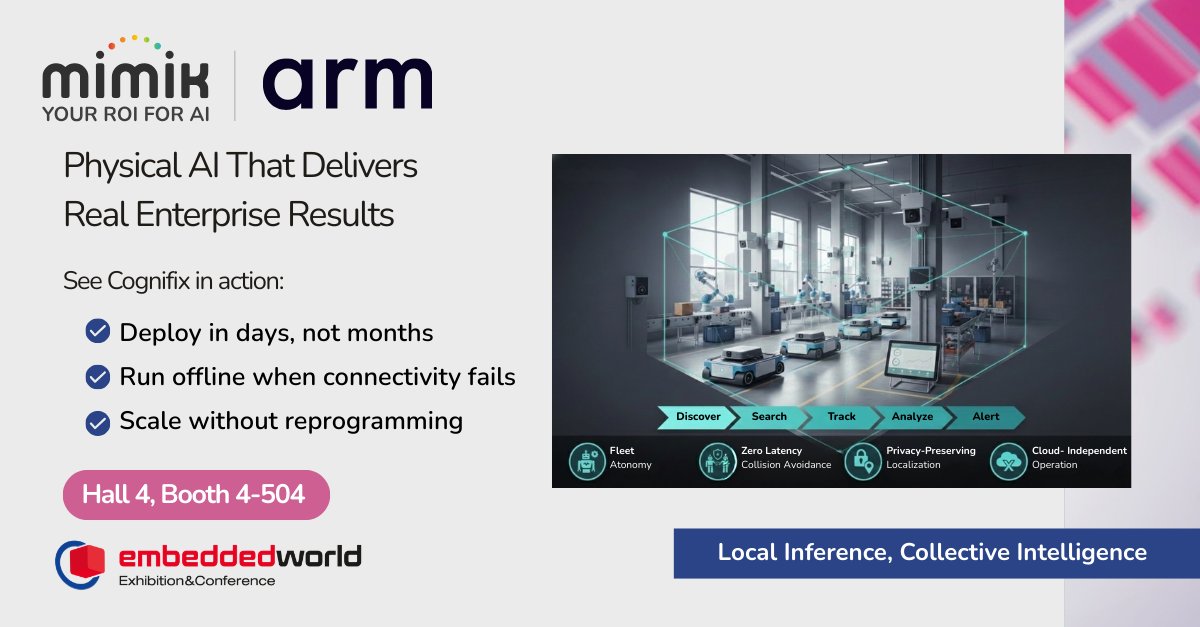
Visit us at Embedded World to see #PhysicalAI in action.
At embedded world Exhibition&Conference 2026, mimik and Arm go live with a working system that answers the question every enterprise is asking: how do machines move from isolated tools to #intelligent, #collaborative systems.
You'll see Cognifix in action, #Arm-powered cameras, robots, and controllers operating as a unified #PhysicalAI mesh that reasons locally, adapts in real time, and keeps running when connectivity fails.
This isn't a concept. It's a working system solving real operational challenges for the $1T Physical AI economy.
If you're architecting autonomous factories, intelligent logistics, or adaptive infrastructure, this is the conversation that matters.
→ Visit us at Hall 4, Booth 4-504.
Learn more about mimik at: mimik.com
#ew26 #embeddedworld #PhysicalAl #AgenticAl #AgentixNative #DeviceFirst #EdgeComputing #ContinuumAl #EdgeAl #AgenticSystems #AI #Innovation #IndustrialloT #Partnerships #SOAFEE #Automotive #mimOE #MCPNews #MCP @nvidia @NVIDIAAI @NVIDIADRIVE @AdvantechEurope @Advantech_eIoT @linuxfoundation @Edge_IR @bosh @TechCrunch @WIRED @IEEEorg @Fayarjomandi @siavashalamouti @SamArmani
1
1
44
Mar 4
In real operations, the unexpected isn't an exception; it's the norm.
Traditional automation breaks when conditions change. Physical AI adapts.
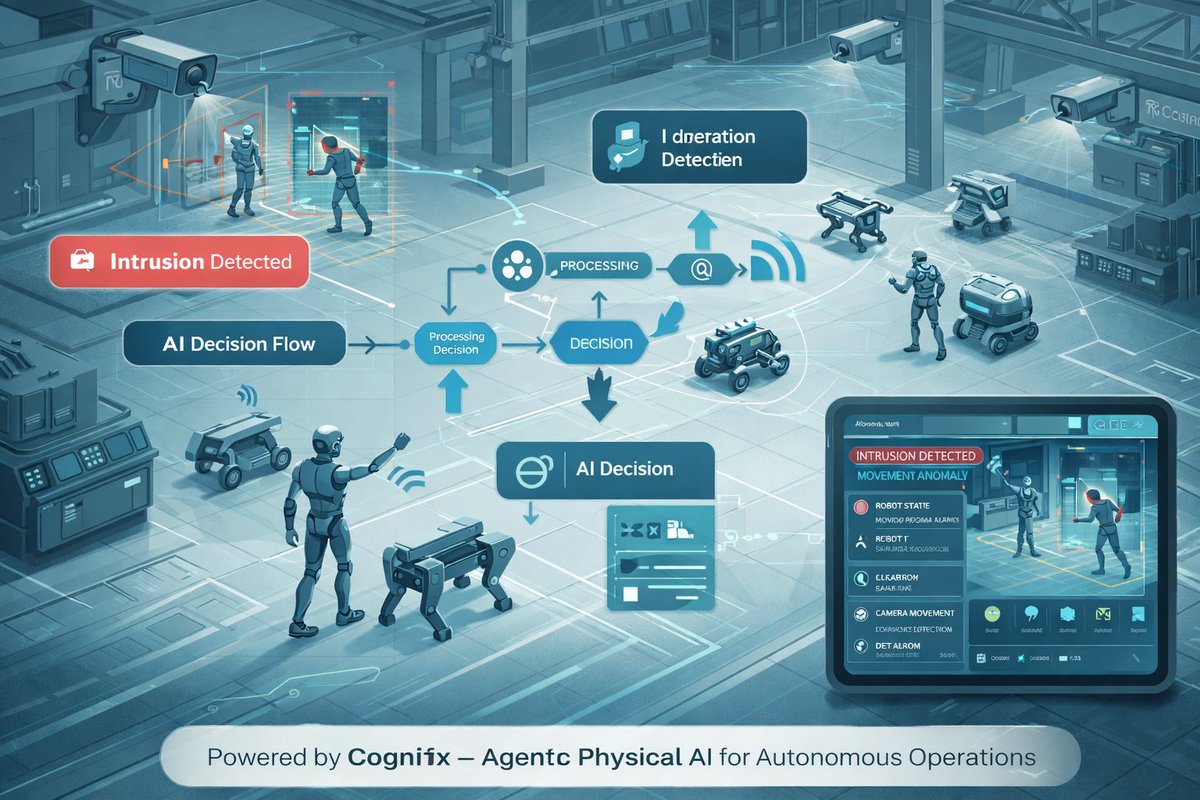
At the #embeddedWorld, we'll demonstrate a 𝐧𝐞𝐯𝐞𝐫-𝐫𝐞𝐡𝐞𝐚𝐫𝐬𝐞𝐝 𝐝𝐢𝐬𝐭𝐮𝐫𝐛𝐚𝐧𝐜𝐞, an unknown object enters into a restricted zone, a blocked aisle, an anomaly robots weren’t programmed for, to demonstrate how physical AI can trigger autonomous, coordinated responses.
𝐬𝐮𝐛-𝐬𝐞𝐜𝐨𝐧𝐝 𝐥𝐚𝐭𝐞𝐧𝐜𝐲. 𝐧𝐨 𝐜𝐥𝐨𝐮𝐝 𝐝𝐞𝐩𝐞𝐧𝐝𝐞𝐧𝐜𝐲. 𝐧𝐨 𝐡𝐮𝐦𝐚𝐧 𝐢𝐧𝐭𝐞𝐫𝐯𝐞𝐧𝐭𝐢𝐨𝐧 𝐫𝐞𝐪𝐮𝐢𝐫𝐞𝐝.
This is what separates rigid programming from adaptive robotics, giving them the intelligence to perceive variability and maintain performance when the playbook runs out.
𝐓𝐡𝐞 𝐟𝐮𝐭𝐮𝐫𝐞 𝐛𝐞𝐥𝐨𝐧𝐠𝐬 𝐭𝐨 𝐬𝐲𝐬𝐭𝐞𝐦𝐬 𝐭𝐡𝐚𝐭 𝐡𝐚𝐧𝐝𝐥𝐞 𝐰𝐡𝐚𝐭 𝐭𝐡𝐞𝐲'𝐯𝐞 𝐧𝐞𝐯𝐞𝐫 𝐬𝐞𝐞𝐧 𝐛𝐞𝐟𝐨𝐫𝐞.
→ Watch Physical AI handle the unexpected at Hall 4, Booth 4-504.
Learn more about mimik at: mimik.com
#ew26 #embeddedworld #PhysicalAl #AgenticAl #AgentixNative #DeviceFirst #EdgeComputing #ContinuumAl #EdgeAl #AgenticSystems #AI #Innovation #IndustrialloT #Partnerships #SOAFEE #Automotive #mimOE #MCPNews #MCP
@nvidia @NVIDIAAI @NVIDIADRIVE @AdvantechEurope @Advantech_eIoT @linuxfoundation @Edge_IR @bosh @TechCrunch @WIRED @IEEEorg @Fayarjomandi @siavashalamouti @SamArmani
1
29
Mar 3
What does it look like when machines stop being tools and become #intelligent partners?
Our embedded world demo answers that question with a realistic "𝐦𝐢𝐜𝐫𝐨-𝐟𝐚𝐜𝐭𝐨𝐫𝐲 𝐬𝐞𝐜𝐮𝐫𝐢𝐭𝐲" Powered by @Arm technology, mimik enables cameras, robots, access controllers, and gateways to operate as a single autonomous nervous system.
Each device contributes perception, reasoning, or action. mimik's platform ensures they operate as a coordinated whole; sensing variability, making real-time decisions, and acting reliably without constant human intervention.
Manufacturing facilities implementing #PhysicalAI report 20-40% productivity gains.
Our demo shows you exactly how. Come see #PhysicalAI move from experiment to #enterprise reality.
→ Join us at Hall 4, Booth 4-504.
Learn more about mimik at: mimik.com
#ew26 #embeddedworld #PhysicalAl #AgenticAl #AgentixNative #DeviceFirst #EdgeComputing #ContinuumAl #EdgeAl #AgenticSystems #AI #Innovation #IndustrialloT #Partnerships #SOAFEE #Automotive #mimOE #MCP
@nvidia @NVIDIAAI @NVIDIADRIVE @AdvantechEurope @Advantech_eIoT @linuxfoundation @Edge_IR @bosh @TechCrunch @WIRED @IEEEorg @Fayarjomandi @siavashalamouti @SamArmani
35
Feb 26
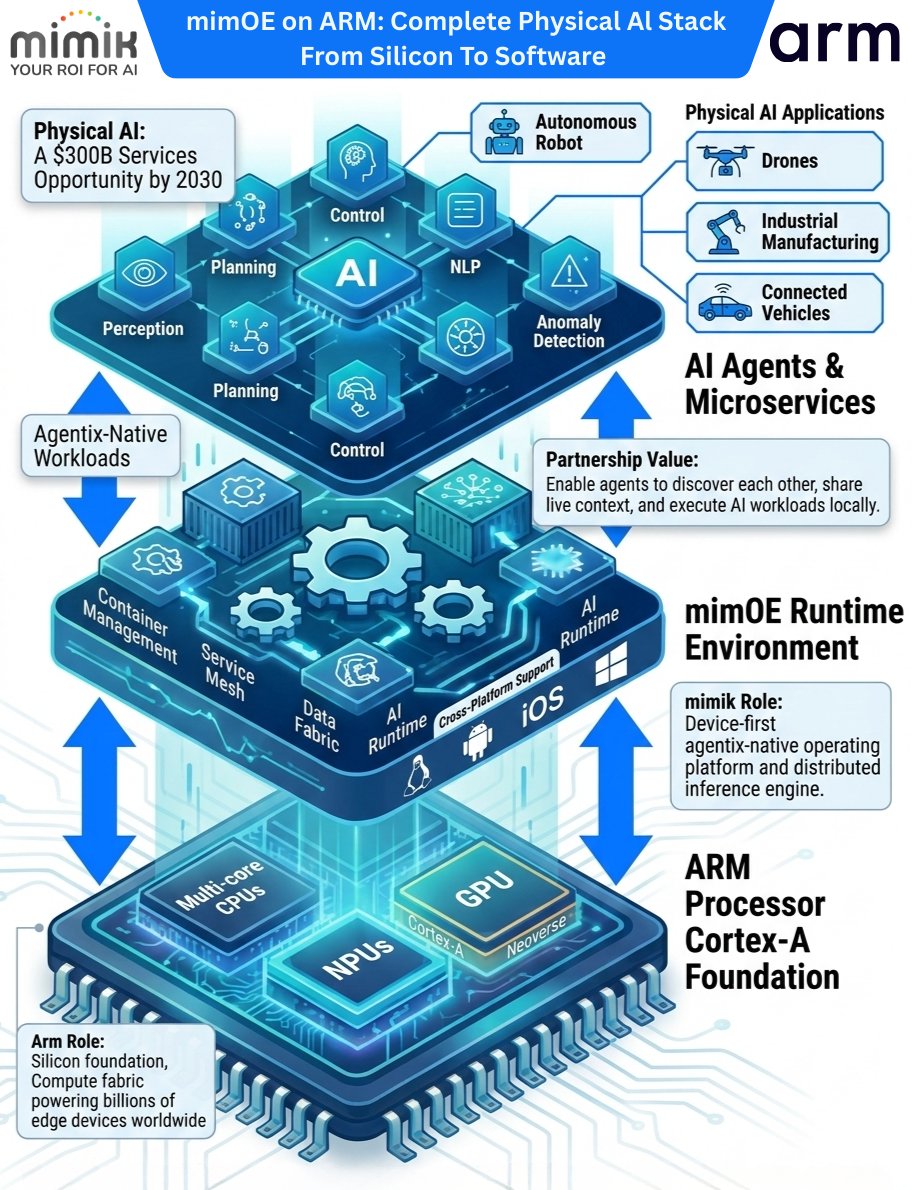
#PhysicalAI will be a $300B services opportunity by 2030, but capturing it requires more than powerful silicon or smart software alone. At embedded world Exhibition&Conference, we're demonstrating the complete architecture:
🔹 @Arm provides the silicon foundation, the compute fabric powering billions of devices worldwide.
🔹 mimik delivers the device-first agentix-native operating platform and distributed inference engine that transforms every device into an autonomous, collaborative node.
Together, mimik and Arm will enable something unprecedented: agents across Arm-powered devices that discover each other, share live context, and execute AI workloads locally.
This partnership doesn't just power devices. It architects the systems that will define how industries build, move, and serve in the decade ahead.
→ Discover the architecture at Hall 4, Booth 4-504.
Learn more about mimik mimik.com
#ew26 #embeddedworld #PhysicalAl #AgenticAl #AgentixNative #DeviceFirst #EdgeComputing #ContinuumAl #EdgeAl #AgenticSystems #AI #Innovation #IndustrialloT #Partnerships #SOAFEE #Automotive #mimOE #MCP @nvidia @NVIDIAAI
@NVIDIADRIVE @AdvantechEurope @Advantech_eIoT @linuxfoundation @Edge_IR @bosh @TechCrunch @WIRED @IEEEorg @Fayarjomandi @siavashalamouti @SamArmani
1
1
31
Feb 25
𝐓𝐡𝐞 𝐰𝐨𝐫𝐥𝐝 𝐢𝐭𝐬𝐞𝐥𝐟 𝐢𝐬 𝐛𝐞𝐜𝐨𝐦𝐢𝐧𝐠 𝐚𝐧 𝐢𝐧𝐭𝐞𝐥𝐥𝐢𝐠𝐞𝐧𝐭 𝐬𝐲𝐬𝐭𝐞𝐦, 𝐨𝐛𝐬𝐞𝐫𝐯𝐢𝐧𝐠, 𝐫𝐞𝐚𝐬𝐨𝐧𝐢𝐧𝐠, 𝐚𝐧𝐝 𝐚𝐜𝐭𝐢𝐧𝐠 𝐜𝐨𝐧𝐭𝐢𝐧𝐮𝐨𝐮𝐬𝐥𝐲.
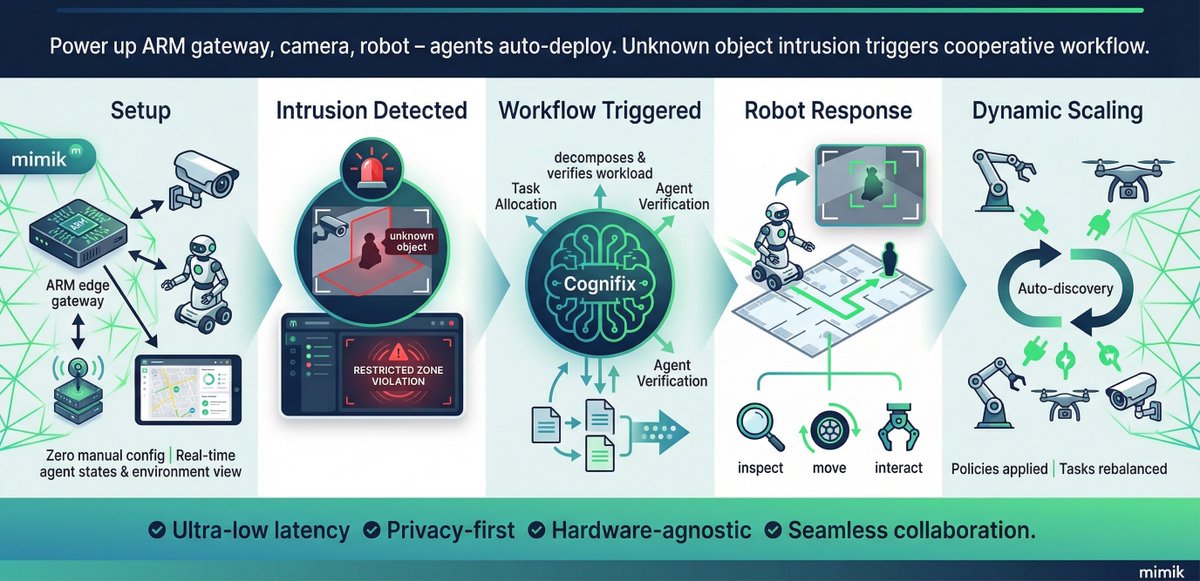
At embedded world Exhibition&Conference, we're demonstrating Cognifix: mimik's breakthrough approach to collaborative, offline-first intelligence for physical environments.
Cognifix fuses local AI inference, policy-driven coordination, and dynamic workload placement across devices, thus enabling robots and cameras to perceive variability, share context and execute decisions together in real time.
The result: Physical AI solutions that deliver adaptive, context-aware autonomy, that operate when internet connectivity fails, learn and respond dynamically to newly added devices and transform rigid automation into intelligent orchestration.
This is Physical AI that doesn't just perform tasks, it adapts to them.
🔘 Experience Cognifix firsthand at Hall 4, Booth 4-504.
Learn more about mimik mimik.com
#ew26 #embeddedworld #PhysicalAl #AgenticAl #AgentixNative #DeviceFirst #EdgeComputing #ContinuumAl #EdgeAl #AgenticSystems #AI #Innovation #IndustrialloT #Partnerships #SOAFEE #Automotive #mimOE #MCP @nvidia
@NVIDIAAI @NVIDIADRIVE @AdvantechEurope @Advantech_eIoT @linuxfoundation @Edge_IR
@bosh @TechCrunch @WIRED @IEEEorg @Fayarjomandi @siavashalamouti @SamArmani
21
Feb 19
The $1 trillion #PhysicalAI economy won't be built on fragmented systems.
Today, robots, cameras, controllers, and gateways operate as isolated islands stitched together through brittle integrations and centralized cloud orchestration that breaks exactly when you need it most.
This isn't just inefficient. It's a structural barrier to the autonomous, adaptive systems that will define industrial competitiveness in 2030.
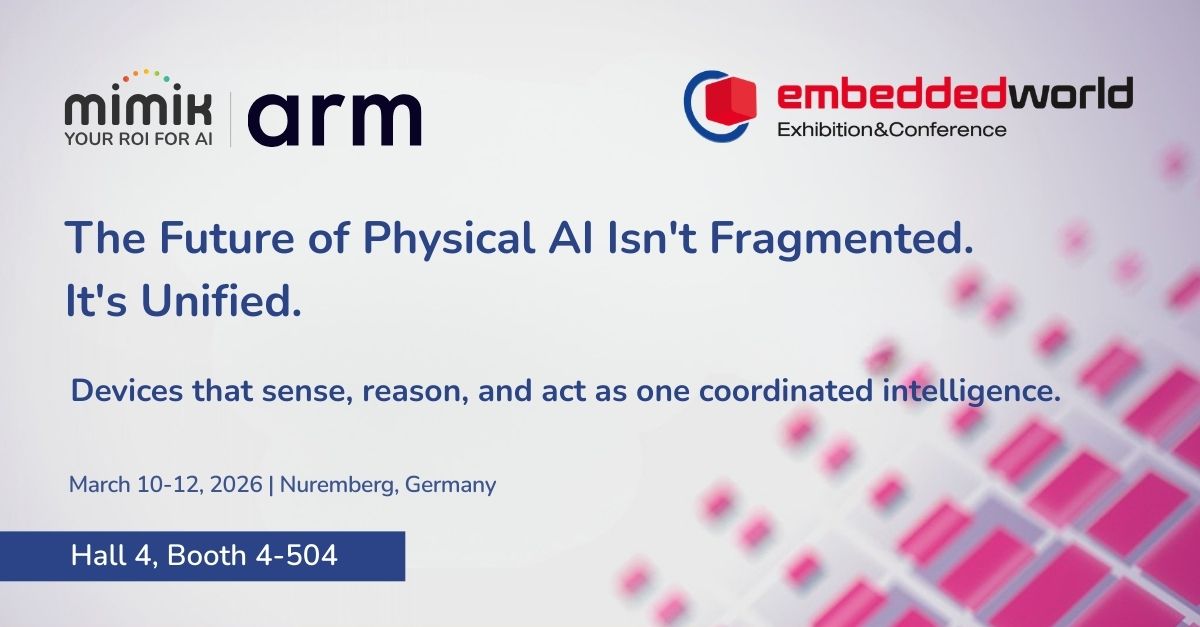
At Embedded World, we're demonstrating an alternative: heterogeneous @Arm-based devices that self-organize into a unified Physical AI mesh, sensing, reasoning, and acting as one coordinated intelligence from on-devices to cloud.
This is how machines become intelligent partners, not just tools.
→ See the future of autonomous operations live at Hall 4, Booth 4-504.
#ew26 #embeddedworld #PhysicalAI #AgenticAI #AgentixNative #DeviceFirst #EdgeComputing #ContinuumAI #EdgeAI #AgenticSystems #AI #Innovation #IndustrialIoT #Partnerships #SOAFEE #Automotive #mimOE #MCP @ArmEmbedded
@nvidia @NVIDIAAI @NVIDIADRIVE @AdvantechEurope @Advantech_eIoT @linuxfoundation @Edge_IR @bosh @TechCrunch @WIRED @IEEEorg @Fayarjomandi @siavashalamouti @SamArmani
1
1
65
Feb 18
We’re heading to Embedded World 2026 in Nuremberg – and bringing Physical AI you can touch, test, and deploy.
This year, @mimik joins @Arm in Hall 4, Booth 4-504 to demonstrate how Physical AI stops being a POC and becomes a real-world operational nervous system across sensors, cameras, robots, and controllers.
On the show floor, you’ll see a live Physical AI Operations Mesh where Arm-powered devices automatically discover each other, share live context, and push AI workloads out across the system, with no central cloud orchestration or edge gateway slowing everything down.
→ Swing by the Arm booth, Hall 4, Booth 4-504, and experience how mimik’s device-first agentix-native operating environment lets you launch Physical AI solutions that easily scale as you add devices, and keep running when the network doesn’t.
Learn more about mimik mimik.com
#ew26 #embeddedworld #PhysicalAI #AgenticAI #AgentixNative #DeviceFirst #EdgeComputing #ContinuumAI #EdgeAI #AgenticSystems #AI #Innovation #IndustrialIoT #Partnerships #SOAFEE #Automotive #mimOE #MCP

1
48
Jan 6
Software-defined vehicles can’t afford cloud dependency.
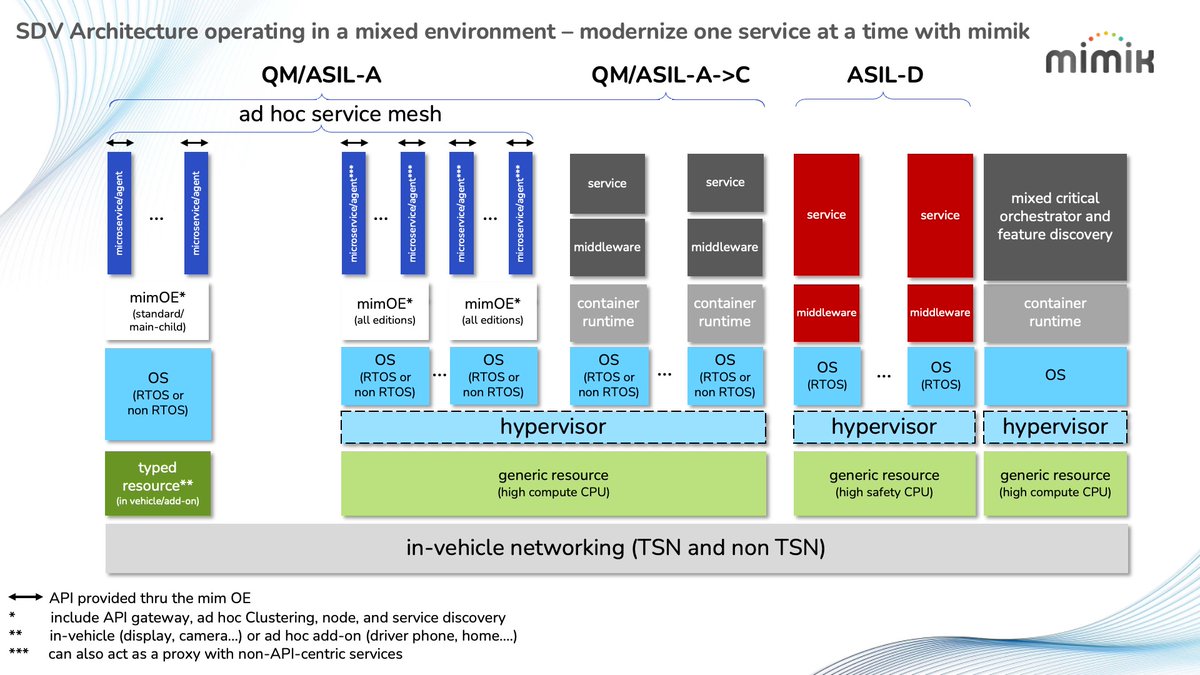
That’s why mimik is bringing in-vehicle APIs, AI inference, and an MCP gateway directly into the SOAFEE Blueprint Architecture.
With mimOE, vehicle services and AI agents run locally, discover each other dynamically, and operate safely—even when connectivity drops. By integrating the Model Context Protocol (MCP), SOAFEE services become AI-native tools that agents can call, negotiate, and coordinate in real-time.
The result:
🔘 Offline-first, resilient vehicle intelligence
🔘 Incremental adoption without re-architecture
🔘 OStandards-aligned innovation for OEMs and Tier 1s
Read the full blog to explore how #SOAFEE and mimik enable AI-native, vehicle-first architectures — then watch the video below for the full technical walkthrough.
mimik.com/mimik-soafee-bluep…
#SoftwareDefinedVehicles #AutomotiveAI #AgenticAI #mimik #VehicleIntelligence #SOAFEEBlueprint #MCP #CES2026 #ModelContextProtocol #ContinuumAI #OfflineFirstAI #IntelligentVehicles #AIWorkloads #MicroservicesArchitecture #EcosystemCollaboration #SDV @Arm @EDGE @tech_mahindra @nvidia @CES @SamArmani @Fayarjomandi @siavashalamouti
1
1
80