
Joined July 2017
- Tweets 223
- Following 903
- Followers 273
- Likes 5,643
2 Photos and videos
Pinned Tweet

10 Nov 2023
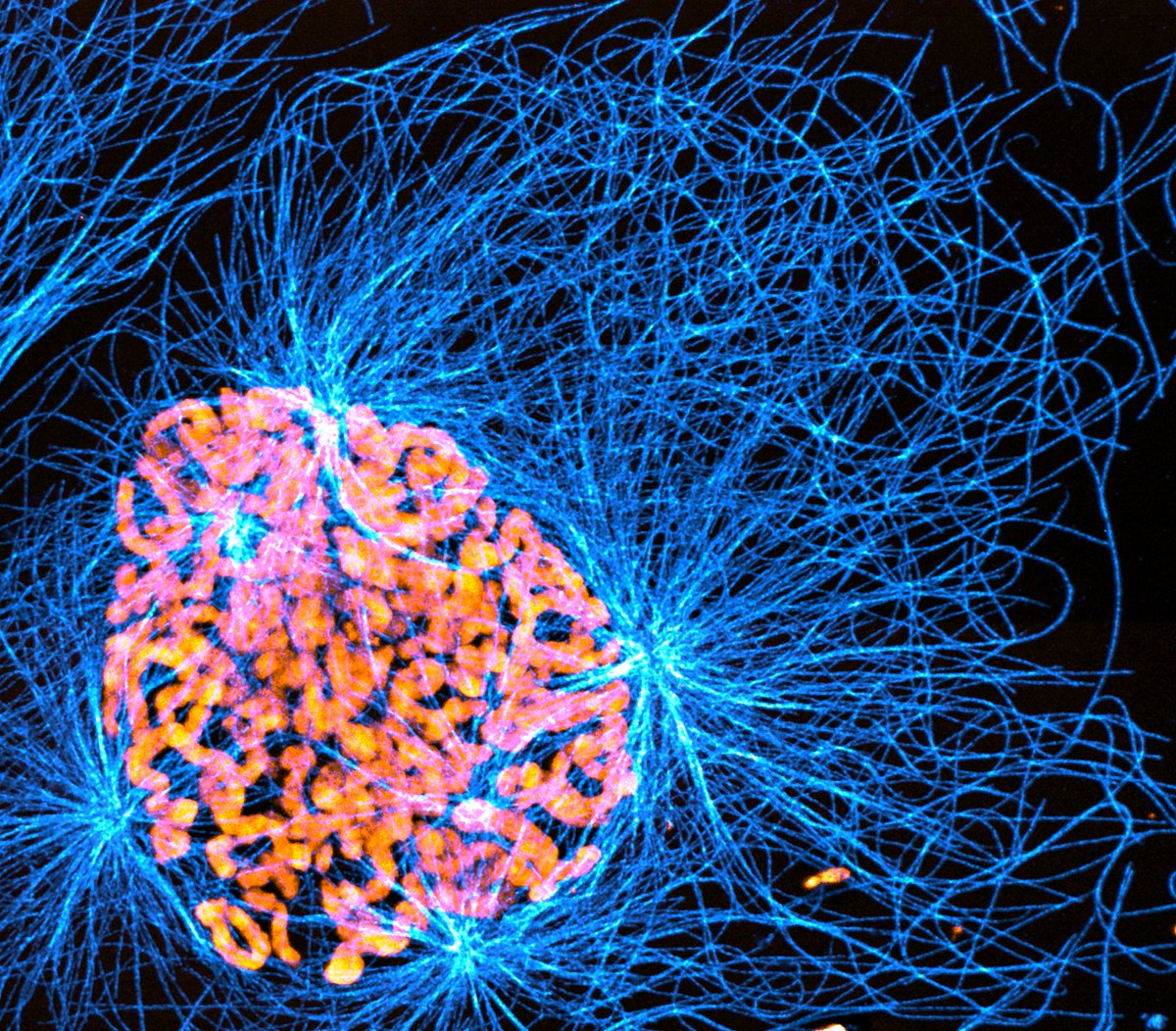
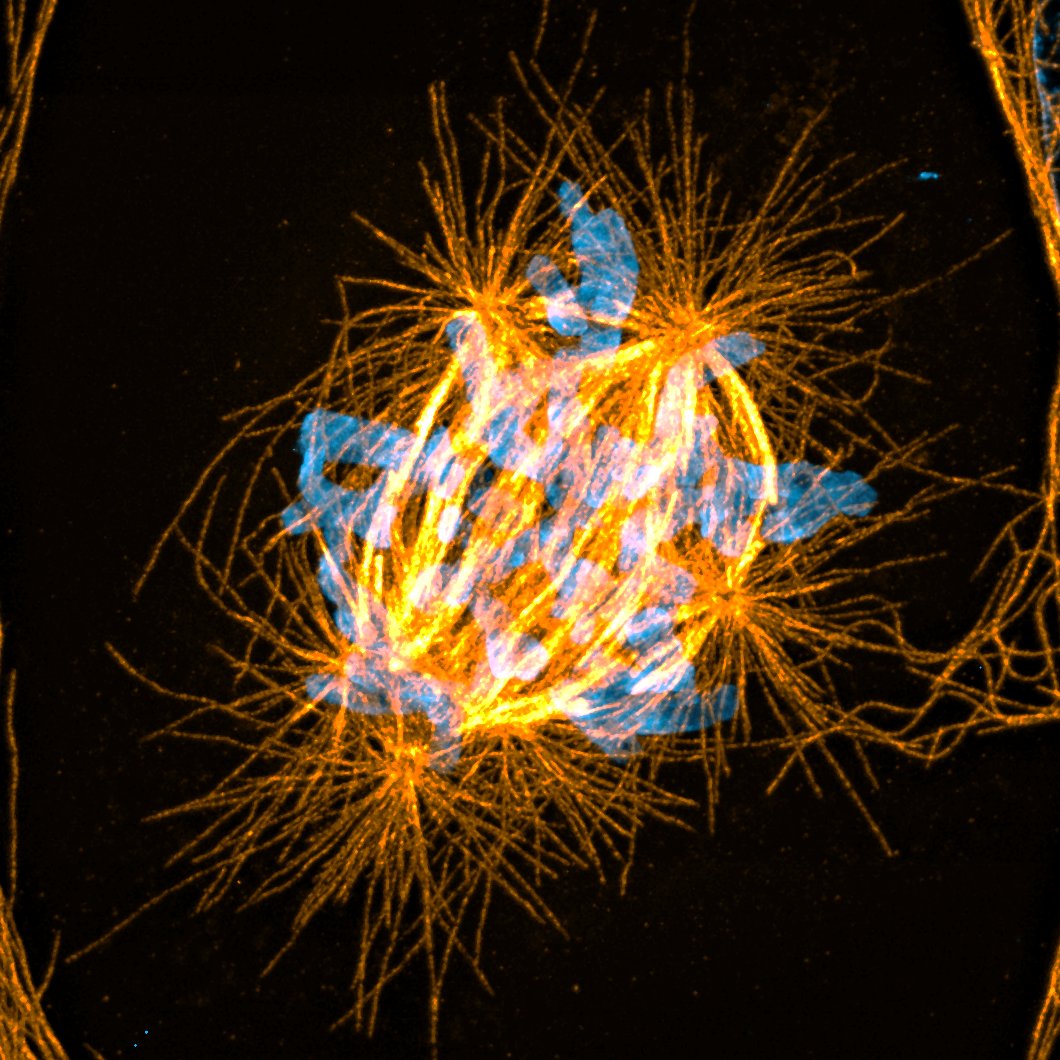
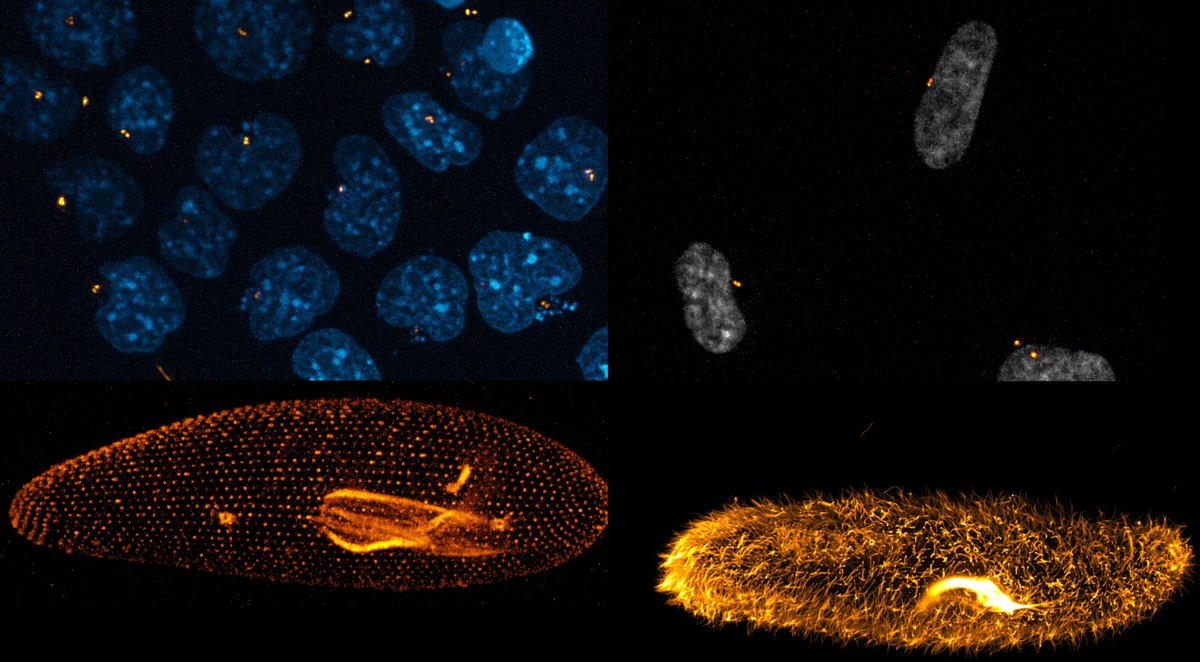
Previous submissions to @NikonSmallWorld. Dividing with too many centrosomes! #FluorescenceFriday #Centrosome
1
21
83
7,814
Reuben Philip retweeted

If you didn't catch our previous Nature paper showing how Cas12a2 can selectively kill cells: nature.com/articles/s41586-0…, you have another chance to see this CRISPR enzyme in action, with work we did in collaboration with the Jennifer Doudna Lab: nature.com/articles/s41586-0…
4
19
113
10,151
Reuben Philip retweeted

Jun 8
Pretty interesting story in @ScienceMagazine this week on what looks like a serious problem in the senescence field. More than 400 papers apparently used the wrong antibody for p16-INK4a — an antibody that actually recognizes a completely different, unrelated protein (a component of the actin cytoskeleton). This affects work on senescent cell accumulation in aging and disease, and most critically, some of the evidence base for senolytic drug research.
What concerns me most is that many of these papers somehow got the "right" answer using the wrong antibody. That's not just an innocent reagent mix-up — it raises real questions about data fabrication or selective reporting in at least some of these labs. I've commented before about how ignoring data that doesn't fit the narrative is a major problem in certain areas of the longevity literature (e.g. sirtuins and NAD), and here a potentially widespread example in senescence.
Hopefully journals will investigate and retract as necessary, but based on my experience that seems optimistic. One concrete fix is that journals should flag problematic antibody product codes at submission so reviewers can catch this before publication. Reviewers should absolutely be on the lookout for this going forward.
However, these fixes won't address the larger problem. We need to understand how these scientists got the results they wanted and published them over 400 times (!!!): whether through intentional deception, incompetence, accident, or some legitimate explanation.
Credit for discovering this goes to @addictedtoigno1 who wrote about it first on his blog: For Better Science
science.org/content/article/…?
23
92
367
98,194
Reuben Philip retweeted

Jun 3
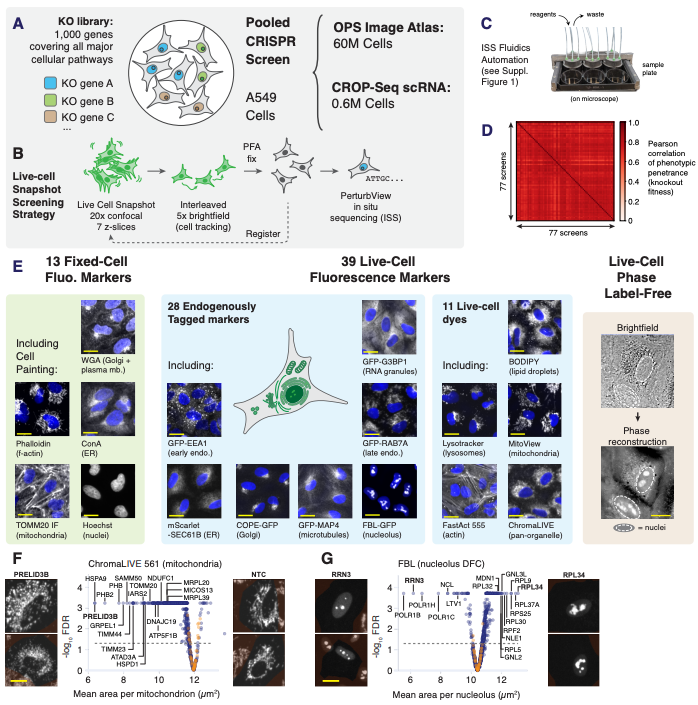
A multimodal perturbation atlas of 1,000 pooled CRISPR knockouts in A549 cells, profiled by fluorescence microscopy (39 live, 13 fixed markers), label-free phase imaging of the same live cells, and single-cell RNA sequencing (scRNA-seq)
Totaling ~57 million single-cell profiles
Preprint: biorxiv.org/content/10.64898…
2
22
85
8,133
Reuben Philip retweeted

Jun 1
Today is the Day, CenSpark650 is available!
Time to get those centrioles and cilia shining under the 🔬objective!
spirochrome.com/product/cens…
video: 20h imaging of primary cilium formation in a single RPE-1 cell stained with CenSpark650.
movie credits: Cédric Pourroy
1
2
11
743
Reuben Philip retweeted

May 29
In a paper just published in @sciencemagazine, we teamed up with @teichlab to construct the most detailed atlas to date of hormone production and action in humans at cellular resolution. (1/8)
Link: science.org/doi/10.1126/scie…
5
93
348
33,358
Reuben Philip retweeted
May 27
📢On June 1st, we will be launching CenSpark650, the very first selective fluorescent probe for imaging centrioles and cilia in live cells.🔬
No transfection, zero genetic manipulation. Just Add & Image 1 hour later.
Learn more: spirochrome.com/12-may-2026/ #Bioimaging
2
4
12
573
Reuben Philip retweeted

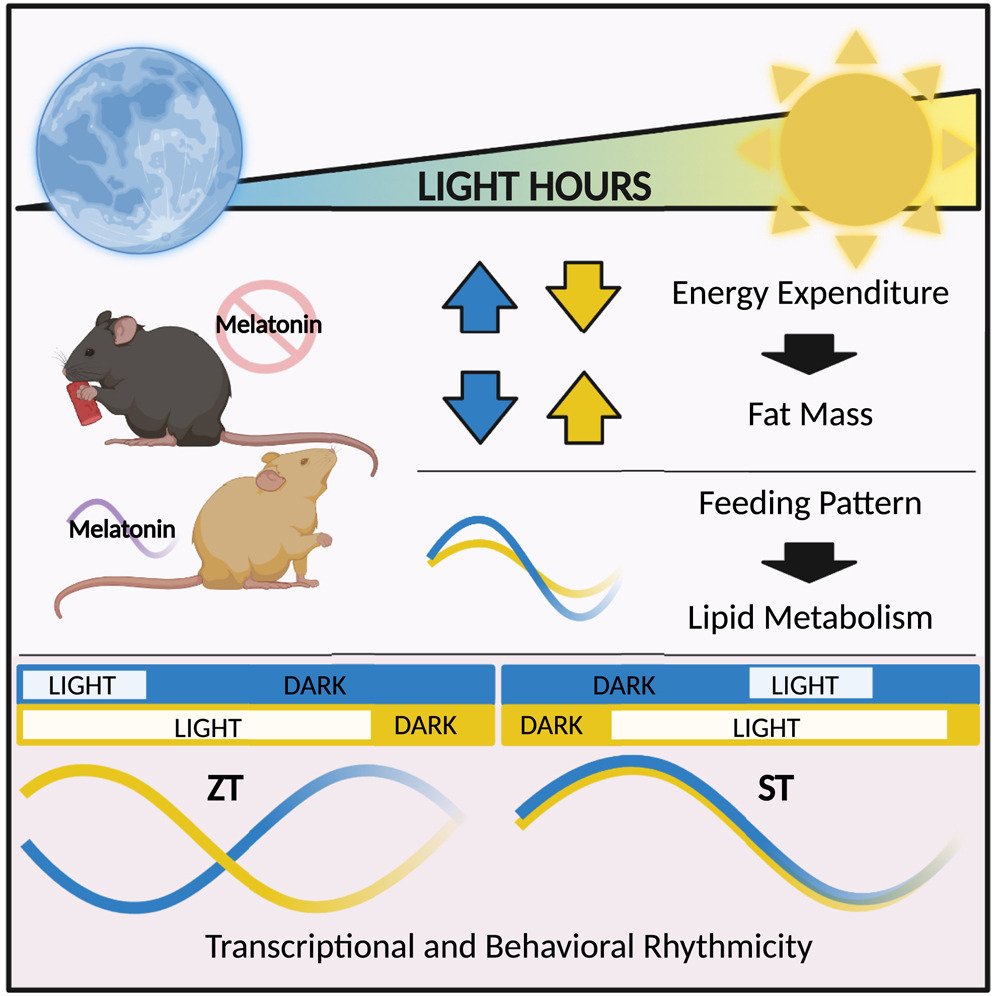
Seasonal light hours modulate peripheral clocks and energy metabolism in mice
cell.com/cell-metabolism/ful…
1
24
85
4,489
Reuben Philip retweeted
Antigen-stabilizable fluorescent nanobodies that become fluorescent upon binding intracellular targets enable background-free multicolor imaging and biosensing in living systems. @EinsteinMed @salkinstitute @animmerj
nature.com/articles/s41592-0…
3
36
167
11,735
Reuben Philip retweeted

Apr 29
🚨Prime editing breakthrough (April 29, 2026)
Researchers at UMass Chan Medical School have developed “Prime Assembly”: a method to insert large DNA fragments (up to 11 kb) with high precision and without double-strand breaks in the genome.
They use two pegRNAs plus linear donor templates that assemble inside the cell. It works in quiescent cells and has already been demonstrated by inserting full genes such as dystrophin and CARs.
Prime Assembly (PA) perfectly complements their platform and PASSIGE technology for large insertions, opening the door to more indications (DMD, allogeneic CAR-T, etc.) with lower risk.
Another step that reinforces why prime editing remains the most versatile gene-editing technology.
Source: nature.com/articles/s41586-0…
3
29
168
15,800
Reuben Philip retweeted

Apr 29
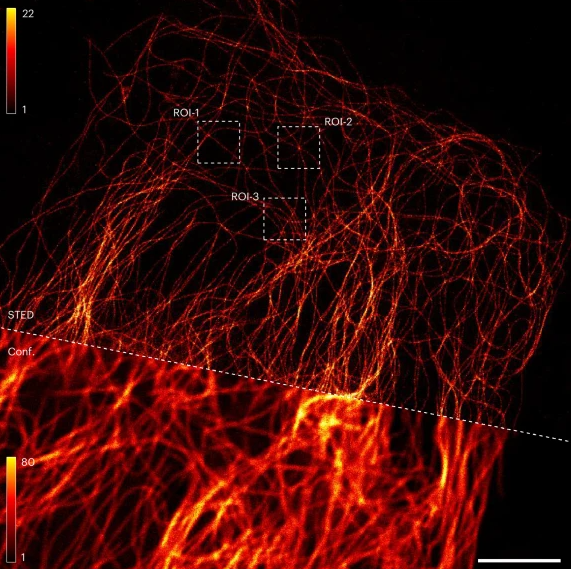
NirFAP680 is a near-IR fluorogen-activating protein with an order of magnitude greater cellular brightness and photostability than currently available NIR FAPs.
nature.com/articles/s41592-0…
12
66
5,567
Reuben Philip retweeted

Apr 29
Excited to announce our study (w/ @RukmanThota & @MaxKrummel) published today @Nature:
Macrophages “hold our living identities” by taking tiny bites from living cells and presenting this information to CD8 T cells.
nature.com/articles/s41586-0…
#immunology #cellbiology @immunox @ucsf
10
68
278
25,265
Reuben Philip retweeted

Mar 30
1/3 Lab #Preprint alert…A cool study led by @MullickSan22454 in collab with @ms_chirps lab showing how tubulin glycylation regulates ciliary motors and MAPs in vitro. @biorxiv_biochem. #glycylation #tubulinPTMs #cilia #Intraflagellartransport. Read more biorxiv.org/content/10.64898…
3
11
62
5,041

In a study by Gori and colleagues, gene editing with a prime editor was used to treat two persons with chronic granulomatous disease caused by a small deletion in the gene NCF1. Full study results: nejm.org/doi/full/10.1056/NE…
Editorial: Genetic Medicine — Primed and Ready nejm.org/doi/full/10.1056/NE…
#Hematology
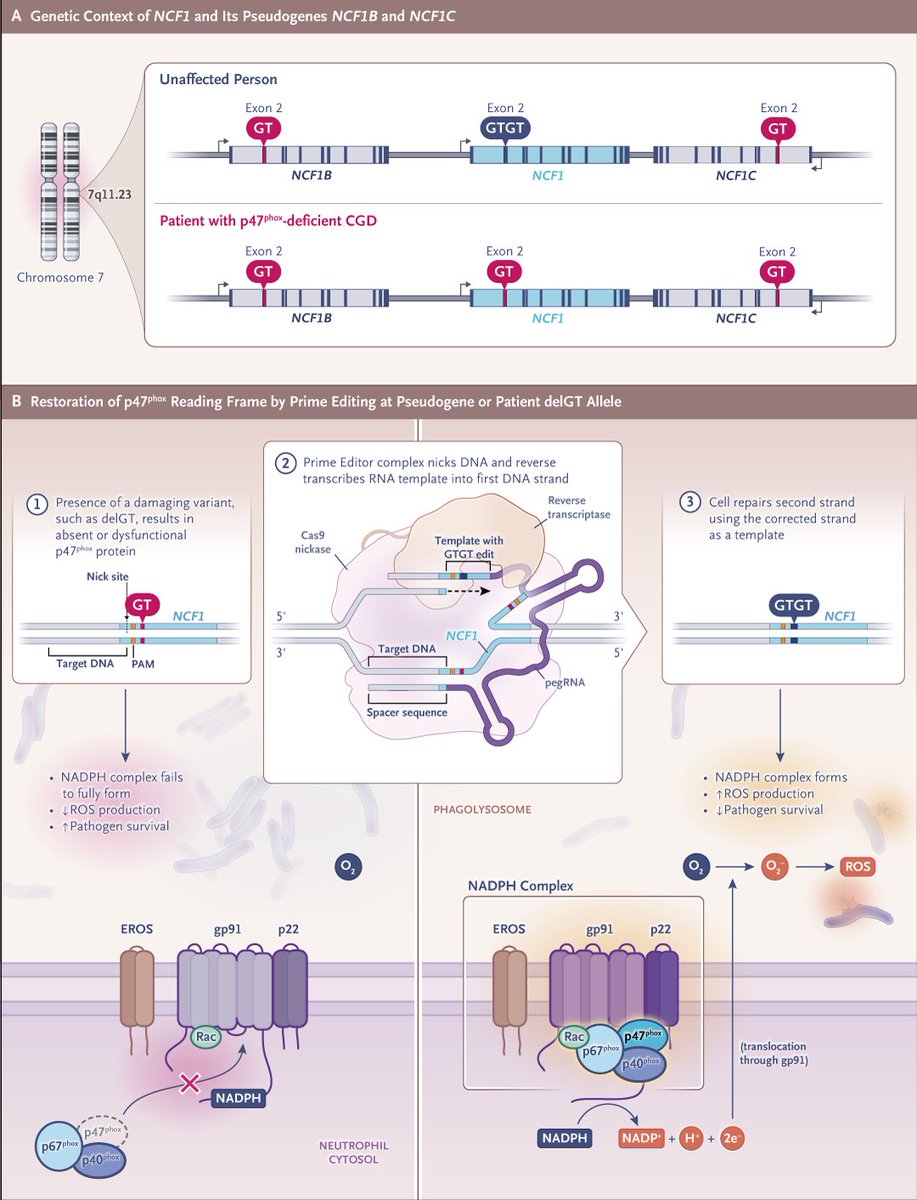
ALT An illustrated diagram of the NCF1 locus and generation of PM359.
24
93
11,121
Reuben Philip retweeted

Mar 31
池尾聡さんと谷佑太さんの「“呼吸する”肺オルガノイド!?」がBiomaterials誌に掲載されました!ヒトiPS細胞由来の肺腺房様オルガノイドを初めて作製し、内部から膨らませ力学的な刺激を与え、その特性を計測できます。
sciencedirect.com/science/ar…
プレス:iis.u-tokyo.ac.jp/ja/news/50…
#Organoid #PAcinOs
17
125
10,419

PFA ependymoma is among the deadliest childhood brain tumors. And for years, one of the most striking mysteries was this: boys get it more often, and do worse. Nobody knew why.
Now we do.
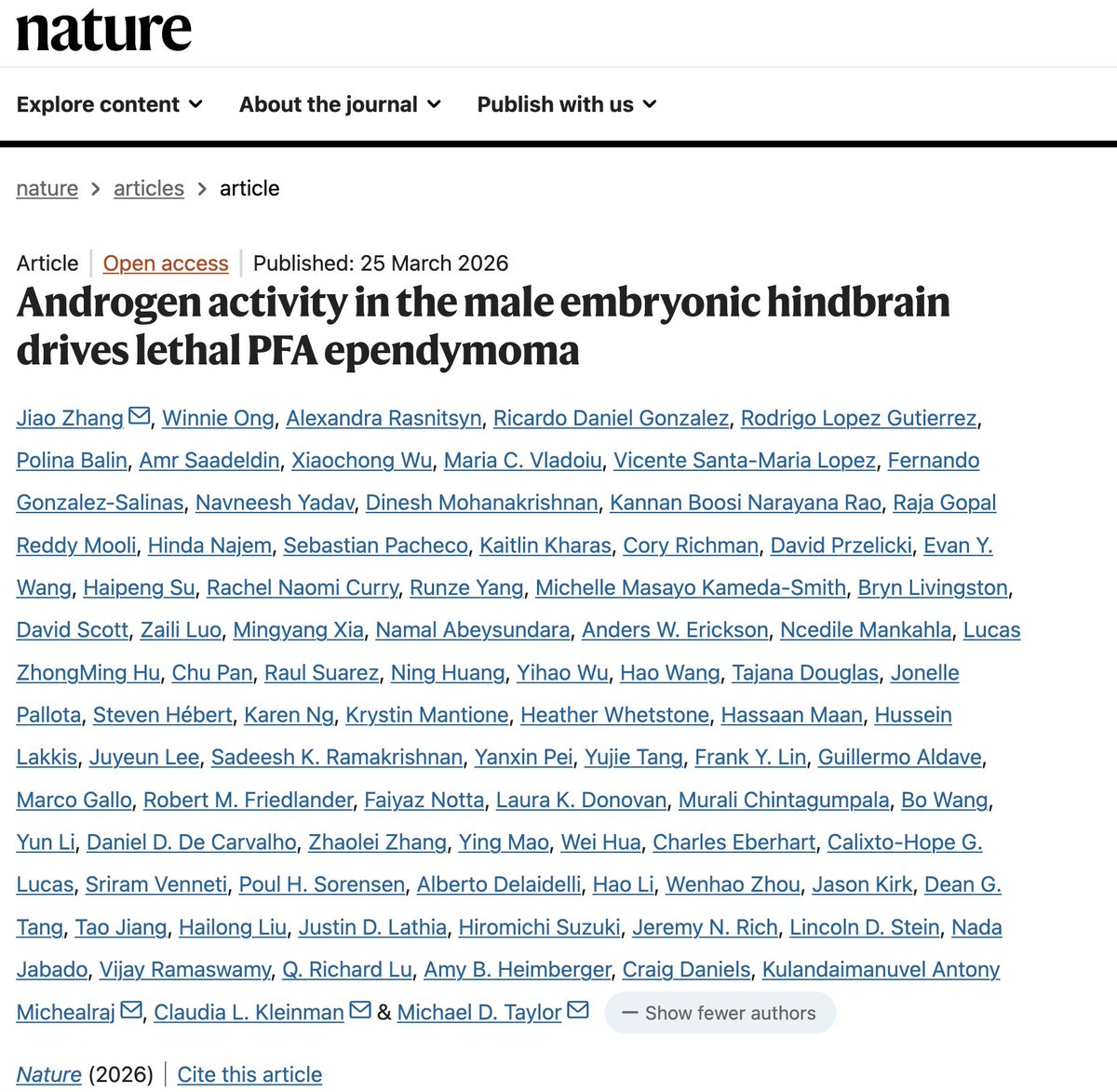
Thrilled to share our new paper in @Nature : Androgen activity in the male embryonic hindbrain drives lethal PFA ependymoma
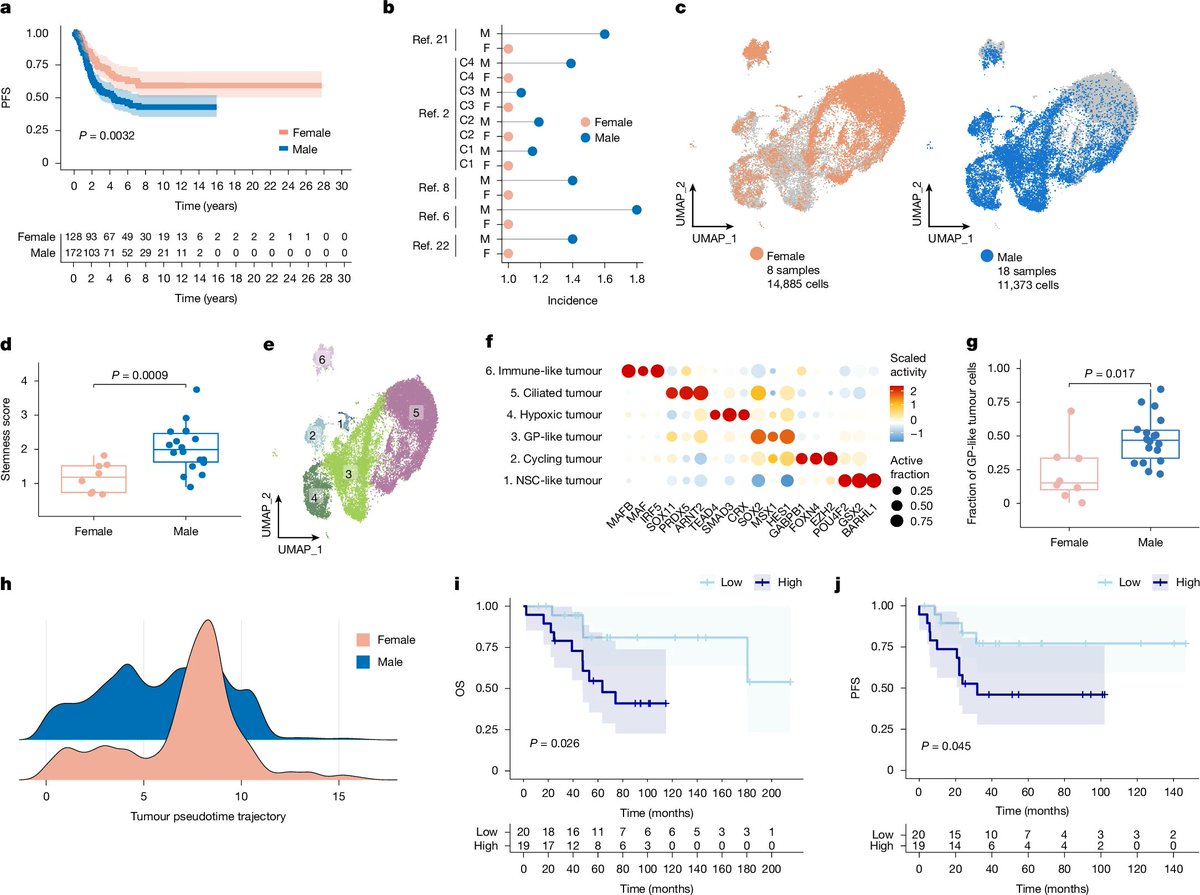
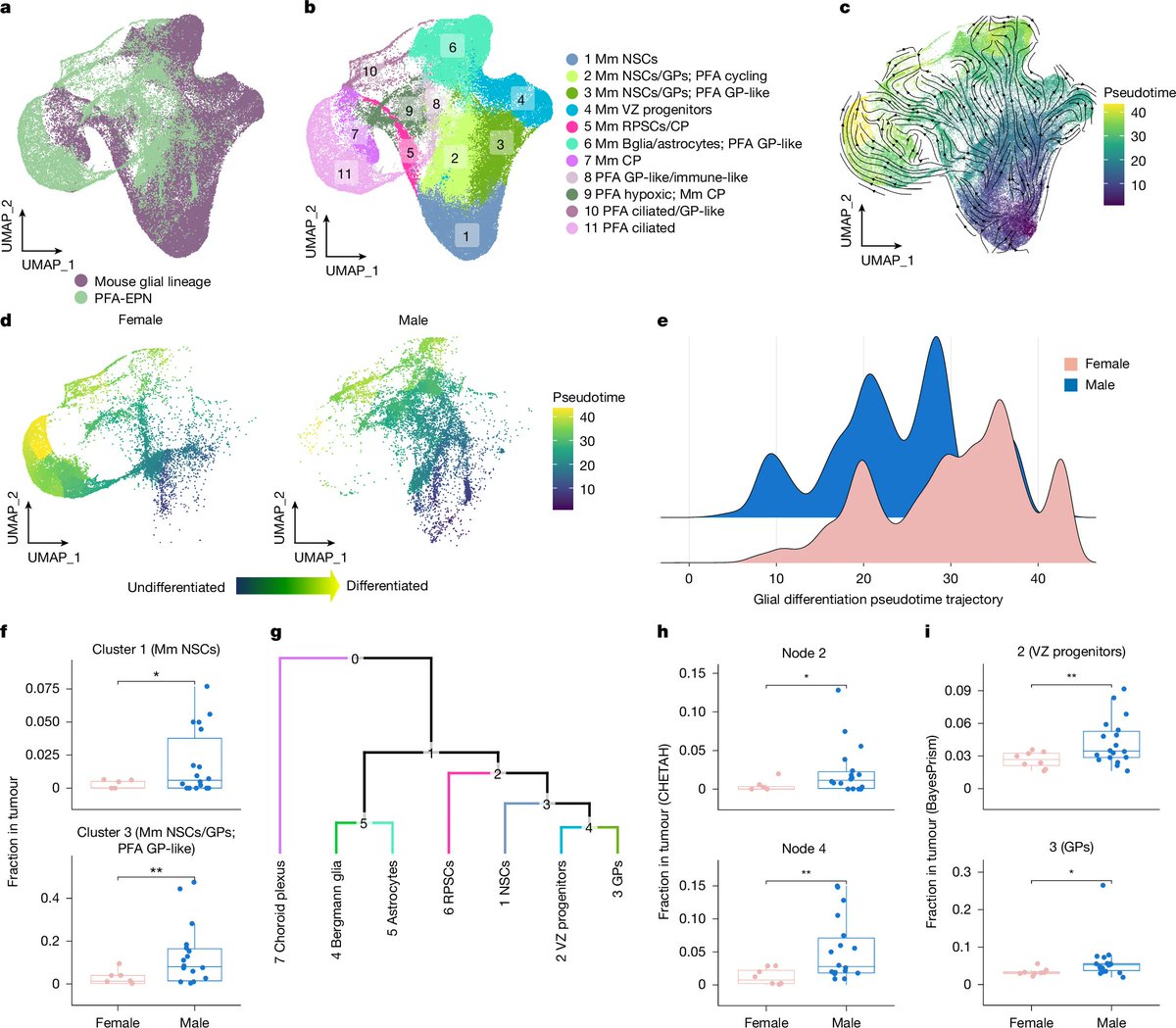
Using scRNA-seq from 26 primary PFA tumors, we found that male tumors are shifted toward a more stem-like, less differentiated state — with a striking enrichment of gliogenic progenitor-like cells. In other words: male PFA tumors appear developmentally “younger,” stalled earlier along the glial differentiation trajectory.
Then came the key mechanistic result.
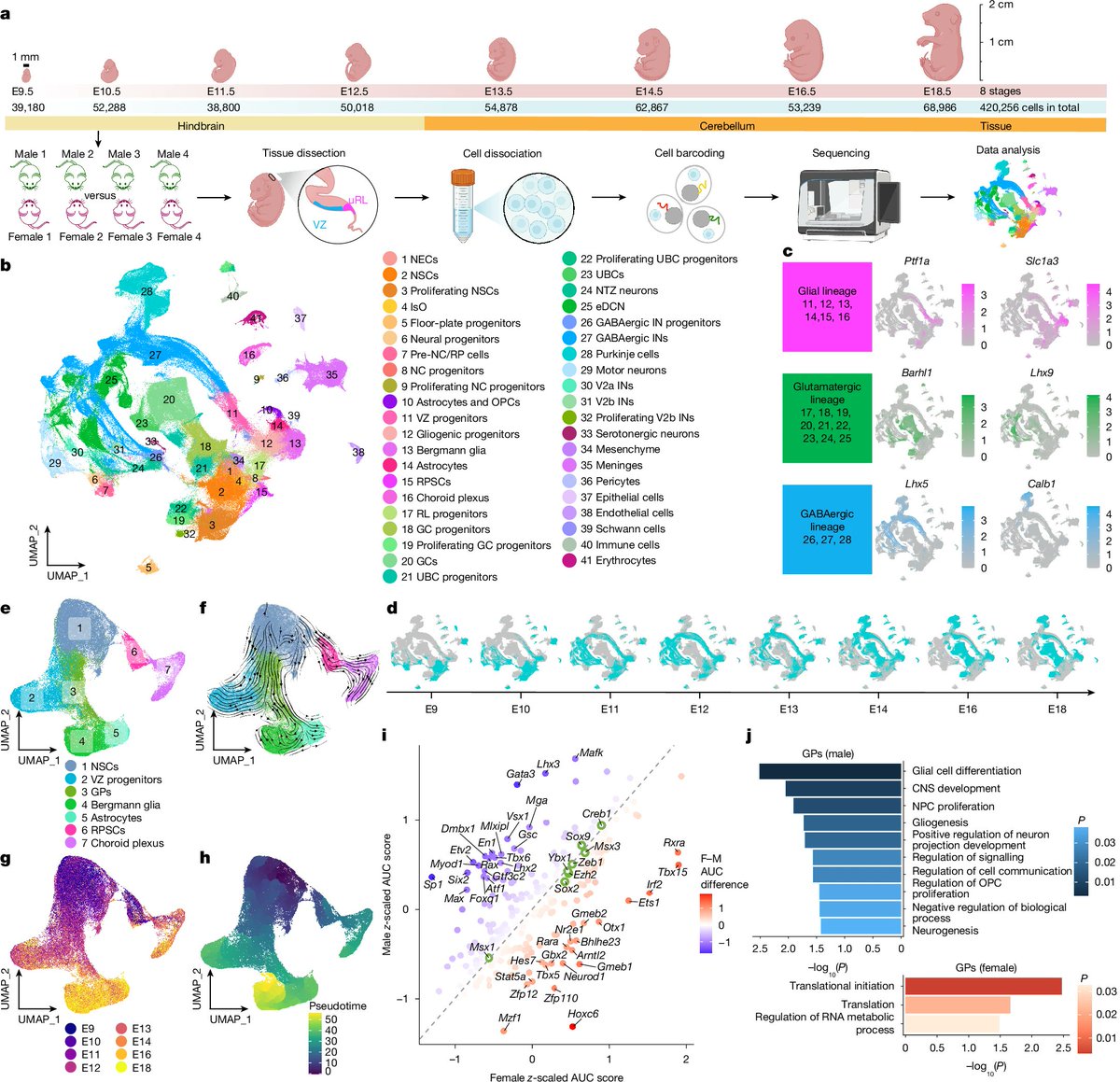
Using the four-core genotype mouse model — which cleanly separates sex chromosome effects from gonadal hormone effects. The answer was not chromosomes. It was androgen signaling.
Androgens in the embryonic hindbrain delay glial differentiation, keeping progenitor cells immature for longer. That widens the developmental window for malignant transformation, offering a mechanistic explanation for both the male incidence bias and the worse outcomes.
Even more exciting: this biology is actionable.
The androgen receptor antagonist enzalutamide, already used in the clinic , and the AR degrader MTX-23 both suppressed PFA clonogenicity and growth. Other brain tumor subtypes were far less affected, suggesting this vulnerability may be unusually specific to PFA.
A deadly pediatric brain tumor.
A long-standing clinical mystery.
And now, a developmental and hormonal mechanism that points toward therapy.
Huge congratulations to co-first authors Jiao Zhang, Winnie Ong, and Alexandra Rasnitsyn, and to the entire international team from @BCMHouston @TexasChildrens @McGillU @UPitt and many collaborators worldwide.
And a very special shoutout to Dr. Michael Taylor for leading this extraordinary project. Truly one of the best brain tumor researchers I know.
Paper: nature.com/articles/s41586-0…
5
12
62
6,439

Chromosomes stuck behind the spindle are ticking time bombs for aneuploidy. We uncovered a mechanical rescue mechanism where microtubule pivoting repositions these high-risk chromosomes! Out last week in @NatureComms, here's a thread 🧵
shorturl.at/OD89x
3
47
128
10,054
Reuben Philip retweeted

Mar 25
(1/6): How can we better test therapeutics without using animals or risking lives? Lab-grown human mini-organs, called “organoids”, provide an answer! Despite their progress, organoids and related methods lack realistic flow through blood vessels, the “plumbing” of our bodies.
5
50
265
27,879
Reuben Philip retweeted

Feb 13
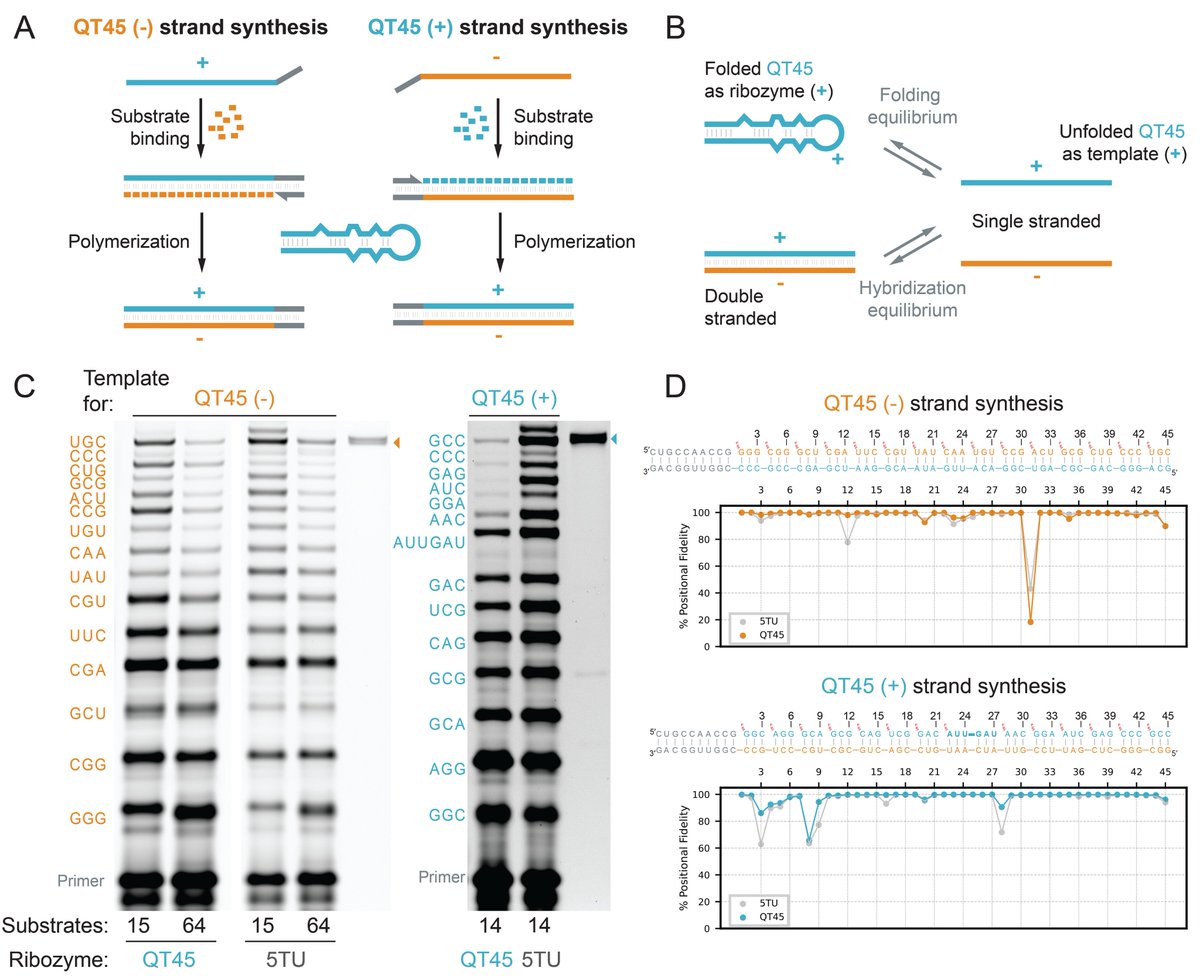
AI is cool and all... but a new paper in @ScienceMagazine kind of figured out the origin of life?
The paper reports the discovery of a simple 45-nucleotide RNA molecule that can perfectly copy itself.
179
1,045
6,195
867,411
Reuben Philip retweeted

Jan 13
Inspired by some gesture-based point cloud controllers I've seen on here, I vibe coded a similar web app to explore the relationship between spatial, UMAP, and PCA embeddings for spatial transcriptomics data. Next level interactivity via🖐️
Try it out: jef.works/GestureGraph/
2
24
229
17,637