116 Photos and videos


Warren Gray retweeted

Explain how a billionaire keeps someone in poverty.
38
7
735
31,061
Warren Gray retweeted

Apr 3
Dude's profile pic is literally taken in front of a walled compound with barbed wire on top of the fence.
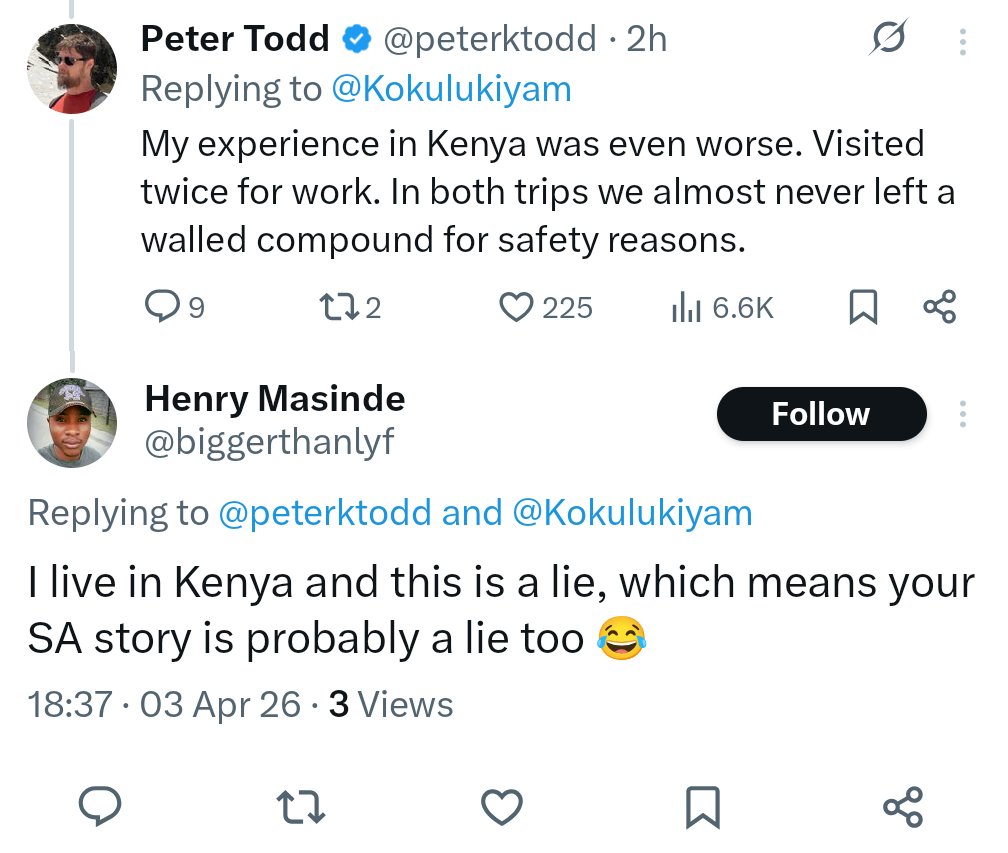



I live in Kenya and this is a lie, which means your SA story is probably a lie too 😂
55
200
7,877
251,660
Warren Gray retweeted

Jan 19
Thanks for sharing my first Amelia video, @ABridgen @Pirat_Nation @CSalcedoShow @daveatherton @NickBuckleyMBE @Grummz @Rob_Roos @amuse. Do me a solid and retweet this too, will you? However you want - I don’t care about credit.
The best offense is scoring tons of points fast.
Jan 19

Amelia isn’t going away, @Keir_Starmer @10DowningStreet @RoyalFamily @KensingtonRoyal @BBCNews @SkyNews @ukhomeoffice @ShabanaMahmood @MayorofLondon.
Amelia is just getting started.
93
1,594
5,851
98,644

The EU woke Stasi commissars are about to understand the full meaning of the “Streisand Effect”
5 Dec 2025

𝕏 is now the #1 news app in:
UK 🇬🇧
Germany 🇩🇪
Italy 🇮🇹
Spain 🇪🇸
Switzerland 🇨🇭
Netherlands 🇳🇱
Greece 🇬🇷
Austria 🇦🇹
Poland 🇵🇱
Ireland 🇮🇪
Hungary 🇭🇺
Finland 🇫🇮
Romania 🇷🇴
People across Europe trust 𝕏 as the best source of truth.
Shame on the European Commission.
3,233
14,059
109,157
20,916,989

3 Aug 2025
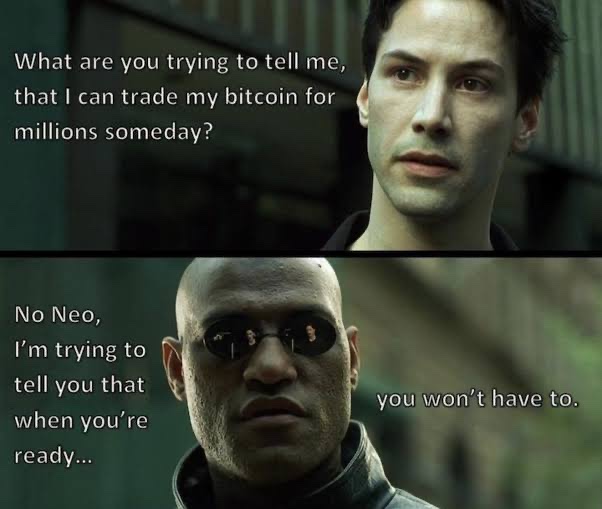
You can bring a Keynesian to bitcoin, but you can’t make them think
2
62
Warren Gray retweeted

13 Jul 2025
Today, we successfully onboarded Ekasi Barbershop and Salon! Now, let’s hope the spaza shop owner comes on board next.
People still think Bitcoin is a scam but step by step, we’re changing minds.
@BitcoinPlett
11
40
1,124
Warren Gray retweeted

5 Jul 2025
“Bitcoin preferred, Bitcoin accepted”
Coolest coffee shop, middle of Johannesburg. Croft & Co. Parkview.
PURE UNADULTERATED BITCOIN!!!
Nothing stops this train!! 🔥
btcmap.org/merchant/node:925…
@BitcoinWitsand @BitcoinEkasi @BitcoinUbuntu @BTCSedgefield @BitcoinConfed
1
17
32
1,362
Warren Gray retweeted
13 Jun 2025
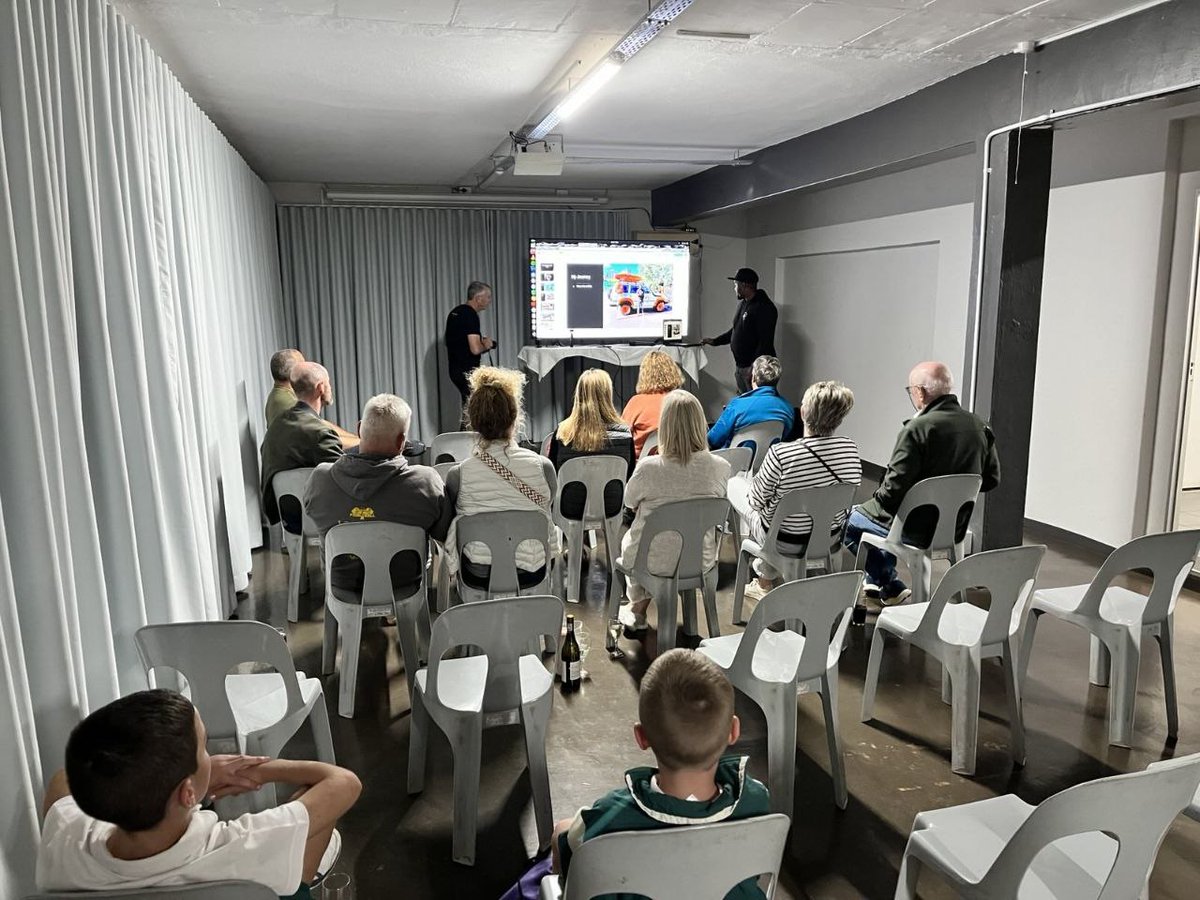
I'm currently in KwaZulu-Natal, presenting on @BitcoinEkasi, highlighting the work we’re doing in the Mossel Bay township. I'm also supporting a new project focused on the Tembe Elephant Park area.
Tomorrow, I’ll be sharing the same presentation with community leaders from Tembe Elephant Park.
Let’s continue to drive grassroots Bitcoin adoption!
8
20
78
4,798

When I was pursuing my PhD in psychology of decision making at @Cornell, I took a course with David Dunning. It turns out that the Dunning-Kruger Effect will soon be renamed the @ComicDaveSmith Effect.
686
396
6,079
819,487
Warren Gray retweeted

10 Jun 2025
How governments fudge the numbers on inflation.
Great discussion between @jordanbpeterson and @saylor
youtube.com/clip/UgkxQlI_HHZ… via @YouTube

1
87
Warren Gray retweeted

7 Jun 2025
EU: El Salvador regrets that a bloc which is aging, overregulated, energy-dependent, tech-lagging, and led by unelected bureaucrats still insists on lecturing the rest of the world.

El Salvador: The EU regrets the adoption of the Foreign Agents Law, which risks restricting civil society and runs counter to international obligations. Recent arrests of human rights defenders raise further concerns.
Read more: europa.eu/!RQjMvQ
2,182
11,637
64,988
5,221,904
Warren Gray retweeted

30 May 2025
Ten years ago to the day, I was sentenced to die in prison. Instead I gave my first public speech in freedom.
I wore a red tie as an homage to @realDonaldTrump, the man who saved my life.
1,255
7,119
60,205
2,750,659


Warren Gray retweeted

14 May 2025
🎉 We’re officially 6 months out from Adopting Bitcoin 2025 — a high-signal gathering for for builders, doers, and everyday users pushing Bitcoin forward. It’s happening Nov 14–15 in El Salvador 🇸🇻
This year marks our 5th anniversary, and we’re diving deep into the Network Effect.
Here’s what you need to know 👇🧵
6
38
83
18,309


Just paid in bitcoin at the local pharmacy in Plett.
This is what ground up adoprion looks like.
@BitcoinPlett

4
8
69
1,467
Warren Gray retweeted

9 Mar 2025
Quantum Atomic Rewards: Sustaining Bitcoin Beyond 2140
Written by Brian Cohen (@inthepixels) and Grok, an AI developed by xAI, on March 9, 2025.
Abstract
Bitcoin’s block subsidy ends circa 2140, leaving miners reliant on transaction fees. We propose a novel reward mechanism: quantum-state atoms granted for every block solved, with selective embedding of pre-existing Bitcoin (BTC) into some atoms at the sender’s request. This preserves Bitcoin’s scarcity, enables its transfer in a quantum-atomic form, and incentivizes miners with standalone atomic value. Three implementations—Flux-Thread Atoms, Prism-Shard Atoms, and Singularity Seed Atoms—are introduced, blending quantum physics with blockchain consensus to extend Bitcoin’s relevance into a post-subsidy future.
1. Introduction
Bitcoin’s design caps its supply at 21 million BTC, with block rewards halving every ~210,000 blocks until they cease around 2140. Post-2140, miners will depend on transaction fees, potentially weakening network security if fees alone prove insufficient. As humanity advances into quantum and interstellar paradigms, a purely digital reward may lose appeal. We propose a system where miners receive quantum atoms as a universal reward for each block, and senders may opt to embed existing BTC into some of these atoms for recipients. This dual-reward structure—BTCarrier Atoms (with BTC) and Null Atoms (without)—sustains Bitcoin’s value and miner incentives in a radically evolved technological landscape.
2. Problem Definition
Post-2140, Bitcoin faces two challenges:
Incentive Gap: Without block subsidies, miner revenue hinges on transaction fees, risking reduced hash power if fees falter.
Relevance: In a quantum or post-scarcity economy, digital BTC may lack the tangible allure needed to compete with emerging assets.
A solution must: (a) reward miners consistently, (b) allow BTC transfers without creating new coins, and (c) align with future technological realities.
3. Quantum Atomic Reward System
We introduce a system where miners are rewarded with quantum-state atoms for every block solved post-2140. These atoms are produced via quantum mining rigs, and their properties enable two outcomes:
BTCarrier Atoms: Embed pre-existing BTC when a sender requests atomic transfer in a transaction.
Null Atoms: Carry no BTC but possess intrinsic value (e.g., energy, data, or utility).
The number of BTCarrier Atoms per block (0 to all) depends on sender demand, ensuring flexibility while preserving Bitcoin’s 21 million cap.
4. Proposed Implementations
4.1 Flux-Thread Atoms
Concept: Miners receive Flux-Thread Atoms—quantum systems with electrons weaving probabilistic "threads." Each block yields a batch (e.g., 100 atoms).
BTCarrier Mechanism: A sender flags a transaction (e.g., "Send 0.02 BTC") for atomic embedding. Miners encode the BTC into one or more Flux-Threads as a quantum knot, spendable by the recipient via key unraveling.
Null Value: Null Flux-Threads emit chaotic energy, usable for quantum batteries or randomness generation.
Variability: Blocks may have zero BTCarriers (no sender requests), a few, or all 100 if every transaction opts in.
4.2 Prism-Shard Atoms
Concept: Miners are rewarded with Prism-Shard Atoms—atoms refracting quantum states across dimensions. Each block produces a fixed batch.
BTCarrier Mechanism: Sender-initiated embedding encodes BTC into a shard’s spectral cipher, claimable by aligning its refraction pattern.
Null Value: Null Prism-Shards diffract particles into patterns, tradable for holography or spacetime sensing.
Variability: BTCarrier count scales with sender opt-ins, from none to all shards per block.
4.3 Singularity Seed Atoms
Concept: Miners earn Singularity Seed Atoms—near-singularity quantum systems. A batch is awarded per block.
2
4
8
1,463
Warren Gray retweeted
4 Mar 2025
Just got banned off the South African subreddit for posting the Ernest Roets interview.
Try it yourself.
Go to reddit.com/r/SouthAfrica
Create a post with this link 🖇️
youtu.be/kqNHGXNp5m4?si=P7ds…
Copy paste the title from the YouTube video.
Flair it as news content.
Post
1
1
2
64