
co-director @CEIPTechProgram | @AspenStrategy rising leader | former @CSIS, @ElectionsON | 🇺🇲/🇨🇦
Joined December 2018
- Tweets 512
- Following 1,239
- Followers 429
- Likes 779
22 Photos and videos





Arthur Nelson retweeted

Jun 11
In 2027, big tech companies expect to spend nearly $1 trillion on AI data centers around the world. Where they choose to build those data centers could help determine the global balance of power.
To learn more, @alasdairpr, @TawilTeddy, and I created a detailed financial model showing what drives these $10 billion decisions, and wrote about our findings in a new Carnegie report.

3
11
53
5,555
Arthur Nelson retweeted

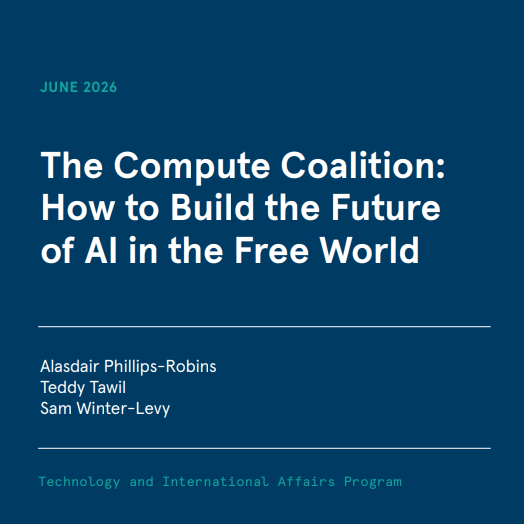
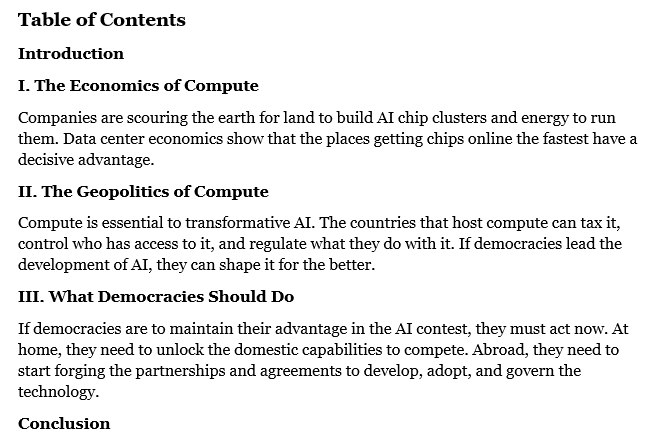
New: America can’t build the world’s AI infrastructure alone. We need the scale only our allies can provide, but they are currently missing out on the biggest industrial mobilization since World War II.
@SamWinterLevy, @TawilTeddy, and I go deep into the economics of the AI infrastructure boom and propose a way forward for democracies to shape the trajectory of, and reap the benefits from, transformative AI.
1
4
16
5,252
Arthur Nelson retweeted

Jun 11
🧵I spent 9 months building a detailed new global model of AI data center finances along with @alasdairpr and @SamWinterLevy.
It shows which factors are driving $10 billion investment decisions, who will control a key strategic asset of this century, and what policymakers can do to steer results while minimizing harms to the public.
It’s part of a new @CarnegieEndow & @CEIPTechProgram report. Here are five key findings:
5
17
67
15,135
Arthur Nelson retweeted

Total misreading.
The war was a strategic failure. Because of the closure of the Strait of Hormuz, fighting was intolerably costly for Trump, despite Israel and U.S.’s many tactical successes. That’s why he ended fighting when he did and lacks diplomatic leverage now. (1/n)
May 23

Epic Fury lasted 40 days.
The ceasefire has now lasted 60.
The U.S. and Israeli militaries won the war. But if the reported terms are accurate, the regime is now winning the ceasefire.
Another 60-day extension would only deepen Tehran’s advantage.
10
44
473
103,017
Notable, and well-reasoned
May 14

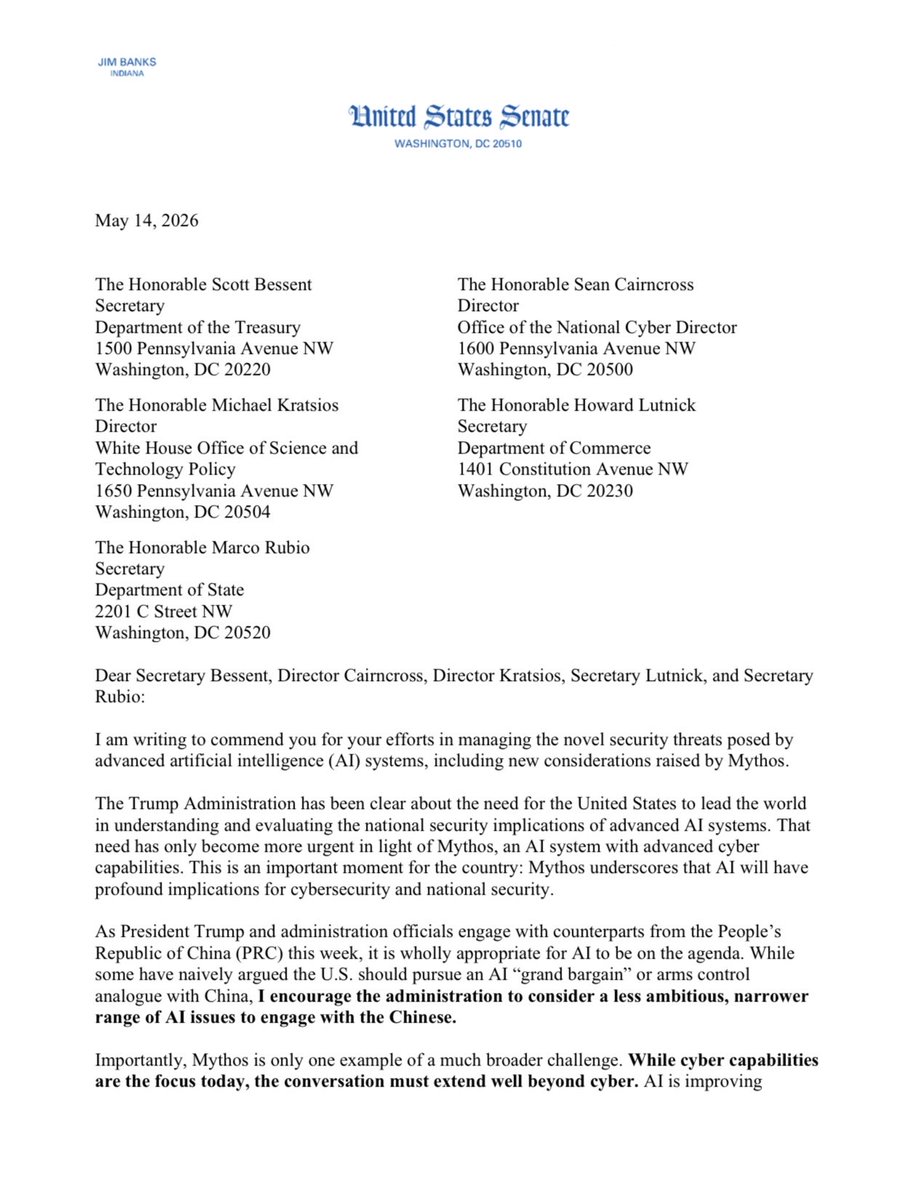
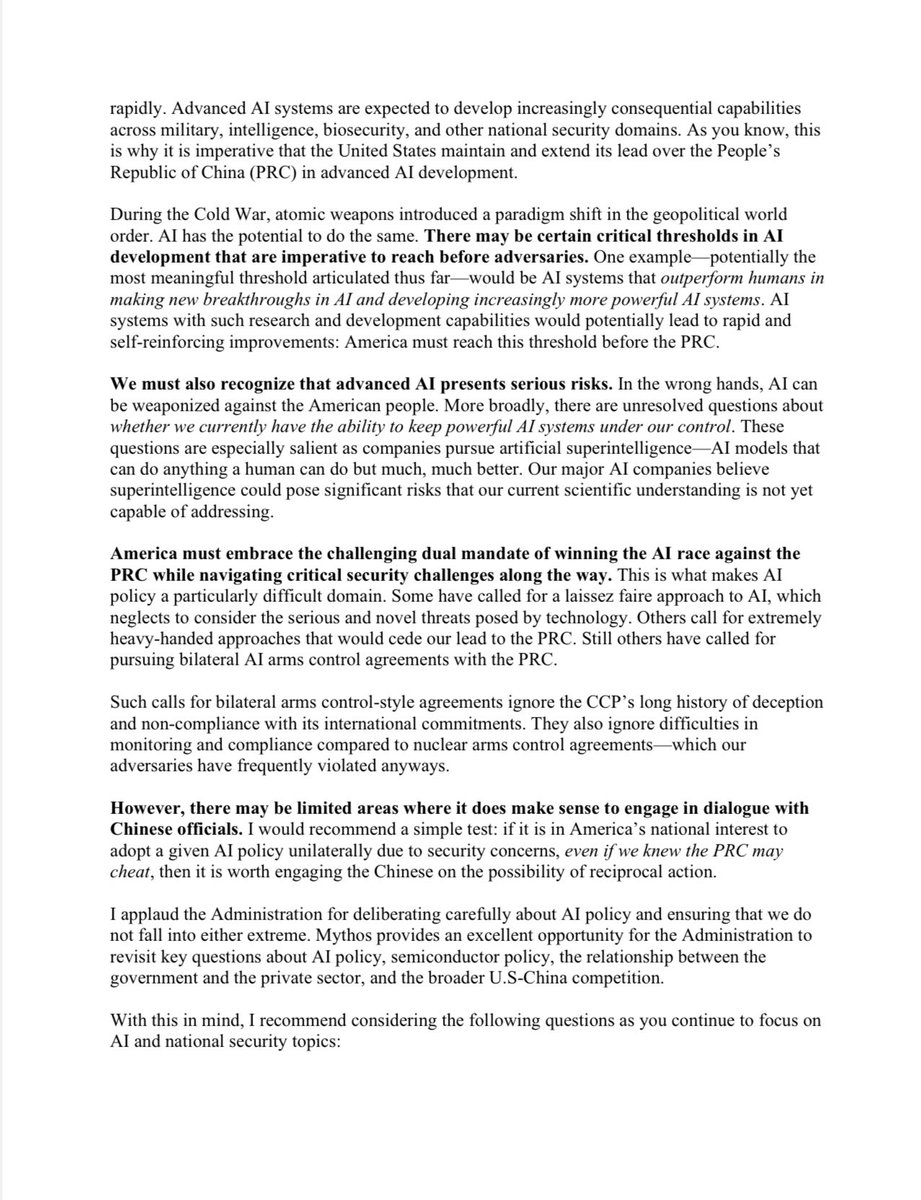
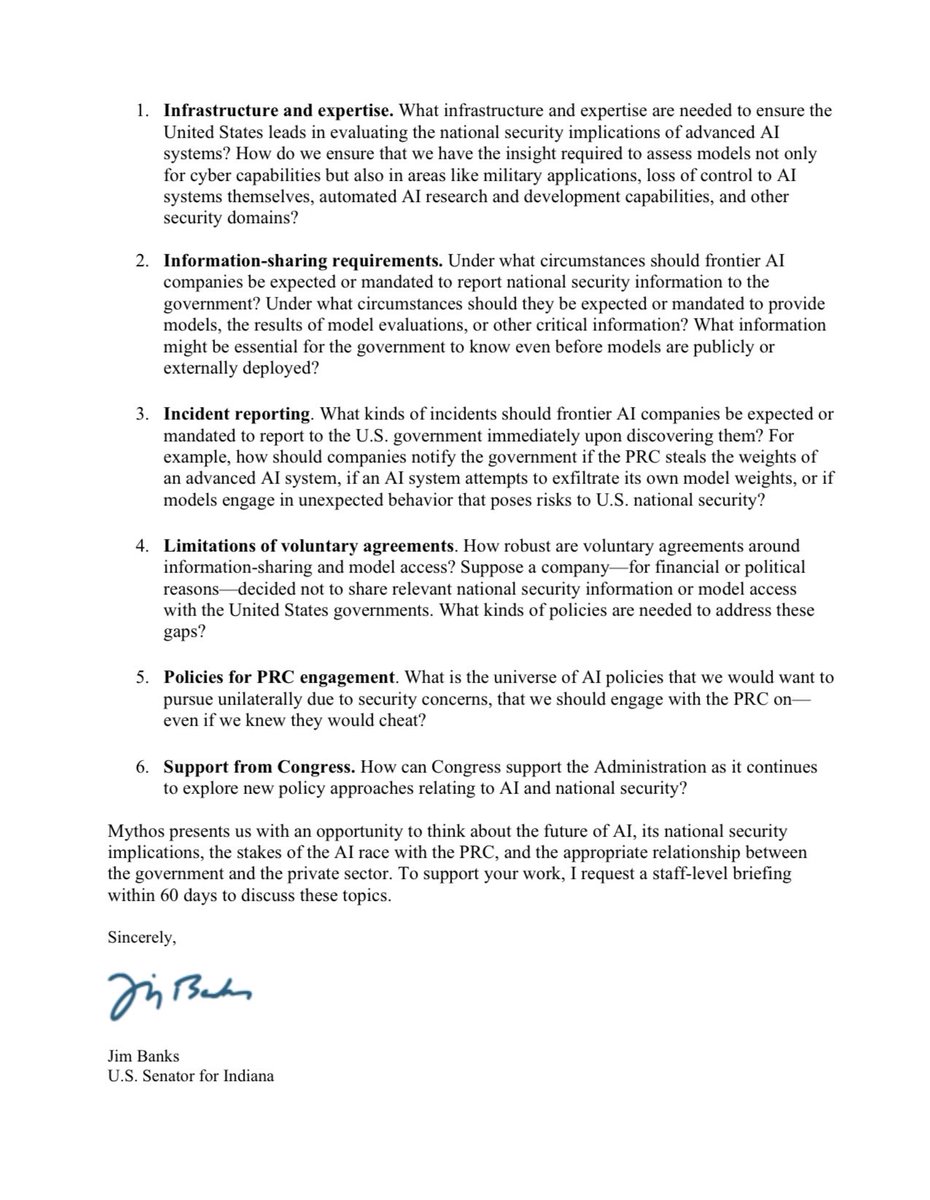
President Trump is right to push for an AI strategy that keeps America ahead of China while putting real guardrails in place against serious risks.
As President Trump meets with Xi, AI talks with China should focus on common sense steps that make America safer, even if we have to take those steps on our own.
My letter to the admin laying this out ⬇️
130
Arthur Nelson retweeted

May 13
AI strategies everywhere hinge on widely available American frontier AI. Post-Mythos, amid compute crunches, security concerns and distillation crackdowns, that paradigm is under threat.
Today, I argue the era of widespread access to frontier AI is almost over.

39
84
622
206,512
Arthur Nelson retweeted
Mar 13
Will AI end mutually assured destruction?
@nikitaalalwani and I joined Luisa Rodriguez on the
@80000Hours podcast for a fun (despite the topic!) conversation on subs, mobile missiles, missile defense, cyber threats to command-and-control, and why AI and nuclear experts urgently need to start talking to each other
2
5
6
619
Arthur Nelson retweeted

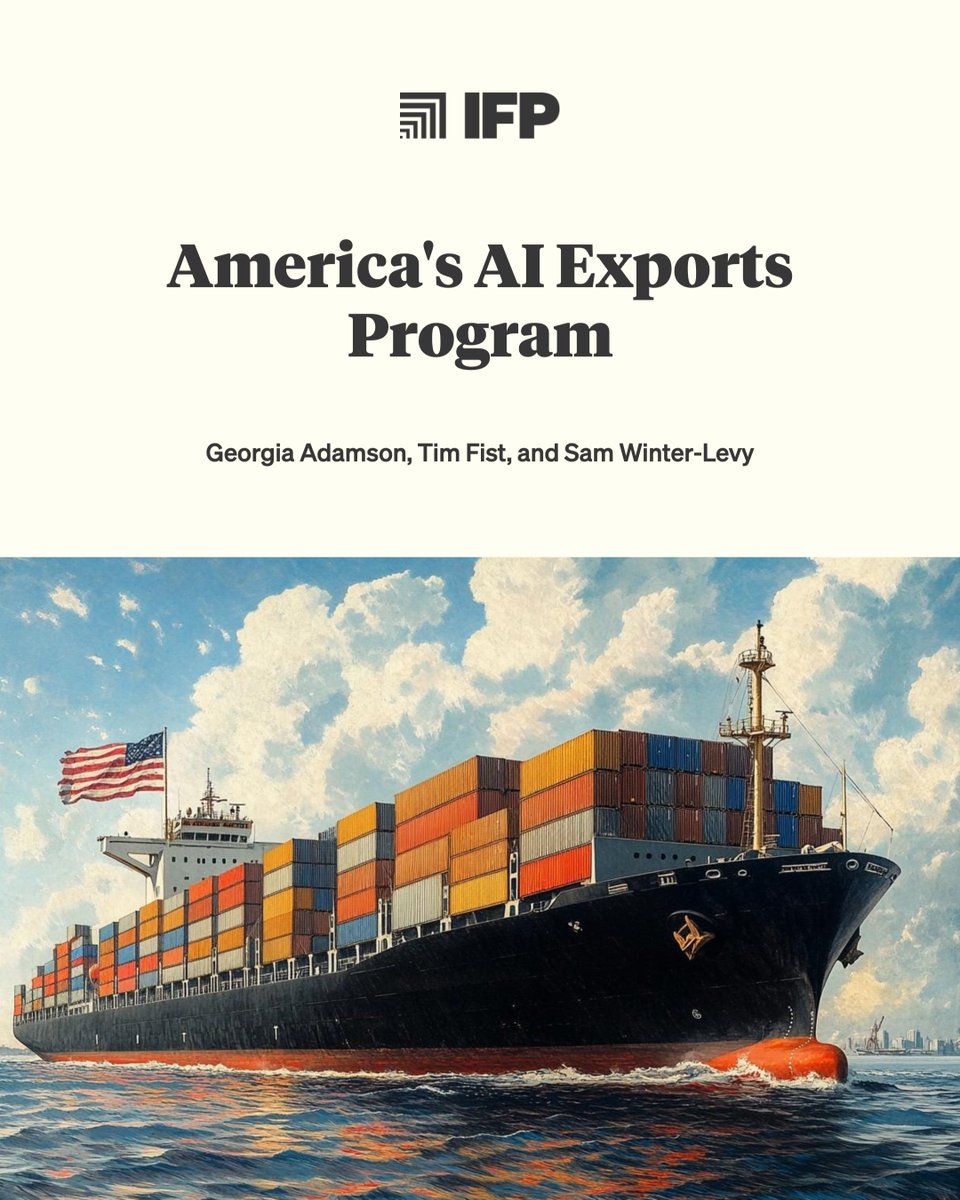
The American AI Export Program is the Trump administration’s flagship initiative to spread US AI across the world. But so far, it’s not going too well:
- It’s months behind schedule
- It lacks the financial firepower to actually steer industry investment decisions
- It faces mounting distrust from foreign partners wary of dependence on the US
@fiiiiiist , @SamWinterLevy, and I offer 9 recommendations to put the Exports Program on track. ⬇️
1. Prioritize markets where American AI presence is contested or weak.
The program shouldn't subsidize markets where American industry already leads. Agencies should direct financing toward emerging strategic markets like Brazil, Egypt, and Indonesia, where American and Chinese firms are actively competing and government support can actually tip the balance.
2. Don't just offer data center-scale packages.
Few markets have gigawatt-scale demand. A program that prioritizes packages this size will miss large parts of the world, including emerging markets that the program should be targeting. Smaller deployments that meet actual AI demand offer more lasting advantages than compelling headlines.
3. Let industry lead the messaging.
Foreign governments are not driven by US geopolitical concerns. Partners that have spent years resisting pressure to pick sides in US-China competition won't respond to that framing. Commerce and State should focus on concrete, country-specific issues and let American companies take the lead.
4. Judge program success by long-term adoption and utilization.
The program's success should be measured by sustained demand, not by dollar values announced at signing ceremonies. Commerce, OSTP, and State should track time-to-operation, utilization rates, contract renewals, and private capital mobilized rather than headline investment figures.
5. Clarify that US-operated cloud services count as an export.
The executive order does not state whether AI "deployment" means physical hardware sales to foreign customers, or delivering compute as part of managed cloud services. OSTP and Commerce should resolve this ambiguity. Cloud has a bunch of properties that match the program’s goals. It’s typically faster to deploy, more scalable, more sticky, and offers national security advantages that direct chip shipments cannot.
6. Implement baseline security guardrails for packages that export substantial compute abroad.
Some markets could become subject to new export restrictions as US policy evolves. Rather than treating export promotion and control as separate levers, Commerce should establish security requirements now so that industry deployments aren't negatively impacted later.
7. Drop the consortia requirement for American-only proposals.
Requiring US companies to form consortia even when operating alone adds coordination costs, creates accountability confusion, and may freeze out smaller players. Agencies should clarify that consortium formation isn't required when American companies are exporting without foreign partners, preserving the option for larger voluntary consortia where they make sense.
8. Take foreign partners' sovereignty concerns seriously.
Many countries want American AI without American dependency. In-country data centers and confidential computing give partners jurisdictional control while keeping American companies operating their own infrastructure.
9. Bundle exports with sovereign evaluation toolkits.
Partners should be able to verify what they're buying, and the US should look to build trust in US tech. CAISI can develop evaluation toolkits that let countries independently assess US models' performance and safety, exporting US standards alongside its technology.
You can read the full piece here:
ifp.org/americas-ai-exports-…
2
14
66
7,380

there is some irony to coastal elites freaking out about AI job displacement now that it’s seemingly at their doorstep
hollowing out middle america labor was ok because of ~efficiency gains~ but now that white collar jobs are at risk it’s time to scream FIRE! and pull the alarm
23
37
604
36,898
Arthur Nelson retweeted

16 Jun 2025
Over the last year, those of us who follow China's AI governance have been carefully watching whether China would establish an AI Safety Institute (AISI) to match those in the UK, US, and globally. That institution has now emerged, and it tells us a lot about the state of debate on frontier AI risks in China. Some takeaways from our @CarnegieEndow paper with rockstar co-authors @kelmgren and @OliverEGuest
10
102
442
72,108
Arthur Nelson retweeted
17 Jun 2025
How can we harness AI's benefits while mitigating material risks?
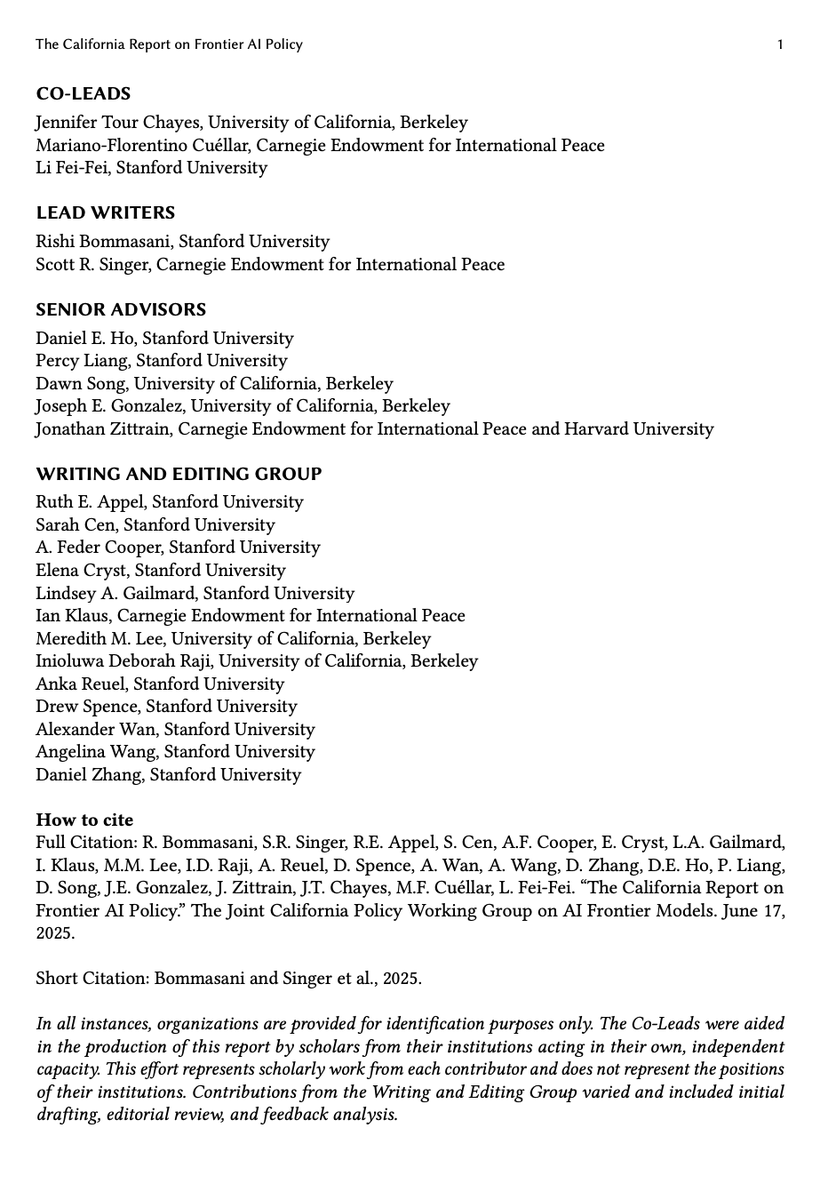
In September of last year, following the veto of SB-1047, California Governor Gavin Newsom requested that Fei-Fei Li, Mariano-Florentino Cuéllar, and Jennifer Tour Chayes prepare a report to help California answer that question. Nine months later, the California Report on Frontier AI Policy has been released. Along with @RishiBommasani, I was honored to be the lead writer for the report. Here are three key takeaways:
4
16
60
6,577
Arthur Nelson retweeted

23 Jul 2024
Should AI models be “open” or “closed”? Today Carnegie joins with leading voices from across the spectrum to help advance this historically fraught debate. Our paper tries to identify emerging common ground and to highlight key unanswered questions: carnegieendowment.org/resear…
3
13
35
7,310

15 Dec 2023
Carnegie's Tech program is hiring a program coordinator!
If you know an exceptional intern, recent grad, or young person interested in tech & foreign policy, please send them my way
Job posting: carnegieendowment.applicantp…
@CEIPTechProgram @CarnegieCyber
7
12
1,948
Arthur Nelson retweeted

10 Jul 2023
I’ve spent the 1.5 years trying to answer two questions:
1. What is China doing on AI governance?
2. Who are the key players, and how do 🇨🇳 AI regulations actually get made?
Today we’re publishing a paper trying to answer that. 🧵 w/ key takeaways (1/10)
carnegieendowment.org/2023/0…
11
140
392
116,532
Arthur Nelson retweeted

24 Jun 2023
🧵The single most authoritative account of the #Prigozhin/#WagnerGroup phenomenon is (still) this paper from 2019 (!) by Nate Reynolds, an exceptionally smart US intelligence analyst who wrote it while on sabbatical @CarnegieEndow. Highly recommended. 1/x
carnegieendowment.org/2019/0…
8
210
523
127,091
Arthur Nelson retweeted

9 Jun 2023
1: No, it really isn't fine. For one, it infantilizes third countries. And it doesn't reflect the complex experience many of them have had with China. BRI is not "a debt and confiscation program," although there are indeed very troubling cases. Above all, whining isn't competing.
9 Jun 2023

This line reflects the substance of the matter, bursts the narrative of the PRC’s inevitable rise, and aims to persuade European audiences, not just ones in the Global South. Maybe not the best time for this line but it’s… fine?
6
70
232
129,446
Arthur Nelson retweeted

20 Apr 2023
In a new @EuropeanCyber report I co-authored with @Maxwsmeets, @jamessshires, and @monica_kaminska, we unpack the cyber dimensions of the ongoing Russian war in Ukraine. Many thanks to the generosity of @NCSC for supporting this project!
ncsc.gov.uk/news/new-analysi…
1
7
29
3,960
Arthur Nelson retweeted

20 Apr 2023
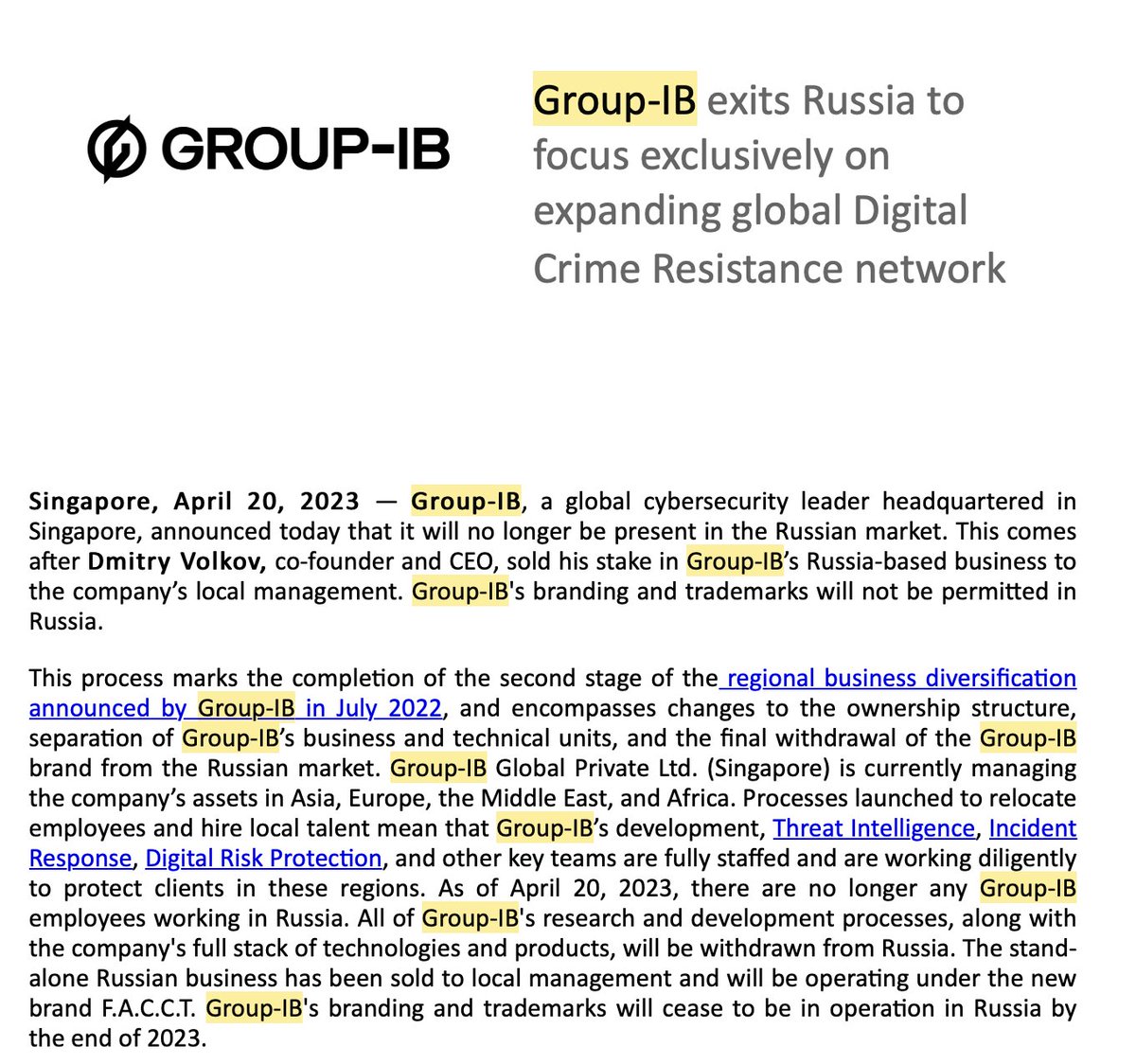
Russia has lost one of its more prominent cybersecurity companies.
No mention of Ukraine.
No mention of their CEO and cofounder being arrested and still imprisoned on unclear treason charges.
2
19
20
11,225
Arthur Nelson retweeted

How does cyber warfare fit into the Ukraine war? What conclusions about cyber conflict can be drawn from the war thus far? Eli Levite discusses in his new piece for @CarnegieEndow👇
carnegieendowment.org/2023/0…
1
3
7
1,281
18 Apr 2023
We went to Kyiv to understand the sources of Ukraine's digital resilience and prospects for reconstruction. Digital transformation could be the key to Ukraine's economic recovery, but success is not inevitable--Kyiv and Western partners need to make disciplined investments.
18 Apr 2023

Ukraine's digital resilience in the face of Russia's assault has officials in Kyiv betting that the country's embrace of technology can translate into a cornerstone of its post-reconstruction identity and economy, @ArthurRobNelson and @gavinbwilde write. scoopmedia.co/3KF1V9C
2
14
2,935