
The economics of AI: what the research says about work, markets and policy
Joined July 2011
- Tweets 11,541
- Following 6,393
- Followers 3,221
- Likes 52,976
99 Photos and videos





AI Economics retweeted

Jun 12
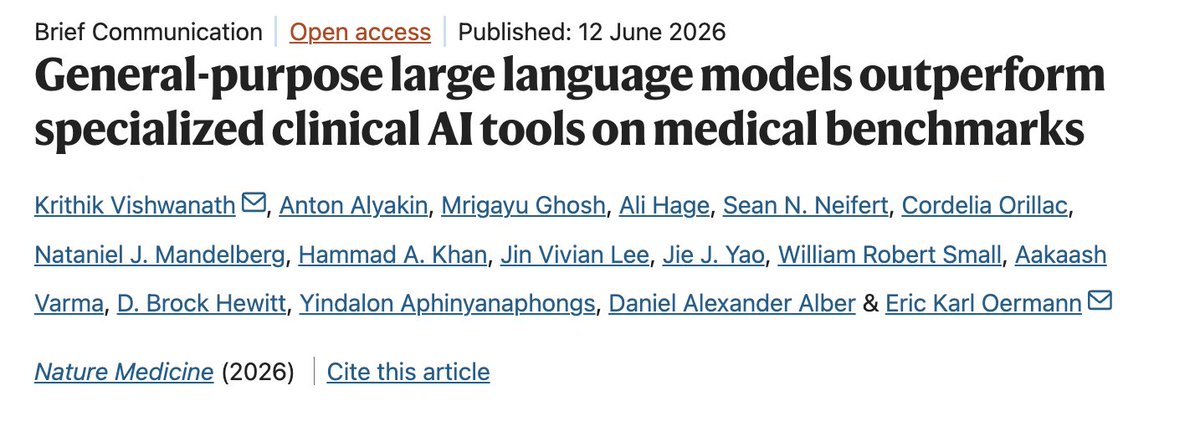
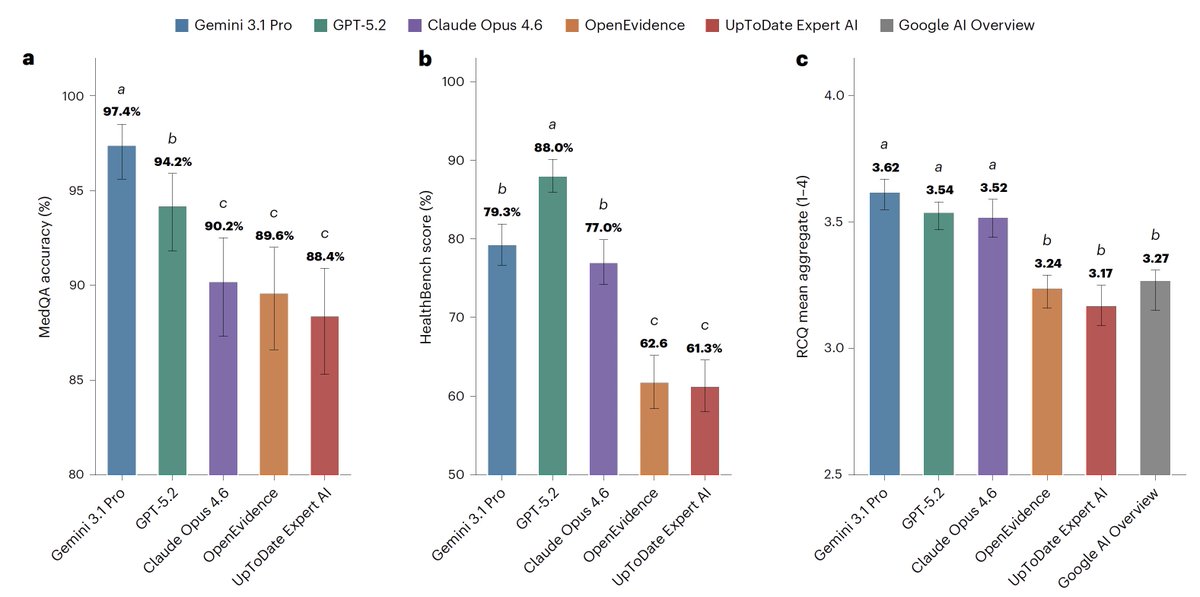
Medicine discovers the bitter lesson: frontier LLMs (here GPT 5.2, Opus 4.6, Gemini 3.1) outperform specialized "clinical AI" (e.g. OpenEvidence) in a blind test.
Even funnier that hospital IT are more likely to approve the *specialized* versions despite them being worse.
Jun 12

For medical information, general AI frontier models (Google, OpenAI, Anthropic) outperformed specialized @EvidenceOpen and @UpToDate as assessed by 12 US clinicians, randomized and blinded to which model and extensive testing/benchmarks. This was not anticipated. @NatureMedicine
nature.com/articles/s41591-0…
30
166
1,153
181,607

How do we go from AGI to Superintelligence? New report discusses four potential pathways: scaling, AI paradigm shifts, recursive improvement, and ASI emerging from large-scale multi- agent collectives. Importantly, it also looks at possible frictions and bottlenecks along these pathways. Instant classic! arxiv.org/abs/2606.12683

34
167
708
83,774
AI Economics retweeted

Jun 12
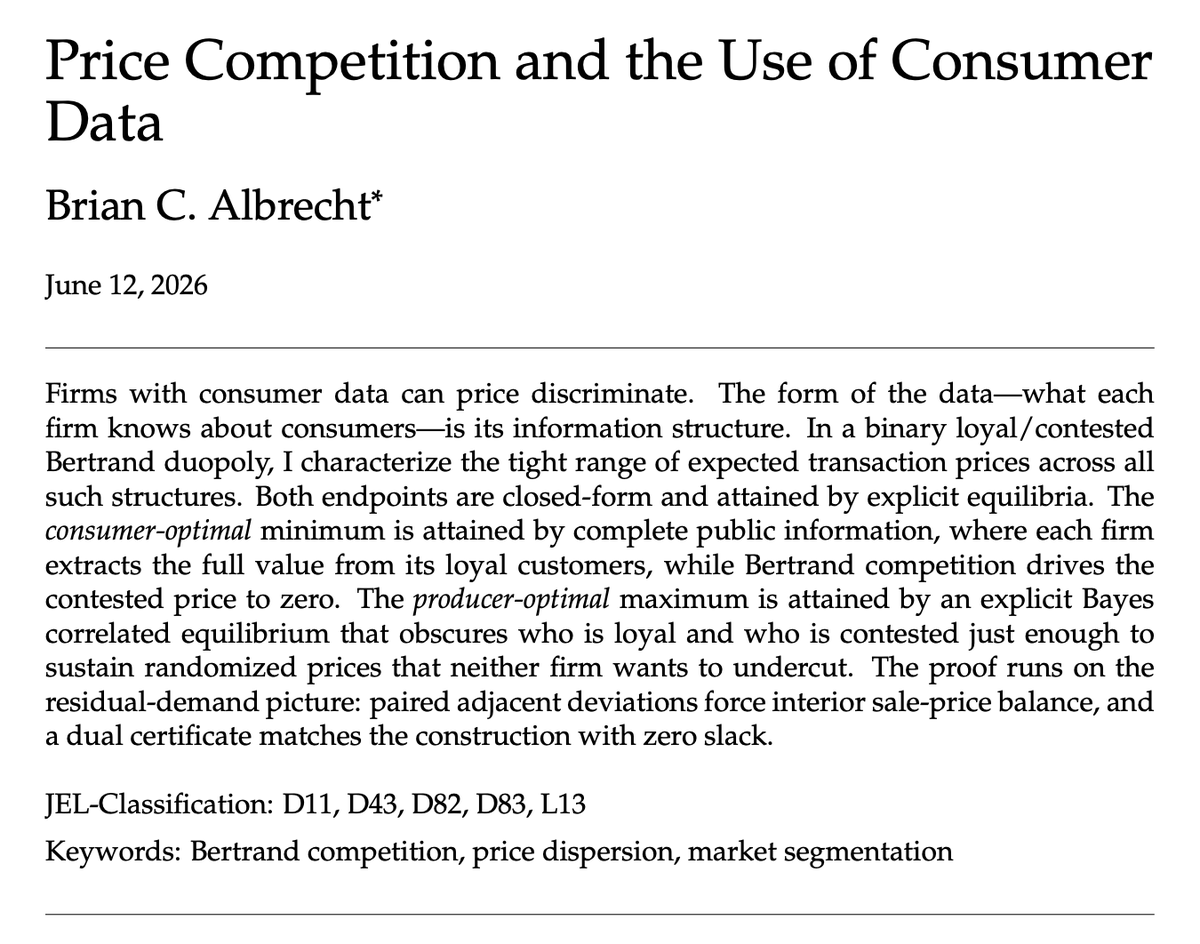
There's lots of fear about AI and price discrimination. "They're using data in all sorts of complicated ways we can't even comprehend!"
Fair. So instead of assuming a specific form, ask, what can happen across all possible types of data?
Are consumers doomed? I'll argue no.
2
15
45
8,039
AI Economics retweeted

Jun 11
Extremely cogent and well-written scenario, starting from the present, warning about Europe’s dangerous trajectory. I was in Paris for the AI Summit after DeepSeek r1, and I can attest that the level of delusion about what that model meant was exactly as this scenario describes.
Jun 11

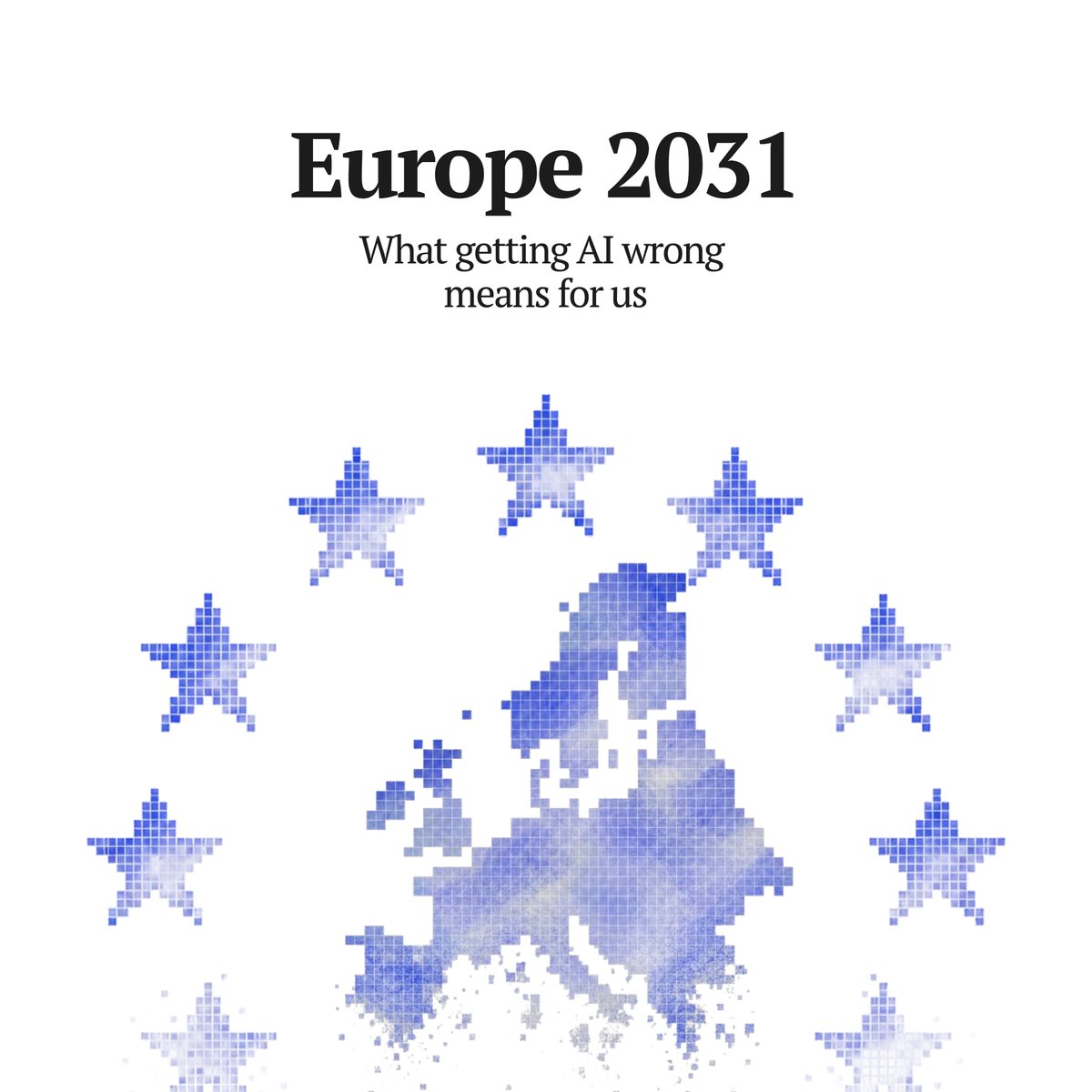
Most of Europe has not yet absorbed what AI is about to do to us. The few who have are not saying it loudly enough.
We wrote Europe 2031: a five-year scenario of the continent's slide into irrelevance, how AI is driving it, and what can still be done to change course.
10
45
493
70,041
AI Economics retweeted

Jun 11
"What will happen to Europe if it keeps ignoring AI?"
Three American labs each (!!) operate more AI compute than all of Europe combined. Today we're launching Europe 2031: a story of what might happen if that doesn't change.
29
101
414
198,255

AI Economics retweeted

Jun 10
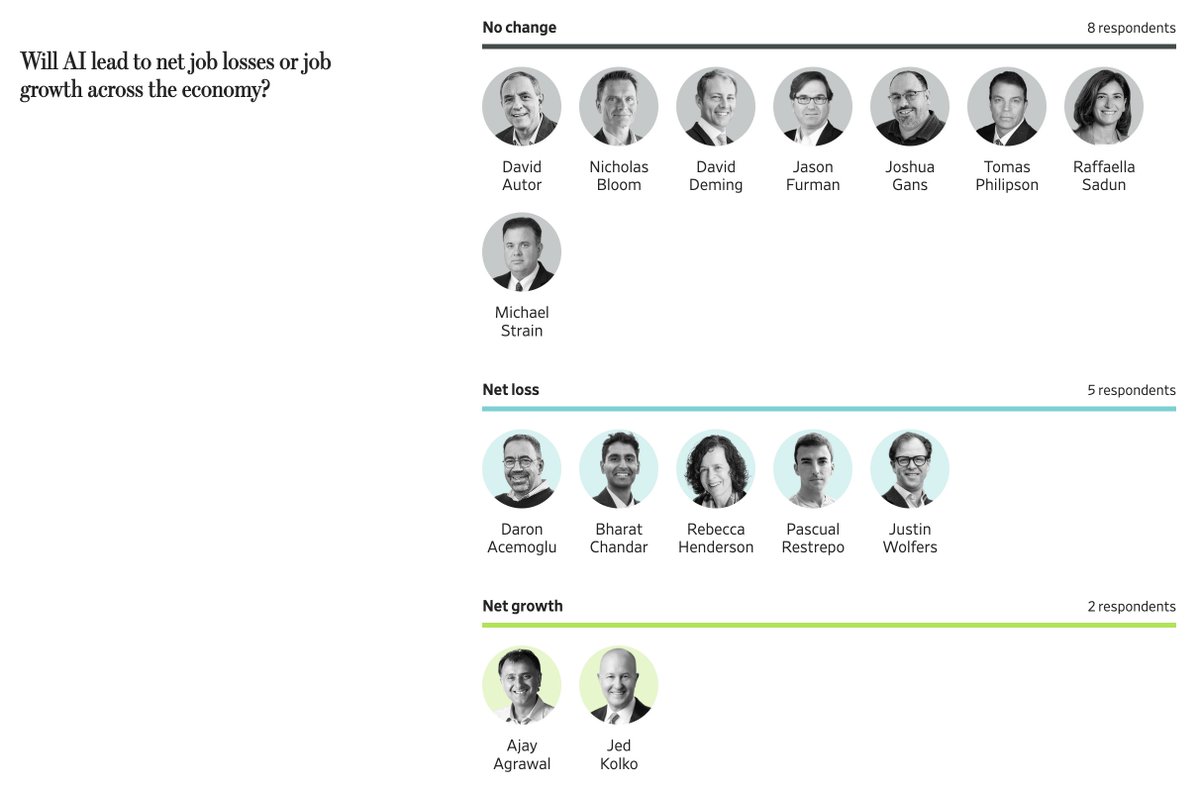
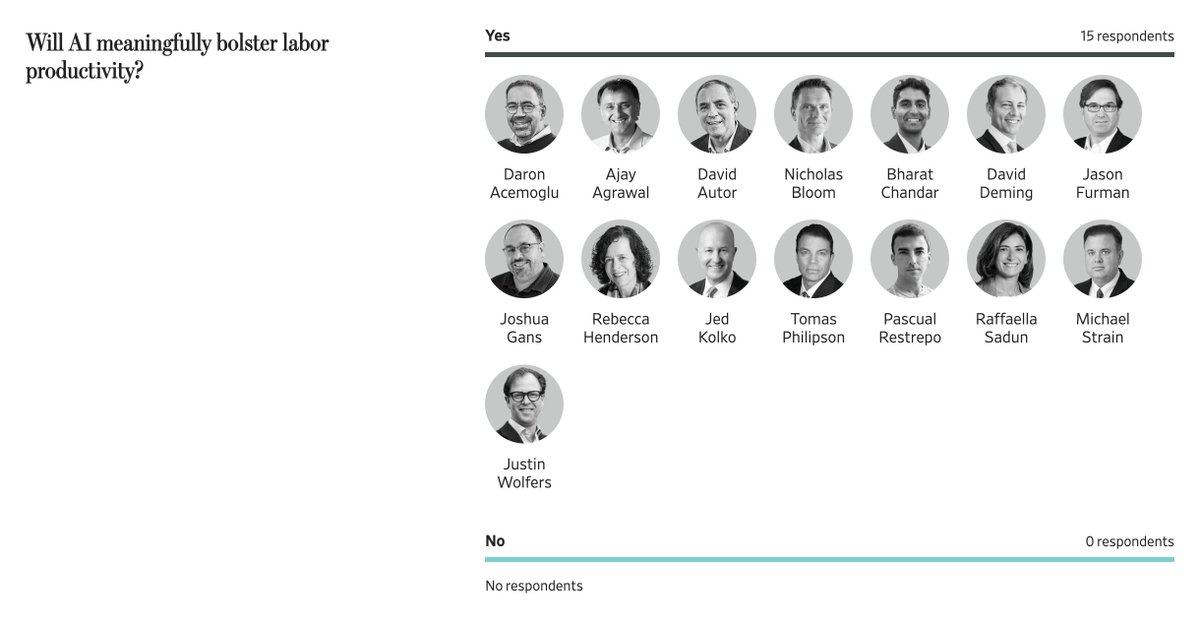
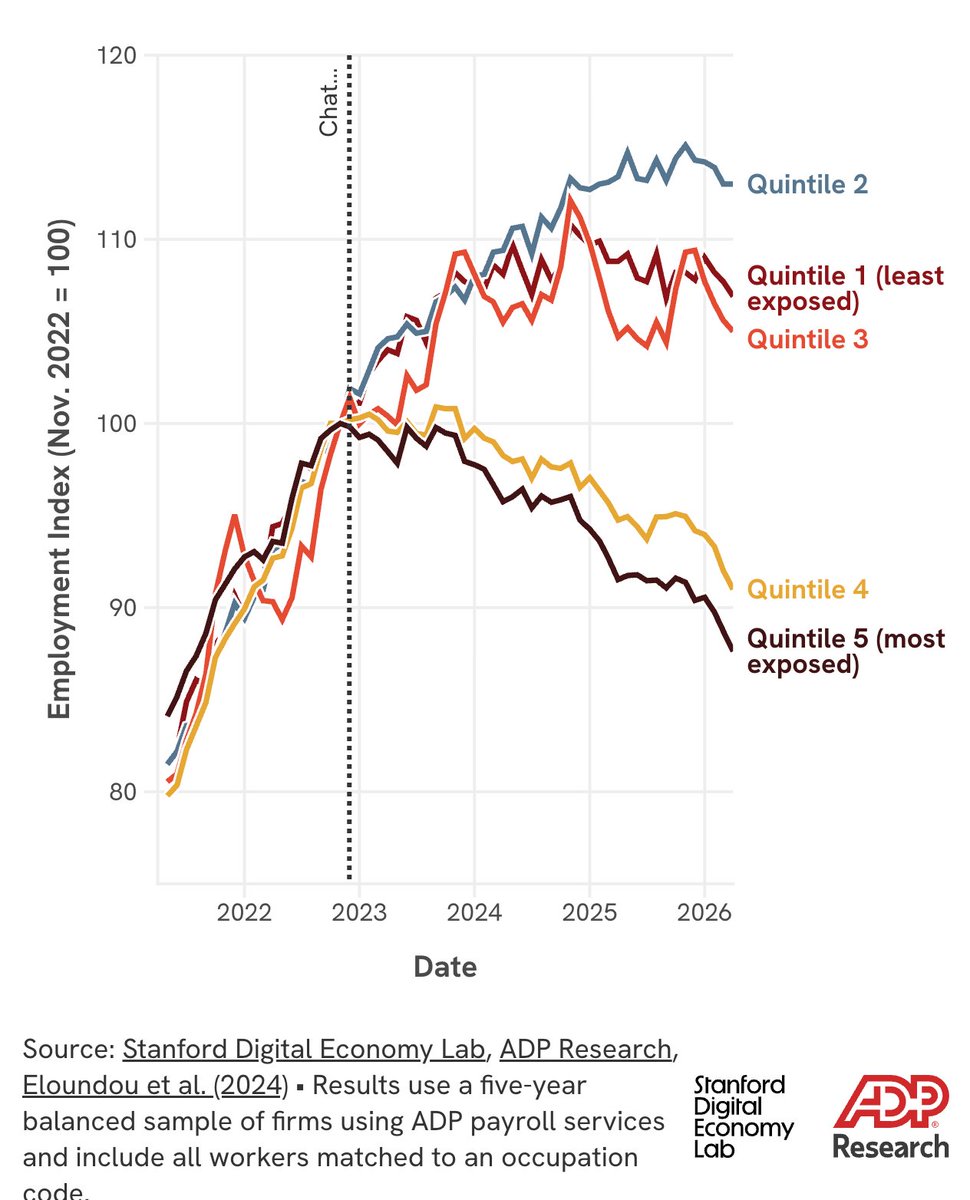
Today, the Stanford @DigEconLab launches the AI Economic Indicators, a new platform for tracking how AI is reshaping work, productivity, adoption, and the economy.
1/6
35
305
1,004
241,256
AI Economics retweeted

Jun 10
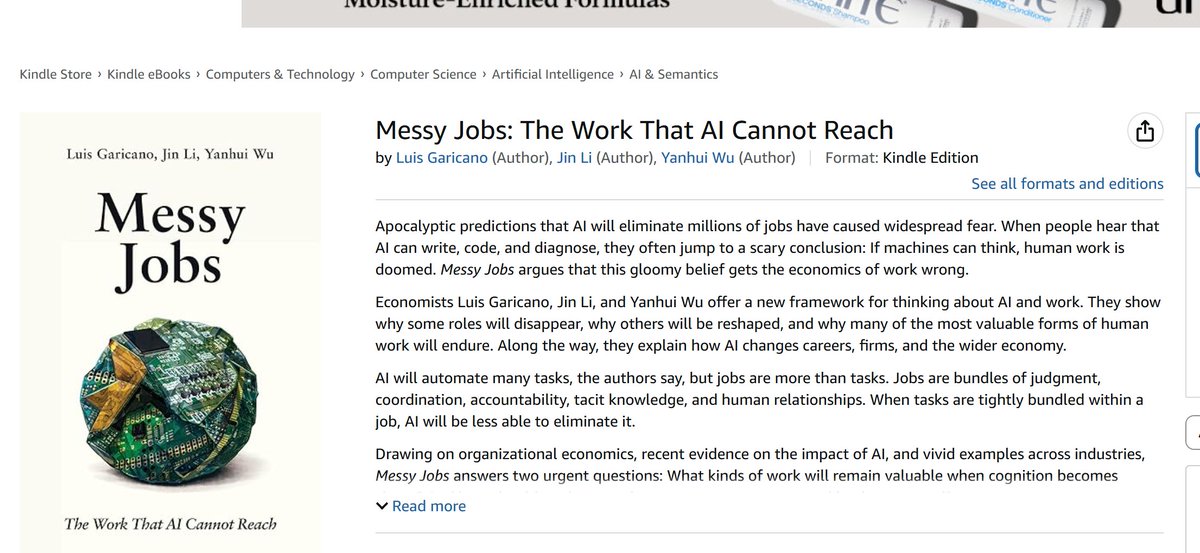
Delighted to tell you that Messy Jobs is coming out on June 21st. The kindle preorder link is available!
Here are advance reviews/blurbs for you to ponder by @raffasadun @davidautor @patrickc @alexolegimas @bengtmit and Evan Guo.
"Messy Jobs is a brilliant application of price theory. AI changes what is scarce in the economy and therefore what is valuable. When intelligence becomes cheap, judgment, coordination, trust, and responsibility become more valuable. The authors use this simple, powerful logic to illuminate how AI will reshape work and organizations." Bengt Holmström, Paul A. Samuelson Professor of Economics at MIT and recipient of the 2016 Nobel Memorial Prize in Economic Sciences
"In Messy Jobs, Garicano, Li, and Wu bring the discipline of organizational economics to a question too often left to speculation: How will AI actually reshape work? They move past the usual debates about what AI can or cannot do and ask the harder questions. What shapes the incentives to adopt it? How does adoption reshape the incentives to learn? What new configuration of skills will emerge as AI advances? A rigorous, original, and engaging account of how AI will reshape organizations and labor markets, and what it will take to thrive in them." - Raffaella Sadun, Charles Edward Wilson Professor of Business Administration, Harvard Business School
"This is the first book in the AI era that recognizes that most of what organizations struggle with does not involve computational problems. People in messy jobs must hold coalitions together, adjudicate between competing interests, and make change stick. These are political, diplomatic, and interpersonal challenges. As a result, these types of messy jobs will persist well into our AI future. Garicano, Li, and Wu, are neither techno-utopian nor techno-dystopian. They take seriously what machines can do, what humans will do, and how jobs will be rebundled. The economics analysis is lucid and penetrating, and the book pinpoints where human agency will remain paramount. The book is hopeful and practical for anyone charting a career in the coming decade." - David Autor, Daniel (1972) and Gail Rubinfeld Professor, Google Technology and Society Visiting Fellow, Margaret MacVicar Faculty Fellow, MIT Department of Economics
"This is simply a must-read book if you are interested in the future of work in the age of AI. For decades, Luis Garicano has been a leading voice in how organizations morph and change with new technology and innovation. Together with Jin Li and Yanhui Wu, they have written the definitive text on how AI will affect the labor market. The book is an impressive feat of combining academic rigor with clear explanations and concrete examples. I would recommend this book to anyone interested in learning about what comes next. "- Alex Imas, director of AGI Economics, Google DeepMind, and the Roger L. and Rachel M. Goetz Professor of Behavioral Science, Economics, and Applied AI, and Vasilou Faculty Scholar at the University of Chicago Booth School of Business
"There is a lot of woolly thinking on the topic of AI and jobs. This excellent book contains by far the most thoughtful and economically literate account that has yet been written." - Patrick Collison, CEO, Stripe
"AI is not going to lead to mass unemployment, and this is the best book to explain why not. It also illuminates how labor markets are likely to evolve. It is short, to the point, eminently readable, and of extreme relevance. ""- Tyler Cowen, professor of economics at George Mason University
"This book isn't just some economist's armchair theorizing; it's a practical guide. I hope you get as much out of it as I did. "-- Evan Guo, CEO of Zhaopin Group, the largest career development platform in China
amazon.com/Messy-Jobs-Work-C…
17
73
374
165,012
AI Economics retweeted

Super interesting!
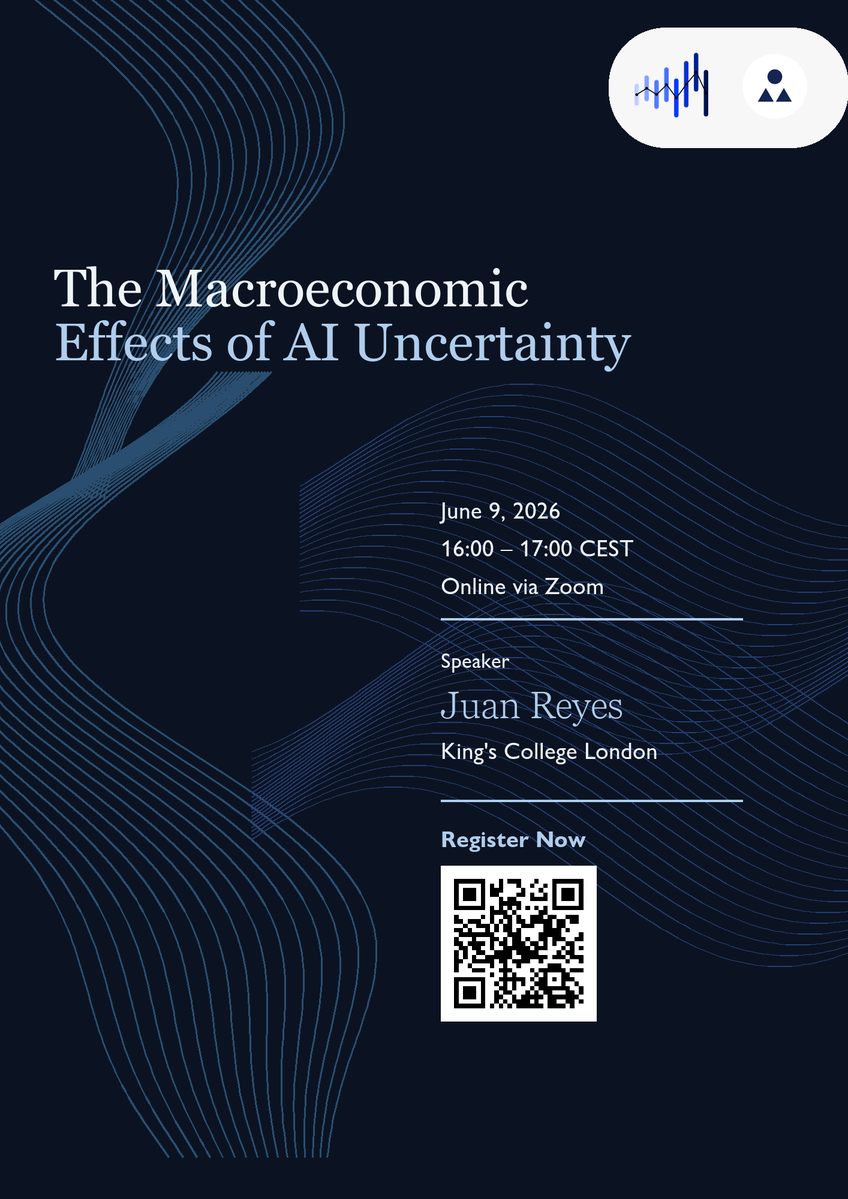
💻 Webinar: The Macroeconomic Effects of AI Uncertainty (Juan Reyes, King's College London and Economic Statistics Centre of Excellence)
⏲️ June 9, 16:00 – 17:00 Central European Summer Time
REGISTRATION HERE: forms.office.com/r/fB3ZHrYh8…
Juan Reyes (King's College London, Economic Statistics Centre of Excellence) examines the macroeconomic implications of uncertainty shocks related to artificial intelligence (AI) through a novel text-based AI Uncertainty (AIU) Index.
Link to paper: papers.ssrn.com/sol3/papers.…
5
28
1,471

We've just launched a Substack on AI and the economy 👶
First post is looking at today’s launch of the AI economics institute and how to predict AI's jobs impact.
modeleconomy.substack.com/p/…
3
5
936
AI Economics retweeted

Jun 8
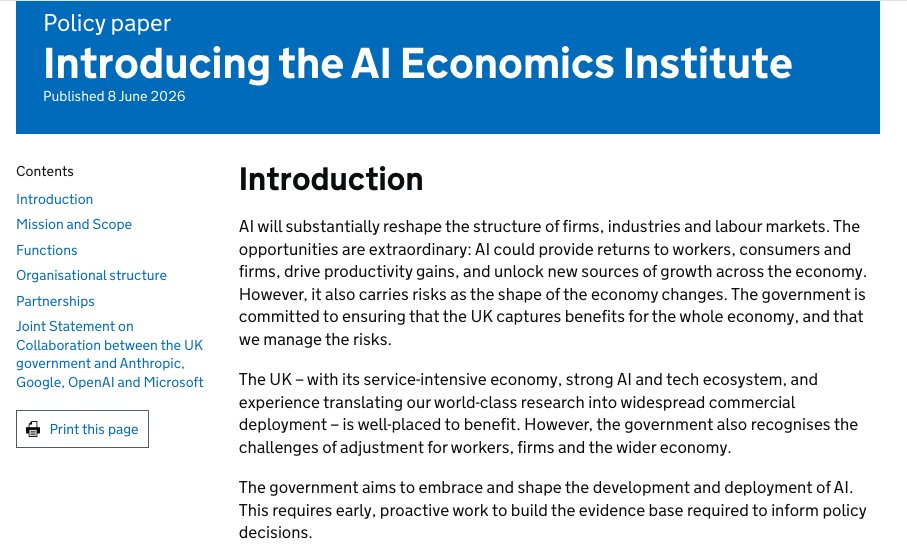
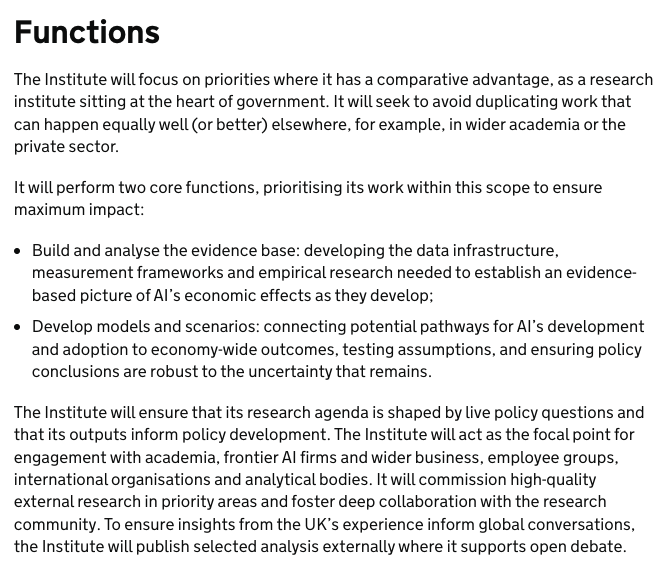
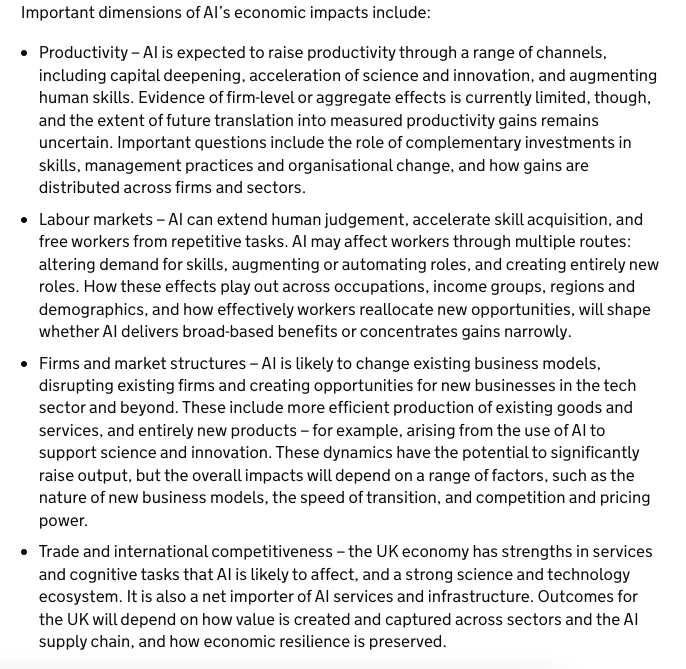
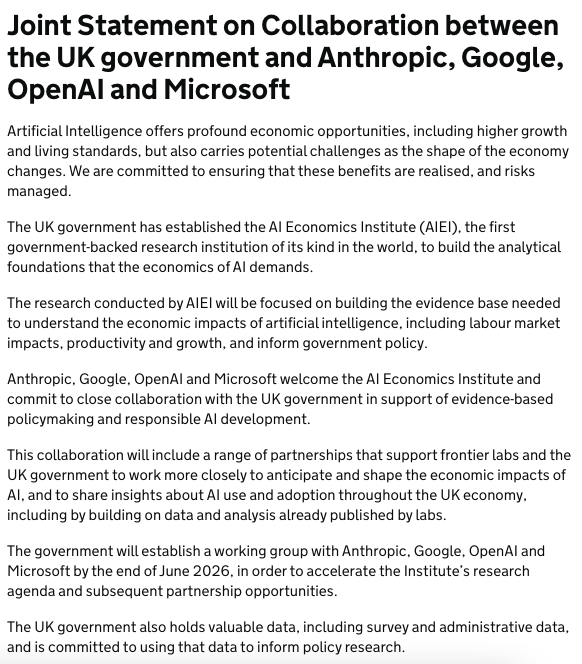
Britain launches the AI Economics Institute, the first government-backed Institute of its kind in the world.
• Joint org between Treasury x DSIT, follows AISI model, incorporates DSIT’s Future of Work Unit.
• Professor Simon Johnson, Nobel Prize-winning economist, former Chief Economist of the IMF, and co-director of MIT’s Stone Center on Inequality and Shaping the Future of Work, will serve as Chair of the AIEI.
• AIEI will work with AI companies in support of evidence-based policymaking and responsible AI development, has agreed Joint Statement of Collaboration with Anthropic, OpenAI, Google Microsoft.
• Not setting policy. Will build and analyse data on AI adoption, conduct research on how AI affects specific sectors, occupations and groups of workers, develop models to assess economy-wide impacts, and work closely with industry, academia and government to inform policy.
4
80
288
45,643
AI Economics retweeted

Jun 8
A list definitions of RSI and associated concepts (there are a lot!).
It's mostly agent-written. Tell me if I'm misquoting or missing any:
tecunningham.github.io/posts…
2
9
48
6,593
AI Economics retweeted

We're launching the OpenAI Economic Research Exchange: a new program for external researchers conducting independent research on the economic impacts of AI.
We are looking for rigorous empirical projects on questions that matter for workers, firms, institutions, and the broader economy.
openai.com/index/economic-re…
15
110
692
90,203
AI Economics retweeted

I interviewed Scott Cunningham (@causalinf), professor of economics at Baylor, on Claude Code, AI, and economics.
Scott's *51* post series on Substack on Claude Code for economics research has been instrumental for introducing agentic coding to economists.
Here's what we discussed:
> Scott's views on verification in AI-aided applied microeconomics
> The impact of AI on the returns to understanding econometrics
> How Scott is testing the models' tendencies to specification search
> What Scott discovered doing a multi-language replication of Callaway Sant'Anna 2021 (@pedrohcgs)
> How AI is helping Scott, an applied microeconomist, start to do applied theory
> Scott's experience teaching agentic coding at his causal inference workshops ("The Mixtape Sessions")
> How Scott is adapting his teaching due to AI
You can catch it on YouTube here: youtu.be/0MFHo_dywCM?si=89G3…
The full transcript is available on my site here: aieconomist.io/resources/sco…
2
39
182
21,626
AI Economics retweeted

Jun 6
Yes, people often underrate this point 👇
Jun 4

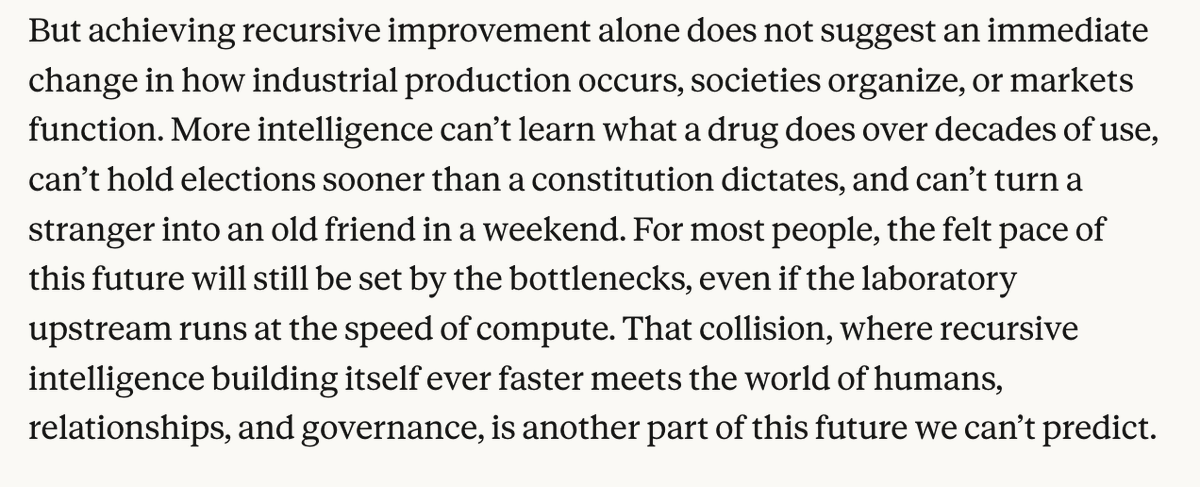
Our internal data shows Claude is accelerating AI development—a possible path to recursive self-improvement, or AI autonomously building a more capable successor.
It’s happening faster than we thought, and the implications deserve greater attention. anthropic.com/institute/recu…
6
10
104
32,078
AI Economics retweeted

Jun 7
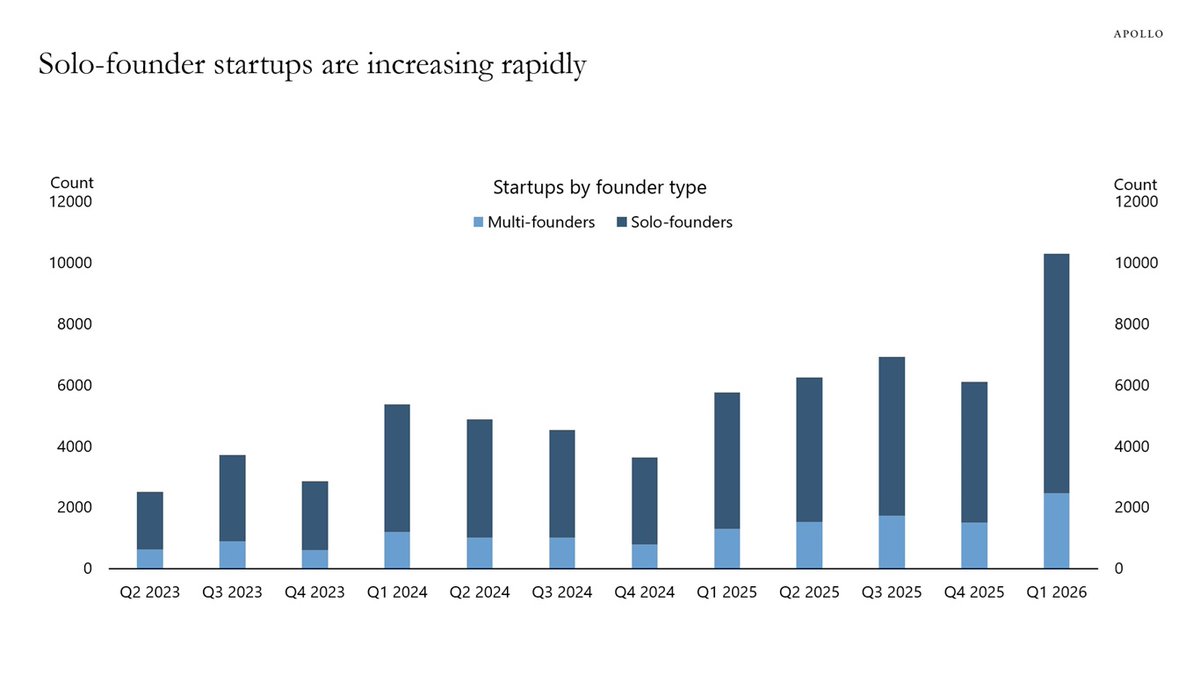
Big rise in solo entrepreneurs, presumably because of AI
By Thorsten Slok and @ernietedeschi
9
39
5,495
AI Economics retweeted

May 27
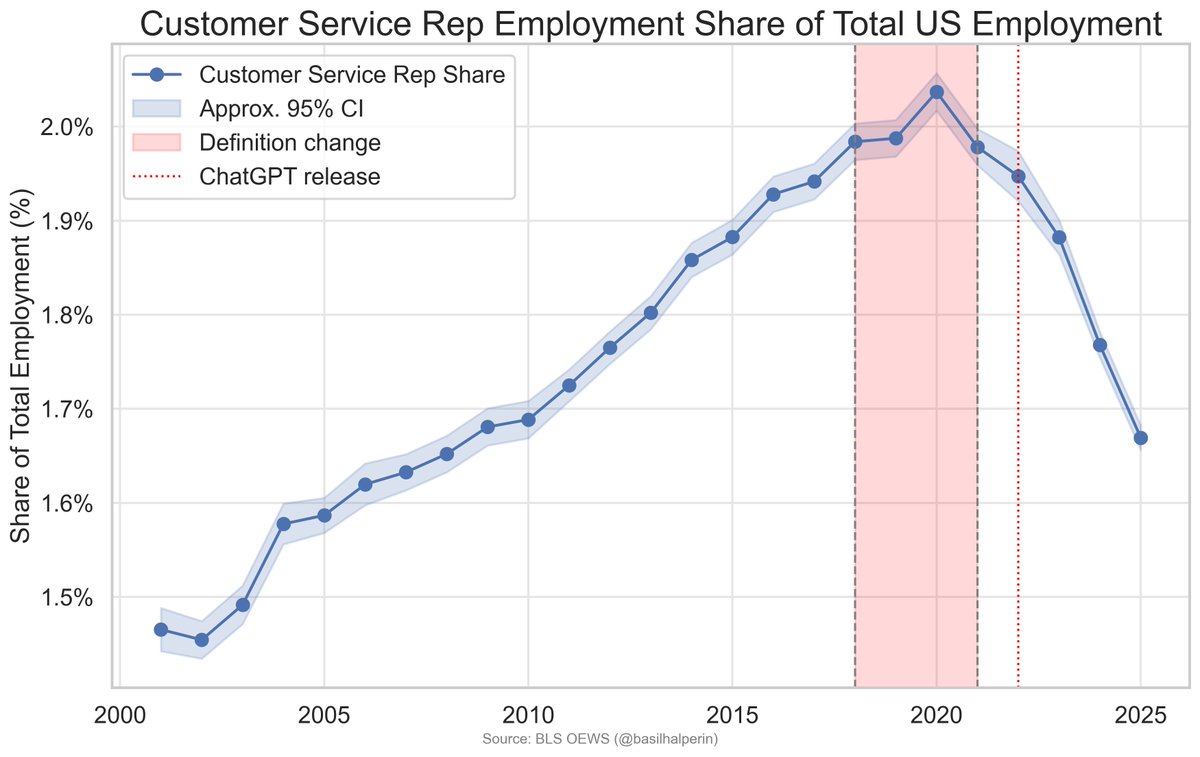
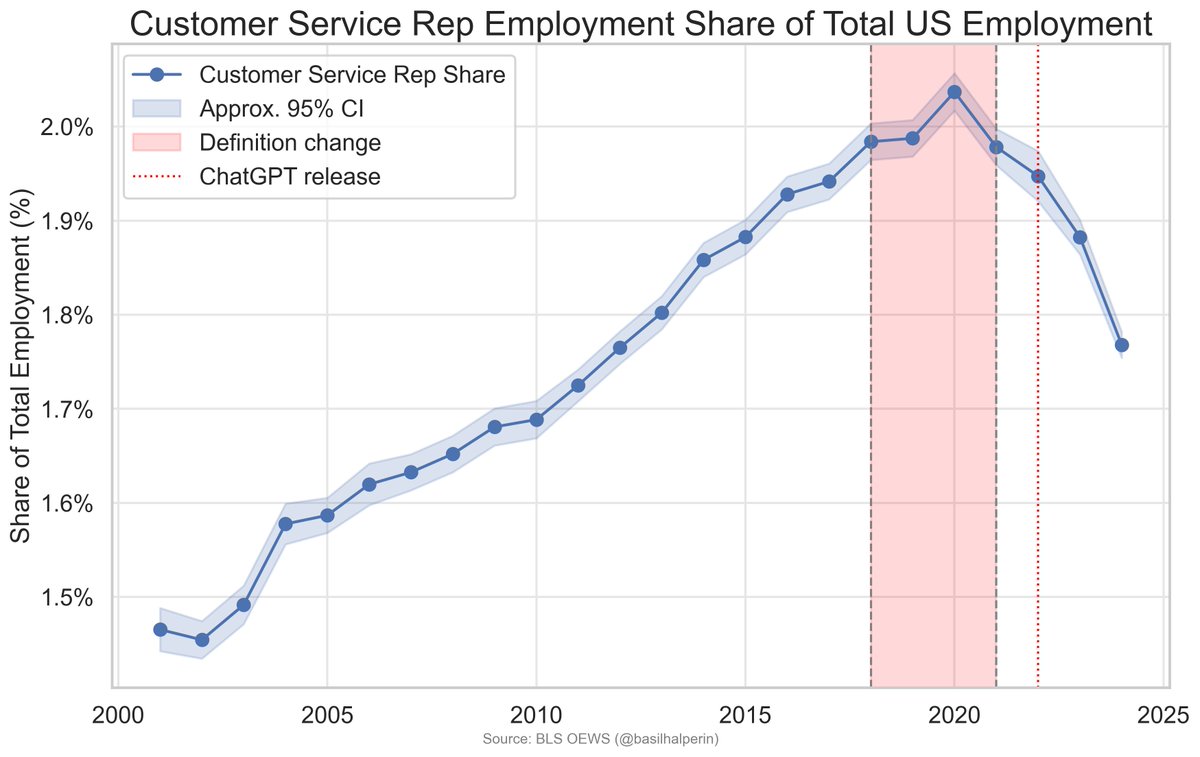
2026 update (=2025 data)
21 Apr 2025

And here's customer service reps -- interestingly, the US employment share is down a fair amount since 2022 ( = ChatGPT)
5
17
110
16,680

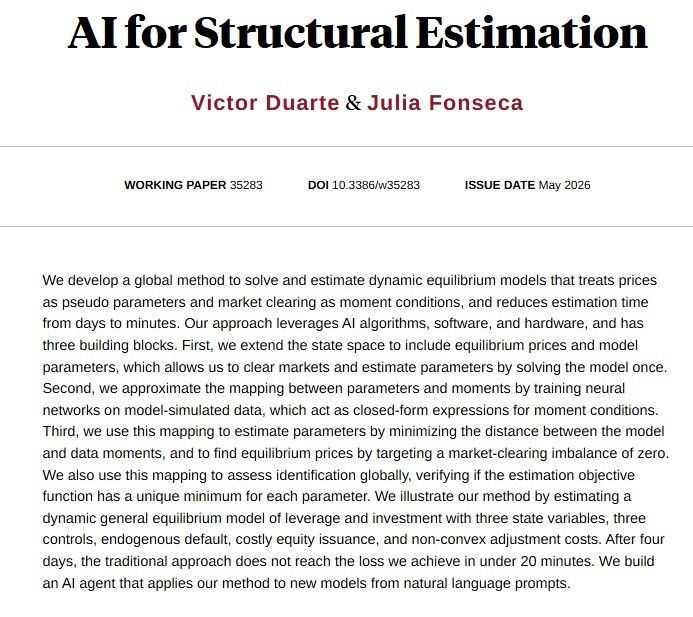
A global estimation method learns the parameter-to-moment mapping, and treats prices as parameters and market clearing as moment conditions, reducing run time from days to minutes, from Victor Duarte and @JuliaAFonseca nber.org/papers/w35283
43
168
21,441
AI Economics retweeted

Jun 6
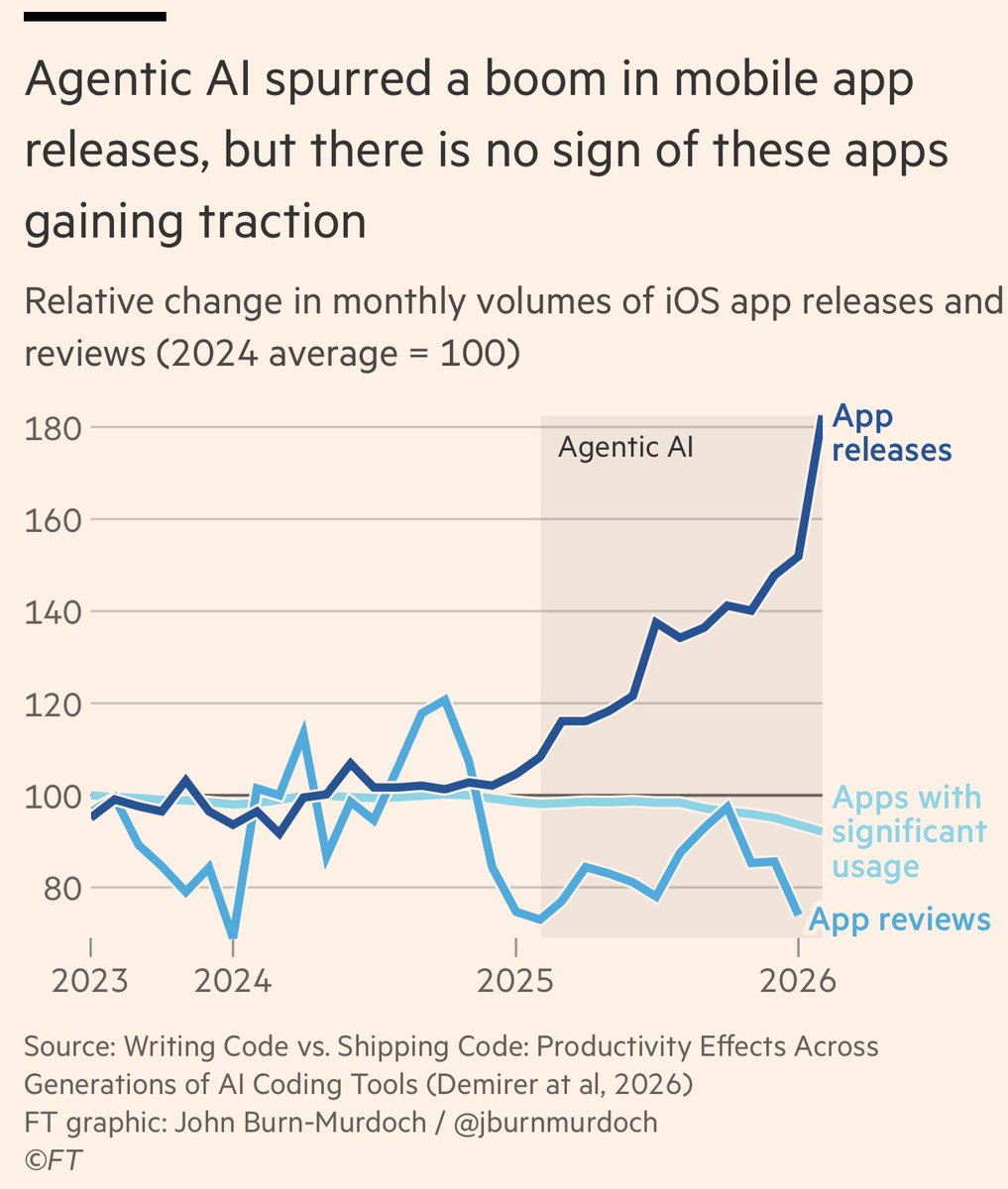
This is a great chart for why we should look at things like productivity and not “shipping” for signals of AI-driven economic acceleration. The former is a function of what people value enough to actually spend money on, the latter could be a proxy for it…but not necessarily.

28
75
409
75,807
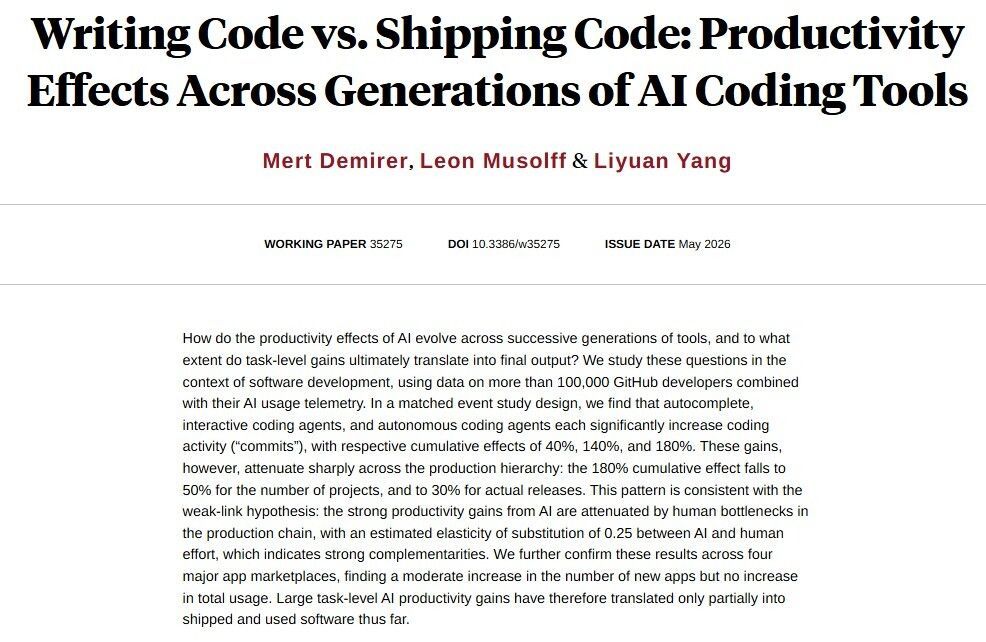
Studying how the productivity effects of AI evolve across successive generations of tools, and to what extent do task-level gains ultimately translate into final output, from Mert Demirer, Leon Musolff, and Liyuan Yang nber.org/papers/w35275
20
50
7,646