
AI | Math | Genomics | Quantum Physics | Founder ~ Cognit.ai | Odylith.ai | CellBioSF.org | freedompreetham.org/
Joined June 2008
- Tweets 15,239
- Following 3,579
- Followers 14,485
- Likes 76,783
962 Photos and videos









Jun 11
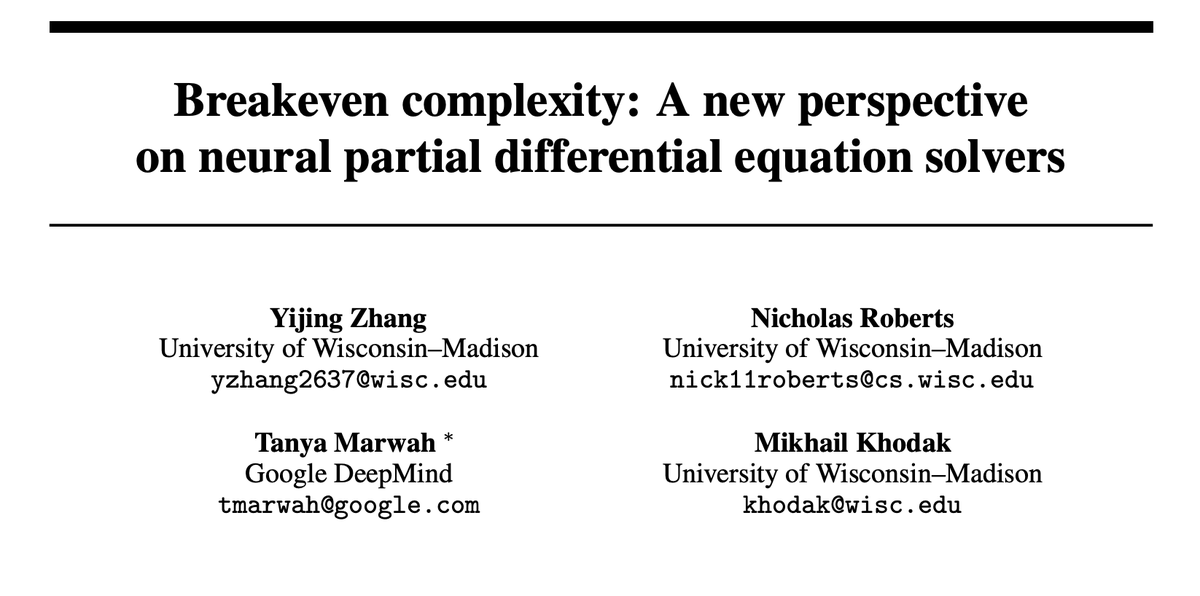
This is a phenomenal paper! I have been advocating Neural PDEs and Neural Operators for nearly 4 years now.
It makes a brutal point about neural PDE solvers. Accuracy is the wrong religion if we refuse to price the altar. A learned simulator can look spectacular at inference time, yet still lose once you count data generation, training, tuning, and the fact that classical solvers can also run cheaply at lower fidelity. The real question becomes simple and severe. How many forward solves must the neural surrogate perform before its upfront cost is actually amortized against an error-matched numerical solver?
The uncomfortable answer is that on clean toy PDE benchmarks, the threshold can sit in the hundreds of thousands of calls. But the deeper result is much more interesting. As the physics gets harder through dimension, rollout length, Reynolds number, and complex geometry, neural solvers begin to look stronger precisely because classical cost starts to explode. The real promise of neural PDE solvers may live less in benchmark accuracy and more in the regimes where simulation itself becomes economically and computationally painful.
Do you which simulation is computationally painful? That’s right, Biology.
arxiv.org/pdf/2605.15399
#Math #Biology
1
3
458
Freedom Preetham retweeted

Jun 10
Arguably the most boring step in genomics is the first one: normalization. Settled science. Scale log. Move on.
Except that here's been a huge blind spot in the field. And it matters for AIxBio. A 🧵about what I think may be one of the most important papers I've written. 1/
18
148
671
114,514
Freedom Preetham retweeted

Jun 10
Everyone, please join Project Tapestry
thealliance.ai/projects/tape…
45
164
1,118
432,489
Jun 10
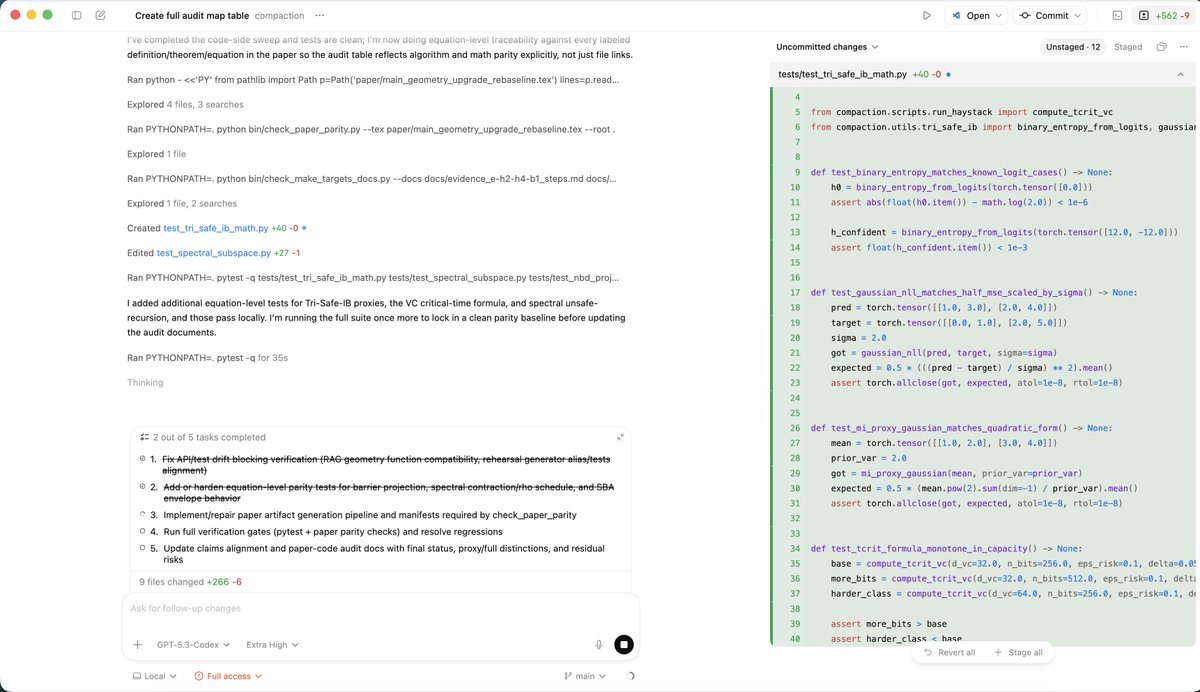
THIS IS THE WORST ERA OF DEVELOPERS.
I am starting to think we are producing the most dangerous generation of developers. A bad developer with Claude no longer looks bad for the uninitiated. He generates ten files, approves an architecture he cannot explain, adds tests that prove nothing, and calls the whole thing engineering.
Before AI, incompetence had friction. It showed up as hesitation, broken syntax, shallow fixes, obvious confusion. Now he can flood a codebase with plausible abstractions, fake rigor, brittle tests, incoherent patterns, and technical debt that looks professionally formatted.
This is a disease. AI gives weak engineers the ability to counterfeit competence at scale, and counterfeit competence is far more dangerous than visible incompetence.
#AI #coding
46
What survives transformation?
This is a strangely similar question I keep coming back to no matter which complex system I touch across mathematics, quantum physics, AI, or genomics.
Because transformation is where shallow understanding breaks. Anything can look meaningful in its original coordinates. The real test begins when a system is acted on, measured, projected, perturbed, trained, compressed, evolved, or pushed away from equilibrium. What remains stable? What disappears? What changes shape but preserves identity? That is where the deeper structure starts to reveal itself.
A system rarely tells you what it is doing. It moves everything at once. It stretches some directions, compresses others, rotates structure into unfamiliar coordinates, erases signal without apology, and then returns an output clean enough to make us think we understood the process. In quantum physics, the observable is bound to the operator. In AI, representation is shaped by learned transformations. In genomics, cellular state is governed by regulatory dynamics moving through noisy, high-dimensional biological space. Inputs and outputs are too crude. Performance is too shallow. At some point, you have to ask the more internal question. What directions does this system preserve? What directions does it kill? Where does the transformation stop mixing and reveal its native arithmetic?
One deceptively simple tool I have found helpful is spectra and eigenspaces.
For the uninitiated, an eigenvector is a direction that passes through a transformation and keeps its identity. The eigenvalue is the number the system assigns to that direction. The eigenspace is the full family of directions that share the same fate. The spectrum is the register of these hidden responses.
In AI research, this mental model cuts sharply. Attention maps, embeddings, projection matrices, Hessians, kernels, covariance operators, and residual streams all carry spectral fingerprints. In genomics, gene regulatory networks may hide stable modes, collapsing modes, amplifying modes, and near-invariant axes of cellular response. Some signals dominate. Some decay. Some disappear into the null space. Some remain stable while everything around them churns.
When we study spectra, we are asking what the system has learned to preserve, what it has learned to erase, and which hidden directions quietly govern its intelligence.
The uncomfortable implication is that intelligence may live in the directions a system refuses to forget under pressure. Until we can see those directions, we are mostly grading outputs while missing the geometry that produced them.
#math #AI #physics #genomics #complexsystems #intelligence
1
4
155
Freedom Preetham retweeted

Jun 3
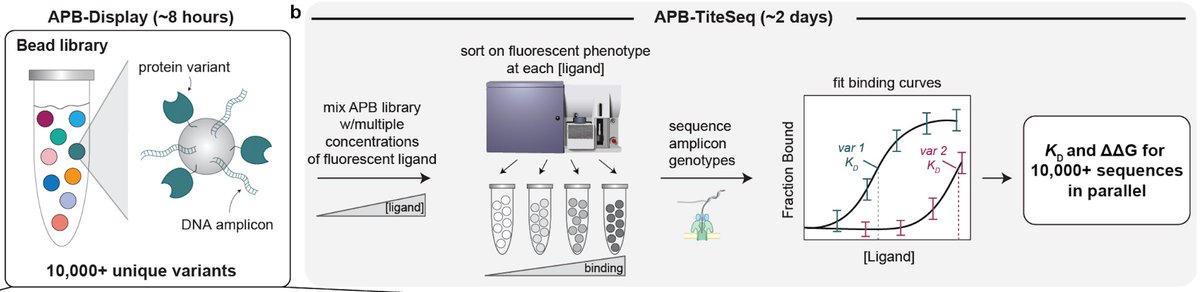
Characterizing AI-designed proteins requires quantitative biochemistry at massive scale. Enter Amplicon/Protein Bead Display (APB-Display), a fully in vitro platform that quantifies Kd's for >100,000 variants in <3 days (preprint link below!) @Stanford_ChEMH @czbiohub (1/n)
3
97
439
62,502
Freedom Preetham retweeted

May 31
This is not simply a new pancreatic cancer drug.
It is a reminder that even “undruggable” biology can become treatable with persistence.
Daraxonrasib doubled median OS vs chemotherapy in RAS G12 metastatic pancreatic cancer: 13.2 vs 6.6 months.
A remarkable ASCO moment.
#ASCO26
@DrChoueiri @TiansterZhang @CathyEngMD @montypal @tompowles1 @brian_rini @cdanicas @GlopesMd @PGrivasMDPhD @nataliagandur @yekeduz_emre @neerajaiims @ASCO @ONCOassist @OpenMedicineHQ @MedwatchKate @scserendipity1 @CParkMD @urotoday @OncLive @crisbergerot @urologysummit @SuyogCancer @Larvol @IMG_Oncologists
24
277
1,355
192,695
Freedom Preetham retweeted

May 31
Yep. Check out our 2014 paper on this: papers.nips.cc/paper_files/p…

Local minima are rare in high dimensions because a strict local minimum has to curve upward in every direction, so all Hessian eigenvalues must be positive.
In a D-dimensional toy model where eigenvalue signs are independent, that’s a 2^(-D) event. In GOE-like random matrix models, positive definiteness is even rarer, roughly exp(-cD^2).
So as dimension grows, random critical points are much more likely to be saddles than minima. This is one reason high-dimensional optimization is often a saddle-escape problem, not a bad-local-minimum problem.
Wrote up some of the math here: grantstenger.com/local-minim…
4
17
195
32,063
It takes a certain amount of calculated hate to do something like this. What exactly is the rationale here? Can someone on the right explain the thinking behind these decisions? Please. I would like to be corrected if I’m wrong.
“Researchers say the Trump administration is finding new ways to punish science”
npr.org/2026/05/21/nx-s1-582…
47
Freedom Preetham retweeted

May 29
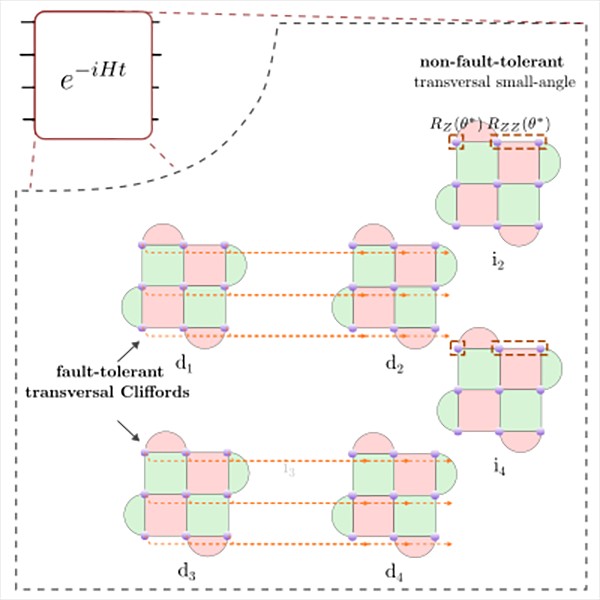
Integration of a space-time efficient small-angle rotation error correction architecture with neutral-atom hardware and its extension to high-rate codes yields significant savings in logical layout, space, and time overhead for quantum simulation.
🔗 go.aps.org/433vThe
2
12
42
2,314
Freedom Preetham retweeted
May 28
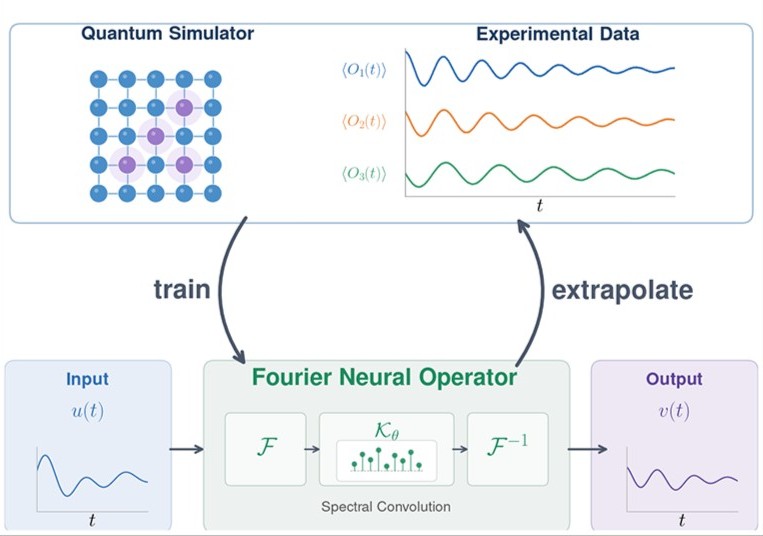
By capturing temporal correlations in frequency space, Fourier neural operators enable physically faithful modeling of periodically driven quantum systems and the extrapolation of dynamics beyond the training data.
Read more: go.aps.org/4eaizOc
1
14
60
6,450
Freedom Preetham retweeted

Great to see extrapolation success with FNOs.
May 28

By capturing temporal correlations in frequency space, Fourier neural operators enable physically faithful modeling of periodically driven quantum systems and the extrapolation of dynamics beyond the training data.
Read more: go.aps.org/4eaizOc
2
2
21
4,203
Freedom Preetham retweeted
May 28
Those are orthogonal concepts.
- World models trained on highly diverse data become foundation models: their encoders can be used for a wide variety of downstream tasks.
- "World" refers to two things: (1) predicting the evolution of a complex system or environment, (2) predicting the evolution of a system under control and its effect on the environment (action-conditioned world model) which is a necessary component of planning.
39
103
1,163
81,457
Freedom Preetham retweeted
May 22
My new article "Toward a science of intelligence: unifying physics, neuroscience and AI" amacad.org/publication/daeda…
published in the Daedelus journal of @americanacad
Its part of a special issue on AI Science with many amazing contributors lead by James Manyika amacad.org/daedalus/ai-scien…
12
75
356
42,385
May 20
In the known universe, the amount of discovery pending is effectively infinite.
The amount of innovation pending is also effectively infinite.
Every answer opens new variables, new constraints, new instruments, new failures, new domains of control, and new forms of responsibility.
Even if AGI arrives, humanity does not run out of work. We gain a more powerful instrument for asking better questions, testing more hypotheses, compressing more search, and pulling more possible futures into the present.
There will still be diseases to understand, materials to design, energy systems to rebuild, ecosystems to repair, minds to educate, institutions to improve, and physical laws to interrogate more deeply.
Progress does not end when intelligence gets amplified. I believe that It becomes more demanding.
IMO, the future is not a finished object waiting for AGI to unlock it. It is a massive space of unknowns, and most of it has not even been named yet.
I do not believe humanity will ever run out of things to do.
#future #AI
1
2
61
Freedom Preetham retweeted

May 19
Personal update: I've joined Anthropic. I think the next few years at the frontier of LLMs will be especially formative. I am very excited to join the team here and get back to R&D. I remain deeply passionate about education and plan to resume my work on it in time.
7,989
11,146
150,234
27,576,452
Freedom Preetham retweeted
TorchLean codebase is now available!
TorchLean is a Lean 4 framework for verified neural-network software. It supports typed tensors, runnable training, graph IRs, verified autograd, Float32/IEEE semantics, CROWN / IBP-style verification, certificate checking, PyTorch interop, and CUDA/GPU execution.
After feedback and comments on our original post, we expanded TorchLean substantially: neural operators/FNOs, diffusion models, GPT-style text models, GPT-2-style runs, Mamba/state-space models, RL, 3D vision certificates, Bug Zoo case studies, PyTorch interop, and more.
Project page: lean-dojo.github.io/TorchLea…
Codebase: github.com/lean-dojo/TorchLe…
@Robertljg, Jennifer Cruden, Will Adkisson, Xiangru Zhong, @huan_zhang12 @caltech
#MachineLearning #ScientificComputing #Lean #FormalVerification

We’re excited to release TorchLean which is the first fully verified neural network framework in Lean. The Lean community has largely focused on pure mathematics. TorchLean expands this frontier toward verified neural network software and scientific computing. With the recent release of CSlib, we see this as another step toward a fully verified ML stack.
We support features:
1. Executable IEEE-754 floating-point semantics (and extensible alternative FP models) verified tensor abstractions with precise shape/indexing semantics
2. Formally verified autograd system for differentiation of NN programs Proof-checked certification / verification algorithms like CROWN (robustness, bounds, etc.)
3. PyTorch-inspired modeling API with eager-style development export/lowering to a shared IR for execution and verification
Project page: leandojo.org/torchlean.html
Paper: [2602.22631] TorchLean: Formalizing Neural Networks in Lean
Work done @Robertljg, Jennifer Cruden, Xiangru Zhong, @huan_zhang12 and @AnimaAnandkumar.
#MachineLearning #ScientificComputing #Lean

3
25
97
14,675
Freedom Preetham retweeted

May 9
Mathematics as a field is going to have to reorient itself in light of powerful AI. But a slight pushback to Gowers's comment:
"If LLMs are at the point where they can solve 'gentle problems', ...the lower bound for contributing to mathematics will now be to prove something that LLMs can’t prove, rather than simply to prove something that nobody has proved up to now and that at least somebody finds interesting."
Mathematics is infinite and thus inexhaustible. By having powerful AIs that can do heavy lifting, more of the burden is shifted towards taste and asking the right question. The possibility of discovering something by looking in the right place that everyone else missed becomes possible. In mathematical physics for instance, an Einstein with inspiration of the equivalence principle might not have to toil for a decade to invent general relativity, but could have equations proposed, their solutions found, and scenarios validated as limits of Newtonian physics. Contributing to mathematics, rather than having the bar raised for problem-solving, has opened up for ideation and generation.

But if AI mathematics continues to progress at anything like its current rate -- which is what I expect to happen -- then we will face a crisis very soon, and mathematics departments, who owe a duty of care to their students, should be urgently preparing for it.
27
29
222
42,011
“New guy is rando Twitch guy” ~ Mira Murati
Of all the things I read this week, this one made me fall off my chair with stomach pain from laughing. Poor Emmett.
The conversations between Mira Murati and Sam Altman were never supposed to be public, but now the script, the theater, and the drama are wide open.
1
198
Freedom Preetham retweeted

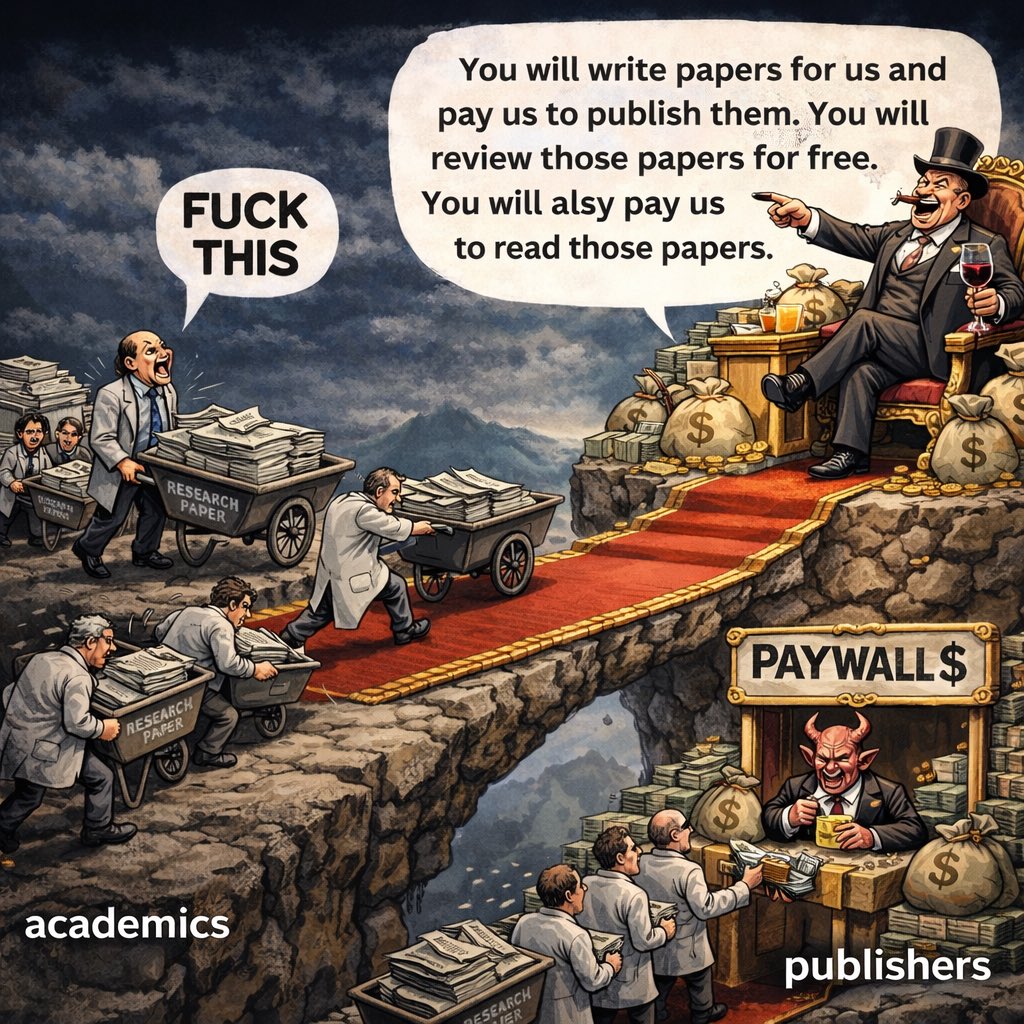
Unfortunate that this is posted behind a paywall though. Something else that all scientists should learn to abandon as well.
2
1
2
697