

Jun 12
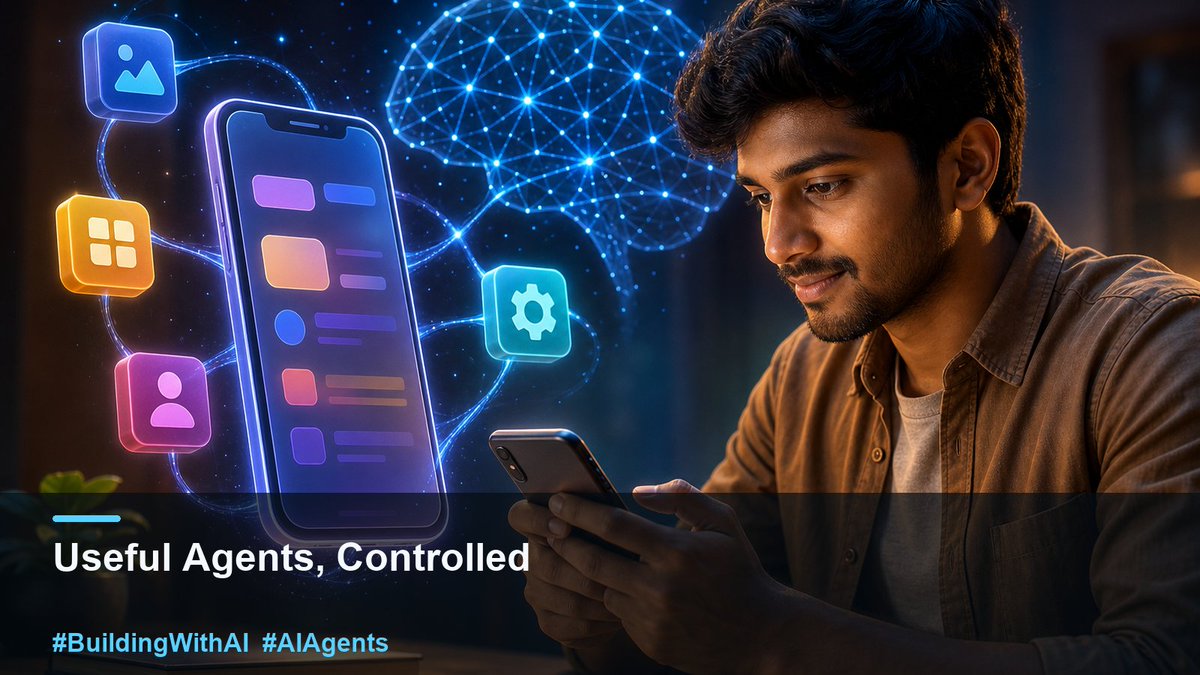
We built mobile apps with agentic AI and discovered that local developers in India can now create innovative solutions with ease, Prompt tip: use natural language inputs to simplify app development workflows.
#BuildingWithAI #AIAgents
xgenplus.com
17

Jun 11
If I could build you something today that helps you cognitively. A desktop app, a phone app, streamline something you dread doing every day. What would that be? Let me know, I am genuinely curious. #buildingwithai #claudeai #ai #cognitve #parkinsons #chronicdisease #mentahealth
7

Jun 10
One World Trade Center. 88 floors up, and a room engaged in high value discussion. Here's what our Tech Week session looked like. 🗽
After the event, a few truths stuck with us:
Fundraising is brutal for pre-seed and seed founders right now, and the ghost of the 2025 GPT wrappers is haunting due diligence.
Everyone says "get to product market fit." Almost no one explains how…that's the gap.
Building an app is not building a company. "Just launch, just pivot, just vibe code" gets founders into trouble. Plan the work, work the plan.
The honeymoon phase of AI is over. The founders building to last use AI as foundational architecture, not a gimmick.
Missed it? We're bringing the exact same panel to the StartStak Arena, live online.
If you’re serious about building with AI, you’ll want to be there.
Tuesday, June 23rd, 11:30 AM CST
Grab your spot: startstak.ai/arena
#TechWeek #BuildingWithAI #StartStak #Founders #ProductMarketFit
18

Grateful to the Qubators team and my fellow cohort members. This is just the beginning of the build. 🚀
What AI tools are you using to solve your business problems? Drop them below! 👇
#AI #BuildingWithAI #LagosDevs #BuildInPublic
3

Most AI agents fail not because of bad prompts — but because they forget. 🧠
Here's the only rule of thumb you need for agentic AI memory:
< 10 steps → Sliding Window
10–30 steps → Structured State
30 steps → Hierarchical Memory
Crosses sessions → Always add Vector DB
Don't know → State Vector DB (safe default)
The biggest mistake teams make? Using Vector DB for everything because it sounds powerful.
Start simple. Add complexity only when you hit a real failure.
——
#AgenticAI #LLM #AIEngineering #MachineLearning #AIAgents #LangChain #PromptEngineering #MLOps #SoftwareEngineering #AIProductivity #BuildingWithAI #AITips #ArtificialIntelligence #TechTips #DeveloperLife
1
14

When was Software Development not Spec-Driven? linkedin.com/pulse/when-soft… @LinkedIn
Before AI, engineers absorbed weak specifications silently. Now the machine holds up a mirror that does not lie.
#AgenticAI #BuildingWithAI #TechLeadership #Engineering #PM #SpecDriven
7

My fiancée surprised me with this for my birthday ❤️
Just 3 months ago I bought my first Mac Mini — I had never written a single line of code and had zero traditional programming background.
I went all-in anyway: opened @AlexFinn files, grabbed @garrytan Gstack & Gbrain, studied @karpathy memory models, waited for @thsottiaux to reset Codex limits, bounced nonstop between Claude, Cursor & Codex, built with @steipete’s OpenClaw @NousResearch’s Hermes, set up Obsidian memory vaults… and tried literally everything I saw on Twitter.
I broke dozens of agents, rebuilt them from scratch, and somehow started shipping real work.
Every single dot in this brain is a late-night breakthrough, a painful lesson, and a story that got me here.
She understood the vision and turned my very first “AI brain” into art.
(Yes, it’s the Grey’s Anatomy Meredith & Derek wall-brain reference 😂)
In 10 years I want to look at this and say:
“Damn… that’s exactly where it all started.”
Thank you, my love. This one hits different. 🔥
#AIJourney #FromZeroToAgent #LeadExpress #MacMiniLife #BuildingWithAI #dago_ai

1
3
158

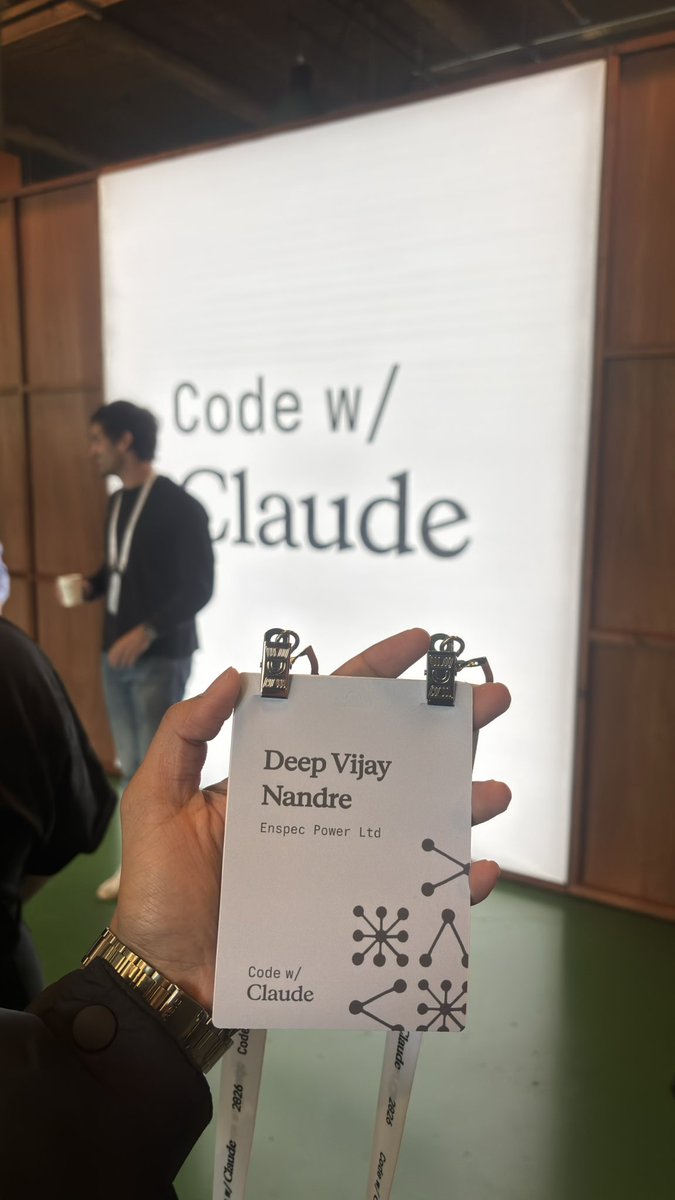
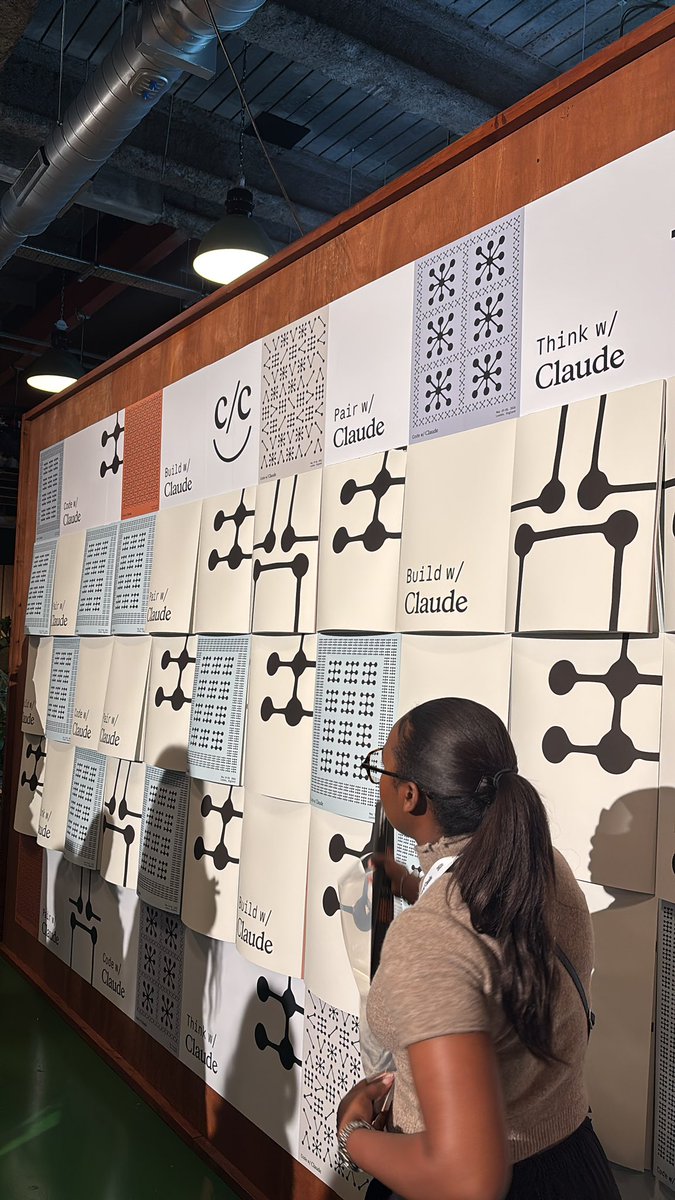
At Code w/ Claude Extended in London today 🇬🇧
If you’re here and building something, come say hi, would love to meet people in the room
@ClaudeDevs @claudeai
#CodeWithClaude #BuildingWithAI
2
2
9
235

May 18
The 4 types of memory every agent builder needs to understand
Most agent builders hit the same wall. Their agent performs brilliantly in demos, then forgets everything the moment the context window fills up. They reach for a vector database and call it a "memory system." It isn't.
Real agent memory has four distinct layers. Here's each one.
1. In-context storage
What your agent can see right now. Fast, perfectly accurate, completely ephemeral. When the window closes, it's gone. Treat it like working memory, only put what the current task needs.
2. External storage
Databases and vector stores the agent queries at runtime. Scales infinitely, but retrieval is never perfect. The chunking strategy and retrieval method matter far more than most builders realise.
Examples: Pinecone, Weaviate, pgvector, Qdrant, MongoDB Atlas
3. Procedural memory
Your system prompt, tool definitions, few-shot examples, fine-tuned weights — how the agent knows to behave. Most teams write this once and never touch it again. That's where quality quietly dies.
4. Episodic memory
Structured records of past sessions, not raw logs, but summarised, tagged experience the agent can actually learn from. The rarest layer. The highest leverage.
Examples: Mem0, Zep, custom pipelines on top of Redis or Postgres
Most production agents have layer two and nothing else. The ones that will win are designed with all four from the start.
Posting everything I learn building agents, from scratch. Follow along. 🚀
#AIEngineering #AgentDesign #LLM #BuildingWithAI
2
1
55

May 13
Wow it’s official - Claude has released the single most slept on feature of all time. /goal is a watershed moment for anyone who had been using agentic coding tools since they arrived on the ai scene.
HUGE productivity unlock.
If you’re not #buildingwithai right now, you are missing a generational opportunity.
May 13

How do you keep Claude working until the job is done? Claude Code helps with this in a few ways, including one we shipped recently: /goal.
3
61

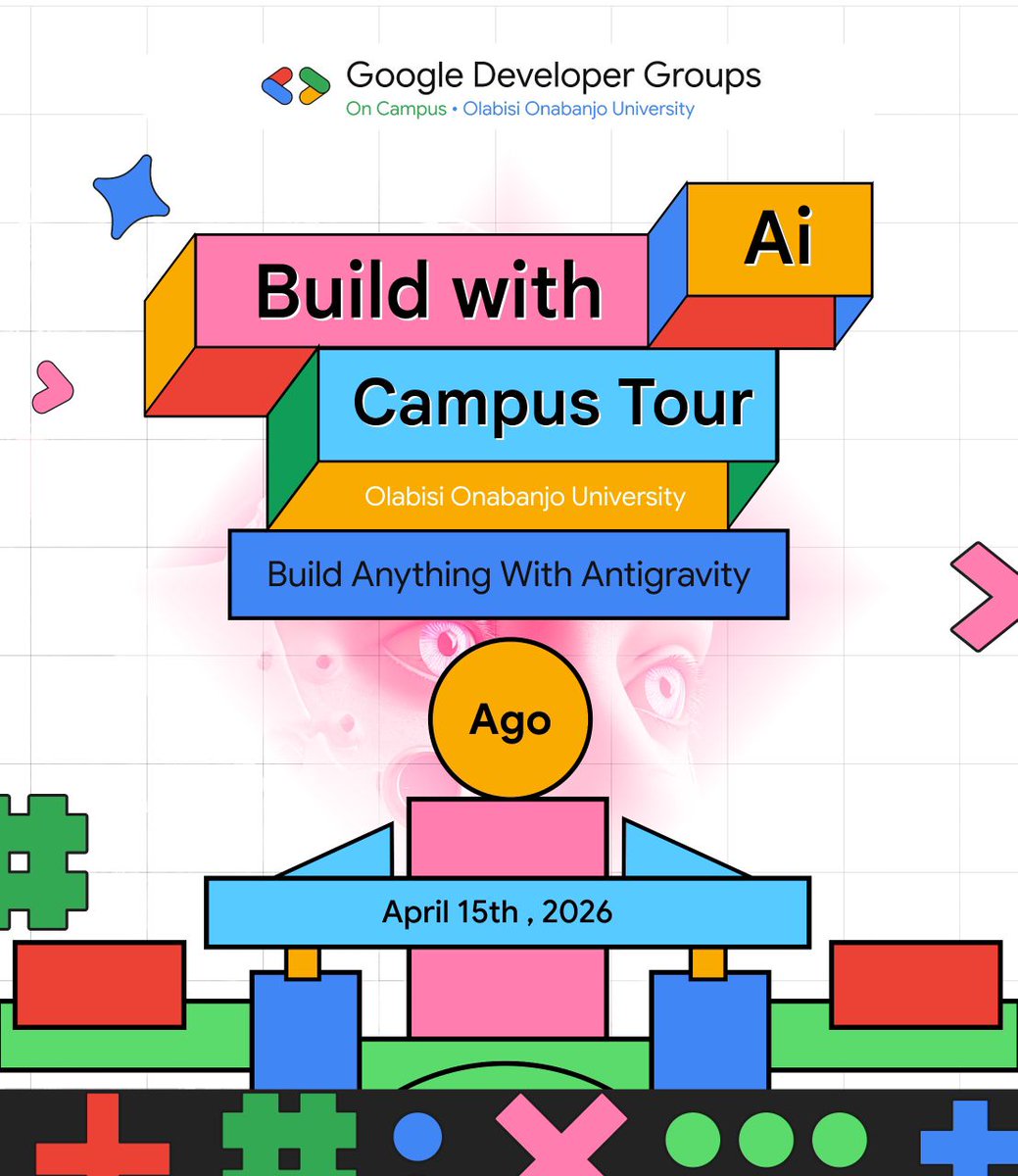
Good morning Creatives, wanna celebrate my small win and appreciate @gdgocoou for organizing a practical moments, conferences and competition on #BuildingWithAI.. it was lit 🔥.. it was an opportunity to create a solution out of ideas and fortunately my website came out 1st. Tnx


2
2
6
60

what excites me most about where AI development tools are heading is not the code generation part.
it is the idea that the entire lifecycle from spec to deployment could be a conversation you have with your tools rather than a process you manage manually.
we are not fully there yet but the direction is clear and it is moving fast.
#DevRel #BuildingWithAI
2
32
good AI workflows do not replace engineering culture. they amplify it.
if your team has strong code review habits, clear ownership and good communication, AI makes all of that faster.
if those things are missing, AI just accelerates the mess.
#DeveloperExperience #BuildingWithAI
2
26
three years ago shipping a feature meant planning for weeks, writing tickets, reviewing PRs across five people and hoping nothing broke in staging.
now a small team can go from idea to working code in a day and actually feel confident about it.
the pace of what is possible has genuinely changed and teams that internalize that are building things that would have taken six months before.
#BuildingWithAI #AIcoding
2
31
the engineers I see growing the fastest right now are not the ones learning more frameworks.
they are the ones learning how to work alongside AI without losing their own judgment in the process.
that balance is a skill and most people are still figuring it out.
#BuildingWithAI #AIcoding
3
37
a year ago the question was "should we adopt AI in our dev workflow."
today the question is "how deep does it go and who owns the process."
the teams asking the second question are already three steps ahead.
#BuildingWithAI #AIcoding
2
43

Jack Dorsey said something last month that most people skipped over.
He called it the Single Brain. One unified world model that ingests every data point in a company: Slack messages, CRM records, call transcripts, financial data, analytics. It gives every agent and every employee the same context to make decisions from. No management layer routing information up and down. Just one source of truth that everyone, human or AI, pulls from directly.
He was describing, almost exactly, what I built by accident.
Not because I had a theory. Because I had a problem.
When I had 27 agents running across 6 companies, the failure mode I kept hitting was not bad outputs. The outputs were mostly fine. The failure mode was context gaps. Agent A did not know what Agent B had decided. Agent B operated on an assumption Agent C had already corrected. I was spending 6-8 hours a week manually syncing context that should have been shared infrastructure.
The answer was not better agents. It was a shared memory layer.
I use mem0 for this now. Not as a nice-to-have. As the connective tissue the whole stack depends on.
What Dorsey is describing at the company level is the same thing at the infrastructure level. The Single Brain is not a product. It is a design principle. Replace information-routing humans with an information layer that every node in the system can query directly. What you lose in hierarchy you gain in speed.
The practical implication is this: most founders who are building with agents are building agent by agent. One agent for email, one for content, one for research. Each one isolated. Each one starting cold. This works for demos. It falls apart at 10 agents or 3 months.
The memory layer is what makes a stack of agents into a system.
What I changed: every agent in my stack writes back to shared memory on task completion. Not a log. Not a status update. Structured extraction of decisions made, context surfaced, outcomes observed. The next agent that touches that domain inherits that context automatically.
The result: the agent that handles my sales outreach now picks up prospect context from 3 weeks prior without being told. Reply rates went from 24% to 31% once the memory layer was working correctly.
Dorsey is right about the direction. Where most founders will get stuck is thinking the Single Brain is a product you buy. It is a habit you build. Every time an agent completes a task, you decide: does this output feed back into the shared context or does it disappear? Most pipelines default to disappear.
That default is why agent stacks feel useful but never feel like they compound.
Build the memory layer before you add the tenth agent. Not after.
Dorsey is building this at company scale. You can build it this week.
#founder #aiagents #buildingwithAI
3
5
152
changed how I structure my work week recently.
used to start each day opening issues and figuring out where to pick up. now I run a quick review of what's in flight, what's blocked, what needs a decision — all through a workflow that tracks it for me.
zenflow handles the orchestration. I handle the judgment calls.
the context that used to live in my head is now part of the system. small change, bigger impact than I expected.
#BuildingWithAI #DevRel
2
21

Building the systems that power the future of AI?
Take your innovation to the next level with the #EntrepreneurshipWorldCup. Apply today: ewc26.short.gy/GEN
#AIStartup #BuildingWithAI #AIFounder #AIEntrepreneur #TechFounder #AIInnovation
1
4
382