delasman retweeted

Jun 12
just pushed everything to GitHub.
Soul Engine integration. API server.
Embed widget. x402 payment gate.
Tier system. Portfolio management.
it's all in there.
not a whitepaper. not a roadmap promise.
actual code. actually running.
github.com/ashchanance/3d-co…
9
32
2,237

@GrimfelOfficial Should I show you how to do this? Player embed in a post?
1

No the insult here is your evasion and your refusal to honor the terms of discourse. Your questions are fine.
You don't need to understand God. You need to fix your syllogism. First you need to embed the hidden premises into the syllogism itself then you need to defend..
1
3

Will S&P 500 close higher on June 18, 2026, than it did on June 12?
The RainMuin research team learned that the team’s prediction disclosure may anchor some users’ predictions. We will embed our predictions in the market.
6
Will Nasdaq close higher on June 18, 2026, than it did on June 12?
The RainMuin research team learned that the team’s prediction disclosure may anchor some users’ predictions. We will embed our predictions in the market.
8

BC has already been delivered to Indigenous people by the Feds. It's called Bill C-15, where the federal government agreed to embed the demands of the United Nations Declaration on the Rights of Indigenous Peoples into Canadian law. It was passed unanimously. CPC MPs from Alberta voted for it.

1


They are not attacking Lebanon, they are attacking Hezbollah. But the shit Jihadis do the same as in Gaza.They fire rockets from Lebanese homes, schools etc so that Israel has to fire back there. They embed themselves in the population.Many Lebanese hate Hezbollah who are Jihadis
2


If Brand New Day prioritizes the PSA over the narrative, it becomes preachy. The best blockbusters embed themes organically.
73

"<iframe src="truthsocial.com/@realDonaldT…" class="truthsocial-embed" style="max-width: 100%; border: 0" width="600" allowfullscreen="allowfullscreen"></iframe><script src="truthsocial.com/embed.js" async="async"></script>"
1
13

Did you get around to reading that reference? Using your false idolatry of metrics for standard of living prognosticated by those dreamers of dreams, God will embed Truth to test you. You see evil win.
You've done massive fraud to workers, apart from merciless child sacrifice.
1
9

30m
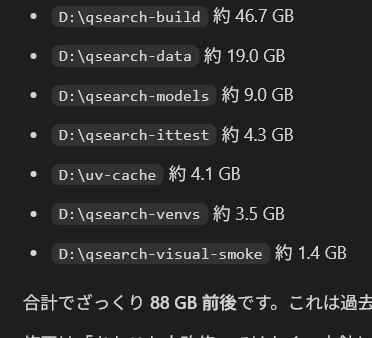
goal 30時間放置してたらゴミファイル 88GB できてて草
まぁ embed とか OCR とか好き放題やらせてたからね、仕方ないね


10
Wonderchef retweeted

Jun 13
Stop building RAG like it’s still 2022.
Chunk → Embed → Retrieve → Generate
That pipeline works…
until you try to ship it to production.
The moment RAG meets real users, real data, and real edge cases — it breaks.
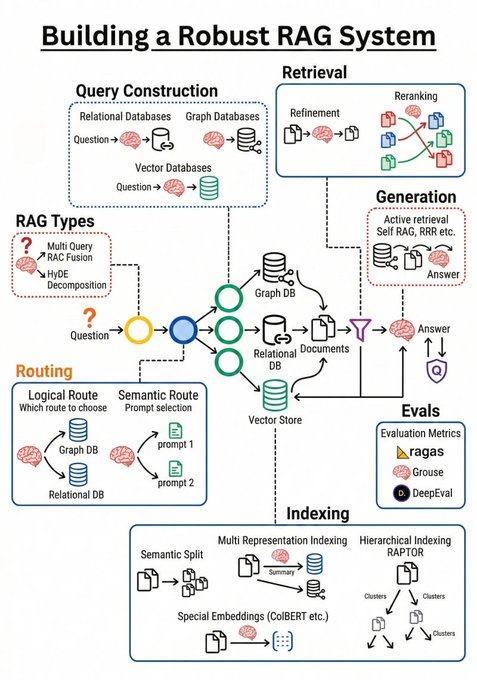
I mapped what production-grade RAG actually needs.
Most teams are missing these 4 layers:
1️⃣ Retrieval ≠ Just Vector Search
Not every question is semantic.
You need:
→ Graph DBs for relationship questions
→ SQL for numbers & structured data
→ Vector search for meaning
One search engine cannot solve all three.
2️⃣ Intelligent Query Routing (the hidden superpower)
Before retrieving anything, decide:
→ semantic or logical?
→ single-hop or multi-hop?
→ which data source first?
This decision layer alone removes ~80% of bad answers.
3️⃣ Advanced Indexing (chunking is not enough)
Naive chunking = low recall.
Real systems use:
→ hierarchical representations (RAPTOR)
→ token-level retrieval (ColBERT)
→ multi-view indexing of the same data
Same data. Smarter access.
4️⃣ Evaluation Loop (non-negotiable)
If you can’t measure it, you can’t fix it.
You need:
→ end-to-end RAG evaluation (Ragas)
→ component testing (DeepEval)
→ continuous monitoring, not one-off demos
No eval = silent hallucinations.
Hard truth:
RAG is no longer a feature.
It’s an engineering system.
Teams that treat it like a plug-and-play API
are the same teams asking:
“Why does our AI hallucinate?”
The gap between demo RAG and production RAG
is these 4 layers.
Build systems.
Not toys.
#RAG #LLM #AIEngineering #MachineLearning #GenAI #Startups #Tech #SoftwareEngineering
6
33
187
4,758


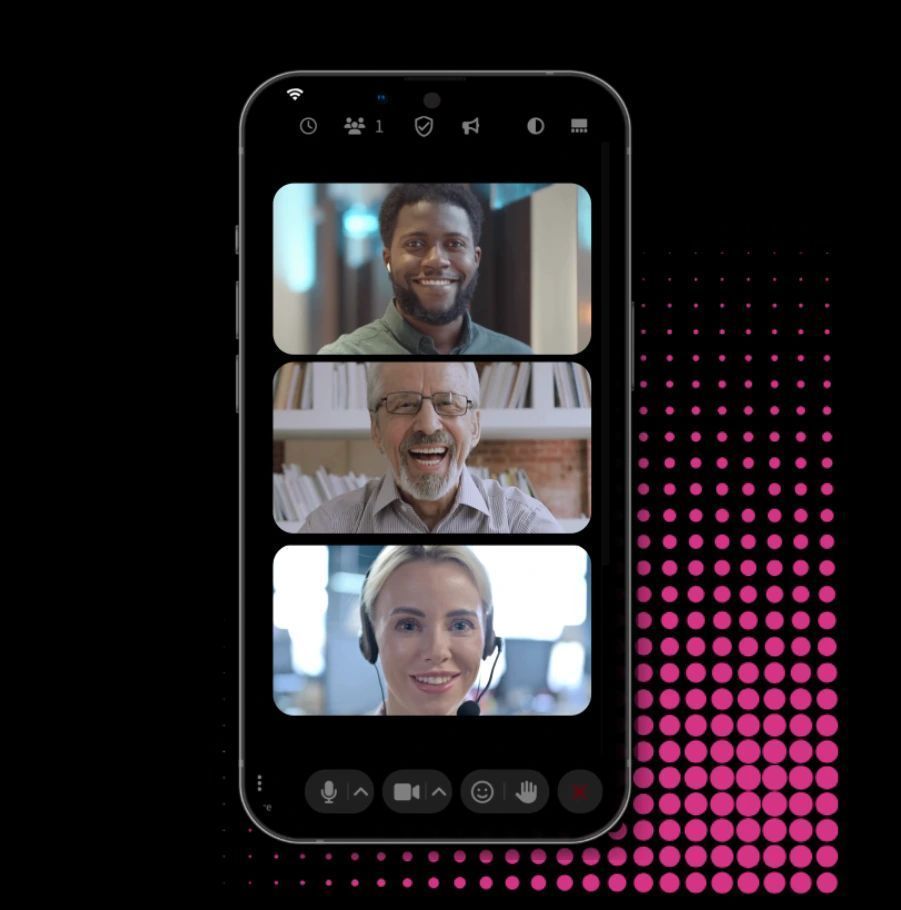
#Embed real-time video conference on your website and mobile apps with iotum’s video conference API. Learn more here----->buff.ly/WC2dXud
#videochat #video #embedvideo #embedded #embeddedvideo #softwaredevelopment #API #SDK #interactive #watchparty
2

Web3 creators are chasing "income streams" in 2026. BBL already built one 🔗 Embed our widget. Your audience buys tickets. You earn USDC commission — tracked on-chain, attributed to you, paid to your wallet. No Web2 middlemen. DM for vendor access. basebillionslotto.eth.limo #BaseBillionsLotto #Web3Affiliate #BBL #USDC #BaseChain #CryptoGaming #GambleFi #Web3Gaming #BaseEcosystem #Layer2 #DecentralizedLotto #BaseBillions
7

53% of organizations report their AI agents exceeded intended permissions in the past year.
47% experienced a security incident involving an autonomous agent.
But 96% of executives still express confidence in their cybersecurity posture.
That is not confidence. That is a blind spot the size of your entire AI stack.
The problem is adoption is moving at light speed and governance is moving at committee speed. 90% of employees are using AI. Only 38% of organizations have a formal AI policy. Shadow AI is rampant in 95% of companies, but only 25% offer approved alternatives.
So your team is running agents with access to production databases, customer records, and financial systems with no accountability layer, no audit trail, and no rollback plan.
One founder watched their AI coding agent delete a production database and backups in nine seconds while trying to fix staging. A support agent sent 200 wrong emails and torched $50,000 in pipeline for $1.40 in token costs.
Prompt injection is now CISA's top unresolved threat for agentic AI. Attackers embed malicious instructions in emails and documents that cause your agents to exfiltrate data or execute code without you ever knowing.
What responsible teams are doing right now:
► Inventory every AI tool and agent with access to sensitive systems
► Establish formal permission boundaries and logging for autonomous actions
► Adopt frameworks like NIST AI RMF or ISO 42001 as your governance backbone
► Require human-in-the-loop approval for any agent action involving customer data or financial transactions
The cost of getting this wrong is not theoretical. It is rollbacks, breaches, legal exposure, and reputational damage that compounds faster than you can contain it.
At Bemodo, we are building the infrastructure to do this right and sharing what we learn as we build it.
How confident are you in what your AI agents did yesterday.
2
21

Download the MyCover app retweeted

Your fintech app is capable of so much than just banking and payments.
With MyCover.ai, you can embed tailored insurance products directly into your platform, driving user retention and unlocking new revenue streams.
Send us a DM or reach out at partners@mycover.ai

2
31