
May 24
This might be the most unreal academic-writing upgrade I’ve ever seen.
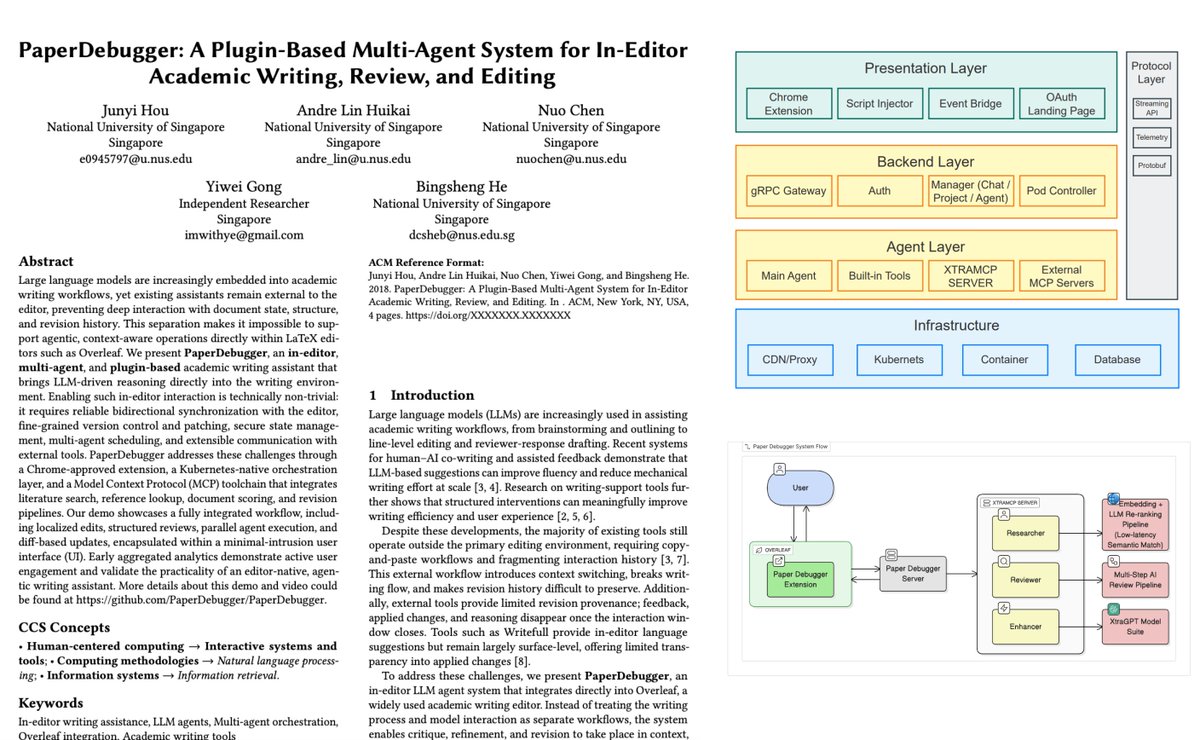
A team from NUS open-sourced PaperDebugger, a in-editor, multi-agent system that lives inside Overleaf and rewrites your paper with you in real time.
→ Reads your live document, structure, and revision history
→ Runs a Research → Critique → Revision loop like a real reviewer
→ Shows every fix in a diff view before anything changes
→ Apply an accepted patch back into your LaTeX with one click
→ Pulls related papers inserts the references for you (via MCP)
Deep research mode goes further..
it finds relevant arXiv papers, compares them against your method, and generates citation-ready tables.. all inline.
24k lines of code. already on the chrome web store. comes with its own open enhancer model (XtraGPT-7B).
overleaf basically stops being an editor and becomes a full research environment.
100% open source. MIT license.
7
50
270
32,312

Mar 4
在 Overleaf 上写学术论文时,频繁在编辑器和 AI 工具之间来回切换,既打断思路,复制粘贴的过程也颇为繁琐。
不妨试下,PaperDebugger 这个开源插件,直接把 AI 助手嵌入到了 Overleaf 编辑器侧边栏。
专为解决学术写作痛点打造,内置了 “研究-评论-修改”的完整工作流,研究、审稿、修订,提供多步推理和结构化修改建议,而不只是简单的对话问答。
GitHub:github.com/PaperDebugger/pap…
支持上下文对话,能直接读取当前项目内容,提供智能建议、修复 LaTeX 语法错误,并一键插入修改后的内容。
提供了 Chrome 插件开箱即用,同时也支持 Docker 私有化部署后端,确保敏感数据的隐私安全。
1
18
87
12,870

Jan 25
You can now fix your academic papers without leaving Overleaf.
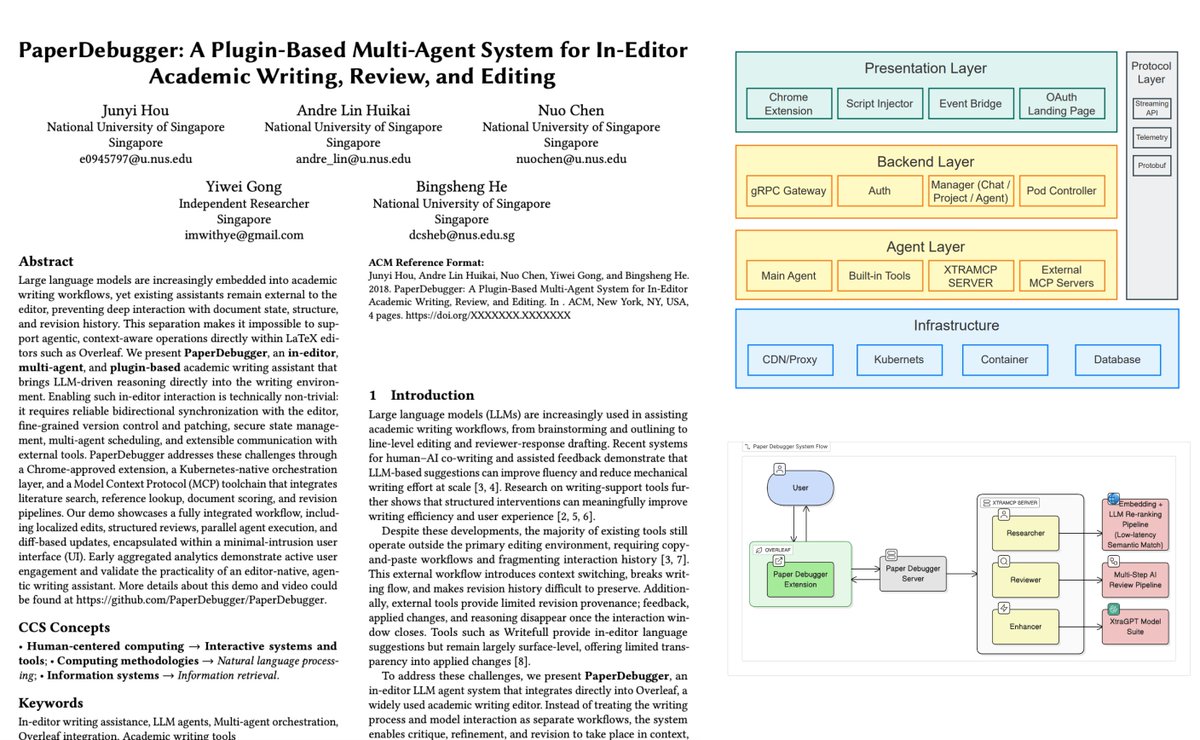
NUS researchers just released PaperDebugger, an in-editor, multi-agent system that lives inside Overleaf and rewrites your paper with you in real time.
→ Highlight text for a full critique rewrite pipeline
→ Returns Git-style diffs and patches your document instantly
→ Runs Reviewer, Enhancer, and Researcher agents in parallel
→ Auto-pulls arXiv papers to generate citation-ready tables
2
2
27
1,969

17 Dec 2025
𝗪𝗿𝗶𝘁𝗶𝗻𝗴 𝗿𝗲𝘀𝗲𝗮𝗿𝗰𝗵 𝗽𝗮𝗽𝗲𝗿𝘀 just got way easier.
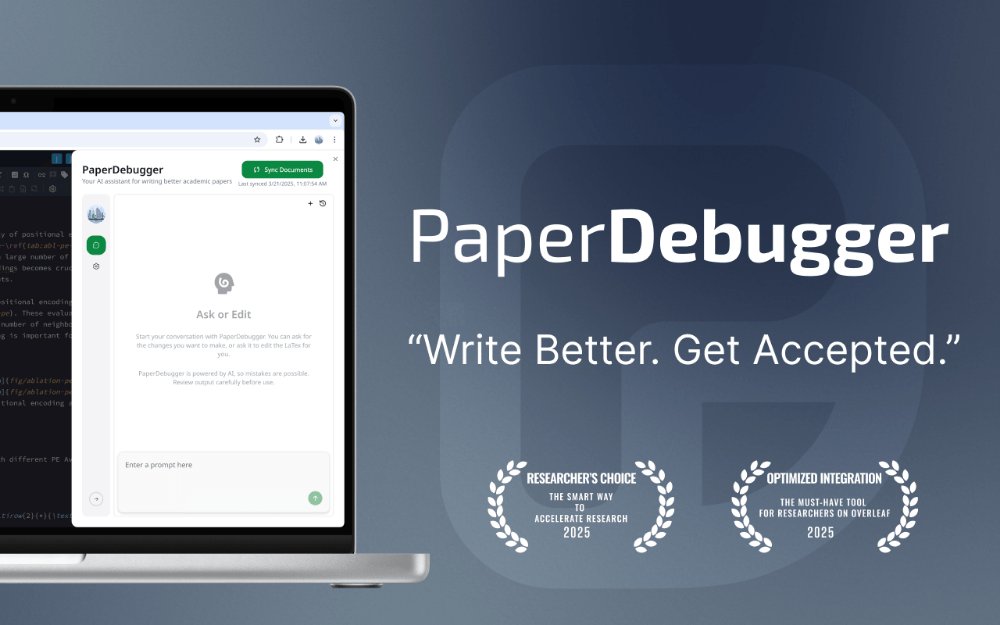
PaperDebugger turns Overleaf into an AI-powered writing lab. Built by a team from NUS, it’s an in-editor, multi-agent system that edits your LaTeX paper with you in real time.
No copy-paste. No chatbot.
Real agentic editing inside Overleaf.
What it does:
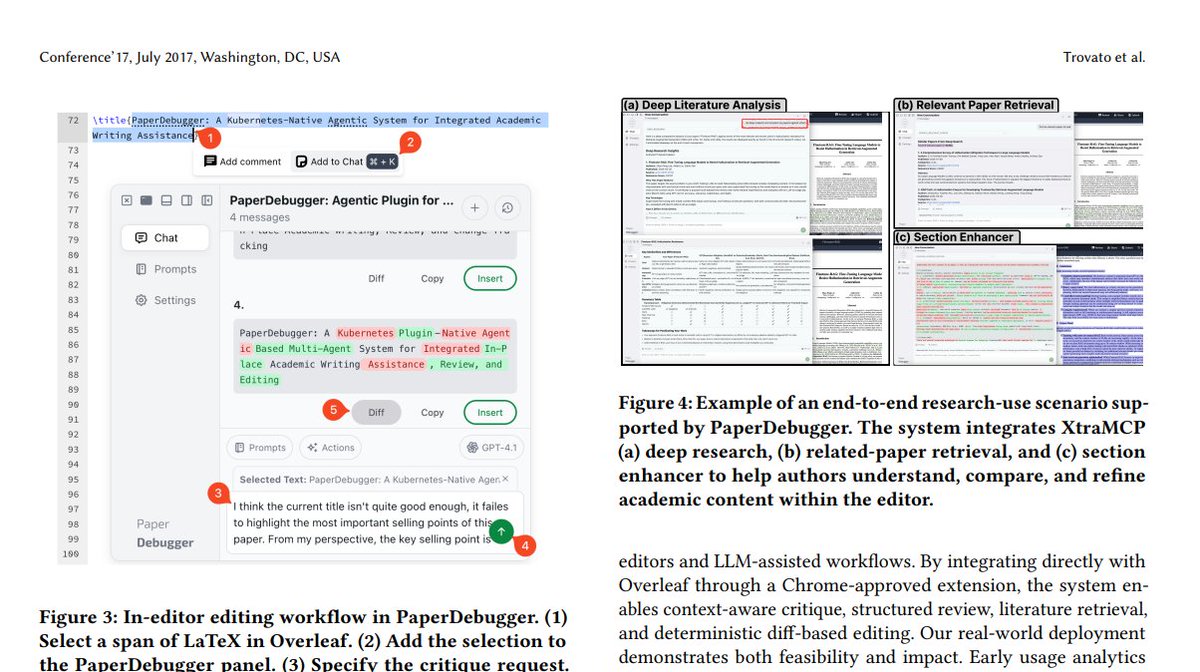
→ Critiques and rewrites highlighted sections
→ Shows clean before–after diffs and patches instantly
→ Runs Reviewer, Enhancer, Scorer, and Researcher agents in parallel
→ Pulls papers from arXiv, compares methods, and generates citation-ready tables inline
Think of it as a mini review committee embedded in your document.
If this scales, Overleaf stops being just an editor and becomes a full AI research environment.
Read the paper → arxiv.org/abs/2512.02589
#datasciencenigeria #ResearchPaper
2
43
567

9 Dec 2025
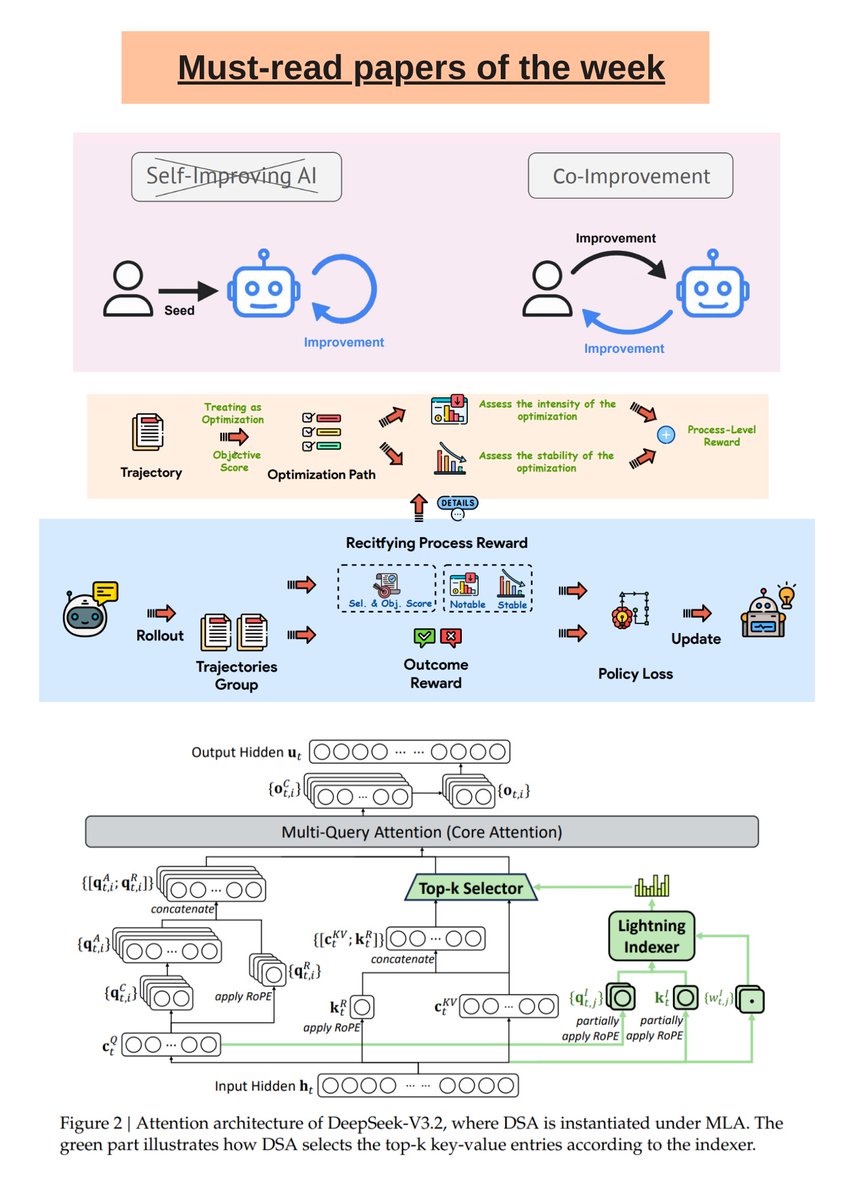
Must-read AI research of the week:
▪️ AI & Human Co-Improvement for Safer Co-Superintelligence
▪️ DeepSeek-V3.2
▪️ Guided Self-Evolving LLMs with Minimal Human Supervision
▪️ retrainZero: Reinforcement Active Pretraining
▪️ Rectifying LLM Thought from Lens of Optimization
▪️ On GRPO Collapse in Search-R1
▪️ Nex-N1
▪️ SIMA 2: A Generalist Embodied Agent for Virtual Worlds
▪️ Glance: Accelerating Diffusion Models with 1 Sample
▪️ Rethinking Prompt Design for Inference-time Scaling in Text-to-Visual Generation
▪️ SpeContext
▪️ CUDA-L2
▪️ PaperDebugger
Find the full list in my weekly newsletter: turingpost.com/p/fod130
6
21
138
10,876

7 Dec 2025
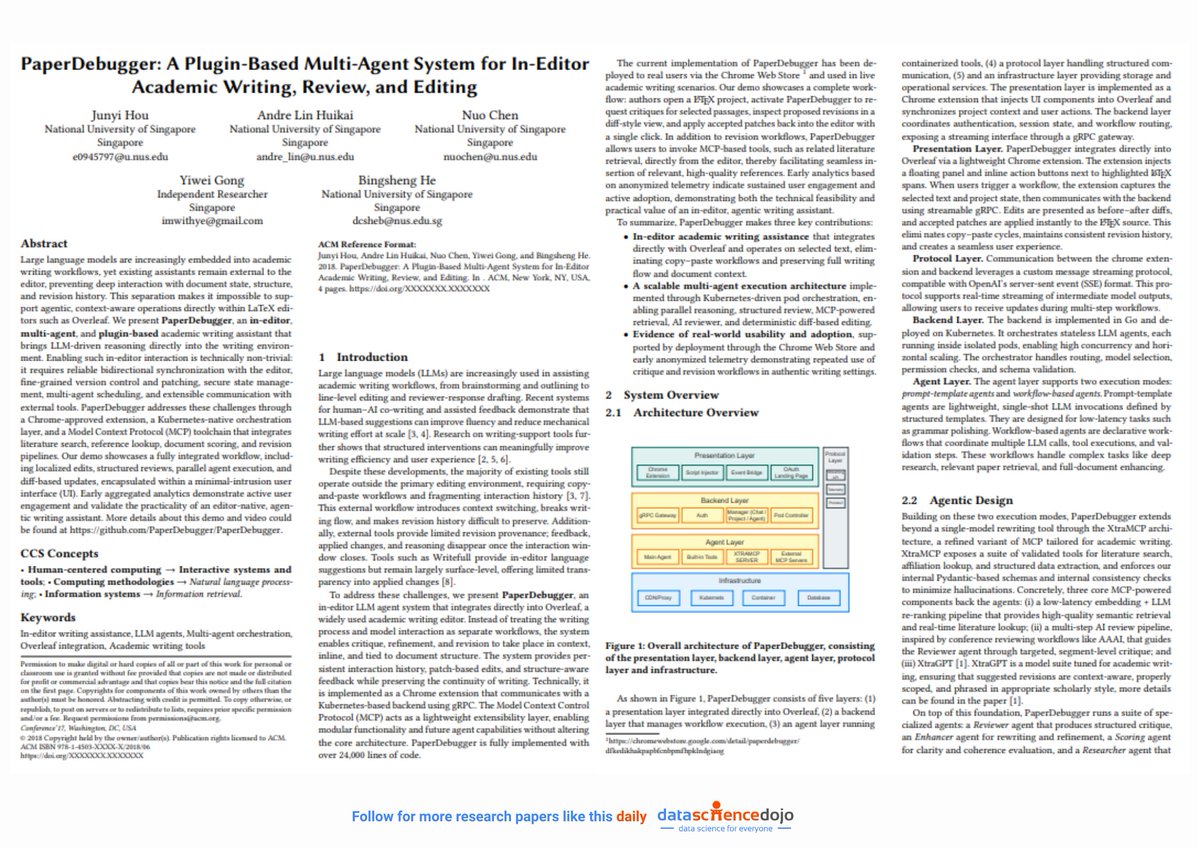
🚀 When Academic Writing Meets Agentic AI — PaperDebugger Turns Overleaf Into a Fully Autonomous Co-Author.
Academic writing has always suffered from one big bottleneck: tooling that lives outside the writing environment. Copy–paste workflows, broken context, lost revision histories, the entire process is fragmented.
PaperDebugger changes that. Completely.
This new system brings a plugin-based, multi-agent AI stack directly inside Overleaf, giving researchers something we’ve been waiting for:
👉 Real editing
👉 Real critique
👉 Real research assistance
👉 All happening in-editor, context-aware, and applied through deterministic diff-based patches.
What makes this system special isn’t just LLMs, it’s the deep orchestration layer behind them.
PaperDebugger runs on a Kubernetes-native backend, uses the Model Context Protocol (MCP) for tool interoperability, and coordinates specialized agents for critique, rewriting, research retrieval, and structured reviews, all streaming back into Overleaf through a Chrome-approved extension.
The result?
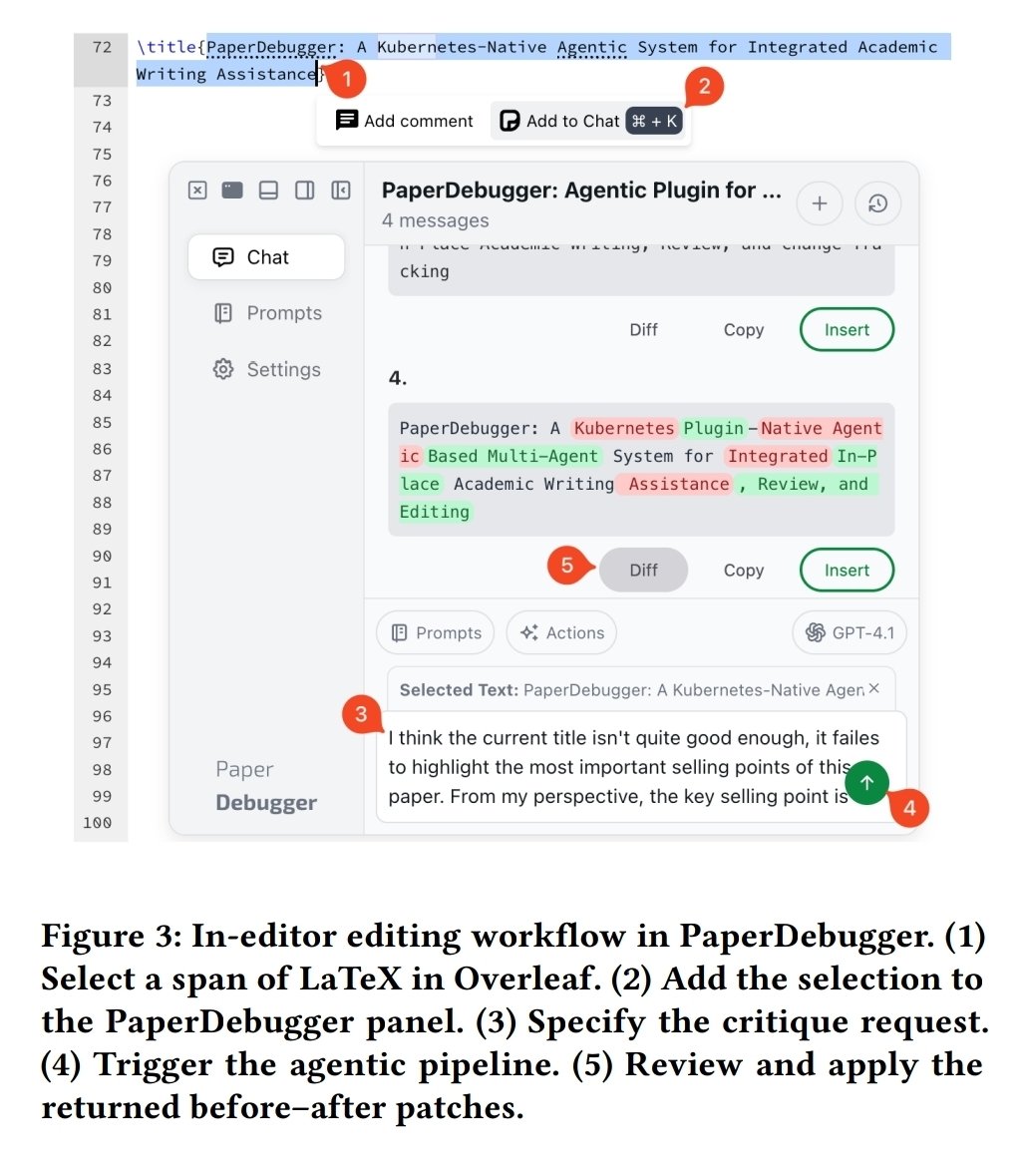
A writing loop where you highlight text → trigger an agent → inspect before/after diffs → apply a patch with one click.
No copy–paste. No switching windows. No context loss.
Even more impressive: PaperDebugger doesn’t stop at editing.
Its Researcher agent can perform deep semantic literature search, retrieve relevant papers, generate comparisons, and build structured related-work maps — turning Overleaf into a research cockpit, not just an editor.
Early telemetry shows real-world traction: dozens of active users, hundreds of projects, and thousands of patch-level interactions — clear evidence that academic writing is moving toward agentic, in-editor intelligence.
If Overleaf was the workspace, PaperDebugger just made it the workflow.
#PaperDebugger #AIWritingTools #AgenticAI #OverleafAI #LLMAgents #MCP #AcademicWriting #AIResearchTools #MultiAgentSystems #AIInEditor #AIProductivity #ResearchWorkflows #AIForScientists #KubernetesAI #LLMEngineering
3
1
1,002

7 Dec 2025
Dive into PaperDebugger on Hugging Face!
This plugin-based multi-agent system uses XtraGPT by @Xtra-Computing for in-editor academic writing, review, and editing.
Discover the paper and model:
📄 huggingface.co/papers/2512.0…
🤖 huggingface.co/Xtra-Computin…
4
804
7 Dec 2025
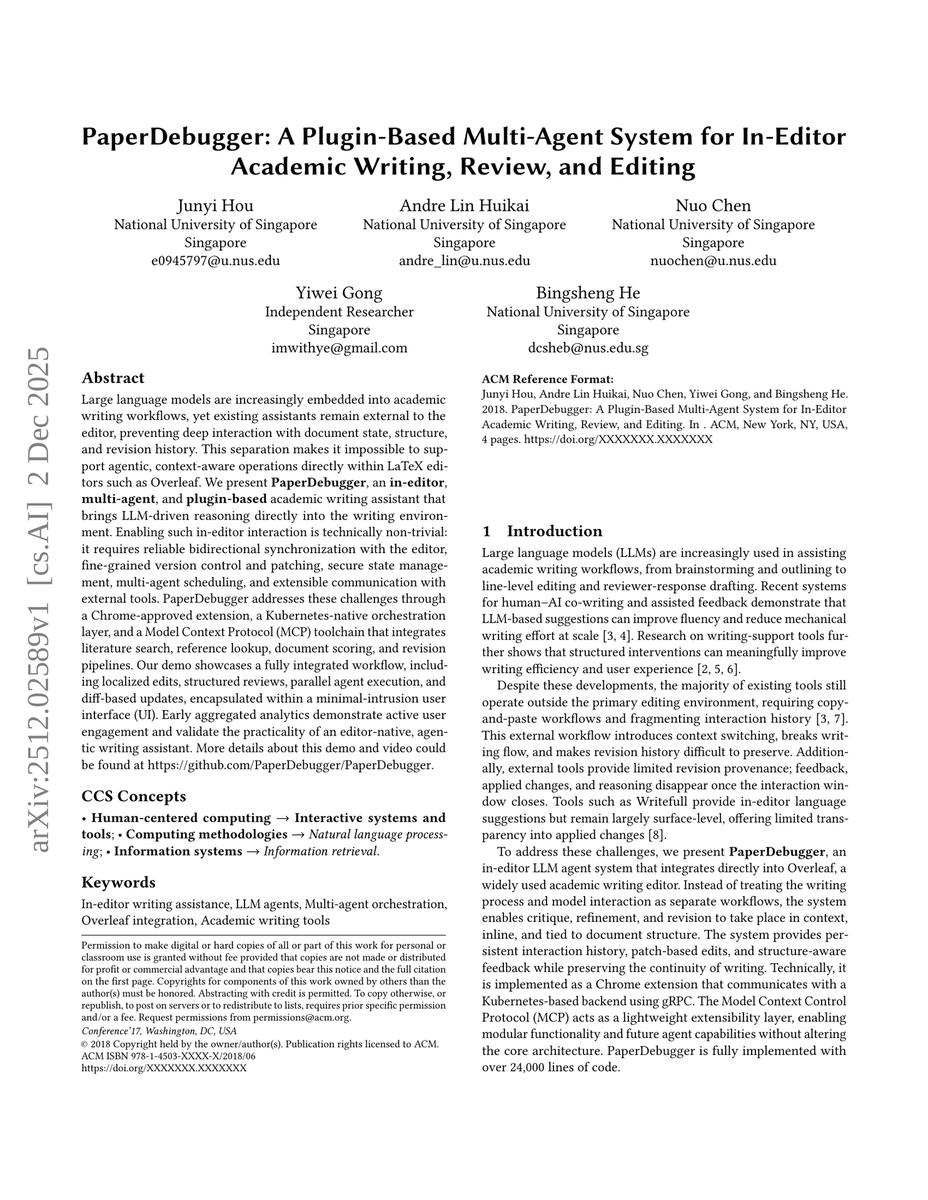
Write, review, & edit academic papers directly in Overleaf with PaperDebugger
This new plugin-based multi-agent system brings LLM-driven reasoning right into your editor! See it in action in our demo video, featuring real-time edits, structured reviews, & literature search.
2
2
31
1,802

7 Dec 2025
🎉 The NUS Vibe Paper team has released a new tool: PaperDebugger!
It integrates directly inside Overleaf and helps you revise your paper in real time — your strongest academic paper writing companion!
📌 GitHub (please Star ⭐): github.com/PaperDebugger/Pap…
1
4
377

5 Dec 2025
This is going to revolutionize academic writing 🚀
A team from NUS just dropped PaperDebugger an in-editor, multi-agent system that lives inside Overleaf and rewrites your paper with you in real time.
Not copy-paste. Not a sidebar chatbot.
Actual agentic editing inside your LaTeX editor.
Here’s why this is insane 👇
→ You highlight a messy paragraph, and it launches a full critique rewrite pipeline
→ Returns clean before–after diffs like Git, then patches your document instantly
→ Runs Reviewer, Enhancer, Scoring, and Researcher agents in parallel
→ Uses Kubernetes pods to scale multi-agent reasoning inside the editor
→ Taps an MCP toolchain for literature search, reference lookup, and section-level enhancement
Deep research mode is even crazier:
It pulls relevant arXiv papers, summarizes them, compares your method against them, and generates citation-ready tables… all inline while you're writing.
It’s basically a mini committee of reviewers embedded in your document rewriting, critiquing, sourcing, and polishing without ever breaking flow.
If this scales, Overleaf stops being an editor… and becomes a full AI-assisted research environment.
Read the full paper here: arxiv. org/abs/2512.02589
3
10
54
2,881

5 Dec 2025
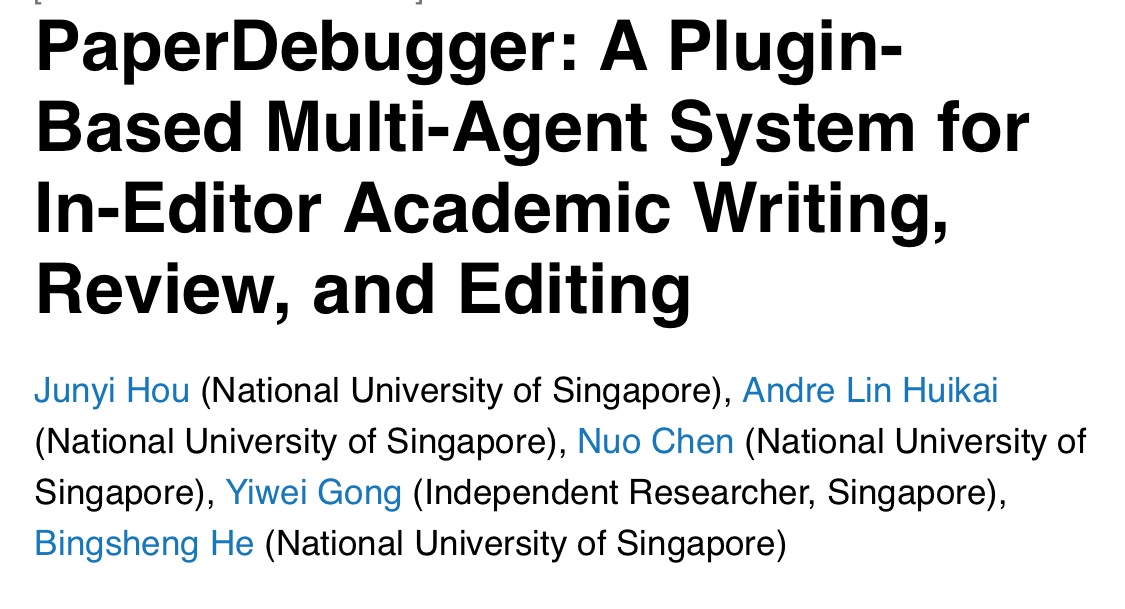
論文用のCursorという噂のPaperDebuggerを使ってみました
無料アカウントというのもあるのでしょうが、Cursorの用なスピーディな自動ファイル修正は出来ません
現状だと、cursorによる
解析コード生成→コード実行→結果文書生成→考察生成
と比較したらイマイチ感ありますね
2
322

4 Dec 2025
PaperDebugger is an AI-powered academic writing assistant that helps researchers debug and improve their LaTeX papers with intelligent suggestions and seamless Overleaf integration.
github.com/PaperDebugger/pap…
4
194

4 Dec 2025
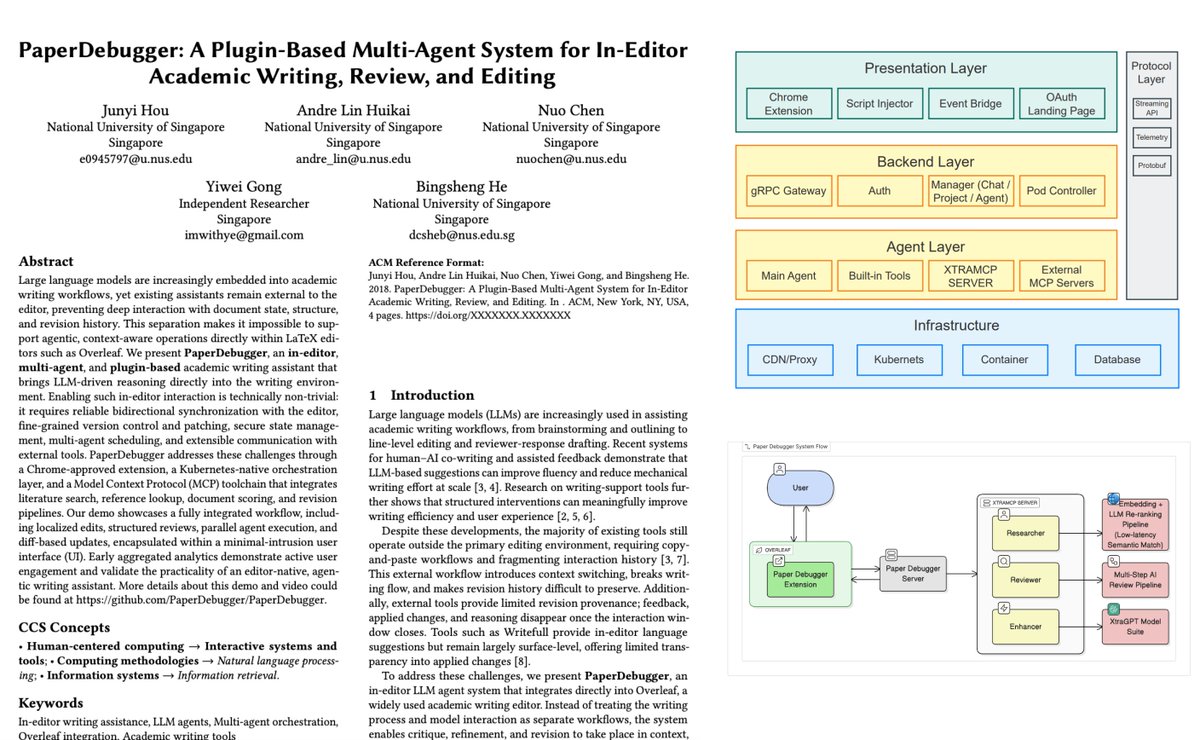
ついに学術論文の執筆に革命が起きました。
オーバーリーフ内で、複数のAIエージェントが論文をリアルタイムでリライトする「PaperDebugger」が登場しました。
コピペやサイドバーチャットボットでは到達できなかった異次元の論文執筆の効率を実現。
その驚くべき詳細を4つのポイントにまとめました。
1. LaTeXエディター内で完結
PaperDebuggerは、既存のチャットボットのように外部に移動することなく、LaTeXエディター内で直接、論文の段落をリアルタイムで分析・書き換えます。強調、批判、そして改善提案まで、執筆フローを中断させません。
2. Gitのような差分表示&即時パッチ適用
変更点を視覚的に把握し、納得のいく修正はワンクリックで即座に論文に反映できます。まるでGitのようなバージョン管理と、手動修正の手間をなくす効率的なワークフローで、推敲プロセスが劇的に進化します。
3. マルチエージェントが多角的に支援
レビュアー、エンハンサー、スコアリング、リサーチャーの4つのエージェントが並行稼働します。あなたの論文を多角的に分析し、改善案を提案、文献調査までこなす様子は、これぞ真の共同研究者です。
4. ディープリサーチモードで論文を強化
KubernetesとMCPツールチェーンを活用し、関連するarXiv論文を要約、自身の研究と比較分析します。さらに、引用可能な表をインラインで自動生成することで、あなたの考察に裏付けを与え、論文の質を飛躍的に向上させます。
3
33
177
31,033

4 Dec 2025
2/
Same energy as “calculators will destroy math” (1950s)
...and “spell-check will murder spelling” (1990s).
"PaperDebugger ends critical thinking" NewLudditism?
1
1
2
55

4 Dec 2025
I can’t believe this exists… 🤯
Researchers just built an AI system called PaperDebugger that turns Overleaf into a fully-autonomous academic writing environment not a chatbot, not a plugin, an actual multi-agent editing stack running inside your LaTeX editor.
Look at what it does 👇
→ Highlights your text, critiques it, rewrites it, and shows a clean diff
→ Applies patches straight into your source with one click
→ Runs a Reviewer agent, Enhancer agent, Scoring agent, and Researcher agent in parallel
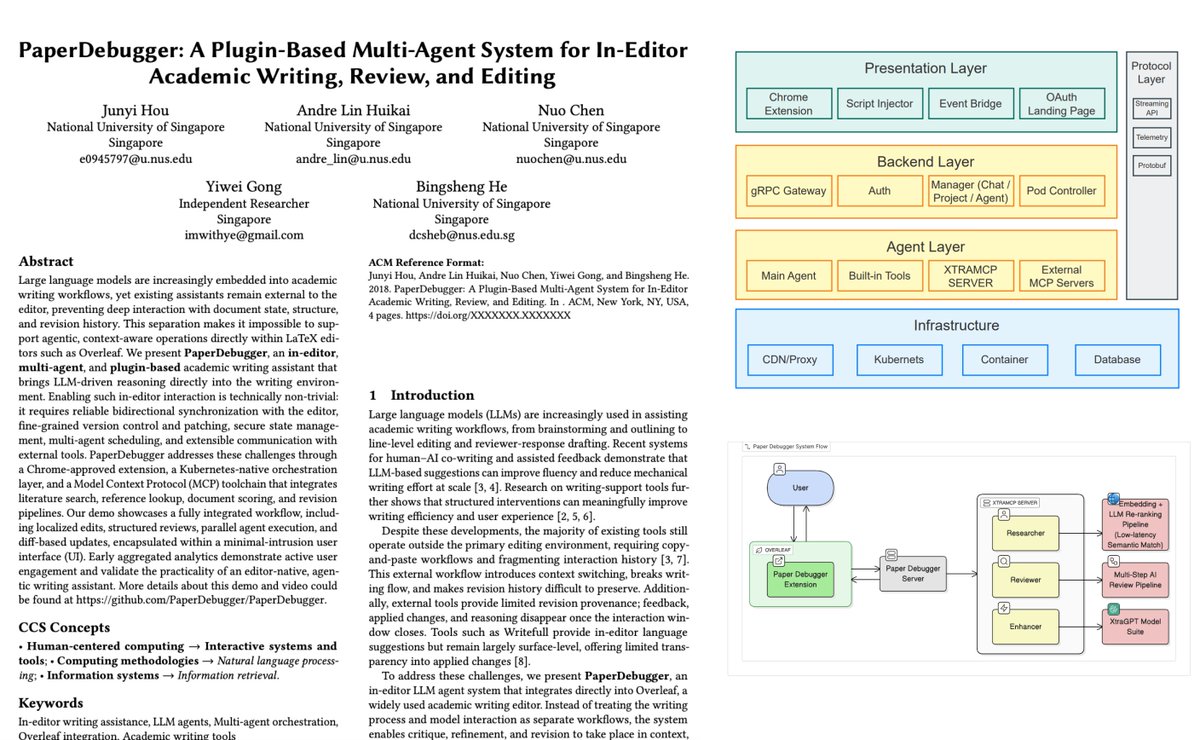
→ Uses Kubernetes pods to scale multi-agent reasoning behind the scenes
→ Connects to an MCP toolchain for literature search, reference lookup, and structured review
The deep research mode feels unreal:
It pulls relevant arXiv papers, ranks them, explains why they matter, and builds side-by-side comparison tables right in Overleaf. No switching tabs. No scraping abstracts.
And real users are already hammering it:
• 112 installs
• 158 projects
• 1,073 diff views
• 359 applied patches
• 4.9/5 rating on Chrome Web Store
This isn’t “AI for writing.”
This is an embedded research assistant with critique, revision, and retrieval baked directly into your editor.
Feels like the future of academic writing just arrived early.
6
11
31
3,369

4 Dec 2025
PaperDebugger: A Plugin-Based Multi-Agent System for In-Editor Academic Writing, Review, and Editing
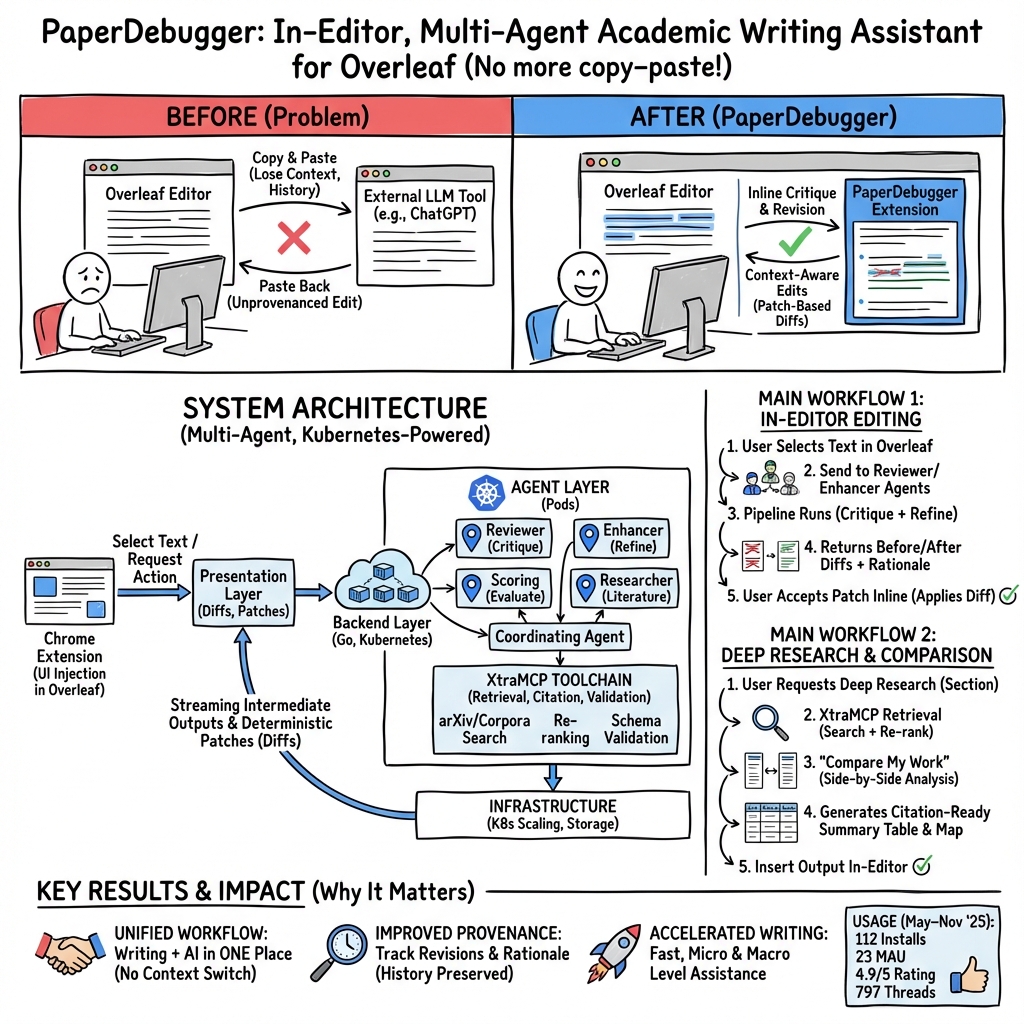
- Overleaf-native multi-agent LLM: structured review, segment-level rewrites, semantic retrieval; deterministic patch diffs provenance
- Adoption: 112 installs, 78 users, 23 MAU; 158 projects, 797 threads; 4.9/5 rating
Explained:
PaperDebugger brings LLM-powered writing, review, and research directly into the Overleaf editor. Instead of copying text into external tools, you trigger agent workflows in-place and get patch diffs you can apply with version provenance.
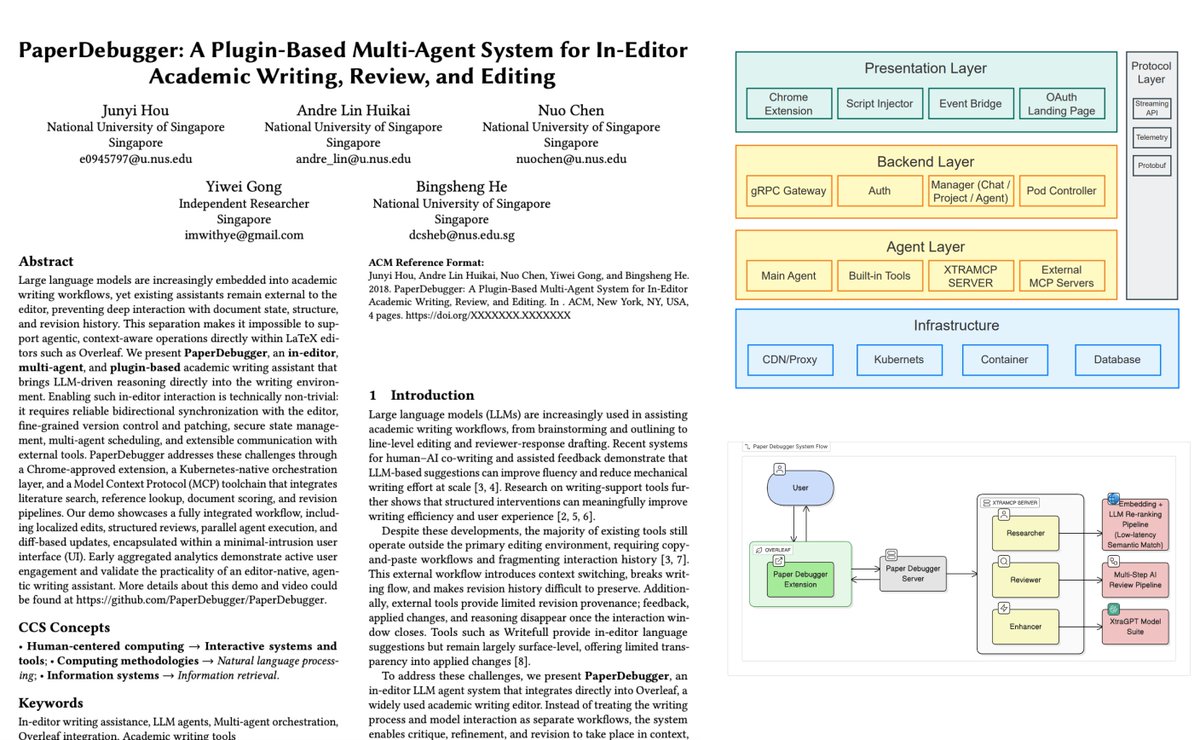
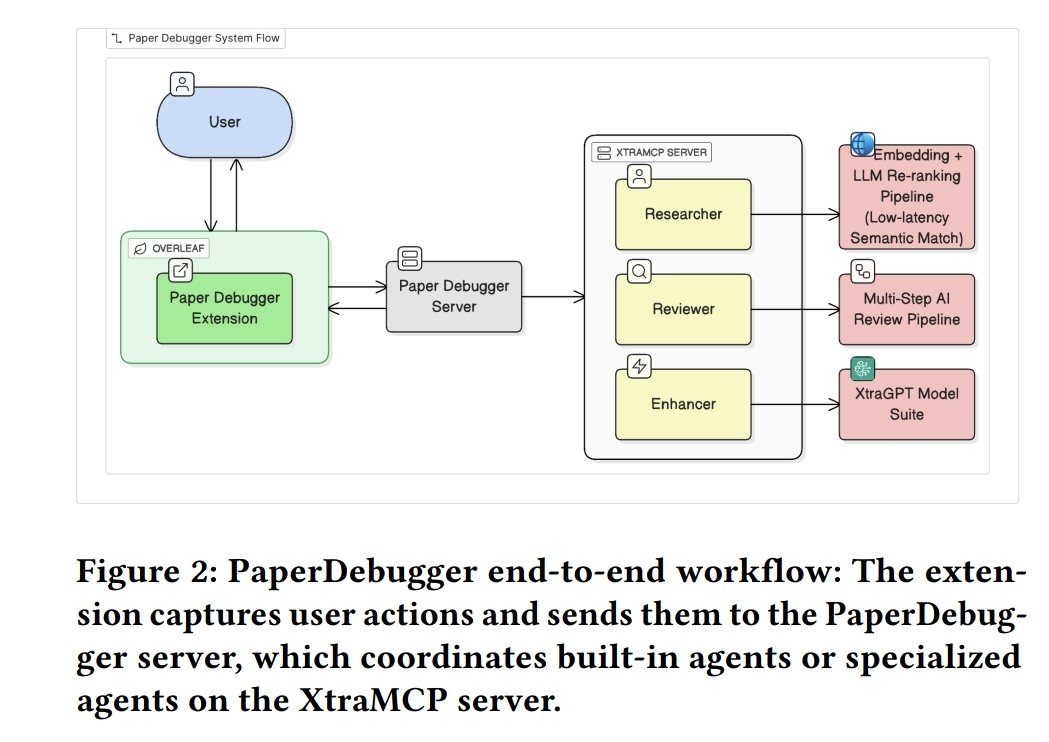
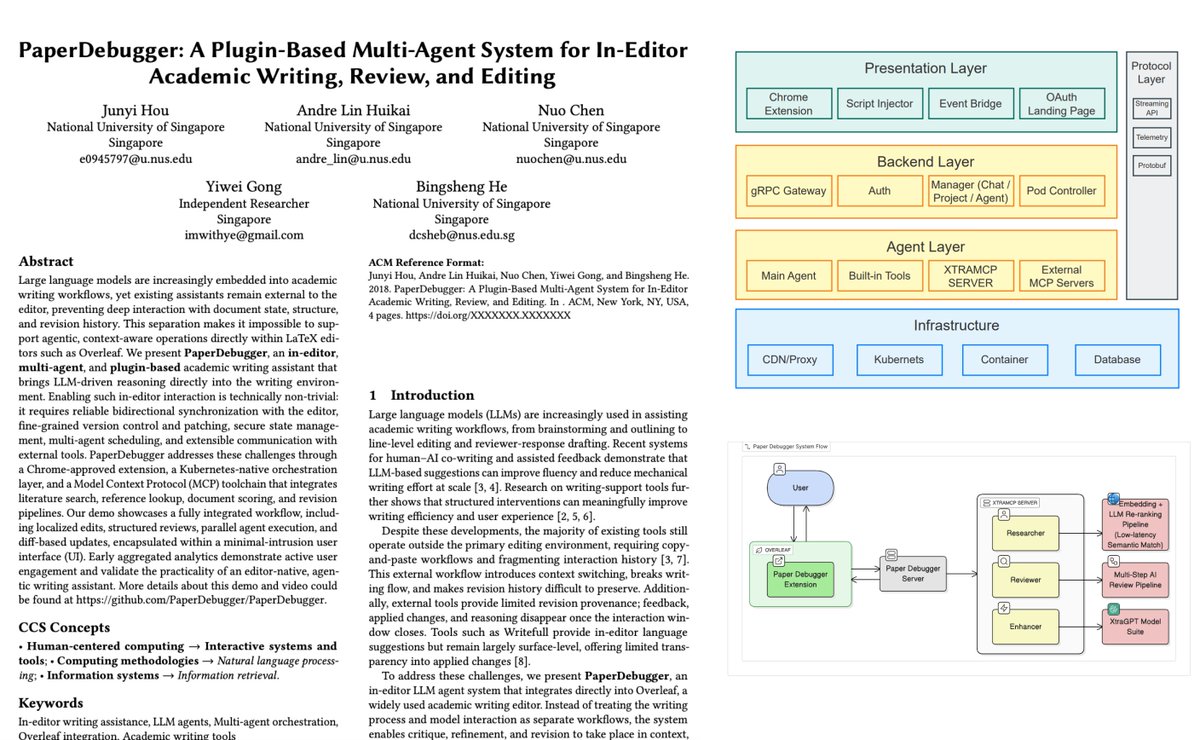
Under the hood, a layered architecture uses a Chrome extension to inject UI, SSE streaming and gRPC for real-time sync, and Kubernetes to scale agent pods. Agents range from lightweight editors (spelling/style) to multi-step workflows for critique, rewriting, scoring, and literature retrieval.
When you request a full-document review, the system decomposes the manuscript into segments, runs reviewer/enhancer agents in parallel, and merges results into deterministic before–after diffs with rationale. This keeps edits transparent, traceable, and easy to apply.
For research, a MCP-based researcher agent performs semantic search over arXiv and curated corpora, ranks relevant papers, and synthesizes comparisons. It can generate citation-ready summaries and suggest section enhancements without leaving the editor.
Telemetry shows sustained, iterative use: authors view diffs, copy suggestions, and insert patches repeatedly across sessions—evidence that fine-grained, provenance-preserving revision (not one-click rewrites) is the dominant interaction mode.
The key contribution is an editor-native, protocol-driven multi-agent framework that reduces context switching, structures review to match academic norms, and makes LLM edits auditable. It also sets an architectural template—via MCP extensibility and robust streaming/orchestration—for future collaborative, domain-adaptive writing support.
1
2
183

4 Dec 2025
La idea tras PaperDebugger en teoría es potente: un asistente multiagente que se integra directamente dentro de Overleaf para ofrecer edición, revisión y búsqueda de literatura. Una especie de ecosistema de investigación todo-en-uno.
3 Dec 2025

Holy shit… this might be the most unreal academic-writing upgrade I’ve ever seen 🤯
A team from NUS just dropped PaperDebugger an in-editor, multi-agent system that lives inside Overleaf and rewrites your paper with you in real time.
Not copy-paste. Not a sidebar chatbot.
Actual agentic editing inside your LaTeX editor.
Here’s why this is insane 👇
→ You highlight a messy paragraph, and it launches a full critique rewrite pipeline
→ Returns clean before–after diffs like Git, then patches your document instantly
→ Runs Reviewer, Enhancer, Scoring, and Researcher agents in parallel
→ Uses Kubernetes pods to scale multi-agent reasoning inside the editor
→ Taps an MCP toolchain for literature search, reference lookup, and section-level enhancement
Deep research mode is even crazier:
It pulls relevant arXiv papers, summarizes them, compares your method against them, and generates citation-ready tables… all inline while you're writing.
It’s basically a mini committee of reviewers embedded in your document rewriting, critiquing, sourcing, and polishing without ever breaking flow.
If this scales, Overleaf stops being an editor… and becomes a full AI-assisted research environment.
1
10
838

3 Dec 2025
PaperDebugger: A Plugin-Based Multi-Agent System for In-Editor Academic Writing, Review, and Editing. arxiv.org/abs/2512.02589
2
141

3 Dec 2025
Holy shit… this might be the most unreal academic-writing upgrade I’ve ever seen 🤯
A team from NUS just dropped PaperDebugger an in-editor, multi-agent system that lives inside Overleaf and rewrites your paper with you in real time.
Not copy-paste. Not a sidebar chatbot.
Actual agentic editing inside your LaTeX editor.
Here’s why this is insane 👇
→ You highlight a messy paragraph, and it launches a full critique rewrite pipeline
→ Returns clean before–after diffs like Git, then patches your document instantly
→ Runs Reviewer, Enhancer, Scoring, and Researcher agents in parallel
→ Uses Kubernetes pods to scale multi-agent reasoning inside the editor
→ Taps an MCP toolchain for literature search, reference lookup, and section-level enhancement
Deep research mode is even crazier:
It pulls relevant arXiv papers, summarizes them, compares your method against them, and generates citation-ready tables… all inline while you're writing.
It’s basically a mini committee of reviewers embedded in your document rewriting, critiquing, sourcing, and polishing without ever breaking flow.
If this scales, Overleaf stops being an editor… and becomes a full AI-assisted research environment.
85
543
4,019
1,171,219