
Jun 12
gQuip X Family 🌠🌱
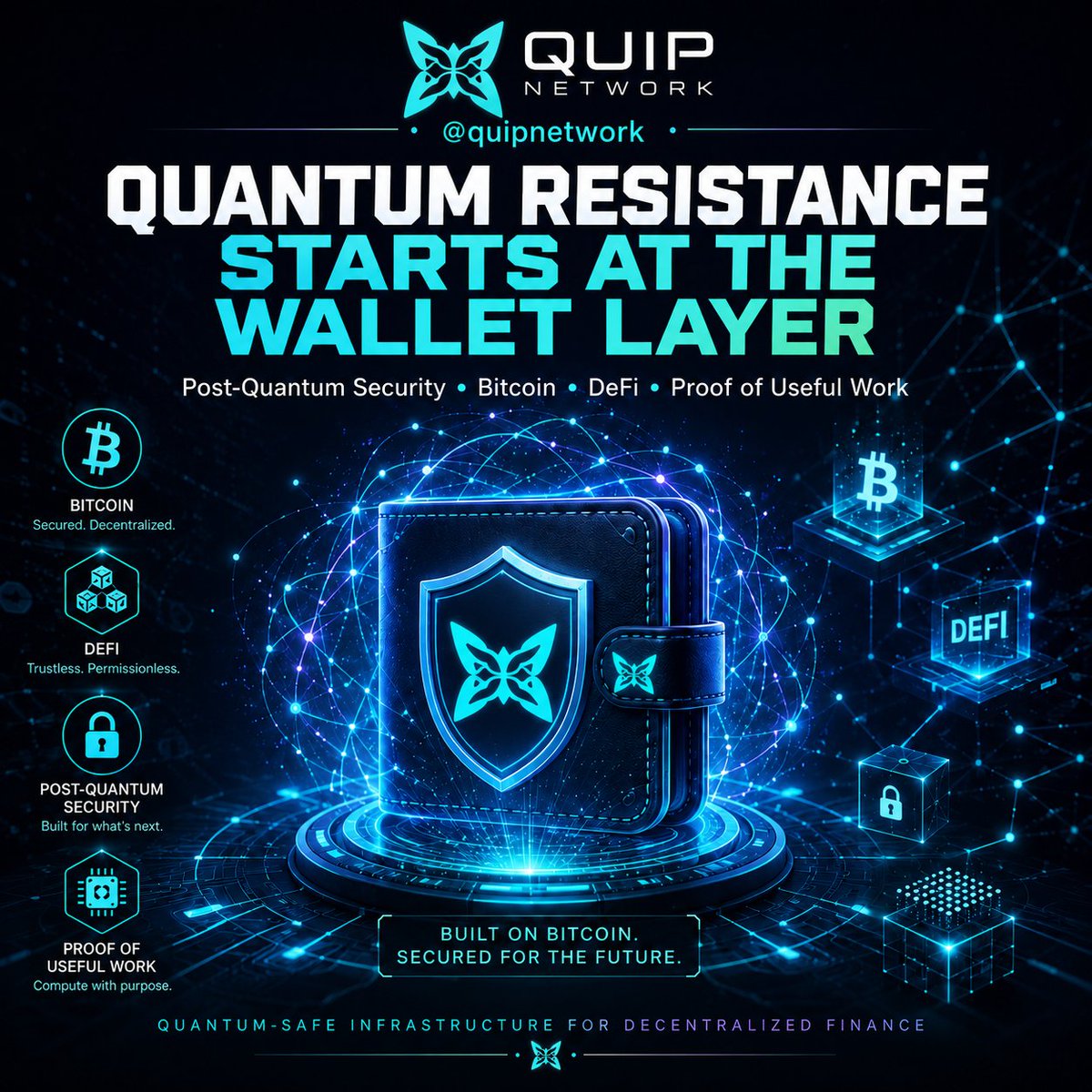
Most people ignore quantum risk until wallet security becomes expensive across Web3 ecosystems.
That is why @quipnetwork feels important from a post-quantum infrastructure angle today.
Crypto security is no longer only about hacks, phishing, bridges, or smart contract exploits.
The next major wallet threat may come from the cryptography protecting onchain ownership.
That is why post-quantum infrastructure matters before quantum computers become mainstream.
Bitcoin, DeFi vaults, bridges, and protocols all depend on trusted wallet signatures.
If the signature layer becomes weak, every Web3 application above it becomes exposed.
Proof of Work secures blockchains, but Proof of Useful Work can make compute productive.
Instead of wasting computational power only for consensus, useful work can support real optimization.
For Web3, this matters because future security needs stronger wallets and smarter compute layers.
The future of DeFi security will not start only from TVL or yield.
It starts from the wallet layer, where ownership, transactions, and trust are protected.
Quantum resistance may not look exciting during the early infrastructure building phase.
But strong infrastructure usually becomes valuable before the market fully understands its importance.
Study wallet security early, because future DeFi needs protection before threats become obvious.
#QuipNetwork #PostQuantumSecurity #Web3Security #DeFiSecurity #ProofOfUsefulWork
27
5
31
730

Jun 9
The future won't wait for outdated technology.
With quantum-resistant security and a decentralized network, Mochimo is preparing for tomorrow's challenges today.
Secure. Scalable. Reliable.
#Mochimo #PostQuantumSecurity #QuantumResistant #BlockchainTechnology #Web3 #FutureTech
1
9

Jun 5

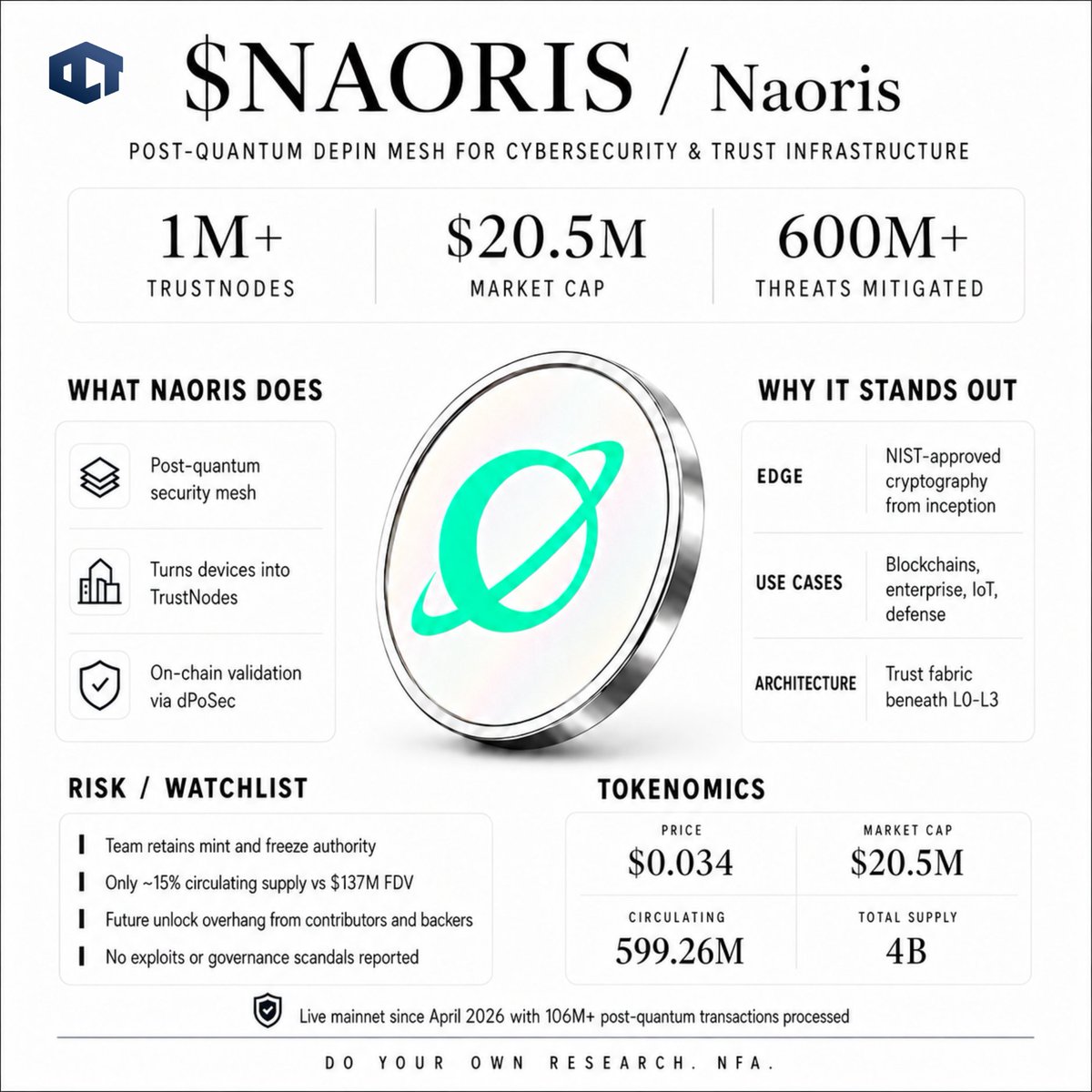
1M TrustNodes are already live on $NAORIS.
The network says it has mitigated 600M cyber threats and processed 106M post-quantum transactions.
So why is $NAORIS still sitting near a $20M market cap?
Is the market ignoring quantum security, or avoiding a potential 10x gem?
@NaorisProtocol is building a decentralized cybersecurity mesh focused on post-quantum security.
The protocol turns devices into TrustNodes using NIST-approved cryptography and validates activity through its Decentralized Proof-of-Security (dPoSec) model.
The idea is protecting systems from both current cyber threats and future quantum-related vulnerabilities.
Unlike traditional cybersecurity tools, Naoris is trying to function as a security layer beneath existing infrastructure rather than replacing chains or applications entirely.
That means potential use cases across:
• Blockchains
• Bridges
• Enterprise systems
• IoT networks
• Financial infrastructure
Compared to security-focused infrastructure still in earlier stages, Naoris already launched mainnet in April 2026 and claims live production activity.
There are still important risks.
Only ~15% of supply is circulating against a much higher FDV.
Future unlock pressure remains:
• Core contributors: 20% allocation
• Early backers: 16% allocation
The team also retains mint and freeze authority over the contract, creating centralization concerns some investors may discount heavily.
At the same time:
• No major exploit history surfaced
• No governance scandals emerged
• The project launched with post-quantum cryptography integrated from inception
🪙Tokenomics
• Price: $0.034
• Market cap: $20.5M
• Circulating supply: 599.26M
• Total supply: 4B
Always take whatever you read on the internet with a pinch of salt, do your own research, NFA.
3
114


May 30
⚠️ The quantum storm is approaching!
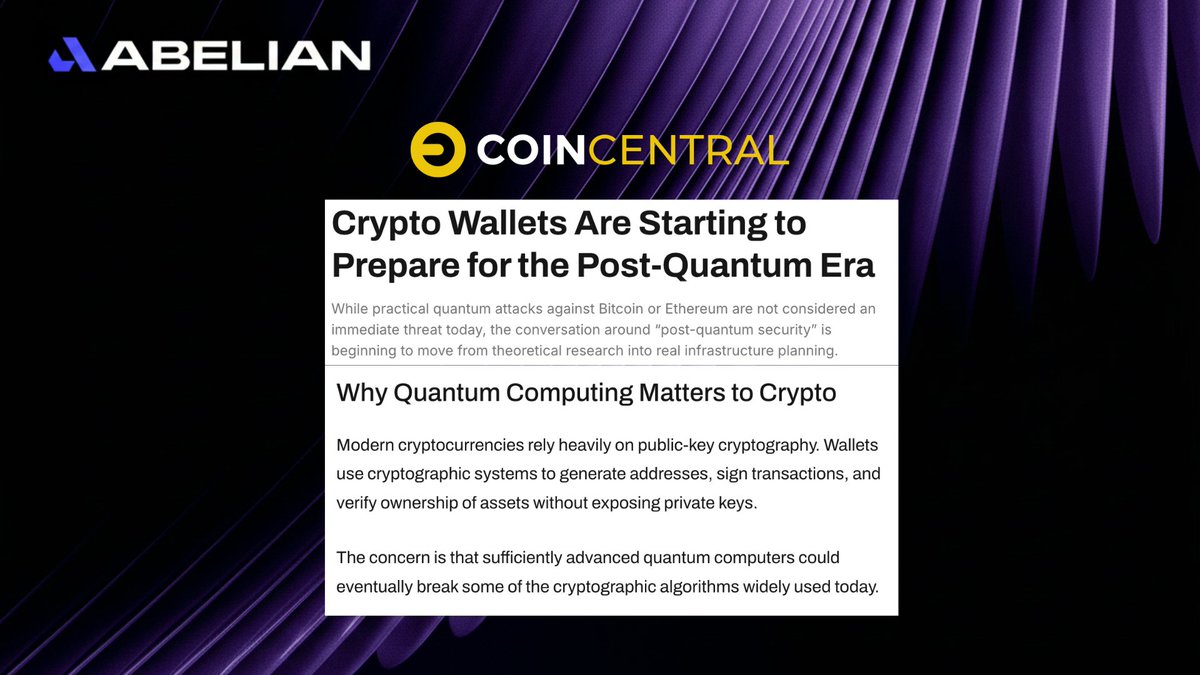
#Abelian is at the forefront of securing crypto wallets from potential threats posed by quantum computing.
Essential efforts include:
🌐 Hybrid cryptographic strategies
🛡️ Innovative wallet architecture
As the industry transitions from theory to practice, projects like Abelian are crucial for the future of digital asset security.
Join the movement for quantum resilience!
Read more: coincentral.com/crypto-walle…
#PostQuantumSecurity #Abelian #Crypto #Blockchain #QuantumComputing
2
10
28
929

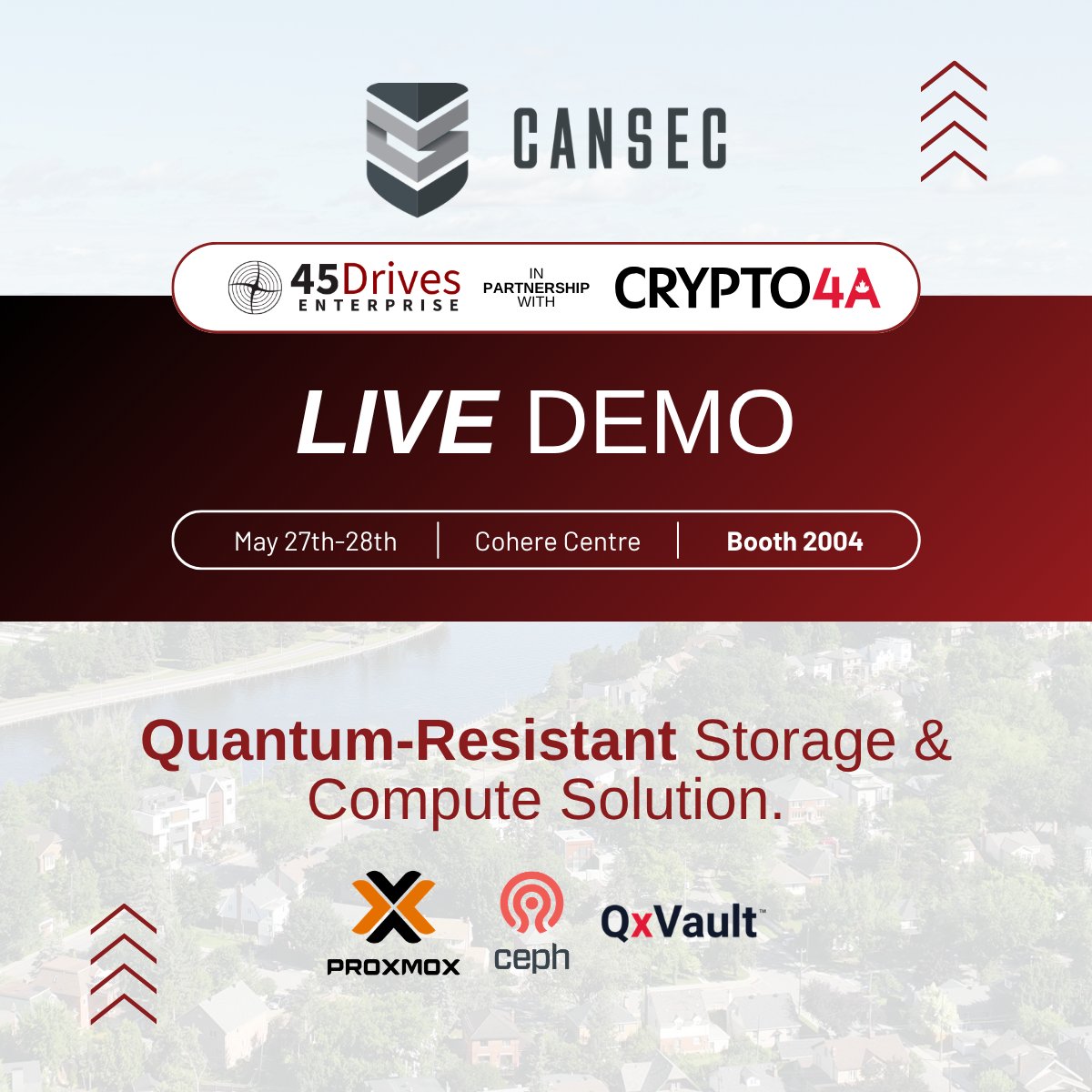
Experience the Quantum-Resistant Future at CANSEC 2026.
45Drives Enterprise, in partnership with @Crypto4A, will be showcasing a live demo of a quantum-resistant storage & compute solution built for the next generation of secure infrastructure.
Powered by @Proxmox, @Ceph, and QxVault™, this solution is designed to help organizations prepare for emerging cybersecurity threats while maintaining performance, scalability, and data sovereignty.
📍 Booth 2004 | Cohere Centre
📅 May 27–28, 2026
Stop by to see how post-quantum security is becoming a practical reality for defence, government, and enterprise environments.
#CANSEC2026 #QuantumResistant #PostQuantumSecurity #Crypto4A #45Drives #CyberSecurity #Ceph #Proxmox #QxVault #DefenceTech #DataSecurity #EmergingTech
2
5
307
The quantum-resistant future starts now.
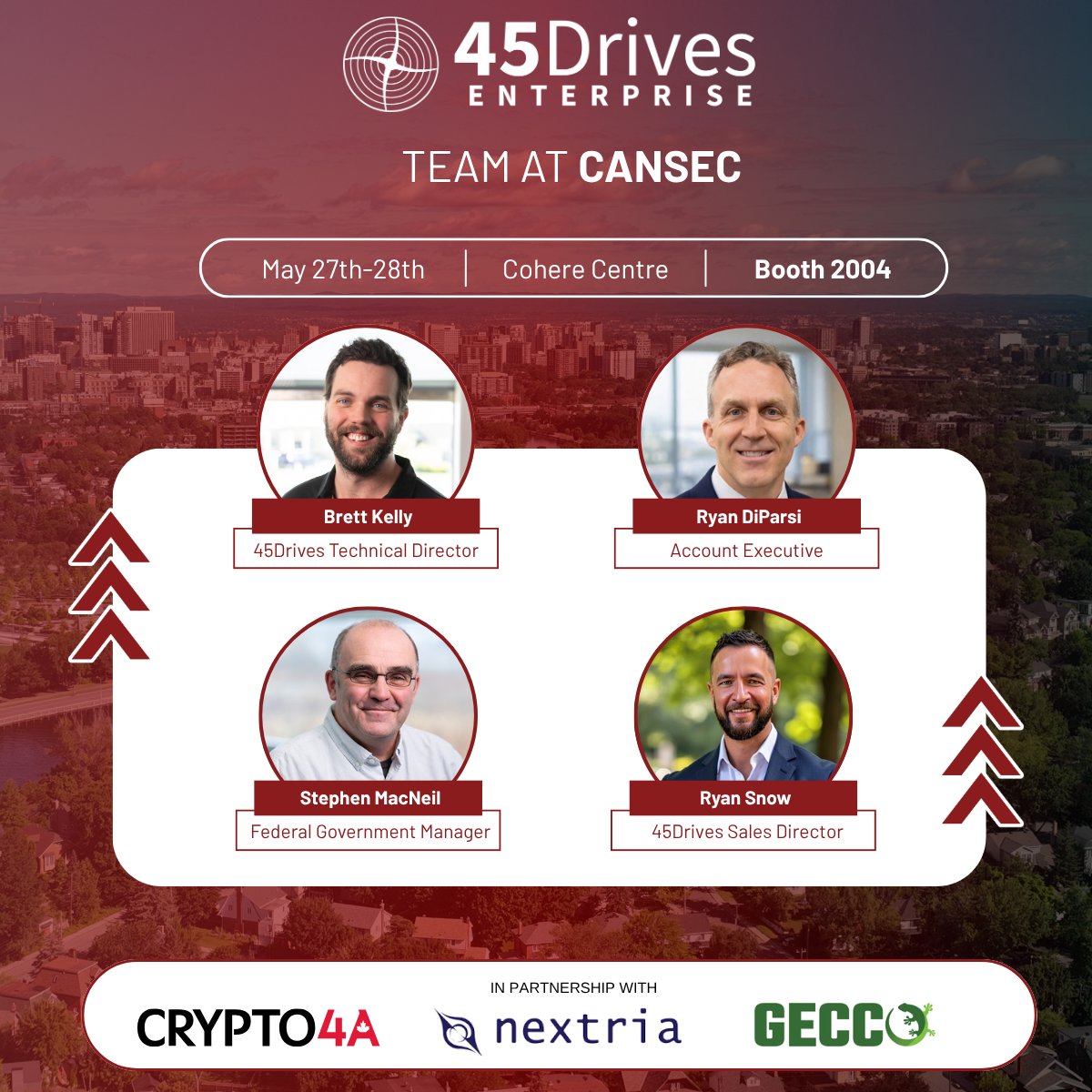
45Drives Enterprise is proud to attend CANSEC 2026 alongside our partners at Crypto4A — helping organizations prepare for the next era of cybersecurity, sovereign infrastructure, and post-quantum resilience.
Join our team at Booth 2004 to discuss how secure, scalable storage and quantum-safe encryption strategies are shaping the future of defence, government, and enterprise environments.
Meet the team:
▪ Brett Kelly — Technical Director
▪ Ryan DiParsi — Account Executive
▪ Stephen MacNeil — Federal Government Manager
▪ Ryan Snow — Sales Director
📍 Cohere Centre
📅 May 27–28, 2026
In partnership with @Crypto4A, @Nextria, and @GECCO.
#CANSEC2026 #QuantumResistant #Crypto4A #PostQuantumSecurity #CyberSecurity #45Drives #DefenceTech #DataSecurity #GovTech #EmergingTech #EnterpriseStorage
2
2
230

May 17
Quip Network: The World’s First Shared Quantum Computer & Quantum Security Pioneer!
The quantum era is here—“Q-Day” is approaching fast. Existing encryption could be cracked anytime, putting 34% of Bitcoin at risk.
Quip Network (@quipnetwork)**, built by Postquant Labs, is the global shared quantum computer**. It combines two powerful layers:
- Compute Consensus Layer: Powered by Proof of Useful Work (PoUW). Miners use quantum classical compute to solve real problems (AI training, optimization, financial modeling) — with just 1/300th the energy of traditional PoW.
- Asset Layer: No hard forks needed. Provides instant quantum-resistant protection for Bitcoin, Ethereum, Solana, and more. 20,000 quantum-secure wallets already live.
Why Quip?
- Quantum computing power for everyone — no expensive hardware required.
- Institutional-grade protection for your assets today.
- Testnet is live: 500 nodes, 13,000 users.
Act Now:
- Join testnet & earn QUIP: quest.quip.network/airdrop?r…
- Follow: @quipnetwork
The quantum revolution has started. Quip Network gives you both power and security! 🚀
#QuipNetwork #PostQuantumSecurity

42
53
411

May 3
Mytier ($MT) 的 KYC 认证即将启动,代币迁移与上线交易也将紧随其后!
📌 KYC 流程概览
✅ 分批次推出的流程将于 2026 年 5 月 12 日开始。
✅ KYC 认证将按大洲分阶段逐步进行。
✅ 认证流程将分为第一阶段、第二阶段和第三阶段。
✅ 代币迁移工作将在 KYC 认证完成后进行。
✅ 上线交易的相关手续将在代币迁移完成后进行。
✅ 上线交易后,KYC 认证通道将持续保持开放。
Mytier 计划分步推进 KYC 认证流程,旨在构建一个稳健的生态系统,并确保所有参与者都能享有一个公平的环境。
KYC 认证完成后,紧接着将启动代币迁移流程;随后,迈向正式上线交易的各项后续步骤也将按序展开。
利用以下信息加入 Mytier,即可免费挖掘 $MT 积分:
1. 点击下方链接注册账号,即可获赠 4,500 $MT 积分!
mytier.io/service/signup?ref…
推荐码:wongkh
2. 前往应用商店下载 Mytier App,登录您的账号,即可开始赚取 $MT 积分!
欲了解更多详情,请访问以下链接:
x.com/Time_and_Trade/status/…
@Mytier_official #MytierUniverse #cryptocurrency #blockchains #PostQuantumSecurity #PQC #DecentralizedID #DID #AI #Web3
Apr 30

🌐 Mytier KYC Schedule Announcement
Hello, Mytier Community.
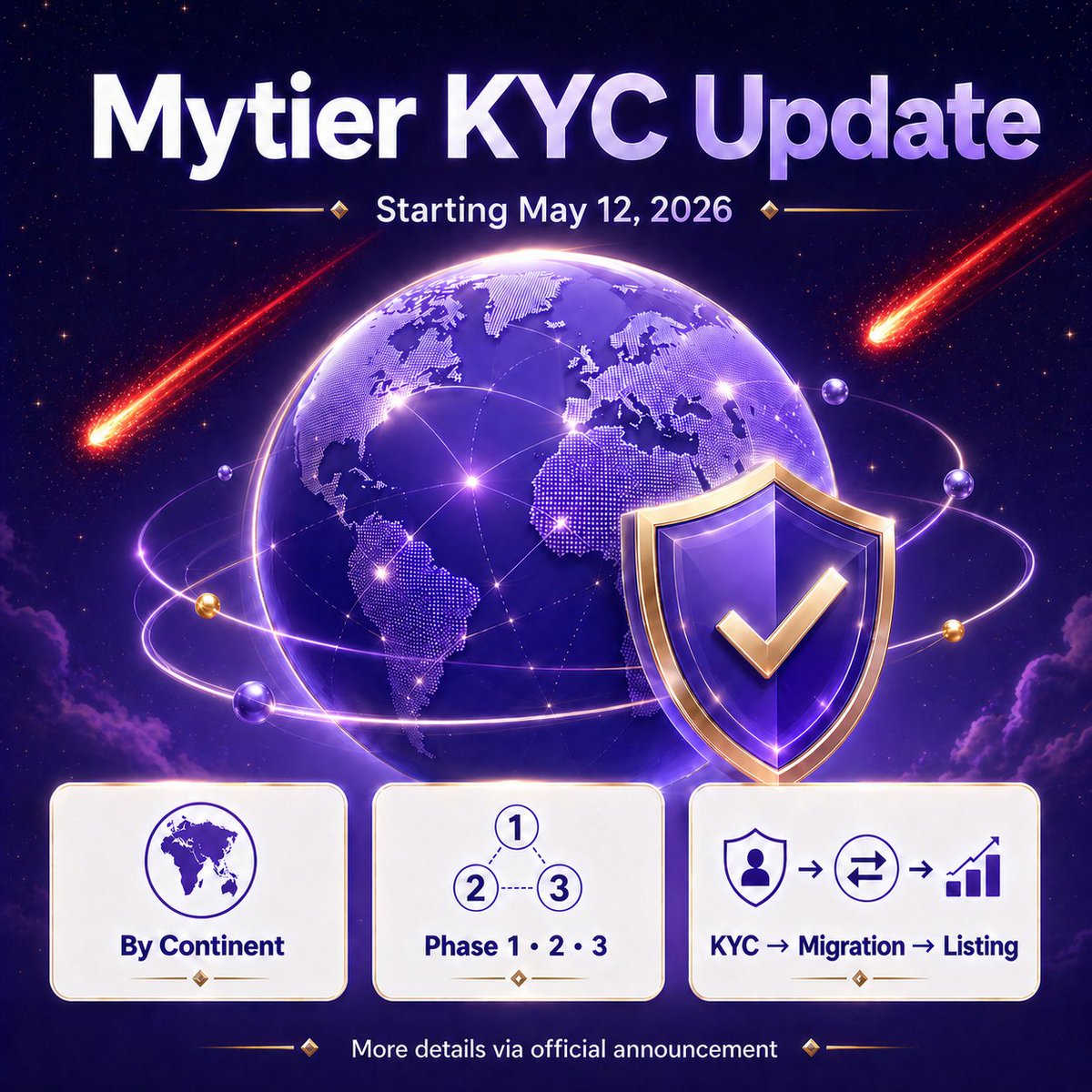
Mytier’s KYC verification process is scheduled to begin sequentially from May 12, 2026.
This KYC process will not be conducted for all users at the same time. To ensure stable and systematic operation, it will be rolled out gradually by continent.
📌 KYC Process Overview
✅ Sequential rollout begins on May 12, 2026.
✅ KYC will proceed gradually by continent.
✅ Phase 1, Phase 2, and Phase 3 KYC procedures will be conducted.
✅ Migration will proceed after KYC completion.
✅ Listing procedures will proceed after migration.
✅ After listing, KYC will remain open on an ongoing basis.
Mytier plans to operate the KYC process step by step in order to build a stable ecosystem and ensure a fair participation environment.
After KYC is completed, the migration process will follow, and the next steps toward listing will proceed sequentially.
🚀 Mytier is moving beyond a simple participation-based project, aiming to build a real ecosystem and expand its global user base.
Further details regarding KYC will be updated once again through official announcements.
Thank you for your continued interest and participation in Mytier’s growth and journey.
Thank you.
Mytier Team
5
4
70
5,669
May 3
Mytier ( $MT ) KYC to start imminently and token migration and listing to follow!
📌 KYC Process Overview
✅ Sequential rollout begins on May 12, 2026.
✅ KYC will proceed gradually by continent.
✅ Phase 1, Phase 2, and Phase 3 KYC procedures will be conducted.
✅ Migration will proceed after KYC completion.
✅ Listing procedures will proceed after migration.
✅ After listing, KYC will remain open on an ongoing basis.
Mytier plans to operate the KYC process step by step in order to build a stable ecosystem and ensure a fair participation environment.
After KYC is completed, the migration process will follow, and the next steps toward listing will proceed sequentially.
Mine $MT points free by using the following information to join:
1. Click the link below to sign up and get 4,500 $MT points!
mytier.io/service/signup?ref…
Referral code:wongkh
2. Download Mytier from app store, log in with your account, and start earning $MT points!
Use the following link for more information:
x.com/Time_and_Trade/status/…
@Mytier_official #MytierUniverse #cryptocurrency #blockchains #PostQuantumSecurity #PQC #DecentralizedID #DID #AI #Web3
Apr 30
🌐 Mytier KYC Schedule Announcement
Hello, Mytier Community.
Mytier’s KYC verification process is scheduled to begin sequentially from May 12, 2026.
This KYC process will not be conducted for all users at the same time. To ensure stable and systematic operation, it will be rolled out gradually by continent.
📌 KYC Process Overview
✅ Sequential rollout begins on May 12, 2026.
✅ KYC will proceed gradually by continent.
✅ Phase 1, Phase 2, and Phase 3 KYC procedures will be conducted.
✅ Migration will proceed after KYC completion.
✅ Listing procedures will proceed after migration.
✅ After listing, KYC will remain open on an ongoing basis.
Mytier plans to operate the KYC process step by step in order to build a stable ecosystem and ensure a fair participation environment.
After KYC is completed, the migration process will follow, and the next steps toward listing will proceed sequentially.
🚀 Mytier is moving beyond a simple participation-based project, aiming to build a real ecosystem and expand its global user base.
Further details regarding KYC will be updated once again through official announcements.
Thank you for your continued interest and participation in Mytier’s growth and journey.
Thank you.
Mytier Team
7
17
194
12,837

Apr 25
In the world of cryptocurrency in April 2026, wallet security has never been more critical or more overlooked. As of April 25, 2026, the month has already seen over $606 million drained in major hacks and exploits across more than a dozen incidents. This marks the highest single-month loss figure since the devastating collapses of early 2025, with two massive events (the Drift Protocol exploit on Solana and the KelpDAO rsETH bridge attack) accounting for nearly 95% of the total damage. These weren’t obscure smart contract bugs or complicated oracle manipulations in most cases. The overwhelming majority stemmed from the same old culprits: sneaky wallet approvals, sophisticated phishing campaigns, instant drainers, and zero-day exploits that catch users completely off guard.
What makes this situation even more alarming is that the industry’s response remains stuck in the past. Most existing “security” tools, whether they’re wallet extensions, dashboard monitors, or basic revoke apps, operate on a reactive model. You only find out something is wrong after the transaction has already been signed and the funds have left your wallet. By the time you revoke approvals or try to freeze assets, the damage is done. The attacker is long gone, and you’re left staring at an empty balance wondering how it happened again. In an era where AI-powered attack tools can scan millions of wallets per second and execute drains in under a block, this reactive approach is no longer just inconvenient, it’s financial suicide.
This is exactly why @CerbAgent represents a genuine paradigm shift in on-chain security. They are not building another wallet app or a simple notification service. Instead, they are deploying the first true layer of autonomous AI agents designed to protect crypto wallets 24/7 across six major chains: Ethereum, Base, Arbitrum, Polygon, Solana, and BSC. These agents don’t wait for you to notice a problem. They don’t require manual scans, constant monitoring, or frantic last-minute revokes. They run continuously in the background, embedded directly into the smart contract infrastructure, making decisions in real time based on verifiable on-chain data, machine learning models trained on thousands of past exploits, and post-quantum cryptographic standards that future-proof the entire system.
Let’s break down exactly how these three specialized agents work together to create an impenetrable shield around your assets.
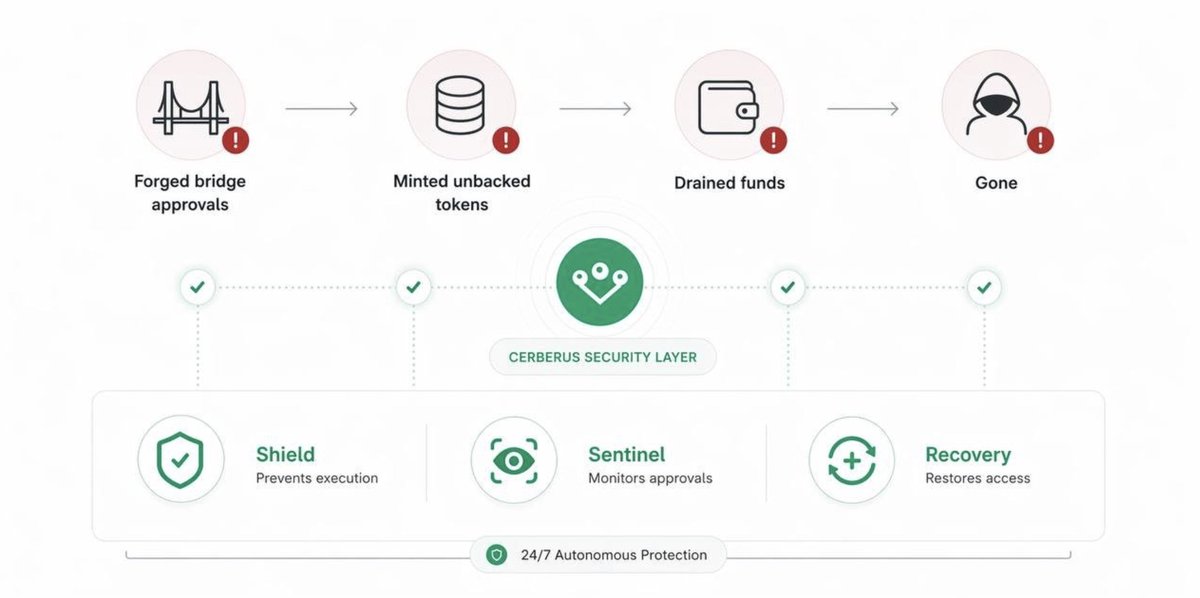
First, there is the Shield Agent. This is your real-time approval guardian. Every time you interact with a new protocol or dApp, the Shield Agent continuously monitors all active approvals attached to your wallet address. It uses advanced pattern recognition to detect suspicious contracts, those with known drainer signatures, unusually high permission levels, or sudden changes in behavior that match historical exploit profiles. If it flags anything risky, it can automatically revoke the approval in the same block before any malicious actor can exploit it. No more “I approved once and forgot about it” horror stories that have cost users billions. The Shield Agent turns passive approvals into actively managed, dynamic permissions that adapt instantly to threats.
Next comes the Sentinel Agent, your pre-transaction intelligence unit. Before you ever confirm a signature, the Sentinel Agent simulates the entire transaction outcome in a sandboxed environment. It doesn’t just check the obvious; it analyzes the full call stack, cross-references every contract involved against a live threat database, evaluates phishing indicators (such as domain similarity, social engineering patterns in recent interactions, or honeypot contracts), and even flags potential rug pulls or exit scams with detailed risk scores. You receive a crystal-clear verdict: SAFE, CAUTION, or DANGER, complete with plain-English explanations and recommended actions. This agent effectively becomes your personal on-chain security analyst, operating faster than any human could and preventing the vast majority of signing mistakes that lead to total loss.
Finally, the Recovery Agent acts as your last line of defense and insurance policy. In the rare case that something slips past both Shield and Sentinel, perhaps a brand-new zero-day or a coordinated multi-vector attack, the Recovery Agent kicks in automatically. It monitors for anomalous outflows, coordinates with flashbot services to front-run the attacker, bundles rescue transactions, and works directly with affected protocols to freeze and return assets where possible. This isn’t theoretical recovery after the fact; it’s proactive, automated asset reclamation built into the protocol itself. Think of it as having a specialized legal and technical SWAT team that activates the moment trouble is detected.
All three agents operate fully on-chain in a decentralized manner. There is no central server that can be hacked or taken offline. The AI logic lives inside the smart contracts themselves, secured by post-quantum cryptography that protects against future quantum computing threats. Privacy is baked in from the ground up your transaction data and wallet activity remain encrypted and never exposed to third parties. This is infrastructure-grade security that institutions and serious DeFi users have been demanding for years.
At the heart of this entire ecosystem is the $CERB token. It is not just a speculative memecoin or governance token thrown in as an afterthought. $CERB is the actual fuel that powers the network. It incentivizes node operators who run the agent computations, provides liquidity for the flashbot rescue mechanisms, and funds continuous model training to stay ahead of evolving threats. For holders, the benefits are substantial and tangible: priority access to advanced agent features, automatic multipliers on the ongoing Creator Campaign rewards (helping you earn even more USDC for quality content), a share of protocol revenue from usage fees, and exclusive soulbound NFT badges that recognize top contributors and long-term supporters. Holding $CERB literally makes your own wallet safer while simultaneously rewarding you for helping spread awareness of the project.
This isn’t hype. This is the missing foundational layer that DeFi has desperately needed since the first major wallet drains back in 2022. Every protocol, every user, every bridge, and every DEX could benefit from having Shield, Sentinel, and Recovery agents operating underneath the surface. Imagine a future where wallet hacks become as rare as they are in traditional finance not because attacks stop, but because the defensive infrastructure is simply too advanced and too fast for most attackers to succeed. @CerbAgent is shipping that future today.
In 2026, the question every crypto user should be asking themselves is no longer “Will my wallet get hacked?” The data shows that without proactive protection, it’s not a matter of if, but when. The real question is: “Have I equipped my wallet with AI bodyguards that work around the clock to keep my assets safe?”
If you’re tired of reactive tools that always arrive too late, if you’re done with the cycle of hacks, panic, and loss, then @CerbAgent is the solution the space has been waiting for. Real autonomy. Real multi-chain coverage. Real post-quantum security. And yes, real USDC rewards for creators like us who are helping educate the community through high-quality content during their ongoing Creator Campaign.
The campaign is still live with plenty of room on the leaderboard. Quality, detailed, original posts about wallet security and $CERB get the highest AI scores and the biggest engagement multipliers. Hold $CERB for extra bonuses, climb the tiers from Bronze all the way to Diamond, and you can earn meaningful daily payouts from the $20K monthly USDC pool.
Who’s ready to stop being an easy target and finally give their wallet the autonomous AI protection it deserves in 2026? Drop your thoughts below, share your own security tips, or tell me if you’ve already secured your wallet with agents like these.
The future of safe crypto is here
Are you part of it yet?
#CERB #WalletSecurity #CryptoSafety #DeFi #AICrypto #OnChainProtection #PostQuantumSecurity
44
1
42
5,180

2026年4月2日,Postquant Labs正式推出 @quipnetwork 量子区块链测试网,这是面向全球开放的首个分布式量子计算区块链测试网络,上线即吸引超13000名研究人员注册参与,成为量子计算与区块链融合的重要里程碑。
该测试网与量子计算龙头D-Wave深度合作,搭载其Advantage2™量子退火计算机,专注攻克复杂优化问题,探索量子算力如何让区块链更安全、更节能。
不同于传统区块链的哈希挖矿,它测试网采用优化问题挖矿机制,参与者可通过量子计算机、CPU、GPU等多元算力解题,完成任务即可获得QUIP代币激励,让量子优势从实验室走向可验证、可参与的开放网络。
项目坚持开源开放,代码托管于GitHub,节点部署文档在Gitbook公开,鼓励全球开发者运行节点、优化方案、共同夯实底层架构,让量子优势成为可验证的真实成果,而非单纯概念宣传。
在安全层面,测试网采用后量子安全架构,抵御量子算力对传统加密的威胁;跨链设计支持EVM、Solana等多链,用户无需转移资产即可参与,比特币等主流链适配也在推进中。
D-Wave与Postquant Labs均表示,量子与区块链的结合,将重塑分布式计算的安全与效率边界,此次测试网为全球科研界提供了协同实验、加速技术落地的核心平台,助力建立统一的量子区块链国际标准。
随着测试网全面开放,量子计算与区块链的跨界融合正从前沿探索迈向规模化实践,Web3与分布式算力的未来迎来全新可能。
完成社交任务获取 $Quip →
quest.quip.network/airdrop?r…
vault.quip.network/?ref=0xc5…
#QuantumBlockchain #PostQuantumSecurity #QuipNetwork #Web3 #DistributedComputing
7
1
9
109

Apr 18
Good night X Family
we go tomorrow @useTria card brings spending trading and earning together in one system where your crypto works across ecosystems without switching apps every payment keeps your assets active compounding and growing while you spend easily flow
@MindoAI Visit : app.tria.so/?accessCode=YKAZ…
______________________________
@TheARCTERMINAL is pushing everything into one clean flow real time insights fast execution and a simple interface so users dont lose focus or momentum
trading content and data all becoming one layer of utility instead of separate tools
no friction no delay just action and clarity
so the real question is what do you rely on most trading insights or data when you are actually making decisions
_______________________________
The future of computing is here @quipnetwork world first shared decentralized quantum computer access powerful quantum processors run complex jobs AI training arbitrage intent solving deploy quantum smart contracts get paid contributing compute postquantumsecurity real quantum advantage onchain accessible everyone $QUIP #QUIP

Apr 18

To those watching the early signals @quipnetwork is showing something different
Node count has already grown from around 120 to 500 even before TGE or any reward structure is live
That matters because most DePIN projects usually grow after incentives launch not before
Here people are running nodes contributing compute and spending real resources without waiting for tokens
It reflects a shift from farming based participation to conviction based participation
Instead of asking what they can earn users are asking what they can build and support
That early belief creates a stronger foundation than hype driven growth
If this momentum continues it suggests a network forming around trust utility and long term alignment rather than short term rewards $Quip #QUIP $QUIP

44
66
97
1,087

Apr 13
web3 is slowly turning into actual infra layers 👀
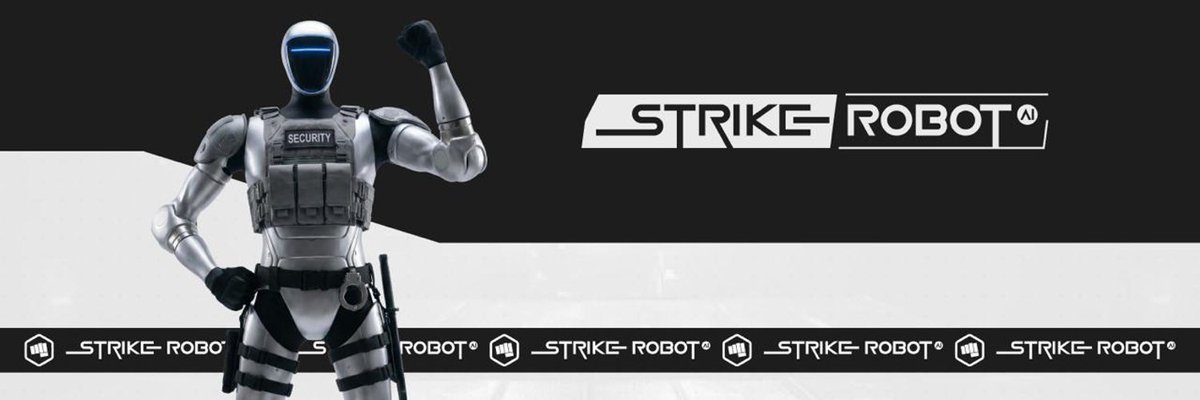
@StrikeRobot_ai AI agents → sim to real robotics ⚡
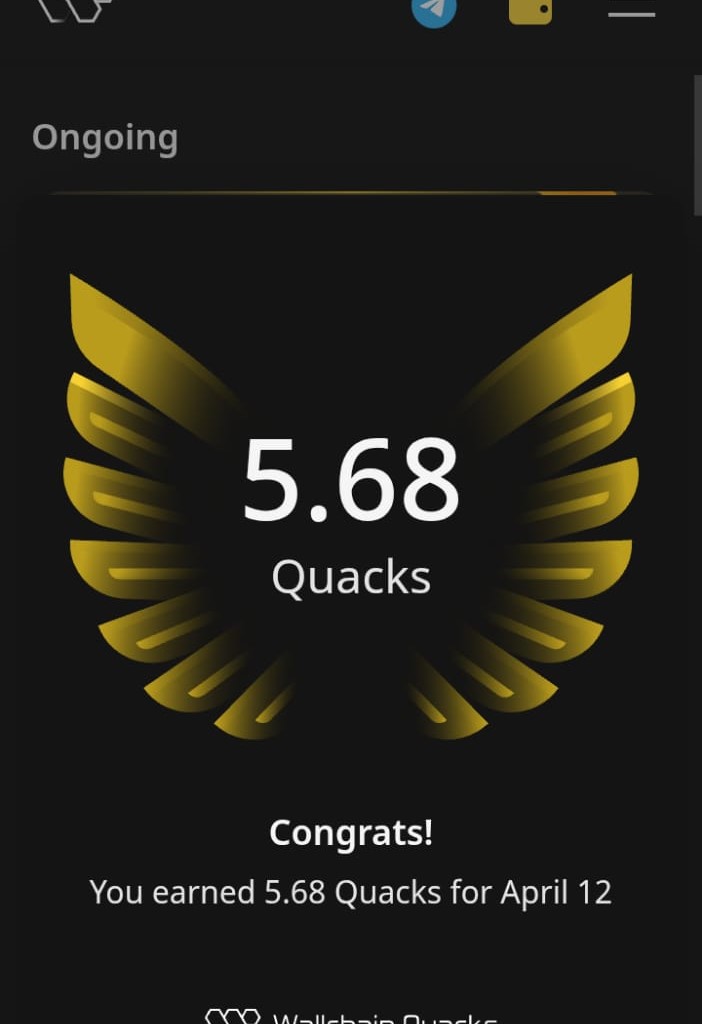
@wallchain attention = measurable reputation
@quipnetwork useful compute post-quantum security
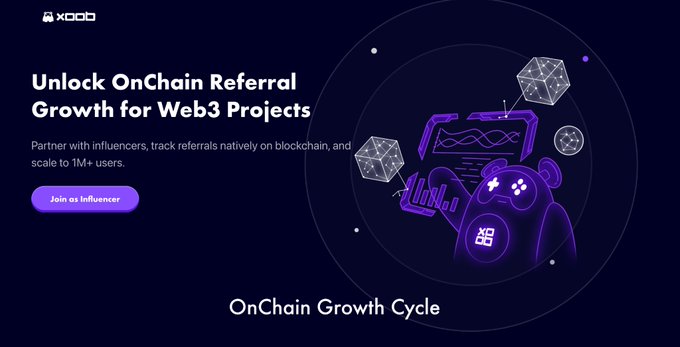
@XOOBNetwork quests → real onchain growth
less hype, more proof 👀
----------------------------
a lot of people hear “AI robotics in crypto” and think it’s just another hype narrative
but @StrikeRobot_ai sits in a different lane 👀
it’s more about AI agents learning in simulation first
then slowly moving toward real-world robotic execution over time
less “product launch” vibes
more long-term infrastructure experiment ⚡
and the interesting part is how much of it depends on coordination early community alignment inside the Virtuals ecosystem
no flashy mechanics needed… just steady building
toward something physical
idk… feels like one of those things you only understand when it’s already too big 👀
#PhysicalAI #VirtualsEcosystem #AIxRobotics 🚀
----------------------------------------------------------
most crypto campaigns still reward noise more than signal
@wallchain flips that a bit 👀
it’s not about who shouts the loudest anymore
it’s about who actually moves attention across the timeline ⚡
posts get measured like impact, not just engagement
and suddenly “being early” isn’t enough… you’ve got to be relevant
earned 5.68 Quacks for 12- April
kinda wild how reputation starts turning into something you can track, rank, and maybe even earn from
idk… feels like attention markets are just getting started 👀
#AttentionFi #Wallchain
----------------------------------------------------------
most crypto networks talk about “security” and “compute” like abstract buzzwords
but @quipnetwork -style ideas make it more concrete 👀
your hardware actually does work
not fake mining… real tasks like optimization or AI compute
and you get rewarded based on output, not hype ⚡
then there’s the other angle .. post-quantum security
basically trying to future-proof wallets before that becomes a real problem
it’s weirdly simple when you think about it
incentivize useful work harden the system at the same time
idk… feels like one of those infra ideas you only appreciate once it’s already everywhere 👀
#QuipNetwork #UsefulCompute #PostQuantumSecurity
----------------------------------------------------------
most crypto campaigns still struggle with fake engagement everywhere
@XOOBNetwork feels like a different direction 👀
instead of rewarding retweets or noise
it tracks actual actions .. quests done, referrals made, real users brought in ⚡
so growth becomes something you can measure end-to-end
not just “how viral it looked”
and the interesting part is how it turns campaigns into loops
do stuff → earn XP → climb → unlock better rewards
@XOOBNetwork is basically a Web3 growth infra platform that connects projects, creators, and users through performance-based campaigns, on-chain attribution, and quest systems focused on real user acquisition and engagement tracking.
idk… feels like attention is getting replaced by proof of action 👀 XOOBNetwork XOOB xoob.link
56
37
77
440
Apr 11
Mytier ( $MT ) is built around several interconnected applications centered on security and decentralized participation. At its core, the platform currently operates a mobile and web mining system where users earn MT points through daily activity, referrals, and social engagement. Beyond mining, its most significant planned application is the Mytier Vault — a quantum-safe digital wallet powered by Post-Quantum Cryptography (PQC) designed to protect digital assets against future quantum computing threats. The ecosystem also incorporates an AI-powered active defense system that detects and neutralizes threats in real-time, a decentralized identity (DID) and KYC framework that allows users to verify their identity securely across multiple blockchains, and a cross-chain security middleware layer offering PQC-secured SDKs and APIs for developers to protect dApps, wallets, and bridges across networks like Ethereum, BNB Chain, and TON — positioning Mytier not merely as a token, but as a foundational security infrastructure layer for the broader Web3 ecosystem.
Mytier ( $MT) stands out as the world's first AI-PQC-based cryptocurrency, pioneering a decentralized security infrastructure that integrates Artificial Intelligence for real-time, self-learning threat detection with Post-Quantum Cryptography (PQC) to deliver quantum-resistant protection against future computing attacks—far beyond traditional blockchain security. Its unique "Sentinel" active defense system proactively scans and adapts to emerging threats. Additional differentiators include a fixed token supply with halving mechanisms for scarcity, community governance, tools like decentralized ID (DID) for secure identity verification across chains, a planned Visa card, and a two-sided platform model that rewards contributions while building a sustainable Web3 ecosystem focused on digital trust, asset protection, and inclusive participation in the post-quantum era.
Mytier ( $MT ) app was launced in September 2025. The app is available on both Android and iOS.
The total supply of Mytier Coin is 20,000,000,000 $MT.
KYC is coming in April 2026.
The first confirmed exchange to list Mytier's MT token is CoinStore, with a listing date in Q4 2026.
Mine $MT points free by using the following information to join:
1. Click the link below to sign up and get 4,500 $MT points!
mytier.io/service/signup?ref…
Referral code:wongkh
2. Download Mytier from app store, log in with your account, and start earning $MT points!
Use the following link for more information:
x.com/Time_and_Trade/status/…
@Mytier_official #MytierUniverse #cryptocurrency #blockchains #PostQuantumSecurity #PQC #DecentralizedID #DID #AI #Web3
27 Sep 2025

Mytier Network is a decentralized blockchain project focused on Web3 security and ecosystem development, powered by a unique integration of AI (Artificial Intelligence) and PQC (Post-Quantum Cryptography). Launched in September 2025, it positions itself as a "security revolution" in the crypto space, emphasizing proactive, quantum-resistant protection against future threats such as quantum computing attacks. Unlike traditional blockchains that rely on vulnerable classical cryptography, Mytier prioritizes security as its core function, enabling everyday users to contribute to a decentralized security network through simple actions like sharing computing power or anonymized threat data.
What makes Mytier Network unique and promising:
1. Mytier stands out in the crowded blockchain landscape by addressing the looming quantum threat head-on, while fostering inclusivity and long-term sustainability. It combines AI-driven threat detection (via the "Sentinel" system) with post-quantum cryptography to create a self-evolving, quantum-proof blockchain. Most projects use outdated crypto standards vulnerable to quantum attacks; Mytier's proactive AI scans and responds to threats in real time, ensuring adaptive and future-proof security.
2. The "Vault" system safeguards assets/NFTs with AI-PQC; it evolves through community contributions for ongoing resilience. This shifts from reactive post-hack fixes to proactive defense, positioning Mytier as the "foundation of trust" for the future digital economy.
3. 20 billion total supply; 58% (11.6 billion) allocated to miners with no vesting/lockup. 1,000 points = 1 $MT. A buyback-and-burn mechanism will be implemented post-launch. This fair, scarcity-focused distribution rewards early adopters and long-term growth, avoiding the inflationary pitfalls seen in similar mobile mining apps. Mainnet, KYC, and listings are targeted for Q4 2026.
4. Referral bonuses (4,500 $MT points boosters for new users), multi-device mining, and partnerships (e.g., Binance Live streams reaching 14K viewers) foster rapid, borderless engagement (Southeast Asia, Middle East & North Africa, European Union focus). It emphasizes ecosystem growth over hype, with balanced rewards for all participants. Partnerships and protocol upgrades are also key.
5. The innovative and effective 5-level reward system, which allows users to earn rewards from referrals across five generations, ensures that Mytier will spread rapidly and gain widespread adoption.
Don't miss this fantastic project! Mine $MT points free by using the following information to join:
1. Click the link to sign up and get 4,500 $MT points!
👇 Click the link below
mytier.io/service/signup?ref…
Referral code:wongkh
2. Download Mytier from app store, log in with your account, and start earning $MT points!
3. Start referring to people to get 5 levels of rewards.
Use the following link for more info:
x.com/Time_and_Trade/status/…
@Mytier_official #Mytiernetwork #cryptocurrency #blockchains #quantumsecurity #AI
24
16
169
9,176
Apr 11
Mytier ( $MT ) 围绕着一系列相互关联的应用构建而成,其核心理念在于安全与去中心化参与。作为其核心功能,该平台目前运营着一套移动端与网页端的挖矿系统,用户可以通过日常活跃度、推荐邀请以及社交互动来赚取 MT 积分。除了挖矿功能之外,该平台规划中最具战略意义的应用当属“Mytier Vault”(Mytier 金库)——这是一款由后量子密码学(PQC)技术赋能的量子安全数字钱包,旨在保护用户的数字资产免受未来量子计算威胁的侵害。此外,Mytier 生态系统还整合了一套基于人工智能(AI)的主动防御系统,能够实时侦测并化解各类安全威胁;一套去中心化身份(DID)与 KYC 框架,允许用户在多条区块链网络之间安全地验证自身身份;以及一个跨链安全中间件层,该层为开发者提供基于 PQC 加密的 SDK 和 API 工具包,助力其保护在以太坊(Ethereum)、BNB Chain 和 TON 等网络上运行的 dApps(去中心化应用)、数字钱包及跨链桥的安全。这一系列布局使得 Mytier 不仅仅局限于作为一种代币存在,更将自身定位为整个 Web3 生态系统赖以生存的基础性安全基础设施层。
Mytier ( $MT ) 凭借其作为全球首个基于“AI PQC”技术的加密货币的独特身份而脱颖而出。它开创性地构建了一套去中心化安全基础设施:该设施深度融合了人工智能技术,实现了对安全威胁的实时、自适应学习与侦测;同时结合了后量子密码学(PQC)技术,从而提供了能够抵御未来各类计算攻击的“量子级”安全防护能力——其安全水准已远超传统的区块链安全范畴。其独创的“Sentinel”(哨兵)主动防御系统能够前瞻性地扫描潜在威胁,并根据不断演变的安全态势进行自我调整与适应。Mytier 的其他显著差异化优势还包括:设定了固定代币总量并引入了减半机制以确保稀缺性;实行社区治理模式;提供诸如去中心化身份(DID)等工具以实现跨链环境下的安全身份验证;规划发行联名 Visa 借记卡;以及采用一种双边平台商业模式——该模式在奖励社区贡献者的同时,致力于构建一个可持续发展的 Web3 生态系统,其核心宗旨在于重塑数字信任、强化资产保护,并推动在后量子时代背景下的普惠式参与。
Mytier ( $MT ) 应用程序已于 2025 年 9 月正式上线。目前,该应用程序已全面支持 Android 和 iOS 两大移动操作系统平台。
Mytier 币(Mytier Coin)的代币总供应量设定为 200 亿枚(即 20,000,000,000 $MT)。 KYC 认证将于 2026 年 4 月启动。
首家确认上线 Mytier 的 MT 代币的交易所是 CoinStore,预计上线时间为 2026 年第四季度。
使用以下信息加入,即可免费挖掘 $MT 积分:
1. 点击下方链接注册,即可获赠 4,500 $MT 积分!
mytier.io/service/signup?ref…
推荐码:wongkh
2. 前往应用商店下载 Mytier App,登录您的账号,即可开始赚取 $MT 积分!
欲了解更多详情,请访问以下链接:
x.com/Time_and_Trade/status/…
@Mytier_official #MytierUniverse #cryptocurrency #blockchains #PostQuantumSecurity #PQC #DecentralizedID #DID #AI #Web3
27 Sep 2025
Mytier Network是一个去中心化的区块链项目,专注于Web3安全性和生态系统发展,其核心技术融合了人工智能(AI)和量子安全密码学(PQC)。应用程序于2025年9月正式上线,Mytier自称是加密货币领域的“安全革命”,致力于通过主动防御和量子安全技术,应对量子计算等未来威胁。与依赖传统密码学的区块链不同,Mytier将安全作为核心功能,允许普通用户通过贡献计算资源或匿名威胁数据等简单操作参与去中心化安全网络。
Mytier Network的独特优势和前景:
1. Mytier在众多区块链项目中脱颖而出,因为它正面应对了量子计算带来的威胁,同时注重包容性和长期可持续发展。它结合了基于AI的威胁检测系统(“哨兵”系统)和量子安全密码学,构建了一个自适应的量子安全区块链。大多数项目仍在使用容易受到量子攻击的过时密码标准;而Mytier的AI系统能够实时扫描和应对威胁,确保安全机制的适应性和前瞻性。
2. “安全库”系统利用AI-PQC技术保护资产和NFT,并允许社区贡献者不断完善系统,增强其安全性。这从事后补救转向主动防御,使Mytier成为未来数字经济的“信任基石”。
3. 总供应量为200亿枚,其中58%(116亿枚)分配给矿工,无需锁定或分期发放。1000积分=1枚$MT。上线后将实施回购并销毁机制。这种公平且注重稀缺性的分配方式,奖励早期用户和长期贡献者,避免了类似移动挖矿应用中常见的通胀问题。主网、KYC和交易所上线计划于2026年第四季度完成。
4. 推荐奖励(新用户可获得4500 $MT积分及额外奖励)、多设备挖矿以及与Binance等平台的合作(Binance直播已吸引超过1.4万名观众)促进了快速且无边界的用户参与(重点市场:东南亚、中东和北非、欧盟)。Mytier注重生态系统发展而非炒作,为所有参与者提供均衡的奖励。合作伙伴关系和协议升级也是其核心竞争力。
5. 创新的五级奖励制度,让用户通过推荐,从多达五代的下线用户处获得奖励,这确保了Mytier能够快速推广并获得广泛的认可及采用。
千万不要错过这个绝佳项目!使用以下信息注册即可免费获得$MT积分:
1. 点击链接注册,即可获得4500个$MT积分!
👇 点击下方链接
mytier.io/service/signup?ref…
推荐码:wongkh
2. 从应用商店下载Mytier,使用您的账号登录,即可开始赚取$MT积分!
3. 开始推荐好友,即可获得多达五级的奖励。
更多信息请点击以下链接:
x.com/Time_and_Trade/status/…
@Mytier_official #MytierNetwork #cryptocurrency #blockchains #quantumsecurity #AI
6
8
70
3,649

Apr 11
🕰️ QuipNetwork's Quantum Doomsday Clock now counts ≈3 years and 8 months until logical qubits are strong enough to break RSA‑2048/ECC‑256. This means the quantum threat is imminent, not just a distant scenario.
💡 This is a call to action: migrate to post-quantum algorithms, update your wallets, and support validator upgrades that adopt lattice-based signatures.
If the blockchain ecosystem wants to remain secure in 2030, action must be taken now, not waiting for the clock to tick.
@quipnetwork
#QuipNetwork #QuantumReady #PostQuantumSecurity #Web3 🌐
Apr 8

Did you know we also run the Quantum Doomsday Clock?
It’s our running estimate of when quantum will break modern cryptography, built to motivate the transition to post-quantum.
April update just dropped. Check it out, and see where the clock stands: quantumdoomclock.com/blog/Ap…
42
1
45
144

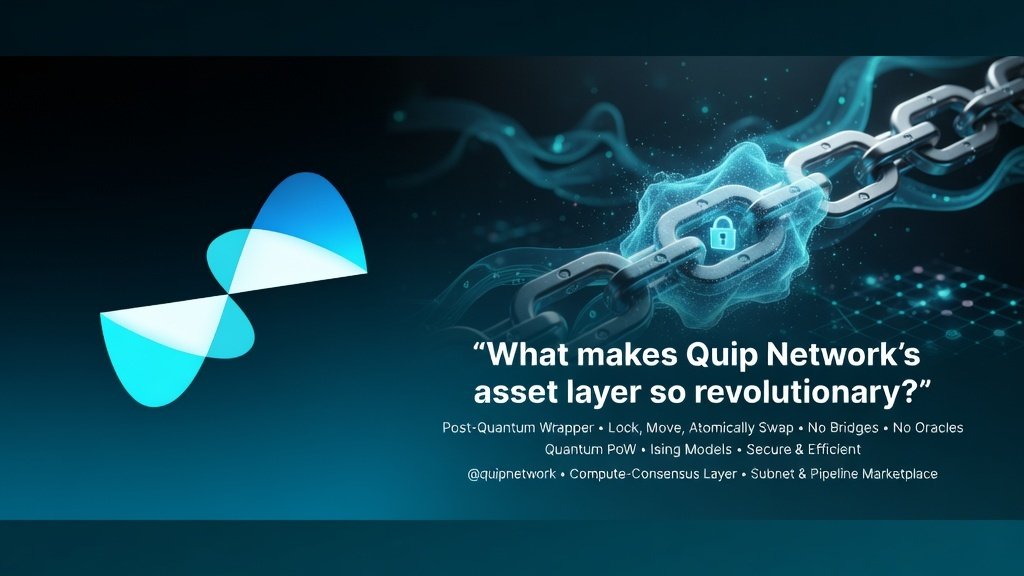
What makes Quip Network's asset layer so revolutionary?
It's a post-quantum wrapper that can be deployed on any chain to lock, move, or atomically swap value without bridges or oracles.
This means secure, efficient transactions that traditional blockchains can only dream of.
@quipnetwork's Compute-Consensus Layer is a new Nakamoto-style chain that uses proof-of-work as a useful optimization job.
And with Quantum PoW, random Ising models are the proof-of-work, adding a whole new level of security.
But what does this mean for users?
With Quip's Subnet and Pipeline Marketplace, component authors can earn royalties, and the Quip SDK provides libraries and tools for working with Quip Network.
It's a platform that's truly designed for the future.
#QuipNetwork #PostQuantumSecurity #RevolutionizingTransactions
55
1
54
567

Apr 9
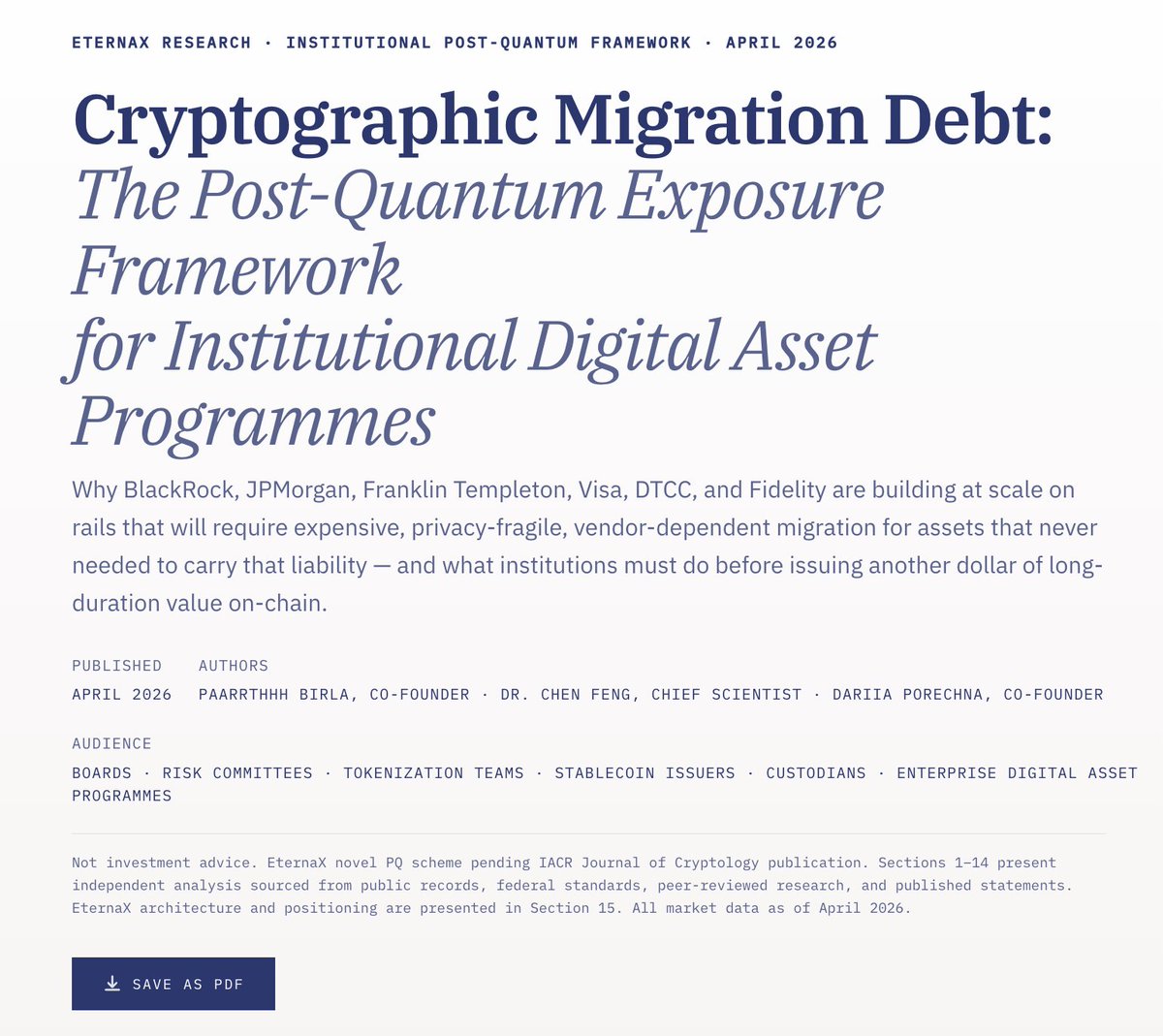
Institutional crypto is still underwriting a risk most boards have not fully priced in:
Cryptographic migration debt.
If you are issuing #stablecoins, #tokenized RWAs, digital cash products, or building institutional digital asset infrastructure, this report is worth reading before the next strategy meeting.
The core issue is not just wallet theft.
It is this:
You are putting long-duration value on rails that may require expensive, privacy-fragile, vendor-dependent migration later, even when those assets never needed to inherit that liability in the first place.
This @EternaXLabs report is one of the clearest frameworks on:
• #postquantum cryptography risk for institutional digital asset programmes
• post-quantum risk to stablecoins
• post-quantum risk to tokenized RWAs
• control-plane vulnerability in crypto
• cryptographic migration debt
• harvest now decrypt later risk
• blockchain privacy durability
• PQ-native issuance decision-making
The framing is important.
The institutional risk surface is not only the wallet. It is the control plane:
admin keys, mint / burn / freeze authority, bridge attestations, custody policy engines, oracle signers, settlement controls, and issuance infrastructure.
That is where institutional exposure concentrates.
A few reasons this report deserves attention:
• it frames post-quantum risk as an institutional market infrastructure problem, not just a retail wallet-security problem
• it focuses on stablecoins, custody, tokenization, exchanges, settlement, and enterprise digital asset programmes
• it asks the right question: not “when does Q-Day arrive?” but “why are we still issuing long-duration value onto rails that create avoidable future liability?”
• it gives boards, CROs, tokenization teams, custodians, issuers, and digital asset leaders a language for action now
This should be read by:
• Boards
• Risk Committees
• Tokenization Teams
• Stablecoin Issuers
• Custodians
• Exchanges
• Prime brokers
• Digital asset banks
• Payment firms
• Enterprise digital asset programmes
If your institution touches stablecoins, tokenized treasuries, digital asset custody, settlement, bridges, or on-chain issuance, read this.
EternaX Labs is building #postquantum-native market infrastructure designed for issuance, settlement, and auditable privacy from day one. That is exactly why this report matters.
The rail decision made now can determine whether institutions inherit future migration debt later. The cheapest point to address post-quantum exposure is before new issuance.
Not after scale.
Not after fragmentation.
Not after migration becomes mandatory.
Read the report here: Link in the first comment
#PostQuantumCryptography #PostQuantumSecurity #InstitutionalCrypto #DigitalAssets #Stablecoins #Tokenization #RWA #Custody #BlockchainSecurity #DigitalAssetInfrastructure #TreasuryManagement #QuantumRisk @FutureDies @paarrthhbirla
@FranklinTempleton @Fidelity @PaxosGlobal @Anchorage @ICE @NYSE @DTCC @Tether @Securitize @centrifuge @WisdomTree @BlackRock @BNPParibas @DRW @BitGo @CMEGroup @Nasdaq @Cboe @Swift @WellsFargo @JPMorgan @MorganStanley @RobinhoodApp
1
1
3
147

Apr 3
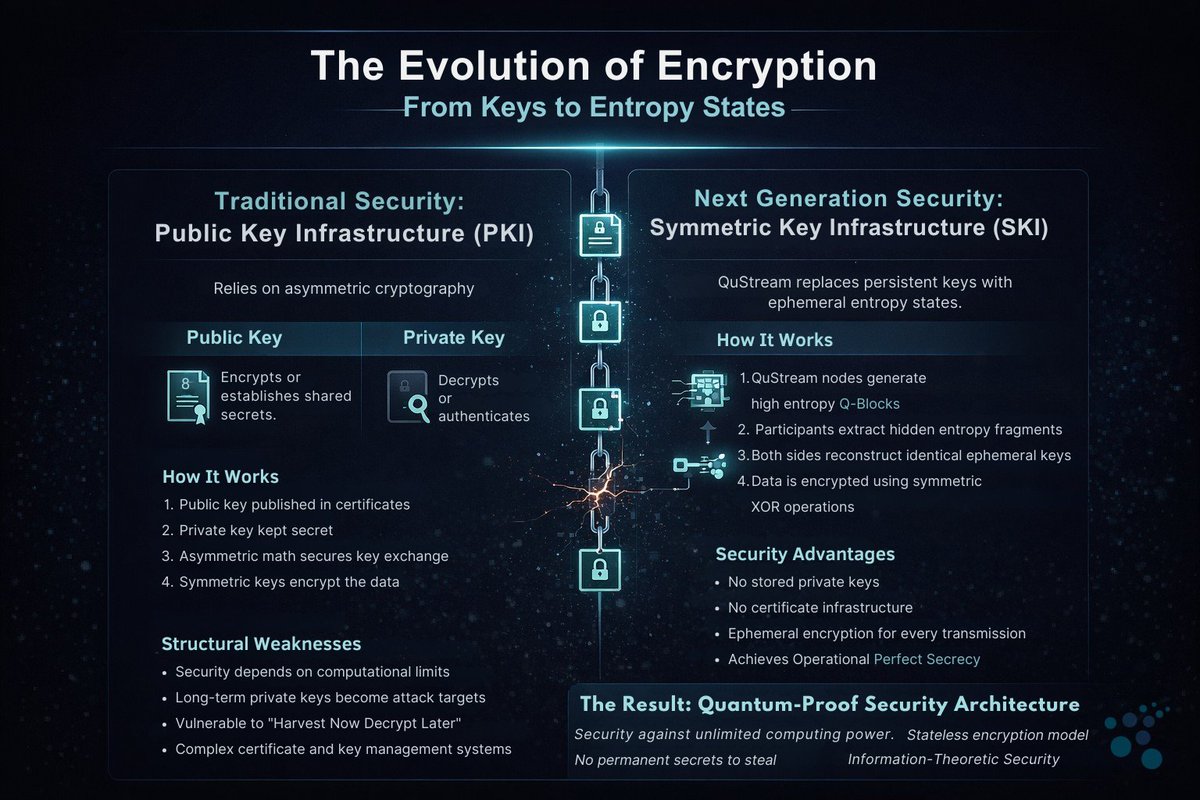
Quantum Threat to Encryption: QuStream’s Information-Theoretic Solution
Quantum mechanics principles such as superposition, entanglement, and measurement indeterminacy power both quantum computing and unbreakable security. Shor’s algorithm (1994) exploits these principles to factor large semiprimes and solve discrete logarithm problems in polynomial time. As a result, RSA, ECC, and most public-key systems used in HTTPS, VPNs, banking, and blockchain become vulnerable.
Nation-states already collect encrypted traffic today for decryption once fault-tolerant quantum computers arrive.
QuStream counters this with information-theoretic security (ITS). It delivers perfect secrecy scalable to real network traffic, without relying on computational hardness assumptions.
Visit qustream.com for demos and whitepapers.
#QuantumPhysics #QuantumComputing #ShorsAlgorithm #PostQuantumSecurity #InformationTheoreticSecurity #QuStream #QuantumSafeEncryption #Cryptography
1
3
843