Linda Higgins 🌎🇺🇦 retweeted

Jun 12
In 2006, when An Inconvenient Truth hit theaters, 23% of new global power capacity was carbon-free. In 2025, that number jumped to 86%.
In last week’s newsletter, @algore reflected on the progress we’ve made and the work ahead.
Read more: mailchi.mp/speedandscale.com…
87

Jun 12
विकास सिर्फ कागजों, विज्ञापनों और सोशल मीडिया पोस्ट की स्पीड पर नहीं, बल्कि जमीन पर दिखना चाहिए। जनता आज भी साफ पानी, अच्छी सड़कों और बुनियादी सुविधाओं के लिए तरस रही है। #GroundReality #AskQuestions #JantaKaJawab"
#AskPMModi #JantaKaSawal #SpeedAndScale #RojgarDo #Inflation #IndiaDemandsJustice #PublicVoice2026
5
Jun 12
स्पीड और स्केल की बातें तो ठीक हैं प्रधानमंत्री जी, लेकिन देश के करोड़ों बेरोजगार युवाओं को रोजगार देने की स्पीड इतनी धीमी क्यों है? युवा आज भी सड़कों पर परीक्षा और नौकरियों के लिए संघर्ष कर रहा है। #RojgarDo #YouthDemands #SpeedAndScale"
1
252
Heatmap News retweeted
Jun 9
As the AI boom creates a new wave of philanthropic capital, a new piece in Heatmap highlights Speed & Scale’s action plan as a tool helping innovators see where climate capital and technology can make the biggest difference.
Read more in Heatmap: heatmap.news/climate-tech/ai…
1
2
290

May 22
Lately, people have been talking about how the @IPCC_CH has abandoned the RCP8.5 model because it's unrealistic, they are going back to more "realistic" models that don't forecast as much CO2.
This is wholesale horseshit. NO amount of CO2 has ANY effect on climate, and more CO2 would be BETTER, not worse, for humans and the planet. Skeptics are celebrating the announcement, but in fact the IPCC is just trying to establish that the lower emissions forecasts ARE legitimate and we should be very concerned. Don't give them the attention they are asking for. Shut them down.
It's not about climate. It's about money.
@LLBiggers @KathrynPorter26 @FatEmperor @LLBiggers @peterdiamandis @climate @alexwg @DaveBlundin @speedandscale @johndoerr @CO2Coalition @clintel @mjgranger1 @Noahpinion @tylercowen @thomaspower @dinisguarda @leashless @vkhosla @NEA @BessemerVP @IEA
@FirstSolar @IRENA @leodicaprio @NREL @SolarPowerEurope @WindEurope @REWorld
@BloombergNEF @EnergyFluxNews
@JesseJenkins @mzjacobson @GavinJMaguire @katiefehren @GavinJMaguire @jendlouhyhc @rfelliott
5
3
17
761
May 11
Wow, 500 views of my paper on renewables and batteries for the grid, feel free to read, download, distribute:
papermark.com/view/cmktyr8ud…
@vkhosla @ericschmidt @speedandscale @johndoerr
3
91
May 10
I have a 70-page paper on why batteries are NOT going to save us and allow any region to reduce or remove conventional power capacity, not now and not in the future. This is renewable math. If you promote renewables, you have to answer to it, you can't wave your hands and say batteries will save us. They won't:
papermark.com/view/cmktyr8ud…
@noahpinion @tylercowen @alexwg @PeterDiamandis @DaveBlundin @KathrynPorter26 @RogerPielkeJr @FatEmperor @LLBiggers @speedandscale @johndoerr @CO2Coalition @clintel @mjgranger1 @Noahpinion @tylercowen @thomaspower @dinisguarda @leashless @vkhosla @NEA @BessemerVP @IEA
@FirstSolar @IRENA @leodicaprio @NREL @SolarPowerEurope @WindEurope @REWorld
@BloombergNEF @EnergyFluxNews
@JesseJenkins @mzjacobson @GavinJMaguire @katiefehren @GavinJMaguire @jendlouhyhc @rfelliott @LFFriedman @IvanPennNYT @JenniferHiller @WillWadeBNEF @ScottDiSavino @NicholaGroom @KatherineBlunt @SiegelScribe @kelseytam
64
86
308
16,853
Apr 29
I'm learning about climate science. You can too:
youtube.com/watch?v=jqxNrQjA…
@vkhosla @johndoerr @Pogue @speedandscale @LeoDiCaprio @BrendenMincheff @rainmaker1973
1
3
152


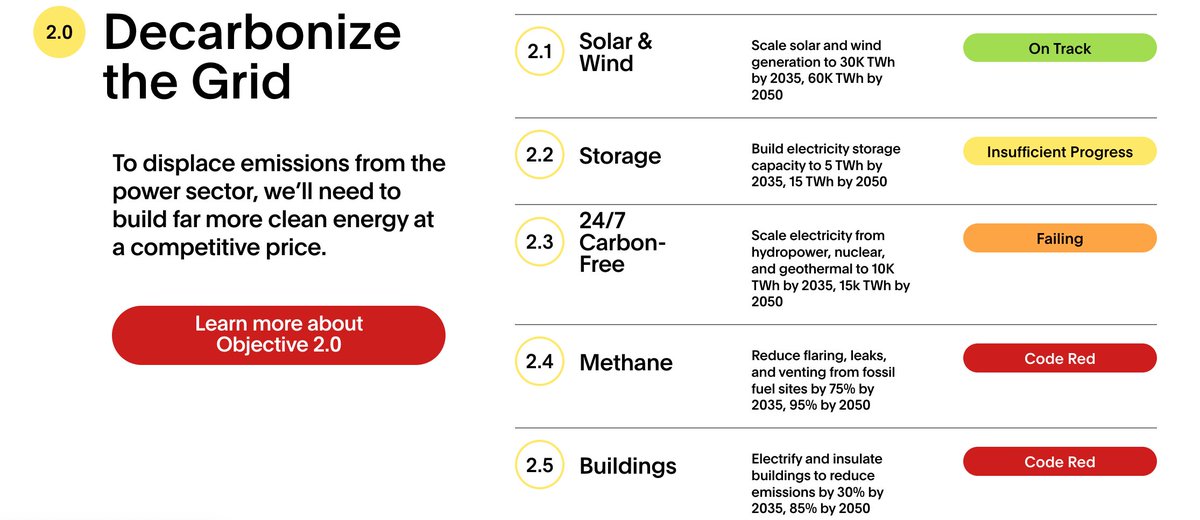
🚨🚨🚨@speedandscale released a tracker that shows progress on controlling methane and decarbonizing buildings at a CODE RED! That's why our campaign is so concerned about the loopholes for methane accounting that @GovKathyHochul is pushing in the budget. #Defendthecliamtelaw!
2
28

Feb 11
In a world where AI can strain our job prospects, physical environment, and personal relationships, what does it mean to use AI for good? In the first part of this two part series, Phoebe Sajor explores the meaning of "AI for good," and how companies like @Aigenio, Smartex, @canaryspeech, FightHealthInsurance, and @speedandscale are using AI to help their communities—and maybe even save the planet.
stackoverflow.blog/2026/02/1…

3
1,466
Jan 21
. @llbiggers @bariweiss Why don't we pick an org that's committed to decarbonization and see if we can organize a debate or event to discuss "the science?" a starter person or org to see if we can make progress. Candidates: @Hewlett_Found, @speedandscale, @CFR_org, @worldbank, @ProjectDrawdown, @DBtodomundo, @raydalio, @leodicaprio, @BarbraStreisand, @patagonia, @WorldResources, @PeterDiamandis, @johndoer, @ericschmidt - the list is so long!
1
2
78
Jan 7
I've been searching for an analogy to help a lay audience understand CO2 and temperature ...
Imagine you're in a very cold place, like Antarctica or the Arctic, sitting on a block of ice in your swim suit. Your body is radiating heat, which means you're getting cold and starting to shiver.
Someone comes along and gives you an 850 fill-power winter goosedown sleeping bag. You crawl in, and your body stops losing heat and you warm up. You're maybe not as warm as you could be, but you're 90 percent of the way to a normal temperature. As the temperature reaches equilibrium, the amount of heat your body gives off escapes from the sleeping bag, but it is delayed, which is what keeps you warm. If you had a source of food and could eliminate waste, you could stay like this for a long time.
Now someone comes along and gives you an even larger 850 fill-power sleeping bag, so you can fit yourself and the first bag inside that one. This delays even more heat from escaping, and now you're toasty warm inside. Back to normal.
Now someone comes with an even bigger sleeping bag and puts you into that one. You're looking like a giant potato. Are you a bit warmer? Maybe a bit, but you can't really tell. Perhaps you could measure it with sensitive instruments. At equilibrium, still, the outer bag is radiating the same amount of heat your body is giving off, but the bags delay the escape of the heat, trapping enough to keep you warm but not enough to keep the heat in over a long period of time.
Now someone gives you an even larger sleeping bag! It's so big that five people could fit in it, and it now goes over you and the other three bags. Are you warmer now? No, not really. You can't measure it.
For every added sleeping bag on top of the previous bags, you don't get any warmer. You could have 100 bags and be bigger than a stadium, you could be surrounded by all the goose down in Hungary, but you're not really any warmer. It might delay the heat from escaping even longer, but still, at equilibrium, your body is losing heat and that heat is making its way out eventually.
What really happens: they all act as one giant sleeping bag. You're still in equilibrium. There's a smooth gradient running from your skin to the outer fabric of the outer bag. No matter how many sleeping bags, the heat cannot build up and eventually run away, cause tipping points, or raise temperatures inside the first bag. After the third bag, the temperature rise inside is too small to measure, even with sensitive instruments.
This is why geese are perfectly comfortable in winter, and why just one parka keeps us warm, even when it's very cold. The colder it is, the more insulation you need, but insulation is very efficient.
Now suppose you're Earth.
The first sleeping bag is equivalent to the first 50 parts per million CO2.
The second sleeping bag takes you to 100 PPM.
By 150 PPM, the CO2 has finally done as much as it can. Adding more CO2 does increase the delay of the heat escaping, but it doesn't measurably affect temperature. All the CO2 you can add to the atmosphere from there won't raise temperature one bit.
And, in fact, Earth has never had less than 150 PPM. From this base, the amount of CO2 in the atmosphere has never had any effect on temperature -- there have been times when the poles had tropical climates and times when Earth was mostly covered in ice, and CO2 didn't correlate, because Earth has always had the first 2 heavy sleeping bags that have kept the temperature warm enough for life to emerge and thrive. Thank goodness for those first 2 sleeping bags of CO2.
On top of this, water vapor can make the earth MUCH warmer, because water vapor acts as an insulator at many different wavelengths (not to mention clouds), while CO2 only insulates in a very narrow range, so you can sleep outside in Jakarta all year round. But in places with very little water vapor, more CO2 does not drive more temperature change.
If you want the technical details and the physics, see my article on the Schwarzschild equation, based on the work of William Happer.
Now is not different. The earth's temperature is rising as it has many many times, at a similar rate, and it is driven by the sun, by water vapor, and by heat transport from the tropics to the poles. Don't believe people who show you scary graphs -- their goal is to scare you to think there is an emergency, but a) their data is manipulated, and b) graphs don't show causation. Temperatures have been rising very slowly since 1800, as we come out of the Little Ice Age. Everything you see in the press is natural variance and the heat-island effect.
To understand Earth's complex climate system, see climatecurious.com
@conservalidity @Hemiunu2021 @aldoceccarelli @DavidUllrich202 @jemmm85517813 @toadmeister @thomaspower @EdwinKorver @TheRubberDuck79 @lassetur @MumClimate @anthea_bailey @bullburton @cabisbee @endlibtyranny @indyrallen @HowardSteen4 @patrickrooney @tomhfh @Panopticonomy @AndrejDrapal @R_H_Ebright @billdubs @RyvesWilliam @sandropacheco71 @JoomiKim1 @redpilldispensr @jimmy_dore @amuse @pmcdunnough @orwell2022 @timacheson @AdlerJoelle @DangerousThinkg @aDissentient @ryangerritsen @SonofManwithus @llbiggers @vkhosla @johndoerr @speedandscale @richarddawkins @elonmusk @paulhawken @SecretaryWright
1
3
111

9 Oct 2025
9 Oct 2025

A reminder from Elon about the bitter lesson.
The following coordination of machines and electrons will win:
1B AI chips
1 TW power
100M robots
This is now all about capital, speed and scale.
4
7
392

6 Oct 2025

The speaker lineups is massive, let’s bring XRPL to Africa.
Go set reminders guys . @Stone_XRPL @Ripple @bgarlinghouse @JoelKatz @XRP_Alerts let’s go!!!
#XRP
5
251
29 Sep 2025
New pod alert! The @speedandscale x @TEDTalks show is here — uncovering the big climate solutions already transforming our world. From wind in Texas to ending coal in England, these stories prove we can solve the climate crisis.
🎧ted.com/podcasts/speed-and-s…
1
234

25 Sep 2025
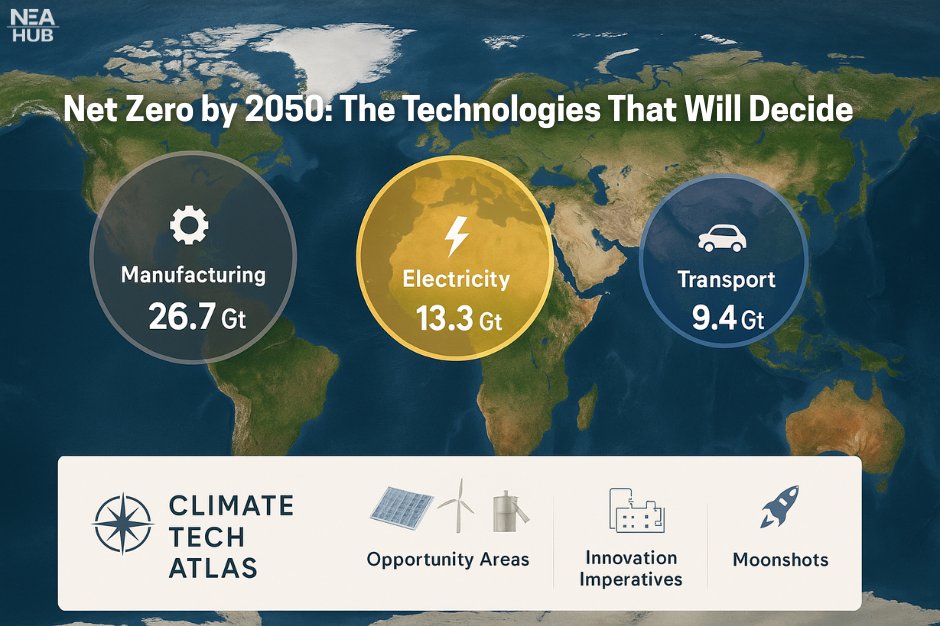
🌍 What technologies could make or break our path to net zero by 2050?
That’s the guiding question behind the new Climate Tech Atlas, launched by @EnergyInnovLLC together with @stanforddoerr, @Breakthrough, @McKinsey Sustainability, Elemental Impact, and @speedandscale.
🗺️ The Atlas maps out:
🔹24 “opportunity areas” where proven climate technologies already exist (solar, wind, industrial heat pumps)
🔹60 “innovation imperatives” — critical gaps that must be solved to scale decarbonization
🔹40 “moonshots” — high-risk, high-reward bets that could radically accelerate the transition
What stands out most is the scale of emissions still at stake:
⚙️ Manufacturing could account for 26.7 Gt by 2050 — more than any other sector.
⚡ Electricity comes next with 13.3 Gt, despite record solar and wind growth.
🚗 Transport follows at 9.4 Gt, driven by road vehicles, shipping, and aviation.
The message is clear: even with strong policy progress and booming clean energy, emissions are still projected to rise without faster breakthroughs. The Atlas highlights where those breakthroughs could matter most.
🔗 Explore it here: climatetechatlas.com/
#ClimateTech #Innovation #NetZero #CleanEnergy #Decarbonization #EnergyTransition
2
4
62

From heatwaves to floods and wildfires, climate change is here — but so are solutions.
Our newest podcast, @speedandscale, hosted by @rypan & Anjali Grover explores the on-the-ground actions being taken to combat the global climate crisis.
Listen now: t.ted.com/Hydp56y
26
10
47
27,876

18 Sep 2025
Energy innovation is unlocking new markets and investment opportunities—and now there’s a way to see where it’s happening. The Climate Tech Atlas maps the breakthroughs and investments needed to build the future of energy.
Abundant, affordable, and reliable energy will power the future. That’s why we’ve teamed up with Elemental Impact, @EnergyInnovLLC, @McKinsey Sustainability, @speedandscale, and @stanforddoerr to build this guide for where innovation can scale fastest and make the biggest impact: bit.ly/3IeFfzT
2
4
13
1,053