Filter
Exclude
Time range
-
Near
CELLFORGE confronts the interdisciplinary complexity of virtual-cell modelling by casting the entire research cycle as a collaboration between role-specialised agents. TaskAnalysis agents begin by profiling the dataset and mining the literature, distilling a draft research plan.
3
352
[Day 11/100] Deep dive into Task Analysis today — breaking down user goals into small, actionable steps to design better interactive systems. It’s fascinating how much you can learn just by observing how people naturally behave with tech. #100DaysOfStudy #TaskAnalysis #HCI #UX
2
21
My next big modeling challenge is behavior coaching: -- not just adapting the pace of learning to a student's correct/incorrect answers, -- but also keeping learners focused and engaging in productive learning behavior during tasks. We started collecting data on in-task behavior a couple months ago -- a sequence of all the events that occur during each learning task. That way, we can tell whether unproductive behavior is occurring, and trigger communication to coach the student towards more productive behavior. Some examples of unproductive behavior: -- relying on reference material too much without trying to pull info from memory -- not referring back to reference material when legitimately stuck -- missing a question and then moving on immediately instead of taking a bit of time to review the solution and identify one's mistake We started out storing all these task events in a SQL table, which now contains 20 million events and is growing at a rate of 13 million events per month. For reference, there are about 3x as many task events from the past 2 months as the total number of answer records since the birth of Math Academy. Yeah, I love data, but... damn, that's a big table! It's getting unwieldy. @exojason had the great idea to move all this over to S3 instead, which is a more appropriate storage location when you have a crapton of data that you aren't really using in a relational way. (Every task we process, I just pull the task event stream independently, analyze it, and store some key wrap-up metrics in a taskAnalysis table. And then it's the taskAnalysis table that we actually join against downstream.) He just migrated the data storage code yesterday, so today I'm migrating my analysis code to pull from S3 as well.
If you want an AI system to emulate the decisions of a human expert, then you need to give it all the key information that the human uses during their decision-making process. That's been our philosophy at @_MathAcademy_, and we're about to start taking it to a whole new level. Currently, we have our curriculum organized into a gigantic, super information-rich knowledge graph of - thousands of topics, - tens of thousands of knowledge points, and - tens of thousands of "edge" relationships between them (e.g., A is a prerequisite of B, but also other kinds of relationships). And to determine the most optimal tasks for a student to work on, we 1. overlay every single one of their answers onto the knowledge graph, 2. have the information "flow" through the graph, 3. determine the student's mastery & memory state at each topic, 4. identify topics in need of review (sufficiently low memory state) and topics on the student's "knowledge frontier" (not yet learned but all prerequisites mastered), and 5. compress those into the smallest set of tasks that "knocks out" all the due review while simultaneously maximizing the rate at which the student learns new material and pushes their knowledge frontier forward. (More details here: mathacademy.com/how-our-ai-w…) This process works great and it's enabled us to drastically speed up a student's pace of learning by charting an efficient path through the curriculum that is tailored to their needs! However, there's another piece of the puzzle that's still needed: micro-behavior coaching. We get the student learning/reviewing exactly the right topics, working on exactly the right exercises -- but we still need to get the student engaging in exactly the right behaviors that are productive for learning. In other words: even if students are working on exactly the right things, they need to be working exactly the right way to capture the most learning from their time spent working. Productive learning behavior can be hard for some students to manage on their own because it usually involves balancing a tradeoff between two extremes. For instance: - Read the instructional material carefully before you attempt to solve the problems -- but don't spend too much time on it, because the problem-solving is where the learning happens! - When you solve a problem, try to minimize your reliance on reference material. Instead, retrieve information from memory. But if you're really stuck and can't remember what to do despite your best effort to recall, don't just sit there! Peek back at the worked example to refresh your memory. But then try to solve the rest of the problem unassisted -- don't solve the problem side-by-side with the worked example! - When you work on math, focus fully on the math! Don't continually get distracted and interrupt your train of thought. When you're engaging in deliberate practice at the edge of your ability, 30 minutes of full focus moves the needle much further than 60 minutes of half-focus where your train of thought is continually being interrupted. Now, I could go on for a while listing micro-behaviors that are necessary to support learning... But even with a fully comprehensive list of micro-behaviors, few students in need of it would actually read it and put it into practice. What's needed is just-in-time feedback: detect when a student is engaging in unproductive behavior and tell them how to fix it. (And incentivize them to fix it -- so that regardless of whether the student is intrinsically interested in understanding the material deeply, or they just want to earn enough XP to keep their parent/teacher off their back, the quickest path to reward is to work productively and maximize their learning.) That's my next big modeling task -- and as @exojason describes below, we now have the data to make it happen.
2
3
42
2,737
Make sure to checkout this recent T-RO paper by researchers from @KITKarlsruhe on automatically extracting an object-centric task representation from human demonstration videos recently presented at ICRA 2024. ieeexplore.ieee.org/document… #TaskAnalysis #ManipulationPlanning
2
13
957
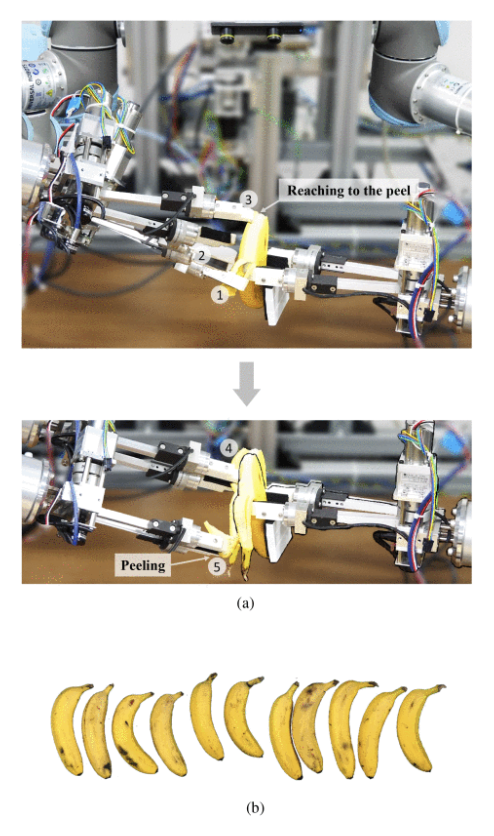
Researchers from @UTokyo_News_en describe how to improve the quality of imitation learning for long-horizon #DexterousRoboticManipulation of deformable objects in a recent T-RO paper ieeexplore.ieee.org/document… #TaskAnalysis #RobotSensingSystems #NeuralNetworks #DeepLearningInRobots
4
505
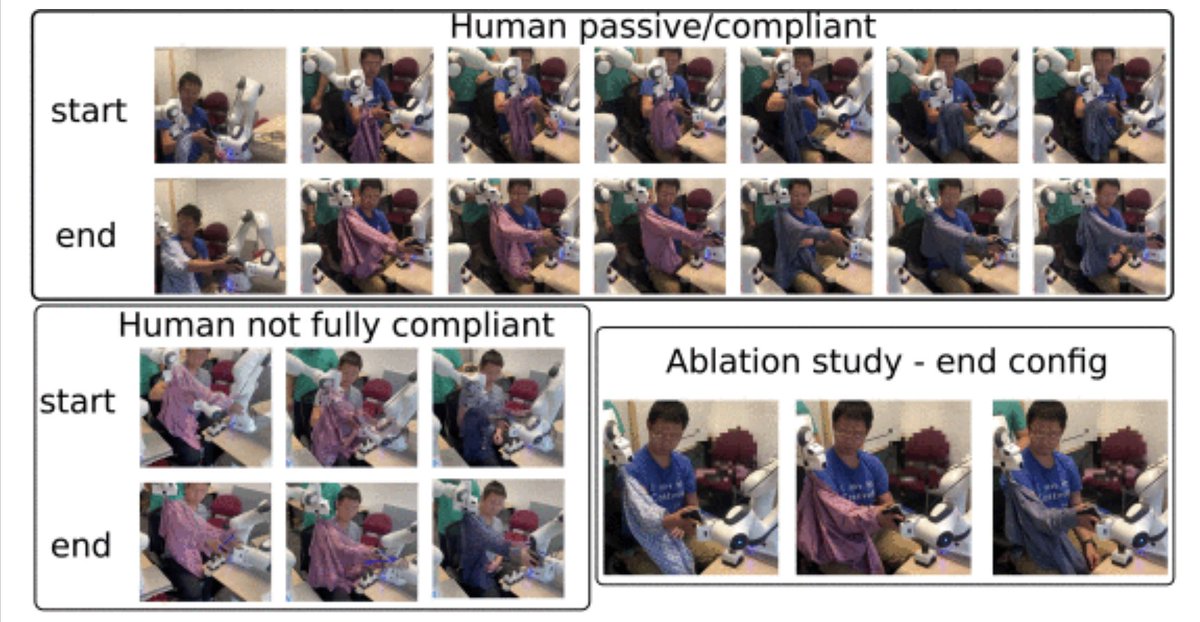
Researchers from @YorkUniversity, @tudelft in a recent T-RO paper describe a bimanual interactive robotic dressing assistance scheme. ieeexplore.ieee.org/document… #RobotKinematics #TaskAnalysis #RobotAssistance
5
560
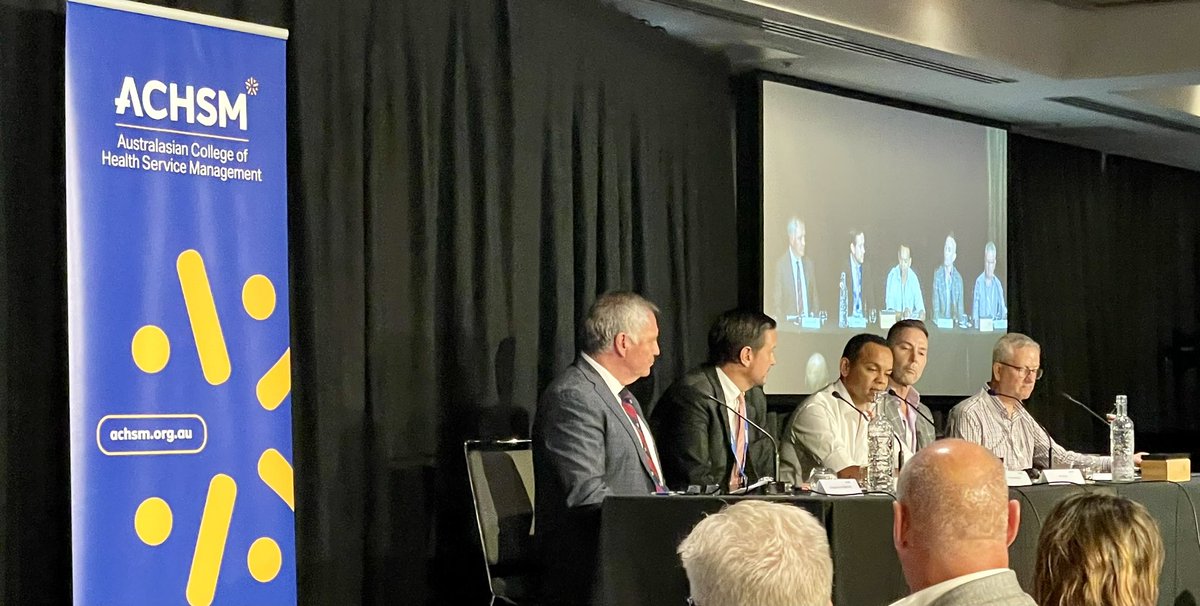
Workforce 2030 panel discussion at @ACHSM Conference @StuartDFrancis Paul Ingle, Lloyd McCann & Andrew Slater from the floor - it’s time to break down the professional silos, focus on skills needed to deliver care #AlliedHealth #InterprofessionalPractice #TaskAnalysis #ACHSM
1
3
97
Researchers @HIT_China and @Idiap_ch in a recent T-RO paper developed an optimal control approach using tool affordances and directional manipulability to solve motion planning problems. ieeexplore.ieee.org/document… #TaskAnalysis #OptimalControl #PathPlanning #RobotManipulator
11
645
6 Mar 2024
I always break my complex tasks into user stories! It helps me understand the user needs and ensures my design aligns with the specific tasks users want to accomplish. #UserStories #TaskAnalysis
1
4
90
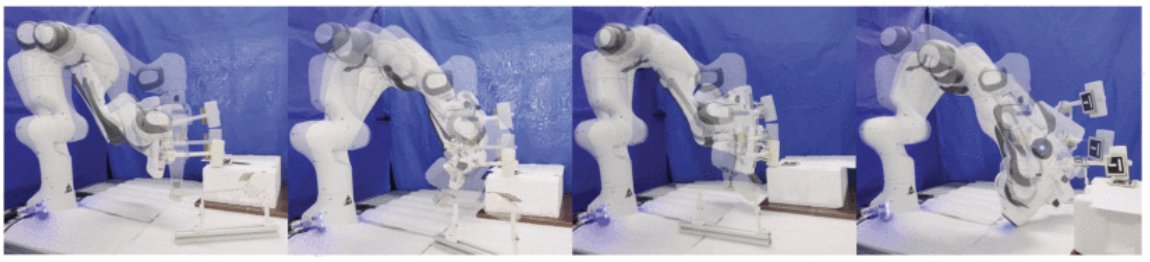
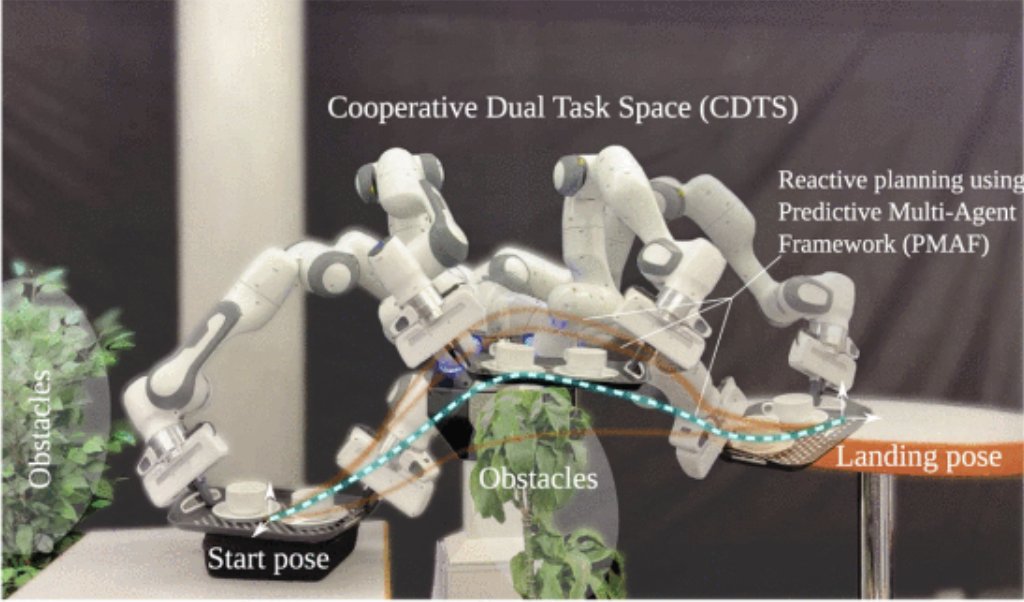
Researchers @TUM_MIRMI and @UniHannover describe a novel planning framework for two-arm cooperative manipulation in a recent T-RO paper. ieeexplore.ieee.org/document… #CollisionAvoidance #DualArmManipulation #TaskAnalysis #MotionandPathPlanning #RobotKinematics
5
23
1,617
Hierarchical Task Analysis (HTA) is a fundamental method for Human Factors, it's very versatile and takes skill to master. Find out more here buff.ly/3Zvgoff #humanfactors #hta #taskanalysis #hfe #design #risk #procedures
2
73
Hierarchical Task Analysis (HTA) is a fundamental method for Human Factors, it's very versatile and takes skill to master. Find out more here humanreliability.com/human-f… #humanfactors #hta #taskanalysis #hfe #design #risk #procedures
1
5
165
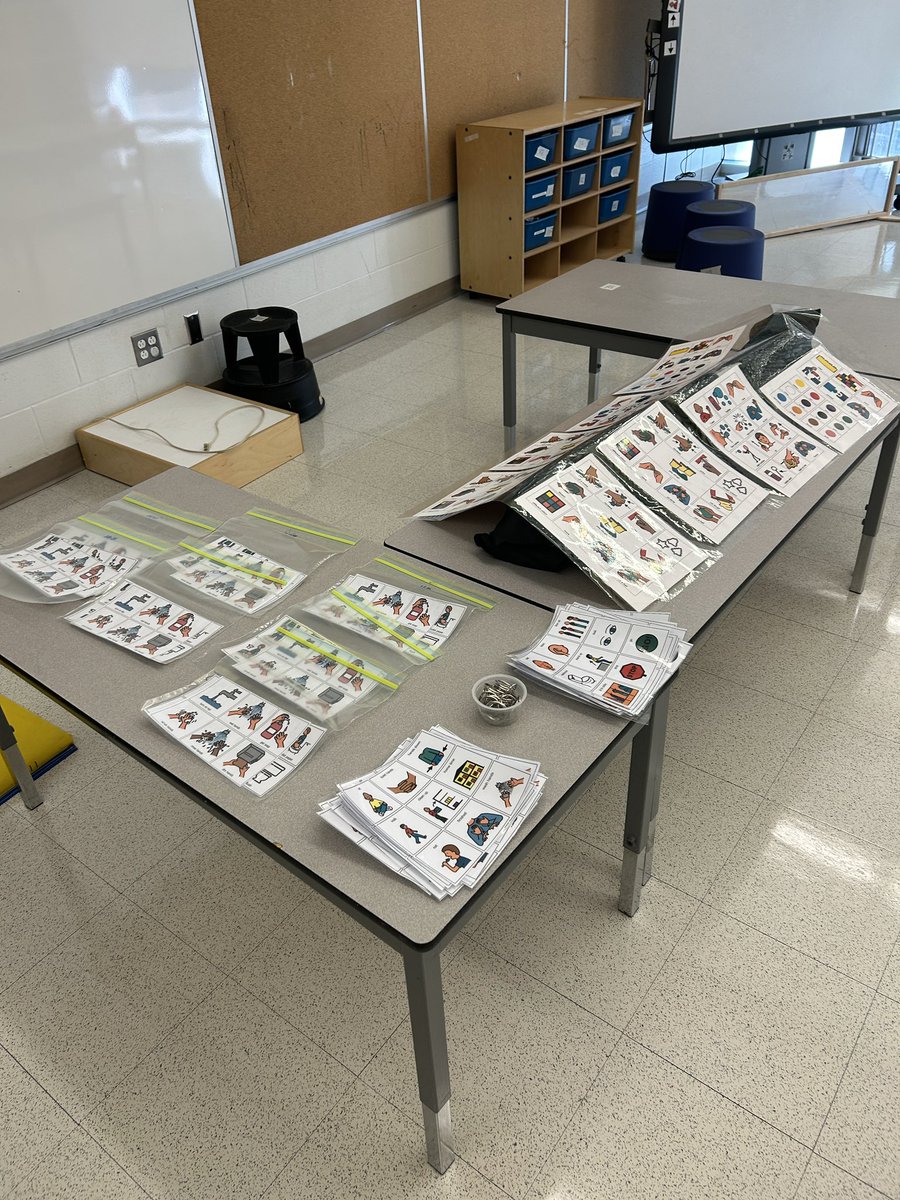
Getting visuals ready for all our classrooms. #Kindergarten #inclusion #tdsb #visuals #taskanalysis
4
11
542
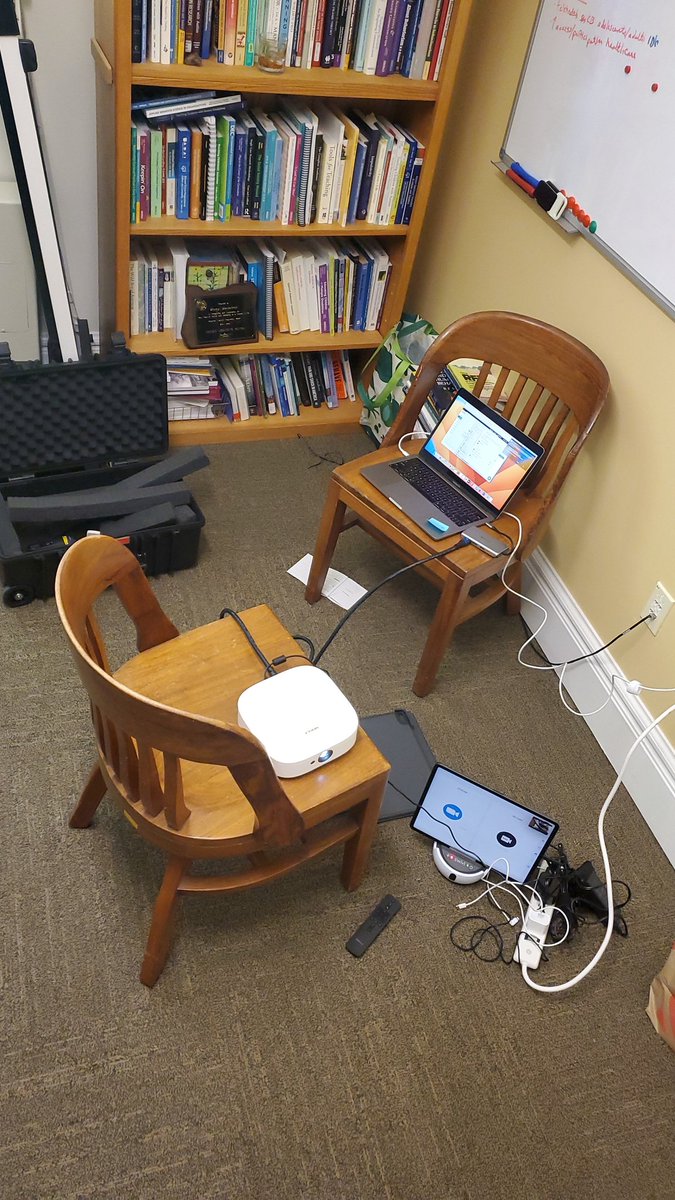
Setting up the presenter-tracking robot for #IESSCRD does have a surprising number of steps! And cords! 🤖 #taskanalysis #scrdchat
4 days until IES Single-Case Research Design and Analysis Training Institute and my office looks like it! Sometimes the PI is also head of IT dept, but @ssequinn is my everything at the Madison Institute including my back up brain.
6
472
Inspired by the power of #DeepLearning, semantic communication is a promising solution to improve system efficiency and is categorized as the second level of communications. Learn more: hubs.la/Q01VPJ4L0 #Transmitters #TaskAnalysis #Receivers #CommunicationSystems
2
441
How can we help autistic students develop higher levels of independence? Frankie Kietzman, Ed.S. shares how intentional instruction through task analysis (TA) can help those who are too reliant on others. #autismlivingskills #taskanalysis bit.ly/42hSGDK

1
125
Please check out the article on: "Deeper Understanding of #Software Change" by Mohamed Saied Essa, Ahmed Mohamed Elfatatry, Shawkat Kamal Guirguis doi.org/10.1109/MITP.2023.32… #ITPro #ProcessControl #Software #BehavioralSciences #TaskAnalysis #SoftwareEngineering

1
2
99