
Jun 11
Ethereum could evolve into a fully ZK-powered network within the next 3–5 years, according to Ethereum co-founder Joseph Lubin.
Lubin believes #ZeroKnowledgeProof technology will dramatically improve scalability, security, and interoperability across Ethereum’s ecosystem, enabling seamless #L1 and #L2 integration with atomic execution and unified user experiences.
As projects like #zkSync, #Starknet, #Scroll, and #PolygonzkEVM continue advancing ZK innovation, Ethereum may be heading toward a future where users no longer need to think about which layer they're using.
blockchainseoul.kr/article/9…
#Ethereum #ETH #ZK #ZKProofs #Blockchain #Crypto #Web3 #Layer2 #Scaling #DeFi #CryptoNews #EthereumEcosystem #zkRollups #Innovation #CryptoCommunity
72

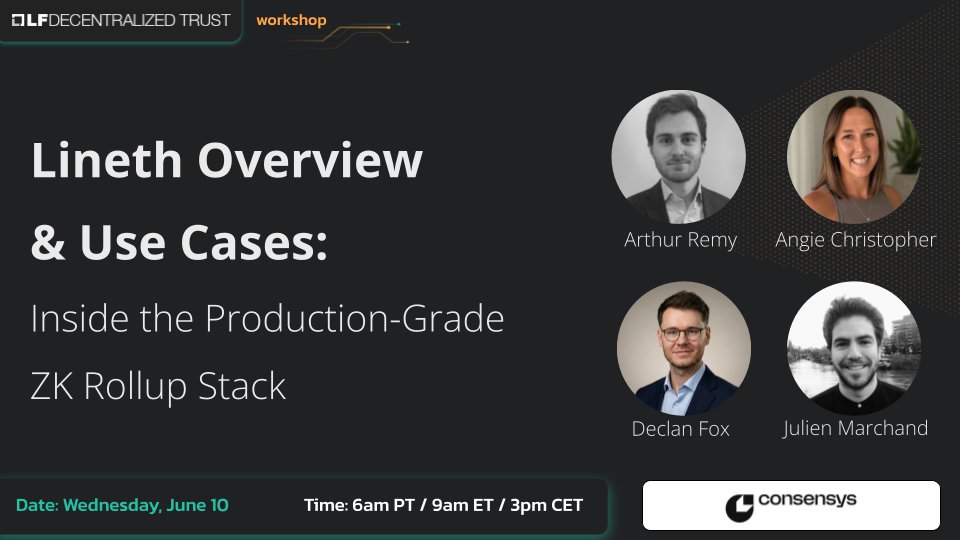
THIS WEDS: Lineth Overview & Use Cases: Inside the Production-Grade ZK Rollup Stack
When: June 10, 2026, 6amPT/9amET/3pmCET
Register: hubs.la/Q04hhFgX0
#eth #ethereum #lineth #ZeroKnowledge #EVM #linea #ZKP #ZeroKnowledgeProof #architecture
2
4
481

Apparently there are Checks & Balances in play. Specifically on the XRPLedger where "ZeroKnowledgeProof" allows Individuals to control their Data and This Unique Tech cannot be controlled & manipulated. Grifters will be Exposed with this tech.
3
15

May 14
Zero Knowledge Proof #RealEstate #Tokenization #Architecture That Keeps #Property Data #Private
#Zeroknowledgeproof real estate tokenization allows smart contracts to verify investor eligibility
Read More👇
nadcab.com/blog/zero-knowled…
16
61

May 11
Some wait for the perfect moment.
Others secure their position before the crowd arrives.
Enter early, move smarter, and stay ahead of what’s coming next. ⚡️
👉 buy.zkp.com
#ZKP #BuyNow #ZeroKnowledgeProof #AI #Privacy
16
3
6
964

May 7
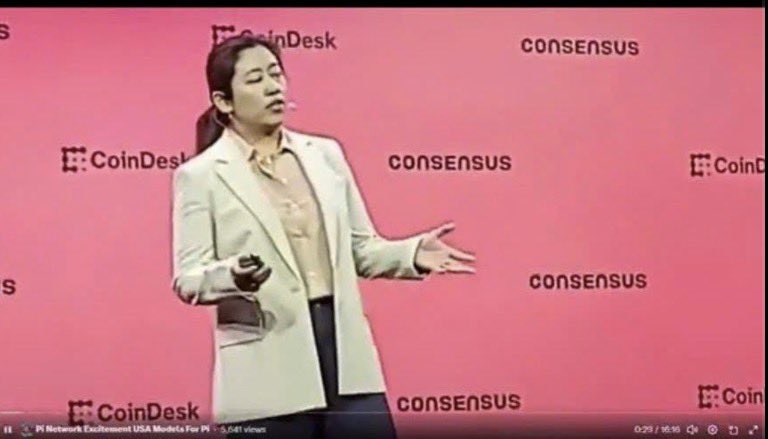
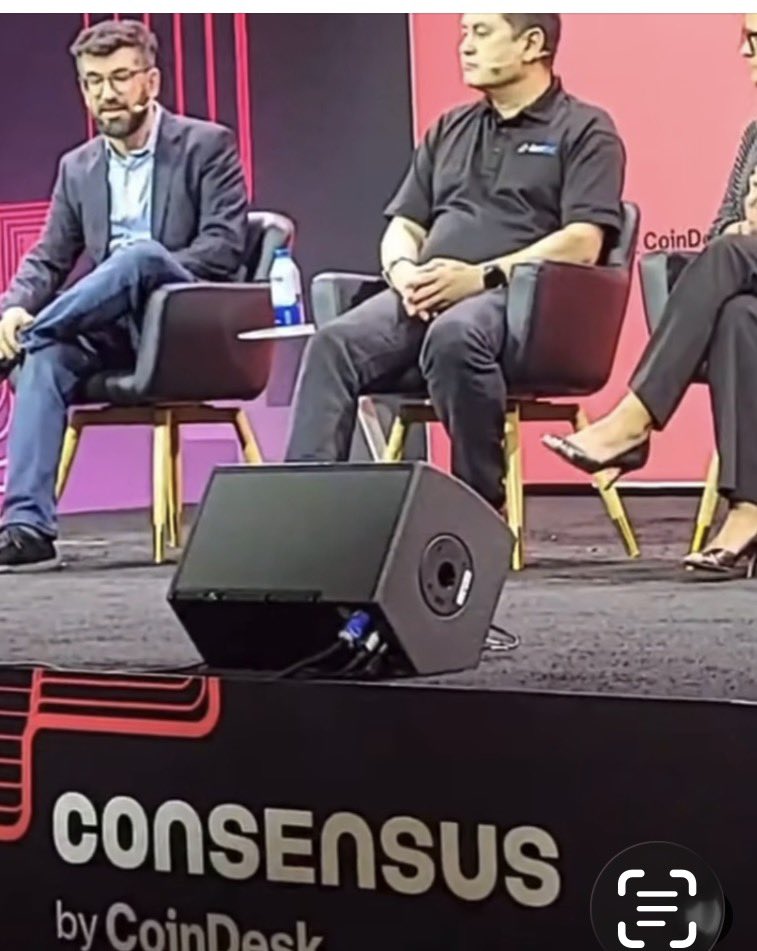
🔥 Pi Network đã vô cùng nổi bật ở trung tâm của cuộc thảo luận về tương lai Internet.⚡️⚡️⚡️
Tại sao lại là Pi ? Sự khác biệt là gì ?có một điều rất khó hiểu ở đây?
✳️ Chủ đề nóng nhất : Nicolas phát biểu .
🚀“Trong kỷ nguyên AI, làm sao chứng minh bạn là người thật mà không đánh đổi quyền riêng tư?”
🤖 AI đang khiến Internet tràn ngập bot, deepfake và tài khoản giả.
👉Các nền tảng truyền thống buộc người dùng phải giao dữ liệu cá nhân để xác minh danh tính.
🚀Nhưng Pi Network lại đi theo hướng hoàn toàn khác:
✅ Xác minh con người thật
✅ Không lộ dữ liệu cá nhân
✅ Không lưu khuôn mặt, hồ sơ gốc hay thông tin nhạy cảm
✅ Sử dụng Zero-Knowledge Proof nhận diện phi tập trung
👉Pi đang xây dựng “lớp niềm tin” cho Internet thời đại AI.
🆘 Điều khiến cả hội nghị đặc biệt chú ý chính là:
🚨 Hàng chục triệu Pioneer đã KYC là mạng lưới danh tính con người lớn nhất và đáng tin cậy nhất thế giới ✅✅✅
🆘 Trong tương lai AI…
“Danh tính người thật” có thể là tài sản số giá trị nhất 💰💰💰
🛡️ Đại diện từ Cloudflare cũng thừa nhận:
✳️ Việc chứng minh bạn là người thật và việc bảo vệ quyền riêng tư phải tách biệt hoàn toàn — và Pi đang là một trong số rất ít dự án triển khai được điều đó ở quy mô lớn.
🆘 Cựu quan chức an ninh mạng cấp cao của Mỹ cũng nhấn mạnh:
👉Trong tương lai, mọi hệ thống thu thập dữ liệu nhạy cảm sẽ bị kiểm soát ngày càng chặt hơn.
👉Các giải pháp nhận diện bảo mật quyền riêng tư như Pi phù hợp với định hướng quản lý toàn cầu sắp tới.
🚀 Và đúng lúc đó…
Pi chuẩn bị nâng cấp Smart Contract v23 vào ngày 11/5 — mở đường cho giai đoạn bùng nổ hệ sinh thái mới.
🔥Những người kiên trì đến hôm nay…
có thể đang đứng đúng phía của lịch sử.🏆
#PiNetwork #PiCoin #Consensus2026 #Web3 #AI #Blockchain #DigitalIdentity #Crypto #ZeroKnowledgeProof #KYC #Privacy
8
5
68
1,666

May 7
Something important just happened and most people haven't fully understood what it means yet
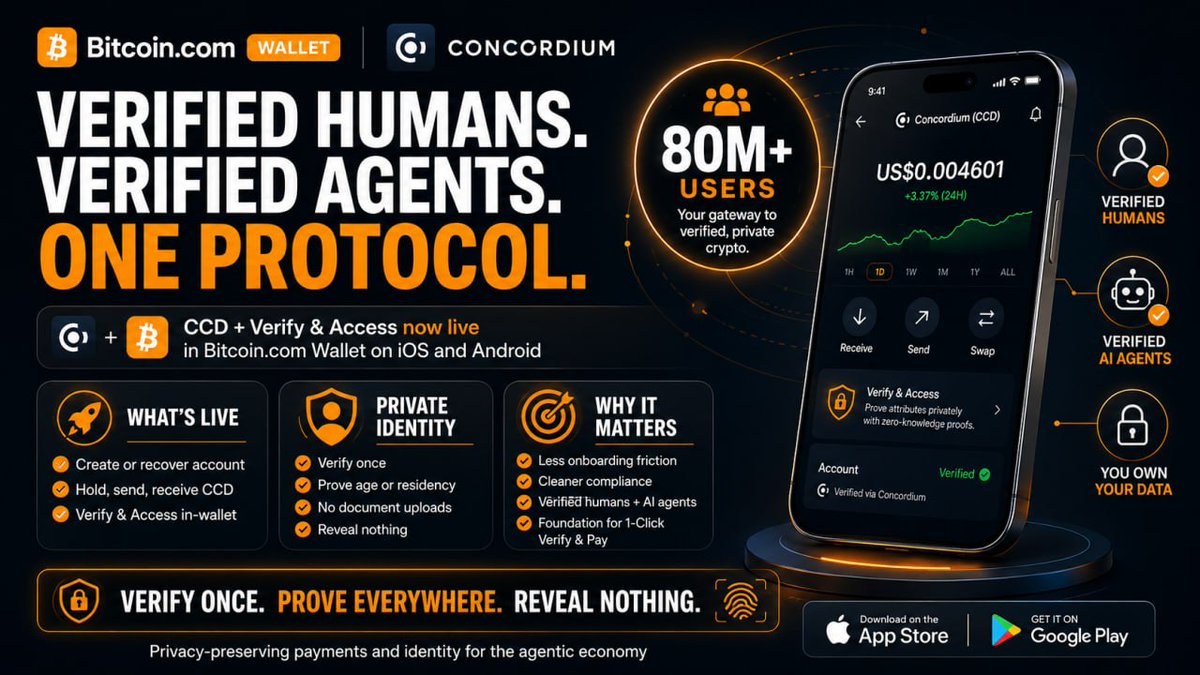
Verify & Access, @Concordium's identity layer, is now live inside the @BitcoinCom Wallet app on iOS and Android. That means 80 million people now have access to ZKP-based identity verification right inside the wallet they already use every day. No new app. No extra steps. No confusing setup.
But let's slow down and explain exactly what that means , because the implications go far beyond a product update.
ZKP stands for Zero-Knowledge Proof. It sounds technical, but the idea is simple. Imagine you need to prove you are over 18 to enter a website. Today, you upload your passport or driver's license. The website stores that document on its servers. Now your personal data is sitting somewhere you don't control, waiting to be leaked in a breach.
With ZKP, you prove the answer without showing the document. The service asks: "Are you over 18?" You say yes. The system cryptographically confirms it is true. The service gets a verified yes or no. Your actual data never leaves your hands.
You don't hand over your ID. You just prove what needs to be proven. That's the entire difference.
Technology only changes the world when it reaches people at scale. A breakthrough that lives inside a niche app used by 10,000 developers is interesting. A breakthrough that lives inside a wallet used by 80 million people is a shift.
Until today, privacy-preserving identity verification was something you had to go out of your way to find. Now, for tens of millions of people, it's just there. Built in. Available the moment they need it.
Think about every time you've been asked to prove something online. Your age, your country of residence, your professional accreditation. Each time, you repeat the same process: upload a document, wait for approval, hope the platform handles your data responsibly.
With @Concordium's identity layer, you verify once. After that, any platform, any service, any checkout can request proof of a specific attribute and you approve it in a single tap. The verification travels with you. The data does not.
Here is where the story gets bigger. AI agents software that acts on your behalf, books things, pays for things, makes decisions autonomously are already operating in the real economy. But they have a problem nobody has solved cleanly yet: they can't pass traditional identity checks.
Banks require KYC. Regulated platforms require verified humans. An AI agent trying to complete a transaction on your behalf hits a wall the moment the system asks "who are you?" Coinbase's own CEO has publicly acknowledged this is a fundamental blocker for the agentic economy.
@Concordium's identity layer was built for exactly this moment. Every account on Concordium is tied to a verified identity at the protocol level not bolted on top, not handled by a smart contract, baked into the chain itself.
That means an AI agent operating through Concordium inherits verified identity automatically. It can prove jurisdiction, confirm age, meet accreditation requirements all programmatically, all without exposing the underlying personal data. The same architecture that works for a human at a checkout screen works for an agent running a payment at 3am with no human involved.
The internet was built without an identity layer. We bolted on passwords, then two-factor authentication, then KYC processes each one a patch on top of a system that was never designed to know who you are.
The agentic economy needs that identity layer to exist at the foundation. Not as an add-on. Not as a compliance checkbox. As infrastructure.
That is what @Concordium has built. Protocol-level identity. Zero-knowledge proofs. Fiat-pegged fees so costs are predictable. Protocol-Level Tokens so payments don't inherit smart contract risk. And now, through the Bitcoin.com Wallet, a distribution channel with 80 million people already inside it
#web3 #ZeroknowledgeProof
6
17
277

May 6
Eli Ben-Sasson: Zero-Knowledge Proofs Could Redefine Bitcoin’s Future #AltcoinNews #BitcoinNews #BlockchainNews #News #ZeroKnowledgeProof #ZK #ZKproof #Optional
ethnews.com/eli-ben-sasson-z…
44

👀🔥 HOW TO PROVE YOU ARE HUMAN IN AN AI-DRIVEN WORLD
(Without Compromising Your Privacy) 🔐
─────
**1. The World Faces a New Dilemma**
By 2026, AI can write like you, speak like you, and even mimic your thought patterns.
➤ AI can successfully pass job interviews.
➤ AI can generate sophisticated fake product reviews.
➤ AI can build entire social networks that appear indistinguishable from reality.
The internet is becoming saturated with bots. The most alarming part? **No one can tell who is actually human anymore.**
When a platform asks, *"Are you human?"* — how do you prove it? Traditional methods like providing an ID, phone number, or facial scan only create a new set of risks. 🔐
─────
**2. Proving Your Humanity Costs Your Privacy**
Every time you verify your identity online, you are handing over sensitive personal data.
➤ They store your records.
➤ Their systems are vulnerable to breaches.
➤ Your personal data can be sold on the dark web.
You’ve proven you’re human, but now a third party holds your name, face, and national ID. Surely, there must be a better way.
─────
**3. What If You Could Prove It Without Revealing Anything?**
This is exactly what **Zero-Knowledge Proof (ZKP)** achieves.
ZKP is a method to prove you possess certain knowledge without revealing the information itself. It sounds like magic, but it is grounded in pure mathematics. 🧮
─────
**4. Think of It This Way**
Imagine you know my Wi-Fi password. I want to verify that you know it — but I don't want you to say it out loud for fear of eavesdroppers.
What do you do?
➤ You connect to the Wi-Fi successfully right in front of me.
➤ I see your device is online.
➤ I am convinced you know the password — without a single character ever being disclosed.
That is the essence of **Zero-Knowledge Proof**. Computers perform a similar feat through algorithms — instead of a Wi-Fi connection, they solve a mathematical puzzle that only someone with the correct "key" can solve.
─────
**5. Why This Is Vital in the Era of AI**
Currently, platforms verify "humanness" by harvesting data. ZKP completely inverts this process. Instead of storing your actual info, the system only retains a "mathematical proof":
➤ This is a verified human.
➤ This user has been authenticated.
➤ This action was performed by a person, not a bot.
No one knows who you are; they only know for certain that you are real. 🌐 Major networks like Ethereum, Zcash, and various blockchain ecosystems are pioneering this path to safeguard user sovereignty.
─────
**6. The Real-World Challenges**
ZKP is not without its hurdles:
➤ Complex mathematical proofs require significant computational power.
➤ Systems can be slower and more energy-intensive.
While real-world integration is still being optimized, the trajectory is clear. The builders behind this technology are moving with absolute conviction. ⚙️
─────
**7. A 40-Year-Old Vision**
In 1985, three MIT scientists — Shafi Goldwasser, Silvio Micali, and Charles Rackoff — published the foundational theory of ZKP. At the time, the idea seemed light-years ahead of its time.
➤ Goldwasser and Micali eventually received the 2012 Turing Award — the "Nobel Prize" of Computing. 🏆
➤ Silvio Micali later founded Algorand to bring his research into practical reality.
The journey from theory to life:
➤ 1985: The concept is born.
➤ 2016: Zcash becomes the first blockchain to implement ZKP at scale.
➤ 2019: Ethereum begins its integration process.
➤ 2026: The world finally needs this technology to survive the surge of AI.
They solved a problem that the world didn't even have 40 years ago. Today, we have the solution. 😄
💬 In a future where AI can mirror our every behavior, what do you believe is the "ultimate trait" that defines our unique value as humans?
Wishing everyone an energetic and lucky day! ❤️🌟
#ZeroKnowledgeProof #ZKP #AIWorld #DigitalIdentity #Blockchain #Privacy #Web3 #Technology2026
3
12
124
6,682

May 1
Happy new month 🎯
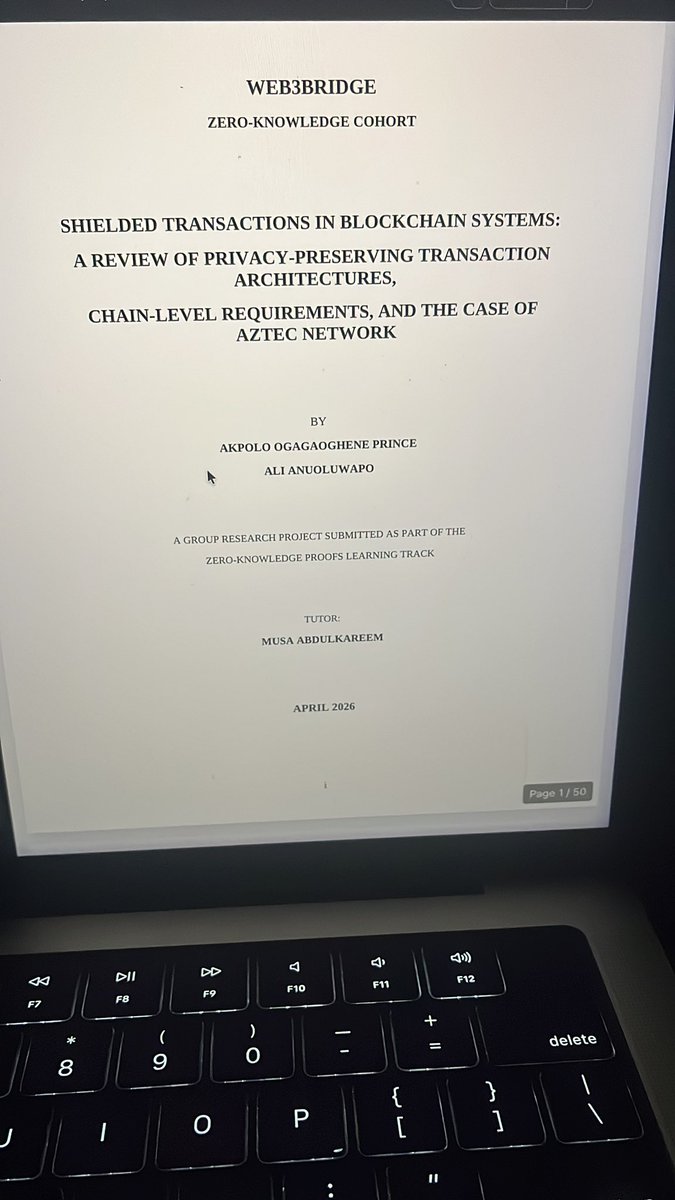
Spent April deep in my ZK project at @Web3Bridge with my teammate @ali_anuoluwapo
Tutor: @WiseMrMusa
Topic: Shielded Transactions
Covered the state of the art, chain-level requirements, mixers and privacy pools, EVM compatibility, and a deep dive on Aztec Network.
To the ZK gurus: please review and tell me what I missed. No one is perfect.
Link 👇
docs.google.com/document/d/1…
#ZK #ZeroKnowledgeProof #BuildingInPublic
@EliBenSasson @Starknet @StarknetAfrica @Stellar_WA @Celo
7
20
414

Apr 24
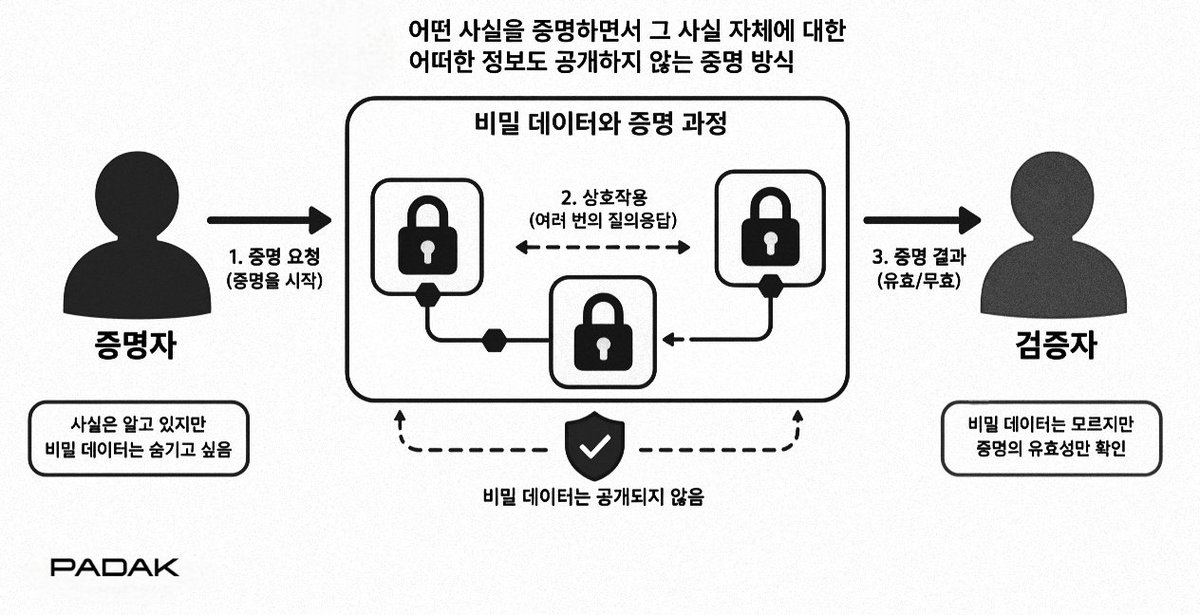
국내 최초로 인간임을 증명하는 것이 왜 중요한지 상세하게 정리하였습니다.
자세한 내용은 파닥페이먼트 공식 블로그에서 확인하실 수 있습니다. blog.naver.com/padakpayment
#영지식증명 #zeroknowledgeproof
1
5
2,737

Apr 22
Day 33/100 of ZK 🔐
Everything started to connect: how ZK moves from computation → structure → algebra → proofs.
It began with barycentric evaluation.
When a polynomial is in evaluation (point-value) form, you don’t need to convert back to coefficients to work with it. You can evaluate it at new points directly and efficiently.
That matters because in ZK, we often stay in this “evaluation world”, it’s faster and fits how modern proof systems operate.
That showed a distinction:
A function is just a mapping.
A polynomial is a structured function.
And over finite fields, different polynomials can represent the same function on a given domain. So what really matters isn’t the exact polynomial, it’s the behavior it satisfies over that domain.
Now connect that to programs:
Every program defines a structure. Constraints that describe how inputs relate to outputs.
In ZK, the verifier doesn’t see the inputs (the witness),
but it does know the structure.
So the goal becomes clear:
prove that your hidden values satisfy the same structure.
But how do we trust that structure algebraically?
This is where Reed–Solomon codes come in.
They add redundancy so we can check that something behaves like a low-degree polynomial, catching errors and enforcing consistency.
And that’s the bridge:
We take computation → express it as constraints → encode it as polynomials → use algebraic checks to verify correctness.
That entire process is arithmetization.
Whether it’s:
• R1CS
• PLONKish systems
• Algebraic Intermediate Representation
• or newer frameworks
They’re all doing the same thing:
Turning programs into algebra so they can be proven.
#ZK #ZeroKnowledgeProof #BuildingInPublic
7
117

Apr 20
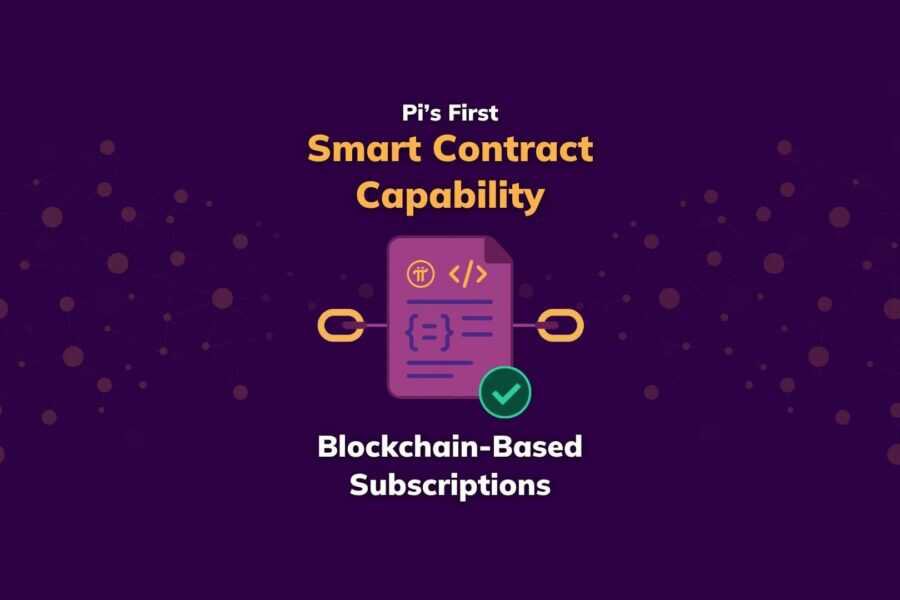
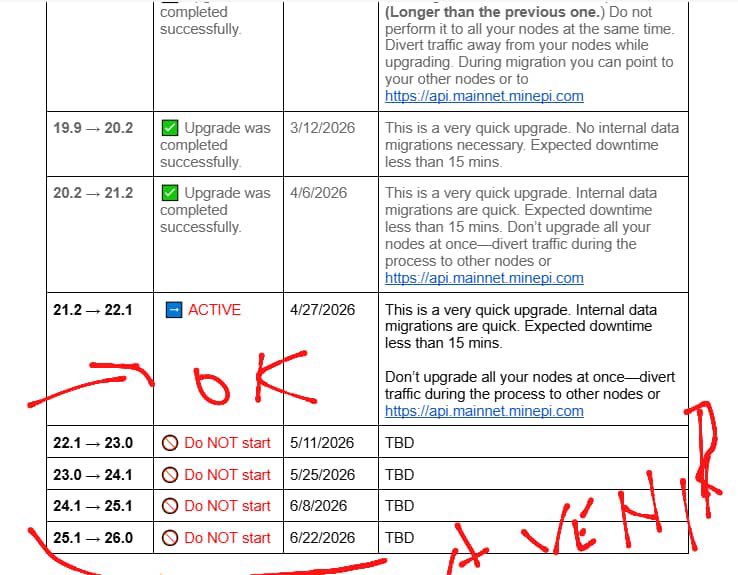
Unveiling Protocol v23: A Game-Changer for Smart Contracts and Payment Structures
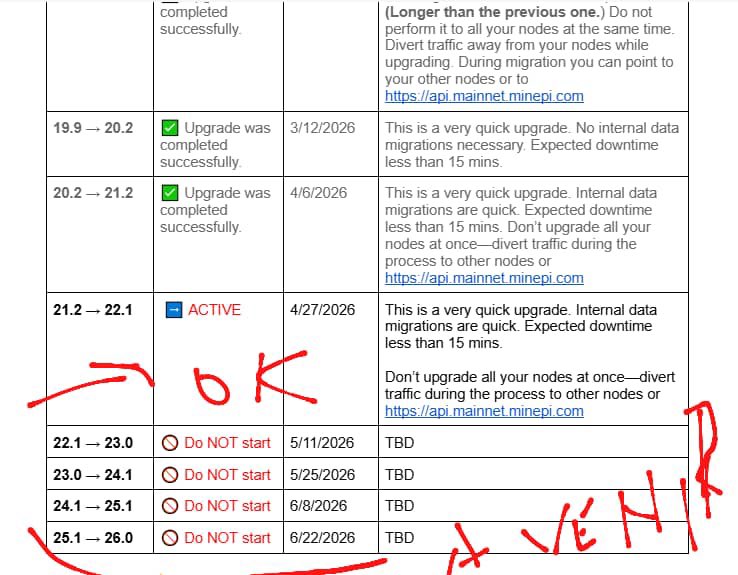
Protocol v23: As soon as, it’s upgraded on 5/11/2026, it’ll mark a significant evolution in the ecosystem, seamlessly integrating advanced smart contracts and innovative payment structures. This version is poised to transform the landscape for merchants, enterprises, and Pioneers alike.
A New Era for Transactions
Protocol v23 is not just an upgrade; it will represent a paradigm shift. It’ll introduce features that cater specifically to the needs of businesses and individuals, making it a vital tool for anyone looking to engage in the Pi Network.
One of the standout innovations in this version is the incorporation of KYC zero-knowledge proof. This cutting-edge technology enhances the legitimacy and security of Know Your Customer (KYC) processes. With zero-knowledge proof, your verification information remains confidential, ensuring that any materials submitted are recorded by a data recorder without retaining any identifiable information.
Looking Ahead
While the roadmap indicates plans for an upgrade to v26 focused on security and optimization, it’s essential to recognize the revolutionary impact of v23. This version lays the foundation for a more secure and efficient ecosystem, making it a critical milestone in the journey of the Pi Network.
In summary, Protocol v23 is not merely an enhancement; it is a transformative protocol that redefines the way transactions occur within the Pi Network, setting the stage for a more secure and user-friendly experience.
#ProtocolV23 #SmartContracts #KYC #ZeroKnowledgeProof #PiNetwork
11
91
3,831

Unveiling Protocol v23: A Game-Changer for Smart Contracts and Payment Structures
Protocol v23: As soon as, it’s upgraded on 5/11/2026, it’ll mark a significant evolution in the ecosystem, seamlessly integrating advanced smart contracts and innovative payment structures. This version is poised to transform the landscape for merchants, enterprises, and Pioneers alike.
A New Era for Transactions
Protocol v23 is not just an upgrade; it will represent a paradigm shift. It’ll introduce features that cater specifically to the needs of businesses and individuals, making it a vital tool for anyone looking to engage in the Pi Network.
One of the standout innovations in this version is the incorporation of KYC zero-knowledge proof. This cutting-edge technology enhances the legitimacy and security of Know Your Customer (KYC) processes. With zero-knowledge proof, your verification information remains confidential, ensuring that any materials submitted are recorded by a data recorder without retaining any identifiable information.
Looking Ahead
While the roadmap indicates plans for an upgrade to v26 focused on security and optimization, it’s essential to recognize the revolutionary impact of v23. This version lays the foundation for a more secure and efficient ecosystem, making it a critical milestone in the journey of the Pi Network.
In summary, Protocol v23 is not merely an enhancement; it is a transformative protocol that redefines the way transactions occur within the Pi Network, setting the stage for a more secure and user-friendly experience.
#ProtocolV23 #SmartContracts #KYC #ZeroKnowledgeProof #PiNetwork
4
32
214
9,158

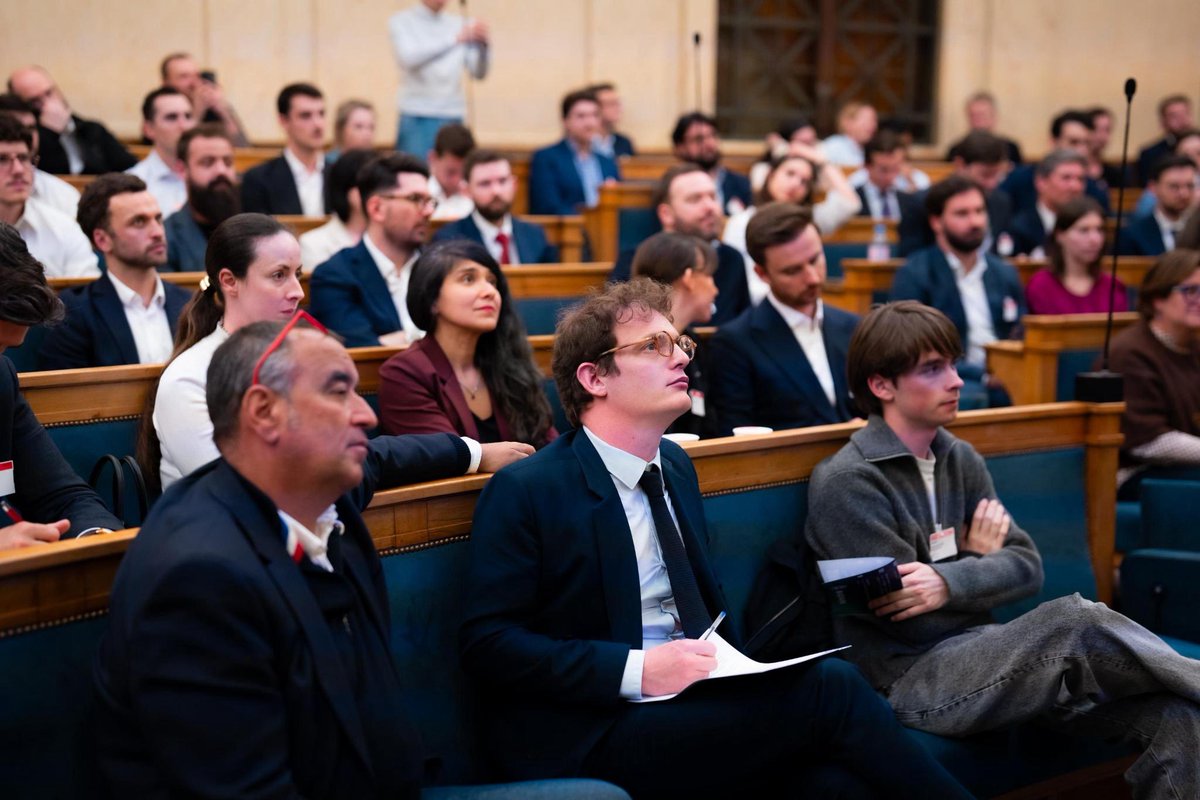
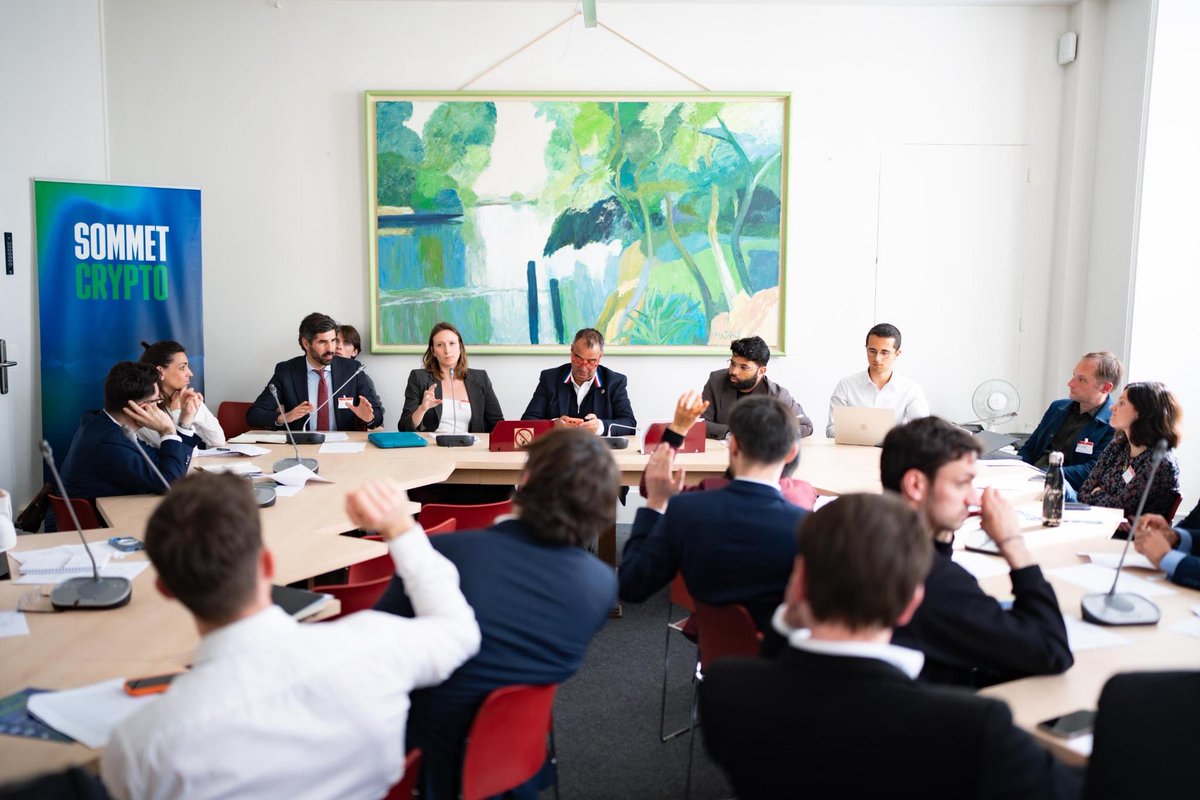
🔐Sommet Crypto organisé par le groupe Renaissance et l’Adan.
Je prenais part au groupe sécurité, explorant plusieurs aspects de rehaussement de la sûreté des personnes ou de la sécurité des données.
✅Chiffrement, ZeroKnowLedgeProof… Des pistes à creuser.
2
7
963
Apr 13
Day 32/100 of ZK 🔐
Today was on Sumcheck. It lets a prover convince a verifier that the sum of a multivariate polynomial over the entire boolean hypercube equals some claimed value, without sending the whole polynomial.
Suppose we have a multilinear polynomial f(x₀, x₁, …, x_{k-1}) over a finite field.
We want to prove:
∑{x₀=0,1} ∑{x₁=0,1} … ∑{x{k-1}=0,1} f(x₀, …, x_{k-1}) = claimed_sum
Naively, the prover would need to send all 2^k evaluations — exponential and impossible for large k.
Sumcheck reduces this to just O(k) communication and O(2^k) work on the prover side (which is still much better when combined with other techniques).
How Sumcheck works (step by step)
The protocol is interactive and runs in k rounds (one per variable):
1. Round 1 (for x₀) Prover sends a univariate polynomial g₀(x) = ∑{x₁…x{k-1}} f(x, x₁, …, x_{k-1}) Verifier checks that g₀(0) g₀(1) equals the claimed total sum.
2. Challenge Verifier sends a random field element r₀.
3. Round 2 (for x₁) Prover now proves that g₁(x) = ∑{x₂…x{k-1}} f(r₀, x, x₂, …, x_{k-1}) Verifier checks g₁(0) g₁(1) = g₀(r₀)
4. Repeat for each variable until the last round.
5. Final check In the last round, the verifier evaluates the final univariate polynomial at the last random point and checks it matches the actual evaluation of f at all the random points chosen so far.
If all checks pass, the verifier is convinced the original sum is correct.
Why Sumcheck is so useful
* Turns exponential sums into a short interactive (or Fiat-Shamir non-interactive) protocol.
* Works beautifully with multilinear polynomials (which we saw in Day 27).
* Forms the backbone of many modern SNARKs and STARKs.
* When combined with KZG or other commitments, we get succinct proofs for huge computations.
#ZK #BuildingInPublic #ZeroKnowledgeProof
2
20
625
Apr 11
Day 31/100 of ZK 🔐
Today we tackled arithmetization, the crucial bridge that turns any computation (code, logic, circuits) into something a zero-knowledge proof system can actually work with: polynomials and algebraic constraints.
Arithmetization is the process of converting a computational statement (like “I know a secret x such that some function f(x) = public output y”) into a set of polynomial equations over a finite field.
Why do we need this?
ZK proof systems (especially SNARKs) are extremely good at proving properties about polynomials, evaluating them, summing them, checking degrees, etc. But real-world programs use if-statements, loops, comparisons, and bitwise operations. Arithmetization “flattens” all that complexity into pure addition and multiplication over numbers in a finite field.
How it usually works (high-level)
1. Represent the computation as a circuit Break the program into gates: addition gates, multiplication gates, and sometimes custom gates.
2. Turn gates into constraints Each gate becomes one or more polynomial equations that must equal zero if the computation is correct.
Common arithmetization schemes we discussed:
* R1CS (Rank-1 Constraint System) — Classic and widely used (Groth16). Every constraint looks like: (A · w) × (B · w) = C · w where w is the witness vector (private public inputs).
* Plonkish (used in PLONK and friends) — More flexible. Uses selector polynomials and custom gates so you can express complex operations with fewer constraints.
* AIR (Algebraic Intermediate Representation). Used in STARKs, focuses on transition constraints over execution traces.
Once the computation is arithmetized into polynomials, we can:
* Commit to those polynomials (e.g., using KZG from the last few days)
* Use sum-check or other protocols to prove the polynomials satisfy all the constraints
* Prove the public output is correct without revealing the private inputs
Why this step is so important
Without good arithmetization, the proof would be huge or extremely slow. Efficient arithmetization keeps both the proof size and verification time small, which is the whole point of succinct ZK proofs.
#zk #BuildingInPublic #ZeroKnowledgeProof
15
446
Mar 24
Day 29/100 of ZK 🔐
Today we finished the core of KZG polynomial commitments by walking through the last two steps: proving an evaluation and verifying it.
Quick recap from yesterday:
* Trusted setup gives us the structured reference string (SRS): powers [τ⁰]₁, [τ¹]₁, …, [τ^d]₁ in G₁ and corresponding powers in G₂.
* Commitment to a polynomial f(x) of degree ≤ d is C = [f(τ)]₁ — one group element.
Step 3: Proving an evaluation
Verifier sends a random challenge a (usually via Fiat-Shamir hash of previous messages).
Prover wants to show f(a) = b.
Compute the quotient polynomial:
q(x) = (f(x) - b) / (x - a)
Since f is degree ≤ d and (x - a) is degree 1, q has degree ≤ d-1.
The proof is simply π = [q(τ)]₁ ∈ G₁ — again, a single group element.
Step 4: Verification
Verifier checks one pairing equation:
e(π, [τ - a]₂) = e(C - [b]₁, [1]₂)
This holds if and only if f(τ) - b = (τ - a) · q(τ), which is true exactly when f(a) = b.
Pairings are bilinear, so the equality checks the polynomial identity without ever seeing f or q.
Why this is so powerful
* Commitment = 1 group element
* Proof = 1 group element
* Verification = 1 pairing check (fast on modern hardware)
* Security rests on the q-SDH assumption (q-Strong Diffie-Hellman) — no known attacks when τ stays secret.
We also talked about why the random challenge a is essential: without it, a malicious prover could precompute fake proofs for fixed points. Fiat-Shamir turns the interactive challenge into a non-interactive hash, making the protocol secure in the random-oracle model.
@Oba_Ddev
#ZeroKnowledgeProof #BuildingInPublic
3
2
19
593
Mar 23
Day 28/100 of ZK 🔐
Today we started implementing KZG (Kate-Zaverucha-Goldberg) polynomial commitments — the succinct, pairing-based commitment scheme that powers many zk-SNARKs and is a cornerstone for proving polynomial evaluations efficiently.
KZG is built around four main steps. We covered the first two today.
1. Trusted setup (powers of tau) A trusted party (or multi-party ceremony) generates a secret random value τ and computes powers of it: SRS = { [τ⁰]₁, [τ¹]₁, …, [τ^d]₁ , [τ⁰]₂, …, [τ^d]₂ } where [·]₁ means point in G₁ and [·]₂ in G₂ (pairing-friendly elliptic curve groups). These powers are the structured reference string (SRS), which is public and reusable for all polynomials up to degree d. τ is called “toxic waste” because anyone who knows τ can forge proofs. If τ leaks, an attacker can create fake polynomial evaluations that pass verification. So every participant in the ceremony adds their own randomness to τ, then permanently deletes their share. No single person ever knows the final τ. If even one contributor deletes properly, the secret stays safe forever.
2. Commit to a polynomial Given a polynomial f(x) = f₀ f₁x f₂x² … f_d x^d of degree ≤ d, the commitment is: C = f₀[τ⁰]₁ f₁[τ¹]₁ … f_d[τ^d]₁ = [f(τ)]₁ ∈ G₁ This is just a single group element — constant size, no matter how large the polynomial is.
The next two steps (coming soon) are:
3. Prove an evaluation
4. Verify
Why KZG matters in ZK:
* Commitments and proofs are tiny (constant size)
* Verification is extremely fast (one pairing)
* It enables succinct proofs for arithmetic circuits, lookup tables, and many other building blocks in zk-SNARKs.
KZG is like locking a giant spreadsheet into a single tiny safe. You seal it once (commit), then prove “the number in cell B47 is exactly 7” with a tiny proof without ever opening the safe or showing the spreadsheet. The verifier trusts it because the math can’t be cheated unless someone stole a secret that should have been destroyed.
#ZeroKnowledgeProof #BuildingInPublic
10
248
Mar 20
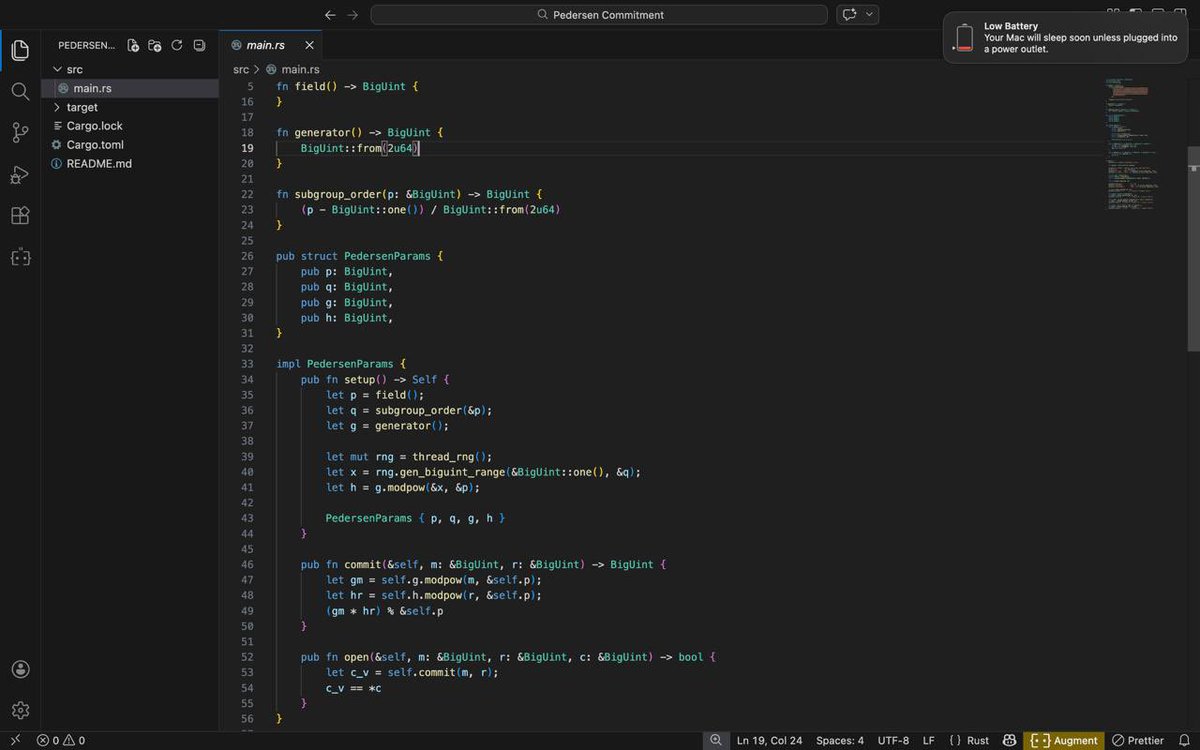
Day 27/100 of ZK 🔐
Today we implemented Pedersen commitments, a cryptographic primitive for hiding values while allowing later opening, widely used in ZK for commitments, range proofs, and bulletproof-style arguments.
A Pedersen commitment lets you commit to a value m with a random blinding factor r so that the commitment C hides m perfectly (hiding property) and you can’t change your mind later (binding property under discrete log hardness).
The math is simple:
C = g^m · h^r mod p
where g and h are generators of a large prime-order subgroup, and the discrete log between g and h is unknown (h = g^x for secret x).
* To commit: pick random r, compute C above.
* To open: reveal m and r; verifier checks C == g^m · h^r mod p.
Because of the unknown relation between g and h, an attacker can’t extract m from C, and can’t find a different m' and r' that give the same C (unless they solve DL, which is hard).
#ZeroKnowledgeProof #BuildingInPublic
1
2
14
178