


It was too basic and it seems the maintenance was too slow. I've been waiting like 3 years on an Issue, that is stuck because of OpenApi, while .net allows to have custom HttpMethods. Won't miss it.
787

📌 Final Thought
Even if you’ve patched your main vulnerabilities, forgotten HTTP methods can be an open backdoor. Audit them, disable what you don’t use, and protect the rest.
#CyberSecurity #BugBounty #WebSecurity #Pentesting #RandomRedGuy #HTTPMethods #WebAppSecurity
439

27 Jul 2025
REST APIs use HTTP methods (GET, POST, PUT, DELETE) for different actions on resources. Makes building web apps way easier! #RESTAPI #RESTful #HTTPMethods
1
11

16 May 2025
HTTP Request Methods explained
Watch now: youtube.com/watch?v=MEhaAqBb…
#http #HTTPMethods #WebProtocols #InfosecTrain

6

9 May 2025
Master HTTP methods—GET, POST, PUT, DELETE are your verbs in backend development.#HTTPMethods #WebDev #RESTful
11
8 May 2025
HTTP methods like GET, POST, PUT, DELETE are the verbs of your API world. #HTTPMethods #RESTBasics #WebDev
14

30 Apr 2025
Understanding these methods is essential for developers, security professionals, and anyone interested in the mechanics of web interactions.
infosec.withsubhankar.com/20…
#CyberSecurity #httpmethods #server
24

10 Apr 2025
uploads via PUT, and the files are interpreted (e.g., .php, .js), you might achieve remote code execution.
💥 Watch for:
Old Apache/Nginx configs
Misconfigured S3 buckets
Internal dev APIs exposed by mistake
#bugbountytips #bugbounty #httpmethods #websec #rce
108

12 Mar 2025
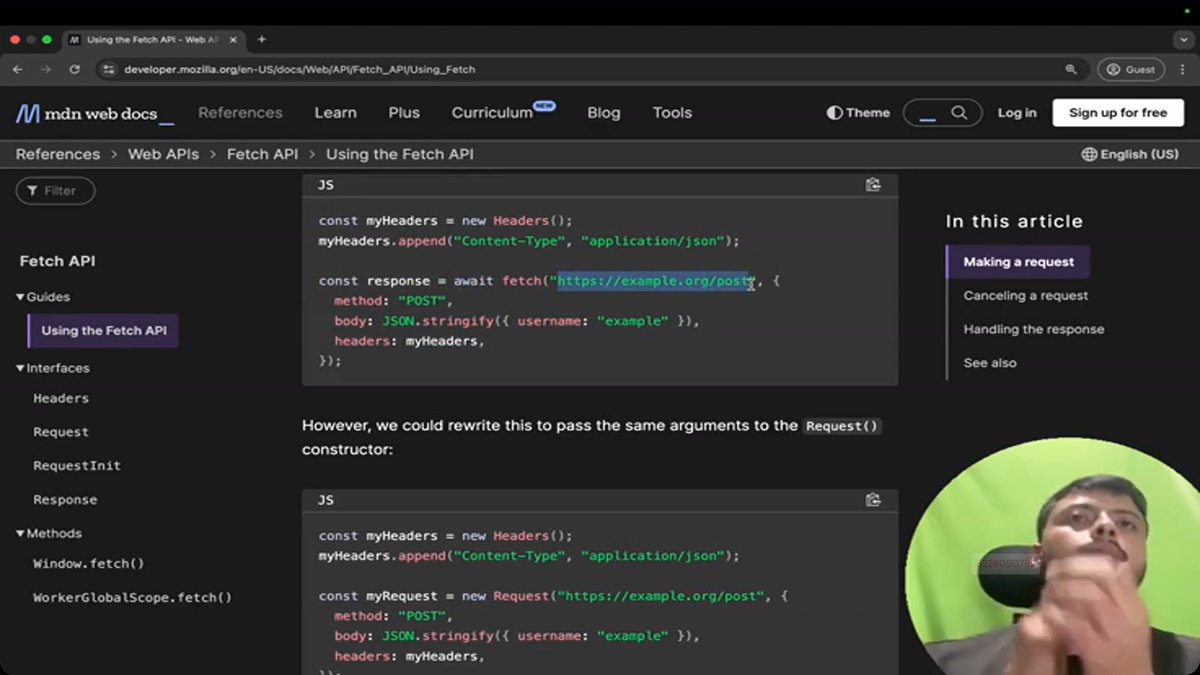
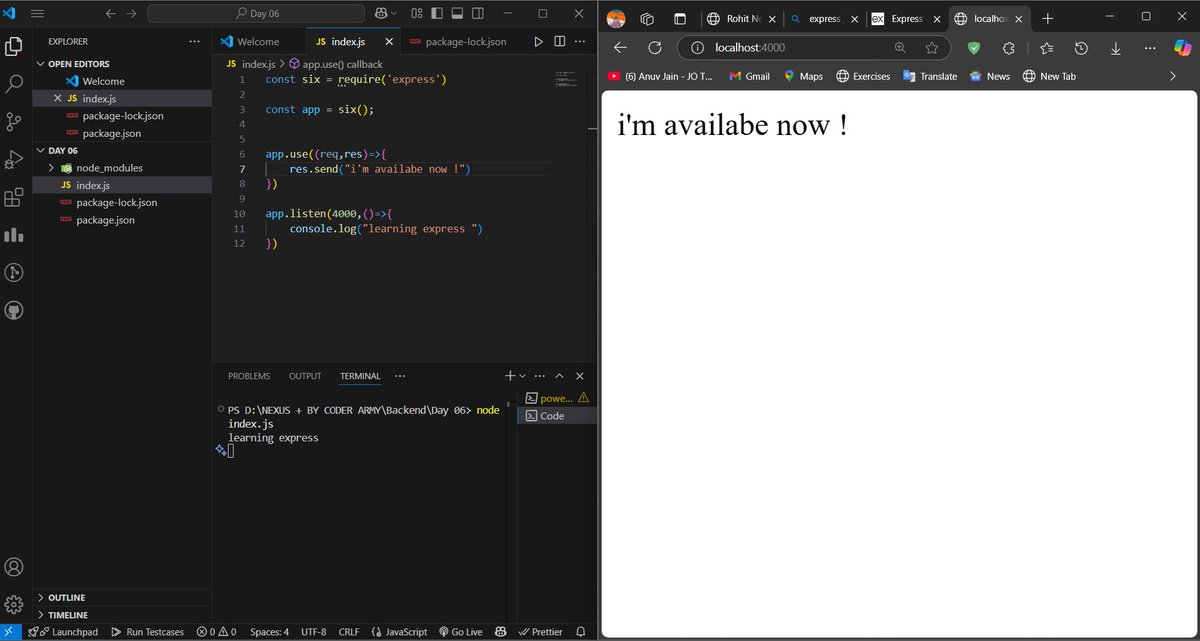
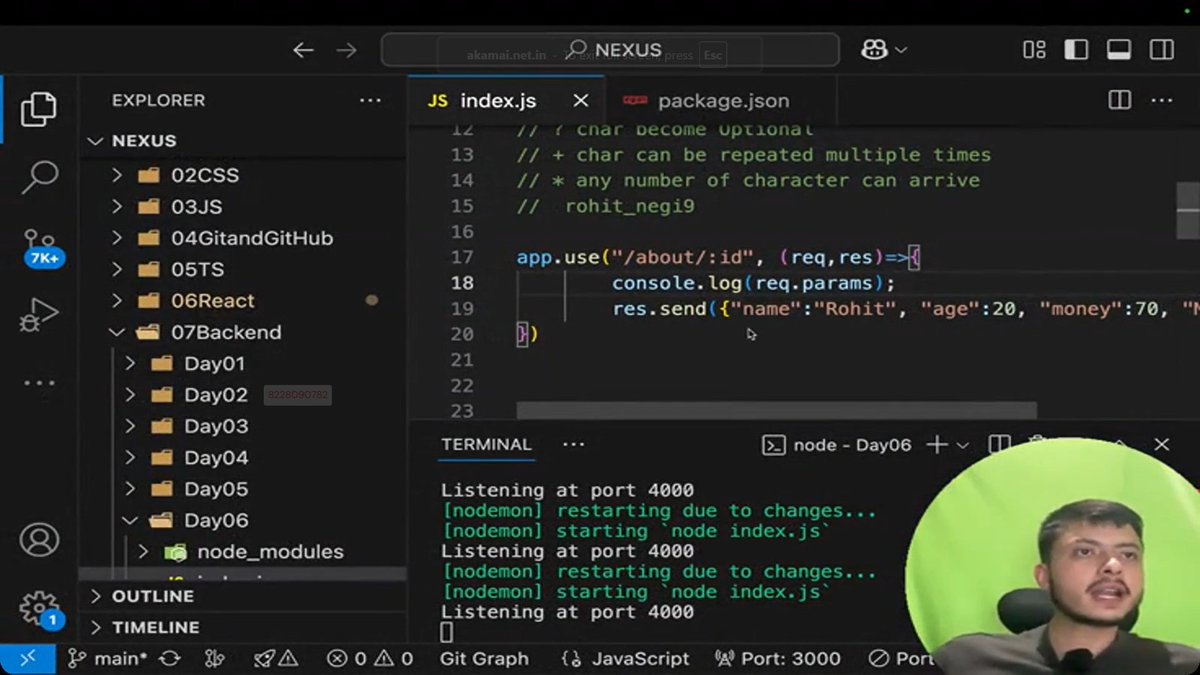
🚀 #Day105 of #WebDev & #Blockchain 🌐
Highlights:
HTTP Methods: GET, POST, PUT, PATCH, DELETE
CRUD Operations & REST APIs
Creating servers & using params in Express
Installing Express & Nodemon
Express Router symbols: ?, , *
#HTTPMethods #CRUD #RESTAPI #Express #Nodemon
1
33

25 Feb 2025
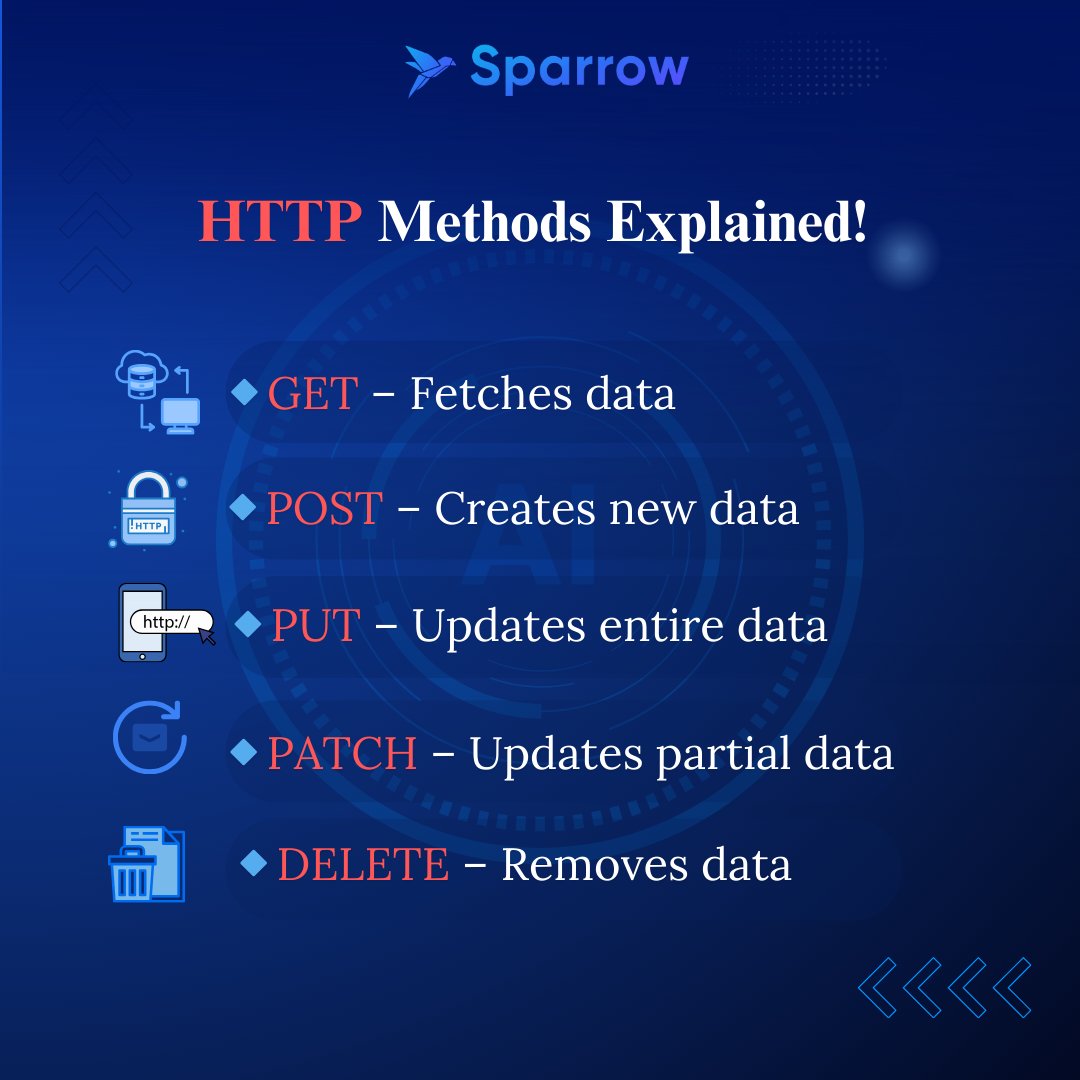
"Master HTTP methods like a pro! Which one do you use the most? 🤔"
🔗 #HTTPMethods #APIBasics #SparrowForDevs #LearnWithSparrow
1
14

14 Feb 2025
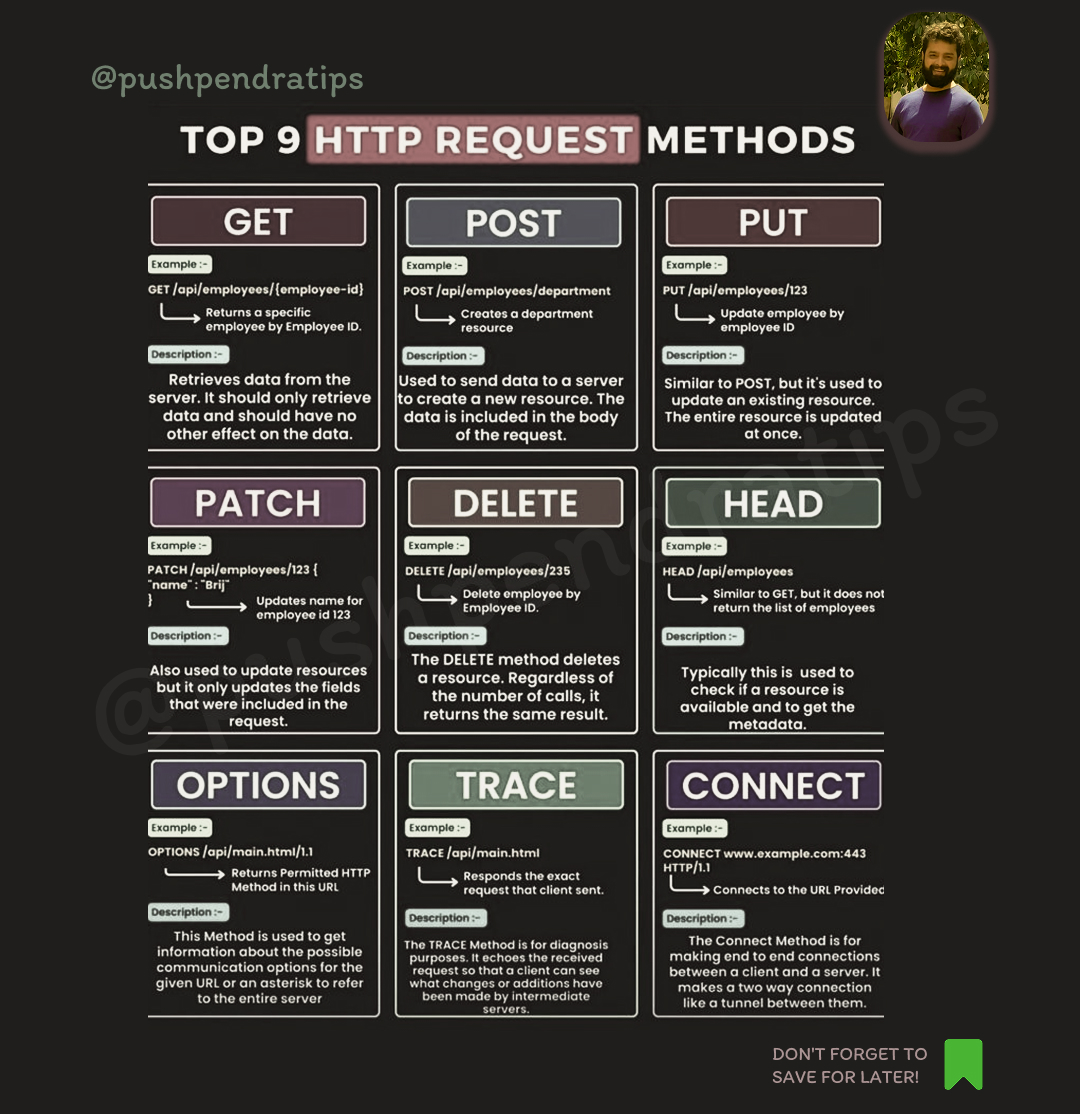
🚀Here are the top 9 HTTP request methods:
GET 🏗️ – Retrieves data from the server (e.g., fetching a webpage).
POST 📤 – Sends data to the server (e.g., submitting a form).
PUT 🔄 – Updates or replaces a resource on the server.
PATCH 🛠️ – Partially updates a resource.
DELETE 🗑️ – Removes a resource from the server.
HEAD 👀 – Similar to GET but only retrieves headers, not the body.
OPTIONS ❓ – Describes the communication options for the target resource.
CONNECT 🔌 – Establishes a tunnel to the server (used for HTTPS).
TRACE 🔍 – Performs a loopback test to see how requests are being processed.
#HTTPMethods #WebDevelopment #APIRequests #RESTAPI #WebDev #FetchData #ReadRequest #SendData #CreateRequest #UpdateData #ReplaceRequest #ModifyData #PartialUpdate #RemoveData #DeleteRequest #HeaderOnly #LightRequest #CheckMethods #APIOptions #SecureTunnel #ProxyRequest #DebugRequest #LoopbackTest #http #methods #coder #coding
30
9
39
1,065

26 Jan 2025
🚀 New Video Alert: HTTP vs HTTPS Explained!
In today’s video, I break down the basics of HTTP and HTTPS and provide practical examples.
👉 Watch here: youtu.be/IK_j4BfF6p8?si=Y0kL…
#Cybersecurity #HTTPvsHTTPS #HTTPMethods #HTTPStatusCodes #NetworkingBasics #WebSecurity
12

2 Jan 2025
🔥 The HTTP Methods You Don’t Fully Know!
🎥 Watch now: buff.ly/4a18cIR
💭 Why doesn’t DELETE always delete?
💭 How does TRACE reveal your request’s journey?
💭 PATCH vs. PUT: Which saves time & bandwidth?
Discover:
💡 CONNECT: Your go-between for restricted servers.
💡 TRACE: The ultimate debugging tool.
💡 DELETE: The surprising truth behind data erasure.
🚀 Ready to level up your HTTP game? Watch now!
#HTTPMethods #WebDev #LearnWithPurpose #CONNECTMethod #TRACEMethod

42
31 Dec 2024
Part 2 of HTTP Methods Is Here! 💫
👉 Click to Watch Now: buff.ly/3BPZEYI
If you thought HTTP Methods ended at GET, POST, PUT, HEAD, and OPTIONS, think again! The second part of our HTTP Methods series dives into the lesser-known but powerful methods you need to know as a developer:
🔌 CONNECT: Build tunnels for secure communication.
✏️ PATCH: Modify parts of a resource without replacing the whole.
🔍 TRACE: Debug your requests with precision.
🗑️ DELETE: Remove resources efficiently and securely.
💡Why You Can’t Afford to Miss This Video
- Learn how PATCH can save you time when updating resources.
- Understand the security implications of DELETE and TRACE.
- Discover how CONNECT enables secure connections for your apps.
#FkTeaches #HTTPMethods #WebDevelopment #LearnWithPurpose #TechTips #APIDesign
1
40
30 Dec 2024
🛑 Don’t Be That Developer
You know, the one who ignores HTTP Methods and misuses POST for updates or GET for data deletion (yikes!).
This series ensures you’ll always use the right method for the job—and impress your team while doing it.
👉 Click to Watch Part 2 Now: buff.ly/3BPZEYI
Missed Part 1? Catch up here: buff.ly/3ZBq21O
Which HTTP Method has been the trickiest for you to master? Let’s discuss in the comments!
#FkTeaches #HTTPMethods #WebDevelopment #LearnWithPurpose #TechTips #APIDesign
1
55

24 Dec 2024
#Applications #Apps #API #GraphQL #REST #Project #RepresentationalStateTransfer #Design #NetworkBased #Software #HTTPmethods #Resource #URL #Endpoint #CRUD #Stateless #Information #Client #Server #QueryLanguage #Data #SingleEndpoint #FlexibleQueries #OverFetching #Schema #Errors
1
1
2
45

24 Dec 2024
Disabling unused HTTP methods reduces the application’s attack surface.
#HTTPMethods #WebSecurity #AttackSurfaceReduction
1
9
23 Dec 2024
Understanding POST: The Workhorse of HTTP Methods
👉 Dive deeper: buff.ly/3ZBq21O
POST is your go-to for sending data—handling file uploads, form submissions, and resource creation.
POST’s Checklist:
📦 Request Body: Always required.
🔄 Non-Idempotent: Can create duplicates.
✅ Response Body: Returns data like confirmations.
🔒 Not Safe: Modifies server state.
❌ Not Cacheable: Unless configured.
✅ HTML Form-Friendly: Perfect for submissions.
How do you use POST in your projects?
#FkTeaches #HTTPMethods #WebDev #POSTMethod #LearnWithPurpose
2
1
43
21 Dec 2024
What’s the Deal with Multipart Form Data?
Dive into more on this and other essential HTTP concepts! 👉 Watch Now: buff.ly/3ZBq21O
Here’s a question for you: Have you ever wondered how files, images, and text are sent together in a single request while working on web forms or APIs?
This is where multipart form data comes into play! It allows developers to send mixed content—like a resume (file), user bio (text), and profile picture (image)—all in one go.
But here’s the real question:
➡️ Do you truly understand how multipart form data works and why it’s crucial for handling file uploads efficiently?
#FkTeaches #HTTPMethods #MultipartFormData #WebDevelopment #LearnWithPurpose #TechInsights
37