
Responsible Statecraft/Epoch Times/NR Writer, -Nat'l defense, Politics, Christ Follower, married!, Padres, Petty, Zeppelin, Floyd, FB Patriots, Trump Wins!
Joined May 2010
- Tweets 4,244
- Following 1,296
- Followers 2,153
- Likes 1,614
219 Photos and videos








Apr 20
19 out of 20. Didn't actually use Walkman, but did use Walkman type devices.
Apr 20

7 for me!!….I feel confident nobody
Has all 20!!
How many for you?🤔

37
Apr 10
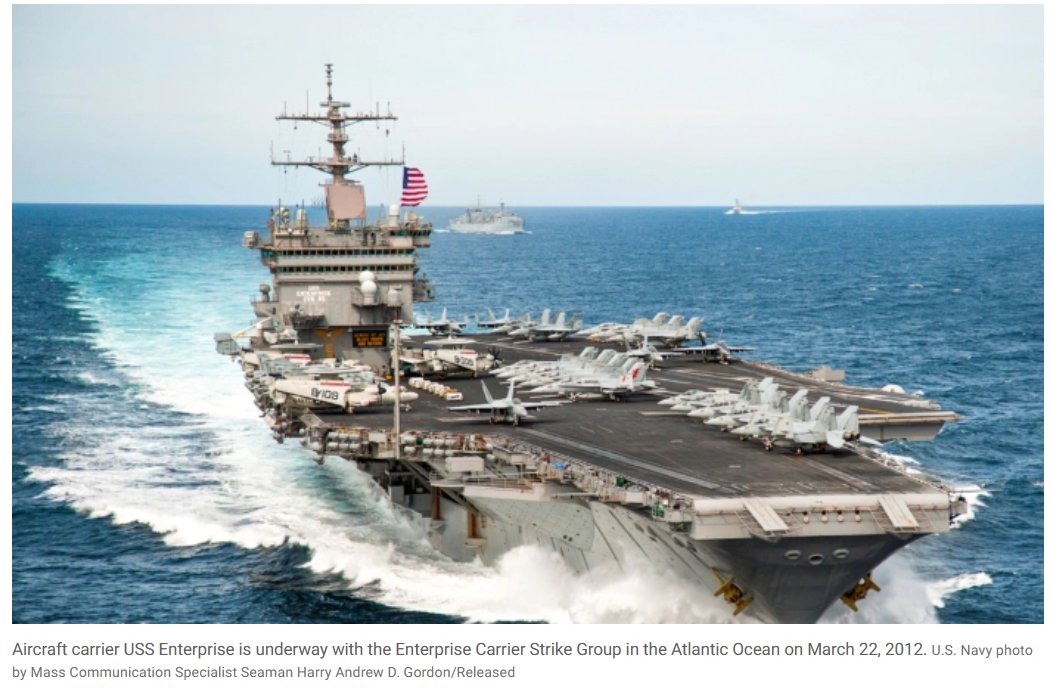
Green Tech Takes Down $15 Billion Dollar Supercarrier
Back itn 2010 the Navy undertook a green initiative to standardize on ozone-based laundries. My analysis shows this initiative to be more about virtue signaling about being green, than improving our ships.
mikesdefensetalk.substack.co…
@Loveof1776 @realBruceBallou @WarsawErik @KMW_SaveAmerica @RobGreen1010
@PatriotPointman @commiepommie @MelaertsMa72061 @AdameMedia @C__DiLorenzo
@starsandstripes @thesiriusreport @beverstine @MZHemingway @TheInsiderPaper @JetPhotos @WallStreetMav @eurodolar1980x @Angry_Staffer @The_Real_Fly @insiderpolitics @WholeMarsBlog
@theblaze @NavyLookout @lib_crusher @ValerieInsinna @CreasonJana @Aviation_Intel @stillgray @ForumStrategic @alpha_defense @richgel999 @NavyLookout @lib_crusher @ValerieInsinna @CreasonJana @Aviation_Intel @stillgray @ForumStrategic @alpha_defense @richgel999 @NavyLookout @TheLegateIN @Lowkey0nline @LCPEvents @leslibless @WolfBronsky @Last24Report
1
92
Mar 6
Thune's stance on the Filibuster is nonsensical as the Democrats would get rid of it in a picosecond if they had the House, the Presidency and the Senate. He has got to know that.
He is sabotaging the Country and he should be removed from leadership right now. Sadly, the Senate is controlled by the McConnell wing of the party and that is not going to happen.

🚨BREAKING: Would you support FIRING Senate Majorty Leader John Thune if the SAVE Act doesn’t pass ?
A. Hell yeah
B. No
IF Yes, Give me a THUMBS-UP👍!!
MAKE THIS GO VIRAL ON 𝕏. LET’S GO 👏

39
Mar 5
Coryn is one of Thunes top supporters in the Senate and Thune is the number one impediment to getting rid of the filibuster and passing the Save America Act. Further, it seems likely most of Wesley Hunt's supporters will shift to Paxton in the primary.
BTW: Coryn had to spend $70 million to eke out a win in the primary and likely would have lost outright if Wesley Hunt had not been in the race.

The Save America Act is the most important bill the U.S. Senate could ever pass, and I'm committed to helping President Trump get it done.
I would consider dropping out of this race if Senate Leadership agrees to lift the filibuster and passes the SAVE America Act.
John Cornyn is a coward who has refused to support abolishing the filibuster to pass this bill. Now, Fake News reporters and the establishment are trying to destroy me with misinformation.
The truth is clear: No one has been more loyal to Donald Trump than me—fighting the stolen 2020 election, being in Mar-a-Lago when he announced his 2024 campaign, and standing with him in NY in the face of lawfare.
For the good of our country and for the good of passing President Trump's agenda, I am determined to help him get this done.
1
30
Mar 5
Great analysis. If the U.S. and Israel can destroy all the launchers, or scare Iranian's away from operating them, then its game over for Iran's ability to hit back. But I will reserve judgement on just how certain it is that all the launchers can be destroyed and how quickly as Israel got hit with a whole lot of missiles last night.
Time will tell.
Mar 5

What’s the most important factor that will determine who wins the war with Iran? Not whatever is in the headlines and not what the pundits on TV are talking about the loudest.
The U.S. military released the attached battle camera footage of Iranian missile launchers being destroyed. “We are finding and destroying these threats with lethal precision,” it said. Look closely. The video is not just documentation of a strike. It is part of the fight. The most important part.
The purpose is psychological. The message is directed at the men who operate Iran’s missile launchers: we can find you and kill you.
Reports now say that IRGC personnel assigned to launcher units have begun abandoning their posts out of fear of targeted attacks and are refusing to return. The United States and Israel have circulated multiple videos of launcher strikes—some broadcast inside Iran—apparently to reinforce that fear and encourage further defections. If these reports are indeed accurate and not simply psychological warfare, they represent the most encouraging development of the war so far.
Why? Because they strike directly at the core of Iran’s strategy.
Tehran’s plan is to exploit “overmatch” by launching massive waves of missiles and drones to saturate air defenses. The goal is simple: exhaust interceptor stockpiles faster than they can be replenished and force a premature end to the conflict.
That is how the regime aims to survive. And it defines survival as victory.
The war is therefore a race: will Iran’s launch capacity be neutralized first, or will U.S. and Israeli interceptor inventories run out first?
Iran possesses a large missile arsenal stored in deep underground “missile cities.” These facilities protect the missiles themselves, but their entrances and supporting infrastructure remain vulnerable. Destroy the launchers, the crews, and the access points—and the missiles cannot be fired.
The pressure on defensive stockpiles is real, even if American and Israeli officials will never admit it publicly. In sustained conflict, munitions run out. In Ukraine, for example, a temporary shortage of AIM-9 Sidewinder missiles recently forced Ukrainian F-16 pilots to rely on less effective weapons for downing drones until resupply arrived.
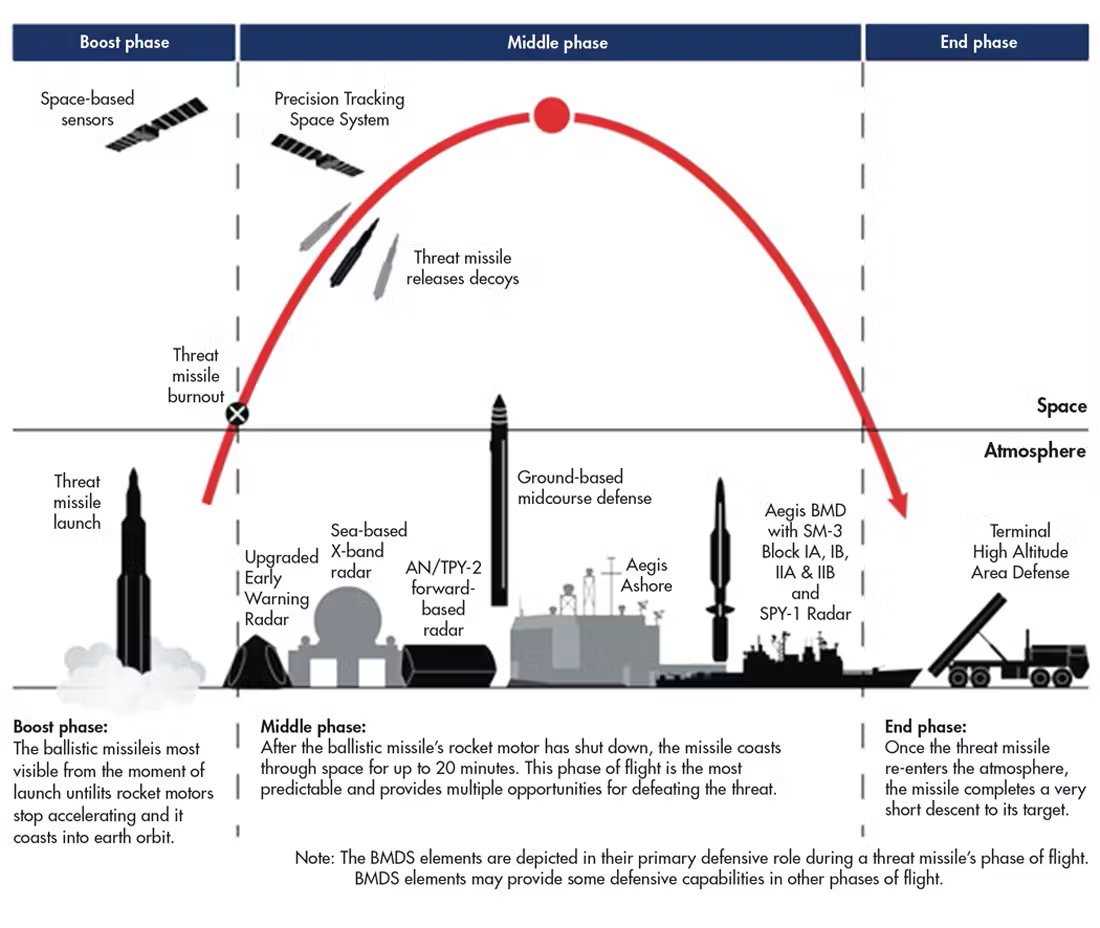
In the Middle East, interceptor systems such as THAAD are being consumed rapidly by Iranian barrages while production struggles to keep pace. The shortage will never be acknowledged openly, but it is constantly on the minds of American and Israeli planners.
Which brings us back to the most important variable in this war: Iran’s launchers and launch crews.
Iran’s strategy depends on trained teams willing to operate exposed launchers under constant threat of immediate attack. If those crews are abandoning their posts—as current reports suggest—then Iran’s ability to execute its overmatch strategy collapses.
That is the indicator to watch:
• Are launch crews returning to their systems?
• Are launchers continuing to be destroyed?
• Are access points to missile depots being sealed?
Those answers—not the daily headlines—will determine the outcome of the war.
1
3
96
Jan 30
So, far so good. Don't see any major problems. Border sealed and she is implementing President Trump's aggressive efforts to get illegals out of the country. Of course because she is doing that she is going to be a target.
Perfect? No, but I suspect that anyone in her position would have been subjected similar criticisms.
Jan 29

Be Honest
How would you rate Kristi Noem’s performance so far? 0-100

51
Mike Fredenburg retweeted

Jan 29
Be Honest
How would you rate Kristi Noem’s performance so far? 0-100
1,958
127
1,833
63,370
Jan 29
Dem Incitement and refusal to condemn calls for violence and violence from protestors makes it dangerous for everyone.
Bottom line, not one of the shootings would have happened if people were protesting peacefully.
theepochtimes.com/opinion/th…
27
Jan 29
Absolutely not, Congress is incapable of this kind of negotiation. It needs to be the President. I like Rand Paul, but his view on tariffs is based on Utopian economics, not the real world.
Jan 28

🚨BREAKING: Senator Rand Paul (R-KY) just proposed a bill that would REQUIRE the President to get Congressional approval for new tariffs.
Do you support this bill?
YES or NO?
Yes , Give me a Thumbs-Up 👍

33
Jan 24
National Interests Dictate That the US–Greenland Relationship Be Redefined
The Cold-War 1951 U.S.–Denmark defense agreement does not meet U.S. needs in the Great Power competition for the Arctic.
For more on this see:
theepochtimes.com/opinion/na…
@BehizyTweets @MAGAVoice @WorldHallOfFun @bennyjohnson @IanJaeger29 @TomDansCFA @ghost_warrior34 @CollinsforTX @DoctorCanDo @Huberton @JewishWarrior13 @johnnymaga @ProudElephantUS @JKash000 @WillTVF @TheRebelPatient @texan_maga @ashtonparrish76 @DivintyMary @VikingMAGA @LiberTasWar79 @4Mischief @CrazyVibes_1 @RedWave_Press @MAGA__Patriot @OV_Matter @SaveUSAKitty @TalkMullins @M_B_Bolinge @CUBANNAT0R @charliekirk11 @MrAndyNgo @82ndairborneBT @ElectionWiz @krassenstein @MAGAmegaMAGA @MagaPrimary2026 @DebraMoge @TheInsiderPaper @AureliusFuture
2
2
208
Jan 23
Babying and Coddling the F-35 may temporarily lower costs, but it does so at the expense of pilot skill and proficiency.
To learn how this all works see:
responsiblestatecraft.org/co…
@krassenstein @jjauthor @RAF_Luton @DanielMeier_ @MelissaRedpill @ButchJocson @KidKool4U @twgjames @dferrer520 @GSchifanelli @seacaptainjohn @Tiggeronmv @MarioNawfal @CynicalPublius @belliott123 @hodgetwins @jessalanfields @capitalnewshq @WillGran @OmarSRivero1 @FernOnX @Asecretary @DrDigitalDave @corsijerome1 @Antiheros1984 @Ravious101 @langdaleca @MikeCrispi @SirJohnSamsa
1
7
272
Jan 23
Coddling the F-35 to hide just how truly unreliable and costly it truly is.
The plane’s extreme unreliability has resulted in full mission capable rates (FMC) of only 36.4% , 14.9%, and 19.2% for the F-35A, F-35B, and F-35C, respectively. For F-35Bs and F-35Cs, only the newest planes have full mission availability rates above 10%.
But if the services weren't coddling F-35s, things would be worse . To learn more see:
responsiblestatecraft.org/co…
@Loveof1776 @realBruceBallou @WarsawErik @KMW_SaveAmerica @RobGreen1010
@PatriotPointman @commiepommie @MelaertsMa72061 @AdameMedia @C__DiLorenzo
@starsandstripes @thesiriusreport @beverstine @MZHemingway @TheInsiderPaper @JetPhotos @WallStreetMav @eurodolar1980x @Angry_Staffer @The_Real_Fly @insiderpolitics @WholeMarsBlog
@theblaze @NavyLookout @lib_crusher @ValerieInsinna @CreasonJana @Aviation_Intel @stillgray @ForumStrategic @alpha_defense @richgel999 @NavyLookout @lib_crusher @ValerieInsinna @CreasonJana @Aviation_Intel @stillgray @ForumStrategic @alpha_defense @richgel999 @NavyLookout @TheLegateIN @Lowkey0nline @LCPEvents @leslibless @WolfBronsky @Last24Report
1
4
250
Jan 23
Kicking the Can Down the Road on F-35 Costs and Unreliability
Fewer sorties and flight hours kick maintenance down the road, hiding performance issues and taking valuable flight time away from pilots.
To learn more see: responsiblestatecraft.org/co…
@hemingquay @clemente3000 @IndoPac_Info @LensOfMae @CureBore @MyLordBebo @imetatronink @NuryVittachi @aviationbrk @ShivAroor @KAANTF_23 @point_luck @Fighterman_FFRC @amborin @Doha104p3 @RealAirPower1 @Doha104p3 @SprinterObserve @StacyOnTheRight @Osint613 @RadarFennec @zerohedge @lifepeptides @TheBaseLeg @squatsons @Jkylebass @DD_Geopolitics @clashreport @bizjetsofwar @Forbes @Doha104p3 @VinodDX9 @peterajacobs @fakemykola @Loveof1776 @realBruceBallou @WarsawErik @KMW_SaveAmerica @RobGreen1010 @itcantbeajoke @Quantumwatch1 @jazzman93063 @CDNPosts @StableGeniustm @realMKOrts
9
24
74
8,660
Jan 23
Is U.S. Military coddling the F-35 to hide just how unreliable and expensive it is?
There is strong evidence that if the F-35 was not micromanaged in terms of its sorties and the kind of stresses allowed on it during training it would be looking even more unreliable and costly than it already does.
To learn how the services are pushing now year costs into future year costs read:
responsiblestatecraft.org/co…
@DaleStarkA10 @TopFighterPilot @AbrahamHamadeh @AviationFix @Morbidful @BeastAntares @WJakeStateFarm @MAC_VSOG @CcibChris @BollingerTodd @RockRated1 @DocStrangelove2 @kadonkey @MassiasThanos @CcibChris @sofrepofficial @NikolaTesla_1 @Scobra642 @USA2224 @USA2224 @Maximus_ForEVR @0ldManStoneZone @DrMarkStano @trumplicans2024 @UsaDon777 @NavyVeteranMAL2 @64NAVY68 @mrrseriously
2
5
168
Jan 2
Including Railgun in Trump Class Battleship design could sink it.
Ship mounted railguns are not viable for the foreseeable future and dumping billions into R&D cannot create fundamental scientific advances on schedule.
Railguns are far less powerful than modern propellant guns on a per ton of displacement basis and the technology for a viable naval railgun's does not exist,
For more details see my unabridged Substack article:
mikesdefensetalk.substack.co…
For a more concise, less technical version see my Epoch Times version: theepochtimes.com/opinion/ne…
@SECNAV @themagaking @BillWhittle @WarPath2pt0 @USNINews @BillWhittle @BattleshipNJ @BlackSouthener @MAGAShagster @HiddenHistoryYT @pati_marins64 @nicksortor @Sir_Charlsss @USN_Submariner @Redhead4645 @David_in_DFW @bpridgeo @Surflick @DerekWadeWeller @ButtheadXsol @ThatKindWarrior
3
1
8
584
Jan 1
Including Railgun in Trump Class Battleship design could sink it.
Ship mounted railguns are not viable for the foreseeable future and dumping billions into R&D cannot create fundamental scientific advances on schedule.
Railguns are far less powerful than modern propellant guns on a per ton of displacement basis and the technology for a viable naval railgun's does not exist,
For more details see my unabridged Substack article:
mikesdefensetalk.substack.co…
For a more concise, less technical version see my Epoch Times version: theepochtimes.com/opinion/ne…
@TheAKGuy @georg3 @Mrgunsngear @nicksortor @jacksonhinkle @ryankakiuchan @JasonMiller @johnkonrad @WinnieSchola @The_Trump_Train @leslibless @justice_Tyr22 @TheCriticalDri2 @battlebornVT @kadonkey @zero_soy @SGTValadez @Tyler_The_Wise rump2024 @sharon4DJT @SOLVE53394692 @SGTValadez @wahoo777111 @Fastalan89 @TheSJResistance @mikandynothem @DaleStarkA10 @TopFighterPilot @AbrahamHamadeh @AviationFix @Morbidful @BeastAntares @WJakeStateFarm @MAC_VSOG @CcibChris @BollingerTodd @RockRated1 @DocStrangelove2 @kadonkey @MassiasThanos @CcibChris
2
4
224
4 Dec 2025
China’s Intelligence Ops Swamping the West
The theft of over $10 trillion in intellectual property from the United States by China allowed China to rapidly become a peer competitor of the United States.
theepochtimes.com/opinion/ch… via @epochtimes
@LeadingReport @southgrace427 @amuse @NahBabyNah @SimRaceSpace @MJTruthUltra @davidpgoldman @Norway4Trump @drdrjojo @BelannF @JunkScience @keepitwilder @TonyClimate @dr_palazzolo @TONYxTWO @MichaelDeLauzon @JackPosobiec @SteveLovesAmmo @9NewsNancy @Omnicentrist @Chicago1Ray @AmericanVoterUS @MarieMagdalene8 @ChristianVedder @ItsJennyChen @jessmbaum @ROCKONOHIO77 @gc22gc @SkyRaged @FreakCountry76 @CortesSteve @MAGAgpsmith @SebGorka @ianellisjones @GordianKnotRay @PFr1end @PlaysTrumpCard @RadioGenoa @atensnut @jennydraxl @wideawake_media @ZekeGary2 @kylenabecker
5
7
172
4 Dec 2025
One can both be stupid and seditious.
They are a disgrace to their uniforms and government service.
realcleardefense.com/article…
3
66
4 Dec 2025
What they dd was so dangerous and irresponsible, They should not be in office.

1
59
3 Dec 2025
China's Mass Intelligence Approach is Completely Swamping Western Intelligence Agencies
China has turned all its businessmen, students, academics and even Chinese Americans with relatives still under the thumb of China into potential spies.
China’s Intelligence Ops Swamping the West theepochtimes.com/opinion/ch… via @epochtimes
@ChinaSelect @weiweiduh @harukaawake @VivekGRamaswamy @CyrusShares @ChinaInFocusNTD @josephwutw @BillGertz @FarzanaSal567 @mrbcyber @scoopercooper @serpentza @That_isChina @denisewu @Michael7ucci @DC_Draino @zhangsanli73924 @SfQuantum1 @Real_RobN @TheSCIF @WallStreetApes @BillWu420 @royngerng @SpoxCHN_LinJian @StoryVerse_R @BodpaW @Hellooo_Kittah @ChinaInFocusNTD @Hamletgarcia17 @Kanthan2030 @Simba_20192021 @MsMelChen @GloriaRosa202 @CestMoiz @real_Noah84 @Redhead4645 @GuRnytH
2
3
164