
I am no longer active here. Please follow me on bsky.app/profile/peterkinder…
Joined November 2010
- Tweets 32,109
- Following 1,236
- Followers 15,983
- Likes 6,353
572 Photos and videos









Pinned Tweet

9 Jan 2025
I am stepping away from Twitter. The platform lacks compassion and is now tainted by hurtful values and behaviour, and I no longer wish to be part of it. Thank you for all the positive links made here – please follow me here: bsky.app/profile/peterkinder…
2
4
1,066
Peter Kinderman retweeted

Beyond Medication: What England’s Experience Can Teach Us About Psychosis Care
By Alison Brabban
For over 20 years, NICE in England has recommended that people experiencing psychosis should be offered psychological therapy—not simply medication alone.
buff.ly/RcTw3iG

1
9
18
916
Peter Kinderman retweeted

For years, critics of psychiatry were told they were denying science. Now prominent psychiatrists concede that psychiatric diagnoses are not objective disorders discovered in nature.
So what now justifies psychiatry's jurisdiction over human suffering?
psychologytoday.com/us/blog/…
7
20
51
4,400
Peter Kinderman retweeted

This is a great blog by @psychgeist52. It spells out, very clearly & concisely, why the burden now falls on psychiatry to justify its authority, not on critics to justify their opposition.
psychologytoday.com/us/blog/…
2
26
73
4,902
Peter Kinderman retweeted

It is interesting to hear the internal debate of the APA here. I can see they are put in a difficult position. To agree that it is worthwhile for there to be official deprescribing guidelines (which is very hard to disagree with – disagreement involves the assumption that all psychiatric drugs should be given life-long, a claim even beyond the pale for even the most reductive biological psychiatrist) involves admitting guilt that this has not been done in 40 years of practice and that the government needed to step in.
The opposite option is to decry this as a radical step from a secretary of HHS who is known to hold other controversial views. This is made difficult as attempts to paint this as ‘the government coming for your drugs’ has been shown to be caricature of what is a sensible process to update guidelines and foster an ignored by important practice.
The canniest move on the chess board is the ‘fake fix’ – proffering a hastily put together deprescribing textbook by the pre-eminent architect of mass prescribing (Stephen Stahl) or a complex exercise in obfuscation by the ASCP in their deprescribing consensus statement, both of which minimise or ignore the major issues (minimise withdrawal, de-center tapering and re-iterate again and again that relapse is a major risk and people should not stop their drugs, ignoring all the obvious flaws with research that systematically mis-classified withdrawal as relapse) as evidence that they are already dealing with the problem. Never mind that these initiative both came out 40 years after these drugs came on the market, after these bodies have issued thousands of missives that have increased prescribing, and that Stahl’s book enshrines existing dogma (with very, very pretty but irrelevant diagrams) of reducing drugs in 4-8 weeks using existing tablets and readily diagnosing relapse or adding more drugs if unpleasant symptoms arise.
I certainly hope the more enlightened voices willing to face the reality of the problem rather than seek to take refuge in denial, minimisation or vilification of the messenger will prevail, but it seems like this may not be the case…
May 24

“Dr. Winchel compared this year’s churning discussion to a watershed moment in the A.P.A.’s history: In 1973, sustained pressure from protesterscaused the organization to reverse its century-old position and declare that homosexuality was not a mental disorder.
“Instead of getting into a defensive crouch, they looked at themselves and they made progress,” Dr. Winchel said. The same kind of advancement, he added, could result from a rigorous discussion about prescribing practices. “If some of this agitation is coming from outside,” he said, “what is wrong with that?”’
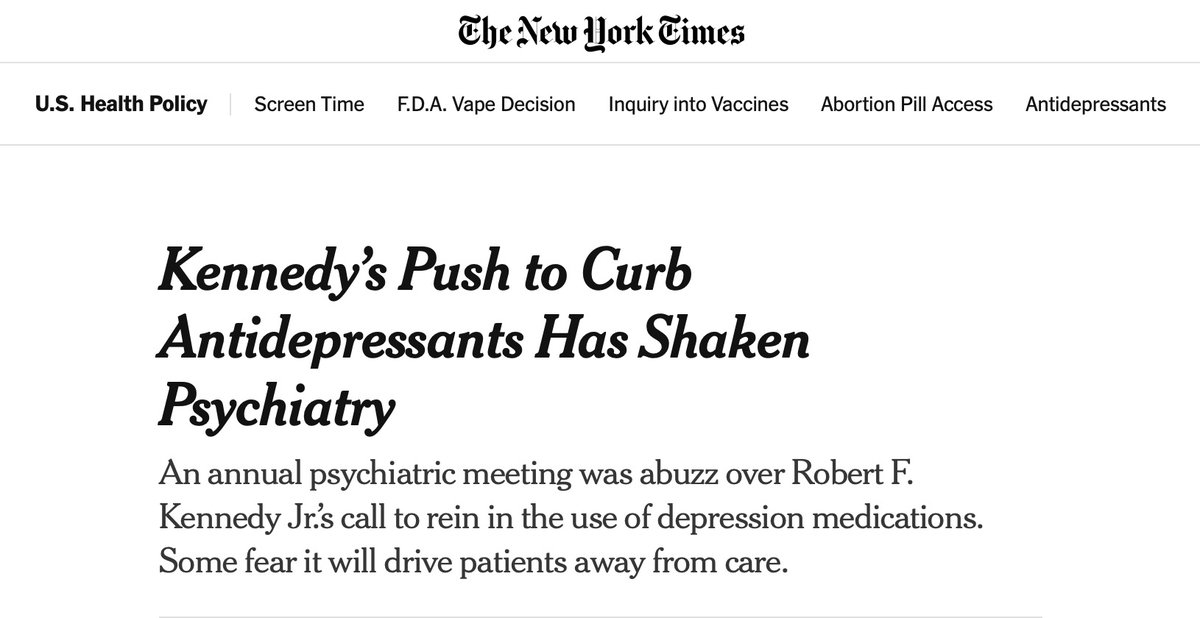
Kennedy’s Push to Curb Antidepressants Has Shaken Psychiatry nytimes.com/2026/05/24/scien… via @NYTimes
6
26
57
6,697
Peter Kinderman retweeted

May 24
For decades, those of us speaking about the harms caused by taking and coming off psychiatric drugs have been ignored, denied or dismissed.
I’ve been labeled everything from “antipsychiatry,” “anti-science,” and “Scientologist,” to “right-wing fascist” and “anti-vax,” to simply “too mentally ill” to understand what was happening to me.
Now the APA’s own annual meeting is full of panels on deprescribing, overmedication, withdrawal, and psychiatrists openly admitting they regret not helping patients come off these drugs sooner.
The hundreds of thousands of personal stories of psychiatric iatrogenesis have become impossible to keep waving away as meaningless anecdotes.
I have deep compassion for how hard it must be to face the possibility that you’ve been inadvertently causing harm to patients you’ve been trying to help.
But fear is the master distorter of truth, and the only way out is through.
We are eager to build a big-tent coalition to begin work on these changes we all know are necessary. I hope you’ll join us.
42
134
490
66,911
Peter Kinderman retweeted
It really shouldn't need to be said but here is @taperingtay in possession of a bleeding lefty heart but also a brain susceptible to the principle of homeostasis in response to exposure to psychotropic drugs re-iterating that this is not a partisan issue but a public health issue that needs to be addressed.
May 24

As a Democrat and someone who is not affiliated with MAHA, I want to continue to reiterate that antidepressant withdrawal is a nonpartisan issue.
People are suffering and need our help. It shouldn't matter what side of the fence you are on to come together on this.
I posted this video over a year ago but it still seems highly relevant today.
3
17
50
2,349
Peter Kinderman retweeted
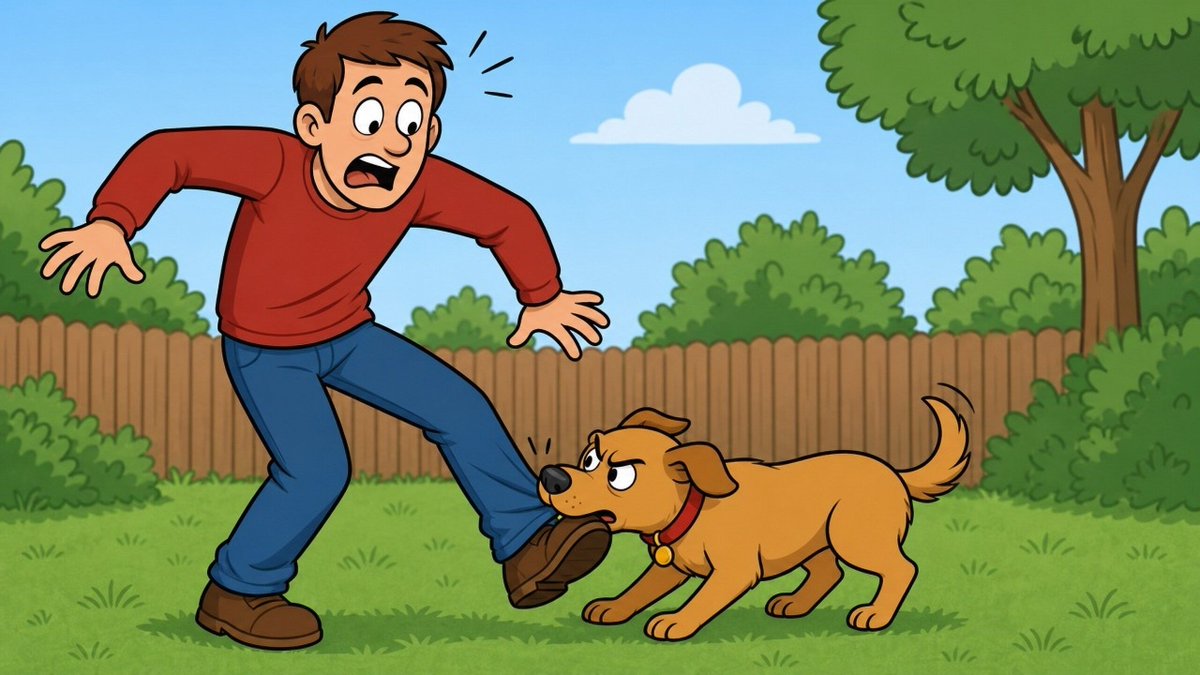
Psychiatry’s Attack Dog Is at It Again
By Robert Whitaker
Awais Aftab's latest post lumps critics as varied as journalists, psychiatrists, and those with lived experience together, inaccurately smearing them by invoking MAHA and Szasz.
buff.ly/twr1VcR
10
28
47
12,375
Peter Kinderman retweeted

What is the real link between depression and serotonin levels?
Joanna Moncrieff argues that there is no causal link between the two at all, and that this idea has been pushed without sufficient evidence by the pharmaceutical industry.
Moncrieff is Professor of Critical and Social Psychiatry at University College London, and a consultant psychiatrist for the NHS.
Tap here for her full talk. iai.tv/video/mental-health-a…
11
46
134
6,341
Peter Kinderman retweeted

May 19
Rearranging deck chairs while the Titanic goes down – The American Society of Clinical Psychopharmacology Issues Deprescribing Recommendations
By Carrie Clark and Mark Horowitz
madintheuk.com/2026/05/rearr…
#Deprescribing #PsychiatricDrugs #InformedConsent #MentalHealthReform
13
11
1,411
Peter Kinderman retweeted

I can understand this is a difficult time for my psychiatry colleagues. I am sure they all have good intentions, but it turns out that the most widely used psychiatric treatment, antidepressants, causes significant iatrogenic effects (e.g. severe withdrawal reactions, PSSD), is not very effective (at best) and does not target an underlying biological abnormality after all. Although many people still seek a psychiatric diagnosis and a medical approach, increasing numbers highlight how misleading and disabling this approach can be. Their voices are starting to be heard, and we need to work with them to provide help for people who have been harmed by psychiatric treatment, and to prevent more harm being done. Trying to shoot the messenger doesn’t help anyone.
81
235
851
80,220
Peter Kinderman retweeted

For years, patients were told that coming off antidepressants was straightforward. But some have described intense and prolonged symptoms.
Now, doctors and health officials are reckoning with the challenges of getting off SSRIs. wapo.st/42yetJq
29
67
208
132,848
Peter Kinderman retweeted
Excellent piece in @nytimes. The 'core ideas [of the alliance] are that mainstream psychiatry is too quick to see normal human suffering as a disease, that its diagnostic labels often crush a patients identity and sense of agency and that psychotropics, for many, do more harm than good'. nytimes.com/2026/05/15/magaz….
14
75
194
9,079
Peter Kinderman retweeted

May 9
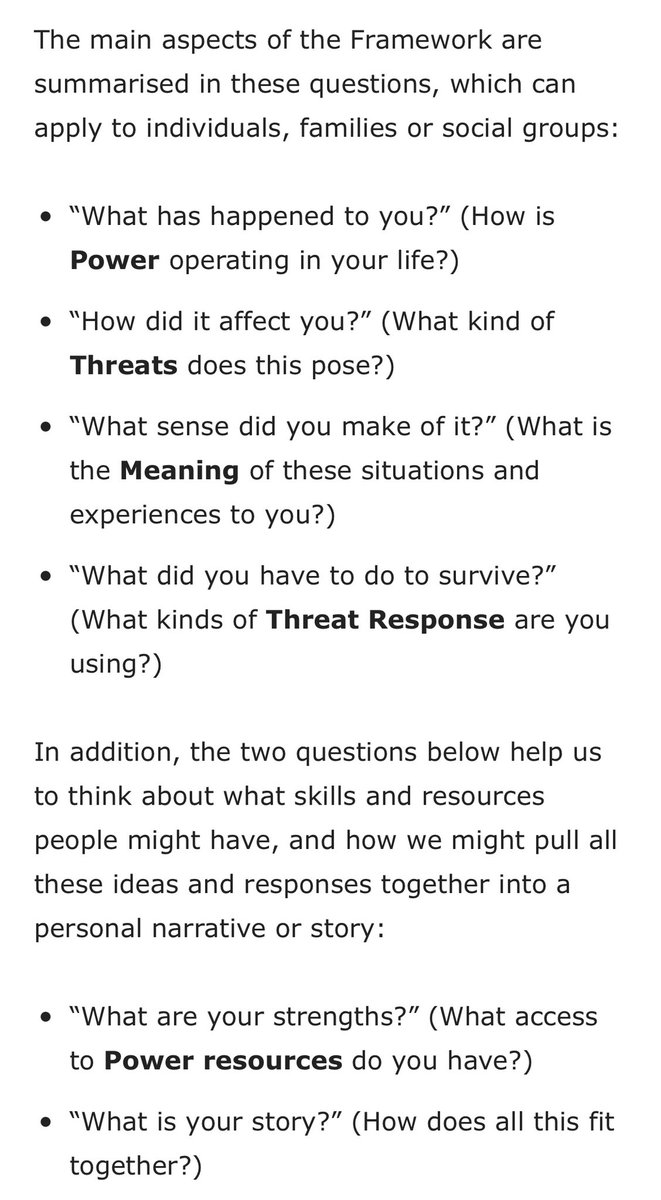
If you want to help someone who is having psychological problems, “What’s going on, bro? What happened that made you distressed?” helps a lot more than, “Go see a psychiatrist and take drugs.”
For more:
madinamerica.com/2018/01/pub…
2
9
23
1,693
Peter Kinderman retweeted

May 8
For the first time in the history of modern antidepressants, psychiatry and the pharmaceutical industry have lost control of the dominant narrative.
The long standing consensus, anchored in claims of dangerous and unscientific favourable risk benefit profiles, negligible withdrawal liability and the reflexive assertion that symptoms of withdrawal syndromes merely represent relapse of the underlying disorder, is now fracturing. Decades of accumulated evidence on neuroadaptation increasingly align with thousands of patient reports of protracted withdrawal syndromes, delayed onset symptoms, kindling and persistent post SSRI sexual dysfunction (PSSD). These phenomena were systematically minimised, pathologised as “underlying illness” or dismissed as anecdotal for years.
This represents a profound epistemic rupture. For over three decades, the profession maintained near hegemonic authority over the interpretation of clinical data, trial design (where withdrawal was rarely a primary outcome) and the framing of adverse effects. That monopoly is visibly disintegrating as high visibility accounts disseminate mechanistic explanations and lived experience data that the old paradigm could no longer suppress.
The gatekeepers’ standard responses, labelling critics as “anti psychiatry,” invoking Scientology guilt by association, labelling as “pill shamers”or issuing ‘reassuring’ guidelines without addressing the full spectrum of neurobiological evidence and patient experience, are losing their potency. Go to the accounts of any of the well known biological psychiatry defenders and iatrogenic harm minimisers, @ompsychiatrist, @ProfRobHoward , @tylerblack32, @DrAnnieHickox , @JRBneuropsiq, @AhmadRehanKhan, @pash22, @mgoldingmd, @patmcgorry, @jonathanstea, @m_aadil and others, and you’ll witness a live action scramble unfolding in real time.
It would almost be fascinating if it weren’t so disturbing. This is exactly how psychiatry has been able to inflict incomprehensible levels of harm for decades: a coordinated mix of denial, deflection, patient/critic smearing and institutional self protection, all while the human cost continues to mount.
History is rarely kind to medical establishments and clinicians that prioritise institutional self preservation and pharmacological optimism over rigorous accounting of iatrogenic harm. The old paradigm is cracking, and no amount of rhetorical deflection can restore the former consensus.
42
80
295
10,968
Peter Kinderman retweeted

Jan 19
Don't be taken in by Trump and RFK jnr's apparent critique of psychiatry. Right wing will always use legitimate questions for nefarious ends aljazeera.com/opinions/2025/…
3
5
13
1,345
Peter Kinderman retweeted
Always gratifying to see someone who has criticised and dismissed your work then copy it (without attribution).
May 6

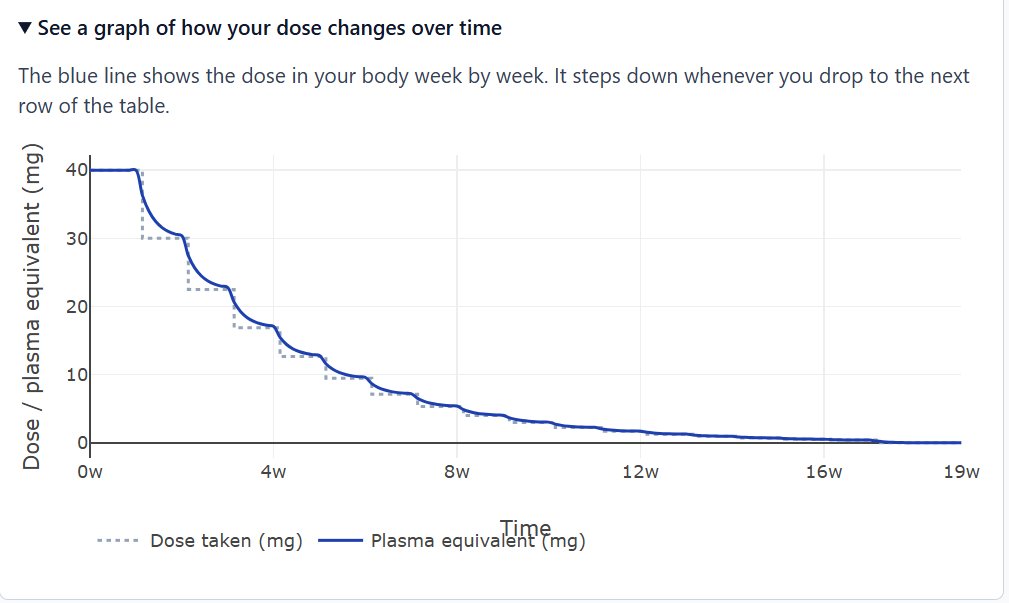
I am creating a tapering / deprescribing guide online (will be free forever & collect no data).
if you are a clinician or someone with interest in tapering generally, send me a DM and i'll include you on the beta.
i never want anyone to have to pay someone for this information
35
53
265
15,585
Peter Kinderman retweeted

April 30th: Beyond Diagnosis: ‘if there’s no label there’s no help’ madintheuk.com/2026/04/april… via @MITUKTeam Do we always need a diagnosis to access services? What are the alternatives? @peterkinderman explains.
2
3
345
Peter Kinderman retweeted

Feb 17
A global shift in #MentalHealth is happening - powered by @WHO #QualityRights tools that drive rights-based, person-centred, evidence-based care.
Real change needs action. Use them. Share them. Advocate for them. Transform services and systems.
▶️ Watch the video
4
17
26
1,299
Peter Kinderman retweeted
Apr 2
𝗔 𝗯𝗲𝗻𝗰𝗵𝗺𝗮𝗿𝗸 𝗳𝗼𝗿 𝗺𝗲𝗻𝘁𝗮𝗹 𝗵𝗲𝗮𝗹𝘁𝗵 𝗽𝗼𝗹𝗶𝗰𝘆.
𝗧𝗵𝗲 @WHO 𝗚𝘂𝗶𝗱𝗮𝗻𝗰𝗲 𝗼𝗻 𝗠𝗲𝗻𝘁𝗮𝗹 𝗛𝗲𝗮𝗹𝘁𝗵 𝗣𝗼𝗹𝗶𝗰𝘆 𝗮𝗻𝗱 𝗦𝘁𝗿𝗮𝘁𝗲𝗴𝗶𝗰 𝗔𝗰𝘁𝗶𝗼𝗻 𝗣𝗹𝗮𝗻𝘀 provides comprehensive, actionable steps to help countries strengthen leadership, services, workforce and cross-sector collaboration for rights-based, person-centred and recovery-oriented mental health systems and approaches. #QualityRights

3
17
27
8,307