
Photos and videos
Pages.kas retweeted

Jun 7
1/ Kaspa's Toccata hard fork is locked in.
Rusty Kaspa v2.0.0 hardcodes mainnet activation at DAA score 474,165,565 — estimated 16:15 UTC, June 30, 2026.
What's changing 🧵⬇️
kaspa:native
11
132
443
13,163
Pages.kas retweeted

May 6
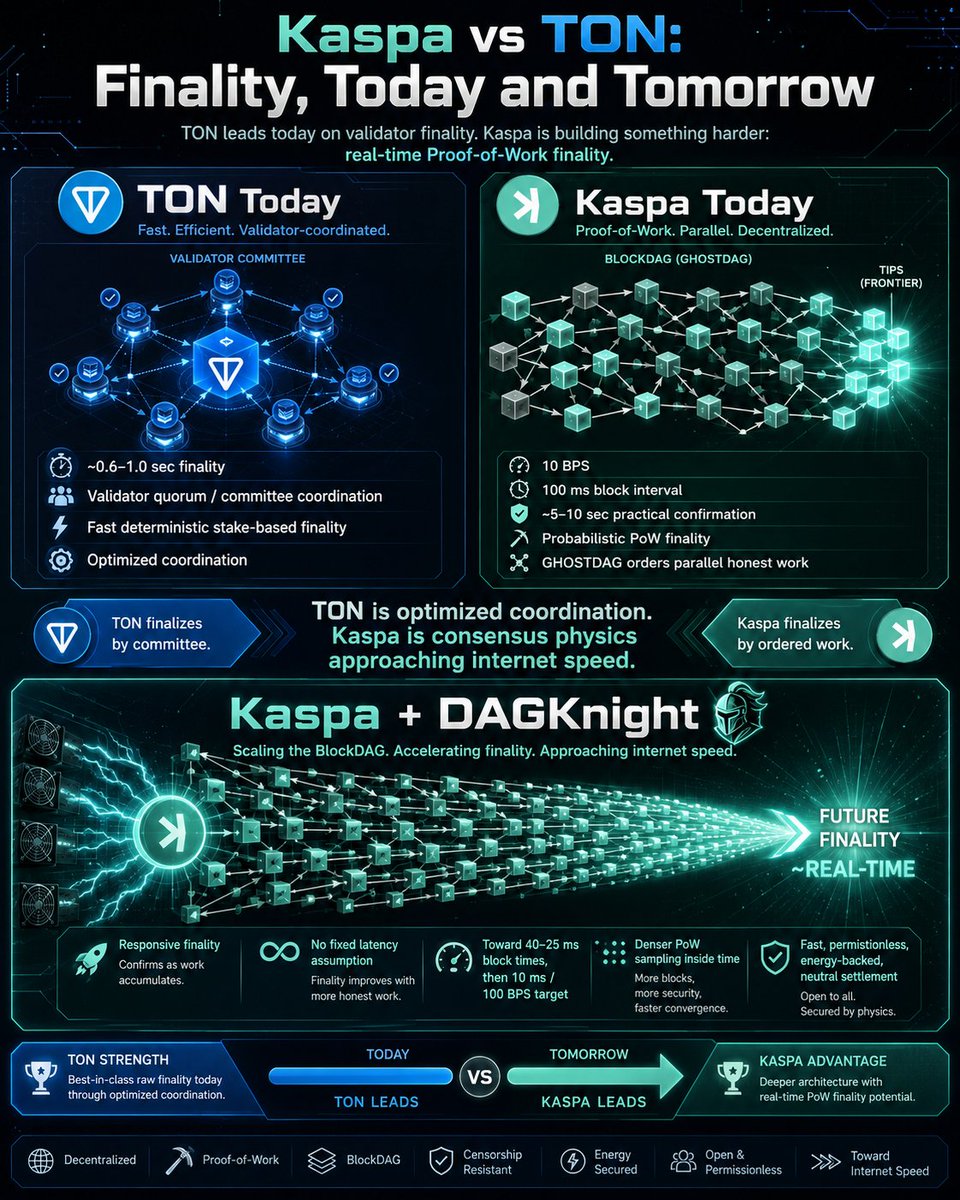
Kaspa is superior to TON not because it currently beats TON’s headline finality number, but because it is attacking a much harder problem: compressing permissionless Proof-of-Work finality toward real time instead of optimizing a validator committee. TON’s current advantage is real. Its architecture targets extremely fast block production and near-instant finalization through a stake-weighted validator process where validators coordinate, vote, and finalize once quorum agreement is reached. That is technically impressive, but it is still finality by committee coordination. TON answers the question: how fast can a validator set agree? Kaspa asks the deeper question: how fast can open, permissionless energy become ordered enough that reversal becomes economically and physically incoherent?
Kaspa’s present model is already fundamentally different from linear Proof-of-Work. Since Crescendo, Kaspa moved to 10 blocks per second, meaning the network targets 100 ms block intervals while GHOSTDAG orders parallel blocks instead of discarding honest work as orphan waste. This gives Kaspa fast inclusion and low-second practical confirmation, but its finality remains probabilistic because it is still Nakamoto consensus expressed through a BlockDAG. That distinction matters. TON’s finality and Kaspa’s finality are not the same object. TON finalizes through stake signatures. Kaspa accumulates irreversible work across a high-frequency DAG. One is administrative certainty from a validator quorum; the other is thermodynamic certainty from energy, ordering, and adversarial cost.
DAGKnight is where Kaspa’s superiority becomes much harder to ignore. GHOSTDAG still relies on a hardcoded latency parameter; DAGKnight is designed to remove that fixed assumption and make confirmation responsive to actual network conditions. In plain terms, Kaspa would stop confirming according to an assumed worst-case delay and start confirming according to the real observed structure of the network. This matters because finality is not just wall-clock speed. It is the density of honest ordering inside time. At higher block rates, especially the long-term 100 BPS direction, Kaspa samples Proof-of-Work far more densely, causing adversarial reorg probability to collapse across shorter windows.
So yes, TON leads the clean finality chart today. But TON is fast inside the validator paradigm. Kaspa is building something more politically and technically durable: near-real-time settlement without a staking cartel, privileged sequencer, or committee ceremony. If DAGKnight lands as intended, Kaspa does not merely catch up to TON; it beats TON on the deeper axis: finality that is fast, permissionless, energy-backed, and neutral at the base layer. TON is optimized coordination. Kaspa is consensus physics approaching internet speed.
5
86
257
3,318
Pages.kas retweeted

May 6
Kaspa.org has been refreshed.
Kaspa has a lot going on, but the main site does not need to put it all at the front door. Its first job is simple: help someone arrive, understand what Kaspa is, and know where to go next.
The previous site accumulated more over time. Pages, explanations, resources, and audiences were added. This version starts smaller, so it can grow with Kaspa from here.
The refresh is not just visual. The wording, structure, and narrative direction all needed attention IMO.
The content traces back to @hashdag’s writing, simplified for a first read. Kaspa is already deep enough. The first read should not make people work harder than necessary.
There are many true ways to talk about Kaspa, but Kaspa.org cannot carry twenty narratives at once. For this version, the strongest one to unify around is real-time decentralisation.
Part of the refresh was also about making the builder path easier to follow. Kaspa.org gives people the overview of what exists, why it matters, and where to go next. Docs.kaspa.org gives builders the deeper material, with room for examples, detail, and ongoing improvement.
Docs.kaspa.org starts with @IzioDev's work and has the broader goal of bringing important Kaspa L1 builder documentation into one place.
Both repos are public. Pages will be added, wording will change, gaps will be filled, and the work can happen in the open.
Big shoutout to @kasmediadotcom for their support in helping bring this refresh together.
Have a look around. If you see something that can be better, please open an issue or PR.
99
272
785
63,229
Pages.kas retweeted

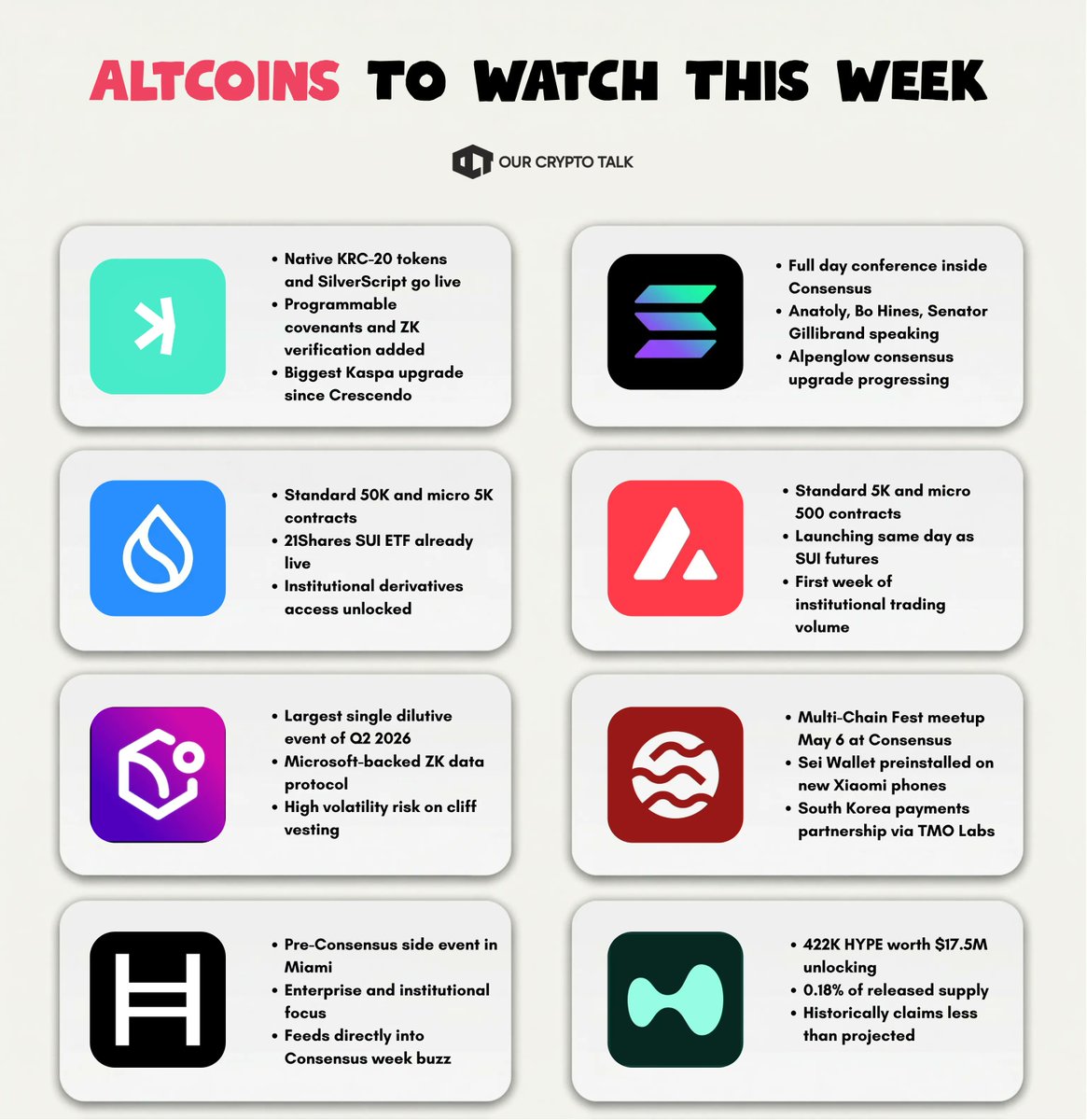
🚨 Crypto Watchlist : (May 4-10)
1. $KAS - Covenant hardfork activation
2. $SOL - Solana Accelerate Miami May5
3. $SUI - CME futures go live May4
4. $AVAX - CME futures go live May4
5. $SXT - 23% supply cliff unlock May8
6. $SEI - Builder Night Miami Xiaomi deal
7. $HBAR - HederaCon 2026 Miami May4-5
8. $HYPE - Core contributor unlock May6
9. $XLM - Protocol 26 mainnet vote May6
10. $RED - 40.85M unlock (12.2% supply)
24
65
306
16,603

KAS, SUI, LUNC, AND TON LEAD CMC BULLISH LIST
The Kaspa $KAS ecosystem is leading in bullish sentiment, with over 90% of votes on CoinMarketCap.
Community market sentiment is measured by tallying bullish and bearish votes from users on the platform.
$SUI, $LUNC, $TON, and $SIREN make up the top five with @Ton_blockchain recently gaining traction in the blockchain industry.
$PEPE, $PI, $DASG, $BTC, and $PENGU complete the top 10 list.
20
68
423
15,074
Pages.kas retweeted

Apr 9
Kaspa army really showed up here.
Followed @hashdag ✅
289
633
1,909
166,342
Pages.kas retweeted

Feb 28
Dagknight technical progress
As would be mentioned in a still unshared post by @michaelsuttonil, the dagknight effort is split into v0 devnet, v1 testnet and v2 mainnet candidate.
I’ve been testing the current v0-based implementation in a small devnet with the help of some testers who run nodes and miners with me.
The DK work can be thought of as split into two parts: (1) implementing the actual protocol and (2) wiring it up and using it. The testing and development over the last month has been focused on (2).
Obviously, DK is a consensus change for selecting parents. What’s not so obvious is that such a change affects DAA, coinbase, IBD, pruning and a lot more. Each of these areas is very sensitive and requires proper understanding to wire correctly. An important consideration and difference from GD is that DK does not focus on maximizing a property like blue work. So to maintain topological properties of blue work, an independent (free) GD implementation is kept running specifically for maintaining blue work. This allows us to keep using the property for topology. Coloring and blue score use the megachain induced by DK. The wiring around DK as of this posting is in a working state, but still needs to be reviewed.
Next efforts will be focused on protocol specific components, particularly Tie-Breaking and incremental UMC.
Attached are some captures from the internal devnet. The dense DAG image is what happens when things related to DAA or other similar consensus parameter causes a node to insist on their POV. The video is a recent snippet of the KGI running on the devnet showing (perhaps not obviously) DK at work.
The current “dagknight” branch is now posted on the main repo. A topic in the Public R&D has been opened for Dagknight development.

Jan 29

Dagknight technical progress
I want to share some technical progress related to the dagknight effort.
In a yet-unshared post by @michaelsuttonil, the DK effort is split into several iterations: devnet v0, testnet v1 and mainnet candidate v2. v0 is focused on getting a full end-to-end flow running, even if it only partially implements components of the full protocol. v0 progress will be the focus of this post.
Since the last update, more things have been implemented such as: efficient k-searching algorithm, gray blocks (to replace representative) among many other technical changes that I will elaborate elsewhere. The most important change since then is that DK can now be run over a dynamic DAG.
Rusty-kaspa has a simulation engine called simpa where you can test dynamic DAG conditions. Current state of DK can now run there.
There are a few more changes that need to be checked in to fully complete v0. This will happen very soon. The dk branch will also be posted into the main repo once it is cleaned up. A small internal devnet will be set up to test the v0 in a controlled but dynamic non-simulation environment.
27
193
506
52,796
Pages.kas retweeted

8 Nov 2025
Won’t stop spreading the word about $KAS
This is the one.

184
174
682
17,154



Pages.kas retweeted

6 Nov 2025
The most monumental email I was ever cc’d on
6 Nov 2025

@binance,
Thanks for including me in the top 100 blockchain people list, appreciate the signal!
I must decline the Dubai invite though. I do not wish to disrespect, but many of the award voters are avid kaspians who rooted for my kaspa status at least as much as for my research. Let them win or count me out.
Crypto has turned from a euphoric cypherpunk project to a house-friendly casino. You may not be the culprit, but as a top player you hold the lion’s share of the responsibility to correct this, and the October crash your USDe oracle glitch helped trigger adds to what needs to be addressed.
There are three classes of crypto, as @mert put it recently: commercial crypto, casino crypto, cypherpunk crypto. <<Binance should hold a privilege policy for the latter.>> A TBTF CEX should know better and play a different game with hardcore crypto projects.
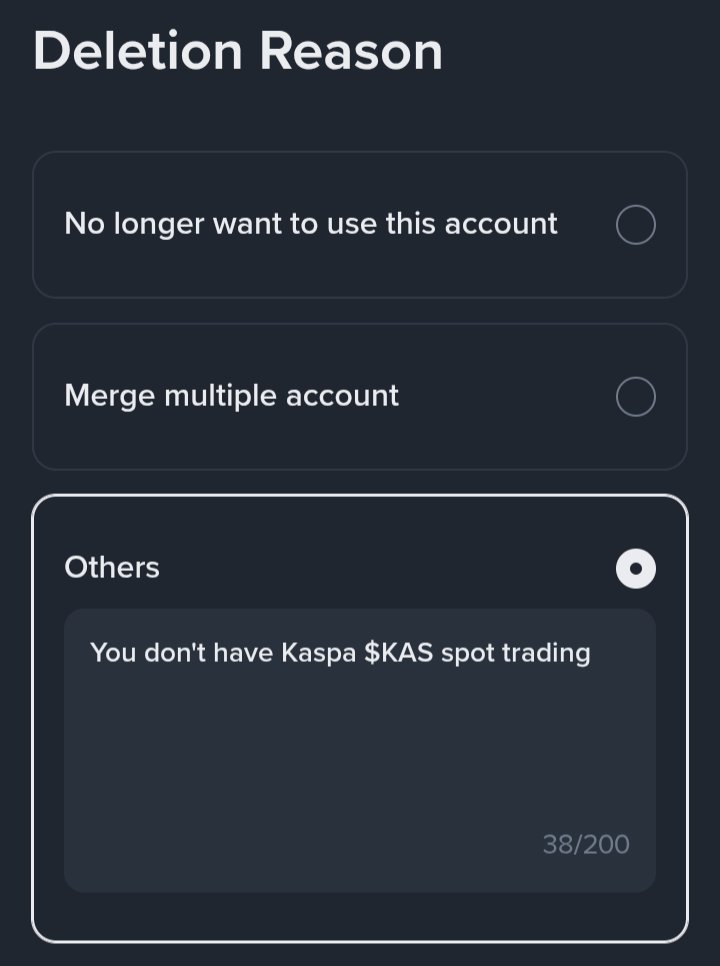
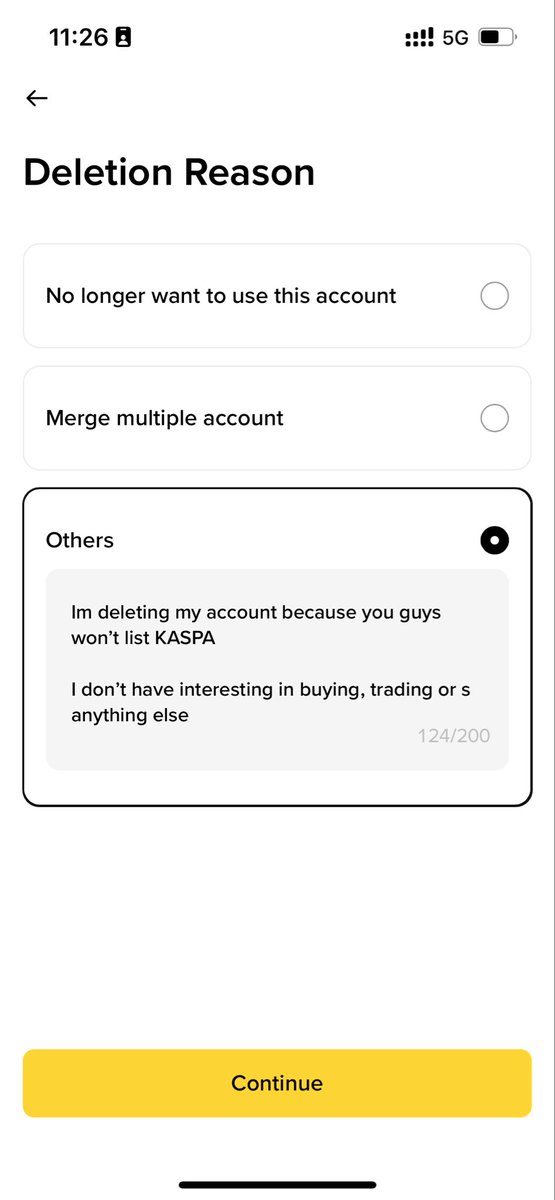
When binance lists a green frog three weeks post its “launch” but skips a fair-launched-Nakamoto-Consensus-100ms-upgrade-ATH-top-20-the-only-nonbitcoin-marathon-mined project, this is not merely binance rationally calculating; it is also binance molding the market in a way that is alas misaligned with the roots of the movement.
You may feel that kaspa’s sovereign money thesis is boring – that bitcoin is already money and that implementing an internet-speed bitcoin is useless - fine. Wrong but fine. But what’s the thesis for the green frog?
Money is a classic chicken-and-egg product. It is a scam up until one moment before tipping point, “most of the value comes from the value that others place in it.” Considering your resources and influence, I think it's safe to say you can serve as both the egg and the chicken and make it worth your while to push sound attempts towards tipping point.
@cz_binance tweeted recently that “strong projects will be listed.” But binance is part of what defines "strong", it bears responsibility for the market’s compass and impulse and definition of strong. It is not a read-only entity.
Binance listing fees are legit, they are just unfit for category cypherpunk. Kaspa devs and early supporters fairly mined less than half what satoshi and hals mined. We don’t have a 20% ZEC-style founders’ reward or protocol-enforced dev fund; this is not a jab at ZEC and the wonderful @Zooko, who was crashing in my car on a late Thursday back in the low ZEC MC days – if somebody deserves to win it is zooko – but assuming binance is not taking a maxi bet, it should revisit its relationship with hardcore crypto.
We are here through bull and bear, ICOs NFTs XYZs; and we are the source of confidence that restores faith and capital inflow post meme-induced or CEX-induced crashes.
Please fix this.
Thanks again,
hashdag
cc @michaelsuttonil
Exhibit A: Binance Innovation Zone
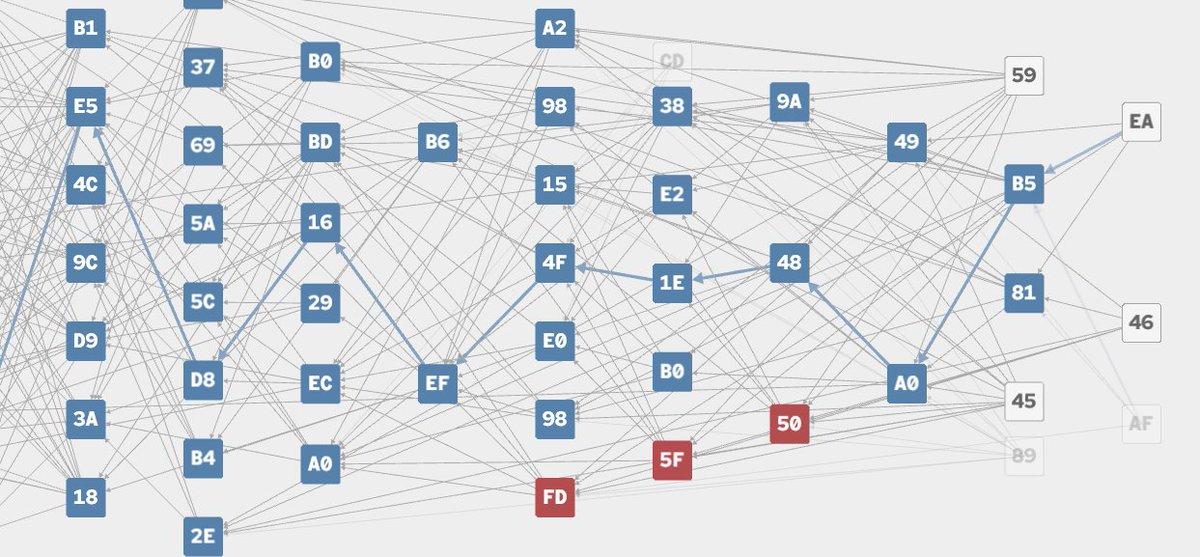
Exhibit B: 10 bps Nakamoto Consensus

105
584
2,199
44,580
Pages.kas retweeted

6 Nov 2025
@binance,
Thanks for including me in the top 100 blockchain people list, appreciate the signal!
I must decline the Dubai invite though. I do not wish to disrespect, but many of the award voters are avid kaspians who rooted for my kaspa status at least as much as for my research. Let them win or count me out.
Crypto has turned from a euphoric cypherpunk project to a house-friendly casino. You may not be the culprit, but as a top player you hold the lion’s share of the responsibility to correct this, and the October crash your USDe oracle glitch helped trigger adds to what needs to be addressed.
There are three classes of crypto, as @mert put it recently: commercial crypto, casino crypto, cypherpunk crypto. <<Binance should hold a privilege policy for the latter.>> A TBTF CEX should know better and play a different game with hardcore crypto projects.
When binance lists a green frog three weeks post its “launch” but skips a fair-launched-Nakamoto-Consensus-100ms-upgrade-ATH-top-20-the-only-nonbitcoin-marathon-mined project, this is not merely binance rationally calculating; it is also binance molding the market in a way that is alas misaligned with the roots of the movement.
You may feel that kaspa’s sovereign money thesis is boring – that bitcoin is already money and that implementing an internet-speed bitcoin is useless - fine. Wrong but fine. But what’s the thesis for the green frog?
Money is a classic chicken-and-egg product. It is a scam up until one moment before tipping point, “most of the value comes from the value that others place in it.” Considering your resources and influence, I think it's safe to say you can serve as both the egg and the chicken and make it worth your while to push sound attempts towards tipping point.
@cz_binance tweeted recently that “strong projects will be listed.” But binance is part of what defines "strong", it bears responsibility for the market’s compass and impulse and definition of strong. It is not a read-only entity.
Binance listing fees are legit, they are just unfit for category cypherpunk. Kaspa devs and early supporters fairly mined less than half what satoshi and hals mined. We don’t have a 20% ZEC-style founders’ reward or protocol-enforced dev fund; this is not a jab at ZEC and the wonderful @Zooko, who was crashing in my car on a late Thursday back in the low ZEC MC days – if somebody deserves to win it is zooko – but assuming binance is not taking a maxi bet, it should revisit its relationship with hardcore crypto.
We are here through bull and bear, ICOs NFTs XYZs; and we are the source of confidence that restores faith and capital inflow post meme-induced or CEX-induced crashes.
Please fix this.
Thanks again,
hashdag
cc @michaelsuttonil
Exhibit A: Binance Innovation Zone
Exhibit B: 10 bps Nakamoto Consensus

The Blockchain 100 winners are here! See who made the list of top crypto creators.
Thank you for voting & celebrating the future of blockchain education.
Check the results 👇
binance.com/en/square/blockc…
2,802
4,169
8,823
3,502,376
Pages.kas retweeted
5 Nov 2025
sovereignty as a service
2 Nov 2025

not gonna give you price targets on kas
can tell you the thesis is underpriced and if vprogs delivers the way hashdag thinks it will, you'll know when it happens
sovereignty narrative isn't fully understood yet
58
263
1,011
180,206
Pages.kas retweeted

17 Sep 2025
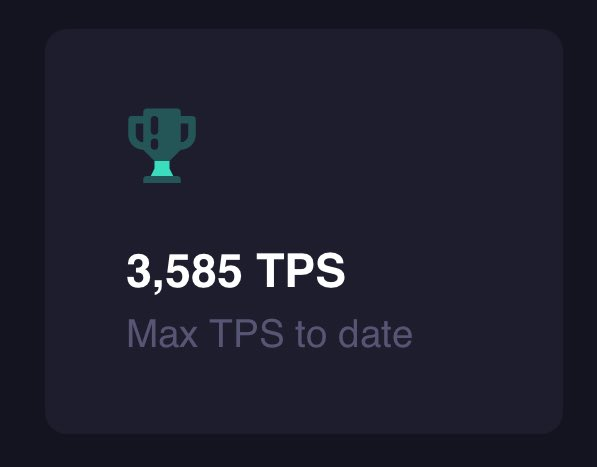
🚨 BREAKING NEWS 🚨
$KAS TPS ALL TIME HIGH ON MAINNET!!!
THIS IS A PROOF-OF-WORK RECORD!!!
44
191
742
77,522
Pages.kas retweeted

17 Sep 2025
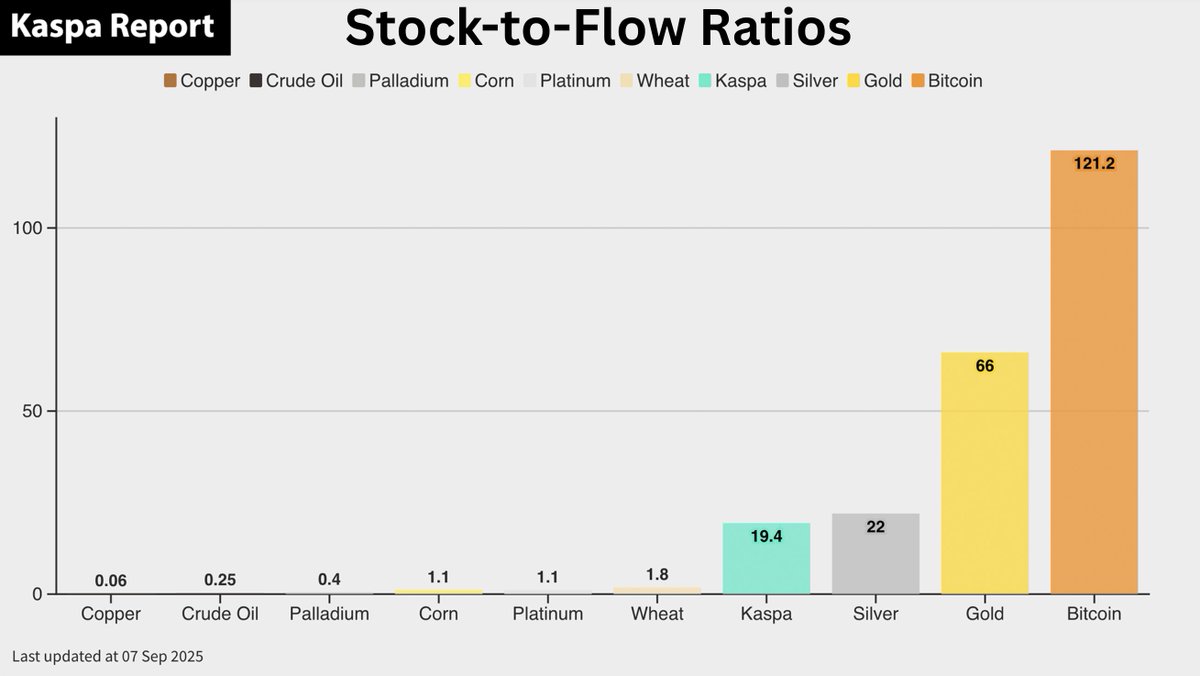
In about two months, Kaspa’s stock-to-flow (S2F) ratio will surpass that of silver.
Stock-to-Flow measures the ratio of circulating supply (stock) to annual production (flow). Put simply, it shows how many years it would take, at the current production rate, to reproduce the existing stock.
In proof-of-work cryptocurrencies, the S2F ratio offers another way to conceptualize an asset’s emission schedule. As emissions approach zero, the S2F ratio approaches infinity.
While S2F ratios are informative because they reflect the scarcity of a commodity money, they do not necessarily provide reliable insight into price action, particularly because fiat-denominated price action is highly confounded by numerous other variables.
The least confounded way to measure Kaspa’s monetary value is by analyzing its inactive supply metrics. Inactive supply reveals the extent to which an asset is being held as a store of value. Since storing value is a core function of money, inactive supply metrics provide us with insight into how well an asset is being used as money.
In Kaspa’s case, the extremely high reliability in the growth of its inactive supply over time demonstrates the extremely reliable growth in its use as a store of value. Inactive supply provides the least confounded measure of Kaspa’s monetary value, since—unlike its fiat-denominated price—it is not distorted by currency devaluation or CEX-driven price manipulation.
Some recent research I’ve been conducting examines whether the reliability with which the inactive supply of some monetary asset rises over time offers insight into the degree of centralization in a monetary system. My hypothesis is that the reason Kaspa’s inactive supply has exhibited extremely high R-squared values (on both its 2-year and 3-year regression models) is because it is so decentralized. I believe it is only because Kaspa is so highly resistant to centralization that it can possibly achieve such high R-squared values. If so, this value can serve as a proxy for objectively measuring the scope of decentralization or corruptibility within a monetary system.
Moreover, the fact that the R-squared value increases as the period of inactivity lengthens is also telling: it suggests that the ability of any single actor to influence Kaspa’s role as a store of value diminishes with time. Conceptually, this may suggest that as time passes, the ability of any one actor to meaningfully disrupt Kaspa (from a monetary systems perspective) declines. While the same is true for Bitcoin, the effect is even greater for Kaspa.
Finally, Kaspa’s inactive supply metrics not only allow us to infer that Kaspa is not a Ponzi scheme, but that it is the most potent antidote to Ponzi schemes in existence. A distributed ledger this resistant to manipulation will, from a game-theoretic perspective, drive all other ledgers into obsolescence, because they carry trade-offs Kaspa avoids.
Kaspa is, in effect, the most perfect form of money humanity has ever created. It is the fullest realization of Satoshi’s vision.
25
99
378
61,552
Pages.kas retweeted
16 Sep 2025
1/15
🧵 The Public Clock: Kaspa’s BlockDAG Scheduler vs Ethereum and Solana 🧵
5
13
28
1,634
Pages.kas retweeted

11 Sep 2025
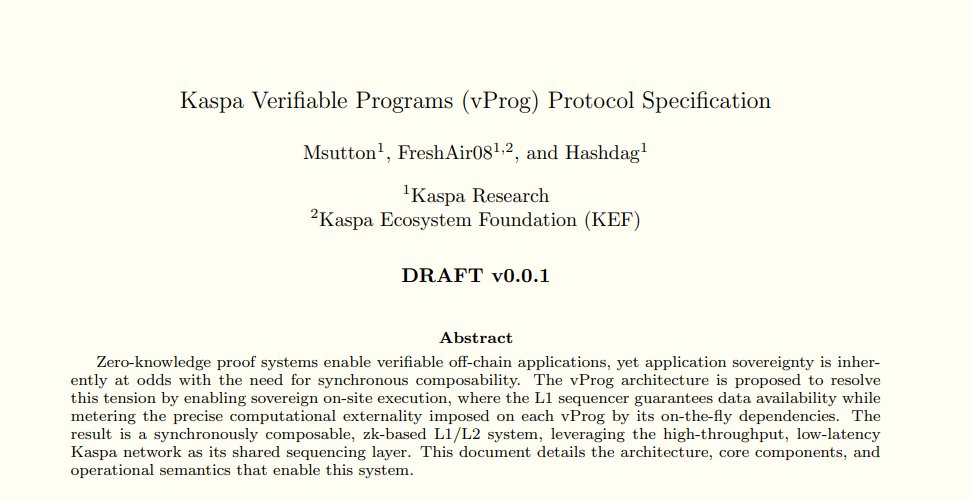
Draft v0.0.1 of Kaspa vProgs outlines a future system where apps run off-chain but stay secure with zero-knowledge proofs.
Each app would control its own state, while Kaspa L1 would order transactions and ensure data is available.
Proofs would link results back to L1, keeping apps independent but still able to work together.
Provers would generate these proofs and get paid, aiming for speed, security, and no system lock-ups
11 Sep 2025

The v0.0.1 draft of the Kaspa vProg Protocol Specification is now available for public review.
It details a protocol for achieving synchronous composability between sovereign zk-verifiable programs via metered, on-site execution.
🔗Link: github.com/kaspanet/research…
31
176
6,414
Pages.kas retweeted

10 Sep 2025
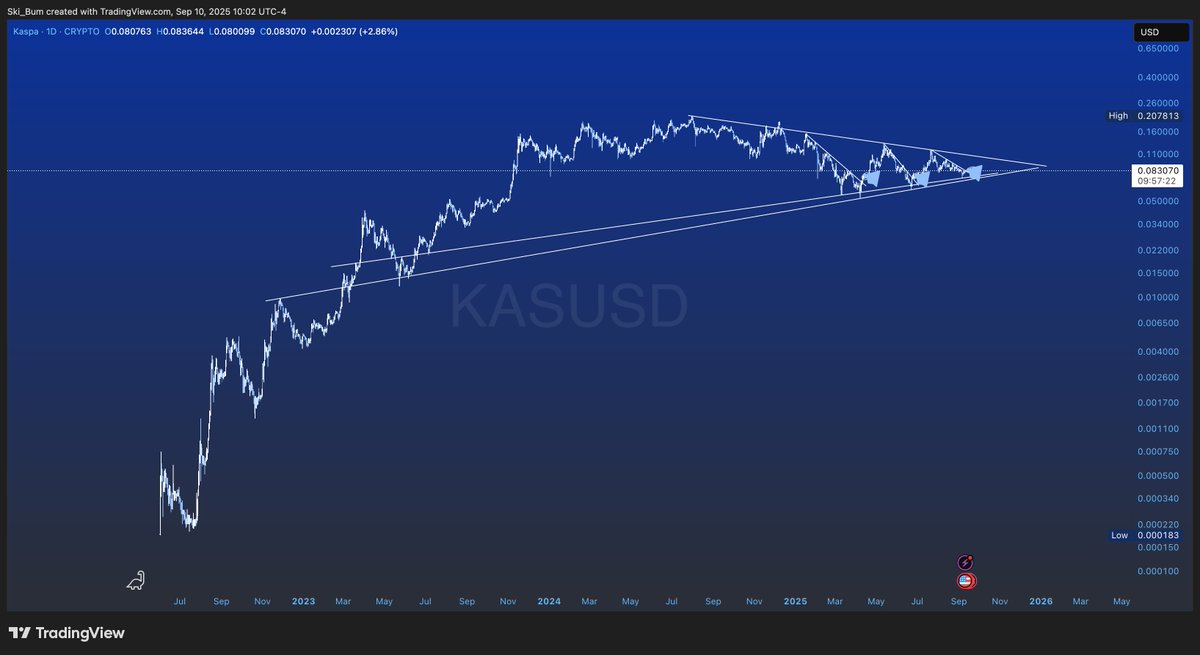
Most people in the $KAS community are frustrated by the price action. This is understandable.
Early on, we got spoiled when $KAS was the #1 performing asset globally.
Regardless of strength of fundamentals, the reality is that assets never go up in a straight line, naturally, and so it makes sense for a period of accumulation, whether we like it or not.
Sentiment currently is not so good, as people are continuously expecting price to sell off, as that has been the program, relative to 2022-2023.
If you zoom out, however, you can see that $KAS has been making higher lows since the $0.05 low in April 2025. It has also been making lower highs, creating triangle formation. This will eventually result in it breaking one way or the other.
Given that this market cycle is not yet over, and is approaching a phase where capital will likely rotate away from $BTC and $ETH, there's good odds that this triangle formation breaks to the upside.
Of course, nothing is 100% in trading, so you have to manage your risk.
But no risk, no reward.
The only way to benefit is to have some skin in the game, in case $KAS finally escapes this boring accumulation phase, and goes into a bull trend once again.
16
41
326
14,616
Pages.kas retweeted

9 Sep 2025
🚨 Is $KAS the most undervalued Layer 1 in the entire market?! 💎
@kaspaunchained
96
175
814
45,801
Pages.kas retweeted

10 Sep 2025

Looking forward to welcome #Kaspa to WhiteBIT!
Kaspa ($KAS) is a high-speed and scalable cryptocurrency based on the blockDAG protocol, combining Proof-of-Work security with instant transactions. $KAS is used for exchange, miner rewards, and network maintenance.
2
30
191
7,510
Pages.kas retweeted

11 Sep 2025
OK, let me try.
A vProg is like this tiny EVM environment whose state is completely encoded on the base layer, so it needs no rollups above it.
This has many advantages and disadvantages.
The main advantage: no rollup, everything on the base layer, composition becomes "trivial".
The main disadvantage: no rollup, all data availability falls on users, and composition becomes expensive on large time scales.
vProgs make sense for situations where atomic composability is fast (the time it takes to generate a proof is on the order of the network latency) and frequent. Rollups make sense when you want long-range operations with ongoing data availability. Also, vProgs won't cut it in any setting where external liquidity is required.
vProgs don't replace rollups, they complement them. In particular, vProgs can be potentially used in rollup locking scripts (the part that specifies the conditions under which locked assets, e.g. Kaspa bridged to a rollup, can be unlocked) to benefit both.
But mostly, nobody knows exactly what vProgs are, including the people currently designing them, because such is the nature of ideas that are still developing.
vProgs' atomic composability might be the key to canonical rollup interoperability. I think that's the true power of this notion, and the motivation behind it.
11 Sep 2025

Highly technical explanation of a VProg
Best explanation I've seen!!!
I think we all feel the same way 😂😂
Great episode y'all!!
22
62
279
29,012