
Postdoc at St. Jude interested in transcriptional regulation and cancer
Joined August 2014
- Tweets 283
- Following 464
- Followers 201
- Likes 1,496
8 Photos and videos

Lindsey Montefiori retweeted

Jun 11
Interactome mapping has been stuck at a few hundred baits over months. HIP-MS changes the regime: ~10,000 pulldowns/week at 500 samples/day, fully automated. A new era for interactomics — and a precursor to high-throughput proteomics writ large. doi.org/10.64898/2026.06.03.…
1
22
89
7,449
Lindsey Montefiori retweeted
May 28
1/5
Cell identity is written in the proteome, not in the DNA, and not always in the RNA. Out on bioRxiv today: The first cell type-resolved, MS-based proteomic atlas of the human body.
biorxiv.org/content/10.64898…
5
88
352
34,195
Lindsey Montefiori retweeted

Going from the discovery of epigenetic silencing of CTCF insulators nature.com/articles/s41586-0… to aberrant E-P looping cell.com/molecular-cell/full… to a successful clinical trial nature.com/articles/s41591-0… all from Brad Bernstein's lab
28
129
10,926
Lindsey Montefiori retweeted

Apr 30
10/ Remarkable. We are still way far from trully decyphering regulatory logic. For now, we are working with sophisticated, yet surprisingly easy-to-break, dictionaries.
1
3
261
Lindsey Montefiori retweeted

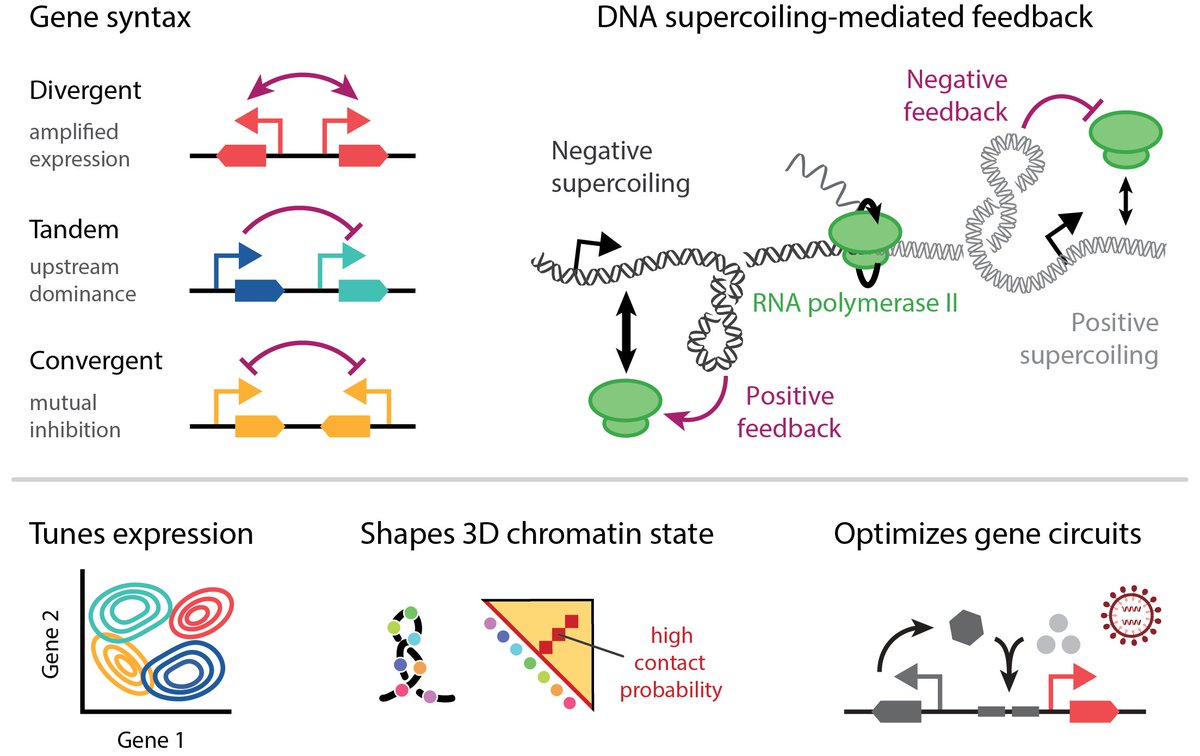
Could the folding of synthetic gene circuits in 3D shape how genes are expressed? Today @ScienceMagazine we report on the role of gene syntax in shaping feedback between transcriptional activity and genome folding for advanced circuit design🧵 (1/n)
20
149
560
47,362
Lindsey Montefiori retweeted

Apr 25
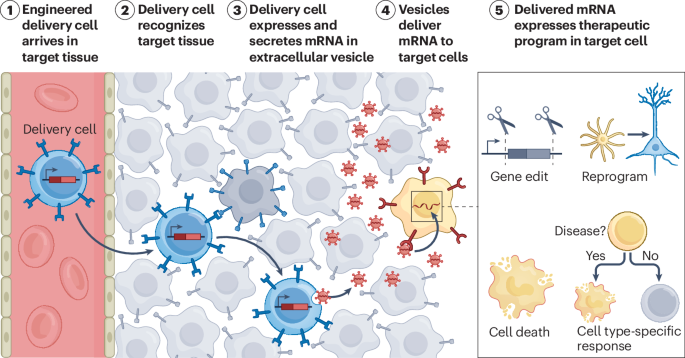
Just out: our forward-looking essay on mRNA “delivery cells”—engineered cells that could locally manufacture mRNA at disease sites within the body and transfer it to target cells in extracellular vesicles.

Engineered cells as programmable mRNA delivery vehicles dlvr.it/TSBzt7
4
39
227
31,929
Lindsey Montefiori retweeted

Can we control cells by forcing TFs to collaborate?
Interested? Read our preprint! An awesome collaboration with @cgersbach, @christian_mcam, @IGVFConsortium, led by @Rachel_E_Savage:
biorxiv.org/content/10.64898…
🧵
1
30
159
9,901

Apr 11
Very cool finding. Depending on how you look at it, is our genome remarkably robust or remarkably fragile? 🤔

1/n
🤩 Beyond excited to share our recent paper, published today @NatureComms!! 🤩
This study represents, in my view, one of the most striking phenotypes we ever found with really important findings and implications.
nature.com/articles/s41467-0…
1
1
202
Lindsey Montefiori retweeted

Mar 28
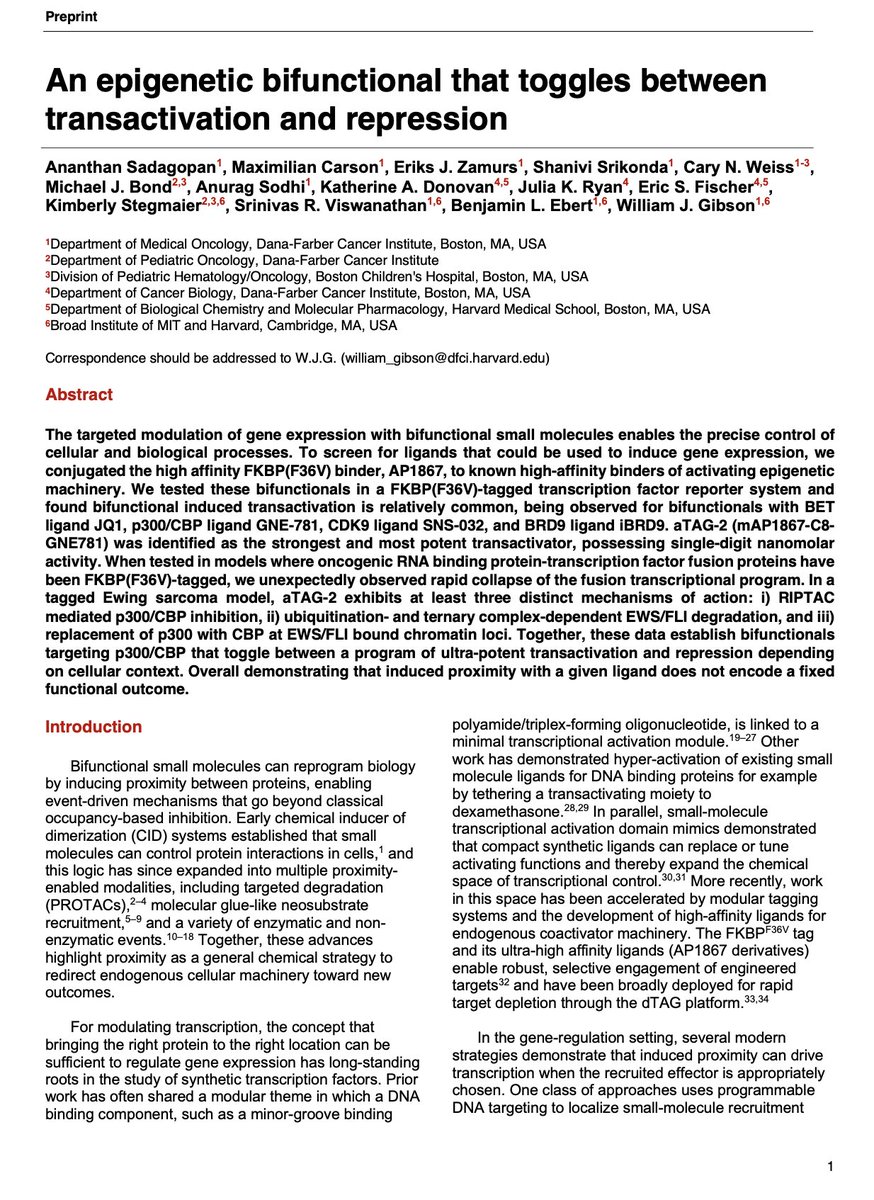
What if a small molecule could activate a transcription factor program in one cell type and destroy the same pathway in another? In our new preprint, we describe one such story on bifunctional molecules that toggle between transactivation and repression.
7
87
463
60,269
Lindsey Montefiori retweeted

Mar 23
Today we're launching Latent-Y: the world's first autonomous agent for drug design, lab-validated end to end.
Give it a research goal. Latent-Y reasons, designs, iterates, and delivers lab-ready antibodies, autonomously or collaboratively, with the biological reasoning of a PhD protein design expert.
Technical report: tinyurl.com/latent-y-techrep…
Blog post: latentlabs.com/latent-y
Apply for access: platform.latentlabs.com
36
146
871
120,255
Lindsey Montefiori retweeted

Mar 19
Unstructured transcription factor interactions enable emergent specificity | @ScienceMagazine science.org/doi/10.1126/scie…
1
32
126
34,563
Lindsey Montefiori retweeted

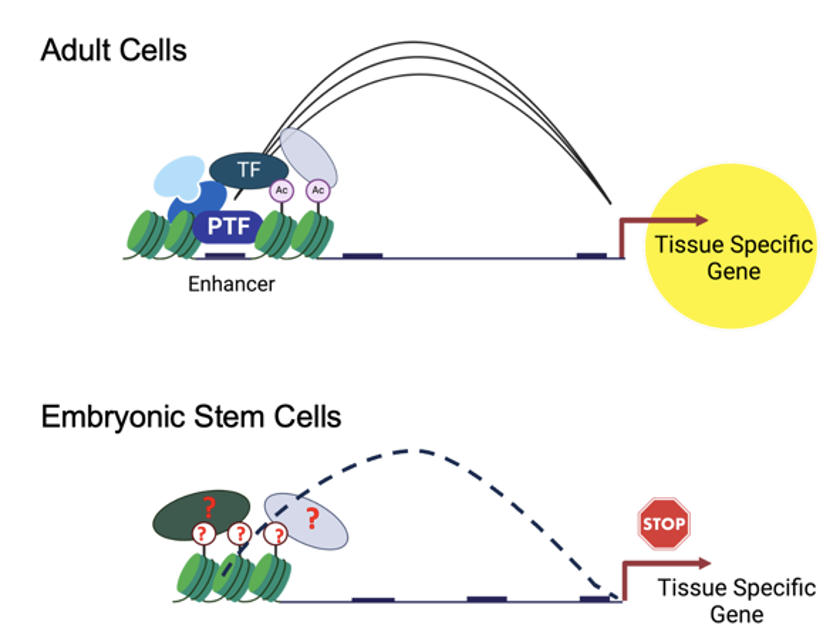
Are the enhancer regions that control the expression of lineage genes established from early embryonic stages or do they gain their transcriptional potential along differentiation? Today in @CellGenomics we address this question: tiny.cc/r5j0101 1/15🧵
3
28
118
11,248
Lindsey Montefiori retweeted

Feb 23
A few days late in sharing, but but thrilled to share that my postdoctoral work on #3Dgenome and #CellularMemory is now published in @NatureGenet: nature.com/articles/s41588-0…
1
11
67
4,825
Lindsey Montefiori retweeted

Feb 22
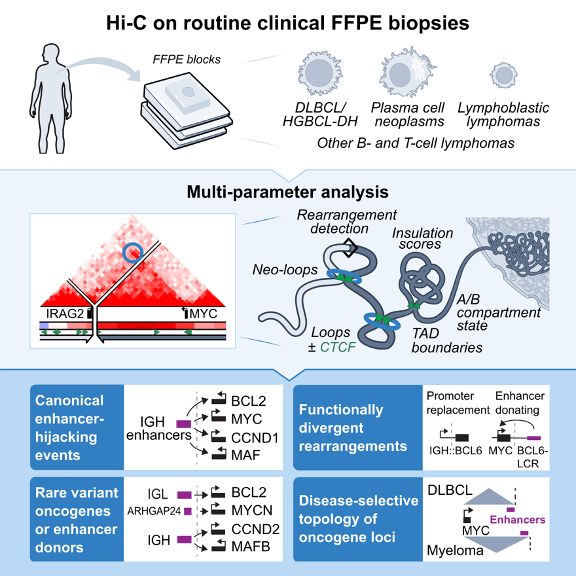
New from us in @CellGenomics: Using FFPE-compatible Hi-C to detect oncogenic rearrangements genome-wide in routine lymphoid cancer biopsies. Congrats to first author pathologist-scientist Jamin Wu, co-senior author Matija Snuderl @NYUGSOM_Path, and @ArimaGenomics.
6
26
82
7,257
I can imagine a future where it might be a novelty, and a pleasure, to work exclusively with humans
3
56
Jan 14
🤣
Jan 14

A genius recently suggested that we just take our raw data & shove it into Claude Code. And I said no it can't help us cuz it's all about coding stuff & we work on non-coding stuff. Spoke too soon.
1
291
Lindsey Montefiori retweeted

The @ENCODE_NIH Phase 4 Registry of candidate cis regulatory elements (ccREs) (2.37 million human and 967,000 mouse cCREs) is officially out
screen.wenglab.org/
nature.com/articles/s41586-0…
Congrats to @MooreJillE
@ZhipingWeng & everyone else.
Lots more incoming ...
2
85
285
22,084
Lindsey Montefiori retweeted

Jan 5
Excited to share our new study published online today @CD_AACR. Beyond mutagenesis, we show that LINE-1 locus-specific transcription reshapes 3D genome architecture to control cancer gene expression @JianXuLab @StJudeResearch
aacrjournals.org/cancerdisco…
15
9
115
6,765
Lindsey Montefiori retweeted

Jan 5
A New Year, a new paper out on Jan 1 in @ScienceMagazine ! Congratulations to @SiddhantUJain and all our co-authors and collaborators! This study answers a longstanding question in our field regarding recruitment of chromatin regulatory machinery and provides a powerful new framework for development of precision medicines in #cancer and beyond! @kadochlab @alex2110x @hhmi_science @DanaFarberNews @DanaFarber
science.org/doi/10.1126/scie…
#generegulation #chromatin #cancer #therapeutics #basicscience #BAFcomplex #mSWISNF #chromatinremodeling
15
42
288
46,587
6 Nov 2025
Excited to share our preclinical study showing excellent response to venetoclax gilteritinib in BCL11B-activated lineage ambiguous leukemia, co-led with @IlariaIacobucc1: doi.org/10.1182/blood.202502…. Funded by @BloodCancerUtd and @NIH. @StJudeResearch @BloodPortfolio @CMullighan
1
4
18
3,409