Building for a Regenerative Paradigm. #ReFi LFG 🧙♂️Co-Founder @ReFiDAOist 🌱 Source @RegenCoordinate 🌐🤝🌐
Joined August 2011
- Tweets 3,492
- Following 2,278
- Followers 2,841
- Likes 10,471
464 Photos and videos




Pinned Tweet

16 Apr 2025
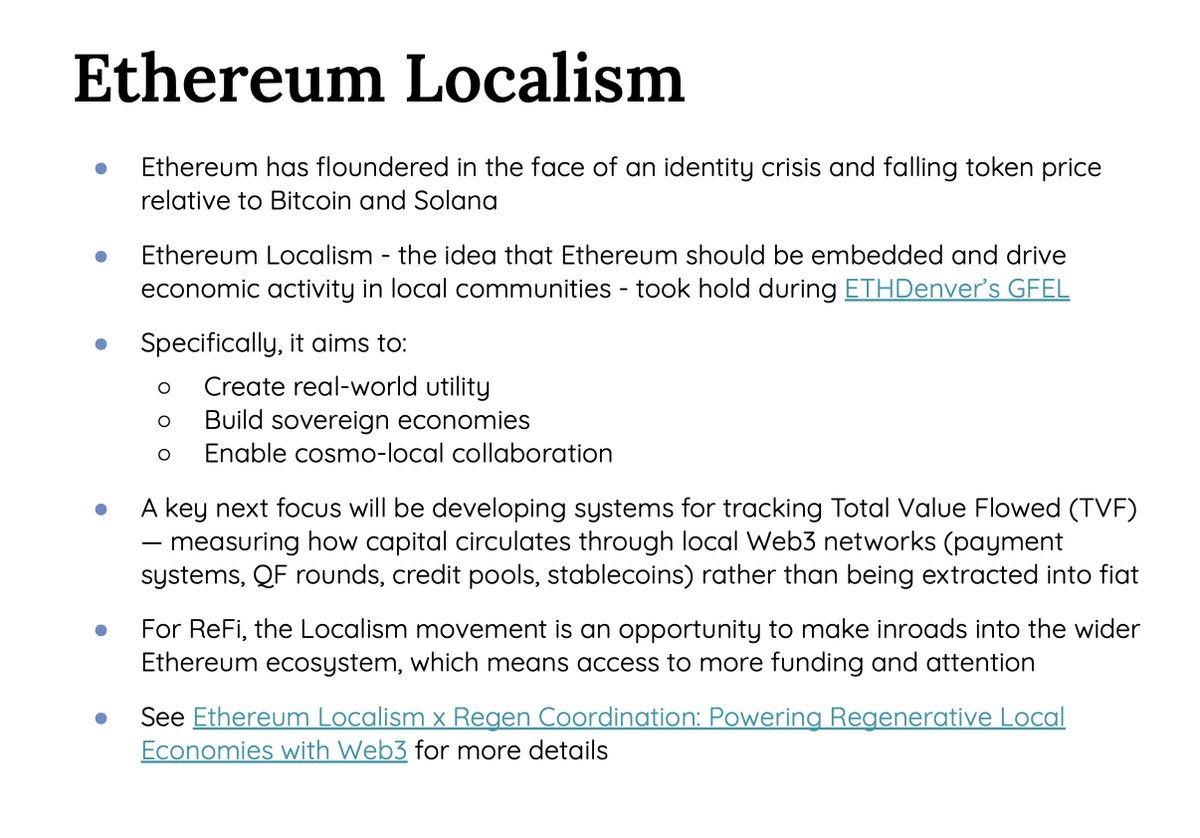
🌱 Powering Regenerative Local Economies with Web3
How can local communities use blockchain tools to strengthen local economies? From local funding rounds, to ecological regeneration, to new ways of organizing and circulating value.
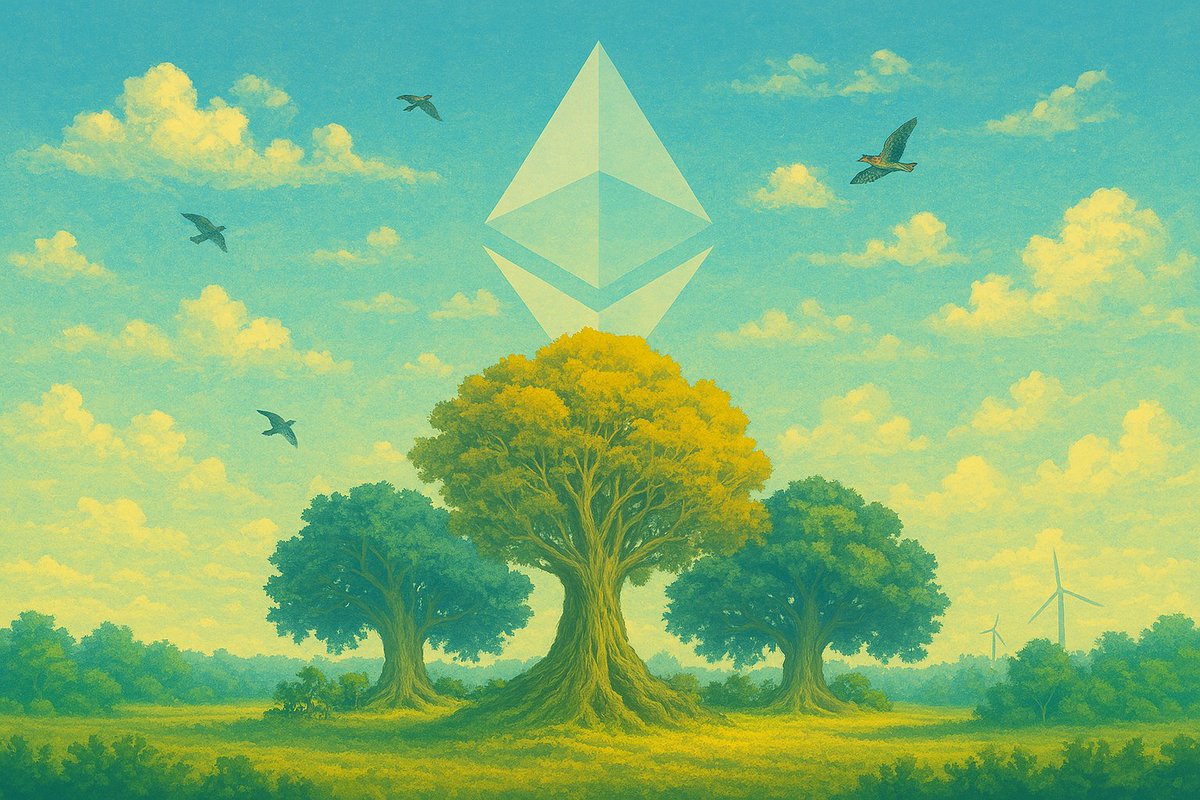
Together, Ethereum Localism and Regen Coordination offer a compelling vision for a future of blockchain and peer-to-peer technologies.
🔷 What's up with @Ethereum? 🔷
Over the last decade, Ethereum has grown from a scrappy experiment into the second largest cryptocurrency in the world, with a vast ecosystem of apps, developers, and capital flowing through it. But after years of rapid growth and market hype, Ethereum is now at a crossroads.
Amidst market volatility, geopolitical shifts, and increasing centralization in tech, the community is asking a critical question:
👉 Will this infrastructure continue to serve primarily as a vehicle for financial speculation — or can it power real-world, community-driven impact?
In this new piece, I explore Ethereum Localism — a growing movement that reimagines Ethereum not as financial infrastructure for the few, but as a coordination layer for local economies and regenerative communities. I also share how @ReFiDAOist & @RegenCoordinate are putting this vision into practice.
This is about more than just blockchain. With failing global systems, we need to rethink how we fund, govern, and regenerate — from the ground up.
Full post below 👇
x.com/owocki/status/19121811…
@RegenCoordinate @ReFiDAOist @greenpillnet @CeloPublicGoods @BioFiProject @maearthmedia @OurBloomNetwork @agroforestDAO @Gitcoin @karmahq_ @SilviProtocol @hypercerts @OSObserver @Atlantis_p2p @metricsgarden @CommonApproach @Celo @OctantApp 💚

8
21
81
3,235
Monty Merlin Bryant 🧙✨ retweeted

May 29
I appreciate the many offers and references to technologies, tokens, protocols, and products.
I also feel I need to keep asking myself is I am starting from the tool, or from the living system?
Am I trying to fit a community into a protocol, or am I really listening to how care, labour, trust, memory, repair, production, and future commitments already move?
This work keeps reminding me to slow (the f*ck) down.
Before asking whether a technology can be integrated, I want to better understand the underlying patterns.
What is the economy here, in practice? What obligations already exist? What should be measured, and what should not be reduced? Where might a tool help? Where might it distort, extract, or capture attention?
I am much more interested in alliances than integrations.
And I need to hold that standard for my own work too.
The question I want to keep returning to is not:
Can this community use this protocol?
But:
Can I be of service to a living settlement system without making my tool, model, or theory the center?
May 29

I didn’t mention Holochain because the protocols are meant to be tech-agnostic and, in a sense, ancient.
The important layer is not one specific stack, but the capacity to curate, value, limit, exchange, relay, and repair commitments across pools. That can use blockchains, pool relays, peer-to-peer architectures, local ledgers, or witnessed agreements depending on context.
I’d be very happy to see these patterns implemented on @Holochain . The point is not to make communities fit the technology, but to let the technology serve living settlement systems.
For now they work quite well on @ethereum thank you!
1
3
8
411
Monty Merlin Bryant 🧙✨ retweeted

May 28
The solution is to rally around open source.
That's the only way to compete with a superpower technology network effect if you are not a superpower yourself. And it's the only way to bring the rest of the world along on the same team as you.
Open source.
234
268
2,241
138,670
Monty Merlin Bryant 🧙✨ retweeted

May 14
Applications are open for Ma Earth Funding Round 3.
$500k in matching grants for 100 grassroots nature projects worldwide.
Apply through Ma Earth's new collective funding platform, purpose built for community-led regeneration.
Learn more at maearth.com
14
44
294,364
I just donated on @Giveth! Check out the projects I supported 💜 qf.giveth.io/user/0x59DDA36b…
1
2
73

Six years ago today, Celo mainnet launched on Earth Day! 🥳
The @Ethereum Layer 2 built for the real world has processed 1.27B transactions, bringing fast, low-cost stablecoin txs to 600K global users every day
What does this look like in practice? Here's a better look ↓
26
63
197
68,151
Monty Merlin Bryant 🧙✨ retweeted

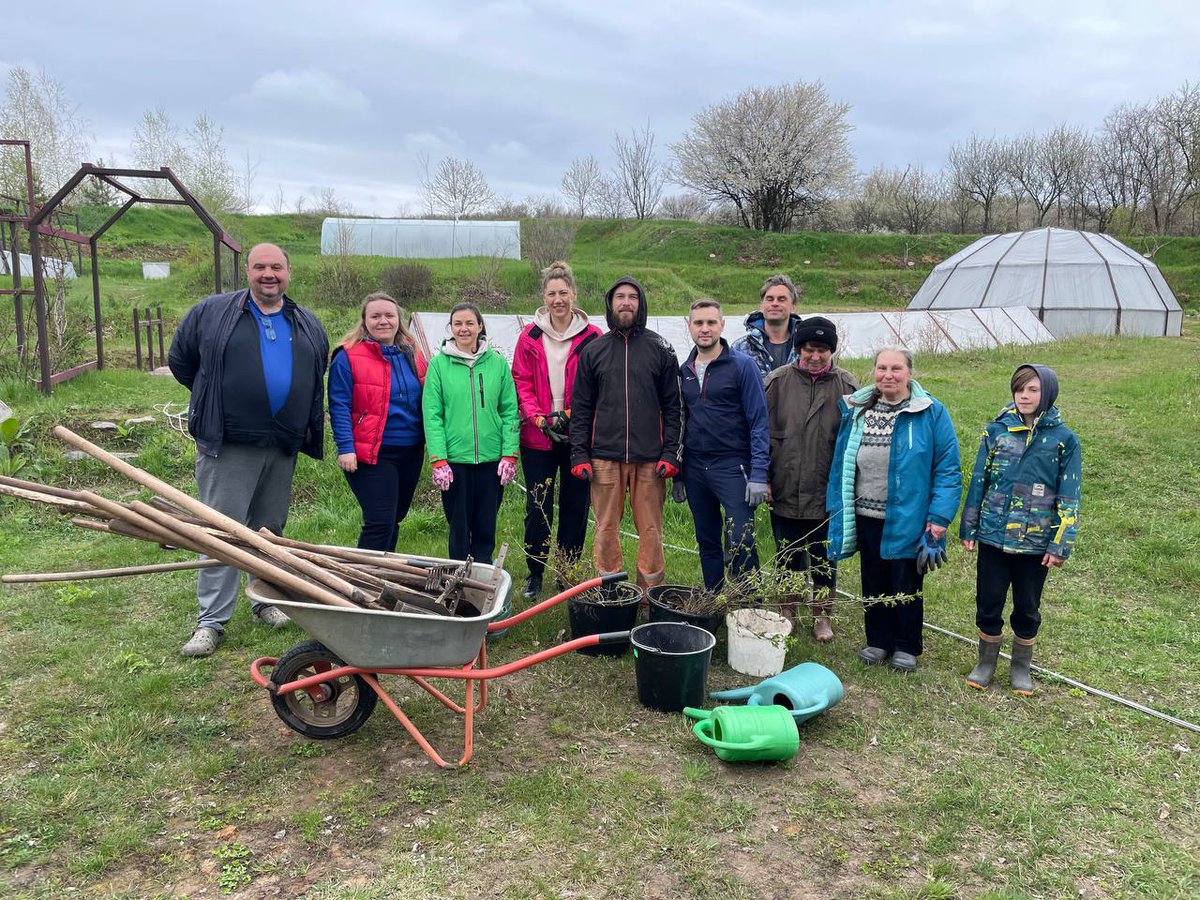
How we digitized tree planting — and earned a bit of crypto 🌱
We’ve reached a point where we can not only talk about impact, but actually record it in digital form.
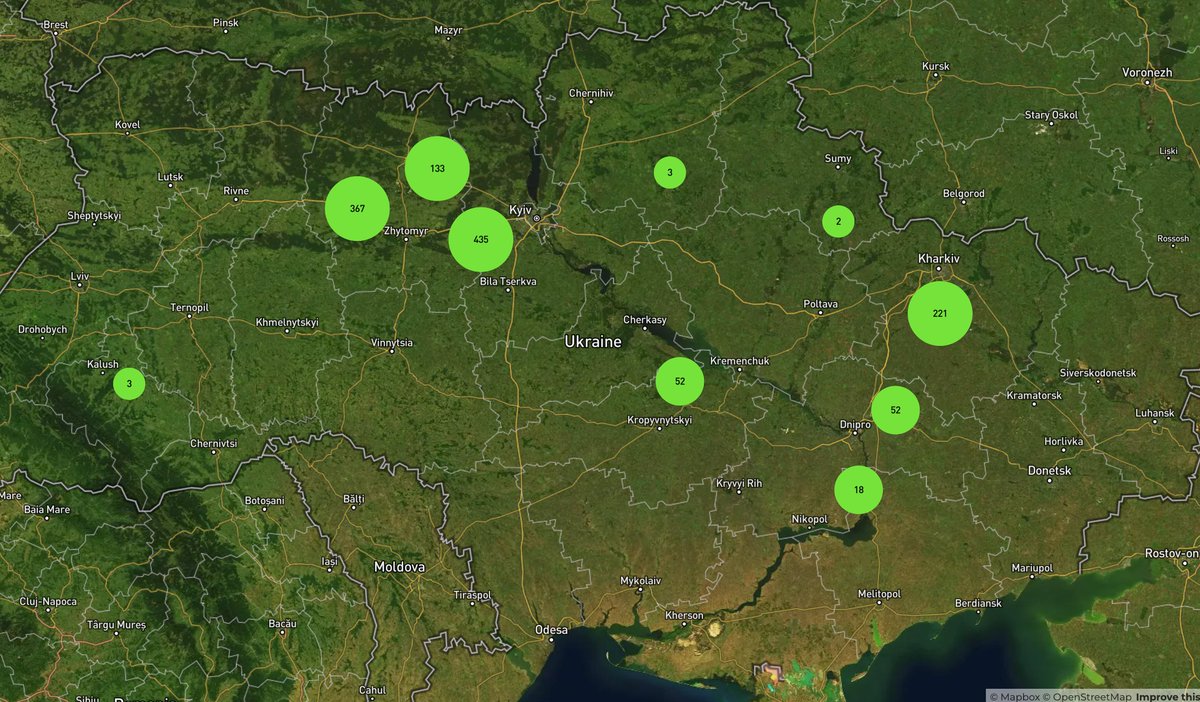
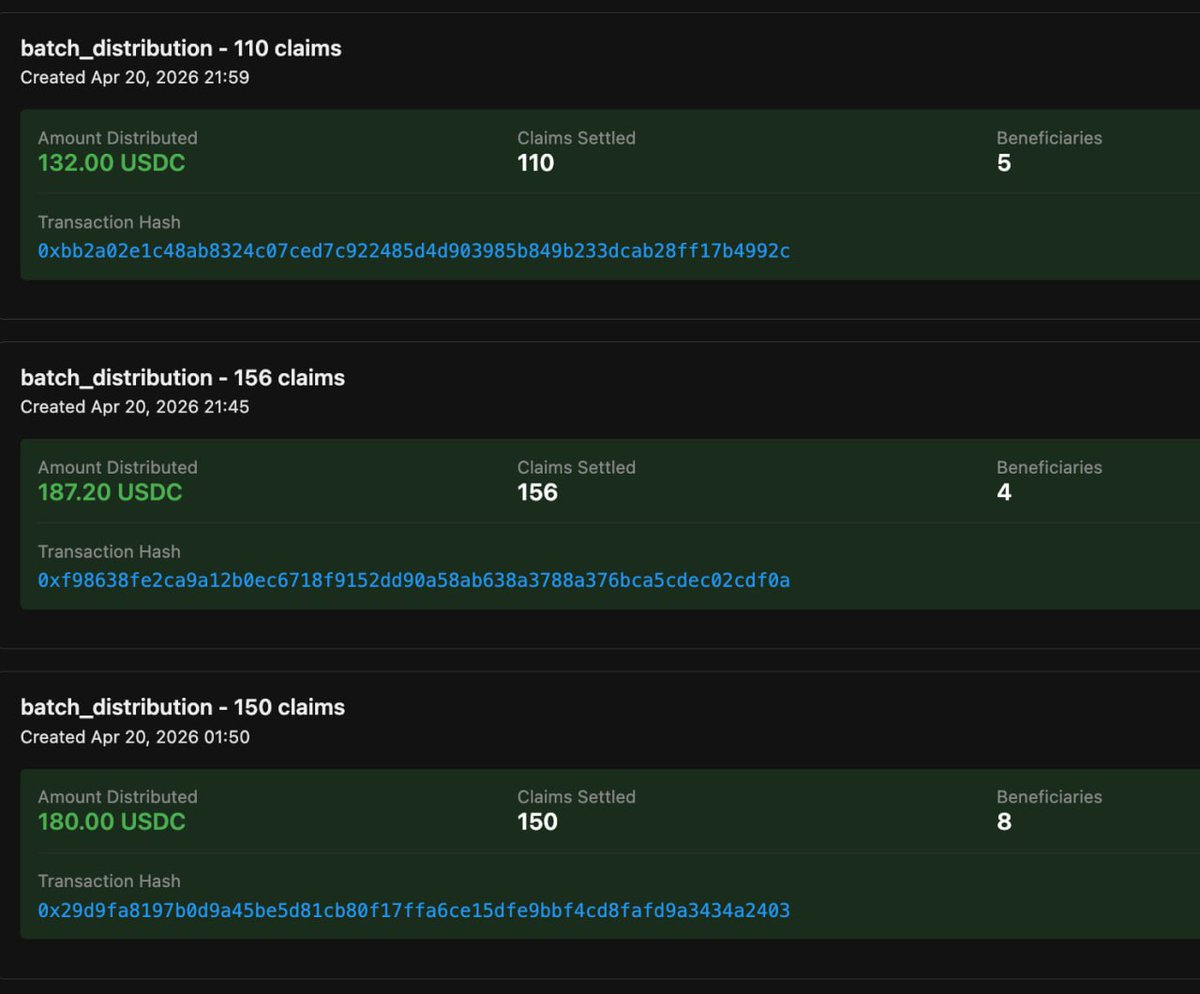
It’s not a final system yet, but already on @SilviProtocol you can see around 1,100 verified and digitized trees across more than ten of our locations.
One detail stands out: most of these plantings are happening in frontline regions. If you look at the map, it becomes obvious.
In reality, we planted closer to 2,500 trees. And this highlights a core issue — the gap between physical work and Web3 accounting.
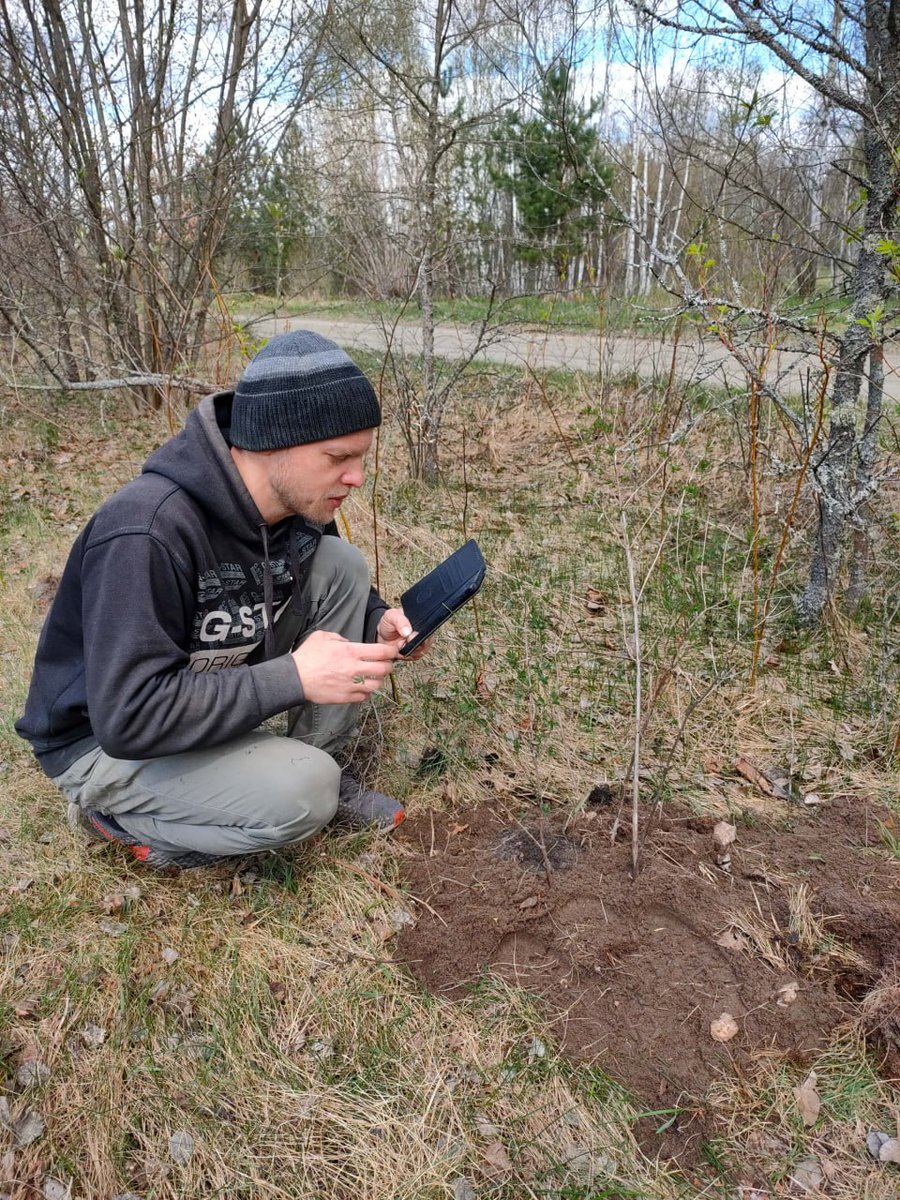
In the field, things don’t follow a script.
Geolocation can shift by tens of kilometers due to security constraints.
Phones fail to capture points.
People work with their hands — not with apps.
To fully operate in this system, we would actually need to upgrade devices across the network — phones, laptops — otherwise the digital layer simply can’t keep up with real-world activity.
Still, even with these limitations, the results are tangible:
— ~2,500 trees planted
— 1,100 digitized and verified
— 12 projects created on the platform
— 480 USDC already paid directly to local wallets
This is what an emerging horizontal economy looks like.
The model is simple:
Each verified tree brings $1.20 USDC upfront
$0.80 USDC after one year if the tree survives
This is not “income” in the traditional sense. It’s a tool:
— to support local initiatives
— to create incentives for impact verification
— to onboard communities into Web3 (wallets, transactions, validation)
In practice, it’s a preparation layer for more complex systems — carbon credits and biodiversity markets.
What matters is accessibility.
The onboarding is simple, the mechanics are clear, support is responsive, and payments are relatively fast. This allowed us to test everything not in theory, but in real conditions.
At this stage, we can confidently recommend this approach to others:
permaculture groups, foresters, volunteers — anyone involved in tree planting.
Because this is one of the few tools where a physical action — planting a tree — already has a digital trace and a basic economic layer around it.
Special thanks to @DjimoSerodio for continuous support and fast responses to all our “field-level” challenges. Without that, this experiment likely wouldn’t have worked.
#ecovillage #treeplanting #ReFi #Web3platform #tokenizing
3
4
14
377
Monty Merlin Bryant 🧙✨ retweeted

Shout out to @MontyMerlin for pre-purchasing 2 liters of olive oil and supporting @RifaiSicilia
Another success story for @ReFiDAOist and model for local nodes to follow.
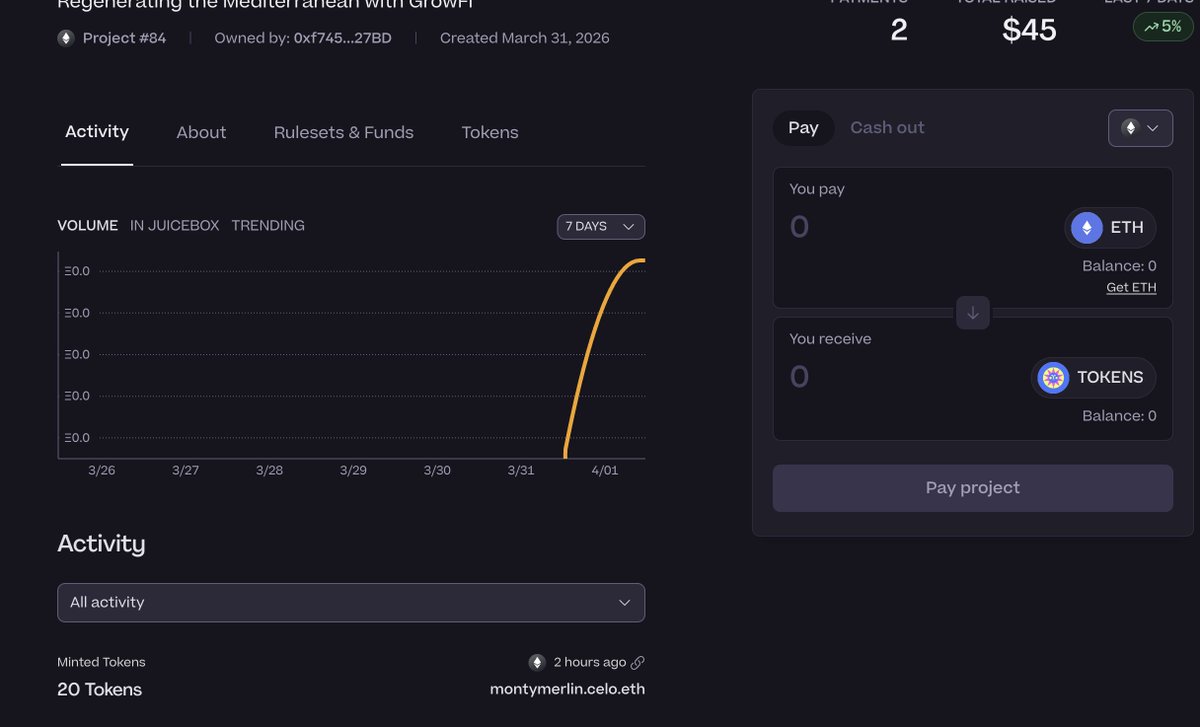

Rifai is raising 25 ETH ~ 50k euros to fund our 2026 regenerative agriculture and tourism ops along with development of a regenerative finance protocol for trees called GrowFi. We are pre selling 2500L of olive oil from 280 olive trees. That’s a 100 year supply for a family of 4.
3
1
6
205
Monty Merlin Bryant 🧙✨ retweeted

Apr 8
I think data verification gets treated as a technical problem when it's largely a political one. Data doesn't run the world... The claims we make upon that data do. Claims are data with a ▶️ button.
Who gets to say what data / outcomes are real and meaningful? In order to steer our systems to regenerate rather than consume the planet, it's actually claims all the way down.
In the 6 years I've spent working in digital sovereignty and environmental protocol design, data verification is the hot mess at the center of most projects.
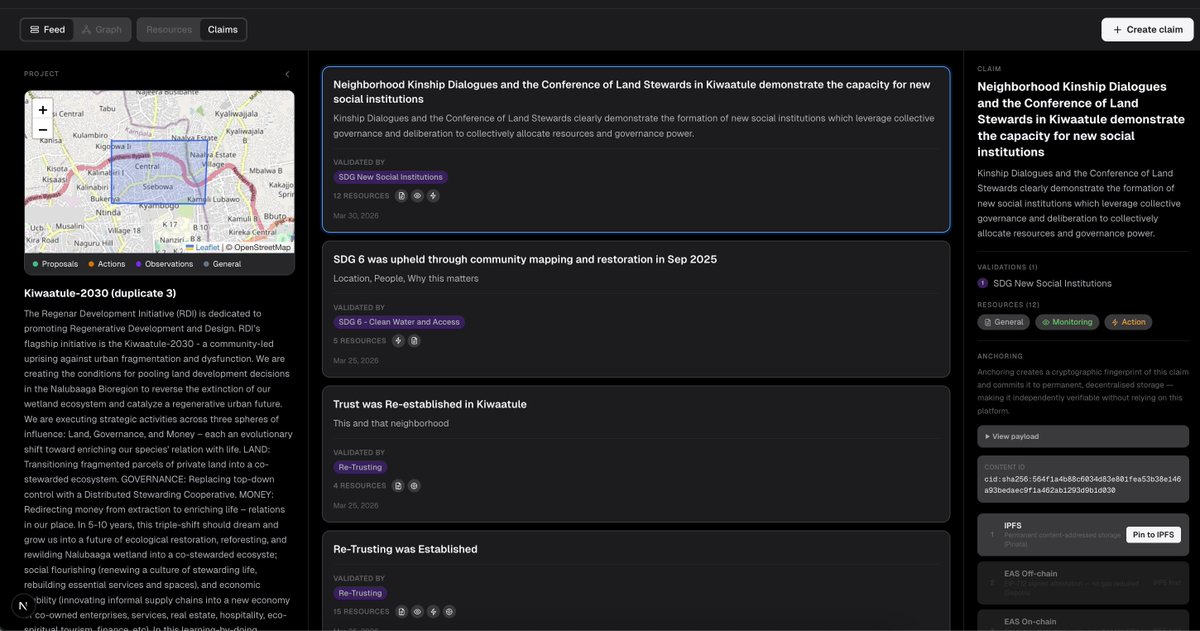
Through a new studio called River Computer, I've been prototyping what I'd call a next generation impact oracle for creating and validating claims around interactions between humans (people), machines (agents everywhere), and the environment (big wet ball we live on).
The working name is Waka — the Māori word for canoe, or vessel, because I began designing this system with Māori collaborators.
To my knowledge, it's the first cross-protocol claims engine to exist. What that means: it wraps a claims engine (more on what those are in the future) within a versatile credential system and a protocol-agnostic anchoring layer — so impact data can be verified using a range of existing frameworks and then anchored to @ethereum , @regen_network , @hypercerts , or @IPFS , depending on what the work requires. Build a certificate, a credit, an insurance claim across a range of sovereign tech stacks.
Its the versatile substrate to build Ecological Institutions.
I see this project as a humble attempt to create something like a packet protocol for climate reporting and accounting frameworks that empower rather than exclude the communities generating the impact. It's an essential infrastructure for digital sovereignty. Full stop
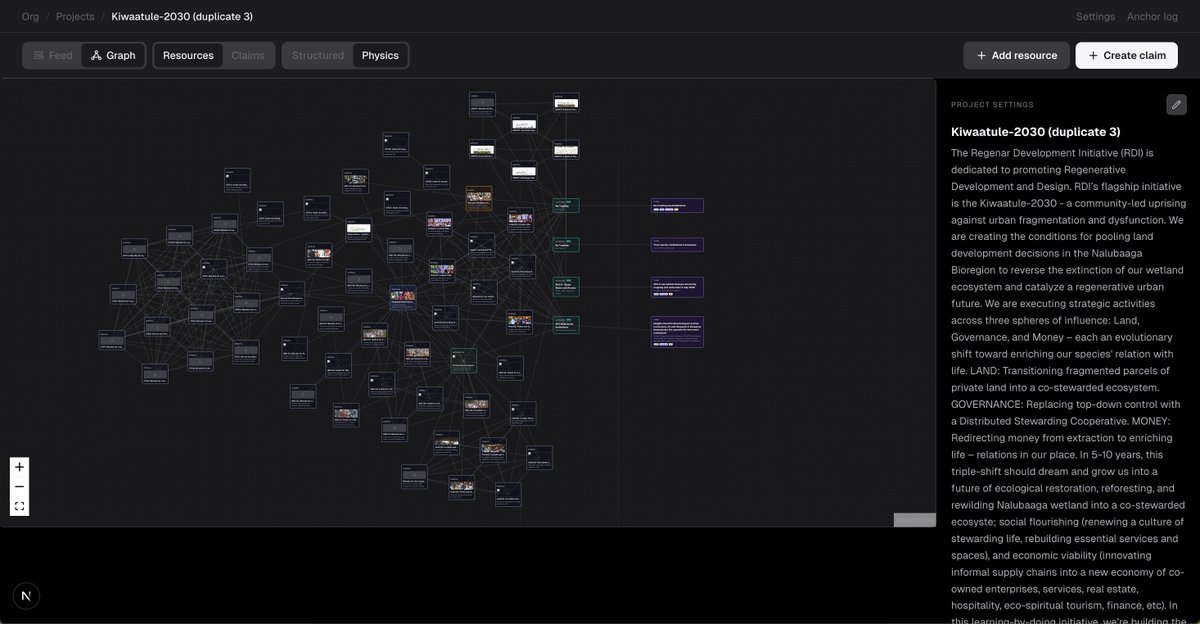
This kind of tech has to be built in direct collaboration with grassroots, local, and indigenous groups. So this project is being prototyped with Ahipara and Ngāpuhi Māori Iwis in the Northland Aotearoa — (shoutout Anna Brown, Reuben Porter Taipari, Hone Hariwara) and with the brilliant Abdul Semakula and co in Uganda for Kiwaatule 2030, working within his Obuntu Resets framework.
It's being supported by @ethereumfndn and @Celo through the "SDG for the World" Grant. Thanks to @LuukDAO , @MontyMerlin , and @DjimoSerodio for orchestrating it.
Over the next month I'll be sharing technical and conceptual details on what this all means in practice. Stay tuned.
(All artifacts and resources in images are from Kiwaatule 2030 and are testaments to their incredible work!)

3
7
64
81,471
Monty Merlin Bryant 🧙✨ retweeted

Apr 12
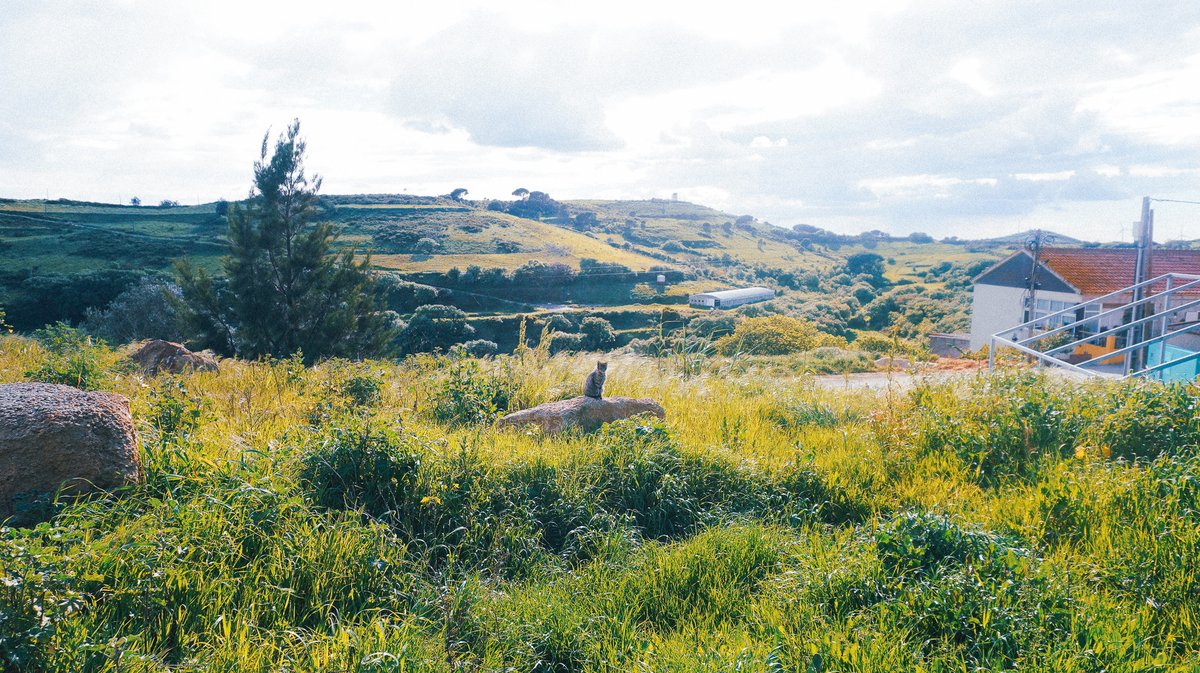
How things are going at House of Games
Focused Deep Work
Nature
Friends
Chats about AI
And everything Non-AI
What else do we need? 🤔



5
21
364
Monty Merlin Bryant 🧙✨ retweeted

Mar 24
The future belongs to those willing to create it.
Parallel Society brought together communities and creators working to rebuild civil society upon freedom, trust, and shared imagination.
Here’s to the pioneers:
@abovephone, @agartha_one, @Andentech, @AquariOfficial, @CCIdotCity, @PortoCoda, @aboutcircles, COOP Studio, @CryptoCanal, @DarkFiSquad, @dEduSchool, @deltay_xyz, Fabrica Moderna, @FundingCommons, Geogram, @HavenXHV, @humntech, @NewEconomyInst, @InstituteCrypto, @internetarchive, @Keycard_, @Kleros_io, @LayerXlab, @Liberland_org, Manja, @MoneroKon, @NovaSBE @nym, @protocollabs, @psy_dao, Rádio Quântica, @rare_effect, SAD, @SealandGov, @ShutterNetwork, SitWith, @SpritzChat, @ethstatus, @StatusL2, @ethswarm, @taikainetwork, @torproject, @unrulyvc, @AskVenice, @web3privacy, @winprivacy, @zano_project, @_zanzalu, @zuAfrique, @zugramadotorg
15
39
106
7,494

🌱 BioFi Pathfinders Round, Gitcoin Grants 22: we funded 14 bioregional teams around the world through quadratic funding:
→ $55K matching pool
→ 1,096 contributions
→ $8,813 in direct donations
But there was an issue: most participants had never used a crypto wallet before.
Some, especially in the Global South, struggled with unreliable internet access and electricity.
Few had the social media presence to mobilize donors at the breadth that quadratic funding rewards.
Even fewer had a network that could readily donate in crypto.
We integrated PayPal to make it work. 🤝
And we learned: onchain funding assumes participants can transact onchain, but bioregional teams coordinate through place-based trust for a reason.
So, what does onchain funding infrastructure look like for communities who aren’t on crypto twitter?
3
8
59
4,241
The most powerful coordination mechanism humanity has invented?
Finance. The almighty “invisible hand of market forces” we are taught in neoliberal economics.
But even across mainstream institutions, foundations, investors and policymakers… a quiet consensus is emerging: The old system is broken.
I’m starting a new project exploring how we might bridge worlds — connecting the emerging ReFi / Web3 ecosystem with mainstream nature finance.
More soon 🌱
@circbioalliance @UniofOxford @LeverhulmeTrust @KateRaworth @UNEP
7
11
35
1,087


Monty Merlin Bryant 🧙✨ retweeted

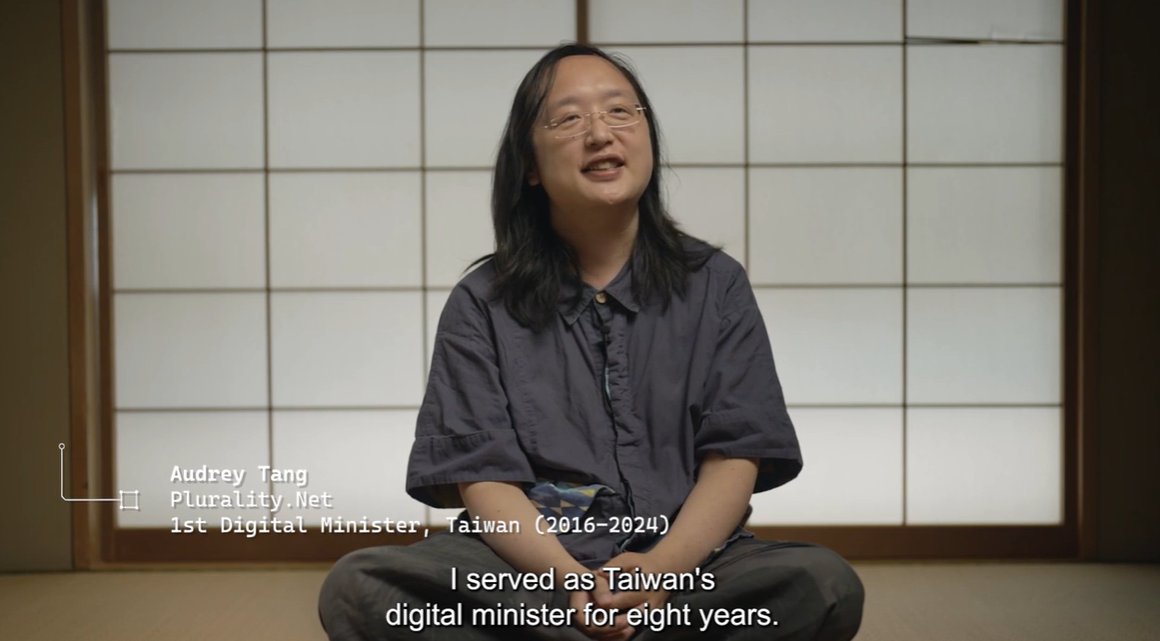
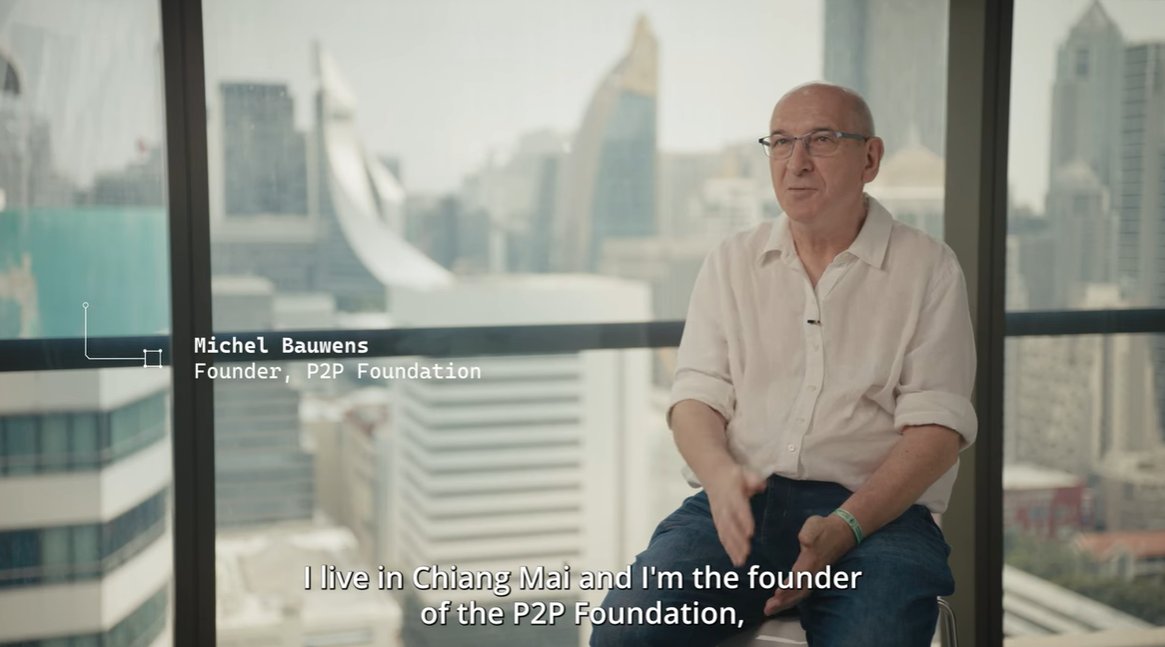
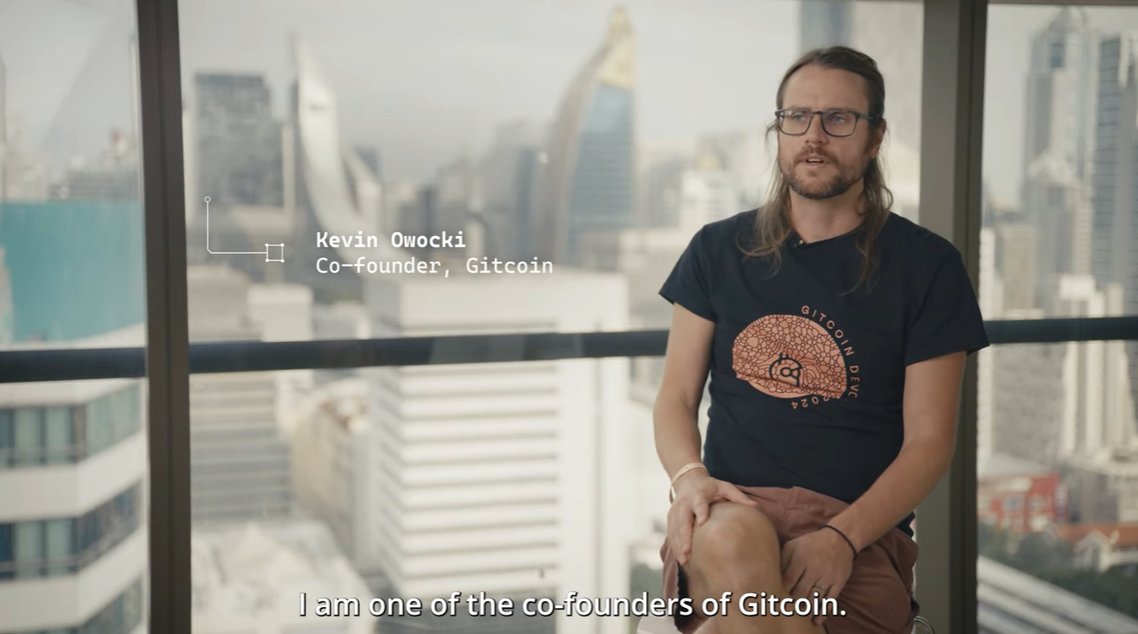
Have you explored our Open Conversations video library yet? 🌐📽️
It’s a collection of short conversations with people shaping public goods infrastructure—from digital rights and open source funding to climate data, governance, AI, and the future of the commons.
Here’s a snapshot of some of the voices featured so far, focused on digital rights, governance, and public goods funding:
Digital rights, governance and the commons 🏛️
- @alsmith, @torproject
- Isabela Fernandes, @torproject
- @whanamura, @GETDWeb & @internetarchive
- @audreyt, @PluralityInst
- @glenweyl, @PluralityInst & @RadxChange
- @mbauwens, @P2P_Foundation
- @navroopsahdev, @econ_digital
Public goods and coordination infrastructure 💸
- @owocki, @gitcoin
- @art_tem_, @OctantApp
- @MontyMerlin, @ReFiDAOist
- @kensuzuki, @smartnews
- @MelynMcKay, @coalapay
- @notscottmoore, @publicworksfm
- @david1casey, @FundingCommons
If you’re curious to explore the full library, the link is in the comments. 👇

4
11
31
1,066
Monty Merlin Bryant 🧙✨ retweeted
A network of bioregional endowment funds? 👀
1
2
4
172
Monty Merlin Bryant 🧙✨ retweeted

Jan 16
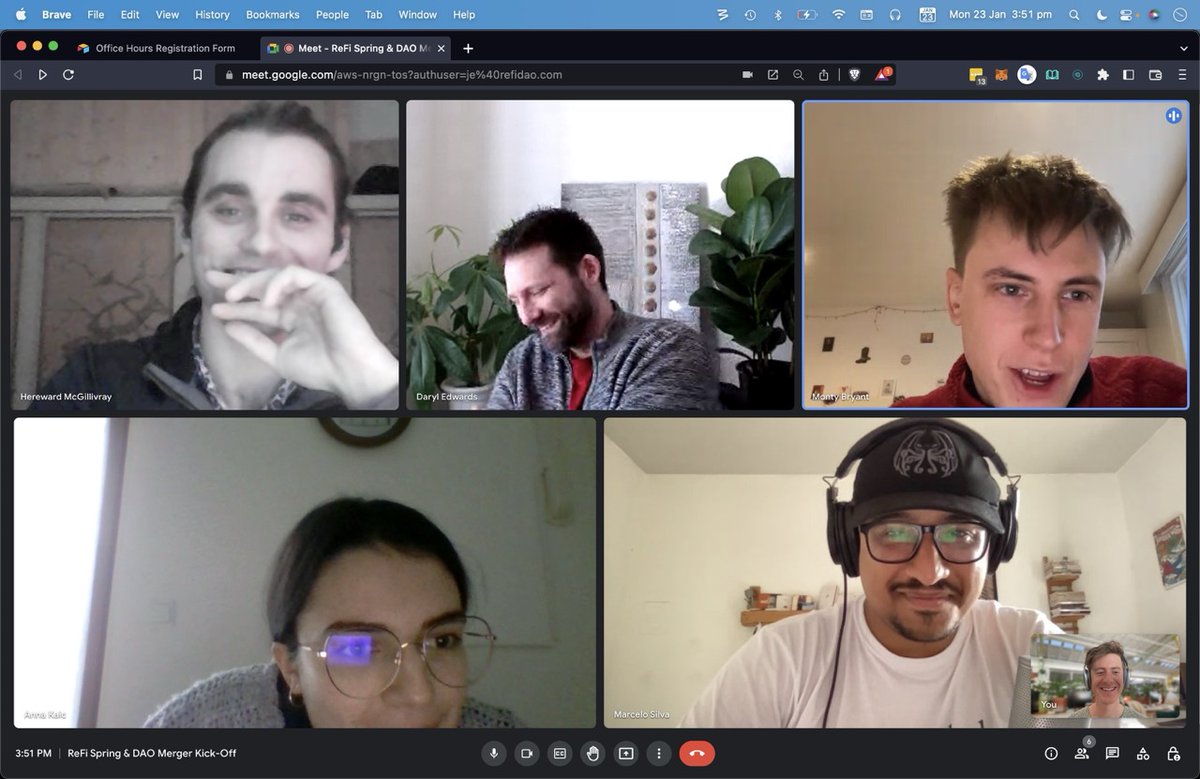
Context: I'm helped build this @ReFiDAOist starting in 2021 alongside a bunch of amazing humans.
Watched it grow into a global movement. Supported where I could.
Then stepped back for sabbatical in late 2023 and handed over stewardship to @MontyMerlin and @AnnaKaic.
2/
1
1
6
147
Monty Merlin Bryant 🧙✨ retweeted
Jan 16
Stepped away from ReFi DAO in 2024.
Came back to find the network didn't just survive the bear market—it evolved into something I barely recognized.
And then I discovered something that changes everything for regenerative builders.
🧵🪡
2
4
9
341
Monty Merlin Bryant 🧙✨ retweeted

gm gm
welcome back
hope u rested well
cus it's time to lock in, boys and girls
for all life on earth

1
12
171