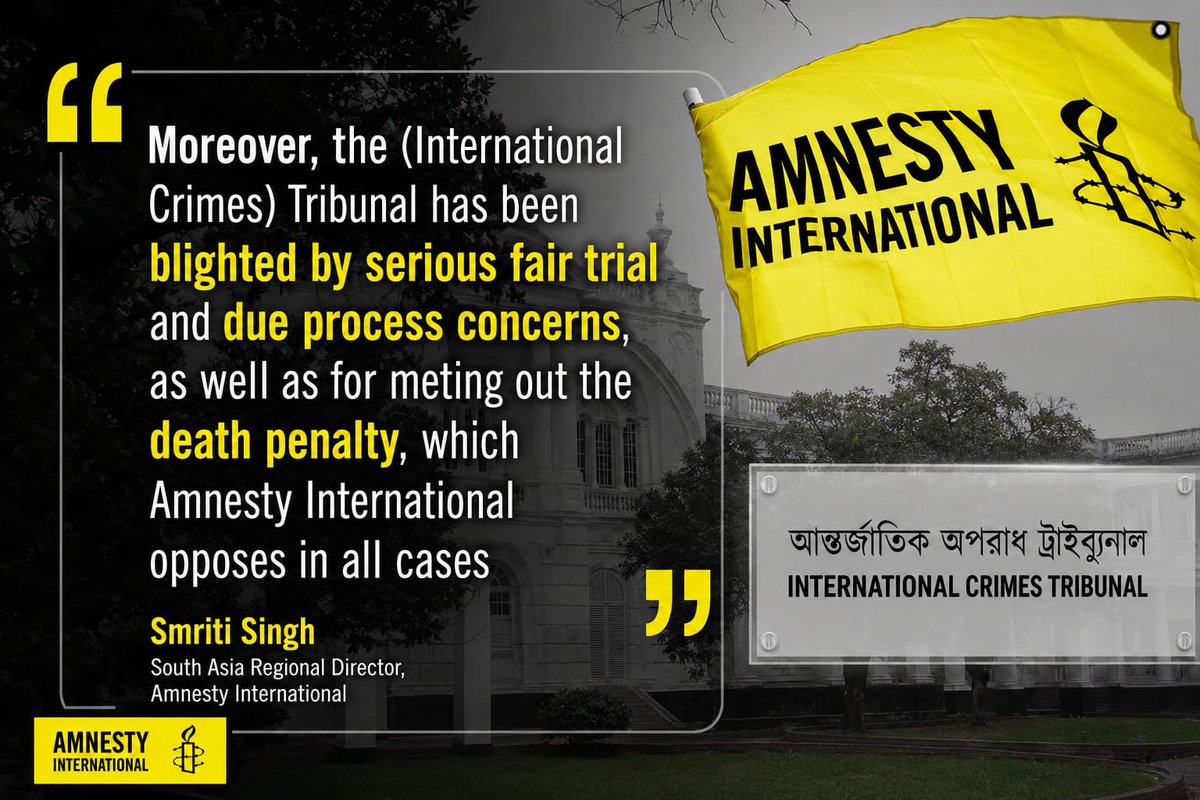
Politics, rather than law, continues to dictate proceedings at
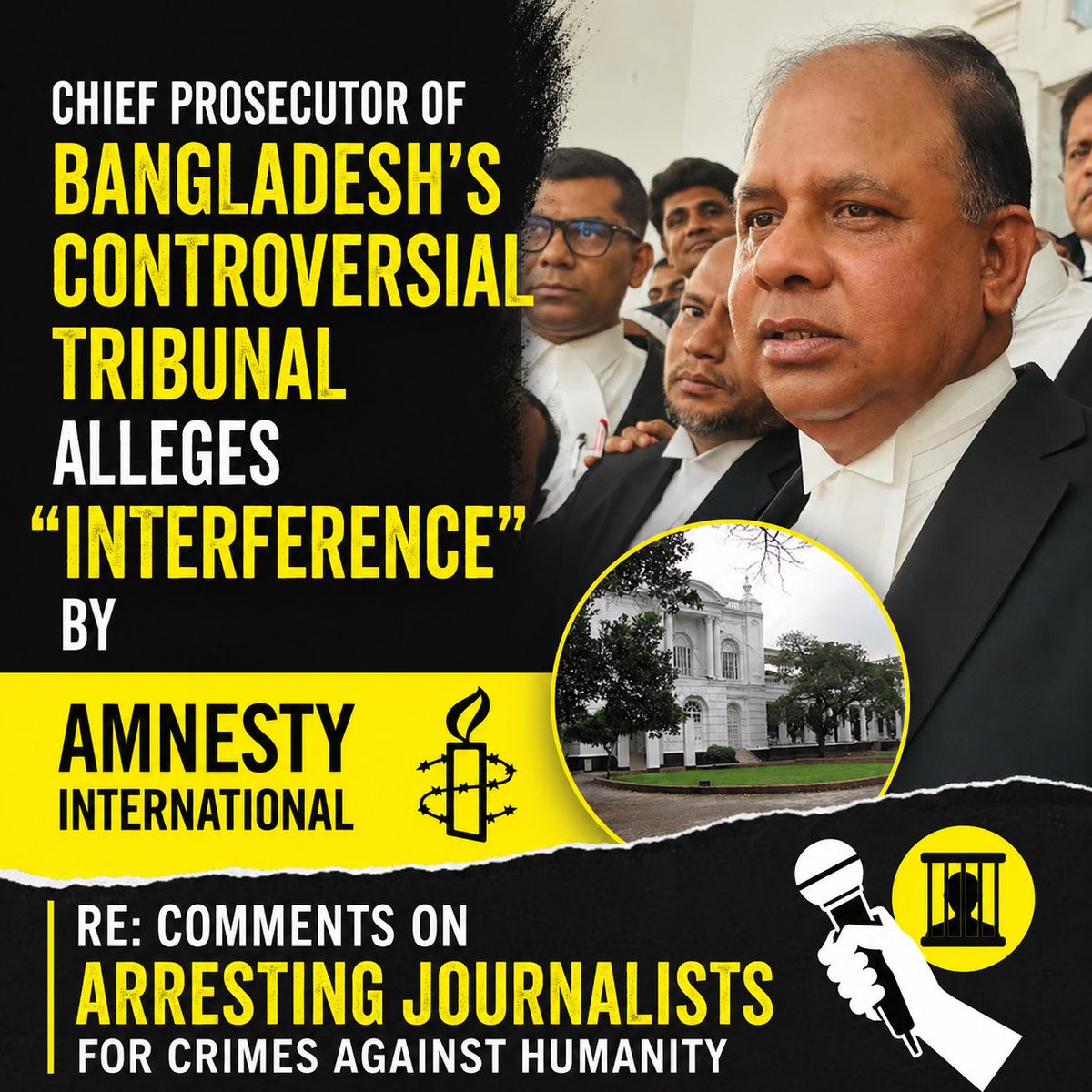
#Bangladesh’s controversial Int’l Crimes Tribunal (ICT). The latest example is the tribunal’s decision to issue warrants against
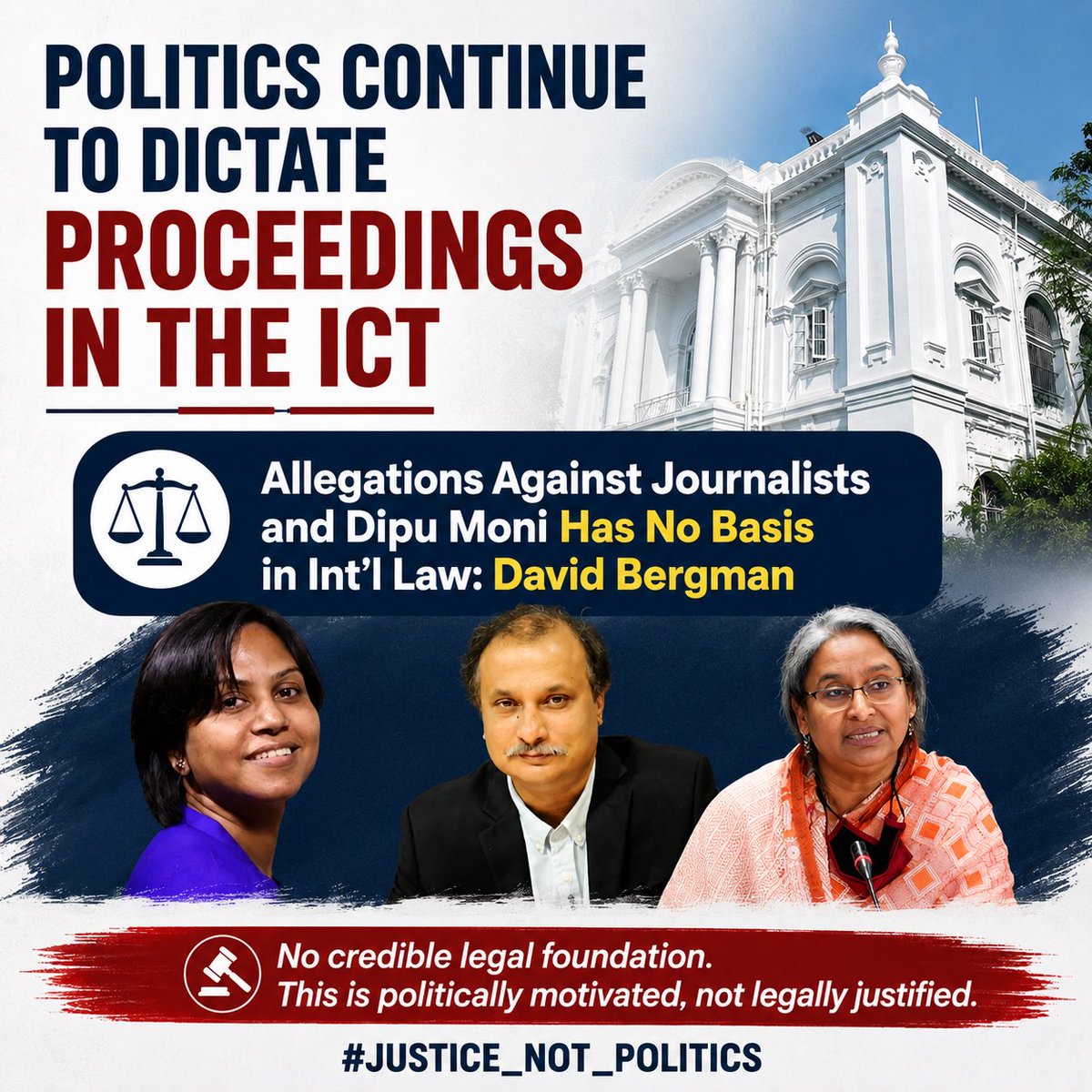
#journalists Farzana Rupa and Mozammel Babu, along with politician Dipu Moni, over the so-called 2013 Shapla Chattar killings.
According to journalist
@TheDavidBergman, the issuance of these warrants is deeply “concerning” because the allegations on which they are based lack any credible foundation in int’l criminal law. Bergman argues that the ICT’s actions rely on two legal theories that are unsupported by established int’l criminal law jurisprudence.
First, Mozammel Babu and Farzana Rupa appear to have been implicated for their critical
#media coverage of the events of 5–6 May 2013. However, journalists cannot be held criminally liable simply for broadcasting, reporting on, or critically discussing speeches delivered by
#HefazatEIslam.
Reporting on, or even strongly criticising, Hefazat’s controversial thirteen demands was a legitimate exercise of journalism, regardless of whether some considered the coverage biased or politically motivated. Crucially, there is no evidence that broadcasts aired on Ekattor TV incited violence or encouraged the use of force against protesters.
Second, Dipu Moni appears to be implicated for her role as Foreign Minister in briefing diplomats and int’l media regarding the events of 5–6 May 2013. However, attempts by politicians or journalists to deny, minimise, or shape public perceptions about violent events after they occurred cannot amount to participation in crimes against humanity.
Int’l criminal law has never treated post-event commentary, alleged downplaying of casualties, or efforts to influence public opinion as constituting crimes against humanity in themselves.
Analysis:
x.com/thedavidbergman/status…
While Bergman concedes that the events of 5–6 May 2013 “may well” have amounted to crimes against humanity, even the claims advanced by the ICT’s own Chief Prosecutor appear highly questionable. The Chief Prosecutor recently claimed that a total of 58 people were killed over two days across three cities, casting doubts on the “widespread” and “systematic” elements of crimes against humanity.
Yet even this assertion has been challenged from the outset, particularly given that multiple int’l journalists were present in
#Dhaka during the events of 5–6 May 2013. Notably, a
@BBC journalist who was present during the polic operation at Shapla Chattar on the night of 5 May 2013 has repeatedly claimed that not a single person was killed during the operation itself. This sharply contradicts many of the later “narratives” that have since emerged regarding the scale and nature of the alleged killings.
See:
dhakatribune.com/bangladesh/…
english.bd-voice.com/nationa…
The only reasonable conclusion to draw from the above discussion, therefore, is that all major decisions at the ICT, such as warrant issuance and the filing of charges, are increasingly being driven by political considerations rather than credible legal principles.
Nor is this the first indication that politics has influenced proceedings at the ICT. Earlier, the decision to charge former
#AwamiLeague MP Fazle Karim Chowdhury over incidents in Chattogram during the 2024 protests, despite an apparent lack of credible
#evidence, allegations of prosecutorial misconduct, and reports of external pressure, similarly raised serious concerns about the politicisation of the tribunal’s processes.
See:
x.com/thedavidbergman/status…
…
#BangladeshCrisis @meeganguly @PearsonElaine @job71org @ESandersFCDO @AgnesCallamard @amnestysasia @hrw @BonaveroIHR @IBAHRI @FortifyRights @forum_asia @HRF @volker_turk @UNHumanRights @SRjudgeslawyers @fidh_en @StateDRL @UN_HRC @justiceinfonet @askbd_org @Kennedy_HRC @DoughtyStIntl @kingsleynapley